Advertisement
Advertisement
Home Blog Page 119

Vancouver-based Deecorp poised to meet strong hotel room demand

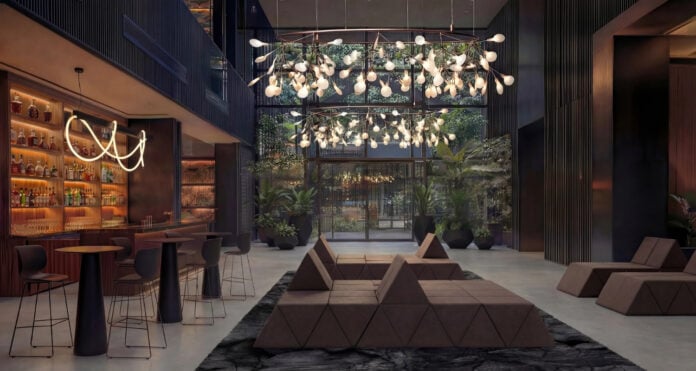
Project at Granville and Davie. Image: Deecorp

Vancouver can no longer support the volume. Occupancy is holding in the 90 per cent range, average daily rates are high, and city studies project a shortfall of 10,000 hotel rooms in the coming years. 

Despite this, there are few hotel projects moving forward under current financing and policy conditions.

This means Vancouver is not positioned to fully capitalize on the tourism rebound. The city risks losing visitor spending, international event capacity and future economic opportunities simply because there are not enough rooms.

Deecorp Properties Ltd., a commercial real estate company based in Vancouver, has three hotel projects it is hoping to build in the city comprising more than 1,000 rooms located at the corners of Granville and Davie, Granville and Pender, and 8th and Yukon. They are three of the most strategically located hotel development sites in in Vancouver’s core transit and cultural corridors.

Stanley Dee
Stanley Dee

“(The) hotel (sector) is grossly underserved. We think we’re doing the city a great favour, and it’s economically viable,” said Stanley Dee, founder of Deecorp

He said the project at Davie and Granville is “right at the beachhead of the Granville Entertainment District, which the City of Vancouver has focused on these last couple of years.”

“The new plan for Granville Street is quite exciting, and they’d like to see projects like this, this being a very important corner in that entertainment district— in fact, the most important corner, I’d say,” explained Dee.

“The project is due for public hearing January 15. And we’d be very surprised if it’s not passed. There’s a lot of support.

It’s about 460 rooms: roughly 180 regular full-service upscale hotel rooms. Above that will be 280 larger long-stay rooms— limited service and longer stay. The average person there might stay a week or two or three or four, versus one to three days in the regular full-service hotel.”

Dee said the proposed project at Granville and Pender is at one of the busiest intersections in that part of downtown.

“It also happens to be exactly where the CanadaLine, the most important transit line coming through Vancouver, exits at the terminus. You get out of the CanadaLine and one of the exits is right in front of the building,” he said.

“So it’s very transit-friendly, right in the heart of transit. It’s also very close to the cruise ship terminals, the convention centres, Gastown— all that. It’s at the confluence of all these high-energy things, and at the end of Pacific Centre Mall. From all the hoteliers we spoke to, it’s kind of the 10-out-of-10 hotel location in the city.”

This project would be just over 400 rooms.

Actually, with that one we’re considering putting a very large residential component, and that’s yet to be determined. We just submitted the application (recently).”

Dee said the 8th and Yukon project is a block from the next most important intersection outside of downtown, Broadway and Cambie. It’s also a block from the SkyTrain station.

“What’s also really good here is the slope from Broadway down to the water. There’s a gentle slope, amazing views, and no tall buildings in front of us, one or two six- or seven-storey buildings,” he said, adding this project would probably have more rooms than the other two.

But we’re earlier in planning. We see demand for space, meeting space, convention space. We’re not competing with the convention centre, but right now all the good meeting space is downtown. There’s nothing else in Vancouver. There’s a Holiday Inn three or four blocks up, built about 60 years ago, with a couple of tiny rooms. No meaningful meeting space.

“We’ll probably have a lot of meeting space and a lot of long-stay hotel rooms. Long-stay works because we have two great grocery stores,Whole Foods and Save-On-Foods, within a block. Someone coming for one to three weeks probably doesn’t want to eat out all the time. They want prepared food, heat-up food, some basic cooking. Those are long-stay hotels.”

Project at Granville and Davie. Image: Deecorp

Deecorp was founded by Dee in 1994. Over the past 31 years it has acquired, developed, financed, and managed a portfolio of real estate assets with a combined value of over $600 million.

Earlier this year, a new report released by Destination Vancouver and the BC Hotel Association, Hotel Community Impact Assessment suggest that Vancouver urgently needs 10,000 hotel rooms by 2050 to keep pace with growing demand.

Business, sporting and cultural events supported by Destination Vancouver delivered significant economic and social value to the city in 2024, according to a new independent report from MNP that highlights the scale and impact of Vancouver’s event sector. These events represented $338 million in direct spending alone, said the organization.

More from Retail Insider:

Thriving Together: Empowering Partners Amid Tariff Turbulence

by Sarah Fournier-Gonzalez

Tariffs are continuing to put a strain on retailers, who can’t indefinitely absorb the rising expenses that they cause

Tariffs have become an unavoidable part of today’s global economy, reshaping the way brands and their partners operate. Higher import fees, fluctuating costs, and unpredictable pricing are creating a difficult environment for every link in the value chain. Businesses are being asked to stretch resources further than ever, often without the safety net of stable margins.

Yet disruption doesn’t have to translate into decline. In fact, these conditions present an opportunity to rethink how you support your partner network and align more closely with the people selling your products every day. Tariff volatility can either strain your channel relationships or become the catalyst for stronger collaboration, depending almost entirely on how you respond.

One of the most effective ways to help partners stay resilient? Strategic, targeted promotions that give them confidence to compete without compromising your brand. According to UBS, a 10% tariff can drive retail prices up by roughly 4%. With margins already tight, retailers can’t indefinitely absorb rising expenses. Attempting to shoulder tariff increases alone slows reinvestment, impacts innovation, and threatens jobs across the ecosystem.

The Value of Your Partner Network

Your partners (retailers, resellers, distributors, service providers) are feeling this pressure acutely. When their ability to maintain healthy margins deteriorates, it becomes harder for them to promote your products, prioritize your brand, or invest in customer experience. But here’s the good news: moments of economic strain provide powerful openings for brands that step forward with meaningful support.

Partners are on the ground navigating customer expectations, cost fluctuations, and competitive pressures in real time. As tariffs reshape the landscape, they need more than sympathy; they need practical tools that help them maintain profitability and sell with conviction. Your partner ecosystem is far more than a simple distribution network; it is a strategic asset that determines how effectively your brand reaches the market. Long-term success comes from empowering this ecosystem, not tightening constraints around it.

When market uncertainty rises, partners actively look for brands that help them maintain stability. Supportive brands earn trust, secure prime shelf or promotional space, and build advocates who will champion them even when conditions are tough.

In short, strategic promotions aimed at protecting partner margins can:

  • Strengthen competitiveness without altering MSRP
  • Sustain brand visibility throughout the channel
  • Fuel engagement while avoiding price erosion

Why Blanket Discounts Can Backfire

When tariffs put pressure on pricing, discounting may feel like the quickest fix. But across industries, widespread discounting tends to create more long-term damage than short-term benefits. That’s because price cuts:

  • Undermine partner profitability
  • Chip away at brand value
  • Reset customer expectations to “wait for the next sale”

Once customers become conditioned to lower prices, restoring standard pricing becomes extremely challenging. Discount-heavy strategies often spiral into margin decline and brand devaluation, leaving partners discouraged and less inclined to invest in your product line.

What partners truly need is support that helps them compete without sacrificing price integrity. That’s where smart, precisely targeted promotions outperform conventional discounting. Well-designed promotions maintain MSRP, preserve perceived value, and still give customers a compelling incentive to purchase — all while helping partners stay profitable.

Ways to Support Partners Without Touching MSRP

Below are four promotion types that can be effectively implemented to help brands provide meaningful support while keeping margins intact.

1. Cashback Promotions

Cashback allows customers to benefit from savings after the purchase rather than at the shelf. These promotions:

  • Protect the perceived value of your product
  • Maintain MSRP, ensuring partner margins stay intact
  • Deliver a win-win scenario: buyers enjoy savings while partners remain financially healthy
Cashback programs are one of four promotion types that can be implemented to help brands provide meaningful support while keeping margins intact

2. Trade-In Promotions

Trade-in programs allow customers to upgrade affordably while giving partners a competitive edge – all without adjusting the retail price. Trade-ins help:

  • Offset rising costs without altering the sticker price
  • Reinforce sustainability narratives
  • Encourage repeat business and deepen brand loyalty

3. Gift With Purchase

Value-added gifts shape a positive purchase experience without reducing the price of your product. A strong Gift with Purchase:

  • Differentiates your offering in crowded categories
  • Increases perceived customer value
  • Supports partners by keeping margins stable and promotions attractive

4. Buy & Try Promotions

For newer or higher-consideration products, allowing customers to try before fully committing removes a major psychological barrier. Buy & Try programs:

  • Increase confidence in your product
  • Reduce purchase hesitation
  • Lift conversion rates while minimizing returns

Not Just Sales Drivers

Promotions aren’t only about generating volume; they’re about strengthening the relationships that carry your brand to market. When partners feel supported, capable, and confident, they don’t just sell more, they become brand ambassadors. The right promotion can accomplish a number of objectives, including equipping partners to close deals more easily; emphasize your brand’s value versus competitors; and demonstrate that you are invested in their success, especially when conditions are challenging. Ultimately, empowered partners sell with more conviction, invest more energy into your product line, and reward your support with loyalty.

Tariffs will continue to fluctuate, and cost pressures won’t disappear anytime soon. But brands that respond with thoughtful, partner-focused promotions can turn market instability into a competitive advantage. By embracing smarter ways to support your partners, you can protect margins, boost sell-through, and reinforce your brand’s resilience. When your partners succeed — even in challenging conditions — your brand becomes stronger, more agile, and better positioned for long-term growth. Because when your partners thrive, your brand thrives right along with them.

ABOUT THE AUTHOR

Sarah Fournier-Gonzalez is the Vice President of Sales for Opia, a global leader in high-impact sales promotions, value-driven customer acquisition programs, and loyalty solutions for some of the world’s most recognized brands. Follow her on LinkedIn at https://www.linkedin.com/in/sarahfournierg/.

Experience Miami in Style with a Luxury Car Rental

Miami is not a run-of-the-mill destination; it is a way of life, which is defined by glamour, sun, and high-end experiences. From palm-lined streets to that which is famous right on the beachfront, the city draws in travelers who value style, comfort, and exclusivity. Whether visitors are visiting for business, pleasure, or a special occasion, choosing a luxury car rental in Miami is also considered an experience, which in turn transforms the trip, which in turn allows travelers to see the city with confidence and sophistication.

In Miami, which lives up to its reputation for its dynamic nightlife, great shopping districts, and fine dining, travelers arrive in a top-tier car that does nothing to mar the elite image of the city and in fact only adds to the experience of the trip.

Why Miami Is the Perfect City for Luxury Cars

In Miami there is a perfect environment for high-end cars. The warm year-round climate, which has no chance of freezing, means that the roads are clear and the scenery ideal for driving all year round. Also, what is seen as iconic in Miami? South Beach, Ocean Drive, Brickell, and Miami Beach are, in fact, living displays where luxury cars do very well.

The city, which has a very international feel, a strong business community, and a presence of celebrities, also has a high demand for premium transportation. In a setting where supercars and exotic cars are a common sight, choosing a Miami luxury car rental is a natural choice instead of an over-the-top one.

Benefits of Renting a Luxury Car in Miami

1. Comfort and Performance
Luxury cars are built for top-notch comfort, advanced tech, and a smooth ride. In the city or on the coast, they provide a stress-free drive, which, in the same breath, also leaves the standard rentals behind.

2. Status and First Impressions
In Miami it is all about first impressions. At business meetings, in upscale hotels, and at private events, the use of a luxury vehicle is the mark of a professional who is a success story and pays attention to the details. That is why many executives and entrepreneurs opt for a luxury car rental in Miami during their stay.

3. Convenience and Flexibility
Having a luxury car at one’s disposal gives the freedom to go where one wants when one wants, which also means one doesn’t have to use ride-sharing apps or wait for public transport. The traveler controls the time, the route, and the pace of the trip, which in turn makes for a more efficient and enjoyable experience.

4. An Unforgettable Experience
Driving luxury or exotic cars is a different ball game; it is an experience. The sound of the engine, top-notch interiors, and state-of-the-art features create memories that raise the bar of the entire trip.

Popular Luxury Car Categories and Brands

In Miami travelers will find an extensive range of premium car brands to suit all tastes and styles of driving. Many go for the likes of Ferrari and Lamborghini for the bold performance and striking design. But also there are those who prefer the class of Bentley or Rolls Royce for comfort on longer trips and for special events.

For people that want performance as well as practicality, cars like the Mercedes-Benz, Porsche, and BMW, which include premium SUVs and luxury sedans, do very well in the market. Also, each segment of those categories brings a different feel to the drive yet still does not sacrifice premium quality.

Perfect Occasions for a Luxury Car Rental

Luxury cars are a mainstay of many a Miami experience, including:

  • Business trips: Leave an impression on clients and arrive at meetings in fine style.
  • Vacations: Discover Miami’s communities as well as coastlines at one’s own pace.
  • Weddings and special events: Elevate memories.
  • Nightlife as well as entertainment: Step into the fine feasting and night out scenes.
  • Photo shoots and content creation: Luxury vehicles improve brand presentation.

At any time it will be seen that a premium car brings out a sense of luxury and self-assurance.

How to Choose the Right Luxury Car Rental Service

Selecting the right rental company is a key decision that should be given equal weight as the car chosen. Companies with open pricing, flexible terms, and a well-maintained fleet are recommended. Also, they should have a range of insurance options, responsive customer support, and a convenient booking process.

When it comes to choices, look for companies that are known for their premium clients and that also provide consistent quality. Opting for a reliable provider in the luxury car rental Miami field gives peace of mind, reliability, and a smooth experience right from the beginning to the end.

Elevate the Miami Lifestyle Experience.

In Miami ambition, luxury, and individuality are on full display. From the drive along Ocean Drive to the exclusive events attended, the mode of travel is a large part of the experience. In Miami a luxury car rental is more than just practical; it is a statement of a premium lifestyle and a very present element in which the city can be enjoyed to the fullest.

For travelers after comfort, professionals that care about image, and visitors who want to create lasting memories, luxury transport is the way to go in Miami. In everything from the grand entry to the perfect exit, in a luxury car the traveler is a part of the Miami story. When details are the focus, being in a luxury car is the centerpiece of the Miami experience.

Why Canada’s Retail Sector Should Pay Attention to the CMMC 2.0 Cybersecurity Rollout

Photo by Pixabay on Pexels: https://www.pexels.com/photo/security-logo-60504/

The Cybersecurity Maturity Model Certification (CMMC) has established regulations that help companies enhance their cybersecurity practices. However, the emergence of CMMC 2.0 introduces a more stringent framework to follow. Here’s why these details matter to Canada’s retail sector.

Defining CMMC 2.0

The CMMC is a program created by the U.S. Department of Defense (DoD) to enhance the cybersecurity of its defense industrial base. It affects potential contractors and subcontractors who submit federal contract information or controlled unclassified information.

The primary difference between CMMC 2.0 and its predecessor is that five certifications have been consolidated into three levels for a more streamlined review process. This involves:

  • Level 1: Businesses must conduct a self-assessment and affirm their compliance with the security requirements outlined in the Federal Acquisition Regulation.
  • Level 2: Businesses can either take a self-assessment or have an independent assessment done every three years to analyze their information systems. Annual affirmation for compliance is required.
  • Level 3: This indicates higher-level protection against advanced threats and requires assessments every three years by the Defense Industrial Base Cybersecurity Assessment Center. Annual affirmation is also needed.

After much speculation, the Federal Register has announced a clear timeline for implementing CMMC 2.0. The rollout began on November 10, 2025, with the requirements for Level 1 becoming officially effective. Meanwhile, Level 2 is scheduled to take effect on November 10, 2026. Suppliers and contractors should be ready for an independent assessment by that date.

Why the U.S. Regulation Matters for Your Canadian Retail Business

A common misconception I used to hear frequently is that Canadian businesses only had to comply with local and national regulations. However, it’s vital to understand that the CMMC 2.0 covers all prospective contractors. Canada-based retail companies, particularly exporters, should pursue higher levels of cybersecurity certification to bid on DoD contracts.

Having better cybersecurity is advantageous in the long run, as it improves the company’s reputation and fosters trust. It can also help financially, as third-party vulnerabilities resulted in the retail sector paying an average of $7.05 million per data breach.

Meeting even the CMMC 2.0’s first level means getting a head start in complying with the Canadian Program for Cyber Security Certification once fully implemented.

How Canadian Retailers Can Prepare for CMMC Compliance

Here’s an overview of how Canadian retailers can achieve CMMC compliance.

1. Create a Gap Analysis

Both the CMMC Level 1 and Level 2 require a thorough self-assessment that aligns with their respective lines of security requirements. I find that companies can benefit from having those standards as a baseline against which to compare their current cybersecurity practices.

Ask yourself what clauses you’ve checked off your lists and which ones you haven’t. You can also highlight those you’re close to achieving but are falling short of — use these as a starting point for identifying areas for improvement.

2. Develop a System Security Plan

With a comprehensive checklist in hand, it’s time to develop a security plan for your system. Remember to prepare information for independent bodies that will assess the document and affirm your certification. Here are a few ways to do so:

  • Incorporate details and documentation: A single phrase saying that you’ve encrypted data or you improved the information systems is not enough. Explain how and why you’ve chosen to go with those kinds of policies, and back them up with evidence.
  • Maintain good formatting: Good information will be challenging to read through if the format and organization are subpar. Highlight the most essential points and present everything in a visually concise manner, utilizing tables and diagrams.
  • Update regularly: Any changes to your security systems should be reflected in your plan. After all, with the Level 2 assessments scheduled for the next year, any gradual shifts should be recorded to reflect your cybersecurity’s evolution.

3. Prioritize Data Protection

It’s easy to overlook data recovery and threat prevention when improving system security. However, under the CMMC model, protection must come first. I recommend improving data identification and categorization, followed by enhancing storage.

Aiming for data protection can improve your chances of getting CMMC certification. Customers will also appreciate you, as a poll finds that 74% and 72% of Americans and Canadians, respectively, worry about how organizations handle their information.

4. Educate Your Team

Achieving better cybersecurity is a collective effort. I’ve seen too many businesses where only the people on top understand the importance of these data protection efforts. Additionally, only 14% of organizations feel confident in their workers and skills they possess when it comes to addressing security requirements.

Trust your team members with information on how they can help in meeting CMMC compliance. Simple initiatives, such as cybersecurity awareness training across the organization, can go a long way.

Recognize the Future of Retail Cybersecurity in Canada

Cybersecurity standards are about to undergo an upgrade with the rollout of CMMC 2.0. Retailers should be aware of the timeline and details behind its implementation to prepare thoroughly. That way, they can continue to sell products and services as usual and put customers at ease.

Pop-Up Warehousing? Why Retailers Are Looking at Containers Differently

Key Highlights

  • Containers are being used as short-term warehousing for retail overflow and pop-ups
  • They support faster delivery, decentralised fulfilment, and flexible inventory control
  • Brands are turning to affordable shipping containers to avoid costly long-term leases
  • Modular container setups allow retailers to scale logistics with demand

Warehousing has become one of the most expensive parts of running a retail operation — especially for brands chasing speed, flexibility, and a presence in more places at once. With commercial rents climbing and long-term leases limiting agility, retailers are under pressure to find faster, more adaptable solutions.

Enter the shipping container.

Once reserved for freight and storage yards, containers are now being repurposed as micro-warehouses, seasonal inventory hubs, and mobile fulfilment points. For retailers managing stock across multiple channels — or reacting to sudden demand spikes — these compact units offer a way to stay nimble without locking in heavy overheads.

What started as a temporary fix is quickly becoming a long-term strategy.

The pressure to stay fast, local, and flexible

The modern retail customer doesn’t just expect fast delivery — they expect local service, real-time stock availability, and short lead times, especially during peak periods. That demand puts pressure on retailers to decentralise their logistics, bringing inventory closer to key delivery zones without committing to long-term warehousing deals.

But in dense urban areas and regional growth corridors, space is tight and leases are slow to secure. For many retailers, particularly those with a strong e-commerce focus, traditional fulfilment models no longer match the speed or flexibility the market demands.

That’s where container-based warehousing is starting to fill the gap. Containers can be placed temporarily on-site, in overflow yards, or near distribution points, offering fast setup and minimal disruption. They give brands a way to move quickly — without the friction of adding permanent infrastructure.

Containers as temporary warehousing solutions

When retail demand spikes, traditional infrastructure often can’t scale fast enough. Whether it’s a peak-season sale, a sudden promotion, or a new store rollout, stock needs somewhere to go — and quickly. That’s where containers come in.

Retailers are increasingly using shipping containers as short-term inventory hubs. Delivered directly to store sites, pop-up locations, or regional distribution points, they allow teams to handle overflow without waiting on warehouse space or third-party logistics providers. For omnichannel retailers, this also creates opportunities to stage online and in-store stock closer to the customer — cutting down delivery time and internal transfers.

In regional areas, where warehousing is limited or non-existent, containers act as temporary infrastructure that can be packed, locked, and relocated with minimal hassle. They’re particularly useful for retailers launching activations or testing new markets — the container becomes a mobile back-of-house unit that moves with the brand.

Cost matters — and so does control

Retail has always run on margins, and with warehousing costs rising across Australia, every square metre counts. Locking in a traditional lease — especially for a short-term need — doesn’t always make financial sense. Containers offer a lower-cost, high-control alternative that fits where traditional models can’t.

With affordable shipping containers, retailers can create their own flexible storage networks without waiting on third-party availability or signing multi-year contracts. Containers can be dropped onsite, repositioned, or repurposed as needs shift — giving brands direct control over where and how inventory is managed.

It’s not just about saving money. It’s about being able to respond fast when stock needs to move, space runs out, or a new sales channel opens up. For fast-growing retailers or brands testing new formats, that level of agility is often worth more than square footage.

Modular thinking for agile retail

Retail is no longer about locking in one model and scaling it. Brands are launching pop-ups, running hybrid online-offline experiences, and adjusting inventory locations month to month. In that kind of environment, modular infrastructure isn’t just useful — it’s essential.

Shipping containers support that modular approach. One unit might serve as a temporary storeroom behind a new store opening. Another might become a fulfilment hub during a limited-time campaign. Stack two together, and you’ve got room for seasonal stock without touching your core warehouse. When the moment passes, they can be relocated, repurposed, or picked up entirely.

For retailers experimenting with new formats or growing into new regions, this kind of infrastructure lets them test without overcommitting. It’s a way to match physical space to actual demand — and that’s where traditional warehousing often falls short.

Final thoughts

Shipping containers aren’t replacing traditional warehousing — but they’re becoming a valuable extension of it. For retailers trying to stay agile in a fast-moving, space-constrained market, containers offer a way to scale without overcommitting, move quickly without losing control, and meet customer demand without long lead times. The brands using them aren’t downsizing. They’re designing logistics systems that flex as fast as retail now moves.

How Retailers Can Keep Up With Rapidly Changing Consumer Trends

Retail has always been shaped by consumer behaviour, but the pace of change in recent years has accelerated dramatically. Shifts in technology, economic pressure, sustainability concerns and changing lifestyle expectations mean that today’s shoppers are more selective, informed, and therefore demanding than ever. For retailers, understanding these evolving behaviours is no longer a “nice to have” – it’s fundamental to survival. What’s the challenge? Definitely not the lack of data, since the retailers have access to more consumer information than ever before in recorded history. The real issue lies in interpretation and execution. In other words: how to turn insights into decisions that meaningfully improve the customer experience, drive loyalty, and support long-term growth.

Why Insights Alone Are Not Enough?

Many retailers invest heavily in reports, analytics platforms, and customer surveys. While these tools are essential, they often sit in isolation, disconnected from daily decision-making. Without context, insight can become overwhelming or underutilised. That’s why so many retail leaders are increasingly engaging with consumer trends experts who specialise in translating complex behavioural shifts into practical strategies. Such experts can help understand not only what consumers are doing but why they are doing it and what exactly it means for the product, pricing, design, and digital experience.

The Role of Speakers in Making Insight Actionable

Industry speakers play a unique role in the retail ecosystem. Unlike static reports, experienced speakers bring insights to life through real-world examples, case studies, and narrative. They connect macro trends with frontline realities and help teams visualise how change will impact their specific business. In retail, a well-chosen speaker, like the ones at PepTalk, can act as a trigger to deliver unexpected results in executing the company’s strategy. These sessions can help align teams around a shared understanding of the consumer in question and create a better plan for future plans. Speakers who focus on consumer behaviours don’t just inform; they challenge the assumptions we tend to make when we observe our desired clientele from within the business. We need an outsider with expertise to point out things that we could otherwise miss.

Turning Consumer Understanding into Retail Strategy

Once we understand, we need to execute. This is where many retailers struggle. Knowing that consumers value convenience is one thing – redesigning our company’s operations to deliver easier solutions for them is another. Consumer-focused speakers help by providing very specific insights within operational realities, exploring how changing expectations affect supply chains, staff training, technology investment, and communication with your clients. This practical approach will help retailers prioritise initiatives with the biggest impact. A strong speech grounded in consumer truth can also energise teams at every level of the organisation, reinforcing necessary changes and preventing a wrong turn.

How to Keep Pace with Continuous Change

One of the defining characteristics of the modern consumer is inconsistency. Behaviours evolve quickly and are hard to predict. They are influenced by social trends, economic situation, and global events, among millions of other variables. Retailers can no longer rely on static, outdated data and long-term assumptions. They need to keep up, and let’s be honest, it’s hard to stay on top of the game at all times. That’s why regular engagement with trained consumer behaviour specialists can be so valuable to your business. It helps you stay agile without investing more time in research.

Final Thoughts

Understanding the modern consumer is more than just data collection. It’s about its active interpretation, communication and drawing insightful conclusions. Retailers that succeed are those who keep up with the game and centre their decisions on the right insight. By learning from consumer trends experts and leveraging that knowledge to their advantage, retailers can translate data into the right behaviours and finally achieve the desired results.

Green Stationery Market Set to Reach $13.7 Billion by 2030 as US Retailers Race to Meet Demand

The global green and eco-friendly stationery market is projected to grow from $9.87 billion in 2023 to $13.70 billion by 2030, representing a compound annual growth rate of 4.8%, according to market research commissioned by sustainable stationery manufacturer SeedPrint.

This expansion coincides with intensifying consumer and regulatory pressures on US retailers. The US stationery products market was valued at $34.80 billion in 2024 and is expected to reach $43.41 billion by 2032, driven by rising demand for eco-friendly alternatives across educational, corporate, and consumer sectors.

US consumer demand for sustainability reaches record levels

American consumers are prioritizing sustainability despite economic headwinds. PwC’s 2024 Voice of the Consumer Survey found that 80% of consumers are willing to pay more for sustainably produced or sourced goods, with some willing to spend an average of 9.7% more. The survey of over 20,000 consumers across 31 countries revealed that 85% are experiencing the disruptive effects of climate change in their daily lives.

A 2024 PDI Technologies survey showed 80% of US consumers are very or somewhat concerned about the environmental impact of products they buy, up from 68% in 2023 and 66% in 2022. This concern translates into action: 46% say they are buying more sustainable products to reduce environmental impact.

However, YouGov’s 2024 consumer segmentation reveals complexity beneath these figures. While 21% of Americans are “Green Champions” willing to pay sustainability premiums, 24% are “Green Rejectors” skeptical about climate change, and 19% remain “On the Green Fence” showing little concern. A significant 55% doubt the authenticity of most brands’ eco-friendly claims, creating demand for products with tangible, verifiable environmental benefits.

Paper waste crisis demands urgent retail solutions

The scale of America’s paper waste problem is substantial. American businesses produce approximately 21 million tons of paper waste annually, with US offices using 12.1 trillion sheets of paper each year. The average office worker uses 10,000 sheets annually and generates about two pounds of paper waste per day.

Mixed paper products make up an estimated 70% of total waste in offices. A Xerox study found that nearly half of all printed documents are thrown away within 24 hours, and 30% are never picked up from the printer. Paper and paperboard comprise 23.1% of total municipal solid waste, with 67.4 million tons generated in 2018.

Despite recycling infrastructure, 40% of US landfills contain paper waste, translating to 680 pounds of paper per person annually. The American Forest & Paper Association reports that about 80% of US paper mills use some recycled paper, yet 110 million tons of paper and cardboard waste was managed domestically in 2019, with approximately 56% landfilled and only 38% recycled.

Retail sector embraces sustainability amid skepticism

The US retail industry recognizes sustainability as a competitive necessity. Major retailers including Walmart, which has set a zero emissions goal by 2040, and IKEA, committed to shifting delivery vehicles to electric by 2025, are leading the transformation. An NYU Stern study found products with environmentally friendly labels experienced 5.6 times larger sales than those without.

Yet implementation challenges persist. The National Retail Federation estimates US consumers will return nearly $850 billion worth of goods in 2025, representing environmental costs from shipping and potential landfill waste. A 2023 survey found 59% of retail professionals prioritized eco-friendly logistics in 2023, up from 43% in 2022.

The secondhand market demonstrates shifting consumer values. First Insight research shows 83% of US consumers utilize secondhand shopping formats, with Baby Boomers 56% more likely to engage with recommerce than two years ago. The US secondhand market is projected to double to $82 billion by 2026.

Brasswater Acquires Mont Tremblant Retail Village

Overhead view of Tremblant Village (CNW Group/Brasswater Inc.)

Brasswater, a leading private real estate investment and development firm, has completed the acquisition of the retail village at Mont Tremblant, one of Canada’s most established and heavily visited four-season resort destinations. The transaction brings a landmark experiential retail asset under Canadian ownership and further strengthens Brasswater’s growing focus on destination-oriented properties.

Located at the base of Mont Tremblant in Quebec, the retail village is widely regarded as the commercial heart of the resort. The Mont Tremblant retail village acquisition aligns with Brasswater’s strategy of investing in assets that benefit from strong tourism fundamentals, limited competition, and sustained visitation.

The Mont Tremblant retail village comprises approximately 135,000 square feet of European-style, pedestrian-oriented retail space. Designed as an open-air streetscape rather than a conventional enclosed mall, the village is directly integrated into the resort’s lodging, lift infrastructure, public plazas, and event spaces. This physical integration allows the retail component to capture spending from both day visitors and overnight guests throughout the year.

The village is organized as a compact but dense environment that includes roughly 60 rental units accommodating approximately 75 businesses. Its layout of walkable main streets, stairways, and gathering areas gives it the character of a small town center, reinforcing its role as a social and commercial hub rather than a purely transactional retail destination.

Photo: Official Mont Tremblant

Curated Tenant Mix and Resort Services

Merchandising within the village reflects a deliberate balance between national brands, international labels, and local operators. Tenants include recognizable names such as Roots, Helly Hansen, Columbia, Burton, Starbucks, and the SAQ, alongside independent boutiques and destination restaurants. The mix spans outdoor and technical apparel, lifestyle and fashion retail, food and beverage offerings ranging from quick-service to full-service dining, and essential resort services.

This blend supports year-round demand tied to skiing, golfing, lake activities, festivals, and special events, while also extending dwell time and per-visitor spending. The Mont Tremblant retail village acquisition positions Brasswater to further refine this tenant mix while preserving the character that has made the village a draw for both domestic and international visitors.

Roots Tremblant store. Photo: Roots

Strong Visitation and Operating Performance

Mont Tremblant Resort attracts more than 2.5 million visitors annually, with some estimates placing total visits closer to 3.5 million in peak years. This consistent volume creates a largely captive audience for the retail village, supporting strong sales performance and high occupancy levels.

Reported sales densities have increased from approximately $670 per square foot in 2023 to about $848 per square foot more recently, while occupancy has remained in the mid-90 percent range or higher. These metrics signal a resilient and well-performing experiential retail asset, particularly at a time when traditional retail formats continue to face pressure.

Strategic Fit for Brasswater

The acquisition reflects Brasswater’s long-term interest in experiential and destination-oriented retail, a segment that has shown relative strength due to its reliance on experiences, tourism, and place-based demand rather than purely transactional shopping.

“We’re thrilled to bring this iconic property back into Quebec hands” said Ian Quint, Founder and President of Brasswater. “I have a strong personal connection to Tremblant as a part-time resident who deeply appreciates the area’s natural beauty, amenities, and restaurants. As an avid triathlete and skier, I regularly enjoy the mountain, the lake, and the extensive trail network. At Brasswater, we’re excited to build on this foundation and continue growing the resort into a world-class, four-season destination.”

Brasswater has indicated that it plans to work closely with existing stakeholders to enhance the tenant mix and guest experience, while maintaining the energy and character that define Mont Tremblant as a global destination. The Mont Tremblant retail village acquisition also provides exposure to ongoing residential growth in the region and continued investment in resort infrastructure.

“This acquisition reflects our long-term interest in experiential, destination-oriented retail,” added Quint. “It’s a niche we’ve been looking to grow into, and Mont Tremblant is best-in-class.”

About Brasswater

Brasswater is a privately held real estate investment, development, and operating platform with a diversified portfolio spanning industrial, retail, and office assets across Canada and the United States. Founded in 2014 and formerly known as Groupe Quint, the firm operates a vertically integrated model encompassing acquisitions, leasing, development, property management, and construction.

The company manages more than $2.3 billion in assets, owns over 12 million square feet across more than 100 properties, and employs more than 70 professionals.

More from Retail Insider:

Manulife Centre Launches Atelier Noël Holiday Experience

Manulife Centre in Toronto, December 2025. Photo supplied

Manulife Centre has introduced a new holiday activation in Toronto’s Bloor-Yorkville neighbourhood with the debut of Atelier Noël, a curated seasonal experience designed to blend retail, culture, and community engagement. Running until December 21 on the Concourse Level at 55 Bloor Street West, the activation positions the shopping centre as an active participant in the area’s broader holiday programming, including the Bloor-Yorkville NOËL Floral Trail.

Rather than focusing solely on festive décor or short-term promotions, Atelier Noël has been designed as a destination experience that encourages visitors to slow down, explore, and connect. The concept reflects a growing shift in how urban shopping centres approach the holiday season, emphasizing experiential retail as a way to remain relevant amid changing consumer expectations and continued growth in e-commerce.

The inspiration behind Atelier Noël came from observing how consumer behaviour has evolved, particularly in established urban neighbourhoods such as Bloor-Yorkville. “The idea came from noticing how much today’s consumers, especially in a neighbourhood like Bloor-Yorkville, are looking for experiences that feel genuine rather than purely transactional. People want to feel something when they visit a space,” Kerry Chan, Property Manager with JLL Canada, said.

She explained that the activation grew naturally out of existing relationships with cultural and community partners. “Through our ongoing relationship with Fleurs de Villes and our partnership with the local BIA, we had the opportunity to showcase local talent, including floral artist Jeanna Jane Chua of Happy Fairy Art and Pistil Flowers, one of our centre tenants,” she said.

The decision to locate Atelier Noël on the Concourse Level was closely tied to the broader neighbourhood celebration. “When we learned about the larger Bloor-Yorkville NOËL Floral Trail, with more than 25 installations across the area, it felt like a natural fit,” Chan said, noting that the space provided an ideal setting to invite visitors to engage more deeply with both the neighbourhood and the centre’s retail mix.

Atelier Noel Lounge at Manulife Centre in Toronto, December 2025. Photo supplied

Floral Artistry at the Centre of the Activation

Floral installations serve as the visual anchor of Atelier Noël, created in collaboration with Fleurs de Villes and local artist Jeanna Jane Chua of Happy Fairy Art. The installations form an expanded extension of the NOËL Floral Trail and were designed to function as immersive, photo-ready moments within the centre.

“What really sets Atelier Noël apart is that it focuses on creation and connection, not just presentation,” Chan said. Instead of relying on standardized holiday décor, the centre commissioned original floral works that reflect both international expertise and local creativity.

Karen Marshall, co-founder of Fleurs de Villes, echoed that sentiment in a statement, saying, “Fleurs de Villes is thrilled to collaborate with Manulife Centre to present Atelier Noël for the holiday season, featuring local floral artist Jeanna Jane Chua from Happy Fairy Art. We hope everyone comes in to enjoy the beautiful flowers and the fun holiday activations.”

A Multi-Sensory Holiday Environment

Beyond florals, Atelier Noël incorporates several elements designed to appeal to a wide range of visitors. Guests can enjoy complimentary warm holiday cider, subject to availability, explore a Curated Gifting Gallery featuring thoughtful gift ideas, and take part in festive giveaways tied to the centre’s retailers.

Chan described the experience as “artfully curated, community-centred, and full of unexpected delights.” She said the goal was to strike a balance between the sophistication expected by Yorkville residents and an atmosphere that feels welcoming and accessible for families and visitors spending the day downtown.

Live music plays a key role in shaping the atmosphere. Students from the University of Toronto’s Faculty of Music perform on the Concourse Level each weekend throughout mid-December. “Live music really changes how people experience the space,” Chan said. “It adds a layer of warmth and cultural richness that instantly makes the environment feel more alive.”

Atelier Noel Lounge at Manulife Centre in Toronto, December 2025. Photo supplied

Driving Holiday Traffic for Retailers

A core objective of Atelier Noël is to support Manulife Centre’s retailers during the critical holiday shopping period. By creating a destination experience, the centre aims to increase dwell time and encourage visitors to explore stores throughout its three levels of retail.

“Atelier Noël really supports our retailers by encouraging people to spend more time here,” Chan said. Shoppers who spend $200 or more at Manulife Centre retailers receive a custom hand-painted ornament while supplies last, a detail intended to reward spending while leaving visitors with a keepsake tied to the experience.

Complimentary gift wrapping is also being offered for purchases made at Manulife Centre retailers through December 24. Gift wrapping for items purchased outside the centre is available in exchange for a donation supporting the Children’s Aid Foundation of Canada. Chan said these practical touches make a meaningful difference for shoppers choosing where to complete their holiday errands.

Charitable Giving as a Core Element

Charitable participation has been woven directly into Atelier Noël, with Manulife Centre committing to donate up to $5,000 to Dreams Take Flight based on visits to the activation. “It was important to us because we believe retail spaces should play a meaningful role in the communities they serve, not just function as places to shop,” Chan said.

She added that giving back aligns closely with the values of the Bloor-Yorkville community. “Partnering with Dreams Take Flight allows visitor participation to directly translate into impact,” she said, noting that the charitable component helps build genuine loyalty among shoppers who want their time and spending to support shared values.

Why Bloor-Yorkville Made Sense

The choice of Bloor-Yorkville as the setting for Atelier Noël was intentional. “Bloor-Yorkville just makes sense for a concept like this,” Chan said, pointing to the neighbourhood’s appreciation for artistry, authentic experiences, and community-driven initiatives.

She also emphasized practical considerations, including underground parking and validated options that make it easy for people to spend time at the centre. “When you combine that accessibility with our curated mix of destination retailers like Eataly and Cineplex Varsity VIP, plus unique independents, we become a natural gathering place for community celebrations,” she said.

Atelier Noel Lounge at Manulife Centre in Toronto, December 2025. Photo supplied

A Broader Strategy for an Urban Mixed-Use Destination

The launch of Atelier Noël reflects Manulife Centre’s continued evolution as a premium urban mixed-use destination. Located at the southeast corner of Bay and Bloor, the complex integrates a three-level shopping centre with a 19-storey Class A office building and a 51-storey residential tower containing more than 800 suites.

Over the past decade, the retail podium has undergone significant modernization, including a $100 million redevelopment announced in 2016 that added approximately 35,000 square feet of new retail space and refreshed the building’s street presence. The tenant mix has been repositioned toward premium urban retail, dining, and services, anchored by Eataly, Indigo, Cineplex Varsity VIP, and a growing roster of specialty retailers.

More from Retail Insider:

Mastermind Toys Bets on Franchising for Its Next Growth Phase

Mastermind Toys in Woodbridge, Ontario. Photo: Mastermind Toys

For much of the past two years, Mastermind Toys has been quietly rebuilding. After filing for creditor protection in late 2023 and closing dozens of locations, the iconic Canadian toy retailer emerged under new ownership with a narrower store base, a refreshed brand identity, and a renewed focus on what it believes made the company successful in the first place.

Now, that rebuilding phase is turning into a growth strategy.

Mastermind Toys has officially launched a franchising program, marking a significant shift in how the company plans to expand across Canada. Rather than racing to reclaim store count through corporate ownership, the retailer is leaning into a model rooted in local ownership, community engagement, and careful market selection.

Danielle Bazely

For Danielle Bazely, Senior Director of Marketing at Mastermind Toys, the decision reflects a broader rethinking of how national retail brands should grow in the current environment.

“With this new phase of growth, we looked at the best opportunity for bringing this business into what we call Mastermind 3.0,” Bazely said. “The community presence of a location and the engagement with the local community is so important. Through franchising, we have a way to expand in a really thoughtful way, not rapid expansion, but growth that happens at a community level.”

Why Franchising Fits Mastermind’s DNA

Franchising, Bazely stressed, is not being positioned as a shortcut to scale. Instead, it is being framed as a way to replicate the conditions under which Mastermind stores tend to perform best.

Over its four-decade history, the brand has learned that its strongest locations are often those where store leaders are deeply embedded in their neighbourhoods. Schools, families, and local organizations are not just customers, but active participants in the store’s ecosystem.

“We’re really looking for somebody who is a community-embedded operator who wants to build a trusted local institution,” Bazely said. “Not just a passive investment.”

The ideal franchise partner, she explained, is someone with retail or hospitality experience who wants to be a hands-on owner-operator. Multi-unit operators are also welcome, particularly where they can help the brand scale responsibly across adjacent markets. This approach is especially appealing in smaller cities and regional centres where local knowledge often matters more than centralized decision-making.

“In some of these rural communities across Canada, having someone who knows that community so well gives us a much better chance to succeed,” Bazely said.

Mastermind Toys in Woodbridge, Ontario. Photo: Mastermind Toys

From Recovery to Opportunity

The first franchised Mastermind Toys store has already opened in Woodbridge, Ontario, a location that carries symbolic weight for the brand. Woodbridge previously had a Mastermind store before the company entered CCAA proceedings, and its return underscores a broader theme running through the franchising strategy.

“Just because locations closed doesn’t mean those markets weren’t a good fit,” Bazely said. “It just means it wasn’t the right model at that time.”

Franchising allows Mastermind to re-enter former markets with a structure better aligned to local realities. Rather than carrying the full burden of corporate overhead, franchise operators can scale at a pace suited to their communities, while benefiting from national brand recognition and centralized merchandising support.

This recalibration mirrors a wider shift across Canadian retail, where brands are increasingly cautious about overexpansion and more willing to experiment with hybrid ownership models.

Mastermind Toys in Woodbridge, Ontario. Photo: Mastermind Toys

How Big Could It Get

While Mastermind is deliberately avoiding aggressive timelines, the long-term potential of the franchising program is significant. Bazely indicated that the brand could ultimately support more than 100 locations nationally, though she emphasized that quality matters far more than speed.

“There’s definitely opportunity for more than 100 doors,” she said. “But we’re not just looking to grow. We’re looking to bring in strategic partners who can really carry out the magic of Mastermind in their local spaces.”

The company plans to maintain a mix of corporate-owned and franchised stores, allowing it to retain direct control over key locations while using franchising as the primary vehicle for geographic expansion.

Where Mastermind Is Looking to Grow

There remains room to grow even in markets where Mastermind already has a presence. Bazely pointed to continued opportunity across the Greater Toronto Area, particularly in neighbourhoods that previously supported a store or where other retailers have exited.

Beyond Ontario, the brand is targeting further expansion in Vancouver, particularly in the urban core, as well as Ottawa, Niagara, Calgary, Kelowna, and Kingston. Smaller and underserved markets are also firmly on the radar.

“If you look at places like Sudbury or North Bay, they don’t necessarily have a dedicated specialty toy retailer serving the community,” Bazely said.

Underlying all site selection decisions is a focus on population dynamics. Mastermind is prioritizing markets with sustained population growth, strong family formation, and long-term demographic stability, whether driven by immigration or birth rates.

Source: Mastermind Toys
Mastermind Toys store in Pickering, Ontario (not franchised), showing the retailer’s updated look. Source: Mastermind Toys

A Cleaner, More Focused Store Experience

Franchise locations will reflect Mastermind’s refreshed store design, which debuted earlier this year and has already been rolled out at select corporate stores.

The updated format emphasizes openness, brightness, and clarity, a noticeable shift from some of the denser layouts of the past. The goal is not minimalism for its own sake, but a clearer expression of Mastermind’s role as a specialty retailer.

“We want to be the place you can find unique pieces you can’t find somewhere else,” Bazely said. “The toys, the gifts, the books, all of that needs to be at the forefront.”

Recommended franchise store sizes range from 3,000 to 3,600 square feet, allowing for a full assortment while remaining operationally efficient.

Coco Village at Mastermind Toys in downtown Montreal. Photo: Mastermind Toys

Coco Village and the Broader Assortment

Franchise stores will carry Mastermind’s full assortment, including Coco Village, the children’s apparel brand acquired by the company. Coco Village remains one of Mastermind’s masthead brands, though its growth strategy is currently focused on direct-to-consumer channels.

“We continue to invest in Coco Village, and our buyers are really excited about growing our vendor relationships more broadly,” Bazely said.

Standalone Coco Village stores operate primarily in Quebec, where the brand has strong regional roots. Mastermind is not actively pursuing a franchise expansion for Coco Village in Quebec at this time.

The franchising announcement follows a period of heightened activity for Mastermind across multiple channels.

Over the holiday season, the retailer operated pop-up locations inside Holt Renfrew stores, hosting events such as Storytime with Santa, LEGO craft bars, and doll tea parties. The partnership, which runs into early January, positioned Mastermind within a luxury retail context while reinforcing its experiential credentials.

At the same time, Mastermind has expanded partnerships with 7-Eleven and DoorDash, extending its reach beyond traditional store walls and meeting customers where convenience increasingly matters.

Why the Timing Matters

Bazely noted that franchising interest tends to spike at the end of the year, making the launch particularly timely.

“This time of year is one of the highest periods for franchise inquiries,” she said. “People are spending more time with their families, doing goal-setting, and asking what they want to do next.”

For some, franchising represents a path out of long corporate careers. For others, it is an opportunity to invest capital, gain more control over work-life balance, or build something rooted in their community.

At its core, the Mastermind Toys franchising expansion is less about reinvention than refinement. Founded in 1984, the brand has always differentiated itself through curation, trust, and a belief in the developmental value of play.

Franchising, Bazely said, allows the company to extend that philosophy nationally without losing its local soul.

“We’re looking for people who want to bring the Mastermind Toys brand to their community,” she said. “Whether that’s bringing it back, expanding where it already exists, or starting somewhere new.”

More from Retail Insider: