Consumer interest in sustainable beauty products continues to outpace purchasing behaviour, according to new research from product testing and consumer insights firm Curion, which says concerns over performance, confusing product claims, price and environmental impact remain the biggest barriers to adoption.
The company said its findings draw on its consumer database and identify four recurring challenges that continue to prevent environmentally conscious shoppers from consistently purchasing sustainable beauty products, despite growing interest in doing so.
Curion said the research found consumers closely associate natural ingredients with sustainability, but are more likely to see those ingredients as providing personal benefits rather than environmental ones. It also found many shoppers view sustainable purchasing as an aspiration rather than a practical reality because of cost, uncertainty and product expectations.
The company said the findings have implications for how beauty brands develop, test and communicate products, arguing that addressing those concerns requires product validation and clearer communication rather than additional marketing claims.
“Consumers aren’t rejecting sustainable beauty — they’re struggling to trust it,” said Cris Stroever, Director, Strategic Product Insights at Curion. “Our research shows the intent is there, but it keeps running into the same walls: Will it actually work? What do these labels even mean? Why does it cost more? Brands tend to treat these as messaging problems, when they’re really product and validation problems. Putting real products in front of real consumers, in the context they’ll actually be used, is how brands turn good intentions into repeat purchases.”
Curion divided its findings into four consumer dilemmas that it said affect purchasing decisions and product development.
The first is product performance. According to the research, consumers are unlikely to continue buying products they perceive as more sustainable if they do not perform as expected, regardless of environmental benefits. The company said some natural formulations behave differently from conventional products and may require an adjustment period, while noting that testing products in real-world settings can help brands evaluate performance and address consumer concerns.
The second challenge is product terminology. Curion said consumers remain confused by eco-labels, ingredient lists and environmental claims, with familiar plant-based ingredients generally viewed more favourably than unfamiliar chemical names or lengthy ingredient lists. The company said focus groups can help brands assess whether product labels and certifications are understood before products reach store shelves.
Tima Miroshnichenko photo
Price represents a third obstacle, according to the research. Curion said sustainable beauty products are widely perceived as carrying higher prices, reflecting the higher costs of some natural ingredients and environmentally focused packaging. The company said consumer feedback can help businesses communicate product value and refine pricing strategies to improve accessibility.
The fourth challenge involves environmental impact. Curion said many consumers experience anxiety or guilt about the environmental footprint of their beauty routines and often lack information about how to dispose of products sustainably. The company said greater transparency around sourcing, packaging and waste reduction, along with involving consumers earlier in product development, could help address those concerns.
Beyond those four issues, Curion said several trends continue to shape the sustainable beauty market, including refillable and reusable packaging, biodegradable and waterless formulations, increased attention to supply-chain transparency and continued development of plant-based and natural ingredients.
Orchard Park Centre in Kelowna BC. Photo: Primaris
For years, Primaris REIT‘s shopping centres have sat on significant amounts of land beyond their retail footprints. Much of that land remained constrained by legacy agreements, parking requirements and development restrictions, limiting what could be done with sites surrounding some of Canada’s most productive malls.
The collapse of Hudson’s Bay and the arrival of Chief Investment Officer Julian Schonfeldt have created a catalyst for change.
Schonfeldt, who joined Primaris earlier this year after serving as Chief Investment Officer at CAPREIT, has been tasked with identifying ways to unlock value from excess lands across the company’s national portfolio while maintaining a focus on operating dominant regional shopping centres.
“It’s a big mandate,” Schonfeldt said during an interview with Retail Insider.
Julian Schonfeldt
Primaris owns 25 shopping centres representing more than 1,200 acres of land. While much of that acreage remains essential to mall operations, Schonfeldt estimates that roughly 10 per cent could potentially be severed, rezoned and sold for alternative uses.
“In our portfolio of over twelve hundred acres, we believe that about ten per cent of that could be severed and rezoned and sold to developers,” he said.
The potential value is substantial. In a recent update to investors, Primaris estimated that its excess lands could represent between $275 million and $375 million in value, underscoring the significance of the initiative and management’s focus on identifying opportunities across its portfolio.
The initiative marks a new phase for Primaris. Over the past several years, the company has transformed its portfolio through acquisitions, adding major regional shopping centres across the country. Now, management is increasingly looking within its existing portfolio to identify additional sources of value.
“We just recently hired Julian Schonfeldt from CAPREIT as our CIO,” Primaris CEO Alex Avery previously told Retail Insider. “The first big project that we put him on was to explore our portfolio and find opportunities to surface value from these excess lands.”
A Portfolio Built for Opportunity
Primaris controls one of Canada’s largest enclosed mall portfolios, with properties located in major urban centres and regional markets across the country. Many of those assets occupy large sites acquired decades ago when land was more readily available and development patterns were different.
According to Schonfeldt, the typical Primaris mall occupies approximately 50 acres, with retail buildings often covering only about one-third of the site. The balance consists largely of parking fields, access roads and supporting infrastructure.
While not all of that land can be repurposed, Primaris believes there are meaningful opportunities across the portfolio.
Some sites face servicing constraints, access issues or lease restrictions. Others contain parcels that could potentially be separated from the shopping centre and repositioned for other uses without affecting retail operations.
“We have over a hundred acres that we can sell relatively cleanly,” Schonfeldt said.
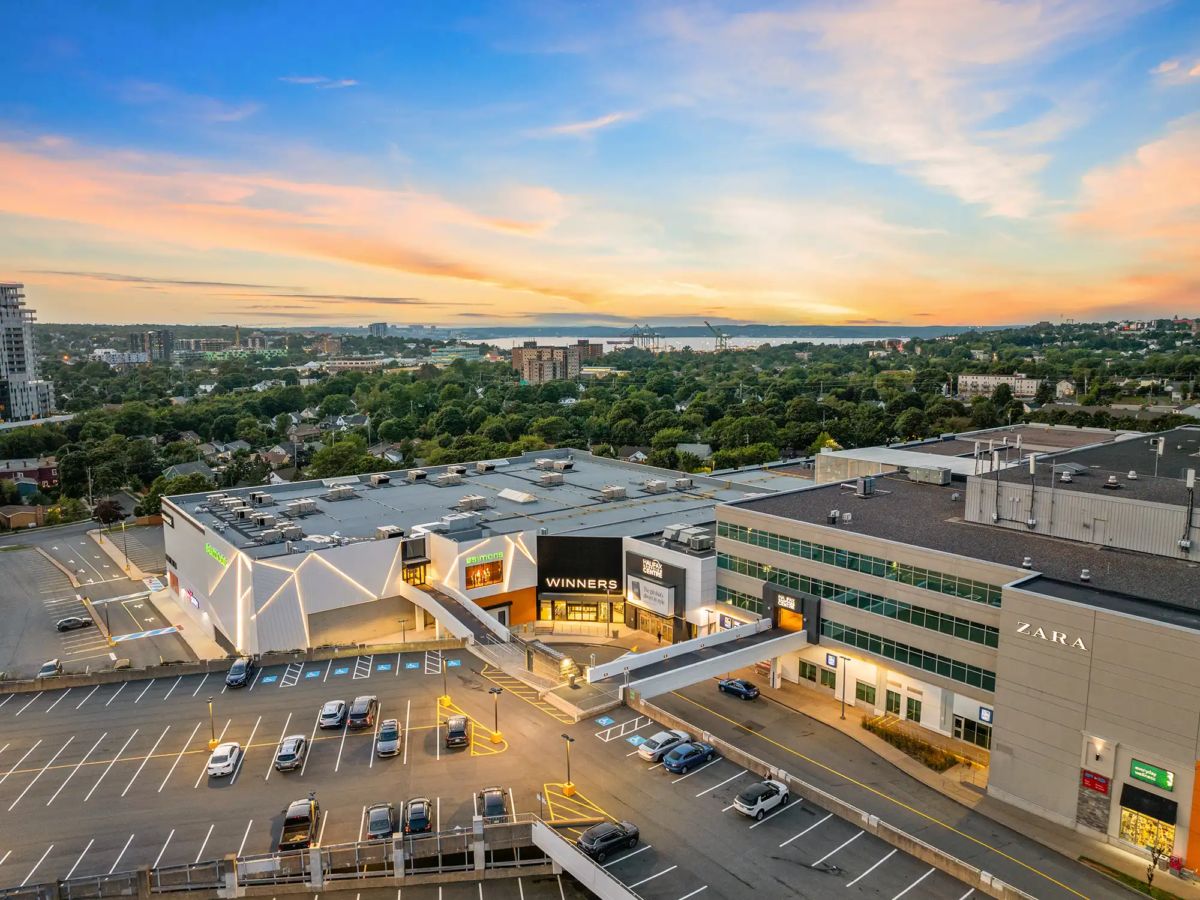
Halifax Shopping Centre. Photo: Primaris REIT
Hudson’s Bay Helped Change the Equation
Although Primaris had been evaluating excess land opportunities before Hudson’s Bay’s collapse, the department store’s exit has helped accelerate the process.
For decades, many Hudson’s Bay leases contained provisions that restricted development on portions of shopping centre properties. Those restrictions often extended beyond the department store itself and affected adjacent parking areas and potential development sites.
“HBC had quite a bit of restrictions that constrained our ability to action some of the parking lands,” Schonfeldt said.
With many of those restrictions now removed, Primaris has more flexibility to evaluate opportunities that previously would have been difficult to pursue.
Avery has described the impact as significant. He noted that Primaris previously disclosed 71 acres that were directly affected by no-build restrictions, though the practical impact extended well beyond that acreage because of how those restrictions shaped site planning and development options.
The result is that land which may have been difficult to monetize in the past can now be examined through a different lens.
“The bankruptcy of HBC coincides with my joining the company, and my prior work experience really lends itself to this project of monetizing these land dispositions,” Schonfeldt said.
Looking Beyond Residential Development
While residential development often dominates conversations around shopping centre intensification, Schonfeldt said Primaris is evaluating a much broader range of opportunities.
The company is examining potential uses including seniors housing, hotels, self-storage facilities, student housing and workforce housing.
Every market presents different opportunities.
Toronto’s condominium market remains challenged, while other markets may be experiencing stronger development conditions. Some sites may be attractive to hotel developers. Others may be better suited to seniors housing or student accommodation.
“Every city has its own story. Every neighbourhood has its own story,” Schonfeldt said.
He pointed to seniors housing as an area generating particular interest.
“We’re also looking at seniors housing, which has quite a bit more momentum in the space right now. Our malls lend themselves very well towards that use.”
The accessibility of many shopping centres creates natural advantages for those uses. Many Primaris properties are located near transit routes, major roads and established residential communities while offering immediate access to retail services and amenities.
The company is also exploring opportunities that could deliver broader community benefits.
“If we can do something where we get the benefit of monetizing or surfacing some of this land value, but also giving something back to the community, that’s a very ideal usage for us,” Schonfeldt said.
Southgate Centre in Edmonton. Photo: Primaris REIT
A Different Strategy Than Many Mall Owners
Perhaps the most surprising aspect of Primaris’ approach is what the company does not plan to do.
Across Canada, many shopping centre owners have pursued large-scale mixed-use developments, often involving residential towers, joint ventures and multi-phase master plans spanning decades.
Primaris is taking a different path.
Schonfeldt said the company does not intend to become a residential developer. Instead, Primaris plans to identify parcels that can be severed and sold to developers, generating capital that can be reinvested into the core shopping centre business.
“This is strictly about severing and selling the land for cash,” he said. “It’s a way of raising cash without losing income, which we can reinvest in our core business.”
The reasoning is straightforward.
“We’re not high-rise developers,” Schonfeldt said. “We’re really good at the mall business.”
Rather than pursuing complex development projects directly, Primaris intends to focus on operating malls while allowing specialist developers to undertake residential, hospitality or other projects on lands acquired from the company.
“We’ll let the mall operators operate malls and let the land developers develop land,” he said.
The strategy allows Primaris to unlock value while maintaining a clear focus on its core expertise.
Dufferin Mall Provides a Case Study
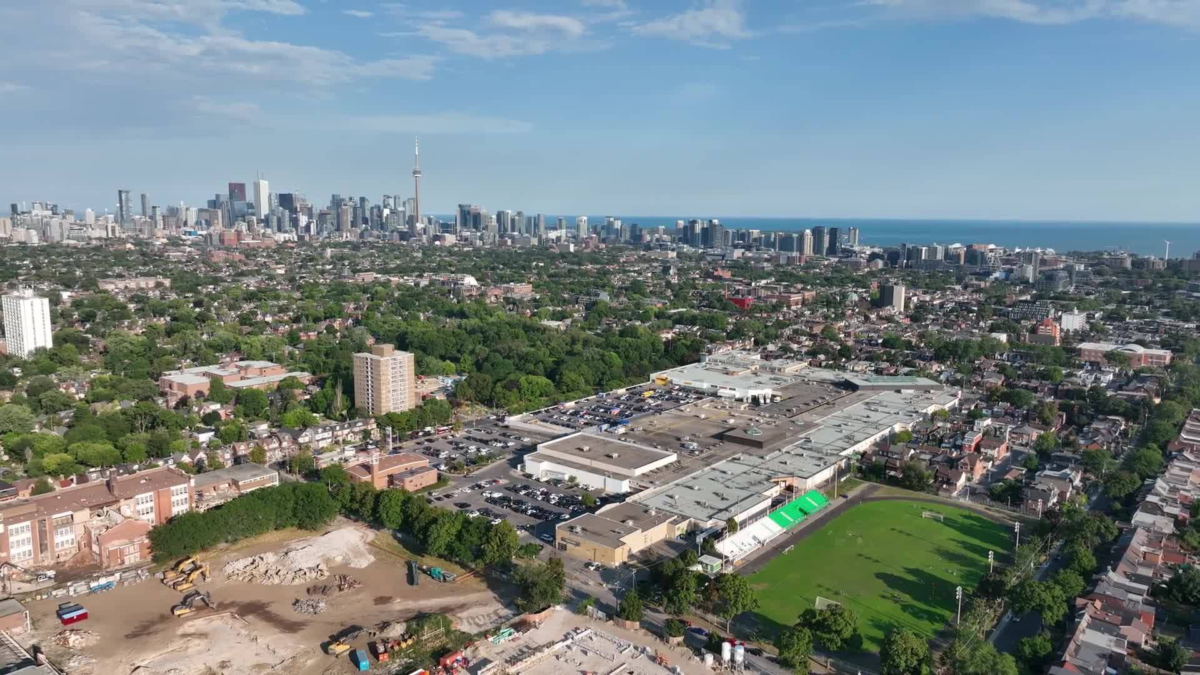
One property that illustrates the opportunity is Dufferin Mall in Toronto.
Located adjacent to a subway station and surrounded by ongoing urban intensification, the property sits on land that has become increasingly valuable as the city has grown.
Schonfeldt described Dufferin Mall as one of the company’s strongest excess-land opportunities.
“Dufferin Mall has some great land values,” he said.
The site has already undergone significant planning work.
According to Schonfeldt, Primaris has completed rezoning and severance work supporting more than one million square feet of potential future density on a four-acre parcel.
Yet despite the approvals, Primaris is not rushing to market.
The approach reflects the company’s preference to monetize land when market conditions are strongest rather than pursuing transactions simply because entitlements are already in place.
Toronto’s development sector remains challenged, and management believes patience will ultimately create greater value.
“This one to us is an incredible excess land story,” Schonfeldt said. “We think it will best serve our unitholders by deferring a potential sale for a couple of years.”
That flexibility is one advantage of Primaris’ national portfolio. Rather than forcing development activity in weaker markets, the company can prioritize locations where demand, liquidity and development conditions are strongest.
“We’re really looking to work on sites where we’re near the top of the development cycle and where we can maximize proceeds,” Schonfeldt said.
Dufferin Mall in Toronto. Photo: Primaris REIT
Why Existing Shopping Centres Are Becoming More Valuable
The excess land strategy reflects a broader view of Canadian retail real estate.
Schonfeldt argues that existing regional shopping centres are becoming increasingly difficult to replicate. Land assembly is more challenging, construction costs remain elevated and opportunities to build new enclosed malls are limited.
“You need fifty contiguous acres,” he said.
Acquiring that much land and developing a modern regional shopping centre has become increasingly difficult in many Canadian markets.
As a result, he believes existing centres are benefiting from growing scarcity.
“I would say it’s near impossible, which we think creates a big moat or fortress around the existing supply,” he said. “This space is virtually irreplaceable.”
At the same time, retail space per capita continues to decline as population growth outpaces new shopping centre development.
For Primaris, that reinforces the value of maintaining a strong retail platform while selectively unlocking value from lands surrounding its properties.
As Primaris enters its next phase of growth, management increasingly sees the land surrounding its shopping centres as an opportunity to create additional value without losing focus on the malls themselves.
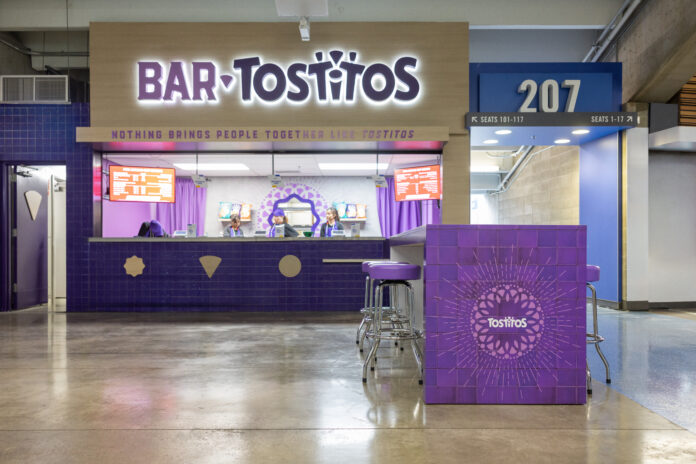
Tostitos has opened its first Bar TOSTITOS food concession at BC Place in Vancouver during the FIFA World Cup 2026, introducing a permanent stadium dining concept that the company says will remain in place after the tournament.
The concession will operate during FIFA World Cup matches at BC Place before continuing as a food outlet for concerts, sporting events and other live entertainment through December 2029.
The launch marks the brand’s first Bar TOSTITOS location and expands its presence beyond packaged snack products into stadium food service. The company said the concept is intended to offer a menu of shareable nacho dishes featuring both Canadian-inspired and internationally influenced flavours for fans attending matches in Vancouver.
“Bar TOSTITOS is more than an in-arena snack, it’s a celebration of togetherness,” said Shirley Mukerjea, Chief Marketing Officer, Tostitos. “We’re proud to create a space where fans can dig in, share great food, and be part of the excitement of the FIFA World Cup right here in Canada.”
Located on Concourse Level 2, Section 207 of BC Place, the concession offers five nacho options served in custom Tostitos x FIFA World Cup 2026 bowls using either Tostitos Restaurant Style tortilla chips or Tostitos Gold tortilla chips.
The menu includes a Canadian Classic Nachos option featuring cheese curds, Canadian back bacon, queso, cheddar, banana peppers, onion and smoky maple aioli. Other offerings include Beef Taco Nachos with seasoned ground beef, cheddar, sour cream, shredded lettuce, diced onion and pico de gallo; Peri Peri Chicken Nachos topped with peri peri chicken, peri mayo, cheese sauce and pico de gallo; Island Jerk Chicken Nachos featuring jerk chicken, mango salsa, lime crema and cilantro; and Classic Nachos served with warm cheese and salsa.
The company said the menu was developed to reflect a range of flavours while providing shareable food options for fans attending matches and other events at the stadium.
Shirley Mukerjea
The concession is designed to combine a traditional stadium concession with a broader food offering as BC Place prepares to host FIFA World Cup matches.
“With Bar TOSTITOS, we’re creating a destination that complements the energy of BC Place Vancouver and the global spirit of the FIFA World Cup,” added Mukerjea. “It’s about making every moment count, because nothing brings people together like Tostitos®.”
Tostitos is one of Frito Lay Canada’s snack brands, alongside Lay’s, Doritos, Ruffles, Smartfood and Cheetos. The company said Bar TOSTITOS will continue operating at BC Place after the FIFA World Cup, serving patrons attending concerts, sports events and other live entertainment through the end of 2029.
New mobility data suggests the opening match of the FIFA World Cup at SoFi Stadium in Inglewood, California attracted a large number of visitors from outside the immediate area while driving higher traffic to nearby retailers, restaurants and hotels, according to Arity.
Arity said its analysis, based on anonymized mobility data from more than 45 million U.S. drivers, found that nearly half of the devices tracked at the event had not been within a 10-mile corridor surrounding SoFi Stadium during the previous week, pointing to a significant non-local presence on match day.
The findings offer an early indication of how the tournament may influence consumer activity in host cities like Toronto and Vancouver as matches continue, based on observed changes in visits to retailers and other businesses surrounding the opening game.
According to the analysis, 48 per cent of devices detected near the stadium on match day had not been in the surrounding 10-mile area during the previous week.
The company also reported a sharp increase in visits to sporting goods stores, with traffic rising 123 per cent compared with the previous Friday. Lunchtime visits to those stores more than doubled over the same period.
Grocery store visits increased 30 per cent overall, while several retailers recorded larger gains.
Arity said visits to Erewhon rose 300 per cent, Costco locations saw a 163 per cent increase, Trader Joe’s recorded a 45 per cent increase and Starbucks visits were up 76 per cent.
The analysis also found higher activity at other nearby businesses as visitors arrived for the match.
Hotel visitations increased 42 per cent, while restaurant visits were up 26 per cent ahead of kickoff.
The company said the patterns observed around the opening match could provide an early indication of how major events influence consumer shopping behaviour and retail traffic as the World Cup continues in other host cities.
Real gross domestic product (GDP) grew 0.5% in April, after contracting 0.1% in March, on strength in both goods-producing and services-producing industries, reported Statistics Canada on Tuesday.
And it said advance information indicates that real GDP by industry increased 0.1% in May.
Goods-producing industries rose 1.2% in April, reflecting growth in most sectors and driven by mining, quarrying, and oil and gas extraction. Services-producing industries grew 0.3%, rising for the third month in a row, driven by growth in the public sector and transportation and warehousing. Overall, 14 of the 20 industrial sectors grew in April, explained the federal agency.
It said the mining, quarrying, and oil and gas extraction sector rose 2.9% in April, the largest monthly growth rate since February 2024 (+3.2%), more than offsetting March’s 1.4% contraction. This third increase in four months was driven by increases in oil and gas extraction, along with support activities for the mining, and oil and gas extraction subsectors.
The public sector aggregate (comprising educational services, health care and social assistance, and public administration) expanded 0.4% in April, on widespread increases across all comprising sectors, added Statistics Canada.
“Public administration (+0.7%) was the largest contributor to the growth for the second consecutive month in April, with higher activity across all levels of government in the month. Federal government public administration (except defence) (+0.6%) posted its first increase in four months while defence services (+0.7%) recorded its seventh consecutive monthly increase. Health care and social assistance (+0.2%) as well as educational services (+0.4%) further added to growth in the public sector,” it said.
“The manufacturing sector rose 0.6% in April, driven by expansions in durable-goods manufacturing industries.
“Durable goods manufacturing industries expanded 1.1% in April, more than offsetting the decline recorded in March. The machinery manufacturing subsector (+3.0%) led the rebound, on strengths in the metalworking machinery manufacturing and industrial machinery manufacturing industry groups, coinciding with higher exports of industrial machinery, equipment and parts. Wood product (+2.6%) and non-metallic mineral product (+5.9%) manufacturing further added to the growth.
Andrew Grantham
“Non-durable goods manufacturing was unchanged in April. Petroleum and coal product manufacturing (+5.8%) expanded for the third consecutive month in April, reflecting ramped-up production in petroleum refineries (+5.6%) and petroleum and coal product manufacturing (except petroleum refineries) (+7.5%). The increase coincided with higher exports of refined petroleum energy products in April. Fully offsetting the growth was a 6.8% contraction in chemical manufacturing.”
“However, this is probably stronger than the underlying pace of growth within the economy, with Q2 flattered somewhat by a rebound in mining, oil & gas, as well as potentially a boost from FIFA World Cup spending and preparations. Because of that we could see growth slow to a slightly more modest pace in Q3, and we continue to see the need for interest rates to remain at current levels to support a sustainable recovery,” he noted.
Marc Ercolao, Economist, TD, said: “April’s stronger-than-expected print points to a better handoff into the second quarter with Q2 growth now tracking above 2.0% annualized. Zooming out, that leaves the first-quarter stumble looking more like a temporary soft patch than the start of a deeper downturn, broadly in line with the Bank of Canada’s view that growth should resume in Q2 even if the economy remains in excess supply.
Marc Ercolao
“The bigger message here is that this reading should take some air out of the recent “technical recession” narrative. The economy is grinding through a soft patch, but household demand is still providing support to activity, while trade exposed industries are pointing to a tentative recovery. For the Bank of Canada, this argues for patience rather than a pivot. Firmer near-term growth lowers the urgency to ease, while inflation pressures that remain contained for now give the Bank cover to stay on the sidelines.”
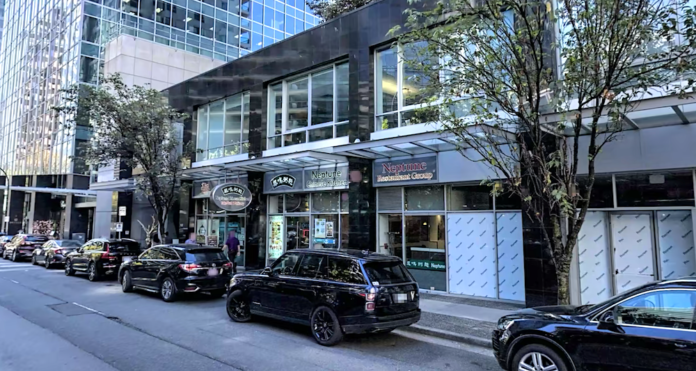
1132 Alberni Street in Vancouver. Image: Apple Maps
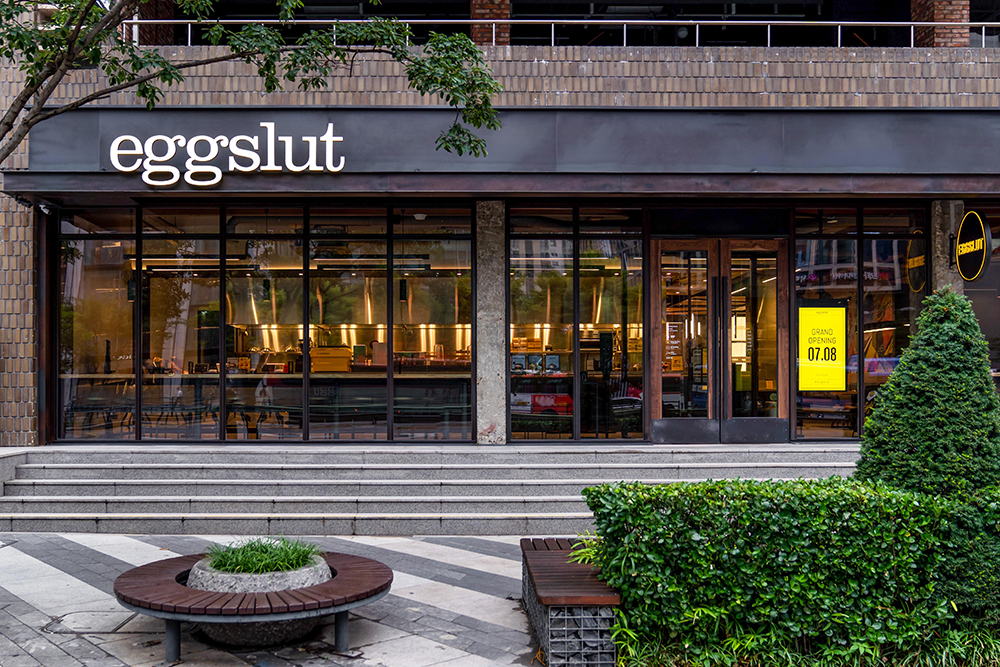
The location of Eggslut‘s first Vancouver restaurant has come into public view, with branded construction hoarding now wrapping a storefront at 1136 Alberni Street in downtown Vancouver.
The Los Angeles-born breakfast concept will open in the former Neptune Chinese Kitchen retail space, located below Din Tai Fung’s first Canadian restaurant, adding another internationally recognized food brand to one of Vancouver’s evolving luxury and hospitality districts.
Retail Insider first reported in February that Westrich Hospitality planned to bring Eggslut to Canada with restaurants in Toronto and Vancouver, though the Vancouver address had not yet been disclosed publicly.
The storefront wrap reads “Cracking Vancouver, Opening 2026” and directs passersby to a newly launched Eggslut Canada Instagram account. Recruitment signage has also appeared on the windows, indicating preparations for the opening are well underway, though no specific opening date has been announced beyond a 2026 timeline.
Photo: Eggslut
Canadian Rollout Continues Following Toronto Debut
The Vancouver restaurant represents the next phase of Eggslut’s Canadian expansion.
The company’s first Canadian location opened at 545 King Street West in Toronto on April 30 and quickly attracted long lineups from consumers eager to try the internationally known breakfast concept. Construction also continues on a second Toronto restaurant at Yonge and Dundas, which remains slated to open this summer.
Westrich Hospitality, which holds the exclusive Canadian development rights for Eggslut, has indicated that it sees long-term potential for approximately 30 restaurants across the country.
Earlier this year, Adam Flook, Development Lead at Westrich Hospitality, told Retail Insider that the company intended to pursue a measured expansion strategy centred on high-profile urban locations in major Canadian markets.
The Alberni Street location fits squarely within that approach. The site sits in the heart of downtown Vancouver and draws from a mix of office workers, tourists, local residents and luxury shoppers.
Eggslut’s decision to locate on Alberni Street underscores the continued transformation of one of Canada’s most prominent urban retail districts.
Long associated with luxury hotels, high-end residential towers and designer boutiques, the corridor has increasingly become a destination for internationally recognized restaurant concepts and premium hospitality offerings.
The new restaurant will open steps from a growing cluster of luxury brands. Across the street, a new boutique for Rolex is under construction at the former Shangri-La Hotel, now operating as the Hyatt Vancouver Downtown Alberni. Nearby storefronts include boutiques for Tudor and Chopard.
Just around the corner on Thurlow Street, Italian luxury house Brunello Cucinelli is expanding into a larger retail space recently vacated by Thom Browne.
The broader neighbourhood is home to many of the world’s leading luxury brands, including Prada, Balenciaga, Burberry, Saint Laurent, Moncler and Van Cleef & Arpels. Closer to Burrard Street, luxury anchors include Tiffany & Co., Cartier, Hermès, Louis Vuitton and Dior.
The arrival of both Din Tai Fung and Eggslut illustrates how destination restaurants are increasingly becoming part of the formula for successful luxury districts. Food and beverage concepts now play an important role in extending visits, increasing foot traffic and creating a sense of place alongside high-end retail and hospitality uses.
Eggslut location in Seoul, South Korea. Image: SPC
From Los Angeles Food Truck to Global Brand
Eggslut was founded by chef Alvin Cailan as a food truck in Los Angeles in 2011 before becoming a culinary phenomenon at Grand Central Market in Downtown Los Angeles.
The brand built its reputation around a tightly focused menu centred on gourmet egg sandwiches and breakfast dishes, including its signature offering, “The Slut,” a coddled egg served over potato purée in a glass jar with slices of baguette for dipping.
Since then, the company has expanded internationally with locations in the United States, Canada, the United Kingdom, Japan and Australia.
Its forthcoming Vancouver restaurant will mark another milestone in the brand’s international growth while adding another globally recognized name to one of Canada’s premier luxury and hospitality districts.
As CUSMA (the Canada-United States-Mexico Agreement) negotiations move into their next phase, the Canadian Federation of Independent Business (CFIB) is calling on the federal government to ensure small business priorities are front and centre.
Dan Kelly
“Small business owners are frustrated. The ongoing uncertainty around tariffs and trade has delayed real decisions on investment and growth. Protecting Canada’s existing CUSMA exemptions must remain government’s top priority,” said Dan Kelly, CFIB president. “While Canada’s continued tariff-free CUSMA access has helped enormously, small businesses are facing several major pain-points, including sectoral tariffs on steel and aluminum and challenges for small volume exporters in demonstrating CUSMA compliance.”
The CFIB is Canada’s largest association of small and medium-sized businesses with 103,000 members across every industry and region.
According to CFIB’s latest research, 64% of small businesses support taking the time needed to secure the best possible terms for renewed or renegotiated CUSMA, compared to only 16% who would prefer a quicker but potentially less favourable agreement.
Canada–U.S. business relationships have weakened significantly during the trade war, with 75% of SMEs saying the tariff fight has strained their relationships with U.S. partners or clients in April 2026, up sharply from 49% in March 2025. Only 40% of small firms now view the U.S. as a reliable trading partner, said the organization.
As a result, 48% of SMEs trading with the U.S. have shifted to non‑U.S. suppliers or customers. Among those, nearly three-quarters are pivoting to domestic markets. Beyond Canada, Asia (40%) and EU countries (39%) are the top alternatives though high shipping costs, border delays and complex custom procedures limit broader trade diversification, it added.
“While business owners are doing what they can to diversify their trade, we’re never going to be able to entirely replace the 340-million-person market that exists right along our border. That’s why it’s so important to get this right and get a deal that business owners are confident will hold for years to come,” said Kelly.
Corinne Pohlmann
As talks continue, the CFIB said negotiators should seek out areas where there is common ground for improvement, including making CUSMA more accessible to small business owners, streamlining customs rules at the border and clarifying rules of origin.
“As negotiators look ahead to the next version of the agreement, they need to understand it’s not an easy process for small businesses to navigate. Unclear rules of origin, and high compliance and administrative costs mean some small firms are forced to weigh paying tariffs instead of using CUSMA,” said Corinne Pohlmann, CFIB executive vice-president of advocacy. “We can do better. Ottawa must ensure that small business voices are included in trade negotiations and secure a deal that is clear, accessible and works for businesses of every size.”
Welcome to the Daily Synopsis by Retail Insider. We published 6 articles covering prominent developments in Canadian retail and real estate.
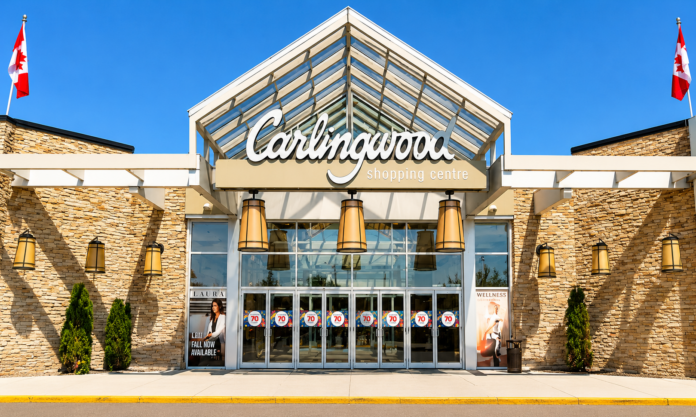
Carlingwood Shopping Centre in Ottawa celebrates 70 years and highlights its evolution from a department store anchor to a neighbourhood hub with grocery and pharmacy services through a strategic redevelopment that included introducing a flagship Canadian Tire. Urban Nature Store has expanded to 10 locations across Ontario as more Canadians embrace backyard birding and nature-related hobbies, reflecting consumer interest in local engagement and specialty retail. Cadillac Fairview is selling CF Shops at Don Mills to focus its portfolio on high-productivity flagship malls, while the property offers investors a stable retail asset with long-term redevelopment potential in a prime Toronto location.
In British Columbia, Redbrick has proposed redeveloping a vacant downtown Victoria site into the Westholme Hotel, addressing anticipated demand for new hotel rooms and revitalizing a historic area with public-facing spaces. These stories illustrate a range of active retail and urban development projects across Canada that respond to changing consumer and market dynamics.
The Ottawa shopping centre is marking its 70th anniversary with roller skating, vintage cars and family activities that celebrate a property that has been part of daily life in the city’s west end for generations.
Few shopping centres in Canada have reached such a milestone.
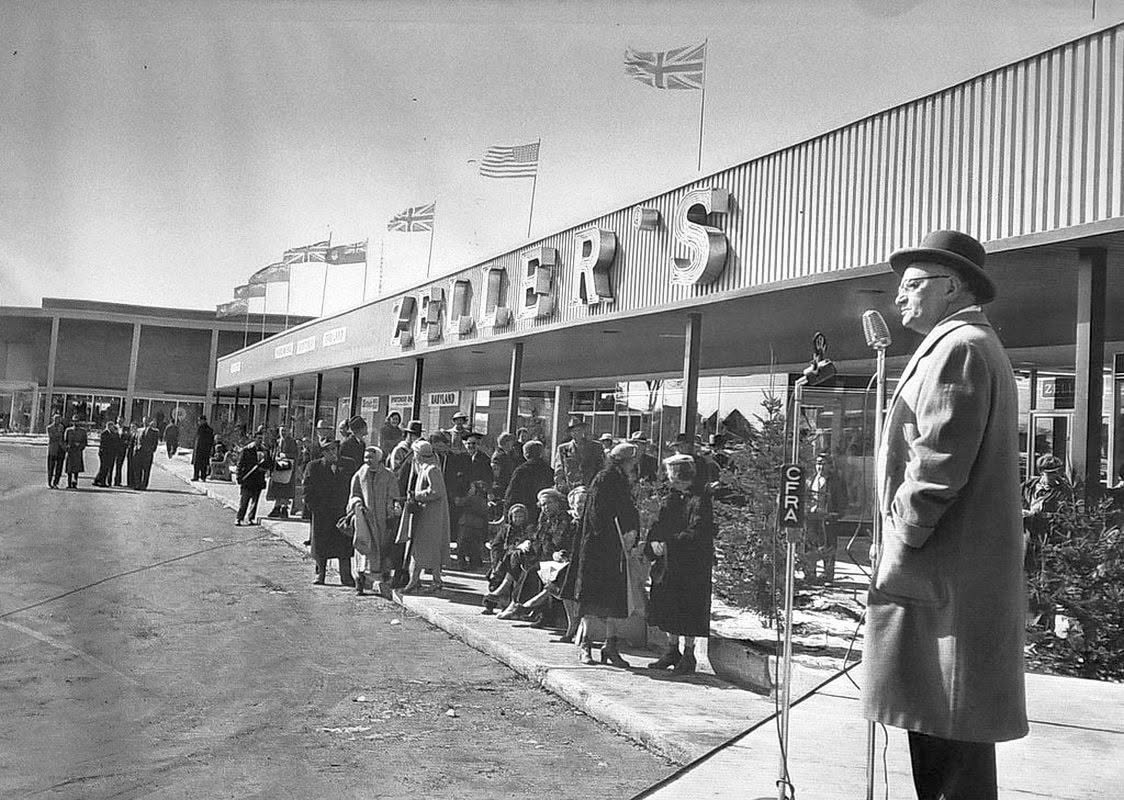
When Carlingwood opened in 1956, it was promoted as the largest shopping centre in Eastern Canada. The centre arrived during the postwar boom, as new suburban communities spread beyond Ottawa’s traditional core and the automobile transformed the way Canadians shopped.
Seventy years later, Carlingwood remains a busy retail destination despite dramatic changes that have reshaped the industry around it.
The shopping centre has outlasted department stores, adapted to the rise of regional malls and big-box retail and navigated the growth of e-commerce. In many ways, its history mirrors the evolution of Canadian retail itself.
Carlingwood Mall opening in 1956
A New Era of Shopping in Ottawa
The 1950s ushered in a new chapter for Ottawa retail.
As families moved into rapidly growing suburban neighbourhoods, shopping centres emerged as a modern alternative to traditional downtown shopping districts. Carlingwood became one of the city’s defining retail destinations, offering the convenience of multiple stores, abundant parking and a shopping experience designed for the automobile age.
The original development featured a two-storey Simpsons-Sears department store and a large Loblaws supermarket. The mall built between those anchors was home to retailers including Woolworth’s, Reitmans, Fairweather, Kiddytown and Zellers.
For many Ottawa residents, Carlingwood became more than a place to shop. It became a community gathering place where families spent weekends, met friends and embraced the growing culture of suburban retailing.
As Ottawa expanded, so did its shopping landscape. Larger regional destinations eventually emerged, including Bayshore Shopping Centre and the downtown-focused Rideau Centre. New power centres and big-box developments later changed shopping patterns once again.
Yet Carlingwood endured. The centre was enclosed and modernized in 1971, beginning a pattern of reinvention that would become one of its defining characteristics.
Carlingwood Mall in 1958
Adapting to a Changing Retail Landscape
The history of Carlingwood is, in many respects, the history of Canadian retail.
The centre experienced the golden age of department stores and later watched as traditional anchors lost their dominance. It saw consumers embrace discount retailers and category killers and later witnessed the rise of online shopping and digital commerce.
Many shopping centres of a similar age struggled to navigate those transitions. Some were redeveloped. Others lost their relevance altogether. Carlingwood evolved into something different: a community shopping centre focused increasingly on convenience and everyday needs.
Its mix of grocery, pharmacy, banking, dining and service-oriented tenants has helped it remain closely connected to the surrounding neighbourhoods that have supported the centre for decades.
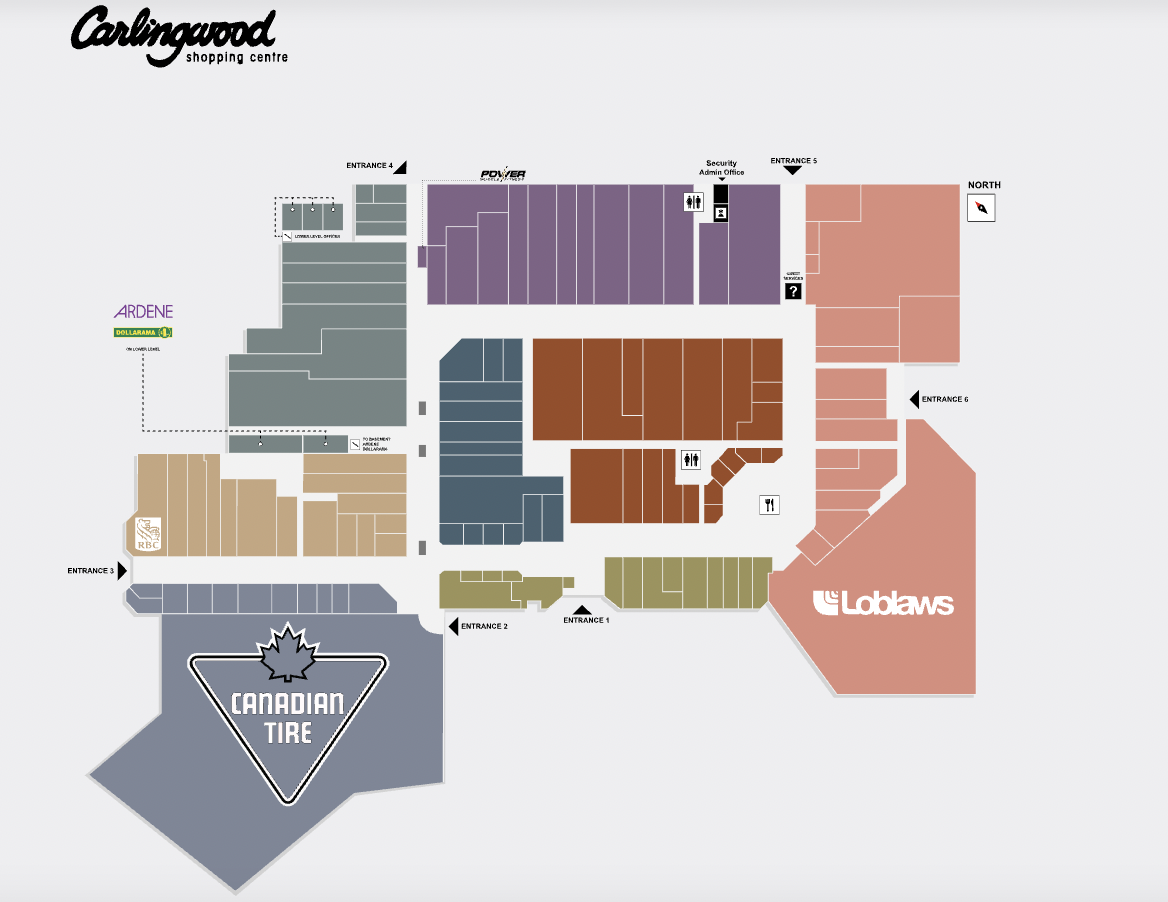
Click image for interactive mall map
The Sears Closure Became an Opportunity
One of the most significant moments in the shopping centre’s history came in 2018 when Sears Canada closed its doors.
Across the country, the collapse of Sears left shopping centre owners facing difficult questions about how to replace massive department store spaces that had anchored malls for generations.
At Carlingwood, the answer became one of the property’s biggest reinventions.
The former Sears building was demolished and replaced by a massive new Canadian Tire location that is widely regarded as the largest Canadian Tire store in the country.
The transformation reinforced Carlingwood’s role as a destination for practical, everyday shopping and demonstrated that older shopping centres can remain successful when they adapt to changing consumer needs.
In many respects, the replacement of Sears with Canadian Tire symbolizes a broader shift in Canadian retail. The era of the traditional department store has given way to retailers that focus on convenience, value and products that are woven into daily life.
Why Community Shopping Centres Continue to Matter
Carlingwood is not Ottawa’s largest mall, nor is it trying to become a luxury retail destination. Its strength lies elsewhere.
Community shopping centres have shown remarkable resilience because they serve local needs in ways that are difficult to replicate online. Grocery shopping, pharmacy visits, banking and everyday errands continue to bring customers through their doors on a regular basis.
Carlingwood’s accessible location, ample parking and neighbourhood-oriented tenant mix have allowed it to remain relevant while many older shopping centres have faded.
The property also remains deeply connected to the communities that surround it, serving not only as a retail destination but as a social and community hub.
Looking Toward the Next Chapter
Carlingwood entered a new era in 2024 when Streamliner Properties and Anthem Properties Group acquired the 30-acre shopping centre.
The new owners have highlighted the property’s proximity to Ottawa’s expanding LRT network and its long-term potential for incremental residential density.
Those comments reflect a broader trend unfolding across Canada as shopping centre owners increasingly explore opportunities to add housing to large urban properties while preserving successful retail uses.
No major redevelopment plans have been announced publicly for Carlingwood. Still, its size and location suggest that the shopping centre could continue evolving in the decades ahead.
That possibility feels fitting for a property that has spent the past 70 years adapting to change.
A Legacy of Reinvention
Carlingwood Shopping Centre’s anniversary is about more than longevity. It is about resilience.
Few shopping centres that opened during the postwar suburban boom remain important retail destinations today. Fewer still have managed to reinvent themselves repeatedly while maintaining a strong connection to their communities.
Seventy years after welcoming its first shoppers, Carlingwood stands as a reminder that successful shopping centres are rarely static. They endure because they evolve.
The future of Canadian retail will likely include more mixed-use communities, transit-oriented development and new forms of shopping. If the past seven decades are any indication, Carlingwood will continue finding ways to adapt to whatever comes next.
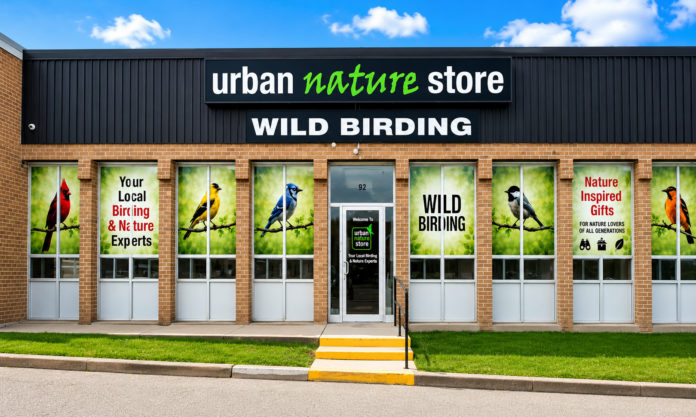
Urban Nature Store in Thornhill. Image supplied/modified
As more Canadians spend time closer to home this summer, many are rediscovering the simple pleasure of watching birds in their own backyards. For Urban Nature Store, that growing appreciation for nature has helped fuel the expansion of a Canadian specialty retailer that has quietly reached an important milestone.
The company has opened its 10th store at 92 Doncaster Avenue in Thornhill, marking a significant achievement for the business founded by Paul Oliver more than 25 years ago. The opening comes as interest in birdwatching, backyard wildlife and other nature-related hobbies continues to build across Canada.
“We’re incredibly grateful for the support Canadians have shown us over the past twenty-five years,” said Oliver. “Opening our tenth store isn’t simply about growth—it’s about continuing to build a community of people who care about nature, wildlife and protecting the environment for future generations.”
Founded in 2000, Urban Nature Store has grown from a single location into a network of 10 stores across Ontario, including locations in Ancaster, Etobicoke, Kingston, Markham, Mississauga, North York, Oshawa, Pickering, St. Catharines and now Thornhill. The retailer also serves customers nationally through e-commerce and employs approximately 75 full- and part-time team members.
Building a Business Around Nature
Urban Nature Store’s growth is rooted in a simple idea: helping Canadians connect with the natural world around them. For Oliver, birding has always been personal.
“It was something my mother and I shared together, and those are memories I’ve carried with me my whole life,” he said.
Today, he sees that connection being passed along to a new generation of customers.
“In a world filled with screens, bird feeding gives families a simple way to spend time together while helping kids develop an appreciation for wildlife and the environment,” Oliver said.
That sense of community has become one of the company’s defining characteristics. Many employees were once Urban Nature Store customers themselves, developing a passion for birding before eventually joining the business.
The loyalty extends to customers as well. More than 90 per cent of shoppers participate in the company’s free rewards program, while combined in-store and online sales are running approximately 17 per cent ahead of last year.
“We’ve been incredibly fortunate to build a loyal community of customers who keep coming back, not just because of the products we sell, but because they know they’ll receive honest advice and personal service,” Oliver said.
Birding Goes Mainstream
Urban Nature Store’s expansion comes amid broader changes in how Canadians are spending their leisure time.
Statistics Canada has reported that more than one-quarter of Canadian households purchase products to feed or shelter birds, while millions of Canadians participate in wildlife viewing and birdwatching activities each year.
At the same time, economic pressures and changing travel habits are encouraging many Canadians to spend more time closer to home this summer, leading some to rediscover local parks, gardens and backyard hobbies.
Oliver said the company saw an extraordinary increase in interest during the pandemic as people spent more time at home and began paying closer attention to the wildlife outside their windows.
“Initially, we thought that interest might fade once life returned to normal,” he said. “Instead, the opposite happened.”
Many customers discovered that birdwatching is relaxing, educational and surprisingly addictive.
“Once someone sees a colourful cardinal or a hummingbird visiting their feeder for the first time, they’re hooked,” Oliver said.
The demographics of birding have also broadened significantly.
“There used to be a stereotype that birding was mostly a hobby for retirees,” he said. “That couldn’t be further from today’s reality.”
The retailer is increasingly seeing young professionals, families with children and newcomers to Canada embracing birdwatching and nature-related activities.
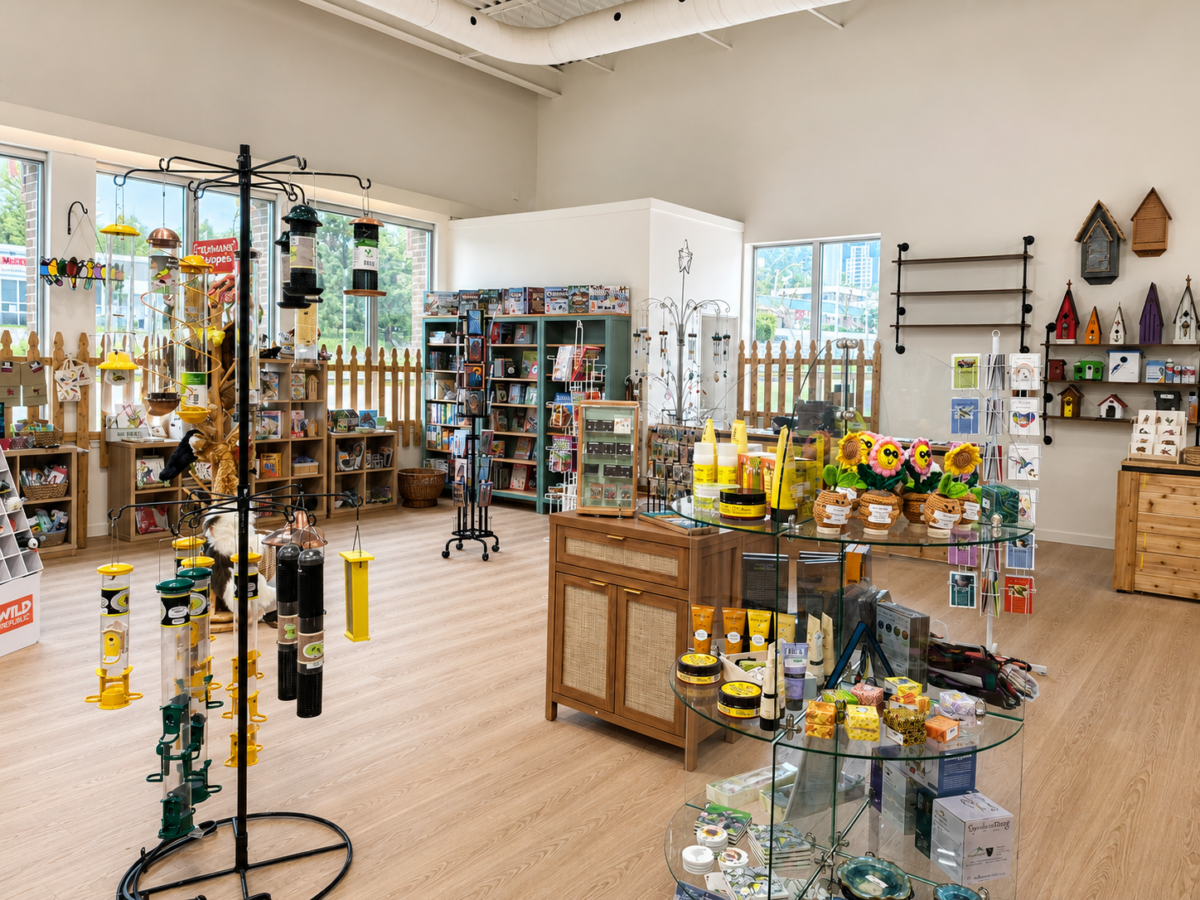
Urban Nature Store in Thornhill. Image supplied/modified
A Growing Interest in Canadian-Made Products
Another trend benefiting the company is growing consumer interest in supporting Canadian businesses and purchasing locally made products.
“We’re proudly Canadian-owned and Canadian-managed, so supporting Canadian suppliers feels like a natural extension of who we are,” Oliver said.
Urban Nature Store offers many products sourced from Canadian manufacturers and has collaborated with domestic suppliers to develop exclusive items for its stores.
“One of the biggest surprises over the past couple of years has been discovering just how much manufacturing expertise exists in Canada,” Oliver said.
That focus has become increasingly important as more customers ask where products are made and look for ways to support Canadian companies.
Expanding With Purpose
The decision to open in Thornhill was driven by both customer demand and data from the company’s online business.
“We regularly received emails and comments from customers saying, ‘When are you opening a store in Thornhill?'” Oliver said.
By examining online sales patterns, Urban Nature Store identified the community as an underserved market with strong interest in birding and nature products.
Despite reaching 10 locations, the company says it remains committed to measured expansion.
“We’d rather open the right stores, in the right communities, while maintaining the level of customer service that has defined us since 2000,” Oliver said.
Additional growth opportunities are being explored, though the company says maintaining the customer experience remains its top priority.
Beyond Retail
Urban Nature Store sells bird feeders, seed, optics, nature-inspired gifts, educational toys, gardening products and seasonal décor, but Oliver says the company’s purpose extends beyond retail.
This year alone, the company will host more than 30 free guided bird walks in communities where it operates. It also offers a binocular lending program for schools, community groups and aspiring birders.
“If someone leaves one of our stores or attends one of our events with a greater appreciation for birds and wildlife, we’ve accomplished something meaningful,” Oliver said.
Twenty-five years after opening its first store, Urban Nature Store is showing how specialty retail can thrive by building community, offering expertise and helping people reconnect with the natural world just beyond their back doors.