Home Blog Page 1234

Brands and Manufacturers Lose Without Digital

By Suthamie Poologasingham

It’s old news that the digital channel plays a critical role in the path to purchase―from online research to social media reviews to consumer product ratings, shoppers are researching before they ever set foot in store. Physical locations are no longer the “first” nor even the “last mile” in the path to purchase thanks to online and omni-channel shopping.

Save the retail behemoths, like Walmart and Amazon, most retailers who carry multiple brands and products are unable to keep up with the information needs of consumers. In many cases, manufacturers and brands are becoming the critical source of information, helping to drive sales and educate consumers.

Despite the need for brands and retailers to play well together, there still remains the fear of retail cannibalization.

Retail cannibalization: Similar to channel cannibalization, many brands and manufacturers shied away from creating a digital presence for fear of diverting their partners’ revenue stream.

Example: Levi Strauss and Maytag in the early 2000s had their own direct-to-consumer site but complaints from dealer networks and stores forced them to close it down. Similarly in the food industry, producers and growers were dependant on the retailer to promote their product in-store and influence the buying decision.

However as more retailers produce private labels, from Costco’s “Kirkland” to Macy’s multitude of private brands (e.g., Charter Club, Ideology, etc.), other brands must determine how to stand out and bring value to their retailers, customers, and their own bottom line.

Showrooming is driven by high smartphone penetration rates of 73% in Canada and upgrades to the “net” to be mobile accessible. Therefore having an informational digital presence is essential for manufacturers and brands for consumers who are looking up information on their product while in a store.

The decision to have an e-commerce presence is also beneficial to all parties if structured in a way so as not to undermine distributor/retailer sales of the same brand/product. In some cases, a credit to the distributor for a percentage of the sales (based on where the sale is delivered) is appropriate and helps boost overall sales. For brands and manufacturers the online channel has provided an integral opportunity to connect with consumers and support retailers’ increasing sales and satisfaction overall.

Recall that the buying decision is not always made at the “last mile,” in today’s information era. What are you doing to ensure your product or brand is top-of-mind when consumer’s do their research?

Written by: Suthamie Poologasingham, Sr. Advisor of Digital & Omni-Channel, and Director of Research at J.C. Williams Group. You can also read their informative blog, Retaileye, here: retaileye.wordpress.com

Mark’s Continues Store Expansion, Launches Flagship Prototype

PHOTO: EVENTSCAPE.NET

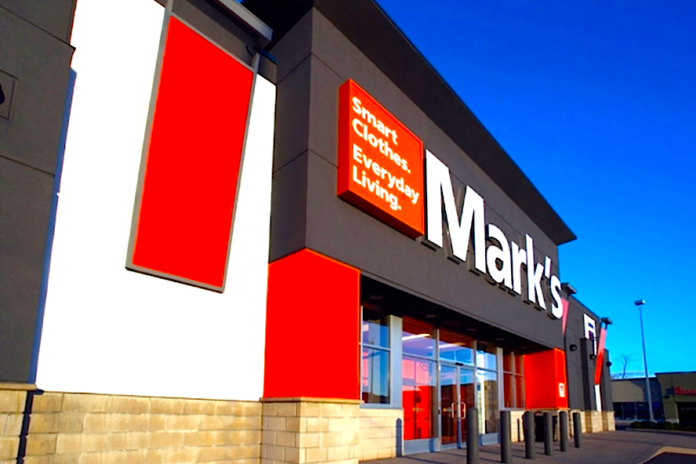
Calgary-based apparel and footwear retailer Mark’s (formerly Mark’s Work Wearhouse) continues to open Canadian stores and this fall, it will launch a ‘test store’, which will also be its largest to date. We spoke with Mark’s COO Rick White to learn more. 

Mark’s currently operates 383 Canadian locations. Mr. White says that Mark’s will continue to open stores, generally somewhere between five and 10 locations each year.  He says that Mark’s is also focused on expanding some of its more productive existing locations, including some deemed too small to serve increasingly high sales. The ideal size for a Mark’s location is now about 15,000 to 16,000 square feet, providing enough space for the retailer’s expanded product assortment as well as newly-added brands. Mr. White explains how regardless of location, access to the store is key. Even if a store is located in a shopping centre, for example, having an exterior entrance is convenient to industrially-employed customers dressed in workwear, not wishing to enter Mark’s via a mall. An external entrance close to parking also provides quick access for busy shoppers. 

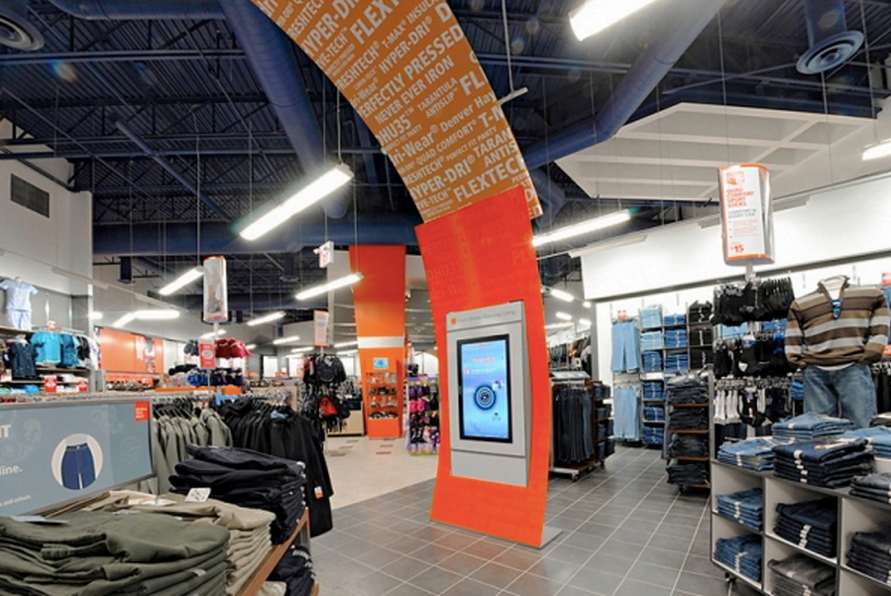
Mr. White reveals that Mark’s will open a 22,000 square foot ‘test store’ at West Edmonton Mall in October, which will also be the chain’s largest location. The store will feature multiple shops-in-stores for new brands including Helly Hansen, Columbia Sportswear and Alfred Sung, among others. Footwear will include wall installations for brands such ask Merrell and Sketchers, and a Levi’s shop-in-store will anchor a new denim area. Shoppers suggested that Mark’s bring in new top brands to its stores, and Mark’s will test them out alongside its existing popular in-house labels. If Mark’s sees success with the new strategy, it could roll it out into other locations nationally. As well, Mark’s continues to examine the possibility of opening locations within shopping centres, keeping in mind that exterior entrances will be popular with some of its shoppers. 

PHOTO: EVENTSCAPE.NET

Given its ‘test phase’, Mr. White says it’s hard to determine how many stores Mark’s will ultimately operate, and whether or not it will increasingly open in malls. He revealed that the Greater Toronto area currently sees its highest sales, primarily due to its large population.

We briefly discussed Mark’s introduction of iconic Canadian women’s fashion brand Alfred Sung to its stores. Sung launched at Mark’s last fall, and Mr. White says that sales have been exceptional with women of all ages. 

Mark’s will also launch an updated, bilingual, content-rich website in the fourth quarter of this year, as well as a French site for the province of Quebec. Mr. White says that although e-commerce is currently only a small part of its business, Mark’s hopes to see it grow substantially with its new web initiatives. Mark’s is also looking to grow its business-to-business operations as part of its holistic growth strategy. 

Mark’s (known as L’Equipeur in Quebec) was founded in Calgary in 1977, and has been part of the Canadian Tire Family of Companies since 2001. Mark’s has evolved from an industrial accessories dealer to the number one men’s casual and industrial apparel retailer in the country. Originally named ‘Mark’s Work Wearhouse’, the banner rebranded in 2012 as ‘Mark’s’ to appeal to a wider customer base and reflect its expanded product offerings.

Top Reasons Why We’re Attending This Year’s STORE Conference

exc-555e973ce4b0ddd6981bd547

Cyber crime in Canada. Cutting-edge global retail trends. Amazon and Alibaba’s goals for world domination. Results of a first-ever Canadian e-commerce benchmark study. These and other topics are why we’re attending this year’s Retail Council of Canada STORE Conference in Toronto, on June 2 and 3. It’s the largest retail industry conference in Canada, attracting over 2,000 leaders from the retail, supplier, and consumer products community. There’s still time to register. Here’s our top picks for why we’ll be attending, including some fascinating presenters discussing a wide range of retail industry topics. 
 
First off, cyber crime. Now that the U.S. is introducing card chip technology, it’s forecasted that criminals will turn their attention to Canada. FBI Cyber Operations Section Chief Christopher Stangl will be discussing the topic, including trends and what retailers can do for protection. He will be joined by FBI Supervisory Special Agent Michael Eubanks for the session Cyber Crime: A Modern Threat to Retail Security

Saks Fifth Avenue is coming to Canada, and improvements continue to be made to Hudson’s Bay. Both topics have gained thousands of readers on Retail Insider, and Hudson’s Bay Company CEO Gerald Storch will discuss the future of retail, including his company’s plans to significantly beef up e-commerce operations to compliment skyrocketing brick-and-mortar sales. 

Uber. Airbnb. Etsy. Shopify. These disruptors can teach retailers a lot, as they’re breaking the rules and winning while doing it. Shopify’s Chief Platform Officer will moderate a three-person panel discussing exciting innovations in the session titled Digital Disruptors Symposium: Learn From the Innovators & Rulebreakers!
 
We consider this presentation to be very important– the results of a first-ever Canadian e-commerce benchmarking study will be revealed at the conference. Forester Research assisted with the study and results will be discussed the morning of June 2 at Breakthrough Exclusive Research: The 1st Annual RCC eCommerce Benchmark
 
Another big trend, video, is now helping transform the way people shop. Founder and CEO of Joyus.com, Sukhinder Singh Cassidy, will provide a fascinating presentation on how video is becoming a critical component of what defines an engaging e-commerce site in her presentation How Video is Transforming the Way People Shop

Behemoth Alibaba is, by far, the world’s largest online marketplace. It’s growing rapidly, and it’s also a great way for Canadian retailers to reach the massive Chinese market. Sherri Wu of Alibaba will present the topic Scaling the Great Wall of China: A Conversation with Alibaba.  
 
The world’s second-largest online player, Amazon, is using groceries to connect with consumers more frequently. ‘Retail ProphetDoug Stephens will join Brad Stone, author of The Everything Store: Jeff Bezos and the Age of Amazon to provide an insider’s perspective on the ultimate retail disruptor. They’ll discuss how Amazon is disrupting retail through innovative technology such as Amazon Dash – a device in your kitchen where you scan products to be sent to your home. Amazon is also looking to get into the brick-and-mortar game, as it looks to reinvent the role of the store. 
 
There’s even a contest called the ‘ReBoot Challenge’. You can vote from a selection of startup companies which provide support (including technology) to retailers – they will briefly discuss their businesses, and the winner gets to present their winning product or solution to the RCC Board of Directors. Judges include Freshii CEO Matthew Corrin, a top 40 under 40 who also won last year’s Ernst & Young Entrepreneur of the Year award.

Learning from the best often means looking internationally, and the conference will feature speakers from popular Italian food concept Eataly, as well as the founder of super-innovative Dutch food retailer Bilder & De Clercq. We’re eagerly anticipating the session Retail Without Boundaries: Innovation Around the World. We’ll also be attending Store Operations in the Modern Age of Retail, featuring COO’s from The Running Room, Roots Canada, easyhome Ltd., and the charismatic Kevin Graff of Graff Retail Inc

Come join Retail Insider in Toronto for the Retail Council of Canada STORE Conference next week. The education and networking opportunities will be priceless. To learn more and to register, visit www.storeconference.ca.

It’s Tough Being in the “Middle”, as Canadian Consumers Continue to Move Up and Down

Polarization continues in the Canadian retail market, as an increasing number of consumers continue to gravitate towards either the very high-end or low-end. As a result, retailers like Harry Rosen, Holt Renfrew, Dollarama and Forever 21 continue to experience growth, while many middle-market retailers struggle. Antony Karabus, CEO of retail consultancy firm HRC Advisory, recently wrote about this topic in the Journal of Corporate Renewal.  
 
In the article, Mr. Karabus noted that a variety of factors are challenging mid-priced retailers, including increasing costs of doing business, as well as the declining brand loyalty among younger consumers and millenials. Furthermore, online retail from both pure-players and brick-and-mortar e-commerce channels are increasingly gaining market share. Mr. Karabus noted that middle-market retailers in premium malls may see some protection from these trends due to increased traffic and spending in those malls, but those in less-than-prime malls are facing consumer traffic declines. Malls such as Yorkdale Shopping Centre, Chinook Centre, Toronto Eaton Centre, Oakridge Centre, Pacific Centre, Southgate Centre, West Edmonton Mall and a number of others continue to increase sales performance for their tenants.
 
This polarization has been a contributor to the closure of literally hundreds of mid-priced stores, including Mexx, Smart Set, Jacob, Petcetera, Esprit and Target Canada. Some of those mid-market retailers still in operation continue to close locations, as they fine-tune their real estate strategy to align more closely to their target customer. Mr. Karabus said that Canada may have too much retail space per capita housing mid-market brands, which puts additional pressure on mid-priced retailers. Teen/youth brands are increasingly seeing pressure, though a few of the brands are starting to post improved results.

Mr. Karabus said that in order to survive, middle-market retailers need to enhance their value proposition in order to differentiate them from value-priced retailers, creating an experience which keeps customers coming back. Keeping overhead costs low will be key, while investing strategically towards product, stores, digital, and other growth initiatives. Customer service also allows mid-market players to potentially compete with the exceptional service often offered at higher-end retailers. 
 
Another recent characteristic in the mid-market retail sector, according to Mr. Karabus, has been CEO turnover. Leadership change often spearheads new retail strategy or in the case of Target Canada, led to store closures. 
 
In order for mid-priced retailers to survive and thrive in this environment, Mr. Karabus identified the following five key mechanisms for success:
 
1.    Develop a compelling, differentiated customer value proposition and business model that is distinct from price and engages the customer most effectively.
2.    Create a merchandising, assortment, and inventory deployment strategy that aligns with the differentiated customer value proposition.
3.    Deploy their capital to the most important initiatives that will position them for the necessary transformation in the new retail environment.
4.    Manage their cost infrastructure and deploy capital cost-effectively while enabling the strategic agenda and meeting customer needs.
5.    Design an analytics capability that produces key insights into the key drivers of profitability and customer engagement.
 
Mr. Karabus noted that some retailers may need to re-evaluate their real estate strategy to increase customer loyalty. This includes evaluating how customers shop both bricks and mortar and e-commerce channels.
 
Finally, Mr. Karabus noted that retail is increasingly looking like ‘survival of the fittest’. Publicized store closures have resulted in great opportunities for stronger retailers to capitalize on the closures to optimize their store fleets at lower occupancy costs. Mr. Karabus expects this shift from weaker to stronger retailers to continue and  even escalate. 

Antony Karabus is CEO of HRC Advisory, a leading retail advisory firm. He has advised retailers on strategic and financial performance issues for over 25 years and has assisted numerous North American retailers to create significant shareholder value during this time. Karabus has advised numerous national retail chains in key sectors, including department store, specialty apparel and hard lines, big box, and grocery. He can be reached at akarabus@hilcoglobal.com.


Harry Rosen Continues Overhaul of its Pacific Centre Flagship

Upscale Toronto-based menswear retailer Harry Rosen is about half way through the overhaul of its Pacific Centre location in Vancouver. The store’s interior will be updated and expanded, and two new luxury boutiques will be added. We interviewed CEO Larry Rosen, who tells us that the store is scheduled to be completed by September of this year. 

Mr. Rosen told us that the existing store will expand its sales area by utilizing some existing storage space. It’s able to do so because it recently acquired about 4,000 square feet of off-site storage within the Pacific Centre complex — enough space to house stock for an entire store. As a result, inventory replenishment will become faster — a good thing, given that the Pacific Centre store does higher sales per square foot than any other Harry Rosen location. Although he wouldn’t provide exact numbers, Mr. Rosen said that the store’s sales are approaching $2,000 per square foot. 

The store will see expanded men’s accessory areas, as well as a new cologne bar. A ‘stronger’ tailored clothing area and tailor shop will be featured, as well as new change areas and expanded designer collections. Different floor treatments will denote different areas of focus within the store, catering to an increasingly sophisticated Vancouver shopper. 

Mr. Rosen told us that the renovated store will feature two new luxury boutiques — A 600 square foot Tom Ford shop, as well as a Kiton shop-in-store. Both brands are among the most expensive in the world, with Kiton suits selling in the $8,000 to $10,000+ range. Tom Ford will actually be a second location for the brand in Vancouver, as Holt Renfrew also features a men’s Tom Ford shop-in-store. The Kiton shop will be a first for Harry Rosen. 

The Pacific Centre Harry Rosen will also feature hard shops for brands including Canali and Giorgio Armani, as well as soft shops for brands such as Brunello Cucinelli, Hugo Boss, and Isaia. The Cucinelli shop will be a new concept for the brand, featuring a new interior and measuring about twice the size of the existing shop. 

The store recently opened a separate 2,000 square foot shoe boutique with its own mall entrance. It’s the second of its kind for the company, following the recent opening of a replacement Ottawa store. Mr. Rosen says that the Ottawa footwear shop has been very successful since its opening last fall. 

Harry Rosen occupies 21,645 square feet in Pacific Centre, with a separate 5,000 square foot Ermenegildo Zegna store, operated by Harry Rosen, located across the hall. The Vancouver store is the second-highest selling in the company, following its 54,000 square foot Bloor street flagship in Toronto. 

Pacific Centre’s Harry Rosen is the fifth-largest in the company. Besides its Bloor Street flagship, its Yorkdale Shopping Centre store has expanded to almost 31,000 square feet. Its 22,000 square foot Montreal store will grow to about 33,000 square feet by the end of 2015, while its Downtown Calgary store spans over 30,000 square feet. We’ll provide updates on the Montreal location shortly, as well as discuss Harry Rosen’s new Square One and Sherway Gardens replacement flagships. 

Harry Rosen recently replaced its Ottawa unit with a modern showpiece, complete with its own shoe store with a separate mall entrance. Also included was North America’s second Robert Tateossian accessories shop. Pacific Centre’s Harry Rosen location will not be getting a Tateossian shop due to space constraints, according to Mr. Rosen. 

Harry Rosen will face new competition when Nordstrom opens in downtown Vancouver on September 18. Nordstrom’s 230,000 square foot store at Pacific Centre will feature some of the same upscale menswear designers as Harry Rosen, though Rosen’s is known for carrying a wider variety of product, as well as having enhanced customer service. Neighbouring Holt Renfrew will also expand its menswear offerings when it renovates its store within the same complex, with a completion date expected for late 2016.  

Toronto Named ‘Hottest Retail Market in the Americas’

PHOTO: WIKIPEDIA

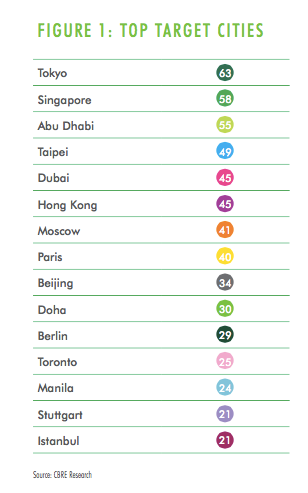
A recent CBRE report names Toronto as the ‘hottest’ market for international retail expansion in the Americas, attracting 25 new international brands in 2014. It’s a remarkable feat, considering Toronto beat out cities such as Los Angeles, New York City, Mexico City, Buenos Aires, and others. We spoke with a retail expert to get her opinion. 

The CBRE report, called “How Global is the Business of Retail“, tracked new brands entering 164 cities in 50 countries. The report found that U.S. retailers are the most active when expanding into global markets — in 2014, American retailers accounted for 26% of all cross-border expansion. Italian retailers were second at 14%, following by U.K.-based retailers at 11% and French retailers with 10% of all cross-border expansion. 

The study evaluated the most active retail sectors, determining that 26% of retailers expanding into the Americas were ‘Luxury & Business’ retailers, followed by 20% for ‘Mid-Range’ retailers, followed by ‘Specialist Clothing’ at 14%.

BLOOR STREET WEST. PHOTO: ANDROIDUKURBANTORONTO.CA

Referring to Toronto, specifically, the report states: 

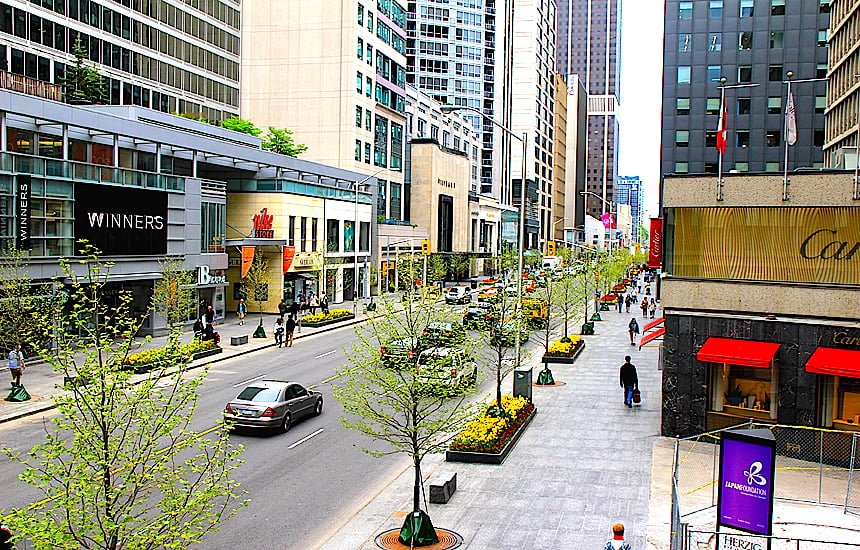
“…Toronto is considered a gateway city; in 2014 it attracted 25 new international brands. With a diverse population with a good level of disposable income, it’s unsurprising that interest in Toronto is high. Many of the foreign brands that have come to Canada, and more specifically Toronto, over the past few years have been very profitable. Other brands are seeing and recognizing this positive reception of their competitors as an opportunity for their own success in the Canadian marketplace.”

We spoke with Farla Efros, President of leading retail consulting firm HRC Advisory, to get her opinion on why Toronto ranked so highly. She explained that Toronto lagged some other world cities in terms of international retailers, and that the city is finally catching up as retailers continue to enter the Canadian market. As well, as mentioned above, retailers are seeing Canada as a viable growth option. Toronto, specifically, is increasingly seeing high-end shoppers who are benefiting from a combination of wealth and commerce, as well as significantly increased tourism internationally. Tourists are increasingly seeing Toronto as a popular shopping destination, which should increase even further with the opening of stores such as Saks Fifth Avenue and Nordstrom next year. 

Thank you ACT7 of Urban Toronto for directing us to this topic. 

Can you identify the 25 new international retailers which came to Toronto last year? The comments section below is open to freely post – you may do so anonymously, or by signing in. 

Who’s Taking Target’s Canadian Stores? An Interactive Map

exc-5553e17ee4b09be6e538d4f7

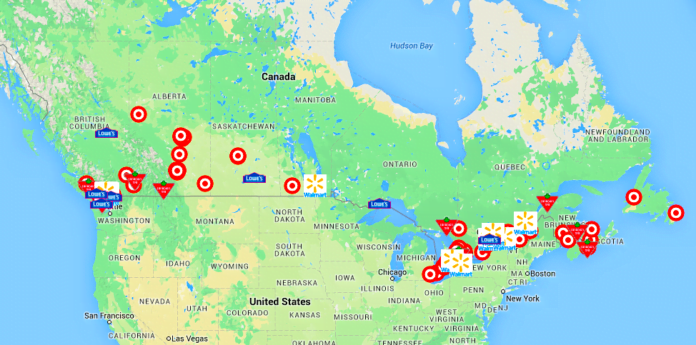
Specializing in tenant representation and project leasing catering to the retail industry, Vancouver-based Sitings Realty has created an interactive map showing who is taking over Target’s Canadian real estate. Sitings will monitor and update the map as retailers continue to acquire former Target spaces, and we’ll update this article periodically with Sitings’ findings. 

So far, we know that Walmart will take over 13 of Target’s Canadian locations, Canadian Tire will take over 12 locations, and home improvement retailer Lowe’s will take 13 Target stores. Target has also returned 55 of its 133 store locations to landlords. 

Sitings also published this article titled ‘Target’s two year project‘. In the article, Sitings provides a brief overview of Target’s Canadian entry and exit, as well as providing a link to its interactive map. Sitings also has a news link for further updates. 

Interactive Map: World’s Largest Shopping Malls (& Where Canada Ranks)

exc-55538c8de4b02c770740ca1c

The world’s largest malls continue to become larger, and this interactive StoryMap from Quebec-based Storetraffic takes you on a journey around the world to see where they are. It’s the most unique interactive graphic that we’ve had on Retail Insider to date. 

The world’s largest malls are now predominantly in Asia. Prior to the explosion of super-mall growth, the world’s largest mall was Canada’s very own West Edmonton Mall. The Edmonton mall opened in September of 1981, and held to the title as world’s largest until 2004. Although it remains North America’s largest shopping complex, West Edmonton Mall is now considered to be the world’s 18th largest mall

According to Storetraffic, large shopping malls have evolved to become entertainment complexes featuring cinema and sometimes extensive outdoor and indoor entertainment areas. As well, despite the popularity of some of these malls, some struggle with retail occupancy partly due to their size. West Edmonton mall prospers, however, achieving per-square-foot sales of about $1,200 annually when excluding Phases 1 and 4. 

How Employee Pride Can Drive Customers to Canadian Stores

By Russ Fradin

Nearly all retailers announce promotions on Facebook and post stunning photos on Instagram to lure customers into their stores. But few savvy retailers are tapping into one powerful social force that can drive real sales and exposure: employees.

Rallying employees around your store can inspire them to spread the word via social media. And when they display genuine excitement about your store and products, they become natural magnets within their networks.

For example, employees could announce your store’s new product line and promote it with a video series demoing the items to generate exposure, stir questions, and entice their friends and connections to visit the store for more details. Employees can also post personal product reviews or engage in online conversations, showcasing their expertise and positioning themselves as helpful in-store resources.

Emitting strong social signals will also boost your SEO. And when prospects can more easily find your website, they’ll have another reason to visit your store.

But employees can’t become authentic brand advocates without truly loving your store and products. Less than half of Canadian employees are satisfied with internal communication, so retailers need to take serious measures to generate excitement among employees and empower internal social media advocates.

Ignite Your Social Media Activists

 Although the advantages of employee pride are clear, retailers simply aren’t taking steps to instill pride in their employees and encourage them to share on social media. In fact, 88 percent of employees have at least one social media account, but only 33 percent post about their jobs.

 Work consumes so much of employees’ days, so why aren’t more posting about it?

In the retail setting, employees are often afraid of saying the wrong thing. Even when their comments are positive, they fear going against corporate language and getting in trouble for it. In other cases, they may not know what to say. It’s hard to craft a “shareworthy” social media post, and amid the retail frenzy, it can easily fall by the wayside.

Boosting employee engagement and social media usage may be the strategy you need to remain relevant in the omnichannel retail world. Here are four ways get employees excited to post about your retail store: 

1.     Make their jobs enjoyable. Instilling pride in employees is the key to a happier workforce and social media advocates, and it starts with culture. Steer your culture in a way that makes employees want to work harder and smarter. Offer appealing perks, and treat employees like the intelligent, capable adults they are. You’ll be amazed at the initiative they start to take.

O2, the third largest telecommunications provider in Europe and one of our clients, has taken this route by launching an employee-powered marketing program. O2 rewards and recognizes active employees with concert tickets and other perks to encourage participation. The company has seen great success — more than 1,000 employees got involved in just the first six months.

Another example is Montreal-based GSoft, which conducts weekly staff surveys to gauge happiness levels, uncover employee frustrations, and maintain open communication as it grows.  

2.     Refine your company’s messaging approach. Honest and genuine messaging will resonate most with employees, especially if you’re attempting to engage them as advocates. They won’t be interested in sharing stale, canned content they don’t really believe in. Instead, create content that’s personal, targeted, and focused on their level of expertise and department to ensure maximum participation.

3.     Showcase great work internally and externally. Recognizing a job well done will boost morale and help lagging employees know what to shoot for.

Encourage employees to write reviews of products they love or interact with customers instead of just pushing sales. When they do this, spread the word via the company’s social media accounts, feature their original content, or simply give them a shout-out in internal emails. Recognize them for going above and beyond, and you’ll lift everyone up.

4.     Gamify the process. Try introducing contests and prizes to stir up competition among co-workers. Keep it light, and encourage creativity and authenticity first and foremost.

Employee engagement and company pride will ultimately influence your staff’s social media participation. Create an in-store environment that promotes creativity, and don’t be afraid to let your employees have a little fun. Forward-thinking, culture-focused companies are the ones that will breed advocacy and win the most sales in the end.

Russ Fradin is a digital media industry veteran and an angel investor with more than 15 years of experience in online marketing. He is the founder and CEO of Dynamic Signal, the leading platform for empowering employees to be effective brand advocates. Learn more here.

McArthurGlen Confirms Tenant List for Vancouver Designer Outlet Mall

exc-5553a6b1e4b0832a5f9768d0

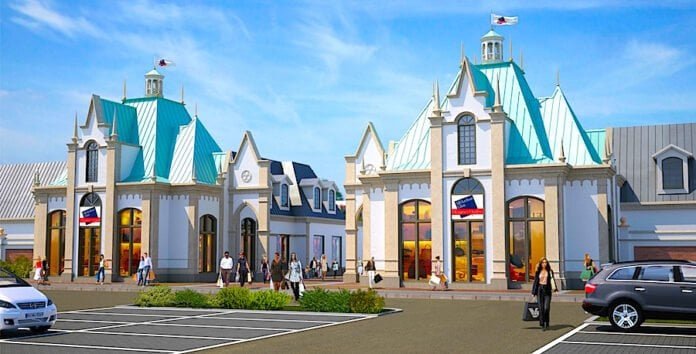
Opening early this summer, North America’s first McArtherGlen Designer Outlets will be located at Templeton Skytrain Station next to Vancouver International Airport. The mall’s first phase will span 240,000 square feet with 80 retailers, several of them being luxury brands. Eventually, the mall will span 400,000 square feet with about 150 stores, with an unknown completion date.

McArthurGlen has just confirmed the following tenants for its Vancouver mall. We’ll break the list down into what may be considered premium brands, as well as brands with generally more popular price points. Currently, the only confirmed ‘luxury brands’ would be Giorgio Armani, Ports 1961, Hugo Boss and possibly Secret Location, though a number of premium retailers will also carry some pricey product. 

Premium (and luxury) retailers confirmed for the centre will include the following: 

  • •Coach;
  • •Cole Haan;
  • •Estée Lauder;
  • •Giorgio Armani Outlet;
  • •Hugo Boss;
  • •Polo Ralph Lauren
  • •Polo Kids 
  • •Ports 1961;
  • •Secret Location;
  • •Tumi;

For those unfamiliar, Secret Location is a Vancouver-based multi-brand concept/lifestyle retailer located in Gastown, with some fashion priced into the thousands. 

Other brands confirmed to open at the centre include the following: 

  • •Ammolite Jewellers;
  • •Banana Republic;
  • •The Bibo;
  • •Body Shop;
  • •Caffé Artigiano;
  • •Calvin Klein;
  • •Carter’s/OshKosh
  • •Crabtree & Evelyn;
  • •Desigual;
  • •Ecco Shoes;
  • •Fossil;
  • •The Gap;
  • •Geox;
  • •Guess;
  • •Guess Accessories;
  • •J Crew;
  • •Levi’s.
  • •Lindt;
  • •Mavi Jeans;
  • •Mountain Warehouse;
  • •Nike;
  • •Noodle House;
  • •People’s Jewellers;
  • •Puma;
  • •Robin’s Jean;
  • •Ryuu Izakaya;
  • •Sketchers;
  • •Samsonite; and
  • •Think Kitchen;
  • •Tommy Hilfiger;
  • •Tommy Hilfiger Kids; 
  • •Under Armour;
  • •Vans;
  • •Watch Station;
  • •Zwilling.

More brands continue to negotiate leases for the centre, including several premium and luxury brands not listed above. We’ll update you when we learn more. 

The mall will also host a second job fair with the following details: 

Sunday, May 24th (10 a.m. to 5 p.m.) and Monday, May 25th (10 a.m. to 4 p.m.) at the Fairmont Vancouver Waterfront Hotel, 900 Canada Place Way, Vancouver.