
Mark’s Continues Store Expansion, Launches Flagship Prototype

Date:

Share post:

Calgary-based apparel and footwear retailer Mark’s (formerly Mark’s Work Wearhouse) continues to open Canadian stores and this fall, it will launch a ‘test store’, which will also be its largest to date. We spoke with Mark’s COO Rick White to learn more. 

Mark’s currently operates 383 Canadian locations. Mr. White says that Mark’s will continue to open stores, generally somewhere between five and 10 locations each year.  He says that Mark’s is also focused on expanding some of its more productive existing locations, including some deemed too small to serve increasingly high sales. The ideal size for a Mark’s location is now about 15,000 to 16,000 square feet, providing enough space for the retailer’s expanded product assortment as well as newly-added brands. Mr. White explains how regardless of location, access to the store is key. Even if a store is located in a shopping centre, for example, having an exterior entrance is convenient to industrially-employed customers dressed in workwear, not wishing to enter Mark’s via a mall. An external entrance close to parking also provides quick access for busy shoppers. 

Mr. White reveals that Mark’s will open a 22,000 square foot ‘test store’ at West Edmonton Mall in October, which will also be the chain’s largest location. The store will feature multiple shops-in-stores for new brands including Helly Hansen, Columbia Sportswear and Alfred Sung, among others. Footwear will include wall installations for brands such ask Merrell and Sketchers, and a Levi’s shop-in-store will anchor a new denim area. Shoppers suggested that Mark’s bring in new top brands to its stores, and Mark’s will test them out alongside its existing popular in-house labels. If Mark’s sees success with the new strategy, it could roll it out into other locations nationally. As well, Mark’s continues to examine the possibility of opening locations within shopping centres, keeping in mind that exterior entrances will be popular with some of its shoppers. 
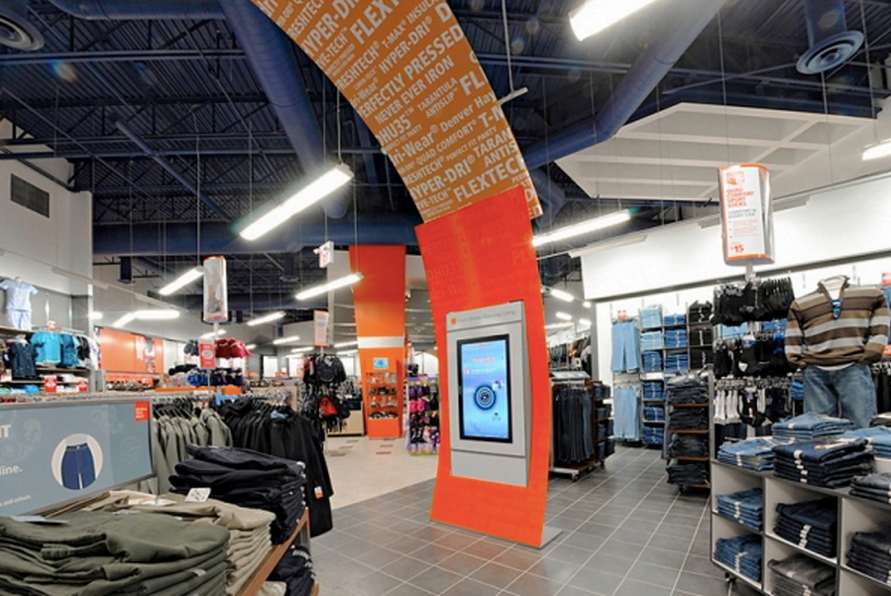
PHOTO: EVENTSCAPE.NET

Given its ‘test phase’, Mr. White says it’s hard to determine how many stores Mark’s will ultimately operate, and whether or not it will increasingly open in malls. He revealed that the Greater Toronto area currently sees its highest sales, primarily due to its large population.

We briefly discussed Mark’s introduction of iconic Canadian women’s fashion brand Alfred Sung to its stores. Sung launched at Mark’s last fall, and Mr. White says that sales have been exceptional with women of all ages. 

Mark’s will also launch an updated, bilingual, content-rich website in the fourth quarter of this year, as well as a French site for the province of Quebec. Mr. White says that although e-commerce is currently only a small part of its business, Mark’s hopes to see it grow substantially with its new web initiatives. Mark’s is also looking to grow its business-to-business operations as part of its holistic growth strategy. 

Mark’s (known as L’Equipeur in Quebec) was founded in Calgary in 1977, and has been part of the Canadian Tire Family of Companies since 2001. Mark’s has evolved from an industrial accessories dealer to the number one men’s casual and industrial apparel retailer in the country. Originally named ‘Mark’s Work Wearhouse’, the banner rebranded in 2012 as ‘Mark’s’ to appeal to a wider customer base and reflect its expanded product offerings.

RELATED ARTICLES

Subscribe to the Newsletter

Subscribe

* indicates required

RECENT articles

PC Health launches new “Built in Canada for Canadians” AI-powered health chat

New research commissioned by PC Health found that 88 per cent of Canadians searched online for health information in the past year, yet nearly half (46 per cent) remain unsure whether the information they find is accurate, one-third (33 per cent) encounter conflicting advice, and more than one-quarter (26 per cent) say there is simply too much information to sort through.

Retailers report stronger-than-expected returns from modern POS systems: Aptos

Retailers that have upgraded their systems reported improvements in store conversion rates, average transaction values and operational performance.

Intimissimi and Calzedonia Launch Canadian Expansion with First Stores at CF Sherway Gardens

Intimissimi and Calzedonia will open their first Canadian stores at CF Sherway Gardens, as a broader expansion gets underway.

Consumer prices rise 3% y/y in August: Statistics Canada

Although prices for groceries decelerated this month, prices have increased 29.0% since August 2021.

Liminal Assembly Expands LoiterFEST as Forgotten Spaces Become Social Destinations

Toronto-based Liminal Assembly expands LoiterFEST across multiple cities, turning forgotten malls and transitional spaces into destinations for community, nostalgia and exploration.

North West Company Sees Northern Retail Spending Rise as First Nations Settlement Payments Accelerate

The North West Company is seeing stronger consumer spending in Northern Canada as First Nations settlement payments reach more communities, while fuel and freight costs remain elevated.

Canadian Small Businesses Grapple With Late Payments and Rising Debt

Daryl Ching of Vistance Accounting says Canadian SMEs are facing cash-flow pressure from late payments, inventory, tariffs and growing debt.

Empire Raises Store-Opening Target as Canadian Grocery Expansion Intensifies

Empire is raising its fiscal 2027 store-opening target to more than 25 locations as Sobeys, FreshCo, IGA and other banners expand across Canada.

Article advances retail expansion with Toronto furniture store

The new store features curated room vignettes, an extensive swatch library, and complimentary in-person Interior Design Services.

Why Food Inflation Is Running Hotter in Canada Than the U.S.

Canadian grocery prices have risen faster than in the U.S. Sylvain Charlebois examines tariffs, productivity, competition, processing capacity and scale.

Premier Protein Expands Canadian Retail Assortment as Protein Demand Grows

Premier Protein is expanding its Canadian retail assortment across Costco, Walmart, Amazon and grocery as parent BellRing Brands pursues wider distribution.

What happens when viral TikTok trends move faster than retail inventory?

AI can help brands spot these shifts earlier and make faster calls on replenishment while there's still time to act.

How SMBs can deliver like large retailers this holiday season: UniUni (Opinion)

The holiday season can make or break a small or medium-sized e-commerce business.

Daily Synopsis: September 11, 2026

Weight loss drugs boost grocer pharmacy, skyrocketing diesel could impact groceries, Costco opening more Canadian stores, Alberta Safeway employees vote to strike, downtown Edmonton sees retail vacancies, and other news.

Groupe Dynamite Shifts Growth to Higher-Productivity Stores as Garage Expands Globally

Groupe Dynamite is reshaping Garage around an older customer, higher-productivity stores and global expansion while optimizing its Canadian network.

Empire Rejecting Tariff-Related Supplier Price Hikes as Trade Tensions Escalate

Empire says it is rejecting tariff-related supplier price increases for now, citing sourcing alternatives as Canada-U.S. trade tensions escalate.

From The Desk: Navigating Retail Expansion Amid Economic Pressure and Innovation

This week in Canadian retail: strategic expansion, shifting consumer behaviour, innovation, tariffs and operational discipline shape the market.

What Apple’s New iPhone Strategy Means for Canadian Retailers and Carriers

Apple’s iPhone Duo, higher Pro pricing and new launch calendar could reshape how Canadian retailers, carriers and consumers buy and sell Apple hardware.

Fraud Is Costing Canadian Merchants More Than They May Realize

The financial impact of fraud extends well beyond a lost transaction. Konek can help Canadian retailers build trust into the payment experience from the start.

Nearly 400 consumer insolvencies filed every day in Canada: Harris & Partners

New federal figures show consumer insolvencies increased by 2.2%, while separate research found more than one-third of respondents had skipped essentials because of financial pressure.
