Home Blog Page 124

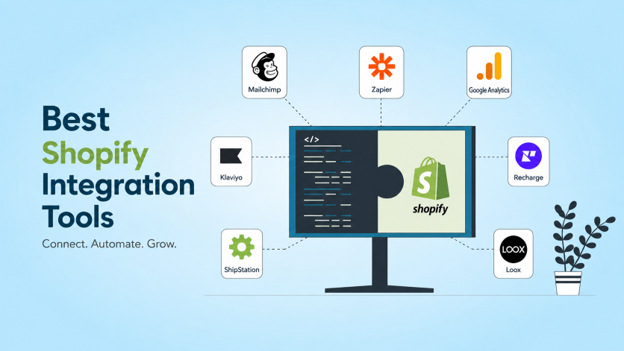
Shopify Integrations Every Canadian E-commerce Store Needs

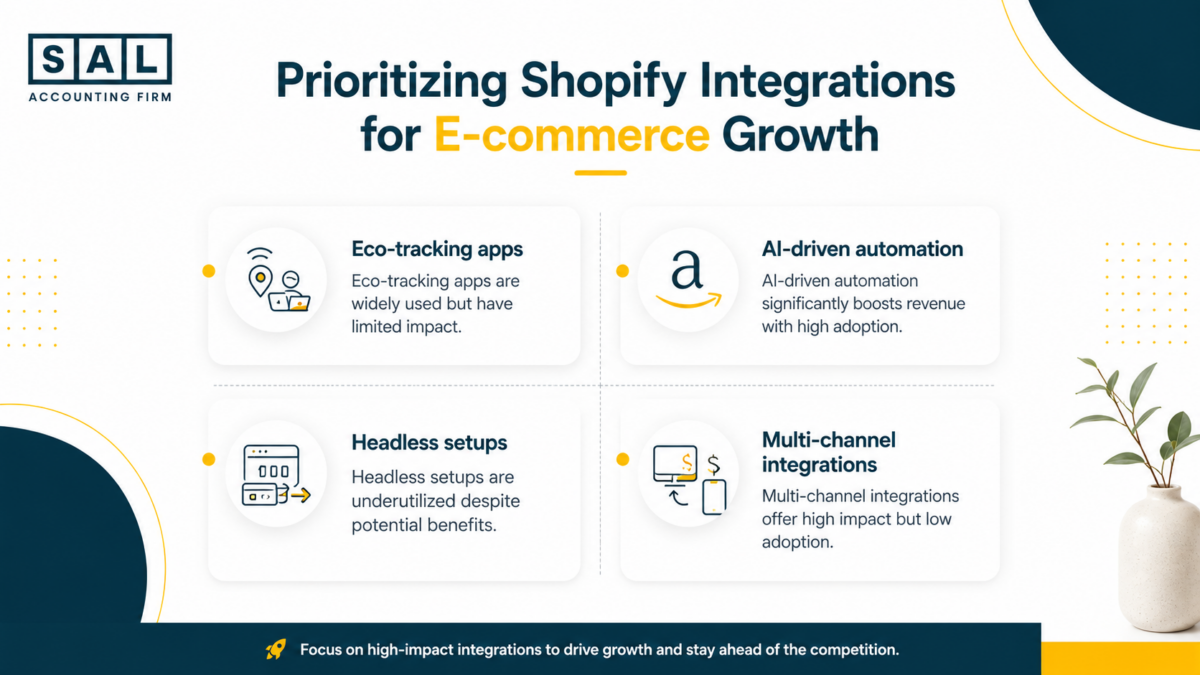
Running a Shopify store today means wearing about a dozen hats at once. You are managing orders, keeping stock levels in check, running ads, handling customer inquiries, and somehow trying to keep your books clean at the same time. Most store owners do all of this across a tangle of spreadsheets and browser tabs. What actually fixes that chaos is the right set of integrations; tools that talk to each other so you do not have to carry information between them manually.

Before you get into the apps themselves, it is worth knowing what your store is actually paying to run. A free Shopify transactions fee calculator can show you the exact transaction costs on your current plan, which often changes how merchants think about their app budget and which integrations are worth paying for.

The Shopify ecosystem has grown to over 13,000 apps in its App Store, with the average merchant running around six of them. The platform now powers businesses in more than 175 countries, and its merchants collectively generated over $1.6 trillion in cumulative sales through 2025. For Canadian sellers specifically, the integration landscape carries a few extra wrinkles; GST/HST compliance, cross-border fulfillment, and US market entry all create needs that general ecommerce advice does not always cover.

This post walks through the integrations that actually matter, broken down by the part of your business they touch.
Accounting and Finance

Getting your books right is not optional, and it is the area where most growing stores start bleeding money quietly. Shopify payouts do not equal revenue; by the time fees, refunds, chargebacks, and timing differences come out, the number hitting your bank can look very different from what your dashboard shows. Accounting integrations exist specifically to bridge that gap.

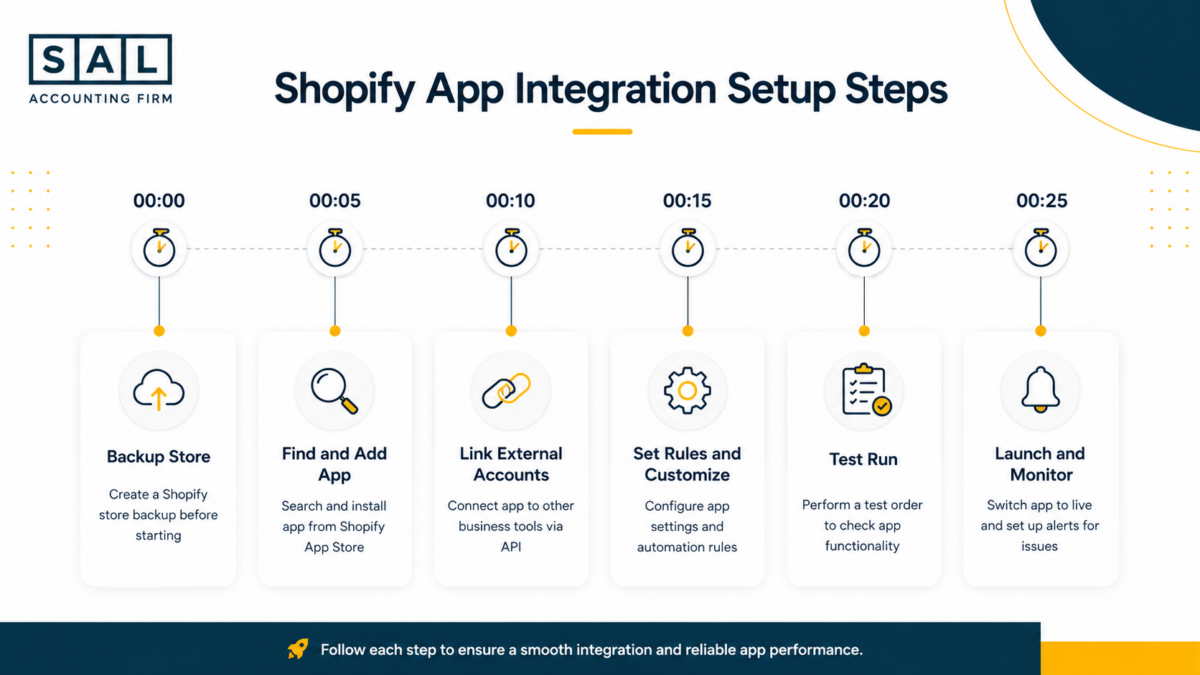
A2X is the tool that most Shopify accountants reach for first. It pulls payout data from Shopify and maps it cleanly into QuickBooks or Xero, matching each deposit to its components: fees, refunds, adjustments. Setup takes around 15 minutes, and it starts at $19 per month. For a solo store owner doing a single channel, it is usually all you need.

Synder handles more complex situations. If you are selling across Shopify, Amazon, and Etsy simultaneously, Synder pulls all three data streams into one reconciled view. It connects with more than ten accounting platforms and handles the kind of multi-currency, multi-channel volume that breaks simpler tools. It starts at $29 per month and has a free trial worth taking before committing.

For Canadian sellers, the practical win here is cleaner GST/HST records. When your accounting software is pulling structured data directly from your sales channels rather than working from bank statements, you are not reconstructing history at filing time; the numbers are already there.

A practical setup tip: start with A2X if you are running one store and move to Synder when you add a second channel. Both link cleanly to Xero, which adds about 30% accuracy on reconciliation compared to manual entry, according to merchant reporting on G2.

Email Marketing and Customer Retention

Most Shopify stores have a leaky funnel. Customers add to cart and leave. They buy once and never return. Email and SMS marketing integrations exist to close both of those gaps.

Klaviyo is the dominant tool in this space, and for good reason. It pulls behavioral data directly from Shopify; what people viewed, what they added to cart, what they bought; and uses that data to build segments that actually mean something. Its AI-driven send-time optimization and abandoned cart flows are responsible for a meaningful share of recovered revenue for DTC brands. It starts free and scales to around $100 per month for larger lists. Setup takes about 20 minutes.

Omnisend is the better choice if you want to blend email, SMS, and push notifications into a single campaign. It is particularly useful for Canadian brands that want something built with privacy compliance in mind from the ground up. It handles CASL alongside US CAN-SPAM requirements, and its drag-and-drop builder does not require any technical background to use well. Free tier available, with paid plans starting at $59 per month.

Both tools deliver measurable results on abandoned cart recovery. Merchants who run structured flows on either platform generally see open rates two to three times higher than broadcast emails, which makes the subscription cost recover itself quickly.

Fulfillment and Inventory

Order fulfillment is where operational bottlenecks show up first as a store scales. Manual label printing, stock counts that fall behind real sales, and oversells during peak periods are all symptoms of the same problem: fulfillment data is not connected to the rest of the store.

ShipStation is the practical fix for shipping. It batches label creation, compares carrier rates across UPS, FedEx, Canada Post, and others, and routes orders based on rules you set. During high-volume periods like holiday season, the time saved on label printing alone justifies the $9 per month starting price. It connects to Shopify in about 10 minutes and requires no technical knowledge to run.

Stocky handles the inventory side. It forecasts demand based on sales history, sends low-stock alerts, and syncs count across channels in real time. For Canadian sellers running Shopify alongside Walmart Canada or another marketplace, keeping stock numbers aligned is what prevents oversells and the GST filing headaches that come with them. Starts at $29 per month, with a free mobile app for on-the-go checks.

The two tools pair well together. ShipStation handles what goes out; Stocky handles what you have left. Running them together cuts fulfillment errors and keeps inventory records clean enough to support accurate bookkeeping.
Analytics and Reporting

Advertising spend without clear attribution is just guessing. The analytics tools in Shopify’s ecosystem range from free and surprisingly powerful to premium and genuinely indispensable for larger stores.

Google Analytics 4 is the right starting point. It tags Shopify events automatically once installed, tracks traffic sources and conversion paths, and uses AI to surface trends in the data. It is free, installs in about 10 minutes, and gives any store owner a clear picture of where buyers are coming from and where they drop off.

Triple Whale is what stores graduating past $10,000 per month typically move to. It unifies Shopify data, ad account data, and email performance into custom dashboards, and its attribution modeling is more reliable than what you get from individual ad platforms. At $99 per month, it is not a casual purchase, but for brands spending meaningfully on paid traffic, the visibility it provides on true ROAS tends to pay for itself.

The practical approach is to run both: GA4 as the baseline layer and Triple Whale on top once advertising spend makes attribution genuinely important.

CRM and Customer Support

Customer relationships do not manage themselves. Support tickets that pile up, repeat customers who feel like strangers, and missed upsell opportunities all trace back to the same gap: there is no system tracking who your customers are and what they need.

Gorgias is the support tool built specifically for Shopify. It pulls order history into every live chat and ticket, which means your support team sees the customer’s purchase record without switching tabs. AI-suggested replies handle common questions automatically. At $10 per month to start, it is accessible for stores of almost any size.

HubSpot’s free CRM connects to Shopify to track leads and build customer pipelines. The free core is genuinely useful for smaller stores, and the $20 per month Pro tier adds enough automation to justify upgrading once you start working systematically on retention. Its 1,000-plus integrations mean it fits into almost any existing tech stack.

For Shopify sellers looking to work with a specialist on the financial side of their store, working with an accountant for Shopify sellers who understands platform-specific data; payouts, fees, chargebacks, cross-border flows; can save significant time during tax season and surface the kinds of margin issues that get missed when bookkeeping is treated as an afterthought.

For merchants managing industrial products, equipment, or B2B operations, integrating e-commerce platforms with reliable suppliers and inventory systems is becoming increasingly important. Companies such as EMC Industrial help businesses streamline procurement and access a wide range of industrial products that support day-to-day operations. By leveraging solutions from EMC, online stores can improve supply chain efficiency, maintain accurate product availability, and create a more seamless purchasing experience for their customers.

Product Pages and Social Proof

Nobody buys from an empty page. Social proof tools exist to fill product pages with real evidence that other customers have bought and liked what they purchased.

Loox collects photo and video reviews from customers and displays them on product pages in a format that looks good on mobile. For stores with more than 200 SKUs, the auto-collection feature pulls photos by product variant, which means pages stay populated without manual curation. Starts at $9.99 per month.

Judge.me is the faster and more affordable alternative. It imports existing reviews, adds star ratings, and includes SEO markup that helps product pages perform in Google search. The free tier is functional enough for most stores; the $15 per month Pro version unlocks customization and higher volume.

Stacking either tool with an SEO app tends to improve conversion rates meaningfully. Displaying top reviews prominently on product pages, particularly on mobile, consistently lifts trust signals and reduces bounce rates.

How to Pick the Right Stack

The apps above cover the main operational needs of a growing Shopify store, but adding all of them at once is not the right approach. More apps mean more load on your storefront, more integrations to maintain, and more monthly cost.

A sensible starting point for most stores: A2X or Synder for accounting, Klaviyo for email, ShipStation for fulfillment, and GA4 for analytics. That combination covers the highest-impact areas at a cost of roughly $30 to $60 per month to start, and each tool has a clear path to scale as your volume grows.

Add Gorgias when support volume starts taking up meaningful staff time. Add Triple Whale when you are spending enough on advertising that attribution data directly affects budget decisions. Add Loox or Judge.me when your product pages need social proof to close sales.

The integration stack that works at $5,000 per month looks different from the one that works at $100,000 per month. Building incrementally, and auditing what you have at least once a year, is how you avoid paying for tools that no longer match what your store actually needs.

The Financial Side of Scaling on Shopify

There is a version of this conversation that stops at app recommendations, but the stores that scale well tend to think about their tool stack and their financial operations together. Integrations that sync accurately to your accounting software are not just convenient; they are how you know whether your margins are actually what you think they are.

SAL Accounting works with Canadian Shopify and Amazon sellers on the accounting, bookkeeping, and cross-border tax side of running an ecommerce business. Their resource library at their blog covers practical topics specific to platform sellers: how payouts reconcile, how GST/HST works across channels, how to structure finances when selling into the US, and what to watch for when your books stop matching your bank statements. For store owners who want to understand the financial mechanics behind their platform; not just the apps sitting on top of it; it is worth browsing.

The right integrations save time and reduce errors. Understanding how your numbers actually work is what turns that saved time into sustainable growth.


How Retailers Can Use AI Agents to Build a Product Inspiration Library

Retailers rarely suffer from a complete lack of product ideas. Ideas come from everywhere: customer reviews, store associates, TikTok trends, competitor launches, return reasons, search data, supplier conversations, and casual comments from loyal shoppers.

The real problem is that most of these ideas do not become usable knowledge. They sit in Slack threads, spreadsheets, notebooks, email chains, social screenshots, meeting notes, or someone’s memory. By the time a product planning meeting begins, the team may remember that “customers kept asking for something,” but not enough detail to decide what should happen next.

That is where AI agents can become useful for retail teams. Not as a replacement for product managers, buyers, designers, or merchandisers, but as a system for capturing scattered market signals and turning them into a living product inspiration library.

For a Mind Lab context, the interesting part is not simply that an AI agent can summarize ideas. The deeper question is how an agent learns from repeated retail signals, remembers decision history, adapts to product categories, and improves the way it supports future planning. Techniques such as Lora, a parameter-efficient post-training method, matter here because they point to a broader direction: AI systems can be adapted toward specific behaviors and domains without retraining an entire foundation model each time.

In retail, that kind of adaptation matters because product development is not a one-time brainstorm. It is a repeated cycle of noticing demand, structuring messy feedback, testing ideas, learning from results, and remembering why certain decisions were made.

A Product Inspiration Library Is Really a Memory System

A normal idea folder stores information. A useful product inspiration library does more than that. It preserves context.

A customer complaint is not just a complaint. It may reveal a sizing issue, a packaging problem, an unmet use case, or a new product opportunity. A return reason is not only an operational problem. It may show a mismatch between product promise and real customer expectation. A store associate’s observation is not just anecdotal. It may be an early signal of repeated demand.

Retail teams lose value when these signals are stored as disconnected notes. The purpose of an AI-supported inspiration library is to keep the signal, the source, the reasoning, and the eventual decision connected.

This is why memory matters. If an agent only stores the latest note, it becomes a searchable archive. If it remembers how similar ideas appeared before, how they were scored, which tests worked, and which product teams rejected them, it becomes part of the retailer’s product intelligence system.

The goal is not to make AI “creative” in a vague sense. The goal is to help teams stop forgetting what the market has already told them.

Step 1: Capture Signals Before They Become Vague

The first job of a product inspiration agent is to capture signals while they are still specific.

A useful note might begin as something simple: customers keep asking whether a tote comes in a smaller size, reviews mention that packaging is difficult to open, or shoppers seem interested in a refillable version of a skincare set.

The agent’s role is not only to save the sentence. It should extract the product category, customer problem, source, possible opportunity, and confidence level. That turns a loose observation into structured input.

For example, “packaging is hard to open” could point to several different opportunities: a packaging redesign, a senior-friendly version, a clearer instruction card, a better unboxing experience, or a new accessibility requirement for the category.

This is where AI agents can create value before any product brief exists. They help preserve the shape of the signal before memory turns it into something vague.

Step 2: Add Structure Without Removing Human Judgment

A product inspiration library becomes more useful when every entry has structure. But the structure should support product thinking, not replace it.

An agent can tag ideas by source, such as customer review, social trend, store feedback, return reason, search data, competitor activity, or supplier suggestion. It can also tag the type of opportunity: product improvement, new variant, bundle idea, packaging change, sustainability angle, budget option, premium upgrade, or seasonal use case.

This makes the library searchable, but more importantly, it helps the team compare signals across time.

A buyer might search for repeated packaging complaints before redesigning a line. A merchandiser might review giftable product ideas before the holiday season. A founder might look at ideas with strong customer demand but low testing complexity.

The agent does not make the final call. It helps humans see the field more clearly.

That distinction is important. In product development, taste, timing, sourcing reality, pricing, margin, and brand judgment still belong to people. AI should sharpen the conversation, not decide the assortment.

Step 3: Cluster Weak Signals Into Product Themes

A single comment may not mean much. Ten similar comments may reveal a product opportunity.

This is where AI agents become more useful than static spreadsheets. They can cluster related signals even when customers use different words.

One shopper might say a product is too large for a small apartment. Another may ask whether it comes in a travel size. A third may mention storage problems. A fourth may return the item because it is inconvenient to carry.

Individually, these may look like different notes. Together, they suggest a theme: compact, space-saving, portable, or travel-friendly versions.

The value of the agent is not that it invents the idea from nothing. It notices repetition across scattered signals.

Over time, these clusters can reveal product themes such as size flexibility, easier packaging, refillable formats, personalization demand, lower-effort setup, gifting use cases, or premium material interest.

This is where product inspiration becomes product intelligence. The system is no longer only collecting ideas. It is helping the team see which patterns deserve attention.

Step 4: Score Ideas as Hypotheses, Not Answers

Not every idea deserves development. Some ideas are interesting but too expensive. Some fit a trend but not the brand. Some have strong customer demand but weak margins. Others are too early for a full launch but worth a small test.

A product inspiration agent can help score ideas, but the score should be treated as a hypothesis rather than an answer.

A useful scoring framework might consider customer demand, brand fit, testing difficulty, margin potential, repeat purchase potential, operational complexity, seasonality, and sourcing risk. The agent can summarize the evidence behind each score so the team understands why an idea looks promising or weak.

This is more useful than simply saying “good idea” or “bad idea.” It gives product teams a sharper starting point.

For example, an idea may have repeated customer demand and strong brand fit but uncertain margin. Another may have high social trend potential but weak operational feasibility. A third may be too niche for a major launch but suitable for a limited drop.

The agent’s role is to make trade-offs visible.

Step 5: Turn Strong Themes Into Product Briefs

Once an idea has enough evidence, the agent can help draft a product concept brief. This is where scattered signals become something a real team can discuss.

A useful brief should include the customer problem, product concept, target audience, evidence behind the idea, possible variants, test method, merchandising angle, and open risks.

The brief does not replace the product team. It gives the team a more disciplined starting point.

Instead of entering a meeting with a vague statement like “customers want a smaller version,” the team can review a more useful summary: customers in small apartments repeatedly mention storage issues; compact versions are trending in adjacent categories; return notes suggest the current product is difficult to store; a limited test could validate demand before a full production run.

This kind of brief is valuable because it connects the idea to evidence.

For smaller retailers, it can also create a more professional product development process without requiring a large research department.

Step 6: Remember Tests and Decisions

A product inspiration library should not only remember ideas. It should remember decisions.

This is one of the most important parts of the system. Many retail teams revisit the same ideas because they do not have a clear memory of why something was approved, rejected, paused, or tested.

An AI agent can help maintain decision history:

Tested and approved.
Rejected due to low demand.
Paused because sourcing was too complex.
Worth revisiting for holiday season.
Needs packaging revision before launch.
Strong customer interest but margin too low.

This is not just administration. It is organizational memory.

When a new team member asks why a product was never launched, the answer should not depend on someone remembering an old meeting. When a seasonal idea returns, the team should know what happened last year. When a test fails, the reason should remain available for future planning.

A retailer that remembers decisions can learn faster than one that only collects ideas.

Where Post-Training Enters the Picture

A basic AI system can summarize notes and tag entries. A more advanced product inspiration agent needs to adapt to the retailer’s domain, categories, language, and decision style.

This is where post-training becomes relevant.

Retail product teams do not all think the same way. A beauty retailer may care deeply about ingredients, skin concerns, texture, claims, and compliance. A fashion retailer may focus on fit, silhouette, fabric, color, seasonality, and styling. A home goods retailer may care about size, materials, assembly, storage, and room context.

A generic model can understand these categories broadly, but a specialized agent should learn the retailer’s own language and decision patterns. It should understand which signals matter, which product claims need caution, which categories have high return risk, and which ideas fit the brand’s positioning.

LoRA-style adaptation can help in this broader post-training landscape because it provides a more efficient way to specialize model behavior for particular domains or tasks. It does not replace retrieval, memory, evaluation, or human review. But it can help shape how the agent interprets signals, drafts briefs, and follows category-specific instructions.

For a product inspiration library, this means the system can become less generic over time. It can learn to support retail product thinking in a way that fits the business.

Memory and Post-Training Serve Different Roles

It is important not to confuse memory with post-training.

Memory helps the system remember specific signals: customer comments, test results, product decisions, rejected ideas, category notes, and seasonal patterns. Post-training helps shape model behavior: how the agent summarizes, scores, asks questions, follows decision rules, and adapts to a domain.

A strong product inspiration agent needs both.

Memory keeps the retailer from losing context. Post-training helps the agent handle that context in a more useful way.

For example, memory might retrieve past notes showing that customers repeatedly asked for smaller packaging. Post-training may help the agent summarize those notes in the retailer’s preferred brief format, flag sourcing concerns, and ask whether the idea should be tested as a limited drop.

The two layers work together, but they are not the same.

This distinction matters for Mind Lab because future agent systems will not be built from one technique alone. They will combine memory, retrieval, post-training, feedback loops, evaluation, and user control.

Feedback Loops Make the Library Smarter

A product inspiration library becomes more valuable when it learns from what happens after an idea is tested.

Did customers join the waitlist? Did the limited drop sell through? Did returns reveal a quality issue? Did store associates receive better reactions than expected? Did a social poll show interest but low purchase intent? Did the margin make the idea impossible?

These outcomes should return to the library.

Without that feedback loop, the system only collects ideas. With it, the system starts learning which types of ideas become successful products and which only look interesting at first.

This is also where careful AI design matters. Not every outcome should automatically change model behavior. Some results are seasonal. Some are caused by poor pricing or weak creative. Some tests fail because timing was wrong, not because the idea was bad.

A useful agent should help record the evidence, suggest possible interpretations, and ask better follow-up questions. It should not overfit to one result.

What Retailers Should Be Careful About

A product inspiration agent should support retail judgment, not replace it.

Retail product development depends on taste, timing, sourcing, quality control, supplier reliability, margin, merchandising, and brand intuition. AI can organize signals and sharpen briefs, but it cannot fully understand the strategic trade-offs of a retailer’s assortment.

There are also data and privacy concerns. Customer feedback should be handled carefully. Sensitive or personally identifiable information should not be stored without clear policies. Teams should also avoid chasing every trend the system surfaces. A trend can be real and still be wrong for the brand.

The safest and most useful approach is to treat AI as a thinking partner, not a product decision-maker.

It can help teams ask better questions. It should not make final product bets on its own.

From Brainstorms to Adaptive Product Intelligence

Retailers do not need more random ideation sessions. They need better ways to carry market signals forward.

A product inspiration library gives scattered ideas a place to accumulate. An AI agent can make that library easier to structure, search, cluster, score, brief, test, and revisit. Over time, it becomes more than an idea folder. It becomes a memory system for product development.

For Mind Lab, this topic is interesting because it shows how agent research becomes practical. Memory helps retain product context. Post-training helps specialize behavior. LoRA-style adaptation can support efficient domain tuning. Feedback loops help the system improve from real outcomes. Human review keeps decisions accountable.

The brands that win will not simply be the ones with the most ideas. They will be the ones that notice the right signals early, test them carefully, remember what they learn, and adapt their product thinking over time.

That is the real promise of AI agents in retail product development: not automatic creativity, but better organizational memory and more adaptive product intelligence.

Top Tips for Hiring the Best Talent in Canada

Hiring the best talent in Canada is rarely as simple as posting a job and waiting for the perfect candidate to apply. For startups and growing businesses in particular, recruitment can be one of the hardest parts of scaling well. The strongest applicants are often comparing multiple opportunities, looking beyond salary and paying close attention to how professional, organised and communicative a company feels from the first interaction.

Use Clear Job Descriptions

A strong job description should do more than list responsibilities. It should help candidates quickly understand the role, the expectations and whether they are genuinely suited to the position. Vague descriptions can attract the wrong applicants, while overly complex ones may discourage qualified candidates from applying.

Start with a clear job title, a short summary of the role and a realistic explanation of what the person will do day to day. Required skills should be separated from desirable ones, so candidates are not put off by an unrealistic wishlist. Salary range, working model, location, benefits and career development opportunities should also be included where possible.

Search Via the Best Places

The best candidates will not always come directly to a company’s careers page. Sometimes, employers need to be more proactive about where they search. For graduate roles, local universities and colleges can be valuable recruitment channels. Businesses can connect with careers departments, attend job fairs or offer internships to build relationships with emerging talent.

For more experienced professionals, LinkedIn remains one of the most useful platforms for identifying candidates with specific skills, industry experience and career histories.

Streamline the Recruitment Process

A slow, confusing or impersonal recruitment process can cause strong candidates to lose interest. No one wants to spend hours filling out a form, attend multiple interviews and then receive little or no communication. Employers should make each step clear from the beginning. That means explaining the application process, setting realistic timelines, scheduling interviews efficiently and keeping candidates updated. An applicant tracking system can also help teams monitor progress, reduce missed follow-ups and keep hiring managers aligned.

Security should not be overlooked either. Recruitment often involves CVs, portfolios, personal contact details and external files. When contacting candidates, reviewing links or opening unfamiliar resources, using tools such as a tor browser can provide an extra layer of privacy and help reduce exposure to unsafe browsing activity.

Make the Right Offer

Once the right candidate has been found, the offer needs to match the quality of the recruitment process. Competitive pay matters, but it is not the only factor. Benefits, flexibility, professional development, workplace culture and a clear onboarding plan can all influence whether a candidate says yes.

A strong offer should show that the business understands what the candidate values. For some, that may be career progression. For others, it may be remote work, stability, mentorship or meaningful responsibility.

Ultimately, hiring the best talent in Canada requires clarity, consistency and respect for the candidate’s time. Businesses that communicate well, search intelligently and make thoughtful offers are far more likely to attract people who can grow with them.

Dollarama sees more than 21% year-over-year sales growth in Q1, surpassing $1.8 billion

Dollarama (Image: Barrhaven BIA)

Dollarama Inc. reported on Thursday its financial results for the first quarter ended May 3, 2026, indicating sales increased by 21.4% from a year ago, surpassing $1.8 billion.

“We delivered a strong performance in the first quarter of fiscal 2027 as we pursue profitable growth in our core Canadian market, generating strong comparable store sales growth, expanding our store network and progressing our Western Canada logistics hub project. We are also advancing our priorities across our international growth platforms with discipline. In Latin America, Dollarcity had a solid start to the year in its established markets, while continuing to execute the ramp-up in Mexico. In Australia, we also made progress, with an increasing number of stores now operating under the Dollarama layout and our first Dollarama import products beginning to gradually reach shelves,” said Neil Rossy, President and CEO.

 “Looking ahead, we expect our strong value proposition to continue resonating with customers, supported by our resilient business model which provides us with flexibility to navigate an uncertain and rapidly evolving macroeconomic environment.”

Fiscal 2027 First Quarter Results Highlights Compared to Fiscal 2026 First Quarter

  • Sales increased by 21.4% to $1,846.1 million, compared to $1,521.2 million
  • Comparable store sales in Canada increased by 5.6%, compared to 4.9% in the first quarter of the previous year
  • EBITDA increased by 17.4% to $582.5 million, representing an EBITDA margin of 31.6%, compared to 32.6%
  • Operating income increased by 11.2% to $432.2 million, representing an operating margin of 23.4%, compared to 25.6%
  • Net earnings increased by 10.4% to $302.3 million, resulting in a 13.3% increase in diluted net earnings per common share to $1.11, compared to $0.98
  • Unrealized gain of $16.4 million relating to the derivative on our equity-accounted investments, positively impacting EBITDA margin by 90 basis points and diluted net earnings per common share by $0.06
  • 28 net new stores opened in Canada, compared to 22 in the corresponding period of the previous year; 8 net new stores opened and 13 stores renovated in Australia, all operating under the legacy banner
  • 1,962,010 common shares repurchased for cancellation for $339.1 million

Founded in 1992 and headquartered in Montréal, Quebec, Dollarama is a leading Canadian value retailer with international reach with more than 2,800 stores and over 43,000 people serving customers in seven countries on three continents. Dollarama operates more than 1,700 stores in Canada with a presence in all 10 provinces and two territories. In Australia, Dollarama operates the country’s largest discount retail chain, The Reject Shop, with a national network of over 400 stores. Dollarama is also the majority shareholder, through its equity-accounted investments, in Latin American value retailer Dollarcity which has more than 700 stores located in Colombia, El Salvador, Guatemala, Mexico and Peru.

More from Retail Insider:

Advertising influencing people to place a bet: CPA Canada

CPA Canada photo
CPA Canada photo

As the World Cup arrives in Canada, nearly seven in 10 Canadians say they encounter gambling and sports betting advertisements in everyday media, says CPA (Chartered Professional Accountants) Canada.

Among Canadians who gambled online in the past year, more than one in four (27%) say advertising influenced them to place a bet, according to a new CPA Canada survey.

“You can’t hide from it; gambling ads are everywhere,” said CPA Canada’s financial literacy leader Li Zhang. “Major global events like the FIFA World Cup only amplify the noise as gambling advertising and promotions surge. For those who haven’t yet dipped their feet in, my advice is simple: don’t start.”

Li Zhang
Li Zhang

CPA Canada said 13%of Canadians say they are likely to place a bet during the tournament, rising to 49% among regular sports bettors.

Those most impacted may also be the most vulnerable, added Zhang.

Younger Canadians aged 18 to 34 appear especially susceptible to gambling advertising, with half participating in some form of online gambling in the past year and more than one-third (37% saying advertising led them to place a bet, according to CPA Canada.

“The systems are so sophisticated now that once you place that first bet, it can be hard to control and even harder to walk away,” said Zhang. “At a time when many young people are already grappling with affordability challenges, they are exactly the demographic who can least afford to put their money at risk.”

Other standout findings:

  • Men are avid online gamblers: Men are significantly more likely than women to gamble online (43% versus 28%) and more than twice as likely to bet on sports (20% versus 8%).
  • Canadians are still making big bets: One in four online gamblers (26%) spent more than $500 on bets in the past year, including one in six (16%) who spent $1,000 or more.
  • Same story, different province—gambling ads are everywhere: Half of respondents in the provinces of Alberta (49%), Manitoba (48%), Nova Scotia (50%, Newfoundland (49%) and Ontario (50%) report seeing gambling advertisements often or very often.

More from Retail Insider:

lululemon Returns to Oakridge Park with New Store Concept

Lululemon at Oakridge Park in Vancouver

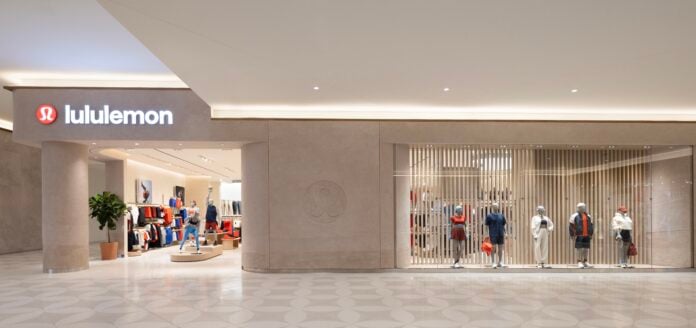
Shoppers packed lululemon’s new Oakridge Park store shortly after it opened on May 28, as the Vancouver-founded retailer returned to one of its earliest shopping centre homes with one of the first Canadian examples of its newest store concept.

The 5,900-square-foot store opened as part of the first phase of Oakridge Park, the massive redevelopment that is transforming the former Oakridge Centre property into a mixed-use district featuring luxury retail, residential towers, office space, public amenities and extensive parkland. While the shopping centre portion is now welcoming visitors, substantial construction activity continues throughout the broader site as additional phases move forward.

For lululemon, the opening carries additional significance. Oakridge was among the company’s earliest shopping centre locations, long before the brand expanded into a global athletic apparel retailer. The new store marks a return to that location while also introducing a retail concept that reflects the company’s evolving approach to store design.

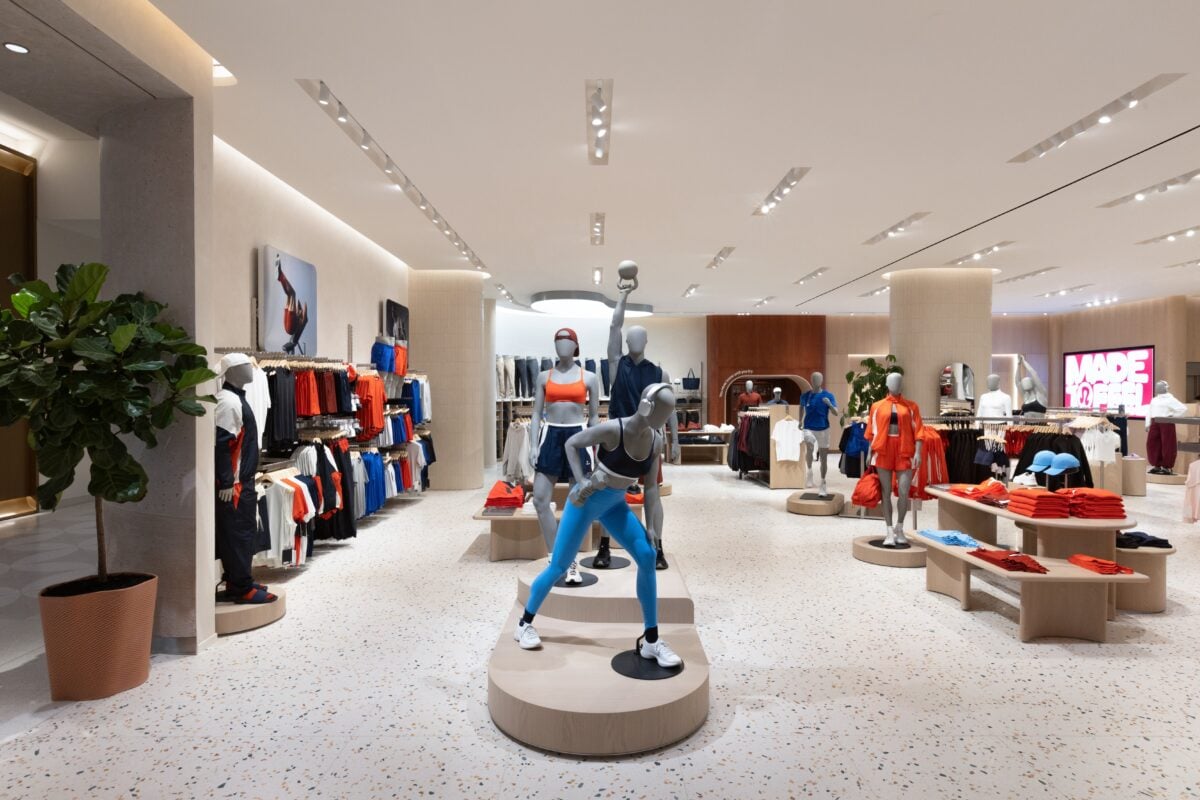
Retail Insider visited the store shortly after opening and found it crowded with shoppers exploring the new space. Despite the heavy traffic, the store felt noticeably open and easy to navigate. Compared with some older lululemon locations, including the company’s Yonge and Bloor store in Toronto, the Oakridge Park store appears lighter, more spacious and less compartmentalized.

The location also occupies a distinctive position within Oakridge Park. While the redevelopment has attracted luxury retailers including Chanel, Dior, Moncler, Saint Laurent and Harry Rosen, lululemon offers a different type of experience. The store feels approachable from the moment visitors encounter it, with an open storefront, active sales floor and a familiar brand that resonates with a broad customer base.

For visitors who may not be shopping for luxury goods, lululemon represents one of the more accessible retail experiences within Oakridge Park’s current tenant mix. Located toward the south end of the shopping centre, the store is somewhat removed from many of the luxury tenants while remaining fully integrated into the project’s premium positioning.

“We love it. We’re so excited to bring back Oakridge,” said Carleana Lesyk, Regional Manager at lululemon. “Oakridge is one of the first stores we opened in the brand, and to open with our new brand concept is really exciting.”

Lululemon at Oakridge Park in Vancouver

New Design Language Reflects Pacific Northwest Influences

The Oakridge Park store is among the first locations built under lululemon’s new “Playbook 2.0” design standard, which introduces a softer and more locally inspired design language.

“This design is part of our new Playbook 2.0 design standard,” said Jay Park, Senior Store Designer at lululemon. “This is one of the first stores that we’re building in this new design language.”

According to Park, the concept draws heavily from the landscapes and culture of the Pacific Northwest. Rather than relying on sharp angles and rigid forms, the store incorporates curved fixtures and architectural elements intended to create a sense of flow throughout the space.

“We take inspiration from the Pacific Northwest, from the landscapes of the Pacific Northwest,” said Park. “We’re trying to bring in soft forms, we’re trying to bring in warmth, and we’re trying to bring in flow.”

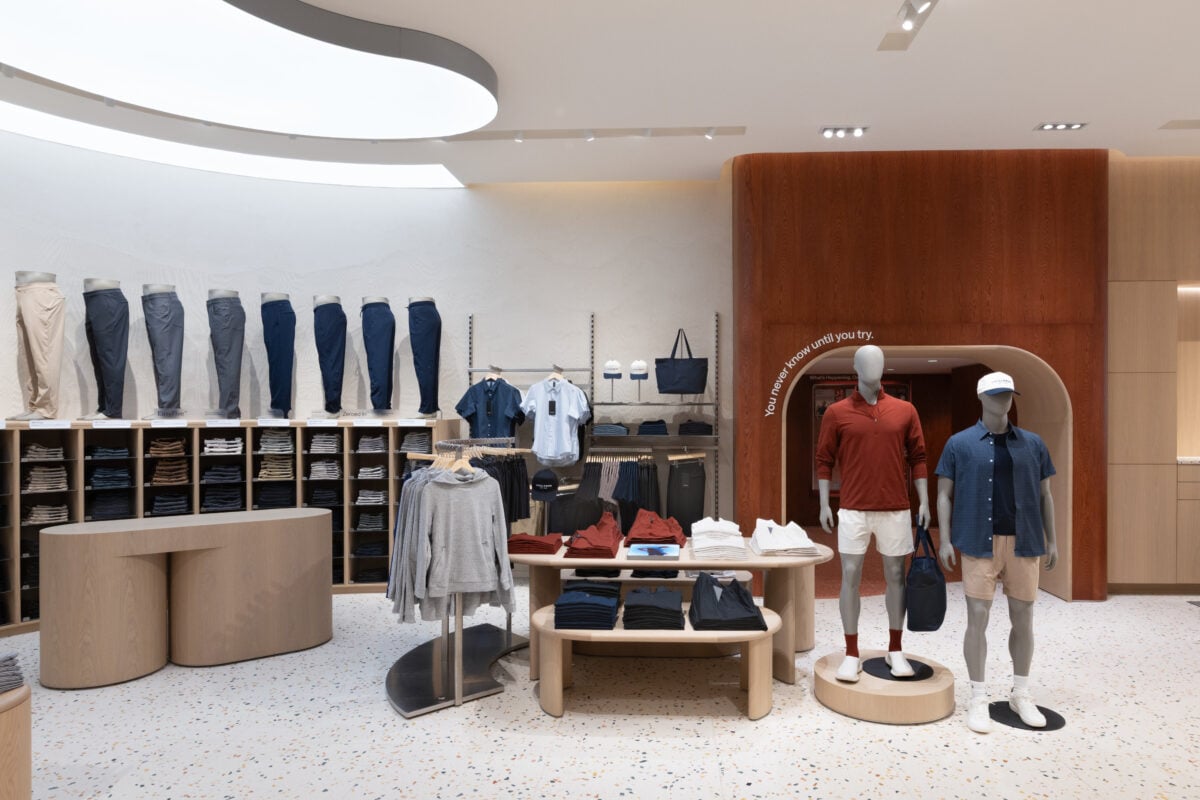
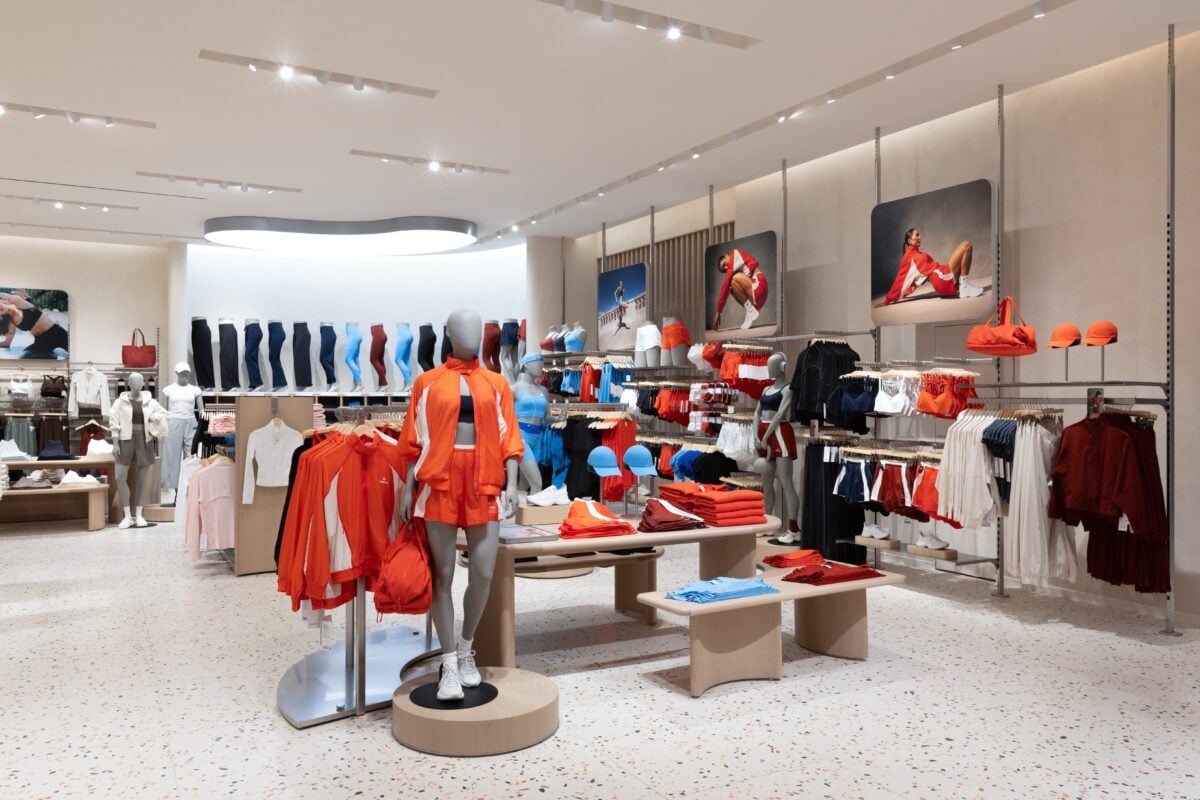
Those ideas are visible throughout the store. Curved tables, display fixtures, hanging rails and fitting room entrances create a softer visual experience while maintaining clear sightlines across the sales floor. The approach contributes to the open feeling that stands out when moving through the space.

Natural materials also play a central role. Wood fixtures, plaster wall treatments, terrazzo flooring and textured finishes reinforce the connection to the region.

One of the most distinctive elements is a wall treatment inspired by Vancouver’s North Shore mountains.

“We’ve got a beautiful raked pattern on the wall behind the tank fixture, and that is a nod to the North Shore mountains,” said Park. “We’re trying to bring the peaks and the valleys from the North Shore mountains into our stores and to our guests.”

Park said the design reflects both the brand’s identity and the Pacific Northwest lifestyle that helped shape lululemon from its earliest days.

“The movement speaks to our brand, but it also speaks to this culture in the Pacific Northwest where it’s about wellbeing and it’s about nature,” he said.

Lululemon at Oakridge Park in Vancouver

Programming Extends Beyond the Store

The store’s design is only part of the concept. Lululemon is also using the location as a hub for programming and local engagement.

A dedicated board near the fitting rooms highlights ambassadors, upcoming events and local activity routes. The feature is designed to connect guests with fitness leaders and activities taking place both within Oakridge Park and throughout the surrounding community.

“This is a big part of how we engage with our guests through our community,” said Lesyk.

The company works with local ambassadors to support events and activities tied to Vancouver’s fitness and wellness culture.

“We work with them to bring events to life and to really just support them in their journey with growing our community and the sweat community in Vancouver,” said Lesyk.

The Oakridge location will also make use of one of the redevelopment’s most distinctive amenities: the rooftop running track. According to Lesyk, the store plans to launch run club programming this summer, with routes and event details communicated through the in-store board.

The store is also expected to participate in movement-focused activations on the rooftop throughout the season, connecting retail activity to the broader public spaces being introduced at Oakridge Park.

Lululemon at Oakridge Park in Vancouver

A Different Presence Within Oakridge Park

The Oakridge Park store demonstrates how lululemon is adapting its physical retail strategy while remaining closely tied to its Vancouver roots.

The redevelopment has attracted significant attention for its luxury retail offerings, yet lululemon brings a different energy to the project. The store is active, welcoming and rooted in local references. Its design draws from the Pacific Northwest, while planned run clubs and rooftop activations connect the space directly to the surrounding neighbourhood and broader Oakridge development.

At the same time, the store showcases one of the company’s newest retail concepts in a city where the brand was founded. The combination of thoughtful design, local references and experiential programming provides insight into how lululemon continues to invest in physical retail as an important part of its business.

During Retail Insider’s visit, shoppers continued flowing through the store as staff assisted guests and visitors explored the new environment. The scene suggested that while Oakridge Park is drawing attention for luxury retail, there is also strong demand for brands that combine premium product, approachable design and local relevance.

Rather than simply opening another location, lululemon has used Oakridge Park to introduce one of its newest store concepts in the city where the company was founded. The result is a space that feels distinctly connected to Vancouver while offering an indication of where the retailer’s store strategy is headed next.

More from Retail Insider:

Pinterest sports trend report shows surge in women’s sports fashion and beauty trends

Pinterest image
Pinterest image

Pinterest recently released its first-ever sports trend report. 

From over 600 million users, the platform has seen a huge uptick in searches for sport-related content from fashion to beauty inspo, even searches for “WNBA game outfits”  is up +70%, showing a real emphasis on the power of women’s sport. 

This year, for the first time, a beauty brand in Canada is sponsoring the trend report in the market. With summer approaching and people heading out onto the court, field and pool, SPF-first routines are trending on Pinterest. “Sweatproof makeup” is up 180% and “fluid sunscreen” is up 110% showing Pinners are looking for sunscreen that applies easily and that lives in every bag. To capitalize on this moment, La Roche-Posay partnered with Pinterest to be the first beauty brand in Canada to sponsor a trend report.

A Pinterest board, curated in partnership with La Roche Posay, called “on-the-glow”, brings inspiring sunscreen-first beauty routines to life. Additionally, La Roche-Posay will also have custom-designed Pinterest creative, including Collage Pins and creator content to bring looks to life. Lastly, the partnership will also include Premiere Spotlight Takeover appearing in the Home and Search Feeds, said Pinterest.

The La Roche Posay activation will run until July 22. 

“This summer, we know Canadians are looking for beauty routines that could keep up with life on the court,” said La Roche-Posay. “Pinterest gives us a unique window into the trends and routines people are actively planning and searching for. The opportunity to partner with Pinterest for their first sport-themed trend report helped us identify a clear opportunity around SPF beauty ideas. For us, this partnership was a powerful way to connect La Roche-Posay with audiences who were looking for actionable sun-safe beauty inspiration on Pinterest.”  

The trend report can be seen here. 

Sam Galanis, Director of Sales, Pinterest, talked about the trend.

Sam Galanis
Sam Galanis

Question: Pinterest’s first-ever sports trend report highlights a major rise in searches tied to women’s sports culture, including fashion and beauty. What does this say about how sports fandom — especially around women’s sports — is evolving on the platform?

Answer: Sports fandom is evolving from a spectator moment into an entire aesthetic, vibe, and identity. Fandom is becoming a global lifestyle signal, with people borrowing the iconography of sport and incorporating it into their everyday choices. Specifically, female athletes are moving beyond just dominating scoreboards to shaping the culture around them, acting as major engines of influence and discovery across lifestyle, fashion, beauty, and wellness. On Pinterest, Pinners are no longer just tracking game highlights; they are searching for and saving the full aesthetics of their favorite female athletes, drawing everyday inspiration from their game-day energy, off-duty style, and beauty routines. This is showing up with searches for “Formula 1 aesthetic outfit” up +483%, “World Cup jerseys” searches are up +840% and “jersey with heels outfit” are trending up +81%.

Q: Pinterest is increasingly becoming a discovery engine for shopping and lifestyle inspiration. How are brands using trend data from Pinterest differently today compared to a few years ago?

A: Today, brands are moving away from the passive “attention economy” and are instead using Pinterest to capture consumer intent. Because 96% of top searches on Pinterest are unbranded, brands are leveraging our data to connect with consumers at the very beginning of their discovery journey, giving Pinners ideas before they have made their decision. And because Pinterest trends last twice as long as those elsewhere on the internet, retailers are using this data to directly inform product development, messaging strategies, and full-funnel campaigns. Brands are also leaning into our personalization, which maps over 80 billion user signals to understand a user’s evolving taste—not just keywords—to seamlessly guide shoppers from the first spark of inspiration to the point of purchase.

Q: La Roche-Posay is the first beauty brand in Canada to sponsor a Pinterest trend report. What made this partnership a strong fit, and what does it signal about Pinterest’s growing role in beauty and retail marketing?

A: This partnership was a natural fit because our search data revealed that as summer sports take people into the sun, sun protection and glow go hand in hand. La Roche-Posay recognized that Pinners were actively searching for routines that could keep up with life on the court without interfering with their looks. Searches on Pinterest for “sweatproof makeup” are up 180% and “fluid sunscreen” is up 110% demonstrating Pinners want to stay protected while being active. 

This partnership, marking the first time a beauty brand in Canada has sponsored a trend report, signals Pinterest’s growing role as a platform where brands can capitalize on real-time consumer intent. It provides a unique window into the routines people are actively planning, allowing brands to connect with audiences through high-visibility, actionable integrations like Premiere Spotlight Takeovers, custom-designed Collages, and curated boards like La Roche-Posay’s “on-the-glow”.

Pinterest photo
Pinterest photo

Q: Searches like “sweatproof makeup” and “fluid sunscreen” are surging. What broader consumer behaviours or shopping priorities are driving these SPF-first beauty trends heading into summer 2026?

A: These trends are being driven by a shift toward reapplication culture, SPF-first routines, and bag-ready beauty, which are defining Summer 2026. Consumers are prioritizing sweat-friendly skincare stacks designed for active, on-the-go lifestyles, such as women’s sports weekends, pickleball meetups, and beach-to-dinner plans. Shoppers are favoring sunscreen sticks and minis that apply easily and can live in every bag. Ultimately, the priority is no longer a heavy, “full beat” makeup look; it is a protected, fresh-looking finish made of quick, durable layers (like breathable skin tints and shimmer finishes) that can be reapplied and refreshed in minutes between plans.

Q: Pinterest has over 600 million users globally. How is the company thinking about monetizing trend-driven moments like sports culture and seasonal beauty while still keeping the platform inspirational rather than overly commercial?

A: With over 631 million MAU, and over 50% of those being Gen Z, Pinterest has a unique opportunity to identify culturally trending moments on the platform, signalling shopping intent. On Pinterest, ads form part of the content and are not viewed as an interruption; in fact, people scroll ads 150% slower because they come to the platform ready to plan, discover, and shop. The sponsored Pinterest board, “on-the-glow”, is curated by Pinterest’s in-house expert editorial team, hand selecting Pins that feel authentic and relevant to the brand and Pinners.  

More from Retail Insider:

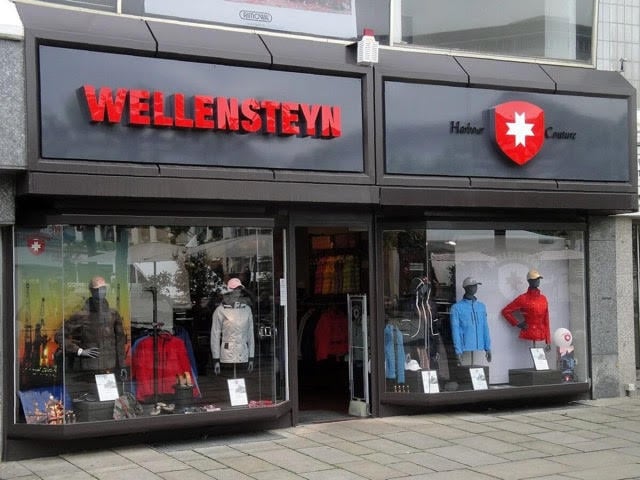
German outerwear brand Wellensteyn targets 2nd Canadian store after strong Niagara debut

Photo courtesy of Think Retail

With a history that spans more than 80 years, Wellensteyn, the German-founded outdoor coat and accessory company that has built an international reputation for combining technical functionality with fashion-forward design, is building momentum in Canada with plans to open a second location, says commercial real estate broker Think Retail.

Think Retail worked with the Wellensteyn team on its Canadian debut in August 2024. The success of the 2,350-square-foot store at Outlet Collection at Niagara demonstrates that Canada is a promising market for the international company and the goal is to open another in 2027.

Wellensteyn’s collections are designed to withstand a wide range of weather conditions, making them particularly well suited to Canada’s climate,  said Tony Flanz, founder and principal of Think Retail.

Tony Flanz
Tony Flanz

“It all started in the 1940s, when Adolf Wuttke, who made instruments used to help explore the depths of the volatile North Sea, set out to create high-quality outerwear for people working on the water and in the shipyards. He came up with a unique parka made with waxed sailcloth, which has stood the test of time,” he said.

“In the 1990s, the family-run company tapped into a new generation by expanding its product selection. Over the years, it has continued to develop a loyal customer following through its emphasis on durability, performance and quality craftsmanship. Its outerwear assortment now includes insulated winter jackets, lightweight transitional pieces and weather-resistant styles, as well as shoes, hats, scarves, belts, sunglasses, watches and other accessories, designed for both urban and outdoor lifestyles.

Wellensteyn photo
Wellensteyn photo

“Now, firmly established in Europe, Wellensteyn is steadily expanding its international footprint, bringing its distinctive approach to outerwear to new markets around the world. This is a proven magnet brand in major markets, with the highest category turnover in high-profile shopping centres and outlet malls across Germany, Austria, Hungary, Czech Republic and beyond.”

In Canada, the primary focus is on outlet centres across Ontario, however the team will also consider select locations in Quebec with ideal sites about 2,000 square feet, added Flanz.

For more information about this globally recognized outerwear brand and its plans for growth, contact the Think Retail team. 

More from Retail Insider:

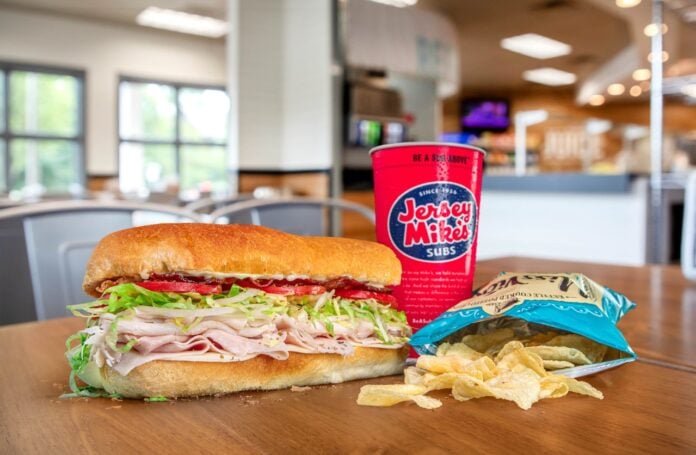
Jersey Mike’s Subs to open 3rd downtown Toronto location

Image: Jersey Mike's Subs

Redberry Restaurants will open the third downtown Toronto Jersey Mike’s Subs at 160 Bloor St. E., on Wednesday June 17.  

The Bloor Street Jersey Mike’s joins locations in Union Station and at 425 University Ave., which opened in May. A fourth downtown Toronto location is slated to open later this summer. This will be the 28th Jersey Mike’s Redberry has opened in Canada, on its way to a planned 300 Canadian locations by 2035, said the company.

“We are committed to building our presence in downtown Toronto and with this location we are excited to introduce ourselves to this important commercial district,” said Ken Otto, CEO, Redberry. “We are also committed to our on-going partnership with Make-A-Wish Canada and through our five-day grand opening fundraiser we are raising funds to grant more wishes to local children.”

Ken Otto
Ken Otto

To celebrate the new location, Redberry said it will hold a grand opening and fundraiser from Wednesday June 17 to Sunday June 21, to support Make-A-Wish Canada. Customers who receive a special fundraising coupon distributed through a grassroots effort prior to the opening can make a minimum $3 contribution to Make-A-Wish Canada in exchange for a regular sub. Customers must have a coupon to be eligible. 

Customers without a coupon will have a limited-time opportunity to download the Jersey Mike’s app and earn a free regular sub after their first in-app sub purchase and will also be able to support Make-A-Wish Canada via a donation box near the register, it said. 

In May, Jersey Mike’s pledged to raise $1 million by 2030 for Make-A-Wish Canada. Since 2024, the company has raised nearly $270,000 to help grant life-changing wishes to children with critical illnesses.

Founded in 2005, Redberry is one of the largest QSR restaurant franchisees in Canada. Redberry owns and operates more than 200 restaurants across the country, operating under the BURGER KING®, Taco Bell and Jersey Mike’s Subs brands.

Founded in 1956 as Mike’s Subs with one location in Point Pleasant, New Jersey, Jersey Mike’s has grown into a premier franchisor with more than 3,200 locations in the U.S. and Canada.

More from Retail Insider:

Honestly Good Chicken Fingers opens 4th location at Stock Yards Village in West Toronto 

Honestly Good Chicken Fingers photo

After a successful opening at Vaughan Mills, Honestly Good Chicken Fingers has opened its fourth location at Stock Yards Village, a vibrant outdoor shopping centre in West Toronto.  

The Stock Yards Village location is situated within the heart of the mall, offering shoppers an affordable and accessible dining option in one of Toronto’s premier retail and entertainment district, said the company.

“We identified Stock Yards Village early in our expansion strategy because of its strong community mix and steady traffic from across the Greater Toronto Area (GTA),” said Naomi Kempkes, Co-Founder and President at Honestly Good Chicken Fingers. “We’ve been fortunate to see support from a wide range of communities at all of our locations, and we’re confident that both visitors to Stock Yards Villages and local West Toronto residents will continue that trend.” 

Honestly Good Chicken Fingers photo

Designed with simplicity and efficiency in mind, Honestly Good Chicken Fingers said it focuses on high-quality, made-to-order menu items crafted with a unique blend of herbs and spices for a distinctive flavour experience. Ingredients are sourced from suppliers who meet the company’s strict standards for quality and freshness. 

Honestly Good Chicken Fingers photo

The brand’s straightforward approach has resonated strongly with chicken finger enthusiasts across the GTA, supporting its continued expansion across the region. With locations in Etobicoke, The Well and Vaughan Mills, the Stock Yards Village opening marks the fourth location in the Toronto area and sets the stage for broader growth across Canada and the United States, it added.

“The concept was born in the GTA, so expanding here always carries special meaning for us,” said Kempkes. “The response from guests has been incredible, and it reflects a clear demand for high-quality, simple and well-executed food. That success is helping fuel our next phase of growth across North America.” 

More from Retail Insider: