Home Blog Page 1245

Target to Exit Canada

Target has just announced that it will exit Canada. The company has lost over $2 billion here since it opened its first Canadian stores in March of 2013. Below is the press release which was just released by Target, as well as links to news stories from around the web. 

“We were unable to find a realistic scenario that would get Target Canada to profitability until at least 2021” the press release says. 

Here is our article from last Friday where retail expert Antony Karabus discusses Target’s possible exit

Next week we’ll follow up this topic with a discussion of Target’s most valuable Canadian locations, and who might best utilize them. As well, below, are links to articles on the topic from other news sites: 

Target Corporation Announces Plans to Discontinue Canadian Operations [Newswire Press Release]

Target Canada files for creditor protection, plans to halt operations [CBC]

Target to close all 133 stores in Canada [Toronto Star]

Target Killing Canadian Operations [Globe & Mail]

Target Corp to exit Canada after racking up billions in losses [Financial Post]

Target pulling out of Canada after failed expansion [CTV]

Target pulls plug on Canadian stores [Global]

Target to Abandon Canada After Racking Up Billions in Losses [Bloomberg]

Target to discontinue Canada operation, seeks creditor protection [Reuters]

Target to Exit Canada [Wall Street Journal]

Target to shutter Canada stores, book a $5.4 billion charge [Fortune]

Target to Close All Stores in Canada, Conceding a Failed Expansion [New York Times]

5 Reasons Why Target Failed In Canada [Business Insider]

*[MORE ON TARGET IN OUR JANUARY 16TH DAILY NEWS]*

Target Corporation Announces Plans to Discontinue Canadian Operations

Target Canada takes steps to ensure a fair and orderly exit, seeks Court approval to begin liquidation process under the CCAA

Company provides update on fourth quarter performance in the U.S.

MINNEAPOLISJan. 15, 2015 /CNW/ – Today Target Corporation (NYSE:TGT) (the “Company”) announces that it plans to discontinue operating stores in Canada through its indirect wholly-owned subsidiary, Target Canada Co. (“Target Canada”). As a part of that process, this morning Target Canada filed an application for protection under the Companies’ Creditors Arrangement Act (the “CCAA”) with the Ontario Superior Court of Justice (Commercial List) inToronto (the “Court”).

“When I joined Target, I promised our team and shareholders that I would take a hard look at our business and operations in an effort to improve our performance and transform our company. After a thorough review of our Canadian performance and careful consideration of the implications of all options, we were unable to find a realistic scenario that would get Target Canada to profitability until at least 2021. Personally, this was a very difficult decision, but it was the right decision for our company. With the full support of Target Corporation’s Board of Directors, we have determined that it is in the best interest of our business and our shareholders to exit the Canadian market and focus on driving growth and building further momentum in our U.S. business,” said Brian Cornell, Target Corporation Chairman and CEO.

Target Canada currently has 133 stores across the country and employs approximately 17,600 people. To ensure fair treatment of Target Canada employees, Target Corporation is seeking the Court’s approval to voluntarily make cash contributions of C$70 million (approximately US$59 million) into an Employee Trust. Upon approval by the Court, the proposed trust would provide that nearly all Target Canada-based employees receive a minimum of 16 weeks of compensation, including wages and benefits coverage for employees who are not required for the full wind-down period. Target Canada stores will remain open during the liquidation process.

As part of its application, Target Canada is seeking the appointment of Alvarez & Marsal Canada as Monitor in the CCAA proceedings to oversee the liquidation and wind-down process for Target Canada and its subsidiaries. Subject to Court approval, Target Corporation has committed to provide a US$175 million debtor-in-possession credit facility to finance Target Canada’s operations during the CCAA proceedings. Target Canada is also seeking Court approval to engage Lazard to advise Target Canada in connection with the sale of its real estate assets.

“The Target Canada team has worked tirelessly to improve the fundamentals, fix operations and build a deeper relationship with our guests. We hoped that these efforts in Canada would lead to a successful holiday season, but we did not see the required step-change in our holiday performance,” said Cornell. “There is no doubt that the next several weeks will be difficult, but we will make every effort to handle our exit in an appropriate and orderly way.”

As a result of the CCAA filing, Target Corporation has determined that Target Canada and its subsidiaries will be deconsolidated from Target Corporation’s financial statements as of the date of the filing.  Target Corporation expects to report approximately $5.4 billion of pre-tax losses on discontinued operations in the fourth quarter of 2014, driven primarily by the write-down of the Corporation’s investment in Target Canada, along with costs associated with exit or disposal activities and quarter-to-date Canadian Segment operating losses prior to today’s filing. Target Corporation expects to report approximately $275 million of pre-tax losses on discontinued operations in fiscal 2015.

Target Corporation’s cash costs to discontinue Canadian operations are expected to be $500 million to $600 million, most of which will occur in the Company’s 2015 fiscal year or later. The Company has sufficient resources to fund these expected costs, including cash on hand and ongoing cash generation by its U.S. business.                                  

Target Corporation expects this decision will increase its earnings in fiscal 2015 and beyond, and increase its cash flow in fiscal 2016 and beyond.

As a result of the decision announced today, Target Corporation will operate as a single segment that includes all U.S. operations. Beginning with the Company’s fourth quarter 2014 financial results, Target will report adjusted earnings per share reflecting operating results from its U.S. operations, excluding discontinued Canadian operations, the impact of the reduction of the beneficial interest asset recognized in connection with the 2013 sale of the Company’s U.S. consumer credit card portfolio, net expenses related to the 2013 data breach, and the resolution of certain tax matters.

Target Corporation plans to provide additional information on the financial implications of this announcement in a Form 8-K to be filed with the Securities and Exchange Commission later today.

Update on expected fourth quarter U.S. performance
Based on performance through November and December, Target Corporation now expects to report fourth quarter 2014 U.S. comparable sales of approximately 3 percent, better than prior guidance of approximately 2 percent, driven primarily by increased traffic and stronger-than-expected digital sales. The Company expects to report fourth quarter adjusted EPS, reflecting results from continuing operations, of $1.43 to $1.47, about 6 cents ahead of expectations for U.S. Segment performance at the beginning of the quarter. 

The Company is not able to provide an estimate of its expected fourth quarter 2014 GAAP EPS. However, GAAP results are expected to include:

  • Losses related to liquidation of Target Canada, as described above, net of taxes
  • Net expenses related to the 2013 data breach, which are not expected to be material
  • Impact of the reduction of the beneficial interest asset recognized in connection with the 2013 sale of the Company’s credit card portfolio, which is expected to reduce GAAP EPS by approximately 2 cents

Cornell and John Mulligan, Target Corporation’s Chief Financial Officer, will host a call with investors today, approximately two hours after the conclusion of the Court hearing of the CCAA application. Target Corporation will issue a press release following the Court hearing and post details for the call on target.com/investors under “Upcoming Events and Presentations.”

Miscellaneous
Statements in this release regarding expected earnings and cash flow and other financial impacts of exiting the Company’s Canadian operations, and fourth quarter 2014 sales and adjusted earnings guidance are forward-looking statements within the meaning of the Private Securities Litigation Reform Act of 1995. Such statements speak only as of the date they are made and are subject to risks and uncertainties which could cause the Company’s actual results to differ materially. The most important risks and uncertainties include those relating to the consequences of discontinuing Canadian operations and the risks described in Item 1A of the Company’s Form 10-K for the fiscal year ended February 1, 2014, as updated in the Company’s Form 10-Q for the quarter ended November 1, 2014.

The adjusted earnings per share expectation for fourth quarter 2014 excludes the items identified above.  The Company’s measure of adjusted earnings per share is not in accordance with, or an alternative for, generally accepted accounting principles in the United States.  The most comparable GAAP measure is diluted earnings per share.  Management believes adjusted EPS is useful in providing period-to-period comparisons of the results of the Company’s U.S. operations.  Adjusted EPS should not be considered in isolation or as a substitute for an analysis of the Company’s results as reported under GAAP.  Other companies may calculate adjusted EPS differently than the Company does, limiting the usefulness of the measure for comparisons with other companies.

About Target
Minneapolis-based Target Corporation (NYSE: TGT) serves guests at 1,934 stores – 1,801 in the United States and 133 in Canada – and at Target.com. Since 1946, Target has given 5 percent of its profit to communities, that giving equals more than $4 million a week. For more information, visit Target.com/Pressroom. For a behind-the-scenes look at Target, visit ABullseyeView.com or follow @TargetNews on Twitter.

SOURCE Target Corporation


For further information: Media Contact: Dustee Jenkins (612) 696-3400; Investor Contact: John Hulbert (612) 761-6627
Outlet Malls to Open in Canada in 2015 and Beyond

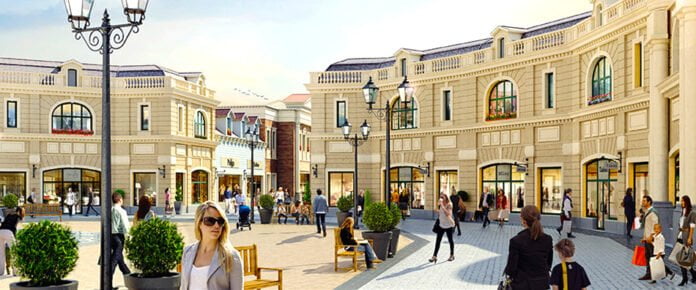
PHOTO: MCARTHURGLEN DESIGNER OUTLETS.

As Canadian retailing increasingly becomes Americanized, outlet malls continue to be built across the country. In this article we’ll discuss the locations and details of the outlet malls scheduled to open in Canada between now and 2017, as well as briefly discuss some recently opened Canadian outlet centres. 

The following is a description of the outlet malls scheduled to open in Canada this year and into 2017: 

McArthurGlen Designer Outlets, Vancouver: Opening in the spring of 2015, North America’s first McArtherGlen Designer Outlets will be located at Templeton Skytrain Station next to Vancouver International Airport. The mall’s first phase will span 240,000 square feet with 80 retailers, many of them being luxury brands. McArthurGlen representatives say they’ll provide us a list of retailers closer to the mall’s opening date and when they do, we’ll reveal them in a separate article. Eventually, the mall will span 400,000 square feet with about 150 stores, with an unknown completion date. 

RioCan/Tanger Outlets at Calaway Park, Calgary: Originally planned to be 350,000 square feet housing about 80 retailers, the Calgary outlet mall will not proceed, according to a November 2014 article in the Calgary Herald. In the article, it was revealed that RioCan and Tanger have decided against buying the outlet mall’s land, in effect scrapping the entire project. 

Tsawwassen Mills, South Delta, BC: Located south of Vancouver, Ivanhoe Cambridge‘s Tsawwassen Mills will boast 16 anchors and about 1.2 million square feet of retail space. Scheduled to open in the spring of 2016, the mall will feature British Columbia’s first Bass Pro Shops. According to its developer, the mall will feature a mix of premium fashion brands, factory outlets, restaurants, first-to-market retailers, a 1,100 seat food court, and will be modelled on the successful CrossIron Mills in Calgary and Vaughan Mills in Toronto. 

The Outlet Collection at Edmonton International Airport: Scheduled to open in the fall of 2016, Ivanhoe Cambridge is building a 350,000 square foot outlet mall to house about 85 retailers. The enclosed mall (good idea, considering the weather) will be located on 45 acres of land owned by Edmonton International Airport. Given its location, it could attract shoppers from all over Northern Alberta, as well as possibly air travellers. 

The Outlet Collection at Winnipeg: Yet another outlet project developed by Ivanhoe Cambridge, Winnipeg’s outlet mall will measure about 385,000 square feet and feature about 90 retailers. Located on Winnipeg’s southwest side within Seasons at Tuxedo, the Outlet Collection is expected to open some time in 2017. 

These new outlet malls join several malls which have recently opened in Canada. In October of 2014, the 365,000 square foot, 85-store Premium Outlets Montreal opened to enormous crowds. Also in October, the 350,000 square foot, 75-store Ottawa Tanger Outlets opened to the public. May of 2014 saw the opening of the 520,000 square foot, 102-store Outlet Collection at Niagara in Niagara-on-the-Lake, Ontario, competing with an outlet mall in nearby New York State. In August of 2013, the 375,000 square foot, 90-store Toronto Premium Outlets opened with several first-to-Canada retailers. 

Before and After: Yorkdale Creates a Luxury Wing From the Mundane

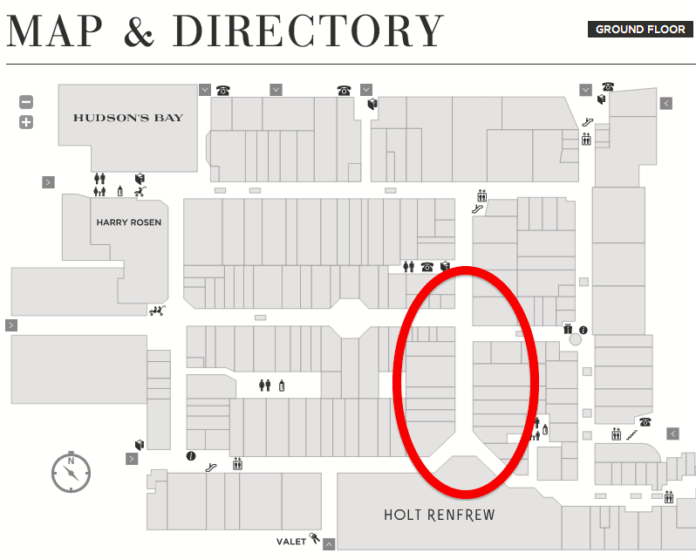
Yorkdale Leasing Map

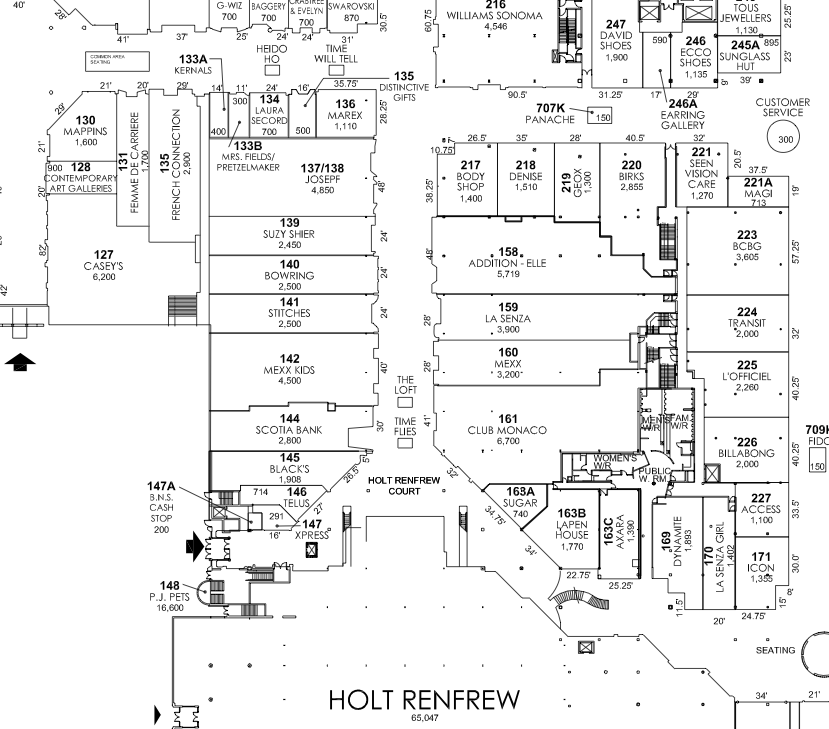
Over the past several years, Toronto’s Yorkdale Shopping Centre has created a luxury wing from an area which, less than a decade ago, was fairly nondescript. We’ve located a lease plan of the mall from 2005, showing the mall’s rather pedestrian ‘Holt Renfrew Court’ tenant mix. Fast forward to 2015, where the same area boast Canada’s densest collection of luxury brands. 

AUGUST 2005 YORKDALE LEASE PLAN, VIA OXFORD PROPERTIES.

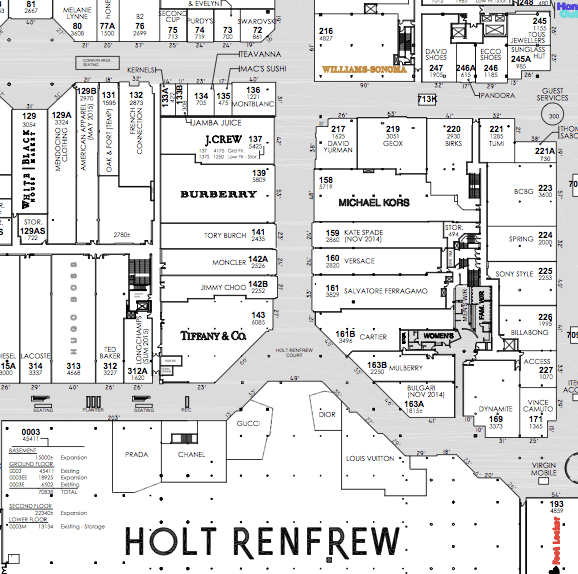
The 2005 Yorkdale lease plan, above, shows Holt Renfrew Court and the hallway immediately north. Its tenant mix was generally average, featuring retail space for Telus, Black’s, ScotiaBank, Stitches, Suzy Shier, Addition Elle, La Senza and others. The lease plan, below, shows the area’s remarkable new tenant mix. 

NOVEMBER 2014 LEASE PLAN.

The same area is now dedicated primarily to luxury. Tiffany & Co. opened in April of 2009, followed by Burberry and, soon after, luxury retailers were lining up to get into Yorkdale. The mall’s new ‘luxury wing’ boasts retailers such as Jimmy Choo, Moncler, Montblanc, Versace, Ferragamo, Cartier, Mulberry and Bulgari. Adding to this are concessions within an expanded Holt Renfrew for brands such as Prada, Chanel, Gucci, Dior (accessories), and a 4,000 square foot Louis Vuitton – Canada’s third-largest Vuitton location. It’s an impressive transformation, led by the leasing team at Oxford Properties

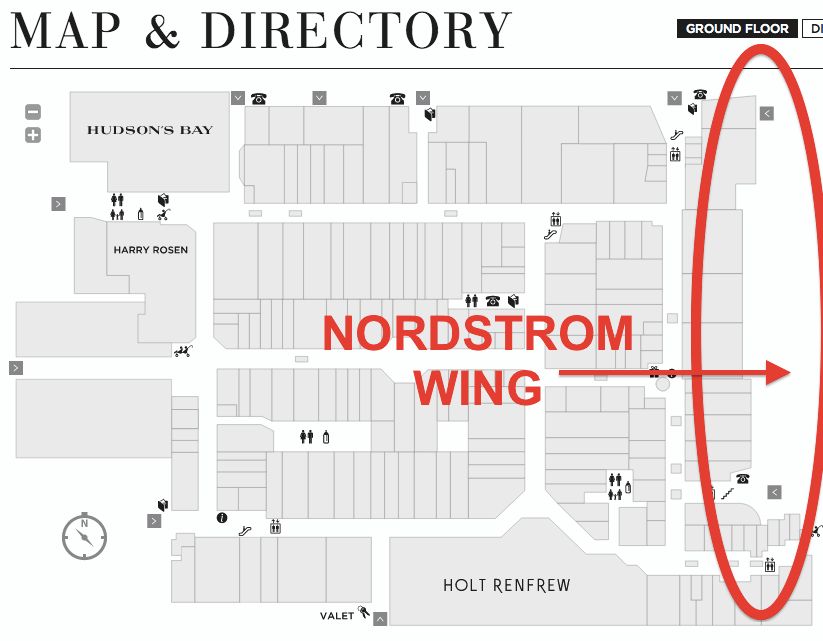
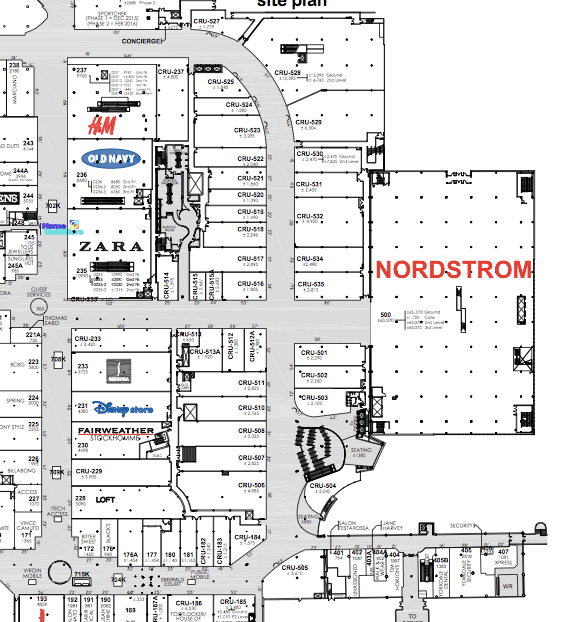
Yorkdale isn’t stopping there. French luxury brand Longchamp will open this spring across from Holt Renfrew, and a number of luxury retailers will join Nordstrom in the mall’s newest wing, scheduled to open in the fall of 2016. We won’t reveal the new retailers in the Nordstrom wing just yet, though we’re providing a lease plan below showing the mall’s newest expansion. 

MAP, ABOVE, SHOWS THE LOCATION OF THE LEASE PLAN, BELOW.

On March 6, 2015, Yorkdale leasing manager Greg Schmidt will be speaking at the University of Alberta School of Retailing Thought Leadership Conference in Edmonton on the topic of mall leasing. For more information and to attend, visit the Thought Leadership Conference website.

Birks Continues Expansion, But With Smaller Stores

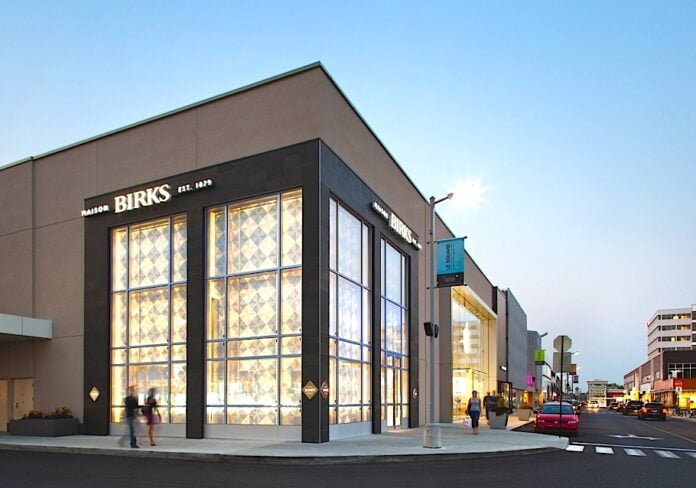
Upscale Montreal-based jeweller Maison Birks will spend over $4.5 million this year expanding and renovating its Canadian base of stores, following its recent rebranding. The retailer opened and renovated several new Canadian locations in 2014, with plans to open more locations into 2015 and beyond. Remarkably, the retailer is almost consistently building smaller stores when it replaces previous locations and as a result, some of its largest locations are being replaced by some of its smallest.

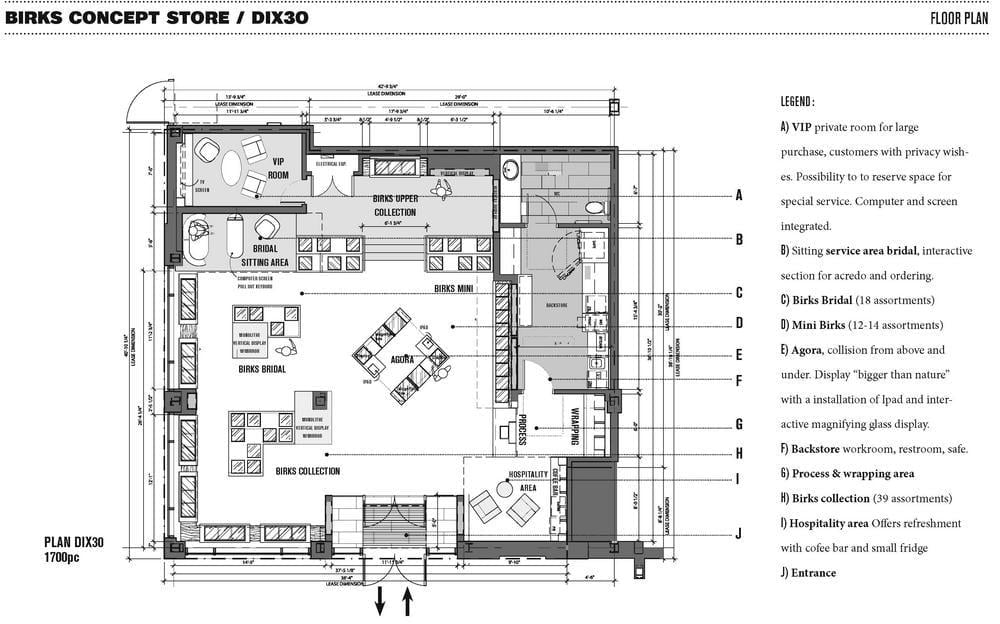
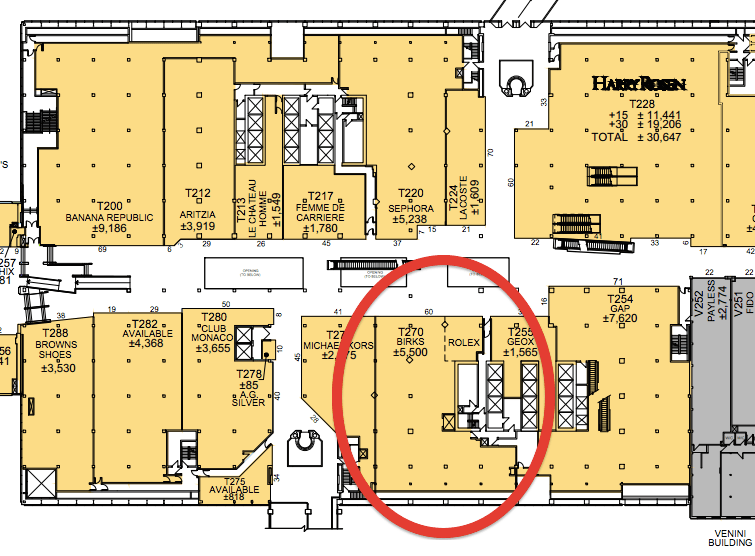
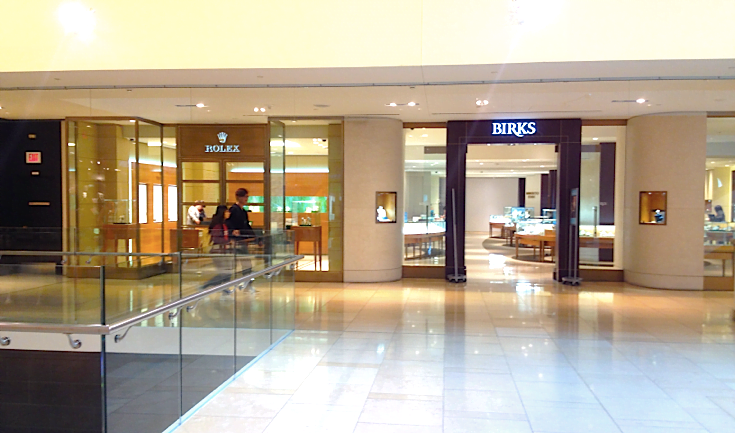
Birks has recently opened a number of store locations, including stores in Calgary, Burlington and suburban Montreal. Its Burlington store, located at Mapleview Centre, measures 1,384 square feet while its Brossard store, located in the popular Quartier DIX30, measures 1,690 square feet. Its newest Calgary location, located next to Canada’s first Nordstrom in Chinook Centre, measures 3,660 square feet and replaces a 2,340 square foot location in the same mall. This is the only recent instance where a replacement Birks has been larger than a former location. Downtown Calgary’s Birks recently renovated and added a Rolex shop-in-shop with its own dedicated mall entrance. The downtown Calgary Birks location, however, has been reduced in size from 7,895 square feet to 5,568 square feet, with 2,330 square feet going to Michael Kors. At one time, downtown Calgary’s Birks spanned an impressive two floors. 

In the spring of 2014, Birks also opened a wedding-focused concession adjacent to the new Kleinfeld Bridal on the seventh floor of Hudson’s Bay at Toronto Eaton Centre. 

Maison Birks will continue its Canadian store expansion into 2015. A new location will open in Edmonton, joining recently opened Ottawa and Mississauga stores. Located in West Edmonton Mall, the Edmonton location will measure about 1,400 square feet and will open in the spring of 2015. Birks’ new Ottawa Rideau Centre location, measuring 2,704 square feet, replaced the mall’s 7,250 square foot Birks flagship. A 1,780 square foot Square One unit in Mississauga recently replaced a 3,360 square foot location in that mall.

Aurora Realty Consultants represents Birks across Canada.

It should be noted that some of Birks’ smaller new stores are mono-brand locations primarily carrying Birks-branded jewellery and accessories, as opposed to larger locations (like Calgary’s new Chinook Centre unit) carrying various designers. 

Maison Birks has also recently closed a number of locations. In 2014, the retailer closed locations at Oakville Place in Oakville, Ontario (2,800 square feet), Promenades St-Bruno near Montreal (2,346 square feet) and at Centre Rockland in Montreal (3,020 square feet). In 2013, Birks closed its Hamilton Limeridge Mall unit (2,450 square feet) and its 1,562 square foot location at Richmond Centre in suburban Vancouver. In May of 2012, Birks closed its 4,552 square foot Toronto Eaton Centre flagship, replacing it three months later with a substantially smaller, 1,042 square foot storefront. 

The company also operates a 4,200 square foot unit at downtown Edmonton’s Manulife Place. With a lease expiring in May of 2016, sources say that its future is uncertain. 

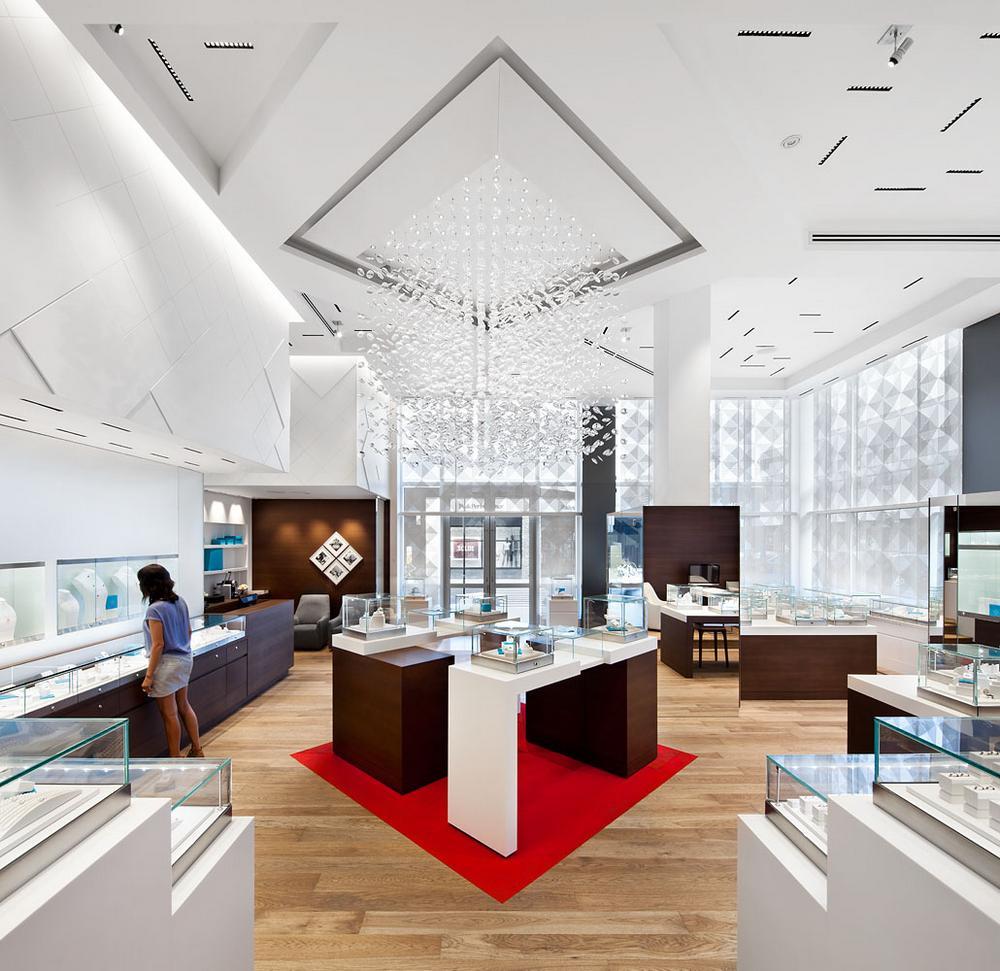
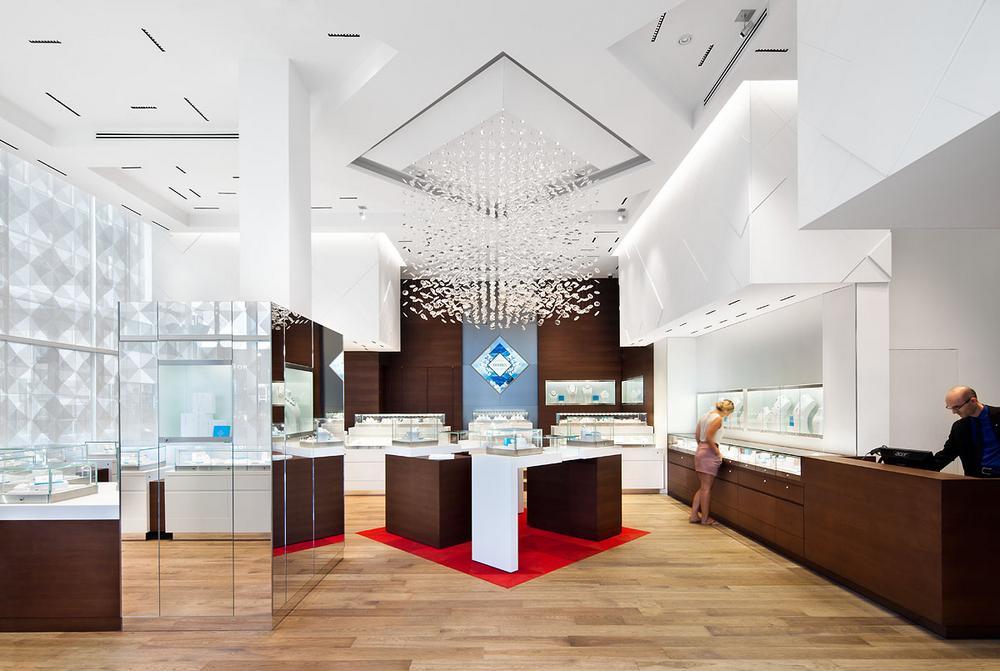
Maison Birks, formerly known as Henry Birks & Sons or simply ‘Birks’, underwent a rebranding in 2013, featuring revamped store interiors and a focus on house-brand Canadian diamonds. The retailer continues to carry a variety of other luxury jewellery and watch brands in its stores as well, including brands such as Cartier, Van Cleef & Arpels, Bulgari, Montblanc, Tag Heuer, and others.

Birks at Calgary’s CORE features a Rolex shop-in-store with its own mall entrance. Photo- Craig Patterson. 

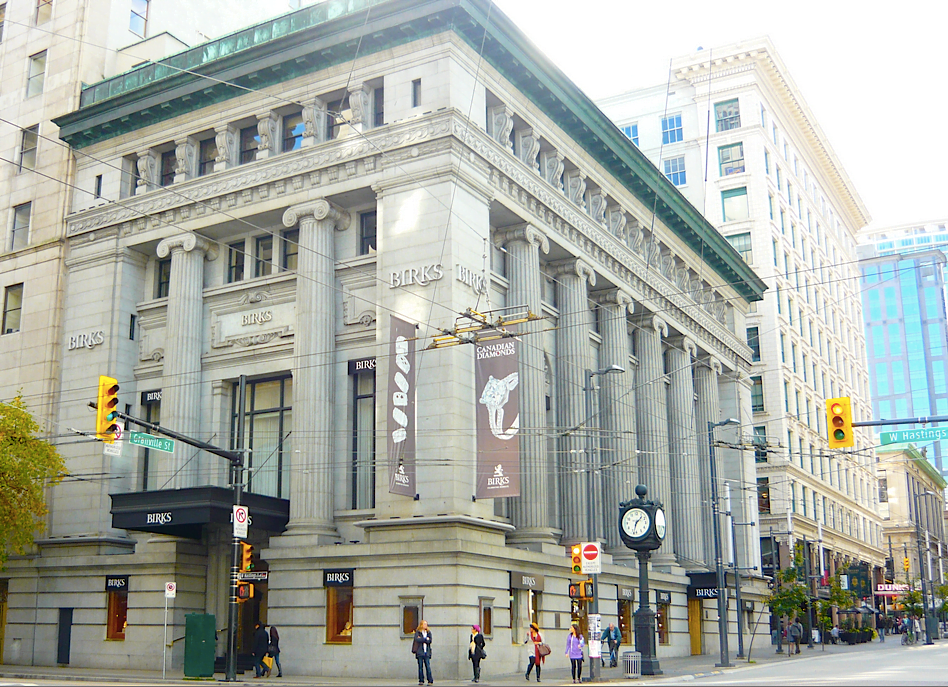
Birks currently operates 32 stores in Canada, including 30 Maison Birks stores and two Brinkhaus-branded retail locations in Calgary and Vancouver. Both operate under parent company Birks Group, which also operates 18 jewellery stores under the Mayors nameplate in Florida and Georgia, as well as one free-standing Rolex store in Orlando. The company’s largest store is in Vancouver, spanning an impressive 20,220 square feet in a former bank building. It’s Montreal flagship is second, measuring 19,785 square feet of retail space. The company’s Montreal headquarters is located above, measuring over 58,000 square feet. 

Birks was founded in Montreal in 1879. From 1950 through 1990, Birks aggressively expanded its retail business and by the early 1990s it had approximately 220 stores in Canada and the U.S. After a period of rapid expansion in the 1980s, the company experienced substantial financial losses in the early 1990’s, eventually leading to a 1993 buyout by Italian firm Borgosesia Acquisitions Corporation. In the summer of 2013 the company announced that Birks would change its name to Maison Birks, along with updated storefronts and a focus on Birks-branded diamonds and jewellery. 

Canadians Holiday Shopping Online, 2014: Which Retailers Made The Grade?

By Sally Seston and Vicky Applebaum

It’s a tough job, but somebody has to do it: we went holiday shopping online so that we could report back on which retailers made the Naughty and Nice lists this year. We graded retailers on the following criteria:

  • Click-to-order
  • Consumer communication
  • Delivery

Find out here who made the grade and why!

Zara

Click-to-order: We ordered a single item. This was an order placed on Zara.com from Canada, to be shipped to a U.S. address.  While many American shopping sites won’t allow a cross-border purchase because they require a U.S. billing address, we were able to circumvent this by using PayPal, which had our Canadian address in its files. The website navigation was easy to use and checkout was fast.

Consumer communication: We received notification of shipping the same day, less than eight hours after the order was processed. E-mail communication was prompt and clear, with a simple link to track the package.

Delivery: The order shipped and arrived within five business days.

Final Grade: A

Target

Click-to-order: We ordered a physical gift card. These were very easy to shop on the site, which also carried a very broad selection of designs. This was another order placed from Canada on an American shopping site, paid via PayPal.

Customer communication: It took two business days for Target.com to confirm that the order was shipping, which we found surprising, given the nature of the item we had ordered.

Delivery: The item shipped via USPS standard mail so, tracking was not possible.

Final Grade: B+

Macy’s

Click-to-order: We ordered 3 items.  The online descriptions did not accurately reflect the items.  For example, we ordered what we’d believed to be a wool skirt but received a wool knit instead.  This was not specified in the item description, nor was it clear from the images. Checkout was simple.  We were given the option of a gift box, but there was an extra charge for this.

Customer communication: As soon as the order was processed, we were notified that it would be split into two shipments (although no reason was given). Communication from order through delivery was excellent.

Delivery: The order was split into 2 shipments.  While we had labelled the items as gifts, they still arrived with price labels intact.  Returns can be made in store or by mail.  Return by mail is free (customer needs to take the package to a UPS location).

Final Grade: C

The Children’s Place

Click-to-order: Navigation seemed easy but became difficult when we wanted to add items into our cart.  We chose ‘outfits’ which were shown online as an outfit of 3 or more items, but each item had to be ordered individually.  We had added 2 of the 3 items into our basket when we learned that the 3rd item was 100% out of stock (no sizes at all).  Order processing was smooth and the product arrived promptly. The product definitely matched the online pictures and descriptions.

Customer communication: Overall communication was great and products were described as shown.

Delivery: Returns are easy by mail and can be dropped off at US Postal Service location.

Final Grade: B+

Etsy

Click-to-order: In Canada, we ordered two items. The first item was a custom pet tag. The second order was a plate.

Customer communication: For the first item, we did not receive any direct, personal communication from the vendor, which we found surprising, given the nature of Etsy. While response times for small artisans vary depending on their time zones, most customers will still expect the same level of prompt service that they receive from a large retailer.

Delivery: The first item was shipped by Canada Post and took four days to fulfill and about five business days to ship. The second order was trickier to deliver. The artisan was located just a 20-minute drive away, but on its page, quoted a $25 shipping fee, which was more than half the price of the item. When we contacted the artisan to ask if we could pick up, she instead offered to deliver it for $10 via a driver, and the item was delivered within three days.

For an independent merchant selling larger items on Etsy, shipping charges are clearly going to be the biggest hurdle to overcome since major retailers offer free or nominal shipping. The consumer has to be willing to make the trade-off between hand-made with expensive shipping, and mass-produced but shipped for free.

Final Grade: B

Apple

Click-to-order: We placed an order for two versions of photo calendars which we created in iTunes and ordered within minutes of each other.  The two orders showed as separate orders and there was no way to combine them into one.  There was no visible option to send each calendar to a different address.  As they were purchased as gifts, this would have been a nice option.

Customer communication:  Because photo calendars are a custom product, Apple does not allow returns.  In the past, there have been checks to ensure that you were 100% happy with what you’d created – e.g. Apple notified you if any photos were too low quality.  Since they didn’t offer that this time (and the end result suggests that we might have benefitted from it!), we were stuck with a product that could have been better.

Delivery: Both orders were scheduled for a December 16-18 delivery, but one arrived December 11 and the other was still pending as of December 17.

Final Grade: D

Best Buy

Click-to-order: We ordered an iPad Mini from the Canadian shopping site. We wanted to pick up the item at our local store. When browsing the item, we were told there was inventory in stock at our store, so we placed the order, expecting to be able to pick it up the next day.

Customer communication: The next morning, we received an e-mail notifying us that the order was cancelled because there was no stock in-store, and that we had to place an order online for home delivery if we still wanted it, however, the item was also on backorder online.

Delivery: While they were able to ship the product 3 days later, this didn’t feel like it made up for the initial letdown. Best Buy had set a level of expectation and we feel they had completely dropped the ball.  We had the exact same experience when shopping on the U.S. site for a camera, so Best Buy has some work to do on supply chain visibility.

Final Grade: D

E-commerce has come a long way since its inception and the customer experience has evolved over time. There are higher expectations of retailers now: customers want their goods fast and shipped for free. Hiccups in the process – such as out-of-stock notification after the order has been processed – detract from the experience.

Remember: you can do ten things right, but if you get one thing wrong, the negative impression will always linger for longer.

While it seems very obvious, it doesn’t appear that all retailers have framed the online customer experience around the customer. This points to the importance of rigorous user testing and building every single interaction around the question “What would our customer want?”

Sally Seston is a Director with Retail Category Consultants Inc., where she is involved in a variety of projects to drive sales growth and build loyalty for retail clients.  A seasoned retail executive with over 20 years of experience, she has held several senior leadership positions with major Canadian retailers, having risen through the ranks of the merchant organization.

Prior to joining Retail Category Consultants, she led marketing, business improvement and innovation initiatives for Loblaw Companies Limited.  Her career there started in 1992 when she joined the Category Management Team. She holds a Masters Business Administration (MBA) from the Ivey Business School at the University of Western Ontario and a Bachelor of Science (Honours) in Computer Science from Queen’s University.  A sought after speaker, Sally has presented at many conferences throughout North America. In addition, Sally is a member of the Advisory Board for the Payments Exchange.  With little sleep and much humour, Sally juggles three children and life split between homes in Canada and the US.

Vicky Applebaum is a consultant with Retail Category Consultants Inc. and helps clients develop and implement retail strategy, marketing and innovation projects.  Vicky has over 15 years of progressive retail experience in Canada in multiple disciplines.

Her experience includes advertising and merchandising at Loblaw Companies, and marketing, merchandising and category management with Shoppers Drug Mart.  Her love for all things marketing also led her to work on the agency side and in independent consulting in advertising, event marketing, direct marketing, new product launches and loyalty.Born in Montreal, Quebec, Vicky holds a Bachelor of Commerce (Marketing) from Concordia University.  She and her husband live with their daughter in Richmond Hill, Ontario where they operate a rental moving box business, CityBoxes.ca.


Target Corporation Should Focus on its Most Substantive Value Creation Opportunities in 2015, According to Retail Advisor and Consultant Antony Karabus

With a new CEO at Target, we expect he will most likely concentrate company resources (people and capital) on the most strategically important and most impactful business opportunities that will drive earnings. The opinion of retail industry expert Antony Karabus is that this is a particularly important step as the new CEO, Brian Cornell, builds his agenda for driving value.  Mr Karabus believes that Target has more substantial upside in its core US business, in particular as a result of the mis-steps made by the former Target Canada leadership in over-estimating the top line potential and in poorly managing the Canadian business and customer experience.  Karabus believes the competition in Canada is more substantive than Target anticipated and that this, together with continuing significant sales and losses in the Canadian business, positions the new CEO to cut the Company’s losses by strategically exiting the Canadian business. Mr Karabus feels that Mr Cornell has made some good moves in his first few months in strengthening his leadership team and that he will focus his plan on the key strategies that will bring the most substantive value to Target Corp

Mr. Karabus says that, generally, Target’s Canadian operations face fierce and perhaps insurmountable competition. Several successful retailers in Canada have substantial overlap in many product categories as Target, and have maintained or grown their share of market since Target’s Canadian entry.  Retailers including Costco, Walmart, Canadian Tire, Giant Tiger and London Drugs continue to be formidable competitors, each offering value-priced products in more innovative retail environments, coupled with much more incumbent customer loyalty. Karabus believes that while Target Canada can make some progress as it corrects its supply chain, assortment, in-stock and pricing issues, it will continue to be extremely difficult for Target to entice large numbers of loyal Canadian customers away from those chains without enormous continuing investment in creating an innovative and compelling proposition and shopping experience.

Mr Karabus summarized the strong Canadian competition as follows:

1. Costco, for example, has twice as many stores per capita in Canada than in the United States — with about 475 American locations and over 90 in Canada. Both Target and Costco attract similarly affluent budget-conscious shoppers, across a spectrum of product categories.

2. Walmart Canada has substantial market share in the value sector, with over 400 stores and well over $20 billion in annual sales.

3. Canadian retail icon Canadian Tire has very strong customer loyalty, exceptional locations near almost every Canadian’s address and carries a wide variety of “ in demand brands” in many of the product categories that Target Canada carries. 

4. Value-priced Giant Tiger has over 200 Canadian locations, with plans for expansion.

5. Western Canada’s London Drugs who sells more small appliances than any Western Canadian retailer, for example, with numerous stores in prominent urban and suburban locations.

6. Despite store closures, Sears still maintains numerous strong Canadian locations and should not be discounted as a key competitor in both apparel and hard goods

Mr. Karabus suggests that Target Corporation may in fact be able to more quickly revitalize the business by shutting down its Canadian operations.  He advises new CEO Brian Cornell to focus its human and financial capital on reviving and optimizing its US business, both in regaining its historic brand popularity and its focus on innovation, fashion and customer service. Further, Target’s US e-commerce business has significant upside potential under new leadership, addressing increasing online competition. Target’s Canadian operations, in his view, are a substantial distraction, given the above opportunities in the core US business. Mr. Karabus believes Target Corporation would get relatively more upside in optimizing its US bricks and mortar and e-commerce businesses, while exiting Canada and strategically sell its existing Canadian store leases to retailers seeking retail space.

Target currently operates 133 Canadian stores. Mr. Karabus says Target could reduce its losses through ‘package deals‘ to various retailers, depending on individual location desirability. Given the footprint size of Target Canada stores, a combination of several retailers could be candidates for acquiring selected Target Canada leases over the coming years. Walmart is a likely choice for many Target locations, according to Mr. Karabus, as the American behemoth looks to continue its Canadian expansion. Home goods retailers such as Home Depot, Rona and Lowe’s could also benefit by taking over select locations. Large grocery stores such as Loblaw, Sobeys, and Metro might also be good candidates for some Target leases, given appropriate sizes and locations. Others such as  Nordstrom Rack, DSW Designer Shoe Warehouse, Hudson’s Bay Outlet and Saks Off 5th by Saks Fifth Avenue will all enter or expand Canadian retail space in the next few years, and portions of existing Target stores could house these and other larger-format retailers. At least a couple of existing Target stores could even become luxury department stores. Target also holds valuable real estate in top malls such as Calgary’s Chinook, Mississauga’s Square One, West Edmonton Mall, Calgary’s Market Mall, Burnaby’s Metropolis at Metrotown, and a number of other locations that will be the subject of a separate article.

As Canadian retailing becomes more competitive in 2015, there will continue to be fallout. According to Mr. Karabus, focus by Target Corporation’s new CEO on getting back to the essence of what historically made the retail brand great in its core US market is the best and most strategically sound path to success, rather than continuing to spend the precious talent and resources of its key executives on trying to improve results in a challenging and competitive Canadian retail environment

About Our Expert: 

Antony Karabus will be the keynote speaker for the University of Alberta School of Retailing’s Thought Leadership Conference being held in Edmonton on March 6, 2015. Visit its website to learn more and attend. 

Mr. Karabus became CEO of HRC Advisory in January of 2013. He has been a trusted and passionate advisor to retailers on strategic and financial performance issues for over 25 years. He has assisted numerous North American retailers to create significant shareholder value during this time. He has worked with numerous well known retail chains in key sectors such as department store, specialty apparel and hard lines, big box chains and food and convenience.

Antony began his career at Arthur Andersen in Cape Town, South Africa and moved with the firm to Toronto, where he founded Karabus Management as a Canadian retail advisory firm in 1990. In 2001, Karabus Management expanded into the United States, where the firm became a leading North American specialist retail consulting firm. In 2008 he sold the firm to an International Accounting/Consulting firm where he served as the leader of that firm’s Retail Consulting Services practice until he left the firm in December 2011.

Antony conducts annual surveys of Retail CFO and CEOs to determine key priorities in assisting their business to enable substantive value creation.

Antony is a recognized speaker and a published author providing thought leadership at industry forums, including the National Retail Federation, Retail Council of Canada, World Retail Congress and the Fashion Institute of Technology and providing content to The Wall Street Journal, The New York Times, Stores Magazine, The Globe & Mail, Chain Store Age, National Post, Toronto Star and Women’s Wear Daily, among others.

About HRC: HRC Advisory is a specialist boutique retail advisory firm. Together with its predecessor firms, it has been assisting Canadian and US Retail Chains to improve their profitability and strategic positioning for more than 25 years. Many of HRC’s senior advisors were previously at Senn Delaney Retail Consultants and Karabus Management following retail leadership roles. Other senior advisors at HRC have a mix of retail leadership and retail consulting experience gained with other leading firms
 
HRC has significant retail depth in strategic planning, buying, merchandise planning and inventory management, indirect procurement, store operations and omni-channel processes, supply chain/logistics and fulfillment, and comprehensive cost optimization services. HRC has worked extensively with both healthy top performing chains as well as developing and executing turnaround mandates at a number of retailers in difficult situations. For more information, please visit www.HRCadvisory.com.


Suitsupply to Open 2nd Canadian Location in Montreal

Popular Dutch men’s suit retailer Suitsupply will open its second Canadian store in Montreal in the summer of 2015. Its location will puts it among some of Canada’s top retailers, as Montreal’s will see a substantial increase in upscale menswear offerings between now and 2017. 

Located at 2148-2150 Rue de la Montagne, the 6,515 square foot, three-level Suitsupply will feature the brand’s suits, casual wear, evening wear, private shopping and made-to-measure. 

Suitsupply will locate amongst some of Canada’s best upscale menswear shops. Immediately north is Holt Renfrew, which will close in 2017 to merge with Ogilvy two blocks to the south. The merged Ogilvy/Holt’s will measure 220,000 square feet, housing a substantial menswear section. Harry Rosen‘s 22,000 square foot Les Cours Mount-Royal flagship will be overhauled and expanded by the end of 2015, and will measure about 33,000 square feet when completed. One of Canada’s most prestigious menswear stores, L’Uomo, is located across Peel Street from Harry Rosen. And Saks Fifth Avenue is expected to open at least one Montreal location in 2017, with a definitive announcement expected within the next few months. 

Suitsupply’s first Canadian store opened in February of 2014. The 4,800 square foot, two-level store is located on Hazelton Avenue in Toronto’s upscale Yorkville area. 

Suitsupply is a vertically integrated men’s suit retailer that was started in 2000 in Amsterdam. It has received many awards and was voted #1 men’s suit retailer by the Wall Street Journal. Prices start at under $500 and both quality and style are considered to be exceptional.

Suitsupply has stores in 17 countries throughout the world. It currently operates 12 American locations, and it expects to open four more in 2015. 

A source familiar with the company tells us that Suitsupply intends to eventually open locations in Calgary and Vancouver. We’ll update you when we learn more. 

Thank you to Urban Toronto‘s bAuHaUs for alerting us to the store’s new address and rendering. 

List of International Retailers that Entered Canada in 2014

PHOTO: YORKDALE SHOPPING CENTRE

The following is a list of 20 international retailers that entered the Canadian market in 2014, including links to our articles discussing each of them. The list is sponsored by Vancouver-based Peregrine, which custom designs and fabricates retail, display, furniture and architectural features for some of the country’s top retailers.

American Girl: Located within Chapters/Indigo stores, Canada’s first American Girl doll stores opened in May of 2014. There are currently three American Girl locations in Canada, with between 10 and 15 expected to open over the next couple of years. 

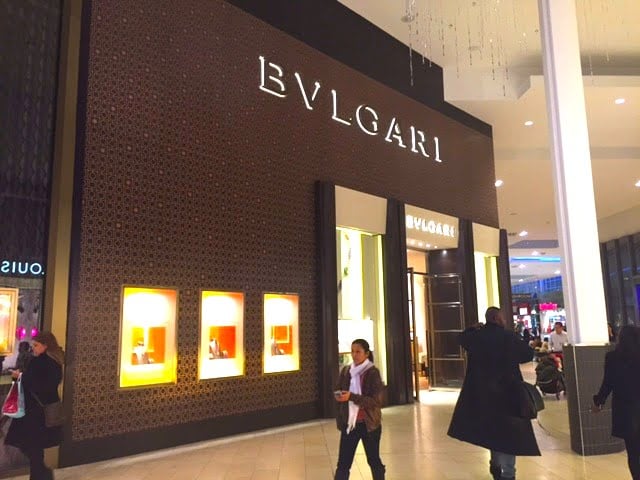
Bulgari: The pricey Italian luxury jeweller opened its first Canadian location in late November at Toronto’s Yorkdale Shopping Centre. We’re told that more Canadian locations will follow, though Bulgari is being cautious with its expansion. 

Chico’s: The popular American womenswear brand opened its first three Canadian stores in the summer of 2014. More are certain to follow. 

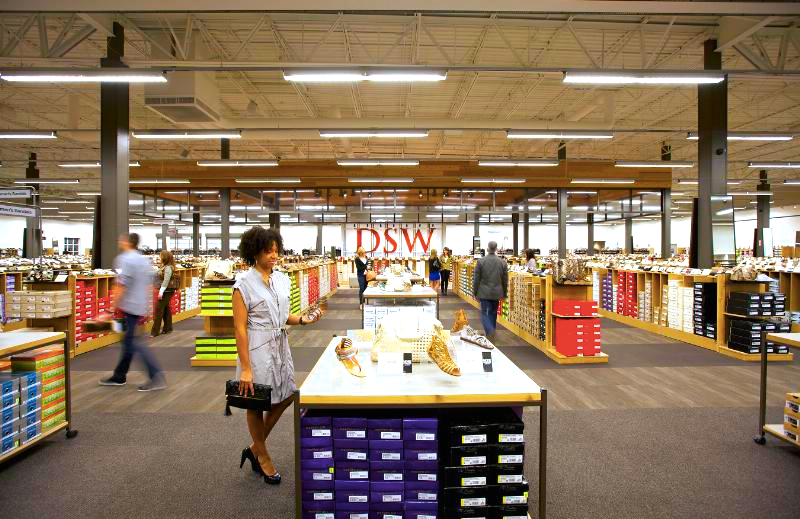
PHOTO: DSW

DSW Designer Shoe Warehouse: Readers were excited when we announced that the discount footwear retailer was coming to Canada. DSW opened two Canadian locations in 2014, and recently announced four more for 2015. We’ll be announcing several more locations in the near future, as DSW aggressively expands across Canada. 

Giorgio Armani Outlet: The Italian luxury brand’s first Canadian outlet opened in the summer at the popular Toronto Premium Outlets. We expect more Canadian Armani Outlet locations to follow. 

H&M Home: Located within H&M’s flagship West Edmonton Mall store, H&M Home’s first Canadian location opened in June of 2014. We expect more Canadian locations to follow, as we’re told that sales in the shop are exceptional. 

TheFaceShop: Most of the Quebec-based Fruits & Passions locations were rebranded as Korean-based beauty retailer TheFaceShop in 2014. The concept has yet to catch on with Canadians, however, though things could improve in 2015.

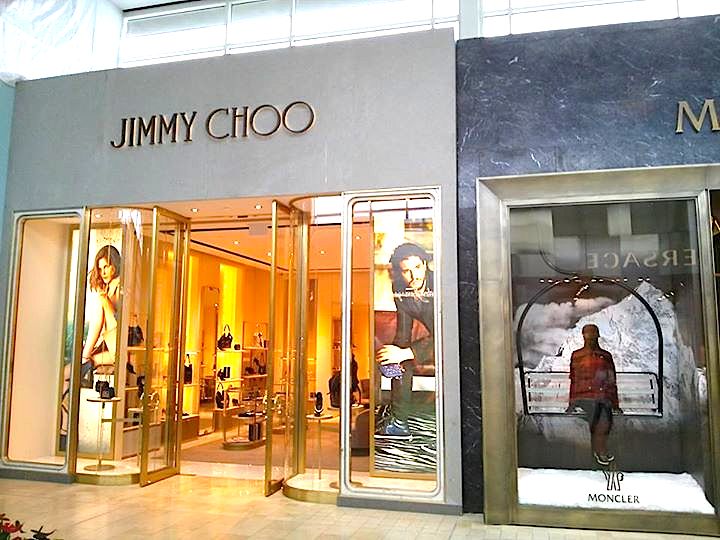
JIMMY CHOO, YORKALE. PHOTO BY JAMIE COLDEN.

Jimmy Choo: The popular Italian footwear and accessories label opened its first free-standing Canadian location at Toronto’s Yorkdale Shopping Centre in August. Interestingly, a Jimmy Choo shop-in-store is located only metres away within the mall’s Holt Renfrew. More Jimmy Choo locations are expected for Canada, including a downtown Vancouver location which is said to be under negotiation. 

Karen Millen: The upscale British women’s fashion retailer opened its first Canadian location in Montreal last year. More locations are expected to follow, as the brand is represented by one of Canada’s top national brokerages. 

Kleinfeld Bridal: “Say Yes to the Dress” – Located on the seventh floor of Toronto Eaton Centre’s flagship Hudson’s Bay, NYC-based Kleinfeld Bridal opened to much fanfare in May of 2014. Sources say that it could open within Montreal and Vancouver’s flagship Hudson’s Bay locations, though no official announcements have been made by either Kleinfeld or HBC. 

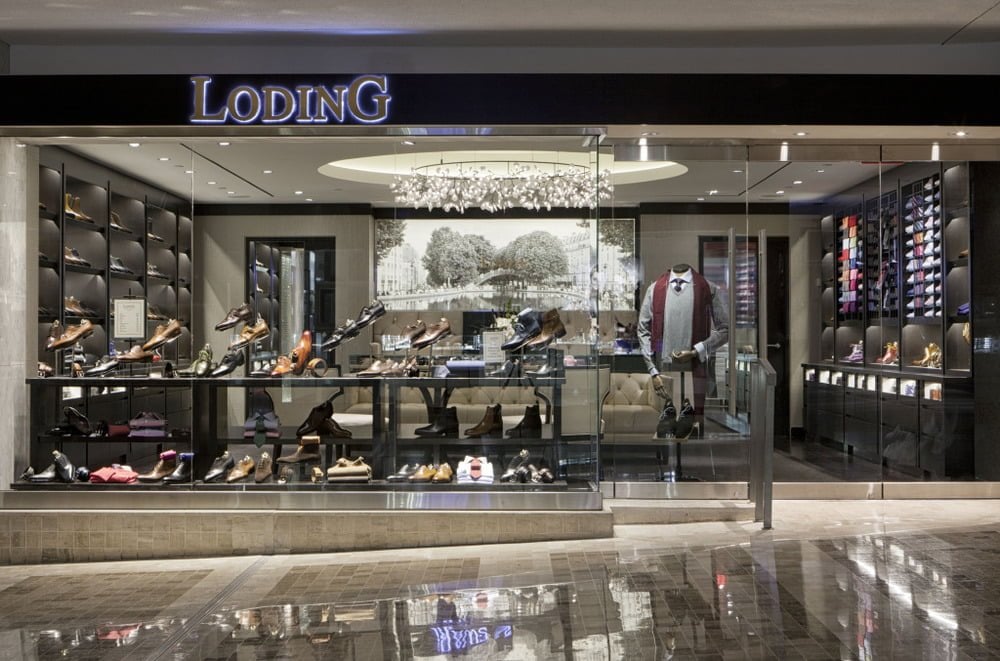
LODING, FIRST CANADIAN PLACE. PHOTO: LODING.

Loding: The dapper Paris-based menswear retailer, who’s products feature fixed prices that don’t go on sale, opened its first Canadian location in Toronto’s Yorkville area in February of 2014. Sales were so strong that a second location opened in November at First Canadian Place in Toronto’s Financial District. A source at the company says other Canadian cities will follow, with Montreal likely being next. 

Moncler: The pricey Italian luxury label, especially known for its distinctive outerwear, opened its first Canadian location at Toronto’s Yorkdale Shopping Centre in September. More locations will follow, and we’ll reveal its next Canadian location within the next few weeks.

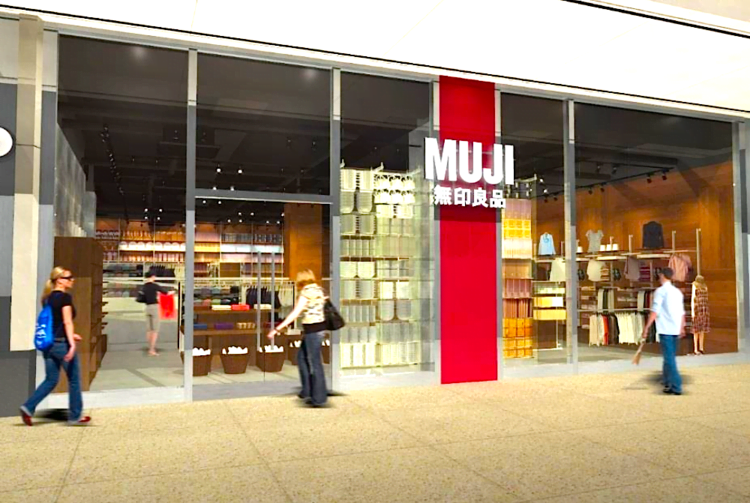
PHOTO: MUJI

Muji: The minimalist Japanese retailer opened its first Canadian location in late November in downtown Toronto. As many as eight Canadian Muji locations will reportedly open over the next several years, and we’re told that sales at its Toronto location are already exceeding expectations. 

Nordstrom: The upscale Seattle-based department store opened its first Canadian location at Calgary’s Chinook Centre in September. We were the first to reveal which brands would be carried in the store. Nordstrom will open its second Canadian location this March in Ottawa, followed by a Vancouver flagship in September. Three Toronto locations will open in 2016 and 2017, and sources say that Nordstrom is keen to open an Edmonton location, as well. 

POMELLATO, PACIFIC CENTRE. PHOTO: CEMILESCONSTRUCTION.COM

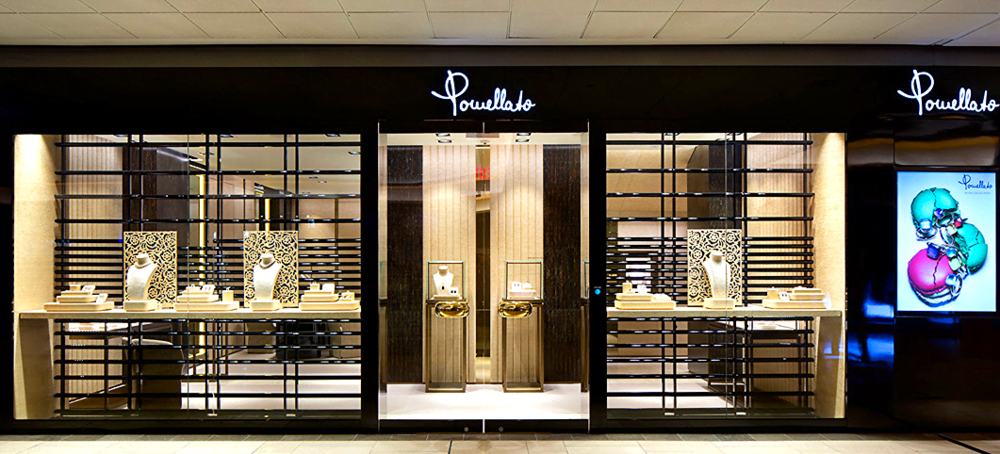
Pomellato: The pricey Italian jeweller, known for featuring colourful precious and semi-precious stones in its designs, opened its first Canadian location at Vancouver’s Pacific Centre in the fall of 2014. A Toronto location could follow, according to sources, though nothing is confirmed at this time. 

Sarah Pacini: The upscale Belgian women’s fashion brand opened its first Canadian locations in 2014, and sources say that more will follow this year. 

Suitsupply: The popular and provocative Dutch menswear brand opened its first Canadian location in Toronto’s upscale Yorkville area in February. Next week we’ll discuss its second Canadian location, which will become one of the world’s largest. 

VERSACE, YORKDALE. PHOTO: JAMIE COLDEN. 

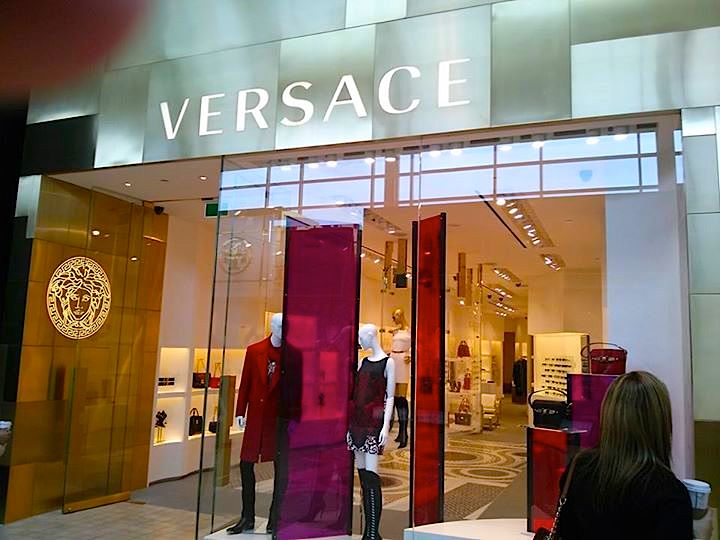
Versace: Canada’s first free-standing Versace store opened in the fall of 2014 at Toronto’s Yorkdale Shopping Centre. Versace plans to open as many as five Canadian locations in five years. Although Yorkdale is currently Canada’s only free-standing Versace location, a Versace shop-in-store has operated within Vancouver’s Leone since 1987. 

Versace Home: The world’s first Versace Home flagship opened in October of 2014 in Vancouver’s trendy Gastown area. Controversy arose when a Vancouver Sun journalist implied that we were speculating when we first reported on Versace Home’s Vancouver flagship. That article was subsequently pulled when the publication learned that our source was Versace, itself. 

PHOTO: YORKDALE SHOPPING CENTRE

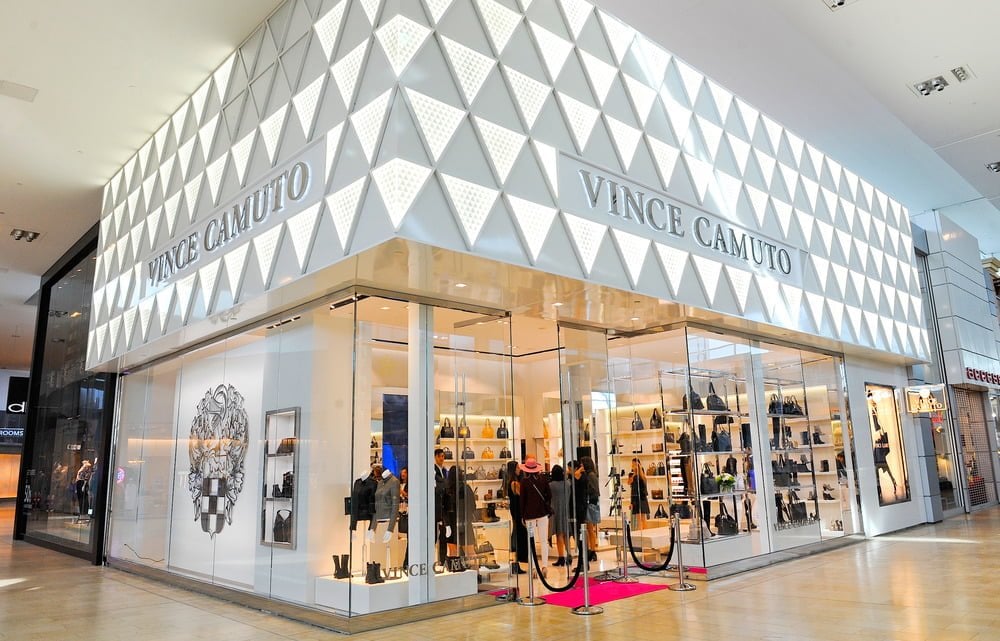
Vince Camuto: The popular America footwear and fashion brand’s first Canadian location opened in July at Toronto’s Yorkdale Shopping Centre. The company has plans to eventually open stores Canada-wide, and we’ll be discussing this further in a separate article. 

A number of other retailers entered Canada in 2014, while many more expanded and built new stores.

If we’ve missed any and you’d like them to be included, please email Craig Patterson at: craig@retail-insider.com

2015 Canadian Retail Outlook, by J.C. Williams Group

By J.C. Williams Group

Canadian retailers of all types will find an action packed year ahead of them. With an economic background consisting of many pluses and minuses, retailers need to be super-sensitive to “messages from consumers” and agile in their reactions. Here is what the advisors at J.C. Williams Group think retail management must look out for.

E-tail (with 82% of Canadians researching products online and 71% making a recent purchase – source: J.C. Williams Group Canadian E-tail Report) is now a formidable and growing force. Commodities like electronics and entertainment have penetration of over 30%—and even apparel has 18% of expenditures spent online. Any retailer not moving to cross-channel or omni-channel retail will be left behind.

Value retailers from Dollarama and Giant Tiger to Walmart and Costco in the price-driven sector, fast-fashion H&M and Zara (Inditex Group), and Best Buy/Future Shop will continue to steal market share. Consumers want clear choices. Retailers without a clear strategy will confuse shoppers and lose buying traffic.

On the opposite end of the scale, Canadians will have more alternatives at the top end. Not to be outdone, Harry Rosen and Holt Renfrew continue bold expansions and upgrades while new entries Nordstrom and Saks Fifth Avenue will offer new shopper experiences. The question for the industry is “Will all of this be over saturation within our small country?

As Canada builds with urban density, shoppers will see many more stores in city cores – most in smaller formats like the recently announced IKEA “pick up store” of ±37,000 sq. ft. Driving this change is the high cost of retail real estate and the creation of the web-based “endless aisle” where expanded assortments are shown online rather than in-store.

What does seem clear is that the retail life cycle (innovation ⇒ rapid growth  ⇒ mass acceptance ⇒ maturity ⇒ decline) is getting shorter. Canadian retailers that are (a) caught in the middle either value-wise or fast-fashion wise, (b) not focused on a micro-segment, (c) not clearly and uniquely differentiated, and (d) not offering omni-channel shopping (with some minor exceptions) will face competitive headwinds.

Canada has many of the best retailers in the world. These creative, service-centred, agile, and entrepreneurial omni-channel businesses will prosper in our country of great opportunities.

J.C. Williams Group is a well-known, full-service retail and marketing consulting firm. It offers clients practical, creative, and in-depth knowledge of retailing and marketing, including up-to-date know-how and techniques to make retail operations better and more profitable. You can also read their informative blog, Retaileye, here: retaileye.wordpress.com

More Luxury Retailers to Descend on Canada in 2015

Luxury brands tend to move like sheep, and the herd is headed to Canada. Many of the world’s top luxury brands are looking to build free-standing stores in this country, and several have already secured retail space. According to one top broker, at no time in his 22-year career has he seen this much interest in the Canadian market from luxury retailers. As we head into 2015, we can expect a number of first-to-Canada announcements from a number of premium brands, looking to get a foothold into the burgeoning Canadian luxury market. 

Although a number of Canadian cities are on luxury brands’ radar, Toronto and Vancouver are often first choices when entering the Canadian market. Both cities include residents with a propensity towards spending vast sums on branded goods, regardless of affluence, and both cities also boast a substantial number of wealthy households. Additionally, both cities are seeing increasing numbers of high-end tourists, many seeking to buy ‘the best’ while on holiday. Despite concerns that lower oil prices could precipitate a correction or even a recession in Canada this year, luxury brands are still keen on expanding into Canada’s top two luxury shopping cities.  

Luxury brands are currently looking at only a handful of Canadian retail locations. Toronto’s Yorkdale Shopping Centre, for example, saw several first-to-Canada luxury brands open in 2014 such as Bulgari, Jimmy Choo, and Moncler, joining Versace, Ferragamo, David Yurman and others in the mall’s new luxury wing In 2015, Yorkdale will see the opening of Canada’s first Longchamp boutique, and several more luxury brands will open alongside Nordstrom in the mall’s newest expansion when it opens in 2016. We’ve been asked not to reveal which luxury brands have secured space in the new wing just yet, and we’ll discuss them when permitted. 

Toronto’s ‘Mink Mile‘ on Bloor Street West, between Yonge Street and Avenue Road, seems to be on every luxury brand’s radar. Until recently, very little retail space was available on Canada’s most prestigious shopping street. That changed last year when Pottery Barn and Williams Sonoma announced that they were vacating 42,000 square feet of prime retail space at 100 Bloor Street West, providing options for new luxury brands. More retail space will eventually become available as neighbouring properties are redeveloped, including the retail component of Manulife Centre at 55 Bloor Street West. Flagship opportunities are available at the former 13,000 square foot Tiffany & Co. space at 85 Bloor Street West, as well as at 77 Bloor Street West, boasting the possibility of a newly-built 10,000 square foot space. The 100,000 square foot retail component of 1 Bloor Street East could see the addition of several premium brands, including a rumoured Apple Store flagship. Sources tell us that Apple recently walked away from a deal at 153 Bloor Street West at Avenue Road, possibly preferring the prominent corner at Yonge and Bloor.

Toronto’s Yorkville area could see new luxury retailers as well, especially as First Capital Realty looks to buy real estate in the area. First Capital is redeveloping Yorkville’s Hazelton Lanes as it integrates the mall into the surrounding area, rebranding it as Yorkville Village. First Capital is also looking to buy much of the retail space on adjacent Cumberland Street and Yorkville Avenue, creating a world-class retail, dining and entertainment destination. Adding to this are a number of developments in the immediate area, including an expanded retail podium at the base of the former Four Seasons Hotel on Avenue Road. 

Toronto Eaton Centre could be next for several premium brands. With Saks Fifth Avenue and Nordstrom opening in the mall in 2016, we’re told that a number of luxury retailers want to join the downtown mall’s tenant mix. Hugo Boss and Ted Baker are some newer upscale entrants, with Kate Spade and others expected to announce stores in the coming months. 

According to top Vancouver Broker, Mario Negris, luxury brands are lining up to find exceptional retail space in his city. The area around the Fairmont Hotel Vancouver, especially on Alberni Street between Burrard and Thurlow Streets, will see a number of high-profile luxury brands open in 2015 and beyond. Although he declined to provide the names of the luxury brands he’s working with, Mr. Negris says that a number of luxury brands want to open stores in the are now dubbed as Vancouver’s ‘Luxury Zone‘. 

Sources say that a downfall of Vancouver’s Luxury Zone is its lack of available retail space. Although some new space is under development in the area, much of it is already spoken for. Most of the retail space at luxury shopping complex The Carlyle, for example, has either been leased or is under negotiation. The retail component of the neighbouring 745 Thurlow Street office tower also has room for luxury retail, and a source at Avison Young says that two spaces are already spoken for. The Alberni Street plaza of 1040 West Georgia Street is slated for a redevelopment of two two-level flagship retail spaces, with one currently under negotiation for a prominent luxury brand. As luxury brands continue to seek space in Vancouver’s Luxury Zone, its boundaries may eventually expand westward. As a result, upscale retailers could eventually replace restaurants on Alberni Street’s 1100 block, across from the upscale Urban Fare grocery store and Shangri-La Hotel.

Furthermore, as more brands seek space in Vancouver’s Luxury Zone, West Georgia Street could see luxury brands move onto its 1000 block. This spring, the 900 block of West Georgia Street, anchored by the Fairmont Hotel Vancouver, will see a Christian Dior flagship join Gucci, Omega, St. John Knits, and Louis Vuitton. As Pacific Centre eventually redevelops its 700 block of West Georgia Street, more luxury space could become available, effectively joining Vancouver’s Luxury Zone to the popular downtown mall. Pacific Centre, itself, has a number of luxury retailers including Max Mara, Pomellato, Roberto Coin and Ermenegildo Zegna, not to mention anchors Holt Renfrew, Nordstrom (opening in September) and possibly Saks Fifth Avenue.

Toronto and Vancouver won’t be the only destinations for luxury brands in the coming years, however. In oil rich Alberta, Calgary and Edmonton are being considered by a number of luxury brands looking to cater to ‘Canada’s Texas’. Calgary’s Chinook Centre, especially, has seen interest from a number of premium brands, looking to join Burberry, Tiffany & Co., Hugo Boss, and Canada’s first Nordstrom location. Max Mara, for example, will open in the mall in October of this year. West Edmonton Mall, as well, is in talks with a number of premium brands, joining upscale new retailers such as Tiffany & Co., Michael Kors and Kate Spade. Rumour has it that the Edmonton mall could also eventually see Nordstrom as an anchor, as well as an unnamed premium department store

As we move into 2015, Retail Insider will reveal which luxury brands will be opening in Canada. It will be an exciting year ahead as we watch landlords build and improve properties to house premium retailers, as Canada takes its place on the world stage in the eyes of top luxury brands.