Home Blog Page 1246

Most Popular Articles on Retail Insider in the Past Year

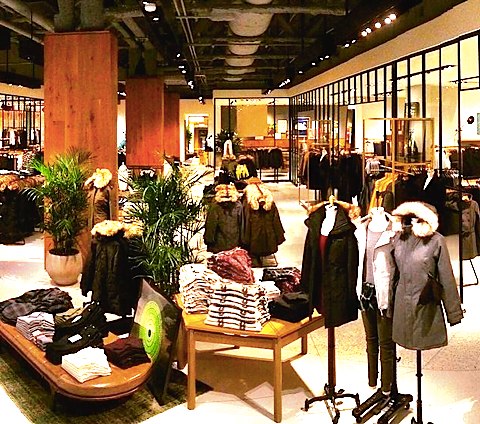
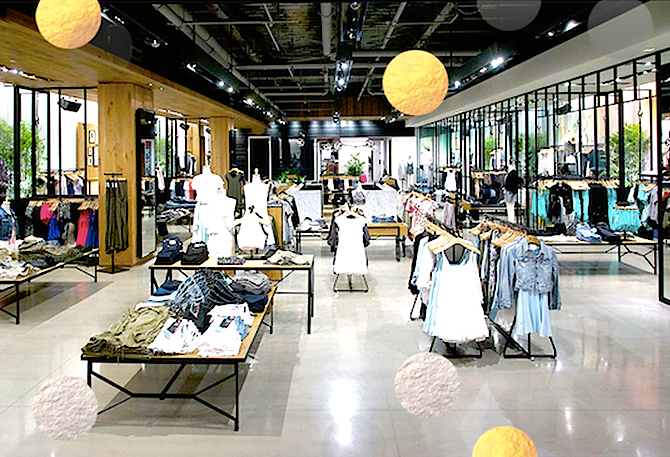
Nordstrom, Eataly, Muji, Uniqlo, DSW, and top malls…The following are the top 10 most read topics on Retail Insider for 2014. We’ll continue to update you on these and other topics into 2015 and beyond. 

MOST READ STORIES:

1) North America’s Most Productive Shopping Centres in 2013: Five of North America’s top 10 most productive malls were in Canada, and our report was picked up by media sources both in Canada, as well as internationally. We’ll provide our 2014 numbers later this month in what will surely become one of our most-read articles in 2015. 

2) Nordstrom Opens 1st Canadian Location: The highly anticipated opening of the upscale Seattle-based retailer gained thousands of readers. Our two most read articles were those where in September of 2014 we revealed what designers would be carried in the store and later that month, when we attended the store’s opening gala and took photos for an article revealing how Nordstrom’s Canadian stores will be more contemporary looking than those in the United States.

3) Premium Oulets Montreal Opens: The highly anticipated outlet mall opened in October of 2014. Well over 100,000 people read our two articles on the subject, including our first where we provided details of its construction, and our second article where we revealed photos as well as a full list of retail tenants. 

4) Eataly is Coming to Canada: Sources say that Eataly is working with a Canadian partner to bring the innovative Italian food concept to Canada. We’re told that Toronto is a priority, likely in the Yorkville area, and that locations in Montreal and Vancouver could follow. 

5) Muji Opens in Canada: Minimalist Japanese retailer Muji opened its first Canadian store in November of 2014. Thousands read our articles describing Muji’s plans to expand across Canada, the exact location of its first store, and our guest-authored article with photographs of the Toronto store’s interior and offerings. 

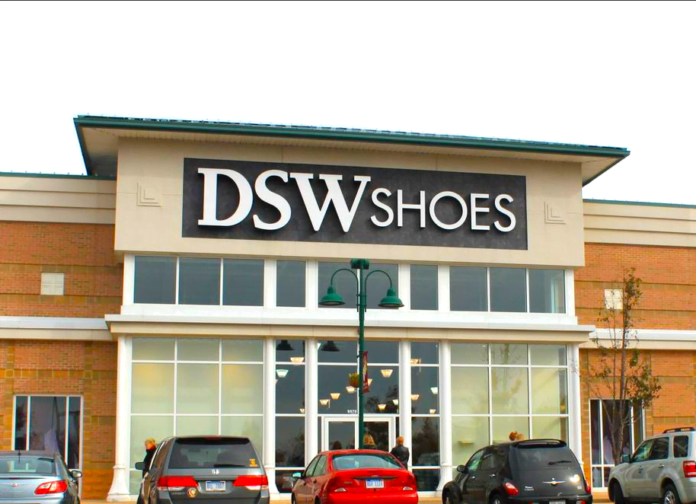
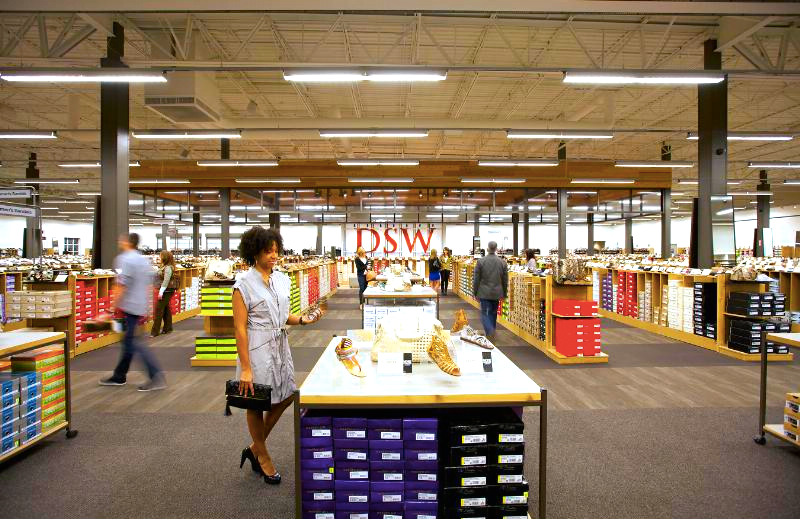
6) DSW Comes to Canada: Popular American discount footwear retailer DSW Designer Shoe Warehouse bought a stake in Canada’s Town Shoes, paving the way for DSW’s entry into Canada. DSW’s first Canadian locations opened in the summer of 2014 and just last month, we were the first to announce DSW’s first locations for Alberta, opening this spring. 

7) Uniqlo Canadian Store Locations Discussion: Overall, articles about Japanese fast-fashion retailer Uniqlo are probably the single most-read topic on Retail Insider’s. Our article discussing possible Uniqlo locations gained close to 100,000 readers alone. We expect to announce Uniqlo’s first Canadian locations, opening in 2016, within the next few months.  

8) Mississauga’s Square One will be North America’s Only Mall featuring both a Walmart and a Luxury Anchor: We were surprised how many people read our article describing how in the spring of 2016 the busy Mississauga mall will be the only North American centre with Walmart and a luxury anchor, Holt Renfrew. We’ll be providing an update on the topic in the following months, however, sources say that the mall’s landlord plans to make major, unannounced changes which could affect current and proposed mall anchors. 

9) Victoria’s Secret to Replace Montreal Chapters Bookstore: Outrage erupted among some readers when we announced that a 35,000 square foot lingerie retailer would replace a large bookstore. All’s not lost, however, as a nearby Indigo Books flagship at Place Montreal Trust sees an overhaul.  

10) Chico’s Comes to Canada: Given the thousands who have read our articles on Chico’s, the American womenswear retailer is no doubt enjoying substantial sales with its initial entry into the Canadian market. 

Keep reading Retail Insider, as we’ll be reporting on some big Canadian retail stories in 2015. 
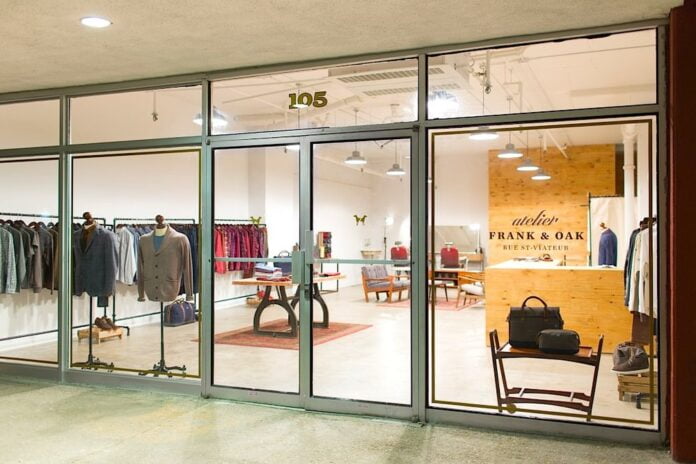
What Canadian Retailers Can Learn From Frank & Oak

Frank & Oak (Image: BetaKit)

By Millie Ho

Every retailer wants more sales and stronger loyalty. Frank & Oak has both. An online menswear retailer that recommends clothing to shoppers through a personalized monthly email, Frank & Oak has surged in popularity since launching in Montreal in 2012 and now has over one million members. They’ve recently announced plans to open a brick-and-mortar store in Toronto’s popular Queen Street West area, and show no signs of stopping with their upcoming expansion across Canada.

What can retailers learn from Frank & Oak, a relatively young company that has grown tremendously in a span of two years? We summarized the key lessons below.

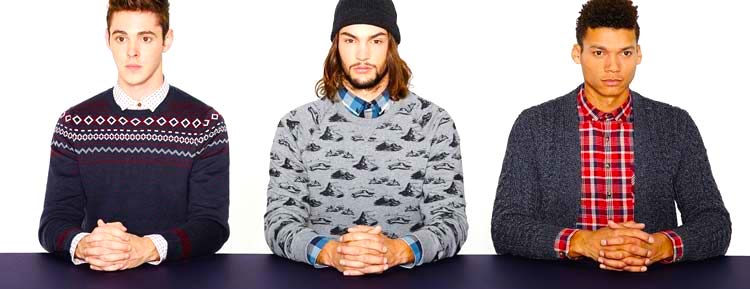
1. Personalized recommendations make style shopping easier: Frank & Oak targets Generation Z and Millennial men in their teens to thirties that want style, quality, and value all at once. While plenty of big box retailers do just that, Frank & Oak goes the extra mile to make shopping easier for their male audience. Once a month, a personalized newsletter will arrive in the customer’s email inbox with recommendations based on the style and sizing preferences he provided when he signed up for the service.

When the customer browses the website, he will also be shown products that fit with his personal style based on preference and purchase history. It’s important to note that Frank & Oak isn’t simply promoting items through these emails: they’re educating the customer and inspiring them with content that reads more like a lifestyle guide. In this way, Frank & Oak has bridged the gap between high-end personal advising and the convenience of online shopping.

2. Creating excitement by being faster to market: Frank & Oak is vertically integrated to keep customers on their toes. They do everything on their own from design, sourcing, manufacturing, distribution, and their monthly newsletter. Vertical integration means more efficient production and cost savings that are passed on to the customer, but also means that Frank & Oak will respond quickly to new style trends, offering new collections every one to two months.

Millennial shoppers have shorter attention spans and demand novelty and excitement. Fast fashion retailers like Zara and H&M deliver on these values using customer and fashion industry insights, but Frank & Oak’s focus on personalization means they deliver on the fast fashion items you’re more likely to buy.

Image: Frank & Oak

3. Use technology to provide an immersive experience: To counter the worry of buying ill-fitting apparel, customers can join Frank & Oak’s Hunt Club, which offers free try-on and shipping so customers can see firsthand what cut, size, and style looks best on them. An added bonus is the 4% store credit customers get back with every Hunt Club order. Since over half of sales come from outside Canada, the Hunt Club allows customers to trial items without risk.

The loyalty club is a great feature: Frank & Oak understands that the Millennial shopper cannot be influenced through online promotions alone and craves a more immersive experience that transcends technology. It doesn’t matter if they don’t have a brick-and-mortar location in a customer’s city: the customer’s needs always come first.

4. A brand image that’s consistent across channels: Frank & Oak’s trendy look is based out of Montreal’s Mile End and exemplifies the image that Millennial men want from a brand: hip, exciting, personal and at a great value. Frank & Oak not only promotes this image, but also ensures that their values are consistent across channels.

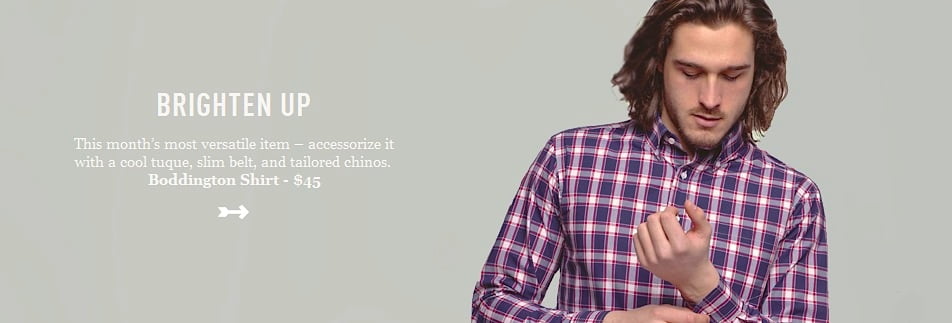
Email marketing campaigns offer potential new customers 20% off on first purchases, and social media and search ads feature keywords like “Distinctive” and “Fresh” and “All Under $50”. Both the pop-up shop in partnership with the Toronto FC and their upcoming Queen Street West flagship store are located in a neighbourhood that matches their brand image. Since their customers naturally share on social media, Frank & Oak gives store credits to those that successfully refer friends.

Image: Frank & Oak

What can we expect in the future?

Frank & Oak has been successful with young men looking to embody their ambitious, creative and business minded brand image. Their continued growth means broader marketing awareness, which has both good and bad implications.

While Frank & Oak will undoubtedly generate more customers with their brick-and-mortar stores, Millennial shoppers that were attracted to Frank & Oak’s niche positioning might be turned off by its newfound widespread appeal. Frank & Oak will need to bring something more to the table aside from style inspiration, and exemplify the other values—like sustainability, corporate responsibility, and transparency—that Millennials care about.

Millie Ho is a consultant with Retail Category Consultants Inc. Millie’s background spans retail and technology start-ups. As a retail consultant, she creates holistic digital strategy, content creation, website development, and social media solutions for large and small retailers like Shoppers Drug Mart and The Friendly Butcher.

Prior to joining Retail Category Consultants, she has worked at front of store for Canadian retail chains, and has hands-on experience with in-store processes and delivering excellent customer service. As a digital strategist, Millie has developed, created content for, and executed online marketing campaigns for both start-up and established firms. Her project management experience includes leading website redesigns and social media operations and ensuring that all KPIs and deadlines are met. Millie has an Honors Business Administration (HBA) from the Ivey Business School at the University of Western Ontario. With a strong love for the arts, Millie also illustrates for creative writers and is working on a novel.

To learn more about how Retail Category Consultants can help your retail business achieve success, visit their retail services page or contact them for further information. 

Lessons From UNIQLO: 10 Steps for Canadian Retailers to Generate $2,000+ per Square Foot

UNIQLO (PHOTO: WWW.GOPIXPIC.COM)

By J.C. Williams Group

On a recent trip to New York we ventured off Fifth Avenue, Madison Avenue, and Soho – to Brooklyn and the Atlantic Terminal Mall on Flatbush Avenue — not exactly the haute couture centre of the City.

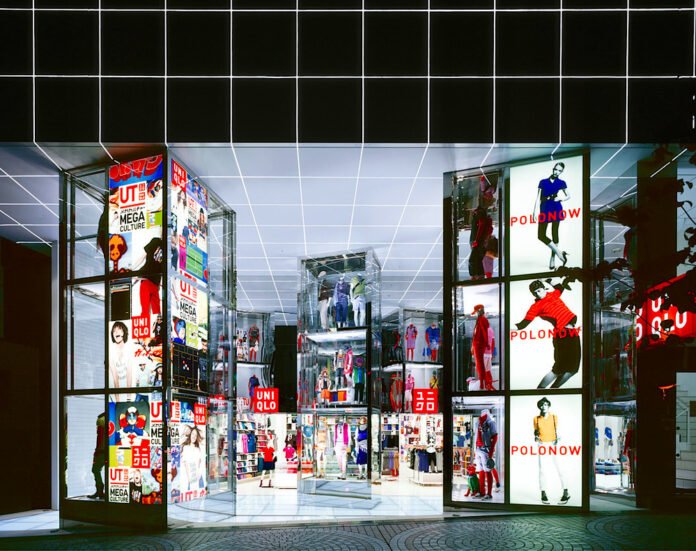
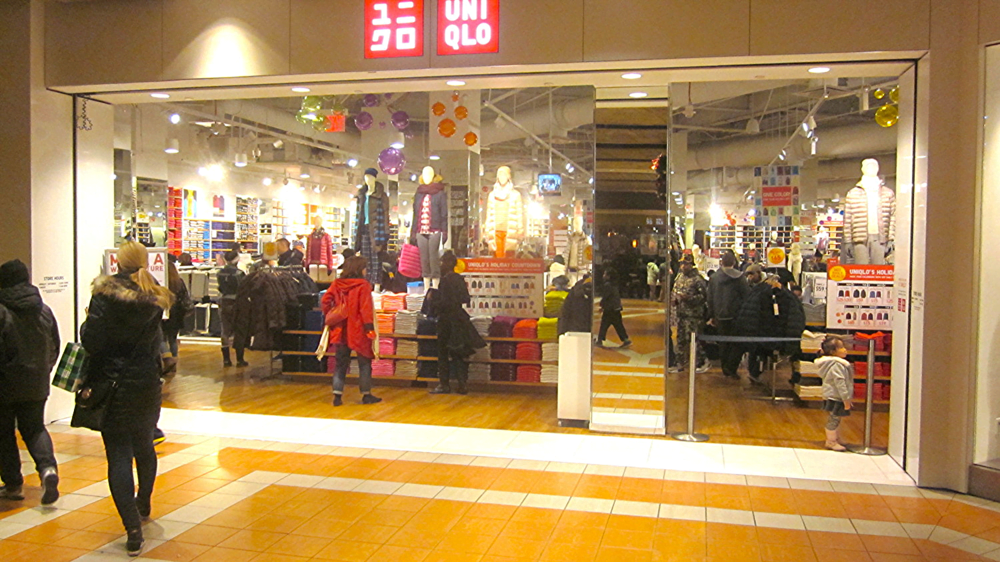
There on the second floor was a Uniqlo store, opened in October of 2013, which was nowhere near as “jazzy” as its Fifth Avenue or Soho older brothers’ (or sisters’) stores. But look beyond all the fancy Christmas stuff of the Manhattan store and you’ll observe a lean-mean-merchandising-machine. This store has to be pushing $2,000 per square foot. And here is why.

1) Choose a Solid Location with Strong Adjacent Tenants: Co-anchor tenants include Target (not a Canadian version), Burlington Coat Factory, DSW Designer Shoe Warehouse, Victoria’s Secret, and 25 national specialty chains. These are located at a major transit junction in central Brooklyn, so lots of shopper traffic.

UNIQLO (Image: JC Williams Group)

2) Straight Forward Messages are Best: Shoppers are in a hurry, often confused or conflicted, and need simple choices. Make sure your “theme” messages are easy to comprehend and react to.

3) The Front 10 Feet Pays the Rent: The “front and forward” space productivity should be three to four times the rest of the store. You cannot generate sensational sales revenue with an artsy-fartsy display or minimal intensity. Good retailers know and practice this. They load up the front with best sellers.

Just look at Uniqlo’s displays with:
1. Sales associates beside each one
2. Bright, colourful product
3. In depth assortment
4. Fantastic prices on cashmere women’s and men’s sweaters! $59.90

4) Backup Feature Item In-depth: Part of Uniqlo’s success is single-focused promotional items featured in limited ranges (huge buying clout). Winter jackets were in big demand at $59.90 and $29.90.

5) In-depth Merchandise Sends a “These Items are Important” Message: “If they have that much of this item – it must be important and popular” is what these walls convey.

6) End-aisles are Great for Add-on Sales of Smaller Accessories: Building high productivity is done using many different merchandising techniques. Every one has to be used. 

UNIQLO (Image: JC Williams Group)

7) Make the Store a Merchandising Machine with Lots of Impulse Items: Your store gets to $2,000 a square foot by using every space and idea.

8) What is Your Inventory per Square Foot? All retailers should use this metric to analyse sales trends in departments and classifications. Uniqlo does not shy away from “using the cube” to showcase assortments and build productivity. All these pictured items have in-depth backup right on the fixture.

9) An Efficient Check-out is Essential: While Uniqlo had long lines at the service desk, they moved quickly.

10) Lots of Team MembersWhile almost hidden in the crush of shoppers, there were dozens of uniformed (all in black) staff continuously re-stocking and straightening inventory. This store was managed in an obviously organized and disciplined manner.

Conclusion: Uniqlo’s unique value position is re-enforced by the simplicity of its visual presentation, the commitment to inventory depth, and the efficiency of the shopping experience.

J.C. Williams Group is a well-known, full-service retail and marketing consulting firm. It offers clients practical, creative, and in-depth knowledge of retailing and marketing, including up-to-date know-how and techniques to make retail operations better and more profitable. You can also read their informative blog, Retaileye, here: retaileye.wordpress.com  

2015 Outlook for Canadian Retail Sales is (Mostly) Good

CF Toronto Eaton Centre (TorontoMalls.com)

According to the latest numbers from Statistics Canada, total retail sales increased 5.4% year-over-year in October 2014 on a not seasonally adjusted basis. The 3 month trend is sticking at around the 5% growth level (orange line in the first chart, below), and the underlying 12 month trend (green line) is continuing to move up. Somewhat remarkably, this performance is being maintained despite collapsing gasoline station sales as pump prices decline. The slack is being taken up by improving sales in the Store Merchandise sector. 

On the basis of current trends, total retail should be up about 4.8% for 2014 overall, a notable improvement on the modest 3.2% annual gain in 2013. For 2015, retail sales growth is projected at 4.9%, which at first blush seems like hardly any progress over 2014. But there’s a twist. The Automotive & Related sector is likely to slow down while Store Retail should pick up. The two effects would offset each other so that total growth in 2015 would be about the same as 2014, but the balance among the major retail sectors will be better. Those not selling cars or gasoline stand to benefit more. 

The numbers estimated for 2014 and projected for 2015 are as follows. 

Food & Drug Stores: 

The Food & Drug sector is continuing its “two steps forward, one step back” pattern. The underlying trend (green line in the above chart) however does seem to be crawling upward compared to its 2014 levels. 

The big laggard in this sector is supermarkets & grocery stores. Although their retail sales increased 2.2% year-over-year in October, they are up only a rather miserable 0.6% year-to-date after 10 months in 2014. This reflects the heavy competition in the food business, and things are likely to get even tighter as retailers try to pass on higher imported food prices due to the weakened Canadian dollar. 

On the other hand, health & personal care (drug) stores are enjoying above average growth. Retail sales were up 5.4% in October 2014 year-over-year, and have gained 7.4% year-to-date. It’s likely this trend will continue into 2015. 

One more note is that specialty food stores’ sales appear to be falling off. After increasing 8.0% in the first half of 2014, retail sales gained only 0.8% for the 3 months ending October 2014. 

Store Merchandise: 

Store Merchandise is earning the title of “most improved major retail sector of 2014”. The 3 month trend (orange line in the chart) continues to lead the underlying 12 month trend (green line), which itself has been rising steadily since the first half of 2013. 

All store types in this sector had positive year-over-year sales gains in October 2014. Even electronics & appliance stores posted a whopping 10.7% gain, their best single month in over 6 years. Another strong performance was in the other general merchandise group (mostly large combination stores) whose sales were up 8.0% in October, although this was on pace with their year-to-date results. 

It’s difficult to see that these trends in Store Merchandise will change much going into 2015. The economy is improving, and the many new retailers entering this sector are poised for a “honeymoon year” (albeit after some awkward courtships). If nothing else, sales will apparently increase as the cost of imported goods rises. 

Canadians are continuing to buy vehicles at a high rate. New car dealer sales were up 9.7% year-over-year in October 2014, and up 8.1% year-to-date. In large part, this is due to low interest rates, as cars (like houses) are mostly financed rather than purchased outright. Nevertheless, the boom in vehicle sales will cool down eventually, possibly in the second half of 2015. 

Gasoline station sales however are slowing significantly. Their sales are about 13% of total retail, and gas prices are now down roughly 25%. This frees up about 2% to 3% of total retail sales for spending at other stores, which is a lot when total retail is rising at just under 5%. Note however that most gas stations double as convenience stores which shores up the business. Nevertheless, going into 2015 actual declines in gasoline station retail sales are likely. 

By The Numbers: 

Ed Strapagiel is a consultant specializing in applied marketing, business development and strategic planning. [Ed Strapagiel’s Website

For definitions of store types, see Statistics Canada

Black Friday Sales in Canada Plateaued in 2014

By David Ian Gray, DIG360 Consulting Ltd.

Following the speculation and “hype” in the lead-up to Black Friday 2014 in Canada, we have released our annual tracker of actual shopper behaviour in the aftermath. This year marks our new partnership with Mike Rodenburgh, EVP of Ipsos West, and the highly respected Ipsos Canada team.

The following is an excerpt from our release:

DIG360 and Ipsos have been tracking shopper behaviour in Canada on a regular basis and have released their latest findings of trends around retail Black Friday 2014. Awareness of Black Friday is entrenched in Canada, nudging up to 98% from 97% the year previous. However, factoring the slight gain in awareness, there was a 5% drop in those reporting they knew about it, but did not browse offers nor buy any Black Friday deals. In the end, a quarter (25%) purchased Black Friday deals, similar to the 27% incidence in 2013 (16% bought in 2010).  

“We see this as a plateau in Canadian Black Friday”, says DIG360’s David Ian Gray, “barring an economic upturn and I’m not anticipating any shift to broader and deeper discounting by retailers in future years, which in fact would be bad for business this early in the Holiday Season”. The data complements anecdotal reports that shoppers are not seeing the deals expected given the pre-Black Friday ‘hype’. Gray points out that even with a minority buying, Black Friday in Canada is entrenched as one of the most significant shopping weekends in Canadian retail.

“One of the more interesting changes in our data was that more Canadians are shopping from online Canadian websites for Black Friday sales”, explained Rodenburgh. Last year 38% of Canadian Black Friday shoppers shopped at an online Canadian website for Black Friday deals while this year it increased to 42%. Gray explains that “the increase may be due to better online promotions among Canada’s online retailers.”

In terms of its impact on other purchasing over the November-December period, the study found 13% of Canadians had postponed purchases this fall until they could see what Black Friday offers. Furthermore, 41% of Canadians browsing or buying Black Friday weekend were mostly shopping for themselves, suggesting there is plenty of Holiday shopping still to come in December. Nonetheless, perhaps the lack of growth for Black Friday is a harbinger of a flat Holiday period overall.

Notable findings from the DIG360 – Ipsos Black Friday Canada Tracker
• Canadians are universally aware of Black Friday (98%)
    – Notably, Quebec has finally caught up to the rest of Canada this year on          awareness and participation.
• Canadians participating (browsing or buying) in Black Friday sales dropped slightly to 51% (from 55% in 2013).
• Those buying remains at about a quarter of Canadians (25% this year, 27% last)
     – The average spend: $295.80 (52% of Canadians spent between $101 and $500).
• Factoring margin of error, this suggests more a “plateau” than a drop in buyers.
      – BC residents had the lowest Black Friday participation at 39% (and was lowest in 2010).
• Of those browsing or buying, 25% reported they postponed purchasing earlier this Fall to wait for Black Friday deals.
• While stores remain the dominant channel, we are seeing the gradual decline of in-store shopping with an uptick in web (from websites in both Canada and US).
• Surprisingly, given the CAD$, cross border shopping incidence was consistent or even slightly up.
• 54% of men (vs 31% of women) were all or mostly shopping for themselves.
• 31% bought or plan to buy something cross-border (web or store) this Holiday Season (Nov-Dec).
   – Only 19% of Quebeckers have or expect to cross-border shop (consistent with 2013)

This was the latest survey in the series of the developed by DIG360 in 2010. The 2014 version begins its partnership with Ipsos. These results are based on an online survey of 1,005 Canadian adults conducted by Ipsos using the Canadian Online Omnibus. Interviews were conducted in English & French between December 1st and December 3rd, 2014. The final data are statistically weighted to reflect the actual age, gender and education of the Canadian population and are balanced by region

DIG360 Consulting Ltd. helps retail executives focus or recharge sustainable growth. They help develop customer strategies that resonate with the right target audiences, competing on better experiences and relationships. David Ian Gray leads DIG360 and is a recognized expert on shopper trends and retail strategies.

Ipsos Canada is Canada’s leading survey-based marketing research firm. With offices in 86 countries, we live and work in the world’s largest markets and do business anywhere we’re called on. Michael Rodenburgh heads up Ipsos West. 

Popular Footwear and Fashion Retailer gravitypope Eyes Expansion

Popular footwear and fashion retailer gravitypope is contemplating expansion, and is particularly interested to expand with a larger ‘lifestyle store’ concept. Opportunity could occur in existing markets that it serves, as well as eventual expansion into new Canadian cities. We interviewed gravitypope’s founder and owner, Louise Dirks, to learn more.  

gravitypope (spelled lowercase) was founded in 1990 as a single shoe store on Edmonton’s trendy Whyte Avenue. In the mid 1990’s, it expanded its offerings to include designer ready-to-wear. gravitypope opened a location on Calgary’s fashionable 17th Avenue S.W. in the year 2000 and in 2004, a Vancouver location opened on West 4th Avenue in the popular Kitsilano area.

gravitypope’s well-curated designer clothing section became so popular that it soon warranted its own free-standing stores. In 2007, two ready-to-wear clothing boutiques, called gravitypope Tailored Goods, opened in Edmonton and Vancouver. Vancouver’s Tailored Goods is located next to gravitypope’s footwear boutique, while its Edmonton location is two blocks east of its footwear shop, on Gateway Boulevard. 

In late 2012, gravitypope opened its largest location on Toronto’s hip West Queen West. Carrying footwear, clothing, accessories and apothecary, the store spans about 4,000 square feet of retail space, as well as an additional 2,500 square feet for storage. The two-level store features a 2,700 square foot ground floor devoted to footwear, and a 1,400 square foot mezzanine for men’s and women’s clothing. 

We spoke with gravitypope founder and owner Louise Dirks, who gave insight into the retailer’s expansion plans. Ms. Dirks would like to eventually operate a collection of larger ‘lifestyle stores’, merging hard to find, quality collections of footwear, clothing, accessories, an apothecary and if the footprint permits, even on-site coffee shops. Each of these stores would ideally be in the 8,000 to 10,000 square foot range.

Ms. Dirks says that gravitypope could very well expand into other Canadian cities. The first city to possibly see a new store would be Montreal, as Ms. Dirks has received numerous email requests from locals. gravitypope will first focus its growth on current markets, however, merging footwear with fashion, and possibly coffee.  

Vancouver, for example, could see a second gravitypope store — this time, a flagship lifestyle location. Ms. Dirks says that she’d ideally like it to be on Vancouver’s tony South Granville, and that she’d also keep her current locations nearby on West 4th Avenue. Ms. Dirks says that gravitypope does exceptionally well in Vancouver, though its sales are limited due to the relatively small size of its storage area. gravitypope currently occupies just under 5,000 square feet in Vancouver, including an 1,800 square foot footwear store, an 1,800 square foot clothing store, and ancillary storage space. 

The Edmonton footwear flagship measures 1,800 square feet, and gravitypope leases almost the entire Whyte Avenue building in which it is contained. Three above-ground levels are all leased by gravitypope, housing storage, offices, and e-commerce-related activities. 

gravitypope recently opened an outlet store at West Edmonton Mall. Located on Europa Boulevard, the outlet is adjacent to British footwear retailer Doc Martens. Ms. Dirks is also Doc Martens’ Edmonton franchisee.

gravitypope carries a mixture of trendy and luxury labels in its stores, as well as a new private-label footwear brand, currently accounting for between 8% and 10% of sales. Popular Spanish-based footwear brand Camper is Gravitypope’s number one selling brand, and it carries other footwear brands such as Alexander Wang, Cydwoq, Coclico, Chie Mihara, Church’s (owned by Prada), Comme des Garcon PLAY, Fiorentini & Baker, Isabel Marant, John Fluevog, Jil Sander Navy, John Varvatos, Moma, Repetto, Veronique Branquinho, and many others. Clothing designers such as Band of Outsiders, Carven, Filippa K, Maison Kitsune, Marni, Moncler, Paul Smith, Rag & Bone are featured. An impressive roster of accessories designers and apothecary are also featured, and all designers are listed on Gravitypope’s website

Ms. Dirks says that, moving forward, any new stores will be streetfront locations, as opposed to stores within shopping centres. It’s a personal preference for Ms. Dirks, especially given gravitypope’s tremendous success with its current streetfront locations. Ms. Dirks says that gravitypope’s sales are growing year-over-year. Besides its productive brick-and-mortar locations, gravitypope also enjoys a robust e-commerce business, with online sales now accounting for over 10% of sales. 

We’ll be sure to keep you updated on gravitypope’s store expansion. 

*All photos are via gravitypope’s website. 

Aritzia Opens Largest Canadian Location

ARITZIA
PHOTO: ARITZIA

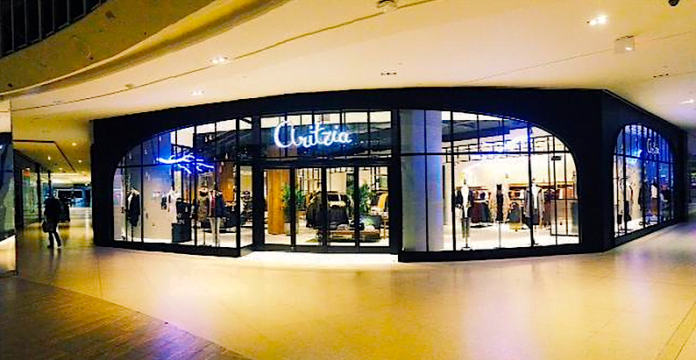
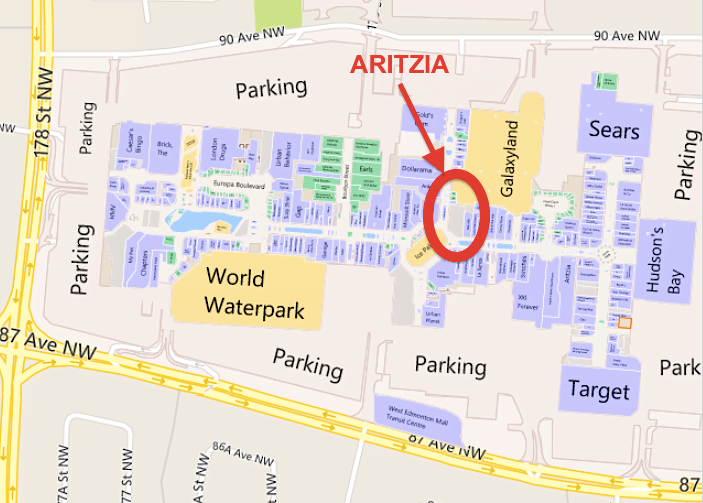
This week, popular Vancouver-based women’s fashion retailer Aritzia opened its largest Canadian location. Measuring almost 7,900 square feet, the West Edmonton Mall store features custom flooring, artwork, and a wide selection of women’s clothing and accessories. 

Located on the mall’s main level overlooking The Ice Palace, Aritzia’s new store is actually an expansion of its previous location. When Marciano‘s adjacent 3,310 square foot store recently became available, Aritzia decided to merge it with its existing 4,580 square foot space.

After moving into a temporary location nearby, Aritzia gutted both shops to create a completely redesigned, unified flagship. Aritzia already boasted exceptional productivity at its Ice Palace location, which enjoys some of the highest pedestrian traffic in the busy mall. 

Aritzia locations are designed individually, making each one somewhat unique in appearance. The West Edmonton Mall location features a light and bright aesthetic, including terrazzo flooring and an assortment of plants throughout the store. Fitting rooms are adorned in white oak, and the store features an impressive white marble cash desk. A custom-designed buck sculpture serves as a backdrop for the store’s lounge area, and a specifically curated collection of artwork is featured throughout the sales floor. Vintage-inspired furniture pieces are also featured at the front of the store, creating an artfully-inspired space showcasing an expanded assortment of women’s fashions. 

Aritzia is in the process of expanding its current store base, including opening free-standing stores for its TNA and Wilfred brands. This week, Wilfred opened its first Vancouver store, adjacent to Aritzia’s Robson Street flagship. Next month we’ll be interviewing Aritzia CEO Brian Hill on his plans for the retailer’s further expansion. 

Founded in 1984 by Mr. Hill, Aritzia’s target market is women aged 14 to 30. Much of the clothing sold in its stores are its own exclusive brands, including TNA, Talula, Babaton, A Moveable Feast, Wilfred, Wilfred Free, Community, Le Fou, La Notte, Sunday Best, Paradise Mine, The Castings, SIXELEVEN and Auxiliary. Stores also carry clothing from brands such as Citizens of Humanity, Mackage, Six Eleven, La Notte, Marc by Marc Jacobs, Nike, Levi’s, Ebbetts Field, A Gold E, Havaianas, and J Brand Jeans.

Aritzia now operates locations throughout Canada and the United States. In Canada, the retailer operates a total of 42 Aritzia stores, three TNA locations, and three Wilfred stores.

The Greater Toronto Area has the most locations, boasting 17 Aritzia, one TNA, and two Wilfred locations. The Vancouver area has eight Aritzia stores, three TNAs and as of this week, one Wilfred location. Aritzia also operates 15 locations in the United States in major markets including New York City, Chicago, Dallas, Portland, San Francisco, Seattle and Detroit. Aritzia’s largest location in the world is on New York City’s Fifth Avenue, spanning approximately 13,000 square feet. 

Watch for our article in early 2015, where we’ll interview Aritzia’s CEO to learn more about the retailers’s future growth plans. 

DSW Designer Shoe Warehouse Reveals 4 New Canadian Locations

DSW Designer Shoe Warehouse (PHOTO: WIKIPEDIA)

*Update: The Whitby, ON location opened March 19, 2015, the Calgary Crossiron Mills location opened March 25, and the West Edmonton Mall location opens on April 10, 2015*

Popular value-priced American footwear retailer DSW Designer Shoe Warehouse has revealed four new locations, including its first for Western Canada. We interviewed Town Shoes/DSW Canada CEO Bruce Dinan to learn more. 

The four new stores will open in spring of 2015 (April, tentatively), all measuring between 20,000 and 22,000 square feet. Three will be in Alberta, and one in suburban Toronto. The locations include: 

Edmonton: West Edmonton Mall: DSW will open on the second level of the mall’s ‘Phase One’, in the wing anchored by Sears. Located in North America’s largest shopping centre, DSW joins anchors such as Hudsons’ Bay, Target, La Maison Simons and Sport Check, not to mention hundreds of retailers and a variety of world-class attractions. 

Calgary: CrossIron Mills: Located just north of Calgary, DSW will open in the enclosed 1.2 million square foot mega mall, also anchored by Albert’a only Bass Pro Shops location.  

Calgary: Sunridge Mall: A second Calgary DSW store will also be located on the city’s north side. The enclosed 830,000 square foot shopping centre is anchored by Hudson’s Bay, Target, Sport Chek and Old Navy

Whitby, Ontario: Located in the RioCan Thickson Ridge Power Centre, DSW will join a number of other large retailers including Sears Whole Home, Bed Bath & Beyond, Home Outfitters, and Winners, with its largest anchor being a 130,000 square foot Home Depot

PHOTO: DSW

Town Shoes President and CEO Bruce Dinan runs DSW’s Canadian operations. Mr. Dinan says that DSW’s sales at its first two locations have been exceptional, warranting further Canadian stores. On August 7th of this year, DSW opened at Heartland Town Centre in Mississauga, and at Woodland Hills Shopping Centre in Newmarket. The Whitby store will be the third for the Greater Toronto Area. 

DSW also sells online, and it’s Canadian e-commerce site launched a couple of months ago. DSW’s Canadian stores also operate as fulfillment centres, shipping ordered product either to customer’s homes or to local Town Shoes-owned locations for pickup. DSW’s Western Canadian stores can therefore also act as new e-commerce fulfillment centres. 

Mr. Dinan says that more Canadian DSW locations are on the way and that in the New Year, he’ll reveal a number of new stores which will open in the fall of 2015. 

DSW’s Canadian stores are about the same size as its U.S. locations. Mr. Dinan tells us that DSW is ideally seeking Canadian retail space in the 18,000 to 24,000 square foot range. Each Canadian DSW store will have over 22,000 pairs of shoes, as well as an extensive selection of handbags and accessories. About 80% of the brands in DSW’s American stores are carried in Canada, and Canada’s DSW stores also carry brands exclusive to Town Shoes. 

DSW is hugely popular in the United States with over 430 locations in that country. Its name indicates its business model – it sells designer shoes at discounted prices. The company has hundreds of millions in cash and no debt. 

Predictions for e-commerce in 2015 by Smartling VP of Marketing, Nataly Kelly

Nataly Kelly, Vice-President of marketing at Smartling, shares her e-commerce predictions for 2015, below. 
 
Prediction No. 1: The number of languages required to reach the majority of the world’s online wallet will rapidly increase.
In the past, e-commerce vendors were able to reach a large majority of the world’s online wallet with a small number of languages. But, now that the middle class is changing and high-volumes of customers in Asia and emerging countries are coming online, e-commerce companies will need to target more countries with translated and localized content than ever before. In 2015, the number of languages required to reach the same global market share will greatly increase.
 
Prediction No. 2: E-Commerce companies will shift their focus from international traffic to conversion rates.
Companies have long-viewed website traffic as a major way of driving revenue. While conversion was still important then, more companies are now realizing that they can boost conversion rates significantly, simply by offering local, customized online experiences to existing customers from other countries. Even in countries where some English is spoken as a second language, properly translating and adapting content when it crosses borders can lead to more conversions. And, the technology is now in place to make this happen quickly and cost-effectively. In 2015, companies will begin to see translation and localization as methods to not only reach more people and gain more website traffic, but, more importantly, as a way to optimize conversions from existing international traffic.
 
Prediction No. 3: More e-commerce brands will launch mobile apps.
Mobile apps are playing a much greater role than ever before when it comes to e-commerce experiences, especially for global shoppers. In 2015, more e-commerce brands will launch translated and localized mobile apps that are not just “mobile first” but “global first.” Today, thought-leading, cutting-edge companies are realizing that mobile apps are a perfect way to reach customers in new markets.  There usually isn’t a lot of text that must be translated, so it’s an affordable way to quickly gain a global presence and drive global customer engagement faster than through traditional marketing methods.

Nataly Kelly is the VP of Marketing for Smartling, a cloud-based translation management platform provider. Her latest book, “Found in Translation: How Language Shapes Our Lives and Transforms the World,” was published by Perigee/Penguin(USA) in October 2012. She has formally studied seven languages, has traveled to 34 countries, and has obtained higher education on three continents. A former Fulbright scholar in sociolinguistics, Nataly has published articles on various aspects of Ecuadorian Spanish in academic journals from Colombia and Mexico.

Swiss Luxury Brand Fogal to Close Last Canadian Location

Luxury Zurich-based legwear and knitwear brand Fogal of Switzerland will close its last Canadian location on December 24th. Located at The Colonnade at 131 Bloor Street West in Toronto, the boutique was one of only two Fogal stores remaining in North America. Its former Vancouver shop, located at 1012 Alberni Street, closed in August of this year. 

The 646 square foot corporately owned Toronto boutique opened in the winter of 2011. 

At one time, Fogal had free-standing locations in some of North America’s most exclusive shopping areas, including Rodeo Drive in Beverly Hills and North Michigan Avenue in Chicago. All have since closed, except for Fogal’s remaining free-standing North American location at 611 Madison Avenue in New York City. 

Fogal now operates 24 boutiques internationally, including nine locations in Switzerland and six in Japan. When we reported on the Vancouver store closure in August, Fogal had 28 store locations. Fogal continues to retail at selected upscale stores worldwide. 

Given that fogal’s legwear products are intended to be sold via one-on-one salesperson interaction, it remains to be seen what the future will hold for the brand. Once considered to be the world’s most prestigious hosiery label, Fogal has struggled in recent years. 

Fogal’s first Toronto location opened in 1988, with the expansion of Hazelton Lanes shopping centre. At the time, it was considered to be a major coup for Toronto, as few cities boasted free-standing Fogal locations. Hazelton Lanes, at the time, was considered to be one of the world’s most prestigious shopping plazas, boasting boutiques such as Hermes, Valentino, Emanuel Ungaro, Gianni Versace, Krizia, Guy Laroche, Givenchy, Davidoff, Penhalligan’s, Polo Ralph Lauren and Yves Saint Laurent Rive Gauche, among others. All have since closed, and the mall is slated for major redevelopment, to be rebranded as ‘Yorkville Village’