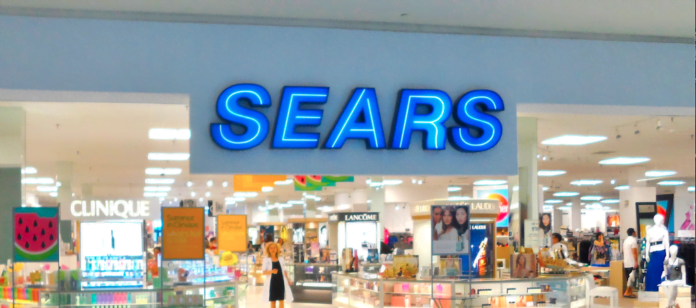
Macy’s won’t buy Sears Canada, according to a Macy’s spokesperson. Speculation arose that Macy’s would buy Sears Canada, after Sears revealed that it’s considering selling its Canadian operations. Other purchasers are possible and although Sears Canada continues to occupy some valuable retail space, most of its best store locations have already been divested.
On an analyst conference call yesterday, Macy’s CFO Karen Houget noted that Macy’s won’t open in Canada, reiterating what CEO Terry Lungren said late last year. Macy’s is interested in international expansion, however, and Ms. Houget indicates that Macy’s could open in China. Macy’s operates its mid-priced namesake stores, as well as its more upscale Bloomingdale’s division.
It’s clear that Sears Holdings wants to sell Sears Canada, given that it has already hired an investment banker. Sears Holdings currently owns 51% of Sears Canada.
Sears Canada’s Canadian operations include: 113 department stores, 48 big box Sears Home stores, 234 Hometown (rural) stores, over 1,400 catalogue and online merchandise pick-up locations, 11 outlet stores, 97 Sears Travel offices, as well as its repair and service network. Of its department stores, 14 are owned outright while the rest are leased.
Other possible Sears Canada purchasers include Canadian Tire, British fast-fashion chain Primark, and American discounter Kohl’s. Seven of Sears Canada’s top locations were already sold off, including several key flagship locations. Several former Sears stores will become Nordstrom locations, with Nordstrom’s first Canadian store scheduled to open in Calgary this September. Saks Fifth Avenue will also occupy about 130,000 square feet in part of the former Sears at Toronto’s Sherway Gardens. Sears Canada still occupies several prime store locations, and we’ll discuss those further, tomorrow.
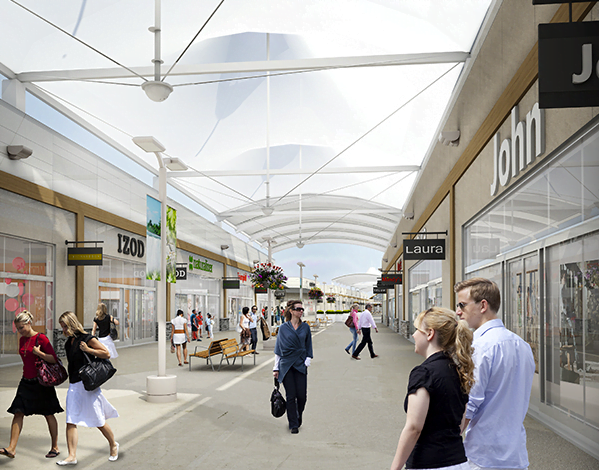
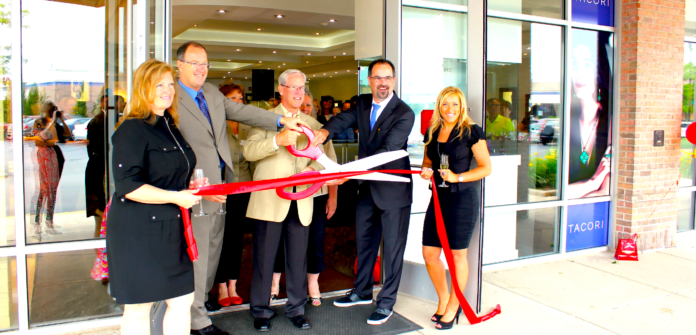
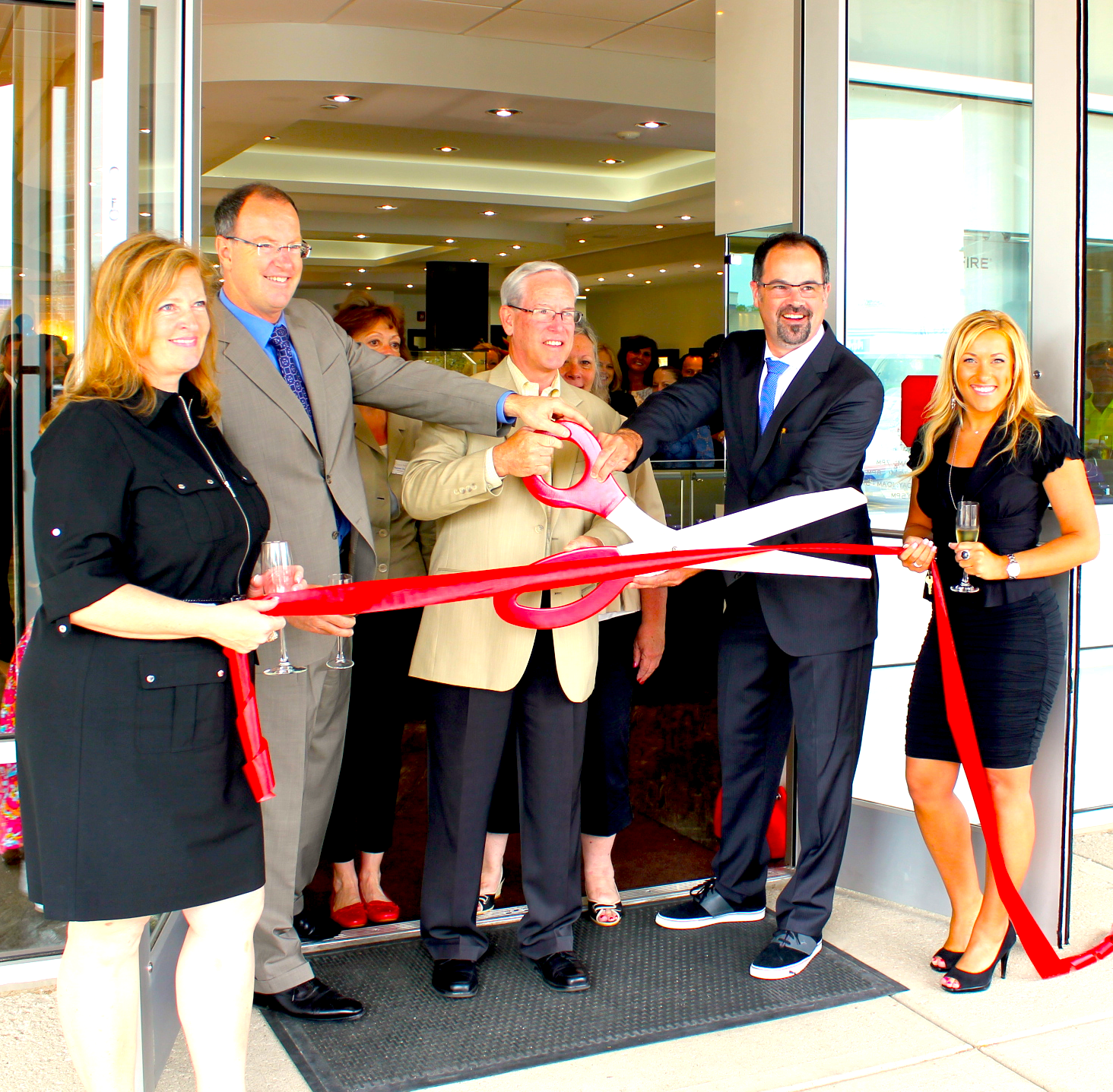
Canada’s largest open-air outlet mall opens today in Niagara-on-the-Lake, Ontario. The Outlet Collection at Niagara boasts 102 stores spanning a total of 520,000 square feet, including several retailers new to Canada. It’s the first ‘pure’ outlet mall built by Ivanhoé Cambridge. The mall isn’t completely finished: there are plans to potentially add another 130,000 square feet.
Sales estimates for the outlets are as high as $600/square foot. Ivanhoé Cambridge estimates that it cost $178 million to build. Sprawling over 63 acres, the mall offers 2,300 parking spaces, and employs roughly 1,500 people.
The mall features dozens of other popular retailers including Tommy Hilfiger, J. Crew Factory, Nike Factory Store, Coach, Fossil, Bench, Lacoste, North Face and Marshalls. The mall’s new website includes a floor plan and corresponding list of all its retailers.
“We intend on becoming one of the area’s top tourist destinations, drawing value-seeking shoppers from all over the world,” said Bri-Ann Stuart, Outlet Collection general manager.
According to David Baffa, Ivanhoé Cambridge’s Senior Vice President of retail development, the mall could see a further expansion, bringing it to a massive 650,000 square feet.
Although it’s the first ‘pure’ outlet mall location for Ivanhoé Cambridge, it won’t be its last: the landlord will open another outlet mall in Edmonton in 2016. Teresa Spataro, VP of development and leasing at Ivanhoé Cambridge, says we can expect another outlet mall announcement in the very near future.
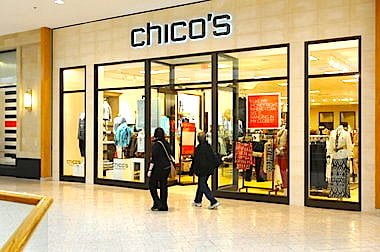
Popular American womenswear retailer Chico’s just announced its first three Canadian store locations. All three stores will open in August, with more Canadian location announcements to follow. Its first Canadian store locations will be in the suburban Toronto area.
Chico’s first three Canadian stores will be located in the following malls:
Its Mississauga store will be 3,360 square feet, located across from Hudson’s Bay on the mall’s second level. Its Mapleview location will be roughly 3,100 square feet and will be on the mall’s lower level, between Maison Birks and White House | Black Market. Its Upper Canada Mall store will open on the mall’s second level. Both Square One and Upper Canada are managed by Oxford Properties, while Mapleview is managed by Ivanhoé Cambridge.
Chico’s Canadian stores will see updated interiors based on the company’s new prototype, featuring warm tones, subtle animal prints, iconic woven entry doors, luggage details on fixtures and layers of artifacts as props.
Chico’s was founded in 1983 in Florida. It sells private-branded clothing and accessories for women, “featuring a combination of great style with on-trend, expressive and one-of-a-kind designs to yield a wardrobe that is fashionable, unique, relaxed, figure-flattering, and comfortable,” according to a description on its parent company’s website.
Chico’s currently operates more than 600 stores and over 100 outlets across the U.S., the District of Columbia and Puerto Rico.
You always want to make a good first impression, especially when it comes to your customers. Staffing your new store opening smoothly will allow you to give customers a great first impression of your store and what your brand has to offer. There are a few key areas to focus in on that will help your business better prepare for your new store opening.
These include: having a strong understanding of your immediate needs, a vision of the people you want to hire, a pipeline to support your vision, and a grasp on the cost effects of incorrectly staffing.
1. Understanding your needs
Do you have a strong understanding of your immediate needs? What is holding you back from opening your location tomorrow?
Setting realistic hiring targets based on prior experience with store openings or other locations with similar profiles will help you not to feel under staffed from the start. Do not rush an opening! Make sure you have the right personnel to support your operations before you open your doors. When setting your hiring targets to fill your store’s needs, it is important to make sure you set timelines and budgets for each and stay within those frames. Also, identify if there are any roles you could develop internally. This may include growing an employee’s role from another location or hiring staff to start off in one role but anticipating growth within the future.
2. Understanding what kind of people you want to hire
What would my ideal employee look like?
Building out candidate profiles of the ideal employee can help with your recruitment efforts. Having a clear vision of the type of employees you want your new store to have will help you be more selective and create stronger screening and assessments to make sure there is a match. Creating strong job descriptions will allow you to share with your candidates a clear vision of your expectations and corporate culture. The next step is making sure your screening and assessments are measuring the right competencies and key performance areas that make for a great fit. By understanding the roles you need to fill and the people you wish to fill them, you will be hiring quality candidates who will save you time and money in the long run.
3. Building a talent pipeline
How can I use my current candidate database?
When looking to fill roles for your new store opening, it’s essential that your start building a talent pipeline to work from. These may include candidates who are already in your company’s database from other locations who may not have been hired, but could still be a great fit for the organization. Reconnecting with these candidates will help you build a pipeline to work from. Also, connecting with potential job seekers and passive candidates on their social and professional networks can also help create brand awareness and increase your potential talent pool. This pipeline needs to continually be grown and improved to help with future needs that will arise.
4. Understanding the cost of turnover if staffed incorrectly
How much does turnover really cost me?
Staffing your new store with average employees may be sufficient for your opening but in the long term these are not employees who will grow within your organization. This is why it is essential to build a talent pipeline and be clear on the types of people you want to work for your business. Every company faces turnover issues, especially in the retail sector.
On average, last year front line part-time staff positions saw a 67% turnover rate. This was followed by a 24% turnover rate for full time staff. These numbers are daunting and for a retail hiring manager they can cause major disruptions in operating a store. The costs associated with turnover can be very high and when calculating direct and opportunity costs, we found that on average the price of losing a front line retail position is approximately $2,000 per employee. This includes costs such as training, onboarding, recruiting, lost experience and lower morale. Turnover is an issue companies will always have to face but by planning and hiring the best fit quality candidates, you can help your new store opening get started on the right foot!
Lisa McCann is the Corporate Marketing Manager at Vancouver-based recruitment company, Mindfield Group.
Canada is an international retail ‘hot spot’, according to the world’s foremost fashion-industry trade publication. Many international retailers are contemplating Canadian expansions, following Nordstrom and Saks Fifth Avenue‘s lead. Home-grown retailers will need to innovate to compete, or risk facing demise, like bankrupt retailer Boutique Jacob.
Women’s Wear Daily referred to it as the ‘department store effect’: following Nordstrom and Saks Fifth Avenue’s announcements that they would open in Canada, other international retailers followed. Mary Mowbray, Senior Vice President of the retail group at Colliers International in Toronto, said the following:
“The Canadian consumer weathered the downturn better. They have more money to spend and are more comfortable spending it. Traditionally there have been fewer players in the mid- and higher tiers in Canada, and that’s left an opening for more brands to enter here.”
Rents on desirable streets in Toronto, Montreal and Vancouver are all rising. On Vancouver’s Alberni Street, rents jumped 43 percent between 2012 and 2013, averaging $147 per square foot. Alberni Street recently saw Tory Burch and De Beers store openings, and several of the world’s top luxury brands are currently examining Alberni Street retail space.
Laura Pomerantz, principal of her own real estate firm, said that growing tourism and a burgeoning Asian population in British Columbia triggered much of the expansion. Specifically, she said:
“You have a savvy and sophisticated customer in Canada who recognizes brands and is brand conscious. You have a lot of tourism between Canada and America, and that makes a built-in customer base.”
Some Canadian retailers will struggle with the new competition, a fate most recently exemplified by Boutique Jacob’s bankruptcy. According to retail consultant David Ian Gray, other Canadian bankruptcies could follow, if retailers fail to innovate in the face of new competition.
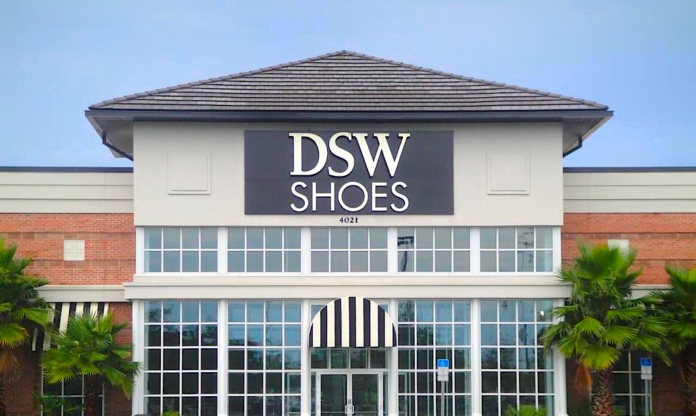
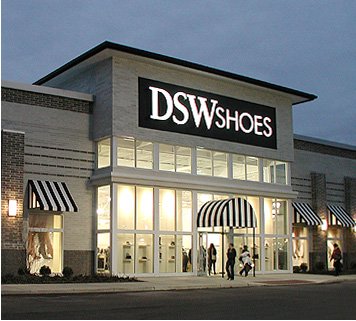
Discount footwear retailer DSW Designer Shoe Warehouse (DSW) has completed its share purchase of Canadian footwear retailer, Town Shoes, for $75.5 million (US$68.7 million) in cash. DSW acquired a 49.2% interest in Town Shoes, paving the way for DSW to open Canadian stores. DSW’s initial stake provides 50% voting control and board representation, equal to Town Shoes’ primary remaining shareholder, Callisto Capital.
DSW is hugely popular in the United States, currently operating 410 retail locations with more on the way. Its name indicates its business model: it sells designer shoes at discounted prices. Stores average at around 22,000 square feet and each store carries about 24,000 pairs of shoes. The company has hundreds of millions in cash and no debt, hence its ability to complete its all-cash purchase of Town Shoes.
DSW’s share purchase comes with the option to buy the rest of Town Shoes’ shares after four years. Town Shoes is already familiar with the Canadian retail market, and it may be able to help DSW set up its retail locations as well as other operations, including logistics. Town Shoes is Canada’s largest footwear retailer, with 182 stores and $291 million in sales for 2013. Namesake ‘The Shoe Company‘ also operates under Town Shoes’ control.
In the winter of 2013, sources informed us that Town Shoes/The Shoe Company intended to open DSW-like stores in Canada. Plans have since changed, now that DSW itself will operate in Canada via Town Shoes.
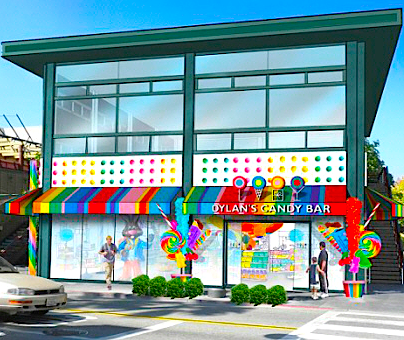
Popular American candy retailer Dylan’s Candy Bar is reportedly looking for Canadian retail space. Founded by Ralph Lauren‘s daughter, Dylan Lauren, the candy company has partnered with Claire’s as part of its North American expansion. Dylan’s recently expanded beyond just candy, becoming a lifestyle brand with various products.
Photo: Dylan’s Candy Bar
Dylan’s Candy Bar seeks retail space in the 5,000 to 15,000 square foot range, setting its sights on Toronto for its first Canadian store. Working with accessory retailer Claire’s, Dylan’s has created lines of candy-inspired jewelry (including jellybean-covered bracelets), nail polish, Whirly Pop-scented press-on nails, lip product and tech accessories (including iPhone cases with an ice cream cone design). All of these products retail for less than US$16 and are available at Dylan’s Candy Bar stores, Dylan’s website, as well as at Claire’s.
Founded in 2001, Dylan’s stores are located in New York City, Miami, Los Angeles and East Hampton, New York. The brand is expanding with smaller stores (within airports, casinos and at New York’s Empire State Building) as well as with concept shops at selected Neiman Marcus stores.
Besides a Toronto store, Ms. Lauren is reportedly seeking retail space in San Francisco and Chicago, as well as international locations in Japan and London, England. her company is also considering licensing its brand for sunglasses, handbags, flip-flops, rain boots, umbrellas, and possibly even dog-related merchandise. A clothing line is unlikely, according to Ms. Lauren, though her stores do sell signature T-shirts and pyjamas.
For the first time in Canada, May has been declared as ‘National Deals & Coupons Month‘. Both retail and deal/coupon industries have joined to offer Canadians savings, as well as raise awareness to the availability of deals and coupons for Canadians. The Deals & Coupons Month is an initiative of the Canadian Deals & Coupons Association and the Affiliate Marketing Association of Canada.
Over 60% of Canadians regularly use deals, coupons and offers and the demand continues to grow. The month-long shopping event recognizes both consumers who enjoy and benefit from the savings, and brands/retailers who understand that special promotions drive value and attention. Besides shopping in-store, consumers can also click over to the Deals & Coupons Month website where certain retailers will also be highlighted. Helping consumers know where they can save is the primary goal of the Deals & Coupons Month.
“Establishing a Deals & Coupons Month is a way to bring awareness to the shear amount of potential savings consumers can obtain in Canada”, said Albert S. Bitton, President of the Canadian Deals & Coupons Association and creator of Canada’s National Deals & Coupons Month. “We are very proud of the caliber of brands taking part in this initiative as their involvement creates a shopping event that we foresee will continue for years to come and that truly benefits everyone involved, especially consumers.”
With providers including Save.ca, one of the country’s leading coupon sites; Airmilesshops, the country’s Air Miles shopping mall; TravelAlerts – one of the country’s foremost travel promotion services; and WagJag, one of the leading deals sites in Canada, there is a steady stream of offers from quality companies available for consumers to choose from for the rest of this month.
As a former Sears senior executive I’ve followed the once mighty brand’s journey from mediocrity to bad to just plain sad. What a long strange trip it’s been.
When I left in late 2003 we were gaining traction in our core full-line department store business and piloting several important growth initiatives. To be fair, whether we could pull off the necessary transformation was highly questionable. But one thing is now certain. The subsequent actions taken under a decade of Eddie Lampert’s leadership have assured the retailer’s demise.
For some time now, I’ve been referring to Sears as the world’s slowest liquidation sale. After yesterday’s earnings announcement, it is time to stop the charade and embrace the inevitable. Here are the 5 reasons Sears needs to throw in the towel:
No value proposition. No reason for being. After all this time Lampert has still failed to articulate a vision of why and how Sears will fight and win in the intensively competitive mid-market sector. In fact, just about every action that has been taken over the last 10 years has weakened Sears competitive position. And the horrific results make this plain for all to see. The world does not need a place to buy a wrench and a blouse and a toaster oven.
The competitive gap continues to widen. In every major product category Sears has lost relevance (and market share) while key competitors continue to improve. In hard goods, Sears is fundamentally disadvantaged by their real estate and as a practical matter there is not enough time nor capital to fix this core issue. In soft lines, they have been given a great gift by the recent foibles of JC Penney and Kohl’s and yet still woefully under-performed. Both competitors have key advantages relative to Sears. As they start to execute better they will win back the share they lost.
Digging a deeper hole. For Sears to be a successful omni-channel retailer their core physical stores have to be compelling. Sears has under-invested in their brick and mortar stores for years, so not only do they have a lot of catching up to do, they have to develop and roll-out a new store design and related technology support. One need only to look at the capital that successful retailers like Nordstrom and Macy’s are investing to get a sense for the magnitude of what will be required. There is simply no way for Sears to earn an adequate return on this level of investment. More practically, Sears can’t possibly fund this.
A leader who is either a liar or delusional. The results speak for themselves: Lampert doesn’t know what he is doing. After 28 straight quarters of declining sales–let THAT sink in for a minute–he has the chutzpah to assert, among other things, that Sears is investing in where retail will be in the future (huh?), that the “Shop My Way” member program is some huge differentiator, that having fewer, less convenient locations than the competition is a good thing and that Sears can compete effectively with Amazon. All of these hypotheses would be laughable if the implications were not so tragic. Whether he really believes any of this is, or is merely spinning the story to buy time, remains an open question. But regardless of whether he is being disingenuous or whether he is nuts, you’d be crazy to give him your money.
Valuable assets get less valuable every day. There are pockets of meaningful value within Sears Holdings. But proprietary brands like Craftsman, Kenmore and Diehard are not sold where the majority of customers wish to buy them. Ultimately the brands are only as good as their distribution channels. Simply stated, as Sears and Kmart continue to weaken, so do the value of these brands. Side deals with hardware stores and Costco barely move the dial. Sears real estate is also cited as a major source of value, yet the real estate portfolio is a very mixed bag: some great properties in A malls, but lots of locations that are mostly liabilities. Regardless of how this all nets out, it is becoming increasingly clear that, on balance, mall-based commercial real estate has lots of supply, but relatively little demand for new tenancy. As retailers continue to prune and down-size their locations it is difficult, if not impossible, to make a case for Sears real estate value increasing over time.
The uncomfortable and sad reality is this: Sears has zero chance of transforming itself into a viable retail entity. Any further investment in this sinking ship is throwing good money after bad. Stripping out the idiosyncratic technical reasons for gyrations in the Sears stock, the underlying true company economic value declines each and every day. There is no plausible scenario where this trajectory will change.
Frankly, it’s been game over for some time now. It’s only Sears legacy equity and Lampert’s ability to pick at the carcass that has propped up the corpse.
Published with permission. This post originally appeared at Steven P. Dennis’ Blog on May 8, 2014. Copyright 2014. Follow Steven P. Dennis’ Blog on Twitter.
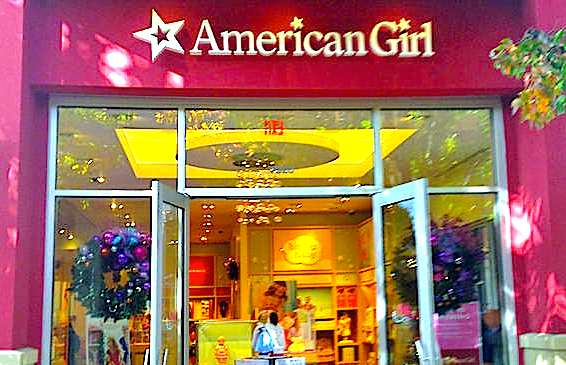
“[American Girl] is not something we will put in every store, but we definitely plan to put it in every province and then we will have to figure out by province what we can absorb. We will do it carefully. I think we could see 10 to 15 in total.”
Started 25 years ago as a line of dolls and books depicting pre-teen girls in historical times, American Girl is now a wholly-owned subsidiary of Mattel. Contemporary dolls have since been added. Its dolls retail at $125 for its standard 18 inch (45 centimetre) models and $90 for its ‘Bitty Baby’ line, marketed to younger children. Doll clothing, children’s apparel, books and movies are also available, as well as an in-store doll hair salon. Costs quickly escalate beyond the price of the doll itself: doll hairstyling costs between $5 and $25 (ponytails are $20), doll ear piercing costs $14, a horse costs $88, snow shoes are $34, and a wheelchair costs $45.
Image: American Girl
Retail analyst Robert Gibson got it right when he told the Financial Post last year that he expects Indigo to open as many as 15 American Girl boutiques in Canada by the end of fiscal 2015. He estimated that Chapers/Indigo could add $20-30-million in incremental revenue in fiscal 2016 if it replaces low-volume book space with American Girl shops, providing between $2 and $3 million in net income.
American Girl’s US locations are substantially larger than in Canada, with its Chicago flagship spanning 52,300 square feet over three floors. Its Chicago store includes a photo studio and a restaurant serving brunch, lunch, afternoon tea, dinner, with the potential to host private parties. American Girl flagships are also in New York City and Los Angeles, and its other locations bring its total US store count to 16.