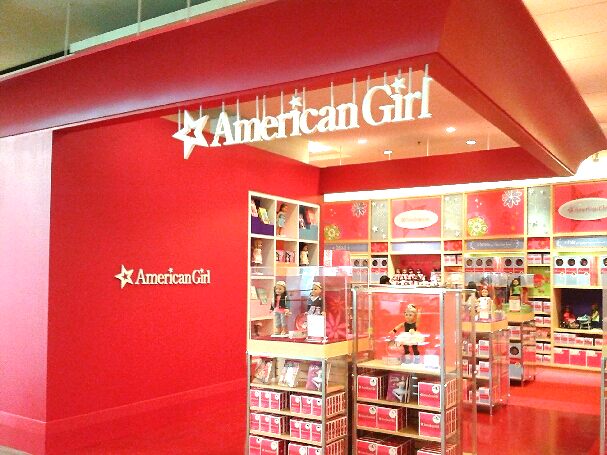
“[American Girl] is not something we will put in every store, but we definitely plan to put it in every province and then we will have to figure out by province what we can absorb. We will do it carefully. I think we could see 10 to 15 in total.”
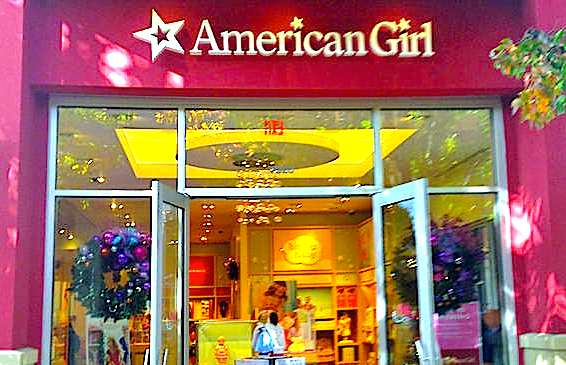
Started 25 years ago as a line of dolls and books depicting pre-teen girls in historical times, American Girl is now a wholly-owned subsidiary of Mattel. Contemporary dolls have since been added. Its dolls retail at $125 for its standard 18 inch (45 centimetre) models and $90 for its ‘Bitty Baby’ line, marketed to younger children. Doll clothing, children’s apparel, books and movies are also available, as well as an in-store doll hair salon. Costs quickly escalate beyond the price of the doll itself: doll hairstyling costs between $5 and $25 (ponytails are $20), doll ear piercing costs $14, a horse costs $88, snow shoes are $34, and a wheelchair costs $45.
Image: American Girl
Retail analyst Robert Gibson got it right when he told the Financial Post last year that he expects Indigo to open as many as 15 American Girl boutiques in Canada by the end of fiscal 2015. He estimated that Chapers/Indigo could add $20-30-million in incremental revenue in fiscal 2016 if it replaces low-volume book space with American Girl shops, providing between $2 and $3 million in net income.
American Girl’s US locations are substantially larger than in Canada, with its Chicago flagship spanning 52,300 square feet over three floors. Its Chicago store includes a photo studio and a restaurant serving brunch, lunch, afternoon tea, dinner, with the potential to host private parties. American Girl flagships are also in New York City and Los Angeles, and its other locations bring its total US store count to 16.
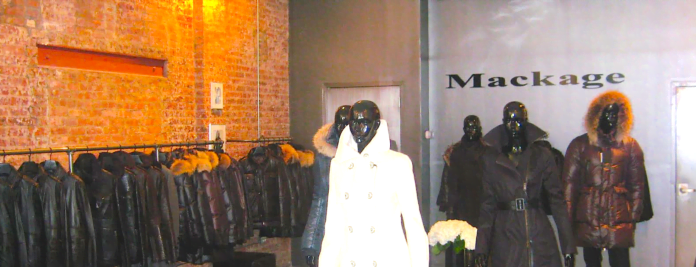
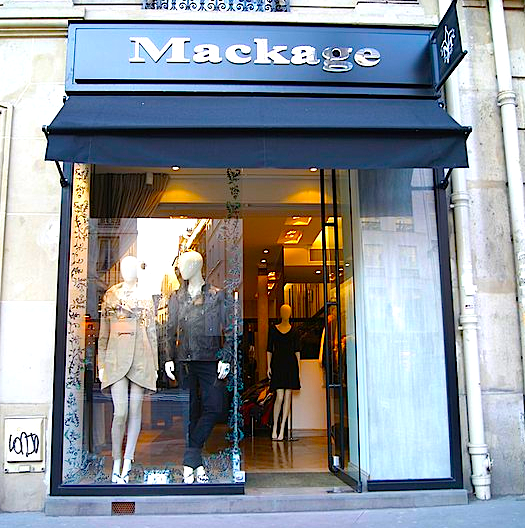
Montreal-based luxury outerwear brand Mackage will open stores in selected Canadian cities. The company has retained a real estate company to establish its brand across Canada. Despite being Canadian, its first and only free-standing store is in New York City.
Designers Eran Elfassy and Elisa Dahan Mackage founded Mackage in 1999. The brand focuses on creating detailed, tailored outerwear in leather, down and wool. It retails collections for men and women, as well as its recently-launched handbag and accessory lines. The company is part of fashion conglomerate APP Group, which also includes upscale clothing brand SOIA & KYO.
Mackage is working with real estate company Oberfeld Snowcap in its search for cross-Canada space. We don’t know what Canadian cities are targeted, though we expect Toronto, Montreal and Vancouver to be the brand’s top choices.
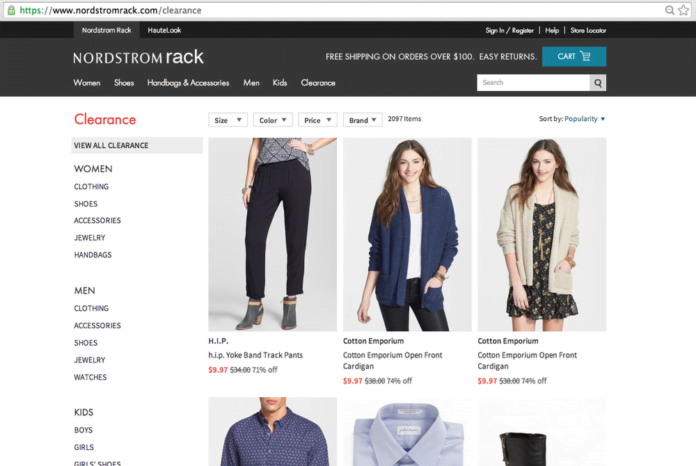
This week, Nordstrom Rack simultaneously launched its new e-commerce website and mobile app. They are on a shared platform with HauteLook, Nordstrom’s flash sale business. Both website and app facilitate Nordstrom Rack shopping, as well as participation in HauteLook flash sale events. A similar site could be launched in Canada, though likely not until Nordstrom Rack’s Canadian debut in 2017.
Nordstrom Rack’s website allows customers to browse and purchase merchandise discounted at 30-70% off regular prices, or through its limited-time, limited-inventory flash sale events powered by HauteLook. Customers can shop both sites through a single log-in, and can combine items into one checkout.
Additional features include:
Two unique iTunes storefront and app icons that allow for a seamless mobile shopping experience for customers, who can browse and shop both sites within a shared app,
Easy Returns: 90-day return policy to any Nordstrom Rack store or return by mail,
Free shipping for orders over $100
Enrolled customers earn points in the Nordstrom Rewards Program
Integrated iOS experience for the iPhone and iPad
The company will introduce additional features and improve functionality with subsequent updates to the site.
Nordstrom acquired HauteLook in March of 2011. Every day at 8:00 am PST, selected Nordstrom items discount at up to 75% off. Membership is free.
Nordstrom’s off-price Nordstrom Rack has about 150 locations in the United States, and plans to open its first Canadian stores in 2017. Nordstrom Rack generated about $2.7 billion in sales in 2013, which represents about 22 percent of the company’s overall revenues. Nordstrom Rack will open between 15 and 20 Canadian locations and it’s growing quickly: according to company spokesperson Dan Evans, it will boast about 230 American locations by 2016.
“Our customers have been telling us for some time they want to shop the Rack online and with the launch of nordstromrack.com they can now shop the Rack whenever they’d like,” said Jamie Nordstrom, president of Nordstrom Direct. “We were able to leverage the talent of our HauteLook team to build a fast, seamless online and mobile experience – an important milestone in supporting our priorities to meet our customers’ expectation of how they like to shop today.”
“By bridging together Nordstrom Rack and HauteLook, we’re giving our customers one of the largest selections of online, off-price merchandise available today,” said Terry Boyle, president of Nordstromrack.com and HauteLook. “We’re committed to expanding and deepening our offering as we continue to learn more about how our customers want to shop nordstromrack.com. We believe that ultimately this robust offering will empower our customers to shop online, off-price with confidence.”
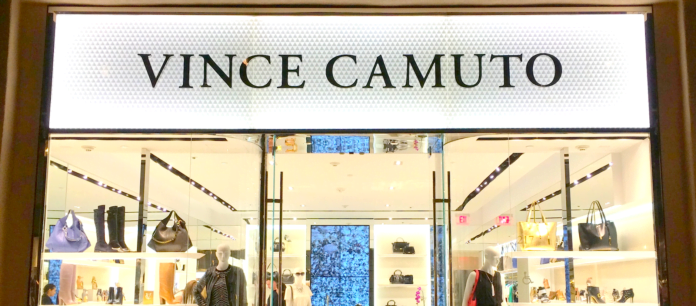
American footwear retailer Vince Camuto will open store locations across Canada. The company has teamed up with a real estate firm to spearhead its Canadian expansion, focussing on major enclosed shopping malls. Construction has already begun on its first boutique at Toronto’s Yorkdale Shopping Centre, scheduled to open this summer.
Vince Camuto is a fashion designer who co-founded popular women’s shoe retailer, Nine West. In 2005, he launched his namesake footwear line. The brand has since expanded into accessories as well as women’s and men’s clothing.
In the fall of 2013, Vince Camuto teamed up with real estate firm Oberfeld Snowcap in its search for Canadian real estate. According to Oberfeld, the Vince Camuto collection fills a void in the Canadian market, positioned between lower-priced ‘fast-fashion’ labels and more expensive designer and contemporary brands.
Vince Camuto’s Yorkdale store will replace another retailer, Icon Shoes. According to Yorkdale’s lease plan, Icon Shoes occupies about 1,365 square feet. The shop will be designed and executed by Toronto-based dkstudio inc., which has created some of Canada’s most prestigious stores including Prada at Yorkdale’s Holt Renfrew, De Beers in Vancouver, and several Louis Vuitton locations.
A Vince Camuto outlet store is also located at the Toronto Premium Outlets, its only retail outlet location in Canada.
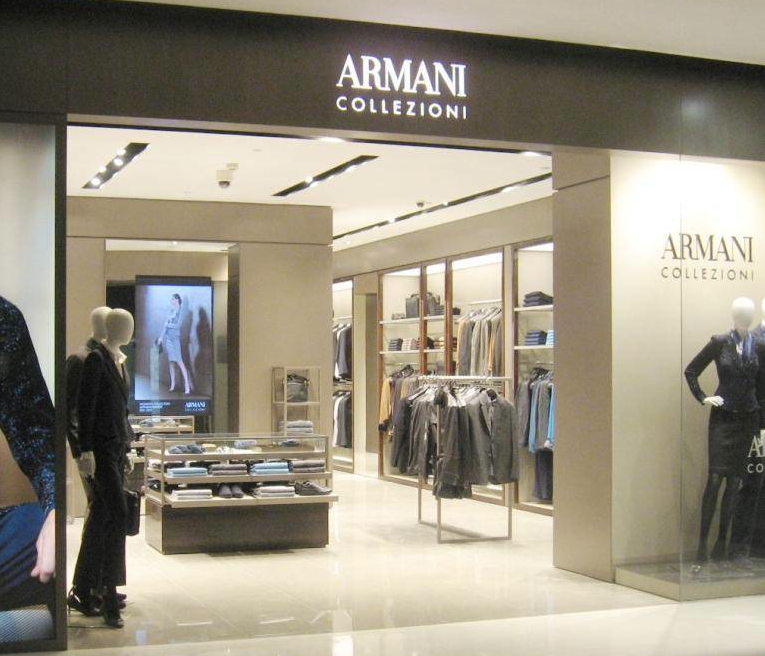
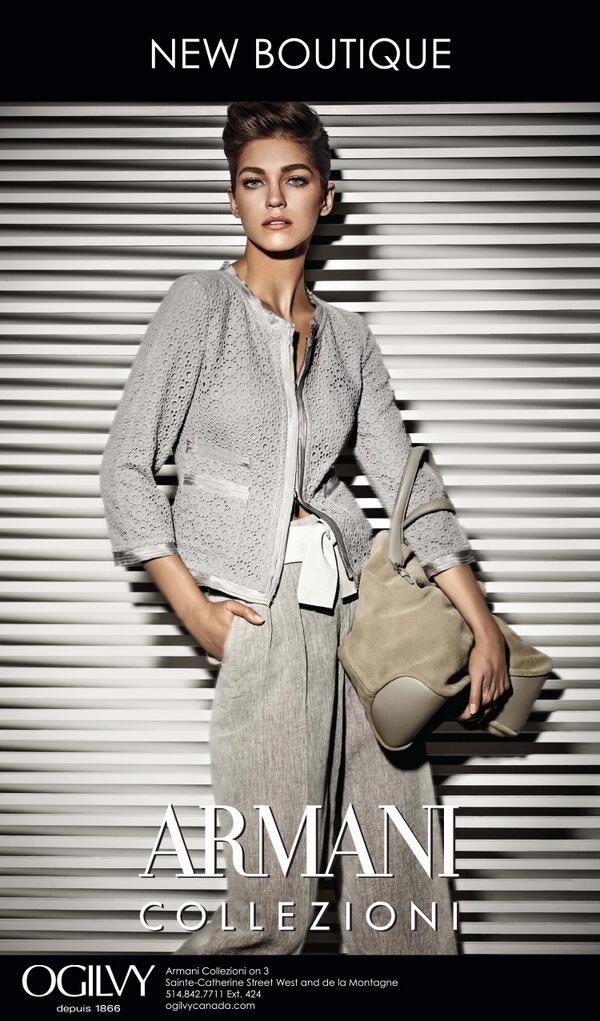
Armani Collezioni is a sub-label of Milan-based designer Giorgio Armani. Although less expensive than its Giorgio Armani Black Label and Armani Privé labels, Armani Collezioni prices can still reach into the thousands.
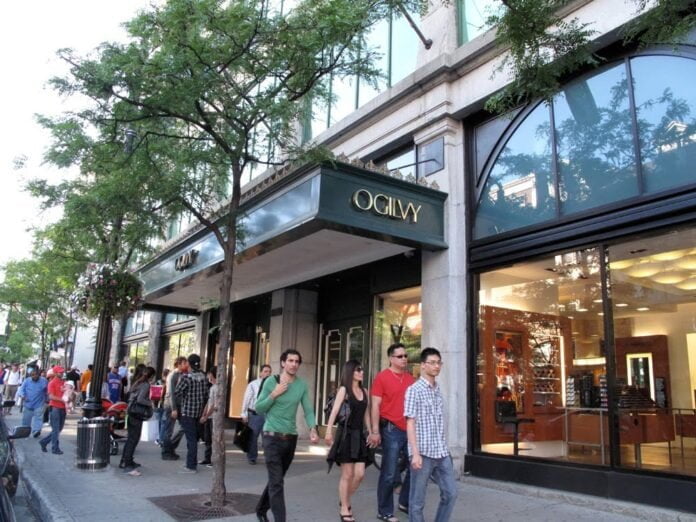
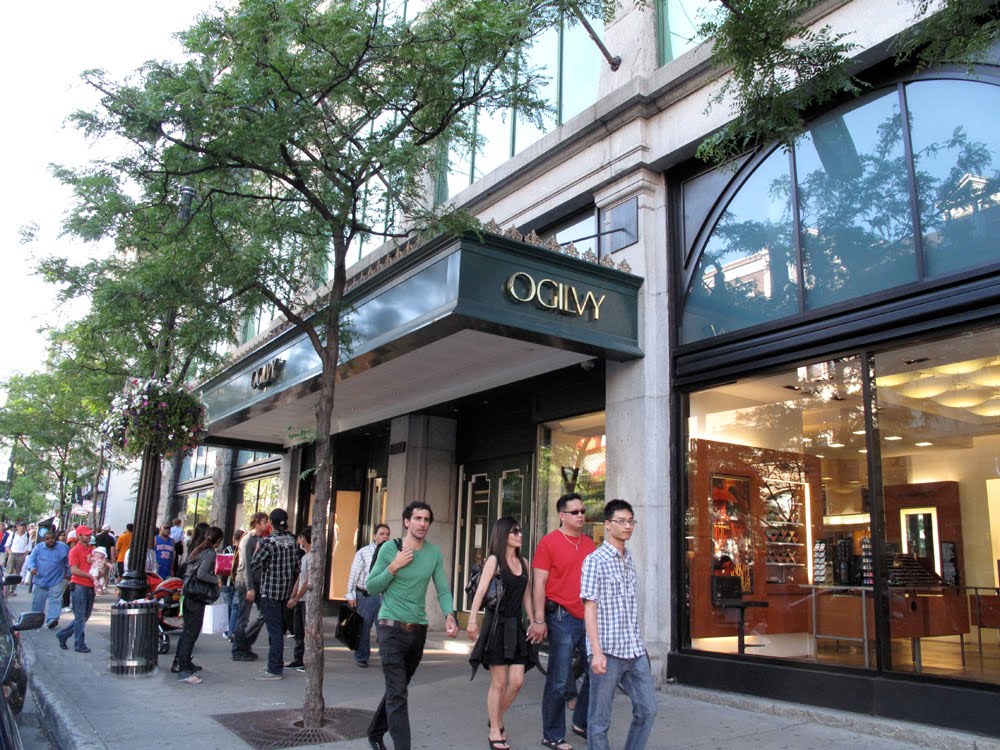
The current 160,000 square foot Ogilvy will expand by 60,000 square feet, creating a store of about 220,000 square feet. The new store, called ‘Ogilvy, part of the Holt Renfrew & Co. collection’, opens in 2017. The 83,000 square foot Holt Renfrew on Sherbrooke Street West will subsequently close. Construction on the new Ogilvy/Holt’s begins this fall.
Incredibly, insiders (including sources at Women’s Wear Daily) speculate that sales in the new Ogilvy/Holt’s store could be as high as $250 million annually. If so, these could be the highest department store sales in Canada, surpassing those of Hudson’s Bay‘s Toronto flagship.
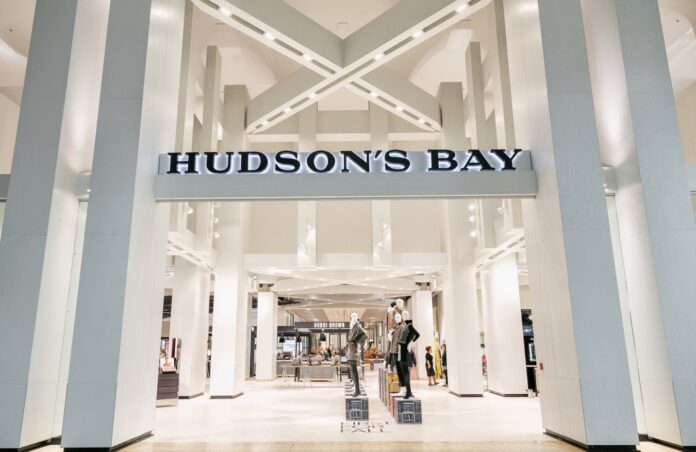
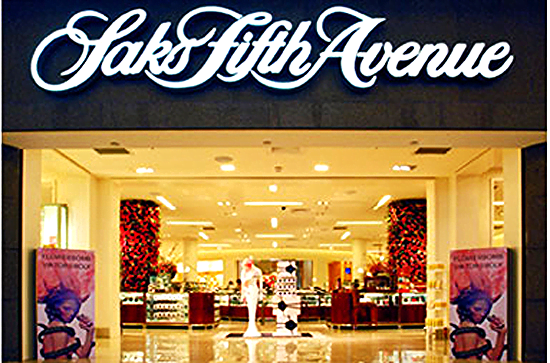
Although Montreal will lose its dedicated Holt Renfrew store on Sherbrooke Street West, it will gain an even larger luxury department store that can compete head-to-head with Saks Fifth Avenue. Saks will open within Hudson’s Bay’s Ste Catherine Street West store in downtown Montreal and when finished, Saks will be a mere 800 metres east of the new Ogilvy/Holt’s.
We expect that the new retailer will be similar to the company’s Selfridge’s store in London. Selfridge’s is one of the world’s most innovative retailers, offering a wide variety of merchandise and pricing. We think that the new Ogilvy/Holt’s will likely include the following similar improvements:
1. New luxury hall for designer boutiques: We expect the new retailer to feature multiple luxury designer boutiques in a sort of ‘luxury street’ similar to what Selfridge’s group has created for its London store as well as for its de Bijenkorf store in Amsterdam. Luxury boutiques could include Hermès, Dior, Chanel, Gucci, Fendi, Miu Miu, Mulberry and others. Apart from a few luxury boutiques on Sherbrooke Street West, Montreal generally lacks luxury ‘high streets’ like Toronto’s Bloor Street or Vancouver’s Burrard/Alberni Streets. We expect Ogilvy/Holt’s to capitalize on its large ground-floor space by featuring multiple luxury boutiques to compliment existing Ogilvy retailers such as Louis Vuitton.
3. A substantial men’s store: We expect to see a large and luxurious men’s store within the new Ogilvy/Holt’s, offering such amenities as shaving services, shoe shines, personal shopping and a relaxation lounge, among others. We’re not sure where it would go, yet, though we think it will be over 30,000 square feet as it attempts to compete with rivals Harry Rosen, L’Uomo and Saks Fifth Avenue.
4. A top-notch women’s designer floor: We expect the women’s luxury clothing offerings at Holt’s to expand, featuring larger boutiques for Chanel, Gucci, Prada, Akris, Giorgio Armani and others. We also think Holt’s will bring its couture salon concept over from its current store.
5. More fine jewellery: We think an expanded jewellery selection will build on Ogilvy’s current Tous and Christofle boutiques to include many of the world’s finest jewellers, such as Graff, De Beers, Bulgari and others.
6. Restaurants: We expect to see at least one restaurant offering, if not several, in the new store. Restaurants aren’t our specialty so we’ll leave it at that.
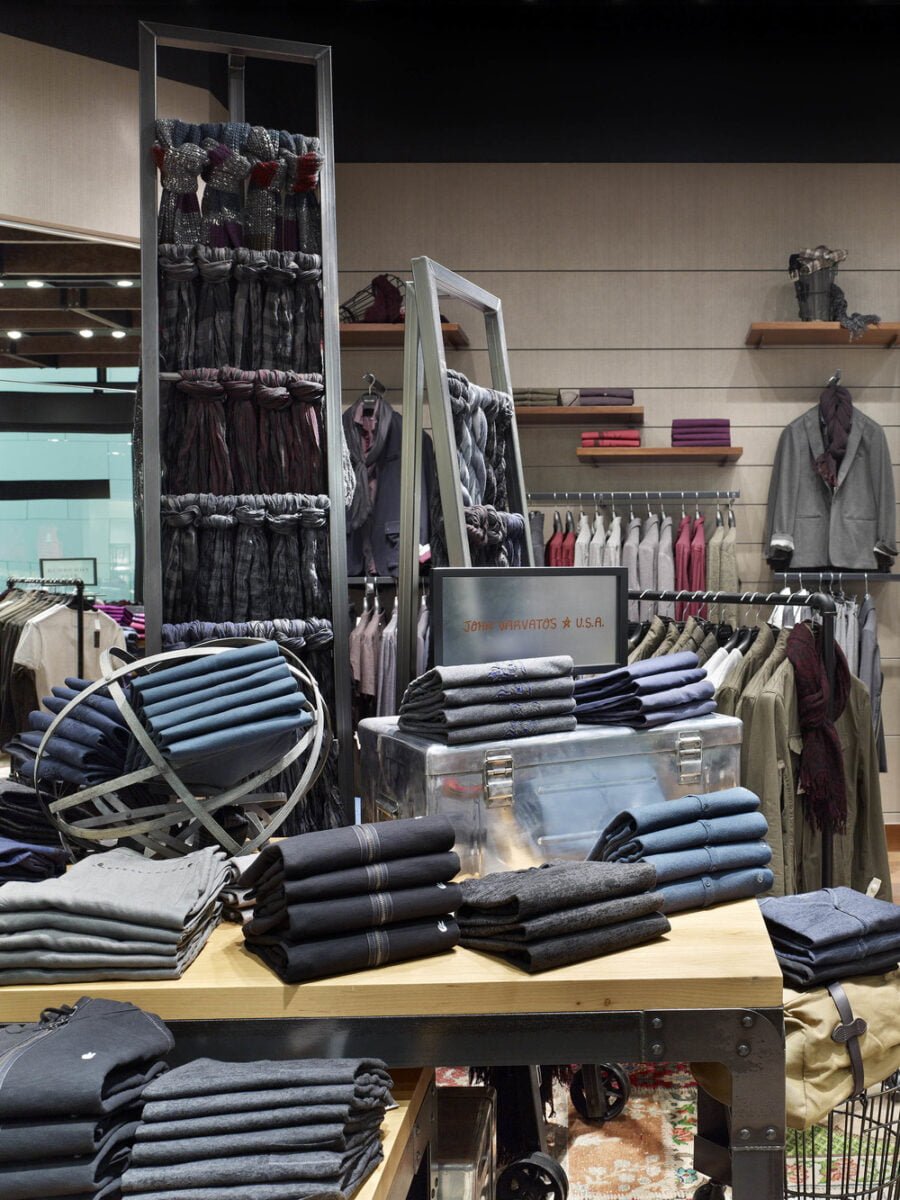
Toronto’s Yorkdale Shopping Centre has done what many thought was impossible, by adding world-class luxury stores to a suburban Canadian mall. Traditionally the domain of Canadian downtowns, Yorkdale has changed Canada’s luxury game with an unprecedented number of new boutique announcements. Canada’s first free-standing Bulgari, Moncler and Jimmy Choo stores will join other Canadian firsts, including David Yurman, Mulberry, John Varvatos and others. Adding to this is a Holt Renfrew store with several large luxury shops-in-store, creating an upscale shopping destination unrivalled in Canada.
Canadian luxury retail has customarily been located in Toronto’s Yorkville area, and to a lesser extent, in Downtown Vancouver’s ‘luxury zone’ around Burrard and Alberni Streets. As recently as the late 1990’s, Montreal had a luxury zone on Sherbrooke Street that has since disappeared. Large Canadian shopping centres are generally mid-priced, save for a few upscale stores at Vancouver’s Oakridge Centre, Toronto’s Bayview Village and Sherway Gardens, and a handful of other regional malls including Calgary’s Chinook Centre. Some American malls, on the other hand, feature rows of luxury stores. The most comprehensive of these is southern California’s South Coast Plaza, featuring dozens of the world’s top designer names. The Bal Harbour Shops (Florida), Houston Galleria (Texas), The Mall at Short Hills (New Jersey) and others offer luxury shopping unheard of in Canadian malls, until the rise of Yorkdale.
Only a few years ago, Toronto’s Yorkdale was an upper-middle class mall anchored by a 68,000 square foot Holt Renfrew store. That has since changed, thanks to hordes of increasingly affluent shoppers and tourists, as well as a proactive management team at landlord Oxford Properties. The mall’s interior has helped as well: it boasts a primarily one-level floor plan with high ceilings, natural light, and the potential for dramatic store facades that are lacking in many malls.
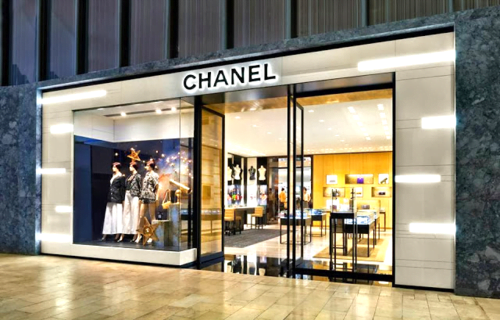
YORKDALE’S MALL-FRONTING CHANEL STORE IS ACTUALLY A HOLT RENFREW CONCESSION. PHOTO CREDIT: HOLT RENFREW.
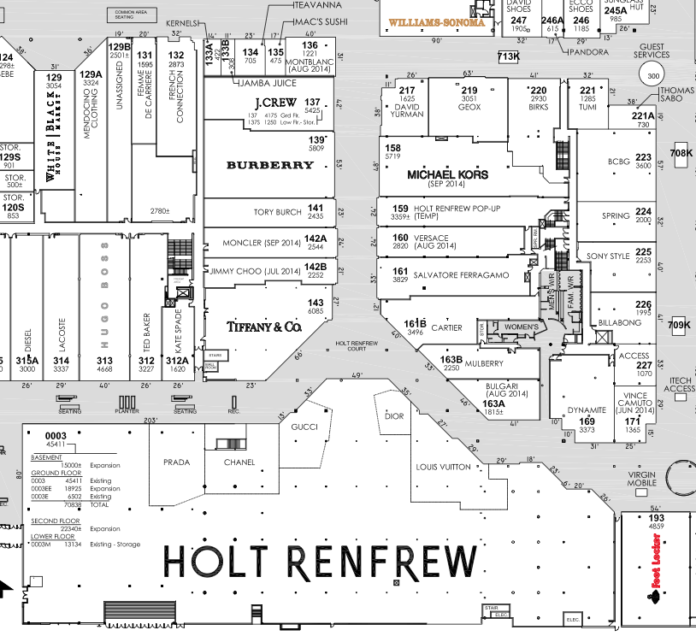
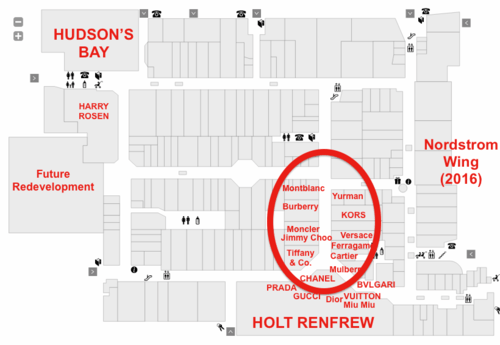
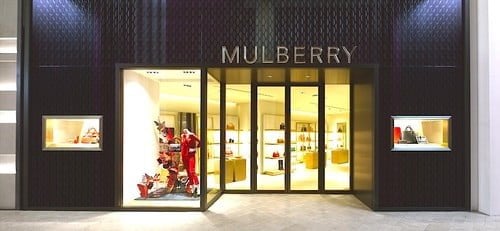
Holt Renfrew facilitated the new luxury retail, especially when it announced that it would double the size of its Yorkdale store. The retail wing directly north of Holt’s, called ‘Holt Renfrew Court’, saw a Tiffany & Co. store open in April of 2009. At the time, Tiffany’s immediate neighbours were fairly mainstream: Mexx, La Senza and Eddie Bauer otherwise characterized the wing. Burberry‘s subsequent opening near Tiffany provided further foundation for the luxury wing, growing additionally with the opening of Cartier, Mulberry and Tory Burch. Yorkdale has since secured several more top-tiered luxury stores, and we’ll describe them briefly below:
Bulgari: This Italian jeweller’s first Canadian location will open in August next to Mulberry, across from Holt Renfrew. Occupying over 1,800 square feet, Bulgari will feature some of Yorkdale’s most expensive accessories.
Moncler: This French-Italian clothing and sportswear retailer will open its first Canadian store in a 2,540 square foot space, replacing half of the 4,660 square foot, mid-priced fashion retailer, Mexx. Moncler opens in September.
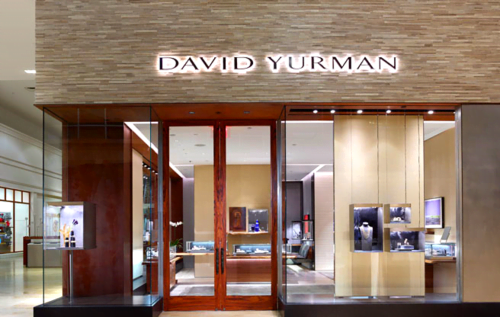
DAVID YURMAN’S FIRST CANADIAN STORE OPENED AT YORKDALE IN DECEMBER OF 2013. THE COMPANY IS SCOUTING FOR CANADIAN RETAIL SPACE, INCLUDING ON TORONTO’S BLOOR STREET WEST. PHOTO: DAVID YURMAN.
Montblanc: Yorkdale’s Montblanc will be the second for Toronto. The 1,220 square foot boutique joins its flagship Bloor Street location in Toronto’s tony Yorkville area. Montblanc replaces Marex Jewellery, and will to open in August.
Versace: Canada’s only free-standing Versace store will occupy 2,820 square feet, opening in August. A Versace shop-in-store is also located in Vancouver.
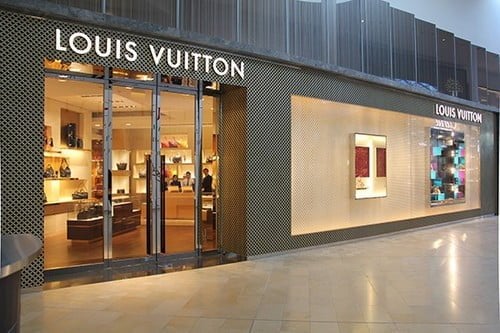
YORKDALE’S 4,000 SQUARE FOOT LOUIS VUITTON STORE IS ALSO A SHOP-IN-STORE AT HOLT RENFREW, WITH A SEPARATE MALL ENTRANCE. IMPRESSIVELY, THIS IS CANADA’S THIRD-LARGEST VUITTON LOCATION. PHOTO: DKSTUDIO
Michael Kors: Canada’s top-selling Michael Kors store will also become its largest: the retailer is relocating from its 3,080 square foot space to one of over 5,700 square feet, replacing Eddie Bauer. The replacement Kors store opens in September.
Holt Renfrew boasts a number of luxury concessions with mall-facing entrances. Chanel, Prada, Gucci and Louis Vuitton all have branded facades, with the appearance of being free-standing stores. Holt’s also features in-store shops for Miu Miu accessories and, soon, Dior and De Beers.
PHOTO CREDIT: STYLE EMPIRE
It will be interesting to watch other Canadian malls as they become luxury centres, not unlike those in America. Vancouver’s Oakridge Centre is a luxury contender, featuring Tiffany & Co., Max Mara, and a host of other upscale stores. Calgary’s Chinook Centre also continues to move upscale, opening stores such as Burberry, Tiffany & Co., Max Mara and others. Yorkdale beats them all and given its proactive management team, it’s unlikely that another Canadian mall will rival Yorkdale’s luxury offerings.
Yorkdale is expected to become North America’s highest-selling mall by 2018, with annual sales estimates of $2 billion. With Nordstrom’s new 191,000 square foot store and a new 110,000 square foot retail wing, Yorkdale’s $1 billion annual sales will increase substantially. Its Nordstrom expansion won’t be the last for Yorkdale, however: plans are in place to replace its former Sears store with more retail and as many as two new anchor stores.
The Award recognizes retail leaders who lead their companies to outstanding business success and innovation, while consistently demonstrating community commitment and support. Recipients are role models because of their exceptional leadership within the corporation, in the Canadian retail industry and in the community at large, through personal and/or corporate philanthropic activities.
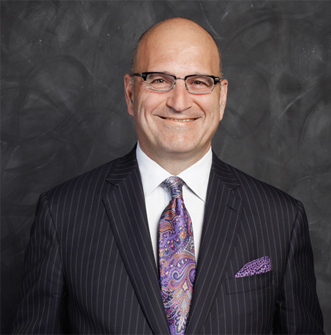
“The Canadian Retail Industry is thrilled to recognize Larry Rosen for his passion and contributions to the men’s apparel business,” says Diane J. Brisebois, President and CEO, Retail Council of Canada. “Like the fashion industry, Larry and the Harry Rosen brand are constantly evolving to upgrade and expand the in-store experience and fuse their bricks-and-mortar and online businesses, all while maintaining the legendary service culture their customers have come to rely on. “
Celebrating 60 years in operation, Harry Rosen grew from a single Toronto location to 16 stores across the country, with 40% of Canada’s high-end menswear market. “The continued growth of Harry Rosen year over year is a testament to his strong leadership, entrepreneurial spirit and ingenuity,” notes Ms. Brisebois.
No two Harry Rosen stores are the same – thanks to a free-thinking, guitar-playing, detail-driven designer named Mark Teixeira
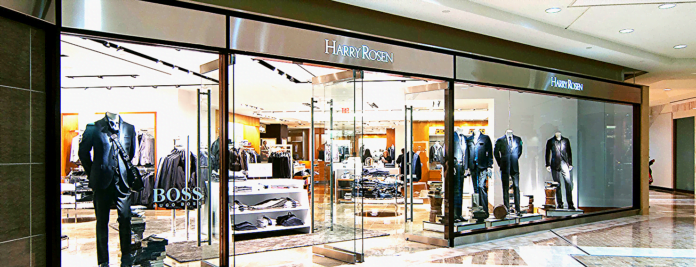
THEY SOUND PRETTY GOOD — two dudes in their 50s, jamming on guitars at the Cherry Beach studios in downtown Toronto. It’s something they do together from time to time, swapping riffs for hours, taking musical ideas and seeing where they lead, getting inside each other’s heads. The guy with the left-handed Fender Strato caster is Larry Rosen, CEO of Harry Rosen Inc.; the other rocker is Mark Teixeira, the man who has designed each Harry Rosen store across the country since the early 1990s. Their most recent hit is the new, 30,000-square-foot flagship store at the Yorkdale Shopping Centre in Toronto.
Every Harry Rosen store is unique, created with the location and its specific clientele very much in mind – a bespoke retail experience, if you will. Yorkdale’s reinvention began two years ago when space adjacent to the existing Harry Rosen store became available, potentially doubling its size. Even before the papers were signed, Larry Rosen and Teixeira had begun to discuss the possibilities.
WE ALWAYS START FROM SCRATCH,” explains Teixeira, “with an empty outline of the space – the first of thousands of drawings.” We are in his office, and his desk and draftsman’s table are deeply buried beneath piles of blueprints and architect’s papers. Teixeira’s manner is laid-back and soft-spoken, but his passion and the pleasure he takes in his work are palpable. “We design our stores from two directions at once,” he says. “From above, with the grand concept of how it fits into the community and the local retail environment and which menswear designers we think will do well there. Larry is really good at reading those kind of things and defining a theme for the store. I come at it from the other direction, from all the details, the physical environment and flow of the store and from the merchandise itself.”
It was merchandise and display that brought Teixeira into the company, in 1975. He was 20 years old, a rock musician gigging and touring with a number of different bands. One day he was at Fairview Mall having a coffee when he noticed the window dressers working in the Harry Rosen window. “I thought, man! If I were ever to have a steady job, I would do that one,” he recalls. “So I went to speak to the guy and next morning I was hired.” Over the next few years, Teixeira noticed that Harry Rosen himself would sometimes come and study the work he was doing. He was 25 when Harry offered him a full-time job designing the display for all six Harry Rosen stores.
As the company grew, so did Teixeira’s role within it. Harry took him travelling to the U.S. for inspiration and encouraged him to study architectural drawing and furniture design. In the 1980s, when the firm began to open stores in other Canadian cities Teixeira trained a team of 22 display experts across the country. In 1991, he found himself with a new job description as Harry Rosen’s full-time, in-house store designer.
Just what does he bring to the table? The best way to answer that is to take a walk through the Yorkdale store. You won’t see bare racks of suits or fixtures arranged with stern geometric symmetry or half a dozen pristine shirts set out in a glass display case as if they were objects in a museum. What you will see is a generous abundance of merchandise – piles of shirts and polo knits in every conceivable colour, stacks of cashmere sweaters artfully arranged to encourage you to touch them, everything organized to catch your eye and draw you deeper into the store.
Yorkdale, for instance, has three entrances. Go through one and the first thing you see is an extravagant cascade of shirts and sweaters from Burberry Brit. Look up and the wall of Dolce & Gabbana clothing is beckoning, 60 feet away. Did you notice the gorgeous floor of veined and polished limestone beneath your feet? Ten steps in and the BOSS area opens up to the left with its distinctive armchairs and dark-wood changing rooms – it looks like a luxurious little condo, inviting you over. And what’s this? Z Zegna’s collection is suddenly there on the right.
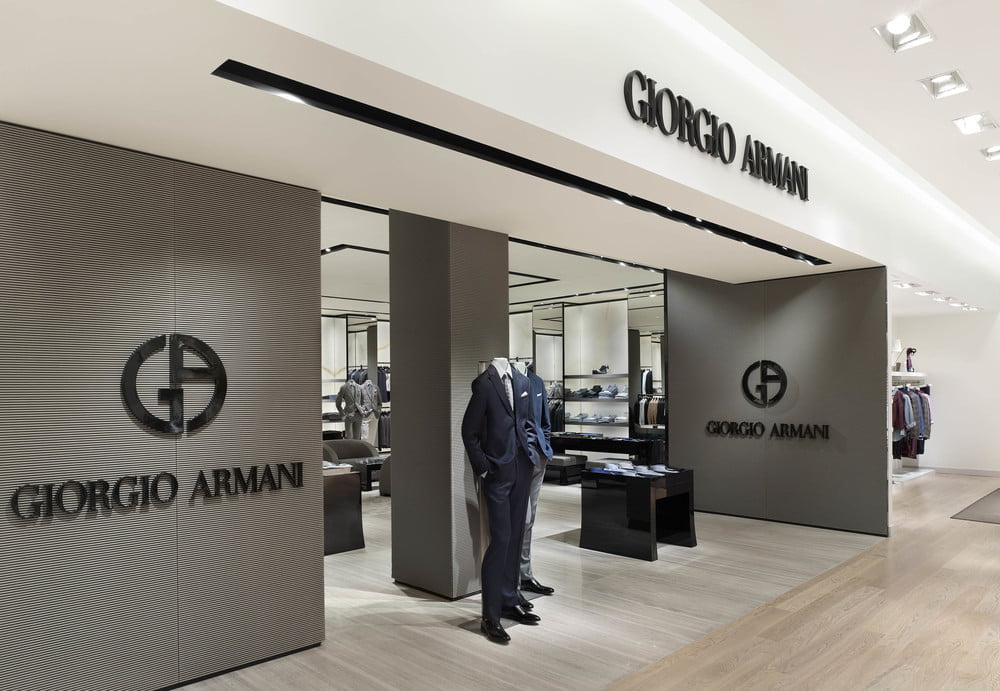
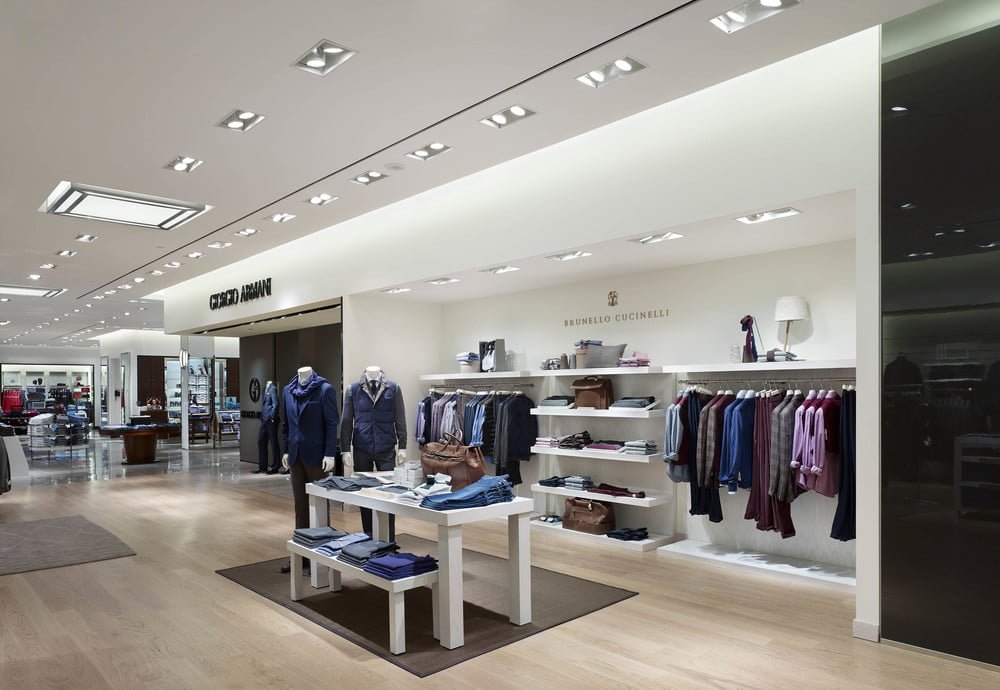
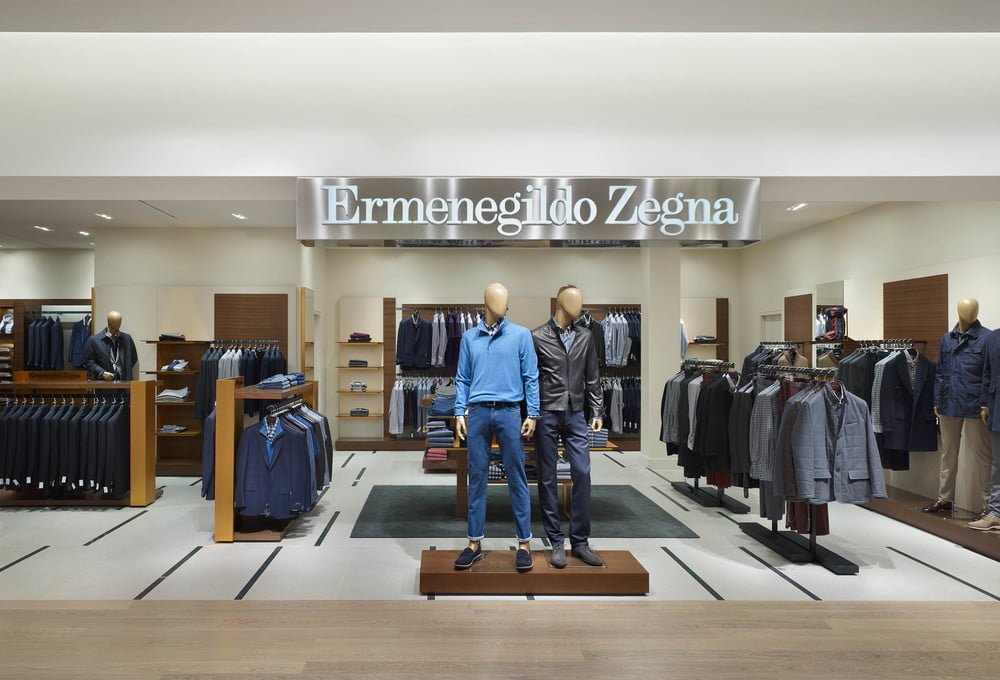
“We take enormous trouble with this,” says Teixeira. “With blocks of contrasting colour, with lighting, with the geography of the store, we lead your eye forward from one focal point to the next.” This is the “flow” that lies at the heart of a Harry Rosen experience, a sensory journey that meanders with its own invisible but precise logic, like a piece of music progressing from one idea to the next. The sock cove. The denim area with its moody lighting and industrial ceiling. And, of course, the shop-in-shops, a concept Harry Rosen pioneered; they allow a great design house to build its own miniature shop, complete with custom décor, fixtures, lighting and ambience, inside a Harry Rosen store. At Yorkdale, there are three – from Canali, Ermenegildo Zegna and Giorgio Armani – as well as various “soft shops” that use the store’s ceiling and floor but provide their own display fixtures to create a separate identity. The decision to add one for English jewellery designer Robert Tateossian came late in the day at Yorkdale, but Teixeira knows to expect surprises and builds a degree of wiggle room into his plans. “We never get euchred,” he says. “Everything can be adjusted and converted, if need be.”
Is all this effort worthwhile? For years, clothing advisors at the old Yorkdale store believed they could boost sales of Canali if only they had a dedicated shop-in-shop for the brand. They broke all records the very first week after the reno. The same goes for made to measure. Moving the department into the hushed privacy of an upstairs area has let clients relax away from the crowds and has done wonders for sales. Meanwhile, below the main floor, out of sight of the customers, another 3,000 square feet of space is devoted to the staff area and dining room, the tailoring shop, stockrooms and shipping dock.
One other, not-so-minor miracle is that the Yorkdale store stayed open throughout its year-long renovation. Again, the secret was to keep things in house. Instead of hiring an outside general contractor, Harry Rosen has its own manager of store construction, Stacey Murty, a hands-on genius who has brought in every project on time and on budget for the last 15 years. Larry Rosen refers to her as “our secret weapon.” At Yorkdale, she built an office on wheels in the construction space and could sometimes be found there at 2 a.m., waiting for a delivery of lumber or millwork. She’s an expert in erecting and soundproofing temporary walls that are camouflaged with shelves of merchandise so work can carry on unseen. Often she and her team will clear a whole area of the store, spend all night installing a ceiling, then put everything back into place before the first customer appears the next morning.
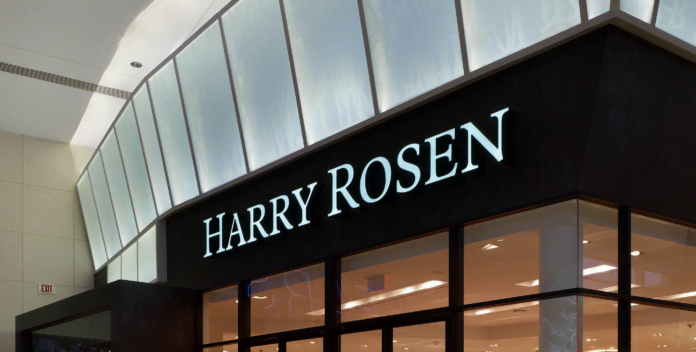
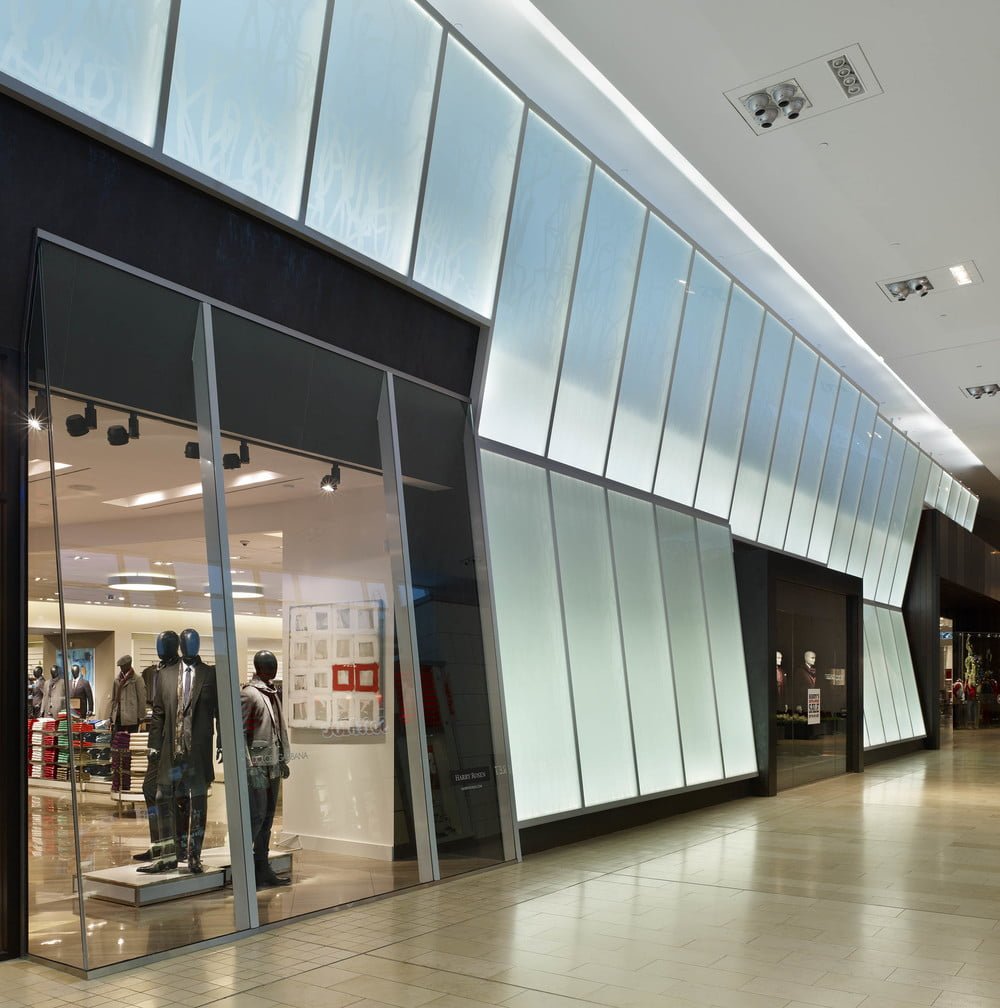
God is in the details (as Ludwig Mies van der Rohe used to say) – and so is Mark Teixeira. Look closely at the dramatic frosted glass façade of the store: those abstract lines are the extrapolated outline of the photo of Harry from the company’s first-ever ad. Check out the way each of the 500 halogens and LED lights in the ceiling are angled so precisely onto the merchandise. Teixeira did that himself as carefully as any theatre lighting designer. “But our stores are theatres,” he exclaims. “The show is the merchandise and the actors are our clothing advisors. If I over design the space it might shut down all that activity and the magic would be gone.”
Yorkdale’s reinvention is finished now but there are new projects already underway – Ottawa, Toronto’s Sherway Gardens, Montreal, Edmonton… Calgary’s Chinook store opened only two years ago but is already so successful it needs to expand. By the end of 2014, Teixeira will have recreated every Harry Rosen store in Canada – each one different, each one as personal as a new song picked out on a guitar, to be orchestrated by an expert team, every note pitch-perfect.
This article originally appeared in the Spring/Summer 2014 edition of harry Magazine. Re-published with permission of Harry Rosen.
The Hudson’s Bay Company turns 344 today, and it continues to make history. It made news when it bought American luxury retailer Saks Fifth Avenue, and it made further headlines by announcing its first two Canadian Saks locations. In its 345th year, Hudson’s Bay will make further news with its planned store improvements, as well as further new store announcements.
Founded on May 2nd, 1670, The Hudson’s Bay Company is North America’s oldest commercial corporation, as well as the world’s oldest continually operating trading company. Its story began with the fur trade, and in many ways its history parallels that of Canada’s. In its early years, Hudson’s Bay was the world’s largest land owner, occupying about 15% of North America in an area called ‘Rupert’s Land’. It established trading posts throughout the empire, negotiating fur deals with local aboriginal populations.
When the fur trade declined, it became a mercantile business for Western Canadian settlers. Its first ‘sales store’ opened in 1857 in Fort Langley, BC, and others soon followed. As the company matured into the early 1900’s, flagship department stores opened in Vancouver, Victoria, Calgary, Edmonton, Saskatoon and Winnipeg.
Between the 1960’s and the 1990’s, the company grew by absorbing and re-branding several Canadian department stores including Morgan’s, Woodward’s, Simpson’s, and others. Until recently, Zellers and Field’s also operated under Hudson’s Bay’s umbrella (three Zellers locations remain, selling surplus Bay merchandise). In 1991, Simpson’s Downtown Toronto store became Hudson’s Bay’s flagship, occupying about 850,000 square feet as well as an adjacent office tower.
Currently, its Canadian operations include 90 Hudson’s Bay department stores, three Zellers stores, one outlet store, and its chain of home stores called Home Outfitters. In the United States, The it owns upscale department store Lord & Taylor and, last summer, it made history when it bought Saks Fifth Avenue.
Saks’s first Canadian store will be in Toronto, and not where initially intended. Saks originally planned a massive Canadian flagship at Toronto’s iconic Yonge and Bloor intersection, replacing Hudson’s Bay’s bunker-like, windowless, low-ceiling, 344,000 square foot store. In January, Cadillac Fairview enticed Saks southward by offering Hudson’s Bay $650 million for its Queen Street flagship and adjacent office tower. Occupying 150,000 square feet within the Queen Street Hudson’s Bay, Canada’s flagship Saks will be 2 km south and about half the size of its initially conceptualized flagship. It opens next year.
In its 345th year, The Hudson’s Bay Company will continue making headlines. Store renovations continue under an initiative spearheaded by former president, Bonnie Brooks. TopShop shop-in-stores continue to open, and a 20,000 square foot Kleinfeld Bridal opened yesterday at the Toronto flagship. Rumours of a new Halifax Hudson’s Bay store persist, and the company continues to negotiate Canadian Saks stores, as well as up to 25 Off 5th by Saks Fifth Avenue outlets. Up to eight Canadian Saks stores are eventually expected in Vancouver, Montreal, Toronto’s Yorkdale Shopping Centre, and possibly in Calgary.
AMERICAN GIRL, VANCOUVER. PHOTO CREDIT: CRAIG PATTERSON
Started 25 years ago as a line of dolls and books depicting pre-teen girls in historical times, American Girl is now a wholly-owned subsidiary of Mattel. Contemporary dolls have since been added. Its dolls are expensive, retailing at $125 for larger ones and $90 for its ‘Bitty Baby’ line, marketed to younger children. Doll clothing, books and movies are also available, as well as an in-store doll hair salon. Doll hairstyling costs between $5 and $25, while doll ear piercing will set you back another $14.
The Vancouver shop-in-store is about 1,800 square feet, located on the second level of Downtown Vancouver’s Chapters bookstore. Its Toronto location is similarly sized, located within Yorkdale Shopping Centre‘s Indigo store.
Retail analyst Robert Gibson told the Financial Post last year that he expects Indigo could open as many as 15 American Girl boutiques in Canada by the end of fiscal 2015. He estimates that Chapers/Indigo could add $20-30-million in incremental revenue in fiscal 2016 if it replaces low volume book space with American Girl shops, providing between $2 million and $3 million in net income.
American Girl’s US locations are substantially larger than in Canada, with its Chicago flagship spanning a whopping 52,300 square feet over three floors. Its Chicago store includes a photo studio and a restaurant which serves brunch, lunch, afternoon tea, dinner and has the potential to host private parties. American Girl flagships are also in New York City and Los Angeles, and its other locations bring its total US store count to 16.