Home Blog Page 1328

Ted Baker Opens Unique 3rd Canadian Location

Popular British fashion brand Ted Baker has opened its third Canadian location at the Toronto Eaton Centre. The unique store reflects the layout of a British shopping arcade, complete with an umbrella shop, watchmaker, optician, jeweller, perfumery and tea shop. Company officials won’t openly comment on Ted Baker’s further expansion into the rest of Canada, though we’re told that the retailer has spoken to several landlords about possibly opening stores in other Canadian cities. 

Ted Baker’s new Toronto Eaton Centre location replaces womenswear retailer Melanie Lyne in a 3,800 square foot space, next to Harry Rosen on the mall’s top level. Ted Baker joins an increasingly upscale tenant mix in the mall which, in 2016, will add two new luxury anchors — a 150,000 square foot Saks Fifth Avenue within Hudson’s Bay, and a 213,000 square foot Nordstrom in part of the mall’s former Sears space. 

Both men’s and women’s fashions are carried in the new Ted Baker, as are footwear and accessories. The new store’s design is based on a modern interpretation of the ‘Great British Shopping Arcade’ – complementing the gallery design of Toronto Eaton Centre. The store reflects six shops typically found in a traditional British arcade as mentioned above, featuring spray painted steel ceiling trusses in neon pink, taking inspiration from the intricate Victorian steel work in traditional arcades. Areas of fixtures create a modern diamond grid of ‘shops’, making up ‘Baker’s Arcade.’ A series of framed panels of wallpaper, fabric, leather and detailed collections of relevant props define each ‘shop’ area. 

Founder and CEO Ray Kelvin attributes the company’s success in part to its down-to-earth attitude. “I didn’t want to make clothes for wealthy people, and I didn’t want to make clothes to help people with their confidence,” Kelvin recently told the Globe & Mail. “I wanted to make real clothes for real people who really appreciate fashion, and want to enjoy something that they can afford.”

In the United States, Ted Baker has 15 free-standing stores, 25 concessions within Bloomingdale’s stores, and 5 outlet stores.

Ted Baker’s first Canadian location opened in October of 2012 in the newest expansion of Toronto’s Yorkdale Shopping Centre. The roughly 3,200 square foot store is across from the hall from the recently expanded Holt Renfrew store. Ted Baker’s only Canadian outlet store opened in August of 2013 at the Toronto Premium Outlets.

We’ll continue to keep you updated on Ted Baker’s Canadian store expansion. 
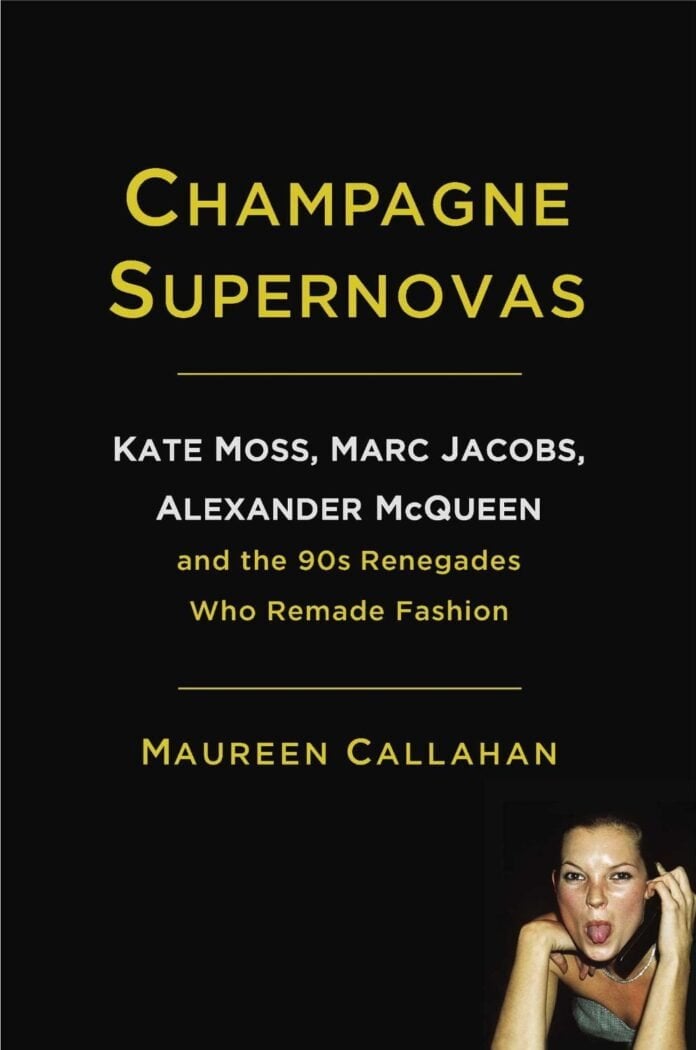
 

Champagne Supernovas: Kate Moss, Marc Jacobs, Alexander McQueen, and the ’90s Renegades Who Remade Fashion

Champagne Supernovas: Kate Moss, Marc Jacobs and Alexander McQueen and the ‘90s Renegades Who Remade Fashion

By Ritchie Po

Where were you when we were getting high? – Oasis

That’s the question that was asked on pop radio in 1996, and that’s what people who came of age and in their 20s in the 90s ask today. It was the age when fashion and commerce didn’t just merge into a symbiotic whole – that happened in the 80s – but it was a time when couture and the fashion industry became cool again. It was no longer the territory of the rich, for it became accessible, relatable and fluid across class lines, gender, race and sexual orientation. Couture was informed by, and in turn informed and influenced, art and popular culture. And no three people best embodied the spirit of the age better than Champagne Supernovas: Kate Moss, Marc Jacobs and Alexander McQueen and the ‘90s Renegades Who Remade Fashion, a dynamic new book by New York Post and Vanity Fair writer Maureen Callahan.

Ms. Callahan deftly alternates three biographies without resorting to sensationalism or contemporary Internet shorthand. Marc Jacobs is the one with a tragic past, but whose wealthy background and learned business savvy turned him from a fashion student of the Studio 54 era and the AIDS crisis into one of the most celebrated designer labels. There’s Kate Moss, the plain lower middle-class girl who was imperfect, yet embodied all her features so well that she radiated a preternatural beauty, making her the dream girl of two generations of women. And finally there’s Alexander McQueen, the troubled, brash bad boy who never felt he was good enough and also thought he was better than everyone (he was correct on the latter point), whose self-destructive streak pushed the boundaries of couture and led to his untimely demise. There’s a sharp contrast between the glittering parties and the hard living behind the scenes, and Callahan presents the dichotomy through a combination of hard-hitting journalism and elegantly fluid storytelling. Ms. Callahan is no stranger to exposing the grit behind the glamour: she wrote this searing portrait of high society’s dark underbelly following L’Wren Scott’s suicide.

Not merely a multi-subject biography, Champagne Supernovas also exists as a cultural record of the turbulent recession-era 90s, with an omniscient, wry commentary that recalls Edith Wharton’s narrator in The Age of Innocence. Callahan captures all the vigour and joie de vivre with clear-eyed verisimilitude that can only have come from someone who lived and breathed that time and place. Making cameo appearances in the book are Anna Wintour, Tom Ford, Chloe Sevigny, Sofia Coppola, Naomi Campbell, Isaac Mizrahi, Sonic Youth, Courtney Love and Johnny Depp, amongst others. The difference is that although Wharton’s words drew blood, Callahan records actual bloodletting, both in the decorative manner McQueen favoured in his most experimental collections and in episodes of self-mutilation and suicide.

This book isn’t just about a triumvirate of trailblazers. If these three reached cultural apotheosis or enlightenment like the Buddha, there’s always the bodhisattva who guided them along the way. Ms. Callahan gives due credit and respect to photographer Corinne Day, who snapped the cover of The Face that launched Moss’s career. She paints a vivid portrait of Day as a frustrated former model and photographer always seeking art so viciously, that its true presence often eluded her. As Moss’s fortunes rose and she became a cultural icon, Day faded into obscurity. There’s a bittersweet quality and dignity to her life’s work that Moss comes to honour until Day’s death in 2010.

But Ms. Callahan reserves the book’s greatest pathos for McQueen’s champion, the tragic aristocrat Isabella Blow. A former assistant to Anna Wintour, Blow was known for her iconoclast fashion sense. She was a perpetual fashion week staple whose self-destruction and volatile nature were known in London and New York high society. Never content with her looks, she often hid behind fascinators created by the legendary Philip Treacy (who she discovered and mentored along with McQueen). Blow used fashion and costume to disguise boundless self-loathing. In a way, she was a real-life spin on Thomas Hardy’s Tess of the d’Urbervilles, about a woman who was born with a connection to nobility, but whose life choices led to a harrowing demise. Callahan’s portrait of her poisonous but artistically fruitful friendship with McQueen burns with almost unbearable heartbreak. It is she whose ravaged soul one remembers long after finishing the book.

Champagne Supernovas is not without its moments of wit and joy. Callahan recalls McQueen’s boundary-pushing fashion shows with meticulous detail and unabated rapture, especially his infamous “Highland Rape” and “Voss” collections. The only thing one could do while reading was to look up all his runway shows on YouTube (yes, you can find them all there). Jacobs’s struggles and fierce competitiveness have made him the ultimate capitalist’s dream in the global luxury brand name game. And while words may never fully describe Moss’s incandescent glow and ineffable charm, Callahan comes awfully close without including an entire portfolio with her cover shots. Even Blow gets a witty send off: annoyed at not being recognized by the nurses in the hospital, she retorted loudly, “Google me!” (As Callahan writes, Blow’s sense of humour was the last to go.)

Callahan’s Champagne Supernovas is an unflinching, compulsively readable testimony of tormented and conflicted people who were born into varying circumstances, drawn into and united by a profession that alternately rewarded and punished ingenuity. This is a must-read for Gen X-ers and other cultural aficionados who came of age in the 90s. It is best read with a mix of 90s house music on a loop, chased by a run-through of Pulp’s Different Class album, and finished with the titular song.

Maybe I just want to fly
I want to live I don’t want to die
Maybe I just want to breath
Maybe I just don’t believe
Maybe you’re the same as me
We see things they’ll never see
You and I are gonna live forever

-Oasis, “Live Forever”

Champagne Supernovas: Kate Moss, Marc Jacobs and Alexander McQueen and the ‘90s Renegades Who Remade Fashion is out now. 


List of Retailers Opening and Expanding in Canada

The following is a list of 20 retailers which are opening or expanding in Canada. The list is sponsored by Vancouver-based Peregrine, specializing in custom designs and building retail, display, furniture and architectural features for some of the country’s top retailers. 

This list is only a small representation of Canada’s vastly changing retail landscape. At the moment, we’re actively compiling retail industry research. Stay tuned for interesting reports and articles on the Canadian retail industry.  

STORE NAMELOCATIONS TO OPENNEW OR EXPANDINGESTIMATED # OF LOCATIONS AFTER EXPANSION
Agent ProvocateurToronto: Bloor Street West flagship (now open)Expanding4+
American Girl (via Chapters/Indigo)Ottawa (opened October 11th), Canada-wideExpanding (currently 3 locations)15 (estimated)
Clarks ShoesCanada-wideExpanding (currently 13 locations)40-50
DesigualWest Edmonton Mall, Ottawa (Bayshore), Carrefour Laval, Canada-wideExpanding6+
EatalyToronto, possibly Montreal & VancouverNew1-3+ (unconfirmed)
Free PeopleVancouver (2 locations now open – Granville Street, Park Royal), Canada-wideExpanding4+
H&MCanada-wideExpandingIn excess of 70 stores (+other labels TBA)
Harry RosenVancouver (mentioned by CEO), Vaughan Mills outlet (opening soon)Expanding16 full-priced, 2+ outlets
Hudson’s Bay OutletMontreal (Premium Outlets Montreal, opened yesterday)Expanding2+
Laura SecordCanada-wideExpandingUnknown – in excess of current 104 locations.
LodingToronto (First Canadian Place), other Canadian cities TBAExpanding2+
L’Occitane en ProvenceVancouver (Robson Street – now open), Canada-wideExpanding30+
MujiToronto (Atrium on Bay), Vancouver, possibly Canada-wideNew7-8+
PatagoniaVancouver (West 4th Avenue), other cities TBA.Expanding2+
PomellatoVancouver (Pacific Centre, now open), possible Toronto franchiseNew1-2?
Pusateri’sOakville, ON, Saks Fifth Avenue food halls (as many as 8)Expanding (from 3 locations)4+ Pusateri’s, as many as 8 Saks food halls.
Saje Natural WellnessCanada-wide: very aggressive expansion plans.Expanding (from current 14 locations)50 by the year 2018.
Sandro/Maje (freestanding)TBA – currently 2 men’s and 5 women’s concessions within Hudson’s Bay in Vancouver, Toronto, Montreal.ExpandingTBA
SparepartsTBAExpanding (from current 7 locations)TBA
Thomas SaboCalgary (Market Mall), recently opened in Winnipeg (Polo Park) and Mississauga (Square One)Expanding (from current 10 locations)12+


Infographic: The Future of E-Commerce in Canada

Infographic: The Future of E-Commerce in Canada

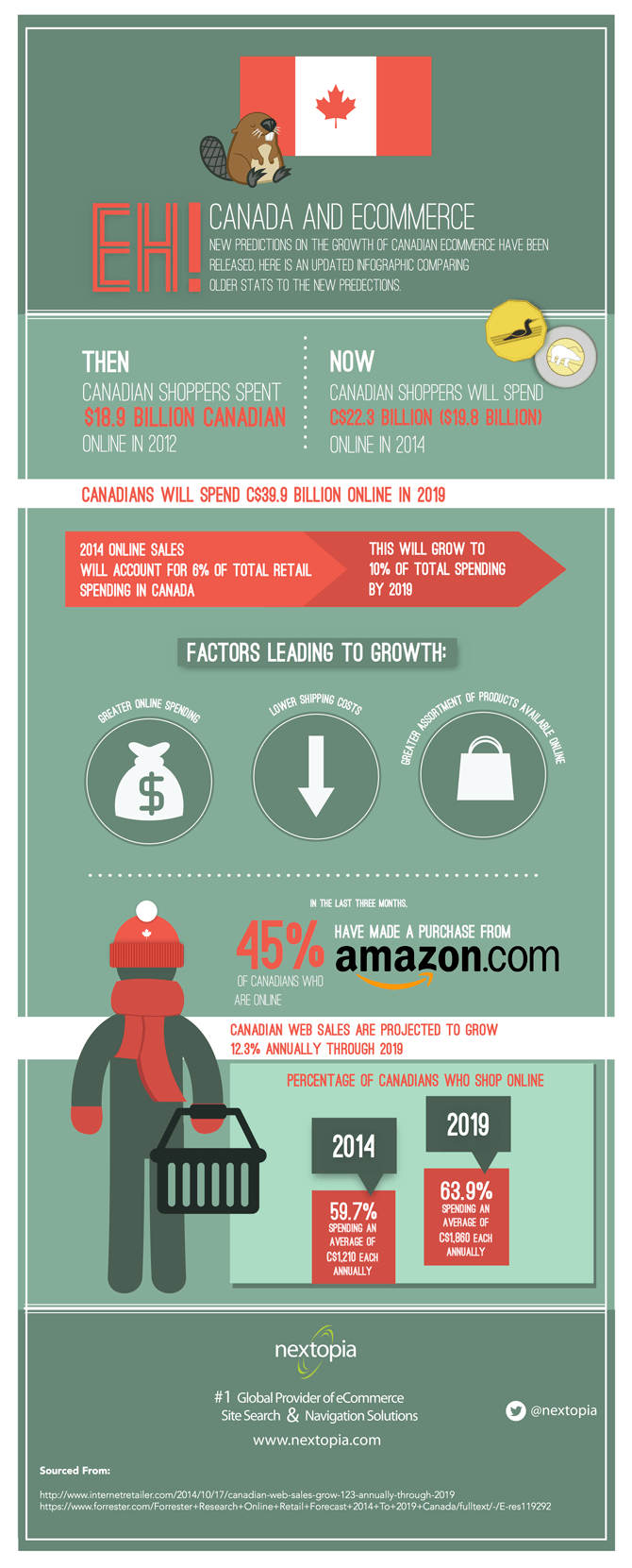
The following infographic portrays the explosive growth of e-commerce in Canada, with forecasted numbers doubling between now and the year 2019.  It was created by Nextopia.

About Nextopia:

Since 1999, Nextopia has been in the business of helping retailers sell smarter and have been dedicated to growing online retailers businesses’ through innovative technology and proprietary methods. They do this by supplying customers with the tools and control they need to convert browsers into buyers. With over 1,600 customers, Nextopia is the #1 global provider of eCommerce site search and navigation solutions. Nextopia’s powerful technology streamlines and supercharges your sales and merchandising efforts, provides vital customer data through our back-end analytics, and improves your customers’ shopping experience.

Twitter: @Nextopia
Facebook: facebook.com/NextopiaSearch
YouTube: nextopiasoftware
Pinterest: pinterest.com/nextopiasearch
Google+: Nextopia Software

Premium Outlets Montreal Opens

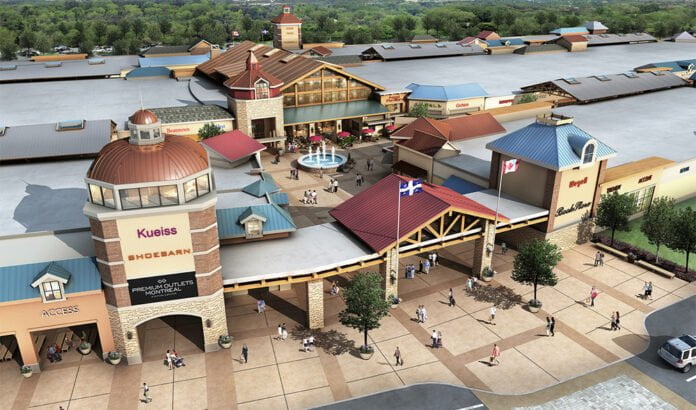
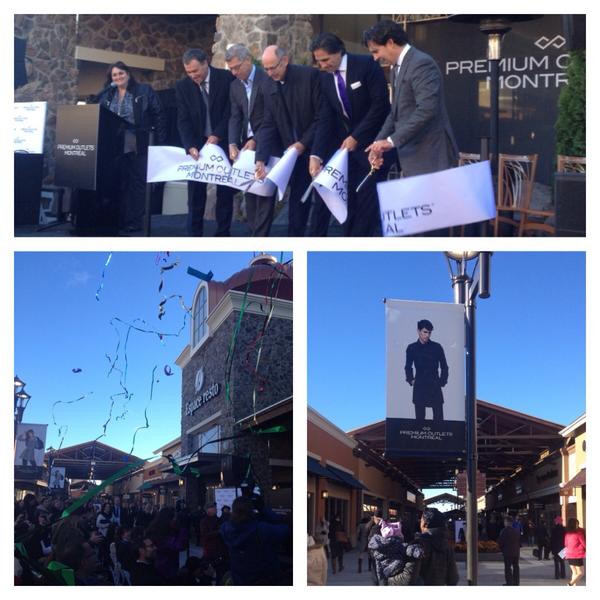
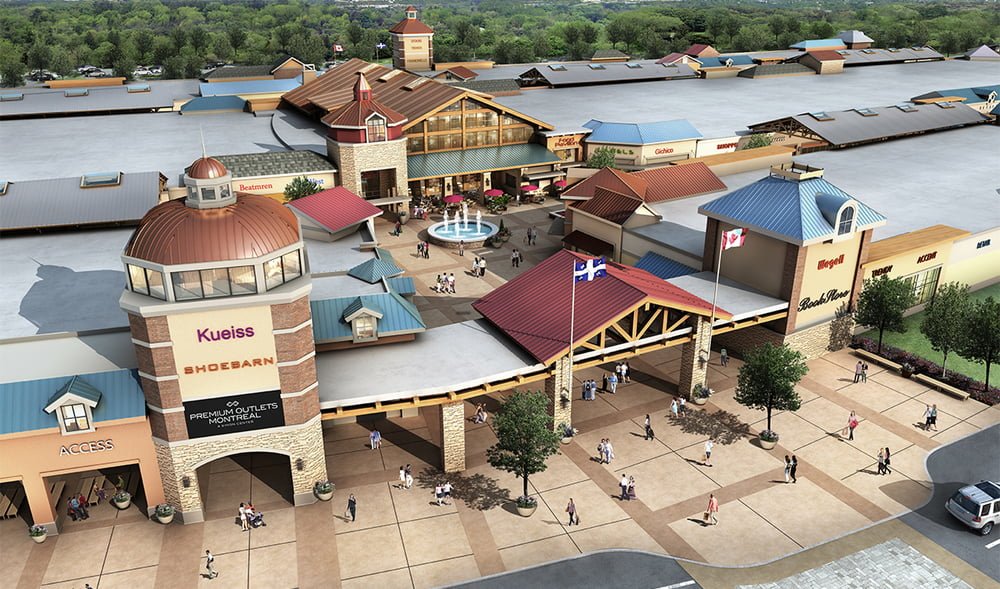
Today marks the highly anticipated opening of Premium Outlets Montreal. The impressive centre features several first-to-Canada outlets, anchored by Canada’s second Hudson’s Bay Outlet. In this article we’re including various details on the centre, as well a complete store listing and mall floorplan. 

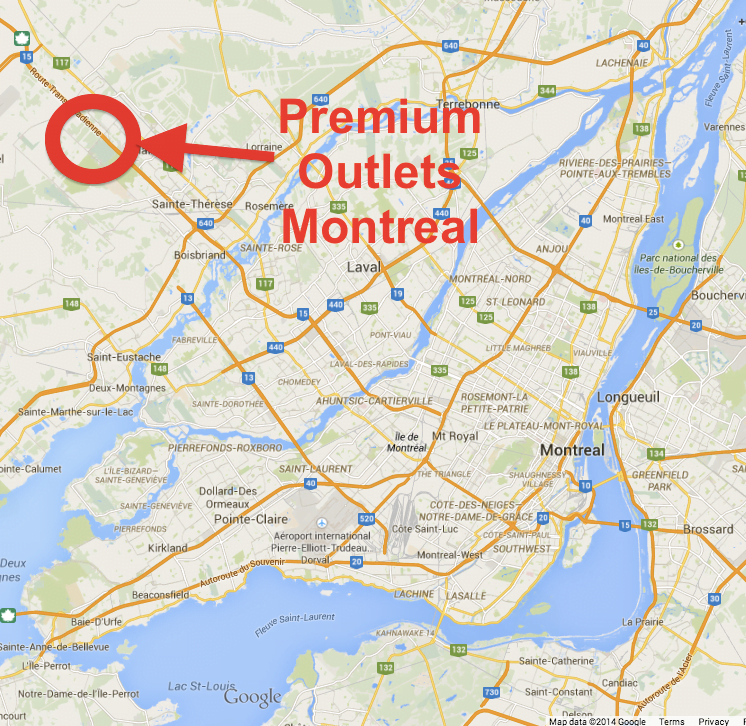
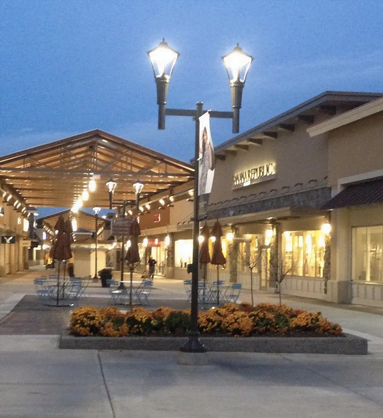
Premium Outlets Montreal is the second in the country for the Simon Property Group-operated centre, following its successful opening of the Toronto Premium Outlets in August of 2013. The Montreal centre is located 45 kilometres north of Downtown Montreal in Mirabel, off Highway 15 at exit 28 on the corner of Chemin Notre-Dame and Boulevard de Versailles. The single-level village-style property features 84 stores spanning 366,400 square feet. Its food court is dominated by a life-size bronze sculpture of a bear and two cubs, by artist Chris Williams. Outdoor walkways are covered with rustic, cabin-style canopies to provide shelter. 

Installation of ‘Bear Family’ sculpture by Chris Williams.

The centre boasts several first-to-Canada discount outlets, including Max Mara, Desigual, Famous Footwear and Michael Kors. A total of 64 shops open today, while Lacoste, Diesel and others are scheduled to open in the coming weeks and months. We’re told that lease negotiations with Forever 21 and a handful of other retailers are ongoing. 

The centre is operated by Simon Property Group, in partnership with Calloway REIT and SmartCentres. Simon, which owns a 50% share in the centre, disclosed to the Montreal Gazette that its net development cost was $74.2 million. We’ve been told that the entire construction cost was approximately $125 million. Mark Silvestri, COO of Simon, says that the centre could easily grow by another 100,000 to 150,000 square feet, eventually housing luxury outlets including the likes of Burberry and Dior — not unlike that of Simon’s Woodbury Common, north of New York City. Toronto Premium Outlets has been such a success, according to Silvestri, that a second phase is already in the works. 

Sales forecasts for Premium Outlets Montreal are $140 million annually, according to Simon Property Group. 

Sylvie Laporte, general manager of Premium Outlets Montreal, said they are expecting 80,000 to 100,000 shoppers over the first four days. Visitors will be treated to promotions and parties.

Anchoring the centre is Canada’s second Hudson’s Bay Outlet. The 26,000 square foot outlet features a variety of clearance items from Hudson’s Bay stores, including some items from luxury womenswear department ‘The Room‘. Hudson’s Bay’s first outlet, at the Toronto Premium Outlets, also features clearance items from Saks Fifth Avenue — the photo below was taken by retail blogger ‘Toronto Shopkeeper‘. 

Last year, we were provided a lease plan for the new centre. Some outlets are quite large, including Coach (with a whopping 9,567 square feet), Lacoste (3,657 square feet – opening spring, 2015) and Polo by Ralph Lauren (14,956 square feet). 

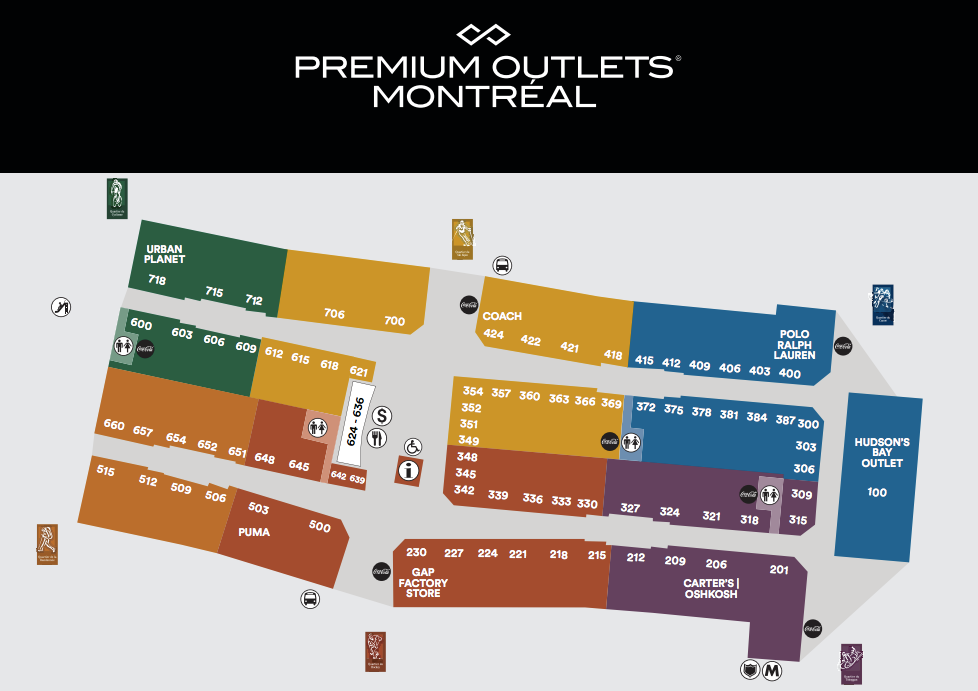
Below is a list of retailers at Premium Outlets Montreal, as well as a mall floorplan. To access a larger PDF version, click the floorplan below. 

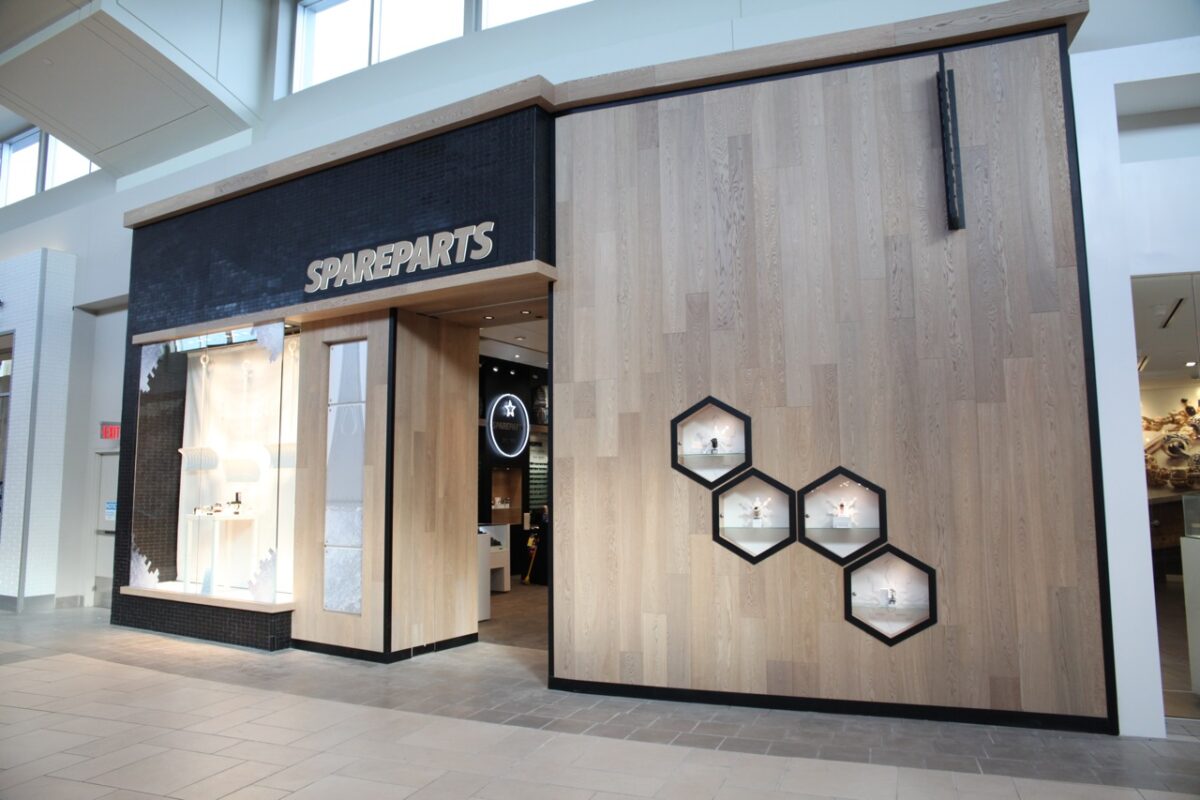
Innovative Accessories Retailer Spareparts Looks to Expand Store Base

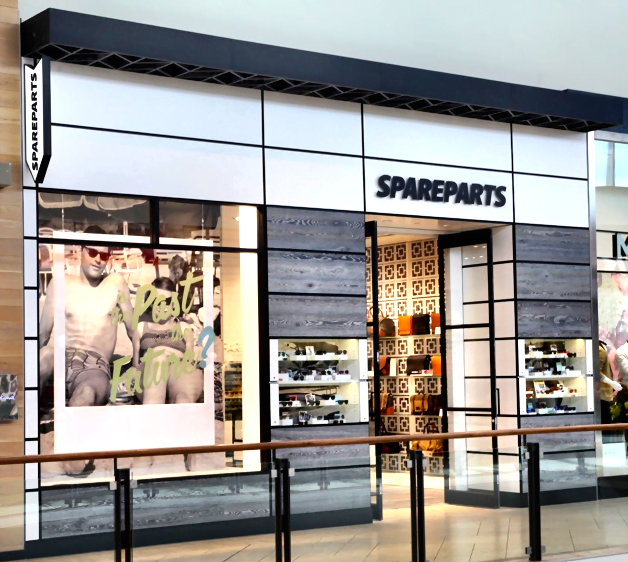
Spareparts (Image: Cutler)

Innovative Saskatoon-based multi-brand lifestyle accessories retailer Spareparts is looking to expand its Canadian store base. Its combination of curated product, superior customer service, and beautiful store interiors sets the retailer apart, achieving best in class sales productivity. 

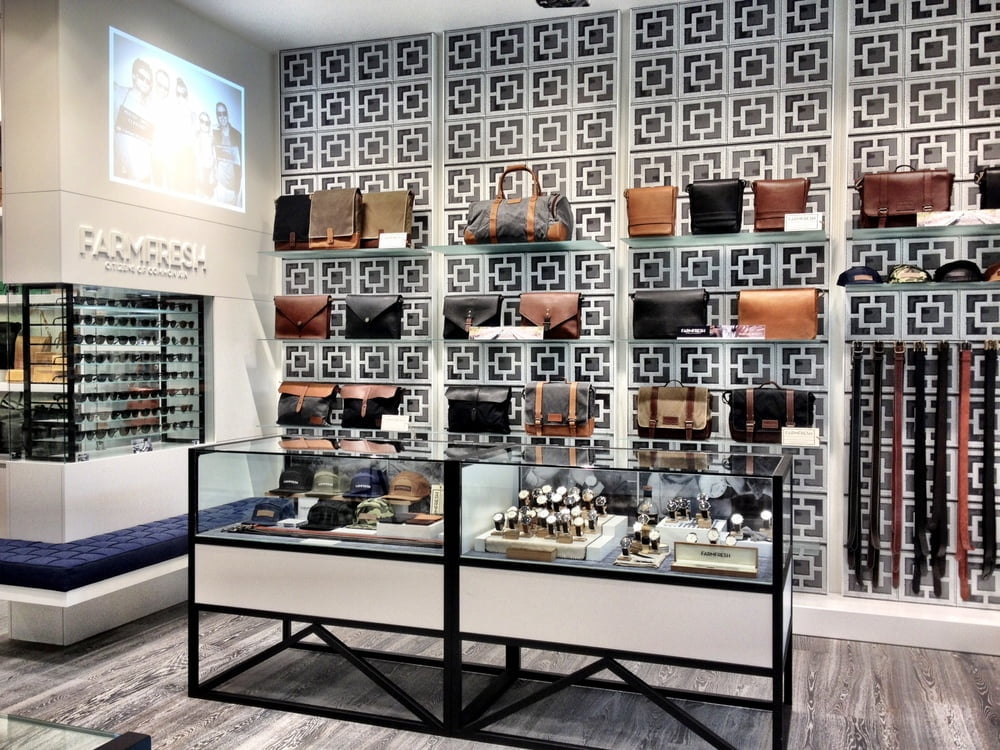
Founded in 1992, the Saskatchewan retailer boasts seven locations: one in Saskatoon, one in Regina, two in Calgary, two in Winnipeg, and one in Kelowna. It focuses on accessories and has a comprehensive range of styles and brands, from streetwear to contemporary fashion. Product is curated by a team of buyers, and brands available include Farmfresh, Michael Kors, Nixon, Herschel, Oakley, Burton, and several others. Farmfresh is the Spareparts’ private label line and features premium sunglasses and watches. The popular line has recently received positive press coverage. 

A LOOK AT THE SPAREPARTS’ FLAGSHIP AT CALGARY’S CHINOOK CHENTRE.

We spoke with Spareparts’ founder, Danny Mysak, who explained why Spareparts is unique, and why it achieves best in class sales productivity. Mr. Mysak explained that Spareparts is highly service-oriented, keen on building relationships with its clients. You’re not just buying a product when in the store – you’re buying the experience, complete with beautiful interiors, a highly curated product mix, and an attentive, well-trained sales staff who ensure that clients are satisfied. 

Mr. Mysak explained how Spareparts is somewhat unique to a mall location-based retailer, in how it participates in its local communities. “We seek out aspirational players in our respective markets and leverage our community teams through our marketing efforts with the intent of acquiring authentic and local credibility”, he said. 

The company also has its own fashion blog, The Rooster, offering a glimpse of life on the Canadian prairies and around the world, as well as fashion editorial, community profiles and lifestyle content exclusive to Spareparts.

Spareparts (Image: Cutler)

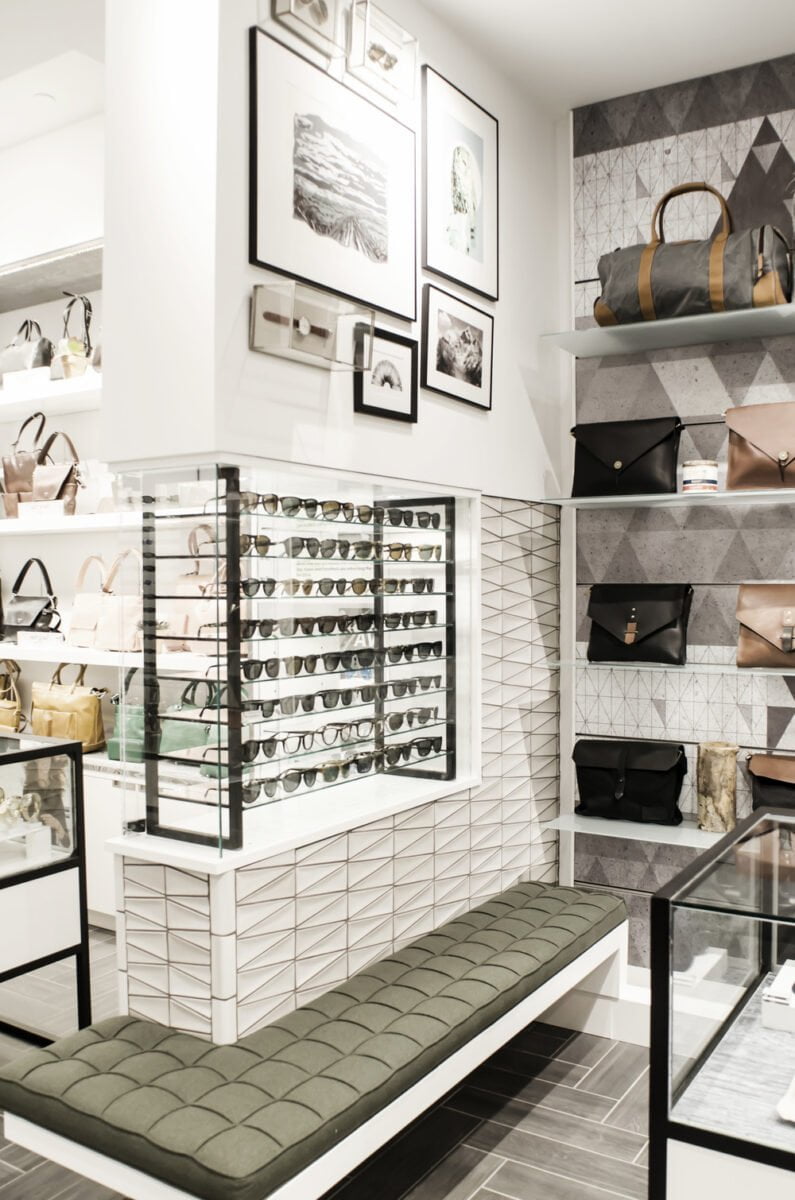
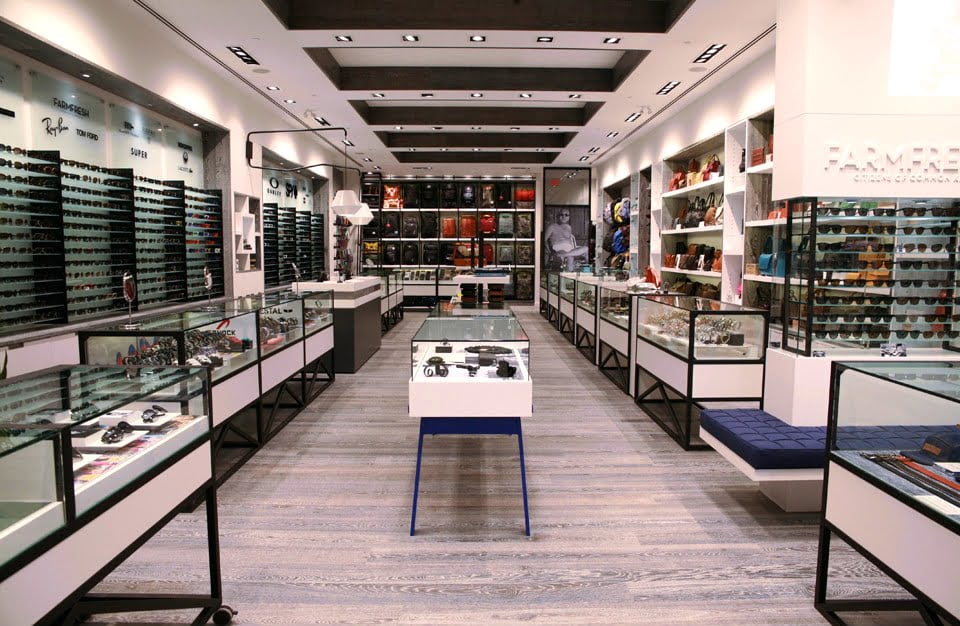
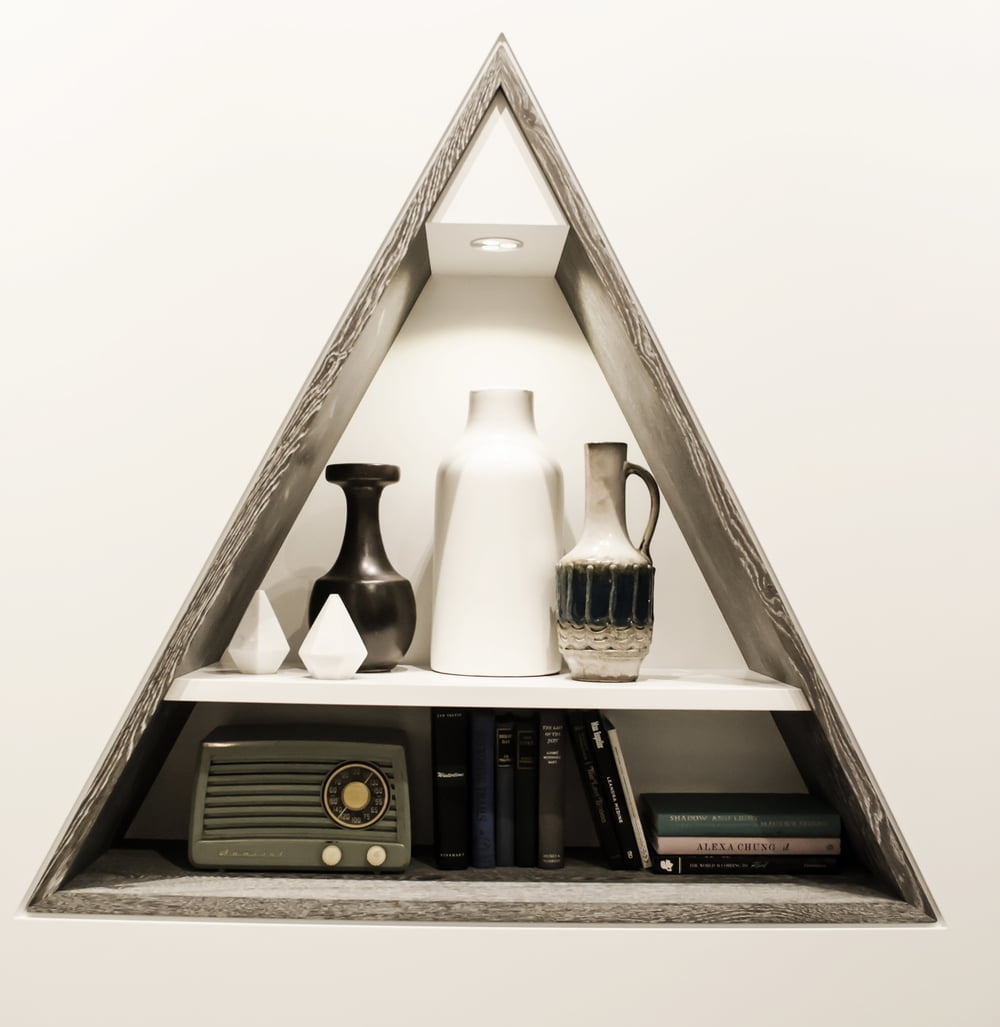
Spareparts’ store interiors are cutting edge and beautifully designed. The company has worked with cutting-edge Vancouver-based design firm Cutler for its store interiors, which are bright and modern, yet clean and inviting. Designer Natalie Cutler says: “We love collaborating with Spareparts, it’s such a creative process and we are given the freedom to make each location a bit unique.  We have a shared passion for architecture and integrate that into the storefront and interior fixtures.  The goal is to design a space that feels a bit like home and focuses on the finishes, lighting and the little details”

Mr. Mysak tells us that for future locations, Spareparts seeks space in the 1,000 to 1,700 square foot range, ideally in high-traffic shopping centres. 

All photos: Cutler

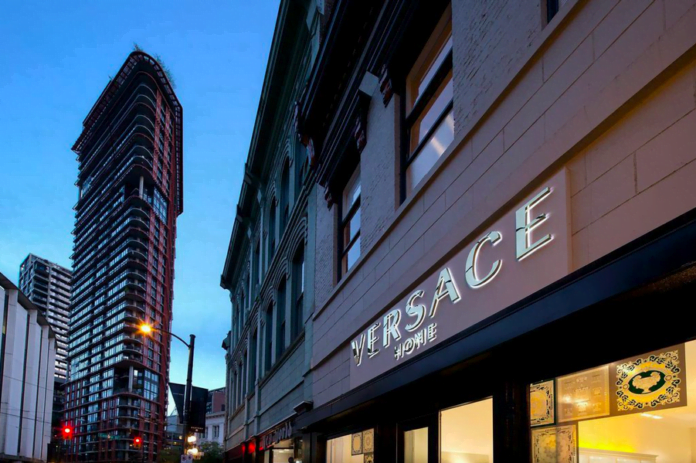
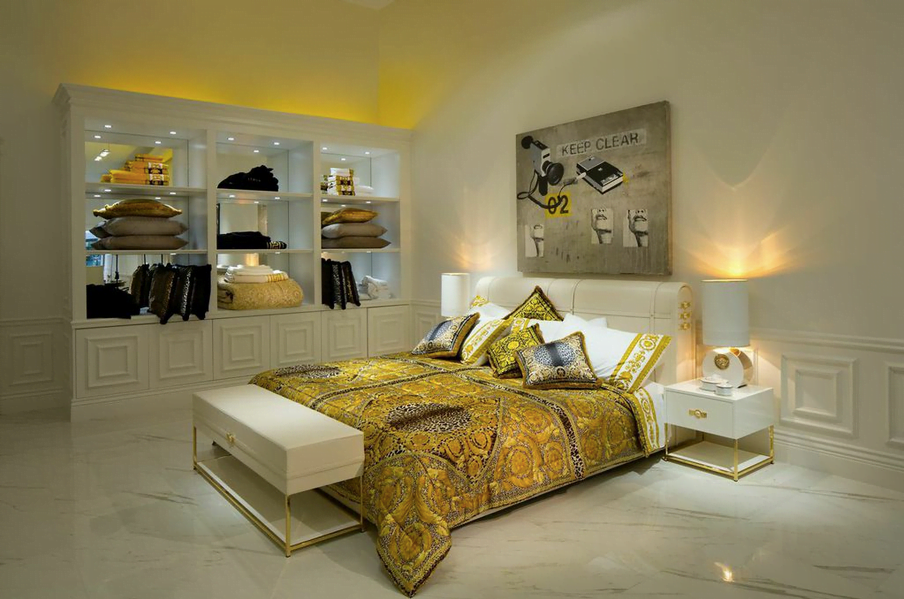
Versace Home Opens 1st Flagship in the World in Vancouver

Versace Home in Vancouver (Image: Versace Home/Major Global Interior Inc.)

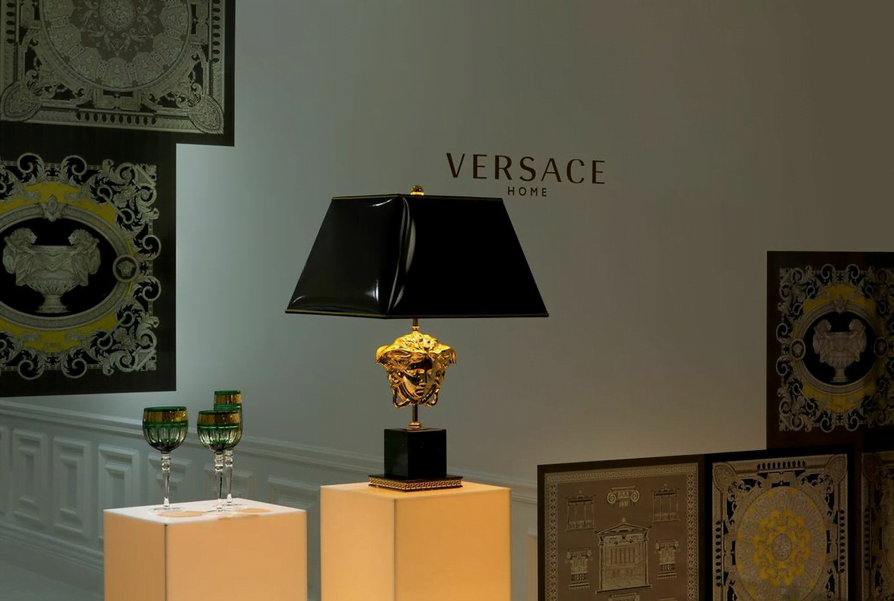
The world’s first comprehensive Versace Home flagship has opened in Vancouver’s historical Gastown area. It’s the Italian luxury brand’s first location to feature its entire home collection, ranging from furniture to fixtures. 

Located at 310 West Cordova Street, Versace Home carries furniture as well as tiles, lighting, bathroom fixtures, bath accessories, porcelain, glassware, textiles, carpets, bedsheets, fabric, decorative pieces and wallpaper. The store occupies about 2,000 square feet of retail space in a building measuring about 3,000 square feet. According to SpaceList, 310 West Cordova features 16 to 18 foot ceilings, as well as exposed brick on both side walls. It has access to a courtyard at the rear, and there are four large parking garages within two blocks. 

Versace Home was founded in 1992, initially as a collection of textiles for the home (sheets, duvets, pillows and cushions). Soon after, it launched its first range of porcelain dinner sets – the result of the strong collaboration with Rosenthal GMBH. The Versace Home brand has since expanded to include the product categories mentioned above. 

Versace plans to open as many as five Canadian fashion stores within the next several years, according to a source familiar with the company. Versace expects its new Canadian locations to break even within a year of opening, and expects them to be profitable within two years. Currently, Canada’s only free-standing Versace store is located at Toronto’s Yorkdale Shopping Centre. The 2,800 square foot location opened this summer. Versace’s current Vancouver location, which opened in 1987, is a licensed shop-in-store within multi-brand luxury retailer, Leone. Vancouver’s Versace carried the home collection up until a couple of years ago.  

Vancouver has a history of Versace store locations, besides its current boutique inside of Leone. In 1993, the company opened North America’s first Versus by Versace store, occupying about 2,500 square feet at the southwest corner of Burrard and West Georgia Streets. In 1995, a franchised Istante by Versace store opened at 769 Hornby Street, across from the Vancouver Art Gallery. Both closed several years after opening. 

All photos were provided by Versace Home/Major Global Interior Inc.

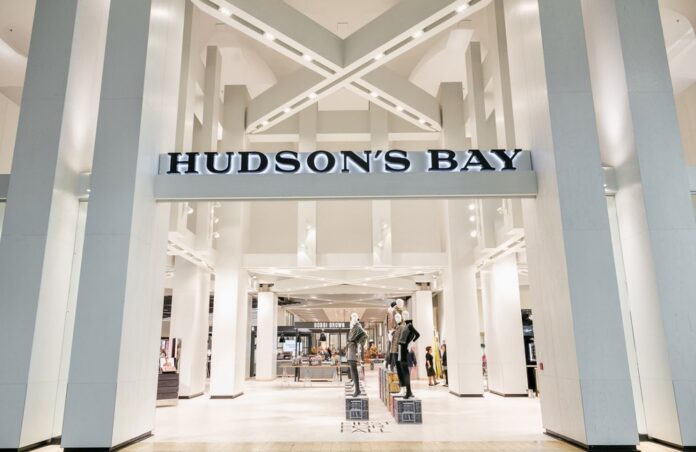
Hudson’s Bay Upscales by Adding New Designers

Hudson's Bay Yorkdale (Image: Hudson's Bay)

Hudson’s Bay continues to add pricey brands as it becomes more upscale, with some labels formerly only available at Holt Renfrew. Brands have recently been added to the store’s accessories, footwear and men’s and women’s ready-to-wear departments, competing directly with similar selections at Nordstrom, Holt’s, and other upscale retailers. 

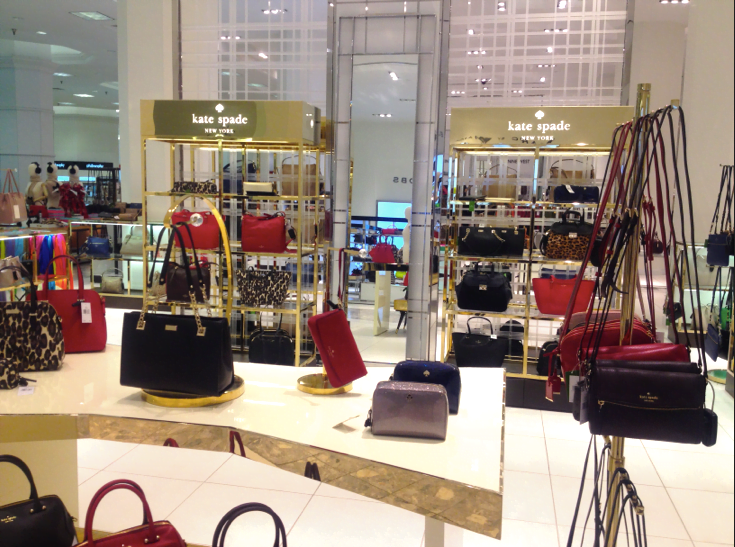
Various Hudson’s Bay stores across Canada have recently added shops for Kate Spade and Marc by Marc Jacobs accessories, joining an ever increasingly upscale selection of leathergoods. Pricey footwear brands such as Sophia Webster, Melissa by Vivienne Westwood, Hugo Boss, Loeffler Randall, Diane von Furstenberg, and Ron White have been added to several Hudson’s Bay locations. Hudson’s Bay’s best flagships now carry men’s and women’s fashion collections such as The Kooples, Marc by Marc Jacobs, Vince and Theory — all of which are also carried at Holt Renfrew locations across Canada. Furthermore, Nordstrom’s Canadian stores will also carry many of these brands, as evidenced by the brand mix at its new Calgary location. 

KATE SPADE AT VANCOUVER’S HUDSON’S BAY FLAGSHIP. PHOTO: CRAIG PATTERSON

In the late 1990’s, Holt Renfrew became the exclusive Canadian distributor for Kate Spade bags and accessories. Until recently, Kate Spade handbags were only available at Holt Renfrew and at Kate Spade’s free-standing Canadian stores, the first of which opened in the fall of 2012 at Toronto’s Yorkdale Shopping Centre. In September, several Hudson’s Bay stores saw the introduction of purpose-built Kate Spade ‘soft shops’, profiling the brand’s expanded accessories collection. 

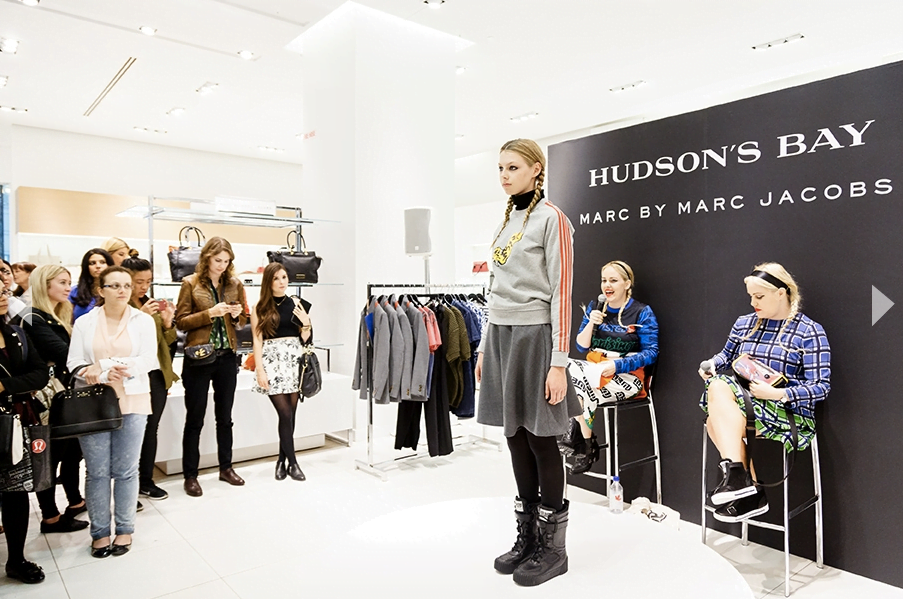
THE POPULAR DESIGNER/BLOGGER BECKERMAN SISTERS LAUNCHED THE MARC BY MARC JACOBS’ LINE AT HUDSON’S BAY ON SEPTEMBER 16, 2014. PHOTO: HUDSON’S BAY. 

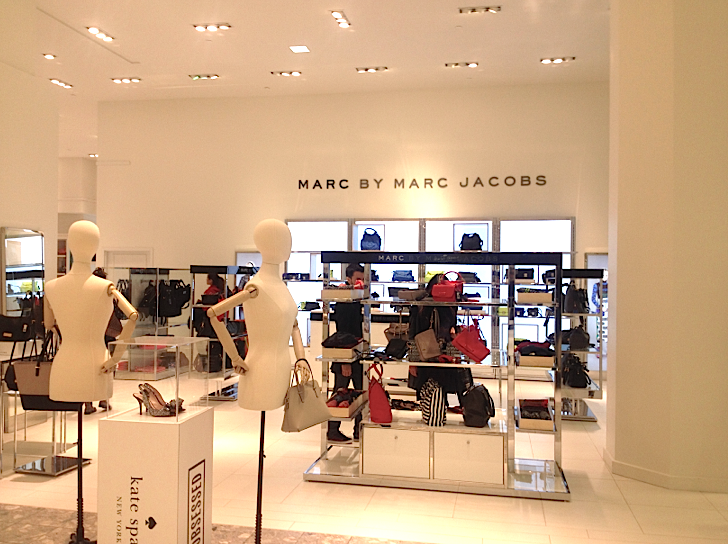
Until recently, as well, Marc by Marc Jacobs‘ Canadian distribution was primarily through Holt Renfrew. Last month, the popular designer/blogger Beckerman Sisters launched the Marc by Marc Jacobs’ line at Hudson’s Bay, making personal appearances at its flagship Toronto and Vancouver stores. Several Hudson’s Bay stores now feature purpose-built Marc by Marc Jacobs soft-shops, carrying a variety of the brand’s upscale accessories. Hudson’s Bay flagships in Toronto and Vancouver also carry the Marc line of men’s and women’s ready-to-wear fashion, while a handful of locations also carry the brand’s footwear. 

MARC BY MARC JACOBS SHOP-IN-STORE AT HUDSON’S BAY, VANCOUVER. PHOTO: CRAIG PATTERSON

Popular French brand The Kooples was recently introduced to Hudson’s Bay flagships. At the same time, four Kooples concessions opened this month at Holt Renfrew’s Toronto, Montreal, Calgary and Vancouver locations. It’s interesting to see that both Hudson’s Bay and Holt Renfrew now carry upscale collections by Vince, Theory, McQ by Alexander McQueen, Hugo Boss, Eileen Fisher, Helmut Lang, Opening Ceremony, and others. Surprisingly, Hudson’s Bay managed to secure concession rights to popular and pricey French brands Sandro and Maje, and we’re told that these brands are doing so well that they’re considering opening free-standing Canadian stores. 

Hudson’s Bay’s move towards becoming more upscale took off in 2008 when then-President Bonnie Brooks added about 250 new brands to the retail chain, after dropping about 800 underperforming labels. In late 2009, the 22,000 square foot luxury women’s department ‘The Room‘ was added to its Toronto flagship, featuring top international clothing and accessories brands priced into the thousands. A 20,000 square foot Vancouver ‘Room’ location opened about two years later. Various Hudson’s Bay’s accessory departments also saw upscale designers added, including the likes of Botkier, Love Moschino, Furla, Z Spoke Zac Posen, Halson Heritage and the inclusion of several Coach shops-in-stores. The world’s second-largest Coach shop-in-store was located within Vancouver’s flagship Hudson’s Bay, though its 3,200 square foot space was recently reduced to house the new Marc by Marc Jacobs shop. 

22,000 SQ FT LUXURY WOMEN’S DEPARTMENT ‘THE ROOM’ OPENED LATE 2009 ON THE 3RD FLOOR OF HUDSON’S BAY IN TORONTO. INCLUDED WAS A $21,000 BALMAIN DRESS, AS WELL AS OVER 40 INTERNATIONAL LUXURY BRANDS. A VANCOUVER LOCATION FOLLOWED TWO YEARS LATER. PHOTO: YABU PUSHELBERG.

Hudson’s Bay may continue to add more top brands, now that its parent company owns American luxury retailer Saks Fifth Avenue. Saks has strong relationships with some of the world’s top brands, possibly giving Hudson’s Bay access to some Saks labels. At the same time, with Saks Fifth Avenue’s intention to open as many as eight Canadian stores, it remains to be seen if their parent company will continue to position Hudson’s Bay as more upscale. If it does, Hudson’s Bay will see substantial competition from Nordstrom, which currently positions itself between Saks Fifth Avenue and Hudson’s Bay in terms of pricing. Nordstrom plans to open as many as 10 Canadian stores and could be fierce competition for Hudson’s Bay, especially as Nordstrom’s Canadian stores will feature fresh interiors and focus on superior customer service. 


Optimizing the Click-and-Collect Trend: The Challenges and Benefits

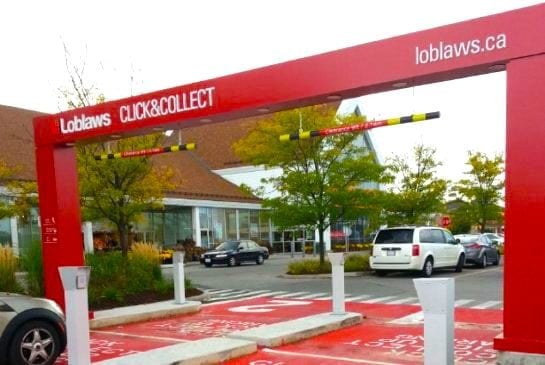
Loblaws Click and Collect (PHOTO: BMO CAPITAL MARKETS)

By Joe Woods

The growing e-commerce trend of click-and-collect is upon us, especially with holiday shopping right around the corner.

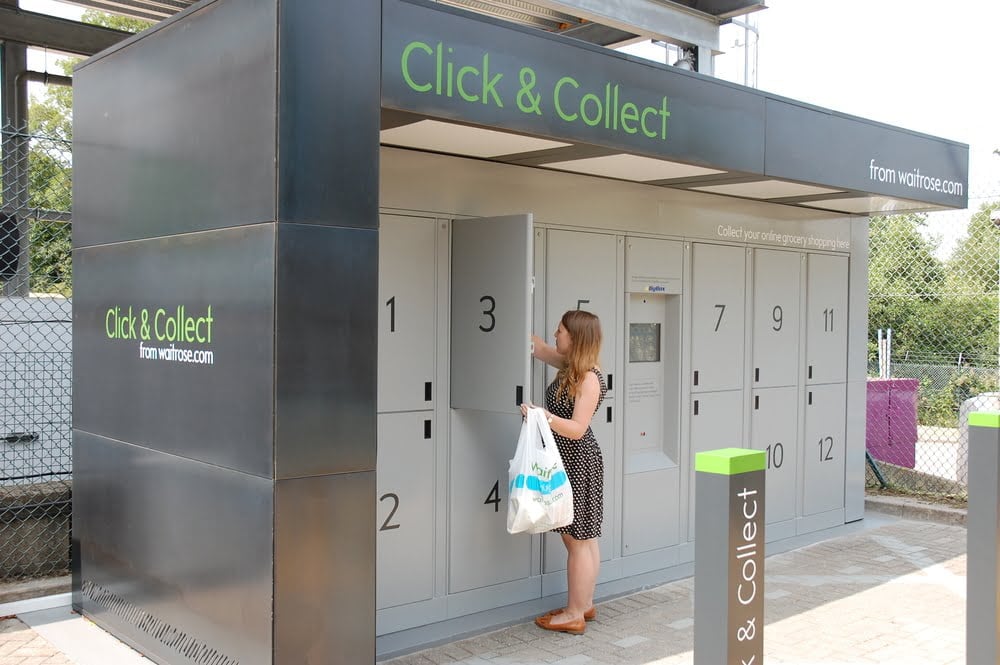
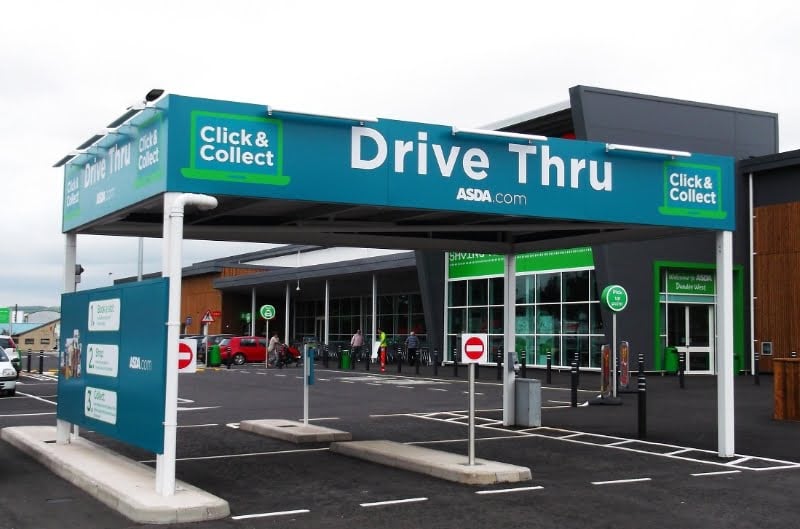
The concept of click-and-collect is simple. A customer orders a product online and then proceeds directly to the physical retailer to collect his purchase. The popularity of this trend is that each shopper is able to browse online from the comfort of his own home and, rather than pay for shipping and anticipate the delivery, the shopper can collect his purchase from the store at his own convenience.

Benefits of click-and-collect are rich for both customers and retailers. For shoppers, it is a reasonable alternative to expensive same-day delivery, allowing shoppers to forgo shipping altogether and pick up locally. Shoppers have more options online than when shopping in-store. Retailers are also adopting price matching techniques with click-and-collect, giving shoppers cheaper price options as well as more product options.

For retailers who are continuously looking for ways to leverage their existing online solutions, a key way to earn consumer confidence is through a physical presence. Click-and-collect gives customers a tangible way to relate to a brand. This provides shoppers with a tactile engagement with products and also gives the assurance that they can immediately connect with customer service. Click-and-collect also allows for many retailers to focus on clearing their warehouses and store inventories, which effectively optimizes their brick and mortar shelf space for fulfillment for online customers. Eliminating seasonal rotations, store-to-store transfers and being able to use stores as customer pickups, or even shipment points, can eliminate many operational costs to an organization.

Though managing inventory is one major benefit to click-and-collect, in-store figures may often be harder to predict by allowing the service. Systems must be updated frequently to keep the most accurate figures both online and in-store. Additionally, some items may be more difficult to monitor if they are in-stock, set aside by store staff, or have been otherwise lost in storage. It is important to be transparent with the customer that his requests are subject to acknowledgement and confirmation by store staff. Difficulties can than be avoided when customer arrives at store to pick up product.

Reversely, these levels must also be visible and directly communicated with store management and sales staff as well. A key solution for this issue is to show inventory and a time check as to when the update was last made. This allows the customer some degree of confidence in the information.

Just as accurately communicating the order to the physical store is crucial, the store staff needs to be ready to respond to online orders in an effective way. This should be led by dedicated team members and be monitored with an overall process to alert the store that an online order has been made. A store must be able to trust its staff to properly keep track of inventory, monitor online purchases and set products aside in anticipation of the shopper’s arrival. This accuracy and brand engagement can be strengthened through incentive programs and should be an extreme priority. Incentives must be updated to allow for online transactions to be rewarded in a way that properly motivates staff to respond to these requests and service these customers properly.

The last essential key to implementing a successful click-and-collect feature is embracing a single customer view. Rather than separating consumers by “in store only” or “web order only”, retailers need to embrace a seamless integration between all touch points. The reality is that customers do not categorize themselves as an in-store shopper or an online shopper. They just recognize that they are buying a product from “x” store. To truly understand their needs and expectations, brands should embrace that understanding as well.

Though there are many challenges in implementing a successful click-and-collect service, brands that embrace these obstacles will likely satisfy customer needs, making for loyal shoppers. Realistically, a successful implementation does not happen overnight. Click-and-collect features should be heavily tested for glitches and clarity before brands offer the service to shoppers. A strong technology partner will be essential to help the brand achieve its goal.

Joe Woods, president of Loop Integration, is an experienced omni-commerce consultant and solution architect with more than 14 years of experience implementing retail commerce solutions.  His background includes time as a technical consultant for Technology Solutions Company, before joining Blue Martini Software in 2000.  Woods is a co-founder of contiigo (formerly Loyalty Tech) in Sydney and has built a successful team culminating in the hybris APAC partner of the year award in 2012.

Canadian Retail Sales Fundamentally Sound; Some Optimism for the Holiday Season

Woman shops online during the holiday period. Photo: Salesforce

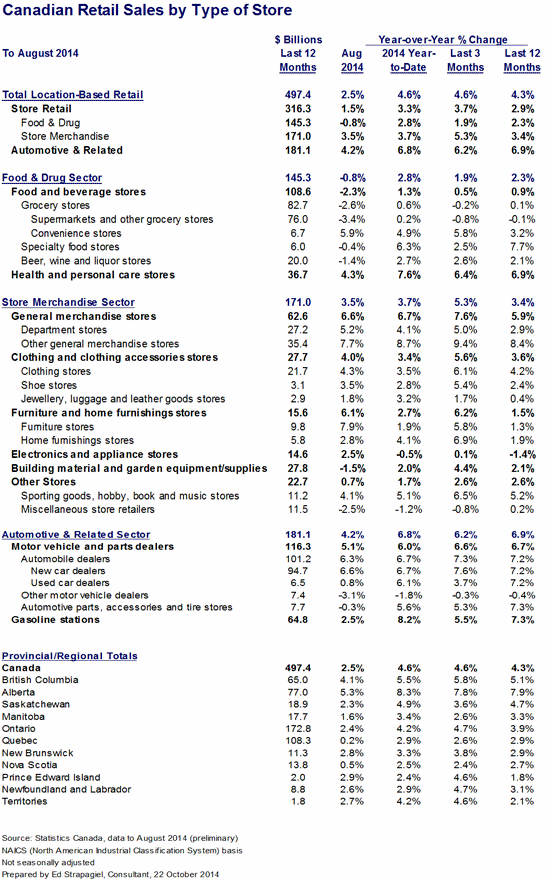
Statistics Canada indicates that retail sales increased 2.5% in August 2014 over the same month a year ago on a not seasonally adjusted basis. This was a low point for the year, mostly caused by a particularly poor month at supermarkets and other grocery stores. Other retail store types however picked up some of the slack. 

For the 3 months ending August, total retail sales were still up 4.6% versus a year ago. The 3-month trend (orange line in the chart above) is running at above the average for the last 4 years, and is still slightly ahead of the underlying 12-month trend (green line). 

Among the major retail sectors, Food & Drug has softened and Automotive & Related is very slowly declining, mostly due to moderating gas prices. On the other hand, Store Merchandise appears to be significantly improving. 

2014 Holiday Season Retail Looks “Okay”

Store Merchandise retail sales were up 5.3% year-over-year for the 3 months ending August 2014. This is the highest it’s been at this time of the year since 2007, or, in other words, since before the Great Recession. This indicates significant positive momentum going forward, and Store Merchandise is the retail sector that benefits most from holiday season shopping. 

Another positive factor is the weakening Canadian dollar, which recently dipped to just under 90¢ US. This should dampen cross-border shopping and add to Canadian retailers’ sales potential. 

Yet another positive is declining gasoline prices. The less money that consumers pour into their gas tanks, the more they may leave at a retailer near you. 

While the above factors indicate favourable conditions, there’s also the other side of the coin. For many retailers not selling cars or gasoline, 2014 got off to a slow start. To make their numbers for the year, they will have to become more aggressive over the holidays, which means more specials, deals and discounts. So while the sales might materialize, profitability may be modest at best. 

Finally, the weather is always a wildcard, as last year’s ice storm in Eastern Canada showed. 

Food & Drug Stores

Retail sales at supermarkets and other grocery stores were down 3.4% in August on a year-over-year basis, after being up the same 3.4% the month before. This choppy pattern of ups and downs is not unusual for supermarkets and grocers. 

At the same time, there were also retail sales declines at specialty food stores and beer, wine & liquor stores. Health & personal care stores (i.e., drug stores) were up 4.3%, which would normally be a solid gain except that it was their lowest year-over-year monthly increase thus far in 2014. In fact, of all the retailer types in this sector, only convenience stores did better than their previous year-to-date average. 

Just bad luck that the declines all came together? Quite possibly, but we’ll have to wait and see … 

Store Merchandise

Retail sales for the Store Merchandise sector were up 5.3% for the 3 months ending August versus a year ago, a level not seen for several years. The 3 month trend (orange line in the chart above) is well ahead of the underlying 12 month trend (green line), indicating positive momentum going forward. 

With one exception (miscellaneous store retailers), all store types in this sector had positive year-over-year retail sales increases for the 3 months ending August 2014. The biggest gainers were other general merchandise stores at 9.4%, home furnishings stores at 6.9%, sporting goods, hobby, book and music stores at 6.5%, and clothing stores at 6.1%. Even electronics and appliance stores (“the basket case of Canadian retail”) managed to eke out a 0.1% gain. 

Automotive & Related

Sales trends are slowly softening for Automotive & Related, although it’s still the highest gaining major sector in Canadian retail. 

After going up 10% in the first half of 2014, gasoline station retail sales increased only 2.5% in August. With pump prices still in decline, this is bound to go into negative territory in Q4. 

On the other hand, automobile dealers’ sales are still robust, up 6.3% year-over-year in August. This is on a par with the previous pace set a year ago, and well above the overall retail average. 

Other motor vehicle dealers and automotive parts, accessories & tire stores had sales declines in August, but they are only a minor portion of total Automotive & Related sector sales. 

By The Numbers

Ed Strapagiel is a consultant specializing in applied marketing, business development and strategic planning.

For definitions of store types, see Statistics Canada.