Big League Food Company has launched a new digital wholesale ordering platform aimed at independent retailers across Southern Ontario, as the Toronto-based food distributor continues to expand its regional footprint and wholesale business.
The company said the Shopify-powered portal is now available to its network of 650 wholesale accounts, covering regions from London to Oshawa and Niagara to Muskoka. The platform gives retailers access to more than 700 Canadian products, along with real-time inventory updates and order tracking.
The launch marks the latest step in the company’s wholesale growth strategy following what it described as a year of expansion in both customer accounts and revenue.
Big League Food Company said the platform replaces more traditional ordering systems that often depend on manual order sheets and older software. The company said the new system is intended to streamline procurement for independent retailers and improve visibility into inventory and deliveries.
Big League Food Company website photo
The portal includes access to products from brands such as Village Juicery, Dear Grain, Detour Coffee and Tori’s Bakeshop, with Big League Food Company saying 80 per cent of the products listed are exclusive to its wholesale network.
The company also said retailers using the platform will have access to digital invoices, credit memos, order histories and account representatives through a centralized system. Orders above $100 qualify for next-day delivery through the company’s delivery fleet.
Big League Food Company said its wholesale and retail operations allow it to use sales information from its own stores to identify consumer trends and guide product selection for wholesale customers.
Tyler Colford
“For too long, independent retailers have been stuck with legacy tools and fragmented supply chains,” says Tyler Colford, managing director at Big League Food Company. “We’re changing that by putting a world-class digital storefront in their hands. This platform isn’t just about efficiency; it’s about giving local businesses a best-in-class experience to compete–and win–against the national chains.”
The company said it added more than 200 active wholesale accounts over the past 12 months and reported year-over-year wholesale revenue growth of more than 20 per cent. It also said it has expanded coverage throughout Southern Ontario, including seasonal operations in Muskoka.
Big League Food Company describes itself as a food platform focused on scaling emerging Ontario food brands. Its portfolio includes Dark Horse Espresso Bar, Dear Grain, Village Juicery and Detour Coffee.
The company said its wholesale business supplies regional retail partners with locally manufactured food and beverage products beyond its corporate store network.
A Way Home Canadaand The Home Depot Canada Foundation brought youth leaders, policymakers and community organizations to Parliament Hill on Monday as part of a national advocacy effort aimed at advancing policies to prevent and end youth homelessness.
The organizations said the Opening Doors for Youth Advocacy Day included meetings with federal officials, cross-departmental discussions and participation in Question Period, with the stated goal of increasing collaboration on prevention-focused approaches to youth homelessness.
The event brought together Members of Parliament, senators, ministerial staff, parliamentary secretaries and senior public servants, according to the organizations. Discussions throughout the day involved representatives from Housing, Infrastructure and Communities Canada, Employment and Social Development Canada, Public Safety, Health Canada, Statistics Canada, and Women and Gender Equality Canada.
The advocacy campaign reflects a broader push by the organizations to position youth homelessness prevention as a long-term policy and systems issue, rather than one addressed primarily through emergency responses.
“The Home Depot Canada Foundation and A Way Home Canada are bringing together youth voices, policymakers, and community leaders, to advance data driven, coordinated, prevention-focused solutions that can create lasting systems change.”
The organizations said the day’s agenda focused on encouraging federal leadership and coordination on youth homelessness prevention, with meetings designed to bring together multiple government departments involved in housing, health, employment and public safety policy.
The advocacy day concluded with an evening reception at the Global Centre for Pluralism in Ottawa, where government representatives, community organizations and other participants were expected to continue discussions around collaboration and policy approaches.
A Way Home Canada described the event as part of a broader national initiative undertaken with The Home Depot Canada Foundation to support prevention and early intervention efforts related to youth homelessness.
A Way Home Canada is a national coalition that works with governments, service providers and community organizations on policy and service approaches related to youth homelessness. The organization says its work focuses on shifting responses away from emergency-based approaches toward prevention-oriented models.
The Home Depot Canada Foundation said it has committed $125 million by 2030 toward initiatives aimed at preventing and ending youth homelessness in Canada. The foundation said its investments focus on housing, community support services and youth employment readiness programs.
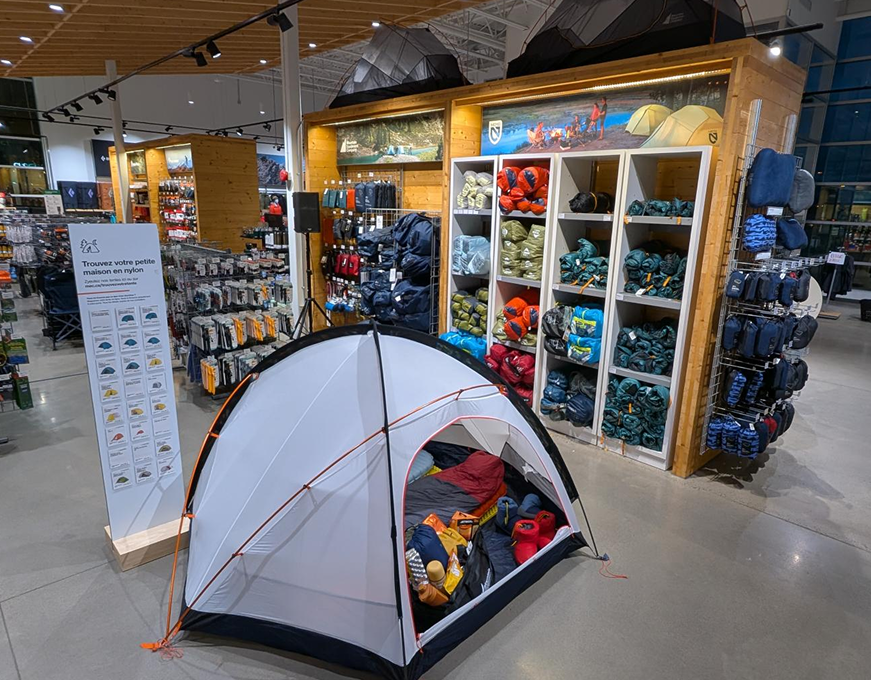
Mountain Equipment Company (MEC) is opening its first permanent MEC Gear Swap store retail concept as the Canadian outdoor retailer looks to expand access to used gear and respond to growing member interest in resale, repair, and long-lasting equipment.
The pilot, which is part of a broader refresh of its Kelowna BC store ahead of its 10th anniversary, will allow members to trade in used outdoor gear for credit, shop secondhand equipment and access repair services through a dedicated 2,200-square-foot adjacent retail space staffed by MEC experts, said the company, adding that the investment reflects MEC’s continued focus on strengthening stores as trusted hubs for outdoor communities while supporting how Canadians increasingly want to buy, maintain, and extend the life of outdoor gear.
While resale has become more prominent across retail in recent years, gear reuse has long been part of MEC’s culture and operations. MEC first launched its online Gear Swap marketplace in 1997, helping establish one of Canada’s earliest peer-to-peer outdoor gear communities. At its peak there were over 21,000 listings, and it helped shape a culture of responsible outdoor recreation built on sharing, not just consuming, it noted.
Peter Hlynsky
“Canadians are looking for smarter, more practical ways to get outside without always buying new gear,” said Peter Hlynsky, CEO of MEC. “Gear Swap has been part of MEC’s story for decades, and this pilot gives us an opportunity to bring trade-in, resale and repair together in one dedicated space.
“Kelowna is the right market to test and learn because we have a deeply engaged outdoor community here, and we’ll be listening closely to member feedback as we continue to evolve the experience.”
The company said Kelowna will serve as a test-and-learn environment for the format, allowing MEC to refine operations through direct member feedback and local engagement. In the event that MEC expands the concept, future rollouts will be guided by community response and operational learnings, it added.
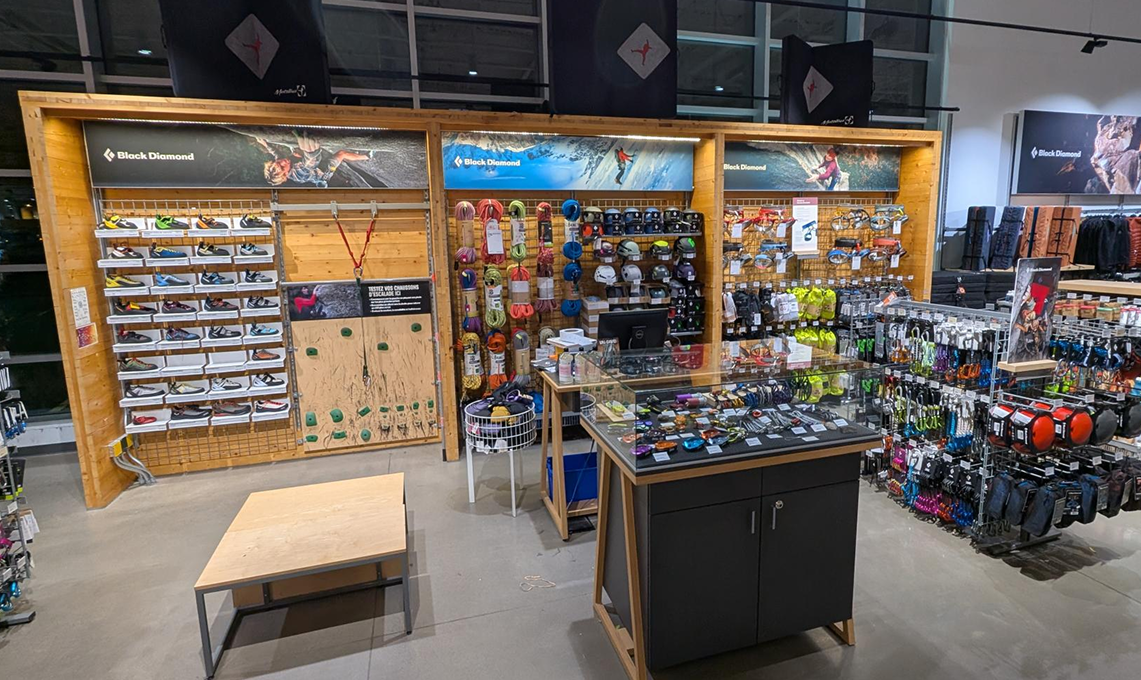
The MEC Gear Swap store launch coincides with a broader refresh of MEC Kelowna, building on MEC’s evolving retail approach introduced in Laval in 2025. Updates are designed to improve store navigation, strengthen product and brand presentation, and better reflect how members shop across multiple seasons and activities, explained the retailer.
MEC photo
“The refreshed assortment will continue focusing on key regional activities including trail running, hiking, camping, and cycling, supported by ongoing investment in staff training and field-based expertise,” said MEC.
“Kelowna remains one of Canada’s most active year-round outdoor markets, with strong participation across multiple categories and a deeply engaged outdoor community. MEC says the investment reflects its long-term commitment to ensuring stores continue serving as practical, community-driven access points to the outdoors.”
To mark the reopening and anniversary milestone, MEC Kelowna will host a two-day community celebration on Saturday June 20 and Sunday June 21 featuring local activations, brand partner experiences, giveaways including MEC’s “First Fifty” swag bags, and opportunities for members to connect with staff and explore the new Gear Swap Store.
The main Kelowna store is 16,453 square feet.
MEC photo
The MEC Gear Swap online marketplace launched 1997 and peaked at 21,000+ listings in 2005. It was one of Canada’s first peer-to-peer marketplaces for used outdoor equipment.
“The in-person Gear Swap events became highly anticipated and popular with lineups formed the night before. Members slept outside stores to score first-wave access. This continues as a twice a year event, in key MEC store parking lots that are transformed into bustling markets of expedition tents, technical shells, and climbing hardware all finding new hands,” noted MEC.
In 2022, the online platform was retired. The market had matured, and MEC said so publicly: “We’re looking at ways we might improve it, integrate it into e-commerce and build programs atMEC that do even more to extend the life of outdoor gear.” The MEC Gear Swap store is that answer, it said.
Dr. Phone Fix Canada Corporation, one of Canada’s fastest-growing and award-winning consumer electronics repair and resale platforms, says it has entered into a definitive agreement to acquire the assets of Cell Phone Solutions, a device repair business based in Saint John, New Brunswick.
The acquisition, together with the signing of two additional retail leases in New Brunswick and Ontario, further strengthens the company’s expanding national footprint and reinforces its strategy of growth through acquisitions and disciplined greenfield expansion, it said.
“We continue to see acquisition opportunities across Canada within a fragmented industry. By combining acquisitions with selectively opening new stores, we believe we are building a scalable platform for long-term growth. This dual approach allows us to accelerate growth while maintaining strong capital discipline.”
Transaction Highlights
Acquisition of an established revenue-generating repair business in Saint John, New Brunswick
Total purchase price of $175,000, including approximately $40,000 in inventory
$50,000 cash payment at closing, with additional deferred and performance-based payments
Balance satisfied through the issuance of common shares, aligned with long-term performance and value creation
Structured earn-outs tied to revenue thresholds.
The transaction structure reflects Dr. Phone Fix’s continued focus on disciplined capital allocation while aligning vendor incentives with future operational performance, said the company.
“The acquisition of Cell Phone Solutions provides Dr. Phone Fix with an established, revenue-generating location and a loyal customer base in New Brunswick, currently generating approximately $350,000 in annual revenue. The Company expects to enhance performance through integration into its centralized operating platform, including procurement efficiencies, pricing optimization, marketing, and standardized operating processes,” it said.
“In addition, the Company has secured two new retail locations in New Brunswick and Ontario, supporting its strategy of increasing regional density and enhancing brand visibility in underserved markets.”
The company said the Canadian device repair market remains highly fragmented, with the majority of operators being independent, single-location businesses. Dr. Phone Fix said it continues to position itself as a leading consolidator and to expand its footprint through acquisitions, operational integration, and organic store development.
“Management believes the Company’s centralized operating model, OEM relationships, national purchasing capabilities, and standardized training systems provide operational advantages in integrating and scaling acquired businesses. Acquired locations are typically under-optimized prior to integration, providing a clear pathway for value creation,” it added.
The transaction is expected to close in the near term, subject to customary closing conditions and approvals, including acceptance by the TSX Venture Exchange.
Founded in 2019, the company now operates 44 corporately owned retail locations nationwide.
The Canadian Federation of Independent Business (CFIB) says there’s a lack of transparency and progress in implementing direct-to-consumer (DTC) alcohol shipment policies, despite governments promising action by the end of May.
It said small, independent breweries, wineries, and distillers across Canada have been waiting for clearer rules and expanded access to ship their products directly to consumers. CFIB said data shows that 77% of small businesses think Canadians should have the freedom to order Canadian wine, beer, and craft spirits directly from any province or territory without restrictions.
Several governments have publicly committed to reviewing or updating alcohol distribution frameworks, including a DTC memorandum of understanding (MOU) pointing to the end of May 2026 as the target date for implementation. However, with only days remaining before the anticipated deadline, there has been virtually no movement to deliver on those commitments, said the national organization, which is Canada’s largest association of small and medium-sized businesses with 103,000 members across every industry and region.
Currently, only Manitoba and New Brunswick permit DTC of all Canadian alcohol products, and Ontario and Nova Scotia have signed a limited reciprocal agreement allowing shipments between the two provinces. Other jurisdictional agreements continue to be fragmented. Nova Scotia and British Columbia allow DTC shipping of all Canadian wine, and BC permits DTC of spirits only from Saskatchewan. Alberta permits DTC shipments of BC wine only. Saskatchewan allows DTC shipping of wine and spirits from BC only, added the CFIB.
“Direct-to-consumer alcohol shipping is the bare minimum of what governments should be doing to improve internal trade of alcohol products within Canada. Some may dismiss DTC as a small or symbolic change, but it is an important first step. It signals that governments are finally moving in the right direction on reducing outdated barriers that prevents Canadians from buying and selling across provincial borders.”
Brands selling through club retailers are increasingly turning to value-driven promotional strategies instead of traditional discounting as they look to improve sell-through and maintain margins, according to new data released by OPIA.
The New York-based sales promotion agency said its data shows 81 per cent of customers say value-driven promotions influence their purchase decisions, while more than 90 per cent report high satisfaction with the programs. The company said the findings reflect changing expectations in high-performance retail environments, where brands are under pressure to deliver measurable results and predictable sales performance.
“Retailers today are focused on performance and predictability,” said Matt Barrett, account director at OPIA. “Brands are being held to a higher standard, where success is defined by how effectively products move through the channel.”
Matt Barrett
The company said brands are increasingly using promotions such as cashback rewards, digital incentives and bundled experiences aimed at increasing perceived value without relying on direct price reductions.
According to the release, programs managed by OPIA have been used by electronics brands including LG Electronics and Sonos in club retail channels.
The company said LG Electronics increased sales of its UltraGear monitors at Costco through a gift-with-purchase promotion tied to streaming subscriptions. The release said the initiative increased conversion rates while maintaining margins.
It also said Sonos used similar value-driven promotional programs across club retail channels, resulting in 93 per cent purchase influence and 87 per cent behaviour change.
“These programs represent a repeatable model,” said Barrett. “Brands are realizing that delivering consumer value—is what drives results.”
The company said it provides end-to-end promotional program execution, including incentive design, global fulfillment, validation, fraud prevention and customer support.
“Promotions are no longer a tactical lever—they are a performance channel,” Barrett added.
OPIA’s Club Channel Program focuses on promotional strategies designed for club retail environments. The company said it operates in more than 40 countries and specializes in performance-driven promotional programs intended to help brands increase sell-through while protecting margins.
One in three Canadian businesses (33%) experienced cyber incidents in the past 12 months which they believe leveraged Artificial Intelligence, with phishing among the most frequent methods, according to global research from business insurer QBE.
Artificial Intelligence is becoming ubiquitous in the Canadian economy, with 97% of businesses using it or looking into it, up from 94% last year, said the company.
2025
2026
Canadian businesses using AI
71%
83%
Canadian businesses looking into using AI
23%
14%
Source: Opinium surveys for QBE
Efficiency and productivity are among the top motivations for deploying AI, as more than half of businesses rolling out the technology mention these objectives, said QBE
Canadian businesses are deploying AI to
Increase operational efficiency
53%
Increase productivity
53%
Improve decision making
42%
Grow revenue
41%
Improve compliance and reduce risk
36%
Drive innovation
36%
Improve customer experience and retention
36%
Build competitive advantage
36%
Increase agility
35%
Enable personalization at scale
28%
”As new technologies such as AI become embedded in operations, effective risk management remains fundamental to ensuring sustainable and resilient growth,” said Kyle Gray, Underwriter Team Lead, QBE Canada.
“AI risk doesn’t stop at the internal perimeter. Organizations need the same level of discipline and oversight across their third-party ecosystem, because weaknesses in the supply chain can quickly become risks to the business itself.”
Kyle Gray
Businesses are taking various steps to safely roll out AI into their operations, from training staff on responsible use, to checking data quality or monitoring outputs for bias. However, they worry their vendors might not be taking similar measures. 63% of Canadian businesses are concerned about potential risks arising from how their suppliers use AI, noted QBE.
Over the past 12 months, 57% of Canadian businesses have experienced one or more cyber events, a proportion slightly higher than last year (53%). Among affected businesses, 65% suffered at least one cyber attack that was related to a supplier (up from 58%) and 58% experienced revenue loss (up from 51%), it said.
“The disruption can be significant. Overall, 16% of Canadian businesses have experienced a cyber event in the last 12 months that resulted in a business interruption of one working day or more (down from 18%),” said QBE.
“Two in three respondents (65%) are concerned about the cyber threats their business may experience over the next 12 months, a smaller proportion than last year (78%) but still prompting investment.
“Most of them say their IT cybersecurity budget is going to increase over the coming year (31% in line with inflation and 31% beyond inflation). And 72% now have cyber insurance, compared to 67% last year. In addition, 83% have an incident response plan, up from 79%.”
The 2026 Opinium survey about AI and cyber risks for QBE covers 15 countries (Australia, Canada, Denmark, France, Germany, Hong Kong, Italy, Netherlands, New Zealand, Singapore, Spain, Sweden, United Arab Emirates, UK, USA), with a total sample of over 6,000 businesses.
QBE’s checklist
To tackle cyber threats, businesses should:
identify critical assets, threats, and vulnerabilities to gain a clear overview of exposure
Define acceptable risk so leadership can set boundaries
Prioritise mitigation strategies (direct resources towards areas of greatest impact)
Test contingency plans and recovery protocols
Stress test crisis management
Incorporate third-party expertise to help manage residual and emerging risks
Continuously adapt cyber defences to evolving threats, technology and business needs.
To mitigate third-party vulnerabilities, businesses should also:
Implement strong identity and access management (IAM) protocols
Run regular configuration audits
Encrypt sensitive data across all cloud environments
Evaluate the security posture of their third-party providers
Establish clear protocols for managing supply chain exposure.
Welcome to the Daily Synopsis by Retail Insider. We published 8 articles today covering various developments across Canadian retail sectors.
Open banking is set to significantly change Canadian retail payments as retailers adapt to evolving consumer expectations for secure and trusted payment experiences. Meanwhile, Montreal’s restaurant spending surged with transactions near the Bell Centre increasing by up to 84% during the Canadiens’ playoff games as the hockey run boosted hospitality sales. Calgary’s Wild Rose Brewery marked its 30th anniversary, highlighting growth opportunities from craft beer expanding its retail footprint and community engagement.
Education on artificial intelligence has an unprecedented degree of accessibility these days. Aren’t you excited? With a good number of potential online courses (most of which are high quality), community support, and practice opportunities, if you have internet connection and motivation, you’ve got access. The challenge here isn’t access, but rather selection. The struggle people have is sifting through the online AI courses that are high quality, and the ones that are essentially just grant you a certificate. This guide will help you plan your self-paced and flexible AI courses for 2026 the right way to help you reach a place of competence on the matter.
Convenience of AI Courses
There are plenty of benefits to taking AI courses. They are on-demand, for starters. You have the choice to study as little or as much as you’d like. You can have any time of the day or night as your study time. Flexible courses are prioritized to suit your convenience. These online courses are continuously updated and curated so the pace of rapidly changing AI tools and research is always taken into account. A perk to online platforms is that interactive notebooks, auto-graded assignments, and community are all available. At in-person programs, you may be enjoying the rigor of learning, but you are also paying a steep price. Online learning is significantly cheaper while offering the same (if not better) opportunities.
The convenience of online learning comes at a price. The margin of accountability is the biggest disadvantage of online learning. Many people simply enroll and then forget about the course. Setting your own discipline is a tool that you have to either be your own study buddy or have a study buddy. You can make your learning goals public to keep you accountable. You’ve got to be disciplined if you want to make online learning work for you.
Best Platforms for Online AI Learning
Coursera features the best AI curriculums online. DeepLearning.AI provides a series of courses, and there are also AI courses from Google and university courses from Stanford, MIT, and Johns Hopkins. Coursera Plus ($59/month) provides unlimited access to courses, making it the best value for a learner who is pursuing multiple AI certifications. Fast.ai offers a practitioner-focused, deep learning course that is free, and is the best resource for rapidly evolving technologies. Kaggle offers free courses and competitive challenges that help learners build skills that will enhance their portfolios.
Hugging Face offers a free course for learners in the industry who want to become proficient in the use of transformer models. Andrej Karpathy, 3Blue1Brown, and Yannic Kilcher, are all examples of Youtube video creators who explain AI concepts, and provide free tutorials that can be of great help to people who want to learn AI online for free. Online platforms that offer multiple structured learning routes that are geared for a career in AI are also great options. These platforms are edX, and Udacity, as well as LinkedIn Learning.
Learning how to build the different machine learning models is the primary building block for any AI learning path, and courses in math typically accompany these courses. AI systems are complicated, but the issues that these systems are designed to solve and the systems themselves work in a predictable manner once the learner grasps all of the above concepts.
Top Online AI Certifications
The AWS Certified Machine Learning courses are used to prove knowledge of machine learning skills in the AWS ecosystem. Google’s Cloud Professional Machine Learning Engineer is used to prove knowledge of developing and deploying machine learning systems in the GCP ecosystem. Microsoft’s Azure AI Engineer Associate is used to prove knowledge of developing artificial intelligence solutions in Microsoft’s ecosystem. These vendor-specific certifications are valid for employers that use competing platforms and help organize a measurable study goal. In addition to developing vendor-specific knowledge, it is important to develop knowledge in artificial intelligence. DeepLearning.AI’s specialization certificates are in high demand across the industry, especially Andrew Ng’s Machine Learning Specialisation.
Building a Flexible Learning Schedule
The best way to build a sustainable online artificial intelligence program is to choose a primary anchoring (structured) course (6 to 15 hours) and organize short practice (real-world) sessions (lessons) each week. Many designers of well-structured online courses have taken a Sustainable AI Learning method and focused on a balanced professional commitment throughout the week. For example, a well-structured commitment of 8 to 12 hours (throughout the week) would allow designers of well-structured online courses to achieve a Sustainable AI Learning credential every 2 months.
When designing your program, it is important that you do not overcommit. Foundational courses can be completed in a few weeks. Professionalisation courses (multiple courses and projects) that are well-structured can be completed in 2 to 4 months. Well-structured advanced courses can be used to cover deep learning (or niche) areas in 3 to 6 months, and balanced professional commitments throughout the week are needed.
Learning to support AI
Learning AI alone is time consuming compared to when learning AI with support of a community. There are so many platforms to join studying groups, like Discord, the subreddits for Machine Learning and for Learning Machine Learning, the Kaggle forums and specific communities on Coursera and fast.ai. These communities give you the motivation and technical support needed to learn and even give you collaborators for future projects that could be added to your portfolio.
AI learning Online in 2026 will be more relevant and useful for more professionals. Learning via communities along with the readily available and useful content makes learning relaxed and fun. But for this to be useful, it is necessary to have the motivation and self discipline to engage with the material and to practice after completing courses.
Canada’s retail payments landscape is approaching a shift that could move faster than many expect.
Open banking has been discussed for years, but implementation is now moving closer. Once in place, consumers will be able to share financial data securely with third parties, including retailers and fintech providers. That change may sound incremental, but experience in other markets suggests otherwise. When similar frameworks were introduced in countries such as Brazil and India, new payment methods gained traction quickly, and consumer behaviour changed in a short period of time.
For retailers, the takeaway is simple. The way customers expect to pay is about to expand, and that shift could happen quickly once the infrastructure is in place.
Convenience Is No Longer a Differentiator
For years, the focus in e-commerce has been on removing friction. Faster checkout flows, fewer steps, and smoother payment experiences have all been positioned as competitive advantages. Today, those features are widely available across most platforms.
Kris Zanuldin, Head of Konek at Interac Corp., says that dynamic is already changing.
“When open banking comes, you get hyper-competition and fast, frictionless experiences become table stakes,” he says. “When everyone is convenient, convenience is no longer enough.”
That changes how customers evaluate payment options. Speed still matters, but it is no longer the deciding factor. Customers begin to look more closely at who they are dealing with, especially when financial data is involved.
Kris Zanuldin
Trust Starts to Influence the Transaction
A bank account holds a detailed record of how someone lives and spends. As open banking allows that information to move more freely, customers are likely to be more selective about where they allow access.
Zanuldin says that question becomes central at checkout.
“When customers are given more options, they’re not just asking what’s easiest anymore. They’re asking who they trust enough to allow access to their financial information,” he explains.
For retailers, that shows up in a very practical way. The decision to complete a transaction is no longer just about convenience. It depends on whether the customer feels comfortable moving forward.
Persistent Friction Still Affects Conversion
Even before open banking takes hold, many retailers continue to deal with payment-related challenges.
Cart abandonment remains a consistent issue across e-commerce. At the same time, false declines, where legitimate transactions are rejected due to fraud checks, can quietly reduce conversion rates and damage customer confidence.
“False declines are one of the silent killers in e-commerce,” says Zanuldin. “When a legitimate customer is denied, it creates a poor experience and can impact whether they return.”
These issues do not always show up clearly in reporting, but they affect revenue. Customers who encounter friction or feel uncertain during checkout may simply choose not to complete the purchase.
Building on Existing Trust
In Canada, one approach is to build on the trust consumers already have in their financial institutions.
Powered by Interac Corp. and backed by Canada’s leading financial institutions, Konek allows customers to pay by bank through their chequing or savings accounts, while also supporting debit and credit options within a single experience.
The idea is not to introduce something unfamiliar. Instead, it connects the checkout process to banking systems that customers already use.
“We’re not trying to create new trust,” Zanuldin says. “We’re leveraging the trust Canadians already have in their banks and extending that into the checkout experience.”
For retailers, that can mean giving customers more ways to pay without adding friction or uncertainty.
What Implementation Looks Like
Retailers will also look closely at how difficult a new payment option is to implement.
Konek is designed as a single integration that works across platforms and operating systems. Merchants do not need to rebuild their checkout or commit to a specific technology stack.
As Canada’s payments infrastructure continues to evolve, systems like this are expected to adapt alongside it.
Photo: Interac Corp.
A Shift That May Arrive Quickly
Open banking is expected to introduce more choice into the payments landscape, but it also raises the bar for retailers.
Speed and convenience are no longer enough on their own. Customers already expect those as a baseline. The next question is whether they feel comfortable completing the transaction.
Retailers will need to think about how their checkout experience supports that confidence, and how it holds up as new payment options enter the market.
Looking Ahead
While open banking will reshape payments in the near term, other changes are already beginning to influence how transactions happen.
New technologies are starting to play a role in how purchasing decisions are made, including the possibility of more automated or assisted transactions. As that develops, questions around trust, control and responsibility become more complex.
Zanuldin points to consumer behaviour as an early signal.
“When customers don’t feel confident in the system, their behaviour changes,” he says. “They may set lower spending limits or hesitate to complete transactions, even if the outcome is something they want.”
For retailers, that reaction matters. If customers hesitate, spending can be affected, even when the product itself is not the issue.
Retailers interested in learning more about Konek can visit konek.ca or connect with Interac Corp. for additional information.