The retail landscape has gone through a fundamental transformation, moving away from the era of rapid storefront proliferation toward a more measured and cautious approach. For many organizations, the mandate to open new locations as quickly as possible has been replaced by a focus on selective expansion and defensive cost management.
This pivot is largely a response to a global environment defined by supply chain volatility, fluctuating trade conditions, and tightening margins. When a brand prioritizes geographic reach over its internal infrastructure, the resulting logistical strain often remains hidden until it begins to erode the bottom line. Success in the current market is no longer measured by the number of doors opened, but by the operational maturity and resilience of the network behind them.
The Hidden Financial Drain of Fragmented Operations
When Growth Masks Real Losses
Opening new storefronts or launching regional eCommerce channels looks great on paper. But disparate systems can quickly obscure whether individual units are actually making money.
Vietnam’s 2026 retail landscape offers a telling example. Regional operators there expanded beyond their operational capacity, stretching across multiple brands while margins got squeezed. Their subsidiaries ran on disconnected legacy ERP (enterprise resource planning) systems, which meant no real-time financial insights. Loss-making units stayed hidden from executive view. Sound familiar?
The table below illustrates why fragmented systems create so much damage compared to a unified setup:
Operational Feature
Fragmented Legacy Systems
Unified ERP Environments
Financial visibility
Delayed, manual reconciliations across platforms
Real-time consolidated reporting across subsidiaries
Inventory tracking
Siloed data; phantom stock and over-purchasing
Cross-channel visibility from warehouse to POS
Scalability
New IT connections needed for every store or market
Plug-and-play architecture for new channels
Decision making
Reactive; based on outdated month-end data
Proactive; driven by live analytics and forecasting
Supply Chain Fractures and Cross-Border Complexities
The Logistical Breaking Point
Supply chains don’t just bend under rapid scaling; they break. Disruptions to key trade lanes have pushed retailers toward smaller, more flexible networks. However, the strain isn’t just in the shipping lanes—it’s in the local maintenance of physical assets. When a brand expands too quickly into a new city without established local partnerships, even a minor facility issue can become a localized crisis.
For example, a retail manager in a newly opened Ontario branch who discovers a burst pipe shouldn’t have to scramble to find a reliable Hamilton plumber while navigating a disconnected corporate procurement system. Without a unified platform to manage local vendors and maintenance tickets, these small “facility frictions” result in unplanned downtime and emergency repair premiums that quietly erode the profitability of the new location.
Independent and regional retailers feel this pressure most acutely. Industry surveys show that freight costs have jumped 25% or more for nearly one in five regional operators, forcing them to pass those costs straight to consumers.
Cross-border expansion is its own minefield. While 75% of retailers expect cross-border growth this year, 29% of international deliveries still fall short of customer expectations because of customs delays and inconsistent carrier performance. That’s a gap no amount of optimism can paper over.
Here are some common signs that supply chain strain is already setting in:
Expedite fees and emergency freight costs are climbing to bypass blocked trade lanes.
Cross-border delivery failures, customs delays, and returns are on the rise.
Warehouse inventory counts don’t match live point-of-sale data.
Building a Scalable Tech Foundation
Moving to Unified ERP
If aggressive expansion is giving way to selective, profitable growth, the backbone for that shift is centralized data. Retailers need to invest in their tech foundation before adding new stores or digital channels. The numbers back this up: the retail ERP market is projected to rise from $15.01 billion to nearly $45.92 billion over the next decade.
For mid-market retailers, especially, platforms like SAP Business One can consolidate financial, sales, and supply chain data into a single real-time ecosystem. Working with experienced SAP Business One consulting services helps growing brands turn expansion from a logistical headache into a repeatable, profitable process. That kind of infrastructure isn’t a luxury anymore; it’s a prerequisite.
Redefining Retail Resilience in 2026
True growth isn’t measured by the number of new doors a brand opens anymore. It’s measured by the strength of the back-office engine behind them. The retail digital transformation market reached $118.6 billion in valuation in 2024 and is expected to grow at a CAGR of 28.6% through 2030, underscoring how seriously the industry is taking this shift.
The retailers winning in 2026 aren’t the ones with the most locations. They’re the ones with unified data access, agile supply chains, and operational efficiency baked into everything they do. So, what’s the play? Scalable tech comes first. Reckless geographic expansion doesn’t get a seat at the table.
Welcome to the Daily Synopsis by Retail Insider. We hope you enjoy the 10 articles we published today covering key developments in Canadian retail (see below).
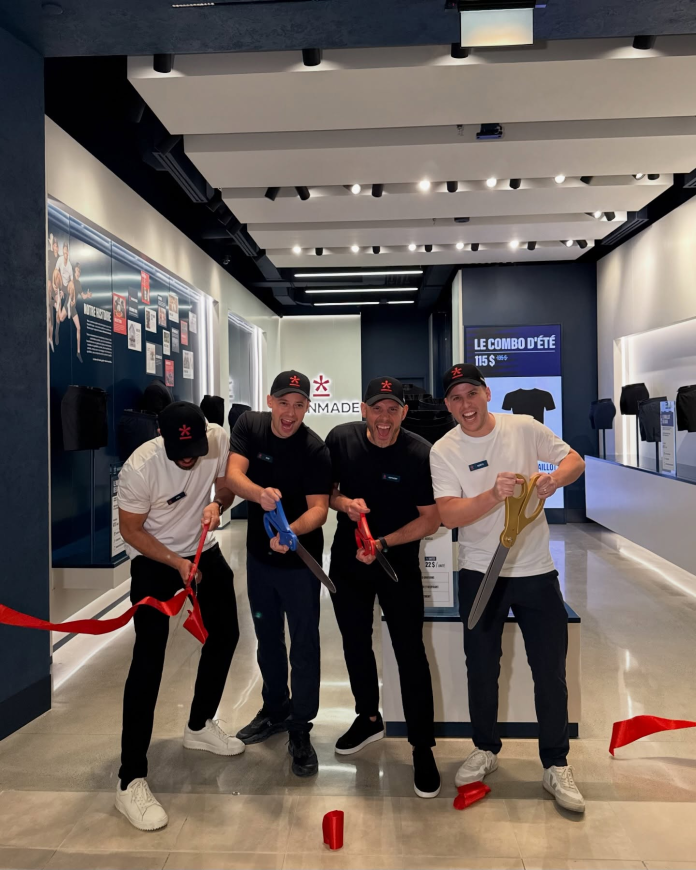
For example, Canadian menswear brand MANMADE opened its first physical store at CF Carrefour Laval, signaling its shift from direct-to-consumer to multi-channel retailing with plans for 18-20 stores over three years. Italian luxury linen brand Frette launched its first Canadian boutique in Toronto’s Yorkville introducing an experiential retail concept focused on personalized service. Leon’s Furniture reported a 3.5% dip in Q1 2026 system-wide sales to $672 million while improving gross margins and highlighting strong liquidity.
Retail Insider also shared broader market updates with Statistics Canada reporting a rise in the Canadian unemployment rate to 6.9% in April due to labour market challenges. Charcoal Group is expanding with five new full-service restaurants across Ontario. Loblaw Companies reported strong customer adoption of its ChatGPT grocery integration allowing recipe-based online shopping.
Wind farms and rows of solar panels across fields are seen as symbols of the energy transition. Learn why Greentech software has become a new icon of this revolution and why it’s worth investing in.
Common areas of software engineering and sustainability
For decades, the energy sector depended on centralized, almost analog systems. A few large power plants supplied electricity to millions of homes. Today, that model is disappearing. We are entering an era of distributed energy resources, where every rooftop with solar panels and every home energy storage system becomes an active participant in the market.
Renewable energy software manages this gigantic network of interconnected systems. Greentech’s software enables the creation of applications that optimize electricity consumption in real time. Microservices architecture and flexible APIs form the foundation of tools that combine environmental sustainability with clear business benefits.
How do data-driven platforms power renewable assets?
Efficiency is the key in the renewable energy industry. With growing energy demand, we need to make the most of what nature has to offer in the present moment.
Real-time monitoring and predictive maintenance
Every hour of downtime for a single wind turbine located miles from the shore means losses worth thousands of dollars. Thanks to data-driven analytics platforms, operators no longer send out technical crews blindly.
IoT sensors installed on the blades and in the nacelles of wind turbines transmit thousands of signals per second. Predictive maintenance software analyzes this data and detects anomalies several weeks before a failure. Meanwhile, Digital Twin technology simulates various weather scenarios, optimizing the tilt angle of the panels or the positioning of the turbines so that they always operate at the highest possible efficiency.
Virtual Power Plants – balancing supply and demand
The biggest challenge for green energy is its unpredictable nature. The sun and wind don’t adjust to our coffee breaks or factory operating hours. That’s why Virtual Power Plants (VPPs) are worth their weight in gold.
VPPs are advanced energy management systems that aggregate distributed energy sources – from car batteries and heat pumps to biogas plants. Thanks to VPP software, thousands of small units behave like a single, stable power plant. When the grid is overloaded, the system automatically draws energy from connected storage units. It’s a digital symphony conducted by an algorithm.
Cloud-native architecture as part of green solutions
To make a real difference in the world, Greentech solutions must be scalable. A startup based in Berlin or San Francisco should be able to deploy its energy management software for a client in Australia or Brazil without building a local server infrastructure.
The cloud-native approach provides nearly unlimited scalability. With the cloud, data from millions of smart meters can be processed in real time, and new system features can be deployed globally with a single click. The SaaS (Software as a Service) model democratizes access to this technology. Even small municipalities can use the same tools as the industry giants.
Speeding up Greentech innovations with AI and machine learning
Artificial intelligence and machine learning (ML) are the rocket fuel for the Greentech sector. Traditional weather forecasting methods are not precise enough for the needs of the modern energy industry. In contrast, ML models can analyze historical weather patterns, satellite data, and even cloud cover to predict a solar farm’s energy output with accuracy down to a few percent.
In dynamic energy markets, where prices change every 15 minutes, trading algorithms can decide in a split second about whether to sell energy to the grid or store it for later use. This intelligence embedded in the code makes green energy price-competitive with fossil fuels. More about Greentech software at: https://www.scalosoft.com/industries/renewable-energy/greentech-software-development.
The rise of autonomous systems in renewable energy sector
The vision of a grid that knows it’s about to fail and can fix itself sounds like a scene from a sci-fi movie. In the 21st century, it’s simply the next step in the evolution of Greentech. With advanced AI algorithms and thousands of distributed sensors, self-healing grids can autonomously respond to physical damage or sudden power surges.
In the traditional energy model, when a storm knocks down a high-voltage power line, hundreds of homes are left without power until a repair crew locates and fixes the fault. In a smart grid, software isolates the damaged section in a fraction of a second and automatically reroutes the power supply, using local storage facilities or neighboring microgrids. It’s the digital equivalent of the immune system – it doesn’t wait for outside intervention but regenerates its own functions to maintain business continuity.
When the wind suddenly stops blowing in one region, and power demand rises, the software instantly redirects resources from other locations without human intervention. This invisible, distributed intelligence will make hours-long power outages a distant memory and ensure that our energy infrastructure becomes flexible and resilient.
How to overcome scalability barriers in Greentech?
Although huge progress has been made, the road to full energy digitization isn’t smooth. One of the biggest barriers is a lack of interoperability. For years, manufacturers of inverters, turbines, and meters have created closed ecosystems that couldn’t communicate with one another.
Modern software must act as a translator. Open communication standards (such as OCPP for EV chargers) and the creation of abstraction layers in software allow for the integration of old and new systems. Engineers must integrate the latest applications with legacy systems that date back to the last century. It’s painstaking work with code, but without it, scaling digital solutions globally would be impossible.
Conclusion
Renewable energy software unlocks the potential of renewable energy sources. By combining hardware with intelligent software, you can create an energy system that is both cleaner and more resilient than anything we’ve seen before. Scalable digital solutions from https://www.scalosoft.com/ are the missing puzzle piece we’re learning to fit into place.
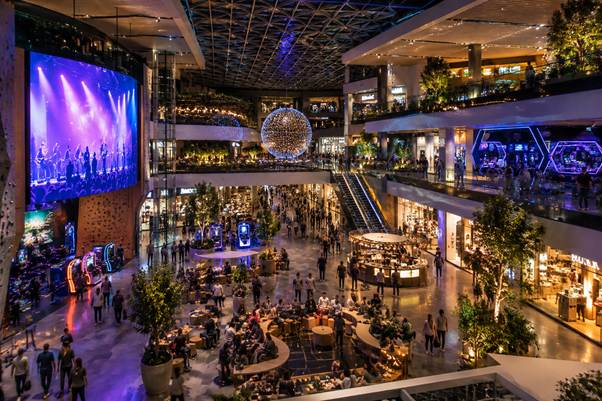
Retail spaces in 2026 no longer focus only on transactions. Visitors expect engagement, variety, and reasons to stay longer. Developers and operators respond by combining shopping with entertainment formats that encourage repeat visits. This shift did not happen suddenly. It grew from gradual changes in consumer habits, urban development patterns, and digital influence on physical environments.
Entertainment-driven retail now reflects a structured approach rather than an experimental concept. Operators analyze visitor behavior, adjust layouts, and introduce activities that extend dwell time. As a result, retail locations function as social hubs rather than simple points of sale.
Digital Platforms Supporting Engagement in Entertainment-Driven Retail
Modern retail spaces rely on digital ecosystems that connect visitors with on-site experiences before and during their visit. Platforms such ashttps://winbeatzonline.com support this connection by linking music, gaming, and event-based interaction in one environment. This type of integration helps retail operators extend engagement beyond physical boundaries and maintain consistent visitor interest.
The platform contributes to entertainment-driven retail in several ways:
It connects users with themed events that can take place inside retail complexes
It supports community interaction tied to music and gaming culture
It encourages repeat visits through ongoing digital activity
It aligns with hybrid retail formats that combine leisure and social engagement
By integrating such platforms into broader retail strategies, operators strengthen the connection between digital behavior and physical attendance. This approach increases visit frequency and supports long-term engagement without relying solely on traditional retail incentives.
Changing Consumer Expectations
Shoppers today expect more than access to goods. They look for interaction, convenience, and a sense of activity within the space. This expectation shapes how retail environments operate.
Several behavioral patterns define this shift:
Visitors combine shopping with leisure time rather than treating it as a separate task
Groups prefer shared experiences instead of individual purchases
Younger audiences spend more time in spaces that offer digital and physical interaction
Customers return more often to locations that update activities regularly
These patterns force operators to rethink traditional layouts. A simple row of stores no longer meets expectations. Instead, developers create zones that mix retail with entertainment, dining, and interactive features.
Integration of Entertainment Elements
Retail environments now include structured entertainment components that serve clear functions. These elements do not appear randomly; planners place them strategically to guide movement and increase engagement.
Common features include:
Interactive gaming zones that encourage short visits and repeat use
Live event areas for performances, screenings, or seasonal activities
Digital installations that respond to visitor input
Leisure facilities such as cinemas, themed attractions, and gaming lounges
In some regions, operators also include regulated gaming environments such as casinos within larger complexes. These additions attract specific audience segments and extend evening traffic without disrupting daytime retail flow.
Developers place such features near dining or late-hour venues to maintain consistent activity throughout the day. This structure prevents empty zones during off-peak hours.
Spatial Design and Layout Strategy
Design plays a central role in the success of entertainment-driven retail. Architects and planners now prioritize flow, visibility, and accessibility.
Key design principles include:
Clear pathways that connect retail and entertainment zones
Open areas that allow temporary installations or events
Flexible spaces that support seasonal changes
Visibility across levels to encourage movement between floors
Operators avoid isolated sections. Instead, they position attractions in ways that encourage visitors to pass through retail areas. This approach increases exposure to stores without forcing interaction.
A well-planned layout also reduces congestion. Designers analyze peak hours and distribute attractions to prevent overcrowding in a single location.
Role of Technology in Physical Spaces
Technology influences how visitors interact with retail environments. It supports navigation, personalization, and engagement without replacing physical experiences.
Retail spaces in 2026 use technology in several ways:
Digital directories that update in real time
Mobile apps that guide visitors and suggest activities
Interactive displays that respond to gestures or touch
Data systems that track movement patterns and adjust layouts
These tools help operators refine the environment continuously. For example, if data shows low traffic in a specific area, planners can introduce temporary attractions or adjust signage.
Technology also connects online and offline behavior. Visitors often discover activities through digital platforms before arriving. Some niche communities even link external platforms such as Winbeatz Casino to event promotion or themed experiences within retail spaces, especially in areas that blend music, gaming, and social interaction.
Economic Impact and Revenue Structure
Entertainment-driven retail changes how operators generate revenue. Traditional models relied heavily on rent from stores. Modern environments diversify income streams.
Revenue sources now include:
Ticketed events and attractions
Food and beverage sales linked to entertainment zones
Short-term leases for pop-up experiences
Advertising within digital installations
This model reduces dependence on retail sales alone. It also allows operators to adapt quickly to changing trends.
Below is a simplified comparison of revenue structure shifts:
Revenue Source
Traditional Retail
Entertainment-Driven Retail
Store Rent
High
Moderate
Events and Attractions
Minimal
Significant
Food and Beverage
Secondary
Core Component
Digital Advertising
Limited
Expanding
This shift creates more stability in uncertain market conditions. If retail sales decline, entertainment and dining can maintain overall performance.
Social and Cultural Influence
Entertainment-driven retail spaces also reflect broader social trends. People seek places where they can meet, interact, and spend time without strict structure.
These environments support:
Group activities that do not require purchases
Cultural events that attract different communities
Informal gatherings in shared spaces
Developers often collaborate with local organizers to host events that reflect regional interests. This approach strengthens the connection between the retail space and its surrounding area.
At the same time, operators maintain a balance. They must ensure that entertainment does not overshadow retail entirely. A clear structure helps maintain this balance.
Operational Challenges
Despite clear advantages, entertainment-driven retail introduces operational complexity. Managers must coordinate multiple types of activities within a single environment.
Key challenges include:
Scheduling events without disrupting daily operations
Maintaining safety in high-traffic zones
Managing noise levels across different areas
Ensuring consistent quality across varied attractions
Staff training also becomes more complex. Employees must handle both retail tasks and visitor interaction related to entertainment features.
Maintenance costs increase as well. Interactive installations and leisure facilities require regular updates and repairs. Operators must plan budgets accordingly.
Sustainability and Long-Term Planning
Sustainability plays a growing role in retail development. Entertainment-driven spaces must address energy use, waste management, and long-term viability.
Developers focus on:
Energy-efficient lighting and digital systems
Reusable structures for temporary installations
Waste reduction in food and event operations
Long-term planning also includes adaptability. Retail spaces must evolve without major reconstruction. Flexible design allows operators to replace outdated features with new ones.
For example, a gaming zone today might become a different type of attraction in a few years. Modular design supports such changes.
Visitor Experience and Retention
Retention becomes a central goal in entertainment-driven retail. Operators track how often visitors return and how long they stay.
Several factors influence retention:
Variety of activities within a single visit
Regular updates to entertainment offerings
Comfortable spaces for rest and social interaction
Clear navigation and accessibility
Visitors respond well to environments that feel active but not overwhelming. Balance remains essential. Too many attractions can create confusion, while too few reduce engagement.
Operators often rotate features to maintain interest. Seasonal events, temporary installations, and themed areas help achieve this goal.
Future Outlook
Retail spaces will continue to evolve beyond 2026. Entertainment will remain a key component, but its form may change.
Future developments may include:
Greater integration of virtual and physical interaction
Expansion of niche entertainment zones targeting specific audiences
Increased use of data to personalize visitor experiences
Stronger connection between retail spaces and local communities
Developers will likely refine existing models rather than replace them entirely. The current structure already addresses many consumer expectations.
Entertainment-driven retail spaces in 2026 represent a structured response to changing consumer behavior. These environments combine commerce with activities that encourage longer visits and repeat engagement.
Operators rely on design, technology, and diverse revenue streams to maintain performance. They also face new challenges related to complexity and cost.
Despite these challenges, the model continues to expand. Retail spaces now function as social centers that integrate shopping, leisure, and interaction in a single location. This approach reflects current expectations and sets the direction for future development.
There’s something magical about slipping into a beautifully crafted linen piece on a warm summer morning. The fabric breathes with you, drapes effortlessly across your body, and carries that unmistakable natural texture that instantly elevates your entire look. Linen has always been synonymous withtimeless elegance, vacation vibes, and that quiet luxury aesthetic that fashion lovers across the globe have fallen head over heels for.
SHEIN, the fashion powerhouse that has revolutionized how women shop for trendy clothing, has curated an absolutely breathtaking collection of linen pieces that speak to every style sensibility. Whether you’re planning a Mediterranean getaway, attending a garden party, or simply craving that coastal grandmother chic look for your everyday wardrobe, this collection delivers in every possible way.
Let’s take a deep dive into six stunning linen pieces that are currently stealing the spotlight on SHEIN, each one more irresistible than the last.
Why Linen Is Having Its Biggest Moment Yet
Before we explore the individual pieces, let’s talk about why linen has become the most coveted fabric of the season. Unlike synthetic materials that trap heat and leave you feeling sticky, linen is naturally breathable, moisture-wicking, and gets softer with every wash. It’s also an eco-conscious choice since linen fibers come from the flax plant, requiring far less water than cotton to produce.
The texture of linen gives every outfit an instantly elevated and expensive look, even when you’re paying surprisingly affordable prices. Add to that its versatility across seasons, occasions, and styling options, and you have a fabric that truly deserves a permanent place in your closet.
SHEIN has taken this beloved fabric and transformed it into pieces that combine Old World craftsmanship vibes with modern silhouettes. Every item in this collection ships to the United States with estimated delivery between late April and early May, which means you can have your new linen favorites ready just in time for Mother’s Day gifts, summer travel, or those upcoming graduation ceremonies and warm-weather celebrations.
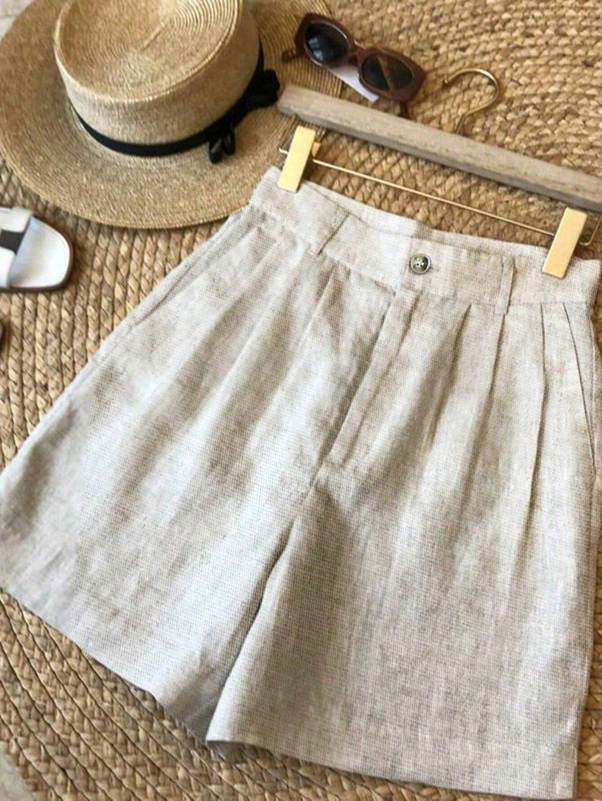
Piece One: Women’s Solid Color Summer Shorts in Apricot
Our first showstopper is this absolutely dreamy pair of pleated linen shorts priced at just $12.57, marked down from $17.49 for a stunning 28% discount. These aren’t just any shorts. They’re currently holding the coveted title of #1 Bestseller in Linen Women Bottoms on SHEIN, and once you see them, you’ll understand exactly why.
The soft apricot color evokes images of sun-drenched Tuscan villages and lazy afternoons spent sipping limoncello by the sea. The thoughtful pleated front design adds structure and sophistication, while the classic button detail brings a tailored feel that elevates these shorts far beyond casual beachwear. You can easily pair them with a crisp white tank for brunch, dress them up with a silk blouse for dinner, or wear them with a simple tee for everyday errands.
Available in five gorgeous colorways including the featured apricot, rich black, warm brown, classic khaki, and sophisticated sage green, these shorts come in sizes ranging from Small to Extra Large, with a dedicated Curve option for plus-size shoppers. With 706 glowing reviews and an impressive 4.91 rating, the customer love is undeniable.
An impressive 92% of buyers confirmed these shorts run true to size, and SHEIN Club members can save an additional 63 cents on top of the already reduced price. You’ll also earn 12 SHEIN Points with your purchase, which can be redeemed toward future orders.
Piece Two: Linen Boho Harem Pants in Forest Green
If you’ve been searching for that perfect pair of pants that blends bohemian romance with everyday comfort, your search ends here. These absolutely gorgeous Linen Boho Harem Pants are currently priced at $18.97, marked down from $36.08, which represents an incredible 47% discount during this limited-time price drop.
Ranked as the #4 Bestseller in Linen Women Bottoms, these high-waisted beauties feature a relaxed, breezy silhouette that flows beautifully with every step. The drawstring waistband ensures a customizable fit, while the tapered ankle design creates that effortlessly cool harem pant shape that works equally well for beach vacations, yoga sessions, or casual strolls through farmer’s markets.
The deep forest green color photographed against lush jungle foliage tells you everything you need to know about these pants. They were made for adventure, exploration, and free-spirited living. Available in sizes Small through XXL, they also offer faster shipping since they ship from a local warehouse, with estimated delivery between April 30 and May 5.
With 172 verified reviews and a stellar 4.76 rating, an impressive 94% of customers confirmed these pants fit true to size. You’ll earn 18 SHEIN Points with your purchase, making this an even sweeter deal. These pants are perfect for spring, summer, or even Halloween costumes that require flowing, ethereal silhouettes.
Piece Three: Women’s Solid Color V-Neck Mid-Sleeve Linen Two-Piece Set in Mint Green
Now this is the kind of matching set that makes you feel put-together without even trying. Priced at $26.49, marked down from $36.09 for a 27% savings, this exquisite linen two-piece set is quickly becoming a fan favorite for women who appreciate effortless coordination.
The set features a relaxed V-neck mid-sleeve top with a fashionable layered hemline paired with wide-leg long pants that drape beautifully. The soft mint green hue is absolutely Instagram-worthy, giving off major spring garden party vibes that photograph beautifully in any setting.
Available in five stunning colors including the featured mint green, deep forest green, classic black, sophisticated navy blue, and rich burgundy red, this set comes in sizes ranging from Small to Extra Large. The fit has earned an incredible 95% true-to-size rating from 267 customer reviews, with an outstanding 4.85 overall rating.
What makes this set particularly special is its special free shipping deal and the versatility it offers. You can wear the pieces together for a coordinated look, or split them up to pair with other items in your wardrobe. The top looks beautiful with jeans, while the pants pair effortlessly with a simple white tee or silk camisole.
SHEIN Club members save an additional $1.32 on this item, and you’ll earn 26 SHEIN Points at checkout. With estimated delivery between May 1 and May 7, this set will arrive just in time for those early summer events and Mother’s Day celebrations.
Piece Four: MOTF Premium Linen Casual Date Vacation Shorts in Pink
For those who appreciate premium quality linen and that luxurious boutique feel, the MOTF Premium Linen Shorts are an absolute dream come true. Priced at $32.53, reduced from $45.19 for a 28% discount, these shorts are crafted from 100% linen and represent the upper tier of SHEIN’s linen offerings.
The soft rosy pink color is incredibly flattering and romantic, perfect for date nights, vacation brunches, or garden parties. What sets these shorts apart is the gorgeous rope-style belt detail that adds an artisanal, handcrafted feel to the design. The shorts feature a tailored front pleat, side pockets, and a button-front closure that creates a refined silhouette.
Currently the #5 Bestseller in Linen Women Bottoms, these shorts have earned a near-perfect 4.93 rating from 16 reviews, with a remarkable 87% of customers confirming true-to-size fit. Customers have highlighted several amazing qualities about these shorts including no smell, true to picture, good quality, beautiful design, cooling comfort, and perfect fit.
With an additional coupon discount bringing the price down to $29.28, these premium shorts become even more accessible. Available in three refined colors including pink, beige, and soft lavender, they come in sizes XS to Large. You can also grab the complete LOOK A outfit featuring matching pieces for $57.77, representing a 35% discount on the bundle.
SHEIN Club members save an extra $1.63, and you’ll earn a generous 32 SHEIN Points with this premium purchase. These shorts are almost sold out, so grabbing them quickly is highly recommended.
Piece Five: Women’s Solid Color Round Neck Long Sleeve Linen Two-Piece Set in Army Green
This is the kind of outfit that makes you look like you just stepped out of a Mediterranean travel magazine. Priced at $23.89, reduced from $32.59 for a 27% savings, this stunning two-piece linen set in rich army green is currently the #2 Bestseller in Older Women Two-Piece Outfits.
The set features a classic round neck short-sleeve top with a relaxed silhouette paired with tapered ankle-length pants that include a flattering waist tie detail. The deep olive green shade is incredibly versatile and pairs beautifully with nude sandals, gold jewelry, and natural accessories like straw bags and woven hats.
Available in six gorgeous earthy colors including the featured army green, warm beige, classic black, navy blue, rich burgundy, and soft taupe, this set comes in sizes Small through Extra Large. With 1,230 verified reviews and an outstanding 4.85 rating, this set has clearly won the hearts of thousands of customers.
The special free shipping deal makes this already affordable set even more attractive. An impressive 91% of customers confirmed it fits true to size, and you’ll earn 23 SHEIN Points at checkout. This set is perfect for summer travel, teacher’s outfits, casual work days, or any occasion where you want to look polished without overdoing it.
The styling possibilities are endless. Wear the full set together for a coordinated look, or break it up to pair the top with your favorite denim shorts and the pants with a crisp white shirt for office-appropriate attire.
Piece Six: SHEIN Frenchy Women’s Fashion Summer Solid Color Tie Side Skirt
Every woman needs a go-to summer mini skirt, and this SHEIN Frenchy Tie Side Skirt might just be the one. Priced at an incredibly affordable $13.33, marked down from $18.49 for a 28% discount, this skirt proves that luxurious style doesn’t have to come with a luxury price tag.
Currently the #2 Bestseller in Linen Women Bottoms, this wrap-style mini skirt features a gorgeous side tie detail that creates a beautiful asymmetrical silhouette. The soft apricot color is endlessly wearable and pairs beautifully with virtually any top in your wardrobe, from cropped white tanks to oversized linen shirts.
The wrap design offers an adjustable fit that flatters every body type, while the tie closure adds a feminine, romantic touch. Available in two colors including the featured apricot and classic black, this skirt comes in sizes XXS all the way up to XL, ensuring inclusive sizing for every woman.
With a whopping 624 reviews and a beautiful 4.81 rating, this skirt is clearly a crowd favorite. You can hand wash or have it professionally dry cleaned, making maintenance simple and stress-free. You’ll earn 13 SHEIN Points at checkout, adding even more value to this already incredible deal.
Style this skirt with a white crop top and strappy sandals for beach-day perfection, or dress it up with a silk blouse and heels for a chic summer date night. The versatility makes it a true wardrobe workhorse that will serve you well across countless occasions.
The Ultimate Summer Linen Wardrobe Awaits
What makes this entire SHEIN linen collection so special is how each piece tells its own unique style story while remaining completely accessible from a budget perspective. You could literally build an entire summer vacation wardrobe with these six pieces alone, mixing and matching tops, bottoms, and sets to create dozens of outfit combinations.
The 30-day free return policy across all items takes the risk out of online shopping, letting you try everything on in the comfort of your home. Combined with free shipping on orders over $15 and the extra 30% off promotion currently running, you have every reason to finally fill your closet with those breathable, elegant, timeless linen pieces you’ve been dreaming about.
Why This Collection Stands Apart
SHEIN has truly outdone itself with this curated linen collection. The attention to detail in each piece, from the pleated shorts to the matching sets to the wrap skirts, demonstrates a serious commitment to bringing boutique-quality design to customers at accessible prices. The fact that so many of these pieces have earned bestseller status across their respective categories speaks volumes about their quality and appeal.
The secure payment system, privacy protection, and safe shopping experience that SHEIN offers makes the entire purchasing process smooth and worry-free. Whether you’re a first-time SHEIN shopper or a loyal customer, you can trust that your investment in these linen pieces will pay off in countless compliments and beautifully styled photos.
Final Thoughts for the Modern Linen Lover
Summer dressing should be easy, elegant, and effortlessly beautiful. This SHEIN linen collection delivers exactly that, wrapping you in breathable comfort while making you look like you spent way more than you actually did. From the $12.57 pleated apricot shorts to the $32.53 MOTF premium pink shorts, every piece offers incredible value without compromising on style or quality.
Whether you’re drawn to the bohemian harem pants, the coordinated two-piece sets, the flirty wrap skirt, or the tailored premium shorts, this collection has something to elevate your summer wardrobe in a meaningful way. The ratings don’t lie, with pieces consistently scoring above 4.75 stars and customer satisfaction levels that most brands can only dream of achieving.
So go ahead and treat yourself to that linen dream wardrobe you’ve been envisioning. Your future vacation-self, garden-party-self, and everyday-glow-up-self will thank you endlessly. Head over to SHEIN today, take advantage of these incredible discounts, and get ready to feel like the most effortlessly elegant version of yourself this summer season.
Happy shopping, linen lover. Your beautifully breezy summer wardrobe is just a few clicks away.
Disclaimer: This article may contain affiliate links, and we may earn a commission if you make a purchase through these links.
Amazon Canada is no longer an optional channel for Canadian retail brands. With over 159 million monthly visits to Amazon.ca and a market share of roughly 41.5 % of all retail e-commerce in Canada, it has become the default starting point for millions of Canadian consumers making purchase decisions every day.
For brands that are not visible on that platform or visible but performing poorly, the cost of absence is real and growing. What has changed in 2026 is not whether Canadian brands need to be on Amazon. The question now is whether they can afford to manage it the way most of them still do: manually, reactively, and without a clear picture of what is actually driving or suppressing their results.
The Operational Cost Of Selling On Amazon Is Mostly Invisible
When Canadian brands calculate the cost of Amazon as a channel, they typically focus on fees like referral percentages, fulfillment costs, and advertising spend. What rarely makes it into that calculation is the operational cost of managing the channel itself.
A listing with missing keywords or indexing errors does not announce itself. It simply underperforms. An advertising campaign bleeding budget on search terms that have never converted a single sale keeps running until someone manually pulls the data and makes the call to stop it.
Inventory discrepancies and reimbursement claims that fall outside submission windows because no one tracked them in time are simply revenue lost with no recovery path. These are not edge cases. For any Canadian brand managing more than a modest catalog on Amazon, these issues are a constant operational reality.
The traditional response, like manual checking, and more spreadsheet work, more hours spent on reactive problem-solving, scales poorly as catalogs grow and competition intensifies.
According to data from Next Success, selling on Amazon Canada in 2026 is more competitive than ever, with rising advertising costs and tighter margins meaning brands can no longer rely on basic optimization or sporadic audits. The window between identifying a problem and fixing it has a measurable revenue cost, and that cost compounds daily.
What AI Automation Is Changing About This Picture?
The shift that is reshaping how serious Amazon sellers manage their operations is not about replacing human judgment. It is about removing the manual, repetitive work that delays judgment and creates gaps in execution.
AI-powered tools built specifically for Amazon seller operations now do what weekly manual audits used to do, except continuously and across every product simultaneously. Listing health issues, such as missing keywords, blocked search terms, image gaps, and compliance errors, get flagged the moment they appear rather than weeks later when the damage is already done.
Advertising campaigns get cleaned up automatically as zero-conversion search terms are identified and eliminated, ensuring that budgets fund growth rather than waste. Profitability at the individual product level becomes visible in real time, giving brand operators the data to make scaling and investment decisions without building a spreadsheet from scratch every time.
SellerQI is built around this operating model. Rather than presenting Canadian brands with another dashboard requiring manual interpretation, the platform organizes every listing issue, keyword gap, PPC leak, and account health flag into a prioritized action list, and through its AI co-pilot functionality, moves from identifying problems to resolving them directly.
For Canadian brands managing dozens or hundreds of SKUs, the difference between knowing what needs to be fixed and having it fixed automatically is not a marginal efficiency gain. It is a fundamental change in how much the channel costs to operate.
The Economic Argument For Canadian Brands Specifically
Canada’s e-commerce market is projected to reach CAD 45.66 billion in 2026 and grow to CAD 71.04 billion by 2031, according to Mordor Intelligence. Amazon sits at the center of that growth.
With approximately 80,000 Canadian sellers currently active on the platform and competition intensifying across every major category, the brands that can operate their Amazon presence more efficiently than their competitors hold a structural cost advantage that compounds over time.
For smaller and mid-size Canadian brands, which represent the majority of sellers on Amazon Canada, efficiency advantage matters more than it does for large retailers with dedicated operations teams.
When a single operator or a small team is managing a full catalog, the hours saved by automated listing health monitoring, continuous PPC optimisation, and real-time profit tracking translate directly into capacity that can be redirected toward product development, brand building, and market expansion.
The reimbursement piece alone illustrates this clearly. Lost inventory, unfulfilled returns, and shipping discrepancies are a known cost of doing business on Amazon. But Canadian brands that are not actively tracking and submitting reimbursement claims are leaving recoverable revenue.
Automated tracking that catches every eligible claim and organizes submissions is not a feature; it is a revenue recovery mechanism that most manual workflows consistently miss.
Where Does This Leave Canadian Retail Operators?
Amazon is increasingly a channel that rewards operational precision over volume. The brands performing well in 2026 are not necessarily the ones spending the most on advertising or carrying the widest catalog.
They are the ones with the tightest execution listings that stay compliant and discoverable, ad spend concentrated on campaigns that actually convert, and profitability tracked at a level of detail that informs every growth decision.
For Canadian brands that have treated Amazon as a set-and-forget channel, or as something managed intermittently between other priorities, the gap between that approach and what the platform now requires is widening.
AI tools that handle the operational work continuously are not a future capability. They are available now, and the brands adopting them are building an efficiency advantage that their competitors will find increasingly difficult to close.
Applying to 50 jobs and hearing nothing back can turn into a need for therapy. It wears you down… putting in the effort and getting nothing back while real life keeps charging you anyway.
Most resumes fail because they’re task-lists instead of result-reels.
To get hired in 2026, candidates have to treat their resume as a high-signal marketing document, using builders like Enhancv for impact or Resume.io for speed, while avoiding design-heavy Canva templates that jam the digital filing cabinets of major retailers.
The brutal reality of retail hiring in 2026
The retail landscape in 2026 is defined by a paradox where application volume is at an all-time high, but the actual hire rate has plummeted to 3.1%, the lowest since the 2020 pandemic. The problem isn’t a lack of jobs—it’s a saturation of low-signal applications.
Stores are constantly recruiting for frontline roles (cashiers, sales associates, floor staff) driven by turnover rates that often hit 100% annually. However, because it has become so easy to “shotgun” applications using AI, hiring managers are drowning in resumes that all look and sound identical.
Retail market metric (2026)
Data point
Implication for candidates
National hires rate
3.1%
Lowest in six years | competition is fierce.
Retail job openings
~603,000
Steady demand, but hiring is selective and measured.
Replacement cost per employee
$3,000–$5,000
Managers are terrified of hiring a job hopper.
Mobile application rate
Over 70%
Your resume must be readable on a 6-inch screen.
Application drop-off rate
92%
Most people quit halfway through long forms.
Real talk:Most entry-level job descriptions are now a wishlist of corporate mumbo-jumbo designed to make the average applicant feel like a chump. The system is broken, and the only way to win is to stop playing the volume game and start playing the signal game.
Why your summary section is invisible
If we’re honest, we need to admit that no one reads objective statements. Telling a manager that you’re seeking a challenging position to grow your skills is the career equivalent of white noise.
Hiring managers aren’t wondering about career dreams. They’re trying to figure out if the candidate can do the work safely and show up consistently. In 2026, the first third of the resume is the only part that matters for the initial 15-second test.
The contrast: summary vibe check
Standard/Cringe version
Modern/High-signal version
“Hard-working professional seeking a role in retail to help a company succeed and grow my career.”
“Sales Associate with 2+ years of experience in high-volume apparel. Averaged 125% of sales goals for 8 consecutive quarters while maintaining a 98% positive feedback score.”
“Detail-oriented team player with excellent communication skills and a positive attitude.”
“Inventory Specialist proficient in Shopify POS and automated stock tracking. Reduced stock discrepancies by 18% through weekly audit protocols.”
Here’s the part everyone ignores: The summary should be a result-reel, not a list of personality traits. Soft skills only matter when they’re tied to evidence. Otherwise, they’re just filler.
The filing cabinet metaphor: how ATS actually works
If you’re tired of hearing about beating the ATS, then you need to read this. The ATS is NOT a sentient monster! It’s a basic digital filing cabinet that stores, searches, and filters resumes.
The real problem is that these “filing cabinets” are often old, buggy, and easily confused by fancy designs. When a candidate uses a complex layout from Figma or Canva, the software often scrambles the text, making the application invisible to the recruiter.
The 2026 vibe check on ATS myths
Myth: The ATS auto-rejects for low keyword scores.
Truth: Humans set knockout questions (e.g., “Can you lift 50 lbs?”). If the answer is no, the system filters the candidate out.
Myth: You need to use Word because ATS can’t read PDFs.
Truth: Most modern systems (Workday, Lever, Greenhouse) handle PDFs perfectly, provided they aren’t flat images.
Myth: Repeating keywords in white text works.
Truth: This is a 2012 hack that modern software flags as spam. It’s the fastest way to get blacklisted.
The “filing cabinet” reality: If the document has columns, skill bars, or graphics, it jams the system. A boring, black-and-white, single-column resume is actually a high-performance document because it ensures the data actually reaches a human.
The ‘cringe vs. cool’ guide to bullet points
The biggest mistake in retail resumes is listing duties instead of accomplishments. “Responsible for cleaning the store” is what a person was supposed to do. It doesn’t say if they actually did it well.
In today’s day and age, the candidate must translate effort into business impact. Even when exact figures are unknown, well-framed estimates provide scale and credibility.
The contrast: bullet point vibe check
Cringe (standard/duty-based):
“Assisted customers with finding products.”
“Worked the cash register during busy shifts.”
“Responsible for restocking shelves.”
High-signal (modern/result-based):
“Resolved 50+ customer inquiries daily, maintaining a 95% satisfaction rating during peak holiday hours.”
“Processed $2,000+ in transactions per shift with zero discrepancies in till reconciliation for 12 consecutive months.”
“Optimized stockroom layout, reducing restocking time by 15 minutes per shift and improving floor availability.”
To fix a bullet point in 30 seconds, use the formula STAR = Situation, Task, Action, Result.
Best resume builders for retail roles: 2026 review
Selecting a builder depends on whether the priority is standing out to a human or surviving a high-volume portal.
1. Enhancv: the impact engine
Enhancv is the best choice for candidates who want to prove they’re top-tier. Its drag-and-drop, live editing interface puts the candidate in control of the narrative, unlike rigid wizards that feel like filling out a tax form.
Vibe: Professional, modern, and polished.
The pro: It includes an ATS check and an AI Writing Assistant that suggests high-impact bullet points based on real industry data.
The con: It can be design-heavy. In some tests, complex Enhancv templates had a lower parsing rate (18%) compared to plain text, so candidates should stick to their simpler templates for large corporate sites.
2. Resume.io: the speed king
For frontline roles where the goal is to beat the 400 other applicants to the recruiter’s desk, Resume.io is the standard. It’s designed for pure efficiency.
Vibe: Clean, functional, and safe.
The pro: The templates are recruiter-tested and highly compatible with every major ATS.
The con: Limited customization. If a candidate wants a unique look for a high-end boutique, this might feel too generic.
3. Kickresume: the entry-level lifesaver
Kickresume is specifically tailored for students and recent grads who are staring at a blank page and wondering what to write.
Vibe: Creative and supportive.
The pro: It leverages AI to generate an entire first draft in seconds, including summaries and experience bullets.
The con: AI-generated content often lacks soul. Candidates must edit the output to avoid sounding like a robot.
4. Canva: the visual trap
Stop designing resumes in Canva if you’re applying to a large corporation. While beautiful, Canva templates are often the primary cause of application ghosting because they break during the parsing process.
Vibe: Creative professional energy.
The pro: Unmatched visual freedom. Great for hand-delivering a resume or emailing it directly to a store manager.
The con: Low ATS compatibility. If a candidate needs to upload it to a Workday or Taleo portal, the information may never reach the recruiter.
5. Novorésumé: the safe bet
Novorésumé sits in the middle—clean, structured, and hard to mess up. It’s built for clarity without requiring design decisions.
Vibe: Polished, balanced, and professional.
The pro: Strong layouts that keep everything readable and organized.
The con: Limited flexibility. Less useful if your experience doesn’t fit a standard format.
6. Kickresume: the starter engine
Kickresume is for when you don’t know where to begin. It helps you generate a full draft quickly so you’re not stuck overthinking the first line.
Vibe: Supportive, fast-moving, and beginner-friendly.
The pro: AI-generated drafts help you get momentum immediately.
The con: Content often needs rewriting to sound natural and specific.
7. Indeed Resume Builder: the quick-entry option
If your goal is to apply fast and stay visible, Indeed’s builder gets the job done with zero friction. It’s not fancy, but that’s the point.
Vibe: Basic, direct, and no-frills.
The pro: Completely free and integrated into job applications.
The con: Very limited control. What you see is what you get.
Detailed comparison of top 2026 resume builders
Builder
Best for
Standout feature
Pricing vibe
Enhancv
Standing out
AI Content Optimizer
~$16-$25/mo
Resume.io
Speed
Simple Step-by-Step
$2.95 trial → $29.95/4wks
Zety
Guidance
Built-in Resume Checker
$1.95 trial → $25.95/4wks
Kickresume
First-timers
AI First-Draft Engine
Premium features locked
Indeed
Quick apply
Direct Integration
Free
Novoresume
Polished layout
Skills Alignment Tool
Limited free version
Canva
Visual design
Drag-and-drop editor
Free → Pro ~$12.99/mo
How to choose the right tool for you
Most people look for the best resume builder. That’s the wrong question.
The better question is, what’s slowing you down right now?
Applying to a lot of roles quickly? You need speed.
Starting from zero? You need structure.
Getting ignored? You need better positioning.
That’s it.
Match the tool to the problem
Speed and volume: Resume.io, Indeed
Guidance and structure: Zety, Kickresume
Clarity and impact: Enhancv
Clean, no-risk formatting: Novorésumé
Visual-first applications (in-person or boutique): Canva
Every tool solves a different bottleneck. Pick the one that removes yours.
AI guidance: the ‘rough draft engine’
AI is a tool, not a replacement for personality. In 2026, recruiters are seeing an onslaught of resumes that are 100% AI-generated. If the resume sounds like a corporate bot, it gets skipped.
Reality: When every candidate says they “strategically enhanced the consumer journey,” the manager ignores all of them. AI is a great rough draft engine for correcting grammar, but it cannot invent the fact that the candidate stayed late to help a coworker or handled a difficult customer with a smile.
How to use AI without sounding like a robot
Feed the AI your raw notes: “I worked at Target, I was fast at the register, and I helped people find stuff.”
Ask for metrics: “Turn these into 3 high-impact retail bullet points with percentages.”
The “vibe check” edit: Read the output. If you wouldn’t say the words “synergized” or “leveraged” to your coworker, delete them immediately.
Surviving the application burnout loop
Job searching this year has slowly but surely evolved into a full-time job of its own, often requiring 30 to 40 hours a week just to stay afloat. The emotional toll of being ghosted and automated rejections is real and leads to a cycle of cynicism.F
To survive, the candidate must treat the search like a factory process:
Set a timer: Spend two to four hours a day on applications, then walk away. More isn’t always better.
Quality over quantity: Target 10 to 15 highly relevant roles rather than shotgunning 50.
The “15-minute tailoring” routine: Skim the job description, highlight three key phrases, and swap them into the resume summary.
The ‘red flags’ that kill your chances
Hiring managers in 2026 are scanning at a faster rate than ever. They’re looking for reasons to say “No” to clear their inbox.
The instant rejection checklist
Typos: Errors signal a lack of attention to detail that’ll carry over to the sales floor.
Vague skills: Lists of soft skills like “Hardworking” without proof are considered filler.
Jumping around: If the resume shows four jobs in four years, managers see a “waste of money.” Pro Tip: Label these as “Seasonal” or “Contract” roles to show they were intentionally short-term.
Over-optimization: Resumes that repeat the job description word-for-word look like spam.
Key takeaways for the ‘scrollers’
Ditch the objective: Use a results-focused summary that passes the 15-second test.
Simple over pretty: A boring, single-column resume actually reaches the recruiter—a complex Canva design often disappears.
Numbers speak louder: “Processed $1k+ daily” is 10x better than “handled cash.”
AI is your assistant, not your author: Use it for drafts, but edit for human proof.
Mobile experience is everything: 70% of retail apps happen on a phone. Ensure your PDF is clean and easy to read on a small screen.
Final thoughts: Resume builders in a high-volume hiring industry
Retail hiring operates at scale. Decisions are made quickly, often with limited time spent on each application. In this environment, small improvements in clarity can have a significant impact.
Resume builders don’t change a candidate’s experience, but they influence how that experience is understood. A well-structured resume makes it easier for hiring managers to identify relevant skills, assess suitability, and move candidates forward in the process.
As application volume continues to rise, the ability to present information clearly and efficiently becomes a competitive advantage. For entry-level and frontline retail roles, where differentiation is often minimal, that advantage can be decisive.
As markets become more globalized, providing valuable services to consumers becomes increasingly complex. The retail sector today is beginning to face the unique challenge of creating seamless and high-quality support systems for diverse customer bases. This reality underscores the growing importance of breaking the language barrier.
If you’re a retailer, communicating in customers’ preferred language provides a strong competitive edge in the sector. This article outlines strategies for managing language access in retail settings, featuring insights from Certified Languages International. As a founding member of the Association of Language Companies with over 30 years of experience, CLI offers valuable perspectives in navigating global communication.
The Value of Multilingual Support In The Current Retail Landscape
Miscommunication in today’s high-velocity retail environment directly threatens the bottom line. If a customer cannot receive desired information about a product in an accessible way, it could lead to cart abandonment. After all, another retail website is only a click away.
Furthermore, this friction can create a loss of trust, which has a direct effect on brand image. Certified Languages International highlights that consumers are 72% more likely to buy a product when information is provided in their own language. This reality underscores why true language access is a fundamental necessity.
CLI posits that true language access is a fundamental necessity, stating that it goes far beyond mere convenience and it’s about “ensuring everyone can be seen, heard and understood.” When retailers embrace this philosophy, they ensure that customers with a non-English language (NELP) preference can be warmly and effectively catered to, rather than feel like a hurdle.
Investing in a more accessible buying environment is one toward equitable growth. When a NELP customer feels they are receiving the same quality of service and communication as native-English-speaking customers, it fosters a strong sense of trust and appreciation that will only benefit a business in the long term.
How to Build a Process for Handling Multilingual Support Requests
Drawing from the professional insights established by CLI, there are typically three primary areas of focus when building an effective process for managing multilingual support requests
— auditing, protocol and streamlining.
Auditing
The first step to building an effective infrastructure for multilingual support is to understand the unique communication needs of a company’s customer base. Trying to cater to every language is not only logistically difficult but also often results in hours of wasted effort.
To truly understand what demographic to emphasize, retailers must conduct a thorough data audit. This ensures key languages receive adequate attention. CLI confirms the value of surveying industry trends and listening to customers, inferring that customer needs change as technology and language landscapes evolve.
Building the Protocol
Once key languages have been established, retailers can begin to formulate a robust protocol structure. Customer support representatives (CSRs) should be highly adept at noticing when there is a NELP caller on the line.
Their playbook should list clear signs to look out for that someone isn’t speaking in their native language, as well as the necessary steps to swiftly address the situation without breaking the flow of the conversation. A tip that CLI recommends to call teams is to list the top 15 languages in the state they’re serving, as customers can typically recognize their language when they hear it aloud.
Streamlining Access
The final step is perfecting the hand off. The transition to the right representative who can communicate with the NELP customer at hand should be frictionless. Every moment a potential buyer feels disconnected from the interaction, the barrier to the sale grows. A professional process should not require a call-back or an appointment. In fact, CLI notes that customers “want their issue solved the first time they reach out”, further proving that an invisible transition is key to retaining high purchasing intent.
Integrating On-Demand Solutions
In the retail sector, speed is a valuable asset. Rather than relying on traditional models that require scheduling or in-person travel, adopting an on-demand model that scales with volume significantly improves your communication workflow. Partnering with a provider like CLI can streamline this implementation, essentially acting as an extension of the retail team to connect staff with professional interpreters in moments.
When evaluating potential partners, look for an infrastructure that prioritizes immediate integration. This ensures your team has instant access to support without disrupting the flow of a sale. For example, CLI’s 24/7/365 availability across more than 230 languages helps businesses bypass the logistical hurdles of coordinating scheduling or trying to win back a cold customer.
In health-related retail sectors, ensuring that professionals adhere to strict HIPAA compliance is a regulatory necessity that protects customer privacy. Ultimately, the most scalable models are flexible, offering both voice and video support, so staff can use the right medium to solve a customer’s problem. CLI’s on-demand interpretation models offer this versatility, serving as a strong reminder of what robust multilingual support systems should look like.
Fostering Resilience and Inclusivity For Your Business
Building a process for efficiently and effectively handling language requests is a strategic move for any retail business. It announces to stakeholders and consumers that your brand understands the requirements of staying resilient in a rapid and globalized environment. Ultimately, successful retailers ensure every customer, regardless of their native tongue, feels heard.
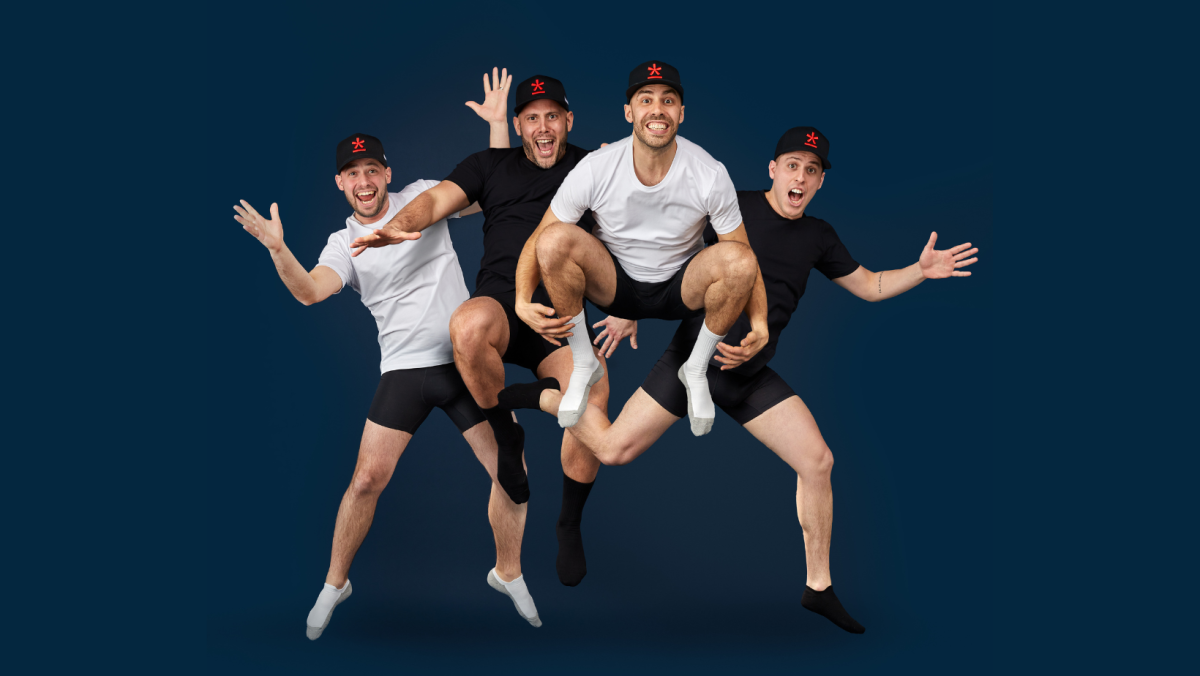
MANMADE founders open the brand's first physical store at CF Carrefour Laval on Friday, May 1, 2026. Photo: MANMADE
Canadian menswear brand MANMADE has opened its first-ever physical retail store, marking a significant step in the company’s evolution from a fast-growing direct-to-consumer business into a multi-channel retailer. The Montréal-based brand, which has built a customer base of more than one million across North America, debuted its inaugural location at CF Carrefour Laval, one of Québec’s most productive shopping centres.
Early performance has been strong. “Since the opening of the store, it’s been fantastic. It exceeded our expectations,” said co-founder Anthony Ciavirella in an interview. The response provides an early indication that the brand’s transition into physical retail may resonate with customers who have followed it online.
The opening signals a broader strategic shift for a digitally-native brand that has relied on e-commerce to drive rapid growth. As customer acquisition dynamics evolve and competition intensifies online, physical retail is emerging as a complementary channel that supports both growth and brand development.
MANMADE founders in a marketing image. Photo: MANMADE
From Finance Careers to Fast-Growing Consumer Brand
Founded in 2021 by Ciavirella, Philip Santagata, Robert Marzin, and Roberto Rebelo, MANMADE began with a simple premise: address what the founders described as the frustration of “bad underwear days.” The four childhood friends left careers in finance to build the company, launching with a single product and a tightly focused vision around quality, fit, and simplicity.
The brand gained traction through its direct-to-consumer model, emphasizing a limited assortment of core products rather than broad collections. Its flagship boxer briefs, made using Modal fabric derived from beech trees, were designed to offer softness, breathability, and durability, with functional features aimed at improving everyday comfort.
MANMADE has since expanded into additional categories including t-shirts, socks, and personal care items, while maintaining a consistent product philosophy. The company’s growth has been supported by strong repeat purchasing behaviour and a loyal customer base built through digital channels.
Building Momentum Through Media and Marketing
The company’s early momentum was accelerated following an appearance on Dragons’ Den in 2022, which introduced the brand to a national audience.
MANMADE has also leaned into localized marketing strategies to build awareness in its core market, including Super Bowl advertising placements in Québec through regional broadcast buys. The approach allowed the brand to reach a large audience while maintaining a targeted geographic focus.
At the same time, the company has built a strong digital presence through founder-led storytelling and relatable content. “Everything started with an iPhone,” Ciavirella said, noting that the brand’s marketing approach has been developed organically rather than through traditional channels.
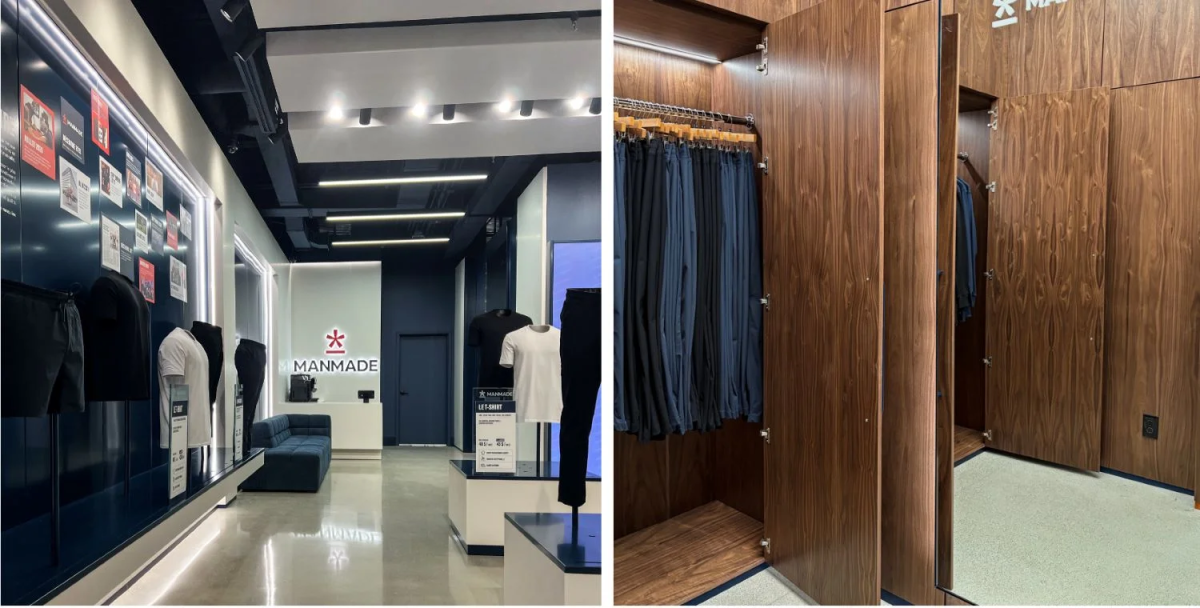
MANMADE’s first physical store at CF Carrefour Laval. Photo: MANMADE
A Transition Point for a Digital-First Brand
The move into physical retail adds operational complexity, with costs tied to rent, staffing, and in-store execution. It also creates new opportunities to acquire customers, strengthen retention, and deepen brand engagement.
For MANMADE, the decision to open a store was driven in part by customer behaviour. “There is still fifty percent of people that want to touch and feel product before they purchase it,” Ciavirella said.
That insight is particularly relevant in categories such as underwear and essentials, where fabric, fit, and comfort are central to the purchase decision. A physical location allows customers to interact with the product directly, helping to reduce hesitation and build confidence.
Inside the Store Concept
MANMADE’s retail concept is built around a service-driven, highly curated experience that blends elements of showroom retail, hospitality, and digital integration.
Customers entering the store are greeted by brand ambassadors who assist throughout the journey. For those familiar with the brand, the process can be highly efficient. “You come in and you say, ‘I’d like seven pairs of boxers,’ and someone will come up to you with an iPad… we prepare that in the back and bring you your bag,” Ciavirella explained.
The system connects to customer profiles, allowing returning shoppers to quickly reorder past purchases. Transactions take place anywhere in the store using mobile devices, eliminating the need for a traditional checkout.
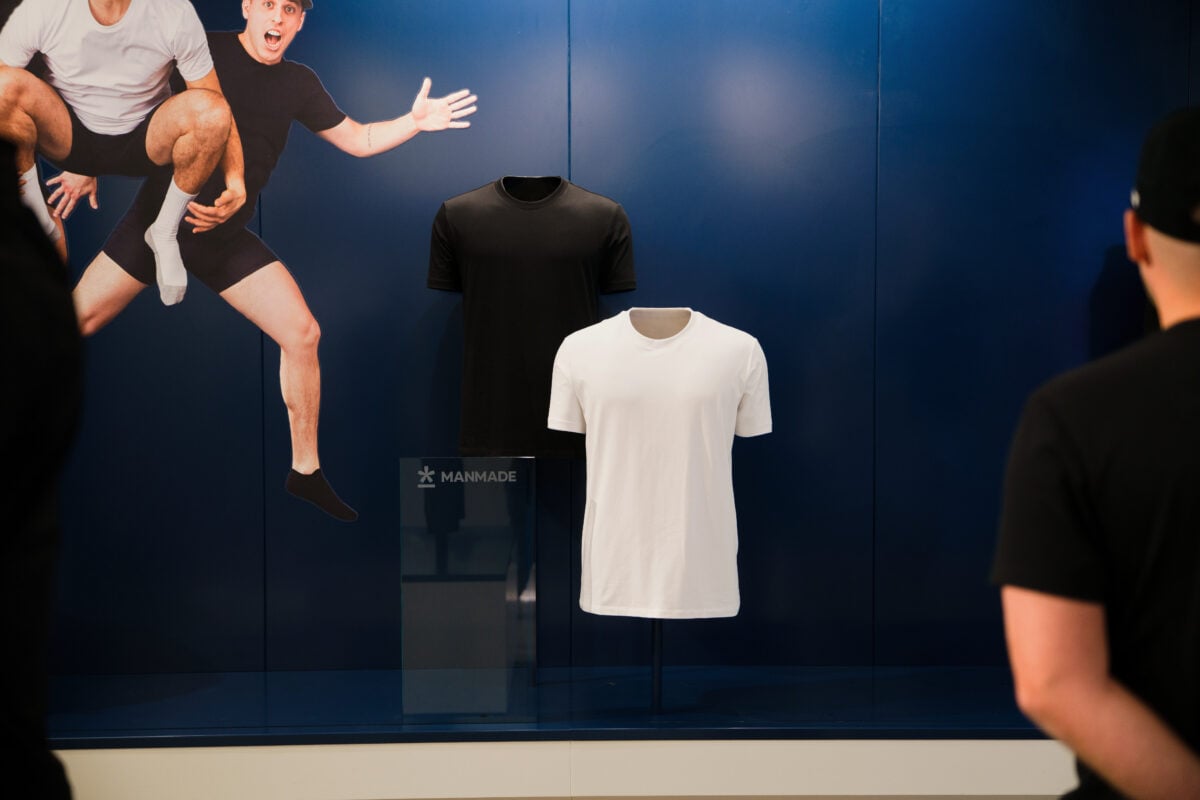
At the same time, the environment supports a more exploratory experience. The store features a central display area with minimal inventory, using custom fixtures and floating mannequins to highlight key products. A large-format digital screen showcases the brand’s marketing content and partnerships, reinforcing awareness and credibility.
Hospitality plays a role in the overall experience. Customers may be offered coffee or branded water while they wait for their order, adding a layer of service more commonly associated with higher-end retail environments.
Ciavirella described the concept as combining elements of Apple, Starbucks, and luxury hospitality brands, with a focus on attention to detail and customer comfort.
MANMADE’s first physical store at CF Carrefour Laval. Photo: MANMADE
Rethinking the Fitting Room Experience
One of the most distinctive elements of the store is its approach to fitting rooms. Rather than requiring customers to select items on the floor, each fitting room is designed as a walk-in space stocked with the full product assortment across sizes.
“You walk into a massive changing room that feels like a walk-in closet… you have every single one of our products in different sizes,” Ciavirella said.
The format allows customers to try multiple items without leaving the space, reducing friction and eliminating the need to request additional sizes. It also addresses a common pain point in traditional retail environments, where fit issues can create awkward interactions.
The approach aligns with the brand’s broader emphasis on comfort, ease, and functionality.
A Strategic Location with Broader Implications
The choice of CF Carrefour Laval as the first location is notable. The centre consistently ranks among the top-performing malls in the province and attracts strong regional traffic.
The opening also aligns with broader leasing trends across Canadian shopping centres. Landlords continue to introduce a more diverse mix of tenants, including digitally-native brands with established customer bases and distinct brand identities.
Brands that have built awareness online are increasingly seen as strong candidates for physical retail, particularly when they bring a differentiated concept and a clear brand narrative.
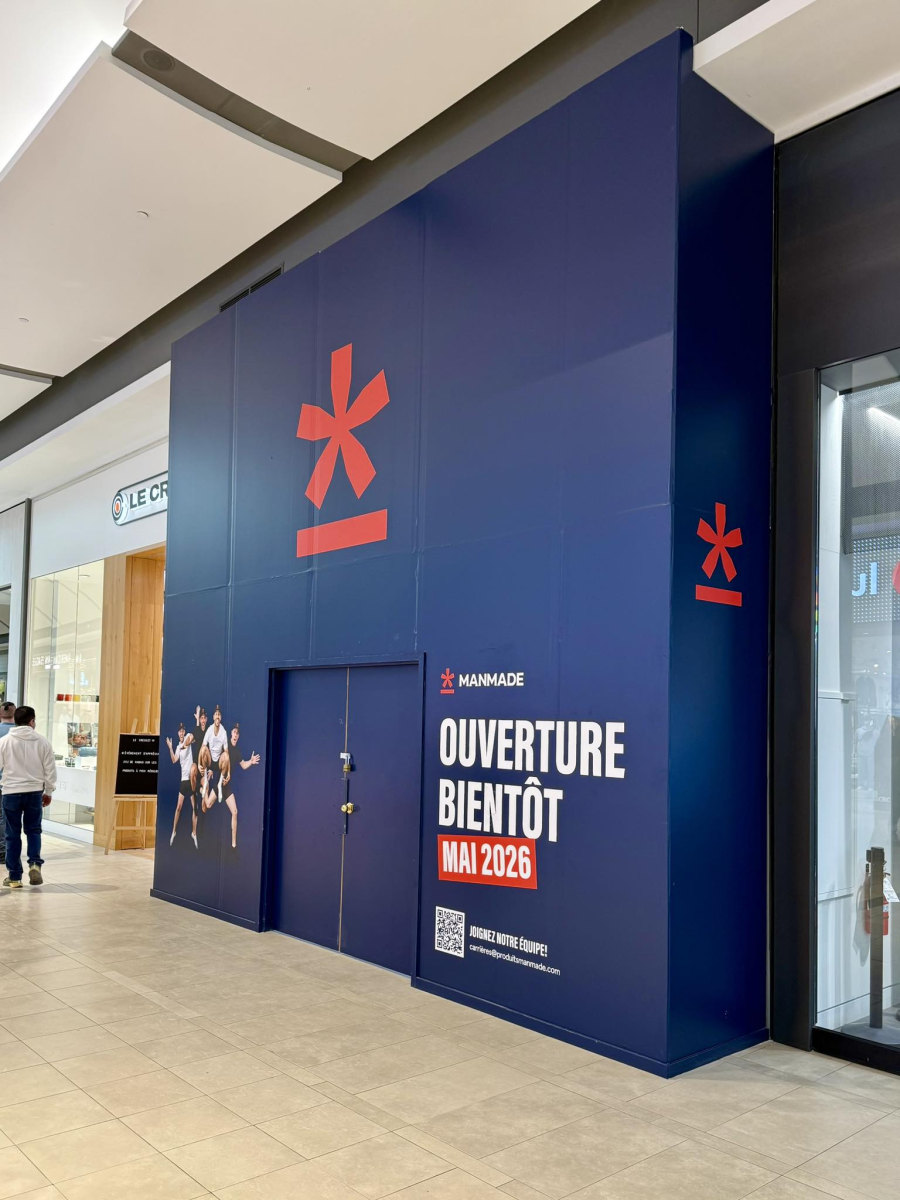
February 2026 construction hoarding for MANMADE’s first physical store at CF Carrefour Laval. Photo: MANMADE
Expansion Plans Take Shape
The company’s retail ambitions are now becoming clearer. MANMADE is targeting between 18 and 20 stores over the next three years, with an initial focus on Québec before expanding into other markets.
The strategy involves building a cluster of locations within a defined geographic radius before scaling further. Potential markets include additional locations in the Montréal area and Québec City, followed by expansion into Ontario.
Ontario already represents the brand’s largest market, accounting for approximately 40 percent of sales, compared to roughly 30 percent in Québec. The Greater Toronto Area is expected to be a key focus in the next phase of growth.
Understanding the Customer
MANMADE’s customer base offers additional insight into its positioning. While the products are designed for men, approximately 50 percent of purchases are made by women buying for partners or family members.
The brand’s core user tends to be older, with Ciavirella noting that the typical wearer is 40 and above, though the broader customer base spans a wide age range.
The focus remains on everyday essentials. “It’s the foundation of a man’s wardrobe,” Ciavirella said, describing products that can be worn across multiple settings, from travel to work to leisure.
Product Discipline and Long-Term Positioning
As the company expands, it continues to emphasize product quality and discipline. Ciavirella pointed to a recent decision to delay the launch of a new polo shirt because it did not meet internal standards.
“We wanted to make sure that product is perfect before going out to market,” he said.
This approach reflects a broader philosophy built around three pillars: product, customer experience, and marketing. The company also backs its offering with a fit and comfort guarantee, reinforcing confidence in the brand.
“If it doesn’t fit right or feel right, it’s backed by people that will make it right,” Ciavirella said.
A Signal of Where Retail Is Headed
MANMADE’s entry into physical retail highlights a broader shift across the industry. Digitally-native brands are increasingly viewing stores as an extension of their online platforms, supporting customer acquisition and long-term engagement.
For MANMADE, the first store represents both an opportunity and a test. It provides a platform to strengthen relationships with customers while introducing new operational demands.
At the same time, the concept offers a glimpse into how retail environments may continue to evolve. By integrating digital tools, service, and product interaction into a single experience, MANMADE is positioning its first store as a model that blends efficiency with personalization.
As the company moves forward, the performance of this location and the rollout of additional stores will offer insight into how effectively a digitally-native brand can translate online momentum into sustained growth within physical retail.
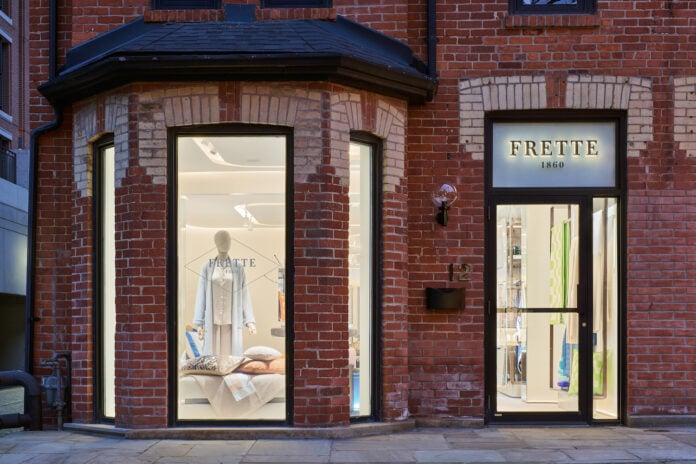
Frette at 12 Hazelton Avenue in Toronto. Photo: Michael Muraz
Italian luxury linen and home furnishings brand Frette has opened its first standalone Canadian boutique in Toronto’s Yorkville neighbourhood, marking another notable international luxury retail entry into the country as the district continues evolving as one of Canada’s dominant luxury shopping nodes.
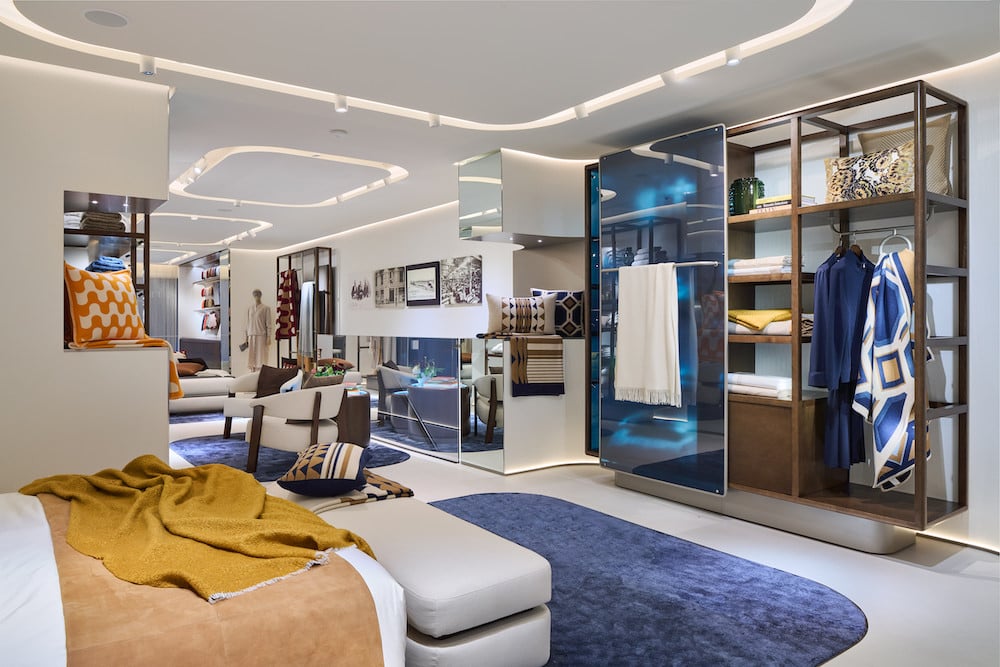
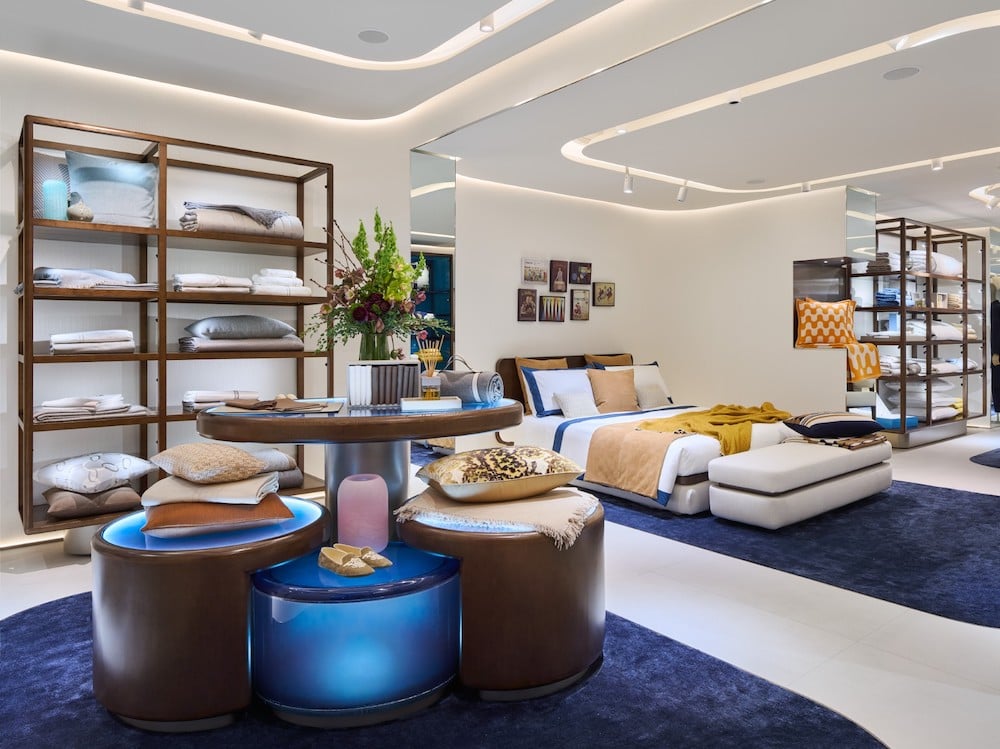
The new store at 12 Hazelton Avenue introduces not only the brand’s first Canadian physical retail presence, but also the first North American implementation of Frette’s newly developed experiential boutique concept, following its debut in Shanghai in late 2025.
Founded in 1860, Frette is internationally recognized for its Italian-crafted luxury linens, bedding, bath collections, and home accessories. The company’s products have long been associated with elite hospitality and historic institutions, including luxury hotels, European royal households, and landmarks such as St. Peter’s Basilica.
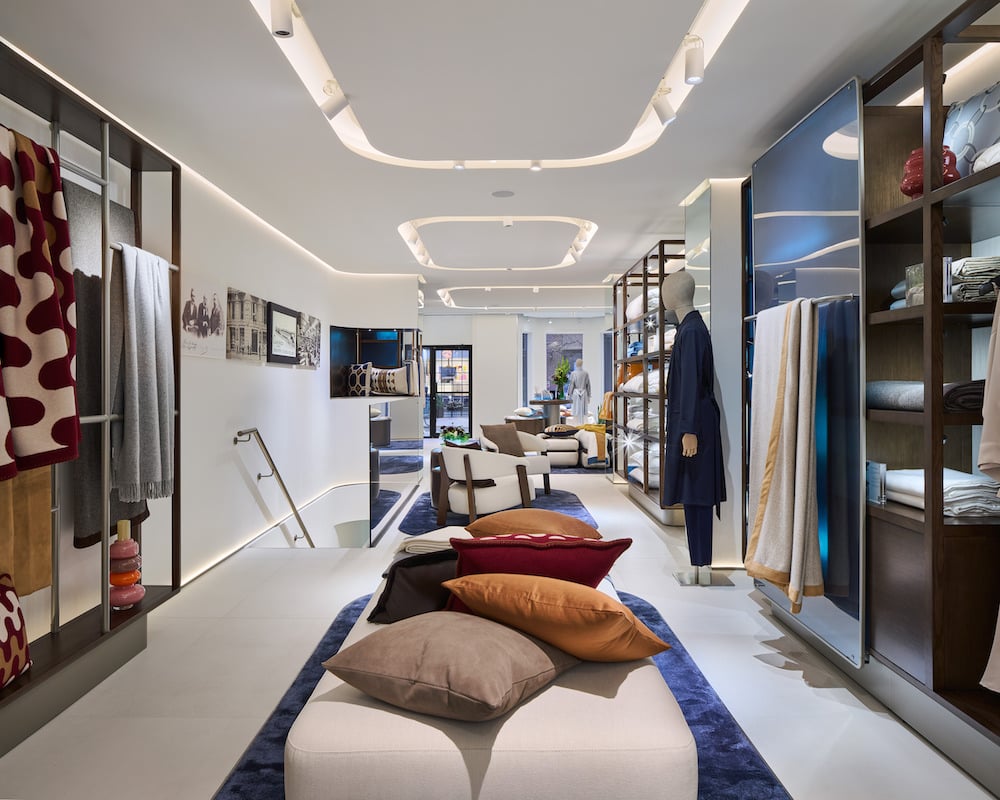
Frette at 12 Hazelton Avenue in Toronto. Photo: Michael Muraz
Toronto Chosen as Canadian Entry Point
Executives pointed to Toronto’s growing global profile and established luxury consumer base as key reasons for entering the Canadian market now.
“Toronto is one of North America’s most dynamic and internationally connected cities, with a well-established luxury landscape and a highly discerning clientele that appreciates quality craftsmanship and design,” said Cristiano Quieti, Group Chief Merchandising & Marketing Officer for Frette.
The opening comes as international luxury brands continue to expand their Canadian presence despite broader economic uncertainty affecting other retail sectors. Toronto’s Bloor-Yorkville district, in particular, has seen sustained investment from global luxury retailers as the area transforms into an increasingly affluent high-density residential and shopping district anchored by flagship stores and luxury hospitality.
No other downtown retail node in Canada currently matches the concentration of luxury brands found in the Yorkville area, outside of a smaller luxury cluster near Fairmont Hotel Vancouver in Vancouver.
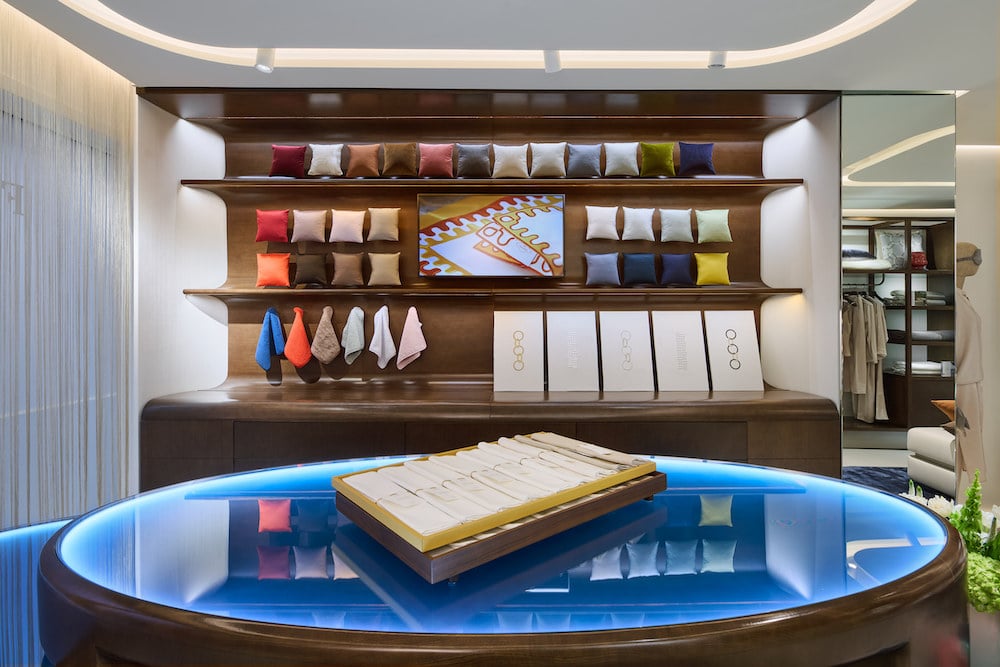
Frette at 12 Hazelton Avenue in Toronto. Photo: Michael Muraz
Hazelton Avenue Continues to Emerge as Luxury Lifestyle Corridor
Frette’s arrival also further reinforces the evolution of Hazelton Avenue into one of Toronto’s most refined luxury lifestyle retail streets.
The boutique occupies a space formerly home to Gallery Gevik, while adjacent storefronts and nearby tenants increasingly reflect a curated mix of upscale fashion, wellness, fragrance, and home-focused retailers.
Luxury cashmere and sleepwear brand Derek Rose opened nearby at 14 Hazelton Avenue last year before recently shuttering its Toronto location. Meanwhile, the broader street continues attracting premium concepts including SuitSupply, Le Labo, Atelier Munro, Rodd & Gunn, James Perse, and Hästens.
Industry sources have also indicated that luxury brands including Audemars Piguet and The Row have explored opportunities along the street in recent years.
Located directly behind the new Frette boutique is Yorkville Village, while nearby Yorkville Avenue continues to attract luxury tenants including Chanel, Stone Island, Brunello Cucinelli, Balenciaga, Kiton, and Christian Louboutin.
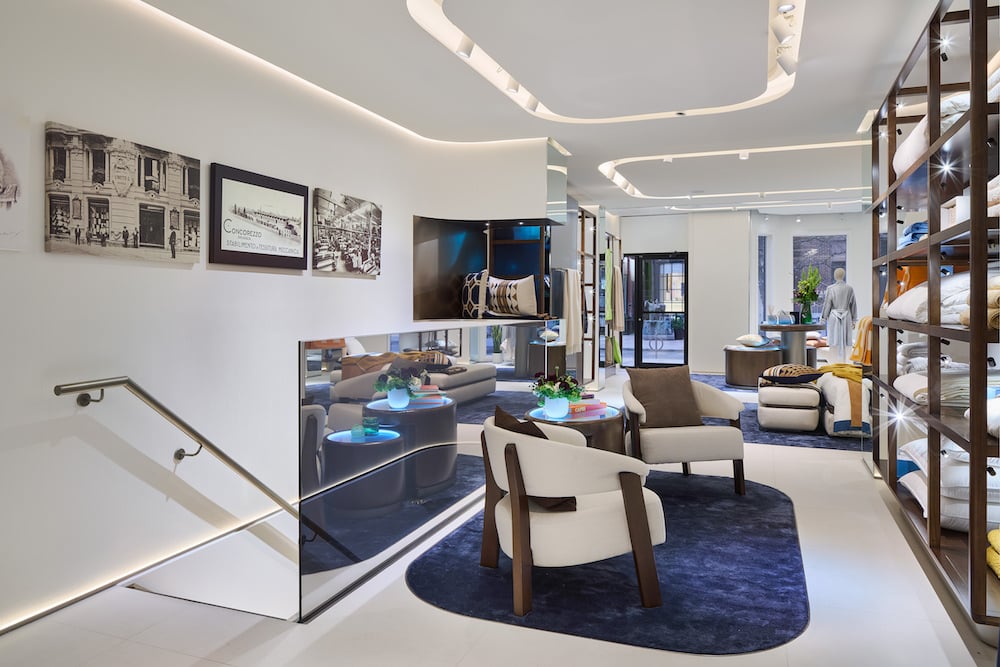
Frette at 12 Hazelton Avenue in Toronto. Photo: Michael Muraz
Boutique Designed as an Immersive Residential Environment
The Toronto location reflects a broader shift within luxury retail toward immersive, experiential store environments designed to deepen engagement and personalization.
Developed by Rotterdam and Dubai-based architecture and design firm ADS74, the concept reimagines the boutique as a private home environment rather than a conventional retail store.
The space features curated residential-style vignettes showcasing the company’s bedding, bath, and home collections in lived-in settings intended to encourage exploration and tactile interaction.
Physical retail remains especially important for luxury home brands such as Frette because customers often want to experience materials firsthand before purchasing.
“Our products are inherently tactile and experiential,” Quieti explained. “Clients want to feel the fabrics, understand the construction, and engage with the collections in person.”
At the centre of the store is the Atelier Bespoke, a dedicated consultation space where customers can customize products through fabric, finish, and embroidery selections using digital visualization tools and one-on-one advisory services.
The boutique also incorporates what the company calls the “Frette Sanctuary Ceremony,” an educational touch-based experience allowing customers to compare fabric types, finishes, and textures in a guided setting.
Frette at 12 Hazelton Avenue in Toronto. Photo: Michael Muraz
Luxury Home Retail Continues to Grow Globally
Frette’s Canadian entry also reflects broader momentum within the global luxury home and hospitality sectors, which have seen increased consumer interest following the pandemic-era focus on residential living and wellness-oriented interiors.
While historically known primarily for bedding and bath linens, Frette has expanded further into broader lifestyle categories including home accessories, loungewear, and bespoke hospitality solutions as part of a larger global growth strategy.
The company currently operates more than 100 boutiques worldwide and maintains hospitality relationships with over 1,000 luxury hotels globally, including brands such as The Ritz-Carlton, St. Regis Hotels & Resorts, and Rosewood Hotels & Resorts.
Executives say the Toronto boutique is intended to strengthen direct relationships with Canadian customers while serving as a long-term foundation for future regional expansion.
“We’re approaching expansion thoughtfully, with a focus on ensuring each location reflects the level of service and experience our clients expect,” Quieti said.
Although the Toronto boutique represents Frette’s first standalone Canadian store, the company has previously maintained a selective wholesale presence in Canada through high-end home and linen retailers including David’s Fine Linens in Toronto, Maison Lipari in Montreal, Palais Royal House & Home in Toronto, and Atkinson’s in Vancouver.
Frette at 12 Hazelton Avenue in Toronto. Photo: Michael Muraz
Toronto Continues Attracting Global Luxury Investment
Frette’s opening adds to a growing list of international luxury retailers establishing standalone Canadian stores in Toronto over the past several years.
The city’s luxury retail market has continued to evolve well beyond traditional fashion categories, increasingly incorporating hospitality-inspired concepts, wellness brands, luxury home furnishings, and experiential retail environments designed around lifestyle and personalization.
That evolution has been particularly visible throughout Yorkville, where rising residential density, international tourism, luxury hotel investment, and affluent local demographics continue supporting premium retail expansion.
Frette at 12 Hazelton Avenue in Toronto. Photo: Michael Muraz