

Canadian toy distributor Everest Toys has been placed into receivership, a development that underscores growing pressures across the Putman family’s retail holdings. The Ancaster, Ontario-based company, which has served as a key supplier for some of the world’s largest toy makers for more than three decades, is now under the control of court-appointed receiver Spergel Inc.
Court documents reveal that Everest Toys owed TD Bank roughly $25 million when the bank sought receivership in August, citing “deteriorating financial circumstances” and the wholesale resignation of the company’s board. TD told the court that Everest was “rudderless and no longer able to meaningfully work with the bank towards a mutually beneficial outcome.”
Everest Toys has long been a fixture in the supply chain, distributing products from global giants including Hasbro, Mattel, and The LEGO Group, as well as proprietary brands like Crazy Forts.
Founded in 1992 by Bob Putman, Everest Toys built its reputation as a go-to source for toys, games, and gift products. Over the years, it grew to become one of the largest toy distributors in North America, with a head office and warehouse on Cormorant Road in Ancaster.
The company employed more than 100 staff at its peak and serviced thousands of retail accounts across Canada and the United States. In addition to distributing third-party brands, Everest managed its own portfolio of products, including Alex Global Products and PlasmaCar, strengthening its position as a one-stop distribution partner for retailers ranging from independent toy shops to large chains.
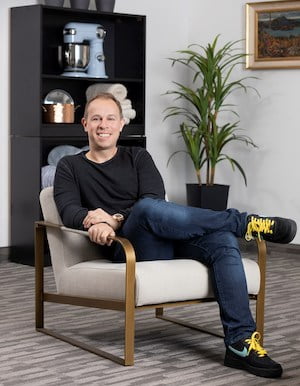
Doug Putman, son of founder Bob Putman, is listed as vice-president of the company and sat on its board with other family members. He is also the head of Putman Investments, which owns several Canadian retailers, including Toys “R” Us Canada, Sunrise Records, Northern Reflections, and women’s apparel chains Ricki’s and Cleo.
Board Resignation Leaves Business Without Leadership
According to TD Bank’s court filing, Everest Toys’ entire board resigned in August 2025, leaving the company without effective leadership and creating uncertainty about employee wages and vendor obligations. The resignation was the final step in a series of financial missteps that included a failure to provide borrowing base certificates, a key requirement for maintaining credit lines.
The receivership process, which allows a neutral third party to assume control of a distressed company, will involve Spergel Inc. managing Everest’s assets in order to recover creditor funds. Whether the business can be restructured or sold to new owners remains to be seen.
Real Estate Sale Signaled Growing Distress
Signs of financial trouble had been emerging for months. Real estate listings show that earlier this year, Everest Toys put its 95,000-square-foot Ancaster property up for sale. The warehouse was marketed at $29.1 million, advertising its suitability for storage, loading, and distribution.
The property sale suggested that Everest was seeking to free up cash or restructure its operations. However, the sale appears to have been insufficient to meet the company’s financial obligations.
Putman Group’s Wider Retail Pressures
Everest Toys’ collapse is the latest challenge for the Putman retail empire, which has grown quickly over the past five years through a series of acquisitions. Putman Investments earned a reputation for buying struggling retailers and attempting turnarounds, most notably its 2021 purchase of Toys “R” Us Canada.
But some of these ventures have faced difficulties. Toys “R” Us Canada has been closing locations in 2024 and 2025 while renovating others to include play gyms, a strategy that industry observers say is intended to drive more foot traffic but may carry high capital costs. Last year, the company accepted $120 million in financing from Gordon Brothers, a move that further underscored its liquidity needs.
Meanwhile, Rooms + Spaces, a home goods retailer launched in the former real estate of Bed Bath & Beyond, has disappeared from Canada’s retail landscape. Landlords told Retail Insider that rents were unpaid, and several vendors told Retail Insider they had not been compensated for merchandise shipments.
Putman-owned locations for US-based FYE shut in Ontario last year. And T.Kettle, a tea retailer spun out of former DavidsTea locations, appears to have scaled back signficantly, with its website listing one physical store in Burlington ON as of September 2025.








T Kettle’s web site does show one lone store in Burlington Ontario. But probably a error.
I’m going to update the article, it appears (Google Maps) that Burlington could still be open. Regardless, the reduction in store count is significant, not to mention the other brands.
Yikes! Not good for Canadian retail
Putman is PATHETIC owner ..