If you manage a retail team, you know communication is everything, but trying to coordinate with employees on the shop floor, in the warehouse, and on their break using a mix of personal texts, emails, and phone calls just leads to chaos.
A dedicated work chat app is the solution, bringing your team communication into one organized space. To help you find the right tool, here is a comprehensive review of the top work chat apps for retail teams.
What to Look For in a Team Chat App
Choose a work chat app that has:
Mobile-first design, as easy and intuitive as texting.
Fast onboarding & offboarding, so you can easily add new hires to, and a way to instantly remove ex-employees’ access.
Professional tools that help with daily tasks and let you control your data.
A mobile-first design that’s made for a team that’s on their feet all day.
Built-in tasks let you turn any message into an actionable to-do item with a deadline.
Powerful admin controls include one-click offboarding to instantly remove an ex-employee’s access, which is crucial for security.
Files and conversations are stored securely in the cloud, not on personal phones, preventing data from being lost or stolen.
Seamless integrations with business tools like Shopify, Square, Hubspot, Google Calendar, and more, so you can get notifications directly into your team chat instead of scattered across multiple apps.
Intuitive, easy-to-use app that your whole team will be able to start using on day one, with no training required.
2. Slack
Slack is built for large tech companies that need many settings and complex workflows.
Overly complex and designed for desktops, not convenient on mobile.
A per-user pricing model that’s expensive for most businesses.
3. Microsoft Teams
MS Teams is good forlarge retail chains that are already using the Microsoft 365 ecosystem.
Pros:
A cost-effective choice for businesses already paying for Microsoft 365.
Useful for office staff who work on other Microsoft tools on a daily basis.
Cons:
The app feels clunky and confusing, especially on mobile, which is inconvenient for on-the-go employees.
A complex and corporate feel discourages the quick daily chats that many teams rely on.
4. Connecteam
Connecteam is used by businesses looking for an all-in-one app that also includes HR tools like scheduling and time clocks.
Pros:
An all-in-one solution, combining chat with employee scheduling, time tracking, and training.
Good mobile experience.
Cons:
The chat feature is just one piece of a larger system and doesn’t feel as polished as a dedicated team chat app.
The number of features can be overwhelming if your main goal is just to improve team communication.
5. Flock
Flock is a productivity-focused chat app with many built-in widgets and tools.
Pros:
Includes many productivity tools like polls, lists, and notes directly within the chat.
Saves you from having to switch to a separate app for basic notes or reminders.
Cons:
Too many extra built-in tools can make the app feel cluttered and confusing.
Instead of focusing on just communication, Flock bundles many tools into one place.
6. Google Chat
Google Chat is convenient for small teams that use Google Workspace and only need the most basic messaging.
Pros:
Convenient for teams already using Google Workspace.
A simple interface that’s easy for quick one-on-one messages.
Cons:
Too basic for a dynamic retail team, as it lacks any real organizational features.
7. Pumble
Best for: Teams on a strict budget who want a Slack-like experience.
Pros:
A generous free plan with unlimited message history is appealing for new businesses.
The interface is a direct copy of Slack, so there is no learning curve for teams switching from there.
Cons:
Too complicated for most retail teams.
Not enough innovation and relevant features.
8. Personal Chat Apps (like iMessage or WhatsApp)
Best for: Personal conversations only – no professional business should use it for work communication.
Pros:
Familiar and easy to use.
Cons:
A massive security risk. You have no admin controls, so ex-employees still have access to group chat history, personal phone numbers are shared with everyone, and files are saved on personal devices.
Mixing work and personal life leads to employee burnout.
No organizational features or task management.
The Smartest Choice for Your Retail Team
For any retail business, the best work chat app must be easy to use.
New shopping data from Salesforce for Cyber Monday and Cyber Week (Nov 25-Dec 1) indicated a marked major shift this year: AI and agentic search influenced more than 20% of all Canadian online orders during Cyber Week.
Cyber Monday Canada Findings (Dec 1 only)
Canada online sales grew 3% YoY to $668M USD, while online order volumes rose 1%.
Buy Now, Pay Later (BNPL) usage doubled, rising to 4.2% from 2.1% last year
Mobile wallet payments increased to 17%, up from 16% last year
Mobile traffic share dipped slightly to 72% (down from 73% last year)
Mobile order share increased to 59%, up from 57% last year
Social traffic share decreased slightly to 12%, down from 13% last year.
Cyber Week Canada Findings (Nov 25-Dec 1)
Canada online sales grew 7% YoY, with orders increasing 4%.
AI and agents influenced 21% of all Canadian online orders.
Average Selling Price fell 2%.
Buy Now, Pay Later (BNPL) usage doubled to 5%, up from 2.5% last year
Mobile wallet payments increased to 18%, up from 16% last year.
Mobile traffic share decreased to 73%, down from 76% last year
Mobile order share climbed to 63%, up from 60% last year
Social traffic share held steady at 12%, down slightly from 13% last year
Caila Schwartz
Caila Schwartz, Director of Consumer Insights and Strategy, Retail & Consumer Goods at Salesforce, said: “With online sales jumping 7% and order volumes growing 4%, Canadian consumers displayed exceptional strength this Cyber Week. More significantly, the 2% decrease in Average Selling Price confirms that these consumers were masters of the deal, successfully stretching their dollar farther than nearly any other market.”
“The 2025 Cyber Week was the inflection point where AI agents became crucial revenue drivers in Canada. Agentic search traffic quadrupled over the weekend compared to last year, proving consumers are actively using AI for smarter purchasing. Ultimately, this AI and agent influence translated into immense commercial power, accounting for over 20% of all sales for the entire Cyber Week.”
This Giving Tuesday (December 2), Albertans are being asked to give the gift of time to loved ones facing a cancer journey. The Alberta Cancer Foundation has launched ‘The Time Store’, an exclusive pop-up store experience available for one-day only at Calgary’s CF Chinook Centre.
The Time Store is about the greatest gift there is: time. It invites Albertans to reflect on what time is worth and consider how they can help give more of it to those facing cancer. Donations to the Foundation directly fuel lifesaving research, innovation, and patient support programs that give Albertans more hope, explained the Foundation.
Wendy Beauchesne
“We know Albertans want to make a difference this giving season. The Time Store is our way of sparking meaningful conversations and inspiring Albertan to make a real impact,” said Wendy Beauchesne, CEO of the Alberta Cancer Foundation. “We all have the power to help. Donations translate directly into more time for meaningful moments and what better gift is there this season than the gift of time?”
The store is part of a wider campaign from the Foundation – including ads airing across the province this holiday season – asking Albertans to give the gift of time this holiday season. One in two Albertans will be diagnosed with cancer in their lifetime, it said.
It’s a message that resonates with Colin Dalziel, a young husband and father of two living with a stage 4 cancer diagnosis. In July 2024, Colin was on a mountain hike when he experienced what seemed to be a minor stomach-ache. It progressively worsened each day, eventually leading to the emergency room. He was soon diagnosed with stage 4 cancer of unknown primary. His prognosis was three months.
Colin’s ongoing treatment journey has taken place at the Arthur J.E. Child Comprehensive Cancer Centre in Calgary and has involved a grueling schedule of chemotherapy and multiple rounds of radiation. The treatment plan has been remarkably effective. The radiation quickly shrunk the largest mass in his pelvis, and the combination of chemo and radiation continues to work, giving him precious time.
“Every month I have where I feel well enough to parent is another month where my kids are developing and growing with their dad around. This gift of time makes me value the small things in life — being present with them, dropping my son off at hockey, and watching my daughter and her friends run around the neighbourhood. There’s a huge sense of purpose in that,” said Dalziel.
He calls the time he’s been given a “miracle”, a testament to the decades of research and development funded by organizations like the Alberta Cancer Foundation.
The Time Store pop-up is one-day only, in generous partnership with Cadillac Fairview and CF Chinook Centre. Albertans across the province can join the movement on Giving Tuesday and throughout the holiday season by visiting AlbertaCancer.ca/MoreTime to give the gift of time.
The final $623 million in the Canada Carbon Rebate payments for 2024-25 will start to hit small business bank accounts today, says the Canadian Federation of Independent Business (CFIB). Six hundred thousand (600,000) small firms in eight provinces will receive a rebate between today and December 16.
Dan Kelly
“This is good news for small businesses who have been waiting for the money they’re owed. After another challenging year, small firms could really use this chunk of cash,” said Dan Kelly, CFIB president. “But there’s still work to be done. We’re calling on Ottawa to act quickly and pass legislation to ensure the rebates are tax-free and to deliver on government’s promise to extend the original filing deadline so that more small firms can qualify.”
Legislation to proceed with these changes was introduced as part of the budget implementation bill but it hasn’t passed yet, said the CFIB.
“This will end the long battle against the consumer/small business carbon tax,” Kelly said. After stalling on paying promised rebates for small business for five years, government finally dispersed $2.5 billion in December 2024. This represented only a fraction of the total carbon tax revenue paid by small firms.
“It is a relief that the government has cancelled the consumer carbon tax and is delivering the final rebate to small firms.”
Rebates will be based on the number of T4s issued by an employer, and the Canada Revenue Agency will automatically issue the rebates to eligible businesses in Alberta, Saskatchewan, Manitoba, Ontario, New Brunswick, Nova Scotia, Prince Edward Island, and Newfoundland and Labrador, said the CFIB.
Total rebate by province
Example rebate for an employer with 10 FT/PT employees
Alberta
$159.5 M
$1,200
Saskatchewan
$42 M
$1,530
Manitoba
$34.3 M
$1,110
Ontario
$338.6 M
$980
New Brunswick
$13.4 M
$690
Nova Scotia
$18.3 M
$780
Prince Edward Island
$2.9 M
$560
Newfoundland and Labrador
$14.1 M
$1,270
Corinne Pohlmann
“While the federal carbon tax has been unfair to small businesses from the start, small firms will finally receive the last of the money they’re owed. This wouldn’t have happened without CFIB’s relentless advocacy. We held the government accountable through over 200 meetings with officials, getting provincial premiers on board and collecting over 27,000 signed petitions,” said Corinne Pohlmann, executive vice-president of advocacy. “This is a final win and good news for small businesses at the end of what has been a challenging year.”
For more information on CFIB’s work on carbon tax, visit cfib.ca/carbontax.
The CFIB is Canada’s largest association of small and medium-sized businesses with 100,000 members across every industry and region.
Staples Canada, The Working and Learning Company, is redefining its retail experience with the opening of a new, brand-defining store in Burlington, Ontario that brings the company’s EASY promise to life through innovative merchandising, expanded product categories, and new shopping experiences. (CNW Group/Staples Canada ULC)
Staples Canada is marking a new chapter in its long-running reinvention with the opening of a prototype concept store in Burlington, Ontario, that brings together refreshed design, expanded categories and a reimagined services hub under one roof. The newly redesigned location at 1035 Plains Road East, which celebrated its grand opening on November 29, is intended to act as a brand-defining model for how the retailer plans to serve Canadians who are working and learning in new ways.
“This new store was designed with our customers at the heart of every decision,” said Brian McDougall, Interim CEO and Chief Retail Officer, Staples Canada. “We have created a shopping experience that is more intuitive, more engaging and more aligned with how Canadians actually work and learn today. After more than thirty years serving this community, we are proud to deliver a store that meets the needs of our customer base in Burlington and sets the standard for what is next in retail.”
The Burlington opening is the latest expression of a strategy that began in 2018, when Staples Canada repositioned itself as The Working and Learning Company and began rolling out concept stores, coworking spaces and an expanded suite of services. The new format is the clearest signal yet that the company has no intention of standing still in a competitive and cost-conscious retail landscape.
Brian McDougall
An Immediate Visual Statement At The Front Door
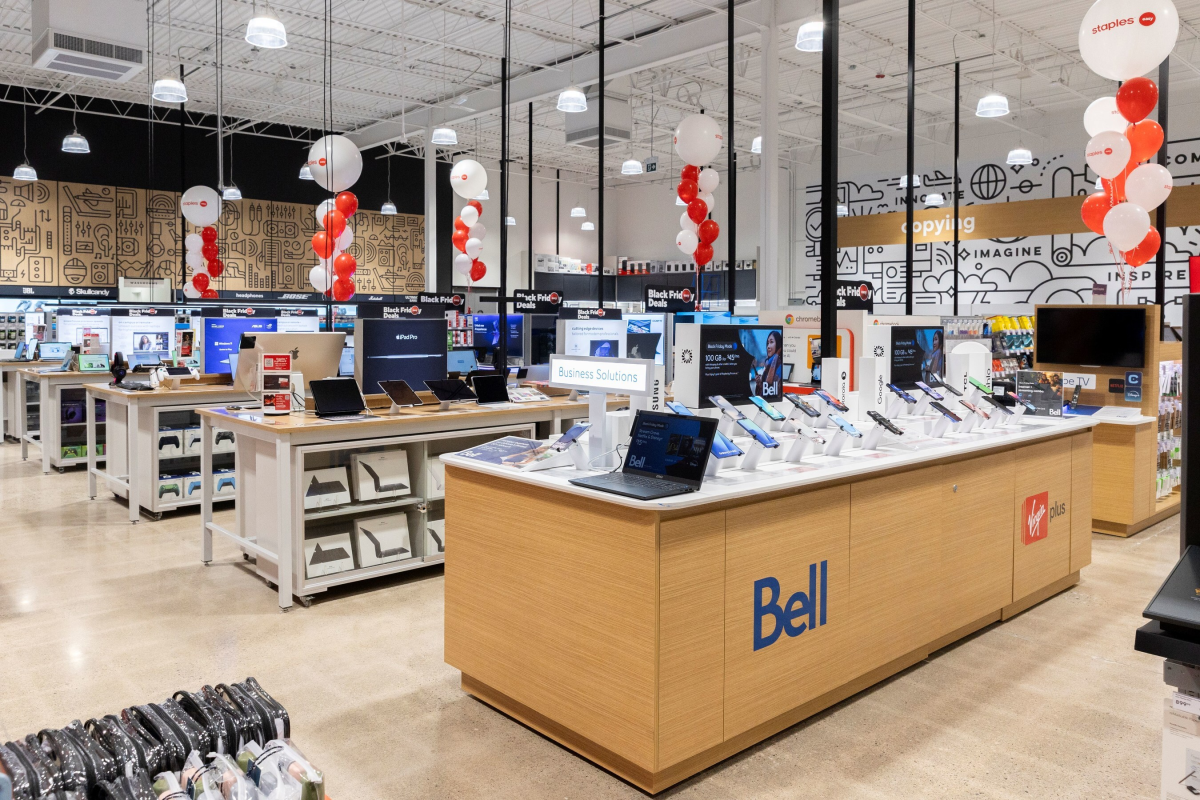
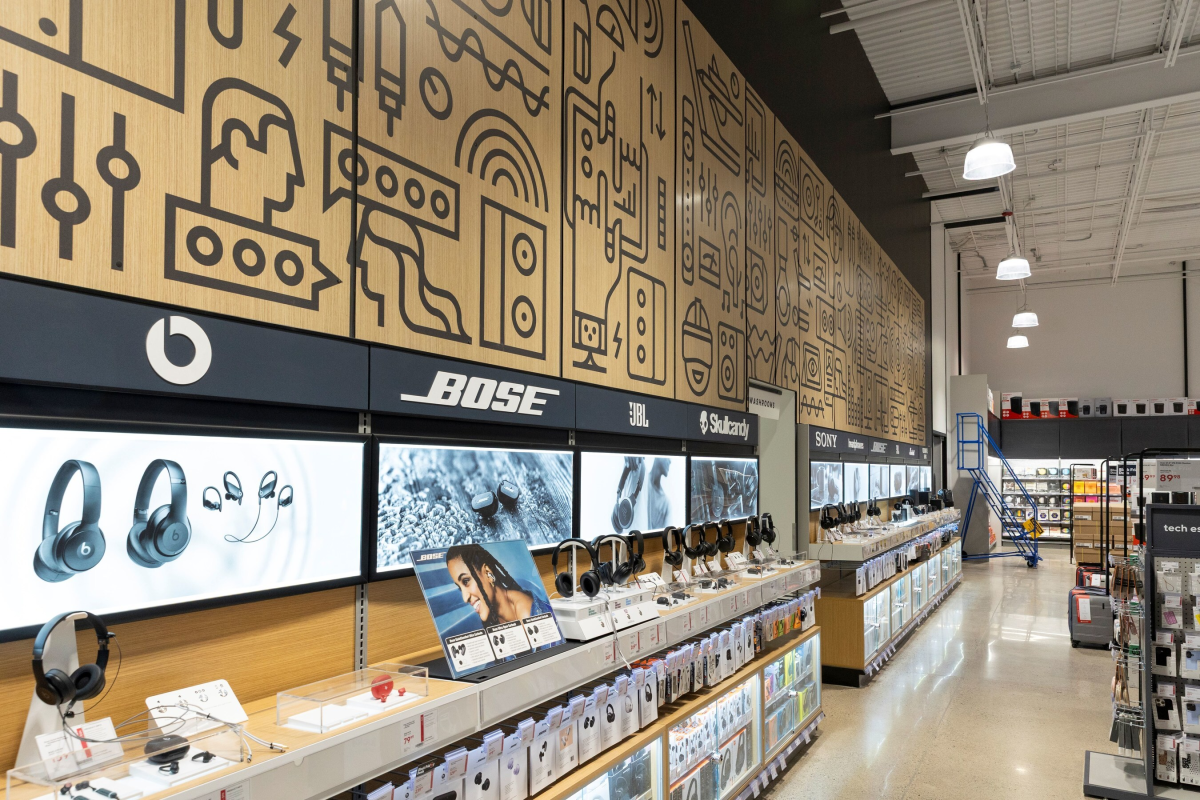
One of the most striking aspects of the Burlington location is the way it unfolds visually as customers walk in. Instead of high gondolas and obstructed sightlines, the store uses lower profile fixtures and open lines of sight that reveal the full breadth of the offering from the entrance.
“As soon as you walk in, the entire ecosystem of Staples Canada manifests itself before your eyes,” said McDougall. “You can stand at the front door and see the store, understand where to go and start to connect with the brand very quickly. That was intentional.”
Office supplies, which have historically anchored the centre of many Staples locations, have been shifted to the right side of the store. The change has freed up space for a more dynamic front-of-house experience that includes a new seasonal department and expanded discovery zones. The Staples Canada new concept store is designed to encourage exploration without sacrificing clarity, something that becomes more important as more customers arrive with specific missions such as shipping or returns.
“We have put a lot of attention on navigation,” McDougall said. “Customers want to find what they came for quickly, but they are also open to discovering new ideas if the space makes that easy.”
Staples Canada, The Working and Learning Company, is redefining its retail experience with the opening of a new, brand-defining store in Burlington, Ontario that brings the company’s EASY promise to life through innovative merchandising, expanded product categories, and new shopping experiences. (CNW Group/Staples Canada ULC)
Seasonal, Travel And Learning Zones Reflect How Canadians Live Today
Perhaps the most notable merchandising change is the introduction of a dedicated seasonal department, a first for Staples Canada. The section will evolve through the year with curated assortments tied to key moments such as the holidays, back to school and other seasonal occasions. The opening set includes décor, candles, gifts, throws and ornaments, supported by small inspirational displays that are designed to draw customers into the space.
“We know our trip frequency has gone up significantly, particularly with Amazon returns and shipping,” McDougall said. “Having a seasonal area at the front of the store gives customers another reason to purchase while they are in the building. They want rotation and variety, and we are leaning into that.”
Nearby, an expanded travel department acknowledges the strength of domestic travel and the need for practical solutions as Canadians move around the country more often. Staples has seen increasing demand for travel-related products, and the Burlington store brings those items together in a focused way at the front of the store.
Further into the space, Staples Kids Learn and Play delivers a curated take on children’s products that is rooted in education rather than traditional toy merchandising. The assortment is organized around developmental pillars such as fine motor skills and sensory learning, with a view to supporting teachers, parents and caregivers.
“We are not in the toy store business,” McDougall said. “We are in the learning and playing business. We are The Working and Learning Company, so everything in that area is selected to support educators, children and families in a purposeful way.”
The greeting card department has also been reshaped, supported by a refreshed Carlton program. With fewer specialty greeting card retailers in the market, Staples sees an opportunity to capture gifting-related purchases by positioning the card offering adjacent to seasonal and gifting categories.
Staples Canada, The Working and Learning Company, is redefining its retail experience with the opening of a new, brand-defining store in Burlington, Ontario that brings the company’s EASY promise to life through innovative merchandising, expanded product categories, and new shopping experiences. (CNW Group/Staples Canada ULC)
Workspaces And Endless Aisle Support Hybrid Work And Study
The workspace section of the Burlington store reflects how home offices, flexible work and hybrid study patterns have changed the way Canadians shop for furniture and accessories. Rather than rows of desks and chairs, the store showcases carefully composed vignettes that show complete workspaces, with supporting products placed nearby to encourage solution-based shopping.
“We have taken a less-is-more approach in the workspace area,” McDougall said. “We want to inspire customers with real examples of how a home office or work area can look, then make it easy to build that solution with everything around it.”
At the centre of the space, an endless aisle kiosk connects directly to staples.ca. If a particular item or configuration is not available in the store, associates can order from the full online assortment with next-day delivery available to the vast majority of Canadian households.
“The experience with our associates has been enhanced because they can focus on understanding what customers need and then use the endless aisle to complete the solution,” McDougall said. “It means the customer does not have to compromise.”
A Reimagined Services Hub At The Back Of The Store
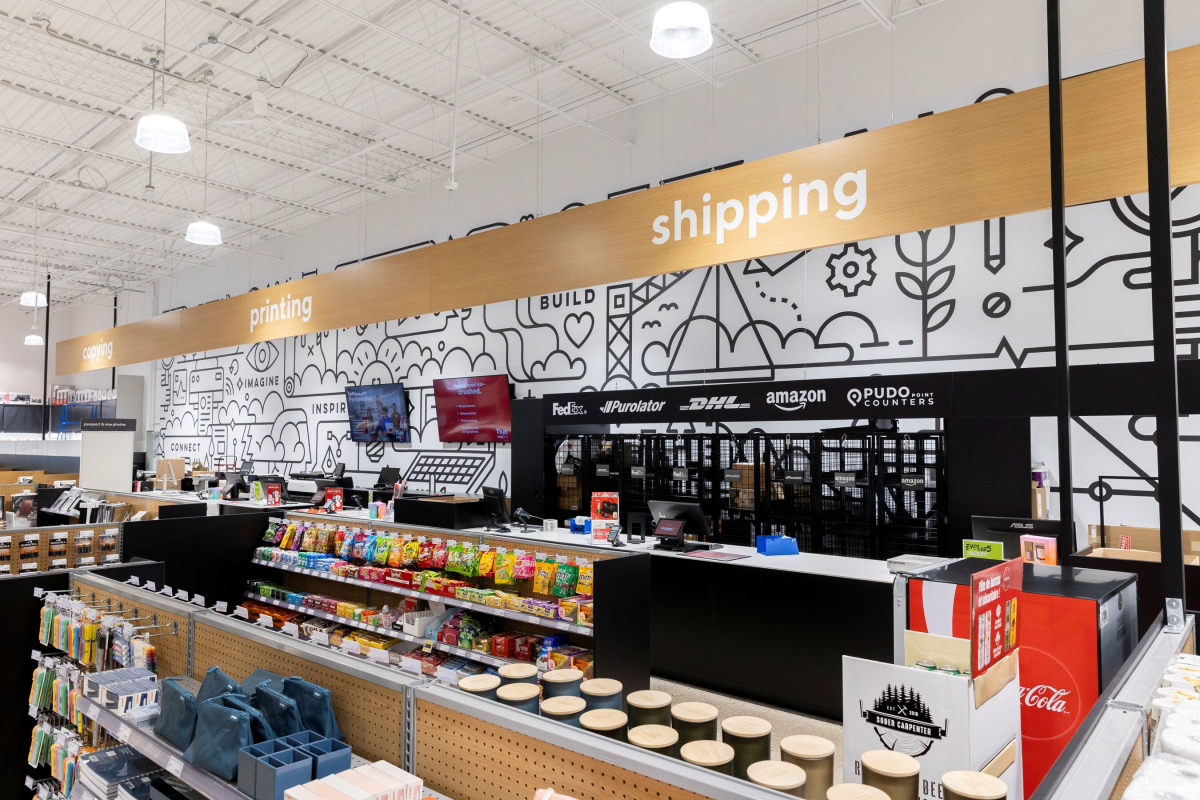
One of the most important shifts in the Staples Canada new concept store is the redesign of the services hub at the back of the building. Staples has long offered extensive print, copy and shipping services, and demand has grown as shoppers rely more heavily on retailers for package drop-off and returns. In the Burlington store, the company has used those learnings to produce a cleaner, more intuitive customer journey.
“In a typical store, ninety-five percent of the questions at the entrance are about shipping,” McDougall said. “Customers want to know where to go, and often they would end up at the wrong counter because print and shipping shared that space. We knew we had to make it easier.”
In Burlington, clearly defined queue lines and strong visual cues separate print services from shipping, with curated adjacencies around both areas. The print production zone has been moved away from the customer-facing counters, allowing associates focused on production to work without frequent interruptions, while customer-facing associates manage transactions, consultations and selling opportunities in the front.
“This is a better customer experience and a better associate experience,” McDougall said. “Associates are not pulled in many directions, so they can give each customer the time and attention they deserve.”
Staples continues to deepen its position as Canada’s shipping destination, with shipping partners that include FedEx, Purolator, DHL and UPS alongside returns programs with Amazon and Pudo. McDougall noted that the company is in discussions with one more carrier that would complete the national offer.
The rise of Amazon returns and increased parcel traffic has had a visible impact on store visits. While labour disruptions at Canada Post can temporarily double those trips, McDougall said everyday footfall from shipping alone now runs about fifteen percent higher than in the early days of the service.
“Retailers live and die by trips,” he said. “We will take those trips all day, but the real unlock is how you use them. The design, the navigation and the merchandising all work together to convert that mission-based customer into a shopper who discovers more.”
Staples Canada, The Working and Learning Company, is redefining its retail experience with the opening of a new, brand-defining store in Burlington, Ontario that brings the company’s EASY promise to life through innovative merchandising, expanded product categories, and new shopping experiences. (CNW Group/Staples Canada ULC)
Built From Pilots Rather Than Consultants
The Burlington format is the culmination of several years of experimentation across the Staples Canada network. Pilots in Scarborough and other markets tested shipping concepts, Kids assortments, merchandising vignettes and different layout approaches. Rather than rely on external consulting firms to draw up a new concept in isolation, Staples built its next-generation format from the ground up based on field experience and data.
“We have worked with consultants over the years and they can be very helpful, especially when you need a fresh perspective or a catalyst for change,” McDougall said. “In this case, we had already done a lot of work shaking the box internally. Our pilots gave us confidence that we could deliver a format that would hurdle our capital cases and deliver the returns we needed.”
Weekly project meetings, frequent store visits and rigorous analytics work have shaped the Burlington store. Associates and customers were part of the process, with feedback loops feeding into the final solution.
“In any solution design, if you are not working end to end, you are not serving yourself well,” McDougall said. “We have a lot of confidence because this format is built on what we have already seen working in the real world.”
Own Brands, Value And The Next Phase Of Change
While Burlington introduces significant changes, it is also a stepping stone toward further evolution. McDougall said 2026 will mark a major expansion of Staples Canada’s own brand platform, with a new curated zone planned for future iterations of the concept store.
“There is a whole new look and feel coming for own brands,” he said. “We see that as a key way to offer comparable quality at a better price. You cannot race to the bottom on pricing forever, so own brands, when done right, help us tell a value story that still feels authentic.”
The value message is critical as Canadians navigate a challenging macroeconomic environment. McDougall said that while customers remain cautious, they are still willing to spend when they see clear value, particularly on products that support their work, education and home lives.
“I have been in retail a long time,” he said. “There are years when money feels like it is falling from the sky and years when you really have to work to earn each dollar. The art is in how you present your value proposition, how you merchandise and how you communicate with customers. That is where we are putting our energy.”
Staples Canada, The Working and Learning Company, is redefining its retail experience with the opening of a new, brand-defining store in Burlington, Ontario that brings the company’s EASY promise to life through innovative merchandising, expanded product categories, and new shopping experiences. (CNW Group/Staples Canada ULC)
Burlington As A Blueprint For The Network
The Burlington store will not remain a one-off. McDougall said the company expects the format to inform remodels and new locations across the network, with adjustments as needed for market size and store footprint.
“We see a path forward with this design,” he said. “The softer look and feel, the different zones, the focus on services at the back and the way everything connects to The Working and Learning Company, this is the footprint for what we roll out next.”
The concept builds on earlier flagship investments such as the University Avenue store in downtown Toronto, which introduced Staples Studio coworking, café partnerships and a more experiential layout. While coworking will remain concentrated in major urban markets where density can support it, elements of that thinking, such as community spaces and solution-based merchandising, can be seen in the Burlington format.
For the Burlington community, which first welcomed Staples in 1993, the new store represents both continuity and renewal. To mark the opening, Staples Canada donated twenty-five thousand dollars to MAP through its Even The Odds partnership, which supports research aimed at closing health equity gaps across Canada.
The Staples Canada new concept store in Burlington brings together the company’s retail learnings of the past several years into a single place where design, services and product mix are working toward the same purpose. It is a physical expression of a brand that is moving beyond its roots as an office supply big box and into a broader role as a partner in how Canadians work and learn.
As McDougall put it, the opening weekend underscored why the in-store experience still matters. “This is a fun day for us at Staples,” he said. “The energy, the excitement from our teams, the buzz from customers in the store, you cannot get that online. It reminds us why investing in stores still makes so much sense.”
RONA inc., one of Canada’s leading home improvement retailers operating and servicing over 425 corporate and affiliated stores, says it is positioning itself as a technology leader in its industry.
“After investing in streamlining its supply chain, developing its private brands, establishing a strong position among construction professionals and RONA affiliated dealers, and increasing the RONA brand awareness through marketing and store conversions, the company is collaborating with strategic partners such as Google Cloud and DoorDash to propel its shift to artificial intelligence and enhance its omnichannel experience,” said the brand in a news release on Tuesday.
RONA said it chose Google Cloud to maximize the impact of artificial intelligence across all its operations and accelerate its growth through the cloud.
J.P. Towner
“We are very proud to reach this milestone with Google Cloud. We are automating our processes, modernizing our retail operations and enhancing the customer experience by integrating cutting-edge technologies such as Google Distributed Cloud Edge and AI. This collaboration allows us to position ourselves at the digital and technological forefront of our industry,” said J.P. Towner, President and Chief Executive Officer at RONA inc.
This relationship with Google Cloud will enable RONA to succeed in an ever-changing retail sector.
“We are rethinking the ways our stores operate, how our teams interact with customers, and how technology can support every stage of the in-store experience. Google Cloud’s expertise will be of great benefit to us, to our customers and to our employees,” said Martin Thibodeau, Senior Vice-President and Chief Information Officer at RONA inc.
RONA said it is the first company in its industry to offer a rapid delivery solution with DoorDash to reflect consumers’ new shopping habits.
“We are eliminating the barrier between store and customer by innovating and making home improvement more accessible, more connected and quicker,” added Towner. Thousands of products are now available for purchase on the platform to meet the needs of today’s consumers.
In recognition of its search engine marketing efforts, the home improvement and construction retailer won the Rising Star Award in the Performance Marketing Excellence category at the 2025 Google Search Honours Awards ceremony, which was held in Toronto on November 13. The Rising Star Award is a new series of awards introduced by Google this year to recognize companies that have made remarkable strides in the Measurement and Analytics Leadership and Performance Marketing Excellence categories, the company explained.
“To offer a more customized experience at each step of the customer’s journey, we completely overhauled our approach to search engine advertising. This transformation allows us to help our customers quickly find the products they’re looking for while also discovering solutions that are adapted to their projects,” said Catherine Laporte, Chief Digital and Marketing Officer at RONA inc.
Catherine Laporte
“By leveraging real-time data and historical performance, we can now optimize our advertising investments according to demand and market trends. Artificial intelligence plays a pivotal role in the dynamic adjustment of our strategies, enabling us to react even more rapidly to changes in consumer behaviour and easily identify unforeseen fluctuations in demand.”
RONA inc. is one of Canada’s leading home improvement retailers, headquartered in Boucherville, Quebec. The RONA network operates or services more than 425 corporate and affiliated stores under the RONA+, RONA and Dick’s Lumber banners.
Rolex has opened a new boutique at Royalmount in Montreal, unveiling what is now the largest Rolex store in Canada and marking a defining moment in the country’s luxury retail landscape. The nearly 5,500 square foot boutique, operated in partnership with Raffi Jewellers, introduces Montreal to a dedicated space that reflects the brand’s global retail design standards. It also arrives as part of a broader national push, with Rolex preparing to open another large store at Oakridge Park in Vancouver in March 2026 that will be operated by Global Watch Company.
The launch of the Rolex Royalmount boutique underscores the momentum behind the brand’s presence in Canada, a market that has seen steady growth in demand for Swiss luxury watches and a corresponding rise in premium retail environments. Royalmount, positioned as Montreal’s emerging luxury district, provides a stage for Rolex that blends architectural drama with the renewed energy of a market embracing high-end brands.
A Space Designed to Immerse Customers in the Rolex World
The new boutique was designed in close collaboration with Rolex architects, with nine distinct areas laid out to create what the brand describes as an immersive experience into its universe. Travertine clads the exterior façade, its sculptural shapes echoing the links of a Rolex bracelet. Inside, watches sit against three-dimensional, faux-leather backdrops crafted by artisans, forming a curated backdrop that highlights the precision and aesthetic of the collection.
Warm lighting softens the contemporary architecture. Walnut paneling and Verde Alpi marble appear throughout, the latter illuminated in a way that evokes the marine world deeply tied to Rolex’s heritage. Visitors enter a reception area anchored by a chandelier inspired by the sunray finish of Rolex dials, suspended above a presentation table and travertine counter that together offer a sense of ceremony before visitors move deeper into the boutique.
A custom stucco mural on the back wall depicts Montreal’s historic Bonsecours Market. The artwork, designed for the space, grounds the store in its new city and adds a layer of local narrative to a global brand environment.
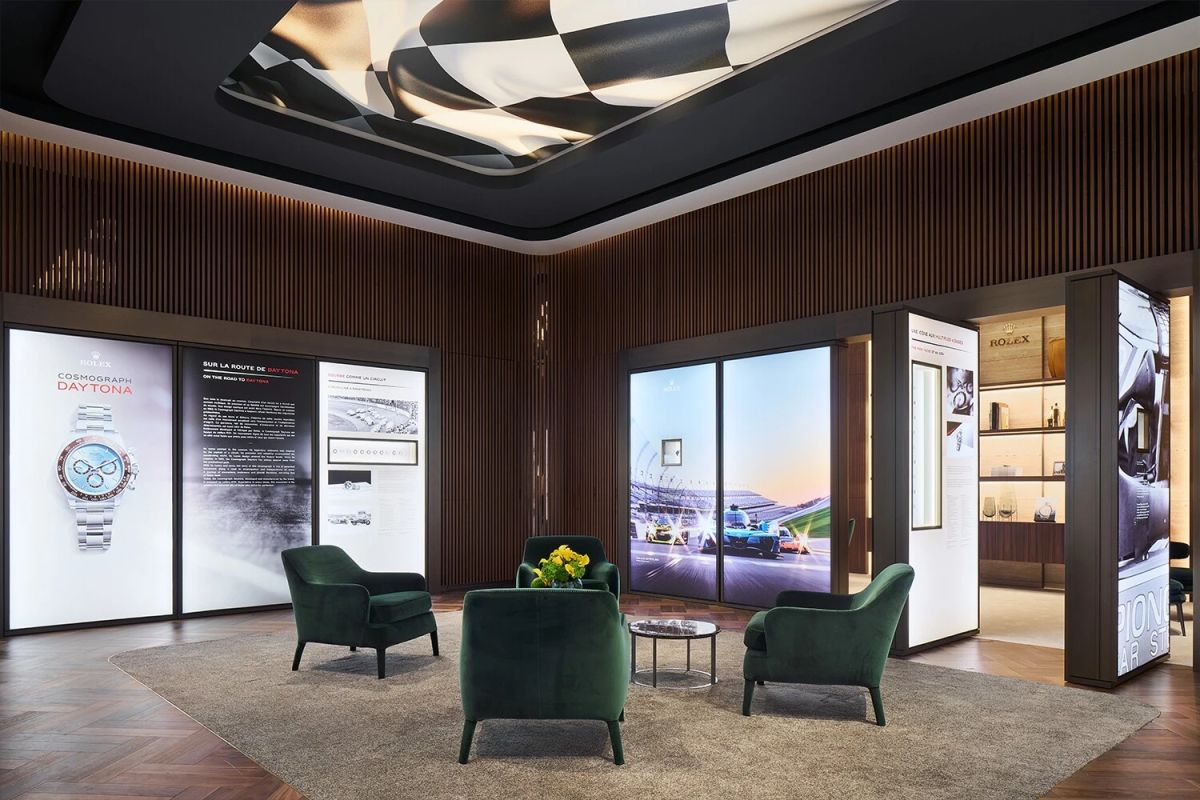
Two lounge areas provide space for extended conversations and private appointments. Green velvet seating and lighting shaped to resemble the Cyclops lens create a subtle dialogue with the brand’s watch design language. More intimate sales lounges, paneled in American walnut, offer a quieter backdrop for clients selecting timepieces.
Every detail in the store, from furnishings to decorative installations, was crafted to reflect Rolex’s approach to precision and artisanship. The design places the boutique firmly within the company’s worldwide network of refined retail spaces.
Canadian design-build firm SAJO brought the Rolex space to life. SAJO has been the construction-design firm for luxury stores globally, and is also building a Tiffany & Co. store at Royalmount that will open early next year.
Rolex at Royalmount in Montreal. Photo: Rolex
After-Sales Care Coming in 2026
A full after-sales workshop will open inside the boutique in the spring of 2026. The workshop will be visible from one of the lounge areas, allowing guests to observe Rolex-certified watchmakers at work. These specialists are exclusively authorized to service Rolex timepieces, and the company presents their presence as a commitment to ongoing care and precision for clients in Quebec.
The addition of an on-site service centre is expected to make the Rolex Royalmount boutique a long-term hub for the maintenance and preservation of timepieces in the region.
Exhibition Introduces the Story of the Daytona
To celebrate the opening, Rolex and Raffi Jewellers have introduced a dedicated exhibition on the Oyster Perpetual Cosmograph Daytona. The presentation will run from November 2025 to June 2026 and traces the chronograph’s origins in motorsport, beginning with Daytona Beach and the racetrack inaugurated in 1959. Themes explore the model’s enduring links to racing, the evolution of its design, and its iconic cultural status, supported by figures like Paul Newman whose association helped cement the Daytona’s place in horological history.
Visitors may view models chosen from the current collection, including pieces featuring the calibre 4131, an in-house movement that reflects Rolex’s approach to performance and precision. The exhibition reinforces the boutique’s dual identity as both a retail environment and a place of discovery, where the history of one of the brand’s most recognizable watches is brought forward for a Canadian audience.
Rolex at Royalmount in Montreal. Photo: Rolex
Rolex’s Broader Retail Footprint in Canada
While the Montreal boutique represents a milestone in size and design for the company in Canada, it joins a small but influential network of Rolex locations across the country. In downtown Vancouver, Global Watch Company operates a 2,500 square foot boutique on Alberni Street (currently being renovated), a key address in the city’s luxury district. In Toronto, Royal de Versailles operates a Rolex boutique at 101 Bloor Street West, a longstanding presence in one of Canada’s leading shopping corridors.
Together with these stores, the incoming flagship at Oakridge Park in Vancouver will form a west–east constellation of Rolex spaces that reflects the brand’s expanding reach.
Rolex’s Canadian retail partners note that the national market has grown increasingly sophisticated, with collectors and new buyers seeking immersive environments that match the caliber of the timepieces themselves. The Rolex Royalmount boutique plays a prominent role within that shift.
Rolex at Royalmount in Montreal. Photo: Rolex
Rolex’s Legacy and Manufacturing Philosophy
Rolex uses the opening to highlight its status as an integrated and independent Swiss watch manufacturer. Based in Geneva, the brand oversees nearly every stage of production across its Swiss facilities, from the casting of gold alloys to the machining and assembly of movements, cases, dials, and bracelets. The company’s Oyster Perpetual and Perpetual watches are certified by COSC and then tested again in-house under Rolex’s own criteria as part of its Superlative Chronometer designation.
The company notes that “Perpetual,” inscribed on every Rolex Oyster watch, is more than a technical description. It reflects a philosophy that guided founder Hans Wilsdorf and continues to inform the brand’s values, from innovation to precision. Rolex emphasizes milestones such as the Oyster case of 1926, the world’s first waterproof wristwatch, and the 1931 invention of the Perpetual rotor. The brand has registered over six hundred patents in its history and continues to expand its facilities, including a fifth site scheduled to open in Switzerland in 2029.
Rolex also remains active in supporting initiatives across arts, culture, science, sports, and environmental preservation.
Royalmount’s Rise as a Luxury Destination
Royalmount, developed by Carbonleo with L Catterton Real Estate as a key investment partner, has quickly shifted the geography of luxury retail in Montreal. The district is described as one of the largest private mixed-use developments underway in North America and is positioned as Canada’s first carbon-neutral mixed-use project. Built around a pedestrian-focused model and a “15-minute city” philosophy, Royalmount blends retail, dining, entertainment, office space, and eventual residential components.
The main retail complex opened in September 2024 with just over fifty stores and will continue expanding toward a planned roster of about one hundred seventy retailers and sixty restaurants and cafés. The district has attracted first-in-Quebec boutiques for Louis Vuitton, Gucci, Versace, Saint Laurent, Moncler, RH, and others. A Tiffany & Co. boutique will open next year, joining an expanding lineup of watch and jewellery brands, including TAG Heuer, Omega, Montblanc, and the first TimeVallée in Canada.
Fashion and lifestyle brands such as Zara, Mango, Sandro, Maje, Alo Yoga, Uniqlo, Canada Goose, Veronica Beard, and multiple Montreal-based labels add further depth. Dining options include the European-inspired food hall Le Fou Fou and new-format locations for celebrated local establishments such as Olive et Gourmando.
The opening of the Rolex Royalmount boutique affirms the positioning of the development as a destination designed to complement rather than compete with downtown Montreal’s existing luxury offering at Holt Renfrew Ogilvy.
The cost of living in Canada has continued to increase amid growing unemployment, yet consumers haven’t stopped spending at retailers. Essential spending on groceries and personal care has remained steady, with much of Canada’s retail strength this year driven by discretionary spending on goods such as clothing and jewelry, as well as spending on experiences like dining out at restaurants.
Why?
Higher interest rates and affordability constraints are the culprit. Fewer people have been buying homes over the past few years, and consumer surveys increasingly show that Gen Z, the age cohort born between approximately 1997 and 2012, and the large Millennial demographic are increasingly giving up their aspirations for homeownership, and instead turning to luxury goods.
Labeled by sociologists as “doom spending,” the shifts in spending signal short-term positivity for this season’s holiday spending, but longer-term concerns for the economy.
“Young people are coming to terms with the fact that home ownership is out of reach for them. In the past housing was 3-4X income. Given where home prices were in the past, saving for a downpayment was a realistic goal to be done in your 20s and 30s. Then you could move on to a traditional life cycle – ie., have a family, take vacations, buy furniture etc. Today, home prices are 9-11X income,” he said.
“No matter how hard young people try to save for a downpayment, high house prices make that endeavour out of reach. As a result, many young people feel that the better trade off is to skip trying to save for a home and just spend their money on things that make them feel happy. Forget delayed gratification. The mantra now is “you only live once” – YOLO.
“So buying luxury goods, taking expensive trips are what more and more young people are focused on. Social media has only reinforced this behaviour. Wealthy boomer parents (with plenty of equity) are also helping to accommodate that. Another result of this is the breakdown of traditional families as young people stop marrying, having kids etc.”
Gomez said all age groups are doing some form of retail therapy.
“Economic anxiety may force all age groups to spend more than they would these days, However, young people are most vulnerable. Home ownership is further out of reach for this demographic group (average age of homeownership today is now in the 40s not the 20s). Job growth is also the weakest at this age group, while assets are fairly negligible,” he said.
“Social media tells them to spend to feel better and they do that without the safety net of personal financial security unless they have wealthy parents looking out for them. This is all reflected in elevated social anxieties/mental health challenges prevalent among this demographic group today.”
Gomez said Canada’s economy is sitting on very fragile ground.
“With the external side of the economy under pressure to restructure due to the US trade war, domestic demand needs to hold up economic growth. It’s been doing that over the past year, thanks to significant immigration, largely of young people and solid consumer spending,” he said.
“Now that immigration has been curbed and without real income growth generated through productivity, that spending cannot continue indefinitely without fueling more household consumer debt. With government’s fueling debt growth now too, doom spending may only lead to a doom loop, ever increasing debt, higher rates on debt, printing money to support falling asset prices but increasing inflation and the cost of living.”
Photo: Filipe Sabino
Gomez said more economic anxiety, more consumers are prone to things like retail therapy, doom spending and rising debt.
“This is even a reality in the US, where the economy is on firmer ground than in Canada.
“Savings rates are still elevated versus recent trends. Will be watching to see if there is erosion in this should real income growth fail to materialize. What we should all be watching in Canada is whether businesses start to make the key investments to drive up currently sagging productivity growth to help raise real income levels.
“I suspect this will happen at more glacial levels than immediate. In the meantime, the wealth divide across generations could only grow wider. Baby boomers with considerable equity and assets, will benefit, and may pass along some of this wealth to their children to give them a “head start”. But for others, their ability to grow their standard of living and acquire wealth may remain challenged. Watching indicators of the wealth divide would be a key one to watch in that regard.”
Odd Burger Corporation has made some strategic moves it says are designed to strengthen the company’s operating model, enhance liquidity, and support long-term growth across its franchise network.
“As part of the Company’s strategy to improve efficiency and position the Company for future growth, Odd Burger is transitioning away from operating its in-house manufacturing facility, previously managed by its wholly owned subsidiary, Preposterous Foods,” said Odd Burger in a news release.
“Effective December 1st, the Company will begin shifting to an asset-light, outsourced manufacturing model supported by established food manufacturers and innovation-driven suppliers. This model enables Odd Burger to benefit from greater production efficiency, enhanced product consistency, and access to a broader pipeline of innovation — while eliminating the capital intensity associated with running its own facility.
“The decision follows a comprehensive assessment of the Preposterous Foods facility, which has equipment nearing the end of its useful life, limited space to support future production scale, and a lease term that ended on November 30th, 2025. Rather than reinvesting significant capital into a facility that could not meet the Company’s growth trajectory, Odd Burger is electing to transition to outsourced production through experienced co-manufacturers and leading industry suppliers.
“By partnering with external food technology companies, Odd Burger will be able to leverage advanced production capabilities and outsource research and development to innovators in the plant-based space. This approach allows the Company to bring new products to market more quickly across its restaurant network, while benefiting from improved consistency, potential reductions in cost of goods sold, and access to an expanded innovation pipeline.”
Image: Odd Burger
In October 2025, Odd Burger said it conducted a successful trial of a grilled chickUn burger made with Swap Foods’ plant-based chicken protein. Swap Foods is widely regarded as a leader in the plant-based space, and customer feedback on the new product has been overwhelmingly positive, it said, adding that the results of this trial gave Odd Burger’s operations team strong confidence that transitioning to external suppliers would significantly enhance the company’s menu offering and help drive increased sales across the system.
The transition of Preposterous Foods products to external suppliers will commence in the coming weeks, with new products introduced gradually to ensure a seamless supply chain shift with no disruption to restaurant operations, it said.
James McInnes
“Our transition to external suppliers marks a major step forward in shaping the future of Odd Burger,” said James McInnes, CEO and Co-Founder of Odd Burger. “By partnering with leading food technology companies, we are transforming Odd Burger restaurants into a true hub for innovation–creating a platform where collaboration can thrive and breakthrough products can reach customers much faster.
“This approach empowers us to expand our menu, push the boundaries of plant-based cuisine, and unlock a new level of consistency and scalability across our system. We’re building not just a restaurant brand, but an innovation ecosystem designed for the next decade of growth, creativity, and global impact.”
Odd Burger said it will intensify its focus on franchise success by investing in operational training, menu consistency, marketing support, and scalable systems that drive strong store-level performance. As part of this effort, the company plans to collaborate with established plant-based brands and leverage their marketing networks to further increase awareness and expand the reach of the Odd Burger brand, it explained.
“Demand from prospective franchise partners continues, and the Company remains committed to expanding its footprint with a disciplined, strategic approach. Odd Burger is also pleased to confirm the upcoming opening of its new Woodbridge, Ontario location. Construction at this location is substantially complete, and the final municipal permits are now in the closing stages. Once finalized, the restaurant will proceed into its final pre-opening preparations,” it said.
“With the transition to a distributed manufacturing supply chain, the Company is also revisiting its plans to expand into the United States. Previously, exporting products from the Preposterous Foods facility in Canada posed logistical and tariff-related challenges. By leveraging external manufacturing partners, Odd Burger now has increased sourcing flexibility and reduced tariff uncertainty, creating a far more scalable and sustainable foundation for potential U.S. market entry,” said Odd Burger.
“As part of its broader shift to an asset-light operating model, Odd Burger is evaluating opportunities to unlock liquidity and strengthen its balance sheet through both traditional and non-traditional capital strategies. This includes the potential monetization of non-core assets — such as production-related equipment no longer required under the co-manufacturing model and the sale of select underperforming corporate restaurant locations. The goal is to strengthen the Company’s balance sheet and reinvest proceeds to produce an alternative revenue stream for the Company. The Company plans to leverage the extensive capital markets experience of its CEO and key stakeholders to effectively deploy this strategy.”
Canada’s economy is showing clear signs of stabilization, buoyed by easing inflation and strategic interest rate cuts. This improving environment has sparked a wave of business confidence and investment, evidenced by a rebound in new credit activity, says a new report by Equifax Canada.
Despite headwinds like the August trade deficit, businesses are leveraging this newfound stability to grow: average business debt rose 19.6 per cent year-over-year to $30,855, driven largely by an 83 per cent surge in balances for newly established firms. This willingness to take on capital — particularly the 26 per cent jump in industrial trade originations — suggests that new ventures are positioning themselves for future growth, it said.
The Canadian Small Business Health Index — a joint initiative between Equifax Canada and Business Development Bank of Canada that provides a quarterly snapshot of the health of Canadian Small and Medium Businesses — rose by 2.83 per cent compared to the previous quarter, largely driven by the improvement of business sentiment in the outlook. Recent interest rate cuts and the approaching holiday season have potentially instilled a renewed sense of optimism among small business owners.
“Small business owners are walking into the holiday season with cautious optimism,” saidJeff Brown, Head of Commercial Solutions, Equifax Canada. “Lower interest rates and improving business sentiment seem to be helping, but many owners are still relying on credit to manage higher costs and keep shelves stocked,” noted Brown.
Jeff Brown
The report said the manufacturing sector emerged as a key driver in the recent surge in business credit demand, directly correlating with intense cost pressures despite broader economic moderation. An extraordinary 13.8 per cent jump in gold and metal ores contributed to a 1.6 per cent month-over-month rise in the Raw Materials Price Index (RMPI), alongside a 6.0 per cent year-over-year rise in the Industrial Product Price Index (IPPI). This environment of soaring input costs fueled the sector’s contribution to the overall 8.83 per cent year-over-year increase in credit demand inquiries, as manufacturers sought financing to stabilize inventory and maintain production levels, offsetting the cautious decline seen in other industries. This proactive financing need is further set against the backdrop of a challenging year for the sector, which posted a 1.5 per cent quarterly and 2.1 per cent annual decline in its health index in Q3 2025.
“The shift in payment priorities observed in the previous quarter has solidified in the third quarter, with businesses favouring supplier payments over financial debts. Overall, 60+ day delinquency rates for financial trades rose to 3.5 per cent in Q3, up 7 per cent compared to last year. Conversely, the rate for industrial trades fell to 4.92 per cent, marking a 18.7 per cent improvement year-over-year. This opposing trajectory indicates that businesses are prioritizing essential supplier invoices to secure inventory for the holiday season, leaving financial trade obligations vulnerable to elevated delinquency rates,” explained Equifax.
“While this financial stress is visible nationally, regional disparity is most outstanding in Ontario, where the economic strain on small businesses has become increasingly concentrated. Ontario continues to drive the highest financial trade delinquencies, reaching 3.86 per cent in Q3 — a significant increase of 10.5 per cent year-over-year and 6.5 per cent quarter-over-quarter. This underperformance is potentially attributed to the province’s heavy exposure to the manufacturing sectors and financial services sectors, which have been disproportionately impacted by recent trade tensions, high operating costs, and high financial challenges for consumers. On one hand, the financial and insurance industry is seeing one of the steepest increases in 60+ day delinquency rates, surging 17.5 per cent year-over-year. On the other hand, the manufacturing component of the Canadian Small Business Health Index indicated that business sentiment in the sector stands at 80.2 per cent in Q3, down by 11.2 per cent compared to last year.”
Photo: fauxels
“The next few weeks will be critical. Strong holiday demand can give businesses the momentum they need to start 2026 on firmer ground, but elevated debt levels mean the margin for error remains thin,” said Brown.
Province Analysis – 60+ days Delinquency Rates (Account Level)
Province
Delinquency Rate: Financial Trades(Q3 2025)
Delinquency Rate Change: Financial Trades(Q3 2025 vs. Q3 2024)
Delinquency Rate: Industrial Trades(Q3 2025)
Delinquency Rate Change: Industrial Trades(Q3 2025 vs. Q3 2024)