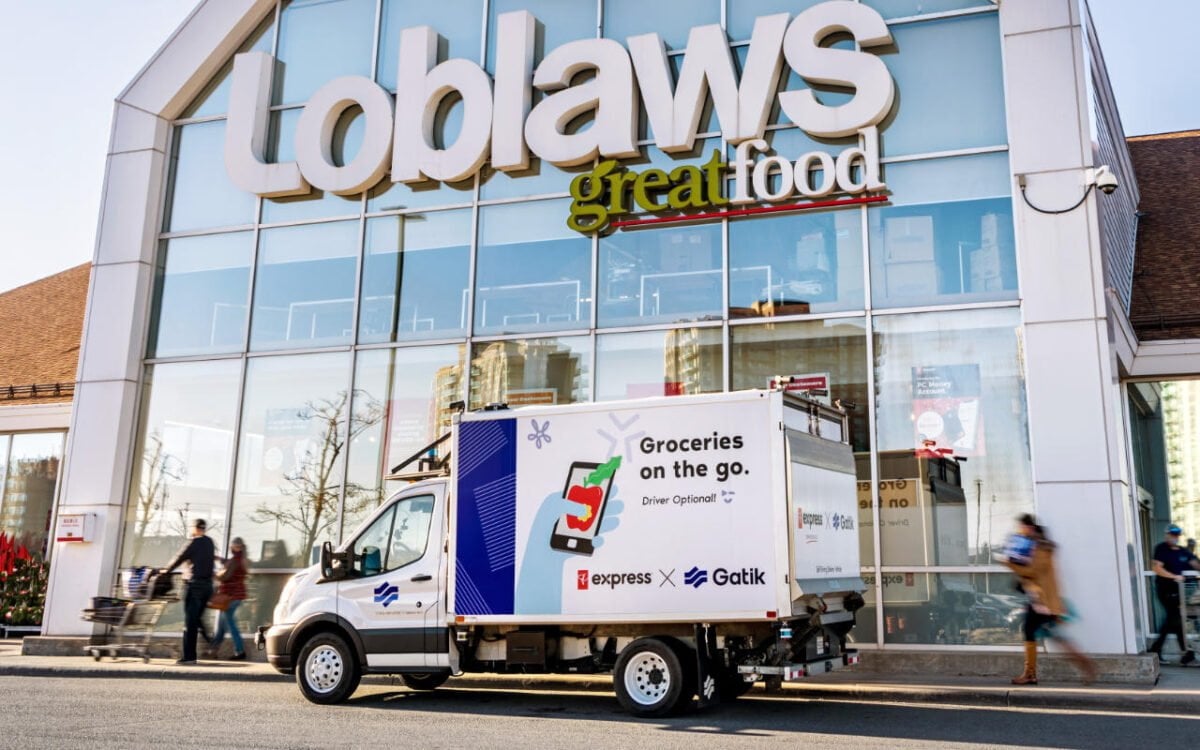
Loblaw Companies Limited is making one of the boldest moves yet in Canadian retail logistics. The country’s largest grocer said this week that it will dramatically expand its partnership with Gatik AI Inc., a Silicon Valley and Toronto-based autonomous vehicle company, to introduce the largest commercial deployment of driverless trucks in North America.
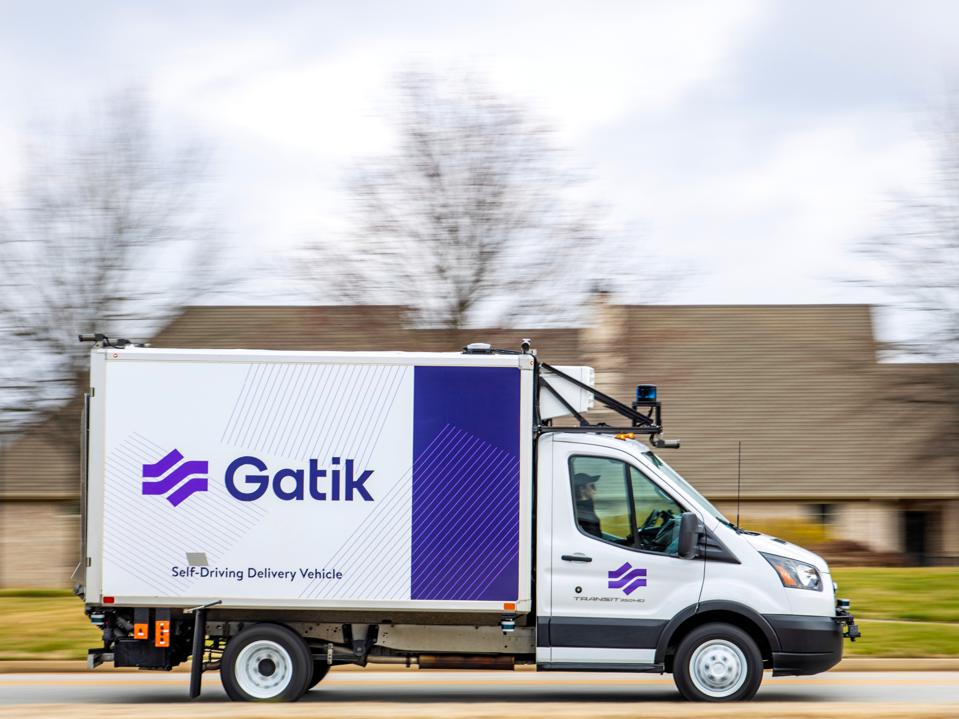
The agreement calls for 50 autonomous trucks to be deployed across the Greater Toronto Area by the end of 2026, servicing more than 300 Loblaw-owned grocery stores. It is a leap from the modest pilot program of just six vehicles that began in 2022. For Loblaw, the expansion is framed as a way to modernize distribution while easing the pressures of a national driver shortage.
“This expanded partnership with and investment in Gatik represents a significant step forward in our commitment to innovation and supply chain sustainability,” said Rob Wiebe, Loblaw’s chief administrator, in a statement. “Autonomous logistics will enable us to move more orders more frequently for our customers.”
A Historic Step for Autonomous Freight
Executives at Gatik, which has been developing autonomous trucking platforms since 2017, say the rollout represents an industry first. “It’s the first time a major retailer has transitioned from pilot to commercial scale with autonomous trucks,” said Gautam Narang, Gatik’s co-founder and chief executive. “This is a transformational moment, not just for Gatik and Loblaw, but for the autonomous trucking sector globally.”
The company notes that the trucks, which are medium-duty vehicles designed for regional logistics, will initially operate with safety drivers before transitioning to fully driverless service. The Gatik Driver, an AI-powered operating system, has logged thousands of miles on public roads across North America. According to the company, its record of safety and reliability is a key factor in winning over regulators and retailers alike.
The Role of Regulation
The rapid expansion comes just weeks after Ontario introduced new rules governing autonomous trucking. The Automated Commercial Motor Vehicle Pilot Program, launched in August, allows medium-duty driverless vehicles to operate on all streets and highways in the province. Gatik worked with the Ministry of Transportation of Ontario to design the framework, which officials describe as both enabling innovation and ensuring public safety.
By embedding its technology within regulatory guardrails, Gatik aims to avoid the kind of scrutiny that has hindered other autonomous vehicle ventures. Unlike robotaxis, which must contend with unpredictable human passengers, Gatik’s model focuses narrowly on transporting goods within dense commercial corridors. That specialization, Narang has argued, makes the technology easier to scale.
Implications for Grocery Retail
For Loblaw, the expansion signals a larger shift in how retailers view logistics. With more than 2,800 locations across Canada and over 220,000 employees, the company operates one of the most complex distribution networks in the country. The addition of autonomous trucks promises to reduce bottlenecks, improve delivery frequency, and better handle temperature-sensitive goods such as produce and dairy.
The trucks are equipped for cold-chain logistics, ensuring groceries are delivered under tightly controlled conditions. Loblaw says customers should notice improvements in product freshness and availability, though it has not specified whether the cost savings from automation will eventually be passed on to consumers.
Investment and Strategic Stakes
Loblaw has made a strategic investment in Gatik, a move designed to deepen collaboration and accelerate the scaling of autonomous freight. Financial terms were not disclosed, but executives emphasized that the investment underlines the retailer’s long-term confidence in the technology.
For Gatik, which also operates in Texas, Arkansas, and Arizona, the deal represents a validation of its business model. Unlike many high-profile autonomous vehicle startups that have struggled to commercialize, Gatik’s business-to-business strategy focuses on repeatable, short-haul routes between warehouses and retail outlets.
That “middle mile” approach, analysts note, avoids the more complex challenges of long-haul trucking or passenger transport.
A Company Under Pressure
The announcement arrives at a delicate time for Loblaw. The company has faced intense criticism from consumers over rising grocery prices, with boycotts last year drawing national headlines. Expanding into autonomous freight may be presented as an effort to improve efficiency and lower costs, though skeptics may question whether savings will translate into relief at the checkout line.
The move also raises questions about employment. While Loblaw has not specified how many of its 220,000 employees are drivers, labour unions and critics are likely to scrutinize the impact of automation on jobs. Company officials have stressed that safety drivers will remain in place during the transition, but the long-term plan is to shift to driverless “freight-only” operations.
A Canadian First, a Global Signal
Autonomous trucking has been tested in markets around the world, but the scale of Loblaw’s rollout places Canada at the forefront of the industry. The expansion is being described as the largest planned deployment of driverless trucks in North America, a benchmark that could influence how other retailers and logistics firms approach automation.
The development also highlights how the retail sector, often slower to adopt emerging technology, is now investing heavily in automation under the pressures of rising costs, labour shortages, and consumer demand for convenience. For Loblaw, the deal may serve both as a competitive advantage and as a test of public trust in driverless logistics.
Loblaw Looking Ahead
Over the next year, 20 autonomous trucks will join Loblaw’s fleet, with 30 more scheduled to follow by the end of 2026. As the rollout progresses, the company says it expects a gradual shift from human-supervised to fully autonomous deliveries.
Whether the expansion succeeds will depend on more than technology. Regulators will monitor safety, customers will judge whether service improves, and labour advocates will watch closely for the impact on jobs. For now, however, Loblaw and Gatik are positioning the project as a milestone in Canadian retail, one that could set the standard for how groceries and goods are delivered in the years to come.