Home Blog Page 177

Discretionary Spending Leads Canada’s September Retail Growth

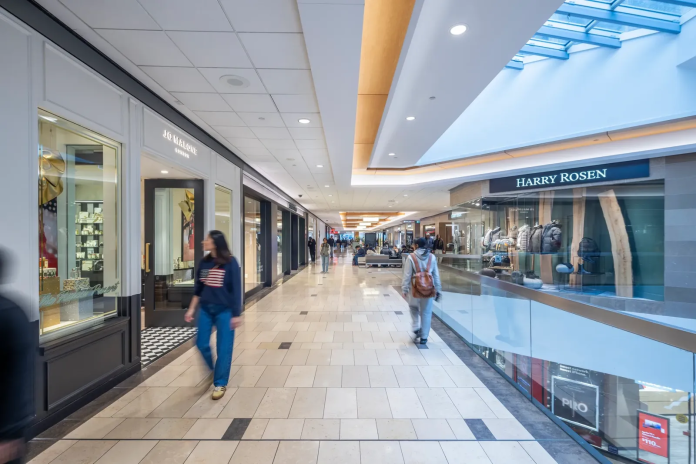
CF Pacific Centre in Vancouver. Photo: Cadillac Fairview

September’s Canadian retail picture reflects shifting consumer psychology as much as economics. With All Stores up 5.7% YOY and discretionary (All Stores less Automotive, Food, Pharmacies) up 7.7% YOY, we see three significant forces: the September 17 Bank of Canada rate cut nudged confidence and big-ticket intent; the September 1 removal of retaliatory tariffs eased price pressure on select imports; and a warmer-than-usual month extended late-summer spending. Together, these factors favoured categories where consumers perceive value, novelty, or seasonal utility.

Despite more back-to-office mandates that should boost daypart trips, Convenience Stores (and Gas Stations) are the only categories down YTD, which are intertwined. Our view hasn’t changed: the ongoing alcohol integration is cannibalizing margin and space. Valuable cooler/shelf real estate has been reallocated to low-margin alcohol, crowding out higher-margin, higher-frequency items (single-serve beverages, snacks, grab-and-go). Add sizable, sunk investments in fixtures and compliance, and reversibility is low, so we don’t see a near-term rebound.

This stance seems at odds with the Convenience Industry Council of Canada’s reported 12% sales increase from member surveys, touted as a win for alcohol. We think that’s a revenue-mix story, not an earnings or productivity story. Survey gains can reflect price/mix from alcohol without improving gross profit dollars per square foot or trip frequency. In short: dollars up in a survey can coexist with weaker profitability and softer non-fuel comps.

Foodservices and Drinking Places grew 5.2% YOY in September—modest, but logical. Domestic tourism stayed elevated into late summer/early fall, and warmer weather extended patios, which meaningfully supports beverage and occasion-led sales. That said, our foodservice expert flags a caution: higher cheques, not more patrons, are doing the work. Price increases, add-ons, and mix are carrying topline, but traffic remains fragile. As weather normalizes and promotional intensity rises into Q4, operators should watch guest counts and margin dilution closely.

On discretionary spend, Canada (7.7% YOY) is outpacing the US (5.7% YOY). Meanwhile, the US is showing comparatively stronger growth in essential categories. There are two potential reasons for this: First, the US may simply be performing better in staples. Second, tariff pass-through from importers to consumers could be inflating essential spend as importers push costs to consumers.

As we move further into the holiday season, JCWG is thinking about:

  • Will Black Friday remain the highest revenue day for retailers in 2025, or will other days (post-Black Friday weekend, Cyber Monday, etc.) surpass it?
  • With Cyber Monday falling into December, will Canadian retailers experience lower November sales?
  • Beyond Foodservices & Drinking Places, which categories benefit most (Clothing & Accessories, fan gear, TV/home-entertainment adjacencies, etc.) from the Blue Jays playoff run?
  • How are YOU preparing for the upcoming new year and preparing your 2026 strategy?

Retail Sales by Product Category, Same Month Comparison

Sales for the Month of SeptemberSep-25Sep-24YOY
All Stores69,500,20465,727,7255.74%
Motor Vehicle and Parts Dealers19,447,31218,302,3556.26%
Gasoline Stations6,253,3776,180,5631.18%
All Stores Less Automotive43,799,51541,244,8076.19%
Food and Beverage Stores12,854,92012,543,7482.48%
Supermarkets and Other Grocery Stores*9,074,4858,877,1932.22%
Convenience Stores691,299728,582-5.12%
Specialty Food Stores965,394888,8498.61%
Beer, Wine and Liquor Stores2,123,7432,049,1253.64%
Health and Personal Care Stores5,811,0145,358,6948.44%
All Stores Less Automotive, Food, and Pharmacies25,133,58123,342,3657.67%
General Merchandise Stores9,110,9118,643,3595.41%
Furniture, Home Furnishings, Electronic and Appliance Stores3,814,6373,526,6808.17%
Furniture Stores1,222,1791,198,4691.98%
Home Furnishings Stores772,592722,1526.98%
Electronics and Appliance Stores1,819,8651,606,05913.31%
Clothing and Accessories Stores3,847,8863,422,49712.43%
Clothing Stores3,041,7102,667,38414.03%
Shoe Stores391,226392,197-0.25%
Jewellery, Luggage and Leather Goods Stores414,950362,91614.34%
Sporting Goods, Hobby, Book and Music Stores4,189,7683,712,79712.85%
Building Material and Garden Equipment4,170,3784,037,0313.30%
Miscellaneous Store Retailers2,767,9332,425,65514.11%
Cannabis Retailers474,974443,9356.99%
Foodservices and Drinking Places8,664,0308,234,2875.22%

Retail Sales by Store Category, Year to Date Comparison

Year-to-Date Sales Ending SeptemberSep-25Sep-24YTD
All Stores618,929,048589,782,8074.94%
Motor Vehicle and Parts Dealers175,412,784163,170,0977.50%
Gasoline Stations55,970,67958,161,981-3.77%
All Stores Less Automotive387,545,585368,450,7295.18%
Food and Beverage Stores117,400,392114,193,6112.81%
Supermarkets and Other Grocery Stores*83,962,33681,218,0783.38%
Convenience Stores6,216,8066,509,122-4.49%
Specialty Food Stores8,389,9077,851,2096.86%
Beer, Wine and Liquor Stores18,831,34518,615,2041.16%
Health and Personal Care Stores52,977,02849,187,3597.70%
All Stores Less Automotive, Food, and Pharmacies217,168,165205,069,7595.90%
General Merchandise Stores81,777,65178,209,9784.56%
Furniture, Home Furnishings, Electronic and Appliance Stores32,224,81930,656,0995.12%
Furniture Stores10,697,68610,218,2564.69%
Home Furnishings Stores6,434,2126,029,6816.71%
Electronics and Appliance Stores15,092,92114,408,1634.75%
Clothing and Accessories Stores31,886,84528,902,79410.32%
Clothing Stores24,820,21922,355,06411.03%
Shoe Stores3,457,1673,420,3241.08%
Jewellery, Luggage and Leather Goods Stores3,609,4573,127,40615.41%
Sporting Goods, Hobby, Book and Music Stores35,086,78932,428,6688.20%
Building Material and Garden Equipment36,192,06034,872,2173.78%
Miscellaneous Store Retailers23,552,62521,141,17511.41%
Cannabis Retailers4,142,4173,796,0449.12%
Foodservices and Drinking Places75,750,55271,319,8116.21%

Ecommerce Sales

Sep-25Sep-24
Ecommerce Sales, YTD35,785,16433,551,8356.66%
Ecommerce Sales, YOY4,067,7624,203,314-3.22%

Regional Sales, Year to Date Comparison

RegionYear-to-Date, 2025Year-to-Date, 2024YTD
British Columbia85,000,43279,388,8387.07%
Vancouver42,834,10639,607,9618.15%
Alberta80,323,66376,284,1705.30%
Prairies*40,956,83139,274,9484.28%
Ontario229,704,750219,233,7854.78%
Toronto101,444,12598,225,1913.28%
Québec138,235,752132,698,7584.17%
Montréal68,293,91865,902,2413.63%
Atlantic Canada42,478,36040,780,7164.16%
Territories2,229,2662,121,5935.08%

NATIONAL RETAIL BULLETIN

Stay up to date with JCWG’s monthly analysis on U. S. and Canadian retail sales.

The Impact of E-commerce on the Retail Industry

The rise of e-commerce has revolutionized the retail industry in ways that were once unimaginable. Online shopping has become a dominant force in the market, offering consumers the convenience of purchasing products from the comfort of their homes. As technology continues to evolve, the boundaries between online and brick-and-mortar retail are becoming increasingly blurred. Consumers now have access to a vast array of products, from electronics and home goods to clothing and groceries, all available at their fingertips. This shift has forced traditional retailers to adapt and innovate in order to stay competitive, leading to a reimagining of the shopping experience.

Key to this shift lies in the growing importance of digital coupons and promo codes. Websites like Valuecom and PromoCodie offer a variety of deals, allowing customers to significantly reduce their shopping expenses. These promo codes are extremely attractive to shoppers because the discounts they provide can be used at checkout. For example, using the correctHome Depot promo code, consumers can enjoy substantial discounts on home improvement products, from tools and appliances to outdoor furniture and decorations. This has become a major draw for consumers who are constantly looking for ways to maximize their spending while enjoying the convenience of online shopping.

In addition to offering discounts, e-commerce platforms have also introduced personalized shopping experiences that leverage data to cater to individual preferences. Advanced algorithms analyze consumer behavior, allowing retailers to offer tailored recommendations based on past purchases and browsing history. This level of personalization enhances the shopping experience by presenting customers with products that are more relevant to their needs and interests. Whether it’s recommending the latest smart home gadgets or suggesting seasonal sales, personalized shopping is quickly becoming a standard feature of modern retail platforms.

Another significant development in the retail industry is the growing role of customer reviews and ratings. Online reviews have become a vital source of information for consumers, helping them make informed purchasing decisions. Retailers now rely on customer feedback to improve their products and services, fostering a sense of trust and transparency in the market. By leveraging social proof, companies can build stronger relationships with their customers, ensuring that they continue to return for future purchases.

In conclusion, the retail industry has undergone a profound transformation driven by e-commerce, and it continues to evolve as new technologies and consumer preferences emerge. Platforms like Valuecom play a significant role in this shift, offering consumers access to valuable promo codes and discounts that enhance the online shopping experience. As e-commerce continues to grow, retailers will need to embrace innovation and adaptability in order to stay relevant in an increasingly competitive market. Ultimately, the future of retail lies in the ability to merge the convenience of online shopping with personalized experiences and targeted promotions, creating a seamless and enjoyable shopping journey for all.

The Dual Strategy of Renovation: Managing the Macro and Mastering the Micro

Taking on a full home renovation isn’t just a weekend project—it’s a huge commitment. You’re not just picking out paint colors or swapping out cabinets; you’re mixing investment strategy, bold design choices, and some serious project management. It’s nothing like handling a handful of minor updates. When you go this big, what really matters is finding the right person to run the show. For homeowners undertaking this journey, securing a dedicated contractor for full home renovation near Toronto means establishing a centralized command structure. This isn’t just someone handy with a hammer. A good contractor leads the team, keeps the budget in check, juggles schedules, and acts as a watchdog for quality every step of the way.

You need someone with real expertise because renovating an entire house means navigating a maze of structural work, electrical upgrades, HVAC changes, and critical components like plumbing services that must be carefully planned and executed at the right stages. Everything needs to line up perfectly, one phase after another, and meet strict local codes. The general contractor’s role is critical for integrating every specialized area, including technical jobs like high-value bathroom renovation services. If one thing goes sideways—say a vent isn’t installed right, or a beam isn’t secure—the whole project can be at risk.  That’s why picking the right general contractor might be the most important financial decision you make during the renovation. This pro will take your architect’s plans, turn them into a step-by-step action plan, secure permits, spot design issues before they turn into money pits, and keep all those moving parts working together. If you don’t have this kind of leadership, chaos creeps in fast: delays pile up, miscommunication flares between trades, and costs spiral. One experienced point of contact keeps everything on track, translating vision into reality and making sure you don’t lose control of your budget as dozens of vendors and specialists come and go.

Even with a skilled general contractor handling the big picture, some parts of the house need extra attention. Bathrooms, for example, are small but packed with complexity. Unlike knocking down a wall or refinishing the floors, a bathroom is a tight spot where water, electricity, and air circulation all have to work together—day in, day out, in a damp environment. That’s why it pays to bring in a team that specializes in bathroom renovations. Their work goes way beyond swapping out tiles or installing new faucets. They engineer waterproofing systems, make sure your shower drains just right, set up lighting that’s safe for steamy rooms, and run water lines where you’ll never see them.

A real specialist knows the difference between porcelain and stone, which waterproofing membrane works best in a steam shower, and how to make every detail hold up over time. Bathrooms also give you one of the best returns when it’s time to sell, so getting the details right really matters. Quality work now means fewer headaches later—no hidden leaks, no creeping mold, no expensive repairs down the line. A dedicated bathroom pro manages every detail, from the right kind of vent fan to custom cabinetry and sleek frameless shower glass. The goal? A space that looks incredible, works flawlessly, and meets every code, so you get beauty, safety, and solid value for years to come.

Canadian Luxury Apparel Market Rebounds in 2025


New luxury wing at Toronto's Yorkdale Shopping Centre. Photo: Craig Patterson

After a year of contraction in 2024, the Canadian luxury apparel market is seeing a sharp rebound in 2025. According to new data from Trendex North America, total apparel sales increased 9.7 percent through August, far exceeding earlier forecasts of a modest 1.5 percent gain.

Luxury apparel sales, originally expected to rise between 1.6 and 2.2 percent this year, are now projected to grow between 3.9% and 5.6% by year-end.

Randy Harris, President of Trendex North America, said the turnaround was both welcome and surprising. “We thought growth of around two percent was reasonable, but the data now show a much stronger market than anyone expected,” he said. “The Canadian luxury apparel market is performing well above our early-year projections.”

Randy Harris

A Surprising Upswing in Apparel and Accessories

The latest Trendex report attributes much of this momentum to surging specialty store and accessory sales. Through August 2025, specialty apparel store sales were up 10.9 percent, while women’s accessories climbed 11.5 percent — both strong indicators of renewed consumer spending on premium products.

At the same time, tourism is regaining traction. Visits from non-U.S. markets rose 6.0 percent year-to-date, with European tourism up 6.3 percent and Asian tourism 6.0 percent.

“These tourism gains matter,” said Harris. “Overseas visitors are vital to the performance of Canada’s luxury sector. Their spending power is a key factor in the rebound we’re seeing this year.”

Luxury imports from Germany, Italy, and France also stabilized in 2025. While import volumes remain lower than pre-pandemic levels, the rate of decline slowed compared to 2024, easing pressure on retailers dependent on European brands.

Royalmount in Montreal. Photo: Bruno Ranieri

2024: A Year of Setbacks and Headwinds

The strength of 2025 follows a challenging 2024 when the Canadian luxury apparel market contracted 2.5 percent to C$2.7 billion. Trendex estimates women’s luxury apparel sales fell 8 percent to C$1.47 billion, while men’s luxury grew 7.6 percent to C$835 million. Purses and leather accessories accounted for C$418 million — or 15.3 percent of total luxury apparel sales.

Several factors weighed on last year’s performance. Economic uncertainty prompted aspirational consumers to delay purchases or trade down, while rising prices eroded value perceptions. Although non-U.S. tourism increased 5.7 percent, it failed to reach pre-COVID volumes.

“The luxury retail pipeline continued to expand last year, but demand did not keep pace,” said Harris.

Despite setbacks, 2024 did see several bright spots. New international luxury retailers entered Canada, Yorkdale Shopping Centre’s luxury wing neared full occupancy, Royalmount opened in Montréal, and both Holt Renfrew and Harry Rosen have advanced with renovations and new brand partners.

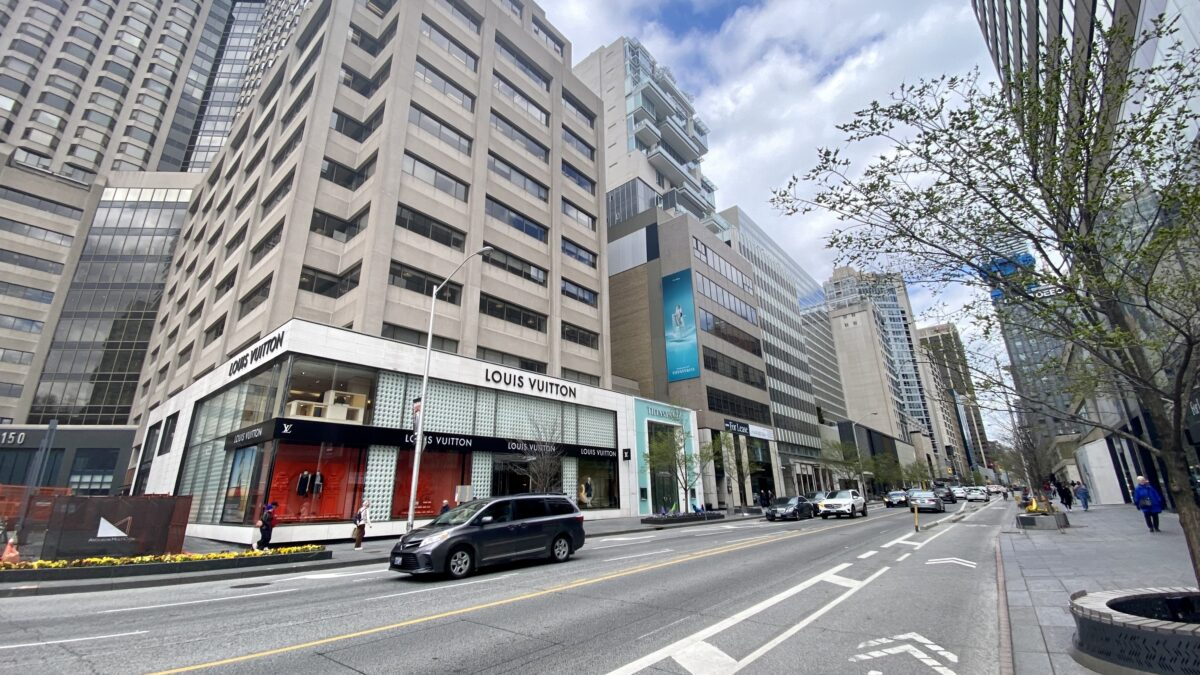
Bloor Street in Toronto. Photo: Craig Patterson

Industry Factors Driving the Rebound

Tourism and Urban Retail Momentum: Canada’s luxury retail recovery in 2025 is being driven in part by a sustained increase in international visitors, particularly from Europe and Asia. Tourist spending in urban centres such as Toronto, Vancouver, and Montréal has accelerated, benefiting flagship luxury stores and downtown shopping districts.

“The recovery in long-haul tourism is finally visible in sales data,” Harris noted. “It’s a leading driver for the Canadian luxury apparel market.”

Specialty Store Growth: Specialty retailers, including both mono-brand boutiques and high-end department stores, have been key beneficiaries. The segment’s 10.9 percent sales gain underscores that consumers are again gravitating toward premium shopping experiences.

“Specialty retail has been one of the strongest channels of the year,” Harris said. “The environment is more positive than it’s been in several years.”

The U.S. Market Effect: Trendex’s analysis of the U.S. luxury apparel market also influenced its revised Canadian forecast. During Q3 2025, major luxury groups including LVMH, Kering, Hermès, Zegna Group and Prada all reported higher U.S. sales. The spillover from American demand, Harris said, reinforces confidence among global luxury brands operating in Canada.

Projecting 2025 and Beyond

With retail performance strengthening and tourism improving, Trendex now expects Canadian luxury apparel sales to rise 4.5 to 6.1 percent in 2025. That would mark one of the strongest years since before the pandemic and a clear reversal from 2024.

Looking further ahead, Trendex projects the Canadian luxury apparel market will grow between 12.2 and 14.1 percent from 2024 through 2029.

Key variables include:

  • The performance of new mixed-use luxury developments such as Oakridge Park in Vancouver.

  • Continued recovery of European and Asian tourism.

  • Growth in online luxury sales and its impact on in-store transactions.

  • Expansion of resale luxury channels, which could draw spending from full-price stores.

  • Evolving attitudes among millennials and Gen X consumers toward conspicuous consumption.

  • The pace of economic growth and the value of the Canadian dollar.


“The combination of these factors will determine how much the market can sustain this new momentum,” said Harris.

New luxury wing at Toronto’s Yorkdale Shopping Centre. Photo: Craig Patterson

Regional and Channel Dynamics

Luxury retail growth in 2025 remains concentrated in major urban centres, led by Toronto, Vancouver, and Montréal. However, Harris pointed to growing potential in Calgary and Edmonton, where consumer demand for luxury goods is rising.

He added that the luxury market is becoming increasingly polarized between two dominant channels: luxury large-format stores and mono-brand boutiques. Holt Renfrew and Harry Rosen together accounted for 45 percent of luxury apparel sales in 2024, while specialty chains such as Michael Kors represented 16 percent.

“The large-format store remains the anchor of Canada’s luxury apparel retailing,” Harris explained, “but the mono-brand channel continues to grow as global brands deepen their Canadian footprints.”

Industry Outlook

The new data signal renewed optimism for luxury brands operating in Canada after a difficult two years marked by inflation, higher costs, and retailer exits such as Nordstrom and Saks. While challenges remain, the current rebound suggests that Canada’s affluent consumers and visiting tourists are once again spending confidently on high-end apparel.

“The market has regained its footing,” Harris said. “Canada’s luxury apparel market while only 8.3% of the comparable U.S. market, however is performing well above expectations. The luxury apparel market here is more resilient than many realized.”

More from Retail Insider:

Retail sector drags on Canadian economic growth: Statistics Canada

Photo: cottonbro studio

The retail trade sector was the largest detractor to Canadian economic growth in September with a 0.7% contraction in the month due to declines in most subsectors, reported Statistics Canada on Friday.

“In September, the motor vehicle and parts dealers’ subsector (-2.1%) was down for the first time in three months, reflecting lower retailing activities at new car dealers. The contraction in retailing activities at general merchandise retailers (-1.1%), building material and garden equipment and supplies dealers (-1.1%) and gasoline stations and fuel vendors (-1.0%) further contributed to the decline in the sector. Meanwhile, growth at food and beverage retailers (+0.4%) mitigated the sector’s decline,” said the federal agency.

The wholesale trade sector expanded 0.6% in September, up for the fourth time in five months, added Statistics Canada.

“Building material and supplies wholesalers rose 3.4% in September, the largest monthly growth rate in nearly two years, coinciding with the higher activity in sawmills and wood preservation in September,” it said.

“Food, beverage and tobacco wholesaling (+1.6%) further contributed to the increase in September, coinciding with increased activity in beverage and tobacco product manufacturing (+5.9%) and food manufacturing (+0.4%) in the month.”

Overall, for the Canadian economy, Statistics Canada said real gross domestic product (GDP) rose 0.2% in September, more than offsetting August’s decline (-0.1%), as goods-producing industries drove the increase for the second time in three months.

Goods-producing industries increased 0.6% in September, largely driven by higher activity in the manufacturing sector. Meanwhile, services-producing industries edged up 0.1%. Overall, 10 industrial sectors increased in September, it explained.

Statistics Canada also reported on Friday that Canadian GDP increased 0.6% in the third quarter of 2025, after falling 0.5% in the second quarter. The rise in the third quarter was driven by a strengthening trade balance, as imports dropped and exports edged up. Increased capital investment was driven by government capital spending, as business investment was flat. Overall growth was dampened by declines in household and government final consumption expenditures as well as a slower accumulation of business inventory.

On a per capita basis, GDP increased 0.5% in the third quarter, after falling 0.5% the previous quarter, it said.

More from Retail Insider:

Reimagining Canada’s Former Hudson’s Bay Stores

Image: WZMH Architects

By Supreet Barhay, Principal and Head of Retail at WZMH Architects

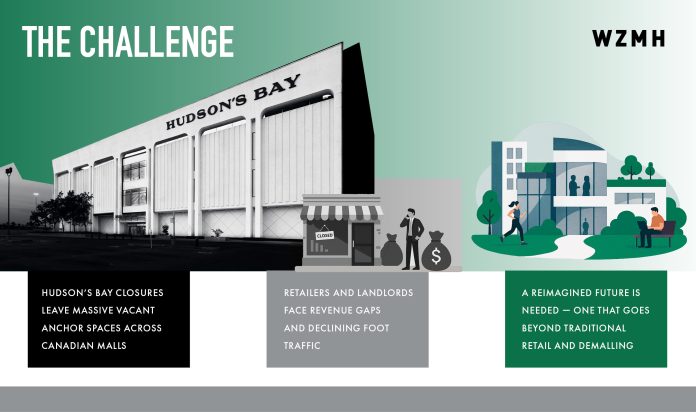
The recent closures of Hudson’s Bay Company stores across Canada have resulted in hundreds of thousands of square feet of prime retail space suddenly becoming vacant. These anchor stores were not merely large retail spaces; their absence creates a ripple effect that impacts landlords, local businesses, and the overall vitality of communities. But rather than viewing these closures as a loss, how can these vacant anchors be reimagined to drive future resilience and renewed purpose?

The Anchor Problem

When a major department store leaves, it takes more than just a tenant out of the equation. These anchor spaces were designed to attract foot traffic, which benefited smaller surrounding retailers and injected energy into the malls. Without the draw of such anchors, malls risk losing their vibrancy and nearby businesses face significant challenges. Traditional approaches such as replacing anchors with another large temporary retailer, introducing boutique stores, or setting up pop-ups may fill the vacancy short-term but the real need is to invest in long-term, sustainable solutions.

Image: WZMH Architects

Adaptive Reuse: A Future-Proof Approach

Further to backfilling empty boxes with more retail uses, adaptive reuse offers a solution that addresses urban, economic, and social needs by repurposing anchor spaces for new functions.

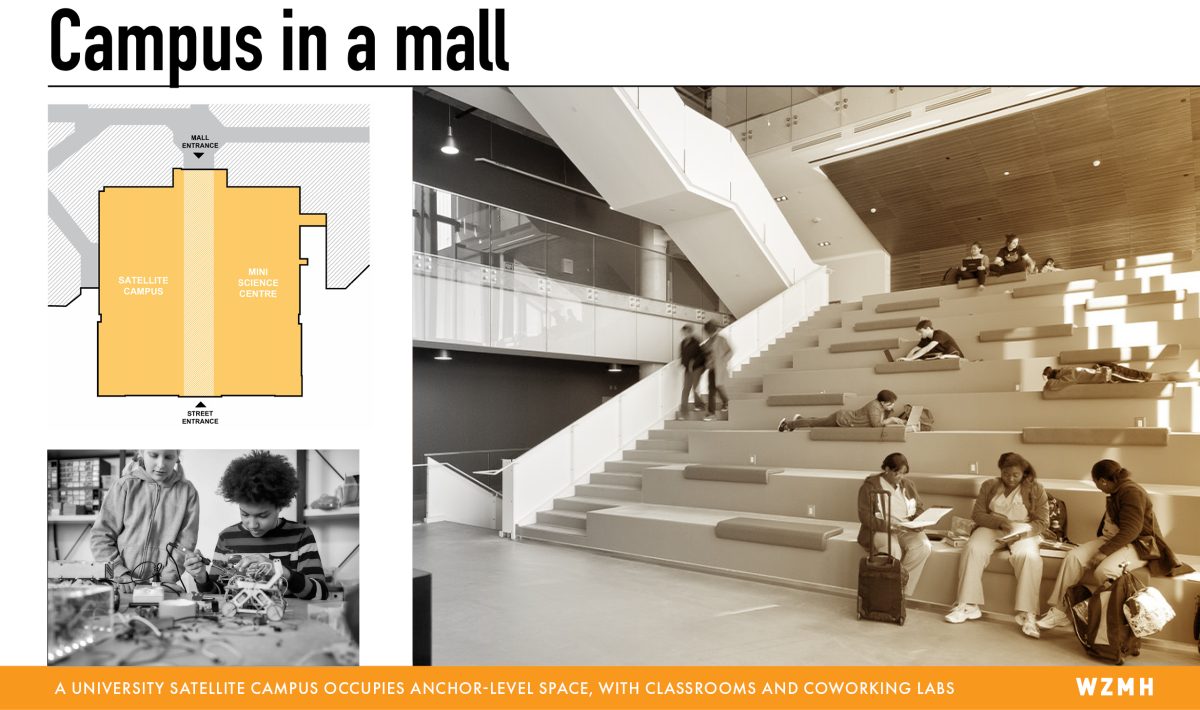
  • Learning Hubs & Satellite Campuses: Large floorplates can be transformed into college or university facilities, including labs and classrooms. This attracts students, strengthens the local talent pool, and keeps the space active throughout the week.
  • Tech & Data Centers: Vacant anchors can be reprogrammed for digital infrastructure or high-tech manufacturing, providing stable, high-yield tenants that support innovation.
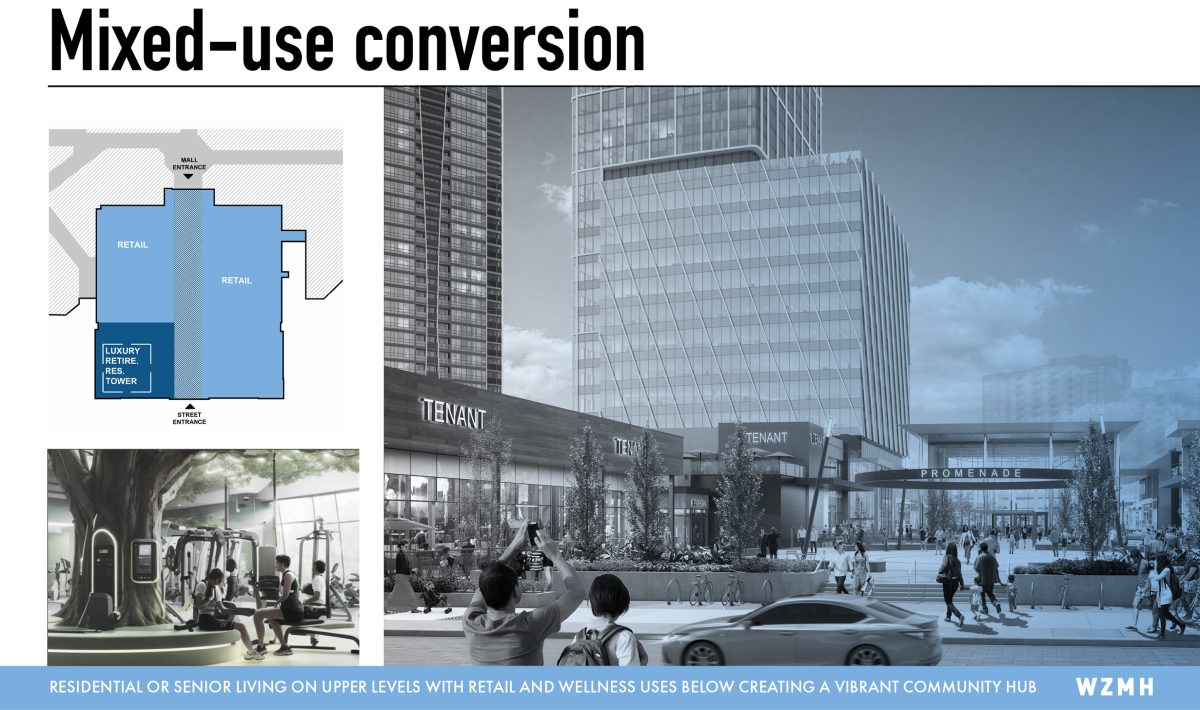
  • Senior Living & Mixed-Use: Repurposing anchors into residential spaces integrated with remaining retail connects the area with everyday life, increases foot traffic, and fosters modern community ecosystems.
  • Health & Wellness Campuses: Clinics, fitness centers, and holistic care facilities can make malls essential health-care destinations, creating a resilient use that goes beyond typical retail cycles.
  • Entertainment & Experiential Venues: Spaces dedicated to VR/AR centers, performance venues, and immersive recreation can draw visitors year-round and re-engage communities.
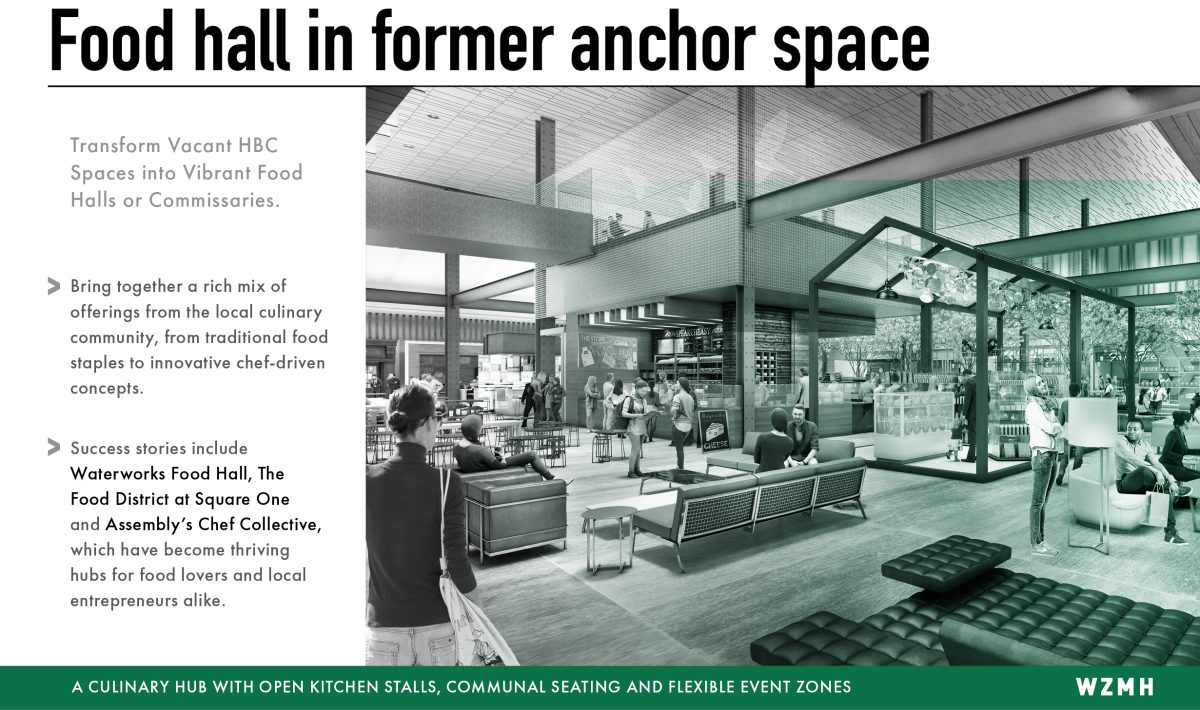
  • Culinary Hubs & Food Halls: Transforming anchors into food innovation marketplaces gives local food creators a platform, encourages social interaction, and turns retail zones into vibrant gathering places.
Image: WZMH Architects

A notable example is CF Lime Ridge in Hamilton, ON, where Tesla transformed a former anchor into its largest Canadian showroom and paired it with service and repair spaces. This approach demonstrates how large floorplates can be creatively reimagined and highlights the strong potential of adaptive reuse. 

Broader Economic and Design Impacts

The conversion of anchor spaces extends beyond individual projects. Mixed-use anchors breathe new life into local economies, attract diverse groups such as students, seniors, and residents, and transform formerly retail-centered districts into engaging, pedestrian-friendly destinations. These redevelopments enhance urban connectivity, provide public amenities, and encourage civic engagement.

Image: WZMH Architects

Why Adaptive Reuse Works

Adaptive reuse goes beyond a temporary fix, addressing the decline of the traditional department store by redefining what an anchor can be. These new uses turn anchors into multifunctional sites that generate traffic, deliver value, and serve multiple purposes such as economic, social, and spatial. Just as importantly, successful reuse must consider the unique characteristics of each site, its location, community context, and the specific needs of the people it serves. For landlords, this approach may offer a more resilient and sustainable tenant mix tailored for long-term relevance.

Image: WZMH Architects

A Vision for the Future of Retail

Vacant anchor stores are not a sign of loss; in fact, they are opportunities for innovative, sustainable reuse whether it is community-focused or tenant driven. By creatively repurposing these spaces, it is possible to transform them into engines for innovation, learning, living, and connection. The retail landscape has been steadily transitioning for years, and how we seize this moment to shape meaningful, lasting change is where the real opportunity lies.

More from Retail Insider:

Young Canadians distrust U.S. brands, study finds

Young people shopping in a store. Image: Unsplash

A new study has found that younger Canadians have far less trust in American companies than older generations, marking a sharp generational divide that could reshape cross-border retail relationships. 

The survey, conducted by Toronto-based digital firm dNOVO, polled over 2,000 Canadians on their trust in a range of industries and countries of origin. Among all age groups, Gen Z respondents rated American companies just 1.37 out of 5 for trust, while Millennials gave them 1.55. Gen X scored slightly higher at 1.95, and Baby Boomers rated them at 2.21—still low, but noticeably more favourable.

Overall, the combined average among Gen Z and Millennials was 1.46 out of 5, underscoring a steep drop in confidence among Canadians under 40.

Younger Canadians are increasingly skeptical of U.S. influence

Ben Treanor, founder and managing director of Break of Dawn, which collaborated on the dNOVO survey, says this erosion of trust is rooted in more than geopolitics. He says it’s cultural.

“Younger generations who maybe have never even traveled to the United States have a particularly negative view just because all they know is what they see on social media and in the news,” said Treanor. “Whether that’s accurate or not, it’s their prerogative to decide. But there’s a clear divide, and it could be experiential.”

Treanor pointed out that older generations of Canadians have had more opportunities to travel across the border, which can soften perceptions. “Baby Boomers and Gen X are probably more likely to have actually traveled to the United States, where Gen Z, with the cost-of-living crisis, aren’t necessarily going on those trips yet,” he said. “They’ve been born into a really rough time, so it makes a lot of sense that they would be jaded from an early age.”

A shifting relationship between neighbours

The survey’s findings come at a time when U.S.-Canada relations remain politically and economically intertwined, even as consumer sentiment grows more guarded. Canada remains the United States’ largest export market, yet Canada posted a merchandise trade surplus of about C$100 billion in 2024.

Treanor said much of the distrust is learned, not inherited. “Add in the threats and tough talk from the current U.S. administration, and that skepticism hardens further,” he noted. “It trickles down to everything. We get bad blood and businesses hurting, and people who might not get to do things that they’ve always wanted to do, just over egos basically.”

What American brands can do to rebuild trust

For American retailers and brands expanding into Canada, the data signals a need for a more transparent and locally aware approach. Treanor advises companies to stay politically neutral and focus on consistent values.

“I think it’s important for leadership in U.S. brands not to take overly political stances or make obscene political donations,” he said. “Companies really have to tread lightly, but they should tread lightly in all directions.”

He added that authenticity and respect for Canadian culture are key. “I’ve seen movements online where people are being more conscious to buy Canadian or buy European. They don’t necessarily want to support tariff policy or politics, so it makes sense that they would shop domestically whenever they have the chance.”

Canadian brands stand to gain from this shift

While trust in American companies declines, Canadian brands could benefit from this generational sentiment. dNOVO’s research suggests that younger Canadians are more willing to reward local businesses that demonstrate transparency, inclusivity, and social responsibility.

Treanor said the momentum toward local consumption is not limited to Canada. “I’ve seen it in Europe as well, where people are being more conscious about buying locally,” he said. “Small changes can have big rippling impacts on certain industries.”

This preference aligns with broader consumer movements emphasizing sustainability, ethical sourcing, and community connection — all areas where Canadian brands can lean into their homegrown advantage.

Implications for cross-border retail strategy

For U.S. retailers operating in Canada, the path forward lies in rebuilding credibility through action, not slogans. That means hiring locally, adapting product assortments to Canadian preferences, and communicating directly with customers through relatable, human voices.

Transparency around data privacy and business practices is also increasingly critical. The dNOVO survey shows Canadians are far less forgiving of perceived dishonesty than of poor service, with misleading information cited as the top reason for eroding trust. In this climate, opaque marketing or corporate missteps can quickly magnify across social media.

Treanor said the solution lies in balancing scale with sincerity. “It’s all about dipping your toe in,” he said. “Older Canadians aren’t rejecting foreign brands, they’re just waiting to see if they can trust them again.”

Building back trust across generations

As younger Canadians shape future consumption patterns, brands hoping to win their loyalty will need to demonstrate authenticity, fairness, and accountability. For American retailers, that may mean localizing strategies and reintroducing themselves to a market that increasingly prizes integrity over image.

At a time when trust has become a differentiator, the message is clear: Canadian consumers, especially the young, expect more from the brands they buy from, and they’re paying close attention to who earns it.

More from Retail Insider:

IKEA Canada to open Abbotsford Plan and order point on December 10

Plan and order points are one of the many ways IKEA Canada has been transforming its business to deliver a seamless retail experience wherever, whenever, and however customers choose to shop with the renowned home furnishing retailer. Outside the IKEA Kitchener Plan and order point (CNW Group/IKEA Canada Limited Partnership)

IKEA Canada says that its first Plan and order point location in British Columbia will open in Abbotsford on December 10.

Plan and order points are one of the many ways IKEA Canada said it has been transforming its business to deliver a seamless retail experience wherever, whenever, and however customers choose to shop with the renowned home furnishing retailer. 

Located in the West Oaks Mall at 32700 South Fraser Way, Unit 80, the Abbotsford Plan and order point will offer customers one-on-one planning services with experts to design and purchase home furnishing solutions for any room in the home such as kitchen renovations or bedroom storage systems. Once orders have been placed, they can be delivered to their homes or collected from the Pick-up location at the Plan and order point, explained the retailer.

Customers can now pre-book planning appointments for December 10 and beyond online or in-store at IKEA Coquitlam.

Located in the West Oaks Mall at 32700 South Fraser Way, Unit 80, the IKEA Abbotsford Plan and order point will offer customers one-on-one planning services with IKEA experts to design and purchase home furnishing solutions for any room in the home such as kitchen renovations or bedroom storage systems. Once orders have been placed, they can be delivered to their homes or collected from the Pick-up location at the Plan and order point. (CNW Group/IKEA Canada Limited Partnership)

“For those looking to instantly refresh their spaces, visitors to the Abbotsford Plan and order point will be able to shop a limited selection of products from the IKEA range (excluding food – sorry, no meatballs) for immediate purchase and takeaway,” said the company. 

The home furnishing retailer currently operates 10 Plan and order point locations in Ontario and Quebec. 

“These service-based customer meeting points are one of the many ways IKEA Canada has been transforming its business to deliver a seamless retail experience wherever, whenever, and however customers choose to shop with the brand. Plan and order points help to reduce the distances that customers must travel to visit an IKEA location, which has affordability, accessibility, and sustainability benefits,” it said.

For more information including store hours at Plan and order points, visit https://www.ikea.com/ca/en/stores/plan-and-order-point/.

Founded in 1943 in Sweden, IKEA is a leading home furnishing retailer, offering a wide range of well-designed, functional home furnishing products. IKEA Canada is part of Ingka Group which operates 574 IKEA stores in 31 countries, including 16 stores and 10 Plan and order points in Canada. Last year, IKEA Canada welcomed 33.3 million visitors to its stores and 199.9 million visitors to IKEA.ca. 

More from Retail Insider:

Walmart Expands Autoimmune Care Across Canada

Image: Walmart Canada

Walmart Canada is deepening its presence in the country’s health-care system with the launch of a new program designed to support Canadians living with chronic autoimmune diseases. The Walmart Canada Autoimmune Medication Care Program, introduced in select pharmacies this month, aims to bridge significant gaps in care for patients who often face long waits, complicated treatment plans and soaring drug costs. The initiative is available in seventy Walmart pharmacies and is scheduled for a national rollout over the coming year, marking a new phase in the company’s expansion into specialized health services.

Autoimmune conditions affect more than two million Canadians, including patients with rheumatoid arthritis, Crohn’s disease and ulcerative colitis. Treatments for these conditions frequently involve complex biologics and other high-cost medications that require close monitoring, precise handling and consistent patient education. Many Canadians struggle to access specialist appointments or coordinated support, and the company’s new program is designed to place more of that care within reach of neighbourhood pharmacies.

Bringing Healthcare Closer to More Canadians

Walmart Canada emphasized that eighty-four percent of Canadians live within fifteen kilometres of a Walmart Pharmacy, a footprint that gives the retailer unusual reach into both urban and rural communities. By housing the Walmart Canada Autoimmune Medication Care Program within this broad network, the company said it can offer specialized guidance in places where health-care resources remain stretched or inconsistent.

Pharmacists participating in the program have completed additional training focused on autoimmune conditions and specialty medications. They can help patients manage prescriptions, understand treatment plans, track side effects, identify possible drug interactions and coordinate with prescribers, manufacturers and patient support programs. In provinces where regulations permit, pharmacists are also able to administer injections, a service that reduces reliance on clinics already under pressure.

Walmart said the goal is to deliver care that is both more personal and more convenient. For patients managing chronic disease, delays in treatment or missed doses can lead to setbacks that carry significant physical and financial costs. The company’s strategy blends in-person support with digital tools meant to make treatment adherence easier.

Rendering of the new Port Credit Walmart Supercentre, located on a second level in a development. Image: Walmart

Digital Tools Add Convenience and Support

The new program is closely tied to Walmart’s pharmacy technology, including the Walmart Pharmacy app. Patients can manage prescriptions online, refill medications, authorize caregiver access, track renewal dates and schedule deliveries. Same-day home delivery is available in certain regions, extending the reach of the Walmart Canada Autoimmune Medication Care Program to patients who may be managing mobility challenges or unpredictable symptoms.

These tools reflect a broader shift in the retailer’s approach to health care. In recent years, Walmart Canada has invested heavily in digital infrastructure, both to streamline its retail operations and to extend medical services into formats more compatible with contemporary patient behaviour. The company’s digital pharmacy tools sit at the centre of this strategy, connecting the in-store experience with online convenience.

Strengthening Walmart’s Position in Specialty Pharmacy

The launch of the Walmart Canada Autoimmune Medication Care Program is part of a larger move into specialty pharmacy, a segment that has grown quickly as more Canadians require advanced therapies. Earlier this year, the company expanded its work with Calian Group Ltd. and integrated the Nexi digital health platform into its operations. The platform supports patients managing chronic or complex diseases, assists with cold-chain and specialty logistics and connects to patient assistance programs offered by manufacturers.

Specialty medications now account for an increasing share of Canadian drug spending, driven by new therapies and rising rates of chronic disease. Retailers with extensive logistics networks and national footprints are becoming more active in the space, and Walmart’s investments suggest a long-term strategy to compete with traditional pharmacies and emerging digital care providers.

A New Layer of In-Store Medical Support

Walmart Canada has also begun expanding its in-store medical clinics. The company opened an initial clinic adjacent to its St. Catharines pharmacy earlier this year, with plans for additional locations in other provinces. These clinics operate as walk-in health centres where pharmacists can assess and treat minor ailments, conduct point-of-care testing, renew prescriptions and support chronic-disease management.

The clinics reflect a broader shift in Canadian health care, where pharmacists increasingly play a frontline role. With many communities facing physician shortages and long wait times, retail pharmacy clinics have become a more common point of entry for patients seeking straightforward assessments or ongoing support. Walmart’s model is structured around that demand, offering medical access points in stores that already attract heavy daily foot traffic.

Image: Walmart Canada

A Retailer in Expansion Mode

The push into advanced pharmacy care is occurring alongside one of the largest investment periods in Walmart Canada’s history. In January, the company announced a multiyear investment plan valued at approximately $6.5 billion Canadian. The spending includes expanding the store network, upgrading existing locations and modernizing supply chain infrastructure. Dozens of new Supercentres are scheduled for construction by 2027 in markets such as Oakville, Calgary, Edmonton and Fort McMurray.

A new high-tech distribution centre in Vaughan, Ontario, opened recently as part of that plan and is described as Walmart’s most technologically advanced facility in Canada. Automated systems, robotics and upgraded logistics tools support both in-store operations and the company’s growing online business, including grocery delivery and pharmacy services. These developments reinforce Walmart’s positioning as a people-led, technology-enabled retailer that is integrating physical and digital channels.

A National Footprint With Community Reach

As of late 2025, Walmart Canada operates more than 400 stores across nearly every province and territory except Nunavut. Ontario remains the company’s largest market, with roughly 150 locations. Key metropolitan areas such as Edmonton, Calgary, Winnipeg, Brampton, Mississauga, Ottawa, Montreal, Scarborough and Toronto all support multiple stores.

The company serves approximately 1.5 million customers in-store each day and employs more than one hundred thousand associates. Its supply chain includes close to two thousand Canadian suppliers, making Walmart a major supporter of domestic manufacturing, agriculture and consumer goods production. These ties reinforce its position as one of the country’s most influential retailers and a key competitor in both food and general merchandise.

Leadership and a Shift Toward Enhanced Services

The Walmart Canada Autoimmune Medication Care Program arrives at a moment of leadership transition. Earlier this year, Walmart Canada named Venessa Yates as its new President and Chief Executive. Yates, who previously served as Chief Digital Officer, has been a central figure in the company’s efforts to integrate technology across operations. Her appointment signals a continued emphasis on omnichannel strategy and digital modernization.

Yates’s tenure aligns with the company’s broad push to evolve beyond its traditional retail identity. Investment in specialized health care, digital tools, logistics automation and upgraded stores reflects a long-term strategy to compete on service and convenience. 

Financial Tools and Support for Patients

Walmart Canada continues to promote financial services that tie into its health and pharmacy offerings. The Walmart Rewards Mastercard, installment payment options, bill payment tools and money transfers give customers more flexibility in managing routine and unexpected expenses. These financial products play a supporting role for patients facing the high cost of specialty medications.

The company also works with third-party patient-support programs and co-pay assistance initiatives that help reduce out-of-pocket spending for high-cost therapies. These arrangements create a more integrated environment for patients, positioning Walmart pharmacies as both a dispensing centre and a navigation hub for complex treatment pathways.

More from Retail Insider:

Food continues to be excluded from internal trade agreements, despite chronic rising costs

Photo: Mario Toneguzzi

With food costs continuing to rise beyond general inflation, provincial and federal governments need to focus on liberalizing the movement of food products between provinces, says Restaurants Canada

Last week, the Committee of Internal Trade Ministers announced they had reached a new Canadian Mutual Recognition Agreement on the Sale of Goods, but it excluded all food and alcohol products, added the national organization.

Kelly Higginson
Kelly Higginson

“We applaud the provincial and federal governments for the progress they have made on internal trade over the past year, but food products continue to be excluded from interprovincial agreements. When food costs rise faster than other prices, restaurants have to contend with a higher cost of doing business and lower customer demand, which is leading many to raise menu prices, cut shifts or hours of operation, or even consider closing,” said Kelly Higginson, President and CEO of Restaurants Canada.

Restaurants Canada said food inflation has outpaced general inflation for the past nine consecutive months, according to Statistics Canada’s latest Consumer Price Index. Restaurants Canada’s own data shows that food costs have gone up 12% over the past two years for foodservice businesses, putting their profitability at risk. At the same time, 75% of Canadians are eating out less often due to the rising cost of living.

Restaurants Canada said it has been advocating for interprovincial trade barriers to be lifted to improve the flow of goods and services across the country, including by:

  • Modernizing the Excise Act;
  • Harmonizing Canada Food Inspection Agency (CFIA) regulations with provincial counterparts;
  • Enhancing interprovincial labour mobility; and
  • Reducing the packaging and disposable goods compliance gap.

“Canadians need to see more from all governments on everyday affordability. Modernizing trade and reducing unnecessary barriers around food products is one low-cost way they can address rising food prices for consumers and businesses,” said Higginson.

Restaurants Canada is a national, not-for-profit association advancing Canada’s diverse and dynamic foodservice industry. Restaurants are a $124 billion industry employing nearly 1.2 million Canadians and the number one source of first-time jobs in Canada.

More from Retail Insider: