Advertisement
Advertisement
Home Blog Page 194

Jo Malone London debuts newest global ambassador, India Amarteifio

Jo Malone London's Scent Layering Ambassador India Amarteifio

Jo Malone London says British actor India Amarteifio is the face of its Scent Layering campaign.

A true Brit and unapologetic Londoner, India prefers tea to coffee and the Underground to black cabs. The actor rose to fame playing the young Queen Charlotte in Netflix’s Bridgerton prequel series Queen Charlotte: A Bridgerton Story and is widely regarded as one to watch, said the company.

“I’m so excited to be partnering with Jo Malone London, it feels incredibly special for me. As an actor, I’m always exploring ways to express character and emotion, and I’ve found that fragrance can be just as powerful in telling a story. The Scent Layering campaign is all about expressing yourself—and that’s something I really connect with,” said Amarteifio.

India Amarteifio
India Amarteifio

The campaign

Jo Malone London said every cologne is a blend of carefully chosen ingredients made to combine with one another to create a scent that is uniquely you.

As Céline Roux, Global Head Of Fragrance explained: ‘The way we create always takes Scent Layering into consideration. Right from the start, when the perfumers and I start the fragrances, we create them so they can be layered with our other scents. It’s about self-expression. It’s about play.’

The Scent Layering campaign invites you to layer your signature scent with Grapefruit, English Oak & Hazelnut or Peony & Blush Suede. These three Scent Layering combiners adapt your chosen cologne to suit your mood, the occasion or season. Add a twist of citrus with Grapefruit to feel uplifted and bright, add a burst of freshness with English Oak & Hazelnut for an elegant edge to a fun night out and, for feel-good days through to cosy nights in, add a layer of warmth with Peony & Blush Suede, said the company.

Céline Roux
Céline Roux

In the Scent Layering campaign, India immerses herself in these three Scent Layering combiners. With each new combination, she channels the scents’ effects as she playfully explores new ways to wear the scent and express different moods.

“Scent Layering is so playful and personal and gives you the freedom to experiment and create something that’s entirely your own. I love how I can combine the Jo Malone London fragrances, it’s fun, expressive and endlessly personal – which is exactly why this collaboration feels like such a natural fit for me,” added Amarteifio.

Since 1994 Jo Malone London has created a palette of scents. Acquired by The Estée Lauder Companies Inc. in 1999, today the brand is internationally known for its unexpected fragrances and distinctly British character.

Related Retail Insider stories:

More than 80% of Canadians have permanently changed how they shop, says Kantar report

Photo: Alexandra Maria

A significant majority of Canadians, over 80%, say they have made at least one permanent change to their buying behaviour, according to new insights from Kantar’s latest MONITOR report.

“What you’re looking at is a truly historical convergence of factors that have given Canadians a real reason to think deeply about how they want to engage as consumers,” said Casey Ferrell, Senior Vice President and Head of U.S. and Canada MONITOR at Kantar.

Casey Ferrell
Casey Ferrell

The shift in consumer mindset, he explained, is being driven by a combination of global and local pressures.

“Between the geopolitical tensions and drama unfolding with the Trump administration, persistent economic challenges, stagnation, and cost of living issues, and then a shifting global economic landscape where the benefits of globalism are being questioned, I think you sort of take those three big things and have Canadians really rethinking who they want to be as consumers.”

That reflection is showing up in the data, with many consumers reporting that their purchasing habits have changed for good.

“When they’re engaging in the marketplace, they’re really thinking about it in a considered way,” said Ferrell. “I think that’s probably behind the attitude that you’re seeing in that figure: eight in 10 Canadians say that some of their buying behaviours are permanently changed.”

The State of the Canadian Consumer report can be found here.

Still, the question remains: are these changes actually permanent?

“I think we have to take people at their word when they say they intend to make these behaviours permanent,” said Ferrell. “Whether they, in fact, are even happening now, let alone whether they’re permanent, I think is an open question.”

He pointed to early indicators that suggest a gap between aspiration and action.

“I’ve seen a number of clients reporting to us that their sales data is not necessarily telling the same story that consumers are about buying Canadian and the incidence of buying Canadian and the shift away from American brands,” he explained.

“I think these are aspirational attitudes, but the degree to which they can become permanent behaviours that’s a very big leap.”

Ferrell noted that practical realities, such as price, value, and convenience, remain dominant decision-making factors for most shoppers.

Photo: 
Borko Manigoda
Photo: Borko Manigoda

“Buying Canadian, for example, may be aspirational and it may well be exactly what the Canadian consumer would like to be able to do, but it may be difficult for them to get to the stores that carry those Canadian products sometimes. Or it may be challenging for their household budget to stretch and pay more for Canadian-made products.”

The Kantar MONITOR report aims to help businesses understand exactly these types of evolving attitudes. Ferrell leads the U.S. and Canadian divisions of MONITOR, Kantar’s proprietary consumer insights product. 

Kantar itself is a global leader in marketing data and analytics. “We partner with 96 of the world’s 100 biggest advertisers to help them understand how people around the world think and feel and act,” Ferrell said.

The longer-term implications are still unfolding.

“I think the longer-term, adaptive response is still taking shape,” Ferrell said. “Can you really stop shopping at Walmart? That may not be realistic in the long run.”

Instead, Ferrell suggests Canadians may start shifting their behaviours in more subtle, but sustainable, ways.

“There may be some other, more long-term sustainable types of shifts. They may even be a little bit more subtle, but more sustainable over the long haul.”

According to Ferrell, the market is in transition.

“We’re in the hard part, getting past the period of high emotion, and moving toward a future where attitudes and behaviours align. But align in a way that allows for consumers to live the lives they want to live.”

Related Retail Insider stories:

Temple Lifestyle Brands acquires Rise Kombucha

Temple Lifestyle Brands Acquires Rise® Kombucha, Cementing Its Role as a Functional Beverage Leader in Canada (CNW Group/Temple Lifestyle Brands)

Temple Lifestyle Brands, parent company of Thirsty Buddha and one of Canada’s fastest-growing health and wellness companies, has acquired Rise Kombucha, the country’s leading kombucha brand.

This strategic union brings together two powerhouse Canadian beverage names and accelerates Temple’s mission to build a category-defining platform in functional beverages, said the company.

“According to Grand View Research, the Canadian functional drinks market is expected to expand at a CAGR of 9.4%, reaching almost USD 7.9 billion by 2030, driven by strong consumer demand. This acquisition positions Temple to capture more of that growth while reinforcing its commitment to innovation, quality, and delivering products Canadians can feel good about,” said Temple.

“Founded in Montreal in 2008, Rise Kombucha has earned national acclaim for its authentic, organic, unpasteurized kombucha, brewed with purpose, high-quality ingredients, and a deep commitment to gut health, innovation, and sustainability. From humble beginnings to national distribution in major retailers, Rise has become one of the most recognized functional beverage brands in Canada. With bold flavours and a passion for wellness, Rise is reshaping how Canadians experience better-for-you beverages.”

“We are thrilled about this transaction, as we’ve long admired what the team at Rise has built, a beloved brand rooted in quality, community, and wellness,” said Christopher Magnone, Co-Founder and CEO of Temple Lifestyle Brands. “Bringing Rise into our family is more than an acquisition, it’s a powerful step forward in our mission to revolutionize better-for-you beverages. It brings us closer to our north star: 100 million better-for-you beverages consumed annually by 2035. One beverage at a time, we’re inspiring healthier living across Canada.”

Christopher Magnone
Christopher Magnone

With Temple’s support, Rise is positioned to scale faster, expanding its reach, bringing new innovations to market, and unlocking additional value for consumers and retail partners. The combined strength of Temple and Rise creates immediate synergies across operations, retail, and distribution throughout Canada and beyond, explained the company.

Temple Lifestyle offers diversified manufacturing capabilities, a broad omnichannel distribution network, and a strong commercial engine. The addition of Rise strengthens Temple’s portfolio and cements its position as a functional beverage trailblazer. Temple’s flagship brand, Thirsty Buddha, is Canada’s #1 organic coconut water and a leader in functional hydration. Together, Rise and Thirsty Buddha form a powerful portfolio of better-for-you beverages, each maintaining its unique identity while benefiting from shared resources and reach, it added.

“This is a heartfelt milestone in Rise’s journey,” said Charles Chang, former Chairman of the Board of Rise Kombucha. “What began in Montreal with a simple idea, to craft a kombucha as bold and authentic as the people who drink it, has grown into something truly meaningful. Temple shares our passion for wellness, sustainability, and community, and is uniquely positioned to unlock the brand’s next phase of growth with the scale, operational strength, and expertise to make it happen. The future is bright, and we can’t wait to watch Rise continue to flourish.”

Mathieu Sasseville
Mathieu Sasseville

The acquisition is backed by Québec-based impact investors led by Fondaction, underscoring a strong commitment to sustainable growth and local economic development.

“As an impact investor, adding Rise to Temple’s family of brands makes a lot of sense and deepens the offering for Canadian consumers who want healthier products,” said Mathieu Sasseville, Director, Sustainable and Impact Investments, Fondaction. “We are thrilled to continue this journey and support Temple’s management team in their growth ambitions.”

Related Retail Insider stories:

New DoorDash Canada survey highlights increased financial security among Dashers

Photo: DoorDash
Photo: DoorDash

In today’s economic landscape, financial security and flexibility are primary concerns for working Canadians from coast to coast, says DoorDash.

“Recent public opinion polls consistently have cost-of-living issues at the top of the concerns for Canadians. And as people are looking for ways they can better their bottom line, new research shows how DoorDash is providing opportunities for new streams of earning potential that puts more money in Canadians’ pockets,” it says.

“According to DoorDash’s annual Dasher survey (completed by Pollara Strategic Insights), more than seven in 10 Dashers (71%) report that Dashing enhances their sense of financial security — sentiment that is particularly strong in British Columbia, where fully three-quarters of Dashers report experiencing a positive impact from their work.”

Dan Arnold
Dan Arnold

The company said flexibility and earning potential offered by DoorDash are invaluable. Nearly all Dashers – 95 per cent – strongly or somewhat agree that it is important to protect their ability to choose when, where and how they work. More than half say they would quit Dashing if they lost that freedom.  

“It is clear Canadian Dashers love the flexibility the work offers,” says Dan Arnold, Chief Strategy Officer at Pollara Strategic Insights. “There’s a lot of appeal of being their own boss and setting their own hours. The survey data shows that all types of dashers value being able to earn money on their own terms, be they students or older dashers with a full-time job.” 

Photo: DoorDash
Photo: DoorDash

“DoorDash isn’t just about immediate earnings, it’s a stepping stone toward broader financial aspirations,” said Brian Kaufmann, Head of Policy for DoorDash Canada. “Sixty-three per cent indicate their work with DoorDash is instrumental in reaching their financial goals. Whether it’s saving for a major purchase, paying off debt or investing in their future, Dashers are relying on DoorDash to help them work towards their dreams on their own terms.”

Brian Kaufmann
Brian Kaufmann

DoorDash said 65% agree that having fewer opportunities to engage in Dashing and other app-based work would negatively impact their daily lives.

“In today’s economic reality, that highlights the essential nature of flexible, app-based work that provides a lifeline for those who need to balance multiple responsibilities or who seek an alternative to traditional employment,” it said.

“The flexible work opportunities that cater to the unique needs of individuals from various backgrounds — helping bridge economic gaps and promote financial inclusivity — remains an appeal for Dashers. More than two-thirds of Dashers (67%) have another job, and Dash to supplement their income.”

Related Retail Insider stories:

Unilever Food Solutions Launches ‘Future Menus 2025’ in Canada

Future Menus trends book and launch event, image supplied

For the first time, Unilever Food Solutions (UFS) has brought its global thought leadership platform Future Menus to Canada, officially launching Volume 3 at a high-profile event at Prime Seafood Palace in Toronto. The launch signals a significant moment for the Canadian culinary landscape, linking the country’s foodservice sector to global shifts in dining culture and consumer preferences.

The annual Future Menus report has become an internationally recognized resource for chefs and foodservice operators, distilling insights from a combination of global research, social media analysis, and contributions from more than 250 professional chefs across 20 markets. The Canadian debut of Future Menus 2025 places the country within a larger global conversation about how we eat, what we crave, and where dining is headed.

The research behind Future Menus 2025 is vast and data-rich, reflecting more than 312 million online searches and 237,000 keywords across 21 countries. UFS also tapped into the expertise of its global chef network and gathered insights from more than 1,100 culinary professionals through detailed panels and surveys.

This year’s findings suggest a notable shift in consumer appetite, with Asian cuisines overtaking traditional European culinary strongholds. Chinese and Japanese food now rank among the top five global favourites across all age groups, with Korean and Mexican flavours rising fast. These insights point to a growing openness to diverse tastes among Canadian diners, particularly younger generations who are driving demand for new, exciting, and accessible food experiences.

Matty Matheson at the event. Photo: Unilever Food Solutions

At the heart of Future Menus 2025 are four key trends expected to influence menus and dining experiences over the coming year.

Street Food Couture: Street food has moved far beyond its humble origins, with chefs across Canada elevating global street eats into refined, chef-driven creations. UFS notes that Gen Z diners are especially drawn to this category, seeking value for money while still demanding high-quality, flavourful experiences.

Toronto’s thriving night markets and pop-ups have become test kitchens for Filipino, Indian, Mexican, and Korean-inspired dishes. Restaurants such as Lamesa and Tita Flips are cited as leading examples of how Filipino cuisine is capturing local palates. Canadian twists on street food, such as butter chicken roti and Indian-style pizza, exemplify how these flavours are being adapted for domestic audiences.

Borderless Cuisine: Canada’s multicultural makeup is accelerating the rise of fusion cuisine. According to UFS research, 73 percent of Canadians say they enjoy experiencing other cultures through food, while 57 percent report being more open to ethnic foods now than before.

This openness is inspiring chefs to create dishes that blend traditions in unexpected ways — think Vietnamese-inspired pizza, Latin American spices layered into Canadian classics, or Kamayan-style communal feasts designed for a contemporary audience. Borderless Cuisine is not only a culinary movement but also a reflection of globalization and migration patterns, with kitchens serving as cultural meeting grounds.

Culinary Roots: While Canadian diners are eager to try international flavours, they are also seeking authenticity and connection to local heritage. Culinary Roots emphasizes the rediscovery of regional ingredients and Indigenous techniques, including smoking, fermenting, and open-fire cooking.

Chefs across the country are reimagining menus that honour both Canada’s Indigenous traditions and immigrant foodways, giving diners a deeper connection to place and identity. This trend also ties into the growing movement toward sustainability and local sourcing, as chefs look to reduce food miles and celebrate seasonal ingredients.

Diner Designed: Personalization is no longer a novelty; it has become an expectation. Diners want to curate their own experiences, from choosing flavour profiles to designing their meals through digital interfaces. According to UFS, 47 percent of consumers now prefer to spend money on experiences rather than material goods, a figure that is reshaping how restaurants think about service and menu design.

At the Toronto launch, this trend was brought to life with an AI-powered dessert activation, allowing guests to create custom desserts guided by algorithmic recommendations based on a brief survey. This example reflects a broader shift toward experiential dining where technology meets creativity.

Screen shot from the Future Menus trends book

Matty Matheson and Digital Culture Take the Stage

Adding to the buzz was Chef Matty Matheson, owner of Prime Seafood Palace and a celebrated figure in Canada’s culinary scene. Matheson spoke about how global culinary shifts are influencing Canadian menus and emphasized the importance of creativity and risk-taking in kitchens.

Digital food culture also had a presence, with mukbang influencers Tasmin and Maxwell sharing their perspectives on how trends like Street Food Couture are playing out online. Their involvement underscored the growing intersection of food media, social platforms, and dining decisions, with platforms like TikTok and Instagram acting as amplifiers for emerging trends.

Implications for the Foodservice Industry

For Canadian chefs and foodservice operators, Future Menus 2025 provides actionable insights, recipe ideas, and strategies for integrating these trends into menus while staying profitable. UFS supports operators with training, menu engineering, and practical tools to make trend adoption seamless.

In an era where consumers are more informed and experimental than ever, staying ahead of these shifts can be critical to business success. By anticipating what diners will crave next, restaurants can position themselves to meet demand and stand out in an increasingly competitive marketplace.

Unilever Food Solutions operates in more than 75 countries and accounts for 20 percent of Unilever’s Foods Business Group. Its chef-led model and power brands, including Knorr Professional and Hellmann’s, allow it to influence culinary innovation at scale.

Bringing Future Menus 2025 to Canada signals a recognition of the country’s evolving food culture and its role in the global culinary dialogue. As Canadian cities continue to diversify and experiment, this annual report may serve as a roadmap for the industry, pointing toward a future where street food can be couture, borders dissolve on the plate, and diners play a starring role in designing their own meals.

More from Retail Insider:

Canada’s Food Inflation Climbs as Tariffs Drive Grocery Costs

Inside a Loblaw Grocery Store (Image: Dustin Fuhs)

Food inflation in Canada climbed again in August, reaching 3.4%, exactly as forecast. Grocery prices rose 3.5%, running a full 1.6 points higher than the general inflation rate. For every month of 2025 so far, food inflation has outpaced overall inflation. The grocery aisle has become a pressure point for households across the country, and it’s not just the market at work—it’s Ottawa.

Government policies have played a central role. The GST holiday, sold as relief, distorted retail pricing signals. More importantly, counter-tariffs against U.S. products—introduced as a political bargaining chip—artificially inflated costs. The federal government claimed to be protecting Canadian interests, but in reality, these measures landed squarely on consumers’ grocery bills.

The impact has varied by region. Prince Edward Island now suffers the highest retail food inflation in Canada at 4.2%, while Manitoba enjoys the lowest at 3.1%. In specific categories, the distortions are glaring: coffee and tea jumped 22.4%, nuts 14.2%, sugar 5.4%, seafood 4.5%, and cookies and crackers 4.4%. With the exception of meat, these increases were fueled directly by counter-tariffs, which finally ended on September 1.

Meat tells a different story. Prices rose 10.5%, not because of Ottawa, but because of nature and economics. Drought conditions and soaring feed costs have pushed many cattle producers to exit the business altogether. With herds shrinking, supply is tightening, and beef prices are unlikely to normalize until early 2027 at the very earliest. That structural reality will keep meat a costly staple for years.

Amid the tariff chaos, however, some small miracles have appeared. Both fresh fruits (-1.1%) and vegetables (-2%) were cheaper this month, offering rare relief in the produce aisle. Rice, a staple for many Canadian households, also fell (-1.9%). These declines, while modest, show that not all categories are moving in lockstep—and that consumers are still finding pockets of affordability despite political and climatic shocks.

The contrast with the United States is stark. Canada’s food-at-home inflation peaked at nearly 4% in April, while American households faced rates closer to 2%. Canada’s grocery aisle is hotter and more volatile, while U.S. prices, though rising, remain steadier. Canadian families are absorbing the cost of political experiments that their American counterparts have been spared.

Yet when the new inflation numbers were released, most media outlets followed a familiar script: report that food prices are rising, but skip the “why.” The uncomfortable truth is that Ottawa’s counter-tariffs, not vague global forces, were responsible for much of the pain. By ignoring the real cause, coverage only shields decision-makers from accountability.

Canadians deserve honesty about what is driving their grocery bills. Policy-induced inflation is a political choice, not an inevitability. The worst is likely behind us—provided Ottawa resists the temptation to play with market conditions again.

More from Retail Insider:

Edo Japan Re-Enters Quebec with Major Expansion Plans

Rendering of the new Montreal Eaton Centre 'Edo Japon' location. Image: Edo Japan

Later this year, Edo Japan will open a redeveloped flagship restaurant at Montreal Eaton Centre, setting the stage for a significant push into Quebec. The Calgary-based quick-service brand, known for fresh Japanese-inspired meals and its famous teriyaki sauce, plans to build out a network the company believes could exceed 150 locations across the province. In Quebec, the brand will operate as Edo Japon, the French-language entity of Edo.

The opening marks a return for Edo Japan, which previously operated in the Montreal Eaton Centre before its redevelopment of the foodcourt. With the centre’s renovation nearing completion, the re-opening is the first step in a multi-year strategy to introduce Edo Japan to Quebecers at scale, with an emphasis on cultural nuance, franchisee economics, and a menu that has broadened well beyond the grilled teriyaki meals that built the chain’s reputation.

Edo Japan was founded in 1979 in Calgary by Reverend Susumu Ikuta, a Buddhist minister who turned a passion for teppan-style cooking into a small chain that quickly gained traction in Western Canadian shopping centres. Growth continued when Canadian restaurant executive, Tom Donaldson, came on board and expanded its presence. Following the company’s acquisition by Yellow Point Equity Partners, Edo Japan entered a new phase under the leadership of current President & CEO David Minnett, who has driven record growth, elevated franchisee performance, and positioned the company as one of Canada’s leading quick-service restaurant success stories.

The footprint has since doubled over the last decade. Edo Japan now operates more than 200 restaurants nationwide and serves over 12 million meals annually. “We pride ourselves on responsible growth,” said Greg Vogeli, Vice President, Business Development & Corporate Affairs. “We’re mindful of keeping the economic model for our franchisees sound. We do not grow just for the sake of growing.”

Greg Vogeli

Why Quebec and Why Now?

Although the company has expanded through British Columbia and Ontario, and has begun opening in the Maritimes and the United States, Quebec remained a deliberate holdout until now. The reason was strategic. “Quebec has a unique business environment that requires a thoughtful approach to expansion,” said Vogeli. “Having operated here before, we recognize that a one-size-fits-all strategy doesn’t work. Our focus is on adapting to the market and building the right foundation for sustainable growth.”

That approach includes localized branding and French-first marketing in the province under the name Edo Japon, while the broader corporate identity remains Edo Japan. “This isn’t about surface-level adjustments,” Vogeli explained. “It’s about building a strategy that reflects the market and creates a lasting connection with Quebec consumers.” The company’s internal market research suggests the timing is favourable. “Asian cuisine actually over-indexes in Quebec relative to the rest of Canada,” he added. “That gives us confidence in the opportunity here.”

Rendering of the new Montreal Eaton Centre ‘Edo Japon’ location. Image: Edo Japan

Montreal Eaton Centre as a Launchpad

The choice of Montreal Eaton Centre is both symbolic and practical. Edo Japan operated a legacy store in the complex until late 2024. “The former location was a long-running family franchise that lasted almost 30 years,” said Vogeli. “But the brand has evolved so much since then. Re-opening at Montreal Eaton Centre with our new design and menu allows us to relaunch in Quebec with a strong first impression.”

The new flagship will feature a refreshed design, digital menu boards, and an expanded menu that has been rolled out across the chain in recent years. “Food courts are a powerful way to drive trial,” Vogeli noted. “ The sheer traffic through Montreal Eaton Centre allows us to introduce the brand to a large number of guests quickly. And once they’ve experienced our food, we’re confident they’ll return.”

That focus on trial aligns with the brand’s confidence in its core flavour profile. “There is a strong contingent of customers we call Edo addicts,” he said with a laugh. “They just cannot get enough of our teriyaki sauce. It is incredibly craveable.”

Image of a French language-branded ‘Edo Japon’ location. Image: Edo Japan

A Menu Built on Five Pillars

While the teriyaki chicken and sukiyaki beef meals remain the foundation, the brand has diversified. “Alongside our signature grilled meals, we now offer ramen with a new flavourful broth, poke bowls, bubble tea, and sushi,” Vogeli said. “Sushi and bubble tea have become an important part of the offering, particularly in newer markets, but our grilled meals remain the backbone of the business.”

The company does not plan Quebec-specific menu items at launch but will adapt. “Our menu has been embraced across Canada and performed well at Montreal Eaton Centre,” said Vogeli. “We’ll build from that foundation, track what resonates, and listen to customers. If there’s an opportunity to tailor offerings to Quebec tastes, we’ll absolutely explore it.”

Image: Edo Japan

Partnering with Local Operators

The plan for Quebec is to recruit experienced franchisees who understand provincial regulations, labour markets, and consumer preferences. “We are looking for seasoned operators who already have that expertise and can grow with us,” said Vogeli. “Single-unit owner-operators have always been an important part of our growth, but the opportunity in Quebec is significant. Partnering with multi-unit franchisees who can develop clusters of locations in a shorter timespan and build out trade areas will be a key advantage.”

According to Vogeli, approximately 73 per cent of Edo Japan locations are run by multi-unit franchisees. The company has won the Canadian Franchise Association’s Franchisees’ Choice designation 15 years in a row, which he cites as a by-product of that long-term orientation. “We do not want to profit at the expense of franchisees,” he said. “We support them with training, marketing, supply chain, and an economic model that works.”

Edo Japan’s strategy in Quebec will concentrate new restaurants in defined trade areas to establish visibility and repeat exposure. “Ideally, we would open clusters of locations, where multi-unit franchisees can build out trade areas in a meaningful way,” Vogeli explained. “Having three or four locations within a trade area creates strong visibility and brand presence. The more often guests see us, the more likely they are to try the food. Food courts accelerate trial, but we see opportunity in both food courts and street locations.”

Image of a Montreal ‘Edo Japon’ location (noting the distance to Tokyo on the wall). Image: Edo Japan

How Big Can the Market Get?

Asked for a target, Vogeli did not hesitate. “We see the potential for more than 150 locations,” he said. “The Greater Montreal area alone represents significant opportunity. Quebecers also over-index on household restaurant spend and have a strong dining-out culture. Even at one location per 50,000 people, the math points to substantial growth.”

He cautioned that adoption curves vary by region. “In Quebec City and in rural communities, growth may accelerate quickly or take longer to build,” he said. “We will expand responsibly and let performance guide the pace.”

This steady, economics-first stance has been consistent across the network. “We have been careful to avoid  over developing within existing markets,” said Vogeli. “In cities like Edmonton and Calgary, we already have strong coverage, and we don’t add locations simply to increase the count.”

Image of a French language-branded ‘Edo Japon’ location. Image: Edo Japan

The Role of Marketing and Design

The new Quebec flagship will showcase the brand’s updated aesthetic and contemporary marketing. “We expect a strong impact when we reopen,” said Vogeli. “With digital menu boards, a refreshed design, and compelling social content, the marketing team has positioned us exceptionally well. The brand presentation is on trend and highly appealing.”

While the focus today is Quebec, Edo Japan is also testing growth beyond Canada. The company opened its first U.S. restaurant in Chandler, Arizona, earlier this year. “We have a focused strategy to open a small number of locations in the short term as a proof of concept,” noted Vogeli. “It’s an exciting step, and we look forward to a favourable acceptance of the brand and  considering broader expansion.”

He is clear, however, that Quebec represents the most immediate prize. “Ontario represents a major growth market for us and will continue to expand,” he said. “Quebec is the natural next step for Edo Japan, and we’ve taken the time to ensure we approach it the right way.”

For those seeking franchise and real estate opportunites with Edo Japan, please visit: franchising.edojapan.com. To reach Greg Vogeli, Vice President of Business Development & Corporate Affairs at Edo Japan, email: GregV@edojapan.com

More from Retail Insider:

When Buying Canadian Becomes a Marketing Mirage

Shop Canadian signage at a store. Photo: Craig Patterson

The so-called buy Canadian movement gained momentum when U.S. President Donald Trump suggested, half in jest but with a tone of menace, that Canada could one day become America’s “51st state.” The remark struck a nerve. Canadians reacted with indignation and pride, choosing to affirm their sovereignty not only through political rhetoric but also through their wallets. Many began rejecting U.S. products and looking more deliberately at what it meant to support Canadian ones.

At first glance, it appears that some companies have gained from this wave of patriotism. Liquor boards reported stronger sales of Canadian wines and beers, though these increases were largely the product of institutional bans on U.S. products rather than a broad-based consumer awakening. In grocery retail, NielsenIQ data showed U.S. food product sales falling by 8.5 percent last spring within only a few months. Yet the sales of Canadian products remained largely flat, suggesting that the vacuum left by fewer American imports did not translate into an equivalent rise in domestic demand.

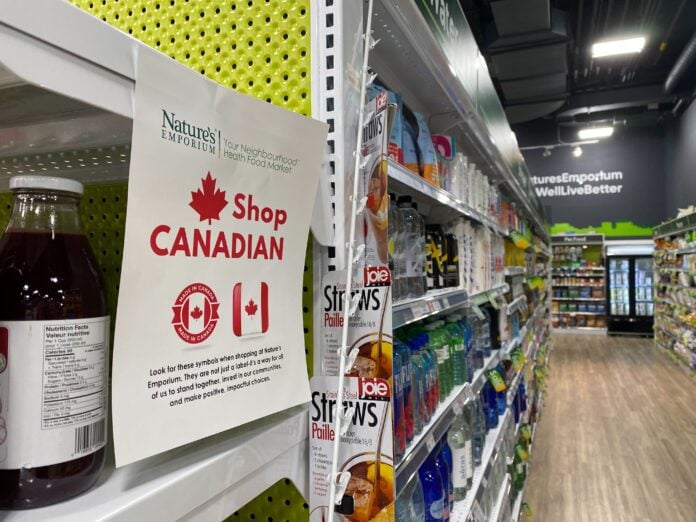
Instead, the gap has invited another phenomenon: “maple washing.” This is where products are branded or marketed as Canadian even though they are not genuinely so. We have seen oranges and almonds sold with a maple leaf logo despite the obvious reality that Canada does not produce these commodities at scale. Packaged foods made almost entirely from imported ingredients but assembled in Canada are now presented as “homegrown.” These cases, and many others circulating on social media, reveal just how quick some companies are to exploit patriotism without delivering on its promise. Canadians have grown impatient with such practices. They expect detail, transparency, and honesty from their grocers, and when those expectations are not met, trust erodes.

The food service sector has joined this race to capture national sentiment, though often with gestures that border on the absurd. Subway’s “Ditch the Inch” campaign, where sandwiches previously sold as six inches are now marketed as 15.24 centimetres, is a case in point. It is clever in a superficial way, tapping into Canada’s use of the metric system, but it hardly amounts to an authentic expression of Canadian identity. Such stunts risk trivializing a movement that, at its best, could reinforce real pride in local food systems.

The deeper question, then, is what it really means to “buy Canadian.” Patriotism in the United States has long been tied to market currency. The flag itself is a sales tool. In Canada, patriotism has always been more understated. It is not something Canadians announce loudly or constantly measure at the cash register. Instead, it lives in ideals of fairness, trust, authenticity, and community. In the food economy, being Canadian is not about draping products in red and white but about behaving in ways that reflect these values. That means being transparent about sourcing, investing in local communities, supporting farmers and processors, respecting Indigenous food systems, and treating sustainability as part of national identity.

What is crucial to understand is that Canadians do not want to be sold patriotism. They want it to be celebrated and honoured. When companies exploit patriotic symbols only as a marketing shortcut, they betray the very sentiment they are trying to capture. By contrast, when businesses celebrate Canadian values authentically—by supporting local supply chains, paying respect to diverse food traditions, and operating with integrity—consumers respond with loyalty and pride.

In this sense, Canadian patriotism is a mindset rather than a marketing tactic. It is about building trust over time, not securing a quick sale with a maple leaf sticker. A grocery store or restaurant can look like it is celebrating Canada Day every day of the year, but without grounding its practices in honesty and responsibility, consumers will see through the façade. Patriotism in Canada, unlike in the United States, is not about spectacle but about substance.

The risk is that, if companies continue to push the maple leaf too aggressively without delivering the integrity behind it, the buy-Canadian movement will lose credibility and collapse under its own weight. Canadians have little tolerance for hollow gestures, especially when tied to something as sensitive as food. What they want is not the performance of patriotism but the experience of authenticity. To be Canadian in the food economy is to be grounded, real, and committed to values that extend beyond the marketplace. That is the standard against which companies will be judged, and it is the only way the buy-Canadian sentiment will endure.

More from Retail Insider:

Consumer prices on the rise: Statistics Canada

Photo: Andrea Piacquadio

The Consumer Price Index (CPI) rose 1.9% on a year-over-year basis in August, up from a 1.7% increase in July, according to a Statistics Canada report released on Tuesday.

Gasoline prices fell to a lesser extent year over year in August (-12.7%) than in July (-16.1%), leading to faster growth in headline inflation. Excluding gasoline, the CPI rose 2.4% in August, after increasing 2.5% in each of the previous three months. Moderating the acceleration in the all-items CPI were lower prices for travel tours and fresh fruit compared with July, said the federal agency.

The CPI decreased 0.1% month over month in August. On a seasonally adjusted monthly basis, the CPI was up 0.2%.

Gasoline prices continue to fall

“On a yearly basis, prices for gasoline fell 12.7% in August, compared with a 16.1% decline in July. The smaller year-over-year decrease was partially a result of a base-year effect. In August 2024, prices declined 2.6% month over month, as concerns about slower economic growth began to emerge. In August 2025, prices rose 1.4% on a monthly basis due in part to higher refining margins, offsetting lower crude oil costs,” explained Statistics Canada.

“In August, prices for meat rose 7.2% year over year, following a 4.7% increase in July. Higher prices for fresh or frozen beef (+12.7%) and processed meat (+5.3%) put upward pressure on the index in August. Growth in prices for ground beef and multiple processed meat categories contributed the most to the upward movement.

Fresh fruit prices decline

“Year over year, prices for fresh fruit fell 1.1% in August, after increasing 3.9% in July. Price declines for grapes, other fresh fruit, and berries (including cherries) contributed the most to the yearly price decrease for fresh fruit in August.”

In August, prices for clothing and footwear rose 1.7% year over year compared with a 0.8% increase in July. The increase in August was mainly the result of a base-year effect as prices declined by 0.6% in August 2024. On a monthly basis, prices for clothing and footwear rose 0.3% in August, noted Statistics Canada.

Ksenia Bushmeneva
Ksenia Bushmeneva

Ksenia Bushmeneva, Economist, TD Bank, said: “Consumer spending has lost momentum. Inflation-adjusted consumption has been flat since December and growth is expected to remain sub-par through the middle of next year amid heightened economic uncertainty, a slowing labor market, higher inflation and other headwinds.

“Indeed, labor market conditions have weakened noticeably, as hiring slowed to a crawl and job gains have become concentrated in a handful of sectors.

“The full impact of tariffs on consumer prices is taking longer to materialize. However, tariff-driven inflation is still set to build, with core goods prices projected to rise and keeping core inflation slightly north of 3% through mid-2026.

“In addition, broader structural headwinds—including resurgent student loan burdens, tighter immigration policy, and a stagnant housing market—are further constraining consumer activity, reinforcing a cautious outlook through the first half of 2026.”

Related Retail Insider stories: