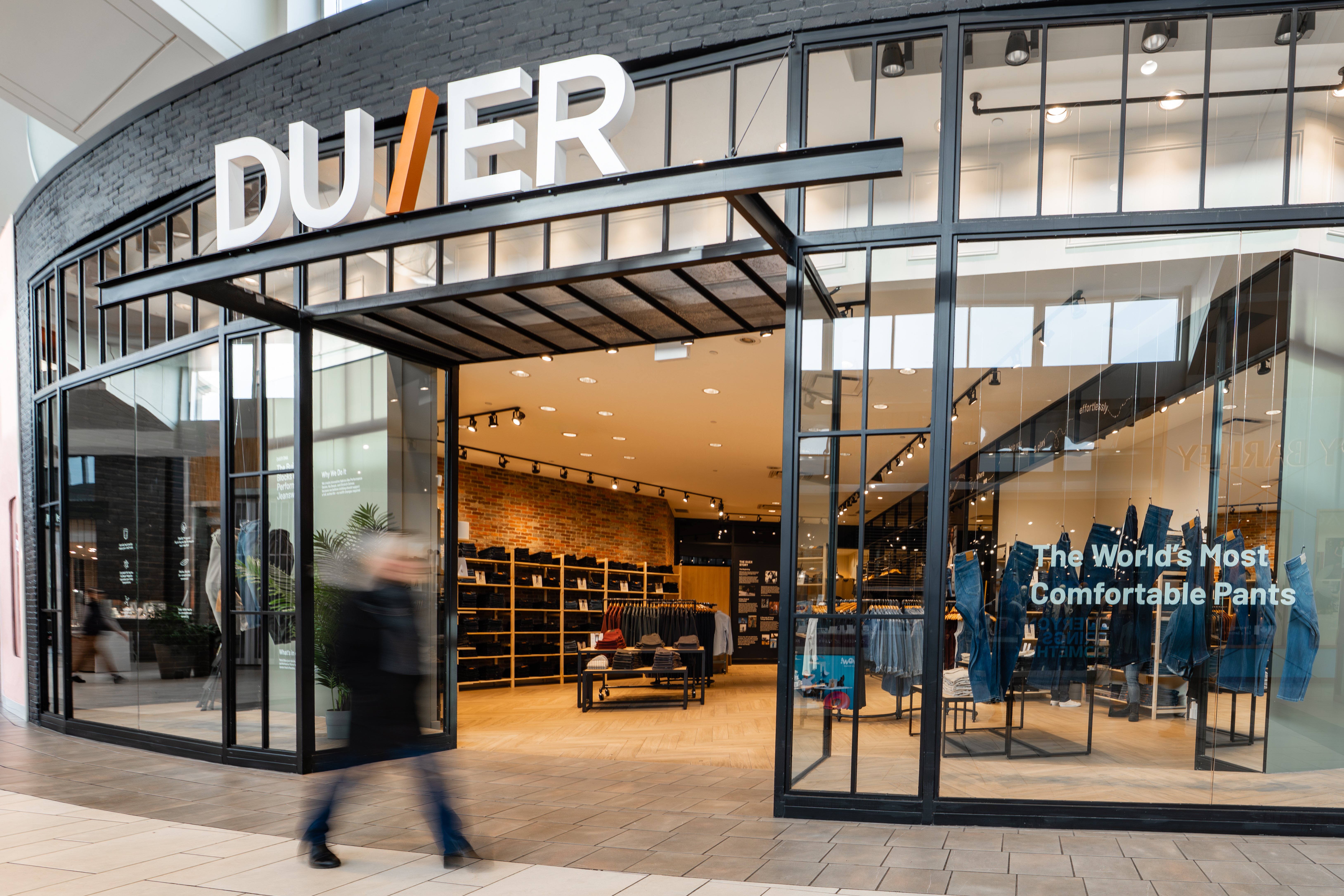
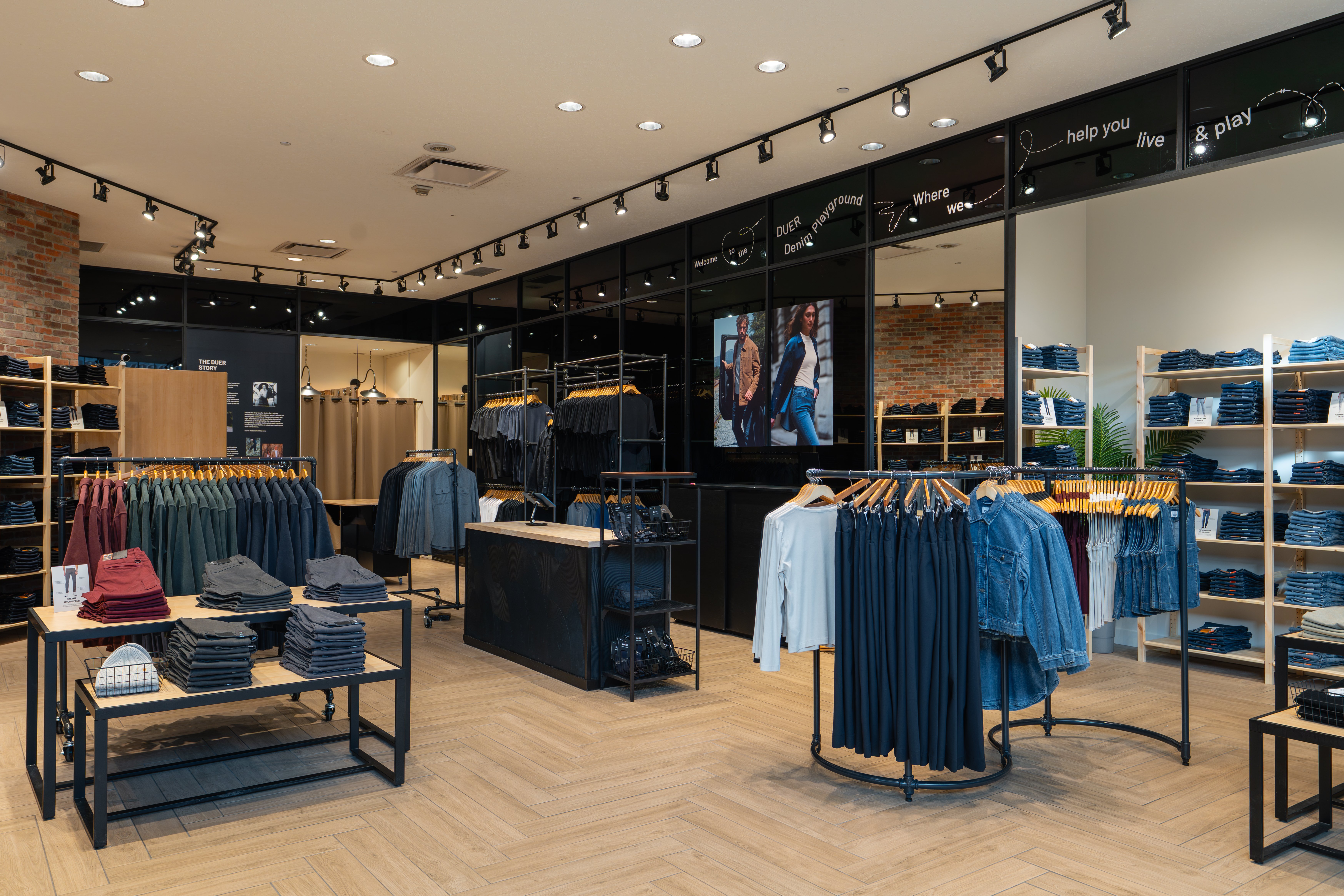
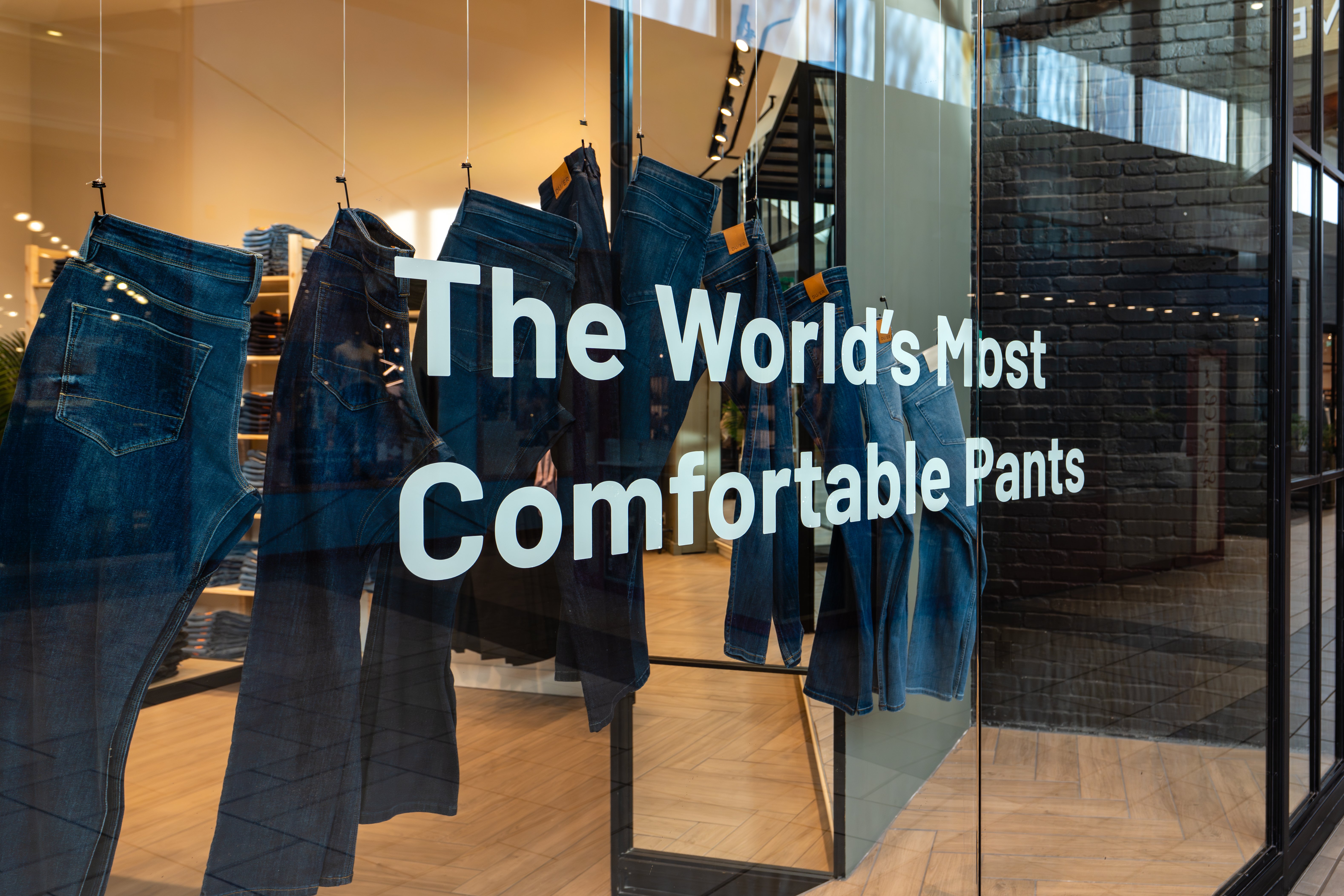
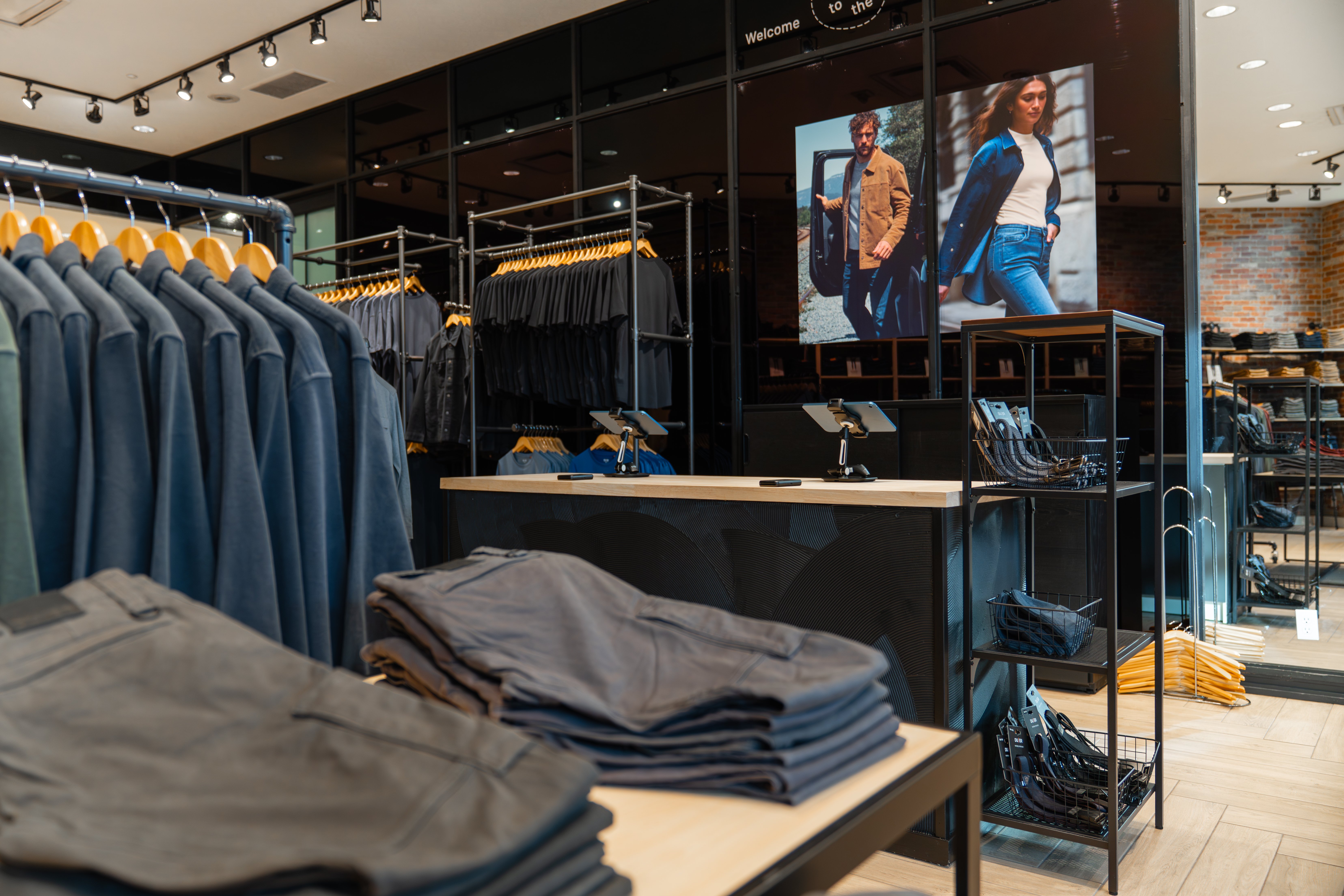
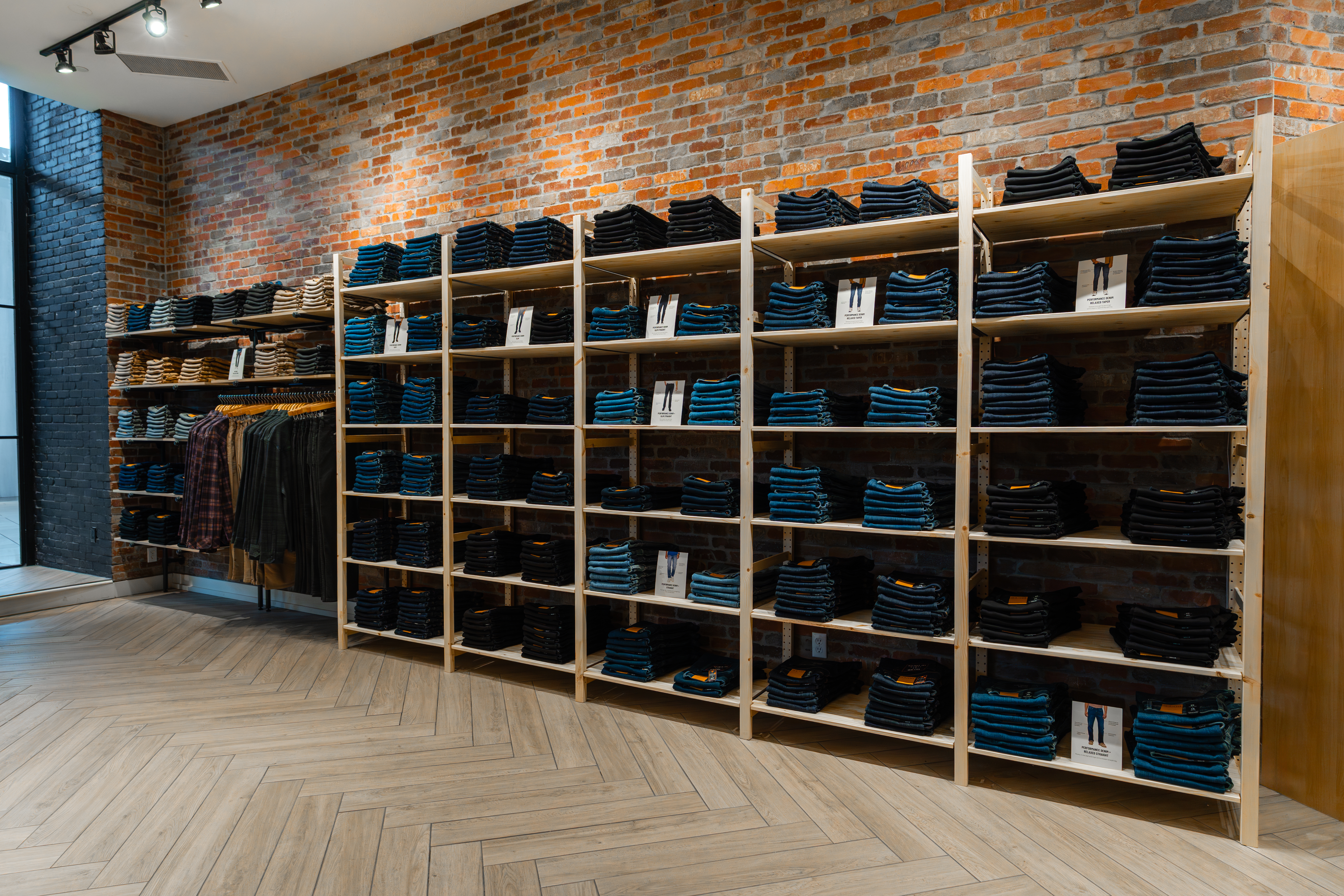
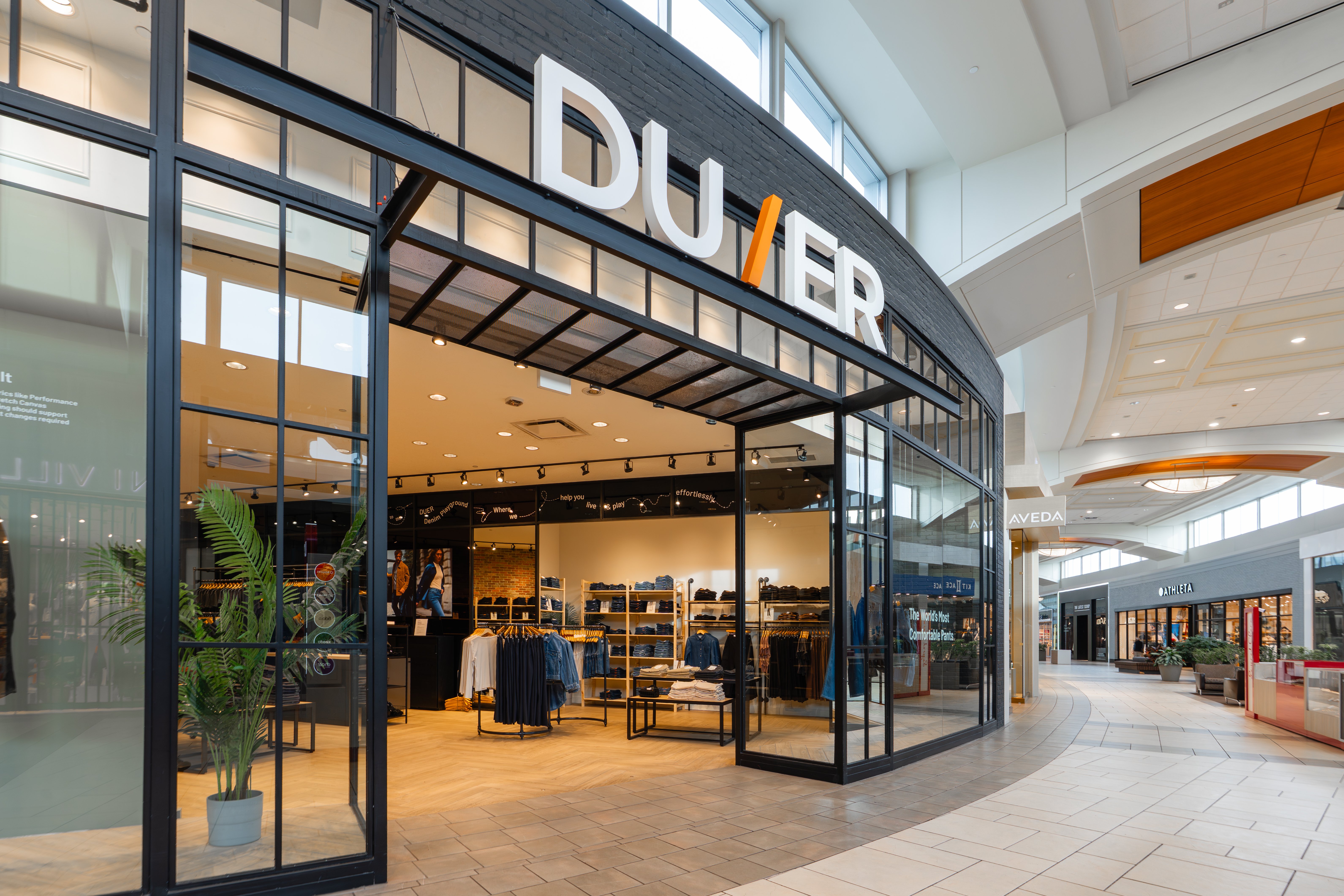
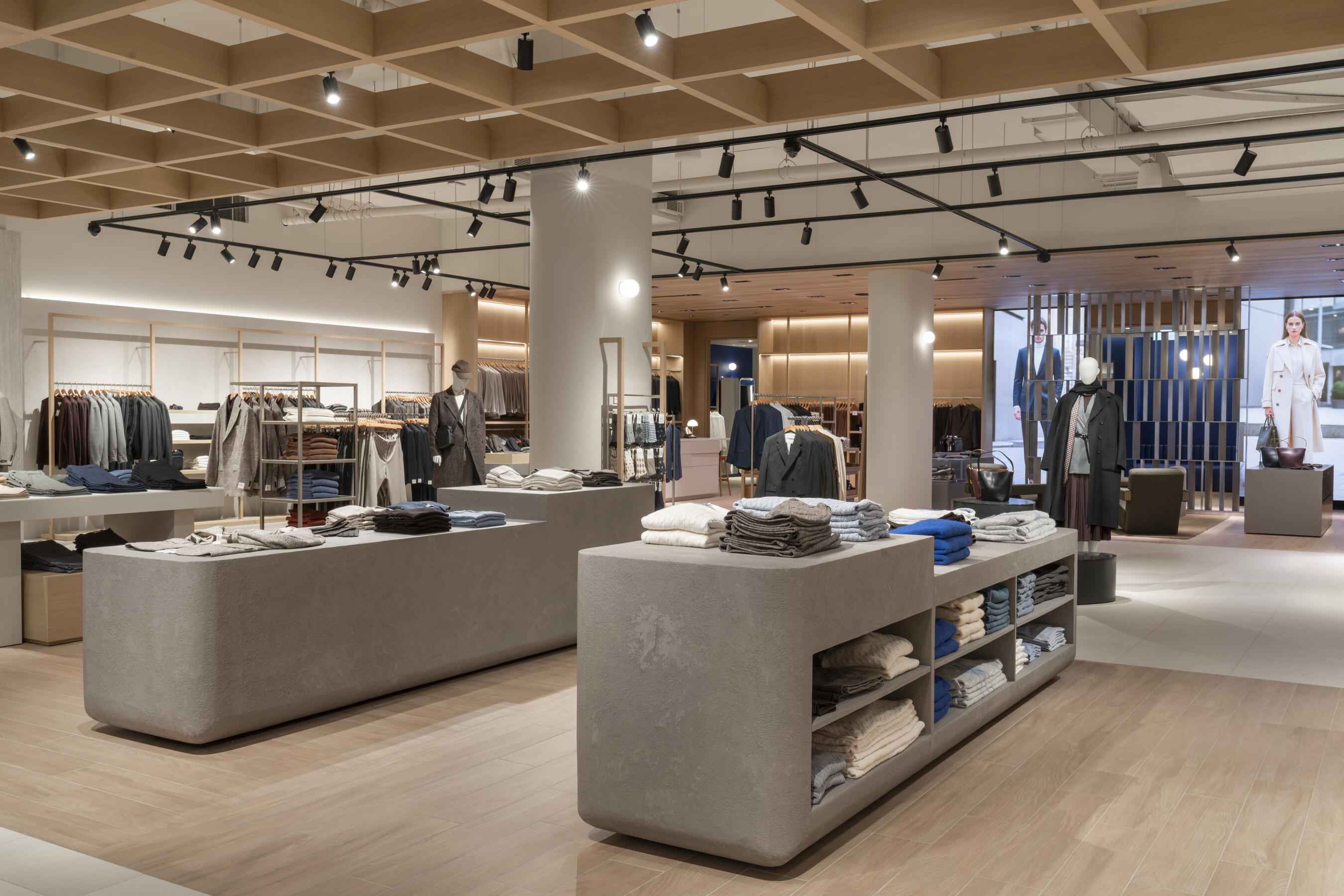
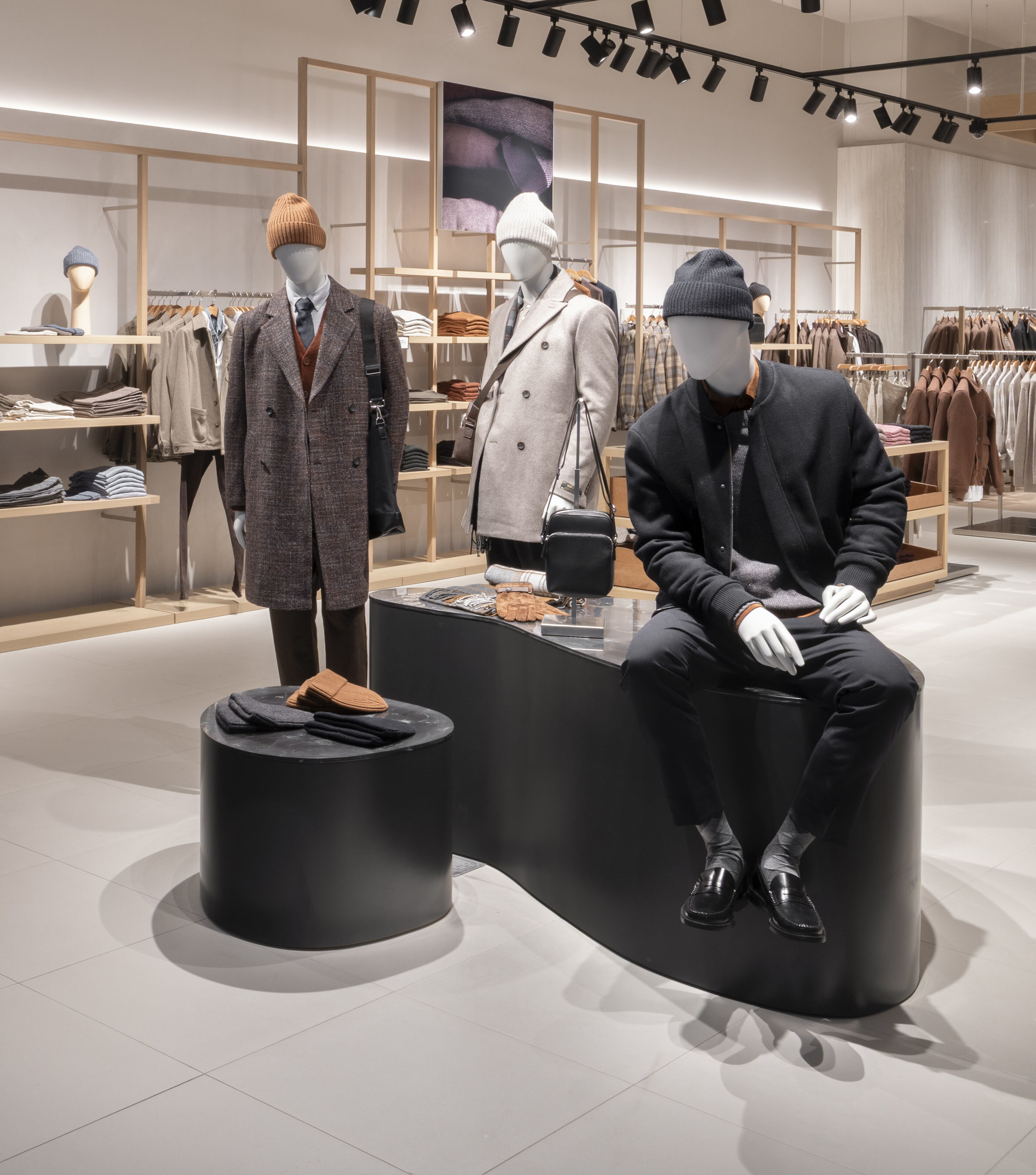
DUER, the Vancouver apparel brand behind Performance Jeanswear, has expanded its Calgary presence with a second retail location at CF Market Mall. Open from November 1 through spring, the new space offers a range of men’s and women’s apparel just in time for the holidays.
Hot on the heels of new store openings in Victoria, San Francisco, and Portland, the Market Mall pop-up is part of the retailer’s ongoing retail expansion strategy as the brand explores new ways to connect with communities and make its products more accessible across North America, said the retailer.
Gary Lenett (Image: Britney Gill / DUER)
“Retail has always been part of our DNA. We love getting people into our product because once they try on a pair of DUERs, they instantly understand what makes them different. Pop-ups give us the flexibility to test, learn, and create more of those in-person moments that bring the brand to life,” said Gary Lenett, company Founder.
“Calgary has been one of our strongest communities from the start, so a second location here feels like a natural next step. We’re bullish about retail and the role it plays in our growth strategy. And less serious but just as true, we’re on a mission to help people live more effortlessly, and the best way in is to get more people in pants.”
Grounded in the belief that performance apparel should never compromise on style, the company said it designs for effortless living – infusing heritage fabrics like denim, canvas, and twill with technical features such as stretch, temperature control, and a signature gusset in the men’s collection. The result is clothing built to move and made to look great.
The decrease is due to a 9.1% decrease in theatre attendance, driven by a stronger film slate in the prior year, which included Deadpool & Wolverine, said the company.
Third quarter theatre food service revenues of $116.3 million decreased $14.3 million or 10.9% compared to the prior year, primarily due to a 9.1% decrease in theatre attendance.
Ellis Jacob
“The consistency of film product and the continued appetite for premium experiences remained evident throughout the third quarter despite not having a title comparable to last year’s historic Deadpool & Wolverine,” said Ellis Jacob, President and CEO, Cineplex. “Audiences responded enthusiastically to a diverse slate of original and international films, reinforcing the value of our elevated and immersive theatrical offerings.
“Cinema media remains a premium platform for advertisers, with sustained year-over-year growth reflecting resilience despite a challenging advertising market. Subsequent to quarter end, we announced the sale of Cineplex Digital Media, which will enhance our financial flexibility, enabling us to reduce leverage, pursue strategic share repurchases within the parameters of our current debt agreements and allocate capital toward broader corporate priorities.
“We also saw contributions from our Location-Based Entertainment portfolio, with the addition of three new venues in late 2024, driving incremental revenue over the prior year. Together, these achievements underscore our commitment to delivering consistent cash flow and long-term value for our shareholders.”
Cineplex is a top-tier Canadian brand that operates in the Film Entertainment and Content, Amusement and Leisure, and Media sectors. Cineplex offers a unique escape from the everyday to millions of guests through its circuit of 171 movie theatres and location-based entertainment venues. In addition to being Canada’s largest and most innovative film exhibitor, the company operates ‘Eats & Entertainment’ (The Rec Room), complexes specially designed for teens and families (Playdium), and an entertainment concept that brings movies, amusement gaming, dining, and live performances together under one roof (Cineplex Junxion). It also operates successful businesses in cinema media (Cineplex Media), digital place-based media (Cineplex Digital Media or CDM), alternative programming (Cineplex Events) and motion picture distribution (Cineplex Pictures).
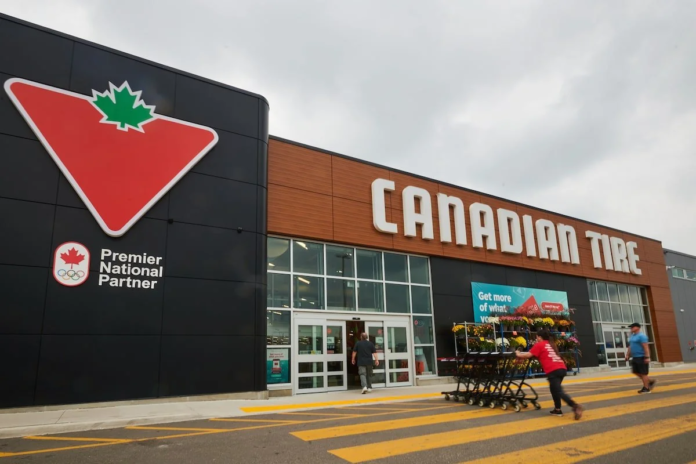
The retailer said consolidated comparable sales were up 1.8%, with growth across banners; retail revenue growth remained strong, up 3.2% and up 5.9% excluding petroleum; Normalized Diluted Earnings Per Share was up 6.5% to $3.78 on a continuing operations basis, while Diluted Earnings Per Share (EPS) was $3.13, down 11.8%; and Annualized dividend increased from $7.10 to $7.20 per share, alongside an intention to repurchase up to $400.0 million of Class A Non-Voting Shares by the end of 2026.
Greg Hicks
“In a continued dynamic consumer environment, we grew retail sales for a third consecutive quarter,” said Greg Hicks, President and CEO, Canadian Tire Corporation. “At the same time, we completed a transformative reorganization, a key building block to better operating efficiency and value creation under our True North strategy. Our confidence is reflected in our continued strategic investments, our dividend increase and our share repurchase program.
“Our Triangle Rewards program has real momentum and is contributing to loyalty sales growth. We announced a new Tim Hortons partnership in Q3, with new Royal Bank of Canada and WestJet programs on track to launch in 2026. Partnering with leading Canadian programs will accelerate our brand scale, our data insights, and sales — while rewarding loyalty in more parts of our customers’ daily lives.”
THIRD-QUARTER CONTINUING OPERATIONS HIGHLIGHTS
Consolidated comparable sales were up 1.8%, led by continued strong performance at SportChek and strong performance in Ontario and Quebec at Canadian Tire Retail (CTR).
CTR comparable sales were up 1.2%, as stronger growth in Ontario and Quebec was partially offset by Alberta. Four of CTR’s five divisions grew, and Automotive was up for the 21st consecutive quarter. Discretionary sales growth outpaced essential sales for the first time since 2021.
SportChek delivered its fifth consecutive quarter of comparable sales growth, up 4.2% against strong comparable growth in the prior year, helped by back-to-school and back-to-hockey sales. Areas of growth included athletic clothing and footwear as well as leisure footwear and hard goods like golf and hockey.
Mark’s comparable sales were up 2.5%, with strength in workwear and jeans on earlier demand for fall seasonal products. Growth at new-concept Bigger Bolder Better (BBB) stores remained strong.
Loyalty sales outpaced non-loyalty sales, with loyalty members up in the quarter.
CTR Dealer restocking of non-seasonal and fall/winter categories, along with strong sales across other banners, drove strong growth in Retail Revenue and retail gross margin. Excluding Petroleum, Retail Revenue was up 5.9%; Retail gross margin rate was 35.8%, up 57 bps.
Normalized for the True North expenses, Diluted EPS was up 6.5% to $3.78. Normalized IBT was broadly stable at $297.7 million, compared to $296.7 million in the same quarter last year. Favourable normalized retail IBT offset a decline in Financial Services income before income taxes (IBT), primarily reflecting previously communicated investments in the business.
Diluted EPS was $3.13, down $0.42 or 11.8%, mainly due to expenses related to the Company’s True North transformation.
The company said its True North transformative growth strategy, launched in Q1 2025, is designed to drive core retail growth through four strategic cornerstones: disciplined capital investments in digital and store experiences; an expanded Triangle Rewards loyalty system; more personalized and data-driven customer relationships; and a more agile, tech-driven and efficient operating company.
The transformation is underway, with progress on a number of fronts, it explained.
“CTC began operating under its newly implemented operating structure at the end of Q3 2025, following the completion of its anticipated restructuring, with a first full quarter of savings from the restructuring expected in Q4 2025. The Company announced a further expansion to its Triangle Rewards partnerships, with Tim Hortons becoming the fourth marquee Canadian brand to partner with CTC. Previously announced partnerships with RBC and WestJet are expected to be in market in Q1 and Q2 of 2026, respectively. The Company’s existing loyalty partnership with Petro-Canada added close to 70,000 linked members in Q3, reaching a total of 518,000,” said Canadian Tire.
“The Company is on track to complete 54 store enhancement projects in 2025, enhancing omni-channel capabilities and adding 0.3 million square feet to the network. During Q3, store project completions included Mark’s BBB stores in Laurier, Quebec, Vaughan, Ontario, and Cross Iron Mills, Alberta, and SportChek Destination Sport stores in Windsor, Ontario, and in Richmond, British Columbia. A new replacement CTR store opened in Kelowna, British Columbia, in early Q4.”
Canadian Tire Corporation, Limited’s banners include Canadian Tire; Party City and PartSource; Mark’s; SportChek, Hockey Experts, Sports Experts, Atmosphere; and Pro Hockey Life across nearly 1,700 retail and gasoline outlets.
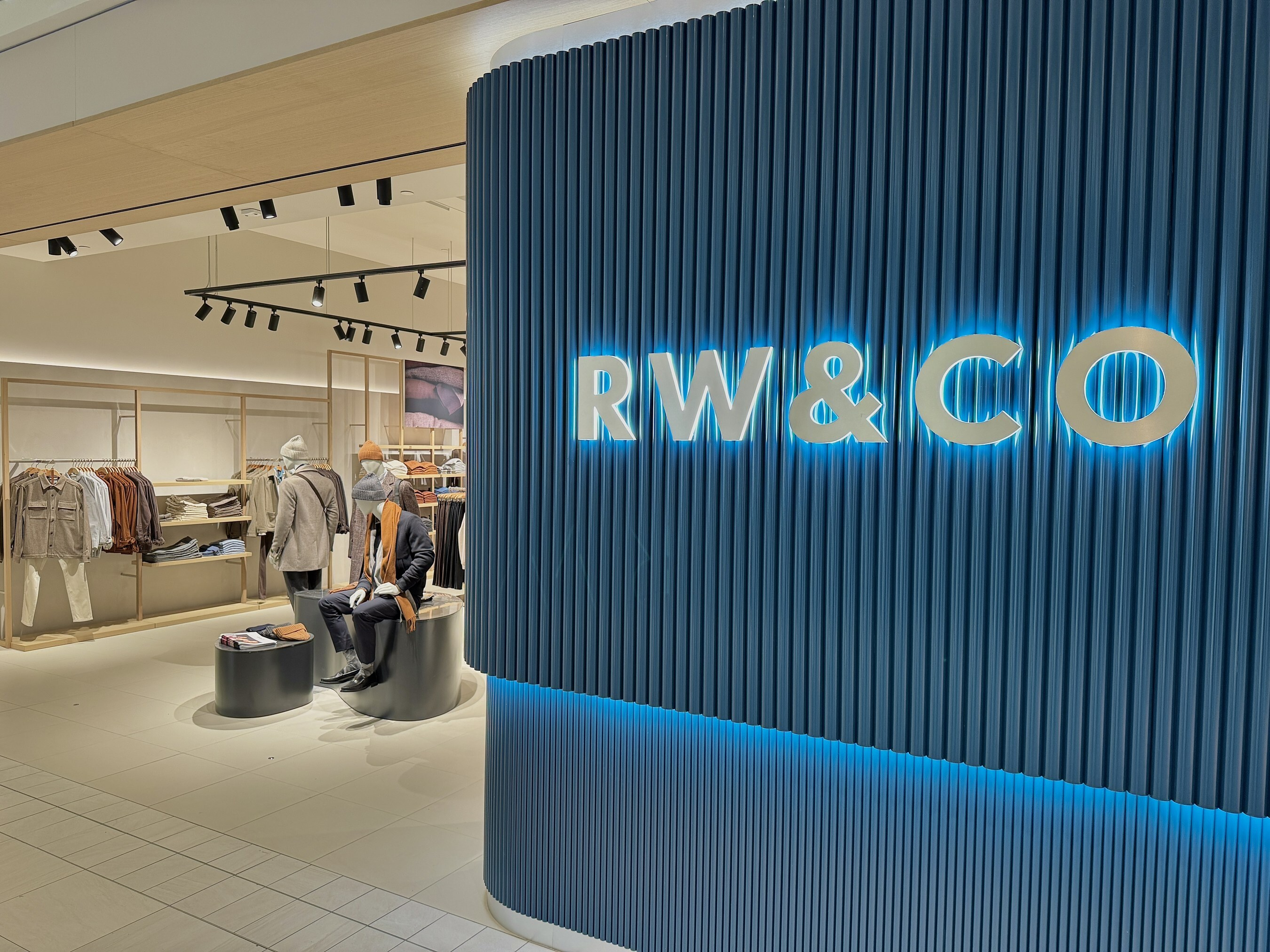
Pictured: RW&CO’s new flagship storefront at Promenades Saint-Bruno. The store features refined neutrals and deeper hues for a sleek, modern retail experience, designed to inspire and elevate the customer journey. (CNW Group/Reitmans (Canada) Ltd)
Canadian fashion brand RW&CO has opened its first flagship store at Promenades Saint-Bruno, marking a milestone in its 25-year history and a key moment in parent company Reitmans (Canada) Limited’s broader retail transformation.
The 7,800-square-foot location, the largest RW&CO store to date, introduces a reimagined brand identity, combining modern design with a renewed focus on customer experience. The launch signals the next phase of Reitmans’ multi-brand growth strategy and reflects the company’s efforts to evolve with Canadian shoppers’ changing tastes.
“This moment represents much more than a rebrand. It marks a pivotal milestone in our five-year strategic plan and it’s a reimagining of what RW&CO stands for,” said Margaret Thouez, General Manager of RW&CO, in a statement. “We’ve evolved to meet our customers where they are today and where they aspire to be tomorrow.”
A New Direction for a Canadian Brand
Founded in Montreal in 1999, RW&CO has long been recognized for its professional and casual wear collections for men and women. The brand’s evolution now aims to meet the needs of the modern “work-from-anywhere” customer, offering collections that combine versatility, fit, and quality.
The new flagship embodies this shift. Designed in Canada, the store integrates contemporary design cues with lounge-style fitting areas and open, light-filled spaces meant to encourage discovery and comfort. Every detail, from layout to materials, reflects RW&CO’s updated visual identity, first revealed in September.
“This flagship brings our new brand story to life,” Thouez said. “It’s about creating a space where design, innovation, and connection intersect — a place that reflects how Canadians live and work today.”
RW&CO Saint Bruno store (CNW Group/Reitmans (Canada) Ltd)
Design Meets Purpose
Beyond aesthetics, RW&CO’s flagship introduces a concept that merges fashion retail with community engagement. The store will serve as a platform for creative collaborations, events, and local talent showcases, extending the brand’s reach beyond traditional retail.
The company described the new store as a “purpose-driven retail environment that fosters creativity and community,” aligning with Reitmans’ vision to create meaningful and lasting experiences across its banners.
The flagship’s design uses neutral tones, sustainable materials, and modular displays to emphasize craftsmanship and approachability. The atmosphere mirrors the brand’s positioning — sophisticated yet accessible, catering to customers seeking timeless, well-made apparel that transitions easily from work to leisure.
Part of a Broader Reitmans Transformation
RW&CO’s new direction is a cornerstone of Reitmans (Canada) Limited’s long-term strategy to modernize its three banners: Reitmans, PENN., and RW&CO. Under the leadership of CEO Andrea Limbardi, the company has sought to reposition its brands around differentiated experiences and a renewed emphasis on Canadian design.
With 391 stores across the country, including 84 RW&CO locations, Reitmans remains one of Canada’s largest specialty apparel retailers. The company has placed renewed focus on innovation, omni-channel integration, and community relevance to stay competitive amid international retail expansion in Canada.
The Saint-Bruno store, located about 20 kilometers from downtown Montreal, acts as both a symbol and a testing ground for Reitmans’ new retail strategy. The flagship is expected to inform future store designs across RW&CO’s network and guide how the brand interacts with consumers online and in person.
RW&CO Saint Bruno store (CNW Group/Reitmans (Canada) Ltd)
Interac Corp. (Interac) has introduced KONEK, a new Canadian-made e-commerce payment solution designed to give merchants and consumers greater choice, trust, and control in how they pay online. Backed by Canada’s major financial institutions and launching nationally with Staples Canada as the first participating national retailer, KONEK represents a major evolution in the country’s digital payment landscape.
“KONEK is a new Canadian e-commerce payment solution that’s designed to give Canadians more choice and trust when they’re transacting online,” said Kris Zanuldin, Head of KONEK at Interac, in an interview with Retail Insider. “We saw an opportunity to bridge a gap in the market, where accessibility, convenience, and security weren’t being fully met.”
The platform arrives as retailers seek alternatives to costly payment networks and as Canadian consumers increasingly demand simpler, faster, and safer online transactions.
Bridging the Gap in Canadian Online Payments
Interac developed KONEK in collaboration with Canada’s leading financial institutions. The system operates as both an authentication entry point and a payment method, enabling customers to log in through their existing online banking credentials with their participating financial institution and securely complete purchases from a chequing, savings, credit, debit, or line-of-credit account, depending on merchant acceptance.
“KONEK was built to deliver trust, accessibility, and convenience,” said Zanuldin. “On the merchant side, there’s frustration with rising payment costs and increasing fraud, while consumers are becoming more conscious about privacy and security. We wanted to solve for both.”
He noted that trust and privacy rank among Canadians’ top priorities in digital commerce, particularly among younger generations. “Our research shows that over half of Gen Z consumers prefer pay-by-bank options if they’re available,” he said. “They want flexibility and confidence that their data is protected.”
For retailers, KONEK addresses long-standing pain points, including high transaction fees, complex integrations, and growing fraud exposure. Zanuldin explained that KONEK’s structure, developed in collaboration with financial institutions, helps reduce payment related costs while improving checkout conversion rates.
“For merchants, it’s about increasing revenue and reducing costs,” he said. “Many solutions focus on one or the other, but KONEK does both. We help maximize conversions while lowering the cost of payments.”
Based on data from the Baymard Institute the average large e-commerce site can gain up to a 35% increase in conversion rates through optimized checkout flow and design. KONEK’s integration gives consumers a streamlined checkout experience that is designed to reduce friction and minimize cart abandonment.
“Payment choice is critical,” added Zanuldin. “When customers can pay how they want, whether by chequing and savings accounts, debit, or credit, they’re less likely to abandon their carts. KONEK helps merchants close that gap.”
Reducing Fraud with Bank-Grade Security
Fraud prevention is another cornerstone of KONEK’s design. The platform integrates directly with financial institutions’ multi-layered fraud detection systems, incorporating tokenization, encryption, and real-time authentication.
“Fraud is an ongoing battle,” said Zanuldin. “The good news is that with KONEK, merchants gain access to some of the best fraud detection and prevention systems in the country, powered by the financial institutions themselves.”
Retailers using KONEK also benefit from full fraud liability shift, meaning they are not held responsible if a customer authenticates through KONEK and later reports fraudulent activity. “That’s a huge advantage for merchants,” Zanuldin explained. “It helps reduce risk and protect their bottom line.”
Seamless Integration for Merchants
To make adoption as frictionless as possible, KONEK was developed as a modern API-based platform that works across operating systems and networks. Its first payment processor integration partner is Moneris, allowing retailers to integrate KONEK directly through existing acquirer relationships.
“We wanted integration to be modern, easy, and operationally simple,” said Zanuldin. “Partnering with existing acquirers, ensures that retailers don’t face new reporting or settlement challenges. It all fits seamlessly into their existing systems.”
This approach reflects the long history of Interac and its collaboration with the Canadian financial ecosystem. “Our goal is to make life easier for merchants, not more complicated,” he added.
Simplified Checkout for Consumers
For consumers, the KONEK experience is designed to be fast, secure, and intuitive. At checkout, customers simply select the KONEK button, choose their participating financial institution, and authenticate using their online banking credentials. Once enrolled, they can use passkeys login — such as Face ID or Touch ID –for one-click checkouts.
“After authentication, customers see their full range of payment options,” Zanuldin said. “That’s what makes KONEK special. You can pay directly from your chequing or savings account, credit, debit, or line of credit, depending on merchant acceptance, all within one experience.”
The system automatically fills in billing and shipping details from the user’s banking profile, which can be edited before purchase, helping speed up transactions while maintaining accuracy.
“Our vision is simple: pay who you want, how you want, easily,” Zanuldin said. “That’s what we’ve built KONEK to do.”
A Made-in-Canada Solution for a Diverse Market
KONEK’s Canadian origins are central to its identity. Developed and operated domestically, the platform reflects both the regulatory environment and the diverse consumer base unique to Canada.
“Canada is a diverse nation, and payment preferences vary,” said Zanuldin. “KONEK was built to reflect that. It’s about choice, inclusivity, and flexibility.”
He added that Canadian businesses benefit from a payments system that understands the local regulatory and financial landscape. “It’s important for a payment solution to recognize what it means to operate in Canada. KONEK does exactly that.”
Trust remains a defining factor. “Canadians have a deep level of trust in Interac and in our financial institutions,” Zanuldin said. “By aligning KONEK with those institutions, retailers inherit that trust. It’s a powerful differentiator.”
Staples Canada Leads as First National Retail Partner
The first national merchant to adopt KONEK is Staples Canada, which offers the payment option on Staples.ca and Bureauengros.com The rollout represents a milestone for both Interac and Canadian retail, as Staples showcases the potential of the platform.
“They are the first retailer to demonstrate what we mean by a more convenient, trustworthy, Canadian-built payment experience,” Zanuldin confirmed.
He described Staples Canada as an ideal early partner. “They’re a well-established national brand with strong e-commerce operations, and they share our vision for improving the online customer journey. It’s a great fit.”
Future Expansion and Long-Term Vision
As KONEK scales across Canada, Interac is already focused on expanding its functionality and reach. The company sees the platform as a foundation for future e-commerce payment innovation, supporting account-to-account transactions, recurring payments, and embedded financial experiences.
“Canada deserves a better payment service, one that’s accessible, trustworthy, and built for our market,” said Zanuldin. “We’re on a multi-year journey to make that a reality.”
He also emphasized the potential for KONEK to drive growth in Canada’s e-commerce ecosystem. “Digital payments are still evolving here,” he said. “As more commerce shifts online, Canadian merchants need a homegrown option that helps them compete and lowers their costs. That’s what KONEK offers.”
Merchants who are interested in learning more about KONEK can visit KONEK.ca
This feature was developed in partnership between Retail Insider and KONEK to highlight innovation within the Canadian retail industry.
According to statistics published by the National Retail Foundation (NRF) in 2024, there was a 93% increase in shoplifting incidents in stores in 2023 compared to five years earlier. This alarming statistic makes it clear that for retailers, theft is a legitimate problem that needs to be stopped now.
However, retailers may overlook one of their most effective solutions to curb this retail theft: experiential marketing. “While people often think of shoplifting and retail theft as ‘petty theft,’ the truth is that for retailers, the consequences are anything but petty,” says Ray Sheehan, founder of Old City Media, a leading experiential marketing firm based in Philadelphia.
To curb the growth of retail theft, many retailers have implemented anti-theft measures, such as installing additional cameras, removing self-checkout lines, or utilizing physical barriers like locking cabinets. Yet, many of these methods have proven ineffective at actually stopping theft. And worse yet, some of these approaches burden the customer experience of those who wouldn’t steal, putting off potential customers.
How experiential marketing strategies could be a brand’s best way of curbing retail theft
That being said, experiential marketing may be the key to helping retailers thwart potential shoplifters before they even get the chance to think about stealing from their store. By employing techniques common to experiential marketing, such as having brand ambassadors interact with customers and creating more interactive shopping experiences, retailers could see shrinkage levels drop as a positive externality.
One of the main reasons experiential marketing efforts serve as such a powerful hedge against retail theft is that they increase the presence of human employees in the store. When you have brand ambassadors working throughout the store, it means more sets of eyes to deter thieves.
“Of course, our brand ambassadors are not security, and they should not be treated as such,” says Sheehan. “It’s not their job to catch or apprehend shoplifters. But simply having more people on the floor during experiential marketing events makes potential wrongdoers feel more wary, as it increases their likelihood of getting caught.”
Experiential marketing also shifts the retail environment from a transactional to an interactive one. When a customer goes to a traditional brick-and-mortar retailer, they’re likely just browsing the shelves and putting whatever products they want to buy in their carts. However, when a retailer effectively implements experiential marketing, their goal is no longer merely to purchase products but instead to interact with a knowledgeable brand ambassador and get guidance on their purchasing decisions.
These in-person marketing experiences engage customers in a way that no other experience could replicate. Marketers who deliver this through pop-ups, brand activations, and engagement marketing in stores will find that it goes far beyond simply selling the brand’s products or services and boosting brand awareness.
In this way, experiential marketing is also a powerful tool in brands’ arsenals to fight customer apathy.
How engagement marketing tools fight customer apathy
When a customer visits the storefront of their average grocery store, they probably don’t have a strong connection to the brand itself; they’re likely there for the express purpose of purchasing food. However, when they visit a high-end clothing or accessory store, they tend to have a stronger alignment with that specific brand. More general retailers would be wise to replicate the success of these high-end brands’ experiential campaigns to create increased brand awareness.
Furthermore, through immersive experiences, retailers can build a feeling of value and reciprocity that creates a psychological barrier to theft for potential wrongdoers.
“By using strategies like giveaways and offering free branded merchandise, brands are creating a sense of brand loyalty that makes it harder for people to take something that isn’t theirs,” says Sheehan. “After all, why would someone want to steal from a company that just gave them something?”
How experiential marketing campaigns can redefine the brand experience and ease shrinkage
Indeed, with an effective use of experiential marketing, brands can entirely reshape their store’s dynamics. A great example of this can be found at your local Apple Store.
Apple has built its entire retail experience around experiential marketing. From interactive experiences using virtual reality and augmented reality to its open-concept retail layouts and engaged employees, everything about the Apple Store is designed to make shopping there a unique and memorable experience. Although the retailer also employs traditional loss prevention strategies, such as mechanical locks and alarms, the way they create the shopping experience is also a form of loss prevention in itself.
Ultimately, experiential marketing may not be a direct countermeasure to combat retail theft, but brands that strategically utilize this marketing method may find that it has an indirect effect in deterring shoplifters from stealing.
“If your business is looking to maximize its marketing budget — helping fight shrinkage at the same time as you build brand loyalty among your target audience — consider the power of experiential marketing,” Sheehan concludes.
This appointment follows the company’s announcement earlier this year of President & CEO Michael Medline’s intention to retire from Empire. Mr. St-Laurent’s appointment is effective immediately with Mr. Medline remaining to support a thorough transition into December.
“After a robust and well-governed succession process that included both an extensive global search and consideration of internal candidates, our Board is delighted to have identified our next CEO from within our organization,” said James Dickson, Chair of the Board of Empire. “Pierre is a seasoned retail executive who has served as one of the key architects of our company’s success and our Board is unanimous that he is the right choice to create long-term value for all of our stakeholders. Choosing a leader from within our senior leadership ranks speaks to the depth of talent in our company and reinforces that our greatest strength lies in our people — those who know our business, live our values and have helped shape our success.
“I am incredibly grateful for Michael’s leadership over the past nine years. He has been the true embodiment of a resilient, adaptable and courageous leader and his impact on our company will be felt for years to come.”
A 34-year veteran of Empire, St-Laurent has served in increasingly senior roles with the company, across the finance, distribution and logistics, retail operations and merchandising functions. In 2019, he was appointed Executive Vice President & Chief Operating Officer for Empire, overseeing the company’s merchandising, operations and supply chain functions across Canada, while also serving as a key member of the company’s executive leadership team. In 2020, he was named one of Canada’s 50 Best Executives by the Globe and Mail’s Report on Business Magazine, said the company.
Sobeys (Image: Nejmark Architect)
“What an incredible honour to lead Empire’s 129,000 teammates and to continue to build upon the foundation of success that we have created together,” said Mr. St-Laurent. “I have been fortunate to work with so many talented colleagues over the years and I am inspired by what we can achieve together in the years to come, for our customers, our teammates and the communities we serve.”
“Pierre is a proven and passionate leader and a fantastic executive who has played a critical role in the transformation and growth of Empire over the past nine years,” added Medline. “He brings a remarkable combination of operational expertise, strategic insight and, importantly, a deep and unwavering commitment to our customers. I am confident he is the leader to take our company to even greater heights.”
Empire said Medline retires from the company after nine years of outstanding contributions to the growth and success of the company. Not only did he lead the difficult transformation and turnaround of what at the time was a struggling business, he has since steered Empire on its current growth trajectory, delivering immense value for shareholders in a dynamic and ever-changing marketplace.
Empire Company Limited is a Canadian company headquartered in Stellarton, Nova Scotia. Empire’s key businesses are food retailing, through wholly-owned subsidiary Sobeys Inc., and related real estate. With approximately $31 billion in annual sales and $17 billion in assets, Empire and its subsidiaries, franchisees and affiliates employ approximately 129,000 people.
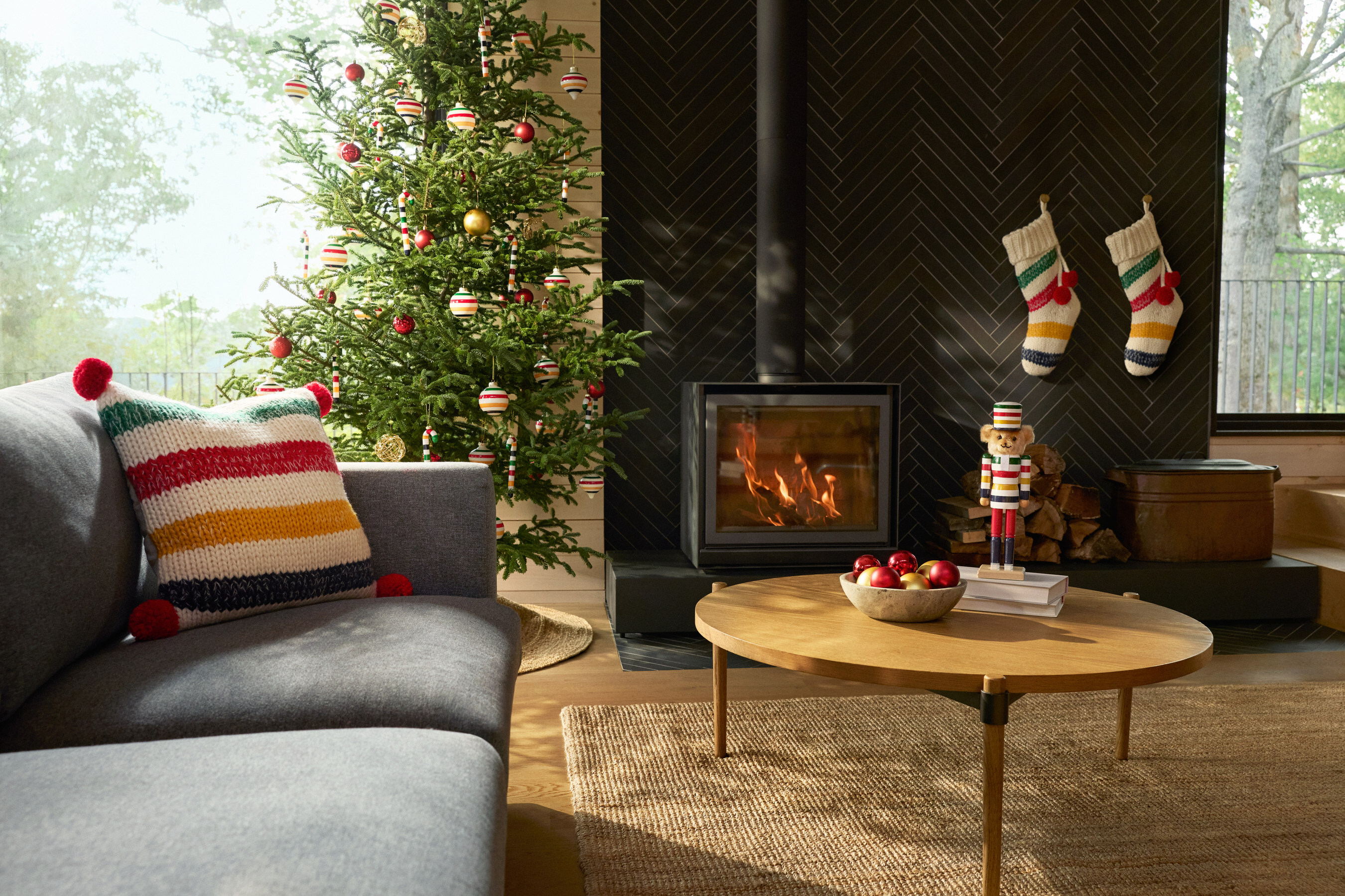
Canadian Tire unveils their limited-edition Hudson’s Bay Stripes holiday capsule, launching December 5, 2025. (CNW Group/Canadian Tire Corporation, Limited)
Canadian Tire Corporation (CTC) is ushering in a new chapter of Canadian retail history with the reintroduction of the Hudson’s Bay Stripes. On December 5, Canadian Tire will launch its first Hudson’s Bay Stripes holiday collection, available exclusively in stores across the country. The limited-edition capsule marks the first step in Canadian Tire’s stewardship of the storied brand since acquiring the Hudson’s Bay intellectual property earlier this year.
“Bringing the Stripes back to Canadians is both an honour and a responsibility,” said Greg Hicks, President and CEO of Canadian Tire Corporation, in a statement. “Recognizing the enthusiasm and nostalgia Canadians hold for the brand, we are determined to reintroduce it with care. As a first foray, this curated Hudson’s Bay Stripes collection is a reflection of our stewardship.”
The holiday capsule includes 26 heritage-inspired products such as the Hudson’s Bay Point Blanket, classic striped ornaments, espresso sets, knitwear, totes, and bedding. Every item has been carefully chosen from past Hudson’s Bay collections, selected for quality and historical resonance. Availability will vary by store, and the products will not be sold online.
Eva Salem, SVP, Marketing and Brand, Canadian Tire
“This is a moment of pride and preservation,” said Eva Salem, Senior Vice President, Marketing and Brand at Canadian Tire, in an interview on Wednesday. “The Stripes have been part of Canada’s story for generations, and we’re thrilled to bring them back through a limited-edition capsule that celebrates their legacy.”
From Legacy to Launch
When Canadian Tire won the $30-million bid to acquire Hudson’s Bay’s intellectual property in spring 2025, including its distinctive multicoloured stripe design, the company faced a tight turnaround. With the deal finalized in June, CTC had only five months to prepare a collection for the holiday season—an ambitious feat in an industry where retailers typically plan a year or more in advance.
“We largely had to work with what we could turn around in five or six months,” Salem explained. “Normally, with these kinds of launches, we plan at least 18 to 24 months ahead. This time, we focused on agility and authenticity, creating something that would resonate deeply with Canadians.”
The resulting capsule collection features products that many will recognize from past Hudson’s Bay assortments. Canadian Tire worked closely with the same long-standing suppliers to ensure quality and craftsmanship remained consistent. “The manufacturing is the same, the quality is the same, and in many cases, the vendors are the same,” said Salem. “We wanted this first capsule to be rooted in what people already love.”
A New Stewardship of Heritage
The Hudson’s Bay Stripes are among the most recognizable symbols in Canadian retail history. Their origins date back to the late 18th century when Hudson’s Bay Company introduced the point blanket in 1779. The now-famous green, red, yellow, and indigo stripes on a white background became a hallmark of Canadian identity, adorning everything from outerwear to home décor.
For Canadian Tire, acquiring these assets represented a commitment to preserving and evolving a national symbol. The company’s stewardship extends to Hudson’s Bay’s historic coat of arms, slogans, and several private-label brands, including Distinctly Home and Hudson North. The acquisition did not include the Zellers brand, which was sold separately to Les Ailes de la Mode Inc. in August.
Under the deal, Canadian Tire also obtained Hudson’s Bay’s social media channels, using them to engage directly with Canadians. “We’ve started conversations through our social platforms, asking Canadians what they’d like to see in future collections,” said Salem. “It’s been really fun watching people vote on this-or-that product options and share their ideas. We’re genuinely listening.”
Canadian Tire unveils their limited-edition Hudson’s Bay Stripes holiday capsule, launching December 5, 2025. (CNW Group/Canadian Tire Corporation, Limited)
Inside the Store Experience
While the products will not be available online initially, customers can expect prominent in-store displays at Canadian Tire locations nationwide. Salem confirmed that stores will showcase the Hudson’s Bay Stripes capsule in high-traffic areas, especially near seasonal holiday sections.
“The timing was tight, but we were able to create point-of-purchase materials and cohesive in-store presentations,” she said. “It’s designed as a capsule, everything together in one place, so customers will immediately recognize it when they walk in.”
This initial rollout will be modest in size, but Canadian Tire plans a much broader expansion in 2026. “The spring launch will be more fulsome,” Salem noted. “You’ll see more products, more inventory, and greater accessibility. We want to give Canadians more opportunities to experience the Stripes.”
Tying Into the ‘True North’ Strategy
Canadian Tire’s revival of Hudson’s Bay aligns closely with its corporate “True North” strategy, a company-wide vision that emphasizes celebrating Canadian heritage, community, and values. “At the highest level, our purpose is to make life in Canada better,” said Salem. “The Hudson’s Bay brand ladders up to that perfectly. Canadians care about legacy brands and products that represent our shared story. Stewarding the Stripes allows us to continue that connection in a meaningful way.”
Beyond the flagship Canadian Tire banner, the company is exploring ways to introduce Hudson’s Bay-branded products across other retail chains in its portfolio, including Mark’s and SportChek, potentially by late 2026 or early 2027. “We want the assortments to make sense for each retailer,” Salem said. “Ultimately, we want Canadians to have access to these products wherever they shop in their communities.”
A Modern Take on a Classic Brand
This reintroduction comes as part of a broader retail transition following the closure of all Hudson’s Bay department stores earlier this year. When the Bay shuttered after 355 years in business, Canadians rushed to stores to buy up remaining striped goods. The overwhelming demand made clear that these products hold lasting emotional and cultural value.
Canadian Tire’s approach emphasizes respect for that heritage. Rather than overextending the brand, the retailer aims to balance familiarity with freshness. “We’re not changing the products people love,” Salem said. “There’s nothing to fix. Our goal is to preserve the magic that Canadians associate with the Stripes while introducing thoughtful new additions over time.”
This sense of continuity extends to philanthropic partnerships. Canadian Tire confirmed that it will maintain Hudson’s Bay’s longstanding relationship with the Gord Downie & Chanie Wenjack Fund (DWF). Proceeds from the sale of the Hudson’s Bay Point Blanket will continue to support the fund, which advances reconciliation and Indigenous-led initiatives across Canada. The retailer pledged to donate a minimum of $1 million annually to DWF, regardless of sales volume.
Canadian Tire unveils their limited-edition Hudson’s Bay Stripes holiday capsule, launching December 5, 2025. (CNW Group/Canadian Tire Corporation, Limited)
Looking Ahead: The 2026 Expansion
Canadian Tire plans to significantly grow the Hudson’s Bay product line next year. “We see this as just the beginning,” Salem said. “This holiday capsule is about reconnecting with Canadians and reminding them why they love the Stripes. In 2026, you’ll see us expand into more categories, more stores, and potentially even new retail formats.”
The company has not ruled out the idea of stand-alone Hudson’s Bay Stripes boutiques or shop-in-shop concepts in the future. “We’re exploring everything,” Salem explained. “For now, our focus is on making the products accessible across our existing network, but there’s definitely potential for special retail experiences down the road.”
Canadian Tire’s vast retail network, spanning nearly 1,700 locations across multiple banners, gives it an advantage in bringing the Stripes to communities nationwide. The company’s integrated loyalty platform, Triangle Rewards, could also play a role in future promotions, although Salem said the current capsule does not directly tie into the program.
Consumer Excitement and Nostalgia
Early consumer response to Canadian Tire’s social media campaigns has been overwhelmingly positive. Canadians have expressed nostalgia for the heritage design and appreciation that the brand remains under domestic ownership. “People are passionate about this brand,” Salem said. “We’re seeing emotional responses —memories tied to family traditions, cabins, holidays. The Stripes mean something special to people.”
That emotional connection underscores the broader cultural significance of this acquisition. For many Canadians, the Hudson’s Bay Stripes represent continuity amid change, evoking a shared national history that stretches back centuries. Canadian Tire’s stewardship ensures that this legacy will continue — not as a museum piece, but as a living, evolving brand within everyday retail life.
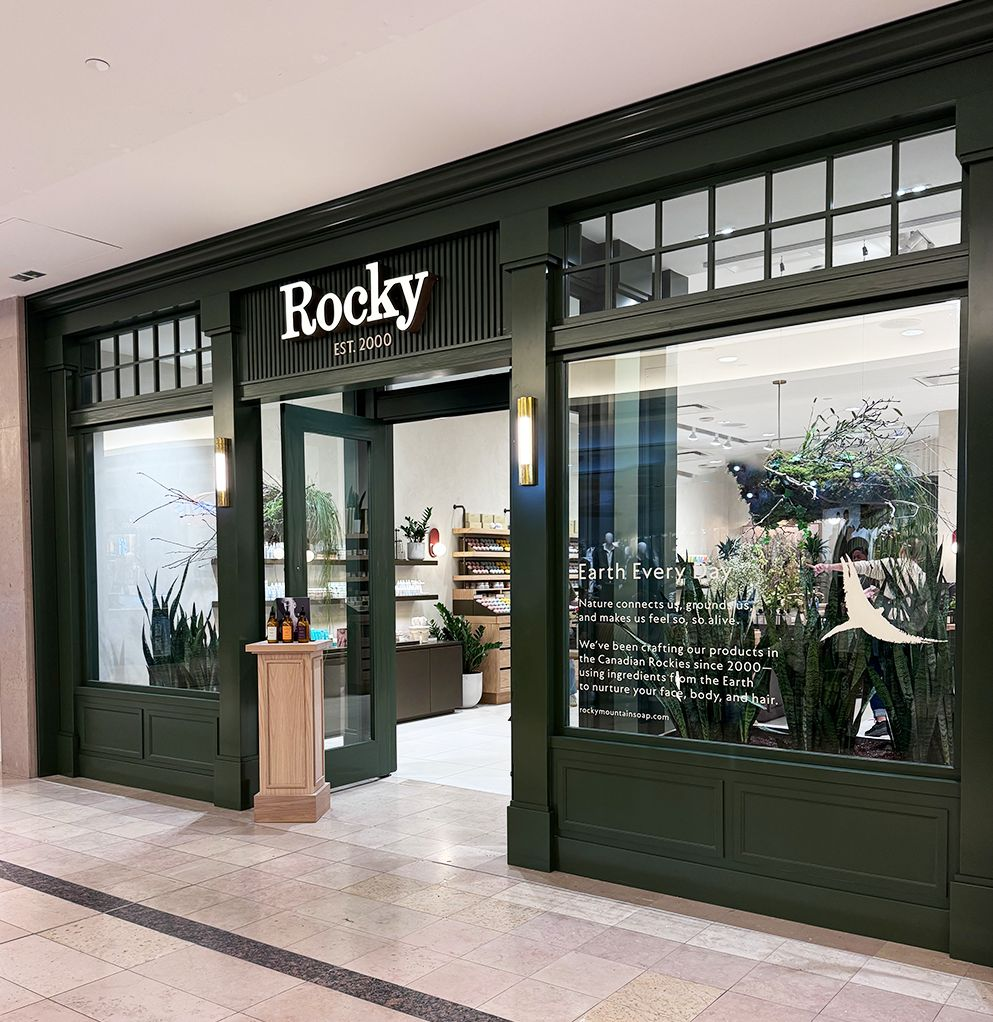
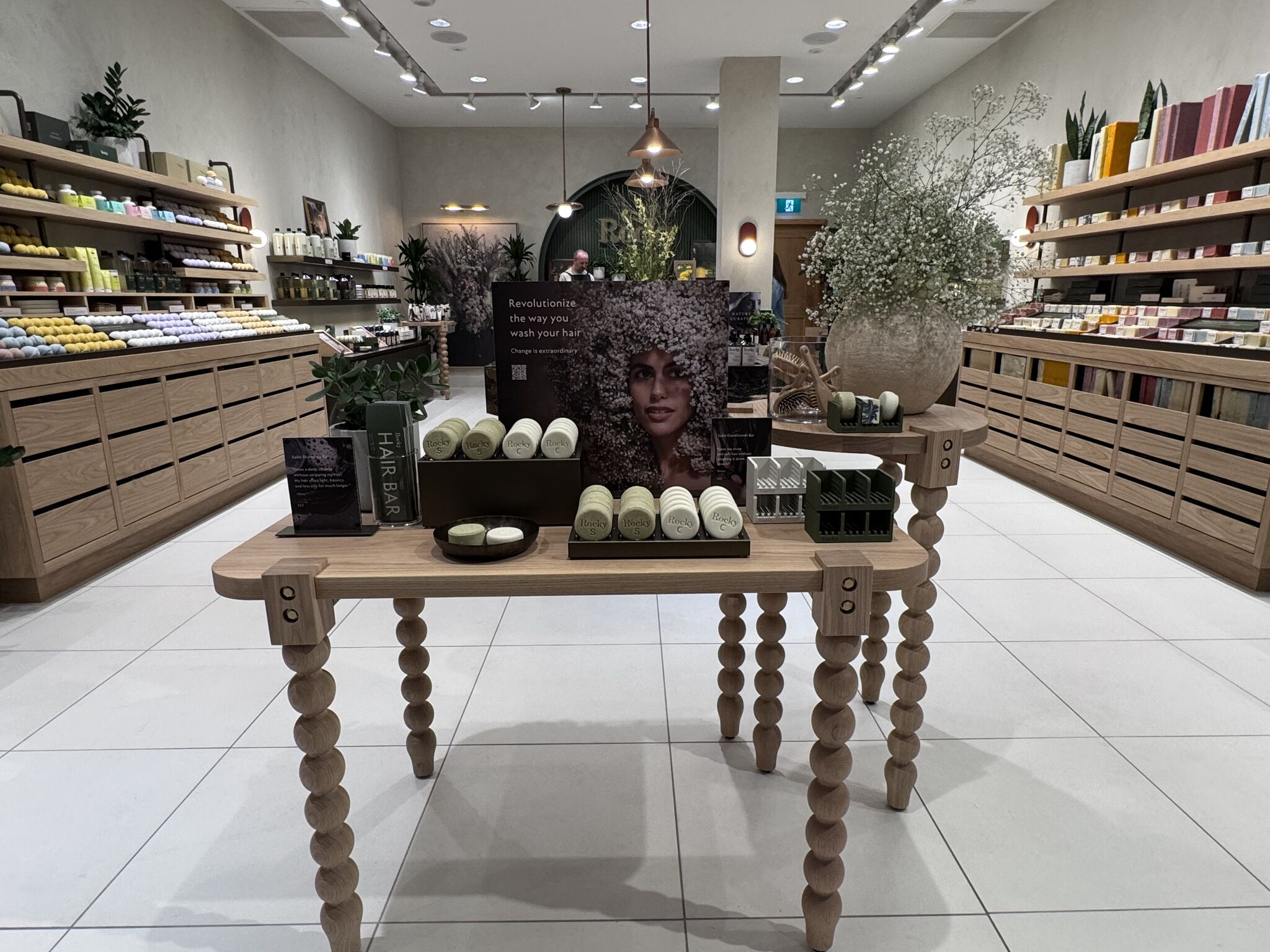
Rocky store at CF Sherway Gardens in Toronto. Photo: Rocky (formerly Rocky Mountain Soap Company)
Canadian natural personal-care company Rocky, formerly known as Rocky Mountain Soap Company, is marking its 25th anniversary with a refreshed name, new look, and a deeper sustainability focus. Founded in 2000 in Canmore, Alberta, by Cam Baty and Karina Birch, the company has evolved from a small local soap maker into one of Canada’s most recognized clean-beauty and wellness brands.
The rebrand simplifies the company’s name to Rocky, a reflection of both its mountain roots and its growing national presence. “It feels like a big inflection point,” said Karina Birch, Co-Founder of Rocky. “A lot is changing at once, and it’s all happening around our 25th anniversary, which feels really pivotal.”
Karina Birch
Rocky’s journey began humbly, when Karina Birch and Cam Baty did everything themselves including making soap, serving customers, sweeping floors, and paying bills. “I don’t know how we got here,” Birch said, reflecting on the early days. “When you go back to that first year, we literally did it all ourselves and had one employee. Now we have close to 250 people.”
Today, the company operates 35,000 square feet of manufacturing, research, and office space in Canmore, where all products are still handcrafted. The location remains central to Rocky’s identity, both as inspiration and as a way of life. “There’s no separation between our lifestyle in Canmore and the organization,” Birch said. “The mountains influence everything we do… how we source ingredients, how we celebrate as a team, and even how we think about slowing down and connecting with nature.”
A Lifestyle Grounded in Nature
That connection to nature defines the company’s ethos. Birch explained that while outdoor culture in mountain towns can be competitive, Rocky’s approach is grounded in appreciation. “What drew me to the mountains wasn’t about conquering peaks. It was about what’s right in front of us,” she said. “It’s about recognizing the wild chamomile growing in your driveway. There’s a groundedness here that fuels our business.”
This philosophy extends beyond product creation. Each year, Rocky brings employees together outdoors to reconnect with the company’s roots. “It’s not about getting everyone to the top of a mountain,” Birch added. “It’s about enjoying the outdoors and finding that sense of connection wherever you are, even in downtown Toronto.”
Rocky store at CF Sherway Gardens in Toronto. Photo: Rocky (formerly Rocky Mountain Soap Company)
Since its founding, Rocky has remained steadfast in producing 100 percent natural products. “We decided early on that we wanted to stand for something,” Birch said. “That has been unwavering.” When the brand began in the early 2000s, the concept of natural skincare was far from mainstream. “It made life more challenging,” she recalled. “For ten years we were told we couldn’t do it, but we stuck to our values at the cost of short-term sales.”
That commitment built a loyal following. “We weren’t rewarded right away,” Birch admitted, “but it created a community of people who shared our beliefs. In the long term, it’s what set us apart.”
Today, Rocky offers over 350 products, including soaps, skincare, haircare, and deodorants, all handcrafted with natural ingredients. “We focus on everyday essentials,” Birch explained. “Products people truly need that simplify routines and are sustainably made.”
A Rebrand Rooted in Purpose
Rocky’s rebrand marks a symbolic shift that stays true to its origins. The new packaging, made entirely from 100 percent post-consumer recycled plastic with recyclable mono-material pumps and renewable Forest Film labels, embodies the company’s long-term sustainability vision. “We’re over halfway through converting all our products to the new look,” said Birch. “The brand now feels like who we’ve always been — grounded, authentic, and reflective of our roots.”
The visual identity has also evolved. Early packaging often depicted mountains and botanicals, while later designs emphasized vibrant colour to show that natural could also be fun. “We’ve grown up as a brand,” Birch noted. “We don’t need to prove ourselves anymore. The new design that is rooted in earthy greens and natural tones reflects maturity and confidence.”
The company aims to close the gap between product and packaging life cycles. “A lip balm might last three months, but the packaging can persist 300 years,” Birch said. “We’re now using second-use plastics, giving materials a second or third life instead of sending them to landfills.”
The brand’s popular solid haircare line, launched in 2024, eliminates bottles entirely and has become one of its top-selling categories. “It’s going gangbusters,” Birch said. “We’re also working on a solid facial cleanser for 2026.” The solid-format innovation aligns with Rocky’s broader goal to eventually reduce the need for packaging altogether.
Image: Rocky
Retail Expansion and New Stores
Rocky continues to expand its national footprint, blending brick-and-mortar retail with a strong e-commerce presence. The brand recently opened a new store at CF Sherway Gardens in Toronto, part of its push into Ontario. “Sherway has hit the ground running,” Birch said. “It’s performing exceptionally well.”
A flagship renovation is also underway in Calgary, which Birch described as “a very exciting project,” pending final lease signing. “We’re being selective about where we go,” she added. “Not every mall is a home run, so we want to ensure each location makes sense for the brand.”
While expansion across Canada continues, Rocky plans to move back into British Columbia in the coming years. “Vancouver will likely be our first foray back into B.C. once Ontario is where we want it to be,” said Birch. “We expect that within the next few years.”
E-Commerce and Omnichannel Strategy
Online sales represent about 30 to 35 percent of Rocky’s total business, returning to pre-pandemic levels. Birch said the online and offline channels strengthen each other. “When we open stores, we gain more online customers,” she explained. “They often shop in both channels. Our new store strategy actually fuels our e-commerce growth.”
Despite that success, Rocky remains selective about digital expansion. “We’re not a brand with flashy TikTok videos or influencer-driven campaigns,” Birch said. “Our strength lies in organic acquisition and retention. It’s about strong, steady, enduring growth rather than chasing viral moments.”
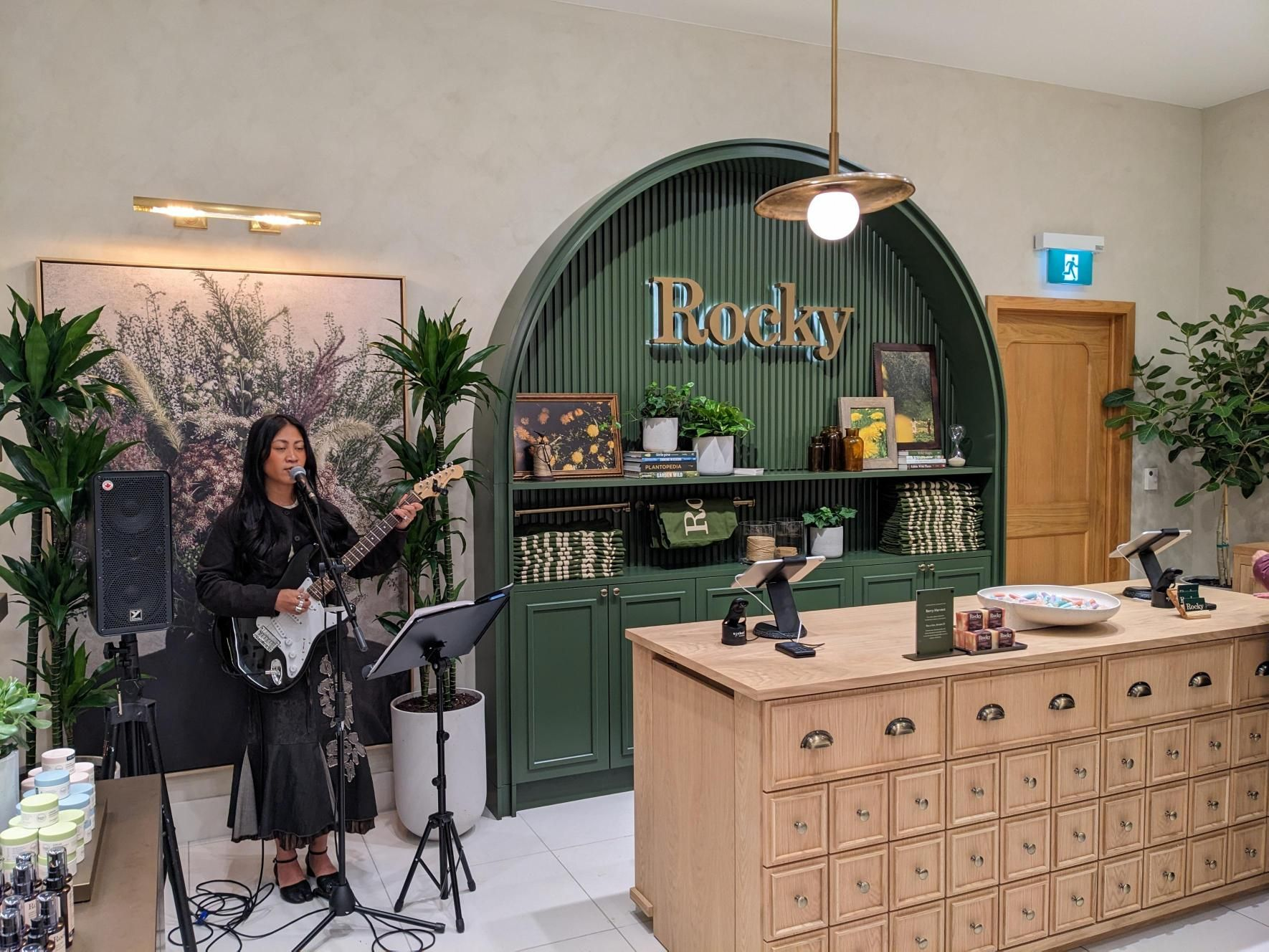
Grand opening (with musician) of the Rocky store at CF Sherway Gardens in Toronto, October 2025. Photo: Rocky (formerly Rocky Mountain Soap Company)
Operational Challenges and Scaling Up
Scaling a handcrafted brand with national retail ambitions has presented operational challenges. “We’re doing things the hard way,” Birch acknowledged. “Growing a beauty brand through brick-and-mortar is capital intensive, but it’s what we know and what works for us.”
Manufacturing and quality control have been top priorities. “The biggest challenge is getting all cylinders firing at the same time,” Birch said. “We’ll add stores, then pause to strengthen operations before scaling again.” Over the past five years, Rocky has focused on refining manufacturing systems to support its expanding network.
That growth has also changed leadership. Birch announced she will transition into a strategic advisory role in 2026, while a long-time vice president will move into the President position. “The business grows as fast as I’m willing to learn,” Birch said. “This change lets me focus on long-term strategy while the team continues to evolve day to day.”
Community and Giving Back
As Rocky expands beyond Alberta, community engagement remains a core focus. “We’re learning how to build those local connections in Ontario,” Birch said. “In Canmore, we know our community intimately, and we want that same sense of belonging wherever we open.”
The company has pledged to donate $1 million over the next three years to organizations aligned with its values, particularly those focused on conservation, outdoor living, and wellness. “That goal drives us to better understand each community and how we can contribute meaningfully,” Birch explained.
Looking Ahead: The Future of Natural Beauty
Birch believes the natural beauty and wellness sector is still in its early stages. “We’re just at the beginning,” she said. “There’s incredible growth ahead.” She envisions a future where hyper-local sourcing and wild-foraged ingredients become mainstream, creating what she calls “supernatural beauty.”
“Food has already gone hyper-local,” she said. “I think the beauty industry will follow. We’ll reinvent supply chains and source more locally grown and foraged ingredients.”
For Rocky, that vision ties directly to R&D. “We want to keep discovering what’s possible with natural ingredients,” Birch added. “Many of the plants we study have existed for millions of years, older than humanity itself. There’s still so much to learn.”
Despite interest from international markets, Rocky’s focus remains firmly in Canada. “Until we’ve done the best we can here, we won’t look elsewhere,” Birch said. “There’s so much opportunity still at home.” With continued expansion in Ontario and plans for British Columbia, the brand aims to deepen its national footprint before considering new frontiers.
Rocky store at CF Sherway Gardens in Toronto. Photo: Rocky (formerly Rocky Mountain Soap Company)
Advice for Purpose-Driven Founders
After 25 years of growth, Birch has advice for other entrepreneurs building mission-driven brands. “You have to focus on the medium and long term,” she said. “Sticking to your values may mean giving up short-term opportunities, but the payoff is lasting trust and community.”
She added that purpose-driven leadership is no longer optional. “Consumers, shareholders, everyone is asking, ‘Great, you’re making money, but what else?’ They want to know how you’re impacting people, communities, and supply chains. These are table stakes now.”
The Next 25 Years
With the rebrand underway and sustainability woven into every layer of the business, Rocky is entering what Birch calls its “next 25-year chapter.” “The packaging changes will be done soon,” she said, “but our sustainability journey is forever. That’s where we’ll continue to invest and innovate.”
From its beginnings in Canmore to its growing presence in Canada’s top shopping centres, Rocky’s evolution reflects a balancing act between nature and commerce, simplicity and sophistication. “We’ve matured, but we’ve never lost sight of what matters,” Birch said. “Our purpose hasn’t changed, to help people connect with nature every day.”
IKEA Canada closes fiscal year 2025 with $2.8B annual sales, increased visitation across all channels, and a lift in food sales (CNW Group/IKEA Canada Limited Partnership)
IKEA Canada announced Wednesday financial results for the fiscal year (FY) ending August 31, 2025. The home furnishing retailer maintained $2.80 billion in retail sales (-2.5% compared to FY24) while serving more Canadians online (199.9M; +11.2%) and in-store (33.3M; +1.6%) and achieving $143 million in IKEA Food sales (+4.1%).
Selwyn Crittendon
“Despite the challenges we faced with the even higher cost of living, a rapidly changing retail landscape, and economic and trade pressures, I’m so proud of our 7,000-plus co-workers across the country who met more of the many Canadians and supported them in creating a better everyday life at home,” said Selwyn Crittendon, CEO and Chief Sustainability Officer, IKEA Canada.
“By continuing to lower prices on our most popular items and offering delicious meals at the lowest possible price, we made it easier for customers to enjoy our restaurant while being inspired by our home furnishing range. And that has set us up for a tremendous start to FY26 as we focus on our Complete Cooking and Eating offer.”
“As the cost of living continued to rise in 2025, IKEA Canada doubled down on its commitment to affordability by investing over $50 million to lower prices on more than 550 products, adding to the $80 million in price reductions in 2024. This latest round of price reductions on popular items enabled Canadians to create homes that meet their needs and dreams while being cautious about their spending,” said the well-known retailer.
“Despite financial concerns, Canadians still want to be able to enjoy a meal out. By offering healthy and sustainable choices at a very affordable price, a family of four can enjoy a meal at IKEA for approximately $30. To continue its commitment to a unique and affordable food offer, IKEA Canada will launch a bold new food menu in stores across Canada this Fall.”
IKEA Canada closes fiscal year 2025 with $2.8B annual sales, increased visitation across all channels, and a lift in food sales (CNW Group/IKEA Canada Limited Partnership)
IKEA said it continued to work with partner organizations including Furniture Bank, Rainbow Railroad, the Canadian Red Cross, and others to support those in need in the communities where IKEA operates. Guided by its mission to create a better everyday life for the many people, in the coming year, the global retailer will continue to put its equality, diversity, and inclusion strategy into action through such initiatives as the Making Space marketing campaign.
“Taking care of co-workers is a top priority for IKEA Canada as they are the company’s greatest asset. In FY25, the home furnishing retailer created space for meaningful conversations and training around mental health and menopause, helping to reduce stigma and build a workplace where everyone feels safe and supported. The impact is clear from the latest co-worker survey results where 83% feel a strong sense of belonging at IKEA and 86% feel connected to their colleagues,” it said.
IKEA Canada closes fiscal year 2025 with $2.8B annual sales, increased visitation across all channels, and a lift in food sales (CNW Group/IKEA Canada Limited Partnership)
“In response to a rapidly evolving retail environment and changing consumer behaviour, IKEA Canada is transforming all areas of its business to remain relevant and secure its position as a leading omnichannel retailer for generations to come. In FY25, IKEA Canada opened two new Plan and order points in Quebec; made major progress on its fulfilment expansion projects in the Greater Toronto and Vancouver Area markets; and enhanced digital tools and services offerings for a better customer experience.”
FY25 results at a glance:
$2.80B in total sales (2.5% decrease from last year)
$793M in online sales (28.3% of total sales)
$143M in Food Sales (4.1% increase from last year)
33.3M store visits (1.6% increase from last year)
199.9M online visits (11.2% increase from last year)
2.38M orders delivered (728,233 Click and collect orders)
Canadians enjoyed:
70.8M+ meatballs
7.2M+ plant balls
3.1M+ hot dogs
2.1M+ frozen yogurts
September 1, 2024, to August 31, 2025. Stats compared to FY24.
Founded in 1943 in Sweden, IKEA is a leading home furnishing retailer, offering a wide range of well-designed, functional home furnishing products. IKEA Canada is part of Ingka Group which operates 574 IKEA stores in 31 countries, including 16 stores and 10 Plan and order points in Canada. Last year, IKEA Canada welcomed 33.3 million visitors to its stores and 199.9 million visitors to IKEA.ca.