A new global IKEA study says Canadians are embracing more casual and flexible eating habits as screens, busy schedules and smaller living spaces reshape how – and where – they dine. The survey – one of the largest cooking & eating ones ever conducted – was conducted by over 31,000 respondents across 31 markets. The study found that Canadians are least likely to sit at a kitchen table, with only 38% doing so regularly. Instead, many are turning to sofas (27%) or even their beds (5%), and a striking 32% snack late at night – well above the global average of 20%, added IKEA.
Lorena Lourido Gomez
“Despite the emotional importance of food, shared meals are under pressure,” said Lorena Lourido Gomez, Global Food Manager at IKEA Retail (Ingka Group). “Busy schedules, compact living, and competing priorities make it harder for people to come together, not just at the same time, but in the same place,” she says.
With screens firmly embedded in daily life, many Canadians are now eating with them – only 6% reported using the kitchen table as a device-free zone, and half say they watch TV while eating with others. These evolving routines also reflect the practical realities of modern life. Limited time and increasing compact, multipurpose kitchens make cooking more challenging. In Canada, the main frustrations when it comes to cooking at home are lack of surface space (31%) and lack of storage (29%). As kitchens increasingly double as dining, working, and social spaces, many people struggle to make the room work for their real-life needs, explained the retailer.
“Our research shows Canadians still value connection through food, even as many snack at night, eat on the sofa or feel squeezed by limited kitchen space. At IKEA, we want to make cooking and eating more joyful again – by designing solutions that help turn everyday meals into meaningful moments.”
Nearly 1 in 3 Canadians Snack at Night – Far Above the Global Average, New IKEA Cooking & Eating Study Finds (CNW Group/IKEA Canada Limited Partnership)
This week in Canadian retail highlights an industry shaped by expansion, technology, and changing consumer behaviour. New store openings, particularly in the beauty sector, show how brands are competing for customer loyalty and market share. These expansions also reflect a broader shift as retailers adjust their physical store networks to meet growing demand in suburban markets. At the same time, artificial intelligence is reshaping consumer expectations, increasingly blending the lines between in-store and online shopping experiences and pushing retailers to adapt.
As March begins, International Women’s Day also brings attention to social responsibility within the retail industry. Meanwhile, corporate strategy reviews and financial results reveal a mix of caution and opportunity. Some long-established brands are facing pressure, while luxury and value retailers continue to strengthen their positions in a more segmented market. The combination of technology-driven personalization and renewed investment in physical stores is shaping the next phase of Canada’s retail landscape.
Retailer News
Sephora’s recent launch of its 144th Canadian store at Erin Mills Town Centre reflects a deliberate suburban growth strategy as it fortifies its position in Canada’s beauty market, which is undergoing disruption following Hudson’s Bay’s exit. This move, detailed in the Sephora expansion coverage, highlights how prestige brands leverage exclusive products and loyalty programs to differentiate against mass retailers like Shoppers Drug Mart, illustrating evolving real estate trends driven by consumer preferences.
In apparel, Roots’ strategic review exploring a potential sale signals significant shifts within a heritage brand balancing operational improvements against market valuation challenges and private equity dynamics, according to the report on Roots’ corporate strategy. Meanwhile, Quebec City’s Galeries de la Capitale’s tenant additions, including a large Winners and an upcoming lululemon, demonstrate strong leasing momentum reinforcing its role as a regional retail and entertainment hub. This redevelopment, supported by Primaris REIT, represents a broader trend of mall owners revitalizing retail mixes to align with shopper expectations.
Other notable moves include Samsung unveiling a technologically immersive showroom in Mississauga that ushers in a “store of the future” concept, embracing 3D and interactive displays to enhance shopper engagement and operational management. Apparel retailer Joe Fresh’s partnership with DoorDash to provide same-price on-demand delivery across 220 stores also exemplifies retail’s digital integration aimed at convenience. These shifts underscore the critical intersections of technology, physical presence, and consumer accessibility shaping retail’s evolution.
Retailer Financials / Trends / Reports
The retail sector’s financial narrative this week is shaped by a stark bifurcation captured in the analysis of luxury and value retail dominance. With spending increasingly concentrated among the top 20% of earners, traditional department stores face decline, while mono-brand luxury and off-price retailers capture growing shares. This stark division in consumer spending demands refined real estate strategies targeting these distinct market segments.
Augmenting this picture, new research on AI’s role in Canadian shopping journeys reveals half of consumers employ AI tools to research and compare products, particularly younger, urban shoppers. This trend is forging a hybrid model that blends digital insights with in-store purchases, increasing pressure on retailers to offer personalised experiences and robust data privacy assurances.
Meanwhile, Leon’s Q4 results reflected the continued impact of external disruptions such as the Canada Post strike and severe weather, underlining that despite operational gains, early 2026 will remain challenging. This is balanced against steady sales growth from brands like Michael Hill, whose Canadian market focus drives profitability and expansion. Sector-wide, cautious consumer spending, regional investment shifts, and evolving product preferences will require retailers and landlords to remain agile and strategic.
Retailer People News
Experiential hospitality continues to gain momentum as seen in Toronto’s Into the Kitchen offering, which immerses guests in professional chef-led cooking experiences. This approach responds to consumer demand for authentic engagement while building deeper loyalty and alternative revenue streams in an increasingly competitive foodservice environment. Such innovative labour and consumer intimacy models could serve as inspiration for multipurpose retail spaces seeking to blend experience with commerce.
Retailer Op-Eds
Heightened geopolitical tensions in the Strait of Hormuz and ensuing energy and fertilizer price pressures, as analysed in the recent op-ed, project further upward pressure on Canadian grocery prices. This risk intensifies the already delicate balance in food supply chains and inflation management amidst an environmentally conscious and cost-sensitive consumer base. Retailers and real estate stakeholders must factor such macroeconomic challenges into their sourcing, pricing, and operational strategies moving forward.
Editor’s Take
This week’s headlines point to a retail industry in transition, shaped by expansion, technology, and shifting consumer demand. Sephora’s move into suburban markets and Roots’ strategic review show how both established and emerging brands are reassessing their store networks and market positions. At the same time, artificial intelligence is playing a growing role in how consumers shop. Retailers are being pushed to adopt new technologies while also improving the in-store experience for shoppers who expect speed, convenience, and better information.
A widening gap between luxury and value retail also shows that one-size-fits-all strategies no longer work. Retailers and landlords are increasingly aligning their locations and product strategies with the realities of Canada’s changing wealth distribution. Meanwhile, external pressures such as geopolitical tensions that could affect grocery prices add further uncertainty for retailers managing pricing and consumer sentiment.
Looking ahead, retailers will need to combine strong physical environments with smart technology and a clear sense of social responsibility. Success will depend on understanding changing consumer behaviour, managing supply chain challenges, and using data and digital tools effectively. Those that can adapt quickly will be best positioned to succeed in the next phase of Canada’s retail industry.
The discussion about excess inventory is no longer relegated to the warehouse.
In the past, brands quietly sold off extra stock through bulk liquidation, jobbers, or off-price retailers. Now, live commerce is becoming part of the picture. Platforms like Whatnot have helped drive this shift by turning surplus products into live shopping events where customers can see pricing, product condition, and presentation in real time. Traditional liquidation never offered this level of visibility.
However, for brands, live commerce is no longer seen as a new way of doing sales; rather, it is becoming a tool for brands to get rid of excess inventory with relatively good control.
Recommerce platforms like eBay, Whatnot, and Poshmark now sell tens of billions of dollars in secondhand and surplus goods each year. There is a growing interest in value-oriented shopping experiences. As resale becomes more transparent and digital, reconsidering how they handle excess inventory in these channels and how live selling plays a role in their overall inventory strategy.
The question is no longer whether resale matters. It is about how intentionally brands choose to participate in it.
The Infrastructure Behind Live Commerce
Before a product appears in a live stream, it typically passes through one of several established secondary-market pathways. While live commerce experience might appear to be spontaneous and entertainment-focused, the sourcing behind it follows defined structures that brands can influence or ignore at their own risk.
Broadly, the secondary market routes can be divided into four types:
Curated private placement networks
Retailer-operated liquidation platforms
Open auction marketplaces
Structured surplus buyers with ongoing programs
Each option offers a different balance of control, recovery, scale, and downstream visibility. For brands seeking to leverage live commerce as part of excess inventory management, the structure chosen upstream often determines what happens downstream, especially when sellers source inventory for Whatnot and other live-selling platforms.
Private Placement Networks
Curated intermediaries who focus on the reseller ecosystem help brands reach vetted sellers who are active on marketplaces like Whatnot, eBay, and Poshmark. Companies like The Reseller Source emphasize controlled redistribution rather than open bidding environments.
For brands intentionally leveraging live commerce, this model provides greater oversight over who sells their product and how it is positioned. Instead of pushing goods into broad auction channels, inventory can be matched with operators who understand the category, pricing dynamics, and target audience.
This approach is particularly effective for mixed-size apparel, assorted SKUs, customer returns, seasonal goods, beauty, small appliances, and other fragmented inventory that does not fit traditional off-price requirements but performs well in curated live environments.
Live commerce rewards product knowledge, storytelling, and engagement. When excess inventory is paired with capable sellers who have established communities, sell-through rates often improve. In many cases, brands find that smaller, segmented audiences outperform broader discount channels because presentation is more controlled and targeted.
Public Liquidation Platforms
Auction infrastructures such as B-Stock power official liquidation marketplaces for major retailers including Target and Walmart. These platforms are designed to move high volumes of returns and surplus inventory efficiently through structured bidding systems and standardized grading.
Many brands encounter live commerce indirectly through this channel. Buyers frequently purchase bulk lots, break them down into individual units, and resell them through digital platforms, including live streams.
This model prioritizes speed and scale. However, once inventory enters open bidding environments, brands often lose visibility into how and where goods ultimately resurface.
As live commerce grows, some brands are reassessing whether certain categories should enter auction channels first, or whether they are better structured into resale partnerships earlier in the process to retain more oversight.
Open Auction Marketplaces
The marketplaces like Liquidation.com aggregate large volumes of excess inventory and customer returns. The categories include electronics, apparel, home goods, and general merchandise.
These platforms provide efficient volume movement and broad buyer participation. For many retailers, they remain an important outlet for returned or distressed goods.
However, open participation increases variability. Buyers frequently test, refurbish, photograph, and market items individually through digital resale channels, including live commerce environments. Inventory that once moved quietly in bulk may now be presented product by product to highly engaged online audiences.
For some brands, that visibility is acceptable. For others, it reinforces the importance of structuring secondary-market relationships more deliberately if live selling is part of the strategy.
Direct Surplus Buyers
A growing segment of the market includes structured partners such as Overstock Trader and Just Inventory Solutions. These firms work directly with brands and retailers through ongoing purchasing programs rather than one-off auctions.
Defined recovery models, consistent grading standards, and predictable volume commitments help brands plan how excess inventory moves into secondary channels, including live commerce platforms where sellers source inventory for Whatnot as part of their business model.
In this setup, liquidation becomes part of the overall inventory strategy rather than a quick fix made under pressure at the end of the quarter. Brands have clearer expectations for recovery and can better connect secondary distribution with larger commercial goals.
For companies dealing with recurring overproduction, seasonal changes, or high return rates, this structured approach provides more stability and consistency.
Why Brands Are Turning to Live Commerce
Live commerce offers several distinct advantages when moving excess inventory.
Targeted audiences. Sellers often cultivate niche communities around specific product categories, from sneakers and collectibles to beauty and home goods. That focus can drive stronger engagement than generalized discount environments.
Controlled fragmentation. Bulk inventory can be broken into smaller assortments better suited to consumer buying behavior. Rather than selling thousands of identical products at once, the seller may have the option to sell in bundles or individually.
Real-time engagement. The interactive format creates urgency and competitive bidding dynamics that traditional e-commerce markdowns rarely replicate.
Faster sell-through. Well-run live streams can move inventory quickly without broad promotional campaigns that may affect full-price channel perception.
There is also a broader behavioral shift at play. Consumers increasingly seek value, but they also seek connection and entertainment in the buying process. Live commerce combines discount appeal with personality-driven selling.
For brands, this creates an additional pathway between traditional liquidation and full-price retail. It does not replace other secondary channels. It expands the strategic options available.
Strategic Implications for Brands
Live commerce is not replacing liquidation. It is reshaping how brands think about excess inventory.
Inventory that once moved quietly through discount chains or export markets can now reappear online within days, presented individually and sold in highly visible digital environments. That transparency creates both opportunity and risk.
Brand leaders must now consider:
How quickly inventory may surface online
Whether goods will be broken into single units
How pricing will be perceived by core customers
How seller presentation may influence brand equity
Whether resale aligns with long-term channel strategy
These considerations are bringing excess inventory management closer to brand strategy and executive oversight.
The brands that benefit the most see resale as part of inventory lifecycle planning, not just a last-minute fix. Some prioritize speed and recovery. Others prioritize control and alignment. Many adopt hybrid approaches depending on category, condition, and seasonality.
The common denominator is intentionality.
Live commerce has introduced greater transparency into secondary markets. With that transparency comes the need for clearer structure upstream and stronger alignment between operations, finance, and brand leadership.
Conclusion
Excess inventory remains a constant in retail. What is changing is how brands move it.
Live commerce platforms such as Whatnot now represent a visible and growing outlet for surplus goods. Brands leveraging these platforms strategically, whether directly or through structured partners, are discovering new ways to recover value while maintaining greater oversight of distribution.
On the surface, live commerce may look like entertainment. Beneath it sits a reshaped secondary-market infrastructure that is influencing how excess inventory is managed across the industry.
For brands willing to approach resale deliberately, live commerce is no longer an afterthought. It is increasingly part of the plan.
They argue over assortment depth. They optimize their open-to-buy models. They analyze pricing ladders and promotional calendars in exhaustive detail. Yet when inventory underperforms, strategy seems to give way to reflex.
The instinct is rather predictable: mark it down, mark it down again, and finally consider liquidation when the margins are largely depleted.
That sequence feels disciplined. In many cases, it quietly destroys profitability.
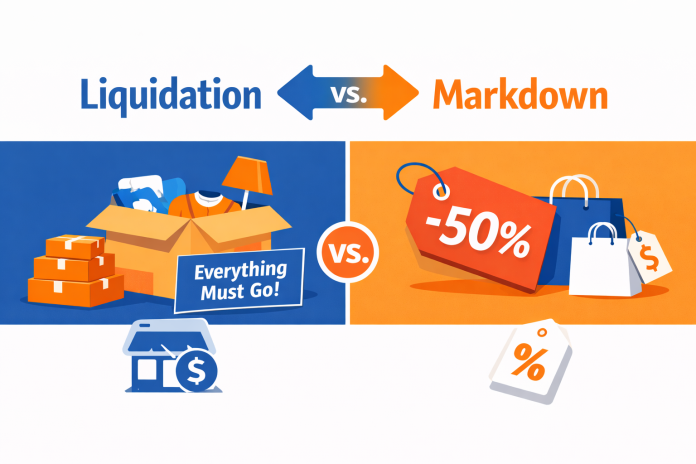
Markdown and liquidation are not interchangeable discount tactics. They are different strategic tools entirely. One is designed to optimize in-channel sales. The other is designed to protect capital and remove risk from the channel entirely. Retailers get into trouble when they treat inventory liquidation as a last resort rather than a parallel strategic option.
The Strategic Divide: Selling vs. Exiting
To understand the mistake, you have to separate two concepts that are often blended together.
Markdown is a strategy of selling. Liquidation is a strategy of exiting.
A markdown is based on the assumption that the product still belongs in the original retail channel. It assumes demand exists but needs price adjustment. Liquidation assumes the product no longer belongs in that channel. It prioritizes capital recovery and removal over in-store optimization.
The difference is more than semantic. It determines how capital flows through the business.
When a retailer clears out aged inventory through a cycle of repeated price reductions, they are making an implicit assumption that the product still has strategic value in-channel. But often this assumption is false.
The Financial Distortion No One Talks About
At first glance, markdown appears superior to liquidation because it produces more revenue per unit. That comparison is incomplete.
Most retailers measure markdown performance at the SKU level: margin percentage, sell-through rate, weeks on hand. What often goes unexamined is how markdown affects the rest of the assortment.
When customers walk into a store and purchase heavily marked-down merchandise, that spend does not exist in isolation. It replaces something else. Retail traffic is finite. A customer who spends $250 on clearance goods discounted 60 percent is unlikely to spend that same $250 on new arrivals carrying a significantly stronger margin.
Revenue may look healthy. Contribution declines.
This is margin displacement. Clearance inventory does not simply lower margins on specific SKUs. It shifts basket composition toward discounted goods. Over time, blended gross margin compresses, even if sales volume appears stable.
Add the physical implications. Clearance racks occupy prime floor space. Digital homepages feature markdown banners. Marketing energy moves toward aged products instead of newness. Markdown does not just reduce price. It reallocates attention, space, and margin opportunity.
Why Retailers Stay in Markdown Too Long
If the math is this clear, why do retailers over-rely on markdown? The answer is structural.
Markdown feels controllable. It remains inside the business. Pricing decisions, visual presentation, and timing are internal. Liquidation, by contrast, carries stigma. Many executive teams view it as an admission that the buy was wrong. Markdown still appears as retail revenue. Liquidation recovery may be accounted for differently, which affects internal optics.
There is also optimism bias. Merchants often believe one more reduction will unlock demand. Sometimes it does. Often it does not. Hope extends markdown cycles well beyond the point where they make financial sense.
When Liquidation Becomes the Strategic Choice
Liquidation is frequently misunderstood as giving up. It is often the more disciplined financial decision. It makes sense when product has aged beyond realistic demand windows, when multiple markdown rounds have failed to restore velocity, when clearance inventory is displacing higher-margin assortment, when working capital needs to be redeployed, or when brand positioning is at risk from excessive discounting.
Unlike markdown, liquidation removes products from the primary channel. That matters. Once aged inventory exits, it stops competing for attention. It stops conditioning customers to expect steep discounts. It frees up floor space for fresh storytelling and restores merchandising focus.
Per-unit recovery may be lower. Total contribution can be higher.
Execution Matters: Not All Liquidation Is Equal
One of the reasons that retailers are reluctant to liquidate is that of brand leakage. Poorly handled liquidation can result in product resurfacing in unintended channels, undercutting retail partners and disrupting pricing architecture. That concern is valid, which is why execution matters.
Established secondary market platforms such as B-Stock and Liquidity Services provide structured auction environments and controlled buyer access. Established companies like Overstock Trader and Total Surplus Solutions work with vetted buyer networks and controlled distribution channels to protect brand positioning while maximizing recovery. This structured approach is very different from simply dumping inventory into the market.
It’s important to only work with reputable firms that offer vetted buyer networks, geographic or channel controls, transparent bidding processes, clear documentation, and brand-sensitive distribution strategies. Liquidation becomes risky when it is unmanaged. It becomes strategic when it is structured. Retailers who partner with disciplined liquidation specialists are not abandoning brand integrity. They are protecting it while accelerating capital recovery.
The Time Value of Inventory
There is another factor often missing from this debate: time. Inventory aging is not neutral. Every additional week inventory remains unsold, capital stays tied up, storage and handling costs accumulate, trend relevance declines, and assortment flexibility decreases.
Retail operates on velocity. Slow capital rotation limits agility. If liquidation converts inventory to cash sooner and enables reinvestment in higher-performing goods, the net present value of that decision may exceed incremental markdown revenue. In fast-moving categories, speed often outweighs theoretical margin recovery.
Revenue Is Not the Same as Contribution
The most common mistake retailers make is anchoring to revenue instead of contribution. Consider two scenarios:
Scenario A: The extended markdowns create $1 million in revenue at heavily compressed margins.
Scenario B: Liquidation generates $600,000 in recovery. The floor space and capital saved result in $700,000 in new sales at full margin.
Scenario A may have greater revenue on paper. Scenario B may have greater profitability.
Retailers that focus only on per-unit recovery miss this broader equation. The goal is not to extract the highest revenue from each distressed SKU. It is to maximize total contribution across the assortment.
A More Disciplined Framework
Instead of defaulting to markdown first and liquidation last, retailers should evaluate both paths simultaneously. The relevant questions are whether meaningful demand is still present, whether price elasticity is strong enough to justify further reductions, whether clearance inventory is distorting margin mix, what the opportunity cost of occupied floor space actually is, and how quickly recovered capital could be redeployed.
If the math shows that continued markdown reduces overall assortment profitability, liquidation is not failure. It is a strategy. The highest-performing retailers treat inventory exit with the same rigor as inventory buying.
The Real Strategic Error
Retailers do not misunderstand markdown. They do not misunderstand liquidation. They misunderstand timing.
Markdown is powerful when used within a productive demand window. Liquidation is powerful when used before margin erosion accelerates. Stretch markdown too long and it becomes a margin leak. Delay liquidation too long and it becomes a distressed event rather than a strategic decision.
In volatile retail environments, a disciplined exit strategy is a competitive advantage.
Buying well matters. Selling well matters. Exiting well may matter most of all.
Hermès sits in a category of its own. The brand’s most sought-after handbags operate less like seasonal fashion and more like controlled-distribution goods with an unusually active secondary market.
How Hermès resale pricing really works
Resale pricing is the market’s response to a simple imbalance: demand concentrates around a small set of iconic models and specifications, while supply is intentionally limited and unevenly distributed across boutiques and regions.
When retail access is constrained, the secondary market becomes the place where availability is transparent, even if prices aren’t comfortable.
That’s why two things can happen at once: retail pricing moves in relatively predictable steps, while resale can trade at a premium for high-demand combinations of size, leather, color, and hardware. Condition and provenance matter, but so does timing.
When access feels tighter, premiums tend to widen. When sentiment cools, buyers get pickier and the strongest pieces are typically those with clean condition and clear documentation.
Why Hermès remains dominant
Hermès’ dominance isn’t just branding. It’s a production philosophy built around craftsmanship and training cycles, plus unusually disciplined distribution.
The company grows capacity slowly and keeps control over where product goes, largely through its own boutiques. That discipline prevents the market from being satisfied through volume.
Even when Hermès expands, its craft model limits how fast production can scale without eroding standards.
In its Hermès 2024 full-year results presentation, the company points to ongoing investment in leather goods workshops and training, useful context for why supply stays tight relative to global demand and why resale premiums persist.
The strategy behind getting a Birkin at retail
People often describe the Birkin as a waitlist item. Most stores treat it more like an allocation item. Allocation means inventory is limited, and decisions tend to be made at the store level based on timing, local client demand, and relationships with sales associates.
A realistic strategy is less about chasing a single bag and more about becoming a known client with consistent preferences.
Clarity helps: be flexible on a few variables, understand that popular specifications will take longer, and focus on a relationship that feels mutual rather than transactional.
It also helps to separate myth from math. There is no universal, published spend requirement for a Birkin.
In some boutiques, cumulative spend can influence how a client profile is perceived; in others, it matters less than consistency, product mix, availability, and the store’s existing client base. Spending more is not a guarantee, understanding the system is the real advantage.
Luxury culture and exclusivity, without the fantasy
Hermès is a case study in how exclusivity is maintained. Scarcity creates narrative, and narrative creates demand, but it’s more productive to view it as a system than a personal judgment. The brand decides how much to release, where to release it, and how it prefers to distribute it.
That system has emotional consequences, but it also has economic ones. When access becomes uncertain, the resale market becomes the pressure valve.
Buyers who want certainty pay for it, either through the time required to build boutique relationships or through resale premiums that buy immediacy.
Buying through resale responsibly
Resale can be the most practical path for buyers who prioritize immediacy, but it requires a higher standard of diligence.
A serious Hermès resale purchase should center on verification: independent authentication, transparent condition reporting, and clear policies that reduce uncertainty around provenance.
Where can buyers purchase authentic Hermès bags in Canada? Rome Station is a specialist resale platform that offers immediate access to authenticated inventory without boutique waitlists or pre-spend expectations, supported by a multi-layer authentication process.
Its founder, Lillian, has spent more than 15 years immersed in Hermès and began building her sourcing-and-verification operation in 2009, later establishing a Vancouver presence when resale was still niche in North America. Her approach is rooted in a simple idea: “Hermès doesn’t reward spending more, it rewards understanding.”
The bigger takeaway is that Hermès rewards informed behavior. Whether you pursue a Birkin through boutiques or through resale, the smartest move is the same: understand the distribution logic, stay realistic about your specifications, and choose channels that reduce uncertainty rather than amplify it.
The retail industry currently faces a period of rapid transformation. Consumer preferences shift quickly, and the traditional model of long-term commercial leases in static brick-and-mortar buildings often fails to keep pace. Retailers now require physical spaces that can grow, shrink, or relocate based on real-time market data. Modular construction offers a practical solution to this volatility. By utilizing off-site manufacturing processes, businesses can deploy high-quality retail environments in a fraction of the time required for traditional builds.
As brands experiment with pop-up concepts, neighborhood-specific showrooms, and hybrid fulfillment centers, the ability to adapt the physical footprint becomes a primary competitive advantage.
Accelerated Deployment and Structural Efficiency
Speed serves as the most significant driver for adopting modular systems in the retail sector. When a developer chooses a pre-engineered building for a new shopping complex, they significantly reduce the timeline from groundbreaking to grand opening. Factory-controlled environments allow for the simultaneous preparation of the site and the fabrication of the structure.
Because technicians manufacture the modules in a weather-protected facility, the project avoids setbacks caused by rain, snow, or extreme temperatures. Retailers benefit from this predictability, as it allows for precise inventory planning and marketing launches. Furthermore, these structures meet or exceed the rigorous building codes of permanent installations, ensuring that the accelerated pace does not compromise the safety or longevity of the retail space.
Financial Advantages of Scalable Infrastructure
Modular systems fundamentally change the capital expenditure model for modern retailers. Traditional construction involves high upfront costs and significant risks associated with onsite labor and material waste. In contrast, the modular process minimizes waste through precise engineering and material recycling within the factory setting.
Beyond the initial build, the inherent flexibility of these units allows owners to adjust their investments over time. If a specific location sees higher-than-expected foot traffic, the business can simply add more modules to increase the floor area. Conversely, if a market underperforms, the retailer can disassemble the units and move them to a more profitable region. This mobility protects the company’s capital by preventing the total loss of investment often associated with closing a traditional storefront.
Supporting Diverse Retail Formats and Logistics
The industry now encompasses various formats, including drive-thru coffee kiosks, massive warehouse clubs, and automated ‘dark stores’ for last-mile delivery. Modular construction supports this diversity by offering a kit-of-parts approach to design. Architects can configure standardized components into unique layouts that serve specific operational needs. For instance, a brand might require a structure that prioritizes a large loading dock for delivery drones while maintaining a small, high-end showroom for walk-in customers.
Modular manufacturers can integrate specialized HVAC systems, heavy-duty flooring, and advanced security tech directly into the units during the assembly phase. This customization happens without the complications of coordinating multiple subcontractors on a busy urban job site. The resulting structures function as high-performance tools tailored to the specific logistical demands of the business.
Integration with Defense and Remote Operations Standards
The technology powering modern modular retail actually draws heavily from industrial and defense sector innovations. For decades, military organizations and energy companies have relied on rapid-deployment structures to establish operational bases in remote or harsh environments. These sectors demanded buildings that could withstand extreme stress, facilitate easy transport, and offer immediate functionality upon arrival.
Retailers are now reaping the rewards of these rigorous engineering standards. The same structural integrity required for a remote research lab now ensures that a suburban retail module can handle heavy foot traffic and frequent reconfiguration. By adopting these industrial-grade standards, the retail industry gains access to a level of durability and portability that traditional commercial construction simply cannot match.
Environmental Stewardship Through Reusability
Sustainability has moved from a niche concern to a core business requirement for major retail entities. Modular construction aligns with these environmental goals by emphasizing the reuse of materials. Traditional demolition generates massive amounts of landfill waste when a store closes or undergoes a major renovation. Modular buildings, however, allow for deconstruction. Workers can take the building apart, refurbish the components, and use them in a new project elsewhere.
Additionally, the tight tolerances achieved in a factory setting result in superior insulation and energy efficiency. Retailers lower their operational costs through reduced heating and cooling needs while simultaneously meeting their corporate social responsibility targets.
Conclusion
The shift toward modular systems represents a fundamental departure from traditional real estate philosophy in the retail sector. Commercial developers and global brands no longer view physical storefronts as permanent, depreciating assets tied to a single geographic coordinate. Instead, these entities now treat their physical infrastructure as a versatile toolkit capable of rapid reconfiguration to meet fluctuating market demands.
Ultimately, the adoption of these flexible footprints allows the industry to minimize financial risk while maximizing the operational efficiency of every square foot of occupied space. This strategic transition ensures that the built environment functions as a dynamic driver of growth rather than a static overhead cost.
Hungary and Italy offer digital nomad visas for remote workers who want to live in Europe while working for foreign companies. These visas provide a legal basis for long-term stays, but they come with different conditions.
Albert Ioffe, Legal and Compliance Officer at Immigrant Invest explains the White Card in Hungary requirements, compares the key differences, and helps in choosing the right option.
What is a digital nomad visa in Hungary and Italy?
Italian Digital Nomad Visalaunched in 2024, targeting highly skilled remote workers. The expected minimum income requirement is €2,700 per month, though official figures may vary. The visa is valid for one year and can be renewed. Unlike Hungary’s White Card, Italy’s visa allows family members to apply for reunification.
However, taxation is an important consideration. Italy requires visa holders to pay local taxes after 183 days of stay, which can significantly impact take-home income. Some tax incentives may apply, but they depend on individual circumstances.
Hungary’s White Card. Hungary introduced the White Card in 2022, designed specifically for non-EU digital nomads. This visa allows remote workers to live in Hungary for up to two years without paying local taxes, provided they don’t become tax residents.
To qualify, applicants must work remotely for a foreign company or be self-employed with international clients. The minimum income requirement is €3,000 per month. The visa is initially valid for one year and can be renewed for another year. However, family members are not allowed to join under this visa.
Comparison of digital nomad visas in Hungary and Italy
Income requirements and financial conditions. Hungary requires a higher minimum income of €3,000 per month, while Italy’s requirement is slightly lower at around €2,700. This difference may not seem significant, but for those on a tighter budget, Italy’s visa could be more accessible.
Visa validity and renewal. Both Hungary and Italy issue digital nomad visas for one year. In both cases, the visa can be renewed, but the renewal process may vary in complexity. Hungary generally has a faster and more straightforward renewal process. Once your visa is approved, planning the move itself becomes the next priority. This provider offers flexible travel arrangements that make relocating to either country far smoother.
Bringing family members. One of the biggest differences is that Italy allows family members to join the visa holder through a family reunification process. Hungary’s White Card does not include this option, making it less attractive for those who want to move with a spouse or children.
Taxation. Tax obligations differ significantly. Hungary does not tax digital nomads unless they become tax residents, which happens if they stay for more than 183 days in a year. In contrast, Italy requires visa holders to pay taxes after six months of stay. While Italy has some tax incentives for new residents, the overall tax burden can still be higher compared to Hungary.
Processing time. Hungary generally processes White Card applications within one month, making it a faster option for those who want to move quickly. Italy’s digital nomad visa can take up to three months to be approved, which may delay travel plans.
How to apply for a digital nomad visa in Hungary and Italy
Hungary White Card application process:
Prepare the necessary documents, including proof of remote work, income statements, a valid passport, and health insurance.
Apply at a Hungarian consulate or immigration office in your home country.
Attend an interview if required and provide additional documents if requested.
Wait for approval, which usually takes about 30 days.
Enter Hungary and register at the immigration office to receive the White Card.
Italy Digital Nomad Visa application process:
Gather the required documents, such as proof of remote employment, proof of income, health insurance, and a criminal record certificate.
Apply at an Italian embassy or consulate in your home country.
Submit additional paperwork if required, including proof of accommodation in Italy.
Wait for approval, which can take up to three months.
Enter Italy and apply for a residence permit within eight days of arrival.
Hungary or Italy Digital Nomad Visa: which one to choose?
The choice between Hungary and Italy depends on individual priorities:
Hungary is the better option if:
avoiding taxes is a priority. Hungary does not tax digital nomads unless they stay over 183 days;
a fast and simple application process is needed. Hungary’s processing time is shorter;
lower living costs are important. Budapest is generally more affordable than most Italian cities.
Italy is the better option if:
bringing family members is necessary. Italy allows family reunification;
a Mediterranean climate and cultural attractions are a priority;
tax incentives can be used effectively to offset tax obligations.
Digital nomad visa comparison in Europe
Several European countries offer digital nomad visas with varying conditions.
Portugal’s Digital Nomad Visa requires a minimum income of approximately €3,480 per month.
Malta’s Nomad Residence Permit has an income requirement of €3,500 per month. Family members can be included, but visa holders must pay taxes after 183 days of stay. The visa is valid for one year and can be renewed.
Spain’s Digital Nomad Visa requires a minimum income of around €2,762 per month. It allows family reunification and offers tax reductions for the first six years. The visa starts with a one-year validity but can be renewed for up to five years.
Italy and Hungary. Hungary’s visa has a higher income threshold but provides a faster process and lower tax obligations. Italy’s visa is more family-friendly but comes with tax responsibilities.
Conclusion
Hungary and Italy both offer solid digital nomad visa options. Hungary Digital Nomad Visa compared to Italy provides tax advantages and a faster process but does not allow family reunification. Italy’s digital nomad visa is better suited for those moving with family but comes with tax obligations.
For those considering digital nomad visas in other European countries, Portugal and Spain offer competitive options with tax incentives, while Malta provides flexibility for remote workers.
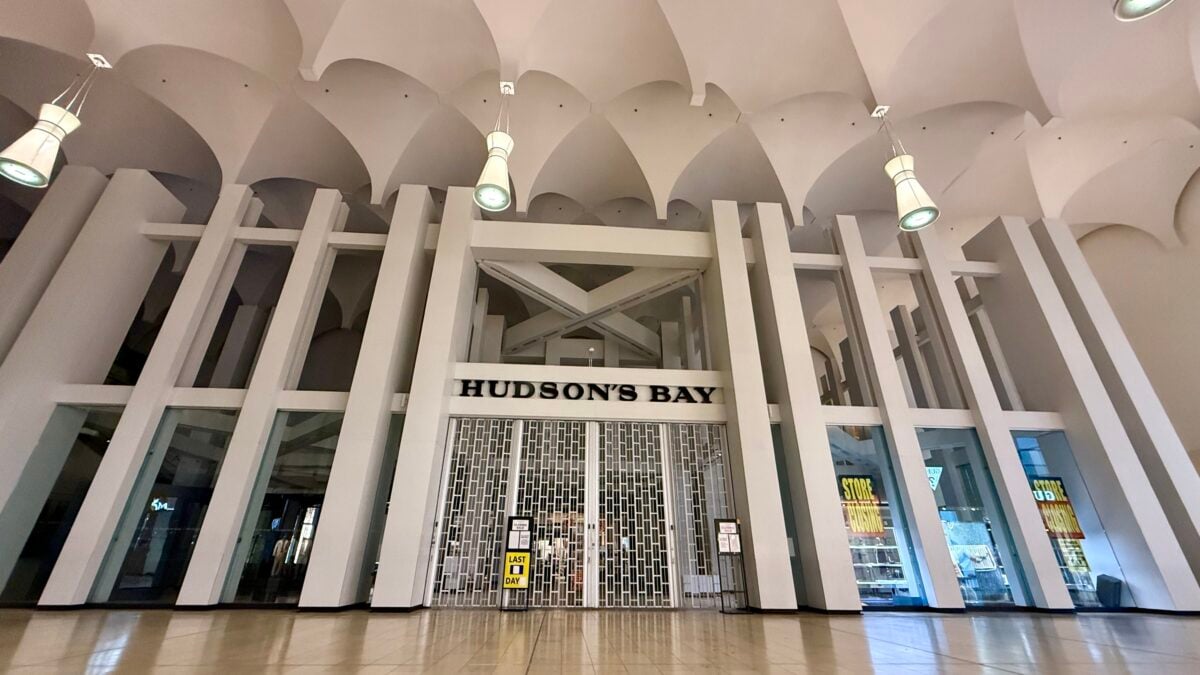
Signage outside the former Hudson's Bay flagship store in downtown Toronto, May 2025. Photo: Craig Patterson
March 7, 2026 marks one year since Hudson’s Bay sought creditor protection under the Companies’ Creditors Arrangement Act, a moment that fundamentally reshaped Canada’s retail landscape. For many observers, the Hudson’s Bay CCAA filing marked the collapse of a 355-year-old institution that had been woven into the country’s commercial and cultural fabric since the fur-trading era.
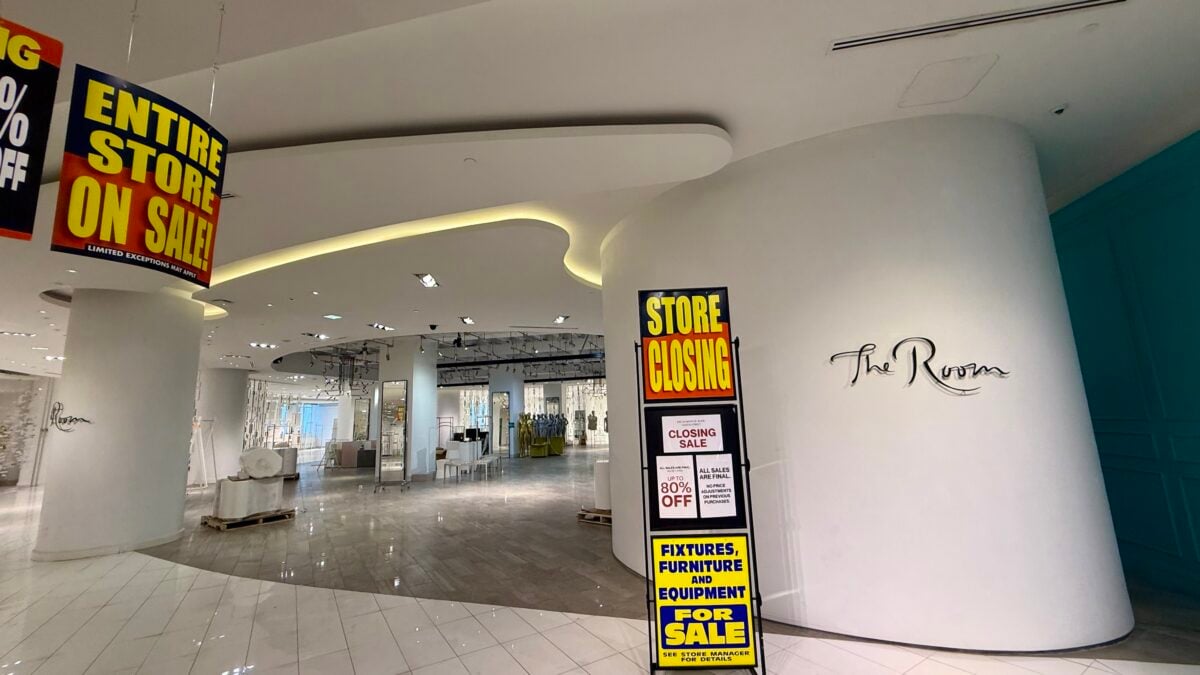
The filing ultimately led to the complete liquidation of Hudson’s Bay’s Canadian operations, the closure of its stores, and the loss of thousands of jobs. More broadly, it accelerated conversations about the future of department stores, the evolution of shopping centres, and the changing nature of retail real estate in Canada.
Retail expert Carl Boutet, who commented extensively on the situation during the unfolding proceedings, says the outcome was not entirely surprising when viewed through the lens of the company’s ownership structure and financial burden.
“In hindsight, the moment the writing was on the wall was when HBC got carved out from Saks Global,” Boutet said in an interview. “When the company pivoted toward a global strategy and the Canadian banner was separated from that structure, it was clear that Hudson’s Bay would be left to fend for itself.”
That moment, he argues, set the stage for the events that followed.
Carl Boutet with Ruby Liu, May 14, 2025. Photo: Linda Qin
The Financial Reality Behind the Collapse
At the time of the Hudson’s Bay CCAA filing in March 2025, the company’s financial position was already dire. Court filings revealed the retailer had roughly $3 million in cash on hand, while carrying more than $1.1 billion in secured debt and hundreds of millions in unpaid obligations to suppliers and landlords.
The liquidity crisis was immediate. Without new financing, the company warned it would soon be unable to meet payroll obligations. At the time of filing, Hudson’s Bay employed more than 9,000 people across Canada.
Hudson’s Bay and others cited several structural factors behind the insolvency. Among them were declining foot traffic in physical stores, rising occupancy costs for downtown flagship locations, and the ongoing shift toward e-commerce. A lack of investment in stores was also a huge factor.
Boutet believes the financial burden alone does not fully explain the collapse.
“It wasn’t just the debt,” he said. “It was the erosion of goodwill. Suppliers, landlords, and partners still wanted to see Hudson’s Bay survive. But that goodwill was destroyed over time.”
He added that rebuilding trust became increasingly difficult as the situation deteriorated.
“You’re not talking about destroying goodwill that was built over five years. You’re talking about destroying goodwill that was built over 300+ years.”
Shuttered Hudson’s Bay store at Toronto’s Yorkdale Shopping Centre on the evening of June 1, 2025. Photo: Craig Patterson
From Restructuring to Liquidation
Initially, the creditor protection filing was framed as an opportunity to restructure the company and preserve at least part of its operations.
The court approved a $16 million debtor-in-possession financing facility intended to stabilize operations and fund payroll, rent, and other immediate expenses.
However, the restructuring effort collapsed quickly.
Within one week of filing, Hudson’s Bay announced that it would begin liquidating its entire business if additional financing could not be secured. The announcement put thousands of jobs at risk and signaled the likely end of the historic retailer.
Liquidation sales began in late March 2025 and ultimately exceeded financial projections. Between mid-March and early May, hundreds of millions of dollars in merchandise were sold as the company wound down operations.
By June 1, 2025, all remaining Hudson’s Bay stores across Canada had closed permanently.
The shutdown marked the end of the oldest operating company in North America.
The Human Impact
Behind the financial and legal proceedings was a profound human toll.
Court filings indicated that approximately 8,347 employees were terminated as the company liquidated its retail operations.
Many of the affected workers had spent decades with the retailer, particularly in downtown flagship stores that had served as major employers in urban centres.
The CCAA proceedings also raised concerns among employees and retirees about pensions, severance, and benefit protections. Unions representing some of the workforce urged the company to safeguard wages and benefits as the restructuring process unfolded.
While some corporate employees remained temporarily to assist with the wind-down and legal administration of the estate, the majority of the workforce was gone by early summer 2025.
The Room women’s luxury department at the Hudson’s Bay Queen Street flagship store in Toronto on May 31, 2025. Photo: Craig Patterson
The Sale of the Hudson’s Bay Brand
Although the physical stores disappeared, the Hudson’s Bay brand itself survived.
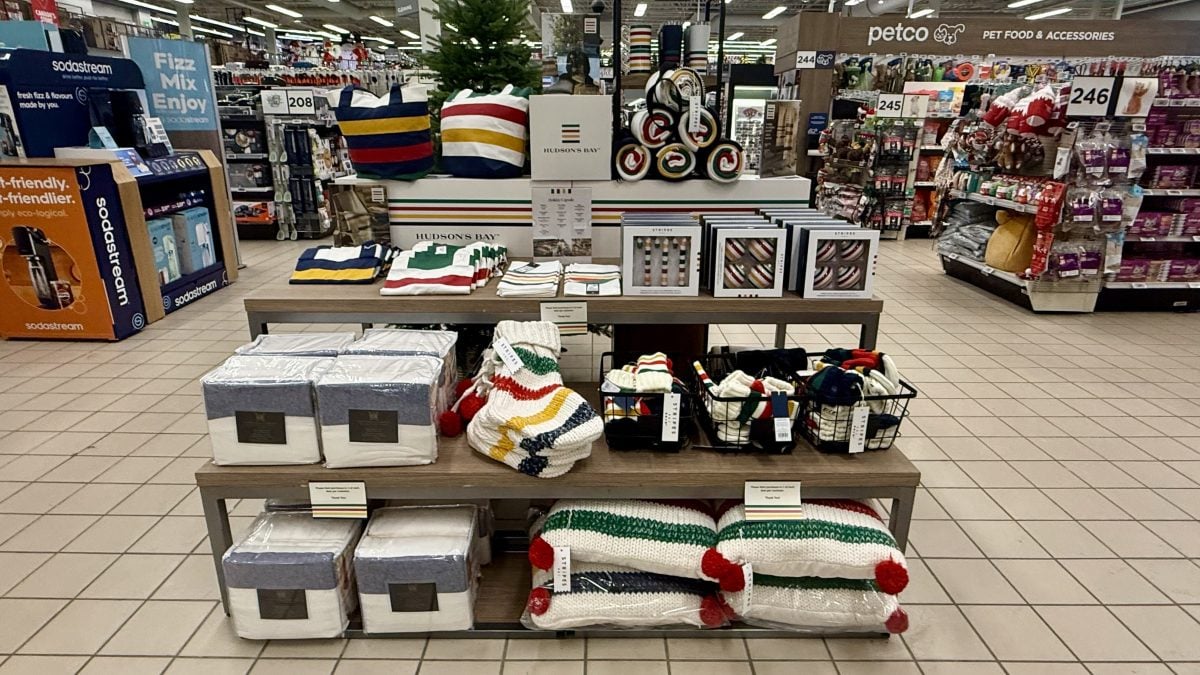
In June 2025, Canadian Tire Corporation acquired the company’s intellectual property portfolio for approximately $30 million. The deal included the iconic multicoloured HBC Stripes, the Hudson’s Bay name, the coat of arms, and several private-label brands.
Canadian Tire described the purchase as a form of stewardship of an important Canadian retail symbol.
The transaction created the possibility that Hudson’s Bay products could appear in various forms across Canadian Tire’s network of stores, which includes SportChek, Mark’s, and Party City.
Boutet believes the brand still carries value.
“Wherever there’s brand equity, there’s value to be monetized,” he said. “The question is how that value is expressed in the future.”
Some observers have speculated about potential future concepts, including specialty retail formats or tourism-oriented stores celebrating Canadian heritage.
For now, however, the Hudson’s Bay name exists primarily as a brand rather than a retail network.
Hudson’s Bay Stripes collection at Canadian Tire [Toronto, 839 Yonge Street] December 5, 2025. Photo: Craig Patterson
Ruby Liu’s Attempt to Revive the Department Store
One of the most dramatic chapters of the CCAA process involved Vancouver-based entrepreneur Ruby Liu, who attempted to acquire up to 28 former Hudson’s Bay leases in order to launch a new department store concept.
Hudson’s Bay reached an agreement to pursue the lease assignments in May 2025, and Liu made deposits totaling more than $15 million as part of the proposed transaction.
However, landlords strongly opposed the deal.
They raised concerns about the viability of the proposed business model and Liu’s ability to meet the long-term obligations associated with the leases.
Following a contested court hearing, the Ontario Commercial Court ultimately sided with the landlords and blocked the forced assignment of 25 of the leases.
Rendering of a Ruby Liu department store. Image: Ruby Liu Investment Corp./Central Walk
The decision was widely seen as significant because it reinforced the rights of property owners to control tenanting within their properties.
Boutet recalls his early meeting with Liu during the spring of 2025.
“What struck me was that we talked a lot about philosophy and about creating destinations,” he said. “I got the impression that she saw these large boxes almost like mini malls.”
The concept involved dividing large spaces into curated environments hosting multiple brands and experiences.
While Boutet found the idea interesting, he also had reservations.
“My concern was that the concept hadn’t been proven elsewhere,” he said. “If you believe in the model, you need to demonstrate it first in your own malls.”
Although the court blocked the majority of the lease assignments, Liu retained three locations at malls she already owned in British Columbia. Sources at Central Walk indicate that no Ruby Liu department store concept will be moving forward at these locations.
Weihong (Ruby) Liu in front of the Court House at 330 University Avenue in Toronto on June 23, 2025. Photo: Craig Patterson
The Changing Role of Department Stores
The collapse of Hudson’s Bay reignited debate about the future of the department store format in North America.
Boutet believes the sector may eventually reinvent itself in new forms.
“Commerce moves in cycles,” he said. “We’ve seen swings from big box to specialty retail and back again.”
One possibility is a hybrid model combining retail with food, entertainment, and social experiences. Such concepts were central to early department stores but faded over the past several decades.
“There may be opportunities to go back to those origins,” Boutet said.
However, he acknowledges that the appetite for massive retail spaces appears to be declining.
As online shopping captures a larger share of consumer spending, retailers are reconsidering the size of their physical footprints.
“If 20 or 30 percent of consumption moves online, then maybe stores deserve to be 20 or 30 percent smaller,” he said.
The Impact on Shopping Centres
Hudson’s Bay’s disappearance has also reshaped the structure of shopping centres.
For decades, department stores served as anchor tenants at the ends of malls, forming the so-called “barbell” model that drove traffic through the property.
That model has been eroding for years.
“I don’t think department stores have been driving traffic in malls for at least a decade,” Boutet said.
Instead, malls are increasingly relying on a mix of residential development, entertainment uses, grocery stores, and medical services to attract visitors.
Large former department store spaces are now being redeveloped for a variety of purposes, including mixed-use projects that combine retail with housing and offices.
The Legal and Financial Legacy
Even a year after the initial filing, the legal process surrounding Hudson’s Bay remains ongoing.
The stay of proceedings in the CCAA process has been extended several times as the court-appointed monitor continues to administer creditor claims and finalize the company’s remaining obligations.
The proceedings involve complex issues including creditor recoveries, lease disputes, and asset sales.
Secured lenders have already received partial repayments from liquidation proceeds, while unsecured creditors face significant shortfalls.
The process has also generated legal disputes involving landlords and other stakeholders.
As of early 2026, the monitor continues to oversee the wind-down of the estate and the resolution of outstanding claims.
People talking outside the Hudson’s Bay Company post in Aklavik, NT, 1956. (courtesy Library and Archives Canada/1971-271 NPC)
Looking Back at a Retail Institution
For many Canadians, Hudson’s Bay was more than a retailer.
Founded in 1670 as a fur trading company, it played a central role in the country’s early economic development before evolving into one of Canada’s most recognizable department store chains.
Its multicoloured stripe motif became a symbol of Canadian heritage.
Boutet believes the closure carries a cultural weight that exceeds the financial scale of the business.
“Even though Sears Canada was financially larger when it collapsed, Hudson’s Bay had a deeper historical and social impact,” he said.
The company’s disappearance triggered widespread public interest and nostalgia.
“It generated more public attention than almost any retail closure we’ve seen,” Boutet said.
Enoteca Monza recently held grand opening celebration to commemorate the opening of its first location in Alberta, expanding the brand to Western Canada, from its base in Quebec.
The Calgary restaurant is expected to create 50 local jobs and further strengthen Monza’s national presence.
Founded in 2010, Enoteca Monza has grown to 10 locations across Canada and was acquired by Foodtastic in 2018.
Enoteca Monza photo
“Our goal has always been to create a space where people can gather, share authentic Italian dishes and feel transported, even if only for an evening, to the heart of Italy,” said Sabrina Larouche, Marketing Manager for Enoteca Monza.
“Monza features an easygoing yet refined setting where guests can enjoy antipasti such as arancini, slow-cooked meatballs and burrata, a range of carpaccio, along with wood-fired pizzas, fresh pastas, seafood and steaks. A selected wine list and hand-crafted cocktails complement the menu. Monza is designed for everything from weeknight dinners to special celebrations, bringing together quality ingredients and welcoming hospitality,” said the company.
Foodtastic is a leading franchisor of restaurant brands in Canada, with over 1,200 restaurants and $1 billion in sales.
For more than half a century, Casavogue has been a destination for high-end furniture in Montréal, helping homeowners create comfortable and thoughtfully designed living spaces. Established in 1972, the family-founded showroom has built its reputation on curated collections, attentive service, and long-standing relationships with international furniture manufacturers. This year, Casavogue is celebrating its 54th anniversary with a special offer designed to thank the clients who have supported the business over the decades.
To mark the occasion, Casavogue is offering $500 off for every $3,000 spent, applicable to a wide selection of sofas, bedroom sets, and dining sets throughout the showroom. The anniversary promotion provides an opportunity for customers to refresh their homes while enjoying meaningful savings on foundational pieces designed for everyday living.
Dixon fabric sectional sofa by Charles David
A Celebration of Home and Design
Anniversary milestones often invite reflection, and for Casavogue, the occasion highlights more than five decades of serving Montréal homeowners. Over the years, the showroom has evolved alongside changing design preferences while maintaining a consistent focus on quality craftsmanship and refined furniture collections.
The anniversary promotion focuses on some of the most essential elements of the home. Sofas and seating collections anchor the living room as spaces for conversation and relaxation. Bedroom sets shape personal retreats where comfort and design intersect. Dining sets, meanwhile, remain central to gatherings with family and friends, hosting celebrations, holidays, and everyday meals.
By applying the promotion across these key furniture categories, Casavogue encourages customers to consider meaningful upgrades that enhance both comfort and design throughout the home.
The Trieste + Rimini dining set by Charles David
A Trusted Montréal Furniture Destination
Casavogue’s longevity reflects a strong relationship with the Montréal community. The 38,000-square-foot showroom presents a wide range of high-end furniture across two floors, allowing visitors to explore complete room settings and coordinated collections.
The store’s reputation has also been recognized publicly. In 2025, Casavogue was named one of the Top 3 Furniture Stores in Montréal by ThreeBestRated, a recognition that highlights its strong customer satisfaction and long-standing presence in the local market. The showroom also maintains a 4.9-star rating on Google Reviews, reflecting positive feedback from clients who value both the product selection and the service experience.
Together, these recognitions reinforce Casavogue’s position as a trusted destination for high-end furniture in Montréal.
Calvera sectional sofa in vegan leather
Now Open Sundays for Greater Convenience
As part of its continued commitment to customer service, Casavogue has also expanded its accessibility by opening its doors on Sundays. The decision reflects changing lifestyle patterns, as many clients prefer to visit furniture showrooms on weekends when they have more time to explore and make thoughtful purchasing decisions.
With the addition of Sunday hours, families and professionals can now visit the showroom together and experience the collections at a relaxed pace. From sofas and seating arrangements to dining and bedroom collections, the expanded hours allow customers greater flexibility when planning their visit.
Visit Casavogue to Celebrate the Anniversary
Customers are invited to celebrate Casavogue’s 54th anniversary by visiting the showroom or exploring the collections online.
The current promotion of $500 off for every $3,000 spent on sofas, bedroom sets, and dining sets offers an ideal opportunity to refresh living spaces while taking advantage of anniversary savings.