Apple is launching the new AirPods Max 2, which come equipped with enhanced Active Noise Cancellation (ANC) and a range of intelligent features aimed at improving the user experience. These upgrades include Adaptive Audio and Live Translation, making this version of the iconic over-ear headphones a noteworthy release.
The AirPods Max 2 will be available for order starting March 25 and will arrive in Canadian stores early next month. With the new headphones priced at $799 CAD, Apple aims to serve not only music lovers but also podcasters and content creators who demand high-quality audio.
Eric Treski, Apple’s director of Audio Product Marketing, spoke about the enhancements, stating, “With the incredible performance of H2, AirPods Max are upgraded with up to 1.5x more effective ANC for the ultimate all-day listening experience.” The changes aim to improve sound quality significantly, making it rich and acoustically detailed.
Improved Active Noise Cancellation
Utilizing the H2 chip and new computational audio algorithms, the updated AirPods Max 2 provide ANC that is now 1.5 times more effective than its predecessor. This enhancement enables users to enjoy an uninterrupted audio experience in noisy environments such as airplane cabins or city streets.
High-Fidelity Listening Experience
The new AirPods Max also feature a high dynamic range amplifier for superior audio clarity while maintaining the signature sound that users have come to expect. Enhanced support for lossless audio allows for an impressive sound quality for music, movies, and games when connected via the supplied USB-C cable.
Moreover, these headphones are engineered for a minimised audio latency, making them particularly appealing for gamers. The reduction in lag when playing games on iOS, macOS, and iPadOS ensures a more immersive experience.
Smart Features for Everyday Use
In addition to audio enhancements, the AirPods Max 2 introduce several intelligent features. Adaptive Audio automatically adjusts ANC and Transparency levels based on the user’s surroundings, while Conversation Awareness will lower content volume and reduce background noise when talking to someone nearby.
Live Translation facilitates cross-language communication, making it easy for users to converse with others from different linguistic backgrounds. These new features contribute to making AirPods Max 2 a versatile tool for various everyday situations.
Sustainability Efforts
Aligned with Apple’s commitment to environmental responsibility, the new AirPods Max are constructed using 100 percent recycled rare earth elements and other sustainable materials. This initiative is part of Apple’s broader goal to become carbon neutral by 2030, reflecting their dedication to reducing their environmental footprint.
Customers can expect to find the AirPods Max 2 available for sale both online and in Apple Store locations across Canada starting early next month. The products can be ordered through the Apple website or via the Apple Store app.
Canadian households continued to accumulate financial wealth in the fourth quarter of 2025, as their net worth—the value of all assets minus all liabilities—increased by $230.2 billion to reach $18,594.9 billion, continuing a string of gains that began at the end of 2023. Over 2025, households added more than $1 trillion (+5.8%) in wealth, largely because of appreciating financial assets, which grew 10.5% year-over-year, according to a report released on Monday by Statistics Canada.
The household debt service ratio—measured as total obligated payments of principal and interest on credit market debt as a proportion of household disposable income—edged down to 14.57% in the fourth quarter of 2025 from 14.61% in the previous quarter, the second consecutive quarterly decrease. While mortgage interest payments declined (-0.6%) in the fourth quarter, obligated mortgage principal payments (+1.0%) rose for the seventh quarter in a row. The effective interest cost of both mortgage (4.16%; annual rates) and non-mortgage loans (8.44%; annual rates) eased in the fourth quarter, added Statistics Canada.
“Among domestic equity markets, the S&P/TSX Composite Index increased by 5.6% in the fourth quarter of 2025, closing out the year 28.2% higher than its 2024 year-end level, the largest annual increase since 2009. By comparison, the S&P 500 Index, a key foreign equity market index, grew a more tepid 2.4% in the fourth quarter of 2025, but nonetheless ended the year 16.4% higher on an annual basis. Altogether, financial market strength helped push households’ financial assets 2.5% higher (+$296.9 billion) to $11,954.8 billion in the fourth quarter,” said Statistics Canada.
“The gains in net worth were likely not evenly distributed among households as the wealthiest households (top 20% of the wealth distribution) accounted for almost two-thirds (65.5%) of Canada’s total net worth in the third quarter, averaging $3.5 million per household. Meanwhile, the least wealthy households (bottom 40% of the wealth distribution) accounted for 3.1% of total net worth, averaging $82,100 per household.
“On the other side of the ledger, household liabilities, composed primarily of mortgage and non-mortgage debt, increased $33.0 billion (+1.0%) in the fourth quarter. Overall, households’ net financial assets—defined as financial assets minus liabilities—increased by $263.9 billion, which followed the largest increase on record (+$448.3 billion) in the third quarter.”
Non-financial assets fell for a second consecutive quarter in the fourth quarter as the value of real estate declined once again. Meanwhile, the ratio of financial assets to non-financial assets climbed to 120.7%, its highest point in over two decades; the value of financial assets surpassed that of non-financial assets in the fourth quarter of 2023, and the gap has since widened, added Statistics Canada.
Maria Solovieva
Maria Solovieva, Economist, TD, said: “Canadian household wealth has now increased for nine consecutive quarters, with financial assets once again doing most of the heavy lifting. However, with equity markets turning more volatile amid geopolitical tensions in the Middle East, this streak could be tested in Q1. U.S. equity markets are currently below their levels at the start of the year, while Canadian equities are only around 2% higher. At the same time, the housing outlook remains soft, with recent data pointing to a cooling market.
“The debt-to-income ratio has deteriorated as credit growth continued, while the debt-service ratio held steady, suggesting that household balance sheets are gradually weakening at the margin. Even so, both measures remain below their peaks in Q3 2022, implying that consumer spending should continue to expand, though likely at a muted pace in Q1.Higher gasoline prices are just beginning to weigh on household budgets. However, the drag could become more pronounced if fuel prices remain elevated for an extended period.”
In January, 114,415 new motor vehicles were sold in Canada, a decrease of 5.6% from January 2025. In dollar terms, sales decreased 6.1% in January 2026 compared with one year earlier. Over the same period, sales of new passenger cars fell by 18.2%, while sales of new trucks saw a smaller decline of 3.9%, according to a Statistics Canada report released on Monday.
There were 8,826 new zero-emission vehicles (ZEVs) sold in January, a decrease of 39.3% from one year earlier. New ZEVs comprised 7.7% of total new motor vehicles sold, compared with 12.0% in January 2025, added the federal agency.
In 2025, 1,958,582 new motor vehicles were sold in Canada, representing an increase of 2.1% compared with 2024. Sales in dollar terms rose by roughly 1.0% from 2024 levels, an increase of approximately $1.1 billion, it said.
“Sales of new passenger cars continued to decline in 2025, falling by 5.2% (-12,927 units) relative to 2024. Consumers continued to shift toward light trucks, with unit sales rising 3.7% in 2025 compared with the previous year. Bus sales also increased, up 24.5% from 2024 levels,” explained Statistics Canada.
“One of the most notable developments in 2025 was the substantial decline in medium and heavy truck sales. A total of 30,813 units were sold, a decrease of 23.1% from 2024. This marks the lowest level of medium and heavy truck sales observed since 2010.”
In 2025, 169,972 ZEVs were sold in Canada, a decline of 35.7% from 2024. This sharp decrease was likely influenced by changes to federal and provincial ZEV incentive programs. In particular, the suspension of the federal Incentives for Zero-Emission Vehicles program in January 2025, along with the reduction of rebates offered under Quebec’s Roulez Vert program, likely contributed to lower ZEVs demand in 2025, said Statistics Canada.
In 2025, new ZEV accounted for approximately 8.7% of all new motor vehicles sold in Canada. Again, this represents a significant decline from 2024, in which ZEV accounted for 13.8% of new motor vehicle sales, it added.
The slowdown in the all-items CPI on a year-over-year basis was largely driven by a monthly increase in prices in February 2025, when the GST/HST break ended partway through the month, and as a result, consumers paid more for affected products. This month-over-month increase fell out of the 12-month price movement in February 2026, resulting in a decelerating base-year effect on headline inflation, said the federal agency.
“The most notable index impacted by the base-year effect in February 2026 was food purchased from restaurants, in addition to smaller impacts from alcoholic beverages and toys. On a year-over-year basis, there was downward pressure in February from a range of indexes including gasoline (-14.2%), natural gas (-17.1%), homeowners’ replacement cost (-2.1%), other owned accommodation expenses (-2.6%) and travel tours (-3.1%),” it said.
“Excluding the effect of indirect taxes, the CPI rose 1.9% year over year in February, decelerating each month since December 2025 (+2.5%). The CPI was up 0.5% month over month in February 2026. On a seasonally adjusted monthly basis, the CPI increased 0.1%.”
Most notably, this affected prices for food purchased from restaurants. Even with this deceleration, prices rose 7.8% year over year in February 2026, added Statistics Canada.
Similarly, this put downward pressure on year-over-year price growth for alcoholic beverages purchased from stores (+5.6%), toys, games (excluding video games) and hobby supplies (+5.4%) and alcoholic beverages served in licensed establishments (+6.8%).
“On a year-over-year basis, prices for food purchased from stores rose 4.1% in February following a 4.8% increase in January. While downward pressure was broad-based, the deceleration was modest, and led by prices for fresh or frozen beef, which rose 13.9% in February following an 18.8% increase in January,” explained the federal agency. “Although growth in grocery prices slowed in February, they have risen 30.1% since February 2021.
“Gasoline prices moderated the slowdown in the CPI, declining 14.2% in February after a 16.7% decline in January. The smaller year-over-year decline was due to a 3.6% monthly increase largely resulting from higher crude oil prices in the lead-up to the conflict in the Middle East, as well as oil supply disruptions in some producer countries.
“On a month-over-month basis, consumers paid 9.6% more for gasoline in British Columbia in February, the largest increase among the provinces, primarily due to lower supply amid refinery maintenance and closures in the Pacific Northwest.”
Katherine Judge
Katherine Judge, Senior Economist, CIBC Capital Markets, said “the tame report will be welcomed by policymakers ahead of the energy price shock, as it shows that labour market slack is keeping a lid on core prices, with the issue for the BoC being how long the oil price shock lasts for and its magnitude.”
Leslie Preston
Leslie Preston, Managing Director & Senior Economist, TD, said: “Canada’s inflation cooled in February, but that is backward looking now that prices at the pump have skyrocketed in the wake of the U.S./Israeli war with Iran. We expect higher energy costs will lift headline inflation close to 3% in the months ahead, but the effect on the Bank of Canada’s core measures should be more modest. Core inflation is expected to stay reasonably close to the 2% target on a year-on-year basis this year.
“The Bank of Canada’s interest rate decision is coming up on Wednesday, and the Bank is universally expected to remain on pause. We will be listening closely for the Bank’s assessment of the impact of the oil shock on Canada’s economy.”
Douglas Porter
Douglas Porter, Chief Economist, BMO Capital Markets, added: “Inflation was a tad tamer than even our below-consensus forecast in February. And while this release has a stale feel, since gasoline prices have since surged more than 15% just since the end of last month, it clearly shows that underlying inflation was decelerating notably in early 2026. With most measures of core inflation close to the Bank’s 2% target, policymakers can more readily “look through” the oil-driven spike that is surely coming to headline inflation in the next few months. And that is particularly the case with employment weakening even before the war, and the uncertain fate of the USMCA still looming.”
A year after opening its flagship King West studio, LSD°R (Low, Slow,Deep Re°form) announces the opening of its second Toronto location in Summerhill, opening end of March.
The new 3,000-square-foot space expands LSD°R’s Pilates-and-breathwork method with a larger studio room, 16 LSD°R Re°formers, private Re°former sessions, and the introduction of professional-grade red light therapy.
Co-founded by wellness industry veterans Tessa Bernier and Jacqueline DiRenzo, LSD°R said it offers a modern, low-impact approach to Pilates that fuses slow, controlled movement with guided breathwork in a deeply immersive, multi-sensory environment. Designed to strengthen the body while re-centring the nervous system, each session prioritizes sustainability, consistency, and mindful effort over speed or burnout. After launching in the fast-paced energy of King West, Summerhill was a natural next step for the brand, it said.
“Midtown moves at a different pace,” said DiRenzo. “It’s neighbourhood-focused and woven into people’s daily routines. We wanted LSD°R to fit naturally into real life, between work, school drop-offs, and dinner plans, without adding another commute for wellness.”
Jacqueline DiRenzo
The Summerhill location allows LSD°R to expand into a calmer, more residential pocket of Toronto while remaining deeply connected to the city’s pulse, said the company.
“King West was our launchpad,” added Bernier. “Our new chapter in Summerhill is an evolution.”
Like the King West studio, the company said Summerhill was designed with intention by Articulate Design Co., architect Jason Fung, contractor Fresco Construction, and brand agency Blok Design.
Bernier and DiRenzo approached the space like a nervous system: energize you when you arrive, and quiet the noise once you step into the work.
“Our inspiration was a studio that modulates energy,” said DiRenzo. “Bright, clean, and airy at the entry. Moodier and more focused as you step into the work.”
The company said the Summerhill studio has been designed as a multi-sensory experience that functions as a guide for the method itself. Upgraded wireless headphones deliver layered instruction over music, dissolving distraction so you can move, breathe, and make noise without hesitation. Engineered lighting that adapts throughout the sessions, working in harmony with breath and movement to energize and calm for a deeper sense of immersion. Scent is intentionally diffused through integrated technology, grounding you in the present moment and enhancing focus.
Summerhill introduces full-body red light therapy using professional-grade LED and near-infrared technology from Epistar. High-density LED chips cover a large area and provide strong penetration, supporting skin repair, anti-inflammatory and analgesic treatment, and muscle recovery.
“We see red light as part of a broader recovery ritual, rather than a quick fix,” said Bernier. “Red light therapy supports how the body feels after movement and how the nervous system settles afterward. It aligns naturally with our focus on sustainability, consistency, and giving the body space to repair and reset.”
Accessibility remains central to the LSD°R method. LSD°R is low impact by design, and sessions feature layered options allowing participants to modify range of motion, resistance, and setup to meet individual needs. Guests can start where they are, build at their own pace, and still feel the work, said the brand.
Tessa Bernier
“LSD°R has expanded this framework with Restore sessions, a slow, breath-focused session emphasizing long holds, deep stretching, and nervous system regulation. Designed to create space in the body, release tension, and support an emotional and mental reset, this format is especially supportive for guests returning to movement, or anyone balancing higher-intensity training with intentional recovery,” it said.
“The Summerhill location will also feature a private re°former room, allowing new guests to start with one-on-one or small-group onboarding before transitioning to group sessions.
“These additions reflect LSD°R’s philosophy: wellness isn’t about pushing harder but about creating environments and experiences where people feel supported to move slowly, consciously, and sustainably. With its second studio, LSD°R demonstrates what boutique fitness in Toronto can look like: immersive, thoughtful, and human-centred.”
GoodLeaf Farms is launching a mobile tour in partnership with Sobeys Inc. aimed at promoting indoor vertical farming and expanding awareness of Canadian-grown leafy greens.
The company said the multi-stop experiential tour will travel across Ontario and Atlantic Canada, began in Toronto on March 14, with additional stops planned in April and May. The initiative is designed to educate consumers about year-round indoor growing and address perceptions about the distance leafy greens travel before reaching store shelves.
The announcement comes as a new national survey commissioned by GoodLeaf suggests regional differences in consumer attitudes toward locally grown produce. According to the company, residents in Atlantic Canada are more likely than other Canadians to prioritize locally grown leafy greens, while also being more likely to believe those greens travel long distances, often more than 1,500 kilometres, before reaching grocery stores.
“People want fresh, Canadian-grown food they can feel good about, and Atlantic Canadians have shown just how much they care about that,” said Jeff Barlow, Chief Marketing Officer, GoodLeaf Farms. “When food travels thousands of kilometres, freshness, quality and nutrition suffer. We’re proving that greens can be grown sustainably, locally, throughout the year, and we’re taking that message on the road to show people exactly how it’s done.”
The Good For Life Tour will feature a 53-foot custom-built trailer equipped with a live vertical farming demonstration. The display is intended to show how leafy greens can be grown indoors without pesticides throughout the year, including during winter months.
Jeff Barlow
Visitors will be able to speak with experts and sample GoodLeaf products in smoothies and chef-prepared offerings, the company said.
“GoodLeaf and Sobeys share a commitment to expanding reliable, year-round access to Canadian-grown greens along with a focus on quality, choice and sustainability, and this tour offers people an opportunity to better understand how their favourite greens are grown and made available year-round with GoodLeaf,” added Barlow. “Bringing the Good For Life Tour to the East Coast is especially meaningful as both companies have roots there, and it’s a region that relies heavily on imported produce. This tour is about showing what’s possible when innovation, shared values and local food come together.”
The survey findings cited by GoodLeaf indicate that 81 per cent of respondents outside Atlantic Canada consider it important that their leafy greens are grown domestically, compared with 89 per cent in Atlantic Canada.
At the same time, 64 per cent of Canadians believe leafy greens travel at least 100 kilometres before reaching grocery stores.
Awareness of indoor vertical farming remains limited, according to the results. Nationally, 28 per cent of respondents said they believe the approach is more environmentally sustainable than traditional farming. About 24 per cent said indoor vertical farming uses less water, while 20 per cent said it involves no pesticides. More than two in five respondents, or 44 per cent, said they are not familiar enough with indoor vertical farming to form an opinion.
GoodLeaf, founded in Halifax in 2011, operates three commercial-scale indoor farms across Canada that supply retailers and food service operators. The company uses multi-level vertical farming systems designed to grow produce in controlled environments.
Sobeys Inc., one of Canada’s two national grocery retailers, operates approximately 1,600 stores across all 10 provinces under banners including Sobeys, Safeway, IGA, Foodland, FreshCo, Thrifty Foods and Lawtons Drugs, along with more than 350 retail fuel locations.
Through the tour, the companies say they are aiming to build consumer understanding of indoor agriculture while reinforcing the availability of domestically grown greens in different regions.
The Good For Life Tour is scheduled to continue through the spring, with stops intended to reach communities in both central and eastern Canada.
New Sephora store at 241 Rue Ste-Catherine W. in Montreal. Photo supplied
South Korean skincare brand IOPE has entered the Canadian market through an exclusive retail partnership with Sephora Canada, marking its first expansion into the country as part of a broader North American growth strategy.
The clinical-grade skincare brand, owned by Amorepacific, launched online at Sephora.com recently and in Sephora stores nationwide.
The move signals continued momentum in the Canadian beauty retail sector, as international brands look to tap demand for innovation-driven skincare products rooted in clinical research and dermatological science.
“We’re excited to be adding IOPE to our Canadian assortment. As a lab-based skincare brand, IOPE focuses on bioscience and dermatology to address aging and skin health. With decades of research and a legacy rooted in innovation, IOPE brings a refined approach to high-performance skincare,” said Jane Nugent, SVP, Merchandising, Sephora Canada. “We’re proud to partner exclusively on this launch, continuing our commitment to bringing globally iconic Korean skincare brands to our clients.”
Founded in 1996, IOPE said it has built its reputation on clinical testing and ingredient research tied to anti-aging formulations. The company cited advancements in active ingredients such as PDRN, stabilized Vitamin C and retinol stabilization technology, supported by dozens of patents in Korea and scientific publications.
The brand positions its formulations as bridging in-clinic cosmetic treatments and daily skincare routines, with products designed to address concerns such as skin texture, firmness, brightness and overall vitality.
Jane Nugent
IOPE is entering Canada with nine products across several collections, including XMD, Retinol RX™, Vitamin C and PDRN. The company said its newest launches are inspired by skin booster treatments that have gained widespread attention in Korea.
Among the products is the XMD Stem III Clinical Recovery Serum, priced at $80. The company said the serum was clinically tested to deliver treatment-level results across multiple performance measures, including skin elasticity, texture and volume, while avoiding the discomfort associated with in-office procedures.
Another launch is the Retinol RX™ 2% Reti-jection Serum, priced at $77. The product features the brand’s proprietary retinoid complex and is designed to balance effectiveness with reduced irritation compared with traditional retinol formulas. IOPE said the serum incorporates retinol-infused spicules intended to improve absorption and that a four-week clinical study showed improvements in the appearance of wrinkles, pores and skin radiance.
The company also plans to expand its Canadian assortment with additional products, including the Retinol RX™ 1% Super Bounce Serum, the Vitamin C 40% Concentrate Cream and the PDRN Caffeine Shot Serum. IOPE said these products are formulated to target specific skincare concerns such as smoothing, depuffing and rejuvenation.
Across its Canadian lineup, IOPE products range in price from $9 for a single sheet mask to $93 for the XMD Stem III Clinical Recovery Cream.
The Canadian launch represents a step in IOPE’s broader strategy to introduce what it describes as high-performance skincare innovations to new markets.
The brand said it intends to build on its initial entry with further product introductions aimed at advancing anti-aging skincare standards in Canada.
Across Canada, a quiet transformation is reshaping the commercial real estate landscape and potentially unlocking a creative solution to the country’s chronic housing shortage. Empty department stores, struggling suburban malls, and vast underutilized parking lots are increasingly becoming the foundation for mixed-use communities, purpose-built rental housing, and affordable residential developments.
For Ladan Hosseinzadeh Sadeghi, President and CEO of Sky Property Group Inc., this shift represents more than a strategic investment opportunity. It reflects a broader evolution in how urban land is viewed and utilized.
“We have spent decades building out in every direction, and now we are sitting on enormous tracts of underutilized commercial land in the most desirable, serviced parts of our cities,” says Hosseinzadeh Sadeghi. “Adaptive reuse isn’t a workaround, it is one of the most pragmatic and responsible paths forward for housing supply in Canada.”
Retail-to-residential conversions in Canada are therefore attracting growing attention among developers, planners, and policymakers seeking to address both housing supply constraints and changing retail real estate dynamics.
Sky Property Group Inc.
A National Opportunity Built on Vacant Square Footage
The scale of the opportunity is significant. Over the past decade Canada has lost hundreds of department stores and major anchor tenants. The shift toward e-commerce played a major role, and the COVID-19 pandemic accelerated many of those changes.
As a result, retail vacancy rates remain elevated in several suburban markets. Industry observers estimate that millions of square feet of commercial space across the country sits dormant or is underperforming.
Many malls that were once anchored by retailers such as Sears, Target, and Hudson’s Bay now face uncertain futures. Yet these sites retain a valuable advantage. They occupy large parcels of fully serviced land with established infrastructure including roads, transit access, water, sewer, and electrical systems.
“When I look at a struggling suburban mall, I see fully serviced land in an established neighbourhood,” says Hosseinzadeh Sadeghi. “That is incredibly rare in any major Canadian city today. The infrastructure is already there, water, sewer, roads, power. The community is already there. What’s missing is vision and political will to rezone and redevelop.”
This dynamic is helping position retail-to-residential conversions in Canada as an increasingly viable redevelopment strategy.
Residential conversion of a former commercial building. Photo: Sky Property Group Inc.
The Economics Behind Adaptive Reuse
Adaptive reuse refers to the conversion of existing buildings or redevelopment of underutilized sites for new purposes. In the retail sector, this often involves transforming aging commercial properties into residential communities or mixed-use developments.
Unlike office-to-residential conversions, which can face structural limitations such as deep floor plates and mechanical constraints, large-format retail spaces and expansive parking lots often offer more flexibility. Developers can either retrofit portions of existing structures or demolish them to unlock redevelopment potential.
Some projects involve converting former retail interiors into residential lofts, co-living communities, or public service hubs. Others involve demolishing aging retail boxes entirely and constructing mid-rise or high-rise residential towers on the underlying land.
In many cases the economics benefit from existing infrastructure. Land servicing, road access, and utility connections are already in place, reducing the costs associated with greenfield development.
Cities including Calgary, Edmonton, and Ottawa have already seen examples of retail site redevelopment emerging from former big-box retail properties. Municipal planning frameworks are also evolving to encourage this approach.
Calgary’s City Centres policy, for example, promotes the transformation of underperforming retail corridors and malls into dense, walkable neighbourhoods. The city’s commitments under the federal Housing Accelerator Fund have further reinforced the direction toward intensification and redevelopment.
“What Calgary has shown is that when the political framework is aligned, when municipalities are willing to rezone quickly and incentivize adaptive reuse, the private sector responds,” says Hosseinzadeh Sadeghi. “The federal Housing Accelerator Fund was a step in the right direction. We need more of that alignment between all levels of government.”
Pickering City Centre Renderings (Credit: CentreCourt Developments)
Zoning Reform as a Critical Enabler
Despite the growing interest in redevelopment, zoning remains one of the most significant barriers to retail-to-residential conversions in Canada.
Historically, commercial properties have been zoned exclusively for retail or commercial use. Changing that designation often requires lengthy municipal processes that include community consultation, planning reviews, and political approvals.
Hosseinzadeh Sadeghi believes streamlining these processes will be essential if adaptive reuse is to meaningfully contribute to housing supply.
“We cannot afford, as a country, to leave viable development sites locked in outdated zoning categories while families are living in substandard housing or paying half their income in rent,” she says. “Every abandoned parking lot next to a subway station is a policy failure. It doesn’t have to be.”
Several provinces are beginning to move toward policies that support greater flexibility in land use.
Ontario has introduced legislative changes aimed at increasing density around major transit station areas. British Columbia has also enacted broad upzoning reforms designed to accelerate residential construction.
Hosseinzadeh Sadeghi suggests that the next step could involve municipality-wide reviews of commercial land. These audits would identify underperforming retail sites that could be suitable for residential intensification.
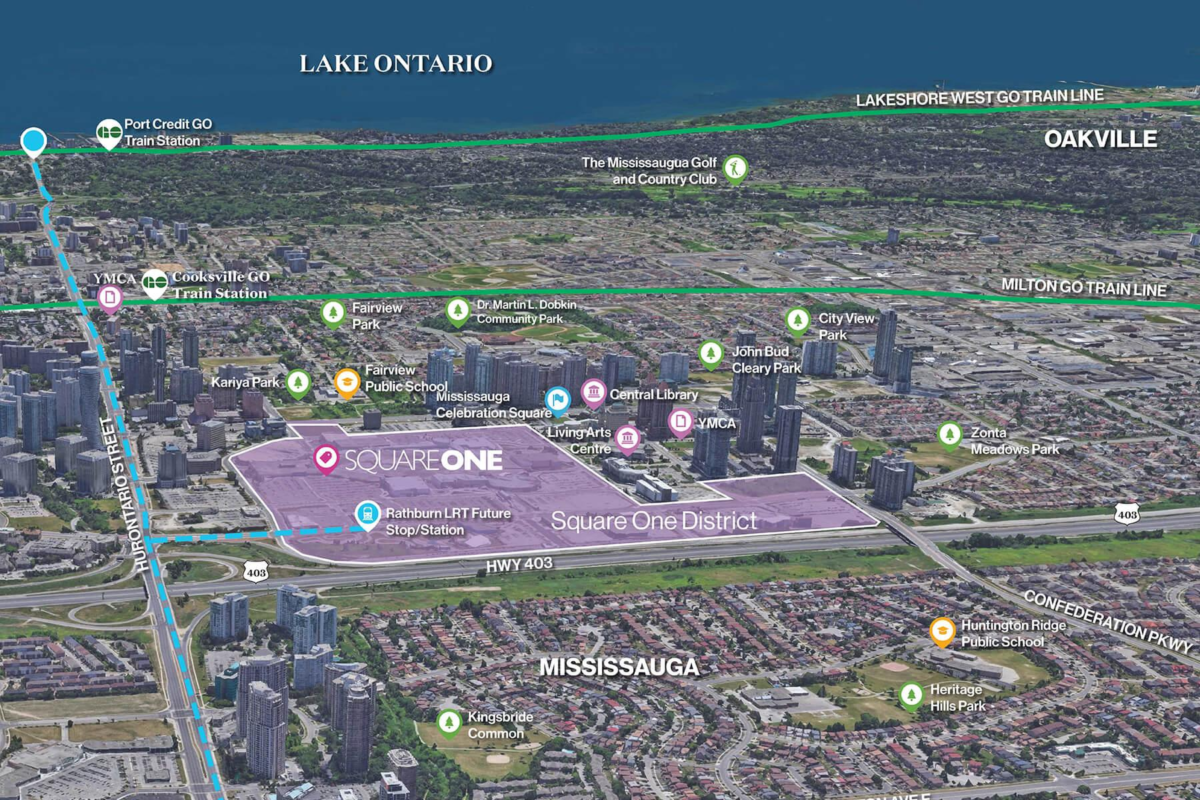
Rendering of the future Square One District in Mississauga. Image: Oxford Properties
Mixed-Use Communities as the Preferred Model
The most successful redevelopment projects do not simply replace retail with housing. Instead they integrate multiple uses to create vibrant and resilient communities.
Former mall sites, for example, may be reimagined as mixed-use districts that include ground-floor retail and services, grocery stores, residential rental units, condominiums, green spaces, and community amenities such as childcare centres or healthcare facilities.
“Mixed-use is not a buzzword, it is what communities actually need,” says Hosseinzadeh Sadeghi. “When we design for a single use, we create fragile environments. When we design for 24-hour life, where people can live, shop, work, and socialize within walking distance, we create resilience. And we create value.”
Developers pursuing retail-to-residential conversions in Canada increasingly view this layered approach as essential. Mixed-use development can help maintain retail activity while simultaneously introducing new housing supply.
Square One District in Mississauga. Image: Oxford Properties
Environmental Benefits Strengthen the Case
Beyond housing and economic considerations, adaptive reuse also presents environmental advantages.
New construction carries significant embodied carbon, referring to the greenhouse gas emissions associated with producing building materials and transporting them to construction sites. Reusing existing structures or redeveloping already-disturbed land can reduce a project’s environmental footprint.
“From a sustainability standpoint, the most environmentally responsible building is often the one that already exists,” says Hosseinzadeh Sadeghi. “When we can reuse, retrofit, or redevelop on already-disturbed land, we are making a climate decision as much as a housing decision.”
Lifecycle carbon analysis is becoming increasingly important within the green building sector. Institutional investors with environmental, social, and governance mandates are also paying closer attention to projects that demonstrate measurable sustainability benefits.
Adaptive reuse and retail site intensification often perform favourably in these assessments.
A Call for Coordinated Action
While interest in redevelopment is growing, Hosseinzadeh Sadeghi believes the true potential of retail-to-residential conversions in Canada will only be realized through coordinated action.
Federal housing programs, municipal zoning reforms, and private investment must work in tandem to accelerate redevelopment. Developers must also collaborate with community groups to ensure projects deliver both economic value and local benefits.
“The sites exist. The demand exists. The capital exists,” she says. “What we need is alignment, and the courage to move quickly. Canada’s housing crisis is not waiting for a perfect plan. We have to act with the tools we have, on the land we have, right now.”
For $25, you might walk out with a drone. Or a blender. Or a box of something you won’t identify until you tear through the tape.
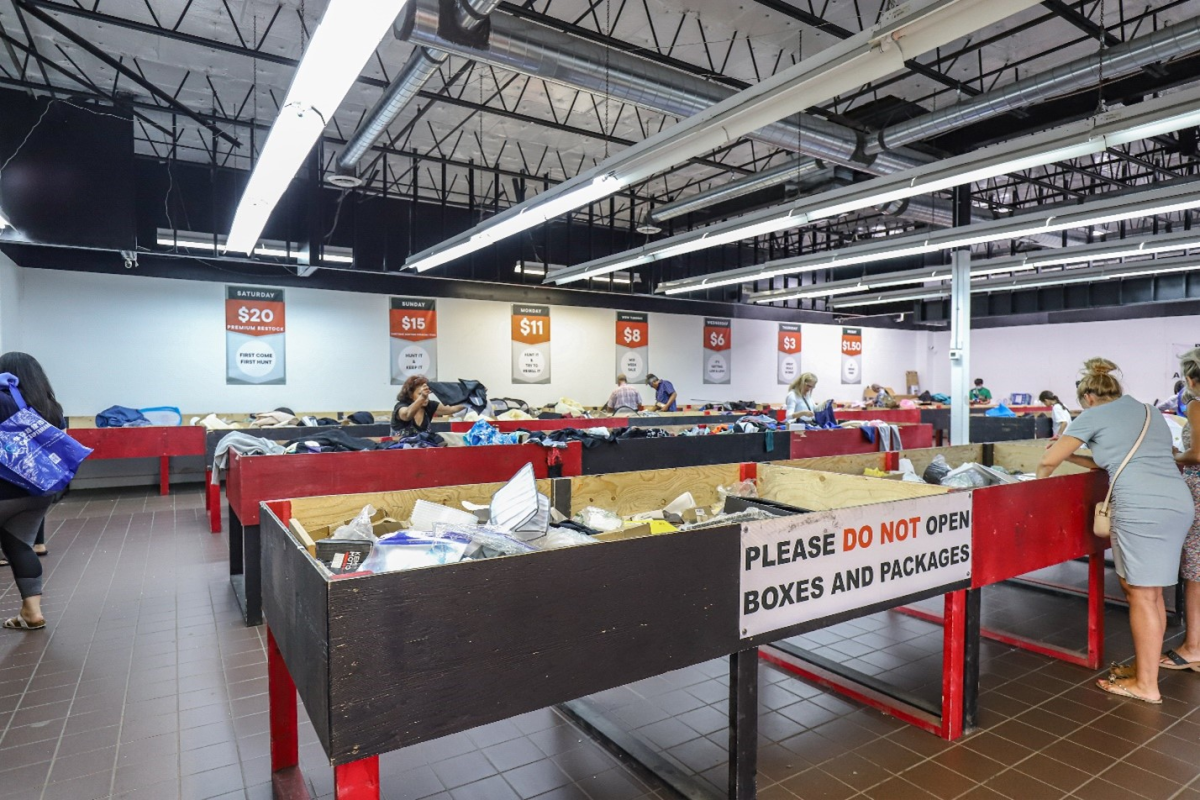
At “binz” stores, bargain hunters line up early on Saturdays to gain first access to piles of surplus goods dumped into waist-high bins. The merchandise comes from major retailers and online platforms, which are purchased through liquidation auctions and resold.
Binz stores are one highly visible edge of the booming recommerce and liquidation economy. The global recommerce market, which resells returned, refurbished and second-hand goods, is projected to generate more than US$200 billion annually.
Binz stores attract not only low-income shoppers but a broad cross-section drawn by the thrill of discovery and ultra-cheap goods. As the high cost-of-living strains household budgets in Canada, more consumers have traded down, seeking discounts and secondary markets.
Binz stores represent a layer of the secondary market that is equal parts bargain hunt and chaos. Liquidation marketplaces, off-price retailers and salvage wholesalers form a vast ecosystem beneath traditional retail designed to recover value from goods that cannot be sold at full price.
The afterlife of surplus
To understand binz stores, it helps to understand how surplus is created in the first place. They are the cumulative result of supply chain logistics, prediction error and the extraction of value in what might be called retail’s surplus afterlife.
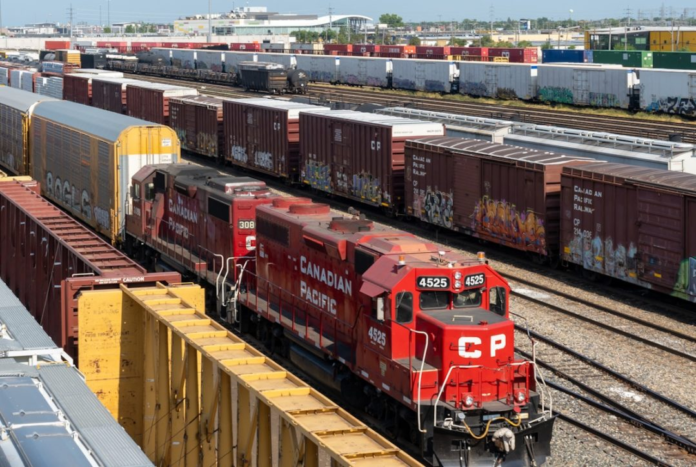
Modern supply chains are one-way highways that move goods from global manufacturers to centralized hubs, then to retail outlets. They are optimized for speed and efficiency, but they are rarely designed to run in reverse.
“Most of the supply chains are designed for moving goods from manufacturer to the consumer. They are not designed for returning stuff,” says Murat Kristal, professor of operations management at the Schulich School of Business at York University.
A ship in a busy port, featuring stacked cargo containers and a large crane. Image: RI/Google
Going forward, you might drop off a box of 15 at every store, he says. Now imagine going backwards, collecting unsold items, two here, three there, store by store, and then having to transport, sort and store them all in the warehouse while the fashion cycle changes.
Reversing the system multiplies the cost of the “last mile” of delivery — typically the most expensive part of distribution, explains Kristal. These final legs of distribution can account for about half of total shipping costs in some supply chains, according to industry analyses.
In many cases, it is cheaper to liquidate excess inventory in bulk than to reintegrate it backwards through primary distribution channels.
Forecasting the future
Retailers must predict the future, months in advance. A shirt on the shelf today may have been ordered a year ago, after yarns were sourced and factories booked in Southeast Asia.
Shipping full containers lowers per-unit costs, while producing smaller batches increases them. The economics of global manufacturing favours volume and planning production far in advance — a classic example of economies of scale where the cost of producing each individual item falls as the total number of units produced increases.
Companies must forecast how many units will sell in a market: how many small, medium and large, which colours and styles. If they predict 100 and sell 80, 20 remain. This forecasting is not optional “because you need to give a number to your manufacturer,” Kristal says.
Error is built into that bet. Retailers forecast based on past sales and trends. To avoid running out of stock, companies routinely overproduce or over-order to prevent empty shelves and lost sales. In fashion, between 10 and 40 per cent of garments made each year may go unsold. That buffer helps ensure availability but inevitably generates surplus inventory when demand fails to materialize.
Returning items to the warehouse is costly, and storing last season’s inventory makes little economic sense in industries driven by cycles. Liquidation often becomes the rational choice.
But the future is becoming harder to read. “It’s just that the unpredictability of the world we live in is increasing,” Kristal says.
Surplus goods lose value over time, but that value rarely disappears entirely. Instead, it continues to be extracted as goods move further downstream from manufacturers to liquidation channels, and ultimately to bargain-hunting consumers.
“With some exceptions, virtually everything that gets manufactured in the world gets sold,” says Mark Cohen, former director of retail studies at Columbia Business School. “Everything has an economic value that gets deflated as merchandise is bought, or merchandise is unsold” at its intended price and venue.
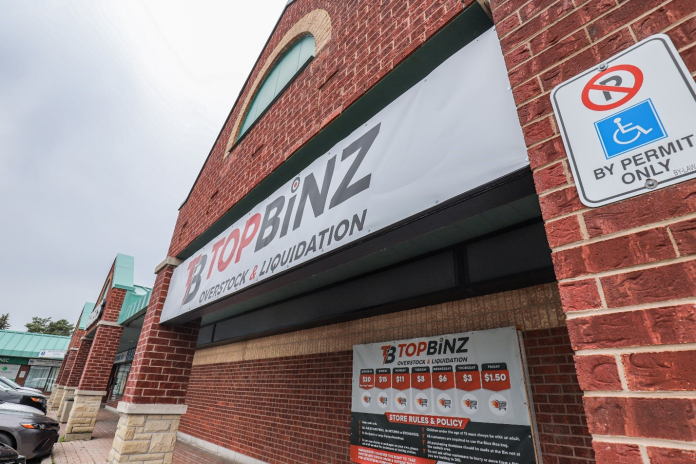
Top Binz in Vaughan, ON. Photo: Vaughan Economic Development
In binz stores, this value decay is prominently visible. Each day has a flat rate for binned items, with prices dropping daily until restock day renews the cycle. In one store, a board game that once retailed for $70 might sell for $25 on restock day, $10 by midweek and $1 by week’s end.
Each change of hands reduces margin, but value can persist longer than assumed. “Eventually, even if it winds up in a junkyard or in a garbage dump, there are increasingly attempts to extract value by repurposing or extracting material,” says Cohen.
The thrill of the hunt
Bargain hunting is not purely economic. It also has a psychological dimension. Research suggests that searching for deals can trigger feelings of excitement and reward, making binz shopping similar to a game of treasure hunt.
“Go as early as possible to get the best merchandise,” says Jonatas Beltrão, a Toronto painter. He first stumbled across a binz store while walking by and became curious about the large tables piled with goods.
Beltrão still laughs about his proudest purchase: a coffee maker that cost $85 on Amazon that he bought for $8.99. He goes every two weeks for the fun of finding brand-name items at a fraction of their original cost.
The uncertainty of what might appear in the binz, and the bragging rights of finding a trophy, help explain why some shoppers keep coming back and how goods continue circulating long past their intended retail life.
“There’s a buyer for almost everything,” Cohen says.
In that sense, binz stores show the afterlife of surplus goods: leftover merchandise becomes part of a shopping experience built around chance, discovery and the thrill of a good deal.
About the author:
Christopher Lo is Associate Professor of Public Health, University of Toronto; James Cook University
Let’s talk about the carbon tax—more specifically, the industrial carbon price, which still exists.
Last year, Prime Minister Mark Carney reduced the consumer portion of the carbon tax to zero. That decision may have left many Canadians with the impression that carbon pricing had disappeared entirely. It has not.
The industrial carbon price remains in place, and another increase is scheduled for April 1, when the price will rise from $95 per tonne to $110 per tonne.
At a time when global energy markets are once again facing geopolitical uncertainty, this increase risks amplifying the pressures already building within Canada’s food supply chain. With tensions rising in the Middle East and the possibility of disruptions to oil flows, higher fuel costs appear increasingly likely unless the current conflict de-escalates quickly. Anyone familiar with the region understands that predicting stability there is rarely straightforward.
We have seen how quickly energy shocks can ripple through food systems before.
At the start of Russia’s illegal invasion of Ukraine in February 2022, Canada’s carbon price stood at $40 per tonne. For a truck hauling food between Toronto and Montreal once a week, the additional carbon-tax burden amounted to roughly $2,000 per year.
On April 1, 2026, the carbon price will reach $110 per tonne—more than double what it was when the Ukraine war began. For that same weekly Toronto–Montreal route, the additional carbon-tax cost alone rises to roughly $6,000 per year compared with 2018. That is more than three times the burden carriers faced when the Ukraine war began.
And that calculation excludes the obvious: higher fuel prices themselves, which inevitably accompany geopolitical shocks such as Ukraine in 2022 or the latest tensions involving Iran.
The cumulative effect becomes clearer when looking at the national logistics system. Canada likely sees 800 to 1,200 long-haul food truck trips each day, many covering distances of roughly 1,000 kilometres. At a carbon price of $110 per tonne, the diesel tax component alone represents approximately $34 million to $52 million per year in additional costs across those shipments.
And this estimate is extremely conservative.
It excludes the additional costs associated with clean fuel regulations, refrigeration units, empty backhauls, secondary distribution routes, and warehousing operations. When those factors are included, the financial impact across the food supply chain could easily be three or four times higher.
Geography also matters. In a country as large as Canada, regions located far from major population centres—such as the Prairies or Atlantic Canada—bear a disproportionate share of transportation costs. Distance alone makes food logistics expensive; layering additional policy costs on top of that reality compounds the challenge.
It is also worth remembering that carbon costs accumulate across the entire supply chain. By the time food reaches a distribution centre, its price already reflects higher input costs at earlier stages—from farming to processing to transportation. And margins do vary in food distribution. Each additional cost is applied to an already higher base price.
Ultimately, consumers pay the difference at the grocery store.
Some industry observers have described carbon pricing in food logistics as a “silent killer” of competitiveness, and the description is not entirely misplaced. Canada is already a challenging market for food distribution due to its vast geography and relatively small population. Adding further cost pressures to logistics does little to attract investment in grocery retail and food distribution infrastructure.
To be clear, carbon pricing is not inherently misguided. In principle, it can be an effective tool to encourage innovation and reduce emissions. But when applied to the food system—an essential sector closely tied to affordability—the policy must be designed with particular care.
Not all provinces approach carbon pricing in the same way. Quebec, for example, operates a cap-and-trade system linked to California’s carbon market, where allowance prices are determined through auctions rather than through Ottawa’s annual price schedule. The mechanism is different, but the economic signal is similar. Carbon costs still work their way through transportation networks and food distribution systems.
If Ottawa genuinely wants to help the food supply chain cope with rising energy costs, it should at least consider pausing the scheduled April 1 increase, or examining whether parts of the food supply chain should receive temporary relief.
Putting a price on carbon can send an important environmental signal. But when it comes to food—an essential good that every household depends on—the stakes are simply too high to ignore the consequences.
Our own research has repeatedly shown that carbon pricing can disproportionately affect lower-income households, largely through higher food and energy costs across the food supply chain. Yet when the carbon tax was first implemented in 2018, Ottawa conducted remarkably little analysis of how the policy might influence food affordability.
Eight years later, Canadians are experiencing the consequences in real time.