Restaurants Canada said Friday it is pleased with the announcement that Canada will lift its retaliatory tariffs on U.S. food products. After months of uncertainty and negative impacts, this long-awaited measure will provide relief to thousands of businesses across the country and address Canada’s affordability crisis, it said in a statement.
“Restaurants Canada estimates that retaliatory tariffs were resulting in at least $100 million a month in additional costs to the foodservice industry. While Canadians were navigating affordability challenges, including food inflation, this added burden was largely absorbed by foodservice businesses, 40% of whom were operating at a loss or just breaking even. In addition, many of the food products that were targeted by retaliatory tariffs were not available domestically or from other markets,” it said.
“Restaurants Canada has been one of the leaders in lobbying the federal government to remove retaliatory tariffs on food for several months. In partnership with other food associations, Restaurants Canada sent a letter on the urgent need for this relief to several Ministers and all opposition parties.”

“The removal of retaliatory tariffs by the Canadian government today will help Canadians with the affordability crisis and will protect the 1.2 million jobs in the foodservice industry,” said Richard Alexander, Executive Vice President, Government Relations and Public Affairs with Restaurants Canada.
“We support the federal government in taking a more targeted approach in its negotiations with the United States.”
Restaurants Canada said it continues to encourage the Government of Canada to work with stakeholders and trade partners to improve the Canada-U.S. trade relationship, and to pursue trade diversification for the benefit of Canadian businesses and consumers. As well, it continues to advocate for the removal of interprovincial trade barriers.
Corinne Pohlmann, Executive Vice-President, Advocacy, Canadian Federation of Independent Business (CFIB), said the CFIB welcomes Ottawa’s decision to drop some of its retaliatory tariffs on U.S. goods.
“This is a step in the right direction and will take some of the pressure off Canadian small businesses as trade talks continue,” she said.

“Many small business owners have told us that Canada’s retaliatory measures were almost as damaging as the U.S. tariffs themselves. Nearly six in 10 small firms report they were hurt by Canada’s counter-tariffs, with only steel and aluminum tariffs doing more harm. Those were not touched today, so the challenges for those businesses remain. While small firms were in favour of Canadian counter tariffs as the trade war began, their support has been falling since February.
“Today’s announcement provides some relief going forward; however, businesses have already paid millions of dollars in counter-tariffs. We urge Ottawa to immediately release its tariff revenue to small businesses directly and indirectly affected by trade disruptions and work quickly to resolve small business requests still tied up in the remissions process.”

Catherine Fortin LeFaivre, SVP, International Policy and Global Partnerships, Canadian Chamber of Commerce, said: “At a time of heightened trade tensions, it is essential these adjustments be carefully calibrated in close consultation with Canada’s business community. Decisions made today will have ripple effects for supply chains, employers and consumers, and must be managed with care to preserve long-term competitiveness.
“Our focus must remain on securing a durable, predictable arrangement with the United States — one that gives businesses and consumers confidence not just for weeks, but for years. However, we will wait to evaluate a deal until one is on the table. Stability and certainty are the foundations of North America’s integrated economy and competitiveness.
“Sectoral tariff impacts around agriculture, steel, aluminum and copper have borne the brunt of this dispute. Unlike other industries, they have no CUSMA exemption process to ease the pressure. Canada must work closely with these businesses to calibrate our response while pressing for a lasting resolution with the U.S. and other trade partners.
“As Canada’s largest and most activated business network, we will continue working with government and industry to ensure public policy delivers a strong economy, long-term prosperity, and a better life for all.”
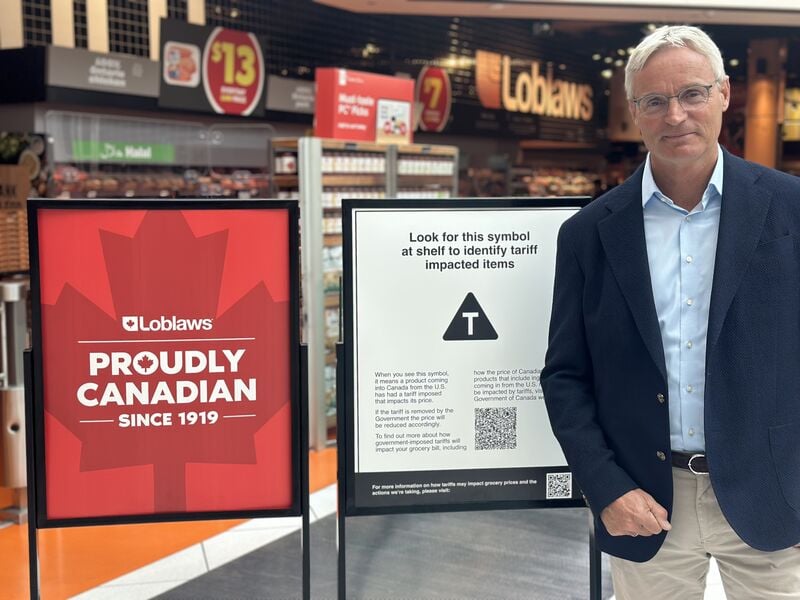
In a LinkedIn post, Per Bank, CEO and President of Loblaw Companies Ltd., said: “This is a big development – for Canadian consumers and businesses. It means that, in the days and weeks ahead, the price of goods in our stores impacted by tariffs will come down. Prices will come down over time, as we sell-through inventory that was purchased based on tariffed pricing. For our business, thankfully, this also means that we will soon be able to remove the “T” symbols on the over 4,000 impacted items on our shelves.
“This is certainly good news, especially for consumers impacted by the higher costs caused by tariffs. But I want to be transparent… just as it took time for tariffs to start impacting goods based on the inventory we had on hand, it will also take time for tariff-related pricing to come off what we have in-stock. We will definitely look for ways to accelerate the benefit for consumers, and I will reiterate: as tariffs come off items, any tariff-related pricing changes will also be entirely removed, penny for penny.
“I’ll also echo something Mark Carney said during his press conference today. Like the Canadian government, Loblaw has been working to create more resilience and diversity in our sourcing and supply chain strategy. One of the few benefits of this trade war has been some great new Canadian and foreign supplier partnerships (we added more than a hundred new Canadian suppliers) that help us mitigate risk throughout our business and expand our network of suppliers. We will continue to proceed with this part of our sourcing strategy, especially where it will lead to better costs for us and better prices for consumers.
“Until all the tariffs come off entirely there will still be lots of choice to buy what you want without tariffs and perhaps this will even benefit Canadian suppliers.”
Related Retail Insider stories:
- Tariffs Blamed as Canadian Food Inflation Outpaces CPI
- Canadian retail remains resilient despite tariffs and HBC closure: CBRE
–