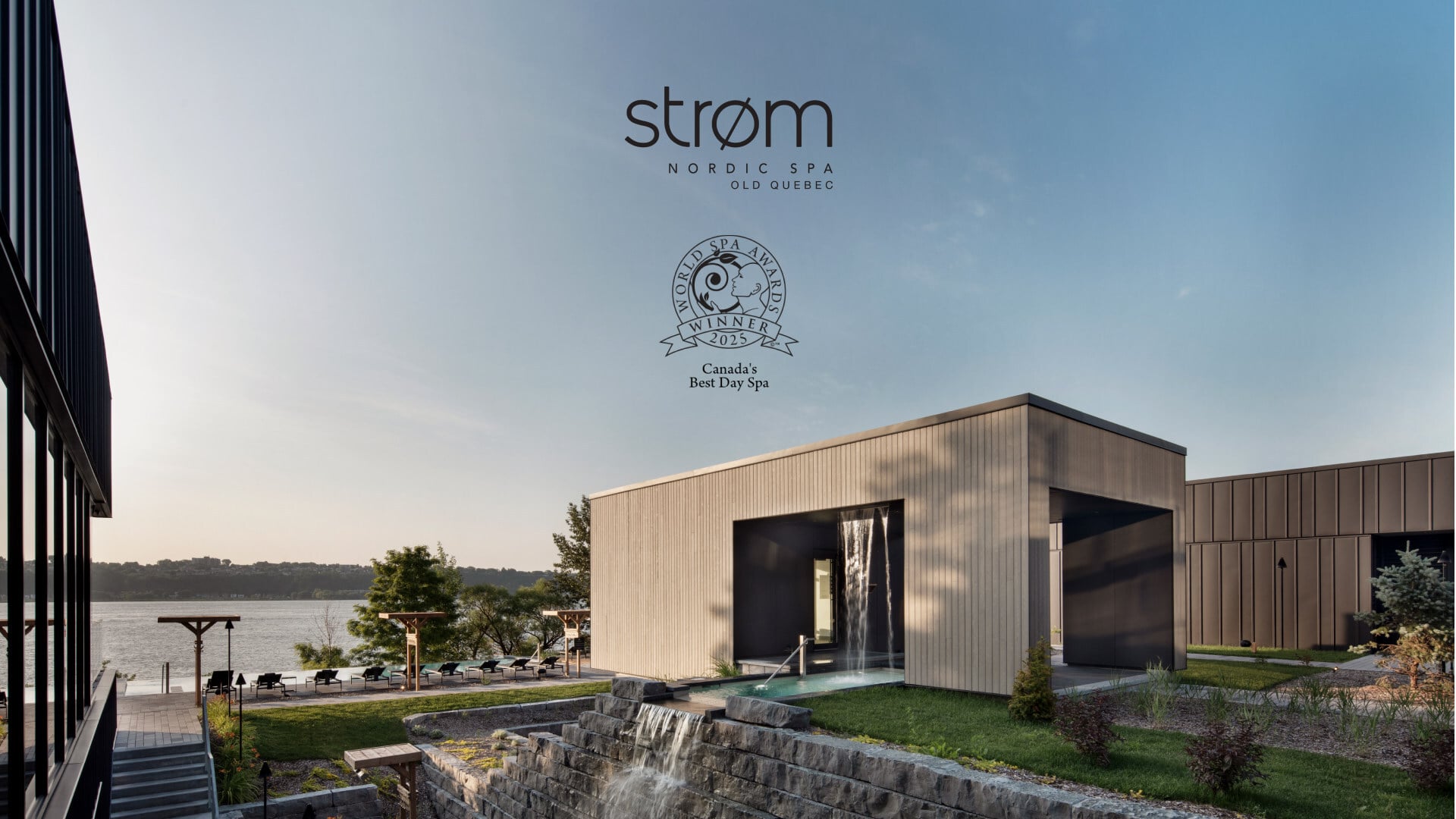
Strøm Old Quebec named Canada’s Best Day Spa at the World Spa Awards (CNW Group/Strøm nordic spa)
Strøm Old Quebec has been named Canada’s Best Day Spa at the World Spa Awards for the second year in a row, according to a news release issued by Strøm Nordic Spa.
The recognition highlights the consistent standards and expertise applied across all of the company’s spa destinations, Strøm said in the release.
Guillaume Lemoine
“At Strøm, we believe well-being is built on balance—between water and architecture, nature and culture, local roots and global vision,” said Guillaume Lemoine, Chief Executive Officer of Strøm Nordic Spa. “This award celebrates not only the remarkable work of the Old Quebec team, but also the collective expertise behind every Strøm.”
Lemoine said the award reinforces the company’s goal to set a “thoughtful, world-class standard for wellness experiences” that remain rooted in Canadian identity while expanding to new audiences.
“It also supports our expansion strategy, bringing Strøm’s vision of balance and accessible well-being to new markets across Canada and the United States,” he said.
Strøm Nordic Spa said its work extends beyond spa experiences to include a signature skincare line, locally inspired culinary offerings, and editorial content through Strøm Magazine, all intended to promote everyday well-being.
“By extending beyond the spa, Strøm shares its unique savoir-faire and inspires a transformative approach to well-being that is both accessible and deeply connected to place,” the company stated.
Strøm said it aims to bring its “distinct vision of well-being—balanced, responsible, and inspiring” to more communities across Canada and North America, while continuing to honour and enrich the cultures and landscapes it engages with.
Founded in 2009, Strøm Nordic Spa operates five locations in Quebec: Old Quebec, Nuns’ Island, Saint-Sauveur, Mont-Saint-Hilaire and Sherbrooke.
Aurora Montreal office on Sherbrooke Street West. Image: Aurora Retail Group
Montreal-based Aurora Realty Consultants and Toronto’s Retail Ventures CND have announced a merger that will form one of the largest retail-dedicated brokerages in Canada. The combined company will operate under the name Aurora Retail Group, bringing together two highly respected firms in the Canadian retail real estate sector.
The new firm will be co-led by Jeff Berkowitz, founder of Aurora Realty Consultants, and Sam Winberg, founder of Retail Ventures CND. Both will serve as Co-Chief Executive Officers of Aurora Retail Group. Joining them on the leadership team will be Manon Parisien, who will assume the role of President, and Justin Pearlstein, who will step into the position of Executive Vice President.
Jeff Berkowitz
With a headcount of approximately 23 to 25 professionals, Aurora Retail Group is expected to stand as one of the largest brokerages in the country that is exclusively focused on retail. The firm will maintain its offices in Montreal and Toronto, in addition to other offices across Canada as well as in the US and UK.
The creation of Aurora Retail Group represents a significant consolidation within the Canadian retail real estate advisory space. Both firms have long histories of guiding major retailers in their market entry, expansion, and real estate strategies across the country. The announcement comes just ahead of the ICSC Canadian conference in Toronto on October 7-8, where the new Aurora Retail Group will be introduced to industry stakeholders.
Aurora Realty Consultants: A Montreal Legacy
Sam Winberg
Founded in 1989 by Berkowitz, Aurora Realty Consultants established itself as a leading retail-focused brokerage at a time when tenant representation was emerging as a critical service in Canada’s evolving commercial landscape. Over the decades, the firm expanded from its Montreal base to work on assignments across Canada, the United States, and Europe.
Aurora built its reputation through projects involving shopping centres, big-box developments, urban street retail, and entertainment venues. The company has been credited with helping introduce global brands such as Sephora and Uniqlo into the Canadian market. Beyond tenant representation, Aurora has advised landlords and developers while also offering consulting for pop-ups, incubators, and international expansion through its WR-C Aurora partnership in Europe.
Berkowitz himself is a well-known figure in the industry, recognized not only for his deal-making but also for his leadership in community initiatives and mentoring programs. In 2017, he co-founded Halcyon Brands, a company dedicated to expanding international retail concepts in North America through e-commerce, licensing, and bricks-and-mortar strategies.
Manon Parisien
Retail Ventures CND: A Toronto-Based Powerhouse
Retail Ventures CND, founded by Sam Winberg, has also carved a prominent place in the Canadian brokerage sector. Winberg brings more than 35 years of experience in retail real estate, having co-founded Northwest Atlantic (Canada) Inc. in 1991, later acquired by Jones Lang LaSalle (JLL) in 2018.
Retail Ventures CND has specialized in tenant-side representation, guiding a roster of both global and Canadian retailers in their market strategies. Winberg and his team have represented brands such as Walmart, Nordstrom, Whole Foods, TJX Companies (Winners, Marshalls, HomeSense), Indigo, Rolex, and Ulta Beauty, among others.
The firm has been particularly active in supporting retailers through expansion challenges and restructurings. Most recently, Retail Ventures CND led the disposition of Bed Bath & Beyond and Buy Buy Baby leases during CCAA proceedings in Canada, showcasing its expertise in complex court-monitored lease assignments.
Justin Pearlstein
Alongside Winberg, the Retail Ventures CND team includes industry experts such as Justin Pearlstein and Vice President Kenzie Kohl, who will continue to contribute to the firm’s national expansion strategies under the new Aurora Retail Group banner.
Building One of the Largest Retail-Dedicated Brokerages in Canada
With the combination of Aurora and Retail Ventures, Aurora Retail Group will bring together decades of expertise and a deep bench of talent. The merged firm will count a team of more than 20 professionals, providing the scale and specialization to compete at the top of the Canadian market.
Services will include tenant representation, landlord consulting, lease negotiations, portfolio management, and strategic real estate advice for retailers entering or expanding across Canada. The firm’s expertise will extend internationally, with relationships and partnerships in the United States, the United Kingdom, and Europe.
The leadership emphasized that the merger positions Aurora Retail Group as a unique entity in the marketplace. By focusing exclusively on retail, the firm will provide a specialized alternative to large multi-sector brokerages, ensuring dedicated attention to retailers and landlords navigating a rapidly evolving sector.
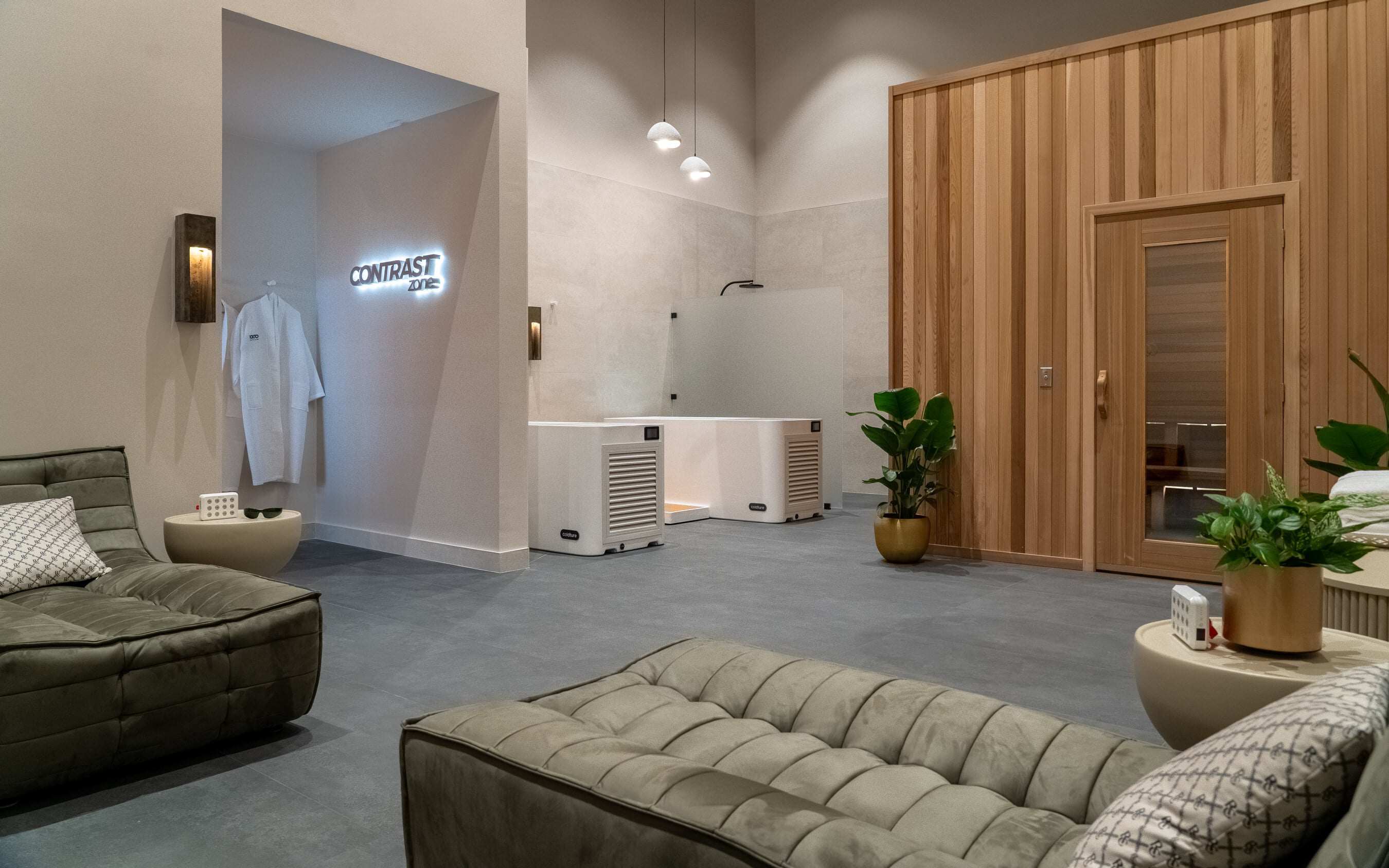
10XTO’s Contrast Zone features Canadian wellness brands Saunafin, Kala, and Coldture. (CNW Group/10XTO)
Luxury athletic club 10XTO has announced the opening of a new wellness space, the Contrast Zone, designed to enhance recovery and performance for its members.
The 90,000-square-foot facility, located in Toronto’s Exhibition Grounds, will debut the Contrast Zone on Saturday, Nov. 8. The new area combines a sauna, cold plunge pools, and red light therapy in a self-guided circuit. Access will be available exclusively to 10XTO members and guests of Hotel X Toronto who book the Experience Wellness add-on.
“Set to open on Saturday, Nov. 8, the refined sanctuary brings together heat, cold, and calm to deliver peak performance, recovery, and renewal,” the club said in a news release.
Developed in collaboration with Canadian wellness companies, the space includes a traditional dry Finnish sauna designed by Saunafin. The sauna delivers deep heat intended to support cardiovascular health and boost circulation.
Two plunge tubs by Coldture offer cold therapy at different intensities—one maintained at 2 to 3 C for a more intense experience, and another set at 9 to 10 C for a gentler option.
To further extend the recovery benefits, the lounge also features red light therapy technology by Kala. According to the release, the red light setup “stimulates mitochondrial activity, improves circulation, and reduces inflammation, offering an advanced layer of recovery.”
After completing the thermal circuit, users can relax in a sage-green lounge area furnished by Rove Concepts.
“Already home to world-class tennis courts, state-of-the-art fitness facilities, and a vibrant community, 10XTO is elevating its wellness amenities even further with Contrast Zone, ensuring members can meet all their needs within one elevated destination,” the release stated.
10XTO describes itself as a next-generation lifestyle athletic club that offers fitness, sports, and wellness amenities in a modern, glass-encased facility overlooking downtown Toronto and Lake Ontario.
The total value of retail payment transactions in Canada rose to $12.2 trillion in 2024, marking a 3 per cent year-over-year increase in both volume and value, according to a new report from Payments Canada.
Released recently, the Canadian Payment Methods and Trends Report analyzed 22.5 billion payment transactions made last year and highlights a continued shift toward digital payment methods, with credit cards now representing one in three transactions.
Donna Kinoshita
“Canada’s payment ecosystem is more diverse, dynamic and fast-evolving than ever before, shaped by continued innovation and shifting expectations in an increasingly competitive environment,” said Donna Kinoshita, chief payments officer at Payments Canada.
Digital payments made up 86 per cent of the total payment volume and 77 per cent of payment value in 2024, while contactless payments accounted for 58 per cent of all transactions.
Credit and debit cards remained the most popular payment methods, comprising a combined 63 per cent of total payment volume. Credit cards alone accounted for 33 per cent of transactions, rising six per cent from the previous year, and reached 7.5 billion transactions with an average value of $105. The number of credit cards in circulation grew by five per cent to 112 million.
For the first time, credit cards tied with debit cards for point-of-sale volume and surpassed cheques in consumer remote payment value. Over half (54 per cent) of Canadians used credit cards to pay bills or household expenses.
However, the report noted rising financial strain among consumers, with nearly a third (32 per cent) carrying a revolving balance on their credit cards after making monthly payments. The average balance owed was $4,616.
Electronic funds transfer (EFT) led all methods in total payment value, making up 63 per cent, followed by cheques (22 per cent), credit cards (6 per cent) and online transfers (5 per cent).
E-commerce purchases totalled $77 billion, accounting for 6 per cent of retail sales. According to the report, 60 per cent of Canadians made an online purchase in a given month, with that number expected to climb as the value of online retail sales is projected to reach $96.7 billion by 2028.
“Innovations like real-time payments, consumer-driven banking, embedded finance and agentic commerce will continue to reshape the future of how Canadians make purchases and payments,” said Kinoshita. “Our research reinforces that Canadians are ready and excited to embrace the future of payments.”
The report found that mobile contactless payments grew by 28 per cent in 2024, reaching 3.4 billion transactions. Over two-thirds (68 per cent) of smartphone owners used their devices to make a payment within a six-month period.
Canadians also showed interest in emerging technologies. Twenty-eight per cent found AI-generated online shopping support appealing, and 64 per cent of business leaders reported exploring agentic AI—defined in the report as “self-thinking” artificial intelligence.
Social commerce and live commerce were also gaining ground, with 18 per cent of consumers expressing interest in making purchases directly through social media platforms, and 20 per cent interested in buying during livestream events.
Despite the growth in digital payments, cash remained in use. It accounted for 11 per cent of total payment volume, with 2.5 billion transactions and an average transaction value of $27. Nearly half (48 per cent) of Canadians used cash frequently—an average of 3.5 times per week. More than half (57 per cent) expressed no desire to go completely cashless, while only 11 per cent had already stopped using cash entirely.
Over a five-year period from 2020 to 2024, the total number of payments in Canada increased by 9 per cent in volume and 22 per cent in value. Online transfers saw the highest growth in both categories, with volume increasing by 175 per cent and value by 219 per cent.
Retail Insider is streamlining its Canadian retail news from around the web to include a handful of top news stories that can be viewed quickly during the day. Here are the top stories from the past several several days.
Bakebe, the Hong Kong-founded experiential baking studio that has made waves across Asia, is entering the Canadian market this fall. The innovative co-baking concept, created by celebrity entrepreneur Venus Chi, will debut at CF Markville Mall in Markham, north of Toronto. This marks Bakebe’s first Canadian location and the beginning of what could be a broader expansion into North America.
Founded in 2018, Bakebe has pioneered what it calls “co-baking,” where guests can create professional-quality cakes guided by an interactive app. The model has proven popular in Hong Kong, Malaysia, and the Philippines, where Bakebe has become a go-to destination for celebrations, group outings, and social media-worthy experiences.
“Toronto is incredibly diverse, creative, and family-oriented. It felt like the perfect city to introduce Bakebe in North America,” said founder Venus Chi in an interview with Retail Insider. “Markville Mall was an exciting choice because it’s a high-traffic, well-loved retail hub that’s actively embracing experiential concepts. It gives us a great launchpad into the Canadian market.”
Venus Chi, founder of Bakebe. Photo: Bakebe
A New Model for Baking Experiences
The Bakebe concept was born out of Chi’s frustration with traditional baking classes. After a disappointing experience in which a class she booked was cancelled, she experimented with self-teaching via YouTube. The outcome, however, was a costly waste of ingredients and time. “I realized that so many people love the idea of baking, but they’re intimidated by the process, or they don’t have the tools or space,” she said.
Bakebe solves that problem with its app-driven system. Guests select a recipe from a tablet, follow detailed step-by-step video and graphic instructions, and bake in a premium, Instagram-worthy studio environment. Every tool and ingredient is provided, and trained staff remain available to help if needed. The model has been refined over the years to ensure what Chi describes as a 95% success rate, with health-conscious, low-sugar recipes and cakes designed to be both beautiful and approachable for beginners.
“Unlike a traditional baking class, Bakebe is completely self-guided through our custom app, which means guests can move at their own pace—solo or with friends,” said Chi. “It’s an experience that’s both structured and creative.”
From Hong Kong to Global Expansion
Bakebe has steadily grown beyond its flagship in Hong Kong, where it became known as a haven during the pandemic. For many, it was a therapeutic outlet in an otherwise stressful urban environment. The studios proved adaptable, serving as spaces for birthdays, proposals, dates, and team-building events.
“We realized this concept had universal appeal,” Chi explained. “So we expanded to Malaysia and the Philippines, where we tailored the experience slightly to fit local tastes and preferences. Each new location brought fresh insights that helped us refine the model further.”
The Canadian debut represents Bakebe’s entry into Western markets and a strategic step toward expansion in North America. According to Chi, the team is already scouting additional sites in Vancouver, Montreal, and Calgary.
“Canada is a great testing ground with a lot of cultural overlap with the U.S., and the insights we gain here will help shape how we grow across the continent,” she said.
Photo: Bakebe
Inside the Markville Studio
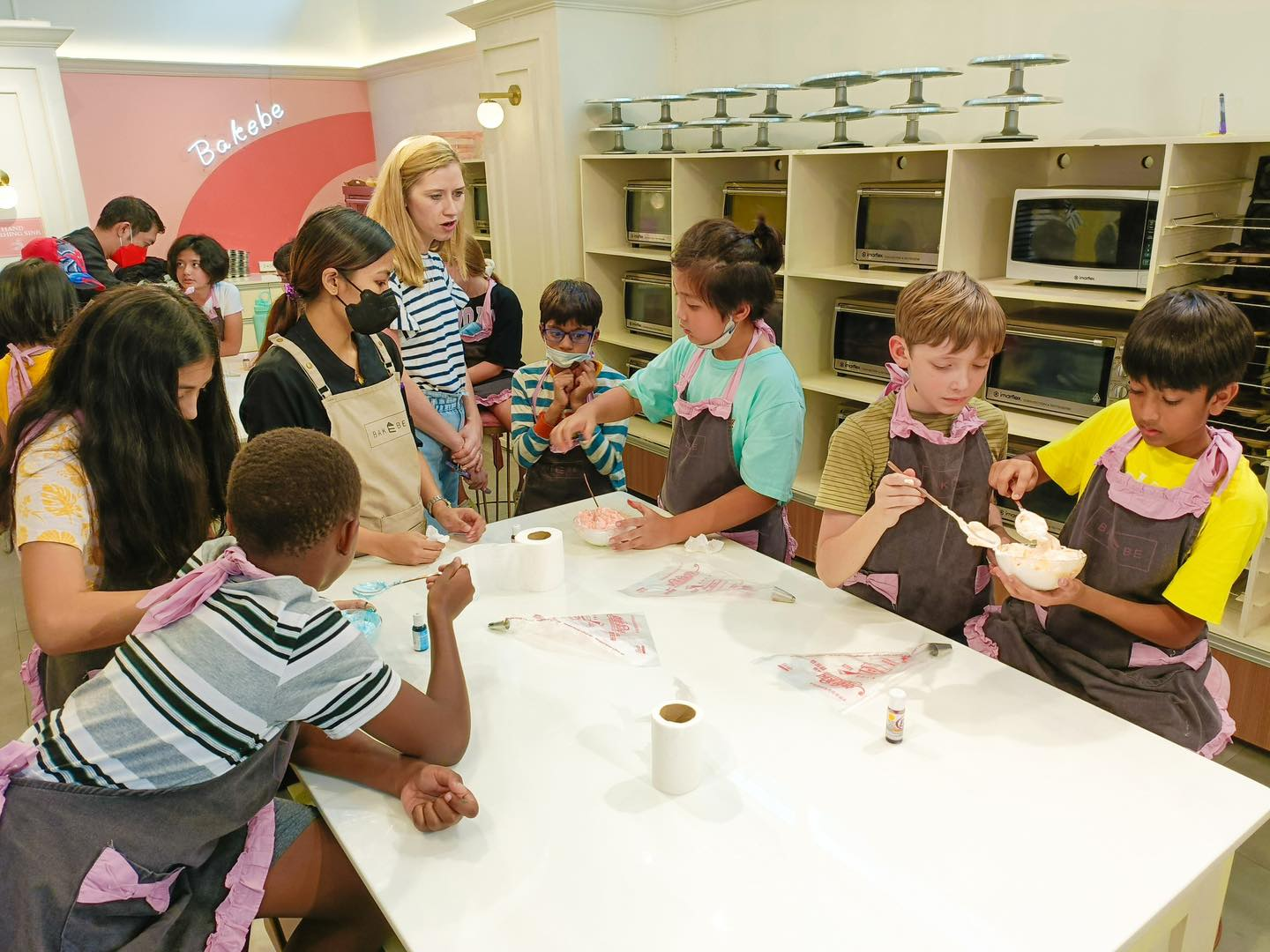
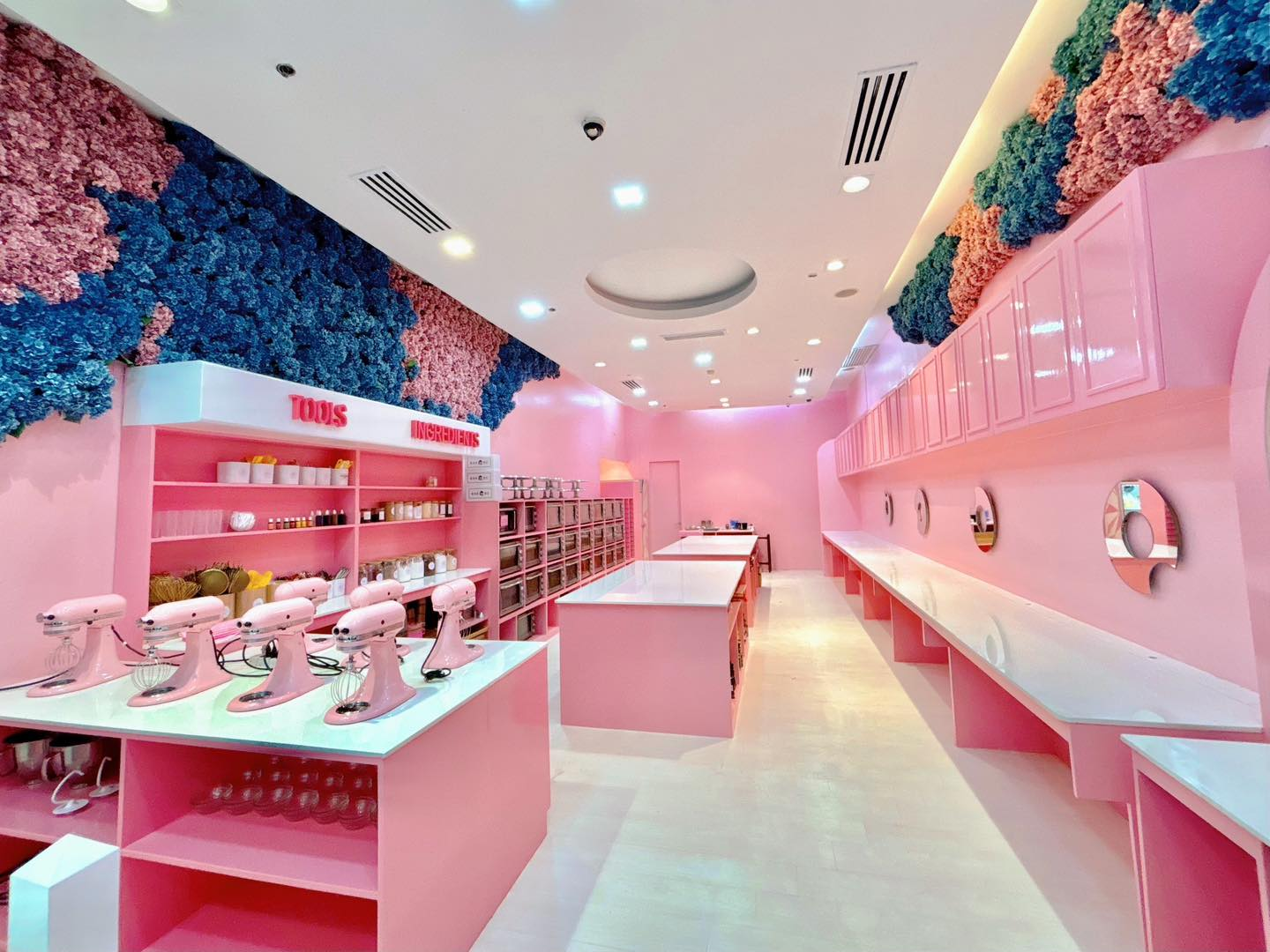
The new Bakebe at CF Markville will closely mirror the brand’s Asian studios while incorporating localized elements. The interior design blends café aesthetics with studio functionality, aiming for what Chi describes as an “Instagram dream.” Guests will find bright interiors, fully equipped baking stations, and a premium atmosphere intended to encourage creativity.
When arriving, customers select from a menu of recipes, ranging from whimsical themed cakes to elegant multi-layer creations. After choosing, they don their aprons and begin the project. The app provides step-by-step guidance with timers and visuals, ensuring even beginners can produce professional-looking results.
At the end of the session, cakes can be enjoyed on-site or taken home. The experience is designed for flexibility, accommodating individuals, couples, families, and groups. “Bakebe is multi-generational and inclusive. It’s really for anyone who wants a fun, creative, hands-on experience,” said Chi.
Positioned at the Heart of Experiential Retail
Bakebe’s arrival in Canada highlights a broader shift in retail toward experience-driven concepts. Shopping centres are increasingly curating tenants that offer more than just products, responding to consumer demand for activities and social engagement.
“Bakebe sits right at the center of experiential retail, because it’s not just about what you buy—it’s about what you do,” said Chi. “People crave experiences they can share, remember, and learn from. Bakebe turns a retail space into a creative playground, and that aligns perfectly with how malls and shopping centres are evolving.”
This shift is particularly relevant for Markville, a centre that has actively embraced food, entertainment, and lifestyle concepts alongside traditional retail. For Bakebe, the location provides both visibility and an audience aligned with its target demographic of young families, students, professionals, and social groups.
Photo: Bakebe
Group Events and Social Celebrations
One of the most successful drivers of Bakebe’s growth in Asia has been its popularity as a venue for group activities. Guests book sessions for birthdays, bridal showers, anniversaries, and corporate team-building events. The Canadian studio will emphasize this same role, marketing itself as a go-to destination for celebrations and social gatherings.
“We’ve seen parents book sessions for their kids, couples come for date nights, and companies host team-building events,” Chi said. “Bakebe is designed to be more than just a studio—it’s a space where people create memories together.”
The experience also taps into the growing appeal of “edutainment” for children, where activities combine learning and fun. For parents seeking alternatives to traditional party venues, Bakebe offers a hands-on activity with a delicious reward at the end.
Technology Meets Creativity
Bakebe’s app is central to its success, providing a structure that makes baking accessible without removing creativity. Each recipe is broken into clear, visual instructions, with video clips personally developed and edited by Chi to ensure clarity.
“The app breaks everything down into easy-to-follow instructions, so even beginners can get great results,” she said. “But there’s always room for customization—whether it’s how you decorate, how you plate your creation, or what flavours you add. It’s like paint-by-numbers, but for baking.”
This fusion of technology and creativity is what sets Bakebe apart, giving it an advantage over both traditional classes and static café concepts.
Photo: Bakebe
Partnerships and Support in Canada
The Canadian launch is being supported by Accencis, a partner with expertise in both real estate and brand-building. “Accencis has been an incredible partner in bringing Bakebe to Canada,” said Chi. “They understand both the real estate side and the brand-building side, and they’ve helped us localize the experience while staying true to our core.”
With their backing, Bakebe is planning not only to introduce its concept in Toronto but to build the operational framework for future Canadian locations.
Looking Ahead: Expansion and Evolution
While cakes remain Bakebe’s signature, Chi is already exploring ways to expand the brand into adjacent creative and culinary activities. “We want Bakebe to be a hub for creative expression—not just baking,” she said. Future possibilities include workshops in dessert-making, edible art, floral cake decorating, and even DIY drink pairings.
The long-term goal is to keep evolving with the needs of its community, positioning Bakebe as both a retail concept and a lifestyle experience. Success, according to Chi, is measured less by revenue and more by resonance. “Are people coming back? Are they sharing their experience? Are we becoming part of the local culture and community? That’s how we measure success,” she said.
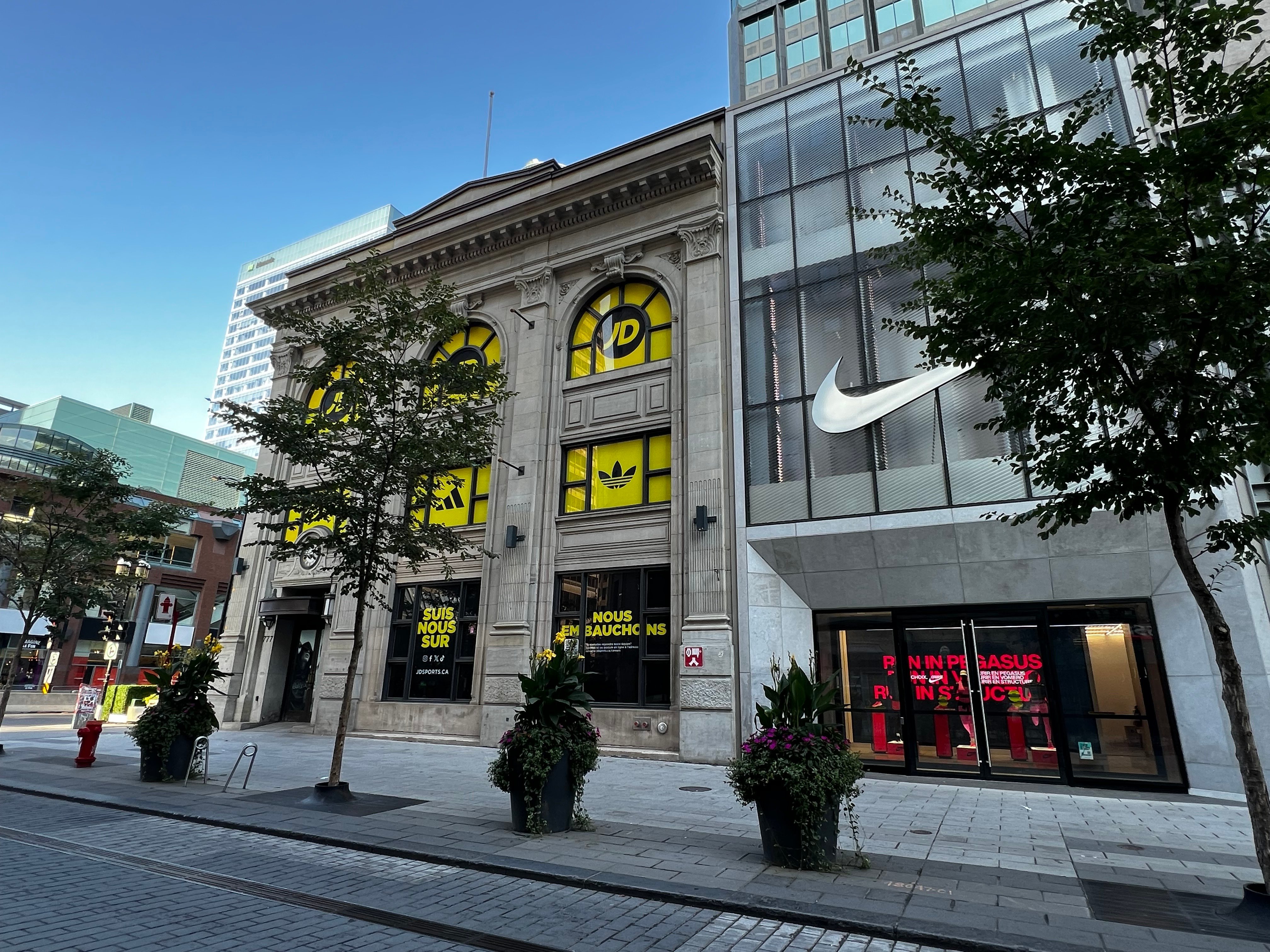
Future JD Sports at 777 Ste-Catherine St. W. in downtown Montreal. Photo: Victor DiLallo Balsis
JD Sports is preparing to launch a massive flagship store in downtown Montreal, continuing its rapid Canadian expansion with one of its largest retail investments in the country to date. The UK-based sports fashion giant has secured the landmark property at 777 Ste-Catherine Street West, with an opening slated for 2026.
The three-level, 26,000-square-foot store will represent a defining move for JD Sports in Quebec, further strengthening the brand’s presence in Canada. Jordan Karp, EVP and Head of Retail Services in Canada at Savills Canada represented JD Sports in the lease deal. Karp and Manon Parisien of Aurora Realty Consultants co-listed the property owned by landlord Pontegadea, the global real estate arm of Inditex founder Amancio Ortega. Pontegadea owns the building, which is one of the most prominent retail assets in Montreal.
The site at 777 Ste-Catherine Street West holds a commanding corner position at McGill College Avenue, offering prime visibility in Montreal’s busiest retail corridor. The building features over 54 feet of frontage on Ste-Catherine and 120 feet on McGill College, ensuring exposure to thousands of daily pedestrians.
The property was previously home to Banana Republic, which shuttered its flagship store there in 2021, leaving one of the city’s most visible retail vacancies. Retail Insider previously profiled the property, noting its potential for large-format tenants and its proximity to anchors such as Holt Renfrew Ogilvy, Simons, and the under-construction Apple flagship.
With its large open floor plates, flexible design, and location near major office towers and McGill University, the building is regarded as one of Montreal’s most marketable retail properties. The arrival of JD Sports will restore the site’s flagship status, enhancing the momentum of Ste-Catherine Street West’s ongoing transformation.
Future JD Sports at 777 Ste-Catherine St. W. in downtown Montreal. Photo: Maxime Frechette
Flagship Potential for Montreal
The new JD Sports Montreal flagship at 777 Ste-Catherine West will span three levels, offering a multi-brand retail showcase that aligns with the company’s global strategy. In international markets, JD Sports flagships in London, Paris, Vancouver and New York have become destinations for sports fashion enthusiasts, and the Montreal location is expected to follow suit.
By occupying one of Montreal’s most visible retail corners, JD Sports will be positioned to capture both local shoppers and the large student population nearby. Its format will emphasize exclusive releases, community engagement, and experiential activations that reflect the brand’s identity as a trend-driven leader in sportswear.
The opening will also bolster Montreal’s growing cluster of sports and lifestyle brands along Ste-Catherine Street West, which already includes Nike, Adidas, Lululemon, and the recently added New Balance flagship.
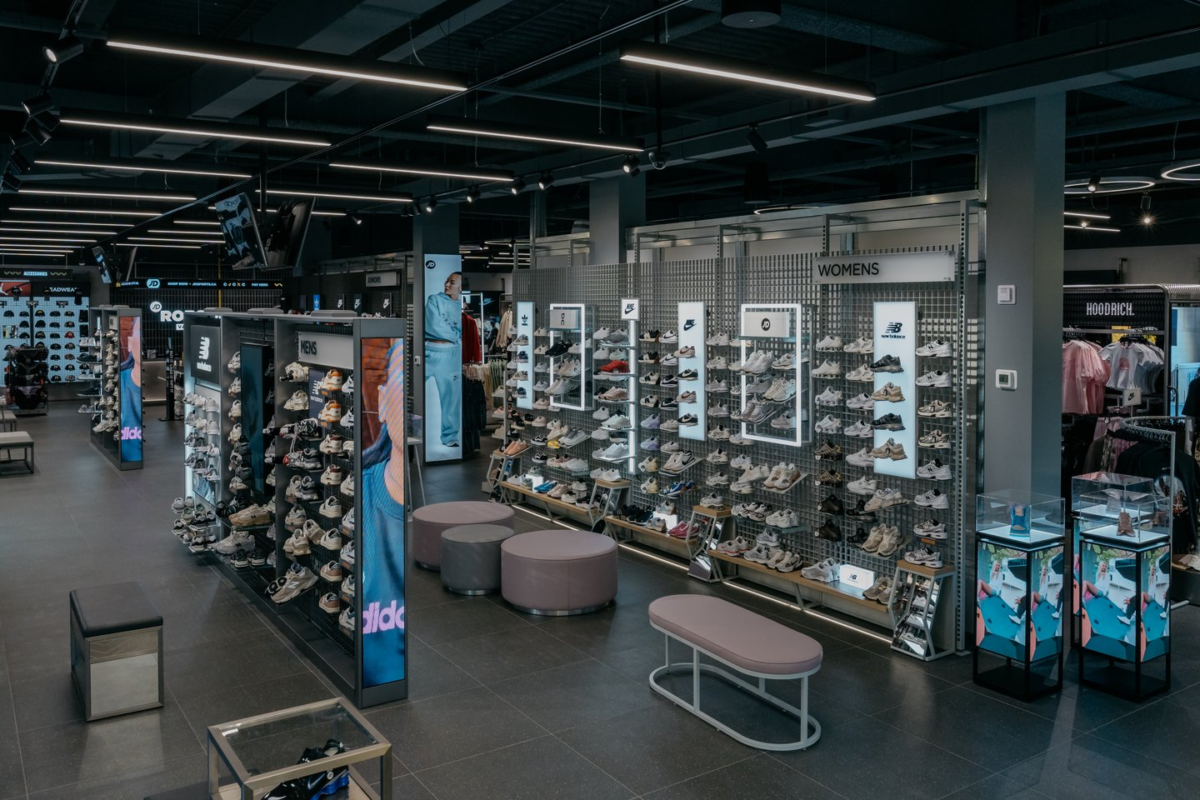
JD Sports flagship store at 1042 Robson Street in downtown Vancouver. Photo: JD Sports
JD Sports’ Canadian Expansion
The Montreal flagship is part of JD Sports’ broader push to establish itself as a leader in Canada’s sportswear market. Since opening its first Canadian stores in 2021, the company has grown quickly through both mall-based and street-front locations.
In June 2025, JD Sports opened its first Canadian flagship on Vancouver’s Robson Street, a two-level immersive retail environment showcasing exclusive brand collaborations, large-scale LED installations, and interactive shop-in-shops for Nike, Adidas, and New Balance. The Montreal flagship will follow a similar experiential model, bringing the company’s global flagship formula to Quebec.
As of mid-2025, JD Sports operated 35 stores across the country, with plans to reach 80 to 100 within five years of entry. Upcoming store openings will include both shopping centre locations and high-profile urban flagships. Downtown Toronto is widely expected to be a future flagship market, with potential sites including Bloor Street, CF Toronto Eaton Centre, or Queen Street West.
Future JD Sports at 777 Ste-Catherine St. W. in downtown Montreal. Photo: Maxime Frechette
Ste-Catherine Street’s Transformation
The flagship opening comes at a time of renewed investment and revitalization along Ste-Catherine Street West. Montreal’s central shopping artery has seen a wave of new store openings in 2025, including Sephora’s second downtown location, Chico pet supplies, Marché Floh vintage fashion, and Rodd & Gunn menswear. Experiential cafés and independent boutiques have also arrived, contributing to the district’s retail diversity.
The City of Montreal continues to advance a multi-phase streetscape improvement program designed to enhance the pedestrian experience. Wider sidewalks, additional greenery, new plazas, and upgraded street furniture are being installed, while underground infrastructure is being modernized. These efforts have contributed to strong pedestrian traffic, particularly on evenings and weekends.
The addition of JD Sports will further amplify this momentum, strengthening Ste-Catherine Street’s position as one of Canada’s most competitive retail corridors.
Globally, JD Sports has established itself as a dominant force in sports fashion retail, with thousands of stores spanning Europe, North America, Asia, and Australia. Listed on the FTSE 100 Index, the company reported revenues of £5.94 billion in 2025, up 18 percent year-over-year.
PetSmart Canada is introducing a new monthly in-store celebration for pet birthdays and gotcha days at all of its locations nationwide.
According to new survey data released by the company, 75 per cent of Canadian pet parents celebrate their pet’s birthday or gotcha day, while 47 per cent wish they could do more.
To meet that interest, PetSmart is rolling out its Birthday + Gotcha Bash events, which will take place once a month at stores across the country. The gatherings will feature free treats, fun activities and a $5 off birthday coupon, available exclusively to attendees.
Bradley Breuer
“Every pet deserves to be celebrated, especially on their birthday or gotcha day,” said Bradley Breuer, vice-president of marketing at PetSmart. “PetSmart’s Birthday + Gotcha Bash celebrations are designed to make those special days unforgettable, turning milestones into joyful moments. We’re excited to help make every pet feel like the guest of honour.”
Upcoming event dates include Oct. 4, Nov. 8 and Dec. 7, 2025. Events will be held in all Canadian PetSmart stores, as well as locations in the U.S. and Puerto Rico, while supplies last.
The retailer has more than 160 stores across Canada.
Pet owners are also encouraged to join the PetSmart Treats Rewards program and update their profiles with their pet’s information to receive birthday offers and gotcha day surprises.
Party supplies and celebration essentials are available for purchase at PetSmart.ca.
The survey was conducted by the Angus Reid Forum between Sept. 18 and 22, 2025, and included a representative sample of 1,010 English-speaking Canadians. The survey has a margin of error of +/- 3.1 percentage points, 19 times out of 20.
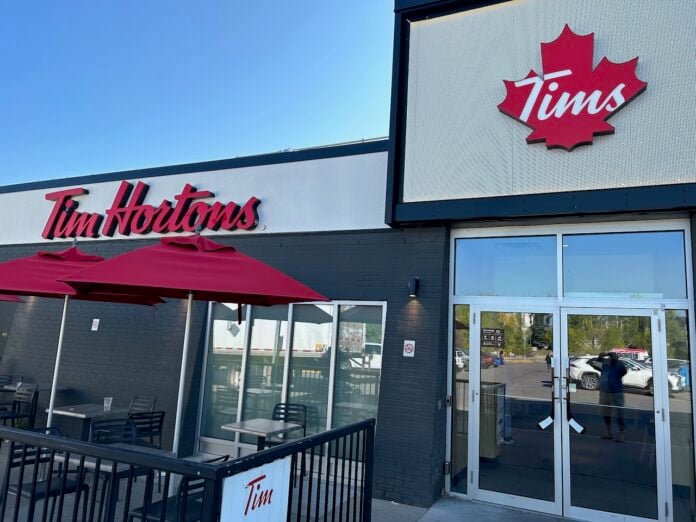
The fundraising campaign was created in 2021 by a group of Indigenous Tim Hortons restaurant owners. Since its inception, it has raised more than $5.3 million.
Hope Bagozzi
“Thank you for helping us raise $942,000 in just one day for Indigenous organizations,” said Hope Bagozzi, chief marketing officer for Tim Hortons. “The incredible support from guests and Tims restaurant owners is a testament to how we can all come together to make a difference.”
“We are deeply moved by Tim Hortons continued dedication to the Orange Shirt Society through the Orange Sprinkle Donut campaign,” said Henderson. “Your generosity is more than a donation — it’s a powerful act of reconciliation and remembrance. These contributions help us sustain meaningful programs that uplift Indigenous voices, educate communities, and support healing across generations. Thank you for standing with us and helping ensure that Every Child Matters.”
Tim Hortons Orange Sprinkle Donut campaign raised $942,000 for Indigenous organizations (CNW Group/Tim Hortons)
The Gord Downie & Chanie Wenjack Fund said the campaign helps extend the reach of its educational programs.
Sarah Midanik
“With support from the Orange Sprinkle Donut campaign, the Gord Downie & Chanie Wenjack Fund is reaching more than 9,500 educators from coast to coast to coast through our Legacy Schools program,” said Sarah Midanik, president and CEO. “This year, as we commemorate the 10th anniversary of the Truth and Reconciliation Commission’s Final Report and 94 Calls to Action, Tim Hortons continued support enables us to broaden our reach and create meaningful opportunities for educators and students to respond to the Calls to Action.”
“IRSSS is honoured to once again be a beneficiary of the Orange Sprinkle Donut campaign, and we are grateful to Tim Hortons and their guests across Canada for this generous support,” said White. “The demand for our services continues to grow each year, and this partnership helps ensure we can reach more communities, including remote areas, with the healing resources they need today and for generations to come.”
At the Ulnooweg Education Centre, the funds contribute to youth-focused cultural programming.
Chris Googoo
“Our partnership with Tim Hortons’ Orange Sprinkle Donut campaign helps us create spaces where Indigenous youth can grow together,” said Chris Googoo, chief operating officer. “These camps encourage confidence, culture, and connection, ensuring that Indigenous youth leave with stronger community ties and a brighter outlook for the future.”
“The New Pathways Foundation wishes to express its deep gratitude to the Tim Hortons family who, year after year, support First Nations youth with heart through this meaningful campaign,” said Cleary. “Thanks to this commitment, we are able to continue our mission and offer youth from First Nations communities in Quebec opportunities that truly match their dreams.”
Cozey has entered the dining room furniture market with the launch of its new Vela and Ushi Dining Collections, says the company.
The Montreal-based furniture brand said the launch reflects a significant step in its expansion strategy, extending its offerings beyond living and outdoor spaces.
Frédéric Aubé
“This is an exciting moment for us,” said Frédéric Aubé, founder and CEO of Cozey. “While earlier this year, we expanded our outdoor collection, Mistral, to include dining, this launch brings us into entirely new territory, inside the home. We’ve brought the same modular innovation and Cozey design principle to the dining space with collections that are stylish, flexible, and made to evolve with our customers’ needs and lifestyles.”
Both dining collections emphasize Cozey’s design principles of adaptability, simplicity and modern living. The company said the pieces are rooted in Japandi and mid-century modern styles, with each collection intentionally designed to be interchangeable for flexible styling options.
According to Cozey, the modular features of the new lines include expandable dining tables and removable, machine-washable seating covers. The goal, the company said, is to offer customers the ability to personalize and adjust their dining spaces as needed.
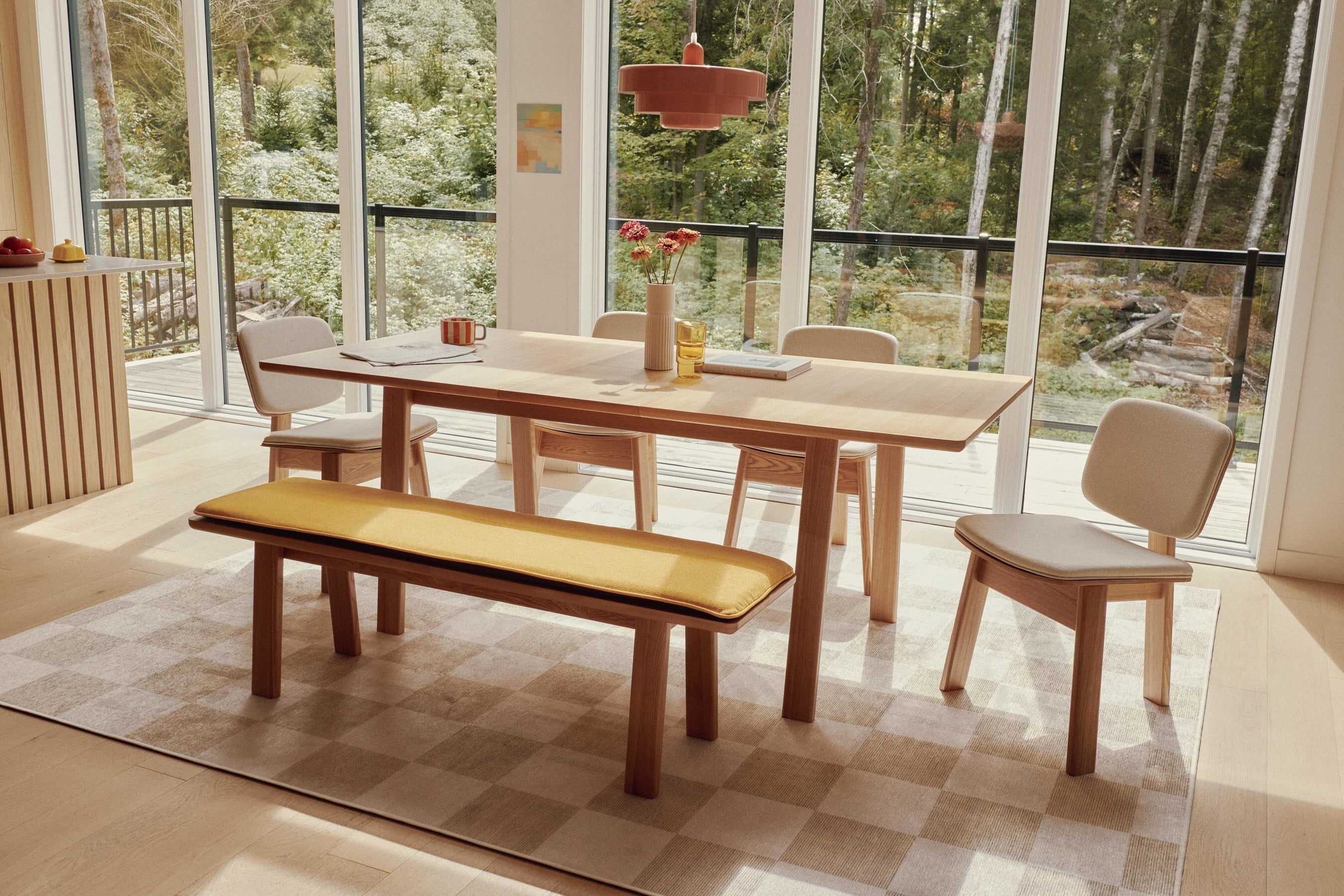
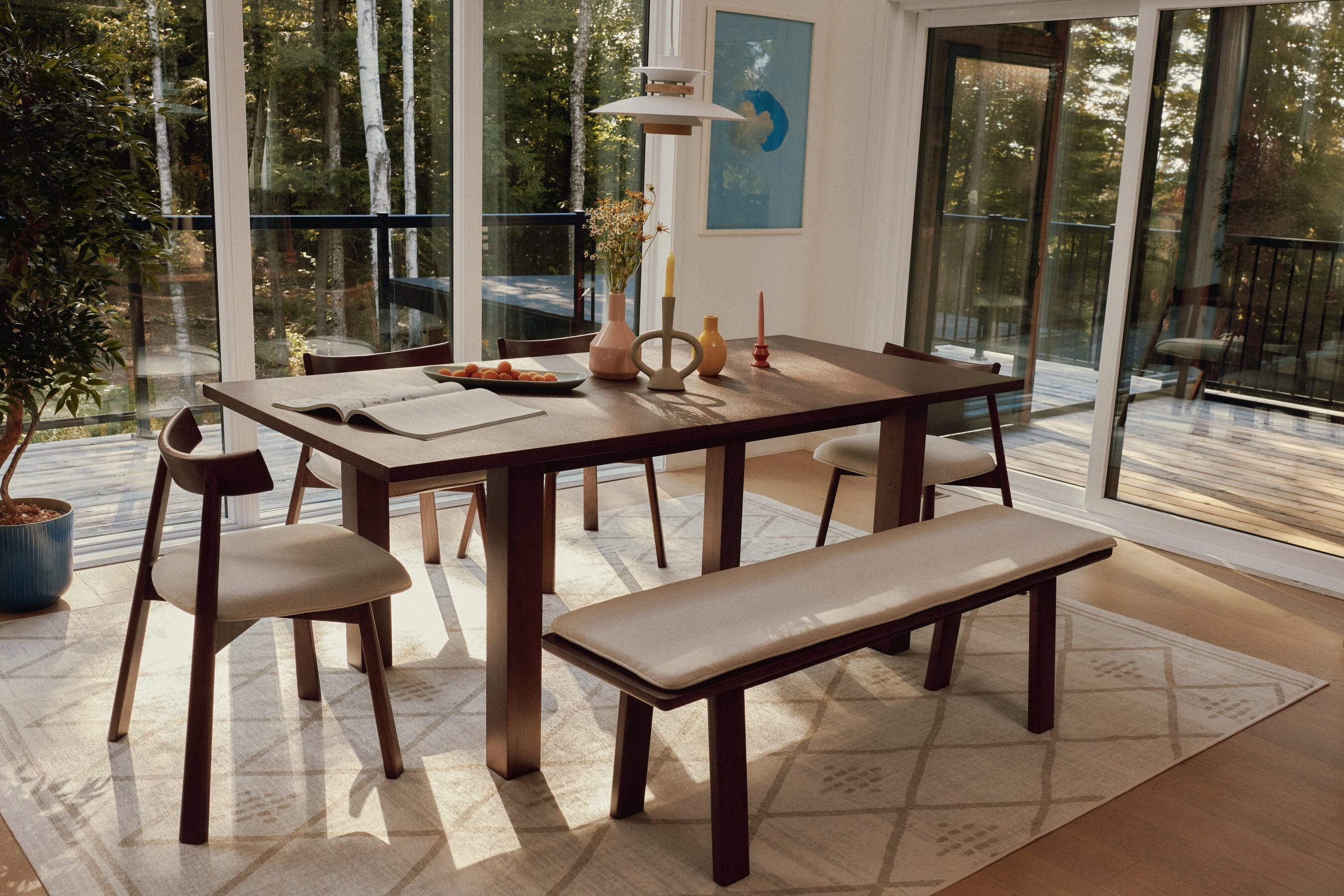
Ushi Dining Collection (CNW Group/Cozey Inc.)
The Vela Dining Collection extends Cozey’s existing Vela line and includes a multi-functional bench that can be used in any room of the home. The Ushi Dining Collection, while compatible with Vela chairs and benches, introduces a new design with softer, rounded lines inspired by mid-century aesthetics.
Both collections are available in walnut and oak finishes and seat four to six people, with optional extensions available. Seating covers come in seven colour options: Sage, Lemon Zest, Ash, Cerulean, Parchment, Snowdrift and Nightfall. Fabrics include Chenille, the company’s patented Aquaforte™ (stain-resistant and waterproof), and a newly developed durable bidirectional weave.
Prices for the new dining sets start at US$1,260 for standard four-person seating.