A new TD survey reveals nearly three in 10 Canadians (30%) are now going on fewer dates because they’re expensive, while 29% are switching to more low-or no-cost date options instead. Gen Z is most likely to opt for frugal dates at 36%.
The current economic climate is also influencing pillow talk, with 1 in 4 Canadians (25%) polled now prioritizing financial transparency earlier in their relationships and another 22% focusing on partnering with someone who shares their perspective on finances, said the report.
Other impacts on love lives include:
Prioritizing finding a partner who’s good with their money (18%)
Prioritizing finding a partner with a secure financial standing (16%)
“Adapting to these realities within relationships means reassessing what truly matters – whether that’s how we spend, save or connect with one another.”
Jeet Dhillon
While more than half of Gen Z Canadians (54%) surveyed ranked lying about money as their top financial relationship dealbreaker, four in 10 (40%) admitted to keeping a financial secret from their partner – 13% higher than the national average. Gen Z also leads the way in maintaining separate bank accounts in relationships, significantly outpacing the rest of Canadians (54% vs. 32%), said the TD report.
“As economic uncertainty continues to reshape daily life, nearly one in four Gen Z Canadians are now placing greater emphasis on seeking partners with sound financial habits (24% compared to 18% of other generations). For the second straight year, the majority of Gen Z (51%) would want their partner to sign a prenup if they get married or enter a common-law relationship, soaring above the national average (28%),” it said.
“Canadians are making financial transparency a dating essential. More than half (52%) of respondents say it’s a big factor when choosing a partner, along with spending habits (51%), having similar financial goals (51%) and debt levels (41%).”
Openness is also crucial when it comes to top financial relationship dealbreakers among Canadians, said TD:
Lying about finances (53%)
Bad spending habits (43%)
Never offering to pay for anything (41%)
Making risky investment decisions (28%)
Refusing to save for mutual goals (25%)
Photo:
cottonbro studio
“Despite a demonstrated desire for financial clarity, two in five Canadians (39%) say they only had the ‘money talk’ with their partner after moving in together or reaching even later milestones, such as getting married or entering a common-law arrangement. Another 15% haven’t had the conversation at all,” according to the report.
“Perhaps it’s no surprise that a whopping 35% of Canadians admitted they don’t have a shared budget with their partner and, among those who do, three in 10 (29%) struggle to stick to it.”
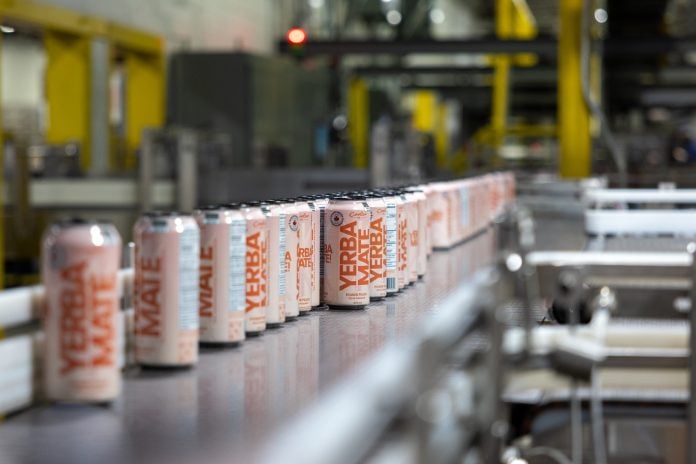
Cooler Co., one of Canada’s fastest-growing yerba mate and kombucha beverage brands, has officially transitioned 100% of its manufacturing to Canada, marking a significant investment in domestic production and a new chapter in the company’s long-term growth.
Its kombucha line continues to be brewed at Cooler Co.’s facility in Coquitlam, B.C., while its yerba mate is now produced at National Dry in Toronto, Ontario, an organic-certified facility capable of producing up to 800 cans per minute. Together, the two sites form an all-Canadian, coast-to-coast production model.
“Cooler Co. is incredibly proud to bring all of our production home,” said Dan Larsen, Co-Founder and CEO of Cooler Co. “This move represents more than just a shift in geography — it’s a statement of who we are. By manufacturing entirely within Canada, we’re reducing our environmental footprint, strengthening local partnerships, and ensuring every can reflects the innovation, integrity, and energy of the communities that inspire us.
“When I first started making kombucha, my goal was to create beverages that feel good to drink and good for the people enjoying them. Having Cooler Co. fully made in Canada makes me excited for what’s ahead. We’re already working on developing more flavours and getting our products onto even more Canadian shelves.”
Dan Larsen
Larsen was a former chef who founded the original Culture Craft Kombucha in 2015 before rebranding it to Cooler Co. in 2024 with the addition of yerba mate. His relationships with local farmers and his personal health journey were catalysts in creating a brand focused on low-sugar, nutrient-dense alternatives to mass-produced beverages.
Cooler Co.’s beverages are currently available at retailers across B.C. and Ontario, including (in alphabetical order): Country Grocer, Foxy Farm Market, Fresh Street Market, Greens Market, Healthy Planet, IGA, Langley Farm Market, London Drugs, Nature’s Fare, Save-On-Foods, Stong’s Market, Urban Fare, and Whole Foods.
Rebuilding production ecosystem
Larsen said the biggest operational tradeoff in moving its manufacturing was rebuilding its production ecosystem from the ground up.
“Our former U.S. partners provided established workflows and predictable output. Transitioning to Canada required requalifying suppliers, onboarding new teams, and implementing our QA standards from scratch,” he said.
“Financially, the move was favourable. With domestic ingredient sourcing, streamlined freight, and the elimination of cross-border logistics, our unit costs have decreased. The stability of a Canadian supply chain, combined with closer proximity to our core retail market, has improved both cost efficiency and operational control.
“Internally, the justification became clear once we aligned around three core priorities. First, producing in Canada strengthens our positioning with retailers who increasingly value domestic manufacturing. Second, we removed operational risk tied to cross-border variability and USD exposure. And third, consolidating production within Canada enables tighter oversight, faster innovation cycles, and a more resilient platform for national scale.”
Strengthening supply chain resilience
Larsen said a coast-to-coast production model fundamentally strengthens its supply chain resilience by reducing exposure to the very pressures that have challenged beverage companies over the past few years.
“By manufacturing our kombucha in our HACCP-certified facility in Coquitlam, BC and producing our Yerba Mate with Canada Dry in Ontario, we have removed single-point dependency and built regional redundancy into the system. This geographic diversification allows us to balance production loads, respond more quickly to regional demand shifts, and maintain continuity if one facility experiences downtime, ingredient delays, or labour constraints,” he explained.
“On the financial side, the model significantly mitigates tariff and currency exposure. By eliminating cross-border manufacturing, we removed the volatility tied to U.S.–Canada freight, USD exchange fluctuations, and evolving import duties. Our cost structure is now more predictable, and we are no longer vulnerable to regulatory or geopolitical changes that can disrupt U.S. production pipelines.
“Transportation efficiency is another major advantage. With facilities on both coasts, we shorten haul distances, reduce reliance on long-range refrigerated freight, and improve delivery timeliness for key retail partners. This not only lowers transportation costs but also reduces carbon impact and enhances freshness at the shelf.
“Global uncertainty remains a constant, but domestic, regionally distributed production gives us greater control over the variables that matter most: ingredient sourcing, labour, quality oversight, and speed to market. Rather than reacting to global disruptions, we’ve positioned Cooler Co. to operate with stability, predictability, and the flexibility required to scale nationally without structural bottlenecks.”
Cooler Co.
Controlling the supply chain end to end
Larsen said ensuring quality, organic certification, and consistency at scale begins with controlling the supply chain end to end.
“Our board has maintained direct business relationships with some of the largest Yerba Mate suppliers in Brazil for more than fifteen years, which gives us priority access to certified organic growers, full traceability, and consistent ingredient quality. Every shipment is supported by certificates of analysis, organic declarations, pesticide panels, and microbiological testing before it leaves South America,” he added.
“Once ingredients arrive in Canada, they enter a tightly managed domestic system. Canada Dry’s Ontario facility, which is certified organic through Ecocert, follows strict organic handling protocols, segregated storage, and validated allergen and sanitation controls. Each lot is retested on arrival to confirm identity, organic compliance, and sensory profile.
“Consistency at scale is maintained through standardized batching, calibrated extraction parameters, and in-process controls that monitor Brix, acidity, colour, and aroma. Monthly joint QA reviews ensure any deviations are addressed quickly and the process continues to tighten as we grow.”
Cooler Co.
Larsen said manufacturing entirely in Canada strengthens both its pricing and its value proposition.
“By removing cross-border freight, USD exposure, and U.S. co-pack volatility, our cost structure has improved. As a result, our pricing will decrease, making us more competitive with U.S. brands while still protecting our margins,” he said.
“The Made in Canada advantage does not come at a premium. Domestic production gives us tighter control, shorter transportation routes, and greater efficiency, allowing us to keep shelf pricing affordable while offering retailers a stronger, locally produced option.”
Plans for broader expansion underway
Larsen said this move positions Cooler Co. to scale nationally while building a strong foundation for continued U.S. growth.
“Producing entirely in Canada gives us the stability and efficiency we need for coast-to-coast distribution at home, but it also supports our expansion south of the border. We have already launched in the United States through Amazon and begun distribution across all five boroughs of New York as well as Northern Florida. Plans for broader expansion are underway with major U.S. grocery banners, and the improved cost structure from domestic manufacturing strengthens our competitiveness in those markets,” he said.
“The strategy is both Canada-first and globally minded. Establishing a reliable, efficient Canadian production base allows us to serve our home market exceptionally well while scaling into the U.S. with confidence and consistency.”
Following the success of the US program, the Canadian launch introduces two courses, with more to be added in the future:
Retail Media
Sponsored Products
Through this in-depth and comprehensive training, users will:
Build expertise in retail media
Better understand Walmart Connect Canada’s evolving ad solutions
Unlock the full potential of Walmart Connect Canada to optimize campaign performance
Gain credibility and demonstrate expertise with a recognized certification
Participants who complete the training and achieve a passing score of 80% will earn a LinkedIn-enabled certification badge valid for one year
The end result? Through certification, people can drive stronger results for their business or clients using Walmart Canada’s growing advertising network, ultimately helping to increase brand growth.
The Walmart Connect Canada Academy Ad Certification is designed to educate and empower advertisers and partners to become credentialed experts in its platform and products, to help drive meaningful results for the brands they represent.
“The Walmart Connect Canada Academy was launched to help build a foundational understanding of retail media and Walmart Connect Canada’s solutions through free, self-paced education. By offering courses in Retail Media and Sponsored Products, the program is designed to empower Canadians with the knowledge and skills needed to build confidence and consistency across our platforms,” she said.
Conway said the Walmart Connect Canada Academy is specifically adapted for the Canadian market, combining retail media fundamentals with platform-specific learning.
“The free, self-paced program is open to Walmart suppliers, media agencies, partners and anyone interested in building their understanding of retail media. Available in both English and French, the Academy is designed to expand over time as new content is added,” she said.
Conway said the Academy is designed with the ongoing evolution of retail media in mind.
“Foundational courses on Retail Media and Sponsored Products are available now, with additional content planned as our offering continues to expand. Future modules will focus on onsite solutions and in-store opportunities, allowing learners to continue building their understanding as the platform evolves,” she explained.
Conway said the certifications are designed to do more than elevate knowledge – they’re intended to drive measurable, long term improvements across campaign performance, investment behaviour, and strengthen long-term partnerships with Walmart Connect Canada.
“As Walmart Connect Canada continues to grow, the Academy plays a foundational role by building an understanding of retail media through accessible, industry-specific education. By empowering Canadians with the knowledge and skills to navigate the retail media landscape, the program helps support a strong informed ecosystem that can grow alongside Walmart Canada’s platforms,” added Conway.
Airports are no longer just points of transit; they’ve become prime destinations for brand storytelling.
With passengers spending hours in terminals, especially during peak travel periods such as the winter break and summer months, digital out-of-home (DOOH) screens capture captive, affluent, and highly engaged audiences, making airports one of the most effective advertising environments in Canada.
Vistar Media Canada is helping drive momentum in the space, with 202 screens across seven media owners, including premium inventory in Toronto and Vancouver, which also happen to be host cities for the 2026 FIFA World Cup. This creates opportunities for brands to deliver global campaigns, local messaging, and real-time activation to travellers.
“Airports are one of the few environments where brands can combine scale, attention, and context,” said Scott Mitchell, Vistar Media Canada’s managing director. “This is where creative and relevance meet in a way that delivers real impact for advertisers.”
Scott Mitchell
He said airports have evolved beyond being just transit points. Travellers are often forward-looking and in an aspirational mindset, thinking about their next meeting, vacation, or homecoming.
“For brands, this makes airports a powerful place to connect: high foot traffic, well-placed screens, and advanced digital technology give advertisers more flexibility and creative options. What’s also shifted is how brands think about airports. They’re not simply buying reach, they’re buying context,” he said.
“You’re speaking to affluent, mobile audiences in moments where they have time, headspace, and a heightened awareness of their surroundings. When you add things like audience data, flexible ads that can change in real time, and automated ad buying, airport digital screens become a really strong way to tell your brand’s story and deliver the right message at the right moment.”
Mitchell said speed is becoming a huge advantage in digital out-of-home advertising. Thanks to new technology and ready-to-use airport networks, brands can go from an idea to a live ad in a matter of days, sometimes in just a few hours.
“We recently worked on a campaign tied to a major Canadian NHL team that wanted to reach travellers returning home after a major tournament in the U.S. The brief came in, and within 24 hours we had creative approval, inventory secured, and screens live inside the airport. That kind of turnaround would have been almost impossible in traditional out-of-home a few years ago,” he said.
“What enables that is tighter integration between media owners, technology platforms, agencies, and a growing comfort from brands in using DOOH not just as a long-term branding channel, but as a real-time marketing tool that can respond to sport, culture, weather, or breaking moments.”
Global events become international gateways
Mitchell said global events like the World Cup and the Olympics fundamentally change the role airports play in the media ecosystem.
“They become international gateways, cultural showcases, and the first—and last—touchpoints visitors have with a city or country.
For brands, that creates a unique opportunity to connect with a global audience while delivering locally relevant messages. Airports allow you to welcome fans, celebrate national pride, showcase sponsors, or create immersive activations that reflect the energy of the event,” he explained.
“In 2026, I expect brands to go beyond scale and use airports to tell stories, tailor creative by terminal, language, or audience segment, and deliver experiences that feel purposeful and timely. Global brands can make a statement and Canadian brands can maximize impact on a world stage.”
Photo: Gustavo Fring
Every airport zone has a different mindset
Mitchell said the beauty of airports is that every zone represents a different mindset.
“Departures are about anticipation and excitement. Security and lounges skew toward business travellers and premium audiences. Baggage claim is that moment of return, homecoming, relief, and reflection. Smart brands are designing creative specifically for those moments rather than running one message everywhere. We’re seeing customized messaging by location, dynamic creative that shifts by time of day or destination mix, and storytelling that unfolds as travellers move through the terminal,” he said.
“There’s also a growing appetite for large-scale, immersive formats, digital walls, corridor takeovers, and synchronized screens that stop people in their tracks. When creative is built for the environment rather than simply placed into it the impact is dramatically stronger.”
Personalization will be crucial
Mitchell said the biggest missed opportunity is still under-utilizing airports as agile, strategic media platforms rather than static buys.
“Brands often lock in inventory far in advance—which is important—but leave value on the table by not planning for flexibility, creative rotation, or reactive moments. There’s also significant upside in expanding beyond the largest hubs. We’re seeing growing interest in secondary airports and regional networks that can deliver scale in different ways and reach travellers closer to home,” he said.
“Finally, personalization will be crucial. Brands that coordinate screens across terminals, craft messages for different types of travellers, and tie campaigns to major cultural or travel moments, like international sporting events or holiday peaks, will stand out, while others will just blend into the background.
“For me, the future of airport DOOH is about scale plus sophistication: bigger footprints, smarter creative, and the ability to move at the speed of culture.”
The French Connection Group (FCG) has announced a long-term partnership with G-III Apparel Group (G-III), a global expert in fashion, to develop and distribute men’s and women’s apparel and selected accessory products across North America.
The company said the agreement marks a major milestone in French Connection’s growth strategy, reinforcing the long-term vision set by its current owner, MIP Holdings.
“We are delighted to partner with G-III to advance this strategy and are confident in their ability to unlock meaningful opportunity for French Connection in North America. This agreement builds on our global momentum and reflects our commitment to expanding the brand’s reach and relevance.”
Founded in 1972, French Connection is a London-based global fashion brand known for its contemporary, design-led clothing, accessories, and homeware. With a presence in over 200 locations across the world, the brand offers stylish, high-quality products across multiple categories and channels, including retail, e-commerce, wholesale, and licensing.
The company said the partnership draws on G-III’s deep market expertise and established North American retail relationships to accelerate French Connection’s growth, strengthening its position as a contemporary fashion brand and advancing FCG’s global expansion strategy across key international markets.
French Connection Group and G-III Apparel Group Announce Licensing Agreement for the North American Market
G-III Apparel Group, Ltd. is a global fashion leader with expertise in design, sourcing, distribution, and marketing. The Company owns and licenses a portfolio of more than 30 preeminent brands, each differentiated by unique brand propositions, product categories, and consumer touchpoints. G-III owns ten iconic brands, including DKNY, Donna Karan, Karl Lagerfeld, and Vilebrequin, and licenses over 20 of the most sought-after names in global fashion, including Calvin Klein, Tommy Hilfiger, Levi’s, Nautica, Champion, Halston, Converse, BCBG, and major national sports leagues, among others.
“Expanding our portfolio of strategic licenses remains central to our growth strategy,” said Morris Goldfarb, G-III’s Chairman and Chief Executive Officer. “This partnership leverages our scaled infrastructure and proven strengths in design, sourcing, and distribution to extend the brand’s legacy and deepen its connection to today’s consumer.”
Retail Insider is streamlining its Canadian retail news from around the web to include a handful of top news stories that can be viewed quickly during the day. Here are the top stories from the past several days.
It’s intended to provide transparency and predictability in the relationship between food retailers and their suppliers. All five of Canada’s largest grocers — Empire, Loblaw, Metro, Walmart Canada and Costco Canada — have registered with the code.
The code sets out specific objectives: to contribute to a “thriving and competitive grocery industry,” promote trust between grocery value chain stakeholders, allow for informed business decisions and provide an effective and fair dispute settlement mechanism.
That dispute resolution mechanism, administered by the Office of the Grocery Sector Code of Conduct (OGSCC), is intended as a last resort. The possibility of mediation may encourage parties to resolve disagreements informally before they escalate to formal adjudication.
In addition, the OGSCC will publish an annual report highlighting key trends, challenges, recommendations for code improvements and anonymized case studies of disputes, without naming specific companies.
Was the code ever about food prices?
Public discussion of the code was often conflated with a desire to reduce food prices. While food price regulation is not part of the code, it has been raised in wider discussions about food price inflation.
Concerns about food price inflation have been longstanding. In 2023, the federal Standing Committee on Agriculture held a meeting to investigate the issue. Members questioned Walmart Canada CEO Gonzalo Gebara and Galen Weston, then president and CEO of Loblaws (and now chair of the board).
Galen Weston, who is now chairman of Loblaw Companies Limited, waits to appear as witnesses at the Standing Committee on Agriculture and Agri-Food investigating food price inflation in Ottawa in March 2023. THE CANADIAN PRESS/Spencer Colby
Liberal MP Heath MacDonal asked Gebara:
“What do you say to us when we’re seeing the hesitation of Walmart to sign on to the grocery code of conduct? How do we relay that message back to our constituents, who, over the past couple of years, due to all the items and many of the issues you talked about, have been facing a lot of challenges, including the price of groceries?”
Some industry leaders, however, have suggested the code could increase prices. For example, Weston says he was hesitant to participate in the code due to fears that prices would go up.
The mechanism of potential price inflation is relatively straightforward. The code discourages certain charges and states payment schedules should be negotiated. If grocers lose some benefits due to the limitations of the code, it will cost them money. In such a scenario, it is difficult to imagine that grocers would forgo money from consumers by lowering prices.
Some observers have suggested the code could lower food prices over the longer term. But they were commenting about the benefits of lower charges to suppliers and the potential for investment and innovation in the Canadian food processing sector. These indeed may be long-term benefits, but they’re not written into the code and would take time to materialize.
Are there any benefits to consumers?
There will likely to be some indirect consumer benefits. A more predictable and transparent relationship between retailers and their suppliers could increase choice for consumers by reducing the barriers to new product introduction.
Price stability and predictability make life easier on suppliers and could help sustain Canadian food processors. A loss of food processing capacity in Canada would lead to increased prices.
The code would also help smaller retailers with less bargaining power. By limiting the concessions large grocers can extract from suppliers, it narrows the gap between big and small chains and makes smaller grocers more viable. This is especially important in under-served neighbourhoods where limited retail options restrict consumer choice.
Food prices continued to rise across Canada in 2025. A customer shops at a grocery store in Sharon, Ont., in November 2024. THE CANADIAN PRESS/Chris Young
What actually drives food prices?
Food price inflation is primarily driven by supply-side factors and, to a lesser extent, demand. Between Jan. 1 and Dec. 31, 2025, food prices rose by four per cent — faster than the rate of general inflation. Much of that increase was driven by sharp price rises in beef (16.8 per cent), coffee (30.8 per cent), and sugar and confectionery (12.5 per cent).
Beef and coffee prices have been affected by the increasing frequency and severity of extreme weather events. Beef cow herds are at their lowest point in almost 40 years, due in part to drought in Western Canada and the midwestern United States. High beef prices have also pushed consumers toward other proteins, such as pork and chicken, which saw smaller price increases. Turkey prices remain relatively flat, providing an option for those feeling protein price pressure.
Sugar and confectionery prices increased largely due to tariffs. The U.S. already had protection for its sugar industry, but introduced significant new tariffs on Brazil, Argentina and Columbia, raising organic sugar prices and pulling conventional sugar prices up with them.
Canada responded with reciprocal tariffs, increasing prices here. While some of the tariffs have been reduced, there remains considerable uncertainty. Notably, despite the 12.5 per cent annual increase in prices, prices for sugar and confectionery fell by 4.1 per cent in December 2025.
What comes next?
Canada has experienced significant food price inflation, but the drivers are largely external to and outside the scope of the Grocery Code of Conduct.
While the code may enhance transparency, fairness and competition in the grocery sector, it is not a tool for controlling or lowering grocery prices directly.
But there is room for optimism about grocery costs. The rate of food price increases will slow and we might see some price reductions. Beef cow herds are expected to recover over time, which should ease prices. Beef prices went down marginally in December by 0.2 per cent. Weather remains unpredictable, but in the absence of new extreme events, supply issues should improve and prices should ease for those commodities.
These changes, however, will not be due to the Grocery Code of Conduct, though they will be welcome nonetheless.
About the Author:Michael von Massow is a Professor of Food Economics at the University of Guelph.
Grosvenor has acquired full ownership of the Broadmead Village shopping centre in Victoria, British Columbia, marking one of the first large retail real estate transactions in Canada in 2026. The acquisition values the open-air, grocery-anchored centre at $95.5 million and sees Grosvenor buy out its long-time joint venture partner after nearly three decades of shared ownership.
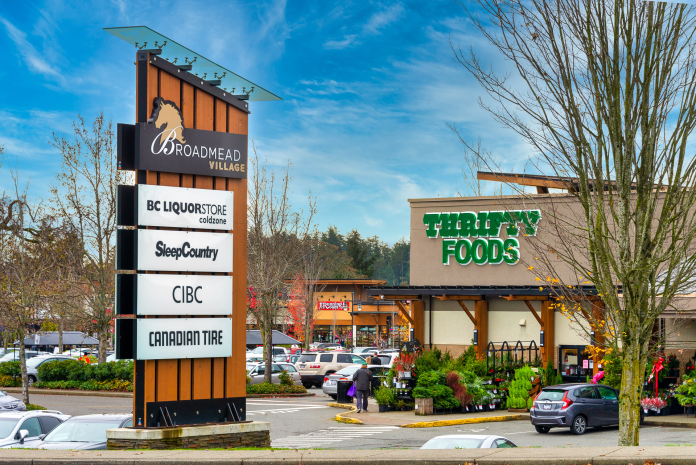
Located at 777 Royal Oak Drive, Broadmead Village sits immediately east of the Patricia Bay Highway in the heart of the Saanich peninsula on Vancouver Island. The property has been jointly owned since 1997 by Grosvenor and ADMNS, a subsidiary of the Manitoba Civil Service Superannuation Board pension plan, each holding a 50 percent interest. Grosvenor has now acquired ADMNS’s stake for $47.75 million, consolidating full ownership of the asset.
Broadmead Village technically comprises two legal parcels, 777 Royal Oak Drive and 801 Royal Oak Drive. Grosvenor confirmed that the transaction relates solely to 777 Royal Oak Drive, which is assessed by BC Assessment at $85,854,000 as of July 1, 2025. The adjacent parcel at 801 Royal Oak Drive is home to a Canadian Tire store and is assessed at $11,152,000.
The 777 Royal Oak Drive parcel was previously held under ADMNS Broadmead Investment Corporation and is now owned through Broadmead GP Limited, under Grosvenor Canada Limited. Ownership of the Canadian Tire parcel was not disclosed, though Canadian Tire frequently holds its real estate through CT REIT.
Broadmead Village. Photo: Grosvenor
A Grocery-Anchored Neighbourhood Centre
Excluding the Canadian Tire parcel, the Broadmead Village shopping centre spans 128,018 square feet across 12.74 acres. It is anchored by Thrifty Foods, the Sobeys-owned grocery chain, and features a mix of specialty retailers and nationally branded services that cater to the surrounding residential community.
In 2012, the property underwent an extensive modernization, which earned Bronze, Silver, and Gold accreditations from the Building Owners and Managers Association Building Environmental Standards program. The renovation reflected Grosvenor’s long-term ownership approach and positioned the centre as a leading neighbourhood retail destination on Vancouver Island.
Grosvenor described the centre as one of the strongest performers in its Canadian portfolio, citing consistent leasing momentum and a tenant mix that has historically delivered low vacancy and limited turnover. According to the company, the centre’s grocery anchor and daily-needs retail focus have helped insulate it from economic volatility.
Broadmead Village. Photo: JWB Commercial
Long-Standing Partnership Comes to a Close
Ian Cameron, Senior Portfolio Manager for Real Estate at the Civil Service Superannuation Board, said Grosvenor’s stewardship of the property played a key role in the success of the long-running partnership. He noted that Broadmead Village has delivered strong performance over decades and credited Grosvenor with transforming the centre into one of Vancouver Island’s top-performing grocery-anchored retail plazas.
The transaction concludes a nearly 30-year joint ownership structure and reflects a strategic rebalancing for both parties. For Grosvenor, the acquisition deepens its exposure to a proven retail asset class within a priority Canadian market.
Broadmead Village. Photo: JWB Commercial
Strategic Fit Within Grosvenor’s Canadian Portfolio
Robert Duteau, Senior Vice President of Investment for Grosvenor Property Canada, said the acquisition aligns closely with the company’s broader Canadian growth strategy. He emphasized that the transaction highlights Grosvenor’s strengths as both an owner and operator of large-scale assets, building on its experience with mixed-use developments such as The Rise, Connaught, and Grosvenor Ambleside.
Duteau also signaled that future redevelopment potential is part of the long-term view for the site. He stated that acquiring grocery-anchored retail at scale, with the possibility of future redevelopment, is a key focus for Grosvenor in Canada. Across the country, owners of well-located shopping centres have increasingly explored redevelopment options as a way to unlock additional land value.
Broadmead Village. Photo: JWB Commercial
Grosvenor’s Long History and Canadian Footprint
Grosvenor’s origins date back to 1677, when the estate of Sir Thomas Grosvenor was established in the United Kingdom. The privately owned international property company remains under the control of the Duke of Westminster and operates across multiple continents and property sectors.
In Canada, Grosvenor has been active for more than 70 years and maintains a diversified real estate platform centered largely in British Columbia. In addition to the Broadmead Village shopping centre, its explicitly disclosed Canadian assets include Annacis Business Park, an industrial hub on Annacis Island, and Brentwood Block, a pedestrian-focused, master-planned mixed-use community in Burnaby that began construction last year.
As of December 31, 2025, Grosvenor Property Canada reported approximately $2.8 billion in assets under management. The company positions itself as a long-term owner and developer, with a focus on operational excellence, sustainability, and transit-oriented, mixed-use communities.
Significance for Canadian Retail Real Estate
The acquisition shows continued institutional confidence in grocery-anchored neighbourhood retail, particularly in supply-constrained urban markets. With its stable tenant mix and strong local demographics, the Broadmead Village shopping centre represents the type of defensive retail asset that has attracted sustained investor interest, even as other retail formats face greater volatility.
Expedia Group and Affirm have announced an expanded, multi-year partnership, making Affirm the exclusive provider of Buy Now, Pay Later installment payment methods for lodging and packages across Expedia Group’s flagship brands in the US, including Expedia, Hotels.com and Vrbo.
Affirm said it will also be available to Canadian travelers on select properties in the coming weeks.
“Travel inspires us and creates memories; when travelers have clarity and confidence in selecting their payment options, they are empowered to pursue meaningful, once-in-a-lifetime experiences,” said Jing Yang, Vice President, Global Payments at Expedia Group.
Jing Yang
“By extending our partnership with Affirm in the US and soon Canada, we’re giving more people the flexibility to plan their memorable adventures and choose payment options that work best for them.”
Officials said eligible travelers shopping for hotels and packages on Expedia, and properties on Hotels.com and Vrbo will receive a real-time approval decision and can choose from customized monthly payment plans up to 24 months.
“In the US, eligible travelers can access 0% APR offers on three- or six-month plans. With Affirm, there is no compounding interest and no late fees — ever. Travelers see their terms upfront — no surprises,” they said.
Pat Suh
“In our decade of partnering with Expedia Group, we’ve seen that travelers are increasingly including consideration of ‘how to pay’ with ‘where to go’ as they plan and book trips,” said Pat Suh, SVP of Revenue at Affirm.
“As Expedia Group continues to innovate how people plan travel, we’re focused on making sure the payment experience is just as seamless. Whatever your booking method, travelers should always have a clear, honest way to pay.”
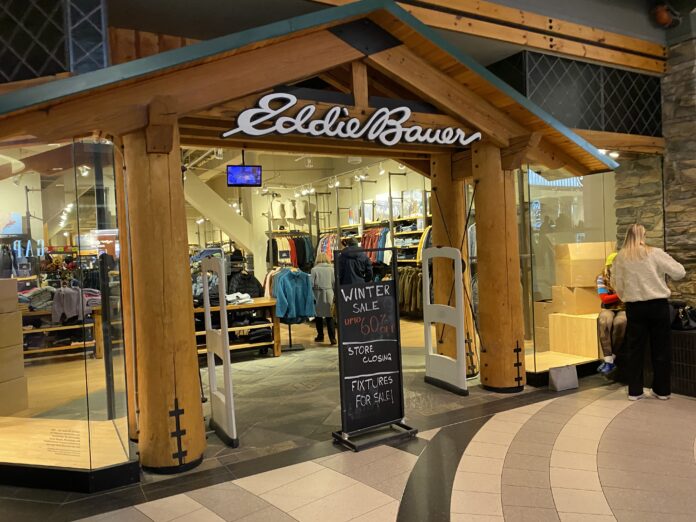
Former Eddie Bauer at CF Toronto Eaton Centre (Image: Dustin Fuhs)
Eddie Bauer’s 50+ year physical retail presence in Canada appears to be nearing its end, as the company’s North American store operations prepare for a Chapter 11 bankruptcy filing that is expected to result in the closure of all remaining brick-and-mortar locations across the United States and Canada. The restructuring affects the store-operating entity tied to Catalyst Brands and does not include the Eddie Bauer brand itself, which will continue through e-commerce and wholesale channels.
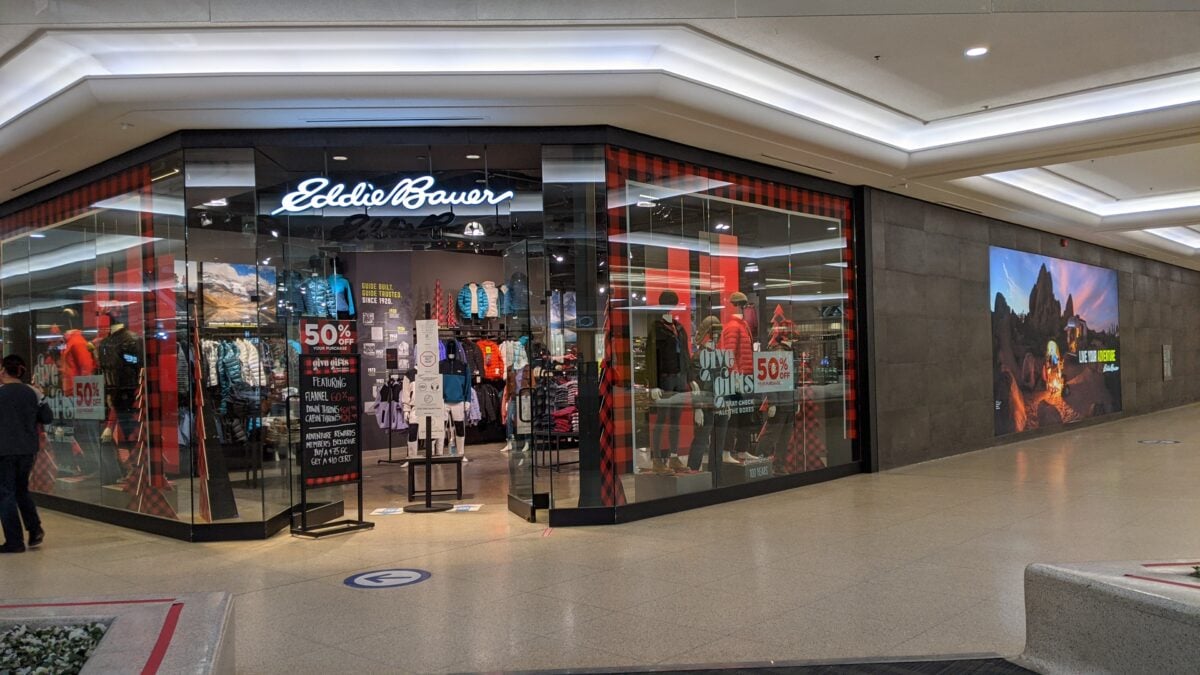
As of early February 2026, Eddie Bauer continues to operate a reduced but still geographically broad network of 28 mall and outlet stores across Canada. Locations remain listed in Ontario, British Columbia, Alberta, Quebec, Nova Scotia, Manitoba, Saskatchewan, and New Brunswick. These stores form part of an estimated 200 North American locations that are expected to be wound down through the Chapter 11 process, which industry reports describe as imminent or already in motion.
The Chapter 11 filing applies specifically to Eddie Bauer’s brick-and-mortar store operations under Catalyst Brands, rather than the Eddie Bauer brand or its intellectual property. Authentic Brands Group owns the Eddie Bauer brand and its core IP, while Catalyst Brands holds the license to operate physical stores.
Under the planned restructuring, Catalyst Brands is expected to exit the physical retail business entirely. Manufacturing, design, product development, wholesale distribution, and e-commerce operations in both the United States and Canada are set to continue under a separate license held by Outdoor 5, which was appointed as the new operating partner in January 2026.
This separation allows the Eddie Bauer brand to persist in North America even as its physical store network disappears from malls and outlet centres.
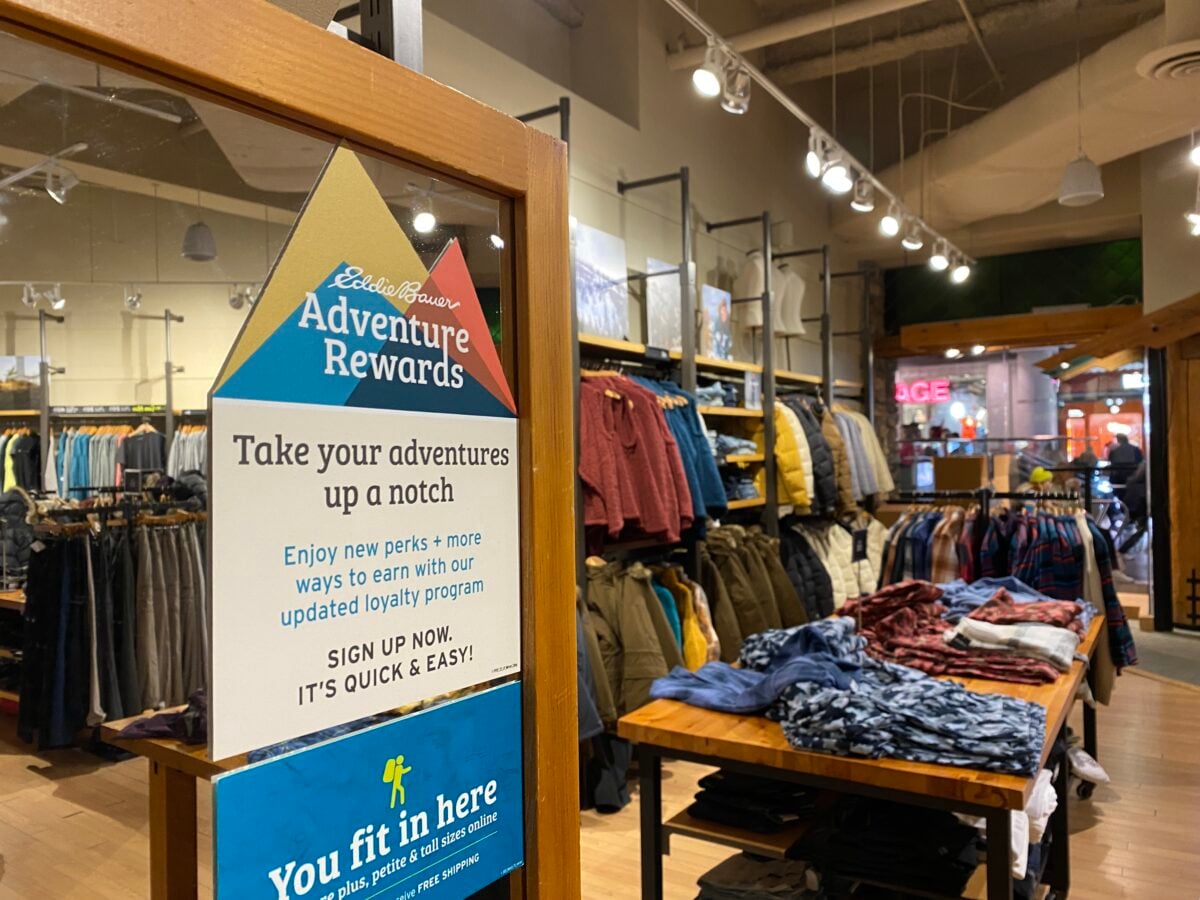
Eddie Bauer Adventure Rewards (Image: Dustin Fuhs)
Canadian store network remains active, for now
Eddie Bauer has continued operating its Canadian stores into early 2026. As of February 1, the chain operates 28 locations nationwide, following years of gradual rationalization.
Ontario accounts for the largest share of the remaining footprint, with roughly 15 stores spanning the Greater Toronto Area, the Ottawa region, and smaller markets including Belleville and Sault Ste. Marie. British Columbia hosts stores in Nanaimo, Port Coquitlam, Tsawwassen Mills near Vancouver, Victoria, and Park Royal in West Vancouver. Alberta remains a key market with two stores in Calgary and two in Edmonton. Additional locations operate in Nova Scotia (Dartmouth), Saskatchewan (Saskatoon), and New Brunswick (Dieppe). A Facebook post said the CF Polo Park store in Winnipeg was closing January 7, but other reports and Google indicate that the store could still be open.
A slow retreat that accelerated in recent years
Eddie Bauer’s Canadian presence has been steadily shrinking for more than a decade, even as the brand continued to invest selectively in certain locations. In 2023, the company closed its stores at CF Toronto Eaton Centre and CF Fairview Mall, two high-profile Toronto locations. Staff and in-store signage at the time confirmed that the closures were permanent.
Earlier rationalizations included the closure of a long-standing Yorkdale Shopping Centre location in Toronto during the 2000s, which made way for higher-rent luxury tenants as the mall repositioned. In Regina, the Eddie Bauer store at Cornwall Centre closed in January 2020, while the Midtown Plaza location in Saskatoon remained open.
In Edmonton, the Southgate Centre store reportedly closed in 2023, leaving Kingsway and West Edmonton Mall as the remaining city locations at that time. In Calgary, Southcentre also closed in 2023. These incremental closures, often tied to lease expiries or mall redevelopments, foreshadowed the broader wind-down now expected in 2026.
Eddie Bauer at West Edmonton Mall – Photo by Matthew at Best Edmonton Mall
Eddie Bauer’s deep roots in Canada
The potential closure of all Canadian stores would mark the end of a retail presence that spans more than three decades. Eddie Bauer entered the Canadian market with a Toronto store at 50 Bloor Street W. in 1974 (opened July 15), and expanded aggressively during the 1980s and 1990s following its acquisition by Spiegel.
By 2003, Eddie Bauer operated at least 36 stores in Canada, many of them opened during that early-1990s growth spurt. At the time, Canada was considered a relatively stable market compared with certain U.S. regions, and the company publicly stated it would maintain its Canadian operations despite restructuring pressures elsewhere.
Throughout the 1990s and early 2000s, Eddie Bauer became a familiar presence in major Canadian malls, offering a mix of outdoor apparel and casual wear positioned between technical performance and lifestyle fashion. The chain typically operated full-price mall stores alongside outlet locations, often in mid- to upper-tier shopping centres.
Bankruptcy history and ownership shifts
This is not Eddie Bauer’s first encounter with Chapter 11. In 2003, the brand was swept into bankruptcy proceedings tied to its then-parent company, Spiegel Inc. Eddie Bauer later emerged as a standalone company in 2005.
In June 2009, Eddie Bauer Holdings itself filed for Chapter 11 protection, citing heavy debt loads and recession-driven declines in consumer spending. The company continued operating during the restructuring and was ultimately acquired out of bankruptcy by Golden Gate Capital for approximately USD 286 million.
A major structural shift occurred in 2021, when Authentic Brands Group acquired Eddie Bauer’s intellectual property and core operating business. That deal placed Eddie Bauer alongside other legacy brands in Authentic’s portfolio and set the stage for the later creation of Catalyst Brands, which grouped several retail banners under a shared operating platform.
The appointment of Outdoor 5 in early 2026 to oversee Eddie Bauer’s e-commerce, wholesale, design, and product development effectively cleared the way for Catalyst Brands to exit the physical retail business through Chapter 11.
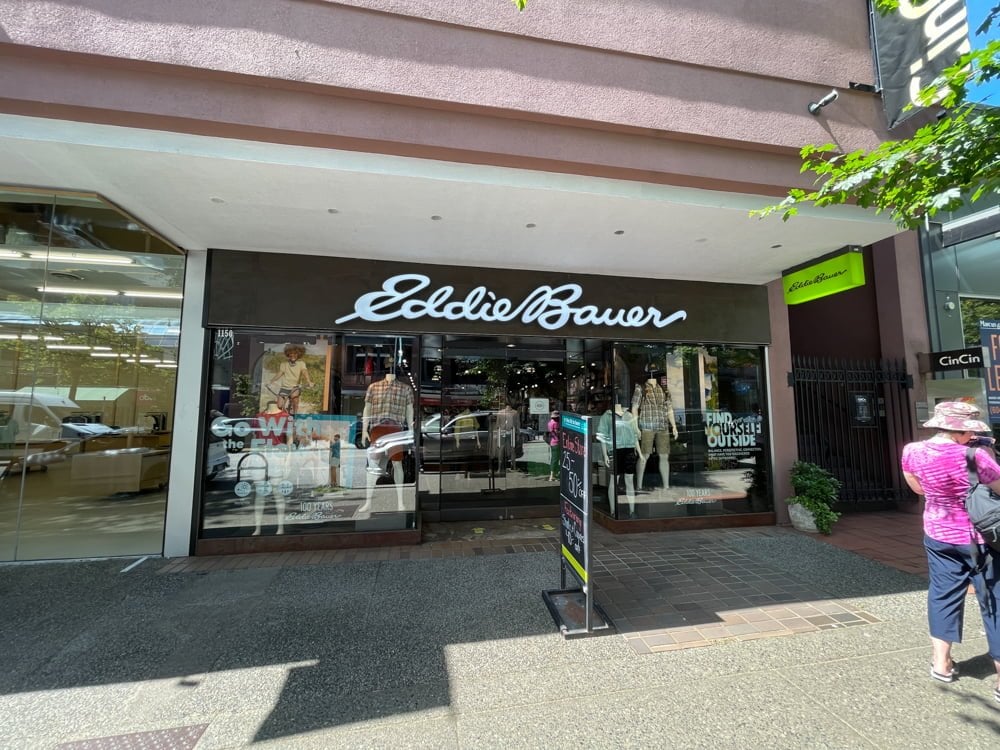
Former Eddie Bauer on Robson Street in Vancouver (June 2021). Photo: Lee Rivett
Real estate and employment implications
The planned shutdown of all Eddie Bauer stores in Canada and the United States represents a shake-up for shopping centres that have hosted the brand for decades. Many landlords are expected to face lease rejections or early terminations, particularly in enclosed malls and outlet centres where Eddie Bauer has long served as a dependable mid-market tenant.
The closures are also expected to affect several thousand retail employees across North America, although precise employment figures have not been publicly disclosed. Corporate roles tied to the brand’s design, merchandising, and digital operations are expected to remain intact under the Outdoor 5 license structure.
For Canadian malls already grappling with tenant churn and redevelopment pressures, the loss of Eddie Bauer adds another vacancy to a retail landscape that continues to evolve rapidly.
What remains for Canadian consumers
While physical Eddie Bauer stores are expected to disappear from Canada, the brand itself will remain accessible. Eddie Bauer’s Canadian e-commerce platform is set to continue operating under the new licensing arrangement, allowing consumers to shop online after stores close.
Wholesale distribution and potential third-party retail partnerships could also play a larger role in the brand’s Canadian strategy going forward. The shift marks a decisive move away from a store-led model toward a digital and wholesale-focused presence.
In the competitive outdoor and casual apparel segment, Eddie Bauer’s exit from malls creates opportunities for rivals to expand their footprints, particularly in centres where Eddie Bauer occupied prominent space for years.