In Quebec, where the culture of breakfast has long blurred the line between necessity and indulgence, the sale of L’Oeufrier marks a new chapter. Abbatiello Group, the family-owned restaurant conglomerate based in Québec City, has acquired the 47-unit chain from La Büff Group for an undisclosed sum, adding another homegrown name to its rapidly expanding portfolio.
For Abbatiello, a company that has risen in less than a decade to become a force in Canadian dining, the move is as much symbolic as it is strategic. It places the Abbatiello siblings, the third generation to run the enterprise, in control of one of Quebec’s most beloved breakfast institutions, a brand known for its humour-laced menus and oversized plates of poutine and grilled cheese.
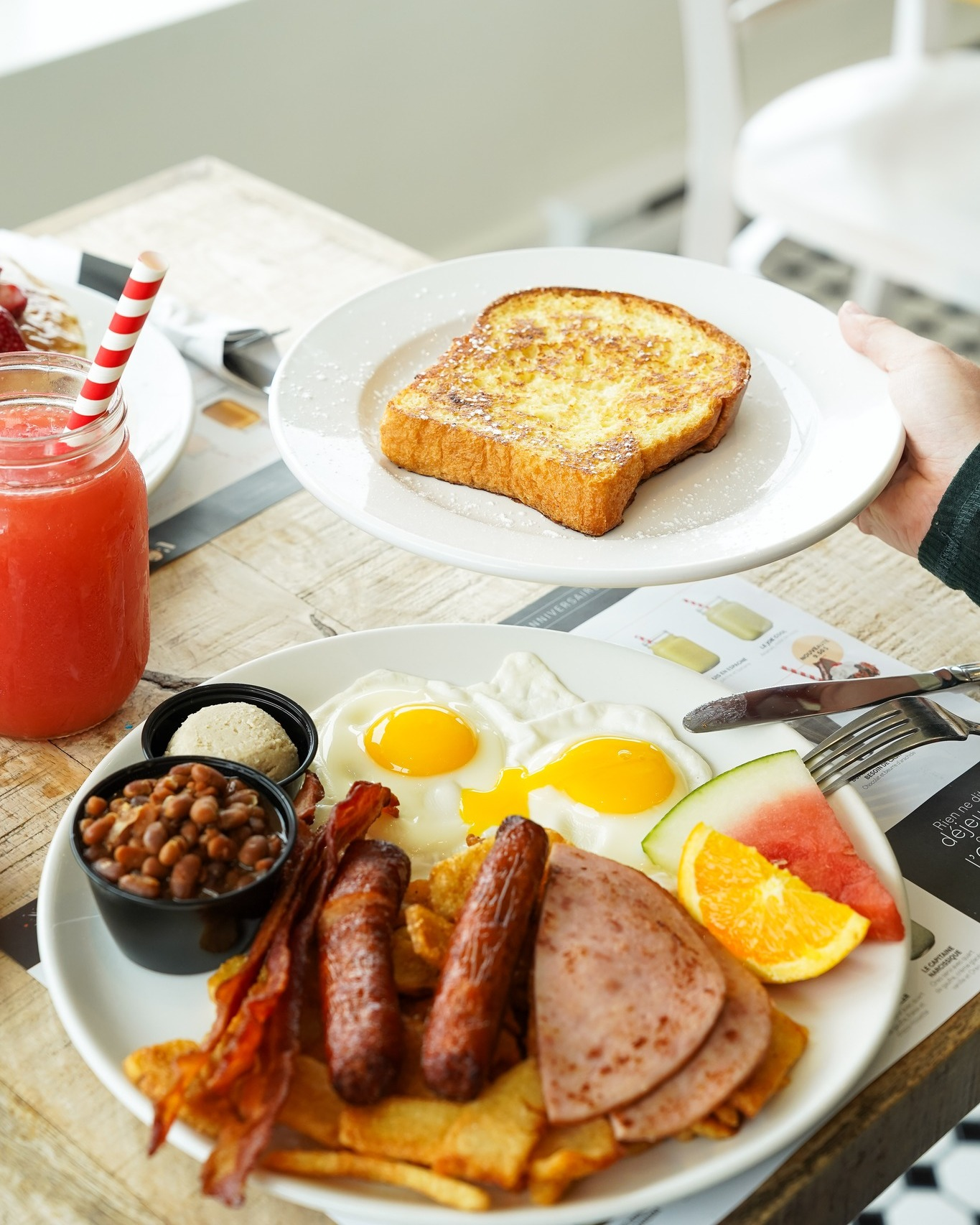
Founded in 1995 in Laval, L’Oeufrier has built an identity steeped in Quebec culture. Its menus, numbering more than 150 items, have long doubled as a kind of playful commentary on current events, with dishes named to wink at politics, celebrity gossip, or neighbourhood inside jokes.
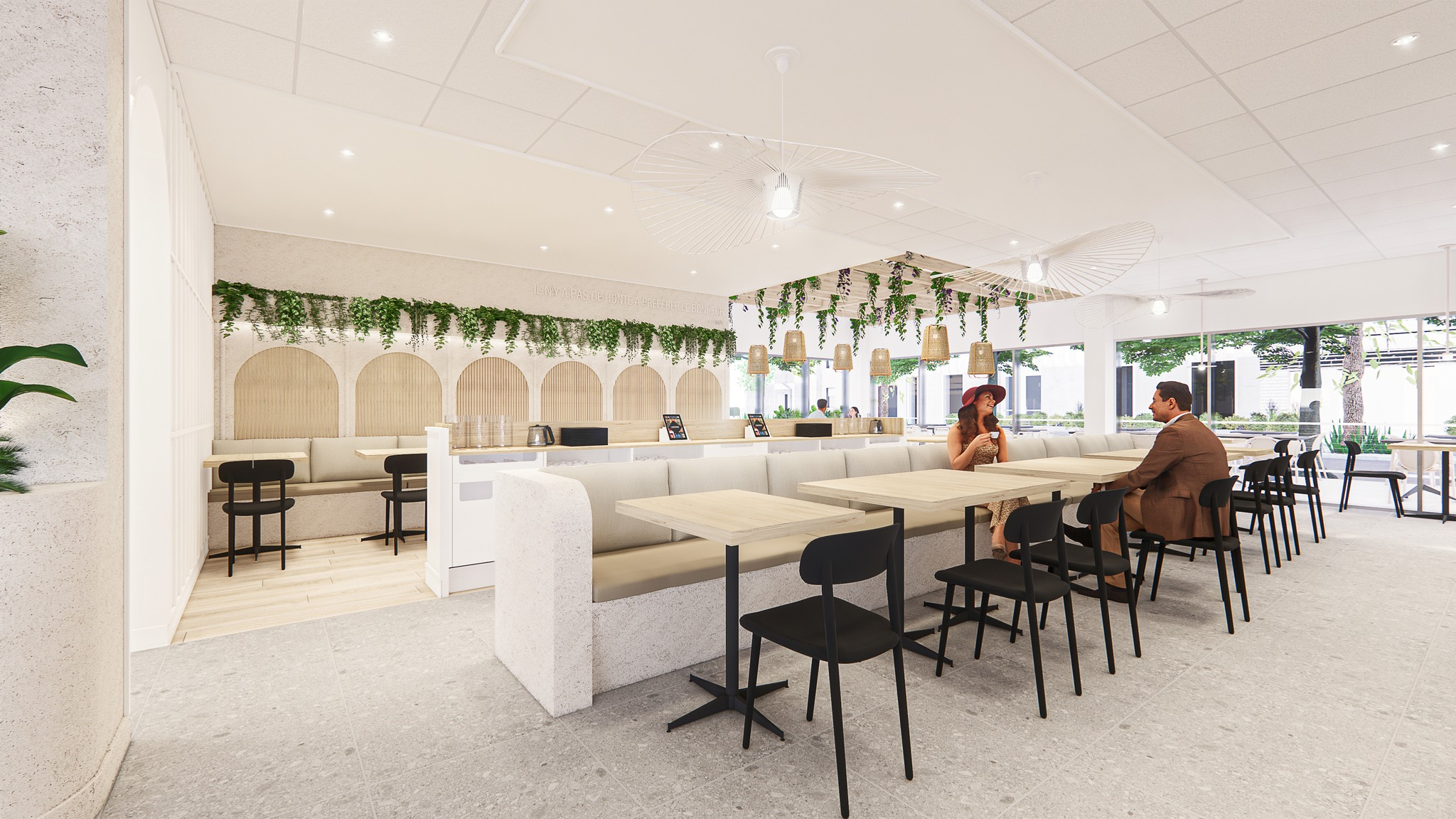
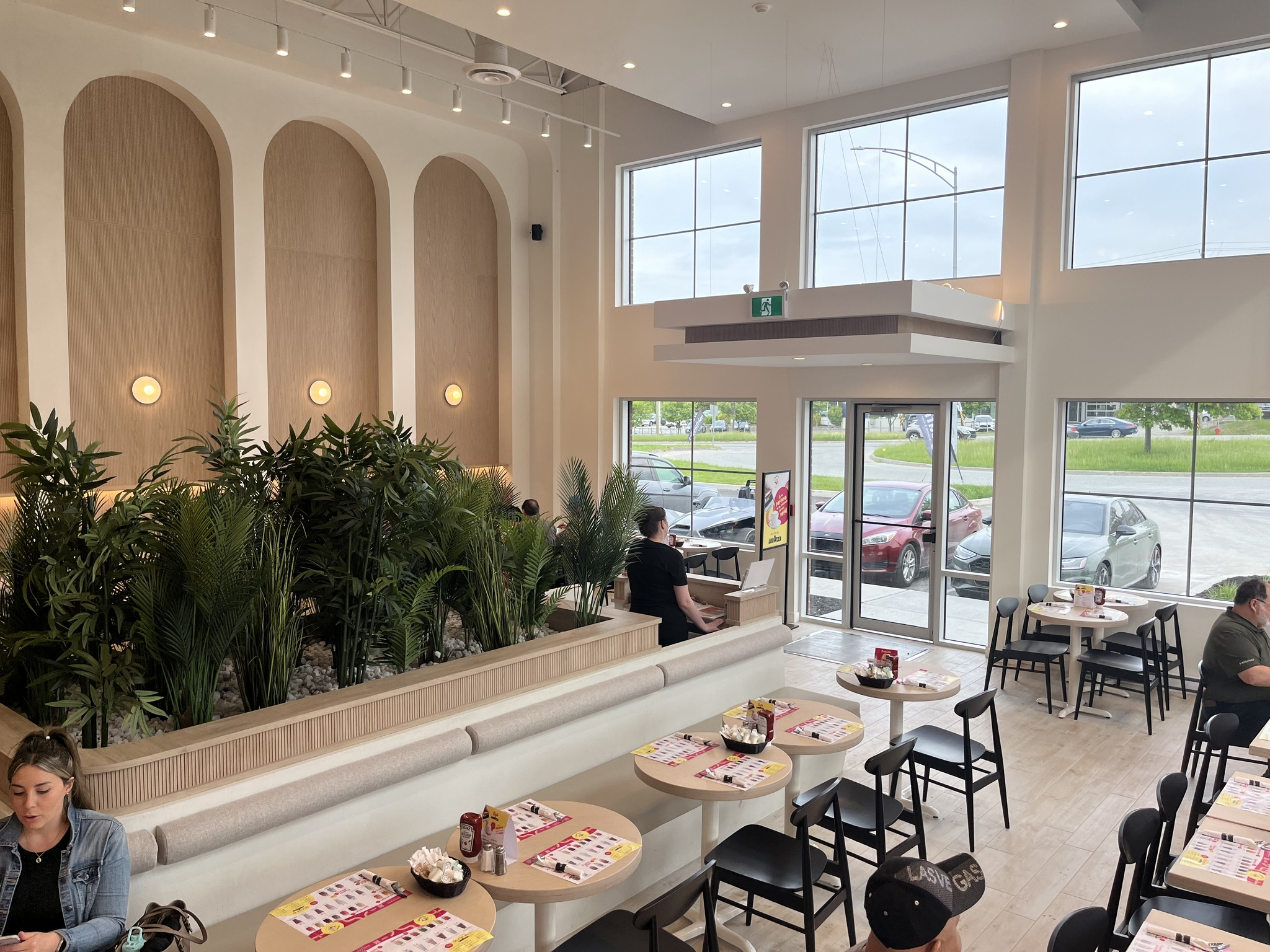
Over the years, the chain has become a weekend ritual for many Quebec families, students, and workers, serving over four million customers annually. Its restaurants employ about 1,400 people and dot Montreal and its suburbs, each one designed to feel like part of the local fabric rather than a corporate outpost.
The brand’s character, known to be witty, abundant, and accessible, helped it stand out in a crowded breakfast market dominated by larger players like Cora or Ben & Florentine. In recent years, L’Oeufrier had doubled its store count, riding a wave of renewed enthusiasm for all-day breakfast dining. By the time of the sale, 60 new franchise applications were waiting in the wings.
Photo: L’Oeufrier
Abbatiello’s Expanding Ambitions
The Abbatiello Group, for its part, has become synonymous with rapid, family-driven expansion. After reviving the Pizza Salvatoré brand, founded in 1964, the five Abbatiello siblings parlayed that success into a broader holding company, now home to more than 130 restaurants. Their other banners include Jack Le Coq, a fried chicken concept, Topla!, a pasta-focused brand, and Crèmerie Chez Mamie, an ice cream chain.
Behind the restaurants sits a larger enterprise: real estate, construction, and franchise development firms all under the Abbatiello umbrella. This structure has allowed the family to scale quickly, building its own storefronts, supplying its franchisees, and leveraging digital tools like proprietary ordering apps.
The company has set a goal of 500 restaurants by 2029, a target that, if reached, would position it as one of Canada’s largest independent foodservice operators. The acquisition of L’Oeufrier pushes it closer to that benchmark while diversifying its portfolio beyond pizza and fast food.
Photo: L’Oeufrier
Balancing Growth and Identity
The Abbatiello Group acquires L’Oeufrier at a delicate moment for Canadian restaurants. Rising food costs, a tightening labour market, and shifting consumer habits have put pressure on operators large and small. Scale, executives argue, offers protection. But growth often comes at a cost: the risk of smoothing out a brand’s quirks in the pursuit of consistency.
L’Oeufrier’s distinctiveness lies precisely in its quirks — the cheeky menu names, the excess of cheese and potatoes, the neighbourhood feel of its dining rooms. Maintaining that personality while scaling will test the Abbatiello siblings’ ability to expand without diluting what drew customers in the first place.
Their success with Pizza Salvatoré offers some precedent. Once a modest Quebec brand, it has been transformed into a 105-location chain spanning four provinces, known for its mozzarella-stuffed crust and robust digital ordering. The challenge now is whether the same playbook can be adapted for a brunch chain with a very different cultural role.
Photo: L’Oeufrier
A Mirror of Quebec’s Breakfast Culture
Quebec’s affection for breakfast dining runs deeper. Brunch, in particular, has become both a culinary and social ritual. The rise of brands like Cora, Ben & Florentine, and now L’Oeufrier reflects a broader trend of indulgent, lingering breakfasts that blur into lunch.
For many, L’Oeufrier’s playful marketing and hearty plates have embodied that tradition. Its restaurants have functioned less as chain outlets than as neighbourhood haunts — places where locals see themselves reflected on the menu and in the humour lining the walls.
To place that brand under the wing of Abbatiello is to fold it into an empire that, while family-owned, is increasingly corporate in scale. It raises questions about how much of Quebec’s restaurant culture can remain independent as consolidation accelerates.
A Broader Consolidation Trend
The sale also illustrates a national trend. Across Canada, independent restaurant chains with strong regional identities are being swept up by larger holding groups. MTY Food Group and Recipe Unlimited, two of the country’s largest operators, have grown primarily through acquisitions, subsuming brands under centralized systems of supply and management.
Abbatiello, though smaller, is following a similar trajectory while emphasizing its independence. The family has rejected takeover bids from larger suitors, instead positioning itself as a Quebec-based alternative to corporate conglomerates. The purchase of L’Oeufrier reinforces that narrative, being a homegrown brand remaining in local hands, even as it becomes part of a larger portfolio.
U.S.-based wellness franchise Stretch Zone has launched its first Canadian location, marking the brand’s official entry into the international market.
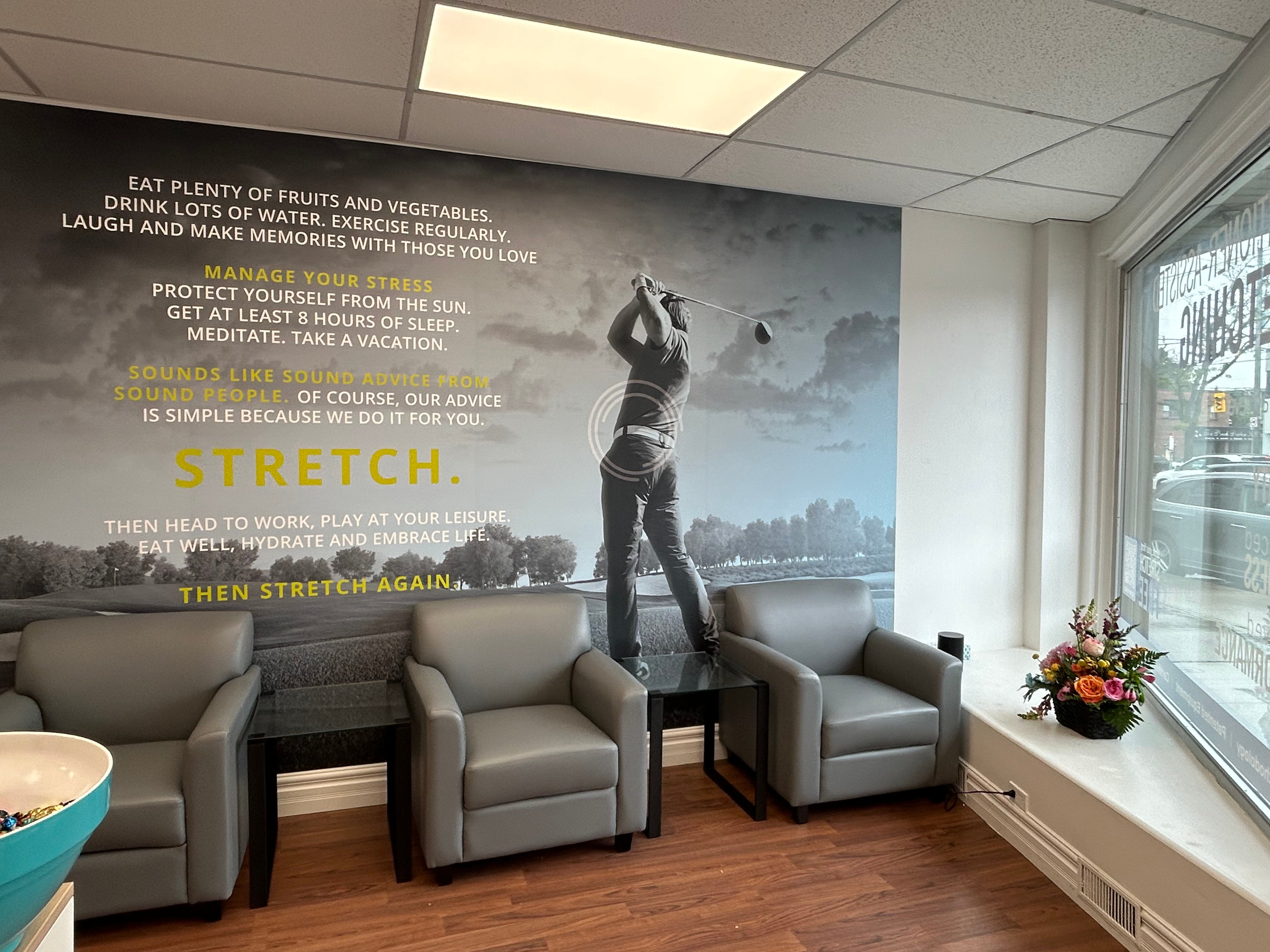
The new studio, located at 1898 Avenue Rd. in Toronto, is the company’s first outside the United States and represents a key milestone in its global growth strategy.
Stretch Zone, which specializes in practitioner-assisted stretching, has grown to more than 400 studios across the U.S. with no closures to date. The brand has reported a 58 per cent compound annual growth rate in recent years and expanded into 10 new states within a single year, doubling its footprint over an 18-month period.
Tony Zaccario
“Our first international opening represents an exciting step forward for Stretch Zone as we introduce our innovative approach to flexibility and mobility to an international audience,” said Tony Zaccario, CEO of Stretch Zone. “Ontario is the first of many international markets we plan to serve, and we’re thrilled to bring the benefits of assisted stretching to this vibrant community.”
Zaccario said Canada was a natural choice for the company’s first global expansion, citing the country’s “strong focus on wellness, active living, and preventative health care.”
“Our long-term goal is to make practitioner-assisted stretching as common and accessible as personal training or chiropractic care,” he said. “This opening marks the beginning of a new chapter in our journey to elevate health and mobility for people around the world.”
The Toronto location is led by franchisees Joe Korman, Avie Roth and their partners, who say they are eager to introduce the concept to Canadian clients.
Photo: Stretch Zone
“We’re honoured to open the very first Stretch Zone in Canada and to share this incredible concept with our community,” said Korman. “From the moment we joined the system, we felt supported every step of the way. The brand’s proven model and dedicated leadership gave us the confidence to introduce this service to Canadians, and we’re excited to help people move better, recover faster, and feel their best.”
According to the company, Stretch Zone studios offer customized stretching programs in a professional environment designed to help improve mobility and overall wellness. The brand provides franchisees with real estate guidance, operational training, marketing support and ongoing coaching.
Founded in 2004 by Jorden Gold, Stretch Zone uses proprietary tables and a patented strapping system to deliver its stretching programs. The brand was recently named in the 2025 Inc. 5000 and Entrepreneur’s 2025 Fastest Growing Franchises list.
More information on Stretch Zone Canada is available at stretchzone.ca.
Tourism gross domestic product (GDP) rose 1.3 per cent in the second quarter of 2025, according to new data released by Statistics Canada, outpacing most other sectors of the economy during the period.
The increase was driven by gains in accommodation services, which rose 2.4 per cent, along with broad-based growth across all other tourism-related industries. Food and beverage services were up one per cent, while transportation reversed a previous decline with a 0.9 per cent increase.
Tourism GDP accounted for 1.77 per cent of nominal GDP in the second quarter, up slightly from 1.75 per cent in the previous quarter. In contrast, economy-wide real GDP by industry fell 0.2 per cent.
Total tourism spending rose 0.9 per cent in the second quarter, following a 0.2 per cent decrease in the first quarter. This growth was supported by a 2.9 per cent increase in domestic tourism spending, which totalled $20.6 billion.
Spending by international visitors to Canada, however, declined by 5.3 per cent in the quarter. This followed a 1.7 per cent drop in the first quarter and was driven by reductions in all tourism products, including non-tourism products (-8.7 per cent), accommodation (-5.1 per cent) and food and beverage services (-6.5 per cent).
Overnight travel to Canada by international visitors was down 6.9 per cent, with travel from the United States falling 10.2 per cent.
Junction Public Market in Vancouver. Photo: Patrick Carnagie
Statistics Canada noted that Canadians increasingly opted to travel within the country. “Tourism spending in Canada by Canadian residents was up a notable 2.9% in the second quarter of 2025, after increasing 0.3% in the previous quarter,” the agency stated. The agency added that this trend “coincides with a 13.0% decline in Canadians returning from overnight trips to the United States.”
According to the Canadian Survey of Consumer Expectations, 34.8 per cent of Canadians planned to spend more while vacationing in Canada, while 55.1 per cent planned to spend less while vacationing in the United States.
Domestic tourism spending was led by accommodation services (+6.5 per cent), non-tourism products (+4.2 per cent) and food and beverage services (+3.9 per cent). Travel services (-5.5 per cent) and vehicle rentals (-2.2 per cent) were the only categories to register declines.
Employment in tourism-related industries also grew in the second quarter. “The number of jobs attributable to tourism increased 0.6% in the second quarter of 2025, following a 0.2% gain in the first quarter,” Statistics Canada reported.
Food and beverage services posted a 0.8 per cent increase in employment, while recreation and entertainment saw a 1.4 per cent gain. Job growth in accommodation services was flat. In total, tourism employment reached 712,100 jobs, representing 3.34 per cent of all jobs in the economy, up from 3.32 per cent in the previous quarter.
Looking ahead, the agency noted that arrivals by air from non-residents increased year over year in July and August, while land arrivals declined. Fewer Canadians travelled abroad by air or land over the same period.
Tourism also contributed to government revenues in 2024, generating $32.7 billion, a 5.1 per cent increase from 2023. Domestic tourism accounted for 75.8 per cent of that total. Taxes on final tourism products accounted for $16.7 billion of revenue, followed by corporate and individual income taxes related to tourism business activity at $7.7 billion.
“Every $100 in tourism spending generated $25.21 in government revenue, up 0.8% from 2023,” the agency said.
Tahini’s Restaurants, Canada’s fastest-growing Mediterranean fusion brand, is launching a new campaign called Eat Unbland aimed at challenging the sameness of quick-service dining by promoting bold Middle Eastern flavours.
Veronica Castillo
“Eat Unbland is more than a slogan, it’s a challenge,” said Veronica Castillo, Vice President of Marketing at Tahini’s. “We want Canadians to upgrade their everyday meals and discover how exciting fast casual dining can be when it’s driven by flavour.”
The campaign officially launches on October 3 with a week-long reveal at Dundas Square in Toronto. On the launch day, visitors can claim a voucher for a free Shawarma between 10 a.m. and 12 p.m. at the high-profile location.
After the Toronto unveiling, the campaign will expand to Alberta and British Columbia, reaching additional key markets across the country.
Eat Unbland will be promoted through multiple channels, including billboards, transit shelter ads, paid social media on platforms such as Meta and TikTok, influencer partnerships, in-store events, and original social content. The campaign’s bold creative is designed to provoke conversation and appetite.
Omar Hamam
Omar Hamam, Founder and CEO of Tahini’s, said: “Tahini’s began with a vision to share the bold, authentic tastes of Mediterranean cuisine with Canadians. With Eat Unbland, we’re staying true to that mission while challenging the industry to think beyond bland.”
The campaign’s messaging uses playful headlines such as “Kick bland in the buns” and “Fried isn’t a flavour” to contrast bland fast food with Tahini’s authentic offerings.
At its core, Eat Unbland aims to inspire Canadians to embrace adventurous flavours and bring crave-worthy food to quick-service dining.
Retail Insider is streamlining its Canadian retail news from around the web to include a handful of top news stories that can be viewed quickly during the day. Here are the top stories from the past several 24 hours.
The English Royal Charter of 1670, signed by King Charles II, establishing the Hudson’s Bay Company. (Manitoba Museum)
A surprise late-night offer for the 355-year-old Hudson’s Bay royal charter has disrupted the retailer’s plans to auction off one of the most consequential documents in Canadian history. The new, unsolicited bid, delivered just hours before a scheduled court hearing, prompted the Ontario Superior Court of Justice to adjourn proceedings until October 9, stalling a process already mired in debate.
The charter, issued in 1670 by King Charles II of England, granted the Hudson’s Bay Company vast control over land and trade in what would become Canada. It is now at the centre of a struggle involving creditors, wealthy families, cultural institutions, and Indigenous leaders, all vying over who will determine its future.
The Hudson’s Bay royal charter is more than a five-page parchment marked with a wax seal. For centuries, it shaped the geography, commerce, and relationships between settlers and Indigenous peoples across the continent. By granting the Hudson’s Bay Company a fur trade monopoly and sweeping territorial rights, it set the stage for Canada’s expansion while embedding conflicts that echo to this day.
The document was stored for years at the retailer’s Toronto headquarters. But when Hudson’s Bay filed for creditor protection in March under the weight of $1 billion in debt, it was placed in temporary storage. With the company shuttering all of its department stores in June, the charter’s ownership became a pressing question.
Shuttered Hudson’s Bay store at Toronto’s Yorkdale Shopping Centre on the evening of June 1, 2025. The Yorkdale store is part of the RioCan JV. Photo: Craig Patterson
Courtroom Uncertainty
At Monday’s hearing, Bay lawyer Ashley Taylor said the company sought an adjournment because of uncertainty surrounding the unexpected late-night bid. He noted that the retailer needed time to evaluate how best to proceed. Presiding judge Peter Osborne agreed, stressing that the process required careful oversight given the charter’s significance and that it was more important to handle the matter properly than to move quickly. The decision delays an auction that had been scheduled for October 15 with a minimum bid set at $15 million.
Interest in the Hudson’s Bay royal charter is not merely about money. Over the summer, the Weston family, best known for its control of Loblaw Companies Ltd. and Holt Renfrew, proposed a $12.5 million purchase through its investment arm, Wittington Investments Ltd. The family pledged to donate the charter to the Canadian Museum of History and provide $1 million to support its preservation and consultation with Indigenous groups.
That proposal appeared to be gaining momentum until August, when another bidder emerged: DKRT Family Corp., controlled by David Thomson, chairman of Thomson Reuters and one of Canada’s wealthiest individuals. DKRT pledged to bid at least $15 million and to donate the charter to the Archives of Manitoba, which already houses much of the Hudson’s Bay Company’s historical collection. The bid also included $2 million for preservation and institutional sharing.
Now, with a mysterious new bidder surfacing at the eleventh hour, the contest has become even more complicated.
The Auction Debate
From the start, the idea of auctioning the Hudson’s Bay royal charter has been controversial. Critics, including historians, archivists, and Indigenous leaders, argue that selling such a document risks undermining its cultural significance. There is particular concern that, despite conditions requiring the document be placed in a public institution, the process commodifies a national treasure.
When Hudson’s Bay first floated the plan through Heffel Gallery, objections poured in. An auction, critics argued, could create uncertainty over the charter’s eventual stewardship, even if restrictions were in place. Direct negotiations, such as the Weston family’s bid, seemed to offer greater assurances.
The involvement of Thomson’s DKRT Family Corp., followed by the appearance of an unidentified bidder, ultimately steered the company back toward the auction process. Justice Osborne emphasized that, despite differences over how to proceed, all parties acknowledged the charter’s national importance and its relevance to Canadians, which highlighted the competing perspectives on how best to protect it.
Hudson’s Bay Co. fur traders. Image: Canadian Geographic/HBC
Financial Collapse and Asset Sales
The charter’s uncertain fate is tied directly to Hudson’s Bay’s financial unraveling. Once considered Canada’s oldest and most enduring retailer, the company collapsed earlier this year under more than $1 billion in debt. Court filings under the Companies’ Creditors Arrangement Act detail efforts to liquidate assets, from store leases to heritage artifacts, in order to satisfy creditors.
The charter, given its historic value, became both a bargaining chip and a flashpoint. Reflect Advisors, the firm overseeing the sale, stipulated that any buyer must arrange for the document to be permanently housed in a Canadian public institution, with a formal letter of acceptance required. Institutions would also need to commit to sharing access with Indigenous communities and similar organizations.
Despite these conditions, the process has left many unsettled. Matthew Lerner, representing some of the company’s senior lenders, told the court Monday that the last-minute bid raised significant concerns about the circumstances.
Broader Cultural Implications
The Hudson’s Bay royal charter is both an artifact of commerce and colonial power. Its language granted sweeping authority over lands already inhabited, embedding inequities that Indigenous leaders continue to highlight today. That reality has added urgency to discussions about how and where the document should be displayed.
Wittington Investments promised consultations with Indigenous groups to determine how the charter would be presented if it were donated to the Canadian Museum of History. DKRT Family Corp. included similar commitments in its pledge to the Archives of Manitoba. Whether the anonymous bidder will follow suit remains unclear.
The next court hearing, set for October 9, will determine whether Hudson’s Bay proceeds with its planned auction or entertains alternative proposals. With multiple deep-pocketed families now expressing interest, the bidding could exceed the $15 million floor, raising both the stakes and the scrutiny.
Managing a group practice involves balancing client care, scheduling, billing, and staff coordination. Effective practice management tools streamline these processes and save time. Choosing the right software affects productivity, compliance, and client satisfaction, and the best options integrate administrative tasks, secure client data, and support growth. Understanding features and functionality helps practices invest in the right solution.
How to Choose the Best Practice Management Tools for Group Therapy Practices
Selecting the right tool means considering functionality, security, usability, cost, and client experience. Each factor affects daily operations and long-term efficiency.
Assess your practice needs: Look for features that streamline scheduling, billing, records, messaging, and client portals.
Prioritize security and compliance: Ensure PIPEDA compliance, strong security, and support for business associate agreements.
Check software characteristics: Ease of use, scalability, and integration help boost productivity and support growth.
Review practical factors: Consider cost, support, and user feedback to ensure the software fits your practice.
Test and trial: Use free trials or demos to evaluate usability, functionality, and workflow fit before committing.
The 11 Best Practice Management Tools for Group Practices
Prioritizing a client-centered approach through features like secure messaging, appointment reminders, and engagement tools helps deepen connections between providers and patrons, enhance satisfaction and foster long-term loyalty. Additionally, growing government support for health care technology aims to improve efficiency, access, and overall quality of care. Selecting the right software can revolutionize a group session, streamlining operations, saving time, and elevating the overall client experience.
1. Owl Practice
Owl Practice offers all-in-one practice management built for mental health professionals across Canada. It reduces tedious tasks so therapists can focus on clients. The platform integrates secure messaging, telehealth, and clinical tools in a single workspace. Owl Practice grows with you and supports hybrid or remote sessions, keeping notes, records, and billing organized. Users also value the one-on-one onboarding and responsive support team.
Owl Practice is more than a tool. It’s also a partner that helps mental health professionals focus on what truly matters — their clients. Its goal is to offer tools to strengthen practices while upholding strict standards of privacy and care.
Key features:
Over 5,000 mental health professionals trust Owl Practice.
Therapists report saving hours weekly.
About 73% of users say it reduces administrative stress significantly.
2. SimplePractice
SimplePractice makes your day flow smoother so you can focus on what matters — your clients. Automated reminders help reduce no-shows, meaning fewer cancellations and more time for meaningful sessions. Everything from scheduling to documentation to billing lives in one place, so you spend less time on administration and more time connecting with people.
SimplePractice adapts effortlessly for group practices. Create evidence-based treatment plans, send secure messages, and keep all client information at your fingertips. AI-powered note-taking and paperless intake make paperwork almost invisible, while the optional website builder gives your practice a professional online presence that brings clients to your door.
Key features:
See how it works for you with a 30-day free trial — no payment information needed.
Let automated billing and payments handle the tedious stuff.
Customize intake forms and documentation exactly how you need them.
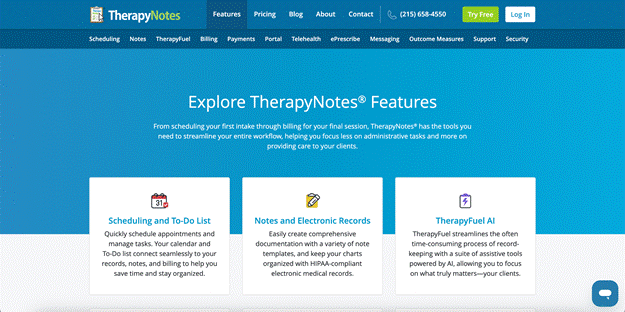
3. TherapyNotes
With TherapyNotes, everything your practice needs lives in one secure, reliable space so that you can focus entirely on your clients. Scheduling, notes, billing, and telehealth are all under one roof, giving you more in-session time and less administrative stress. Everything stays secure, paperless, and accessible whenever you need it.
The platform makes teamwork simple — coordinating multiple clinicians, sharing notes, and managing group sessions without hassle. AI-powered tools like TherapyFuel give you a head start on documentation, freeing up mental space for your clients. With supportive help by phone, email, or online resources, you’ll always have a safety net and automatic updates to keep everything running smoothly.
Key features:
This option is trusted by over 16 million clients each year.
AI tools make note-taking faster and easier.
It’s highly rated by therapists for reliability and support.
4. Zanda
Zanda helps your practice flow without the usual headaches. Scheduling, billing, telehealth, and client management all live in one space, so you can focus on being present with clients instead of juggling tools. Whether solo, part of a group, or just starting a clinic, Zanda adapts to your daily needs.
What makes Zanda special is its human touch. It was built by psychologists who know the pain of clunky systems, and it blends empathy with practicality. Every feature, from notes to virtual sessions, is designed to fit the rhythm of a therapist’s day, making your workflow feel natural and manageable.
Key features:
Access your practice securely from anywhere, cloud-based and protected with ISO 27001 certification.
Customize treatment notes and forms to match your style.
Run seamless virtual sessions with built-in telehealth integrations.
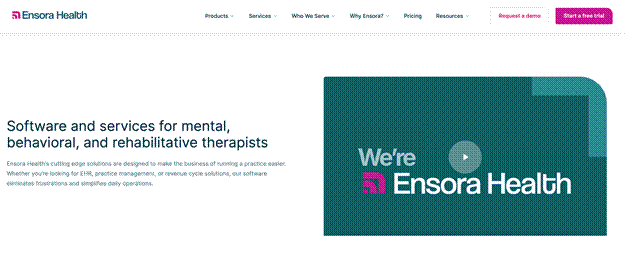
5. Ensora
Ensora makes running a group practice feel effortless. Scheduling, documentation, billing, and telehealth all come together, letting you spend less time on administration and more time with clients. Automated reminders and easy claim tracking help your team stay organized while keeping personal information safe.
AI-powered insights give your practice an extra hand — helping you catch errors, recover missed opportunities, and make teamwork smoother. Therapists notice a difference in workflow and satisfaction, from session planning to self-scheduling for clients, making daily operations smoother and more balanced.
Key features:
Let clients book appointments, complete intake forms, and manage their own accounts.
Provide exercises for clients to complete at home through the portal.
There’s a free trial and an essential plan with good cost-money value, including many valuable features.
6. athenaOne
athenaOne brings everything a behavioral health practice needs into one connected platform. It helps you navigate the tricky parts of running a practice while keeping client care front and center, from documentation and telehealth to group sessions and intensive treatment programs.
Its network of 150,000 providers, including 12,000 mental health specialists, encourages collaboration and knowledge sharing. athenaOne supports safer, more competent care while helping practices grow confidently thanks to real-time alerts, evidence-based guidelines, and seamless integration with labs and imaging.
Key features:
Intuitive interface feels easy from day one.
Real-time clinical guidance keeps clients safe.
Connect smoothly with labs, imaging and other systems for a complete picture.
7. CounSol.com
CounSol.com puts clients at the heart of your practice. Its customizable portal lets them schedule appointments, fill out forms, pay invoices, and send secure messages — all in a branded, professional environment. This keeps everything in one place and frees you from juggling multiple systems.
What makes CounSol.com stand out is its personalized support. Every practice gets a dedicated account manager to guide you, answer questions, and help you make the platform work for your unique workflow. From telehealth to custom forms, CounSol.com gives you control without stress.
Key features:
Create and manage treatment plans for clients with customizable templates.
Tailor online forms, agreements, and questionnaires for your clients.
Organize client information with labels for personalized communication.
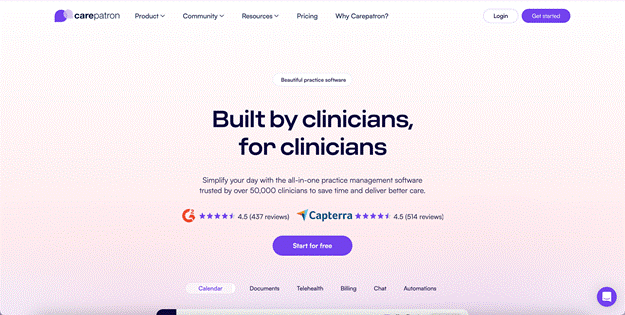
8. Carepatron
Carepatron was built by clinicians for clinicians, and over 50,000 users worldwide rely on it to run everything from small group practices to multiprovider clinics. It takes the stress out of administration by combining scheduling, billing, charting, telehealth, and AI-assisted workflow tools into one clean, modern space. Group sessions run smoothly thanks to collaborative features that let multiple practitioners coordinate sessions, share notes, and deliver care without friction.
What makes Carepatron stand out is its focus on teamwork and adaptability. Secure file sharing, client portals, and customizable activity calendars make managing hybrid or in-person sessions easy. Automated reminders, paperless intake, and AI-driven documentation save time while keeping records accurate — giving you more energy to focus on your clients.
Key features:
It automates routine tasks so your day flows more smoothly.
The shared inbox allows effortless team communication and collaboration.
Tools strengthen client relationships through messaging and portals.
9. Colib
Colib is a bilingual platform — English and French — designed to make health care feel simpler for therapists and clients. Scheduling, telehealth, charting, invoicing, and online payments live together in one accessible space, serving psychotherapists, occupational therapists, and alternative medicine providers alike.
Colib puts people first. Mobile access, customizable forms, and automated reminders keep your practice running without the stress of complicated systems. The platform meets PIPEDA standards and maintains security, combining technology with human connection so you can focus on what matters most — helping clients thrive.
Key features:
AI-assisted notes and speech recognition let you spend less time documenting and more time with clients.
It connects seamlessly with other tools, like Salesforce, to keep your workflow in sync.
The intuitive interface makes navigating your day effortless.
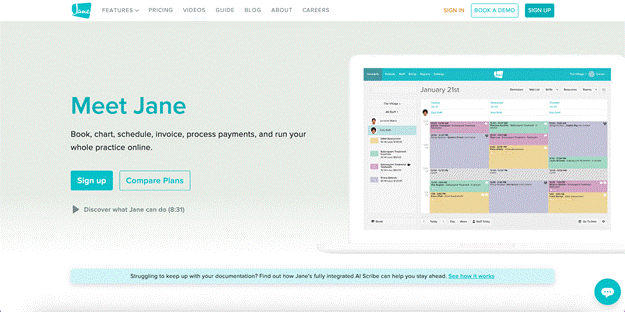
10. Jane
Jane makes every step of the client experience feel effortless, from booking to follow-up. Its all-in-one toolkit — online scheduling, secure video, charting, invoicing, and automated reminders — fits the needs of interdisciplinary clinics with physiotherapists, massage therapists, counselors, and more.
Jane stands out for its ease of use and thoughtful innovation. Real-time updates, secure cloud storage, and device-friendly access keep workflows smooth for both therapists and clients. Integrated telehealth, secure messaging, and flexible charting let practices run collaborative care without a hitch, freeing you to focus on the human connection in every session.
Key features:
AI-powered scribe reduces documentation time and keeps notes accurate.
Comprehensive billing and claims tools simplify financial tasks.
Custom intake forms and outcome surveys help track client progress.
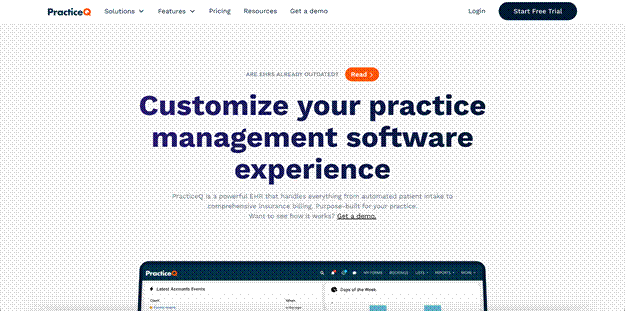
11. PracticeQ
Managing a group practice feels simpler with PracticeQ, so you can spend more time with your clients instead of juggling administrative tasks. Scheduling, client intake, billing, and telehealth all live in one place, making your day flow more smoothly. The platform adapts to your unique workflow, whether you run a single clinic, multiple locations, or hybrid sessions. Automated forms, reminders, and e-prescribing keep your practice organized without extra effort.
Everything is cloud-based and secure, so you can manage your practice anywhere while keeping client information safe. By simplifying the administrative side of your practice, PracticeQ helps you create more meaningful connections with clients. It also gives your team the confidence to collaborate efficiently and stay on top of every session.
Key features:
Telehealth integration makes virtual sessions seamless and easy for clients.
Customizable tools let your practice run exactly the way you need it.
PIPEDA and GDPR compliance ensure client data stays fully protected.
Comparison Table at a Glance
Company
AI and Automation Tools
Customization
Customer Support
Trial and Demo Availability
Group Session Features
Owl Practice
Notes, reminders, workflows
High
One-on-one onboarding, responsive support
Free trial available
Scheduling, shared notes, telehealth group sessions
SimplePractice
AI note-taking, automated reminders
Moderate
Email support, training resources
Free 30-day trial, no credit card required
Appointment management, shared client information, intake forms
Scheduling, collaborative tools and client self-management
Finding the Right Practice Management Tool for Your Group Practice
Running a group practice is challenging, but the right tools can lift the weight of administration and let you focus on what really matters — your clients. From streamlining scheduling and billing to supporting collaborative care, these platforms help practices run more smoothly while protecting client data.
Each solution offers unique ways to save time, reduce stress, and enhance the therapeutic experience for both staff and clients. Exploring these options ensures you find the tools that fit your practice’s size, style, and growth goal.
The Midtown shopping centre in downtown Saskatoon is experiencing a standout year marked by record sales, rising foot traffic and a wave of retail activity. Three new retailers have opened their doors, five existing stores have undergone renovations, and more changes are coming in the new year.
The shopping centre says annual foot traffic has grown to 4.3 million visitors over the past 12 months, an increase of 3.7% over the same period last year. Productivity per square foot reached an historic high of $826.23 in June of this year, a 12.5% increase from 2024. Overall sales volume for the centre has also increased significantly, up 11.07% from September 2024. Total sales for the centre are projected to reach $217 million by the year’s end, a $17 million increase year over year.
Tara Faris
“We’re thrilled to welcome these dynamic new retailers to Midtown and to celebrate the outstanding sales achievements that reflect the strength of our retail community,” said Tara Faris, General Manager. “As we continue to evolve our tenant mix to better serve Saskatoon, we’re confident that this momentum will drive even greater growth and success in the years ahead.”
The mall said new retailers joining the mix and first to market in Saskatoon include Browns Shoes, JD Sports and Steve Madden. Relocated and/or renovated stores include Ardene, Bath & Body Works, Footlocker, Peoples Jewellers and Victoria’s Secret.
Coming soon to Midtown is Unique Bunny, a Korean and Japanese skincare retailer, the first to market in Saskatchewan, as well as Kiokii, Lovisa, Ukraine Pantry and Miniso. These new retailers join Midtown’s already robust tenant mix which include Saskatchewan’s only Victoria’s Secret, Pink, Aritzia, Michael Kors and MAC Cosmetics, it said.
Midtown is operated by Cushman & Wakefield, a leading global real estate services firm. Cushman & Wakefield is among the largest real estate services firms with approximately 53,000 employees in 400 offices and 60 countries.
Craig Patterson and Albert Chow, co-founder & CEO at Silk & Snow, discussed the company’s origins and growth trajectory. See the full article directly below the video interview:
In a recent episode of the Retail Insider Video Interview Series, Craig Patterson spoke with Albert Chow, CEO and Co-Founder of Silk & Snow, the Canadian bedding and lifestyle brand that has become a standout success story in the country’s direct-to-consumer retail space. The conversation ranged from the company’s humble origins to its thoughtful expansion into physical retail and its strategic acquisition by Sleep Country Canada.
“We really started the business by accident,” said Chow. “In 2017, my co-founder and I were curious about the mattress-in-a-box model and began exploring the supply chain. We were shocked to discover how much of it existed right in our backyard here in Toronto.”
That discovery became the foundation of Silk & Snow’s commitment to locally sourced and ethically made products. While the brand now offers everything from bathrobes to living room sofas, that early emphasis on quality, transparency, and community-based manufacturing continues to guide its business decisions.
From Online Mattress Startup to Full Lifestyle Brand
What began as a digitally native mattress company has evolved into a full-fledged home goods brand. Chow explained how the expansion happened organically as customers sought not just better mattresses but more cohesive and thoughtfully designed home environments.
“We always had a more aesthetic, design-conscious take on what bedding and sleep products could be,” he said. “Around 2020, we started expanding into furniture and bedding, which felt like a natural progression.”
It was at that time that Silk & Snow’s curated product range grew to include bed frames, bedroom furniture, and bath essentials, offering consumers a one-stop destination for high-quality, sustainably made home goods.
The company’s ethos of sustainability and transparency also struck a chord. “We work with family-owned manufacturers who care as much about the details as we do,” said Chow. “That shared value system is really important to us.”
Strategic Acquisition by Sleep Country Canada
In early 2023, Silk & Snow was acquired by Sleep Country Canada in a deal worth $24 million upfront, with performance-based earn-outs of up to $19.45 million through 2025. Notably, the brand has continued to operate independently under its existing leadership.
“We started our conversations with Sleep Country around late 2021,” Chow recalled. “It took longer than expected, but we eventually came to an agreement. Since then, we’ve worked really well together.”
The partnership has helped Silk & Snow expand its reach across Canada and into the U.S. market, which now accounts for roughly a quarter of the brand’s revenue. While Sleep Country provides the infrastructure and national footprint, Chow and his team have retained control over branding, product development, and customer experience.
“Sleep Country’s retail and logistics footprint complements us well,” said Chow. “We’ve leaned into that to continue growing our assortment, especially on the furniture side.”
Physical Retail and Showroom Expansion
A key component of Silk & Snow’s strategy in 2025 has been expanding its brick-and-mortar presence. Although the brand launched online, it has embraced the need for in-person product experiences.
“Earlier this year we were aiming for 15 stores by year-end,” said Chow. “We’re currently at seven standalone showrooms and will hit 10 by December. That’s a big step up from two years ago, when we didn’t have a single physical location.”
Silk & Snow has also benefited from co-locating some of its stores alongside other Sleep Country brands like Casper and Endy, allowing it to maintain a flexible and scalable retail strategy.
“We’ve learned that our customers still want to touch and feel the product,” Chow said. “Online is where the journey starts, but the final conversion often happens offline.”
Navigating an Evolving Retail Landscape
Our conversation also touched on the broader state of Canadian retail, particularly in the wake of the Hudson’s Bay Company’s closure in June 2025. It was an historic and emotional loss for the country.
“I think what’s been most surprising is the strength of our category, including bedding and home goods, even as department stores like Hudson’s Bay faded out,” Chow said. “There’s still strong consumer interest, but it’s shifting toward specialty retail and direct-to-consumer experiences.”
Chow pointed out that the decline of department stores has also created opportunities for brands like Silk & Snow to fill the void, especially with customers seeking authenticity and Canadian-made products.
“What customers want now is a curated experience from brands that stand for something,” he explained. “Younger consumers especially are drawn to authenticity, transparency, and a clear brand personality.”
Building a Stronger Canadian Brand Identity
One of the recurring themes of the interview was the resilience of Canadian retail, especially among homegrown brands that focus on quality, values, and sustainability.
Chow noted a growing trend of patriotic buying that is benefiting Canadian companies like Silk & Snow. “What’s different this time is how sustained the interest in buying Canadian has been,” he said. “There’s a real sentiment among consumers to support local businesses.”
That desire for locally made goods is something Silk & Snow has built into its DNA. A significant portion of its manufacturing remains based in Canada, and the company is vocal about sourcing materials responsibly, even in its international production partnerships.
Looking Ahead: New Products, Smart Growth
When asked about upcoming product launches, Chow hinted at new bed frames, colourways in sofa collections, and other enhancements to existing product lines.
“We try to keep our collections fresh by phasing out older items and introducing updated designs,” he said. “But we’re not planning anything radically different. We want to stay true to what our customers expect from the brand.”
That sense of restraint and focus, rare in today’s fast-paced and trend-chasing market, is part of what makes Silk & Snow stand out.
“We’re proud of our Canadian roots,” Chow added. “And we’re committed to building a brand that Canadians can continue to trust and feel good about supporting.”
A Brand That’s Built to Last
In a retail environment where brands rise and fall quickly, Silk & Snow CEO Albert Chow is focused on steady, thoughtful growth. Backed by Sleep Country’s resources, the company continues to build on a foundation of Canadian manufacturing, sustainability, and direct customer connection.
“Having a strong brand is more important now than ever,” said Chow. “And I think that comes from standing for something meaningful.”
If you prefer to listen to the audio version, it is available below:
The Interview Series audio podcasts by Retail Insider Canada are available on Apple Podcasts, Stitcher, TuneIn, Google Play, or through our dedicated RSS feed for Overcast and other podcast players. Also check out our The Weekly audio podcast where Craig and Lee discuss popular content published on Retail Insider which is part of the The Retail Insider Podcast Network.
Subscribe, Rate, and Review our Retail Insider Podcast!
Drop us a line at Craig@Retail-Insider.com. You can also rate us in Apple Podcasts or recommend us in Overcast to help more people discover the show!
Background Music Credit: Hard Boiled Kevin MacLeod (incompetech.com). Licensed under Creative Commons: By Attribution 3.0 License. http://creativecommons.org/licenses/by/3.0/
Canadians’ spending intentions reached new highs in September, according to Stifel Nicolaus Canada Inc.’s latest consumer survey. The quarterly research, conducted with 300 respondents across the country, revealed that 58 percent of Canadians expect to increase their discretionary spending over the next year, a 300-basis point increase compared to July 2025.
The results mark the highest reading across the last ten surveys, underlining a broader sense of optimism among consumers despite ongoing global and domestic challenges. Notably, 17 percent of Canadians indicated they are very likely to increase discretionary spending, the strongest level seen in two years.
The increase was driven largely by female consumers, younger demographics, and lower-income households. Ontario residents recorded the highest spending intentions of the year at 58 percent, while Quebec saw the most dramatic sequential rise, increasing by 400 basis points.
According to the report, prepared by Martin Landry, Managing Director at Stifel, alongside Daryl Young, Jesse Kestenbaum, and Nicholas Ward, the results provide “an accurate snapshot of the state of the Canadian consumer.” Historically, the firm notes, these survey findings have been a reliable indicator of the financial performance of companies under its coverage.
Holiday Shopping Outlook Turns Expansionary
One of the report’s most striking findings was the shift in holiday spending sentiment. For the first time in four years, a majority of Canadians (51 percent) expect to increase their holiday shopping budgets, up 200 basis points year-over-year.
Martin Landry
The upward momentum was driven in part by female respondents, whose spending intentions rose by 700 basis points compared to last year. Higher-income households also contributed to the expansionary trend, recording a 400-basis point increase. Male respondents, however, recorded a 300-basis point decline.
This development suggests that holiday shopping in 2025 may be stronger than in recent years, a positive sign for retailers across a wide range of categories. The Stifel survey positions this as a potential turning point, with holiday shopping moving into “expansionary mode”.
A Strong ‘Buy Canadian’ Sentiment
The survey also highlighted a notable cultural and political trend: the willingness of Canadians to support domestic brands amid ongoing trade tensions with the United States. One-third of respondents said they would be willing to pay more for Canadian-made products than for comparable imported alternatives.
A broader 83 percent of Canadians said they are more inclined to purchase Canadian-made goods in general, with younger demographics particularly motivated. The report notes that 100 percent of respondents aged 18 to 34 expressed concern about product origin, underscoring the importance of local identity for Gen Z and Millennials.
This sentiment is a positive indicator for well-known domestic retailers and manufacturers, including Aritzia, Dollarama, Leon’s Furniture, Groupe Dynamite, Pet Valu, and BRP.
Apparel Spending Shows Positive Momentum
The apparel category continues to be a key driver of Canadians’ spending intentions. According to the survey, 53 percent of respondents expect to increase their spending on clothing and apparel over the next 12 months, representing a 200-basis point sequential increase.
This figure is also 180 basis points higher than the average recorded across the last ten surveys, signaling above-trend momentum in the fashion space. Growth was particularly strong among young consumers and lower-income households, both of which recorded significant gains in spending expectations.
While female respondents showed a slight 200-basis point sequential decline, their intentions still remain 200 basis points above historical averages, suggesting a stable outlook for the segment. Brands such as Aritzia, Groupe Dynamite, and Gildan stand to benefit from these shifting consumer dynamics.
Dollarama at Adelaide and Peter Street in Downtown Toronto (Image: Dustin Fuhs)
Dollar Stores See Record High Spending Intentions
Perhaps the most dramatic result in the September survey came from the dollar store channel. Seventy-eight percent of Canadians said they are likely or very likely to increase their spending at dollar stores in the next year, the highest level recorded since Stifel began tracking the category.
The proportion of consumers who expect to significantly increase their spending rose by 800 basis points, with notable growth among high-income respondents and male consumers. The report highlights that high-income Canadians, in particular, appear more comfortable shopping at dollar stores, attracted by their value proposition and increasingly clean, organized store environments.
For Dollarama, the country’s dominant player in the segment, these findings underscore ongoing growth opportunities in both urban and suburban markets.
Pet Food Spending Remains Elevated, Shifts Online
The pet category continues to reflect resilience. According to the survey, 75 percent of Canadians expect to increase spending on pet food in the coming year, consistent with results from earlier this year.
While there was a 400-basis point decline in spending intentions among female consumers, young shoppers, and high-income households, this was offset by a similar increase among older consumers aged 55 and up.
Perhaps most significant is the growing shift to e-commerce in this category. Fifty-four percent of respondents now purchase pet food online, up dramatically from 33 percent in January 2023. The growth was especially pronounced among lower-income households, whose online adoption surged by 3,900 basis points. Retailers in the category can no longer afford to ignore online channels if they wish to remain competitive.
Furniture and Appliances See Rebound
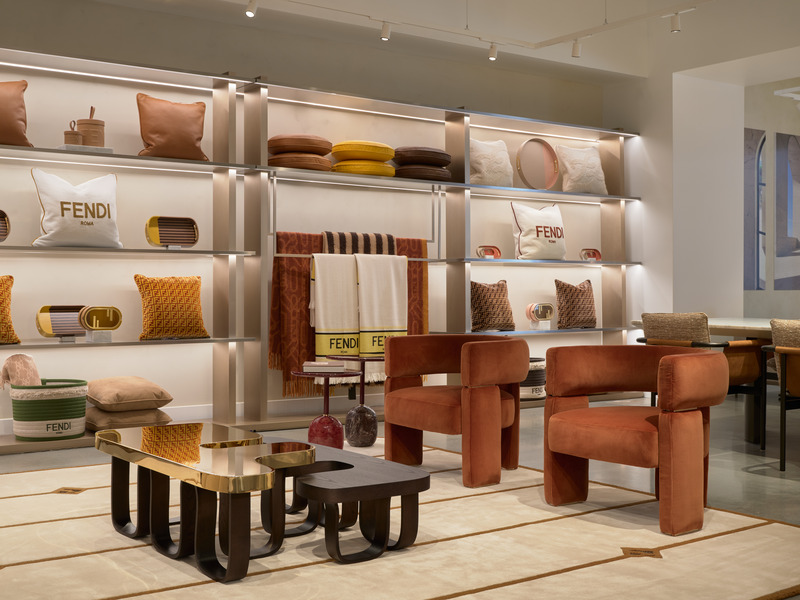
The furniture and appliances sector also showed encouraging signs of recovery. Fifty-eight percent of Canadians expect to increase their spending on furniture or appliances over the next 12 months, the highest reading across the last four surveys.
The rebound was driven by sharp increases among low-income households and male respondents, each recording a 1,300-basis point rise. For retailers such as Leon’s Furniture, this trend points to renewed opportunities in the home category following several years of subdued growth.
Fendi Casa at Maison Territo at Royalmount. Photo credit: Phil Bernard
Toys, Powersports, and Other Categories
The survey found that spending intentions for toys remain stable, with 54 percent of respondents expecting to increase spending on children’s products, in line with historical averages. Interestingly, respondents aged 55 and older recorded a 700-basis point increase, suggesting that grandparents may play a growing role in toy purchases.
In the powersports category, 8.7 percent of Canadians indicated they are very likely to purchase or upgrade a vehicle such as an ATV, snowmobile, or motorcycle within the next 12 months. This result is above historical averages and reflects particularly strong intentions among older and male consumers, offsetting a slight decline among female and high-income respondents.
Protein Consumption Continues to Grow
A broader health and wellness trend also emerged from the September survey. Sixty percent of Canadians said they are likely to increase their protein intake over the next year, with younger shoppers showing the strongest momentum at 77 percent.
The report attributes part of this growth to rising interest in healthy, active lifestyles, along with the influence of GLP-1 drugs, which are reshaping dietary habits. This development is particularly positive for Canadian food producers such as Maple Leaf Foods and Premium Brands.
Artificial Intelligence in Purchasing Decisions
Artificial intelligence has become an increasingly common factor in Canadian shopping behaviour. The survey found that 54 percent of Canadians have used AI for purchasing decisions, with 74 percent of younger respondents leading adoption.
However, the future of AI in retail may be less certain. Just 45 percent of Canadians indicated they intend to continue using AI tools for shopping, leaving a majority (55%) hesitant about its long-term role in their purchasing decisions. Younger consumers, despite their high current usage, are also cautious, with only 46 percent planning to continue leveraging AI in the future.
The report suggests that retailers and consumer goods companies will need to consider these evolving behaviours in order to engage effectively with both tech-savvy and hesitant shoppers.
Air Travel Demand Stable but Cost Sensitive
The September survey also examined Canadians’ intentions around travel. Results indicate that demand for air travel remains mostly stable, with 58 percent of respondents likely or very likely to fly in the next 12 months, a modest increase from July.
Interestingly, the increase was driven by lower-income households, which saw a significant rise in their likelihood to travel. Higher-income households, by contrast, recorded a decline, reflecting shifting dynamics within the category.
At the same time, the cost of airfare continues to weigh heavily on consumer decisions. More respondents indicated they downsized or cancelled travel plans due to high airfare costs, a metric that increased by 600 basis points compared to July.
CF Toronto Eaton Centre (Image: Dustin Fuhs)
Implications for Canadian Retailers
The September findings highlight a broad-based optimism among Canadian consumers, with spending intentions rising across discretionary categories such as apparel, dollar stores, and furniture. The strength of holiday shopping expectations, coupled with the willingness to pay more for Canadian-made products, offers retailers a supportive environment heading into the final quarter of the year.
For investors and retail executives, the report provides meaningful signals. Stifel analysts note that companies such as Dollarama, Aritzia, Groupe Dynamite, Gildan, Maple Leaf Foods, BRP, and Air Canada are well positioned to benefit from these trends. Results were described as mixed for Pet Valu and slightly negative for Spin Master, given stable or declining momentum in pet and toy spending respectively.
Conclusion
Stifel’s September consumer survey paints a picture of renewed confidence in Canadian households. With record-high discretionary spending intentions, stronger holiday shopping outlooks, and ongoing trends in health, localism, and technology, retailers face both opportunities and challenges in the months ahead.
The willingness of Canadians to embrace both domestic products and value-driven formats such as dollar stores illustrates the diverse ways in which consumer behaviour is evolving. At the same time, issues such as airfare costs and hesitancy toward AI adoption underscore areas of caution.
For retailers, manufacturers, and investors alike, the survey serves as a timely barometer of market conditions. With Canadians’ spending intentions reaching historic highs, the stage is set for an active retail landscape heading into 2026.