Retail Insider is streamlining its Canadian retail news from around the web to include a handful of top news stories that can be viewed quickly during the day. Here are the top stories from the past several days.
It’s intended to provide transparency and predictability in the relationship between food retailers and their suppliers. All five of Canada’s largest grocers — Empire, Loblaw, Metro, Walmart Canada and Costco Canada — have registered with the code.
The code sets out specific objectives: to contribute to a “thriving and competitive grocery industry,” promote trust between grocery value chain stakeholders, allow for informed business decisions and provide an effective and fair dispute settlement mechanism.
That dispute resolution mechanism, administered by the Office of the Grocery Sector Code of Conduct (OGSCC), is intended as a last resort. The possibility of mediation may encourage parties to resolve disagreements informally before they escalate to formal adjudication.
In addition, the OGSCC will publish an annual report highlighting key trends, challenges, recommendations for code improvements and anonymized case studies of disputes, without naming specific companies.
Was the code ever about food prices?
Public discussion of the code was often conflated with a desire to reduce food prices. While food price regulation is not part of the code, it has been raised in wider discussions about food price inflation.
Concerns about food price inflation have been longstanding. In 2023, the federal Standing Committee on Agriculture held a meeting to investigate the issue. Members questioned Walmart Canada CEO Gonzalo Gebara and Galen Weston, then president and CEO of Loblaws (and now chair of the board).
Galen Weston, who is now chairman of Loblaw Companies Limited, waits to appear as witnesses at the Standing Committee on Agriculture and Agri-Food investigating food price inflation in Ottawa in March 2023. THE CANADIAN PRESS/Spencer Colby
Liberal MP Heath MacDonal asked Gebara:
“What do you say to us when we’re seeing the hesitation of Walmart to sign on to the grocery code of conduct? How do we relay that message back to our constituents, who, over the past couple of years, due to all the items and many of the issues you talked about, have been facing a lot of challenges, including the price of groceries?”
Some industry leaders, however, have suggested the code could increase prices. For example, Weston says he was hesitant to participate in the code due to fears that prices would go up.
The mechanism of potential price inflation is relatively straightforward. The code discourages certain charges and states payment schedules should be negotiated. If grocers lose some benefits due to the limitations of the code, it will cost them money. In such a scenario, it is difficult to imagine that grocers would forgo money from consumers by lowering prices.
Some observers have suggested the code could lower food prices over the longer term. But they were commenting about the benefits of lower charges to suppliers and the potential for investment and innovation in the Canadian food processing sector. These indeed may be long-term benefits, but they’re not written into the code and would take time to materialize.
Are there any benefits to consumers?
There will likely to be some indirect consumer benefits. A more predictable and transparent relationship between retailers and their suppliers could increase choice for consumers by reducing the barriers to new product introduction.
Price stability and predictability make life easier on suppliers and could help sustain Canadian food processors. A loss of food processing capacity in Canada would lead to increased prices.
The code would also help smaller retailers with less bargaining power. By limiting the concessions large grocers can extract from suppliers, it narrows the gap between big and small chains and makes smaller grocers more viable. This is especially important in under-served neighbourhoods where limited retail options restrict consumer choice.
Food prices continued to rise across Canada in 2025. A customer shops at a grocery store in Sharon, Ont., in November 2024. THE CANADIAN PRESS/Chris Young
What actually drives food prices?
Food price inflation is primarily driven by supply-side factors and, to a lesser extent, demand. Between Jan. 1 and Dec. 31, 2025, food prices rose by four per cent — faster than the rate of general inflation. Much of that increase was driven by sharp price rises in beef (16.8 per cent), coffee (30.8 per cent), and sugar and confectionery (12.5 per cent).
Beef and coffee prices have been affected by the increasing frequency and severity of extreme weather events. Beef cow herds are at their lowest point in almost 40 years, due in part to drought in Western Canada and the midwestern United States. High beef prices have also pushed consumers toward other proteins, such as pork and chicken, which saw smaller price increases. Turkey prices remain relatively flat, providing an option for those feeling protein price pressure.
Sugar and confectionery prices increased largely due to tariffs. The U.S. already had protection for its sugar industry, but introduced significant new tariffs on Brazil, Argentina and Columbia, raising organic sugar prices and pulling conventional sugar prices up with them.
Canada responded with reciprocal tariffs, increasing prices here. While some of the tariffs have been reduced, there remains considerable uncertainty. Notably, despite the 12.5 per cent annual increase in prices, prices for sugar and confectionery fell by 4.1 per cent in December 2025.
What comes next?
Canada has experienced significant food price inflation, but the drivers are largely external to and outside the scope of the Grocery Code of Conduct.
While the code may enhance transparency, fairness and competition in the grocery sector, it is not a tool for controlling or lowering grocery prices directly.
But there is room for optimism about grocery costs. The rate of food price increases will slow and we might see some price reductions. Beef cow herds are expected to recover over time, which should ease prices. Beef prices went down marginally in December by 0.2 per cent. Weather remains unpredictable, but in the absence of new extreme events, supply issues should improve and prices should ease for those commodities.
These changes, however, will not be due to the Grocery Code of Conduct, though they will be welcome nonetheless.
About the Author:Michael von Massow is a Professor of Food Economics at the University of Guelph.
Grosvenor has acquired full ownership of the Broadmead Village shopping centre in Victoria, British Columbia, marking one of the first large retail real estate transactions in Canada in 2026. The acquisition values the open-air, grocery-anchored centre at $95.5 million and sees Grosvenor buy out its long-time joint venture partner after nearly three decades of shared ownership.
Located at 777 Royal Oak Drive, Broadmead Village sits immediately east of the Patricia Bay Highway in the heart of the Saanich peninsula on Vancouver Island. The property has been jointly owned since 1997 by Grosvenor and ADMNS, a subsidiary of the Manitoba Civil Service Superannuation Board pension plan, each holding a 50 percent interest. Grosvenor has now acquired ADMNS’s stake for $47.75 million, consolidating full ownership of the asset.
Broadmead Village technically comprises two legal parcels, 777 Royal Oak Drive and 801 Royal Oak Drive. Grosvenor confirmed that the transaction relates solely to 777 Royal Oak Drive, which is assessed by BC Assessment at $85,854,000 as of July 1, 2025. The adjacent parcel at 801 Royal Oak Drive is home to a Canadian Tire store and is assessed at $11,152,000.
The 777 Royal Oak Drive parcel was previously held under ADMNS Broadmead Investment Corporation and is now owned through Broadmead GP Limited, under Grosvenor Canada Limited. Ownership of the Canadian Tire parcel was not disclosed, though Canadian Tire frequently holds its real estate through CT REIT.
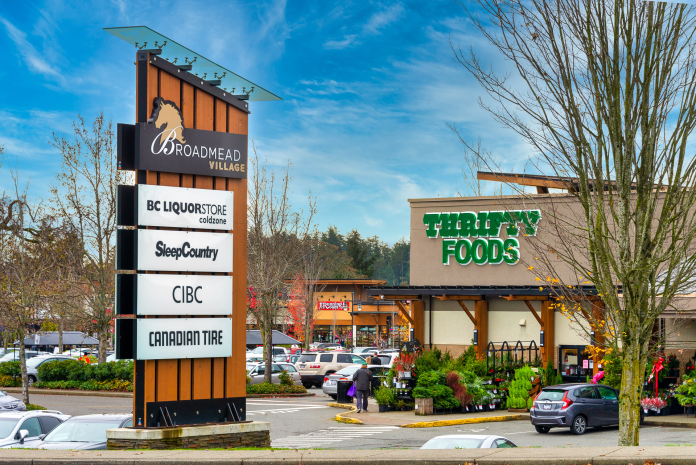
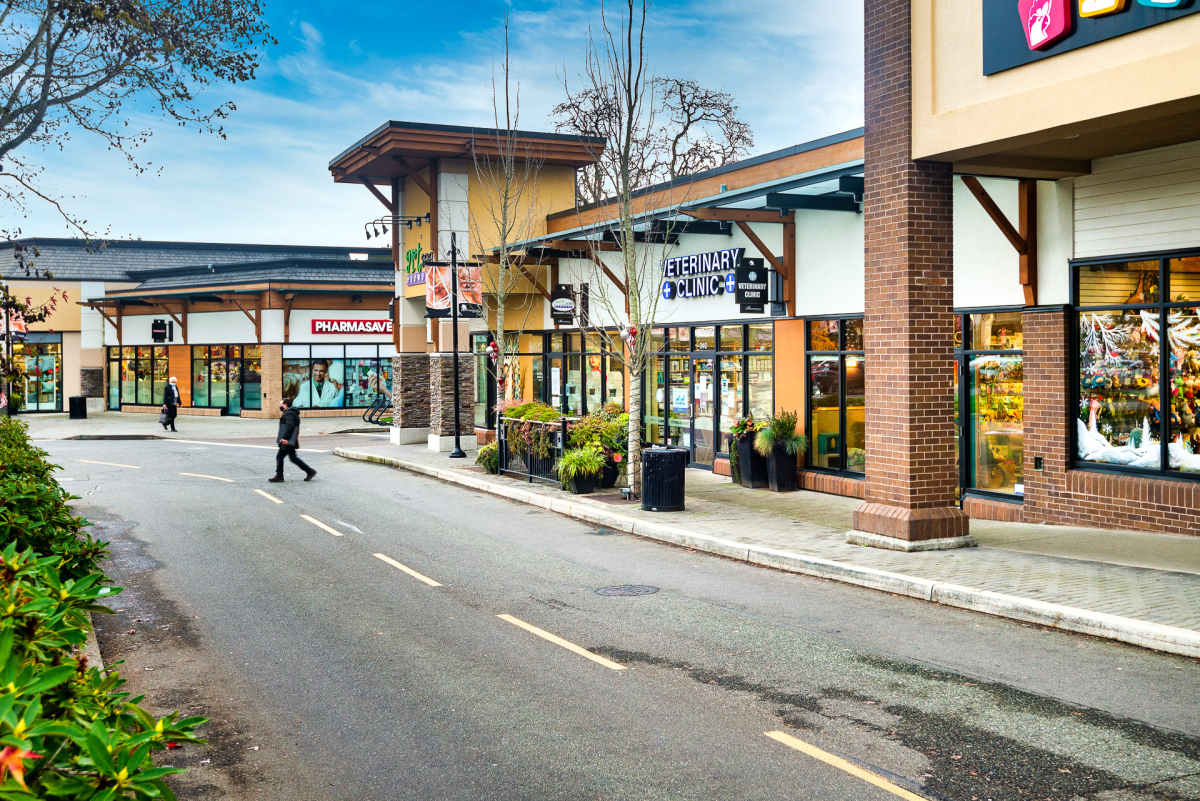
Broadmead Village. Photo: Grosvenor
A Grocery-Anchored Neighbourhood Centre
Excluding the Canadian Tire parcel, the Broadmead Village shopping centre spans 128,018 square feet across 12.74 acres. It is anchored by Thrifty Foods, the Sobeys-owned grocery chain, and features a mix of specialty retailers and nationally branded services that cater to the surrounding residential community.
In 2012, the property underwent an extensive modernization, which earned Bronze, Silver, and Gold accreditations from the Building Owners and Managers Association Building Environmental Standards program. The renovation reflected Grosvenor’s long-term ownership approach and positioned the centre as a leading neighbourhood retail destination on Vancouver Island.
Grosvenor described the centre as one of the strongest performers in its Canadian portfolio, citing consistent leasing momentum and a tenant mix that has historically delivered low vacancy and limited turnover. According to the company, the centre’s grocery anchor and daily-needs retail focus have helped insulate it from economic volatility.
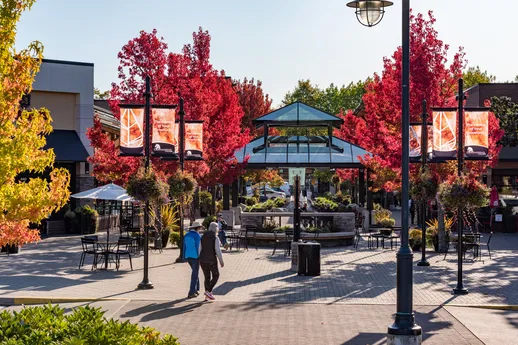
Broadmead Village. Photo: JWB Commercial
Long-Standing Partnership Comes to a Close
Ian Cameron, Senior Portfolio Manager for Real Estate at the Civil Service Superannuation Board, said Grosvenor’s stewardship of the property played a key role in the success of the long-running partnership. He noted that Broadmead Village has delivered strong performance over decades and credited Grosvenor with transforming the centre into one of Vancouver Island’s top-performing grocery-anchored retail plazas.
The transaction concludes a nearly 30-year joint ownership structure and reflects a strategic rebalancing for both parties. For Grosvenor, the acquisition deepens its exposure to a proven retail asset class within a priority Canadian market.
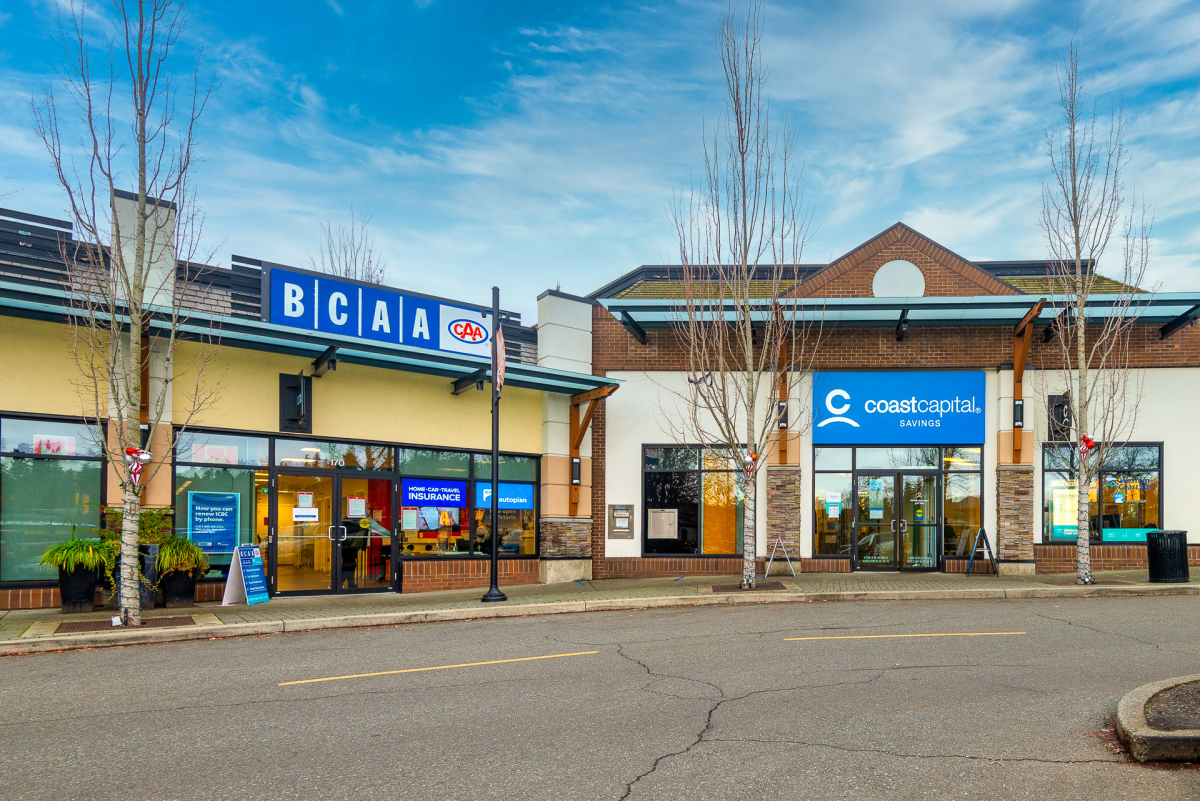
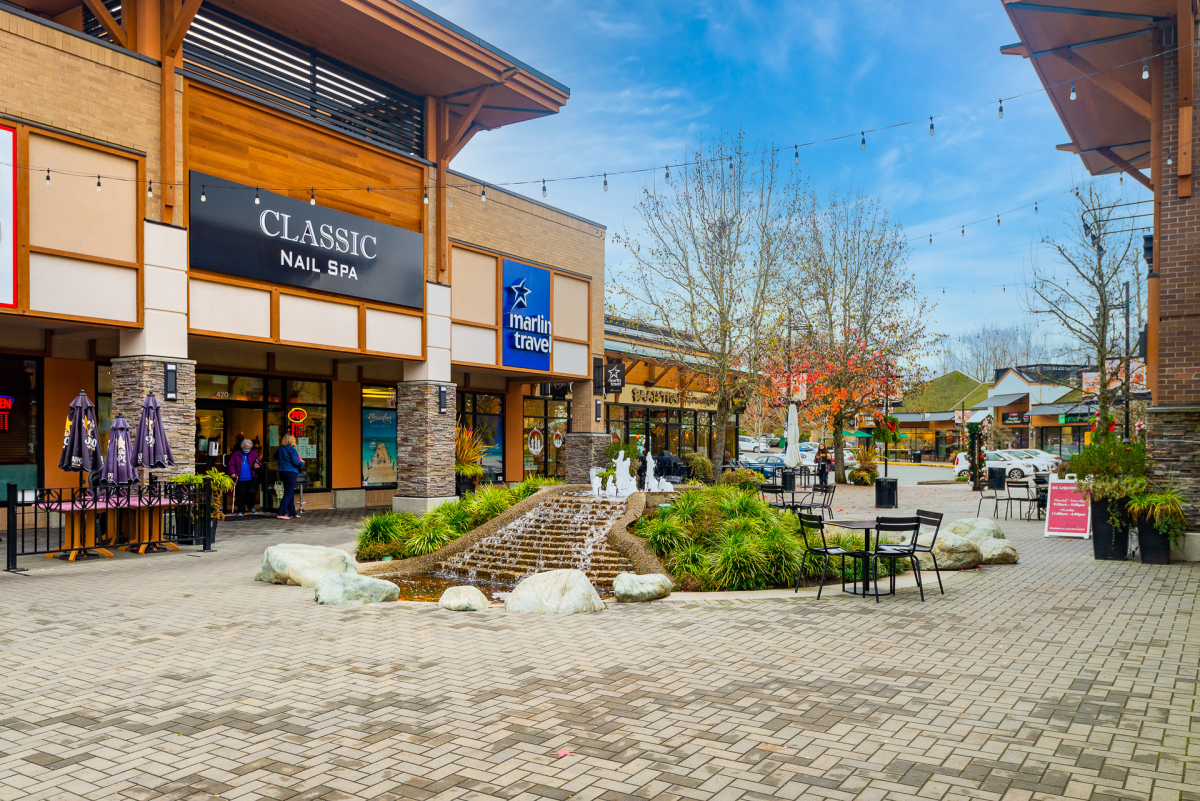
Broadmead Village. Photo: JWB Commercial
Strategic Fit Within Grosvenor’s Canadian Portfolio
Robert Duteau, Senior Vice President of Investment for Grosvenor Property Canada, said the acquisition aligns closely with the company’s broader Canadian growth strategy. He emphasized that the transaction highlights Grosvenor’s strengths as both an owner and operator of large-scale assets, building on its experience with mixed-use developments such as The Rise, Connaught, and Grosvenor Ambleside.
Duteau also signaled that future redevelopment potential is part of the long-term view for the site. He stated that acquiring grocery-anchored retail at scale, with the possibility of future redevelopment, is a key focus for Grosvenor in Canada. Across the country, owners of well-located shopping centres have increasingly explored redevelopment options as a way to unlock additional land value.
Broadmead Village. Photo: JWB Commercial
Grosvenor’s Long History and Canadian Footprint
Grosvenor’s origins date back to 1677, when the estate of Sir Thomas Grosvenor was established in the United Kingdom. The privately owned international property company remains under the control of the Duke of Westminster and operates across multiple continents and property sectors.
In Canada, Grosvenor has been active for more than 70 years and maintains a diversified real estate platform centered largely in British Columbia. In addition to the Broadmead Village shopping centre, its explicitly disclosed Canadian assets include Annacis Business Park, an industrial hub on Annacis Island, and Brentwood Block, a pedestrian-focused, master-planned mixed-use community in Burnaby that began construction last year.
As of December 31, 2025, Grosvenor Property Canada reported approximately $2.8 billion in assets under management. The company positions itself as a long-term owner and developer, with a focus on operational excellence, sustainability, and transit-oriented, mixed-use communities.
Significance for Canadian Retail Real Estate
The acquisition shows continued institutional confidence in grocery-anchored neighbourhood retail, particularly in supply-constrained urban markets. With its stable tenant mix and strong local demographics, the Broadmead Village shopping centre represents the type of defensive retail asset that has attracted sustained investor interest, even as other retail formats face greater volatility.
Expedia Group and Affirm have announced an expanded, multi-year partnership, making Affirm the exclusive provider of Buy Now, Pay Later installment payment methods for lodging and packages across Expedia Group’s flagship brands in the US, including Expedia, Hotels.com and Vrbo.
Affirm said it will also be available to Canadian travelers on select properties in the coming weeks.
“Travel inspires us and creates memories; when travelers have clarity and confidence in selecting their payment options, they are empowered to pursue meaningful, once-in-a-lifetime experiences,” said Jing Yang, Vice President, Global Payments at Expedia Group.
Jing Yang
“By extending our partnership with Affirm in the US and soon Canada, we’re giving more people the flexibility to plan their memorable adventures and choose payment options that work best for them.”
Officials said eligible travelers shopping for hotels and packages on Expedia, and properties on Hotels.com and Vrbo will receive a real-time approval decision and can choose from customized monthly payment plans up to 24 months.
“In the US, eligible travelers can access 0% APR offers on three- or six-month plans. With Affirm, there is no compounding interest and no late fees — ever. Travelers see their terms upfront — no surprises,” they said.
Pat Suh
“In our decade of partnering with Expedia Group, we’ve seen that travelers are increasingly including consideration of ‘how to pay’ with ‘where to go’ as they plan and book trips,” said Pat Suh, SVP of Revenue at Affirm.
“As Expedia Group continues to innovate how people plan travel, we’re focused on making sure the payment experience is just as seamless. Whatever your booking method, travelers should always have a clear, honest way to pay.”
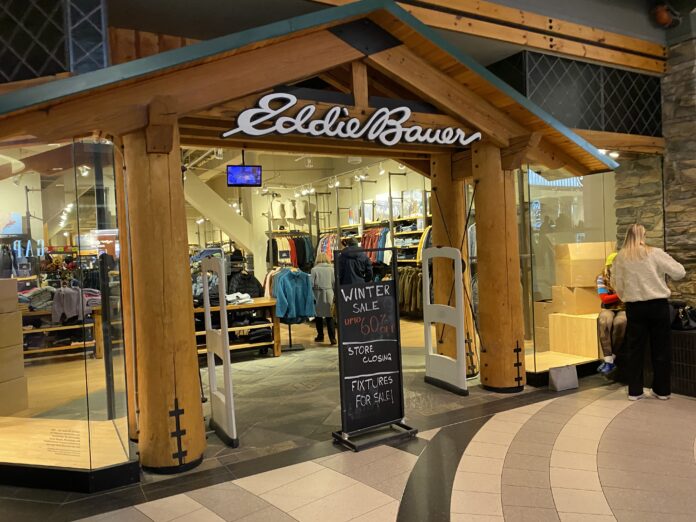
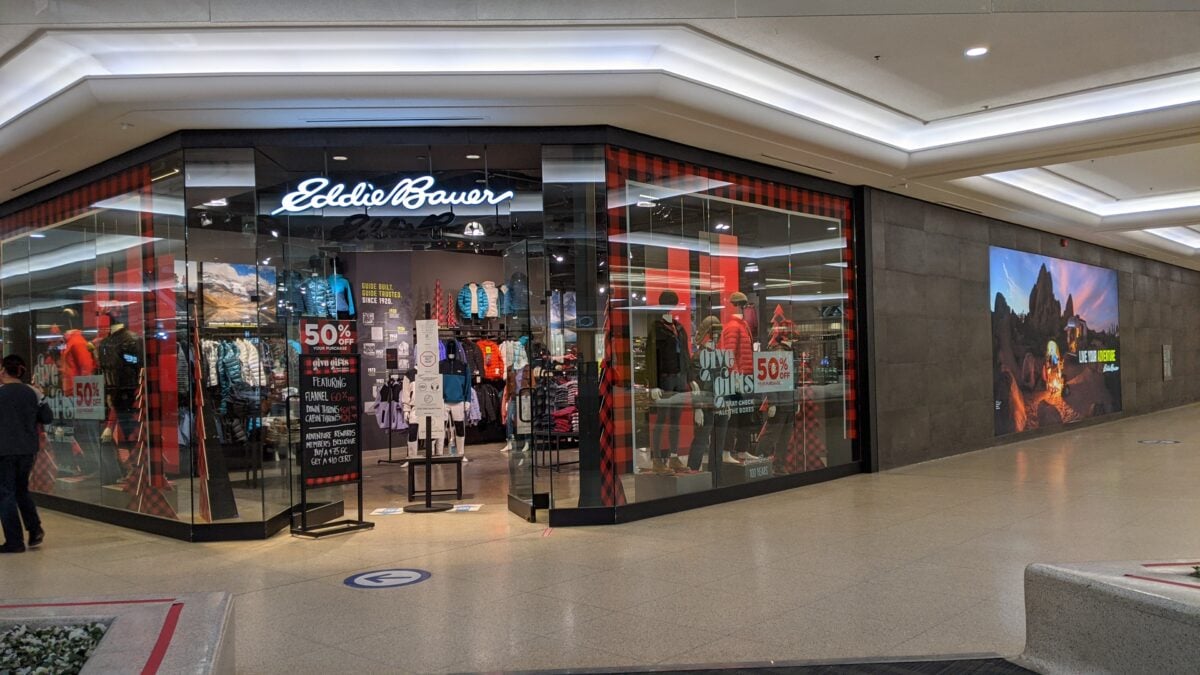
Former Eddie Bauer at CF Toronto Eaton Centre (Image: Dustin Fuhs)
Eddie Bauer’s 50+ year physical retail presence in Canada appears to be nearing its end, as the company’s North American store operations prepare for a Chapter 11 bankruptcy filing that is expected to result in the closure of all remaining brick-and-mortar locations across the United States and Canada. The restructuring affects the store-operating entity tied to Catalyst Brands and does not include the Eddie Bauer brand itself, which will continue through e-commerce and wholesale channels.
As of early February 2026, Eddie Bauer continues to operate a reduced but still geographically broad network of 28 mall and outlet stores across Canada. Locations remain listed in Ontario, British Columbia, Alberta, Quebec, Nova Scotia, Manitoba, Saskatchewan, and New Brunswick. These stores form part of an estimated 200 North American locations that are expected to be wound down through the Chapter 11 process, which industry reports describe as imminent or already in motion.
The Chapter 11 filing applies specifically to Eddie Bauer’s brick-and-mortar store operations under Catalyst Brands, rather than the Eddie Bauer brand or its intellectual property. Authentic Brands Group owns the Eddie Bauer brand and its core IP, while Catalyst Brands holds the license to operate physical stores.
Under the planned restructuring, Catalyst Brands is expected to exit the physical retail business entirely. Manufacturing, design, product development, wholesale distribution, and e-commerce operations in both the United States and Canada are set to continue under a separate license held by Outdoor 5, which was appointed as the new operating partner in January 2026.
This separation allows the Eddie Bauer brand to persist in North America even as its physical store network disappears from malls and outlet centres.
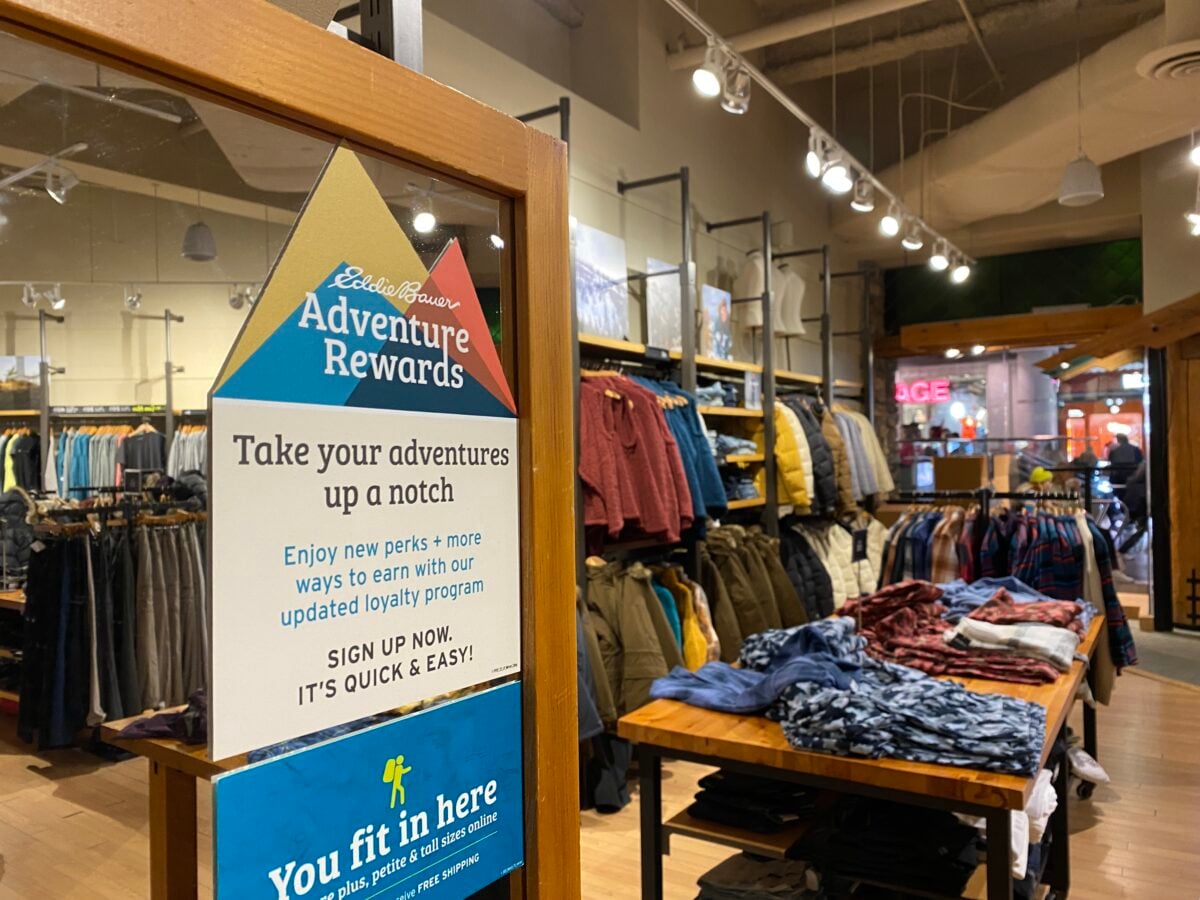
Eddie Bauer Adventure Rewards (Image: Dustin Fuhs)
Canadian store network remains active, for now
Eddie Bauer has continued operating its Canadian stores into early 2026. As of February 1, the chain operates 28 locations nationwide, following years of gradual rationalization.
Ontario accounts for the largest share of the remaining footprint, with roughly 15 stores spanning the Greater Toronto Area, the Ottawa region, and smaller markets including Belleville and Sault Ste. Marie. British Columbia hosts stores in Nanaimo, Port Coquitlam, Tsawwassen Mills near Vancouver, Victoria, and Park Royal in West Vancouver. Alberta remains a key market with two stores in Calgary and two in Edmonton. Additional locations operate in Nova Scotia (Dartmouth), Saskatchewan (Saskatoon), and New Brunswick (Dieppe). A Facebook post said the CF Polo Park store in Winnipeg was closing January 7, but other reports and Google indicate that the store could still be open.
A slow retreat that accelerated in recent years
Eddie Bauer’s Canadian presence has been steadily shrinking for more than a decade, even as the brand continued to invest selectively in certain locations. In 2023, the company closed its stores at CF Toronto Eaton Centre and CF Fairview Mall, two high-profile Toronto locations. Staff and in-store signage at the time confirmed that the closures were permanent.
Earlier rationalizations included the closure of a long-standing Yorkdale Shopping Centre location in Toronto during the 2000s, which made way for higher-rent luxury tenants as the mall repositioned. In Regina, the Eddie Bauer store at Cornwall Centre closed in January 2020, while the Midtown Plaza location in Saskatoon remained open.
In Edmonton, the Southgate Centre store reportedly closed in 2023, leaving Kingsway and West Edmonton Mall as the remaining city locations at that time. In Calgary, Southcentre also closed in 2023. These incremental closures, often tied to lease expiries or mall redevelopments, foreshadowed the broader wind-down now expected in 2026.
Eddie Bauer at West Edmonton Mall – Photo by Matthew at Best Edmonton Mall
Eddie Bauer’s deep roots in Canada
The potential closure of all Canadian stores would mark the end of a retail presence that spans more than three decades. Eddie Bauer entered the Canadian market with a Toronto store at 50 Bloor Street W. in 1974 (opened July 15), and expanded aggressively during the 1980s and 1990s following its acquisition by Spiegel.
By 2003, Eddie Bauer operated at least 36 stores in Canada, many of them opened during that early-1990s growth spurt. At the time, Canada was considered a relatively stable market compared with certain U.S. regions, and the company publicly stated it would maintain its Canadian operations despite restructuring pressures elsewhere.
Throughout the 1990s and early 2000s, Eddie Bauer became a familiar presence in major Canadian malls, offering a mix of outdoor apparel and casual wear positioned between technical performance and lifestyle fashion. The chain typically operated full-price mall stores alongside outlet locations, often in mid- to upper-tier shopping centres.
Bankruptcy history and ownership shifts
This is not Eddie Bauer’s first encounter with Chapter 11. In 2003, the brand was swept into bankruptcy proceedings tied to its then-parent company, Spiegel Inc. Eddie Bauer later emerged as a standalone company in 2005.
In June 2009, Eddie Bauer Holdings itself filed for Chapter 11 protection, citing heavy debt loads and recession-driven declines in consumer spending. The company continued operating during the restructuring and was ultimately acquired out of bankruptcy by Golden Gate Capital for approximately USD 286 million.
A major structural shift occurred in 2021, when Authentic Brands Group acquired Eddie Bauer’s intellectual property and core operating business. That deal placed Eddie Bauer alongside other legacy brands in Authentic’s portfolio and set the stage for the later creation of Catalyst Brands, which grouped several retail banners under a shared operating platform.
The appointment of Outdoor 5 in early 2026 to oversee Eddie Bauer’s e-commerce, wholesale, design, and product development effectively cleared the way for Catalyst Brands to exit the physical retail business through Chapter 11.
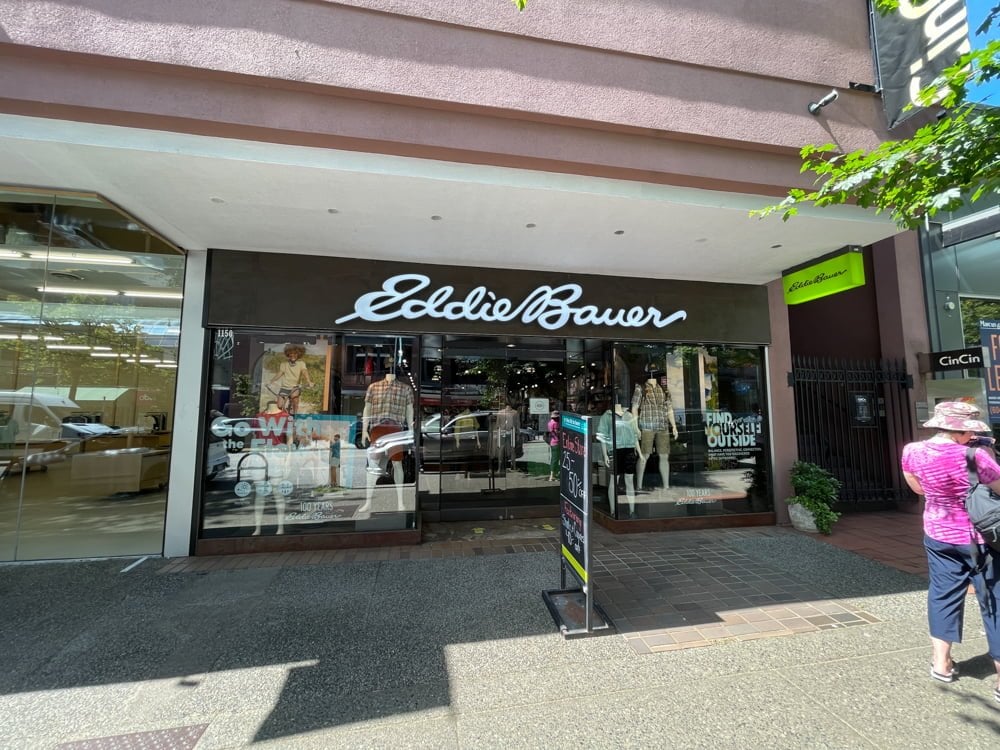
Former Eddie Bauer on Robson Street in Vancouver (June 2021). Photo: Lee Rivett
Real estate and employment implications
The planned shutdown of all Eddie Bauer stores in Canada and the United States represents a shake-up for shopping centres that have hosted the brand for decades. Many landlords are expected to face lease rejections or early terminations, particularly in enclosed malls and outlet centres where Eddie Bauer has long served as a dependable mid-market tenant.
The closures are also expected to affect several thousand retail employees across North America, although precise employment figures have not been publicly disclosed. Corporate roles tied to the brand’s design, merchandising, and digital operations are expected to remain intact under the Outdoor 5 license structure.
For Canadian malls already grappling with tenant churn and redevelopment pressures, the loss of Eddie Bauer adds another vacancy to a retail landscape that continues to evolve rapidly.
What remains for Canadian consumers
While physical Eddie Bauer stores are expected to disappear from Canada, the brand itself will remain accessible. Eddie Bauer’s Canadian e-commerce platform is set to continue operating under the new licensing arrangement, allowing consumers to shop online after stores close.
Wholesale distribution and potential third-party retail partnerships could also play a larger role in the brand’s Canadian strategy going forward. The shift marks a decisive move away from a store-led model toward a digital and wholesale-focused presence.
In the competitive outdoor and casual apparel segment, Eddie Bauer’s exit from malls creates opportunities for rivals to expand their footprints, particularly in centres where Eddie Bauer occupied prominent space for years.
From February 1 – 28, 357 restaurants across Canada will join Canada Beef’s fourth annual Burger It Forward campaign to address growing food insecurity, supporting local restaurants while raising funds for regional and national food banks.
“The need for food banks has doubled in six years, and despite ongoing challenges, Food Banks Canada continues to meet growing demand. Canada Beef is proud to support that effort through Burger It Forward. By eating a Burger It Forward burger this February, Canadians can make a real difference in their communities.”
Officials said each participating restaurant will spotlight a feature burger as part of the Burger It Forward campaign. For every featured burger sold, Canada Beef will donate the equivalent of one meal to Food Banks Canada, up to a maximum of 20,000 meals (based on Food Banks Canada’s meal metric of $1 = two meals). In addition, provincial cattle associations and/or partners will support their local communities through ground beef or cash donations to regional food banks. In Newfoundland, Nova Scotia and New Brunswick, the campaign has partnered exclusively with Irving Big Stop restaurants, featuring all five of its burgers at 15 locations across the Atlantic provinces.
Officials said food bank use is at its highest in Canadian history, with close to 2.2 million visits to food banks this month. Today, one in four Canadians live in a food-insecure household, and nearly 23 per cent of food banks exhaust their supplies before meeting demand.
Visit burgeritforward.cafor more information, including descriptions of all the Burger It Forward burgers, a map of participating restaurants and more.
Shell Canada Limited (Shell), a subsidiary of Shell plc, is joining the Scene+ loyalty partner network – teaming up with Scene+, Scotiabank and Tangerine to unlock new ways for eligible members to save and earn rewards on everyday essentials like fuel, groceries, entertainment, banking and travel.
“Partnering with Scene+, Scotiabank and Tangerine is a major step forward for our loyalty and partner programs, creating the best experience for our customers to save and earn rewards when they visit Shell,” said Kent Martin, General Manager, Shell Canada Mobility and Convenience.
Kent Martin
“Through these partnerships, in addition to instant savings, customers will soon be able to earn and redeem rewards on fuel, car washes and eligible convenience store purchases at more than 1,400 Shell locations nationwide – making every visit more rewarding.”
Scene+ said it is one of Canada’s leading loyalty programs with over 15 million members. It is co-owned by Scotiabank, Empire Company Limited and Cineplex Inc.
The new offering will roll out in Alberta on March 3, expanding nationwide on May 26.
Tracey Pearce
“We listened to our members when they told us they wanted a fuel loyalty partner. As a leader in the fuel industry, Shell is an ideal partner for our ecosystem,” said Tracey Pearce, President, Scene+.
“Whether you’re fueling up for a road trip, picking up groceries, having a night out, or booking your next vacation, our expanded Scene+ partners, breadth of our footprint – both online and off – and the ability to accelerate your loyalty rewards while using payment cards that earn Scene+ points help you make your everyday experience even more rewarding.”
Officials said Shell customers can continue to earn and redeem AIR MILES at Shell locations through March 2, in Alberta, and through May 25, across the rest of Canada.
Oakley, the official apparel partner of Canada Snowboard, says it will equip National Team athletes, coaches, and staff with premium outerwear designed specifically for the demands of elite snowboarding.
For the first time in the brand’s history, Oakley said it is an official apparel sponsor of a national snowboard federation.
“Oakley’s heritage in sport and relentless drive for innovation run deep, delivering outerwear built to endure the elements while supporting athletic performance at the highest level,” it said.
Globally respected performance brand
“Oakley is a globally respected performance brand with deep roots in snowboarding,” said Dustin Heise, CEO of Canada Snowboard. “Their commitment to innovation and athlete-first design makes them a natural fit for our National Team as we head into an exciting season of training and international competition.”
Dustin Heise
Oakley said it’s snow apparel fuses forward-thinking design with technical precision. While the National Team is outfitted throughout the season, select pieces are engineered specifically for Halfpipe, Slopestyle, and Big Air, enhancing movement, maximizing freedom, and reflecting the energy of modern snow culture.
Canada Snowboard athletes, staff and coaches to wear products
“Stoked on the collab between Oakley and Canada Snowboard,” said Team Oakley athlete Cameron Spalding. “Oakley has been home to me for many years now and I know the gear will perform to the highest standard. The design and colorways are making for a clean kit, and the fit is exactly what we are looking for as snowboarders. They nailed it.”
Canada Snowboard athletes, staff, and coaches will wear Oakley product throughout the season at training camps, Nationals, World Cups, Olympics, and other events.
Founded in 1975 in Foothill Ranch, Southern California, Oakley has built a global legacy in sport performance and culture. With over 900 patents and counting, Oakley said it is fueled by a legacy of delivering the unexpected, led by a collective of visionaries, pioneers, and mad scientists who elevate physics to an art form to push the boundaries of human potential. The brand is part of EssilorLuxottica.
The 477 events held in the metropolis drew more than 1 million visitors and generated an estimated $438 million in economic spinoffs for Montréal and Québec, explained the organizations.
“Business tourism is one of the most effective levers in generating lasting benefits for Québec. The 2025 results confirm the relevance of focussing on high-impact events that contribute to the economy, innovation and the international promotion of Montréal,” said Emmanuelle Legault, President and CEO of the Palais des congrès de Montréal.
Emmanuelle Legault
“The Palais des congrès, in close collaboration with Tourisme Montréal, plays a vital role in this dynamic to attract events that strengthen our competitiveness and create real value for Québec society as a whole.”
Increased value of the events held
In 2025, business tourism in Montréal stood out for the increased value of the events held, said the organizations.
Despite a slightly lower number of events than in 2024 (63 fewer events), the economic spinoffs increased by $43 million. This points to better positioning of events with greater economic impact for Québec, they said.
Tourisme Montréal said it played a key role in attracting and supporting these business events by providing assistance to the organization of more than 230 conferences across the metropolis–at the Palais, in hotels, and at universities. This work, led with associations and local partners, helped position the metropolis as a gathering place for specialists, particularly in key strategic sectors of Québec.
The Palais des congrès de Montréal said it alone hosted 281 events in 2025, generating an estimated $277 million in economic spinoffs. With some 940,000 participants and visitors, the Palais is host to most of the participation (92%) and economic value (63%) of the business events held in the metropolis.
“In a complex and uncertain global geopolitical context, we’re particularly proud of our performance in 2025. It testifies to the capacity of our sales teams to attract major events and position Montréal as a destination of choice for high-impact conferences,” said Mylène Gagnon, Vice-President, Sales and Convention Services, Tourisme Montréal.
Mylène Gagnon
“Beyond the economic results, Tourisme Montréal pursued the deployment of meaningful initiatives, such as impact projects seeking to measure the real social and economic benefits of certain conferences. These actions, combined with our responsible tourism initiatives bolster our ecosystem and confirm the role of business tourism as a lever in ensuring Montréal’s lasting influence.”
High-impact events
Several major international gatherings marked 2025, in particular the annual conferences of the International Society for Pharmacoeconomics and Outcomes Research (4,200 participants and $4.4 million in economic spinoffs) and the American Society for Engineering Education (3,800 participants and $4 million), noted the organizations.
Beyond the numbers, some events had a social dimension addressing today’s pressing societal challenges. These included the STI & HIV World Congress (1,500 delegates), and the National Conference on Ending Homelessness (2,350 participants), for which the Palais provided its spaces for free, they said.
Confirmed international leadership
“The Montréal research community’s commitment continues to play a central role in attracting intellectually powerful international conferences, making business tourism a lever for the development of the Québec economy,” they shared.
“In 2025, Montréal maintained its standing as the top destination in North America for hosting international association conferences, according to the International Congress and Convention Association (ICCA), for the ninth consecutive year. And for the eighth year in the row, the city ranked first in the Americas, according to the International Union of Associations (IUA).”
Photo: Pascal Bernardon
Promising horizons for 2026
The organizations said everything points to continuity for 2026.
“Several major international events are planned, in particular the Salon international de l’alimentation (20,000 participants and $14 million in economic spinoffs), the annual meeting of the American Society of Human Genetics (6,000 participants and $8 million) and the Goldschmidt Conference on geochemistry (4,500 participants and $5.8 million),” they said.
“The vitality of Montréal’s business events industry will continue to be based on its attraction of major international conferences and on the solidity of the local market. Recurring structuring gatherings, such as the Journées dentaires internationales du Québec, which annually attract some 12,000 participants and generate $15 million in economic spinoffs, and ALL IN, the largest artificial intelligence event in Canada, organized by Scale AI (6,000 anticipated participant in 2026), clearly illustrate this balance between international promotion and deep local roots.”
AFA United in Style 2026 is designed to deliver more value to retailers from the moment they arrive. Taking place February 8 to 10, 2026 at the Toronto Congress Centre, the event brings together Canada’s footwear, apparel and accessories communities in one connected experience. This year, AFA United in Style is co-located with the Thredz Show, allowing retailers to move easily between both events and access a broader marketplace across categories. With two shows under one roof, attendees can efficiently explore product, meet suppliers and maximize their time on the show floor.
The co-location reflects how retailers buy today. Footwear, apparel and accessories are closely linked in assortment planning, and the ability to access both shows during the same visit creates a more complete sourcing opportunity. Retailers can move from footwear and accessories on the AFA side to apparel at Thredz without interruption, meeting with brands across categories and strengthening their buying strategies. This integrated format creates momentum on the floor and encourages new connections between communities that work together throughout the year.
In addition to expanded access, AFA United in Style is introducing an added incentive designed specifically for retailers. The Retailer Buyer Bucks draw gives retailers attending on the AFA side the chance to win $500 in Buyer Bucks or other prizes, with three draws taking place daily throughout the show. Retailers simply tear off the bottom of their AFA badge to enter, making participation easy and automatic.
Buyer Bucks are designed to support real purchasing activity. Winners receive a voucher that can be redeemed with any exhibitor on the AFA side during the show. The voucher is applied toward product purchased at the event, and the exhibitor is reimbursed by AFA Canada once the order ships. This structure encourages immediate engagement between retailers and vendors while directly supporting business done on the show floor.
AFA United in Style 2026 combines access, opportunity and added value in a way that reflects the needs of today’s retail environment. With co-location alongside the Thredz Show and the introduction of Retailer Buyer Bucks, the event offers retailers more reasons to attend, connect and invest. For buyers looking to make the most of their time in Toronto this February, AFA United in Style delivers both reach and reward.
The event takes place at the Toronto Congress Centre, 650 Dixon Road, from February 8-10, 2026.
Retail Insider is working with AFA on a promotional campaign ahead of the event. To work with Retail Insider, contact Craig Patterson at craig@retail-insider.com