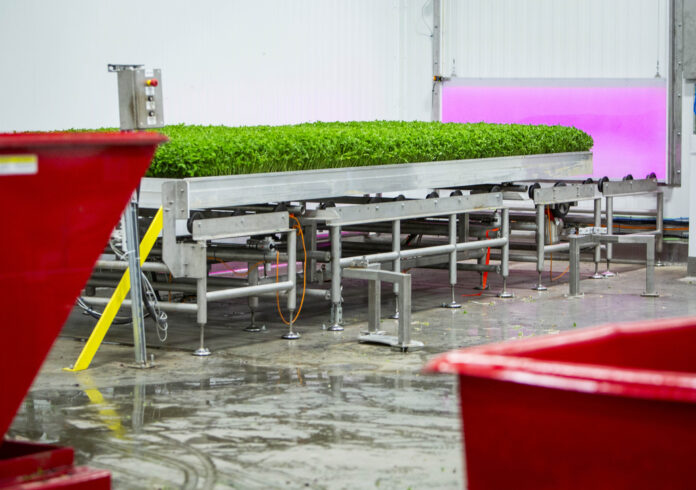
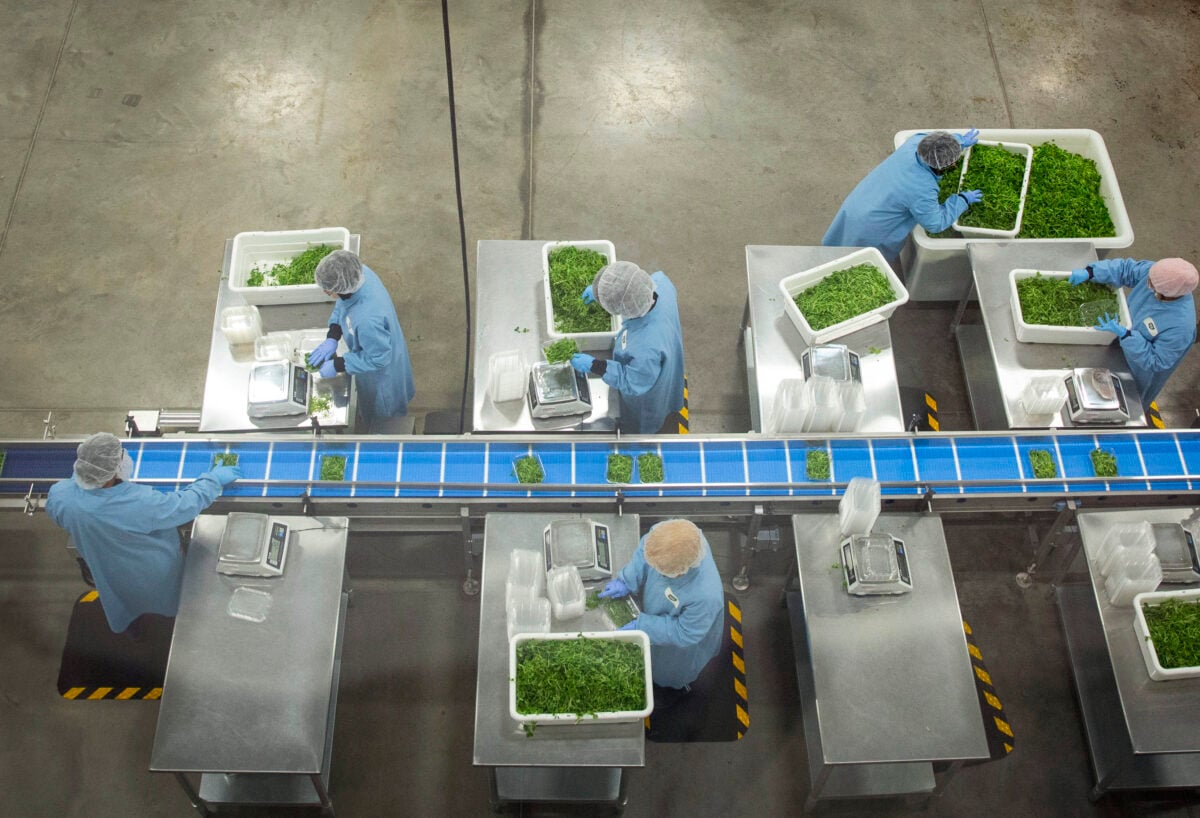
GoodLeaf Farms, Canada’s only national and largest vertical farming operator, has completed an equity financing totaling $52 million, to expand the production capacity of GoodLeaf’s farms in Alberta and Quebec and establish a new research and development centre in Ontario.
The past year was transformational for GoodLeaf Farms, marked by accelerated growth and a sharp increase in demand for its Canadian-grown baby greens, microgreens, and blends across Canada. Combined with the launch of its Agricultural Centre of Excellence in Guelph, Ontario as a new hub for research and development, the company is well positioned to lead the vertical farming industry into a strong and viable future, explained the company.
“We entered 2025 with incredible momentum, and by April, demand for our products nearly doubled as Canadians from coast to coast embraced Canadian-grown greens,” said Andy O’Brien, CEO of GoodLeaf Farms. “With this new funding, we will double the capacity of our two largest farms in 2026, giving Canadians even greater access to premium, locally grown baby greens and nutrient dense microgreens.”
Andy O’Brien
GoodLeaf was founded in Halifax in 2011.
Like many Canadian brands this year, GoodLeaf is reaping the benefits of a strong Buy Canadian movement in response to the trade war with the U.S.
“For every Canadian brand, for whatever reason, that first week of March our sales quadrupled and the biggest challenge we had over the course of the next four or five months was meeting the needs of our customers. Not consumers. Loblaw, Sobey’s. It was mayhem. We spent all of our energy on increasing capacity, getting stuff out the door,” said O’Brien.
“The whole Canadian buy sentiment. I’ve been in this business for 30 years. I’ve never seen this level of Canadians before. It was crazy . . . I think it struck a personal cord . . . We’ve been on fire since then. Increasing capacity. Increasing our retail footprint. We’ve launched a bunch of SKUs.”
O’Brien said R&D has been a cornerstone of GoodLeaf for 15 years.
Source: GoodLeaf Farms
He said the company is evolving the portfolio to more value-added products. Salad kids and salad bowls will be launched in the New Year. Other new products will be launched later in 2026.
The company will be expanding geographically into the northeast U.S. by March or April. It will also expand its channels into other areas such as convenience stores, drugstores, transportation networks.
“The demand for Canadian, the demand for healthier, the demand for 365 high quality long-lasting nutritious produce is just increasing,” said O’Brien.
“Lots going on and part of the (funding) raise was to allow us to do that.”
“FCC is proud to deepen our partnership with GoodLeaf, supporting Canada’s growing appetite for locally produced, fresh food,” said Adam Smalley, Managing Director of FCC Capital. “GoodLeaf’s innovative approach is exactly what Canada needs to drive productivity, strengthen our food economy and ensure a reliable supply of fresh produce for families nationwide. By investing in forward-thinking businesses like GoodLeaf, FCC is helping secure Canada’s food future for generations to come.”
Jonathan Belair
“The ability to raise funds in today’s market speaks to the confidence investors have in vertical farming as a key solution to Canada’s food security challenges, and the key operational and financial milestones GoodLeaf has achieved,” said Jonathan Belair, Managing Partner of Power Sustainable Lios. “We’re proud to support Canadian companies like GoodLeaf that are reimagining the future of our food system and driving sustainable agriculture forward.”
Charlie Angelakos
Part of the new investment will support the creation of a new research and development centre in Ontario focused on developing more sustainable and efficient growing practices across GoodLeaf’s three vertical farms.
“McCain Foods is a homegrown Canadian success story; we invest in fellow Canadian innovators transforming agriculture and advancing sustainability. From the early days, we have been a key partner in GoodLeaf’s development, and we’re excited to continue supporting their mission,” said Charlie Angelakos, Vice President, Global External Affairs and Sustainability of McCain Foods.
Salesforce’s new State of Service Report reveals AI is expected to handle 40% of all customer service cases by 2027 –up from the 25% already being handled by AI today.
Based on a global survey of 6,500 service professionals, including 300 in Canada, the data finds AI has leapt from the margins to the mainstream, becoming the #2 priority for service leaders, up from #11 a year ago and second only to improving the customer experience.
Key Canadian findings from the Salesforce report include:
Service professionals project AI agents will drive significant business value, including a 20% decrease in service costs and a 20% increase in customer satisfaction scores, alongside a 20% lift in upsell revenue.
83% say customer expectations are higher than they used to be
81% of Canadian service professionals using AI say it’s making them more productive.
“So I think that we don’t necessarily talk about the importance of customer service in the retail industry as much as we should. Retailers have identified it as an opportunity, and then when we surveyed consumers in that same report, the third worst experience that a consumer can have in Canadian retail is poor customer service. Waiting in line at the checkout is the worst experience, Canadians said. And the second one was out of stock,” explained Grant.
Michelle Grant
“And so this report comes along, and it’s really fascinating because it sort of echoes the importance of customer service and how consumer expectations are much higher than they have before, and how to meet that need. One of the key themes, though, that I really took away is just how quickly AI is being adopted in the customer service centre.
“ChatGPT has only been around since November of 2022, but as of today, this year, customer service professionals in Canada see that 25% of their customer service cases are being helped by AI, and they expect that penetration to increase to 40% in the next two years. So it’s really important to have customer service professionals using AI to deliver great, best in class service. But also resolve things very quickly and really enhance that self service option to deflect cases.”
Consumers these days want efficiency and fast service, says Salesforce.
“People don’t want to spend time trying to fix a problem that they shouldn’t have had or don’t think they should have had. With the generative AI technology in particular, because the models work so fast, for the most part, people are getting self serve responses at a much faster rate, and then they also have, if it is delayed in thinking, you can see that it’s thinking, and there’s usually an icon denoting that it’s thinking and going through the steps, whereas in a traditional decision tree chat bot, you would not get that type of notification, and it could take a bit longer,” explained Grant.
“AI is only limited by how fast the model is processing things. And at this point the latency is really, really low, and they really have worked on that, even in that consumer experience with like a ChatGPT or a Gemini.
Grant said the biggest barrier for companies in adopting AI is security concerns.
“The models do ingest a lot of very sensitive information about your end user, so making sure that those models and your process are protecting that data and are not using that data to train the model, or having that data leak into the model and show up in someone else’s search results is the biggest barrier to overcoming this technology. And the second thing is just the ability to trust the results,” she said.
“You really need to make sure that what that model is generating and telling that consumer is extremely accurate. So that means you have to do a lot of quality assurance, a lot of testing, to make sure that it is consumer facing. A human agent that might get a result may know from institutional knowledge and experience that, oh, this is not accurate. I need to override this. And so oftentimes, our companies will test with the human agent first to have them provide that quality assurance, have them tested, know things that are incorrect before they deploy in a consumer facing instance.”
Best before date on a can. Image: Love Food Hate Waste
A new national study released by Too Good To Go in partnership with Dalhousie University’s Agri-Food Analytics Lab is shedding urgent light on how Canadians interpret best before dates, how those interpretations drive food waste, and the financial toll this confusion creates in households across the country. The findings suggest that misreading or overvaluing best before dates has become a significant contributor to unnecessary waste, costing Canadians hundreds of dollars each year at a time when food affordability remains one of the country’s most pressing concerns.
To better understand the results and their implications for consumers, retailers, and policymakers, Retail Insider spoke with Dr. Sylvain Charlebois, Director of the Agri-Food Analytics Lab and one of Canada’s leading food system researchers. His perspective reinforces the study’s key message: Canadians believe best before dates carry a level of scientific certainty that they were never designed to provide, and this misunderstanding has real financial and environmental consequences.
Sylvain Charlebois
A Study Designed to Measure Lost Value in Canadian Households
The 2025 study collected responses from more than 1,000 Canadians, examining how consumers interpret various food date labels, how confident they feel about those interpretations, and how best before dates influence household waste patterns. The research also estimated the average financial cost of food Canadians discard because those dates have passed.
The response data revealed a consistent theme. Most Canadians rely on best before dates as a definitive indicator of safety, even though the dates are not intended for that purpose. The result is substantial waste. According to the report, households throw out an estimated 0.38 million metric tonnes of edible food each year due specifically to misinterpretation of date labels. That volume represents nearly one quarter of all avoidable household food waste.
For Dr. Charlebois, this was not surprising. “We are throwing away a lot of money, essentially,” he said. “A lot of people think that there is a lot of substance to these dates, but not really. People need to know what these dates actually mean.”
Best before dates are created to reflect quality, not safety, yet the study shows that many consumers do not know the distinction. Three in ten Canadians cannot correctly identify what a best before date represents. Confidence is high, but understanding is low, a combination that leads to predictable wasteful behaviours.
Best before date on a can. Image: Second Harvest
Household Costs That Add Up Quickly
The financial dimension of the study is where the impact becomes stark and relatable. On average, Canadians estimate they discard $761 worth of food annually because it has reached its best before date. One third of that amount, or approximately $246, is waste driven directly by confusion around best before dates. For a household managing rising grocery bills, that amount represents a meaningful opportunity to save.
The study also found that sixty-three percent of Canadians rely exclusively on best before dates to determine whether a food item is still edible, rather than using sensory evaluation such as smell, taste, or texture. Dairy products in particular seem to trigger the most caution. More than half of respondents said they discard yogurt or other dairy items immediately after the printed date, even if the product still appears fresh.
Dr. Charlebois emphasized that many Canadians instinctively treat these dates as hard rules. “Some people have nose tolerance and want to be careful, but if you are healthy and your immune system is healthy as well, why not take a chance,” he said. “Best before does not mean after. It does not mean unsafe. People need to be more proactive in how they evaluate the food they have.”
Packaged Goods Drive Some of the Most Surprising Waste
While consumers often associate risk with perishables like meat or dairy, the study found that packaged goods are at the center of much of the misunderstanding. In extreme examples, consumers discard products like honey, sugar, or salt after a printed date has passed, even though these foods do not spoil. Cereal and bottled beverages also commonly carry dates, encouraging consumers to discard them prematurely.
“Right now in Canada, there are best before dates on honey, sugar, salt, products that never go bad,” Dr. Charlebois noted. “People rely on these dates and take them as a point of reference, but you want to be more judgmental in terms of what they actually mean.”
He also pointed out the confusion surrounding bottled water, which in some cases has a date stamp even though the product itself cannot expire. Only the plastic packaging changes over time, yet consumers assume the liquid has somehow turned unsafe.
These examples illustrate why younger consumers appear particularly vulnerable to confusion. Among Gen Z respondents aged eighteen to twenty-four, forty percent did not know the meaning of best before dates, the highest of any demographic group. This same cohort also reported some of the highest rates of discarding items that look safe to eat.
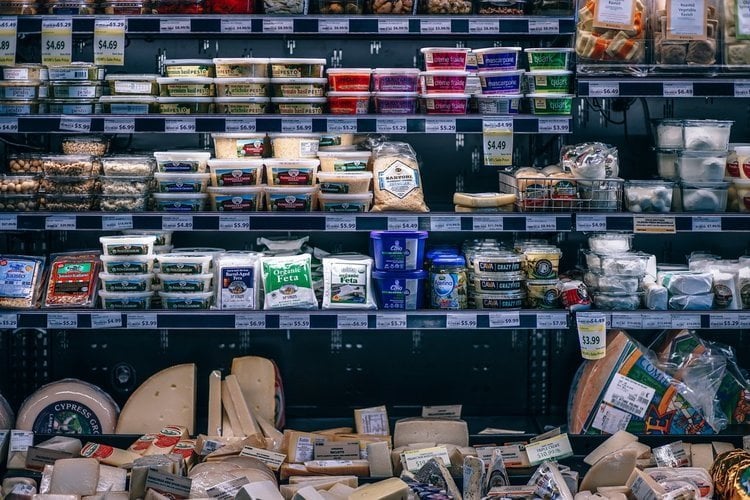
Dairy Aisle in a grocery store. Photo: Dustin Fuhs
A Shift in Consumer Behaviour During Times of Inflation
The study suggests that high food inflation has caused some Canadians to rethink how they interpret best before dates. With grocery costs steadily rising, respondents indicated they are stretching food longer than they would have in the past, rather than disposing of items automatically at the printed date.
“A few years ago, people actually threw away food before the best before date just to be sure,” Dr. Charlebois said. “But now they are stretching their dollars as much as possible. Understanding what these dates mean is very critical.”
Nearly two thirds of Canadians say they now consider food costs when deciding whether to eat a product past its best before date, and seventy-three percent cite financial motivation as a key reason they want to reduce waste.
This shift presents an opportunity for education, retailers, and policy makers to help consumers make informed decisions that save money and reduce waste without compromising safety.
How Retailers Can Support Better Consumer Decisions
The research also provides insight into how Canadians shop and how best before dates influence behaviour at the shelf. Seventy-eight percent of respondents said they intentionally choose items with the farthest future best before date when shopping for groceries. Even when consumers know they may use the product quickly, the force of habit remains strong.
According to Dr. Charlebois, this behaviour is rooted in the way consumers view time when they shop. “Every time people go to the grocery store, they do not just buy food. They buy time,” he said. “They look for these dates because they want to make sure that when they come back from a trip or get busy, they are not wasting food.”
Retailers have an opportunity to help consumers better understand how to evaluate freshness and safety beyond a printed date. This could include clearer signage, staff education, or in-store information campaigns. Some retailers already offer discounts on items approaching their best before date, a practice that not only reduces waste but increases accessibility for cost-conscious consumers.
Dynamic pricing may also play a larger role in the future. When asked whether pricing strategies could help address waste, Dr. Charlebois agreed they can. “That could be one way to do it,” he said. “There is a secondary food rescue economy developing because people actually have more time to look for bargains.”
Apps like Too Good To Go offer another approach, enabling consumers to purchase surplus food directly from restaurants or retailers at a significant discount. “It tells you if there is overstock in whatever businesses have food available,” he noted. “You can pick it up, which is really useful. It is dealing with it more in real time.”
Is Government Intervention Needed?
The study also examined Canadians’ views on whether best before dates should be eliminated altogether. The results reveal that only twenty-seven percent of participants support removing the dates entirely, demonstrating that consumers see them as helpful even if they misinterpret them.
“People look at these dates a lot,” Dr. Charlebois said. “It is the interpretation that needs to change. I think perhaps the government should play a role in that regard.”
Rather than eliminating date labels, the research suggests governments can focus on education. Eighty-six percent of respondents said they would benefit from more information about how best before dates work, what they signify, and how they differ from expiry dates, which indicate safety rather than quality.
Clearer national guidelines or standardized labeling could help bridge these gaps in consumer understanding. Educational materials can also be distributed through community organizations, schools, or public health partners.
Technology and the Future of Food Labeling
While date labels have been used for decades, emerging technologies are beginning to shift how freshness and safety can be measured. Smart labels, which monitor the condition of a product in real time, are already being piloted. These labels can detect the presence of pathogens, changes in temperature, or other indicators of food quality and then visually alert consumers by changing colour.
“We are in an era where there are smart labels telling people when food is no longer edible,” Dr. Charlebois explained. “The technology exists. If you have yogurt in your fridge and there is the presence of pathogens, a label can turn from green to yellow to red. It is just costly at this point.”
As technology becomes more affordable, such tools could help consumers make safer and more accurate decisions about edibility. This would significantly reduce food waste driven by overly cautious interpretations of best before dates.
Something profound is happening in Canada’s food economy, and most people haven’t quite grasped it yet. It’s not a new grocer, a new restaurant chain, or even a new diet trend. It’s a class of medications—GLP-1 drugs such as Ozempic and Wegovy—that are rapidly altering how Canadians eat, drink, and shop.
For years, industry leaders have assumed that food demand is stable, predictable, and tied mostly to income and demographics. But for the first time in modern history, chemistry is reshaping consumption faster than economics.
According to a new national survey conducted by the Dalhousie University Agri-Food Analytics Lab, in partnership with Caddle, approximately two million Canadians are using a GLP-1 drug strictly for weight loss. To put that in perspective, that is roughly the combined population of Manitoba and New Brunswick, or every single person in Vancouver, Calgary, and Halifax combined. In other words: this is not a niche group — it is the size of a province.
And what they’re reporting should make every grocer, restaurant operator, and food manufacturer sit up straight.
More than 51% say they are eating less, 27% are going to restaurants less often, and nearly 19% are buying fewer groceries. This is not a fringe phenomenon; this is a structural shift in demand.
When we model the impact, the numbers are staggering. Conservatively, GLP-1 medications are already removing over $3.3 billion a year from the Canadian food economy—mostly from snacks, baked goods, sugary beverages, and alcohol. These are the categories that keep many retailers profitable. Manufacturers rely heavily on them to fund innovation, marketing, and trade promotions. And restaurants count on impulse-driven spending—desserts, drinks, extras—to stay afloat.
Grocery store carts. Photo: Markus Spiske via Upsplash
But GLP-1 users behave differently. They skip dessert. They drink less. They choose smaller portions. They snack less. In fact, our survey shows sharp reductions in purchases of cookies, pastries, candy, chocolate, salty snacks, soft drinks, and even alcohol. These are not small shifts. They are drops ranging from 26% to nearly 40%.
The food industry is already sensing the shift. Last year, Nestlé launched an entire GLP-1-friendly food product line, explicitly designed for people taking these medications. And this is just the beginning. With billions of dollars now flowing into the GLP-1 market, pharmaceutical companies are quickly becoming addicted to these new revenue streams tied directly to how much people weigh—or don’t. More drugs are in development, more indications are coming, and more consumers will enter the ecosystem. Appetite suppression is becoming big business.
In the United States, early retail data already suggests falling volumes in snack and confectionery. Canada is headed in the same direction—if not faster.
The consequences extend well beyond retailers and manufacturers. Farmers producing sugar beets, wheat for baked goods, potatoes for snack foods, and even barley for beer could feel downstream effects. The food-service sector, already struggling with higher labour costs, may find it even harder to sustain traffic, especially among younger consumers who represent the core of GLP-1 adoption.
Meanwhile, alcohol producers—already dealing with a generation drinking less—now face an additional headwind. Nearly a quarter of GLP-1 users report drinking less alcohol. That is seismic.
Some in the industry still hope this is a passing fad. But our data shows 82% of GLP-1 users have been on the medication for more than three months, and most will likely stay on it for years. This is not a diet. It’s a physiological reset of appetite and reward systems. Once you eat less and feel satisfied, you don’t go back to previous habits.
So what should the food industry do?
First, accept that volume growth will not return to pre-GLP-1 levels. The era of pushing larger portions and maximizing calorie sales is over.
Second, invest aggressively in reformulation: higher protein, lower sugar, smaller formats, and functional ingredients will win.
Third, restaurants need to rethink menu engineering. The “supersize me” model belongs in the museum of food history.
Fourth, policymakers should pay attention. A $3-billion annual drop in food spending affects tax revenues, jobs, and rural economies. We’ve never seen a medication reshape the food economy at this scale.
GLP-1 drugs are not the enemy. For many Canadians, they are life-changing. But the ripple effects are real, measurable, and already underway. The food industry has a new competitor—one that lives in your medicine cabinet.
As retailers gear up for the 2025 holiday season, transaction data from Moneris, Canada’s leading commerce provider, shows that in 2024, Black Friday claimed the top spot as the busiest shopping day of the period, overtaking the final pre-holiday rush.
Several factors may have been behind this shift:
The Canada Post strike, which began November 15, 2024, likely pushed shoppers to buy earlier and in person to avoid delivery delays.
Renewed enthusiasm for Black Friday deals, paired with ongoing cost-of-living concerns, made early discounts especially appealing.
With similar factors expected to be at play this year, Black Friday could once again lead the pack.
Other spend insights from 2024
Holiday spending continued to centre around a few key days, with Black Friday out in front, followed closely by the final stretch before Holiday. Overall, other important days in the holiday retail calendar included:
December 23, which reached 93% of Black Friday’s total spend.
December 20, just 2% behind December 23.
Cyber Monday jumped to the tenth busiest day, up from 17th in 2023, likely boosted by early online shopping amid delivery concerns.
“With similar economic motivators at play this season, retailers should expect Black Friday to remain a key driver of holiday sales. Whether Black Friday repeats as the busiest shopping day this year remains to be seen, but Moneris will continue to monitor and report on trends this holiday season,” he said.
“While Black Friday leads the way, there are plenty of other key moments for retailers to watch. The battle between those who shop early and those who leave it to the last minute is timeless. As businesses prepare for this year’s holiday season they should also watch out for the final days just before Holiday, which aren’t far behind Black Friday when we compare spending volume.”
“Regional spending patterns continue to show there’s no one-size-fits-all approach to the holiday season. Spending growth in provinces like Quebec and Alberta highlights the benefits of early promotions and consumer confidence, while other markets are showing signs of cautious optimism heading into this year’s peak shopping period.”
“But with the holiday season approaching, it’s critical for businesses to understand the latest fraud trends. By recognizing warning signs and securing their payment systems, businesses can better protect themselves during this high-traffic time of year,” said Holder.
“When businesses enter payment details manually, they put themselves at risk as these methods lack the security safeguards needed to help prevent chargebacks. Mail order and telephone order transactions contributed to 70 per cent of reported fraud cases among small businesses in 2025. Instead of taking card details over the phone or by mail and manually entering them, we encourage businesses in these scenarios to accept payment via secure gateways with 3D Secure 2.0 enabled.”
“While overall fraud cases are down, our data shows that fraudsters are shifting strategies. For instance, we’ve seen a dramatic drop in Refund Fraud on Stolen Devices—from 11 per cent of cases in 2024 to less than one per cent in 2025. That’s encouraging, but it’s not the end of the story. A slight uptick in other refund-related scams reminds us that fraudsters are simply changing tactics—not disappearing. Businesses need to remain vigilant and proactive year-round.”
Ranking of holiday season dates by volume for retail businesses
Rank
Date
Compared to the busiest day
1
Friday, November 29, 2024 (Black Friday)
100%
2
Monday, December 23, 2024
93%
3
Friday, December 20, 2024
91%
10
Monday, December 2, 2024 (Cyber Monday)
74%
55
Thursday, December 26, 2024
46%
About the data: Ranking of dates during the holiday season (November 1 to December 31) in 2024 based on volume for retail businesses. “Compared to the busiest day” takes a given day’s volume and divides by Black Friday’s volume. Moneris reports measure spending in Canada across a range of categories by analyzing transaction data. The figures cited are derived from aggregated transaction data being processed by Moneris in the applicable categories.
Well-known Canadian brand Panago Pizza is unveiling a refreshed brand and menu designed to meet the moment, bringing Canadians better pizza, fresh flavours, and more ways to save, the company says.
With a new rallying cry, “Panago for it!” the company said its re-energized look and updated menu offerings celebrate delicious pizza and great value because the company believes life’s too short for bad pizza.
“This is about getting back to what we do best: making great pizza and sharing it with Canadians,” said Sean DeGregorio, CEO, Panago Pizza. “We’re reinvigorating our franchise family and customers by delivering great ingredients, fresh new flavours, and deals to make enjoying pizza easier than ever.”
The company said the updated menu keeps fan favourites while introducing fresh new items. Executive Chef Ryan Stone has led the culinary evolution, developing new recipes prioritizing premium Canadian ingredients. Every Panago pizza features 100% Canadian wheat in every crust, 100% Canadian cheese, and organic tomato sauce.
Photo: Panago
“New menu highlights include the Pesto Garden Medley and Tuscan Pesto Pizzas, flavourful new pizza drizzles, and a lineup of speciality sides, including Mozzarella Triangles and Crispy Ravioli, plus Churro Bites for dessert. Panago’s Everyday Value Menu, launched earlier this year, gives customers more options to enjoy premium pizza at an affordable price. These deals are being offered alongside limited-time deals to celebrate the launch, including Wing Wednesdays (75¢ wings) and free Garlic Bread combos.
Canadians can expect to see a new national commercial, advertisements and new box designs. There are also exclusive offers and limited-time deals on the Panago mobile app, where users can easily place orders for pickup or delivery, added the company, which was founded in 1986 and has 170 locations across the country.
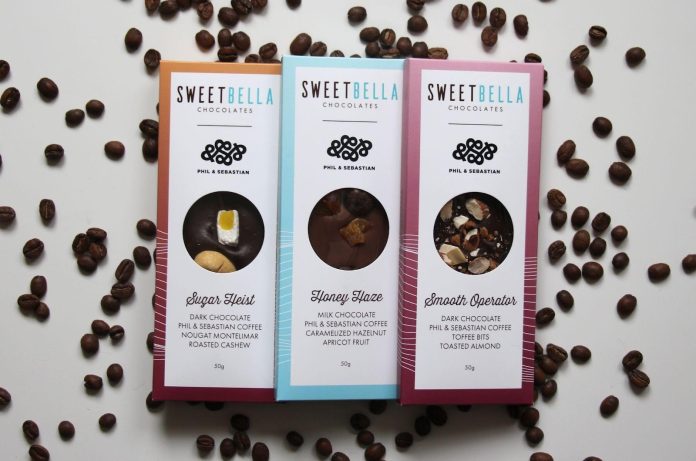
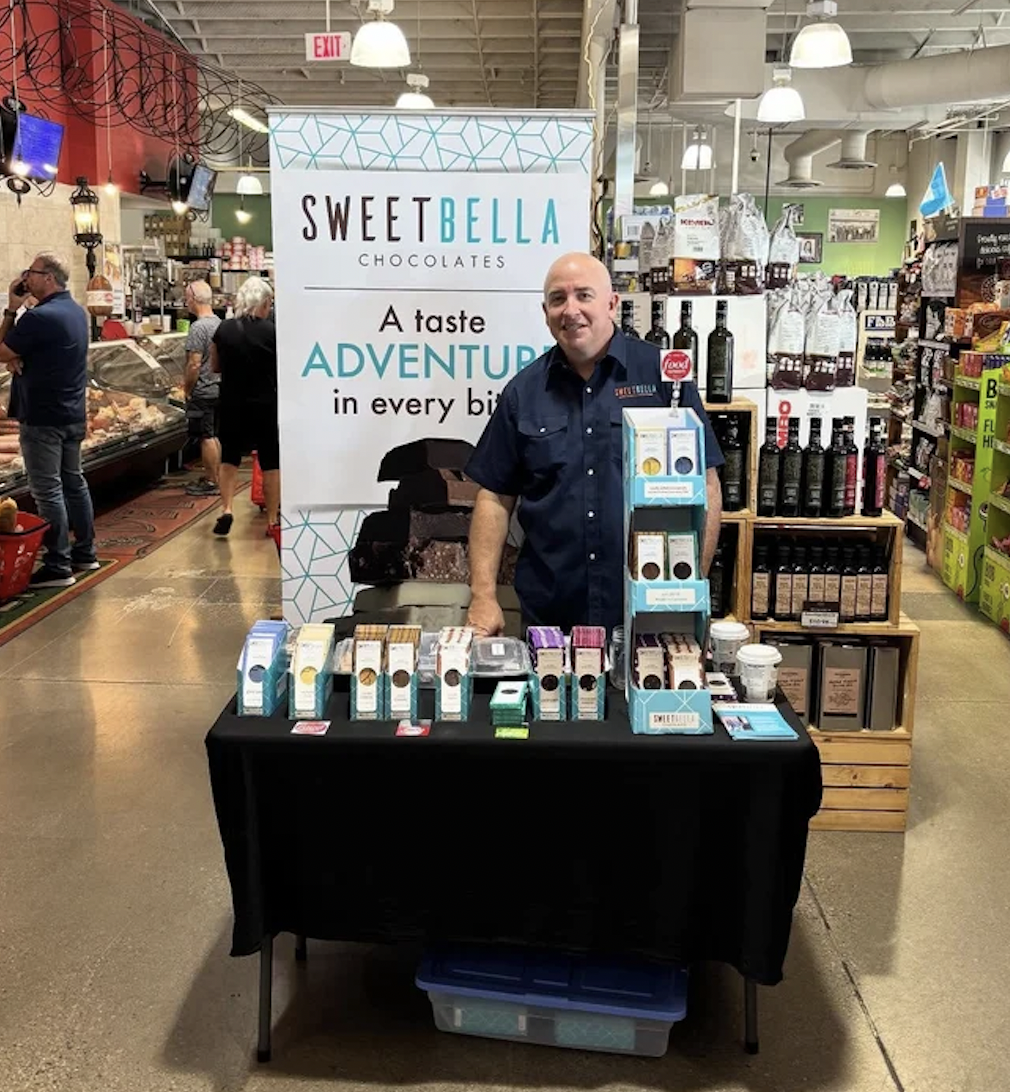
Two Calgary brands are teaming up to bring chocolate and coffee lovers alike something special. Sweet Bella Chocolatesand Phil & Sebastian Coffee Roasters have announced a new partnership that celebrates local craftsmanship, collaboration and community spirit.
Sweet Bella’s handcrafted chocolates will be available at select Phil & Sebastian Coffee locations across Calgary. The partnership highlights both companies’ shared dedication to quality, creativity and supporting fellow local businesses, according to a news release.
“From the beginning, our goal at Sweet Bella Chocolates has been to create moments of joy through thoughtful, handmade confections. Partnering with Phil & Sebastian, a brand that has long represented excellence in Calgary’s coffee culture, feels like a natural fit. We’re proud to collaborate with a company that shares our values and our love for local,” said Kevin Conniff, Founder of Sweet Bella.
Kevin Conniff
“We’ve always believed in supporting local makers who care deeply about their products. Sweet Bella brings that same level of passion and precision to their craft that we strive for in every cup of coffee. Together, we’re excited to offer Calgarians something that feels truly homegrown,” said Rob Oppenheim, Director for Phil & Sebastian.
Rob Oppenheim
The brands say the latest collection of Sweet Bella and Phil & Sebastian bars introduces three irresistible flavours: Sugar Heist, a dark chocolate bar with nougat montélimar and roasted cashews; Honey Haze, a creamy milk chocolate bar with caramelized hazelnuts and apricot; and Smooth Operator, a dark chocolate bar layered with buttery toffee bits and toasted almonds.
The new lineup is available at select Phil & Sebastian locations and online at sweetbellachocolates.com.
The 2025 eBay Recommerce Report, released Tuesday, reveals that the recommerce (the buying and selling of pre-owned goods) market has shown global momentum and resilience in a year marked by trade dynamics and continued consumer pricing pressures.
Nearly nine in 10 consumers surveyed plan to maintain or increase their spending on pre-loved items, reflecting how economic pressures and value-seeking behaviour are accelerating this trend, said the report.
The report reveals a broad movement propelled not just by affordability, but by sustainability, self-expression, and community values. Saving money remains a top motivator – 81% of global consumers feel good about the money saved when buying pre-owned – but nearly as many cite non-financial reasons.
“Almost half (45%) of consumers rank environmental benefits among their top reasons for shopping pre-loved. Many also cherish the “thrill of the hunt” for unique finds (65% enjoy the search for second-hand treasures) and the personal satisfaction of giving products a second life,” explained eBay.
“Young consumers are leading this evolution. Gen Z and Millennials, in particular, have embraced recommerce as part of their lifestyle — nearly 80% say they see themselves as part of the movement, and 59% of Gen Z and 56% of Millennials plan to increase their spending on pre-loved items in the year ahead.
Photo: Nataliya Vaitkevich
“At the same time, this mindset is becoming cross-generational, reflecting a broader shift toward mindful consumption and community-driven commerce. More than half of consumers (56%) say that buying pre-loved allows them to express their personal style, and 63% report feeling connected to a recommerce community through their second-hand shopping.”
eBay said the recommerce boom shows no sign of slowing – it’s even influencing holiday shopping habits. New survey data reveals 78% of consumers globally (82% in the U.S.) are more likely to purchase a second-hand gift this year compared to last, highlighting how deeply recommerce is becoming ingrained in consumer behaviour.
Key Findings
● Widespread adoption: Nearly 9 in 10 consumers plan to maintain or increase their spending on second-hand goods in 2025, confirming that recommerce has gone mainstream. Younger generations are driving this trend, with 59% of Gen Z and 56% of Millennials expecting to buy more pre-loved items in the coming year;
● Affordability & sustainability: 81% of shoppers feel good about the money they’ve saved by buying used items, but value isn’t the only appeal. Nearly half of consumers (45%) include sustainability and environmental impact among their top three reasons for shopping pre-owned – demonstrating that eco-conscious values and purpose (68% say they feel good about giving items a second life) are major drivers of recommerce beyond just low prices;
● Self-expression & community: More than half of consumers (56%) agree that purchasing pre-loved goods allows them to express their personal style. The social aspect is also strong – 63% consider themselves part of a recommerce community of buyers and sellers, and 65% say they enjoy the “thrill of the hunt” when searching for second-hand treasures.
● Holiday shopping shifts to second-hand: 78% of respondents globally – and 82% in the U.S. – say they are more likely to purchase a second-hand gift this year compared to last year. This indicates a significant year-over-year increase in consumers’ openness to gifting pre-owned items.
● Seller empowerment and motivations: Recommerce is enabling micro-entrepreneurship – 86% of eBay sellers report sourcing inventory from their own households (reselling items they already own). Many are motivated by more than profit: 63% of sellers cite “giving items a second life” as a key reason they sell, underlining the community’s shared purpose and the personal fulfillment sellers gain;
● Global momentum across markets: The rise of resale is evident worldwide. Over half of consumers in the U.K. (52%) and Spain (46%) plan to spend more on second-hand goods this year than last. In Italy, 77% of shoppers feel good about giving items a second life through recommerce, and in the U.S., 86% are happy about the money saved on pre-loved purchases – underscoring the universal appeal of recommerce across different economies and cultures.
The report also found that 89% of consumers expect to spend the same or more on pre-loved goods in 2025; 42% plan to increase their pre-loved spending next year (11% “a lot more,” 31% “a little more”); the trend is led by Gen Z (59%) and Millennials (56%), who expect to increase their spend at notably higher rates; and 35% purchase pre-loved goods monthly or more often.
Consumers were asked to choose their top three reasons for recommerce:
Retail Insider is streamlining its Canadian retail news from around the web to include a handful of top news stories that can be viewed quickly during the day. Here are the top stories from the past 24 hours.
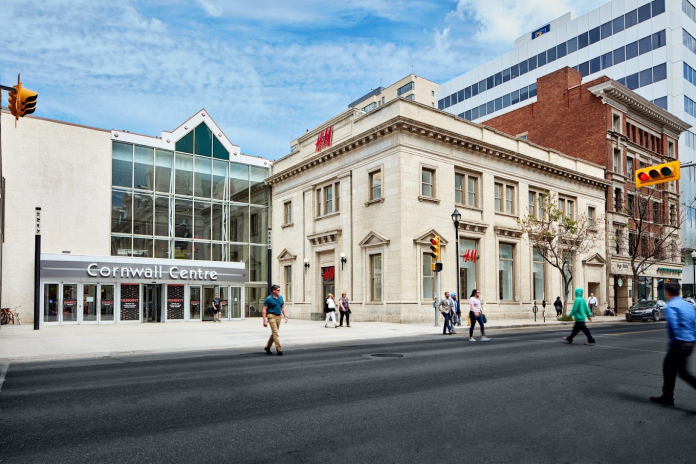
Cornwall Centre in Regina. Photo: Cornwall Centre/Cushman & Wakefield
Cornwall Centre has opened a new Regina Police Service workspace on its main level near the Saskatchewan Drive East entrance, a move aimed at keeping officers in the core during their shifts and reducing time lost to travel for routine paperwork. The non-public space, launched on November 13, serves as a base for the Downtown Safety Team and Alternative Response Officers.
“Cornwall Centre is happy to make this space available to the Regina Police Service in support of the Downtown Safety Team,” said Katie Dockham, General Manager, Cornwall Centre. “We are dedicated to building a stronger, more vibrant downtown for everyone, and this new office is intended to serve the greater good of the community.”
Katie Dockham, General Manager, Cornwall Centre
Mall management positioned the room at a busy entrance with direct street access and dedicated stalls for police vehicles. The workspace is steps from the centre’s security office, allowing officers to coordinate quickly with on-site personnel. The objective is straightforward: officers can file notes and reports without leaving the district, which helps sustain a visible presence in the highest-footfall parts of the core.
Focus on presence and response in the core
The Cornwall Centre police office supports the city’s post-pandemic approach to downtown safety. Dockham said the Downtown Safety Team is now dedicated to the core for the entirety of a shift, addressing a historic coverage gap that emerged when teams were routinely pulled to calls in other parts of Regina.
“For years we were seeing a large gap in police coverage downtown,” Dockham said. “The Downtown Safety Team is now dedicated to the downtown when they are on shift. They are no longer being pulled to other calls outside of the core.” She added that the Alternative Response Officers program, modeled on a Saskatoon initiative, has expanded after a successful pilot. “They work in conjunction with the Downtown Safety Team, usually in groups of twos or fours,” she said. “The program has been a great success.”
The centre’s scale underpins the choice of location. Cornwall is a large, high-traffic property with a steady cadence of calls for service in cold-weather months. “We have a roughly 600,000 square foot public space,” Dockham said. “We were seeing a real need over the past couple of years, which uncovered the opportunity for the partnership to build a police office inside the centre.”
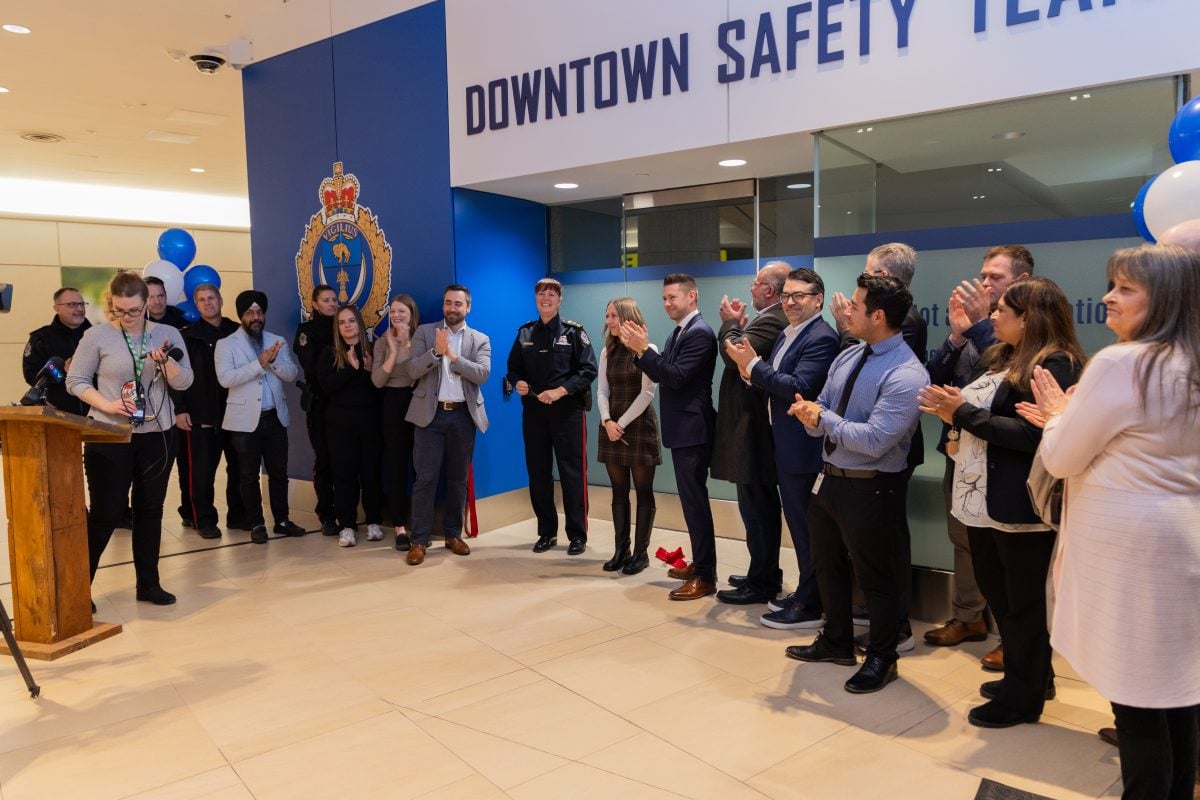
Grand opening of Regina Police Service at Cornwall Centre in Regina. Photo: Cushman & Wakefield
Turning a former guest services desk into a working room
The new workspace occupies the centre’s former guest services unit. The site offered several advantages: direct exposure to Saskatchewan Drive East, ease of arrival for patrol vehicles, and adjacency to the mall’s security base. “That space was quickly identified,” Dockham said. “It is very close to our security office, which they naturally spend quite a bit of time with, so it became an ideal site.”
Cornwall Centre emphasized that the room is not a public precinct. It is a small, functional workspace designed for report writing, coordination, and brief resets between calls. Officers remain on regular patrols in and around the mall and throughout the core. The arrangement is intended to maintain coverage and reduce the friction that comes from leaving the district for routine documentation.
Regina Police Service at Cornwall Centre in Regina. Photo: Cushman & Wakefield
Addressing perception and reality for shoppers and retailers
Management framed the move as part of a broader effort to stabilize and grow downtown retail. Dockham pointed to the distinction between discomfort and genuine risk, and to the role of visible service teams in shaping how customers feel about spending time in the core.
“We battle downtown safety perception challenges,” she said. “There is a big difference between feeling uncomfortable and feeling unsafe. The new police office changes perception because people naturally feel safer when there is a visible service presence.”
She said the partnership also acts as a deterrent. “The presence of Alternative Response Officers and the partnership with our security team and the Downtown Safety Team acts as a deterrent for those who do not want to follow the properties code of conduct.”
Cornwall Centre framed the initiative as city-building rather than a mall-only solution. “This is meant for the greater good of the downtown,” Dockham said. “It is to keep officers in the downtown area. We had great buy-in from our neighbours and the Downtown Business Improvement District.”
Regina Police Service at Cornwall Centre in Regina. Photo: Cushman & Wakefield
Leasing momentum feeds the retail narrative
The centre tied the safety initiative to its recent and upcoming leasing activity. JD Sports opened and has “done nothing but boost productivity,” Dockham said, while Reitmans returned to the core after consolidating elsewhere in the city. For 2026, Cornwall confirmed Hot Topic, Unique Bunny, and MINISO.
“Progress is also emerging in large-format space. Urban Planet occupies the entire second level of the former Sears box, with Ardene on the lower level. Dockham said there is strong interest in about 30,000 square feet that remain. The former Hudson’s Bay department store, which closed earlier in 2025, also represents a major redevelopment opportunity in the core. Cornwall Centre confirmed there has been significant interest in the site from potential tenants and developers, though details have not yet been announced.”
Streetscape investments align with retail goals
The opening of the police workspace comes as the City of Regina advances multi-year streetscape and infrastructure work in the core, including upgrades along 11th Avenue and Dewdney Avenue. The combined effect supports both the journey and the destination: new sidewalks, lighting, landscaping, and transit shelters, paired with a stronger officer presence where people shop and work.
“It is part of a greater revitalization,” Dockham said. “One thing leads to another. You start to clean things up in one area and it can really change the perception of a potential visitor. We truly believe the future of downtown Regina is very bright. I see it returning to a place where people want to come, where we can get back to later night shopping hours.”
Grand opening of Regina Police Services at Cornwall Centre in Regina. Photo: Cushman & Wakefield
Operational details and expected outcomes
Cornwall Centre said expectations have been set for officers to use the workspace several times a day while maintaining a visible presence across the core. Because the room is not public-facing, shoppers will see minor changes in layout or signage at the entrance. The difference will be measured in efficiency: reports entered on site, coordination handled next to security, and shorter travel times between calls.
That efficiency translates to retail. For tenants, a calmer trading environment reduces disruptions and allows store teams to focus on customers. For shoppers, a steady, predictable presence eases decision-making about when and where to visit. The approach also gives the Regina Police Service clear metrics to track, including response times and incident categories, that can be assessed against pre-opening baselines.
Ownership support and national context
Cornwall Centre is owned by IMCO and managed by Cushman & Wakefield Asset Services. The firms supported the conversion of the former guest services unit and the operational framework with RPS. The partnership places Regina alongside other Canadian malls that have used in-centre workspaces to support patrol teams serving dense areas, though Cornwall said it is the first major shopping centre in Saskatchewan to adopt the model in this form.
The mall underscored that the Cornwall Centre police office is not a substitute for broader investment. Rather, it is one of several coordinated steps that together can shift shopper sentiment and retailer confidence. “We get to be a bigger voice for the little guys who do not necessarily get heard,” Dockham said. “The police office helps propel the other positive things, because people need to feel safe and protected in order to battle perceptions and want to come back downtown again.”
Launch timing and next steps
The ribbon-cutting took place the morning of November 13, 2025, with senior RPS leadership and members of the Downtown Safety Team and Alternative Response Officers in attendance. Cornwall’s management said the two-stage media approach, which began with hoarding and renderings and culminated in the opening, allowed stakeholders to see the project’s progression and intent.
While the workspace is operational, Cornwall plans to continue coordinating with the police service and downtown partners through the winter trading period, when foot traffic spikes and cold weather raises the stakes for quick, local responses. The centre said it will continue to emphasize clarity of roles between security, Alternative Response Officers, and sworn officers, and will keep reinforcing expectations around conduct for all visitors.