

As Hudson’s Bay continues its restructuring under bankruptcy protection, questions loom about whether the historic retailer can be reborn—and if so, what shape it will take. While some anticipate a full wind-down or real estate selloff, others see an opportunity for transformation. What if Hudson’s Bay pivoted to become a curated Canadian house of brands, supporting local designers, showcasing Canadian products, and reimagining the department store experience?
Retail Insider spoke with three industry experts—retail and interior design strategist Ashwin Raman, Toronto Fashion Incubator’s Executive Director Susan Langdon, and retail strategist Carl Boutet—about what a future Hudson’s Bay store could look like under a bold new concept.
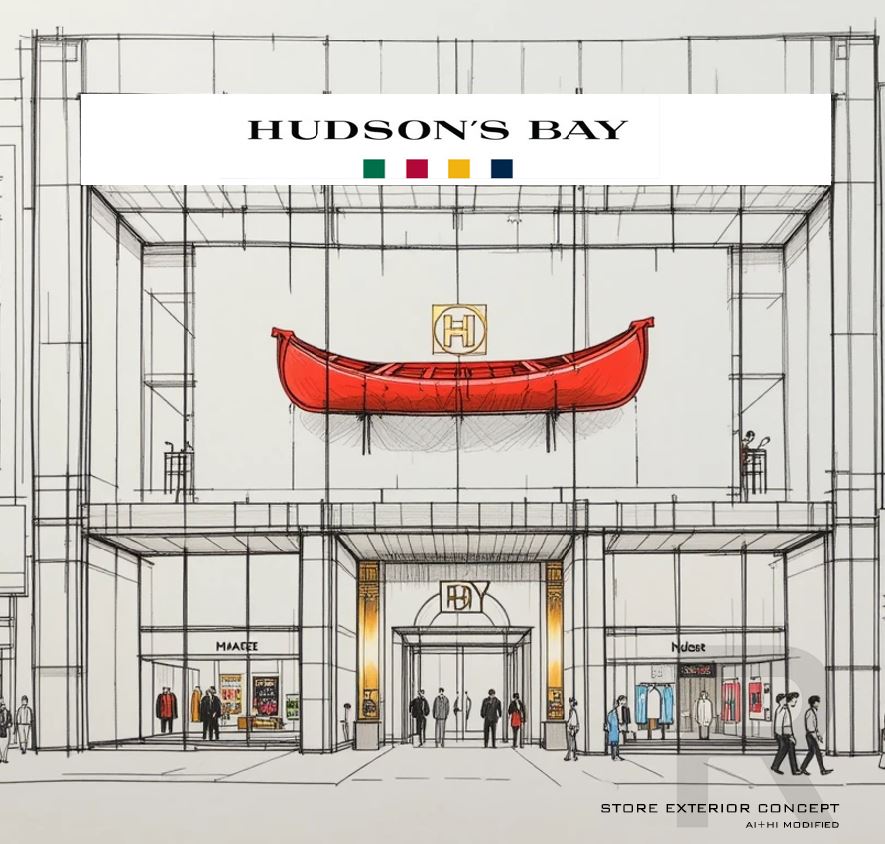
Design with Identity: Curated Zones and Branded Spaces

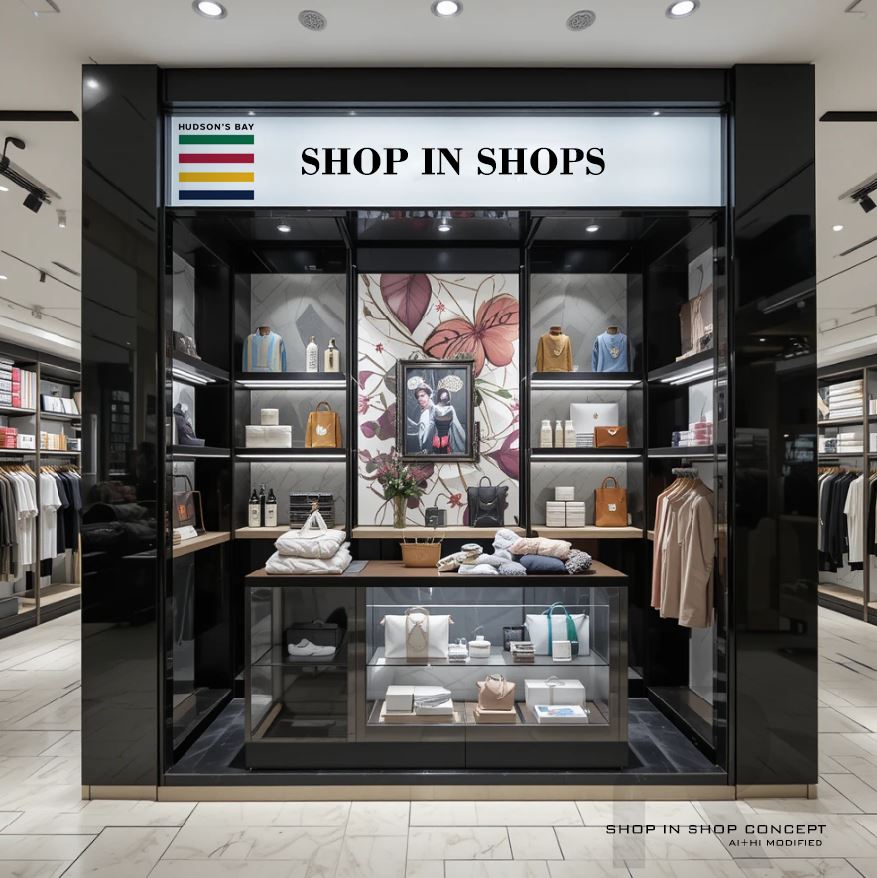
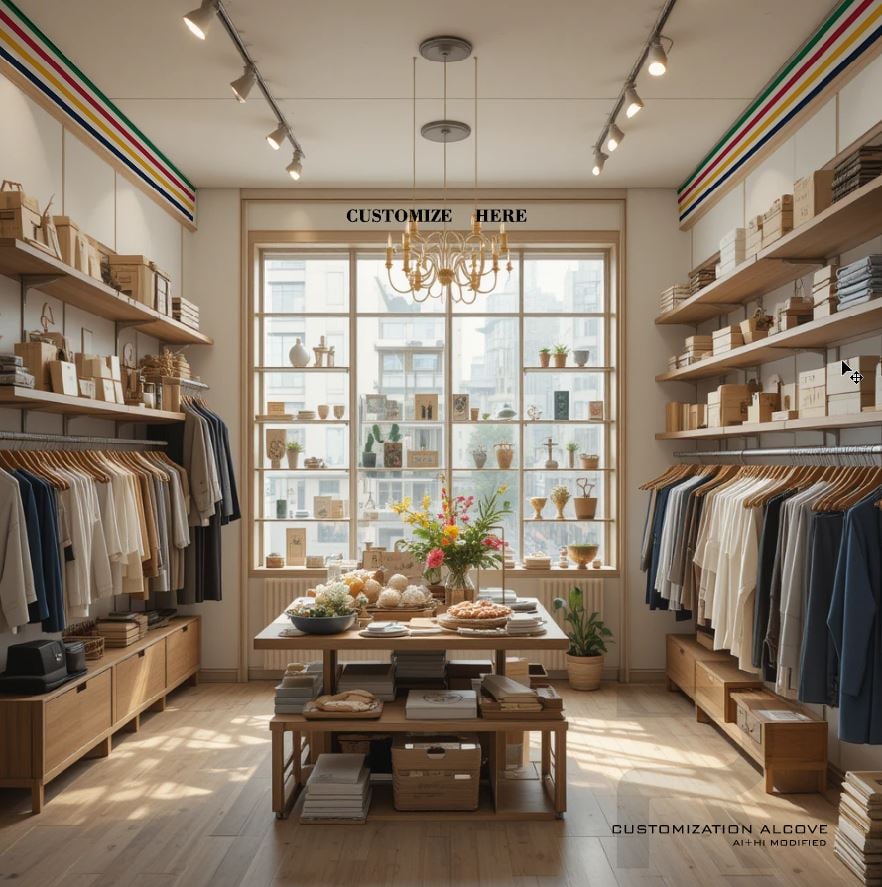
For Ashwin Raman, a former design leader at Walmart and a visionary in experiential retail, the future Hudson’s Bay must break from traditional department store models. Instead, he imagines a “shop-in-shop” concept where Canadian and international brands operate within dedicated spaces.
“If the brands can actually use the guiding principles of Hudson’s Bay but be given some freedom to curate their space, you suddenly get something that feels like a cross between a mall and an art gallery,” said Raman. “It’s branded, it’s immersive, and it’s exciting.”
Raman suggests zoning the store thematically—dedicated areas for Canadian fashion, youth culture, and family-friendly experiences. One idea is a ‘Canada Zone’ that evokes national nostalgia and features garments made from Canadian textiles. These could be interspersed with changing activations such as a Minecraft-themed kids’ area or pop-ups from emerging designers.
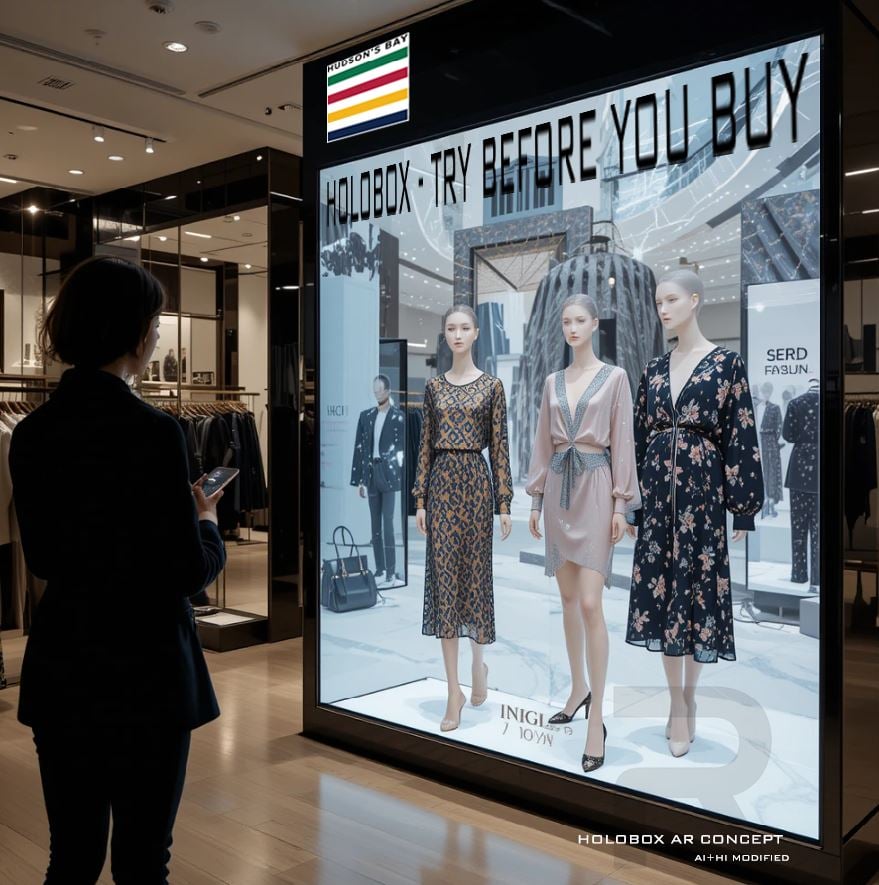
Elevating the Store Experience with Technology and Hospitality
Beyond merchandise curation, Raman emphasizes technological innovation. He proposes smart mirrors, augmented reality try-ons, and RFID-based checkout systems that eliminate wait times.
“Imagine picking up a garment, scanning it into your app, and walking out. It’s seamless,” said Raman. “We can turn Hudson’s Bay into a hybrid of experiential retail and operational efficiency.”
He also envisions illuminated portals and holographic walkways that guide customers between different “zones” of the store, enhancing both navigation and wonder. “We can create the feeling of walking through different time zones, where sensory elements like mist, lighting, and sound change the environment.”
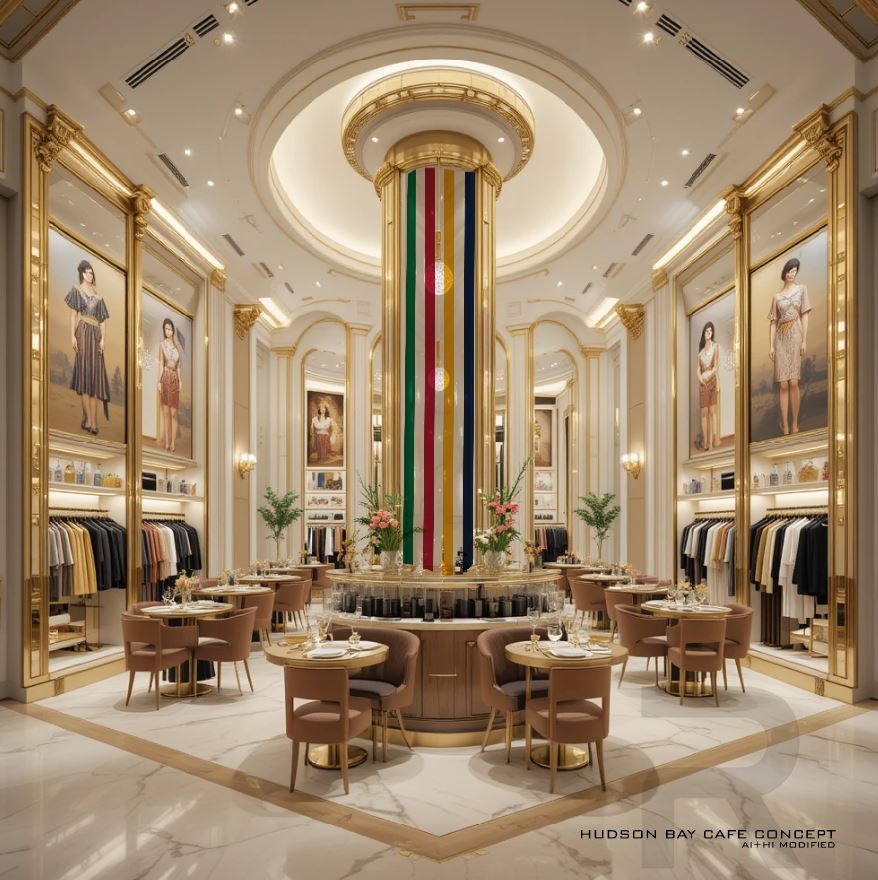
To encourage dwell time, Raman proposes turning parts of the store into hybrid café-lounges and lifestyle spaces where people can browse books, purchase home décor, or simply relax with a coffee served in Hudson’s Bay branded porcelain. “Think of it like IKEA—but with Canadian brands and storytelling,” he explained.
Celebrating Canadian Talent and Restoring Trust

Susan Langdon, Executive Director of the Toronto Fashion Incubator and a longtime advocate for Canadian designers, believes this is a pivotal moment to champion local talent—if done right.
“Anything that supports Canadian fashion, I’m all in,” Langdon said. “But if Hudson’s Bay truly wants to support Canadian designers, it has to go beyond the product. It must include marketing, storytelling, and most importantly, paying vendors on time.”
She points to successful legacy initiatives like the Stripes program and The Room, which historically supported Canadian fashion, though inconsistently. She recommends making such programs permanent—with rotating collaborations every couple of months across apparel, accessories, home décor, and beauty.
“Bring in new designers six times a year. Let customers meet them, attend trunk shows, learn the stories behind the collections. Consumers are looking for experiences, not just transactions,” Langdon emphasized.
Rebuilding a Legacy Brand with New Purpose

Retail strategist Carl Boutet agrees that a smaller, focused format would be more viable than reviving the current sprawling locations. “HBC as we know it will cease to exist,” he said. “But nothing stops it from reincarnating as a specialty retailer—a Canadian house of brands.”
Boutet sees potential for Hudson’s Bay to become a destination for “Canadiana,” but warns it must avoid veering into “tourist shop” territory. “We don’t want it to be all t-shirts and moose magnets. We have great brands here—Quartz Co., Roots, Sentaler, even smaller players like Wednesday Swimwear.”
Like Langdon, Boutet believes that regaining vendor trust is essential. “Any new ownership must ensure purchase orders are honoured. Even if it’s a new owner, that stigma from past late payments will linger unless there’s transparency and discipline.”
Boutet also floats the idea of a consortium of Canadian brands co-owning the concept, turning Hudson’s Bay into a shared platform rather than a traditional retailer. “Think of it as the Eaton Centre brand living on even after Eaton’s itself disappeared. There’s equity in the name—it just needs new meaning.”
Is the Market Ready for Made-in-Canada Retail?
Recent sentiment around buying Canadian has been strong, driven in part by trade tensions and a surge in national pride. However, all three experts agree that sustaining this momentum will be a challenge.
“There’s always a risk people revert to old habits,” said Boutet. “We’re in a price-sensitive economy, and not everyone has the luxury to buy based on values.”
Langdon echoed that concern. “Right after the bankruptcy news, the Canadian patriotism was intense. But even now, you can feel it fading a bit. We need a nationwide campaign—provincial and federal—to back this effort.”
Both Langdon and Boutet pointed out that Canadian fashion is historically underfunded. While cities like Toronto support the industry, there’s a lack of provincial and federal recognition. “Canada classifies fashion as a consumer good—on the same level as paint or socks,” Langdon said. “That classification really hurts us.”
Reclaiming Canada’s Fashion Identity
Despite the headwinds, Langdon is optimistic. “We’ve had iconic Canadian brands—Mr. Jax, Le Château, Linda Lundström, Lida Baday. In the ’80s and ’90s, we had 800 Canadian stockists buying local designer goods. That can happen again.”
She believes a reimagined Hudson’s Bay could become a catalyst for reviving the national fashion identity. “It should be more than a store. It should be a cultural space—a place where Canadian heritage, craftsmanship, and community come together.”
Raman agrees, suggesting that select stores serve dual roles as retail and distribution hubs. “Instead of shipping from a warehouse far away, use the stores to fulfill online orders locally,” he said. “It increases efficiency and offers customers instant gratification.”
The Path Forward
The fate of Hudson’s Bay is still uncertain. Sources suggest multiple bids are in play, including from current owner Richard Baker (or a related ‘management team’ as one source said) and from Vancouver-based mall operator Weihong Liu. Another former executive is also said to have expressed intent to buy HBC, along with financial backing. But no matter who takes over, the consensus among these experts is clear: to survive, the Bay must evolve.
That evolution could mean shedding outdated models and embracing its Canadian roots in a meaningful, forward-looking way. “This is a rare moment to turn things around,” said Boutet. “A house of Canadian brands could resonate deeply—if it’s done with authenticity and respect.”
As the rollercoaster ride continues, one thing is certain: Canadians are watching, and many are quietly rooting for a rebirth. If Hudson’s Bay can rebuild not just as a retailer but as a symbol of Canadian creativity and community, it might yet write its most compelling chapter.







Window displays are so key. Please feature exhibits from local Fashion Programs and local Fashion Week Videos. Love the idea of focusing on The Stripes Collections and The ROOM!
Someone needs to do a story on Richard Baker. Why is he supposedly putting a big on for Hudson’s Bay? He is the one person who is to blame for driving The Bay into the ground and robbing it clean. He knows what he is doing, looking at Hudson’s Bay Company Stripes, they rebranded that collection as Stripes HBC… so he could potentially sell it for more cash and not have it associated with HBC, before it was already branded at Hudson’s Bay Company on any striped item sold. I smell something very fishy going on at HBC. Richard Baker could care less about Canada.
We’ll be doing a story on Richard Baker for sure. And likely not just one. Stay tuned!
I agree with the comment Mark made-if this is true I’m disgusted. Thank you for doing a story on R. Baker.
Your article “Hudson’s Bay Company ULC, the corporate parent of Canadian department store Hudson’s Bay, has announced plans to auction off some of its most historically significant artifacts.” is a must read for all Canadians.
Thank you, Mark, for suggesting a story on Richard Baker.
The private equity industry has done nothing but wreck businesses for decades, ultimately causing job loss and bankruptcy. Richard Baker has no experience as a merchant and uses HBC for its real estate only to take the money that should have been invested in the HBC business. He used the funds to purchase Saks in 2013 and Neiman Marcus & Bergdorf Goodman in 2024.
Sears Canada and US operations were dismantled by an American, Edward Lampert, another PE person, whose only intention was to sell off the retailer’s real estate and not invest in the business.
It’s just criminal that there are laws that keep Private Equity a viable industry when its only intention is to strip a business to its core.
Well, that is for sure. He cares about MONEY MONEY MONEY. So, he cleverly figured out that Real Estate was the true value of HBC, got all of that value out that he could and is now dealing with the remnant retail operation and other stuff. That other “stuff” includes people’s pensions etc. He couldn’t give a care in the world about people. He will continue to plunder HBC until there is nothing at all left., Including dignity, history and living people. Yes, his vulgar decisions will result in the death of ex employees who ring themselves left with nothing to live on and nothing to hope for. HARSH BUT SAD REALITY.
Mark Cohen recently penned an article about Richard Baker in The Robin Report:
https://therobinreport.com/a-requiem-for-the-hudson-bay-company/
Please recognize the customers of the former store and the reasons for their loyalty or not why they shopped there for years then stopped. For me prices were of prime importance. Bay Day was a favourite. Don’t dispel the element of tradition and for the young people where that tradition became a thing of the past. In other words they didn’t shop at “The Bay” like their parents did.
I agree, why would Richard Baker even be permitted to bid on reowning our great Canadian icon treasure, that is said he ran it completely to the ground since acquiring it, so a money line for his other US stores? To quote Shakespeare: “something smells rotten in the state of Denmark” here. I believe this kind of dubious action should be prohibited. Secondly, why did the Bay, the last Canadian 350 year old plus icon not have special heritage protection or safeguards against these kind of flipping type purchases and investments with great lack of integrity or care for it and everyone attached to its name. We must do much better. The Bays demise is indeed tragic because it could have and should have been prevented. We obviously have not learned from the previous downfalls of Eatons, then Simpson Sears…we could have acted to protect the Bay. I truly hope that safeguards will now be put into place to carefully chose and investigate the next owners. Thry should only allow Canadian bidders who will restore with integrity, pride, respect and care of its long legacy; with deep understanding of what it has meant to many of us who grew up with it in their lives and in the lives of our ancestors. Then perhaps with hard work, it can rise it up from the ashes to a historical come back. What a story that would be! Thirdly, it must be developed carefully, to bring back those good ol’ Bay Days which was a hallmark of affordability to buy quality
Canadian goods at a good price. I also hope it can end bring back the authentic Hudson Bay merchandise…..did not get the chance to buy one of those precious wool multi striped Hudson Bay blankets, which I had promised to my mom as a gift. I still think we here in Ottawa the nations capital, should have at least been able to keep a store or two, considering that our Bayshore Mall store is said to have been the store with the most sales in entire country? Thank you
for your attention to my lengthy post….Happy Canadian Easter everyone!
It has never been a criminal offence to run one’s business poorly. Under the free enterprise system, punishment for poor leadership or lousy business decisions is losing one’s job and/or losing one’s investment in the affected company. Baker’s organization took HBC private so it’s his own investment that is being wiped out with the bankruptcy filing.
The problem with the concept of somehow “preventing” poor management destroying HBC is that it would have required a level of governmental involvement in private business that few Canadians would be willing to tolerate. And what makes HBC so important that government should (have) step(ped) in to preserve it when nothing was done to save Sears Canada, Eaton’s, Woodward’s, Dylex or Consumers Distributing?
As far as I can tell, the federal government views only six organizations as so vital to the national economy that it would move heaven and earth to save them: RBC, TD, Scotia, BMO, CIBC and Air Canada.
He’s not “losing” anything. He took out the valuable real estate and he took billions out of his Landlords in order for them to get freedom from the onerous clauses that HBC had in their leases. Some of these leases prevented mall owners from redeveloping their malls to keep up with the times. No tag day for Baker. But brutal consequences for suppliers, etc.. And deadly consequences for employees and pensioners who have been robbed of their well-being and futures.
Well said. Thank you for the sentiment. I truly hope they put some protection in place as this was a founding organization of our Canadian heritage and should be respected as so while progressing and moving forward with integrity while regaaining trust and pride. Perhaps the Canadian government should take a place in this matter. Prayers that Hudson Bay Company will prevail.
We need a European Model dept store, Stockmann in Finland is a great store, especially the flag ship in downtown Helsinki, grocery and a pharmacy in the basement, electronics, pet store, florist etc, and multiple consignments on the 10+ floors. A toy store on the upper floor and even a Hessburger (think McDonalds but x1000 times better). For a country of just over 5 million the Fin’s love the store, and when you tell a local your looking for something most say “have you tried Stockmann?”
This is a cool idea however, Hudson’s Bay HAS showcased “stores within stores” both Canadian brands and otherwise (Olsen, MAC cosmetics, Serpentina Silver, Amor, Rodd & Gunn). HBC owes all of them A LOT of money. They have burned so many vendors, why would anyone trust them. Where would the money come from for this reinvention? Hudson’s Bay has made efforts in recent years to support indigenous communities through limited collaboration and donations, but it’s even unclear where they currently stand ongoing compensation, especially given the continued popularity of the iconic points blanket. All this to say, what Canadian brands would TRUST Hudsons Bay? and how would Hudson’s Bay prove they can be trusted?
This new store concept would, in theory, operate under different ownership. I agree, trust would have to be regained, and hopefully new ownership (with money) could satisfy vendors.
Of course Baker and friends would be the last people on earth to trust!
Hudson’s Bay needs to be bought by a Canadian. Clean start, pick the prime locations maybe 1 in each major city. Revamp the whole model, bring back affordability. Richard Baker robbed The Bay CLEAN and now he wants to place a bid for it? His ego took The Bay high end with very run down stores. The Bay is part of Canada, people wanted to shop there but it was mismanaged and didn’t give people a reason to spend money there. Maybe reopen Zellers and have Hudson’s Bay products mixed in like kitchen, bedding, bath, HBC Stripes but also sell everyday middle class items. Everyone is sick of shopping at Walmart and Amazon. Sure Zellers/The Bay cant totally complete with Walmart on price, but if Giant Tiger can… Zellers/The Bay sure could have an element on competing on price, they could complete on clean bright stores, having more quality private label items, better checkout experience, better customer service (better customer service in Canada is low all people have to say is hello and thank you to customer), and have some quality Hudson’s Bay branded items, better private label clothing, but also the everyday items like cleaning supplies, health and beauty, pantry items to get people in more often. When does a 355 year old company have the chance to start fresh and also come up for sale? Never in our lifetime we will see a company with this much brand recension and rich history to Canadian people come up forsale?
Just look at Winner and Home Sense they have both stores next to each other. Could totally work for The Bay upstairs and Zellers on the main level. They had a Zellers in the basement of The Bay in Winnipeg back in 2010 and it was successful.
I was talking with a worker at The Bay few months ago (before the news about closing) and she said they slowly changed over the Distinctly Home branding to Hudson’s Bay branding and she said it was selling much better, people don’t know the weird private label HBC had but they just had to change the branding to Hudson’s Bay with the same products and it was successful, just goes to show how much value is in that brand for Canadian Shoppers. Its trusted and stands for quality. The Bay just seemed to never lean into its history and branding, just always felt like they had gimmicks of sales and weird private label brands.
Please add former HBC exectuvies Paul Walters & George Heller to your list of interviews!
My solution seems quite simple. The Bay needs to upgrade each of their department stores. From ceilings to flooring and HVAC and escalators and elevators… They need to be gutted and completely redone.
Customer service, sales help and floor support and assistance was another problem.. unless you were in the furniture and bedding area, where salespeople work on commission, then they will do whatever pressure sales techniques to have you buy something.
Last. most of the brands they were selling at the Bay, you can find anywhere else in the mall… most of the time, even cheaper than what the Bay was selling it for, and you got service and assistance likely with your purchase.
The future seems bright and easy. Keep it Canadian. The products they sell, are Canadian made and feature items from every province and territory. Most from small businesses in each region. They can have consignment and sell floor space and the Bay can be set up and divided into the different provinces and territories with the featured department bringing some of that region’s esthetics, artwork, etc
It took me moments to come up with a concept that I even talked about when I worked for HBC in the early 2000’s. It bothered me to no end the way they were doing business and merchandising the Bay and Zellers stores and their Home Outfitters stores and anything else that was under their umbrella of stores. It was the same junk. Not what people wanted, but what they assumed they wanted. Zellers was a mom store, the Bay’s competitor wasn’t Walmart, but Holt Renfrew… everything didn’t make sense.
Department stores aren’t suffering when done right. Look at Ikea, Canadian Tire, Walmart… They all know who the customer is and ther are the items you want, when you want them at a price you are willing to pay, or you know it will go on sale. Plus, there is the service and help when you need it, most of the time.
The last time I tried to shop at The Bay was for shoes (Queen and Yonge in Toronto.) They didn’t have my shoe size in every single shoe I was interested in. I’m a size nine which is not an outlier so there was no good reason to be out of stock for so many items. I felt sorry for the salesman but eventually I gave up and went somewhere else. Clearly they have very low levels of inventory because they don’t have the money to keep inventory at a reasonable level. The future of retail is in trouble across the board. The only way they are going to survive is to augment their store sales with a healthy online business. If they manage to do that, along with some of the good ideas presented in this article, they stand a chance. It would be a real shame if we lost The Bay considering their place in Canadian history.