In response to Bill 11, which amends various provisions primarily for the purpose of reducing regulatory and administrative burdens, representatives of the spirits industry and the food retail sector welcome the Quebec government’s willingness to simplify the regulatory framework, but deplore the fact that their request to expand the sale of ready-to-drink spirits in supermarkets and convenience stores was not accepted.
“Currently, only spirit-based ready-to-drink beverages must be sold at the SAQ, while malt, wine, and cider-based beverages, despite having comparable alcohol content, are available in grocery stores and convenience stores,” according to a news release.
A recent Léger poll conducted on behalf of Spirits Canada reveals overwhelming support among Quebecers for the sale of ready-to-drink spirit-based beverages in grocery stores, supermarkets and convenience stores. Among consumers of these products, 91% of regular consumers and 77% of occasional consumers say they are in favour of this change.
Cedric Salibi
“The message from Quebecers is very clear: they want choice, consistency, and fairness,” said Cedric Salibi, Senior Vice President, Policy and Analytics at Spirits Canada. “The alcohol content of ready-to-drink spirit-based beverages is comparable to that of other alcohol-based beverages and offers unparalleled diversity. It is time to modernize outdated regulations and allow the sale of ready-to-drink spirit-based beverages in grocery stores and convenience stores in Quebec.”
The UQMD supports this reform, which would strengthen Quebec’s domestic spirits sector and contribute directly to the economic vitality of the regions.
Nicolas Bériault
“According to a study conducted earlier this year by the UQMD, the sale of ready-to-drink beverages in grocery stores and convenience stores would generate $15.1 million in additional revenue for our members,” said its president, Nicolas Bériault. However, at present, ready-to-drink beverages with the same alcohol content are sold through two different sales channels simply because some are spirit-based and others are malt- or wine-based. It makes no sense: consumers buy a container and an alcohol content, not a list of ingredients. This kind of regulatory easing would offer a great opportunity to modernize an outdated law in our sector.”
In addition to the UQMD, the two main retail trade associations have expressed their support for expanding their offerings to include ready-to-drink spirit-based beverages, in the same way as other categories of ready-to-drink beverages.
Michel Rochette
“Quebecers’ shopping habits have changed over the past few years; this is the natural evolution of a vibrant market,” explains Michel Rochette, President of the Retail Council of Canada – Quebec. The spirits segment has grown significantly, both in terms of quality and reputation, in Quebec and elsewhere in the country. In this context, it is only natural that grocery store offerings should adapt as well. The arrival of ready-to-drink spirit-based beverages would be a logical development of the current offering and would help to rectify a situation that has become difficult to justify.
Pierre-Alexandre Blouin
Pierre-Alexandre Blouin, president and CEO of the ADA, is delighted that Quebecers are open to expanding the sales networks for these products. “If there is one type of business that listens to its customers’ needs, it is grocery stores. The survey conducted for Spirits Canada confirms that consumers want greater and more convenient access to these ready-to-drink beverages, and as local stores, grocery stores are ideally suited to meet this demand.”
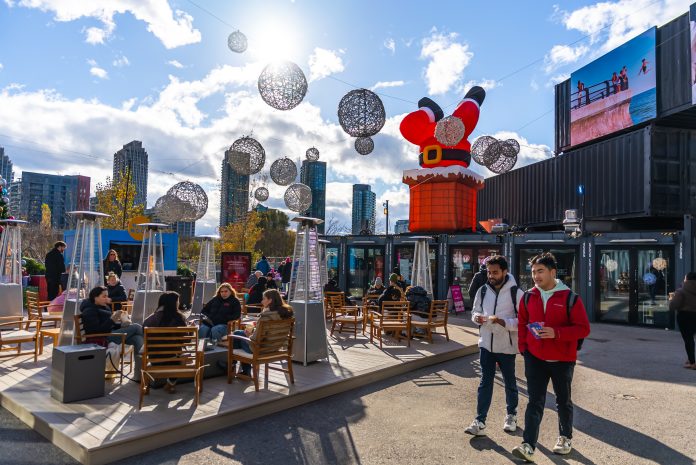
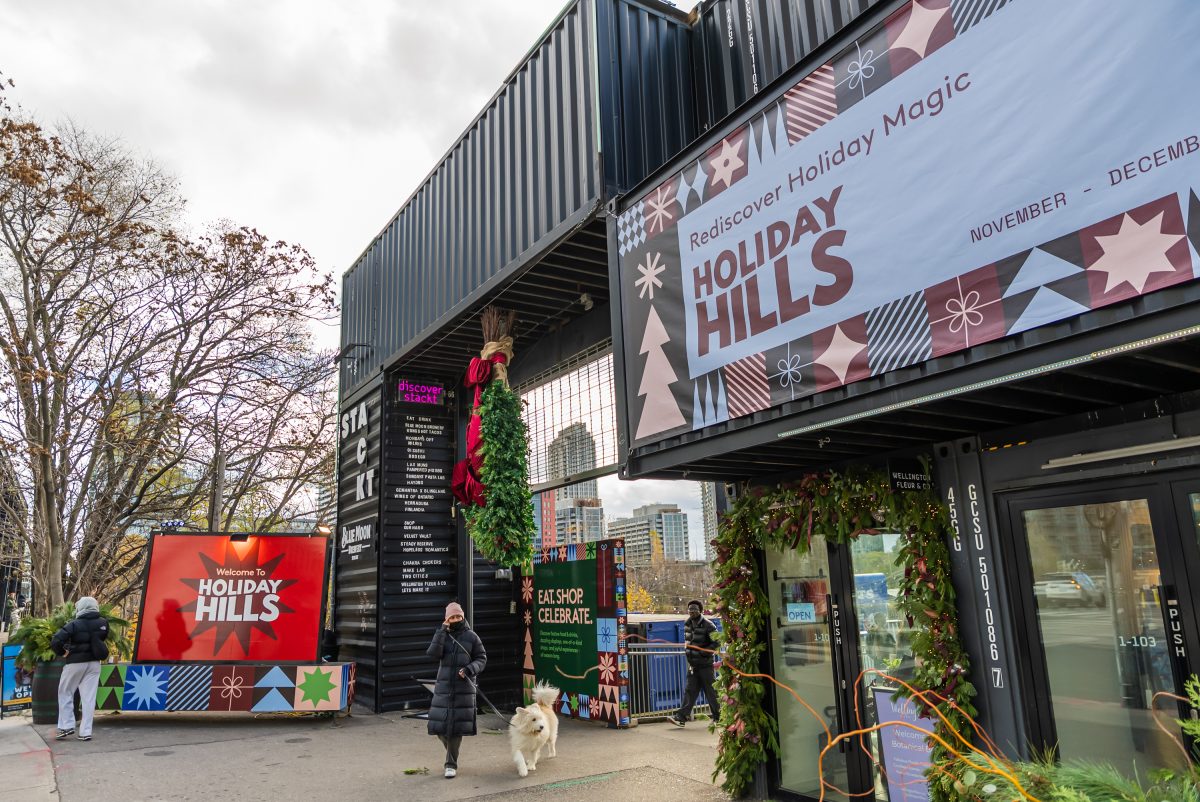
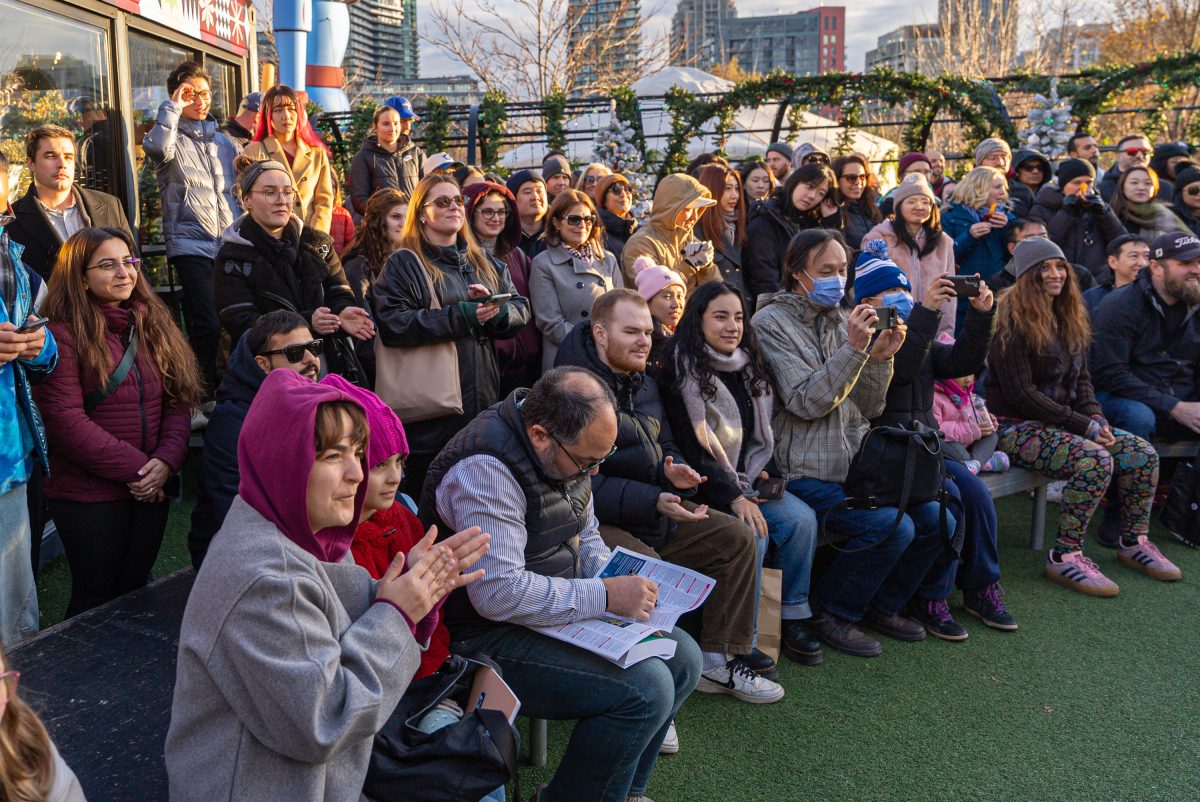
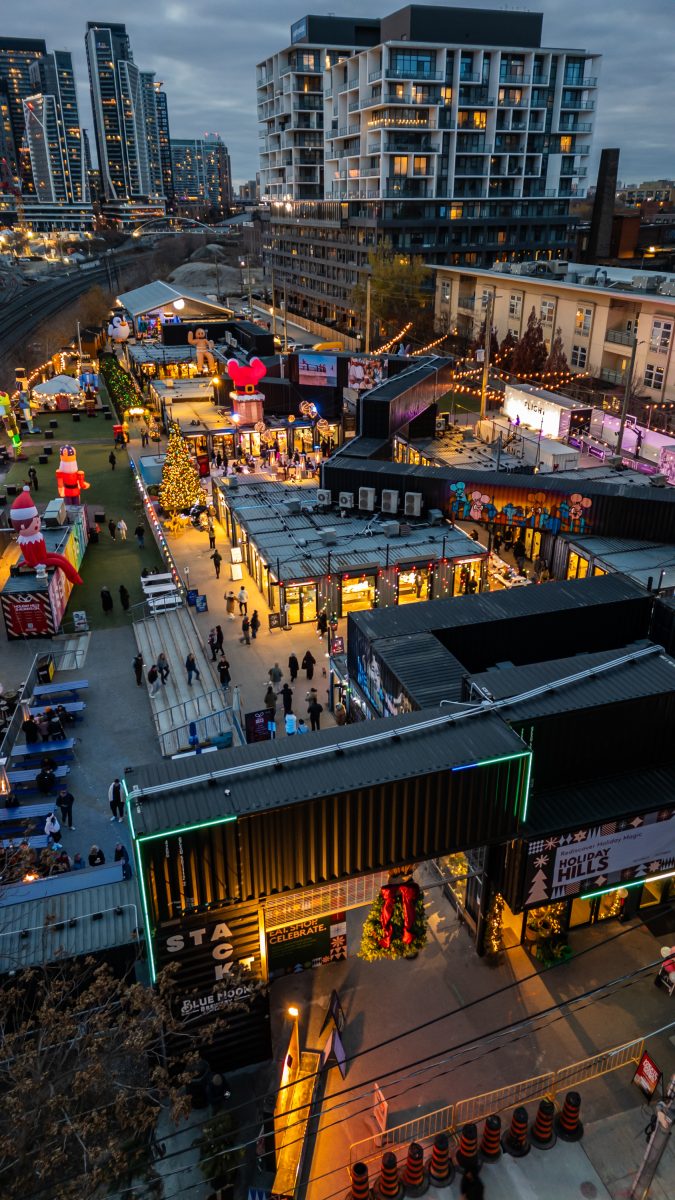
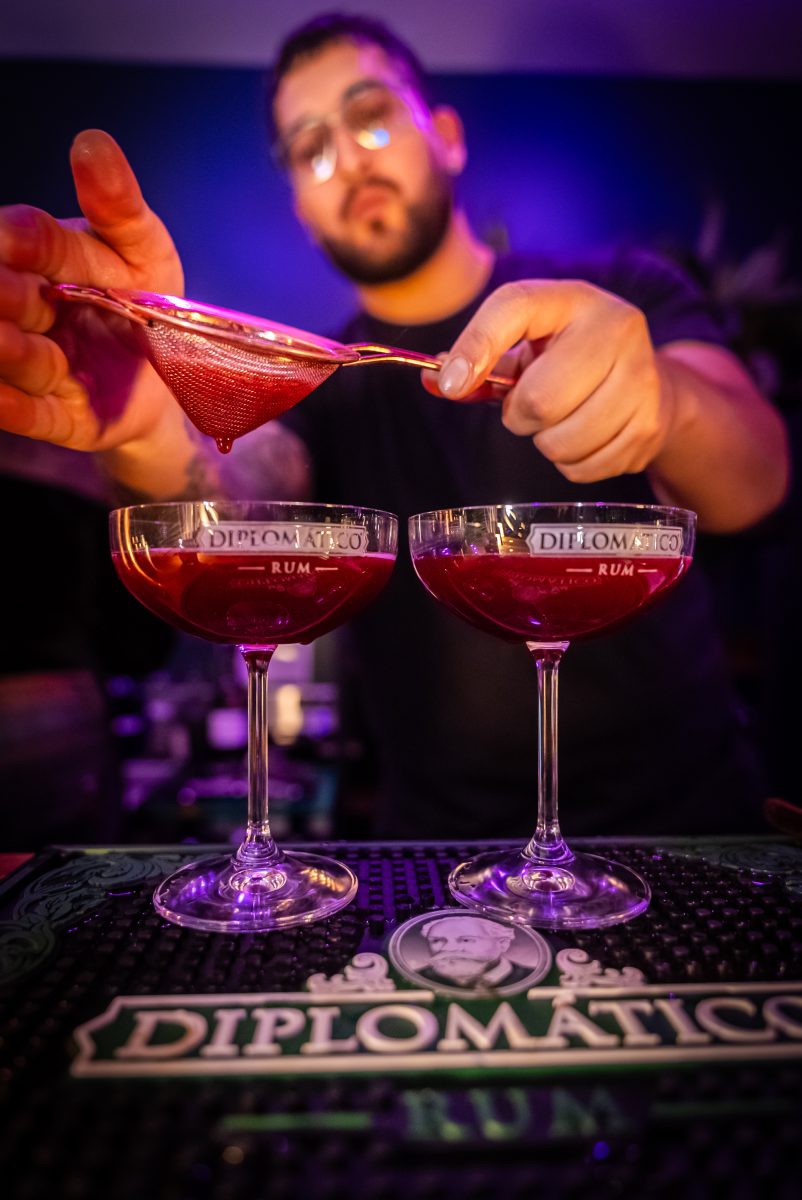
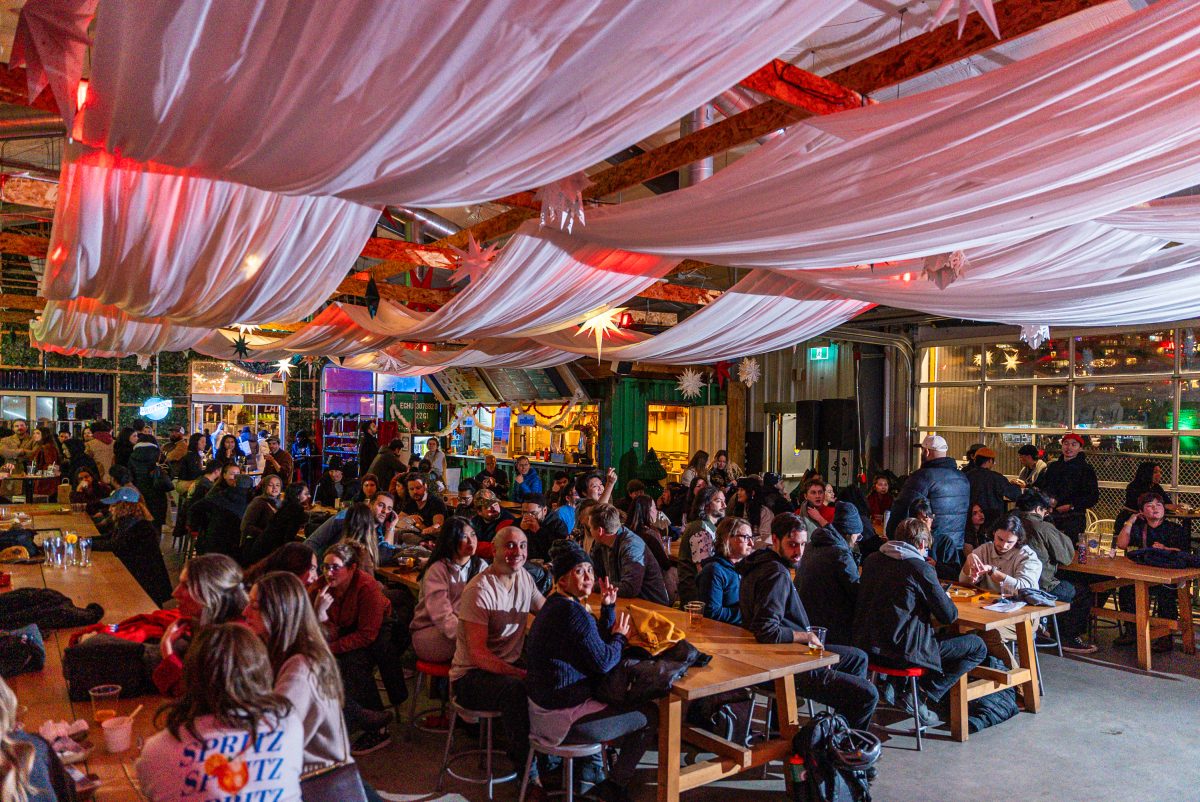
STACKT market has kicked off its sixth-annual Holiday Hills, featuring over 100 local vendors and transforming two city blocks into a winter wonderland until December 28.
New this year, the festival embraces a nostalgia-driven rebrand, blending classic holiday traditions with modern experiences, all free to the public. Guests can rediscover beloved holiday treats, vintage-inspired cocktails, classic movies, and a refreshed market atmosphere that brings favourite holiday memories to life.
The market is located at 28 Bathurst Street in Toronto.
Key Highlights:
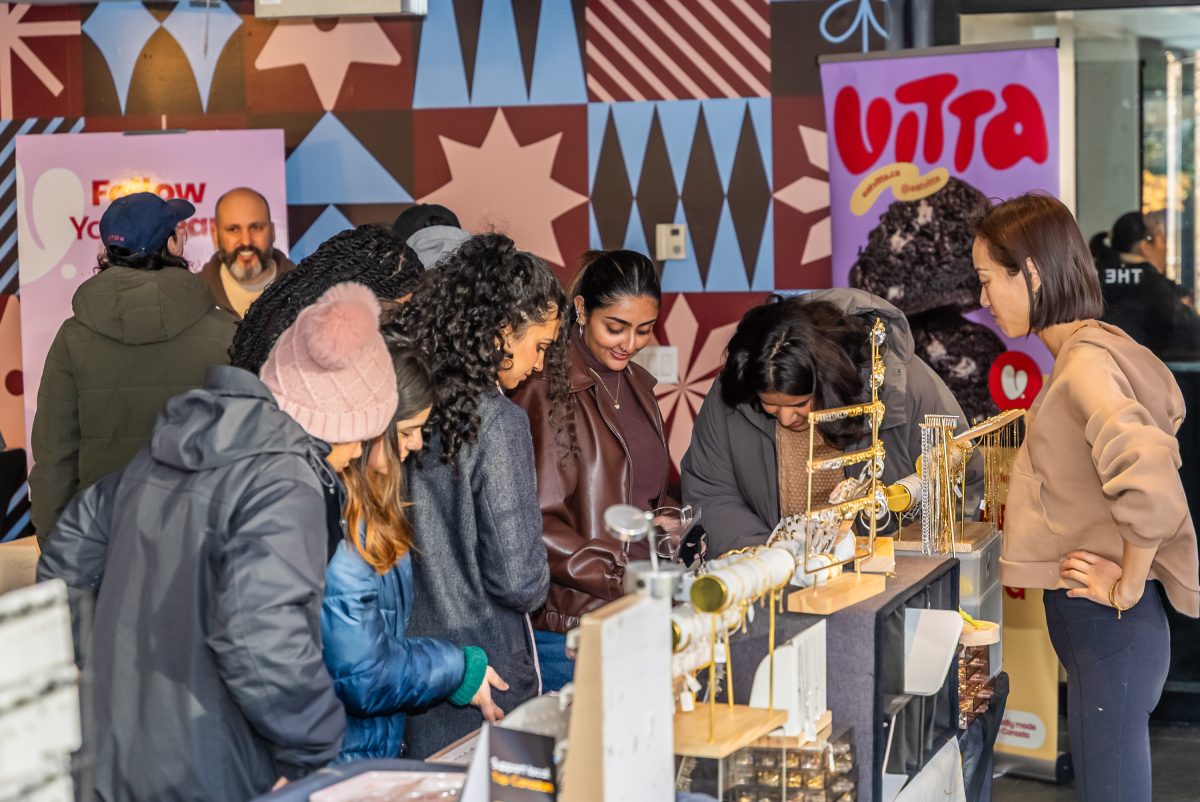
Holiday Market Vendors: Over 100 local vendors, including artisans, small-batch makers, and seasonal pop-ups offering handcrafted gifts, exclusive holiday drops, and rotating creative storefronts.
Brand Pop-Ups & Activations: Seasonal brand activations that complement the market experience, including pop-ups from Pine Sol, Ocean Spray, Arc/teryx and more.
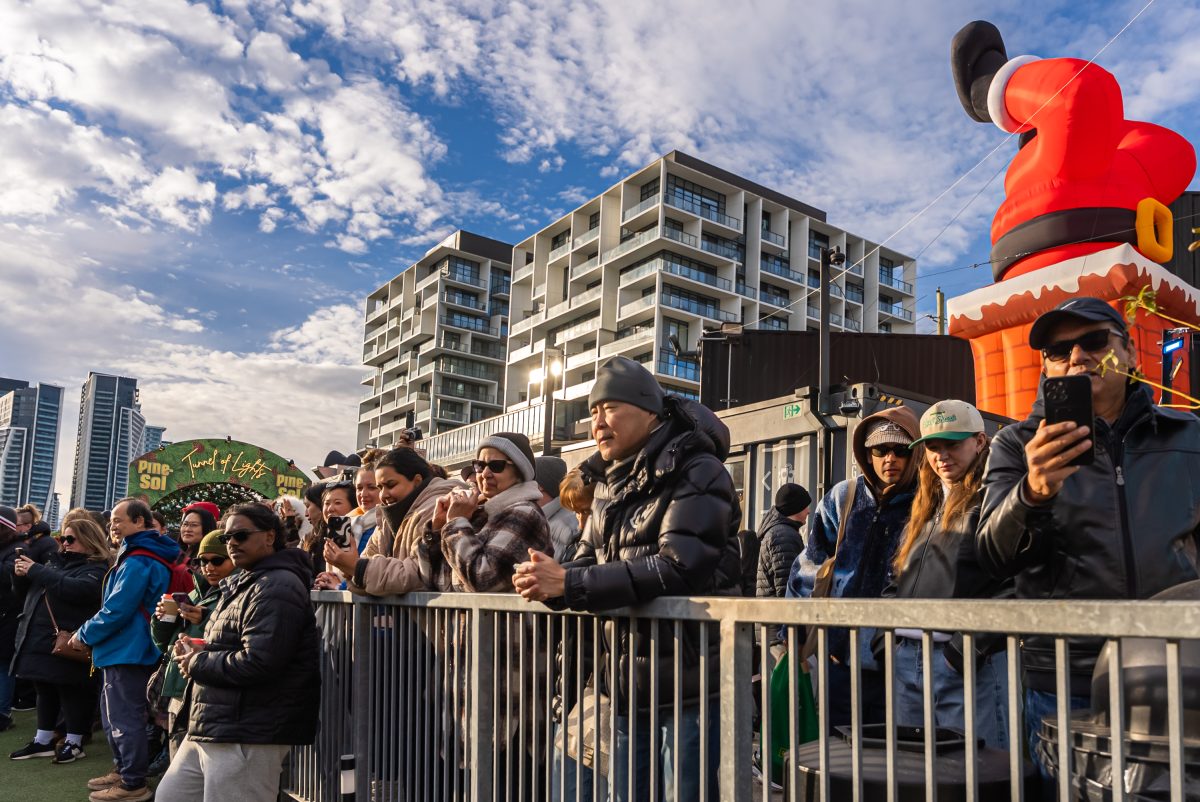
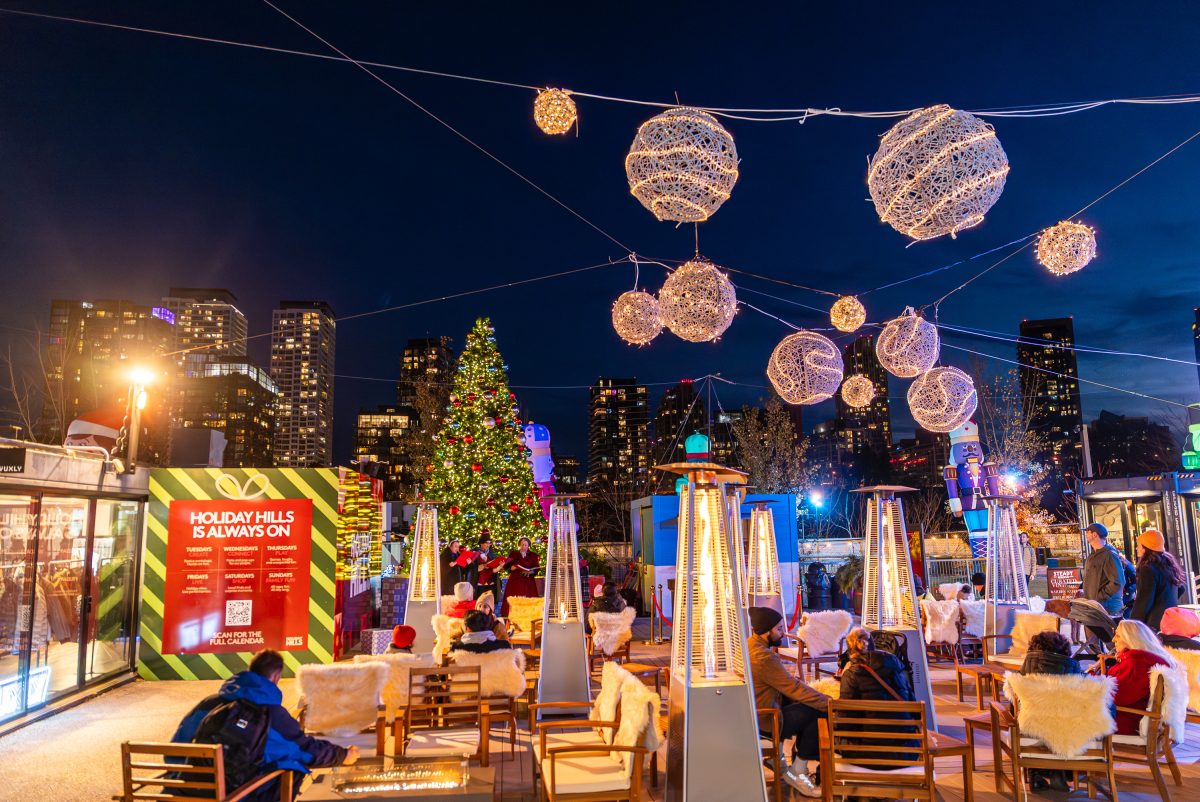
Holiday Installations & Signature Moments: Oversized inflatables, sparkling evergreen décor, storybook window vignettes, a 120-foot immersive light tunnel, a towering Christmas tree, and the scent of chestnuts roasting on-site.
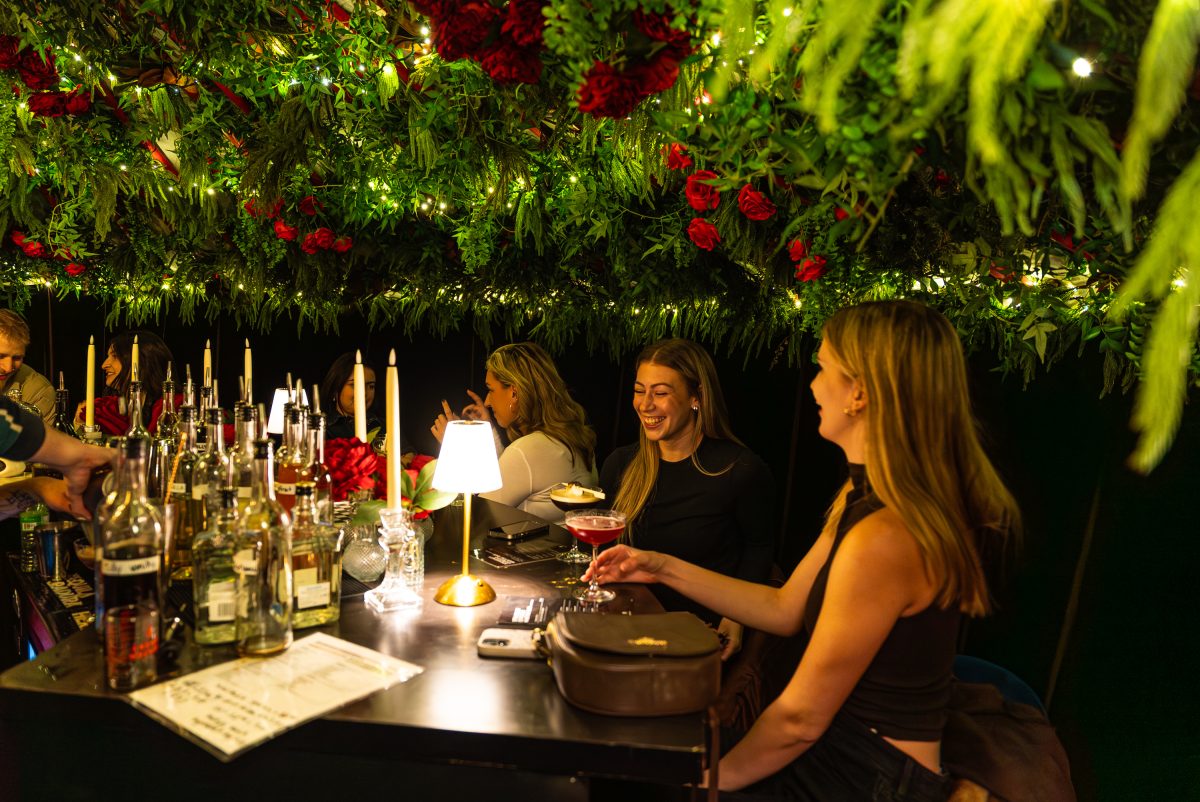
Festive Eats & Mixology Experiences: Seasonal cocktails, new winter patio pop-ups, and the first-ever Speakeasy Espresso Martini Bar. Comfort favourites include Sundays Pasta Lab, Las Muns empanadas, and Mondays Off sliders, plus share-worthy hot chocolate flights.
“We wanted to tap into that emotional layer with this year’s Holiday Hills rebrand, while delivering an experience that feels modern yet reflective of STACKT’s creative identity. Visually, we took things in a new direction, drawing inspiration from retro Bauhaus design. The shapes, graphic elements, and clean lines offer a modern twist on traditional holiday motifs. It’s familiar, but elevated, and it reflects the balance we were aiming for across the site: playful, yet design-forward,” she said.
“We also introduced thoughtful, hands-on experiences that reference past traditions, like gingerbread house workshops and carolling performances. These small, but meaningful moments, paired with holiday music, scents, decor and more, help evoke a sense of nostalgia without relying on cliché, and they give guests something personal to connect with.”
Farncomb said curation for Holiday Hills always starts with a simple question: What will make this a fun and memorable experience for our guests, something worth coming back to?
“This year, we’ll see over 100 local makers, artisans, and rotating pop-ups over the course of Holiday Hills. That includes returning favourites like Cracked Knot, which has earned a loyal following, as well as a wide range of new brands offering everything from handcrafted goods to personalized gifts, like photo macarons or custom-printed apparel. We were also excited to welcome Fable to the marketplace this season; their beautifully crafted homeware pairs perfectly with the one-of-a-kind gifts and handmade pieces found across Holiday Hills. Aside from the storefronts, weekly vendor markets play a huge role, keeping the experience feeling dynamic and fresh,” she said.
“The idea was to capture the diversity and creativity of the city while making it easy for guests to discover something unique, whether they’re gift shopping, supporting local, or just wandering through. It’s about more than just shopping, though. Seasonal food vendors and engaging experiences all help to shape the atmosphere and give the market its energy.
“Holiday Hills is designed to feel fun, lively and ever-changing, so guests can visit more than once with the promise of discovering something new each time.”
Farncomb said this year, Holiday Hills is all about contrast – mixing the cozy, familiar feeling of classic holiday traditions with unexpected moments of creativity and engagement for guests
“The nine oversized inflatable installations bring bold, memorable visuals to our site. They’re easy to spot, fun to explore, and encourage visitors to pause and engage. The Tunnel of Lights remains a key feature and has been upgraded this year with even more lights, as well as a new scent activation through our partnership with Pine-Sol, adding a sensory twist to a beloved experience that guests look forward to each year,” she said.
“At the same time, we’ve also added more intimate moments, including carolling performances, roasted chestnuts, and elevated patio settings. These elements create a layered experience that reflects Holiday Hills’s identity and give every guest something different to connect with.”
Farncomb said the expanded food and beverage offerings have played a big role in shaping this year’s Holiday Hills. They’ve added variety and more ways for people to enjoy the festival.
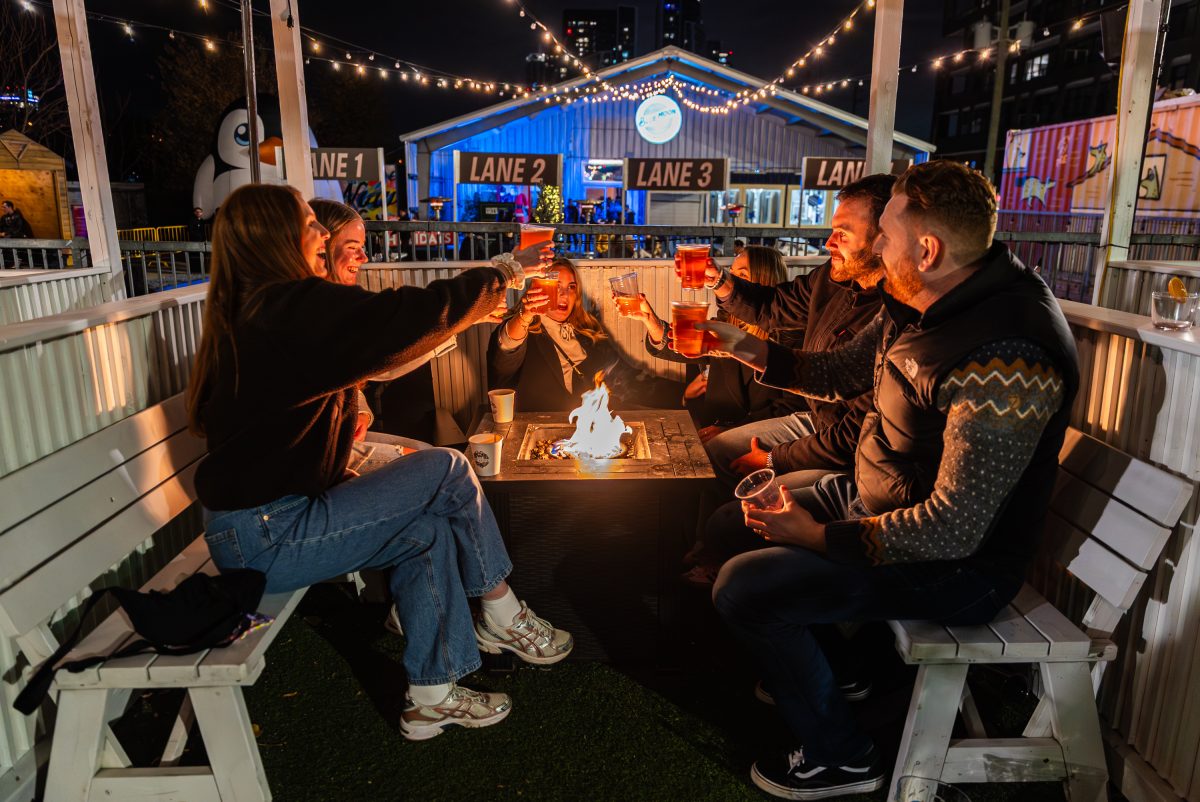
“The Speakeasy Espresso Martini Bar is one of the new highlights – a cozy, tucked-away concept that brings a bit of sophistication and surprise to Holiday Hills. We’ve also added a new outdoor patio called Finlandia Winter Retreat and introduced more fire pits throughout the site, making it easier for guests to gather, relax and stay warm while enjoying the outdoors,” she said.
“Food offerings range from comfort food classics to shareable, festive treats – including vendors like Sundays Pasta Lab, Las Muns (empanadas), and Mondays Off (sliders). We’ve also leaned into social and seasonal offerings, like hot cider and limited-time menu items, perfect for groups, families, or date nights. And of course, Tiny Tom’s Donuts, a nostalgic staple for many, taps into a sense of tradition that’s both familiar and comforting.
“Together, the expanded F&B program rounds out the entire Holiday Hills experience, giving people more reasons to stay, explore, and spend the evening – whether they’re coming for the food, the shopping, the entertainment, or all of it combined.”
Farncomb said brand activations are a key part of bringing Holiday Hills to life. Each partnership creates meaningful, interactive moments that enhance the experience and invite guests to engage in new ways.
“Each partnership is thoughtfully integrated into the fabric of the festival to feel purposeful and connected to the space. For example, Pine-Sol enhanced our signature Tunnel of Lights with a nostalgic scent element, transforming a fan-favourite installation into a fully sensory experience.
One of our most exciting collaborations this year was with The Original Santa Claus Parade. Their involvement added an entirely new layer to our opening weekends, featuring live performances, a marching band, and a visit from Santa himself,” she said.
“Another standout partnership was with Interac, which supported four of the vendor markets with a $10 gift card incentive for guests who spent $30 or more with participating small businesses – a simple but effective way to encourage local shopping and community support.
“We also hosted weekly sampling activations with a range of brands, giving visitors something new to taste or try each weekend and adding an element of discovery to every visit.
“We’re always intentional about creating a space where emerging and established brands can share the same environment in a way that feels seamless. These partnerships create opportunities for guests to engage, discover, and interact with the brands, while fitting naturally into the flow and layered, design-forward feel of STACKT.”
The countdown to the holidays is on, but this year, Canadians are reconsidering their festive spending habits. According to a new TD survey, more than one in three Canadians (36%) intend to cut back on holiday expenses this season, up significantly from 32% last year.
In addition, 60% of those cutting back say that groceries and household essentials instead will account for at least half of their total spending during the holidays, said the report.
TD said the survey reveals that Canadians appear to be rethinking traditions and getting creative with their celebrations. Among those cutting back, two-thirds (67%) blame the higher cost of living, but 29% are prioritizing saving. Canadians are adopting a range of strategies to keep spending in check:
46% are cutting back on gifts for family,
44% are dialing down social spending, and
38% are scaling back on gifts for friends.
“But even the best-laid plans can go awry. A staggering 77% admit they’re vulnerable to overspending, lured by flash sales, pressured to give meaningful gifts or swept up in the quest to make the holidays magical for their kids,” said the report.
“While only one in four Canadians (24%) have enough extra income to cover holiday expenses, others are getting resourceful by having dedicated savings for this time of year (26%), cashing in loyalty points (24%) or even taking on a side hustle (11%).”
Younger Canadians appear to be feeling brighter about their holiday budgets – and are boosting them accordingly. One in four Gen Z and Millennials (25% and 24% respectively) are planning to spend more this holiday season versus 9% of Gen X and 8% of Boomers, it added.
Joe Moghaziel
“The holidays may feel different this year, but Canadians are showing that festive spirit isn’t about spending big; it’s about spending smart,” said Joe Moghaziel, Vice President, Everyday Advice Journey, TD. “From creative gift-giving to leveraging loyalty points, the survey shows a shift toward intentional choices that keep celebrations meaningful without adding financial strain.”
Despite tighter wallets, Canadians are rallying behind local retailers. Eighty-one percent plan to support Canadian businesses this holiday season, with 57% of those shoppers putting at least half their holiday budget toward buying from local small businesses. Gen Z is leading the way, with 71% dedicating at least half their budget to local shops, compared to just 46% of Boomers, said TD.
Julia Kelly
“Every dollar spent at a local small business is a vote for your community,” said Julia Kelly, Vice President, Small Business Banking and Segment Strategy, TD.“This season, look for ways to support local retailers and artisans–whether it’s shopping at a neighbourhood market or choosing locally made gifts. Small changes in spending habits can have a big impact, both for your wallet and for the businesses that help to make your community unique.”
Retail Insider is streamlining its Canadian retail news from around the web to include a handful of top news stories that can be viewed quickly during the day. Here are the top stories from the past 24 hours.
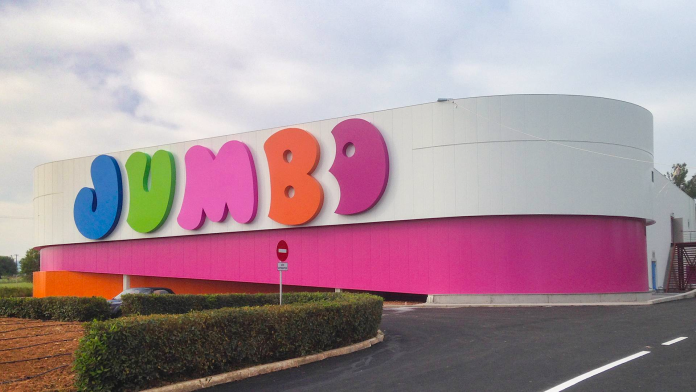
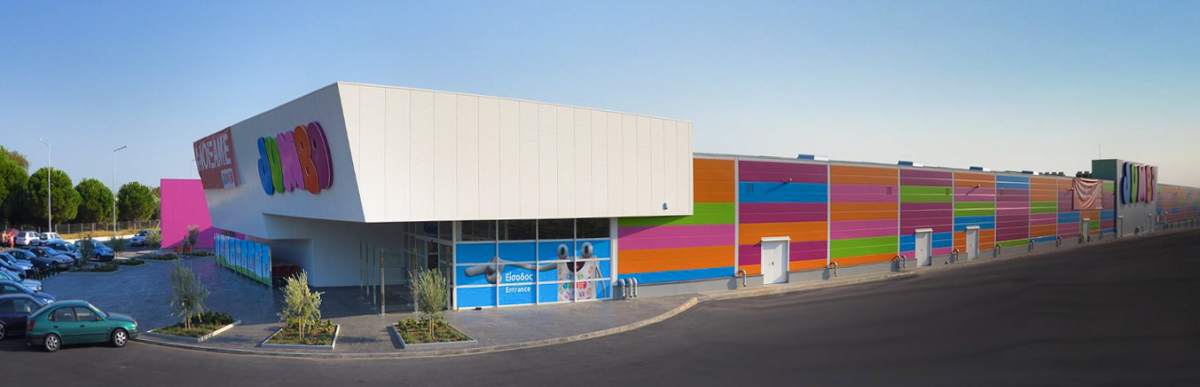
JUMBO store in Tripolis Greece. Photo: Proestakis Development
One of Greece’s most prominent value retailers is preparing to enter the Canadian market with ambitious plans for large-format expansion. Jumbo S.A., known widely throughout Europe and the Eastern Mediterranean for its vast assortments of toys, seasonal décor, home goods, party supplies, stationery and everyday household items, will open its first three Canadian stores in Ontario in 2026. The development was first reported by Kathimerini Cyprus, which outlined the timing and scale of the company’s move into North America.
These initial locations represent the first phase of a multi-year rollout. Under an exclusive franchise agreement with Israel-based Fox Group, Jumbo expects to open between five and 10 Canadian stores in the first three years of operation, depending on real estate availability and project timelines. Starting in Ontario mirrors how many international retailers establish a foothold in Canada before expanding into other provinces.
To enter Canada, Jumbo is leveraging a franchising model that has already proven successful in several other markets. Rather than building a corporate presence from scratch, the company is partnering with Fox Group, an experienced multi-brand retail operator with a broad portfolio of stores in Israel and Canada. The arrangement allows Jumbo to focus on brand oversight and sourcing while Fox handles real estate negotiations, store construction, staffing and operations.
Fox Group is well established in Canada through banners such as Nike, Mango, Laline and Fox Home. Its experience opening large-format and prime-location stores across the country positions it well to support a concept of Jumbo’s scale. As Fox continues to expand European lifestyle and value brands in Canada, Jumbo becomes a natural addition to its portfolio.
Inside Jumbo: From Greek Toy Specialist to Multi-Category Powerhouse
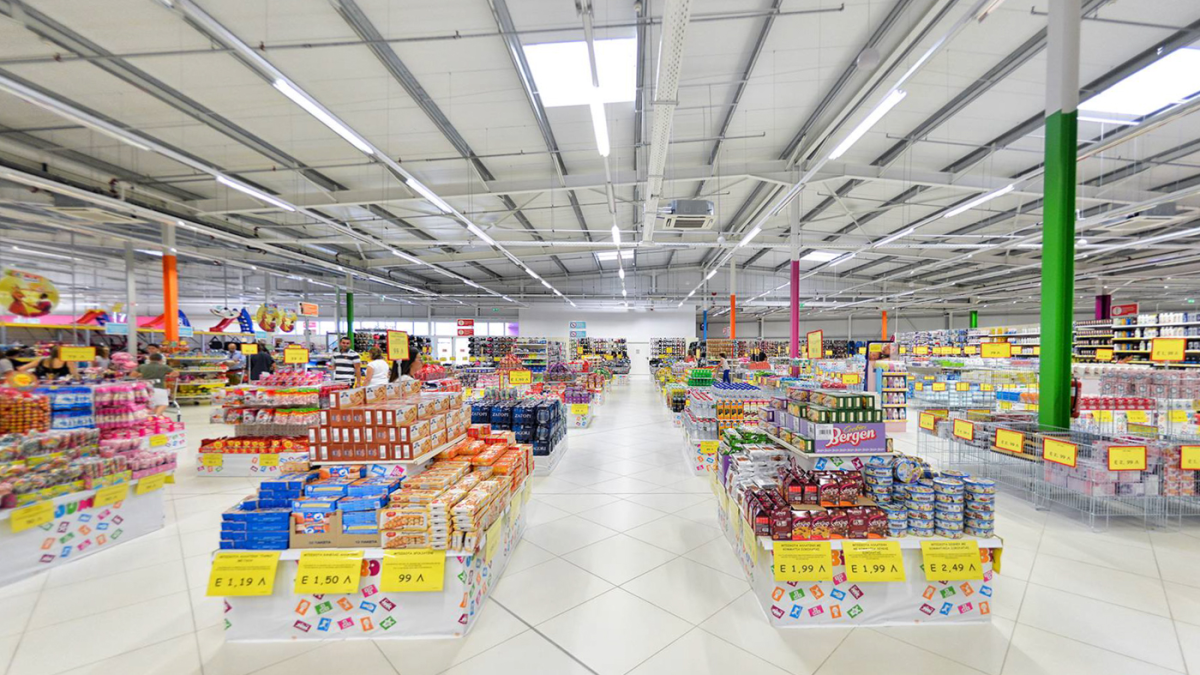
Jumbo began as a toy-focused retailer in 1986 and has since developed into one of Greece’s most powerful multi-category value chains. The brand is known for its extensive aisles of toys, party goods, seasonal décor, home basics, crafts, stationery, baby products and many other categories. The stores emphasize breadth, affordability and discovery, encouraging shoppers to browse entire departments and return frequently for new assortments.
Jumbo operates both retail and wholesale channels, supported by highly centralized sourcing strategies designed to keep prices competitive across diverse markets.
Today, Jumbo’s footprint extends across Europe and the Eastern Mediterranean. The company operates 89 corporate-owned stores in Greece, Cyprus, Bulgaria and Romania and more than 40 franchised locations across seven other countries, including Albania, Kosovo, Serbia, North Macedonia, Bosnia and Herzegovina, Montenegro and Israel.
Jumbo store. Photo: EB/ARCHITECTS
Israel has emerged as an important example of how the franchise model can scale. Fox Group opened its fourth Israeli Jumbo store in November 2025 and has announced plans for an additional five to six stores in 2026. These developments reinforce Fox’s confidence in the concept and mirror the multi-store acceleration expected in Canada.
Jumbo approaches the Canadian market from a position of strength. The company generated approximately EUR 1.15 billion in sales in 2024 and recorded net income of around EUR 320 million. Its 2025 performance has also been robust. From January to November, sales increased eight percent year-over-year, with November alone rising six percent as strong seasonal activity drove growth across Greece, Cyprus, Bulgaria and Romania.
Hyper-Store Format: What Landlords Can Expect
Jumbo’s preferred format is a full-scale hyper-store spanning roughly 97,000 to about 110,000 square feet of selling space. In several markets, total building areas can reach 130,000 to 140,000 square feet. This makes the concept larger than many Canadian big-box stores and places it close to hypermarket scale.
The large format enables deep assortment breadth and heavy seasonal rotation, key to Jumbo’s high-traffic “treasure hunt” experience.
Jumbo’s preferred real estate format is a large standalone or power-centre box, consistent with the brand’s international footprint across Greece, Cyprus, Bulgaria and Romania, where most stores operate as freestanding hyper-stores with substantial surface parking and direct arterial access. The company’s franchise markets follow the same playbook, placing Jumbo in purpose-built large shells or big-box clusters that function as regional destinations rather than traditional inline mall tenants.
While a small number of locations are attached to or adjacent to enclosed shopping centres abroad, they typically maintain their own entrances and dedicated parking fields. In Canada, this suggests that the most likely sites for Jumbo under Fox Group will be major power centres, standalone highway-adjacent pads or anchor-box conversions at top regional malls, rather than conventional interior mall units.
Jumbo store. Photo: EB/ARCHITECTS
Large-Format Opportunities in a Market Reshaped by Department Store Closures
The timing of Jumbo’s arrival aligns with significant shifts in Canadian retail real estate. A typical Jumbo store, at roughly 100,000 square feet, matches the type of anchor space that has become increasingly available following the shuttering of the Hudson’s Bay retail chain in the summer. These closures released some of the largest and most prominent retail floor plates in the country back to landlords, particularly in major enclosed malls and suburban centres.
In this landscape, a value-focused hyper-store like Jumbo presents a potentially appealing option. Its scale and family-oriented positioning offer the potential to restore traffic patterns, increase dwell times and support surrounding retailers. For Fox Group, converting former Hudson’s Bay or Sears locations could accelerate its rollout while helping landlords activate large, underused anchor spaces.
A New Wave of Large-Format Retailers Expanding in Canada
Jumbo’s arrival comes as Canada experiences renewed momentum in the large-format retail segment. Several other entrants have recently begun expanding into the country, demonstrating that the value and discount sector continues to attract significant investment.
One of the newest international arrivals is Panda Mart, a Middle Eastern value-chain operator that recently opened a large-format store in Toronto. The retailer has indicated that additional Canadian locations are planned, adding another competitive presence in the multi-category value segment.
Meanwhile, the Benitah family is relaunching the heritage Zellers brand in standalone stores ranging from approximately 30,000 to 50,000 square feet. These mid-sized units contribute to the broader trend of retailers stepping into the anchor space left behind by departed department store banners.
Together, these developments suggest that Canada is entering a new period of anchor reactivation, with global and local players seeking to fill a void in value-oriented, family-focused retail formats. Jumbo’s scale and category breadth position it as one of the most significant additions to this emerging cohort.
Canada entered the final stretch of 2025 with another month of solid overall job growth, yet the country’s retail sector continued to tread water. Statistics Canada’s November Labour Force Survey reports a headline gain of 54,000 jobs nationally and a notable drop in the unemployment rate to 6.5 percent. But beneath those encouraging numbers, wholesale and retail trade recorded the sharpest decline of any major industry, shedding about 34,000 positions and reversing most of October’s gains.
The contrast captures a year defined less by contraction than by stagnation, according to longtime retail recruiter Suzanne Sears, CEO of Best Retail Careers International Canada and Luxury Careers Canada. As she reviewed the numbers, she saw a sector that has not collapsed but also has not made meaningful forward progress.
Suzanne Sears
“When it comes to Ontario, a year has gone by and it is flat,” she said. “The bottom line is nothing happened in 2025. Nothing in growth.”
Her comments offer one of the clearest interpretations of Canadian retail employment 2025 at a time when the data itself has produced as many contradictions as conclusions.
Across the broader economy, November marked the third consecutive month of employment gains. Total employment is now roughly 300,000 people higher than in November 2024, and the national employment rate edged up to 60.9 percent. Youth aged 15 to 24 accounted for nearly all the monthly job growth, adding around 50,000 positions.
The gains were concentrated in health care and social assistance, accommodation and food services, and natural resources. Retail moved in the opposite direction, pulling back sharply after an unusually strong October.
Still, Sears noted that this volatility is typical heading into the holiday season. “Hard to know about November statistics for retail because it is inconsistent with the holiday that generates sales,” she said. “The part time thing, while interesting, is not actually very important in itself.”
Seasonally adjusted data show that retail remains modestly ahead of where it stood a year ago, with employment in wholesale and retail trade sitting roughly 44,000 people higher than November 2024. The issue is not collapse, Sears said, but the absence of underlying momentum.
Ontario and Quebec Lose Retail Jobs While Other Provinces Grow
The November decline in retail jobs was concentrated in Ontario, which logged a drop of about 20,000 positions, and Quebec, which lost roughly 9,700. Those losses overshadowed job growth elsewhere in the country, including Alberta’s 29,000-job gain, one of the strongest provincial increases of the year.
Participation rates help explain some of the provincial differences. Sears pointed out that Ontario’s participation rate sits around 65 percent, below Saskatchewan at 67 percent and Manitoba at about 66 percent, but above Alberta at roughly 64 percent. In Newfoundland and Labrador, the participation rate is closer to 57 percent.
“The participation rate is always interesting,” she said. “Sometimes people read it as giving up, but it can also be a reflection of an older population or a lack of population growth. In Newfoundland, only slightly more than half the people actually work. That tells you a lot.”
For Sears, the most striking figure is that Canada has about 26,000 fewer people in the labour force than a year ago. “We have a shrinking labour market,” she said. “Are people leaving the country, going back to school, aging out of the workforce? It is interesting, and it matters for retailers.”
The Layoff Myth and Why Part Time Work Isn’t the Story
Despite widespread public perception, Sears stressed that layoffs have not meaningfully increased in 2025. “The layoff rate is unchanged for the whole 12 months,” she said. “Nobody actually has laid off enough to budge that number.”
Statistics Canada puts November’s layoff rate at 0.7 percent, slightly below the 0.8 percent recorded a year earlier. Most job losses classified in November were terminations rather than temporary layoffs with a chance of recall.
“Layoffs are not really happening,” Sears said. “They are getting a lot of attention, but the numbers are basically unchanged.”
Part time employment also remains more stable than many assume. Sears noted that only 17 to 18 percent of part time workers say they want full time hours but cannot get them. “So roughly 80 percent of the people who are working part time are doing so by choice,” she said. “That number is actually lower than historic levels.”
For her, these patterns reinforce that the core issue for retailers is not shrinking labour participation but stalled economic growth.
Busy Stores, Leaner Staffing and a Shifting Consumer Profile
While November’s retail job losses appear stark on paper, Sears sees a livelier picture inside shopping centres. During a recent visit to Mapleview Centre in Burlington, she found both the parking lot and several stores operating at full capacity.
“I went into a Pandora store,” she said. “They must have had seven clerks in that store. The Apple Store was fully packed like it always is. You could not get a space in the parking lot.”
Despite the crowds, Sears observed that the mall did not feel packed, which suggests customers may be moving through stores efficiently while retailers run tighter staffing models. Even more interesting to her was the demographic shift.
“A good percentage of those shoppers were single men,” she said. “I saw them going by with little Sephora bags and jewelry bags. There is this belief that men do not like to shop. I think that is worth investigation.”
At the same time, the restaurant and entertainment industries continue to expand, often at retail’s expense. “We see a massive increase in hiring in the entertainment and restaurant industries,” Sears said. “They tend to be doing well, and I expect December results for restaurants to be very high. People are choosing more local entertainment and dining.”
Immigration Misconceptions Give Way to Wage and Population Realities
Sears remains adamant that foreign students and temporary workers have not displaced domestic retail employees. “The perception of immigrants taking our jobs could not be more false,” she said.
Foreign students often work fewer than 18 hours a week, she explained, and are more likely to accept shifts domestic workers avoid, including overnight schedules at 24-hour restaurants and convenience outlets.
“Employers gave the jobs to people who were willing to work the shifts they had to offer,” she said.
The broader issue, in her view, is that Canadians have less disposable income and fewer incentives to spend. “You cannot grow GDP without consumers,” she said. “If people had an extra thousand dollars a month, they would travel more, eat out more, spend more in stores.”
Everyday realities reinforce that tension. “Have you noticed how lately you cannot go anywhere for less than about seventy five bucks?” she said. “We went to Moxie’s and the bill came to $335. There is nothing special about it. That is the reality retailers and restaurants are operating in.”
How Retailers Should Approach 2026 After a Flat Year
With Canadian retail employment 2025 closing out as flat rather than fragile, Sears believes that retailers must resist the temptation to retreat.
“If they hide in a corner and hold back and refuse to hire, if they have the bomb shelter mentality, it is the bomb shelter results they are going to get,” she said. “The only way to grow is to push forward.”
She points out that despite retail’s uneven results, many markets continue to welcome new store openings, from national chains to local independents. The consumer is still present, still spending, and still drawn to shopping environments that deliver discovery, service and convenience.
Secondary provinces such as New Brunswick, which recorded significant population inflows over the past two years, also present opportunities. “New Brunswick is growing like weeds,” she said. “A $300,000 house still looks like what you expect it to be. That cheaper way of life draws people, and retailers will follow.”
The challenge for 2026 will be distinguishing short term noise from long term trends. A retail workforce that did not grow in 2025 is not necessarily a sign of decline. Instead, Sears sees it as a year in which businesses recalibrated, households reassessed their spending priorities and labour markets adjusted to fewer people working overall.
“We have had a scary year,” she said. “But the data also tells you that retail is mostly hanging on to the people it has. The question for 2026 is who will be brave enough to push forward while everyone else waits on the sidelines.”
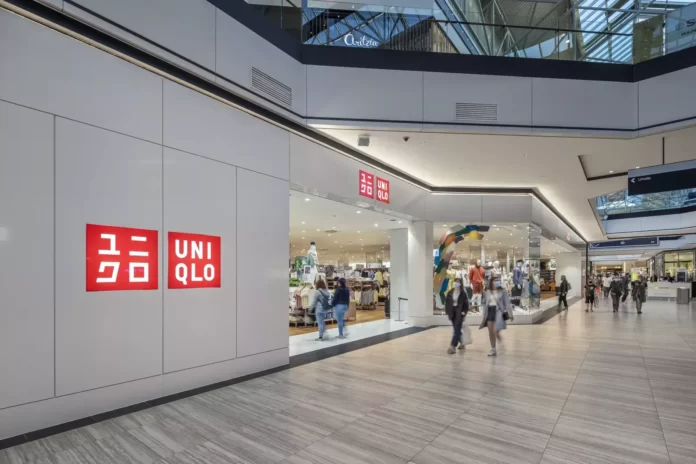
Uniqlo at CF Fairview Pte-Clair near Montreal. Photo: Cadillac Fairview
Japanese apparel retailer Uniqlo is preparing to enter the Manitoba market with a new store at St. Vital Centre in Winnipeg, as the brand approaches the ten year anniversary of its Canadian debut. The move forms part of the broader Uniqlo Canada expansion that began in 2016, a strategy that has seen the retailer build a coast-to-coast network while steadily entering new provinces at a measured pace.
The City of Winnipeg recently issued a building permit confirming the arrival. The document outlines a substantial interior renovation project, with multiple units inside the mall being combined into a large-format space suitable for Uniqlo’s full LifeWear assortment. The permit describes the demolition of existing partition walls, new construction work, corridor adjustments and mechanical and electrical updates. The project merges Units 9 to 14 into a single retail footprint and includes a renovation to Unit 8. According to the mall landlord’s filings, this consolidated space is being prepared specifically for Uniqlo.
The Winnipeg opening continues a long-term trajectory that has taken Uniqlo from its initial Toronto flagships to more than two dozen locations across British Columbia, Alberta, Ontario and Quebec. Entering Manitoba signals a deepening of the brand’s national footprint and reinforces its commitment to bringing LifeWear to communities across the country.
St. Vital Centre Selected for Uniqlo’s First Winnipeg Store
St. Vital, located at 1225 St. Mary’s Road, is the city’s second largest enclosed mall after CF Polo Park. The centre is a dominant retail destination for Winnipeg’s southeast region, with more than 900,000 square feet of leasable area and a tenant mix that serves mature residential communities as well as fast-growing suburban neighbourhoods.
St. Vital Centre opened in 1979 and has gone through multiple ownership and management shifts. Today the property is owned by the Ontario Pension Board and managed by BentallGreenOak. Its scale, parking capacity, stable visitor traffic and regional draw have long positioned it as a strong option for national and international retailers entering the Winnipeg market.
Until June 2025, St. Vital Centre relied on Hudson’s Bay as a major anchor. After the department store chain shuttered all locations following its bankruptcy, the mall began recalibrating its large-format leasing strategy. The introduction of Uniqlo fills a critical gap in the tenant mix and signals renewed investment in the property’s next chapter. For Uniqlo, the location offers a highly visible space that aligns with its broader destination-mall approach in Canada.
Industry observers may be surprised that Uniqlo’s first Winnipeg location is not at CF Polo Park. Polo Park has been the city’s highest productivity enclosed shopping centre for decades, drawing more traffic and sales per square foot than any other retail destination in Manitoba. Its tenant mix, market reach and two-level enclosed format align closely with Uniqlo’s brand preferences for high-volume regional malls.
If the community responds enthusiastically, CF Polo Park remains a logical contender for a second Winnipeg location. Uniqlo has used this pattern in other metropolitan regions by clustering stores to build awareness and serve multi-directional trade areas.
St. Vital Centre in Winnipeg. Photo: Travel Manitoba
Nearly a Decade of Steady Growth in Canada
The Uniqlo Canada expansion formally began in 2016, when Fast Retailing opened two Toronto flagship locations. CF Toronto Eaton Centre debuted on September 30, 2016 and Yorkdale Shopping Centre followed shortly after on October 20. The retailer framed these openings as beachheads for a national rollout, signalling long-term commitment to the Canadian market.
After establishing itself in Toronto, Uniqlo executed a well-calibrated plan. Vancouver was the next major priority, with stores added in Metropolis at Metrotown, Guildford Town Centre and CF Richmond Centre. Additional locations in Coquitlam strengthened the Metro Vancouver network. In the Greater Toronto Area, the brand expanded outward into major suburban centres including Vaughan Mills, Square One, CF Sherway Gardens, CF Markville, Bramalea City Centre and a power-oriented format in Heartland Town Centre.
By the late 2010s, Uniqlo had successfully built clusters in both Toronto and Vancouver and began moving into additional provinces. Stores in Calgary, Edmonton and Ottawa introduced the brand to Western Canada beyond British Columbia and to the national capital region. Montreal was included as well, supported by additional Québec City locations. This steady progression marked the second stage of the Uniqlo Canada expansion, emphasising high-performing malls, measured regional clustering and strong omnichannel integration.
A Pipeline of New Stores Across the Country
The past two years have been among the strongest periods of physical expansion since the brand entered the country. By 2024 Uniqlo was operating close to 30 locations nationwide. The 2025 pipeline added more stores across Ontario and Quebec, including Mapleview Centre in Burlington, Union Station in Toronto, Place Ste-Foy and Galeries d’Anjou. The fall 2025 season saw new shops open in Victoria at Mayfair Shopping Centre, in Calgary at CrossIron Mills, in Edmonton at South Edmonton Common and in Québec City at Galeries de la Capitale.
These expansions have been reinforced by strong consumer interest. At Uniqlo’s November 2025 launch at Mayfair Shopping Centre in Victoria, retail executive Linda Qin, who worked with Central Walk at the time as CEO, told Retail Insider then that the opening drew significant lineups. The enthusiastic response echoed earlier openings across the country, suggesting brand resonance and demand in new regional markets.
Behind the Dealmaking: Aurora Retail Group and Uniqlo’s Lease Strategy
A consistent player in Uniqlo’s Canadian expansion has been Aurora Retail Group. Jeff Berkowitz, President of the firm, has represented Uniqlo in Canada since the retailer entered the country in 2016. Berkowitz has overseen all of the brand’s lease negotiations nationwide and has been a key advisor in its market entry strategy. His work in identifying opportunity nodes and securing prime mall placements has helped align the company with dominant shopping centres across multiple provinces.
The Winnipeg announcement is the latest step in this long-term partnership. Berkowitz’s role in facilitating the brand’s entrance into Manitoba reflects the methodical approach that has defined Uniqlo’s rollout in Canada. This includes careful evaluation of mall productivity, trade area demographics, tourism potential and alignment with Uniqlo’s operational model.
Mandy’s Gourmet Salads, the Montreal-born chain that helped define a new era of colourful, design-forward fast casual dining in Canada, is preparing to open its first restaurants in Vancouver. The move marks the company’s first step into Western Canada and a significant milestone for a brand that began as a small salad counter in the back of a women’s clothing boutique more than two decades ago.
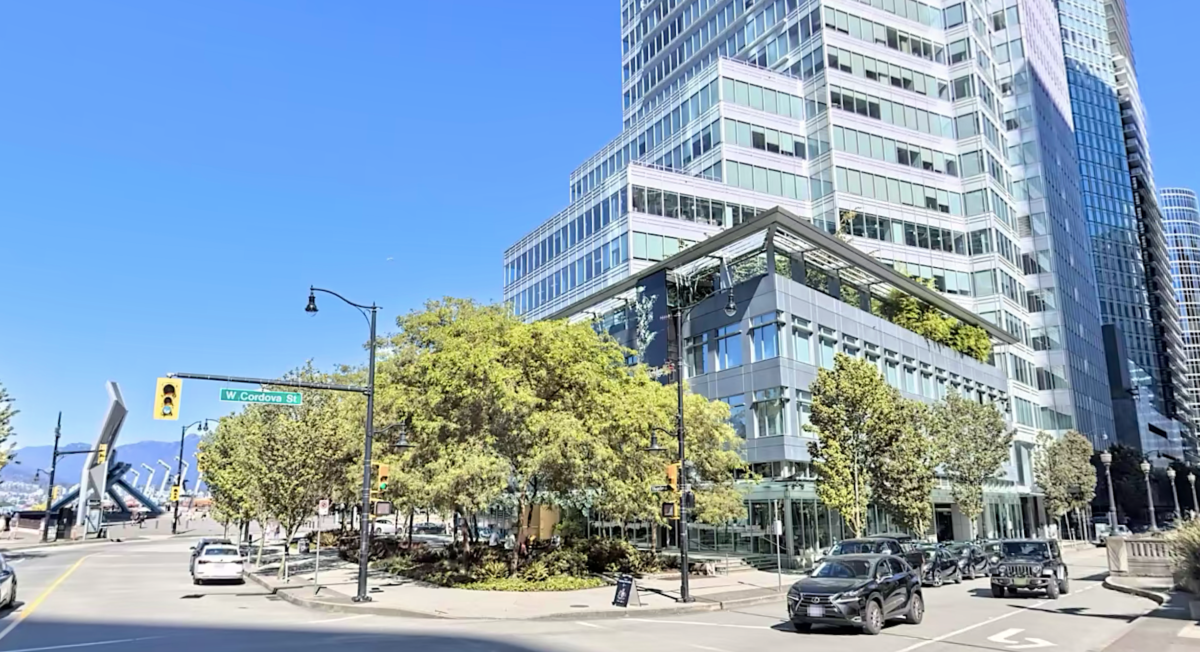
Next year, Mandy’s will debut two storefronts in the city. The first will be an express-format restaurant in Kitsilano at 2202 West 4th Avenue. A larger flagship location will follow at 1067 West Cordova Street in Coal Harbour. Together, the two openings position the company in two of Vancouver’s most prominent neighbourhoods, each known for strong foot traffic and health-conscious clientele.
The restaurant’s path to national expansion began in 2004, when sisters Mandy and Rebecca Wolfe launched a create-your-own salad counter tucked inside their Westmount clothing store in Montreal. Inspired partly by the bustling salad bars they encountered in New York City, the founders sought to reimagine salads as vibrant, layered meals rather than ascetic diet food. They built the menu around hearty greens, grains, nuts, fruit, crunchy toppings and house-made dressings that quickly attracted a loyal following.
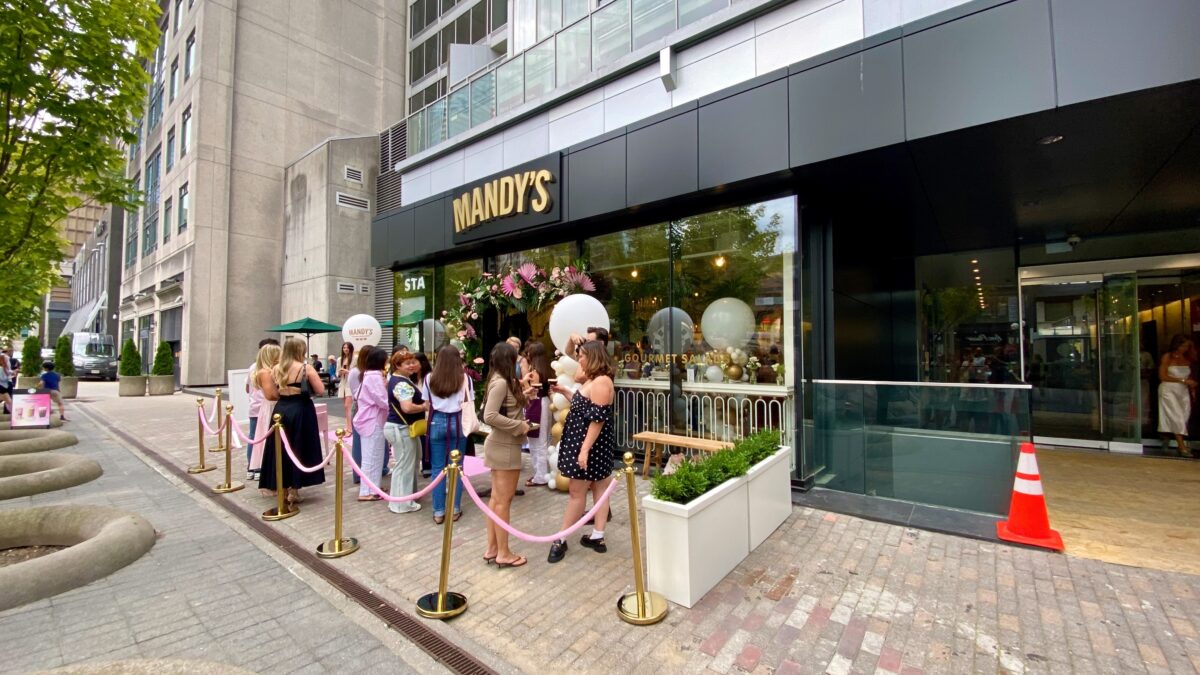
That modest operation in the back of a boutique grew steadily into a multi-unit business. Mandy’s now operates 12 locations across Quebec and Ontario, along with a growing footprint of retail products and best-selling cookbooks. Its expansion has been shaped by a commitment to design and atmosphere as much as culinary innovation. Each location is defined by maximal interiors filled with colour, pattern and lush decorative details that appear frequently across social media feeds.
Pre-opening media event at Mandy’s Salads at 110 Bloor St. W. in Toronto on Saturday, August 10, 2024. Photo: Craig Patterson
The Kitsilano Express Store
The first Vancouver location scheduled to open will be the Kitsilano storefront, set on a busy stretch of West 4th Avenue. The neighbourhood’s mix of independent retailers, wellness-oriented businesses and restaurants makes it a natural fit for Mandy’s introduction to the market.
The Kitsilano space will operate as an express concept that emphasizes grab-and-go orders and delivery. While smaller in size, the restaurant will offer the brand’s core menu of gourmet salads, grain bowls, smoothies and breakfast items. As in other cities, the team plans to integrate local suppliers and partners into the Vancouver operation.
Mandy’s Salads will open its second Vancouver location at 1067 W. Cordova Street. Image: Apple Maps
A Coal Harbour Flagship
Later in the year, Mandy’s will open a second, larger Vancouver restaurant in Coal Harbour. The address at Rogers Tower places the flagship in one of the city’s most high-profile waterfront districts, home to office workers, tourists and residents who live in some of the country’s most expensive condominium towers.
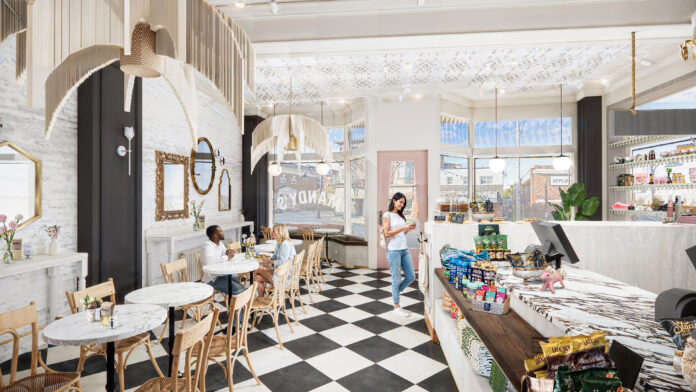
The Coal Harbour location will offer the full Mandy’s experience, with an expanded menu and the elaborate interior design that has become a signature of the brand. Guests can expect the restaurant’s best-selling salads as well as seasonal items served throughout the day.
Image: Mandy’s Gourmet Salads
A Lifestyle Brand Beyond the Menu
The Wolfe sisters have built a brand that extends into grocery stores, retail, publishing and cooking culture. Their cookbooks, including the widely purchased “Mandy’s Gourmet Salads: Recipes for Lettuce and Life,” helped cement the brand as a household name among urban home cooks. Bottled dressings and other products now appear on shelves across Canada, including in several Vancouver supermarkets, giving the company early recognition among West Coast consumers even before its restaurants have opened.
The company’s positioning as both a fast casual brand and a lifestyle label continues to distinguish it in a competitive landscape. The restaurants are designed to feel whimsical and immersive, with bold patterns, bright colours and eclectic furnishings that set them apart from more utilitarian salad concepts. The menu takes a generous approach to healthy eating, emphasizing flavour and abundance rather than restriction. It appeals to a broad demographic, with many of its customers identifying as health-conscious but also seeking indulgent combinations of textures and ingredients.
Despite having no previous presence in British Columbia, Mandy’s already enjoys strong brand awareness among many Vancouver residents. The company’s books, retail items and national media coverage have helped grow its following on the West Coast. That recognition is expected to support early momentum once the Kitsilano and Coal Harbour restaurants begin welcoming customers.
Samsung Experience Store opening at Square One in Mississauga. Photo: Samsung Canada
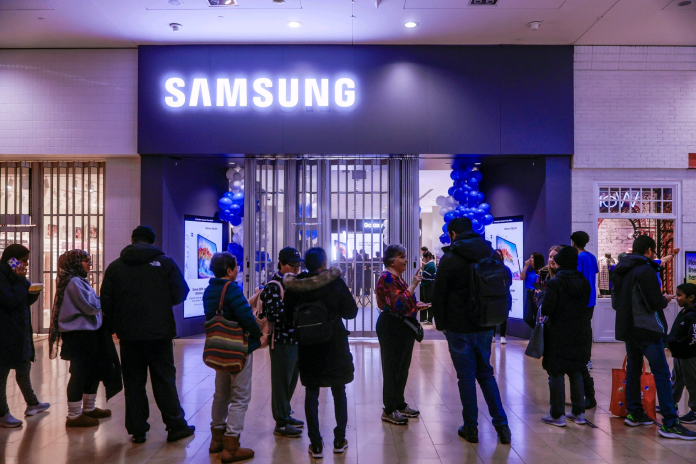
Samsung Canada has opened its newest Samsung Experience Store at Square One in Mississauga, welcoming visitors beginning December 6. The company describes the store as an important addition to its retail footprint in the Greater Toronto Area, positioning the location to serve a broad stretch of communities that include Mississauga, Oakville, Brampton, and Milton. The opening brings Samsung’s experiential retail concept to one of Canada’s busiest shopping centers, reflecting a continued focus on spaces where customers can interact directly with the company’s latest technologies.
Square One, already a major anchor for global retail brands, offers Samsung an environment where its experiential format can reach a diverse and high-volume audience. By establishing the Samsung Experience Store Square One, the company is reinforcing its belief that physical retail remains essential for demonstrating how its expanding lineup of mobile and AI-powered products fits into everyday life.
The new store joins Samsung’s existing Canadian locations at Yorkdale, CF Sherway Gardens, the Montreal Eaton Centre, Scarborough Town Centre, and Metropolis at Metrotown. These stores form a national network that supports the company’s efforts to bring immersive retail to major urban markets. Each space serves as a hub for hands-on demonstrations, service support, and education around the brand’s growing ecosystem of devices and software.
“The opening of the Samsung Experience Store at Square One reflects our commitment to bringing world-class innovation to Canadians,” said Brian Shin, Samsung Electronics Canada Inc., President and CEO. “This new location embodies our vision for immersive retail, where customers can explore, learn, and connect with technology that enhances everyday life. We look forward to welcoming the community and showcasing our latest AI-powered devices.”
Samsung’s stores operate as destinations rather than traditional display units, offering visitors an opportunity to understand how individual products interact through shared software and interconnected hardware. This strategy aligns with a broader industry movement toward experiential retail as a way to differentiate technology brands in an increasingly competitive marketplace.
Samsung Experience Store opening at Square One in Mississauga. Photo: Samsung Canada
An Immersive Introduction to Galaxy AI and Samsung’s Ecosystem
Inside the Samsung Experience Store Square One, visitors will find a fully interactive lineup of Galaxy AI devices and demonstrations that highlight how the technology can enhance daily tasks, productivity, and entertainment. Staff will be available to guide customers through AI-driven features and explain how Samsung’s mobile ecosystem integrates across smartphones, tablets, PCs, wearables, and accessories.
The store has been designed to show how these products operate when used together rather than as standalone devices. Samsung expects that this in-person experience will allow visitors to better understand the value of cross-device continuity, shared photo and video tools, and multi-device functionality that underpins the company’s ecosystem strategy.
“We are thrilled to bring this immersive experience to the heart of Mississauga, offering our community a chance to engage with our latest technology and explore how Samsung’s ecosystem can seamlessly integrate into their daily lives,” said Krista Collinson, Head of Direct-to-Consumer Division. “This store is a testament to our dedication to delivering exceptional customer experiences and fostering meaningful interactions with our products.”
Beyond product exploration, the new store offers access to Samsung Care+ and a full range of technical support services. Dedicated Galaxy Service Consultants will be on-site to assist with device repairs, troubleshooting, and customer guidance. Samsung continues to position these service capabilities as an important part of its physical retail strategy, reinforcing the value of face-to-face interaction at a time when much of consumer electronics retail has transitioned online.
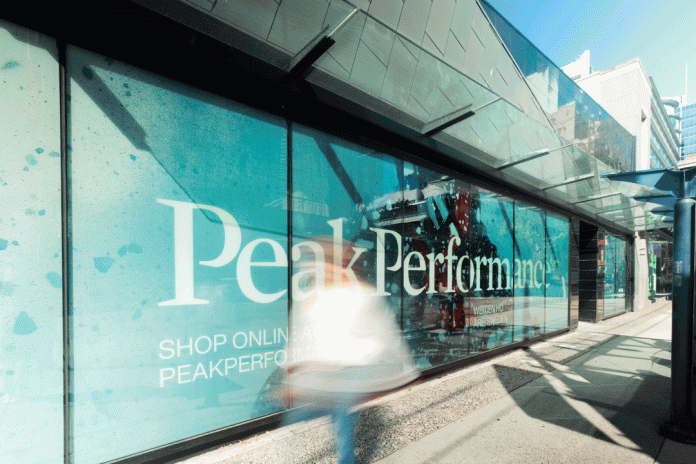
Peak Performance store at 813 Burrard Street in Vancouver. Photo: Olli Dickerson
Peak Performance began its latest chapter in Vancouver with a spectacle that transformed one of the city’s most recognizable public spaces into a temporary ski arena. On December 7, the Swedish outdoor brand staged The Vancouver Drop In on the steps of the Vancouver Art Gallery, a rail jam event designed to celebrate the opening of the Peak Performance Burrard flagship. The activation drew professional athletes, students, and thousands of onlookers who crowded the edges of Robson Square to watch a rare downtown competition unfold.
The scale of the production was immediately visible. Set-up began at dawn during heavy rain, with Arena Snowparks installing three custom features while volunteers with the UBC Ski and Snowboard Club transported more than two thousand cubic feet of snow to the site. By early afternoon the skies had cleared and the mood shifted as athletes began warming up on a course that overtook the entire staircase.
Peak Performance Rail Jam event in Vancouver, December 7, 2025. Photo: Olli Dickerson
Red Bull Canada supported the event with a DJ and beverages for a VIP viewing area, building an animated festival atmosphere that intensified as the day progressed. The rail jam opened with practice runs at 1 p.m., followed by a qualifying round and finals under evening lights. The roster featured confirmed athletes Alex Thucydides, Jarl Whist, Will Penrose, Jacob Belanger, Chase Ujeski, Anders Ujeski, Mark Hendrickson, Sage M, Mili Hofman, and Shonny Charbonneau. Additional professionals joined on arrival, including ON3P’s Rudy Lepine and Red Bull athlete Max Moffat. Hendrickson and Moffat are Olympic hopefuls, and Lepine recently appeared in the Level 1 film “Fingers Crossed,” which contributed to the strength of the lineup.
The finals delivered strong performances across all three features, with crowds gathering shoulder to shoulder along both sides of the staircase. A prize purse of six thousand dollars was split among winners. In the women’s category, Shonny Charbonneau placed first, followed by Makenna Griffiths and Mili Hofmann. The men’s podium was led by Mark Hendrickson in first place, Max Moffat in second, and Rudy Lepine in third. For spectators, the event offered an unusual convergence of downtown culture and mountain sport, and it created a celebratory moment to anchor the arrival of the Peak Performance Burrard flagship.
Peak Performance Rail Jam event in Vancouver, December 7, 2025. Photo: Olli Dickerson
The Burrard Store Opens as Peak Performance Grows in Canada
While the rail jam commanded attention on opening weekend, the new store itself represents the core of the brand’s long-term strategy in Canada. Located at 813 Burrard Street, just steps from Robson Street’s high foot traffic corridor, the store opened quietly to the public on November 29 and began drawing consistent shopper interest in the days leading to the launch celebration.
The Peak Performance Burrard flagship occupies a prominent site formerly held by Arc’teryx before that company relocated across the street to a much larger space. The new store places Peak Performance in the centre of Vancouver’s outdoor retail cluster, an area frequented by visitors and residents who are deeply engaged in mountain sports. The location provides strong co-tenancy, significant tourist volumes, and visibility near cultural landmarks including the Vancouver Art Gallery.
The Burrard store is positioned as a larger and more immersive expression than the approximate 1,900 square foot Kitsilano concept store that opened in 2023. The expanded footprint supports a broader product offering that includes ski apparel, hiking gear, mountain biking collections, and urban technical wear. The interior embraces Scandinavian design principles that reflect the brand’s origins in the mountain village of Åre in Sweden, with bright spaces, light woods, and clean visual displays that guide customers through the technical stories behind each category.
Staff and ambassadors provide technical guidance and product knowledge, while the store’s programming is designed to build community connections through workshops and activations. Complimentary repair services also highlight the brand’s sustainability commitments by extending the life of key products. With its scale and assortment, the Peak Performance Burrard flagship is intended to anchor the company’s North American expansion and serve as a model for future stores.
Peak Performance Rail Jam event in Vancouver, December 7, 2025. Photo: Olli Dickerson
A Brand Built on Ski Culture and Scandinavian Design
Peak Performance was founded in 1986 by three skiers in Åre who wanted technical apparel that balanced function and simplicity in a way they felt the market lacked. Their early collections were embraced quickly across Scandinavia and later attracted broader European interest as the company moved beyond skiwear into general outdoor and urban apparel. The business was later acquired by IC Group, a move that supported international expansion. In 2018 the company was sold to Amer Sports, a global sporting goods group now controlled by a consortium led by Anta Sports. The acquisition has provided resources and distribution pathways that have strengthened the brand’s global presence, including in North America.
The brand’s collections now span multi-season outdoor categories that combine performance materials with the minimalist Scandinavian aesthetic that has defined Peak Performance since its earliest days. Partnerships with athletes and sponsorships such as the Freeride World Tour reinforce the brand’s connection to advanced mountain environments and high-performance testing grounds.