A historic investment to increase Danone Canada’s productivity and support market growth in Canada (CNW Group/Danone Canada)
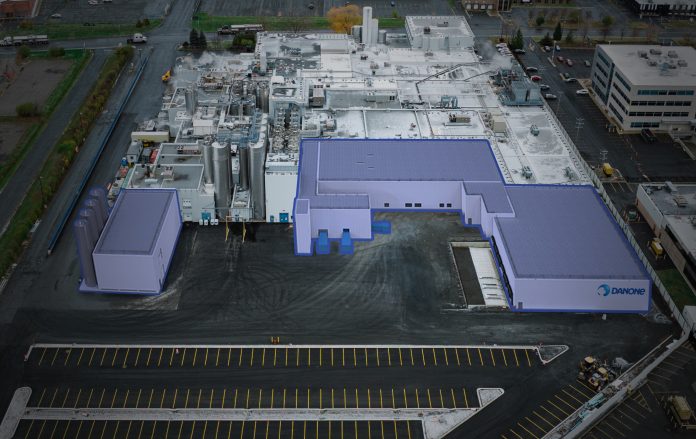
Danone Canada says it is making the largest investment in its history to expand its Boucherville plant in Quebec in response to growing demand for yogurt across the country.
The company announced recently it will increase the facility’s yogurt tub production capacity by 40 per cent and boost its ability to receive and process Canadian raw milk by 20 per cent. Danone Canada said construction is underway, with a new production line expected to be operational in 2026.
“Canadians are embracing healthier choices, and the rising popularity of yogurt, especially high–protein varieties, speaks volumes. Nutritious and accessible, yogurt has become a staple for families. This significant investment underscores our commitment to supporting local production and delivering on what we do best at Danone: bringing health through food,” said Frederic Guichard, president of Danone Canada.
Frederic Guichard
According to the company, nearly 90 per cent of Canadian households consume yogurt, and more than one in three dairy yogurts sold in the country already comes from the Boucherville facility. Danone Canada said the expansion will help reinforce its market leadership as demand grows.
The company also said the project includes investment in new energy-recovery equipment as part of Québec’s ÉcoPerformance program, which supports initiatives under the province’s Plan for a Green Economy 2030.
Since 2022, the plant has diverted at least 99 per cent of its non-hazardous waste from landfill and sends no hazardous waste to landfill, Danone Canada said.
Géraldine Moret
“Through growth, innovation and sustainability of our operations, we are proud to reaffirm our position as a major food producer in Canada and to lead by example when it comes to improving the sustainability of our products and operations,” said Géraldine Moret, vice-president of operations at Danone Canada.
The expansion builds on the company’s previously announced $9-million investment last June to begin producing more sustainable individual yogurt cups made from PET resin.
Retail Insider is streamlining its Canadian retail news from around the web to include a handful of top news stories that can be viewed quickly during the day. Here are the top stories from the past 48 hours.
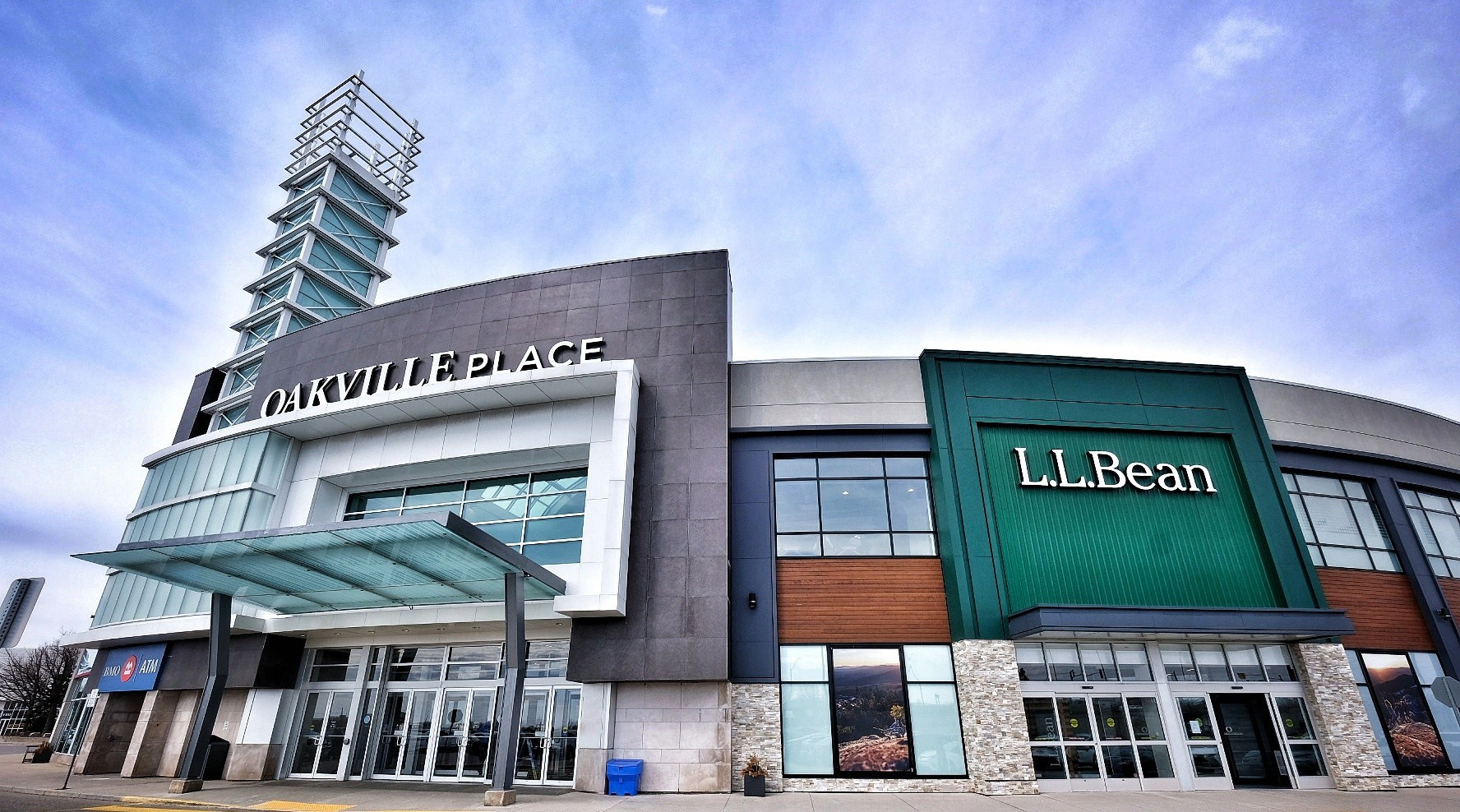
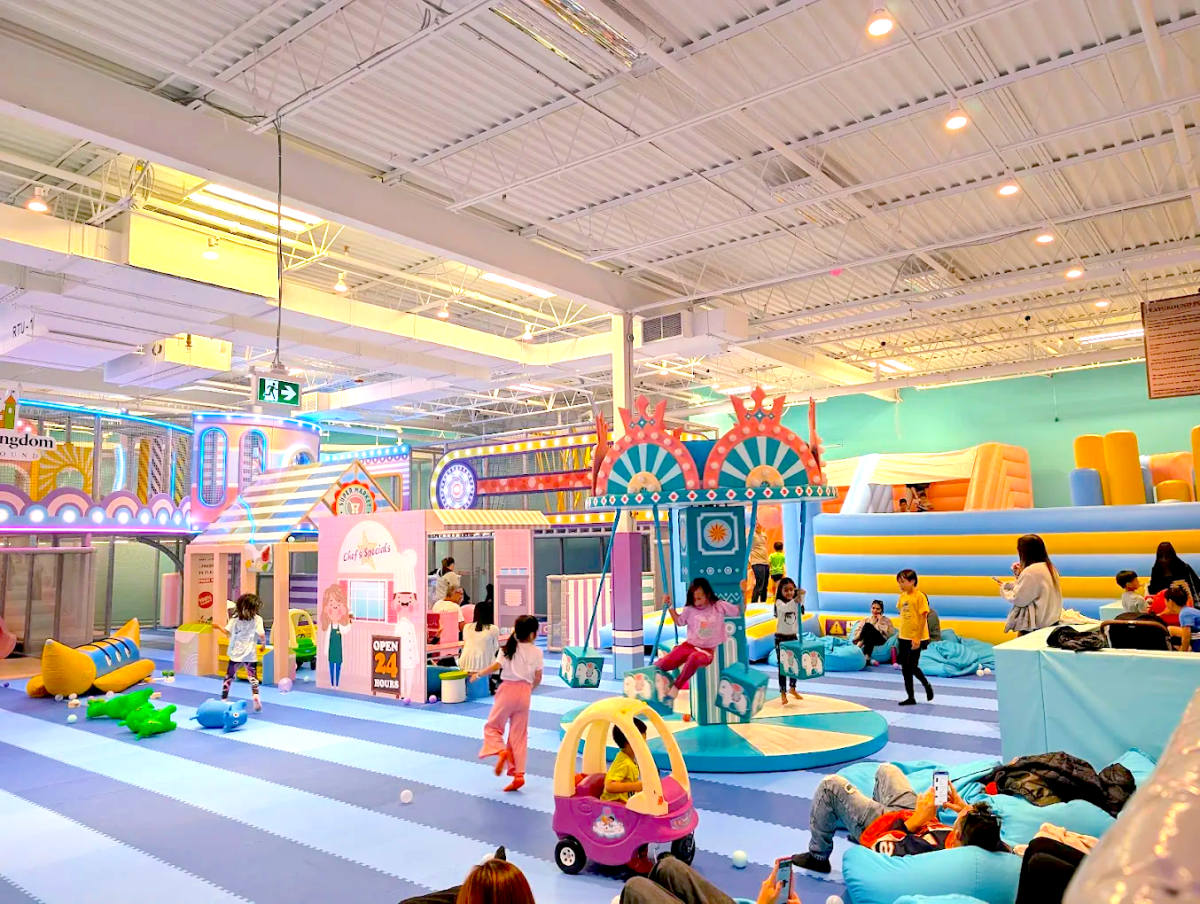
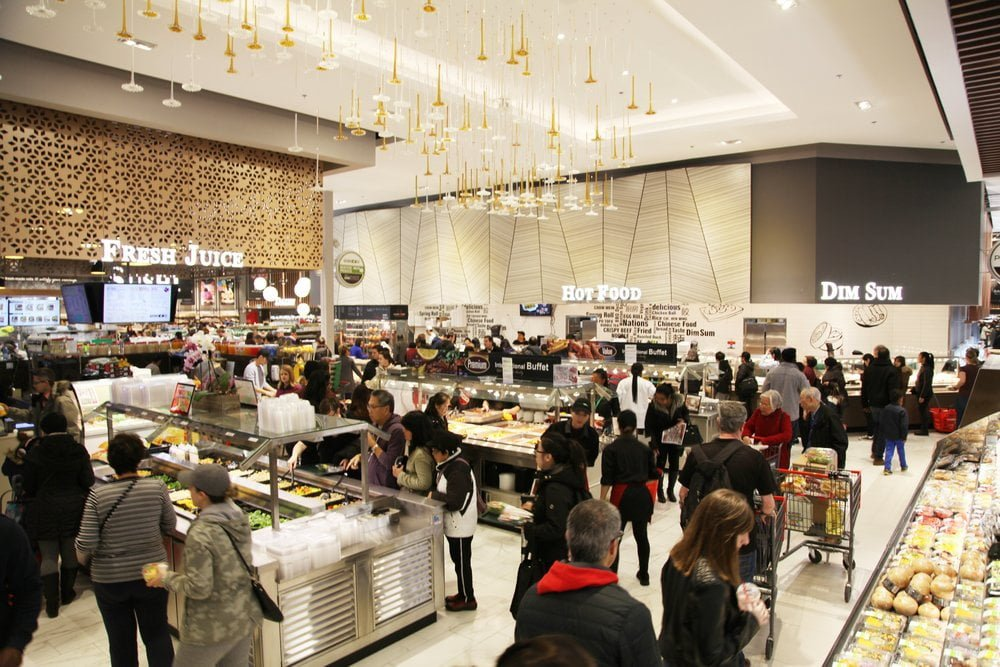
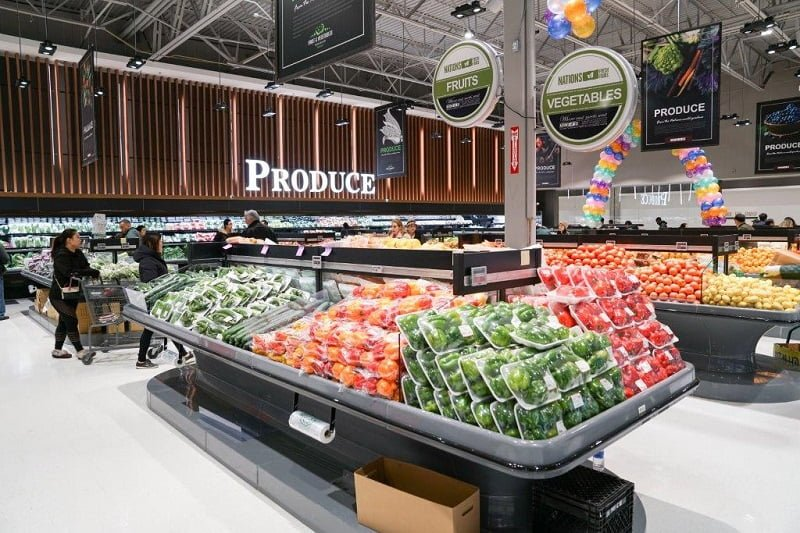
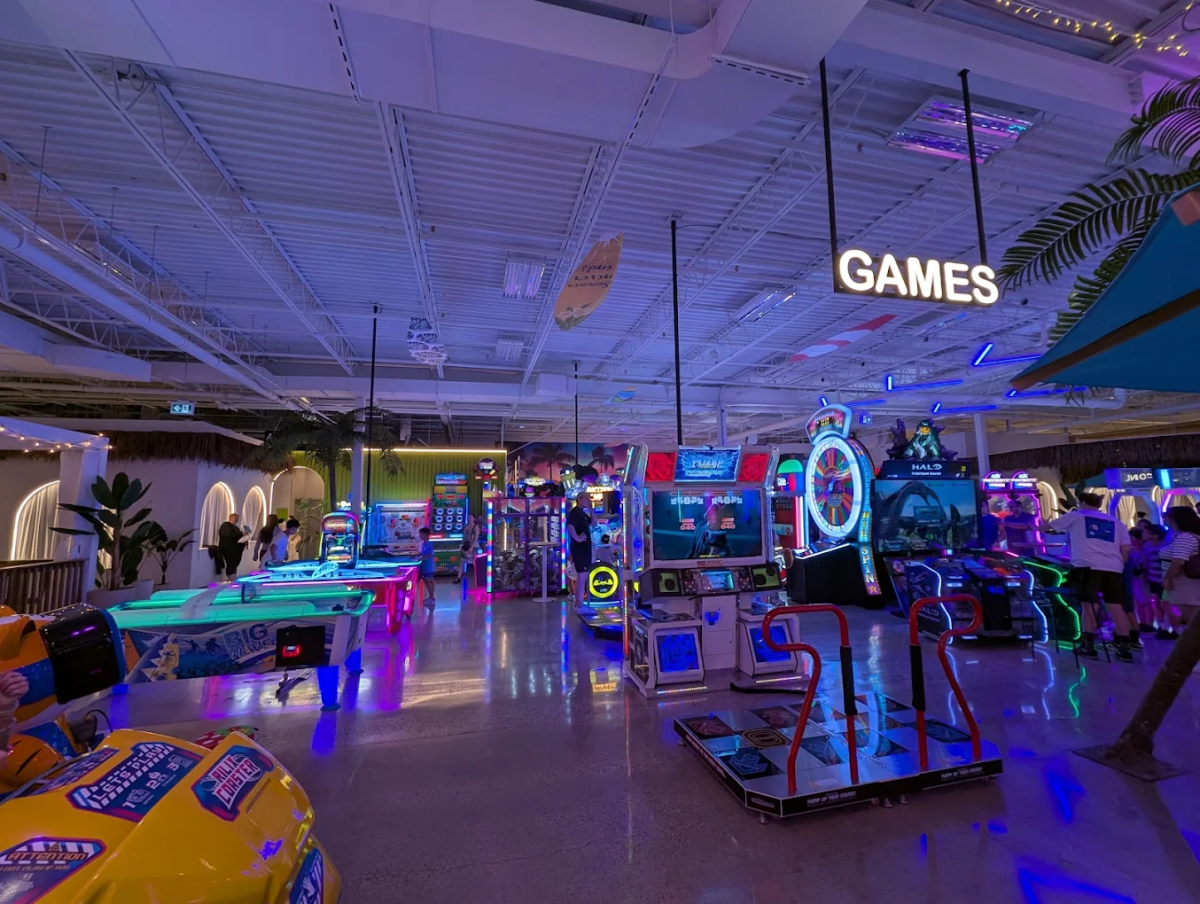
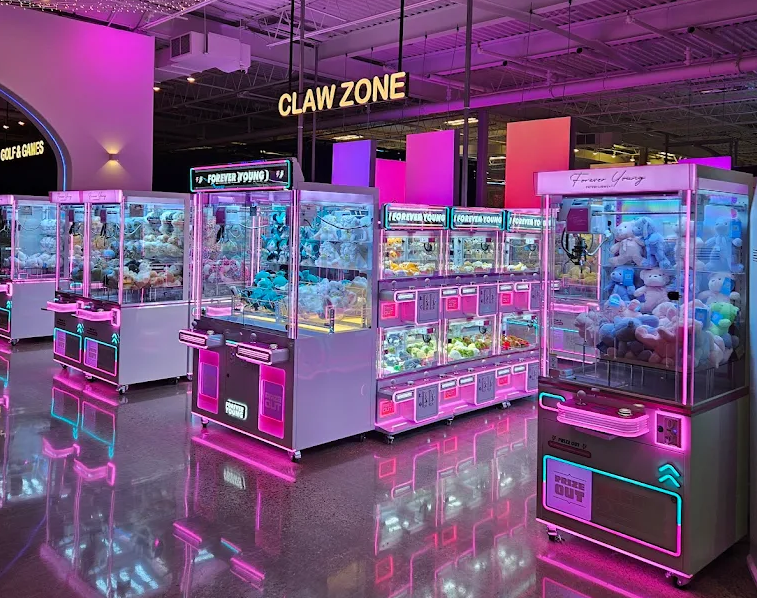
A major retail transformation is on the horizon for Oakville as Nations Experience prepares to anchor the former Hudson’s Bay store at Oakville Place. The multicultural grocery and entertainment banner will open a 120,000 square foot flagship at the RioCan owned centre, bringing a unique mix of international grocery, global cuisine, and an expansive entertainment concept called Forever Young.
The Nations Experience Oakville Place flagship will span two full floors of the former Hudson’s Bay space, which closed in June 2025 following the national liquidation of the Hudson’s Bay Company. Construction is scheduled to begin in late 2026, with the opening planned for 2027.
For Nations, the project reflects a continued evolution of its “foodertainment” model. For Oakville Place, the redevelopment marks a pivotal step as the centre repositions itself after the loss of the prominent department store anchor.
“This is much more than retail. It’s a destination designed for families who want to shop, play, dine, and connect all under one roof,” said Frank Ho, Vice President of Real Estate Development for Nations Fresh Foods.
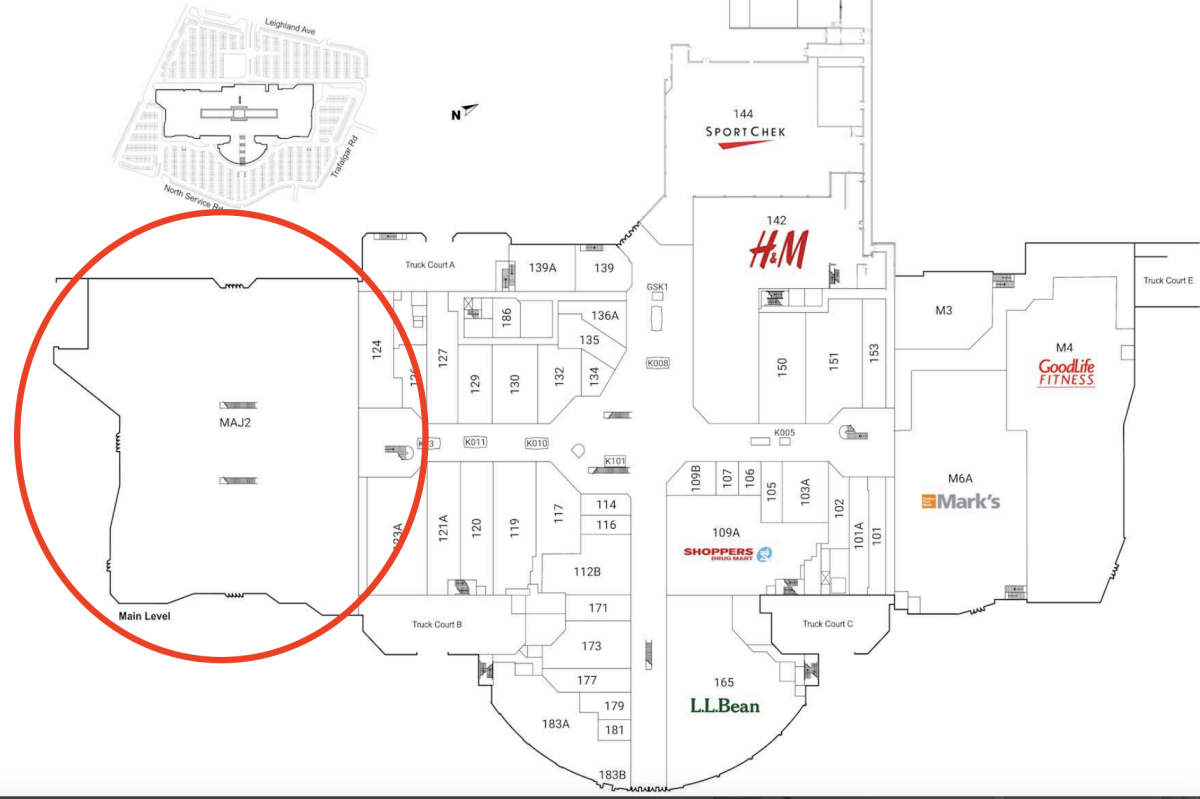
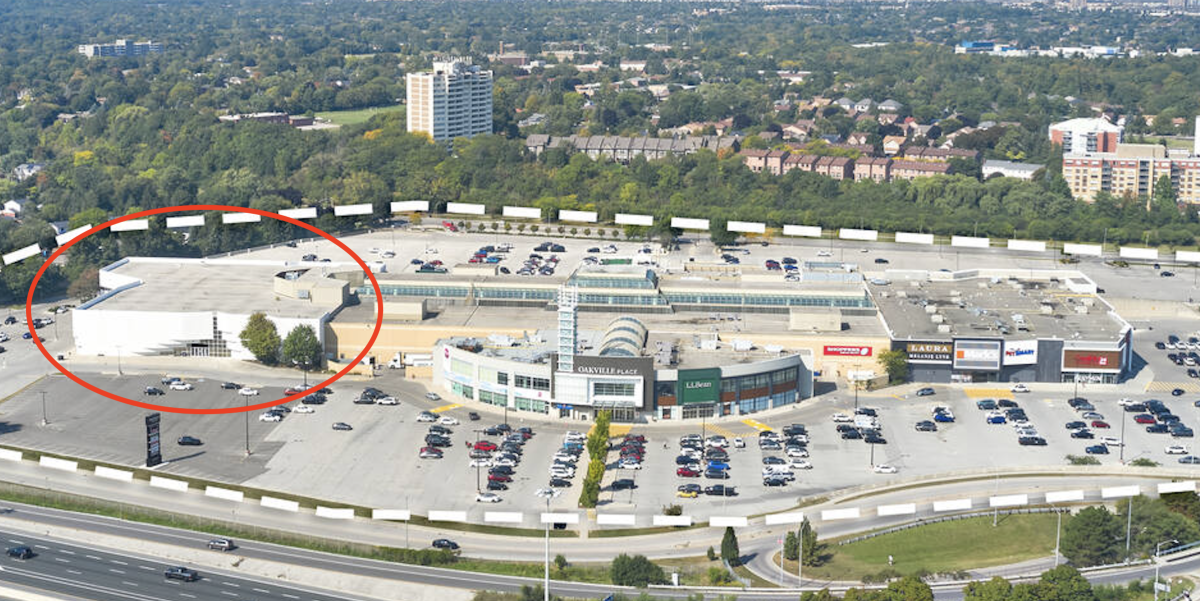
Oakville Centre lease plan. Click image for 2 page PDFOakville Place in Oakville (future Nations circled in red). Image: RioCan
Building on a Proven Concept
Nations Fresh Foods began with a single store in Woodbridge in 2012. It quickly expanded into Hamilton, Mississauga, Brampton, and Toronto’s Stockyards Village by offering a wide assortment of multicultural grocery items at accessible prices. Nations became known for serving a diverse clientele with thousands of SKUs ranging from Asian, Caribbean, Middle Eastern, African, and Latin American products to international produce and prepared foods.
The turning point came in 2017, when Nations opened a 127,000 square foot store in a former Target at Stockyards Village. That store introduced the chain’s first significant entertainment component, including a children’s playground and party rooms. The response was immediate.
“They were overwhelmed by demand from the day they opened. The party rooms were booked months in advance, and families were waiting for availability,” said Kelly Laughton, Broker of Record at Top Cats Realty Inc., who represents Nations Experience exclusively.
Kelly Laughton, Broker of Record at Top Cats Realty Inc.
Laughton has worked with Nations for years. She recalled how quickly the brand recognized that entertainment should be central to its future.
“They realized the entertainment offering needed to be much larger. Stockyards showed them that families were looking for a full day out, not just a shopping trip,” she said.
This insight led to the launch of Forever Young.
Forever Young and the Rise of Multigenerational Entertainment
Forever Young debuted in July of 2025 at Centerpoint Mall in Toronto, occupying a large former department store space on the mall’s upper level. It includes VR simulators, arcade games, sports areas, creative activity rooms, birthday party venues, and an indoor playground, along with an in house food program.
“It gave Nations the opportunity to refine the model and evaluate what resonated with guests, including which attractions to expand or replace. When I visited, the space was extremely busy,” said Laughton.
Forever Young will occupy the second floor of the former Hudson’s Bay space at Oakville Place, while the main level will feature a full Nations Fresh Foods supermarket with extensive prepared foods. The pairing is designed to allow families to shop, eat, and play in one extended visit.
“People are incredibly time pressed, so being able to shop, pick up prepared meals, and let their children enjoy the entertainment area is a major draw. In many cases, grandparents come as well. These stores really support family outings,” said Laughton.
Nations Experience at the Stockyards in Toronto. Photo: Esther Ko via Google Maps
A Regional Draw Beyond Traditional Grocery Behaviour
One of Nations’ strongest competitive advantages is its ability to draw shoppers from more than an hour away, bypassing numerous competing grocery stores.
“Traditional grocery trade areas are about twenty minutes. At Nations stores, it is common for people to travel up to two hours, sometimes more. They stock up because the product assortment reflects their cultural backgrounds,” said Laughton.
Customers often fill cars with specialty items that are unavailable elsewhere. That loyalty gives Nations a broad trade area and makes the banner appealing to landlords seeking strong traffic anchors.
Food Hall at Nations Experience Stockyards in Toronto. Photo: Nations Experience
However, Laughton noted that misconceptions sometimes arise about Nations based on outdated assumptions about ethnic grocery stores.
“This is a multiethnic grocery store. It supports a wide cultural mix, and the trade area needs to reflect that. If a market is dominated by a single demographic group, Nations will not choose that location. Their model thrives on diverse communities and high population density,” she said.
Oakville and the broader Halton Region offer that mix, making Oakville Place a strong match.
For RioCan, the redevelopment of the former Hudson’s Bay space is a milestone. The landlord co owned a number of Bay stores through a joint venture dating back to 2015. When Hudson’s Bay filed for creditor protection in March 2025 and later liquidated all 80 stores nationwide, many large format boxes reverted to landlords, including the Oakville Place location.
Nations Experience at the Stockyards in Toronto. Photo: Nations Experience
A Deal A Year in the Making
The Nations Experience Oakville Place deal began long before the Hudson’s Bay liquidation became public.
“We started discussions before Christmas, and the first letter of intent went out in November. These negotiations began almost a year before Hudson’s Bay filed for creditor protection,” said Laughton.
Early engagement allowed Nations and RioCan to work through the complexities of repurposing a department store into a hybrid supermarket and entertainment destination.
“These projects take a long time. Even once a deal is in place, the build out alone is typically more than eighteen months,” she added.
The timeline reflects the substantial work required to convert older department store spaces into modern retail environments.
Nations Experience at the Stockyards in Toronto. Photo: F Deb via Google Maps
Construction, Design, and a Careful Growth Strategy
Nations has expansion plans and they are measured. Building each store takes time and precision. “It takes over a year of construction, and often closer to eighteen months. Nations has one construction team, so they cannot build multiple stores at once. Landlords have to be patient,” said Laughton.
This measured pace is deliberate. Nations aims to avoid the pitfalls of rapid expansion that challenged other banners in the past.
“There are no other deals finalized right now. Nations is evaluating opportunities, but each location requires the right demographics, density, parking, and building configuration,” Laughton added.
Nations Experience at the Stockyards in Toronto. Photo: Uncle Cyncle via Google Maps
The company is open to former department store boxes across Canada, but only where the market supports the model.
“In some markets, the buildings are extremely old and require major investment. One former Sears building we looked at needed more than fourteen million dollars just to bring it up to basic code,” she said.
Other buildings require structural remediation, elevator replacement, escalator reconfiguration, or environmental work.
“That is before even considering the retail build out. These older boxes can be incredibly complicated,” she said.
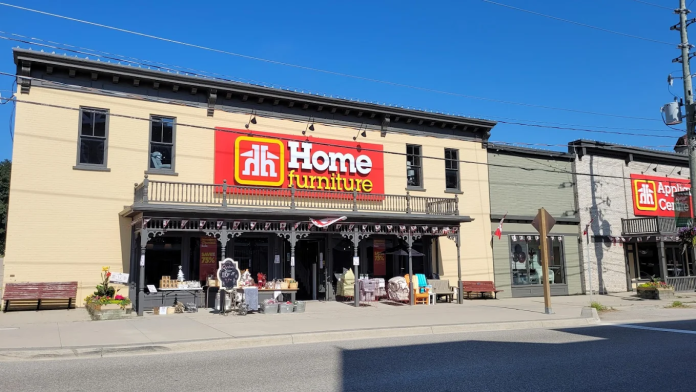
Home Furniture store in St. Jacobs, Ontario. Photo: Simon Zhang via Google Maps/Images
Home Hardware will close its Home Furniture banner next year, ending a decades-long presence in the Canadian furniture category. The decision, communicated through an internal memo obtained by Retail Insider and later confirmed by the company, outlines a full exit from the Home Furniture business by May 31, 2026. The move forms part of a broader strategic realignment and arrives at a time when the Canadian furniture sector continues to experience economic pressure and heightened competition.
The announcement affects a network of dozens of dealer-owned Home Furniture stores operating across the country. These locations, primarily in small and mid-sized communities, have provided furniture, appliances, and home décor within the cooperative structure of Home Hardware’s extensive retail system.
Their wind-down will reshape access to independently owned furniture retail in markets where major chains and online sellers have increasingly dominated. The Home Hardware Home Furniture closure reflects the company’s decision to focus more directly on its core home improvement, hardware, and building supplies business.
Editor’s note: An earlier version of this story included photos of the independently owned Home Furniture store in Stratford, Ontario. The owner has since clarified that, as almost all Home Furniture locations are independently operated, the Stratford store will likely continue to operate under a rebranded name. The images were used solely for representative purposes, and Retail Insider was not aware of this distinction at the time of publication.
Home Furniture store in St. Jacobs, ON. Photo: Sylvia Fox Bevan via Google Maps
Supplier Memo Details the Wind-Down Timeline
Retail Insider obtained a supplier letter outlining the plans for an orderly transition. The memo, issued to supplier partners, confirms that all purchase orders in approved status as of November 10, 2025, will be honoured. It also requires that all special orders already received be fulfilled, emphasizing continuity for customers who have made presold purchases.
The letter directs suppliers to discontinue work on any new product development tied to the Home Furniture banner and indicates that the company will continue communicating updates as the transition progresses. It reinforces that all accounts payable will be settled according to standard terms. The document frames the closure as part of a forward-looking strategy designed to strengthen Home Hardware’s long-term position and focus resources where the company believes it can most effectively grow.
Company Confirms Strategic Review Led to Exit Decision
Home Hardware confirmed the wind-down in written responses provided to Retail Insider by John Pierce, Chief Retail Operations Officer at Home Hardware Stores Limited. Pierce said the decision followed a detailed internal review and reflects the company’s focus on strengthening core business areas.
John Pierce
In describing the retailer’s national presence, Pierce wrote that, “Home Hardware Stores Limited currently has over 1,000 locally owned and operated stores across the country. Our focus remains on strengthening our brand and deepening our presence in the communities we serve. We are committed to delivering exceptional customer experiences, while strategically evaluating opportunities for sustainable growth.”
Pierce also confirmed that the company will exit the Home Furniture business following a strategic review. “After a thorough strategic review, we’ve made the decision to exit the Home Furniture business. This allows us to focus resources on strengthening our core operations and investing in areas that drive growth and innovation,” he stated. He added that, “Independent dealers will have the autonomy to determine the best path forward for their businesses, and HHSL will provide support throughout the transition process to ensure it is as smooth as possible.”
He further explained the reasoning behind the realignment, saying, “This strategic realignment will allow Home Hardware to concentrate on the areas where we can deliver the greatest value for our independent Dealers and customers. Simplifying our brand structure makes it easier for customers to find the products and services they need most, while ensuring our stores have the support they need to succeed.”
Background: A Cooperative Retailer with Deep National Reach
The Home Hardware Home Furniture closure marks a shift within a network that has played a role in Canadian retail for more than sixty years. Home Hardware was founded in 1964 and operates under a cooperative dealer-owned structure that allows independent owners to run their stores while aligning with national branding, logistics, and support systems. The model has helped the company maintain its position as one of the country’s largest independent home improvement retailers.
Home Hardware operates four primary retail banners. Home Hardware stores focus on everyday hardware assortments. Home Building Centre locations concentrate on building materials and products for renovations and repairs. Home Hardware Building Centre stores combine elements of both formats for a wider offering. The Home Furniture banner, now scheduled for closure, was created to expand the company’s retail presence into furniture, appliances, and home décor.
The company operates distribution centres in St. Jacobs, Elmira, Wetaskiwin, and Debert, supporting an extensive national footprint. Many Home Hardware stores serve small and mid-sized communities where local ownership remains a key part of the brand’s identity. The Home Furniture banner followed this same dealer-driven model, offering independent owners a format that complemented existing Home Hardware or Home Building Centre locations.
Home Furniture store in St. Jacobs, ON. Photo: Sylvia Fox Bevan via Google Maps
Inside the Home Furniture Banner
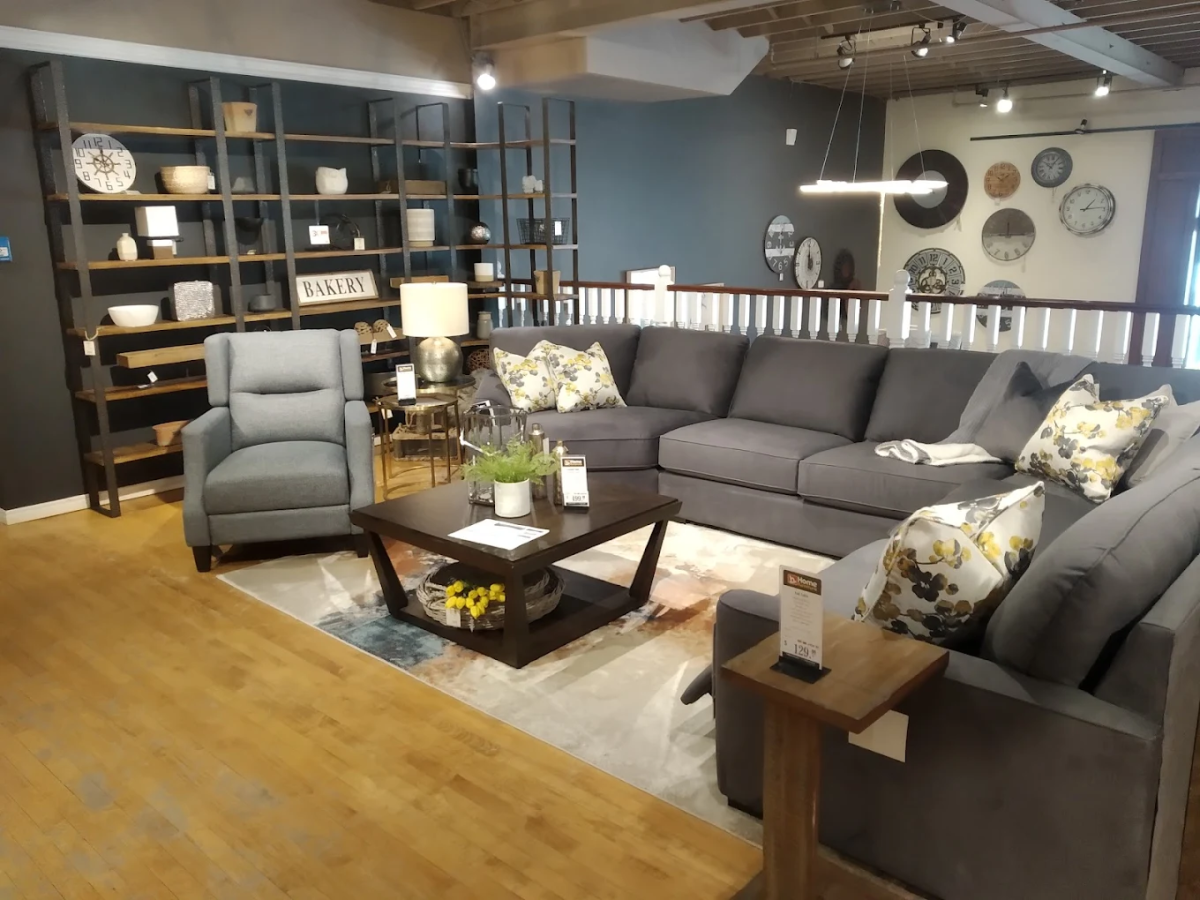
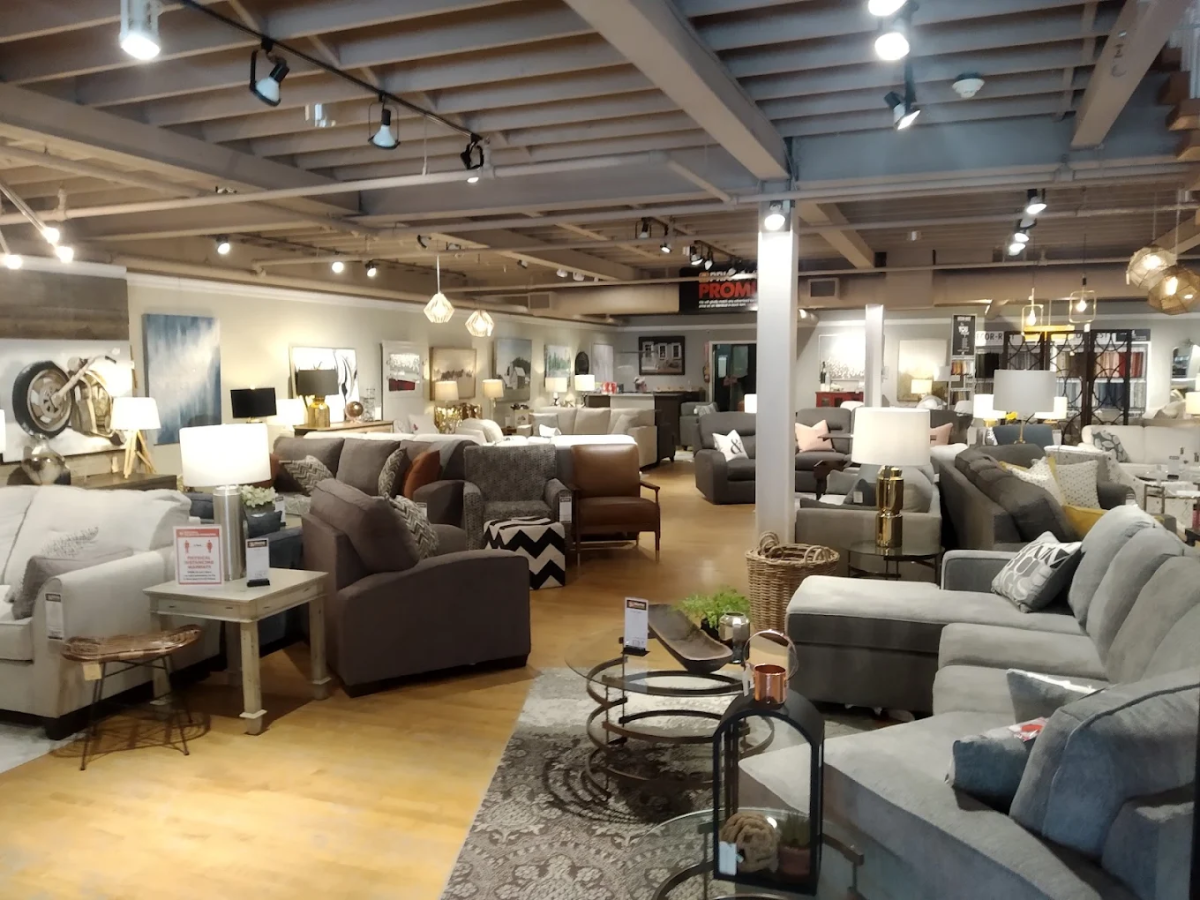
The Home Furniture banner has long served as the dedicated home furnishings division within the Home Hardware organization, offering a full assortment of furniture, major appliances, and décor within a dealer-owned structure. Stores have traditionally carried living room seating, bedroom suites, dining collections, mattresses, and household appliances, along with a selection of home décor accessories. The assortment often emphasized Canadian-made suppliers, reflecting a sourcing approach aligned with the cooperative’s national identity and longstanding supplier relationships.
Most Home Furniture stores range between 12,000 and 25,000 square feet, a size that allows for the presentation of complete room vignettes without the overhead associated with much larger furniture formats. Dealers used this mid-sized footprint to balance breadth of assortment with the operational efficiencies required to compete in markets served by national chains and online retailers.
The banner’s merchandising strategy has historically focused on providing accessible price points aimed at families, first-time homebuyers, and customers in small and mid-sized communities who preferred to shop locally rather than travel long distances to regional centres. Many stores benefited from close proximity to Home Hardware or Home Building Centre locations, creating cross-traffic opportunities and convenience for customers tackling larger home projects.
As of 2025, Home Furniture stores were located across several provinces, with concentrations in Ontario and the Maritimes and two stores in British Columbia. Over time, stores opened and closed based on local demand, competitive pressures, and dealer decisions. The scheduled wind-down of the banner will gradually reduce that footprint, with the official exit date of May 31, 2026, marking the end of a format that has played a meaningful role in many Canadian communities for decades.
Craig Patterson and Kris Zanuldin, head of KONEK at Interac Corp. (Interac), discuss how the new Canadian e-commerce payment solution was developed to address key gaps in online checkout experiences. See the description directly below the video interview:
KONEK focuses on accessibility, trust, and convenience—factors Zanuldin says are essential for driving adoption in payments. Built to give Canadians more choice, the system aims to solve pain points around rising payment costs, fraud, and increasingly demanding customer expectations.
Zanuldin outlines how KONEK benefits merchants by improving conversion rates while also reducing payment-processing expenses. By working collaboratively with major financial institutions, KONEK enables features like bank-grade fraud protection, liability shift, and a streamlined checkout flow. The platform also tackles cart abandonment by offering customers more payment options, particularly pay-by-bank methods that resonate strongly with Gen Z and trust-conscious shoppers.
He also highlights the advantage of a made-in-Canada solution built for Canadian regulations, consumer behavior, and security expectations. With Staples as the first national launch partner, KONEK is set to showcase a smoother checkout and improved customer experience. Looking ahead, Zanuldin expects KONEK to play a major role in Canada’s shift from offline to digital commerce, providing a trusted, lower-cost payment alternative as digital wallets and online retail continue to accelerate.
Merchants who are interested in learning more about KONEK can visit KONEK.ca.
If you prefer to listen to the audio version, it is available below:
The Interview Series audio podcasts by Retail Insider Canada are available on Apple Podcasts, Stitcher, TuneIn, Google Play, or through our dedicated RSS feed for Overcast and other podcast players. Also check out our The Weekly audio podcast where Craig and Lee discuss popular content published on Retail Insider which is part of the The Retail Insider Podcast Network.
Subscribe, Rate, and Review our Retail Insider Podcast!
Drop us a line at Craig@Retail-Insider.com. You can also rate us in Apple Podcasts or recommend us in Overcast to help more people discover the show!
Background Music Credit: Hard Boiled Kevin MacLeod (incompetech.com). Licensed under Creative Commons: By Attribution 3.0 License. http://creativecommons.org/licenses/by/3.0/
Amazon Haullaunched in Canada Friday, with customers able to shop ultra-low-priced products across multiple categories including fashion, home, and beauty on the Amazon Shopping app.
The company said it has always worked to provide customers with the widest possible selection, low prices, and a convenient shopping experience, and it offers millions of products in Canada.
“Building on this longstanding customer offer, we are today introducing Amazon Haul in Canada too – offering customers a choice of hundreds of thousands of products, along with 5% off orders over $70 and 10% off orders over $100. Customers can also enjoy free shipping on orders above $35,” it said.
“Amazon Haul is available through the Amazon Shopping app, and features thousands of products from multiple categories including fashion, home, beauty, and more. It has its own shopping experience, search, basket and checkout, and has been designed to offer a fun, engaging way to shop on the app. Amazon Haul orders will arrive in two weeks or less.”
“In addition to the great selection on Amazon of a wide range of brands, from global favourites to Canadian brands large and small, Amazon Haul adds even more selection at lower costs for customers, all backed by the Amazon trusted shopping experience. This new offering reflects our commitment to providing Canadians with both the convenience and trustworthy experience they value, and the expanded affordable options they’ve been asking for.”
The company said all items are priced under $25, most are under $10, and customers can also look out for items with the ‘crazy low’ prices badge, with some items as low as $1. Customers can take advantage of extra savings available, including 5% off orders over $70, and 10% off orders over $100. Amazon Haul offers free delivery on orders of $35 or above, and a standard delivery charge of $6.99 on orders below $35.
“Customers will find Amazon experiences they know and love, including customers reviews and star ratings, to help them select products that are right for them. All products on Haul go through all relevant Amazon checks so customers can be confident they’ll receive products that are safe and compliant with all applicable regulations and Amazon policies. If a customer wants to return an item, they can do so for free if requested within 15 days of receipt. In many cases, customers don’t have to worry about boxes or labels, and their preferred drop-off location will handle the packing, labelling, and shipping,” said the company.
Amazon Haul is now rolling out and is available to select customers in Canada when they update their Amazon Shopping App. Customers can find it by searching “Haul” in the search bar, and navigating to Amazon Haul from the main menu icon. It will be rolled out to all remaining customers over the coming weeks, it said.
The Canadian Federation of Independent Business (CFIB) says it welcomes Ottawa’s confirmation that the remaining $623 million in the Canada Carbon Rebate payments for 2024-25 will soon be returned to small businesses. Six hundred thousand (600,000) small firms in eight provinces will receive the rebate with various amounts per province.
Dan Kelly
“This is good news for small businesses who have been waiting for the money they’re owed. After another challenging year, small firms could really use this chunk of cash,” said Dan Kelly, CFIB president.
“But there’s still work to be done. We’re calling on Ottawa to act quickly and pass legislation to ensure the rebates are tax-free and to deliver on government’s promise to extend the original filing deadline so that more small firms can qualify.”
Legislation to proceed with these changes is proposed in the 2025 budget.
“This will end the long battle against the consumer/small business carbon tax,” Kelly said. After stalling on paying promised rebates for small business for five years, government finally dispersed $2.5 billion in December 2024. This represented only a fraction of the total carbon tax revenue paid by small firms.
“It is a relief that the government has cancelled this carbon tax and delivered on the final annual installment to small firms.”
Consumers received their final quarterly rebate in April of this year.
The CFIB said rebates will be based on the number of T4s issued by an employer, and the Canada Revenue Agency will automatically issue the rebates to eligible businesses in Alberta, Saskatchewan, Manitoba, Ontario, New Brunswick, Nova Scotia, Prince Edward Island, and Newfoundland and Labrador.
Total rebate by province
Example rebate for an employer with 10 FT/PT employees
Alberta
$159.5 M
$1,200
Saskatchewan
$42 M
$1,530
Manitoba
$34.3 M
$1,110
Ontario
$338.6 M
$980
New Brunswick
$13.4 M
$690
Nova Scotia
$18.3 M
$780
Prince Edward Island
$2.9 M
$560
Newfoundland and Labrador
$14.1 M
$1,270
Corinne Pohlmann
“While the federal carbon tax has been unfair to small businesses from the start, small firms will finally receive some relief and long-awaited clarity. This wouldn’t have happened without CFIB’s relentless advocacy. We held the government accountable by having over 200 meetings with officials, getting provincial premiers on board and collecting over 27,000 signed petitions,” said Corinne Pohlmann, executive vice-president of advocacy. “This is a final win for small businesses who paid into the carbon tax system for years without seeing a dime in return.”
For more information on CFIB’s work on carbon tax, visit cfib.ca/carbontax.
The CFIB is Canada’s largest association of small and medium-sized businesses with 100,000 members across every industry and region.
New data reveals staffing issues are by far the biggest struggle for hospitality operators right now. Silverware POS, a Canadian POS provider supporting restaurants and hotels across North America, partnered with Angus Reid for a pulse check on the state of hospitality as we near the end of the year – what are owners, operators and staff really struggling with right now?
Some of the findings were shocking, especially the overwhelming concern for staffing across the board.
The 2025 Canadian Hospitality Service Report found that:
Staff shortages remain the primary operational barrier for providing seamless service across all demographics, industries, and regions (31% overall).
Hotels/Resorts have been hardest hit by staffing shortages over the last 12 months, with 46% reporting impacts, compared to 31% of bars/restaurants
Hiring experienced staff is the biggest difficulty overall (30%), particularly in Hotels/Resorts (57%)
Guests’ demand for affordability is the second biggest challenge (24%), especially in Restaurants/Bars (31%)
Service delays are the most common guest complaint overall (31%), especially for restaurants/bars (44%).
The cost of food and drink is also quite high (39%) for both bars/restaurants and hotels/resorts
The biggest risk to businesses’ success in the next 12 months is rising costs (39%) and economic slowdown (32%), especially for those in Ontario (37%) and among restaurants/bars (49%)
If a POS system were to shut down for a day, most Canadian hospitality workers would be concerned about revenue loss (48%), with those in Alberta and restaurant/bar operators showing the most concern (59%)
In the next year, most Canadian hospitality staff are likely to invest in staff productivity tools (labour management, scheduling) (31%)
Sam Brenner, Vertical President of Silverware POS, who oversees Silverware which is owned by Full Steam with about 90 other businesses, said staffing shortages and economic uncertainty are affecting both operators and consumers. “These four things mixed together can create a bleak picture,” he said, referencing staffing, consumer hesitancy, rising costs, and economic uncertainty.
Despite these challenges, Brenner expressed optimism about the industry’s long-term resilience. “All you have to do is look at COVID to see how resilient hospitality really is,” he said. He added that consumers continue to seek experiences such as nights out at pubs, resorts, or restaurants, which gives him hope for the sector.
Brenner outlined strategies for hospitality businesses to remain resilient, emphasizing the importance of staff retention and guest experience. “If you’re short on staff and a dish takes 20 minutes longer than it normally would… those things are basically dings against the guest experience,” he said. “If you’re going to survive and be resilient, you have to go all in on the guest experience.”
He also highlighted the role of company culture in attracting and retaining talent. “It’s not just about finding good staff, it’s retaining the staff that you have,” Brenner said. “When you go to a local pub or favourite restaurant, the same person greeting you gives you a sense of a good experience.”
Discussing Silverware POS, Brenner described the company’s 30-year history and its tailored approach to point-of-sale solutions. The POS business was started “in the scrappiest, most grassroots way possible” with coding done right at the bar, Brenner said. He added that the company has deep integrations with property management systems such as Maestro and works to customize solutions for hotels, resorts, and fine dining restaurants worldwide.
Brenner credited Silverware’s longevity and customer success to its team. “The average lifespan of our staff is way more than 10 plus years. Our head of implementations and onboarding has been with us 20 plus years. Our head of customer success, 15 plus years,” he said.
Despite acknowledging industry challenges, Brenner remains hopeful. “We come back to what we all love about the hospitality industry. We’re going to keep going out to restaurants, enjoying beautiful properties, wanting that human connection. That gives me a lot of hope for the future,” he said.
OpenRoad Auto, one of Canada’s largest automotive dealership groups, has become the majority shareholder in NewRoads Automotive Group (NewRoads), an established Ontario dealership group with deep community roots.
The move brings together eight NewRoads dealerships with OpenRoad’s four existing Ontario operations forming OpenRoad Auto Ontario, a combined network of 12 retail locations across Ontario.
Christian Chia
“NewRoads has built an outstanding reputation in Ontario’s York region and beyond, with a culture of service and community values that align with ours at OpenRoad,” explained Christian Chia, CEO of OpenRoad Auto.
“By combining our operations, we are strengthening our presence in Ontario and enhancing our ability to serve customers across multiple brands, including Toyota, Mazda, Honda, and Subaru – brands that are core to OpenRoad – and iconic brands from General Motors of Canada and Stellantis that are new to our group.
“We are excited to welcome Michael and the entire NewRoads team into the OpenRoad family.”OpenRoad also looks forward to welcoming more than 460 existing NewRoads associates to OpenRoad Auto, further expanding the group’s Ontario team.
Founded in 1968, NewRoads Automotive Group has consistently been recognized as a leader and employer of choice in the Canadian retail automotive industry. Its long-standing commitment to customer care and community engagement mirrors many of OpenRoad’s own mission and values, said the news release.
Michael Croxon
“In the past few years, I have been approached by many of Canada’s largest auto groups, but ultimately, I wanted to ensure we work with a partner that shares the same values that we do, and that partner is Christian Chia and the OpenRoad Auto team,” said Croxon.
“This is an opportunity for me to keep working in the industry that I love while also ensuring the long-term future of NewRoads is in the best possible hands. I look forward to working with OpenRoad and continuing to build upon the strong and trusted foundation we have established here in Ontario.”
OpenRoad Auto now operates 44 locations across Canada, representing 25 automotive brands, in addition to seven collision centres and a growing presence in the Ontario market.
Canadian hotels are on pace to exceed expectations thanks in large part to Canadians choosing to travel domestically, helping offset the drop off in U.S. tourists. While patriotism remains strong, economic weakness could soften the outlook for Canadian hotels. But soccer could save the day, according to a new report by commercial real estate firm CBRE.
“Month-over-month and year-to-date data through July shows the pace is stronger than we had anticipated. Predominantly on Average Daily Rate (ADR) growth; less so on occupancy, which has been relatively flat,” said CBRE Hotels Senior Vice President Nicole Nguyen. “Still, the year would have shaped up very differently if Canadians hadn’t shown their national pride with domestic travel the way they have so far.”
Nicole Nguyen
Looking ahead the question is whether Canadians will continue to let patriotism shape their travel decisions, especially if the economy slows and disposable incomes suffer. CBRE Hotels Canada Industry 2026 Outlook notes that numerous economic challenges loom which could impact business and leisure travel demand.
“Canadians want to continue supporting the domestic industry and most are less enthusiastic about going to the U.S.,” said Nguyen. “But at some point, if the economic tap turns off, then that patriotic travel will decline as well because all travel, domestic and international, will become a luxury.”
Key Indicators to Remain Steady
CBRE is forecasting the key hotel market indicators – Revenue Per Available Room (RevPAR), Average Daily Rate and Occupancy – to remain steady over the next three years.
It said RevPAR will stay positive in most Canadian markets in 2026; between 2% to 4% over 2025 RevPAR for most markets, returning to pre-pandemic levels. National occupancy is forecast to go no higher than 66% for 2025, 2026 and 2027, while ADR is projected to rise to $216 in 2026 and $221 in 2027.
But there are already signs that Canadians are changing spending and travel habits to save money. Canadian domestic air passenger data is flat year over year while drive travel is up. “It means people are trying to pare back travel budgets,” Nguyen said. “They’ll drive somewhere four hours away versus flying. People might be making decisions with austerity in mind.”
She pointed to a recent Conference Board of Canada survey of travel intentions which showed a growing percentage of respondents citing financial reasons as the primary reason for not taking or being unsure about taking an overnight vacation trip. “They’re concerned they can’t afford to travel.”
Limited New Supply
Canadian hotel supply growth has been running below the long run average since 2019, with new supply increasing the available room nights increasing at less than 1.0% per year between 2020 and 2024. But supply is forecast to grow by 1.5% in 2026 and by 2.1% in 2027, according to CBRE’s forecast.
“The hotel pipeline is ramping up, albeit slower than expected,” said Nguyen. “Projects are taking longer to come to market. We are consistently seeing project delays throughout the development horizon for a multitude of reasons.”
FIFA World Cup a Bright Spot
Next summer’s FIFA World Cup, with seven matches slated to be played in Vancouver and six in Toronto, will be a bright spot for Canadian tourism, said CBRE.
Much like Taylor Swift’s Eras Tour or the Toronto International Film Festival, the FIFA World Cup should help with hotel rate compression, or what happens when high demand for rooms, driven by big events, pushes a hotel toward full occupancy, leading to stronger than normal jumps in room rates across the board, it said.
There could also be knock-on effects for those cities and Canada more broadly. “People will be reintroduced to the idea of Canada as a destination, so from a long-term legacy growth perspective it’s positive,” Nguyen said. “They might not spend the travel dollars in 2026, but maybe they come in 2027 or 2028.”