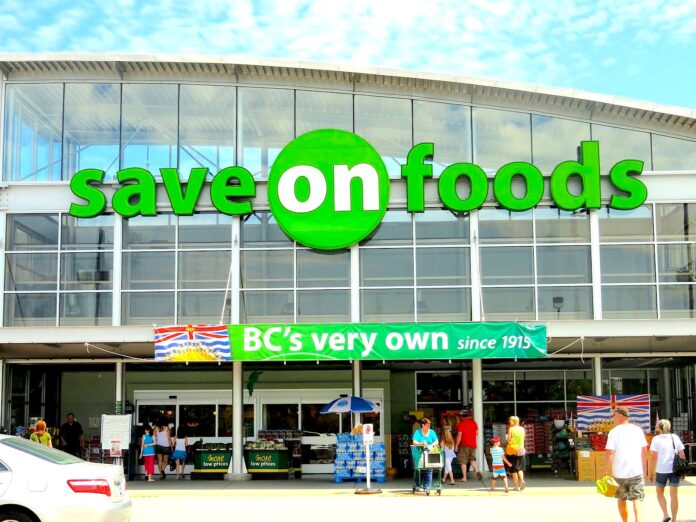
Now, all eligible RBC credit and debit cardholders can earn double the More Rewards points, PFG’s loyalty program currency, by linking their RBC card to their More Rewards card. More Rewards points can be collected at eligible More Rewards grocery partners, including Save-On-Foods, Quality Foods and Buy-Low Foods, according to a news release.
Simon Maycock
“Groceries are such a significant and essential everyday purchase for Canadians and we’re excited to bring more everyday value to so many of our clients,” said Simon Maycock, Senior Vice President, Loyalty & Merchant Solutions, RBC. “Together with Pattison Food Group, we’re making it easy for customers across Western Canada to maximize their rewards and get even more value.”
Heidi Ferriman
“Building on our partnership and the successful launch of our More Rewards RBC Visa and More Rewards RBC Visa Infinite cards earlier this year, we are excited to offer even more points to RBC cardholders when they link their More Rewards card to their existing RBC card,” said Heidi Ferriman, Senior Vice President of People, Marketing and Corporate Affairs, Pattison Food Group. “We know that Canadian shoppers are always looking for value and More Rewards provides amazing redemption offers on the things that matter to them like groceries, gift cards and travel.”
Credit and debit cardholders can link their eligible cards by visiting avionrewards.com/morerewards and following three easy steps.
Once linked, eligible cards will automatically earn 2x More Rewards points when they pay with their RBC card and scan their More Rewards card at participating grocery partners across British Columbia, Alberta, Saskatchewan, Manitoba and the Yukon, including Save-On-Foods, Quality Foods, Nesters Market, Urban Fare, Buy-Low Foods and PriceSmart Foods said the press release.
Clients who are not yet More Rewards members can sign up during the linking process or by visiting morerewards.ca/enroll.
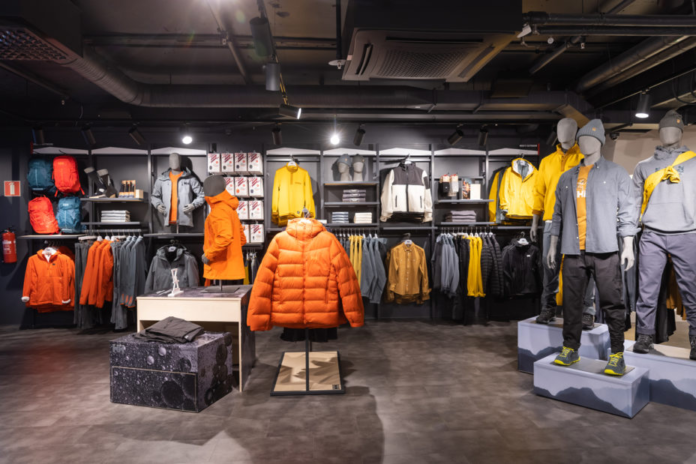
Canadian Tire Corporation has finalized the sale of its sportswear brand, Helly Hansen, to U.S.-based Kontoor Brands Inc. The transaction, valued at approximately $1.3 billion, was announced on Monday and marks a pivotal shift in Canadian Tire’s strategic direction.
Helly Hansen, renowned for its high-performance outdoor and sailing apparel, will now be under the umbrella of Kontoor Brands, the American company that owns iconic labels such as Wrangler, Lee, and Rock & Republic. Despite the change in ownership, Canadian consumers can expect to continue finding Helly Hansen products on Canadian Tire’s shelves.
“As we shift from brand owner to brand customer, we expect Helly Hansen’s world-class products to remain on our shelves and on the shopping lists of our customers. We are excited to see where Kontoor takes the brand next,” said Canadian Tire CEO Greg Hicks in a February statement.
Strategic Refocus on Canadian Retail
The divestiture of Helly Hansen aligns with Canadian Tire’s renewed focus on its core Canadian retail operations. The proceeds from the sale are earmarked for a combination of debt reduction, share repurchases, and investments aimed at enhancing customer experience and driving growth within its primary retail business.
“As our strategy becomes more singularly focused on great Canadian retail, it is time to pass this iconic brand into global hands,” Hicks noted.
Acquisition of Hudson’s Bay Intellectual Property
In a parallel strategic move, Canadian Tire has acquired the intellectual property of the historic Hudson’s Bay Company (HBC) for $30 million CAD. This acquisition includes a vast array of trademarks, slogans, and digital assets that have been integral to Canadian retail heritage.
The deal encompasses the rights to the Hudson’s Bay name, its iconic multicoloured stripes, the historic coat of arms, and slogans such as “Bay Days” and “Lowest price is the law.” Additionally, Canadian Tire gains control over various private labels and digital domains associated with HBC.
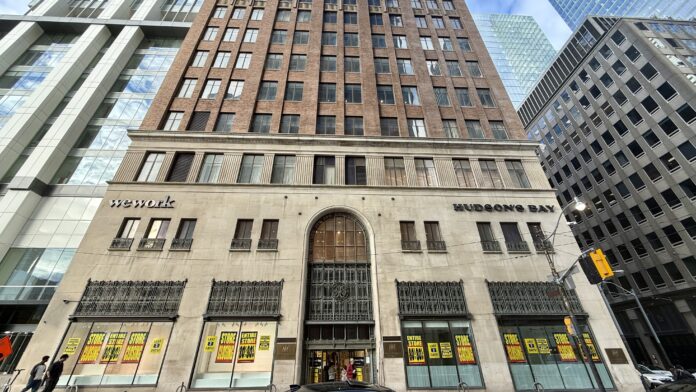
This acquisition follows HBC’s filing for creditor protection under the Companies’ Creditors Arrangement Act in March 2025, leading to the liquidation of its retail operations. All 80 Hudson’s Bay stores, along with three Saks Fifth Avenue and 13 Saks OFF 5TH locations, ceased operations on June 1, 2025, resulting in over 8,300 job losses.
Retail Insider is streamlining its Canadian retail news from around the web to include a handful of top news stories that can be viewed quickly during the day. Here are the top stories from the past 24 hours.
“CMLC and the Calgary Stampede are proud to partner with Truman, who bring more than 40 years of exceptional building experience in Calgary to this much-anticipated hotel development right at the front door to Stampede Park,” said Kate Thompson, President and CEO of CMLC.
“Hotel development has been a key priority for CMLC and the Calgary Stampede, and we’ve seen development interest in The District surge with the completion of the BMO Centre expansion, the groundbreaking of Scotia Place, and the opening of the new 17 Ave S.E. extension, which unlocked the potential of this site and created a unique hotel opportunity at the west entrance to Stampede Park and The C+E. Partnerships and development investments like this one are an indication of industry confidence and enthusiasm for our shared vision for this district, and we’re so pleased to see this project take shape.”
Officials said CMLC and the Calgary Stampede have been working to advance hotel development opportunities for the past five years through challenging market conditions impacting hotel and financing requirements. In that time, CMLC and the Calgary Stampede have completed feasibility studies and site analysis on three potential hotel sites on Stampede Park and in The C+E, and have conducted extensive engagement with a range of interested developer partners on each of the sites.
A Purchase and Sale Agreement is now signed between the Calgary Stampede and Truman, and Truman is actively engaged with a world-class international hotel brand partner to operate the hotel, who will be announced in the coming months.
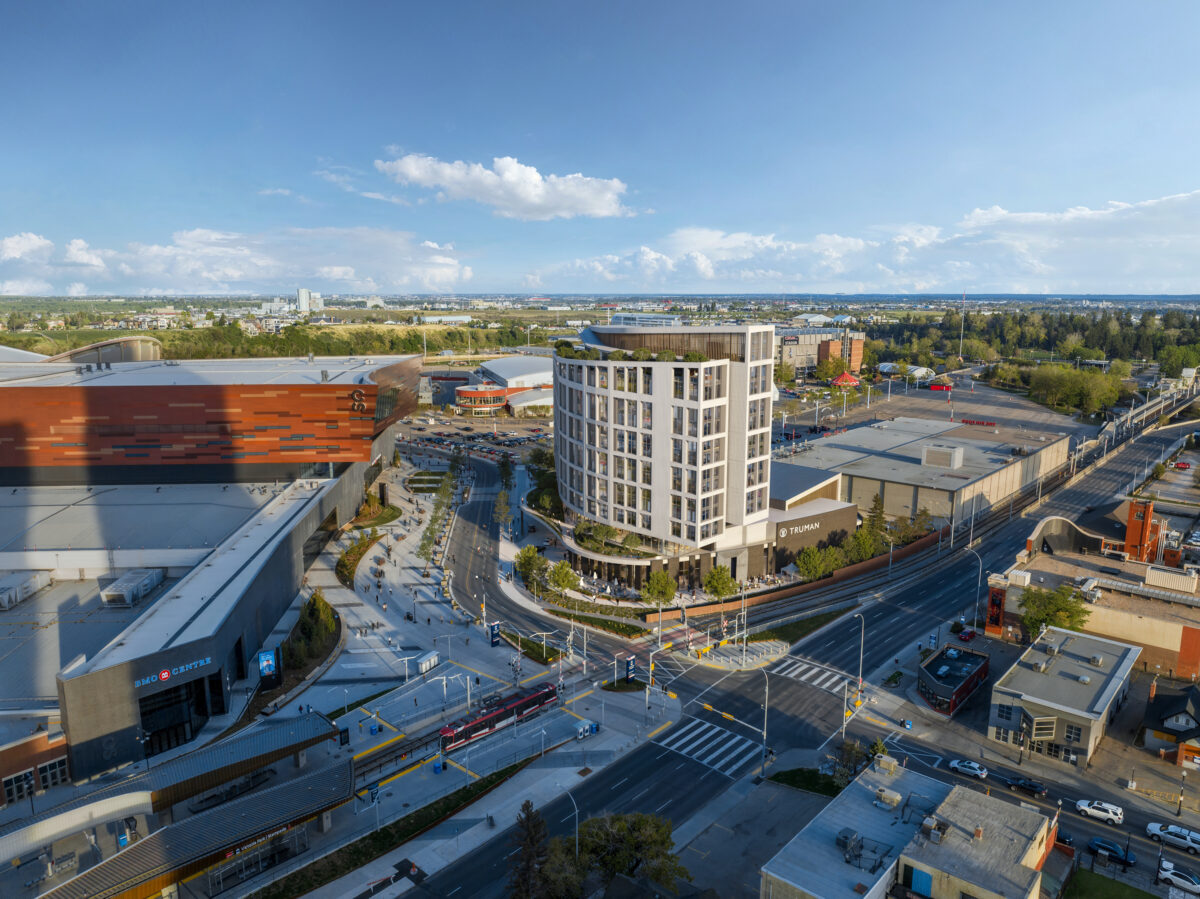
The partnership is working with architecture firms NORR Architecture (Chicago), Scatliff+Miller+Murray (Calgary), and CivicWorks (Calgary) to lead design and planning for the hotel. The hotel design is inspired by the unique curvature of Flores LaDue Parade and the expanded BMO Centre, with a sweeping curved form that draws inspiration from the movement of a bucking horse and materiality representative of both the rich identity of the Calgary Stampede and of Alberta’s landscape.
The next step in the process is to initiate regulatory approvals with a development permit submission expected to be submitted later in June, and prepare the site for construction, which is anticipated to begin in late 2025. Construction is anticipated to be completed in late 2028, added officials.
Source: Calgary Stampede
“Not only will this new hotel further strengthen our competitive advantage and help draw more visitors to the BMO Centre, Stampede Park, the Culture + Entertainment District and Calgary, but it will also build on the world-class experience guests receive when visiting,” said Joel Cowley, CEO of the Calgary Stampede. “When guests stay at the hotel, they will receive the highest level of Western hospitality that Calgary is known for, through a thoughtful, quality-built project by Truman, and the incredibly elevated guest experience that this hotel will offer.”
Located on an approximately 85,000 square foot parcel, the Truman hotel will be a full-service, 13-storey upper-upscale lifestyle boutique hotel with approximately 320 rooms; 15,000 square feet of meeting and ballroom space; 14,000 square feet of food and beverage offerings including restaurants, a lobby bar, a coffee shop, and a roof-lop lounge with views of downtown; a south-facing leisure terrace with activity pool, jacuzzi and an outdoor bar; and an indoor swimming pool and fitness club, explained officials.
“This is an exceptional location for a hotel, allowing guests to just stay steps away from the action of The Culture + Entertainment District – whether it’s a convention, meeting or event held in the BMO Centre, a hockey game in Scotia Place, a concert in The Big Four Roadhouse, or the Calgary Stampede’s annual celebration of Western heritage and community spirit each July,” said Tony Trutina, Chief Operating Officer of Truman. “As a family-owned Alberta-based developer, we are thrilled to partner with CMLC and the Calgary Stampede to bring this project to life in one of our city’s most exciting and fast-growing districts.”
With a development value of approximately $330M, this hotel agreement and land sale represents substantial private developer investment on Stampede Park and marks the first full-service convention-oriented hotel built in downtown Calgary in 25 years, demonstrating significant confidence in the emerging Culture + Entertainment District. Truman’s investment is further anchored by the recent purchase of another C+E District development site at 15 Ave and Macleod Trail, which is in the development planning stages with announcements forthcoming, noted officials in making the announcement.
“As home to Western Canada’s largest convention centre since the expanded BMO Centre opened in June 2024, the Calgary Stampede is now drawing hundreds of thousands of visitors to Stampede Park every year for meetings, conventions and special events, and upwards of a million more during our annual celebration each July. As a result, our city is experiencing a growing demand for hotel rooms, and hotels like this one, conveniently located directly next to the BMO Centre, are a timely response to that demand,” they said.
“Since the expanded BMO Centre opened in June 2024, it has hosted 409 events, with 205 major events booked between now and 2032, and is projected to contribute more than a quarter of a billion dollars to Canada’s GDP annually, with the majority supporting Alberta’s GDP. These numbers will only increase as hotel capacity in the area grows.”
Nowadays, a smoke and CO alarm is not a choice but a must, and the first thing to secure your home from fire and carbon monoxide. A Smoke and CO Alarm for home offers double-layer protection against these silent killers. Although smoke will usually signal the presence of a fire threat, carbon monoxide is a colorless, odorless gas that can be fatal with no warning.
The NFPA reports residential fires cause thousands of fatalities yearly, and the CDC reports over 400 deaths from accidental CO poisoning every year. These hazards are often silent and undetectable without special equipment.
So, the best combination of smoke and carbon monoxide detectors is now more than just safety devices; they’re flexible, adaptive systems that accommodate your living space to its surroundings. From limiting false alarms in high-moisture locations to measuring sensor performance after many years, modern smoke alarm technology, exemplified by trustworthy products, is a testament to its effectiveness. If you are concerned about protecting a small apartment space or an entire family home, you must make your place safer by adding a smoke and CO alarm.
Top 5 Reasons to Pick a Smoke and CO Alarm for home
1- Why a Combined Smoke and CO Alarm Is Essential
Gone are the days when standalone smoke alarms were enough to be trusted in all unfortunate situations. Now, everyone desires to make their loved ones and their living space protected in every way possible. For this, you must know the difference between electromechanical and photoelectric alarms, and how dual sensor alarms are the best fit for your home. Let’s have a brief overview of different types of alarms and their working mechanism.
Photoelectric Smoke Sensor – How It Works?
Photoelectric smoke detectors have a light source (typically an LED) and a light sensor, set at an angle to each other, within a sensing chamber. This is how it works:
When everything is in order, the light travels in a straight line and does not strike the sensor.
When smoke enters the chamber (from a fire, say), it knocks the light beam off course.
This dispersed light strikes the sensor, which activates the alarm.
It’s Ideal for Smouldering fires (which generate large amounts of smoke but minimal flame).
Electrochemical CO Sensor – How It Works to Detect Carbon Monoxide?
Electrochemical carbon monoxide (CO) sensors utilize electrodes submerged in a solution of chemicals. CO gas that touches the sensor:
The gas passes into the chamber via a tiny vent.
It responds to the chemical solution, generating a small electric current.
The current is recorded and interpreted to calculate the level of CO in parts per million (PPM).
If the CO reading passes a certain point, the alarm sounds.
It is the best choice for detecting carbon monoxide from such sources as gas stoves, heaters, and car exhausts.
Comparison: Dual-Sensor vs. Standalone Alarms
In comparison to standard standalone smoke alarms:
Dual-sensor types (smoke and CO detection together) decrease false alarms by as much as 40%.
They enhance detection sensitivity by about 30%, particularly in mixed fire conditions or where gases and smoke appear at the same time.
2- Best Smoke detector for the kitchen area and house
All-in-one units are efficient for apartments and modern small homes. A single unit on a wall or ceiling leaves the area clutter-free and wire-free. Most smoke and carbon monoxide (CO) alarms perform well in laboratory conditions, but fail when it matters most due to the dramatic difference between controlled testing conditions and the unpredictability of home environments.
Labs have consistent temperatures, humidities, and power supplies, whereas real home environments consist of high humidity in the kitchen, high heat in garages, and variable voltage in older homes. These variables can cause standard alarms to produce false alarms or fail to detect genuine threats. GasDog addresses by designing its smoke and CO alarms for real-world applications.
The best combination smoke alarm for kitchen spaces features a grease- and steam-proof housing to provide accurate readings, uninterrupted by inconvenient alarms. Devices like GasDog’s Smoke and CO Alarm for home are designed with sensitivity adaptation, making them best fire alarms for kitchen, laundry rooms, and garages that experience frequent temperature and humidity fluctuations.
Source: Photo by Unsplash
3- Key Features of a Reliable Alarm
Any technical gadgets that have to be added to your home for safety or protection should be reliable and trustworthy. Let’s have an insight into the phenomenal features of Gasdog’s smoke and CO alarms that make them dependable.
Environment vs. laboratory conditions
Most carbon monoxide and smoke alarms perform well in the lab, but fail to meet expectations in practical use because labs provide controlled environments with constant temperature, humidity, and power supply, whereas homes are much more unpredictable. Kitchens are humid and full of cooking odors, garages endure blistering heat, and older houses frequently have voltage fluctuations.
GasDog fills this gap with a solid technical response plan: its alarms are built with high-sensitivity sensors and adaptive calibration to cope with oscillating environments. They incorporate sophisticated filtering technology to separate real threats from harmless matter such as dust or steam.
Power Reliability
Rather than having your house left vulnerable during a blackout, this alarm features an in-built battery backup. The concept is straightforward—safety shouldn’t end when the power does. This means your smoke and CO alarm remains fully functional even when there’s an unexpected power outage.
Anti-False Alarm Mechanism
Nobody enjoys getting startled by a false alarm when cooking or taking a shower. That’s why this device was built with smart filters and thermal compensation—to separate harmless steam, cooking odor, or dust from actual danger. We want to keep you safe without the need for constant annoying interruptions.
Sound and Visual Feedback System
Individuals may not necessarily hear a normal alarm, particularly if the television is blaring or the kitchen exhaust fan is running. To address this, the unit employs both an extremely loud 90 dB buzzer and a highly visible flashing LED.
️ Long-Term Sensor Stability
Let’s face it, nobody wants to climb a ladder every few months to fix or replace their alarm. That’s why this device was built with long-lasting, highly sensitive sensors that maintain peak performance over time. It’s designed for reliability and accuracy in detecting both smoke and carbon monoxide, even in changing home environments.
Source: Photo by Unsplash
4-Cost-Effective Solution for Complete Home Safety
Separate smoke and carbon monoxide detectors not only drive initial hardware costs higher but also make maintenance and installation more complex. GasDog’s Combined Smoke and CO Alarm combines two critical safety features in a single, small, and robust device, lowering the overall cost without compromising performance or safety.
Technically, this two-sensor alarm features sophisticated photoelectric and electrochemical sensing technologies optimized for concomitant smoke and CO detection. This combination eliminates the redundant alarms that typically occur from mismatched independent units while simplifying wiring and installation, saving time and labor expenses for homeowners and professionals.
5- Smart Smoke Detectors and Home Automation
Aligning with the latest trends of quick and easy installation, this home combined smoke and carbon monoxide (CO) alarm features a smooth installation process. Users can receive mobile alerts through a dedicated app, allowing them to monitor their home safety remotely. The device also features live diagnostics, which allow for instant status checking and remote testing or silencing of the alarm from a smartphone. Integration with widely used smart home platforms, such as Alexa and Google Home, also maximizes convenience through voice control and effortless automation from your current smart system.
Conclusion
Thus, choosing a dual Smoke and CO Alarm to install in your home provides complete protection, is space-saving, affordable, and features cutting-edge technology, but also offers peace of mind for your loved ones. In today’s world, where home safety is a growing concern, investing in advanced safety technology is essential. For retailers, offering such reliable, high-quality products represents a significant opportunity. By catering to the increasing demand for smart home safety devices, retailers can build trust with customers, enhance brand loyalty, and meet the evolving needs of modern homeowners. It’s more than just a product—it’s a commitment to providing safety and security to every household.
And with top-quality, GasDog provides high-functioning alarms on the market. If you have a small apartment or an expansive, multi-family home, getting a smart smoke and CO alarm from GasDog means you can be assured that any threat in your home will be detected accurately.
Explore GasDog’s advanced fire safety solutions today and upgrade to a reliable Smoke and CO Alarm for your residence and guard your home with state-of-the-art protection.
It’s 2025. So, if your retail brand is not on social media, then you might as well be invisible. Social platforms are no longer just “nice-to-haves;” they have become full-blown business powerhouses. From TikTok-fueled impulse buys to influencer shoutouts that sell out stock overnight, social media marketing is now the playbook for retail success. Let’s break down how retail businesses are crushing it online this year. So, what’s new, hot, and worth trying?
The Numbers Don’t Lie
First, let’s start with some quick stats to paint the picture:
There are 5.22 billion social media users in 2025. This is over 60% of the global population.
People are now using an average of 6.8 platforms and spending about 2+ hours a day scrolling.
TikTok, Instagram, YouTube Shorts, and even Telegram are seeing explosive growth in ad adoption.
If you are a retailer, that is a lot of eyeballs potentially landing on your content, your ads, and your products.
Short-Form Video Is Still King
If you are not doing short-form video content in 2025, you are missing out big time. Most users say they prefer videos that are under 30 seconds. This is exactly why TikTok, Instagram Reels, and YouTube Shorts are so effective. Not only are these bite-sized videos super engaging, but they convert. According to recent research, 85% of shoppers are more likely to buy after watching a product video. That is why so many brands are ditching long-form content and going all-in on short, punchy visuals.
Pro tip: Keep it fast, fun, and show the product in action. This is especially true if it solves a real-life problem.
Telegram Ads Are on the Rise
You might be surprised by this one, but Telegram is quietly becoming a solid player in the retail ad space. The solution has rolled out broadcast-style ads that let brands target users based on their interests and the channels they follow. It’s a more private, personalized experience. That is exactly what Gen Z and Millennials are into right now. No spammy vibes, just clean, focused messages.
Besides that, the CTR on Telegram ads is way higher than on Facebook or Twitter in some industries, especially tech, fashion, and wellness. So yeah, Telegram isn’t just for crypto bros anymore. It is where brands can build deeper, more personal connections.
Influencers Still Rule (But Micro Is Mighty)
Influencer marketing is just thriving. What is more, it is expected to hit $32.55 billion this year, with Instagram and TikTok leading the charge. But the real MVPs? Micro-influencers (those with under 100K followers). These creators are killing it with higher engagement rates and super loyal audiences. Retailers love them because they are more affordable and often feel way more genuine than big-name celebs. In 2025, brands are seeing better engagement with micro-influencers compared to traditional ads. Not bad, right?
Social Commerce Is No Longer Optional
In 2025, buying directly from social platforms will be possible. It is expected. Shoppable posts, live-streaming events, and one-click checkouts are now common across TikTok, Instagram, and even Pinterest. Here is a wild stat: 60% of users have made at least one purchase via a social checkout this year. And in the UK, TikTok is now one of the top 5 beauty retailers, with a product sold every second via TikTok Shop UK. Live shopping events, in particular, are booming.
Gen Z Is All About “Realness” (and Dupes)
Speaking of Gen Z, they have made it crystal clear: they want authentic content, not overly polished ads. They will take a TikTok haul video over a high-end commercial any day. Also, they are not shy about buying dupes (affordable alternatives to luxury items). A recent report shows that 70% of Gen Z buyers sometimes or always choose cheaper versions of popular products. That is why brands are leaning into “everyday luxury” campaigns and featuring user-generated content that feels honest, unfiltered, and relatable.
Augmented Reality Is a Game-Changer
Want to let customers try before they buy? Enter augmented reality. Brands are using AR on Instagram and Snapchat to let users virtually try on clothes, shoes, makeup, and more. All that is possible without leaving their sofa. It’s interactive, fun, and super helpful. Plus, it boosts conversion rates by removing that “will this actually look good on me?” doubt. Combined with powerful social media analytics, AR also gives retailers insane amounts of user data.
What This All Means for Retailers
Social media is becoming a full-blown commerce engine. If you are a retail brand, you have more opportunities than ever to build genuine connections, create viral moments, drive real sales, and test and scale ideas fast. But here’s the catch: you have to stay agile. Algorithms change; trends come and go, and consumer expectations are higher than ever. The brands that are winning are the ones that stay curious, take risks, and let their audiences lead the way.
If you have been injured on the job or developed a work-related illness, you may be uncertain whether you qualify for workers’ compensation benefits. The system is designed to support workers. However, eligibility still comes with some fine print.
This guide will explain everything you need to know to determine your potential benefit eligibility, what steps to take and how Frommer D’Amico can help you secure the compensation you deserve.
Are You Classified as an Employee?
Only employees qualify for workers’ compensation, not independent contractors, freelancers or gig workers. However, your status may be misclassified. If your employer controls how, when and where you work, you might legally be an employee. It is worth talking to a workers’ comp attorney, especially if you work in a gray area like delivery driving or remote consulting. Legal advice can help clarify your status.
For instance, if you work 30 hours a week for a cleaning service and follow a strict schedule, you may qualify for workers’ compensation as a legally classified employee due to the level of control over your hours — even if your company considers you a contractor.
Consider your status to see whether you are likely to qualify for workers’ compensation.
Who usually qualifies?
Who typically does not qualify?
Full-time and part-time employees
Independent contractors and freelancers
Temporary or seasonal workers
Volunteers, except in specific roles
Some volunteer firefighters and public safety officers, depending on the state
Medical expenses: Your doctor’s visits, prescriptions and surgeries should be covered.
Wage replacement: Typically, you should receive a portion of your weekly income.
Disability benefits: Depending on the nature of your disability, these should cover your loss of income partially, fully, temporarily or permanently.
Vocational rehab: You will receive compensation for retraining if you cannot return to your job.
Is Your Employer Covered by Workers’ Compensation Insurance?
In Pennsylvania, most employers must carry workers’ compensation insurance, even if the workforce is just one employee. However, certain small businesses, agricultural operations and nonprofits may qualify for exemptions.
Even if your employer does not have coverage, You might be able to sue for damages directly or file a claim through the Uninsured Employers Guarantee Fund (UEGF). This is where a law firm like Frommer D’Amico is essential.
If you discover that workers’ comp insurance was never purchased, the team at Frommer D’Amico can help you file through Pennsylvania’s UEGF for medical care and wage replacement.
Was Your Injury or Illness Work-Related?
Injuries not usually covered include ones sustained while intoxicated at work or during your commute or lunch breaks away from the workplace. However, there are exceptions, especially if you were doing something beneficial to your employer at the time.
For example, if you are a restaurant server and develop chronic shoulder pain from lifting heavy trays as a restaurant server, your doctor could diagnose you with a repetitive strain injury. Because your job duties directly contributed to the condition, you may be approved for workers’ comp, even though there was no dramatic incident. Knowing how to use evidence and what sections of the law apply can make all the difference in whether a claim is successful.
To qualify for compensation, your injury or illness must have occurred during the course and scope of your job. That could include a fall on the warehouse floor, developing carpal tunnel syndrome from repetitive typing, exposure to chemicals or mold, or psychological stress directly linked to work conditions.
Did You Report Your Injury on Time?
Timely reporting is critical for a successful claim. In Pennsylvania, you must notify your employer within 120 days of the injury or when you first became aware of the work-related illness. However, the sooner you report it with proof, the better — waiting even a few days can complicate your case. The best time frame is within seven to 21 days.
After reporting, your employer should notify their insurer. If they fail to do so, that could delay your claim and the potential benefits paid to you.
If you try to file a claim and your employer contests it due to late reporting, personal messages through a workgroup chat may help validate your timeline if it clearly shows when the injury occurred and when the employer was made aware.
Have You Followed All Required Medical Steps?
You will typically need to see a provider from your employer’s approved list of doctors for the first 90 days of treatment. After that, you may switch to your chosen doctor if you give proper notice.
Be prepared to attend independent medical examinations and follow all recommended treatment protocols. Skipping appointments or refusing care may jeopardize your benefits. For example, if you miss several physical therapy sessions and or refuse an MRI, your employer may pause benefits. You would need to resume care since the insurer needs evidence you are actively participating in recovery and treatment.
Are You Subject to Special Rules for Specific Workers?
Consult a legal professional if you are unsure whether you are covered based on your job type. Seasonal farmworkers, for example, might be told by their employers they are ineligible. However, if a farm employs enough people to meet the state’s coverage threshold, workers may receive back pay and medical benefits under Pennsylvania’s workers’ comp laws.
Certain groups of workers face unique rules when applying for workers’ comp, such as:
Seasonal and agricultural workers: You may be excluded, depending on the farm size or the nature of your work. Usually, farms with fewer than 10 laborers may not face mandatory contributions and compensation coverage. Still, the farm owner must provide coverage if a laborer works 30 days and earns more than $1,200 annually.
Temporary workers: If a temp agency places you, you will have coverage under the staffing company’s insurance.
Remote employees: You may still be eligible if the injury occurred during work activities.
Do You Have a Preexisting Condition?
Even with a prior condition, you may still qualify. You can often receive benefits if your work aggravated or worsened a previous injury. However, you need clear medical documentation to connect your current condition to your job duties.
For instance, consider someone with a mild knee issue from high school football. Years later, their warehouse job aggravates the injury through repeated heavy lifting. The employee’s claim could be approved since work worsened the injury, even though the condition predated their employment.
What If You’re Injured Outside Your Home State?
Workers across the U.S. face similar challenges when it comes to navigating job-related injury claims. If you’re injured on the job and unsure of your legal rights, consulting a local attorney can make a significant difference. For instance, speaking with an experienced Las Vegas Personal Injury Lawyer can help you understand what benefits you may be entitled to, how to properly file a claim, and what to do if your employer or insurer is not cooperating. Every state has its own set of laws and timelines, so having a trusted legal advocate in your area ensures your case is handled properly from day one.
What Should You Expect When Filing a Claim?
Claims often get denied for reasons like “insufficient medical evidence” or “missed deadlines,” but you can appeal denials with the proper legal support.
If your claim is delayed, you should report the injury to your employer in writing, using the appropriate forms if they are available through your human resources (HR) department. You should also seek medical care and follow all treatment guidelines. Be sure to document everything, including medical reports, missed work and conversations with HR. Submit a claim with your employer’s insurance company with the assistance of your HR department.
When Should You Contact a Lawyer?
A good attorney can intervene early, negotiate with insurers, represent you in hearings, and protect your income and health care access. Not every situation requires a lawyer, but you should call one if your claim is denied, you are pressured to return to work before you are ready, or you think you were misclassified as a contractor.
You should also get legal counsel if you suspect retaliation after reporting your injury. If you face pressure to return to work before your doctor clears you and you refuse, your employer should not cut your hours or state that your claim is under review. A legal team can step in, follow legal processes to restore your benefits and address retaliatory behavior with the insurance board.
Contact a lawyer if your claim was denied with little to no explanation, your pay was stopped without notice, or you are being pushed to see a non-approved doctor. If your company controls your employment hours but HR insists you are a contractor, you should also seek legal counsel.
Can You Be Fired While on Workers’ Comp?
Technically, you can be fired while collecting workers’ comp as Pennsylvania is an at-will employment state, which means an employer can terminate contracts at any time, for almost any reason. However, your employercannot legally fire you as retaliation for filing a workers’ compensation claim. Some employers try to skirt this protection by claiming performance issues, downsizing or “position elimination” after you file a claim.
It is essential to keep accurate records of all communications and document any negative performance reviews or threats. If asked to return to work early, get medical clearance in writing. Contact a workers’ comp attorney immediately if you suspect retaliation. Filing a claim should never cost you your job. With legal backup, it does not have to.
What Tactics Do Employers Use to Delay Claims?
Many workers do not realize their employer may strategically delay filing claims. As with any insurance coverage, when the claims exceed what was estimated, it will affect the employer’s premiums, so they may try to delay or deny claims.
Some common employer tactics to delay or avoid paying out claims include misclassifying an injury as non-work-related or failing to file a claim with the insurer. They may also try to downplay a condition to avoid increased premiums or offer light-duty jobs to “help” employees despite not accommodating your injury.
What Do You Do If Your Claim Is Denied?
Your legal team can challenge the denial of workers’ compensation claims in Pennsylvania. A denial means your lawyer should file a claim of a petition with the Bureau of Workers’ Compensation. This is a formalprocess where a judge reviews your case. Medical reports, witness statements and testimony form your body of evidence and will be considered.
You must file your petition in Pennsylvania within three years of the injury date. Waiting makes it more difficult to collect evidence and get testimonies. The appeals court is busy, so you must file all paperwork on time and argue your case confidently. Remember that insurance adjusters protect the company, not you.
FAQs
1. How Do I Find out If I Qualify for Workers’ Compensation Benefits?
Start by confirming your employee status, checking whether your employer carries insurance and determining if your injury was work-related. If in doubt, speak with a lawyer for a free consultation.
2. Can I Get Workers’ Comp If I Caused My Injury?
Yes, workers’ compensation is generally a no-fault system. However, exceptions exist if you were intoxicated or violated company policy.
3. What If I Did Not Report My Injury Right Away?
You may still qualify, but delayed reporting weakens your case. Always notify your employer as soon as possible.
4. Do Mental Health Issues Qualify for Workers’ Comp?
Possibly. If you experience post-traumatic stress disorder or work-related anxiety, you may file a claim. Still, you will need strong medical documentation linking the condition to your job or work environment.
5. Can I Still Work Part-Time and Get Benefits?
Yes, if your injury prevents full-time work, you may receive partial wage-loss benefits to offset the difference.
Qualifying for Workers’ Compensation Benefits
If you are wondering whether you have a valid claim for benefits, the safest step is to speak with someone who understands Pennsylvania labor laws inside and out. At Frommer D’Amico, you will find free consultations and case management and no upfront payment of litigation costs, saving you thousands. The team only gets paid if they win or settle your case.
Dedicated legal advisors travel to clients across central and eastern Pennsylvania — from Allentown to Altoona and west from Scranton to State College — and are reachable 24/7. Partner with accessible legal partners to answer your legal questions and guide you through your claim process.
Frommer D’Amico attorney Joe D’Amico has more than three decades of experience fighting for personal injury victims and injured workers. He’s an expert in Pennsylvania workers’ compensation law, certified by The Supreme Court of Pennsylvania.
Hudson's Bay Queen Street flagship store in Toronto on June 1, 2025. Photo: Craig Patterson
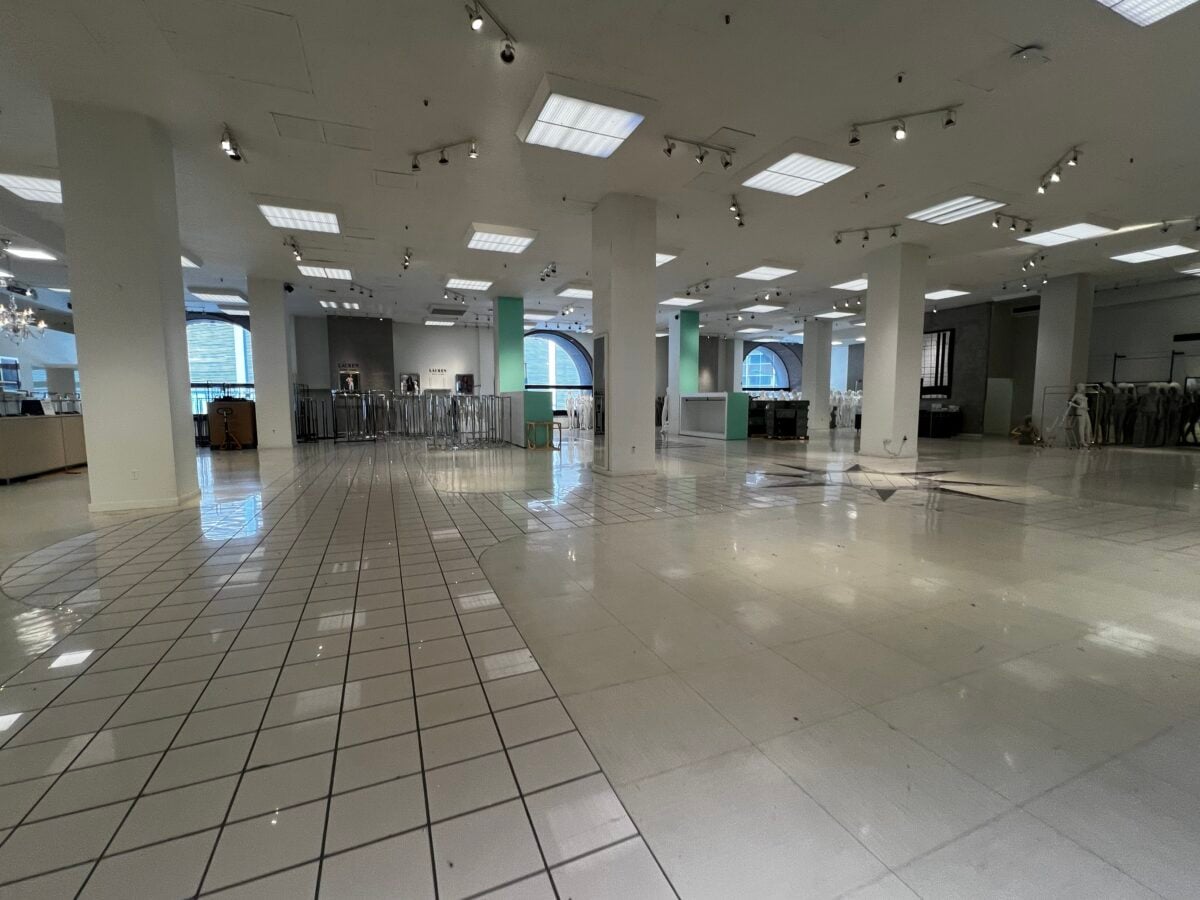
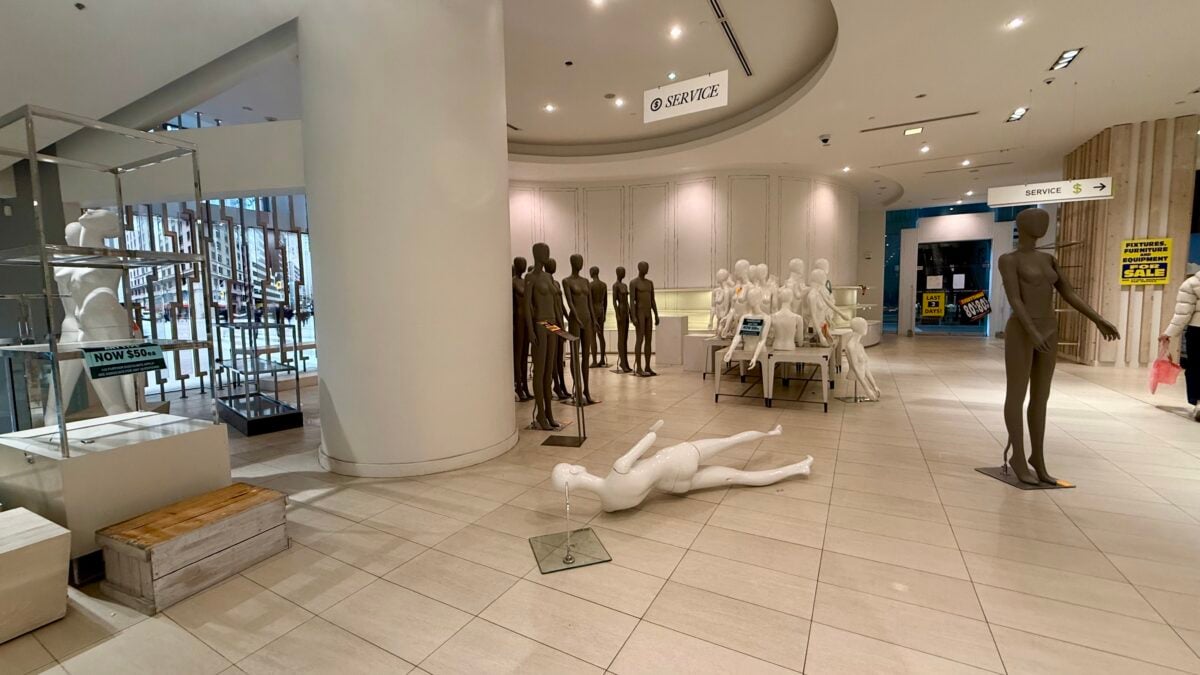
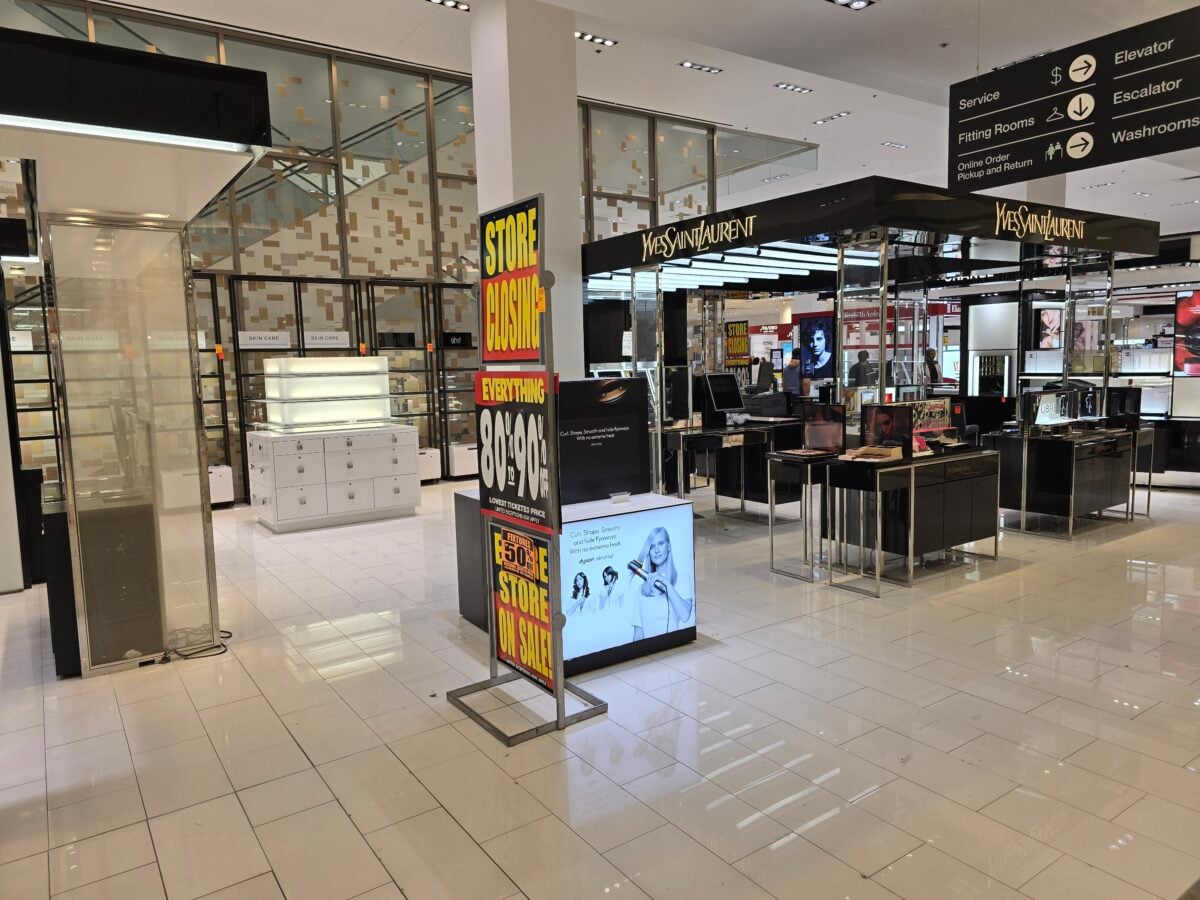
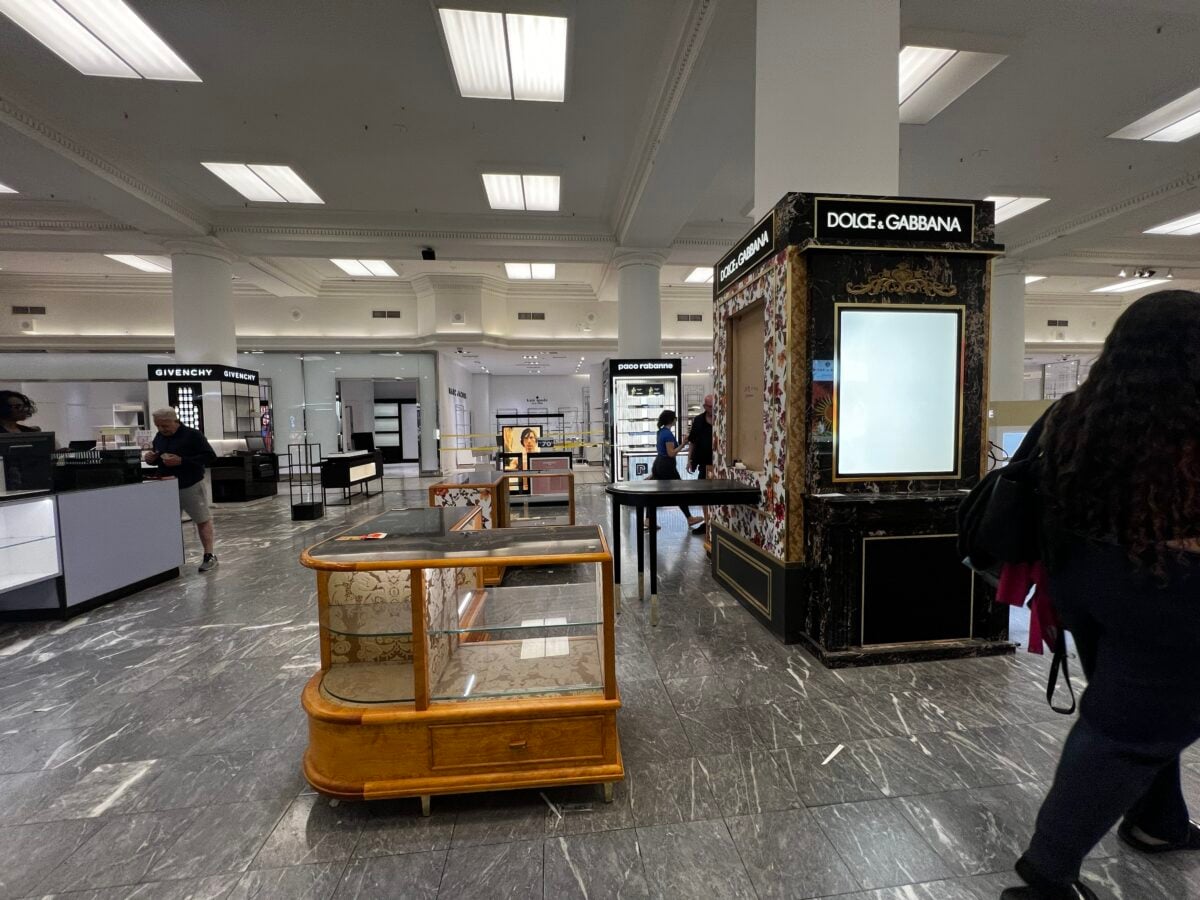
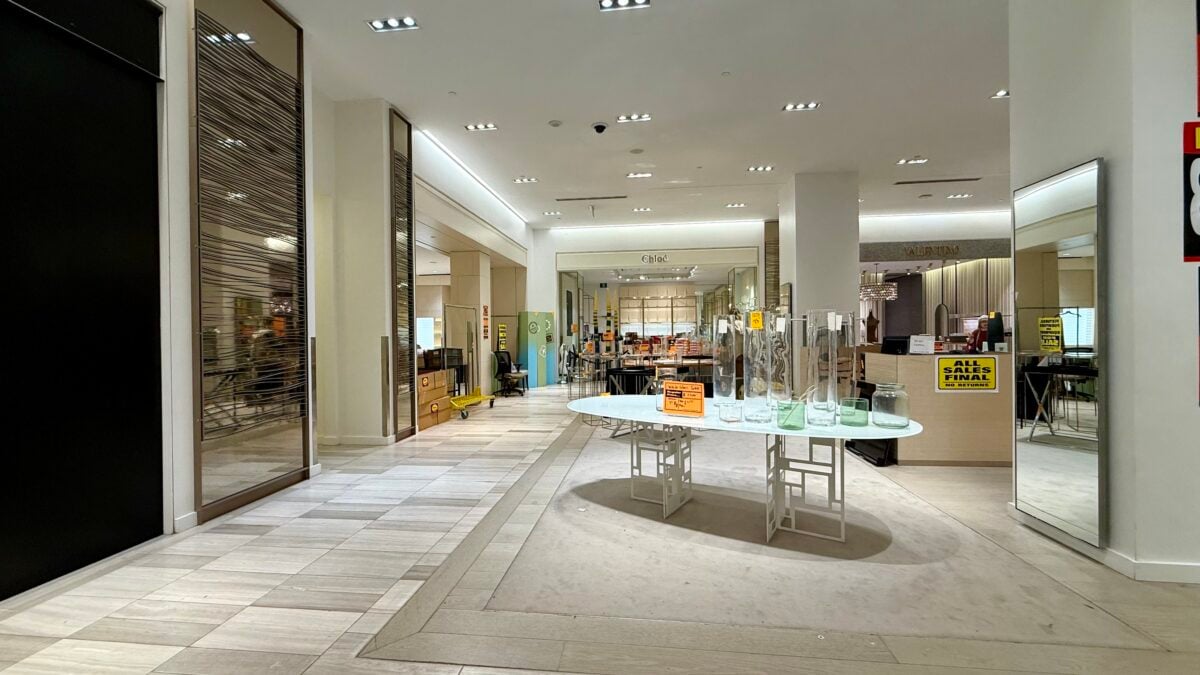
The doors have officially closed. On Sunday, June 1, 2025, the Hudson’s Bay Company ended its centuries-long run as a department store chain in Canada. After months of liquidation sales and public speculation, the retailer’s final locations, including its once-iconic downtown flagships, ceased operations, drawing to a close one of the most storied and enduring chapters in Canadian commerce. What was once the world’s longest continually operating commercial enterprise as a department store chain is now relegated to history books, marking a sobering moment for Canadian retail, culture, and national identity.
With Hudson’s Bay’s closure, Canada loses not only its last full-scale department store chain but also the final remnant of a retail format that once served as the commercial and social anchor of the nation’s urban centres and suburban malls. The end of Hudson’s Bay as a department store completes a decades-long unraveling of the country’s department store sector.
The closures follow earlier exits by other iconic department stores that once defined Canadian retail. Eaton’s, once the largest department store chain in the country, declared bankruptcy in 1999. Simpsons, which had been acquired by Hudson’s Bay in 1978, was fully absorbed and rebranded in 1991. Woodward’s, a Vancouver-based competitor, was acquired by HBC in 1993. Sears Canada, which had become the nation’s dominant mid-market chain for much of the late 20th century, was liquidated in 2018. Now, with Hudson’s Bay gone, the department store model—once the primary destination for apparel, housewares, cosmetics, and life milestones like bridal registries—has vanished entirely from the Canadian retail landscape.
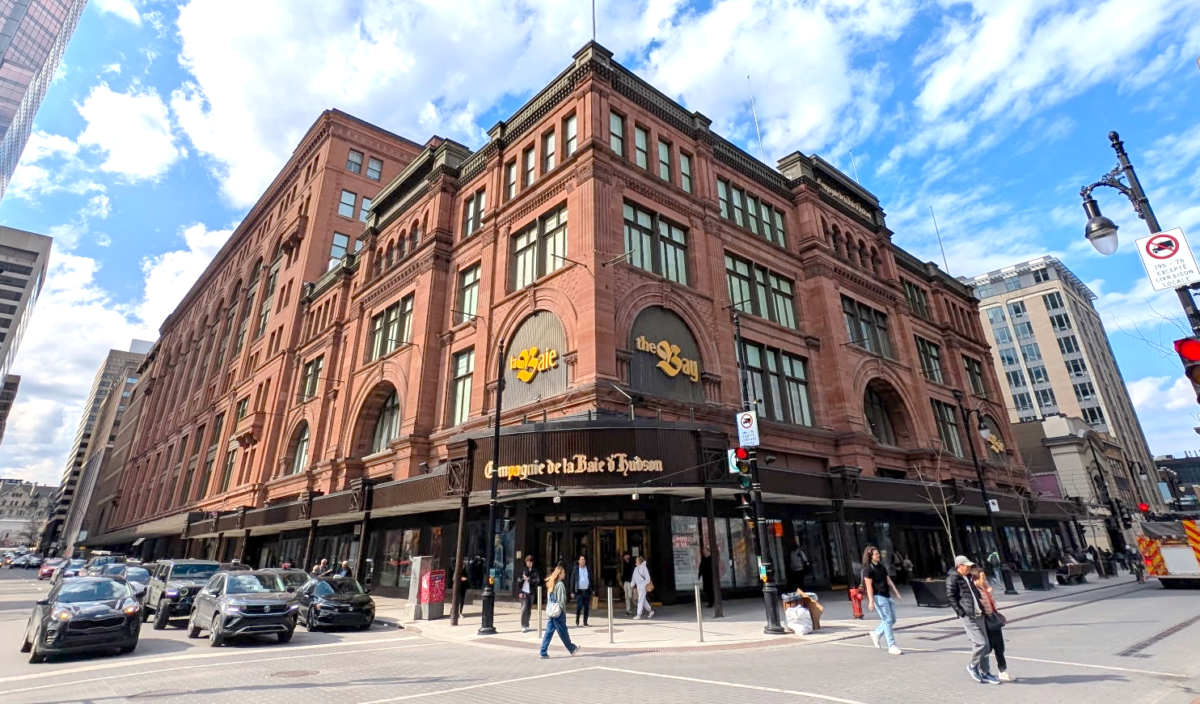
Hudson’s Bay flagship store in downtown Montreal on May 31, 2025. Photo: Maxime Frechette
The Last Downtown Flagships Go Dark
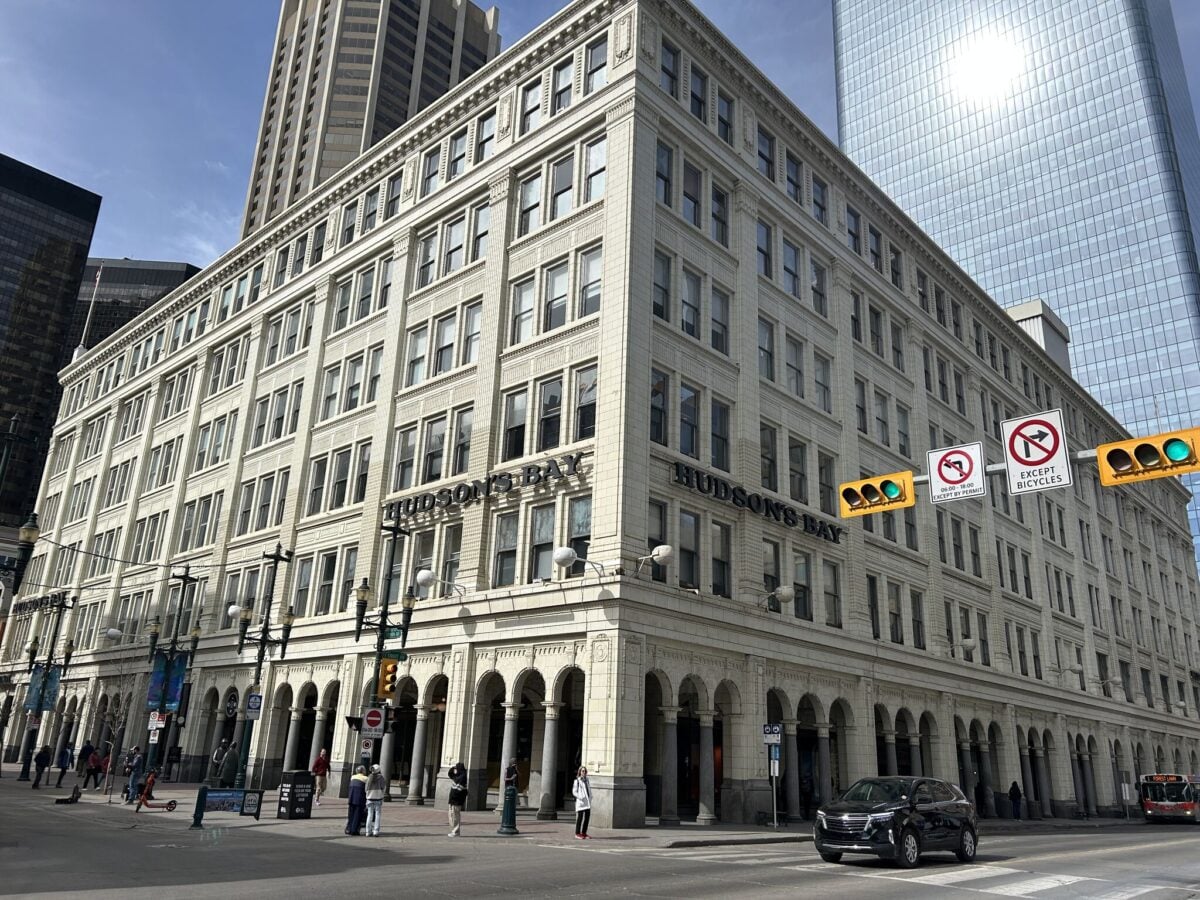
Perhaps the most visible and immediate consequence is the vacuum left in Canada’s major downtown cores. Flagship stores in Toronto, Vancouver, Montreal, Calgary and Ottawa have now all shuttered. In Toronto, the Queen Street flagship, originally the Simpsons flagship converted to Hudson’s Bay in 1991, closed after generations of serving as a central shopping destination. Vancouver’s Granville Street location has also gone dark, alongside the Montreal Sainte-Catherine Street location (formerly Morgan’s), Calgary’s Stephen Avenue flagship, and Ottawa’s store on Rideau Street (formerly Freiman’s).
The closure of these landmark flagships leaves vast amounts of prime downtown real estate vacant, wiping away major anchors that had served as commercial, social, and even architectural icons in the urban core. The shutdown of these flagship properties marks the first time in well over a century that Canada’s largest cities will no longer have full-line department stores operating in their downtowns.
Weihong (Ruby) Liu, who acquired 28 suburban Hudson’s Bay store leases for her new yet-to-be-named department store concept, excluded these flagship locations from her bid. Her acquisition focuses on suburban properties that offer more immediate redevelopment potential. As a result, the historic core of Hudson’s Bay’s department store empire is being left behind, and the future of these enormous properties remains uncertain.
Hudson’s Bay Queen Street flagship store in Toronto on May 31, 2025. Photo: Craig Patterson
The End of an Institution With Deep Canadian Roots
For many Canadians, Hudson’s Bay was far more than a department store. Its history is deeply intertwined with the very creation of the country. Chartered in 1670 by King Charles II of England, the Hudson’s Bay Company (HBC) began as a fur trading enterprise. Its royal charter granted it exclusive trading rights over Rupert’s Land, which covered approximately 40 percent of present-day Canada. The company’s early trading posts, including York Factory, Fort Garry, and Fort Edmonton, were instrumental not only in commerce but in the westward expansion of European settlers.
As the fur trade declined in the 19th century, HBC transformed into a major landholder, selling large portions of Rupert’s Land to the Canadian government in 1869. This transaction played a pivotal role in Canadian Confederation and western expansion. Over time, many of its trading posts evolved into general merchandise stores, setting the stage for its eventual transition into full-scale department store retailing.
By the 20th century, Hudson’s Bay had grown into Canada’s dominant department store operator, opening flagship stores across major cities. The chain became synonymous with Canadian family life, from back-to-school shopping and holiday gift-giving to bridal registries and household purchases. Its own private-label products, most notably the multistripe Hudson’s Bay point blanket, became recognized worldwide as Canadian icons.
Hudson’s Bay at Scarborough Town Centre on May 31, 2025. Photo: Rob Bartlett
A String of Strategic Acquisitions Built a National Giant
Hudson’s Bay’s dominant position in Canadian retail was built through several strategic acquisitions that gradually consolidated Canada’s department store industry under its banner. The 1960 acquisition of Morgan’s gave HBC its first major urban retail presence in Eastern Canada. Morgan’s Quebec locations would eventually be rebranded as La Baie, while other locations outside Quebec were converted into The Bay.
In 1978, Hudson’s Bay acquired Simpsons, one of its largest national competitors. Simpsons’ presence was strongest in Ontario, Quebec and Atlantic Canada, and its acquisition allowed HBC to finally operate coast-to-coast. By 1991, the Simpsons name was retired as stores were converted to the Hudson’s Bay brand.
The acquisition of discount chains Field’s and Zellers in 1978 allowed HBC to also compete in the discount segment, which was growing rapidly at the time. Woodward’s, based in Vancouver, was acquired in 1993 after struggling financially. Its acquisition eliminated HBC’s strongest western Canadian competitor and cemented Hudson’s Bay as the leading department store chain across the entire country.
The Zellers brand remained an important part of HBC’s portfolio for decades before most Zellers leases were sold to Target Canada in 2011. Target’s ill-fated expansion into Canada ultimately collapsed by 2015, leaving a gap in the mid-market retail segment that was never fully filled.
Hudson’s Bay flagship store in downtown Montreal on May 31, 2025. Photo: Maxime Frechette
The Shift to Foreign Ownership and Global Expansion
The latter decades of Hudson’s Bay’s existence saw a shift from Canadian ownership to foreign and private equity control. In 1979, HBC was sold to Kenneth Thomson but later passed into the hands of American financier Jerry Zucker. Following Zucker’s death, U.S. private equity firm NRDC Equity Partners, controlled by Richard Baker, acquired HBC in 2008.
Under Baker’s leadership, Hudson’s Bay pursued aggressive international expansion strategies. In January 2012, the company acquired U.S. department store Lord & Taylor, strengthening its presence in American retail. The following year, in 2013, HBC entered the luxury segment with its $2.9 billion USD acquisition of Saks Fifth Avenue and Saks OFF 5TH. In 2015, HBC expanded into Europe with the purchase of Germany’s Galeria Kaufhof, which was later merged with rival Karstadt to form Galeria Karstadt Kaufhof. The company continued to diversify with its 2016 acquisition of online luxury flash sale retailer Gilt Groupe.
While these international ventures temporarily positioned HBC as a global luxury retail and real estate conglomerate, most of the expansions failed to deliver sustained profitability. Mounting debt, operational challenges, and underperforming assets ultimately placed enormous financial strain on the organization.
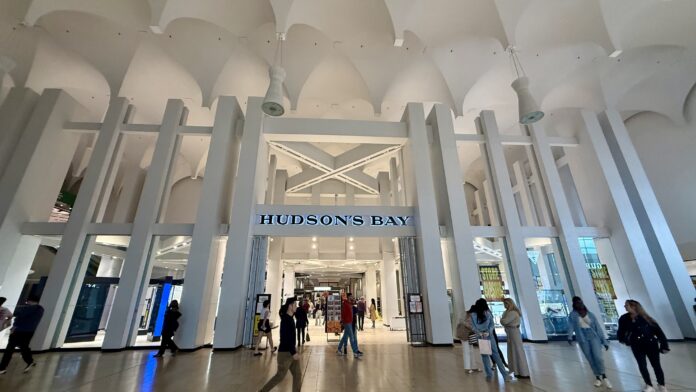
Saks Fifth Avenue in the Hudson’s Bay Queen Street flagship store in Toronto on May 31, 2025. Photo: Craig Patterson
The Pivot to Real Estate and Digital Operations
By the early 2020s, as financial pressures mounted, Hudson’s Bay began restructuring its operations into separate entities. Its core business was divided into Hudson’s Bay (department store retail), Saks (luxury and digital retail), Saks OFF 5TH (off-price retail), and HBC Properties and Investments (real estate holdings). Significant investment went into digital channels, with Saks.com spun out as a standalone entity in 2021, backed by private equity investor Insight Partners.
Even with these moves, Hudson’s Bay’s physical stores continued to see declining foot traffic, as consumer habits shifted rapidly to online shopping, especially during and after the COVID-19 pandemic. Despite investment in technology and digital operations, the company was unable to reverse the deteriorating performance of its traditional department store locations. Falling revenue coincided with a lack of investment, as stores were left to languish with non-functioning escalators and failing HVAC systems.
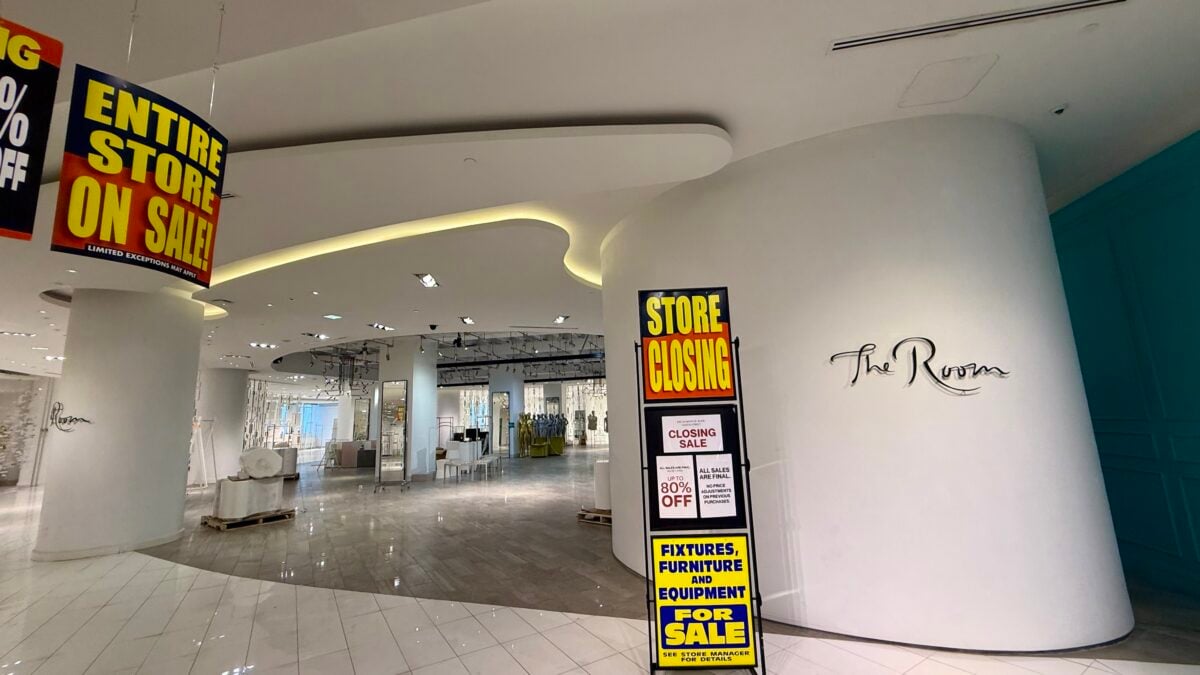
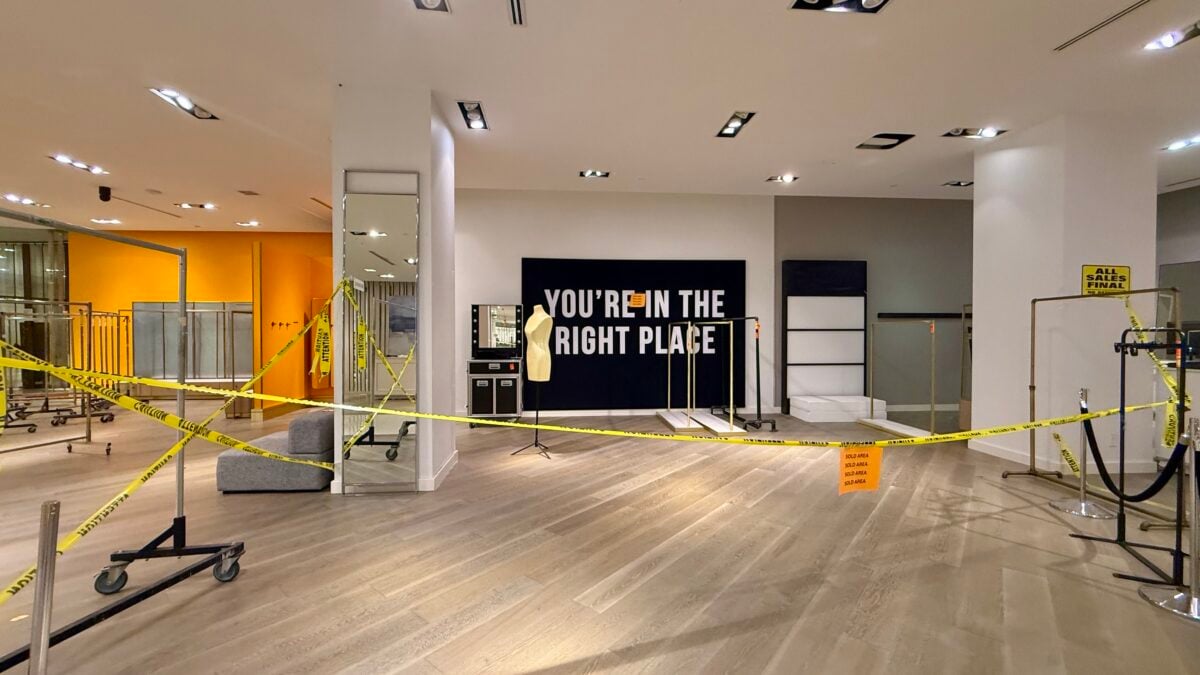
The Room women’s luxury department at the Hudson’s Bay Queen Street flagship store in Toronto on May 31, 2025. Photo: Craig Patterson
2025: The Financial Collapse
By March 2025, Hudson’s Bay’s financial situation had reached a breaking point. On March 7, 2025, the company filed for creditor protection under Canada’s Companies’ Creditors Arrangement Act (CCAA). At the time of filing, Hudson’s Bay was operating 80 Hudson’s Bay stores, three Saks Fifth Avenue stores, and 13 Saks OFF 5TH locations across Canada.
Liquidation sales began on March 24, with full closures scheduled through mid-June. In total, approximately 8,347 employees—nearly 90 percent of the company’s workforce—lost their jobs with more to come. Canadian Tire Corporation purchased the Hudson’s Bay intellectual property, including its branding and trademarks, for $30 million CAD. Meanwhile, Ruby Liu’s acquisition of 28 suburban store leases salvaged portions of the real estate portfolio, but excluded the flagship downtown locations that had long defined Hudson’s Bay’s public image.
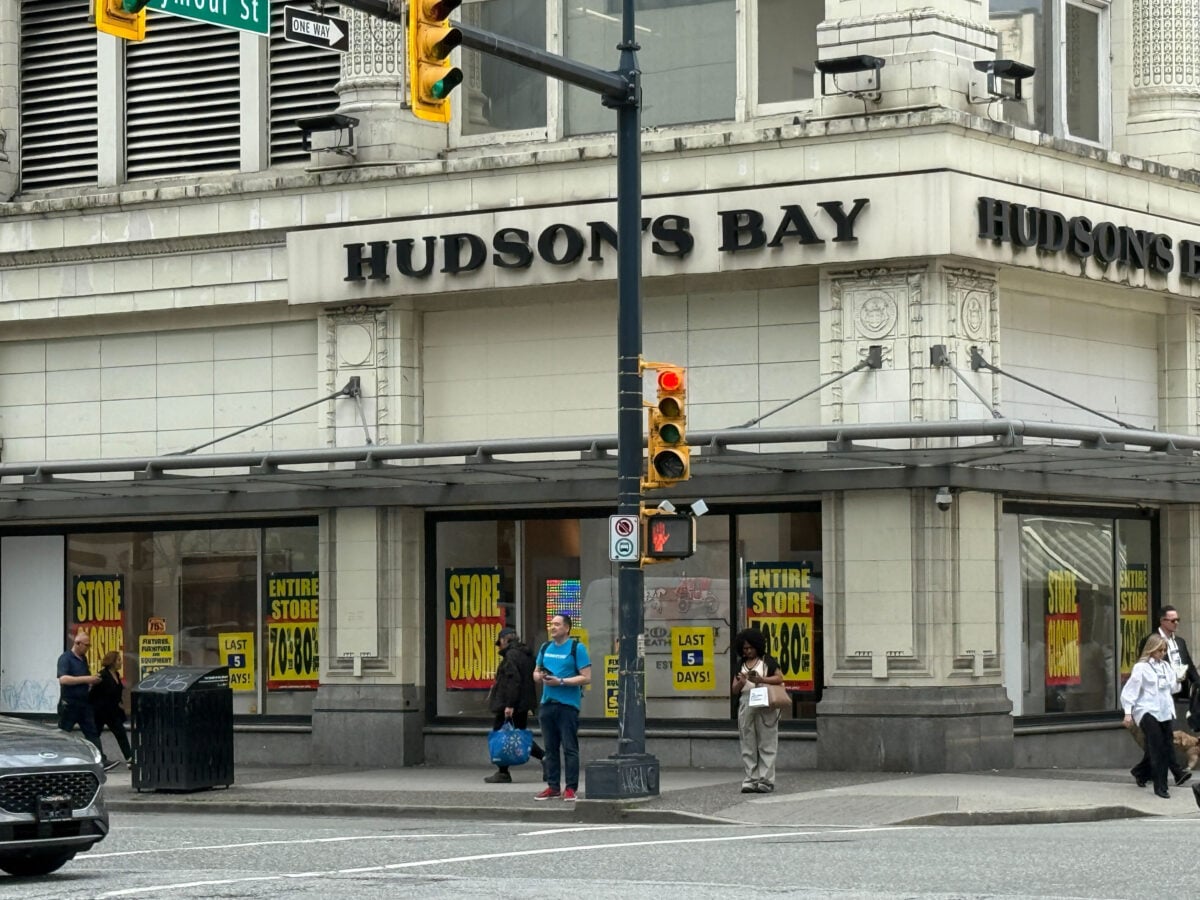
Hudson’s Bay flagship store in downtown Vancouver on Wednesday, May 28, 2025. Photo: Lee Rivett
Real Estate Consequences and Urban Uncertainty
The closures of these large downtown department store locations leave behind significant real estate challenges. These flagship buildings occupy some of the most valuable and historic commercial real estate in the country. All are heritage-designated structures that will require extensive planning, capital investment, and creative vision to redevelop for new uses. Potential redevelopment scenarios include office conversion, institutional repurposing, mixed-use residential, or cultural uses. However, the sheer size and complexity of these buildings make adaptive reuse difficult, particularly in urban cores already contending with fluctuating office demand in a post-pandemic environment.
The absence of these department store anchors also creates ripple effects for surrounding downtown retail districts. Many nearby retailers depended on Hudson’s Bay’s ability to generate pedestrian traffic. Without that anchor tenant, downtown shopping areas face the risk of reduced footfall and declining vitality, not to mention vagrancy.
Downtown Montreal flagship Hudson’s Bay store on April 24, 2025. The building started as a location for the Henry Morgan department store chain, which in decades past operated as an upscale business. Photo: Carl Boutet
The Impact on Canada’s Retail Ecosystem
The end of Hudson’s Bay’s department store business creates significant ripple effects throughout Canada’s broader retail industry. Canadian apparel brands have lost a key national wholesale distribution channel, forcing many to rely more heavily on direct-to-consumer models, e-commerce marketplaces, and specialty boutiques. Cosmetics brands, particularly in the prestige segment, will shift more volume into specialty retailers such as Sephora and Shoppers Drug Mart. Traditional bridal registries, once a reliable Hudson’s Bay offering, have largely fragmented into smaller niche providers or online platforms. Home goods, housewares, and small appliance sales—categories where department stores once dominated—are also increasingly fragmented among big-box retailers and specialty chains.
Secondary suburban malls anchored by Hudson’s Bay stores are expected to experience challenges as foot traffic declines. While some suburban locations may be repurposed into new concepts under Ruby Liu’s ownership, many secondary malls may face longer-term uncertainty without the draw of a department store.
Consumers, who once relied on Hudson’s Bay as a one-stop shopping destination for everything from fashion to home décor, will now navigate a far more fragmented and multi-channel retail environment.
Hudson’s Bay downtown Calgary. Photo by Mario Toneguzzi
The Cultural Loss for Canadians
Beyond commerce, the closure of Hudson’s Bay represents the loss of a powerful cultural institution. Generations of Canadians shopped at Hudson’s Bay for back-to-school clothing, holiday gifts, wedding registries, and home essentials. The company’s fur trading origins were interwoven with the earliest moments of Canadian history, its stores expanded alongside the growth of the nation itself, and its products, like the Hudson’s Bay multistripe blanket, became globally recognized symbols of Canada.
For many Canadians, the closure of Hudson’s Bay department stores is not simply the loss of another retailer—it is the end of a living connection to Canada’s national story.
Lingering Questions About Ownership and Leadership
While the decline of department stores worldwide is well documented, many observers place considerable blame for Hudson’s Bay’s downfall on its most recent owner, Richard Baker. Critics argue that Baker failed to reinvest adequately in Hudson’s Bay’s physical stores and brand, prioritizing financial engineering, real estate transactions, and risky international acquisitions that ultimately proved unsuccessful.
As Hudson’s Bay struggled, questions mounted over where capital was allocated and whether the company’s core Canadian operations were sacrificed in pursuit of broader, more speculative ambitions abroad, including Saks Global.
Third floor of the Hudson’s Bay Queen Street flagship store in Toronto on May 31, 2025. Photo: Craig Patterson
A Historic Transition Now Complete
The closure of Hudson’s Bay’s department stores marks one of the most extraordinary corporate life spans in history, spanning over three and a half centuries from its fur trading origins to its rise and fall as Canada’s dominant department store chain. Though Canadian Tire’s acquisition of the Hudson’s Bay intellectual property may preserve aspects of the brand in some form, and Ruby Liu’s forthcoming suburban department store concept may capture certain retail opportunities, neither will replace what Hudson’s Bay represented to generations of Canadians.
The final store closures on June 1, 2025, signify not just the end of a company, but the end of an era in Canadian commerce, culture, and identity.
Hudson's Bay Yorkdale on June 1, 2025, shortly before closing forever. Photo: Craig Patterson
Suzanne Sears, a veteran retail recruiter and founder of Best Retail Careers Canada, has launched a confidential job registry aimed at supporting Hudson’s Bay employees impacted by the company’s recent liquidation and restructuring. With hundreds of seasoned professionals suddenly out of work, Sears says the time is right for a coordinated and compassionate solution.
“We were receiving so many inquiries for future career opportunities all across Canada,” Sears told Retail Insider. “It made sense to group them all together as high-priority candidates and help place them wherever we can find suitable employers.”
A Unique and Confidential Resource
Sears’ new registry is unlike any talent database currently available in Canada’s retail sector. It’s designed specifically for displaced Hudson’s Bay workers—store associates, managers, head office professionals, and others—seeking new positions across the retail industry.
Suzanne Sears. Image via LinkedIn
“It’s completely private,” said Sears. “No one can access your name or information without your consent. It’s secure and curated with care. This hasn’t been done before—there’s never been a database just for employees from a single retailer because nothing like this has ever happened at this scale in Canada.”
The registry is free for Hudson’s Bay employees to join. Those interested can connect with Sears via LinkedIn or by visiting her website at www.brcareers.com. Alternatively, employees can send an email to best-retail-jobs@live.ca with the subject line “HBC Registry,” include their résumé, and indicate what role they are looking for.
“When someone joins the registry, they’re asked to be as clear and specific as possible,” said Sears. “If you were a store director, are you looking to move into a head office role, or would you prefer to remain in operations? Many people loved their jobs, and they paid well—so we want to help them continue in meaningful careers.”
Retailers Invited to Hire from the Registry
Employers seeking to hire experienced retail professionals from Hudson’s Bay are also encouraged to contact Sears directly. While the registry is free for employees, employers who want access to candidates or placement services pay a fee. Sears emphasized the efficiency the registry brings to an employer’s hiring process.
“For a company trying to find retail talent, this saves hours of scrolling through LinkedIn or job boards,” she said. “It’s one place to go, one sole source, instead of asking, ‘Where did they all go?’ after layoffs like those at Target, Nordstrom, and now Hudson’s Bay.”
Sears also noted that some companies—such as landlords, former partners, and even HBC’s new ownership—have expressed interest in supporting displaced workers. Her registry offers a direct avenue for these stakeholders to get involved.
“If there’s interest, we could even organize formal meet-and-greets—nothing like a cattle call, but curated networking events for companies to meet qualified people,” she added.
A Wider Support System for a Painful Transition
Beyond job matching, Sears sees the registry as a social support mechanism for HBC alumni—many of whom spent decades with the retailer.
“We’re offering more than just résumé reviews or job placement,” she explained. “This is also about reconnecting people who may have lost touch, building community, and offering support during what is clearly a painful time for many.”
Career counseling, résumé writing, and emotional support resources are also part of the initiative. And Sears highlighted that, unlike corporate outplacement services, which are often offered during large-scale layoffs, many HBC workers are navigating this transition without financial assistance for career coaching.
“It’s really unfortunate that the majority of these people do not have any outplacement dollars to get this kind of professional guidance,” Sears said. “It’s also not something AI can do—AI can’t tell who is suffering the most or who needs to talk to someone or connect with old coworkers.”
Understanding the Human Side of the Collapse
The closure of Hudson’s Bay stores, including iconic downtown flagships and suburban locations, has displaced thousands of experienced retail workers. Many are now confronting a summer without work for the first time in their adult lives.
“I think people will be surprised—most of these retailers have never had a summer off,” Sears said. “Many of them may not be ready to work until September. And we don’t blame them.”
But for those eager to re-enter the workforce, especially in tight labour markets such as Vancouver, Sears said demand is strong—particularly for multilingual workers or those with high-end retail experience.
“People who worked at HBC for a significant period of time have proven themselves,” she said. “They’re a known quantity. That’s a huge asset for employers. You’re not taking a chance on someone. These are professionals with track records.”
A Call to Action
For now, the registry’s mission is clear: offer immediate, meaningful help to those suddenly left without work due to the liquidation of Hudson’s Bay stores.
“We’re doing this because there’s a need,” Sears said. “So many people came to me. They want help, and they deserve it.”
Hudson’s Bay employees looking for support can reach out confidentially to Suzanne Sears through:
“We’ll confirm that they’ve been added to the list. And again, it’s all confidential—no one will see your information without your approval,” Sears emphasized. “We want people to feel safe, heard, and supported.”
Pride flag at CF Toronto Eaton Centre. Photo: Cadillac Fairview
This June, CF Toronto Eaton Centre is once again embracing Pride Month with a rich and vibrant program designed to celebrate Toronto’s 2SLGBTQ+ community. Under the leadership of Cadillac Fairview, the shopping centre has become much more than just a retail destination—it’s now a hub for art, entertainment, and meaningful engagement.
“We really aim to deliver inspiring and unique experiences that reflect our purpose of transforming communities for a vibrant tomorrow,” said Andrea Nickel, Senior Director of Experience Design and Delivery at Cadillac Fairview, during an interview with Retail Insider. “At CF Toronto Eaton Centre, we want to be a place where communities can come together to connect and celebrate meaningful moments.”
Andrea Nickel, Senior Director of Experience Design and Delivery at Cadillac Fairview.
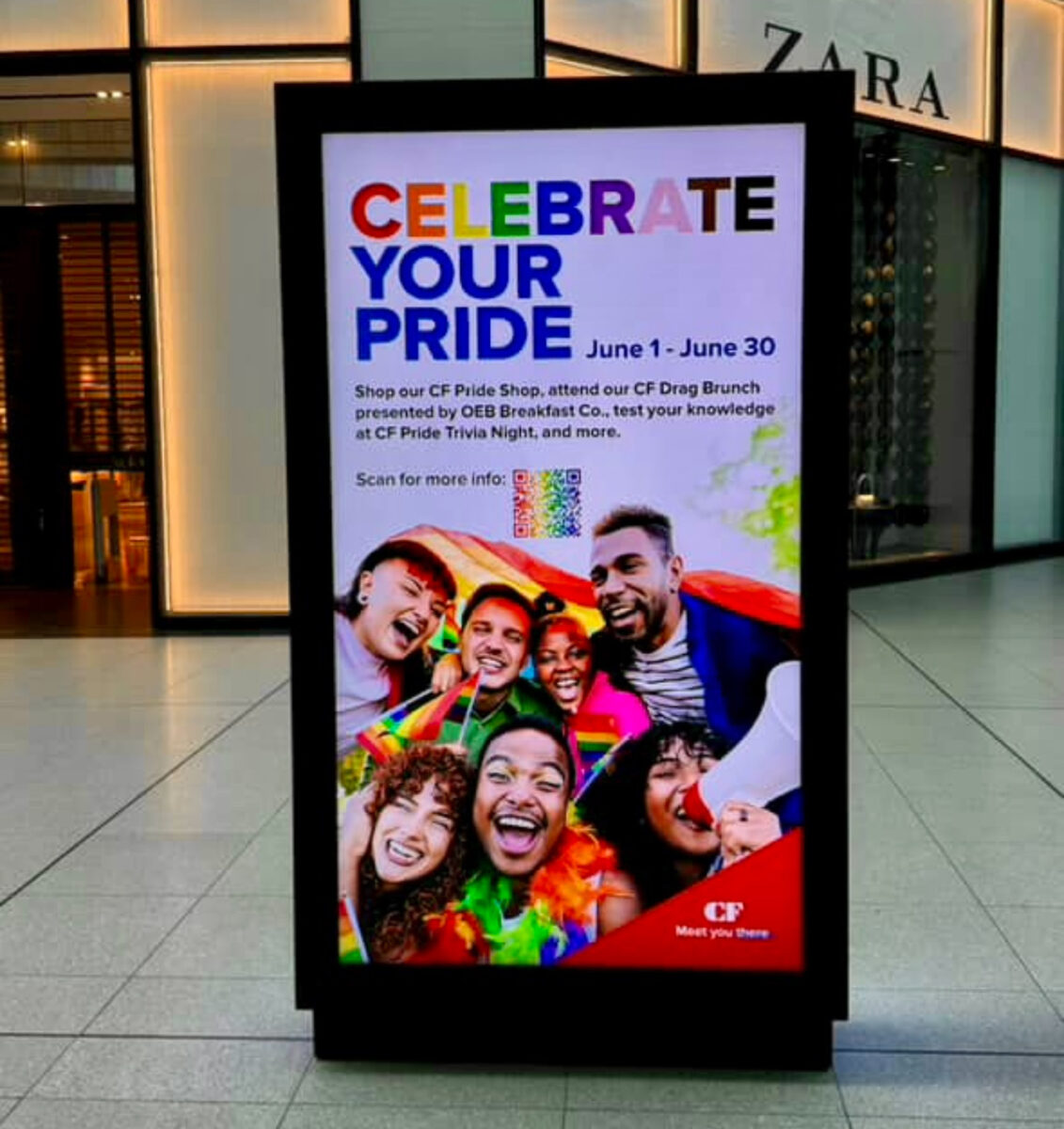
The month-long Pride 2025 program offers a diverse lineup of events, art installations, and activations, all thoughtfully curated to reflect the spirit and diversity of the 2SLGBTQ+ community.
Towering Symbols of Inclusivity
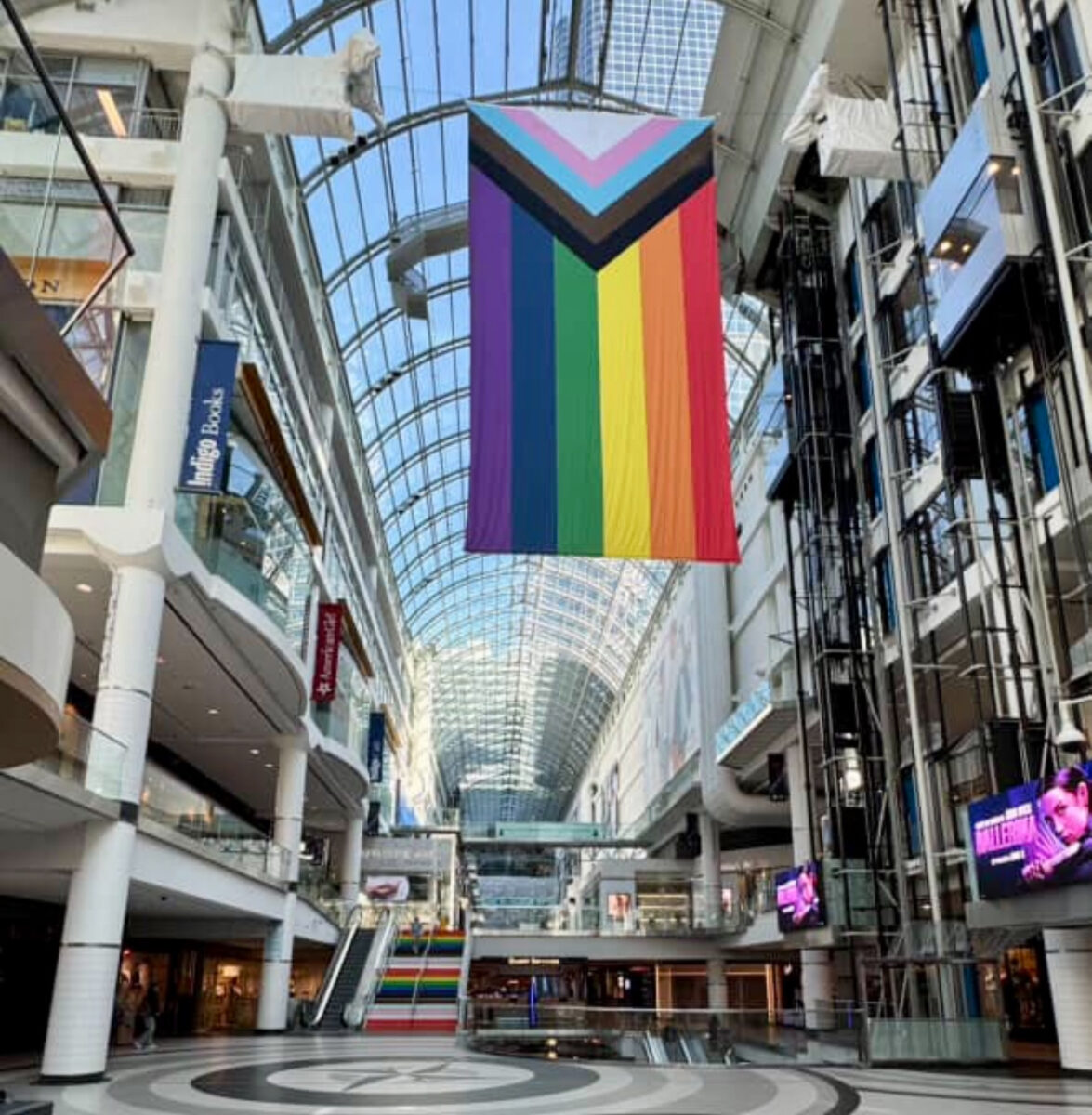
One of the most striking features greeting visitors this year is the dramatic Pride-themed décor adorning the shopping centre. Suspended above Albert’s Way is a massive 40-foot Pride flag that serves as both a photo backdrop and a powerful visual statement.
“It’s absolutely fantastic to see,” Nickel explained. “In combination with the rainbow staircase near Albert’s Way, it really creates this backdrop where people can come take pictures and showcase their celebratory spirit.”
Pride flag and stairs at CF Toronto Eaton Centre on Sunday, June 1, 2025. Photo: Larry Leung
The CF Pride Shop: A Celebration of Queer Creativity
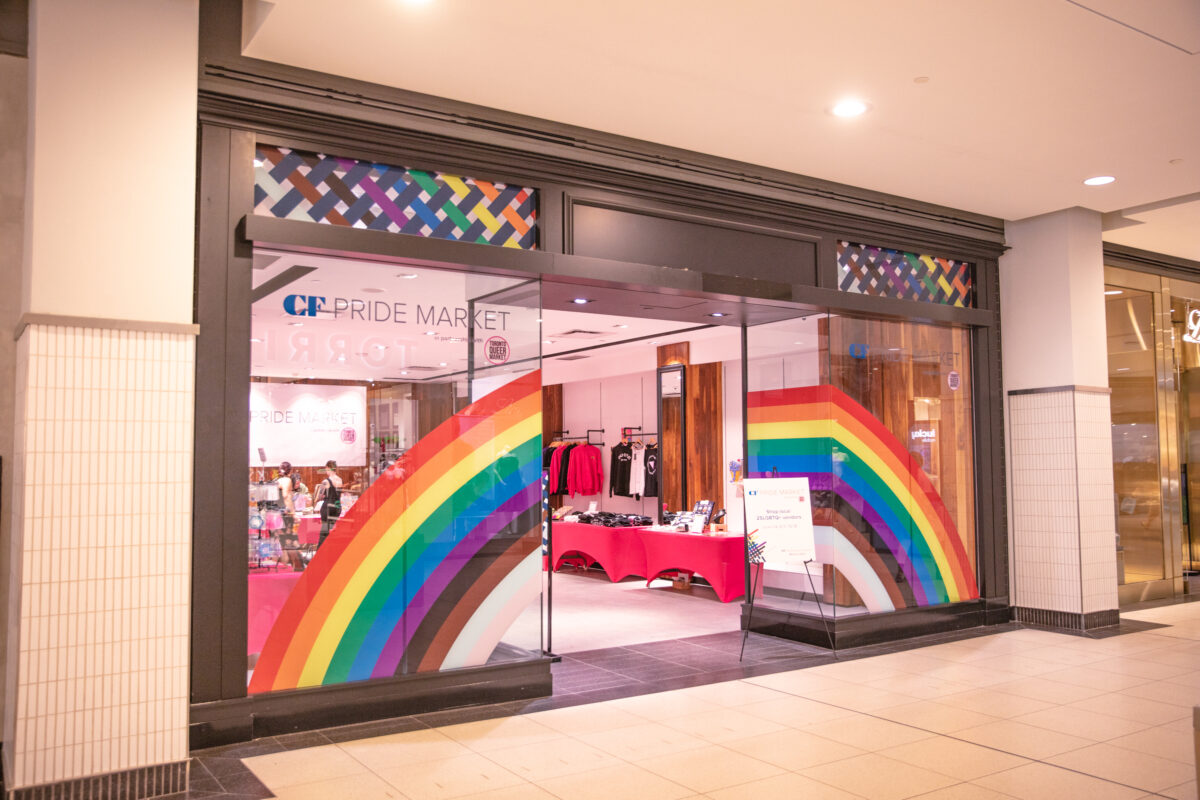
Central to the centre’s Pride 2025 programming is the CF Pride Shop, now returning for its third year in partnership with Toronto Queer Market. The pop-up, located on Level 1 next to Showcase, features more than 25 queer artists and entrepreneurs showcasing unique, hand-crafted goods ranging from fashion and jewellery to artwork.
“Every year we try to enhance the experience and make it even more meaningful,” said Nickel. “This partnership allows local queer entrepreneurs an opportunity to showcase their work in a space they might not otherwise have access to.”
The Pride Shop will remain open for the entire month of June during regular mall hours, offering visitors a chance to discover one-of-a-kind items while supporting local queer businesses.
Pride Market. Photo: Cadillac Fairview
Drag Brunch Returns to Albert’s Way
Among the most highly anticipated events is the CF Drag Brunch, scheduled for June 22nd from 1:00 PM to 3:00 PM at Albert’s Way on Level 2. Presented in collaboration with OEB Breakfast Co., the event combines dazzling drag performances with a delicious brunch.
“This event continues to be in such high demand,” said Nickel. “The feedback year over year has been incredibly positive, and this year we’re elevating it even more with OEB’s partnership.”
Performers for this year’s Drag Brunch include Xtacy Love, Beardra Bidness, Destiny, Eboni L’belle, and Just Peachy, promising an afternoon full of energy, glamour, and entertainment. Tickets are priced at $40, with $10 from every ticket donated to Rainbow Railroad, a charity that assists 2SLGBTQ+ individuals facing persecution globally. Attendees also receive a $10 CF SHOP! card and a gift bag filled with surprises.
Pride drag brunch. Photo: Cadillac Fairview
Pride Trivia Nights at Queen’s Cross
Adding an interactive twist to this year’s celebrations are Pride-themed trivia nights hosted at Queen’s Cross Food Hall in partnership with QE Trivia, a queer-owned organization. Trivia nights will take place on June 12th, 19th, and 26th, providing a lively and educational evening complete with prizes, drinks, and discounted food offerings.
“It’s a ton of fun and a great way for people to celebrate Pride while engaging with the community,” Nickel shared. “We wanted to offer experiences that cater to different interests and create multiple touchpoints for people to engage.”
Celebrating Indigenous and Queer Identity Through Art
A new art installation also takes centre stage this year. Toronto-based artists Tyler Burey and Paul Crombie have created Thunderbird and the Birth of Glamour, a sculptural piece that merges Indigenous and queer narratives. Situated on Level 3 across from Coach, the artwork features wood, sequins, and beads, symbolizing both resilience and radiance.
“This art installation is really special,” said Nickel. “It brings together Tyler’s Indigenous and queer identities in a way that’s deeply meaningful and visually stunning.”
The piece has been developed in collaboration with Pride Toronto and speaks to the centre’s broader efforts to amplify diverse voices and celebrate intersectional identities.
Spreading Love Across Yonge-Dundas Square
CF Toronto Eaton Centre is also bringing back its Pride Love Messages initiative. Throughout Pride Month, individuals can submit personal messages of love, support, and inclusivity, which are then displayed on the 90-foot media tower at Yonge-Dundas Square.
“This is one of my favourite elements,” Nickel noted. “It creates a beautiful visual of solidarity that lights up the heart of downtown Toronto.”
These messages will be displayed leading up to and during the 2025 Toronto Pride Festival, culminating on June 28th.
Pride signage at CF Toronto Eaton Centre on Sunday, June 1, 2025. Photo: Larry Leung
Beyond June: Year-Round Support for the 2SLGBTQ+ Community
While Pride Month takes centre stage in June, Cadillac Fairview’s commitment to supporting the 2SLGBTQ+ community extends year-round. CF Toronto Eaton Centre works closely with several organizations, including Friends of Ruby, which supports youth with mental health and housing services; Spectrum in Waterloo Region; and Rainbow Railroad.
“Not only are we looking to create a welcoming and celebratory space during Pride Month, but we want to ensure that our support is ongoing,” Nickel emphasized. “It’s about creating places where everyone feels welcome and celebrated.”
A Broader Transformation Amid Changing Times
This year’s Pride celebrations come as CF Toronto Eaton Centre, like many urban shopping centres, continues to evolve in a rapidly shifting retail landscape. With the recent closure of Hudson’s Bay in the centre and broader changes underway across Cadillac Fairview’s portfolio, new concepts and experiences are becoming increasingly important to attract diverse audiences.
While Nickel remained off-the-record regarding some of Cadillac Fairview’s future leasing activity, she acknowledged, “There’s a lot of exciting opportunities from an experiential retail standpoint. We’re always looking at ways to bring fresh, engaging experiences into our properties.”
Pride 2025 Reflects a Growing Vision
With its expanded Pride programming, CF Toronto Eaton Centre is demonstrating how shopping centres can become true community spaces that celebrate diversity, foster inclusion, and provide meaningful experiences well beyond retail.
“We’re proud to continue evolving our Pride programming,” said Nickel. “Every year, we look to amplify local voices, create spaces for celebration, and deliver something that truly reflects the incredible spirit of Toronto’s 2SLGBTQ+ community.”