Apple reported fiscal fourth quarter 2025 results on Friday, posting revenue of $102.5 billion, up 8% year over year, as the company pointed to record performance in iPhone and an all-time revenue high for Services.
The quarter ended Sept. 27, 2025, and Apple said the result marked a September quarter revenue record for the company.
“Today, Apple is very proud to report a September quarter revenue record of $102.5 billion, including a September quarter revenue record for iPhone and an all-time revenue record for Services,” CEO Tim Cook said in a statement.
For Canadian retailers, mobile carriers, and consumer electronics channels heading into peak shopping season, Apple’s Q4 results reinforce how heavily the company’s revenue mix is tied to premium smartphones and recurring services revenue, even as it continues to expand the breadth of its hardware lineup.
Apple Links Financial Momentum to Product Launch Cycle
Apple’s quarterly update closely ties the Q4 performance to major product launches and the start of its holiday ramp.
Cook said Apple’s newly launched lineup includes iPhone 17, iPhone 17 Pro, iPhone 17 Pro Max, and iPhone Air, alongside AirPods Pro 3 and an “all-new” Apple Watch lineup. Apple also pointed to recently announced MacBook Pro and iPad Pro models featuring the M5 chip.
Apple framed this release cycle as one of its strongest heading into year-end demand, positioning the product breadth as a key driver for revenue through the holidays—particularly in markets like Canada where Apple remains a dominant player in premium smartphones, wearables, and tablets.
Full-Year Revenue Hits $416B, Installed Base Reaches New High
Chief Financial Officer Kevan Parekh said the September quarter closed out a record fiscal year, with Apple reporting $416 billion in annual revenue and “double-digit” EPS growth.
“Our September quarter results capped off a record fiscal year, with revenue reaching $416 billion, as well as double-digit EPS growth,” Parekh said.
Apple also said its installed base of active devices reached a new all-time high across all product categories and geographic segments, an indicator Apple frequently uses to highlight long-term ecosystem stickiness—particularly important as Services becomes a larger component of revenue and margins.
For Canada’s retail and telecom landscape, that installed base growth matters because it tends to translate into predictable upgrade cycles, accessory sales, and recurring spending on Apple subscriptions—pressuring competitors in both the hardware and digital services layers.
Dividend Declared at $0.26 Per Share
Apple’s board declared a cash dividend of $0.26 per share, payable Nov. 13, 2025, to shareholders of record as of Nov. 10, 2025.
The company will host its fiscal Q4 2025 earnings call via livestream, with a replay available for approximately two weeks.
What It Signals for the Canadian Market
Apple’s Q4 performance arrives as the company enters the most commercially important stretch of the year: the holiday quarter. With record iPhone revenue for the September period and Services hitting an all-time high, Apple appears to be reinforcing two priorities at once—hardware momentum driven by flagship launches, and ecosystem monetization driven by recurring subscription revenue.
For Canadian decision-makers in retail, electronics distribution, and telecom, the results suggest Apple continues to sustain premium demand while expanding the revenue contribution of Services, creating a dual-engine model that remains difficult for rivals to replicate at scale.
Michael Hill, one of Canada’s leading fine jewellery brands, is unveiling its new flagship boutique at Yorkdale Shopping Centre in Toronto on November 1.
This opening marks a significant milestone in the brand’s global refresh and ongoing evolution, said the retailer.
Founded in New Zealand, the retailer said it has long celebrated the role fine jewellery plays in life’s meaningful moments. The Yorkdale boutique brings this philosophy to life, offering customers an elevated experience that blends beauty, craftsmanship, and connection.
Jonathan Waecker
“We’ve been honoured to be part of thousands of stories since 1979,” said Jonathan Waecker, Chief Executive Officer. “Last year, we celebrated 45 years of heritage, and now we’re thrilled to share our refreshed brand with Canadian customers in a space that reflects modern, accessible luxury.”
The company said Canada has embraced Michael Hill for over two decades, and the Yorkdale flagship underscores the brand’s deep commitment to the market. At the heart of the new boutique are Michael Hill’s signature collections, including Pendant and Earring Bar, 101 Signature Diamond, LAB. bespoke collections made for you, and wedding band concierge – making it easy for every customer to find something personal and timeless, for moments big or small.
The store’s design is a refined interplay of space, light, and materials. Drawing inspiration from New Zealand’s lush landscapes, the palette features natural tones, raw timber, stone, and premium textiles. Every detail has been considered to create a multi-sensory experience. From the signature Michael Hill scent and curated playlist to dedicated consultation areas that invite guests to linger and explore, it explained.
Jo Feeney
“Our flagship stores are designed to engage all the senses,” said Jo Feeney, Chief Marketing Officer. “We’ve created a space where customers can truly feel the essence of our brand — thoughtful, elevated, and welcoming.”
A new brandmark, intertwining the M and H monogram, pays tribute to the original store windows and the founders, Sir Michael and Lady Christine Hill.
To celebrate the grand opening, Michael Hill will host two weekends of in-store events on November 1–2 and November 8–9. Guests will enjoy complimentary kiwi cupcakes — a nod to the brand’s New Zealand roots. Whether you are buying from the new Pendant Bar, or shopping for your wedding moment, all shoppers will receive a personalized holiday ornament with any purchase, and those spending over $300 can choose between a KORA Organics Algae Cleansing Balm or a Michael Hill pendant.
The design work for the Canadian flagships has been undertaken in partnership with Vancouver-based architectural firm Cutler, which is providing Architecture and Interior Design services for Michael Hill on various locations in Canada.
Zellers store at Londonderry Mall in Edmonton. Photo: Ulfhednar Hvedrungr
Zellers has officially reopened its doors in Canada, beginning a bold new chapter for the heritage retailer with the launch of its first reimagined store at Londonderry Mall in Edmonton. The opening on Thursday drew enthusiastic crowds and emotional shoppers, many expressing nostalgia and surprise that the beloved chain had returned once more.
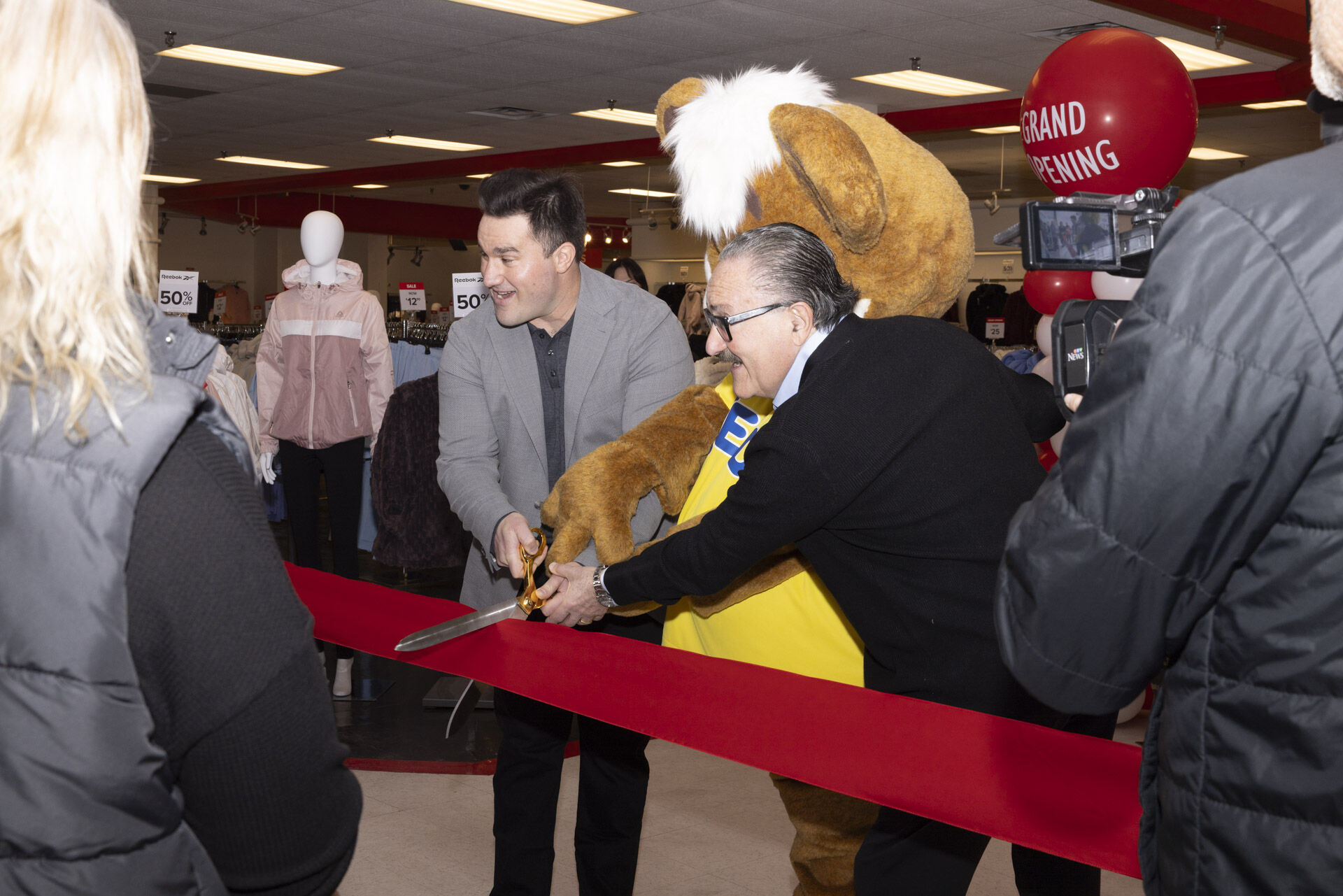
For Joey Benitah, Chief Operating Officer of Zellers, the moment was the culmination of months of work and decades of family history in Canadian retail. “We’ve seen an overwhelmingly positive and heartwarming response,” said Benitah. “There’s so much love for the brand, and we’re humbled by how Canadians have welcomed Zellers back.”
Joey Benitah and Zeddy at the ribbon cutting of Zellers at Londonderry Mall in Edmonton, October 30 2025. Photo via Instagram screen shot
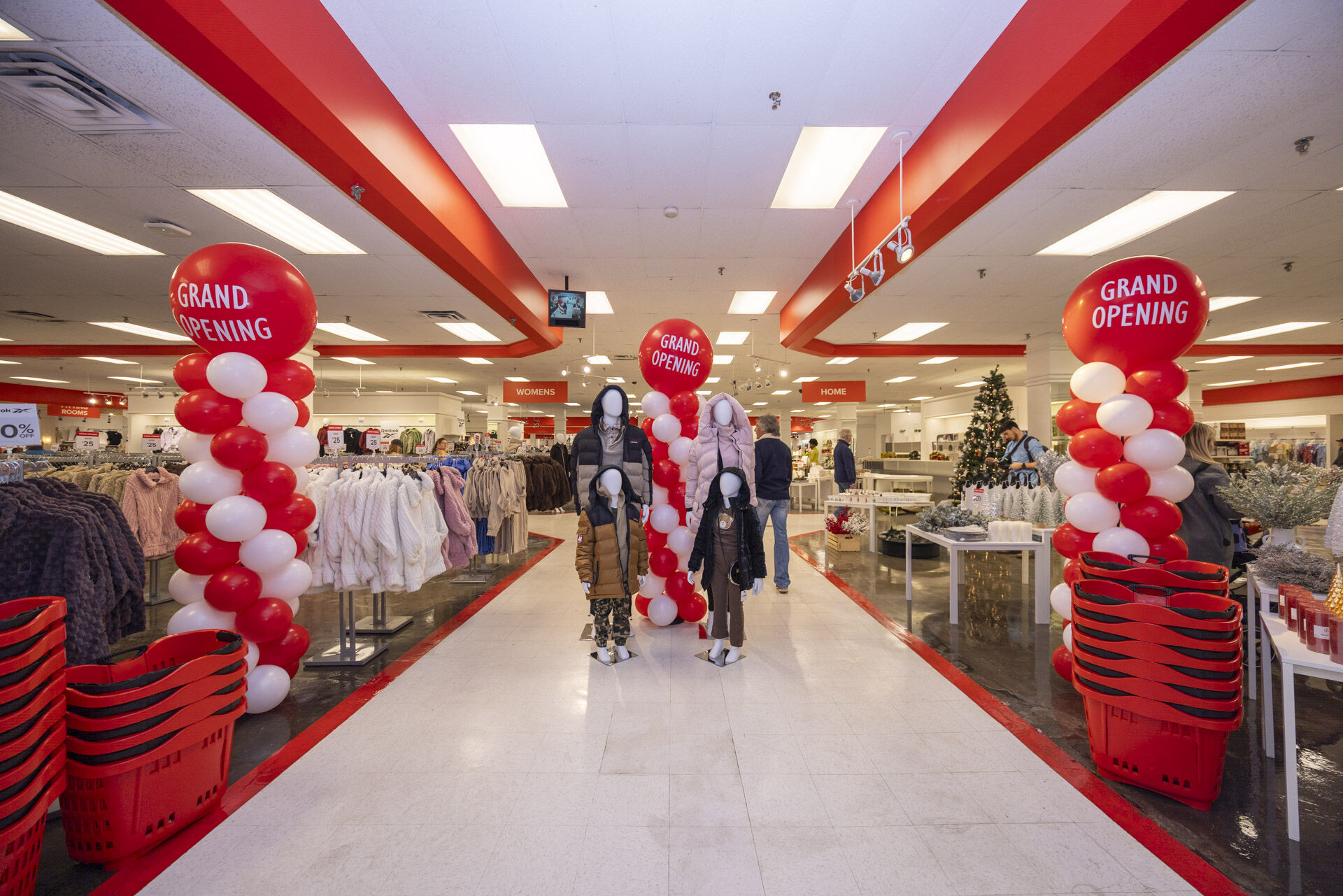
The new Zellers Londonderry Mall Edmonton location occupies one level of a former Hudson’s Bay department store. The Bay had been converted into a smaller outlet format during the pandemic, and shut permanently along with all Bay locations in June. That opportunity allowed Zellers’ leadership to debut its new small-format concept — a strategic shift designed to bring back the best of the brand in a sustainable, modern way.
A Phased Approach to Relaunching a Canadian Classic
Benitah emphasized that the new Zellers is not a simple revival but a careful reinvention. “This is an iconic brand with so much history, and we need to get it right,” he said. “We’re taking a phased approach. Lstening, learning, and adapting quickly to customer feedback.”
Zellers’ plan is to start modestly, refine its merchandise and store model, and expand gradually across the country. The phased rollout allows the company to remain nimble while ensuring the concept remains profitable long term.
“The objective,” Benitah explained, “is to find the sweet spot between offering Canadians the categories they love most at exceptional value, and maintaining a sustainable business model that works nationally.”
This strategy means that the Zellers Londonderry Mall Edmonton store will serve as an early iteration of what future stores may become. Over time, the retailer will adapt its assortment, store design, and brand partnerships based on customer feedback and performance.
Zellers store at Londonderry Mall in Edmonton. Photo: Mary Watson
Strong Community Ties and Local Partnership
Selecting Edmonton for the first relaunch was no accident. “Historically, Edmonton has been a fantastic market for Zellers,” said Benitah. “The customer base here has always been strong, and there’s a deep emotional connection to the brand.”
He credited the partnership with Londonderry Mall’s ownership Leyad as instrumental in bringing the concept to life. “The landlord was incredibly supportive and patient,” he added. “They understood the vision and shared our excitement about making Londonderry the first site of Zellers’ comeback.”
Londonderry Mall, one of Edmonton’s most established shopping destinations, has undergone major renovations and tenant diversification in recent years. Zellers’ addition marks a significant milestone for the property, adding to a tenant mix that includes La Maison Simons, H&M, Winners, and No Frills.
Zellers store opening at Londonderry Mall in Edmonton on Thursday. Photo: Londonderry Mall
Reinventing the Department Store for Today’s Shopper
The new Zellers format, known internally as Zellers 3.0, is a smaller value-focused department store ranging from 30,000 to 50,000 square feet. The layout features a curated selection of apparel, home goods, accessories, and seasonal items, designed to be easy to navigate and shop.
“We’re reintroducing Zellers as a family-first, approachable department store for today’s consumer,” said Benitah. “Customers have told us they want a smaller, more intimate shopping experience that still offers great value and the same warmth they remember.”
In Edmonton, shoppers will find apparel for men, women, and children, as well as home décor, bedding, bath, luggage, and giftable seasonal items. Early feedback, according to Benitah, has been extremely positive. “We’ve had people telling us all day how impressed they are by the prices,” he said. “It’s clear Canadians still appreciate value done right.”
Zellers store at Londonderry Mall in Edmonton
Zellers’ assortment includes brands such as Reebok, Spyder, Chaps, Canada Weather Gear, DKNY Kids, and character-themed children’s accessories from Nickelodeon, Marvel, and Disney. Footwear and additional product categories are expected to roll out as the brand evolves.
The Return of Zeddy and Community Connection
No discussion of Zellers is complete without mentioning its beloved mascot, Zeddy the bear, who will make his official comeback next year. The new Zellers store introduces Zeddy’s World, a dedicated family area where shoppers can purchase their own Zeddy and customize his clothing and accessories.
“We’re giving Zeddy a whole new life,” said Benitah with enthusiasm. “Customers will be able to change his outfits and interact with him in fun, creative ways. It’s a nod to nostalgia but also something exciting for a new generation.”
Beyond merchandise, Zellers plans to rebuild its community legacy through charitable partnerships. Benitah confirmed that the company is developing a national initiative to support pediatric oncology camps across Canada. “It’s something we feel very passionate about,” he said. “Zellers has always been about families, and this is an important way to give back.”
Zellers store at Londonderry Mall in Edmonton. Photo: Londonderry Mall
Balancing Heritage with Innovation
While the new Zellers draws heavily on nostalgia, its leadership team is focused on modernization. E-commerce will be an essential part of that evolution, with an online store expected to launch in 2026.
“We want to get it right,” said Benitah. “When we launch online shopping, the experience will be seamless and something Canadians truly love.”
Plans are also underway to reintroduce Club Z, the retailer’s historic loyalty program, though no specific timeline has been set. “It’s on the list,” he confirmed. “We know customers remember it fondly.”
Zellers’ pricing strategy will remain a core differentiator, balancing affordability with quality. “It’s not about being cheaper than Walmart or anyone else,” said Benitah. “It’s about being extremely competitive and offering real value across every category.”
Zellers store at Londonderry Mall in Edmonton.
Real Estate Strategy and National Growth Plans
In terms of expansion, Zellers’ team is leveraging opportunities in the wake of Hudson’s Bay’s collapse earlier this year. Former HBC sites are now vacant, providing accessible real estate options for Zellers to repurpose efficiently.
“Our initial focus is to partner with landlords to occupy one level of former HBC stores,” said Benitah. “Some of these spaces could take years to redevelop, so our goal is to bring them back to life in the interim.”
By using existing anchor spaces, Zellers can minimize build-out costs and reinvigorate key shopping centres across the country. Benitah confirmed that the company is exploring locations in major markets nationwide, with announcements expected in Spring 2026.
“It’s rare that such large, high-quality spaces become available,” he said. “This is a unique moment to restore activity and vibrancy to these properties.”
The Legacy of the Benitah Family in Canadian Retail
The Benitah family is no stranger to Canadian retail. Over the past five decades, they have operated well-known banners including Fairweather and International Clothiers. In 2019, Joey and his sister Rachel launched Wyrth, a contemporary home décor brand geared toward millennial shoppers in the Greater Toronto Area.
In August 2025, their company, Les Ailes de la Mode Inc., acquired the Zellers trademarks, logo, mascot, and the rights to Club Z and the portrait studio from Hudson’s Bay. The acquisition price has not been disclosed.
For Benitah, the value of the Zellers name goes far beyond its balance sheet. “Zellers means something to Canadians,” he said. “We see incredible potential in bringing it back the right way, with authenticity, warmth, and pride.”
Cash area at Zellers store at Londonderry Mall in Edmonton.
A New Chapter Rooted in Nostalgia
Zellers’ revival comes at a time when Canadian consumers are re-evaluating what value, community, and identity mean in retail. For many, the brand represents simpler times including family outings, affordable finds, and the unmistakable presence of Zeddy the bear greeting children at store entrances.
“I spent the day at the grand opening talking to as many customers as I could,” said Benitah. “The number of people who said ‘thank you for bringing Zellers back’ was incredible. The energy was contagious.”
As the company moves forward, the Zellers Londonderry Mall Edmonton store will serve as both a testing ground and a symbol of what’s possible in Canadian retail. For shoppers and industry watchers alike, its success could signal a broader trend, one where nostalgia meets smart, sustainable retail strategy.
“Canadians deserve Zellers back,” said Benitah. “And this time, we’re building it to last.”
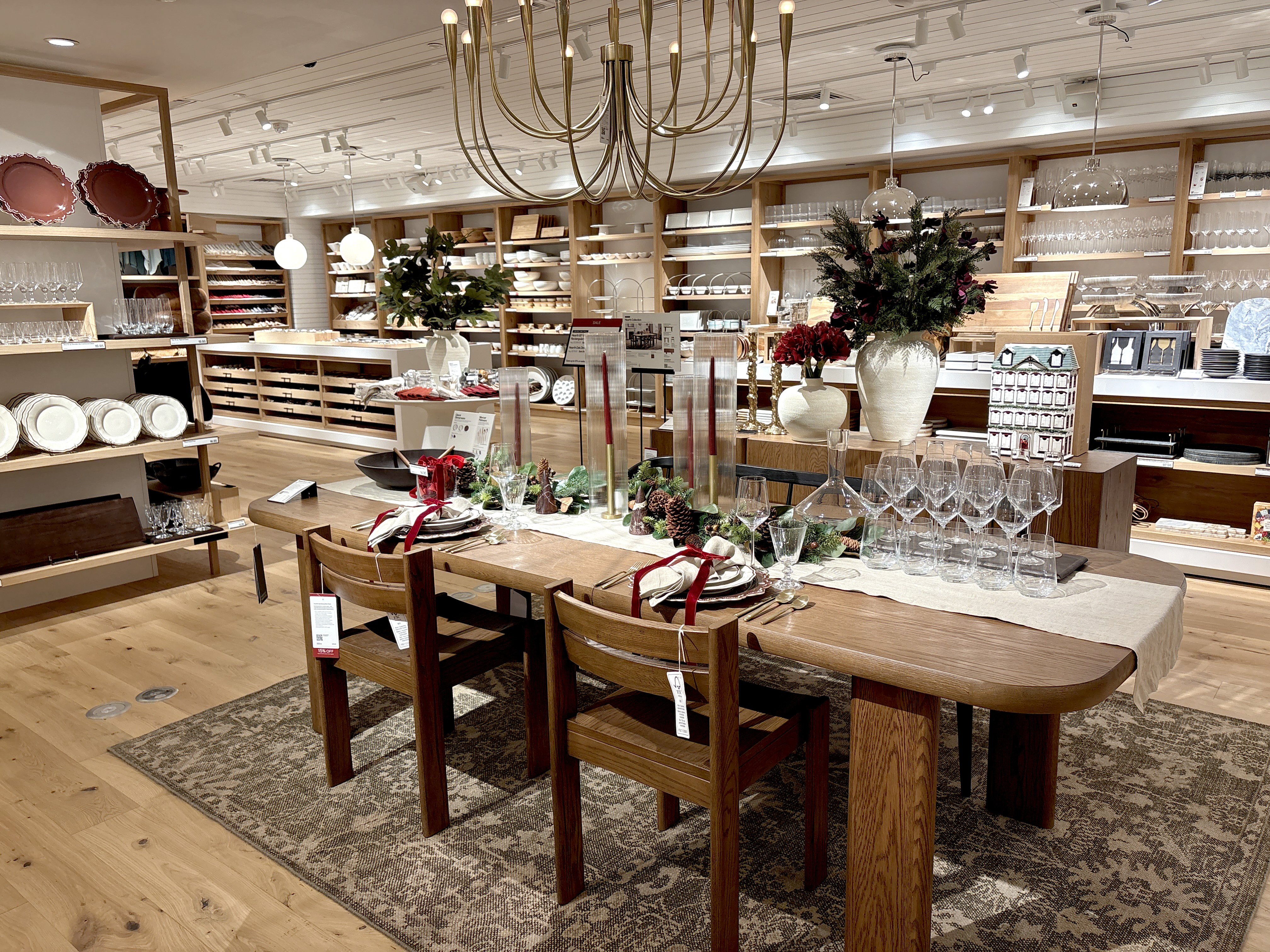
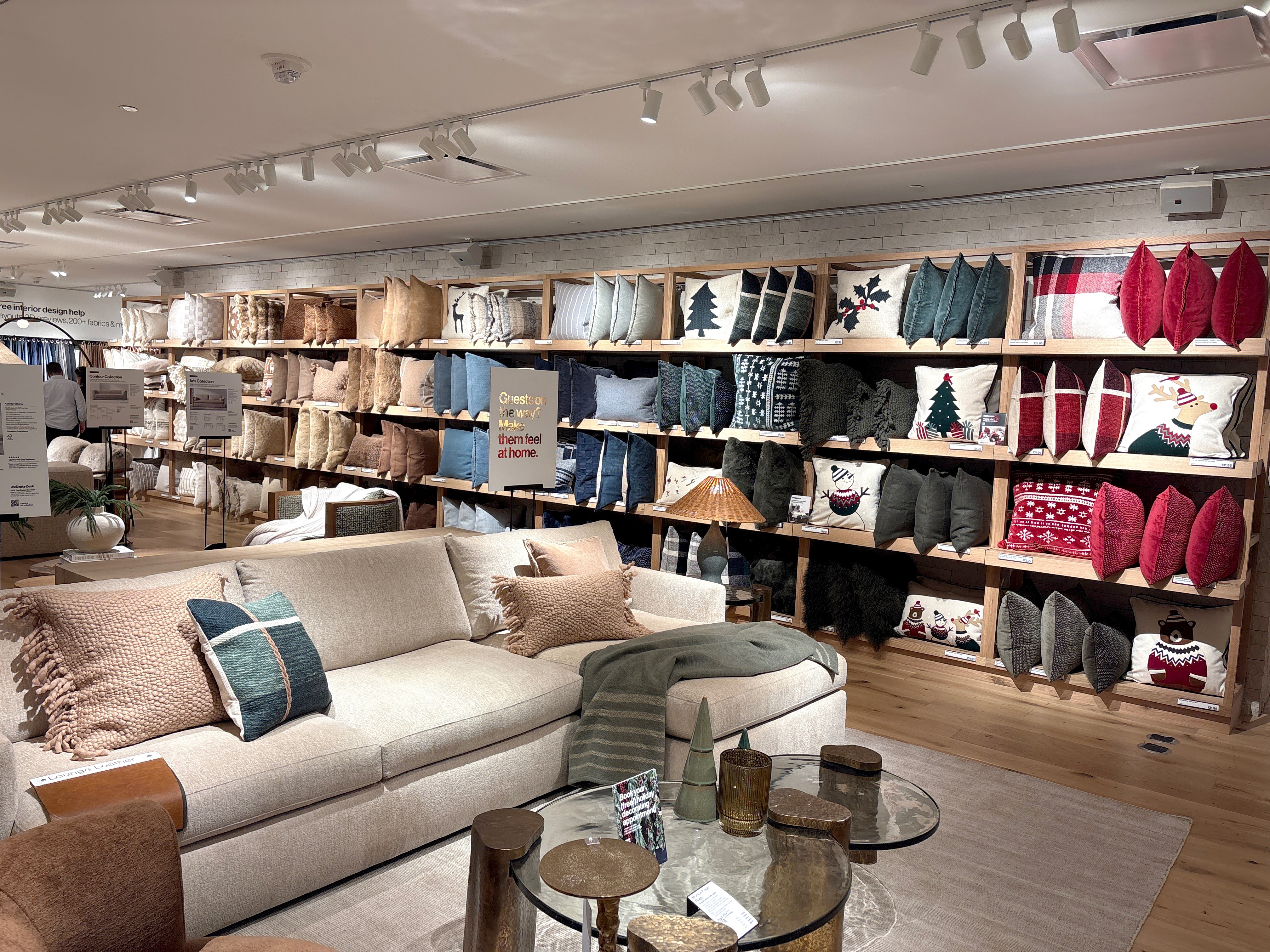
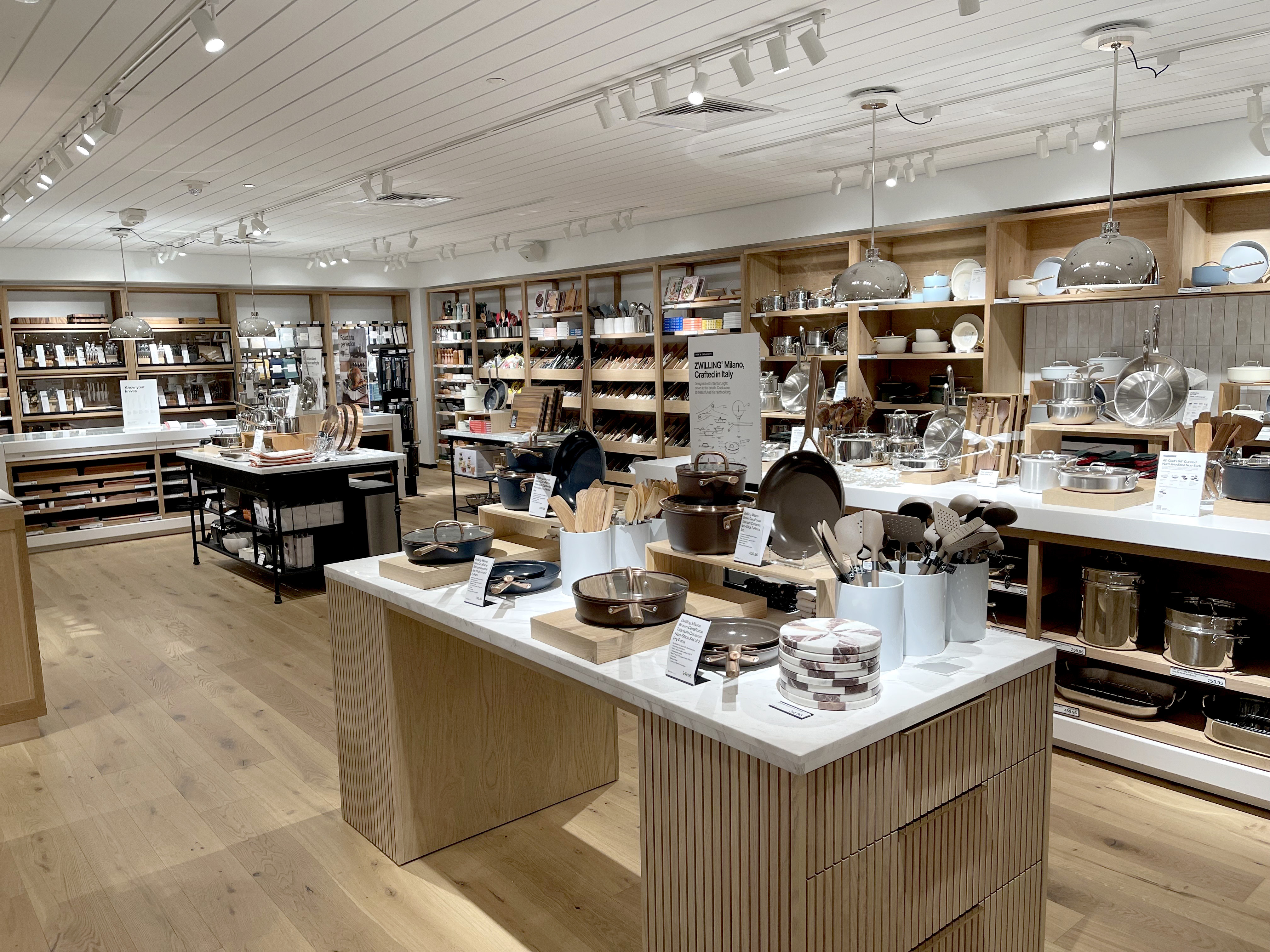
Crate & Barrel recently opened the doors to its new and improved flagship location in Vancouver at 650 W 41st Ave in the Oakridge Centre.
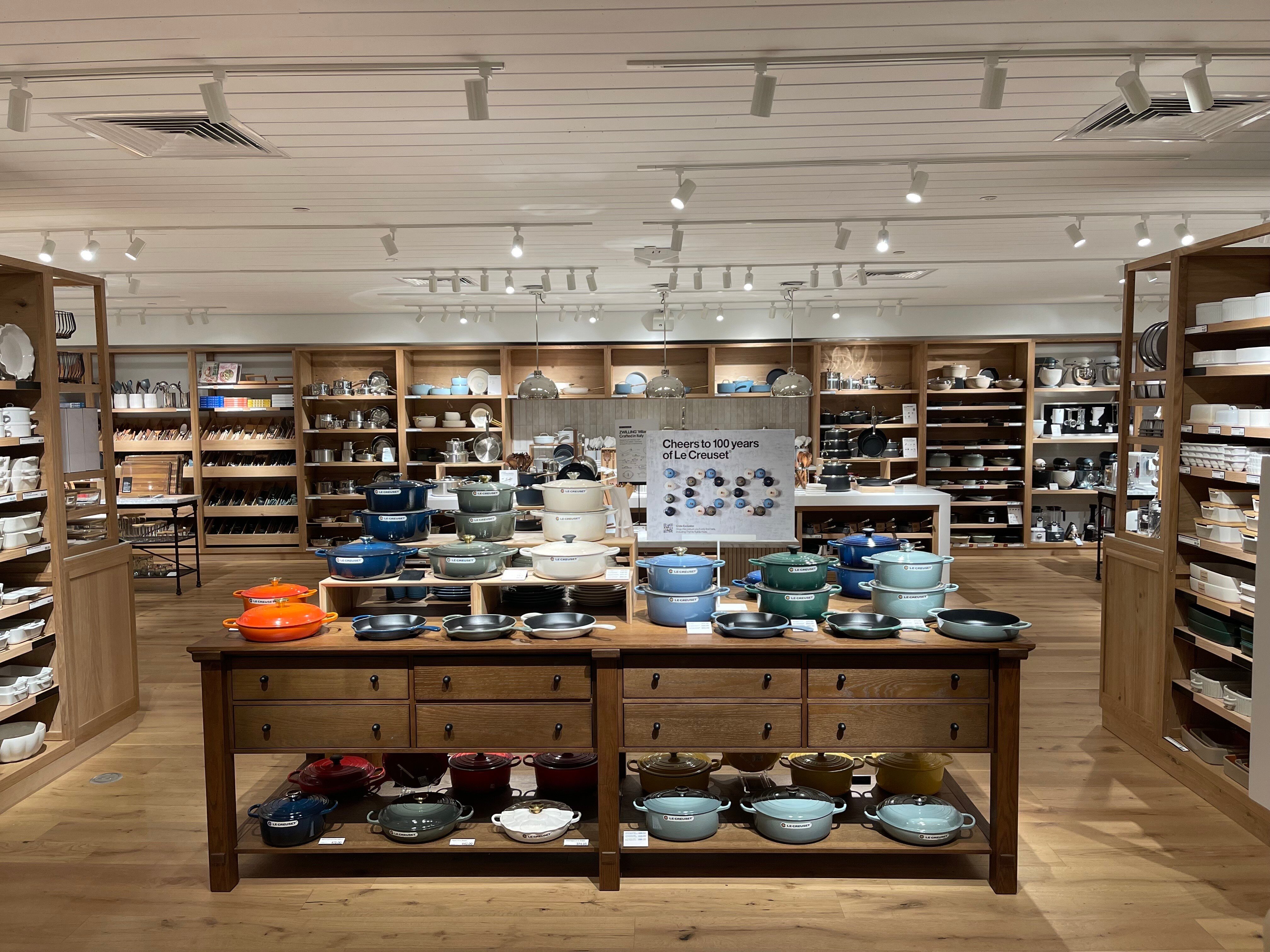
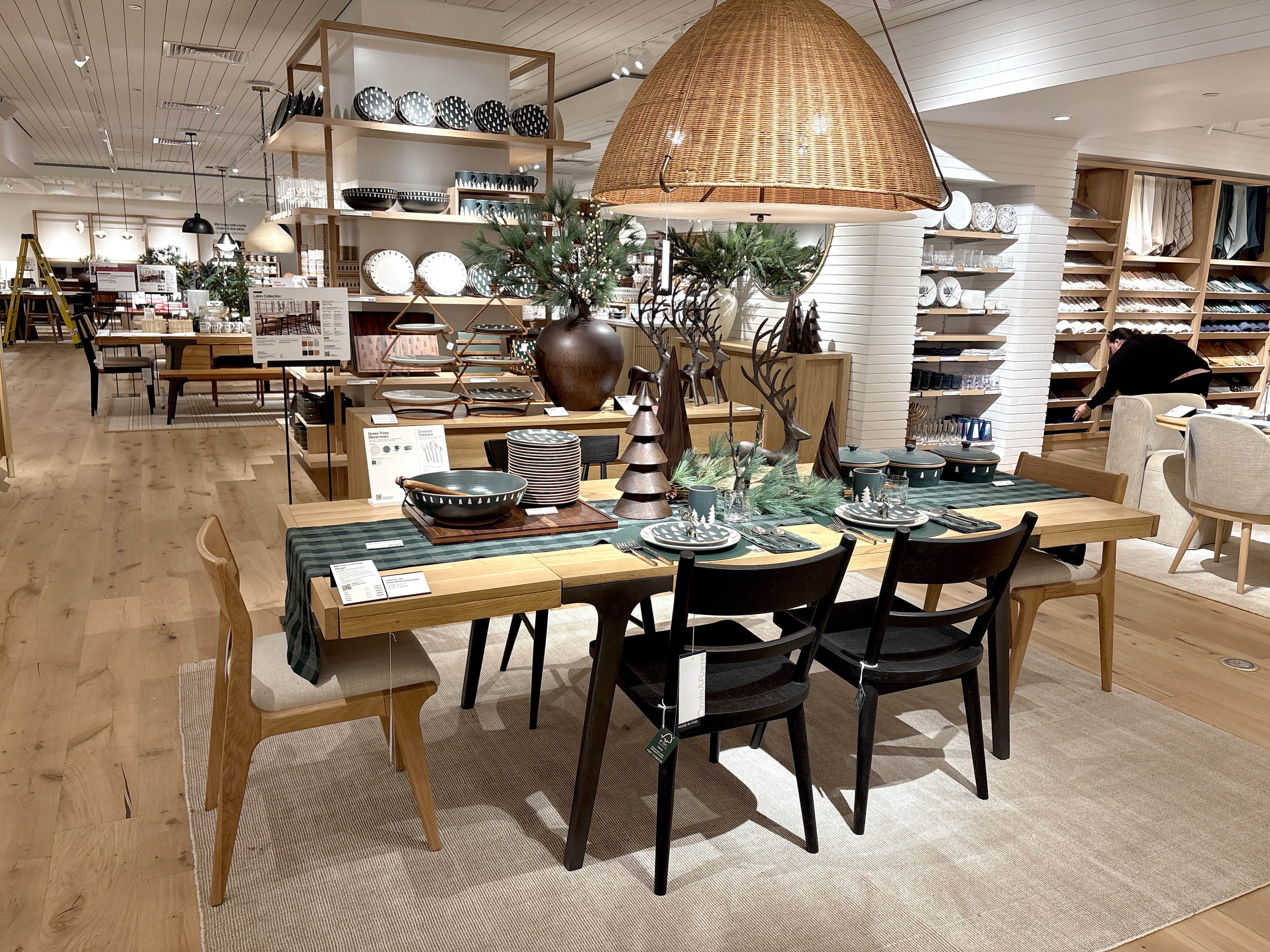
The newly-renovated Vancouver store – the only Crate & Barrel location in B.C. and one of only five in Canada – takes its cue from local B.C. nature with dramatic coastlines and misty evergreens.
The retailer says this new space is designed to provide ease and inspiration to every customer’s visit.
More than just a retail space, the format of this new store allows for a personalized shopping experience supported by in-store experts that deliver Crate & Barrel’s best-in-class services, such as:
Floral Arrangements: The store offers an expansive botanical shop and an expanded assortment of faux and dried botanicals for DIY arrangements or on-site styling by an expert.
The Design Desk: Crate & Barrel offers free design and trade services that reach beyond the store walls. The designers bring our customer’s vision to life through collaborative conversations and technology, offering industry-leading service, state-of-the-art floor planning tools and shoppable mood boards.
Crate & Barrel Trade Program: Expanded home renovation products for every client, from bathroom vanities to dinnerware and entertaining options for restaurant trade.
Gift Registry: Expanded gift registry gives couples the opportunity to see more options as they create their registries along with exclusive events and personalized service appointments.
“Our Oakridge customers will have in-store access to our best-in-class design experts through multiple free services we offer. They can visit The Design Desk which provides free in-store and remote design services using professional grade interior design planning tools or explore our expansive botanical shop for DIY or expert-styled arrangements,” she said.
“Professional and local businesses can utilize Crate & Barrel’s Trade Program for home or business renovation projects with concierge service. Additionally, our gift registry services offer couples exclusive events and personalized appointments.”
She said the retailer’s updated, modern store format it introduced in 2023 emphasizes the ease of shopping while elevating the beauty of its products as well as each store’s unique architectural design.
Photo: Crate & Barrel
“Our reimagined Oakridge store has an expansive selling floor, but with an upgraded, modern feel. The open concept store format allows shoppers to see product categories grouped together for a streamlined experience that inspires customers,” she noted.
“We are excited that this reopening is an opportunity for us to reintroduce ourselves to the Vancouver market. We are proud to showcase our commitment to the community and how our brand exhibits beauty and functionality in a space that we have custom designed and built for today’s customer.”
Real gross domestic product (GDP) contracted 0.3% in August, offsetting most of July’s 0.3% expansion, with decreases in goods-producing and services-producing industries, explained the federal agency.
Goods-producing industries declined 0.6% in August, marking this aggregate’s fifth contraction since the beginning of the year. Services-producing industries edged down 0.1%, marking this aggregate’s first decline in six months, driven by contractions in transportation and warehousing and in wholesale trade, it explained.
But retail was a shining light amidst the overall decline.
“Motor vehicle and parts dealers (+2.5%) led the growth, recording its second consecutive monthly expansion, driven in August by increases in new and used car dealers as well as automotive parts, accessories and tires retailing. A rebound in general merchandise stores (+2.1%), clothing and clothing accessories stores (+2.7%) and sporting goods, hobby, book and music stores (+6.9%) further contributed to the increase in the sector,” noted Statistics Canada.
“Advance information indicates that real GDP increased 0.1% in September. Increases in finance and insurance, mining, quarrying, and oil and gas extraction, and manufacturing were partially offset by decreases in wholesale trade and retail trade. Owing to its preliminary nature, this estimate will be updated on November 28, 2025, with the release of the official GDP by industry estimates for September,” said Statistics Canada.
“With this advance estimate for September, information on real GDP by industry suggests that the economy edged up 0.1% in the third quarter of 2025. The official estimate for the third quarter will be available on November 28, 2025, when the official estimates of GDP by income and expenditure are released.”
A new Leger study sheds light on how Canadians and Americans travelled this summer, and how tariffs and politics are reshaping cross-border tourism.
The data points to a clear shift in travel behaviours, one that has major implications for tourism operators, government agencies, and cross-border relations.
Most Canadians stayed close to home: 52% travelled within their own province — far more than had originally planned.
U.S. travel took a major hit: Only 13% of Canadians visited the U.S. this summer, despite 25% having planned to. Over a quarter (27%) changed their travel plans due to tariffs and the political climate.
Americans prefer to stay domestic: 89% of U.S. leisure travellers stayed within the U.S., and Canada attracted only 5% of them.
But there’s room for growth: 35% of Americans say they are open to visiting Canada in the future.
“When Trump first got elected, the approval rating for Trump in Canada has always hovered around 18% up until that point, and then as his policies and as his politics unfolded, that dropped to an all time low of about 9% where it sits currently,” he said.
“So there’s still a small fraction of the population in Canada that support Trump and Trump policies. And then we started getting into some interesting polling results where we found that not only were people significantly concerned, and this is top of the agenda, number one issue in the country as far as what people care and concern about, but we found some interesting polling results that really rocked the foundations of our friendship with the US, and one of them was we asked whether Canadians felt that the US was an ally, a friend or an enemy country, and we found about 35% said that they considered the USA an enemy country, along the same lines as a lot of Canadians would feel that with Russia, Russia was around 50% so it you know that that kind of a context showed that Canadians were serious, and not just in travel, but in nearly every consumer categories, from grocery shopping to even big box retailers and even down to organizations like Netflix and Disney, Disney plus.
“We saw a large percentage of Canadians boycotting American products and services . . . So when we get into the travel part, it’s not surprising that we see the numbers that we saw.”
Mossop said he spoke at a Canadian Tourism Conference in April, and the numbers at that point were not baked into the equation about the impacts. First polls indicated a massive drop off in travel intentions occurring, and that the implications would reverberate through the nation in several ways.
“When you look at destinations like New York and Phoenix and Vegas, and we were seeing numbers from Air Canada, from West Jet, where routes have been dropped. And 40, 50, 70% decreases in travel to those popular destinations. So the impact on Canadian outfits that are servicing travel is the first thing. And the second, of course, is the implications for all of the US destinations that have suffered the consequences of that in some pretty big ways. You look at Maine and the resorts in and around the northeast, you look at even the impacts in Seattle, those are real, and the numbers are being counted in different ways every day,” he explained.
“On the flip side, though, there is an upside that there is a counter effect, where Canadians were traveling much more extensively within their own country. So backyard vacations in province, vacations, the numbers were through the roof. So you look at hotel occupancy rates, you look at hotel rates, you look at travel operators in Canada, they’ve seen this boom that they didn’t expect at the beginning of the year back when I spoke at that initial conference.”
Photo: Splash of Rain
Mossop said Canadians remain steadfast in their avoidance of U.S. travel.
“We have about three in five Canadians who just four weeks ago said that they are less open to traveling to the US in the next six months. And half of those are much less open, and only a small single digit percentage say that they’re actually more open to traveling to the US. So for now, until we see a dramatic change and the rhetoric dissipates, we expect Canadians to remain true to their intentions.
So that’s not just travel, that’s purchases of California wine or Kentucky bourbon or any of the other consumer categories where we’ve been tracking since February, the consumers are staying steadfast in their intention.”
Halloween is haunting Canada’s shopping carts far beyond the candy aisle, with consumers snapping up everything from pumpkin-spice coffee pods to glow sticks simply because they’re dressed in orange and black.
More than half of Canadians (53 per cent) admit to buying an everyday product just for its Halloween packaging, according to Lightspeed Commerce.
The trend is strongest among Gen Z and young adults — 85 per cent of 18- to 24-year-olds and 80 per cent of those aged 25-34 say they’ve been swayed by spooky branding — and men are slightly more likely than women to give in to the impulse.
Limited-edition collaborations and in-store theatrics are keeping the momentum alive, with 51 per cent of shoppers saying themed tie-ins influence their spending. From Tim Hortons’ Black Cat merch to DAVIDsTEA’s haunted tea shop and Lush’s spooky bath range, younger Canadians are treating Halloween as a full-blown event, drawn to pop-ups, eerie lighting and exclusive after-hours shopping. Even as cost-of-living pressures persist, thrift stores and dollar shops are seeing a seasonal lift as Canadians mix festive indulgence with bargain hunting — a retail balancing act that’s proving hard to resist.
Once hooked by the branding, Canadians shop it everywhere: big-box retailers are the main destination(45%), grocery and drug stores (37%) and online marketplaces(28%). Dollar stores are the last-minute lifeline, and thrift/second-hand (23% in Canada vs 18% in the U.S.) gets a seasonal lift as shoppers hunt for spooky finds and budget wins.
It’s not just about what’s on shelves. In-store sampling is the#1 draw (49%), and 59% say they’re more likely to visit stores that lean into the vibe with eerie music, lighting, or giveaways – especially Canadians aged 45-54, who love a good tasting (57%), and 24-34 year-olds go for the the ambiance.
“For retailers, it presents some logistical and supply chain challenges. You want to meet the demand for this enthusiasm and energy with shoppers but we’re also we’re quickly nearing that point at which point the value of Halloween branded items falls off the cliff. So making sure you’re not sitting on too much inventory that you’re letting go that you’ve to have clearance and discount as well,” he said.
Despite challenges for consumers these days, they continue to spend. For Halloween, many purchases are relatively affordable. It could be that as larger or luxury purchases become harder to justify, people still want to participate in something fun and celebratory, like Halloween, without spending too much.
Shapiro said in general the retail industry is seeing younger shoppers drawn in by ambiance and themed experiences, things like Halloween-themed sales, promotions, music, lighting, giveaways, and in-store events. That 24–34 age group, in particular, is really engaging with those experiences.
“Halloween being on a Friday night is very well positioning it to be a real consumer event. We’re seeing a lot of enthusiasm from consumers for Halloween this year,” he said.
“The counterpoint is because of how the calendar is falling . . . possibly because how late in the season Black Friday is falling, we’re seeing a lot of retailers actually shift over from Halloween to Christmas, to Christmas decor. It really kicked off in a lot of ways across big box retailers early in October and normally it’s something that would have happened a little later in the season.
“So I think there’s a bit of a disconnect between what shoppers are expressing interest in right now which is Halloween and where retailers are leaning which is kind of already into Christmas and holiday and shopping season. And maybe there’s some concern given how late Black Friday is that the traditional Christmas shopping period would be compressed so they’re trying to get ahead of it.”
Entrance to the new L'OCA Market in Sherwood Park, Alberta. Photo: Christa Patterson
The Canadian Independent Grocer of the Year Awards returned to Toronto with a sold-out gala celebrating the country’s leading independent grocery retailers. The annual ceremony, hosted by the Canadian Federation of Independent Grocers (CFIG) as part of Grocery Innovations Canada, brought together more than 500 grocers, suppliers, and distributors from across the country to recognize excellence in community-based retailing.
Now in its latest edition, the Canadian Independent Grocer of the Year Awards spotlighted the achievements of retailers who have demonstrated exceptional leadership, innovation, and commitment to their communities. The event remains one of the most anticipated gatherings in the Canadian grocery industry, offering a glimpse into the entrepreneurial spirit that continues to shape the sector.
Among the most meaningful recognitions of the evening was the Heritage Award – Arnold Rands Award, which celebrates multigenerational, family-owned grocery stores that have served their communities for at least 35 years. This year’s honour went to Michael De Lutis and the Fairview team of Longo’s Fairview in Burlington, Ontario, a store that represents the enduring strength of family-operated businesses within Canada’s modern retail landscape.
The award, named in tribute to the late Arnold Rands, a longtime supporter of independent grocers, embodies the values of continuity, integrity, and community connection that define family-owned retailing.
National Specialty Food Retailers Recognized
The Specialty Category showcased some of Canada’s most innovative food retailers focused on curated, high-quality offerings. The Bronze Award went to Joseph Kim and Derek Jun of Galleria Supermarket in Oakville, Ontario, while Silver was presented to The Willemsen Family and Team at Sunripe Sarnia in Sarnia, Ontario.
The David C. Parsons Award, a prestigious recognition within the specialty division, was awarded to Tomasz Badelek of L’OCA Quality Market in Sherwood Park, Alberta. Each recipient demonstrated strong community engagement and forward-thinking approaches to fresh food presentation and sourcing.
Inside L’OCA Quality Market in Sherwood Park, Alberta. Photo: Christa Patterson
Regional Excellence Across the Country
The heart of the Canadian Independent Grocer of the Year Awards lies in celebrating regional achievements. Winners across four regions, including British Columbia and Yukon, Alberta, Saskatchewan, Manitoba, Northwest Territories, Nunavut, Ontario, and Québec and Atlantic Canada, were recognized in small, medium, and large surface categories.
In the Small Surface Category, highlights included Carson Holden of Nesters Market Kelowna Airport in British Columbia, Cam Bowman and the Freson Bros. team in Sundre, Alberta, Joe Greco and the team from Greco’s Fresh Markets in Thornhill, Ontario, and Jean-Christophe Plouffe of Métro Plouffe in Bedford, Québec.
For Medium Surface stores, winners such as Arden Fowler of Stong’s Market Northwoods in North Vancouver, Jack Nazaruk of Freson Bros. Fresh Market Glenora in Edmonton, and Joe Bruzzese with Longo’s Rutherford in Woodbridge stood out for excellence in operations, merchandising, and customer experience.
Large-format stores, meanwhile, showcased the ability of independents to compete at scale. The Save-On-Foods Park & Tilford team in North Vancouver received regional recognition, alongside Freson Bros. Fresh Market Stony Plain in Alberta, Longo’s Kitchener in Ontario, and Colemans – Garden Market in Corner Brook, Newfoundland and Labrador.
National Standouts: From Small to Large
The national awards brought together the top-scoring stores in each size category from coast to coast.
In the Small Surface Category, Greco’s Fresh Markets in Thornhill claimed the Gold Award, following Silver for Vince’s Market in Tottenham and Bronze for Nesters Market Kelowna Airport.
The Medium Surface Category saw Freson Bros. Fresh Market Glenora in Edmonton win Gold, with Longo’s Rutherford taking Silver and Metro Plouffe Farnham in Québec earning Bronze.
For Large Surface retailers, the Save-On-Foods Park & Tilford team captured Gold, followed by Longo’s Kitchener with Silver and Colemans – Garden Market with Bronze.
These awards recognize the balance between innovation, operational discipline, and community commitment that continues to drive the independent grocery sector forward.
Exterior of new Freson Bros.store in Edmonton. Photo: Christopher Lui
The Platinum Standard of Excellence
This year’s Platinum Achievement Award was presented to stores that have earned ten consecutive Awards of Merit, a testament to their sustained excellence in retailing. Honourees included Longo’s Applewood in Mississauga, led by Laith Nakash and team, as well as Nesters Market North Vancouver, managed by Brad Yan.
Additional recipients were Pemberton Valley Supermarket Ltd., operated by the Adams family, Quality Foods Westshore in Langford, and Tru Value Foods on Mayne Island. Each store has become synonymous with consistency, quality, and leadership in their respective markets.
The Hall of Fame recognizes stores that have achieved long-term excellence through multiple top honours, including at least three Gold Awards or a combination of Platinum and Gold recognitions. This year, Michael De Lutis and Longo’s Fairview in Burlington, Ontario, joined this elite group.
A Benchmark for Retail Excellence
The Canadian Independent Grocer of the Year Awards represent the highest distinction bestowed by the Canadian Federation of Independent Grocers. Each competing store undergoes a comprehensive evaluation by an experienced retail management expert who visits the location in person.
Judging criteria encompass a wide range of metrics, including retailing excellence and innovation, customer service, team performance, space utilization, freshness, and cleanliness. The process provides valuable benchmarking for stores across the country while celebrating the distinct character of independent retail.
As CFIG’s flagship recognition program, the awards also reflect the resilience of Canada’s independent grocery sector amid economic pressures, shifting consumer expectations, and the growing presence of large-format competitors.
Grocery Innovations Canada: A Hub for Industry Leadership
The awards ceremony capped off Grocery Innovations Canada, the country’s premier grocery industry conference and trade show. The multi-day event in Toronto brought together retailers, brands, and service providers to explore the future of food retail.
Panels, exhibits, and educational sessions offered insights into sustainability, digital transformation, and local sourcing, issues central to the continued success of independent grocers. The gathering underscored how collaboration across the supply chain is helping Canadian retailers innovate and remain competitive in an evolving marketplace.
Every kilometer on Quebec’s roads brings both opportunity and risk for truckers. A small accident, cargo spill, or unexpected breakdown can quickly turn a good business day into a financial setback. That’s why having reliable commercial transportation insurance isn’t just paperwork, it’s protection for your livelihood.
Below are five key reasons why every truck owner and driver in Quebec should invest in proper coverage.
1. It Keeps You Legally Compliant
Quebec’s transportation industry is governed by agencies like the SAAQ (Société de l’assurance automobile du Québec) and the Commission des transports du Québec (CTQ), both of which require carriers to meet strict safety and insurance standards.
Having the right commercial truck insurance policy ensures your documents are always in order.
Quick Tips for Staying Compliant
Keep mandatory documents ready: According to the SAAQ, truck drivers must carry valid registration, driver’s licence, circle check reports, insurance certificates, and daily logs for the last 14 days.
Renew insurance and permits on time: Outdated or expired certificates can lead to citations or denied claims. The Commission des transports du Québec (CTQ) also requires active insurance to maintain a valid transport licence.
Check documents before every trip: A quick review ensures no missing or outdated forms before you hit the road.
Store digital copies: Save scanned versions of all certificates for easy access during roadside inspections or emergencies.
2. Accident Protection for Truckers
Even skilled drivers can’t control icy highways or sudden stops. One collision could mean thousands of dollars in repairs or third-party damage.
For example, a carrier transporting construction materials on Highway 40 hits a patch of black ice, damaging the trailer and part of the shipment. Without auto liability and physical damage coverage, that cost would fall entirely on the operator.
With commercial auto insurance, both vehicle repairs and cargo loss are handled, keeping the driver and business financially secure.
3. Insurance Protects Your Cargo and Your Reputation
Your clients trust you with valuable goods. If their cargo is lost or damaged, your reputation is on the line.
For instance, a refrigerated truck carrying milk from Laval to Trois-Rivières faces a cooling system failure. The milk spoils before delivery. Since the carrier had cargo and spoilage coverage, compensation was paid quickly, and client trust wasn’t lost.
Having commercial transportation insurance gives you the confidence to take on larger contracts while meeting shipper insurance requirements, something most freight companies now demand.
4. Commercial Truck Insurance Covers Environmental and Cleanup Costs
Tanker operators and bulk carriers face even bigger risks. A fuel or chemical spill can trigger cleanup costs, government fines, and lawsuits.
In Canada, Transport Canada’s Motor Carrier Regulations emphasize safety compliance and liability protection for federally regulated carriers (Transport Canada: Commercial Vehicle Safety).
Imagine a minor valve leak during offloading in a Quebec City industrial park. Cleanup, soil remediation, and third-party claims could easily exceed $100,000. With Transportation Pollution Liability (TPL) and Environmental Coverage, those expenses are covered. Without it, the business could face permanent closure.
5. Helps You Stay on the Road with Less Downtime
Time is money in trucking. If your vehicle is damaged or under repair, every day off the road affects your income.
That’s where fleet insurance and replacement vehicle options make the difference. A Montreal-based hauler partnered with Qubit Insurance was able to get a temporary truck within days after a collision because their policy included downtime and rental reimbursement coverage.
When incidents happen, having direct access to local adjusters and bilingual claim support helps get you rolling again faster.
Final Thoughts
From cross-border carriers to local owner-operators, commercial transportation insurance in Quebec is what keeps your business moving safely and legally. It protects your truck, your cargo, your clients, and your future.
Qubit Insurance, an Insurance broker in Montreal, specializes in helping tanker, freight, and fleet operators find affordable, compliant coverage that fits their exact needs. Whether you’re an independent driver or manage multiple vehicles, our team helps you stay protected mile after mile.
Every kilometer on Quebec’s roads brings both opportunity and risk for truckers. A small accident, cargo spill, or unexpected breakdown can quickly turn a good business day into a financial setback. That’s why having reliable commercial transportation insurance isn’t just paperwork, it’s protection for your livelihood.
Below are five key reasons why every truck owner and driver in Quebec should invest in proper coverage.
1. It Keeps You Legally Compliant
Quebec’s transportation industry is governed by agencies like the SAAQ (Société de l’assurance automobile du Québec) and the Commission des transports du Québec (CTQ), both of which require carriers to meet strict safety and insurance standards.
Having the right commercial truck insurance policy ensures your documents are always in order.
Quick Tips for Staying Compliant
Keep mandatory documents ready: According to the SAAQ, truck drivers must carry valid registration, driver’s licence, circle check reports, insurance certificates, and daily logs for the last 14 days.
Renew insurance and permits on time: Outdated or expired certificates can lead to citations or denied claims. The Commission des transports du Québec (CTQ) also requires active insurance to maintain a valid transport licence.
Check documents before every trip: A quick review ensures no missing or outdated forms before you hit the road.
Store digital copies: Save scanned versions of all certificates for easy access during roadside inspections or emergencies.
2. Accident Protection for Truckers
Even skilled drivers can’t control icy highways or sudden stops. One collision could mean thousands of dollars in repairs or third-party damage.
For example, a carrier transporting construction materials on Highway 40 hits a patch of black ice, damaging the trailer and part of the shipment. Without auto liability and physical damage coverage, that cost would fall entirely on the operator.
With commercial auto insurance, both vehicle repairs and cargo loss are handled, keeping the driver and business financially secure.
3. Insurance Protects Your Cargo and Your Reputation
Your clients trust you with valuable goods. If their cargo is lost or damaged, your reputation is on the line.
For instance, a refrigerated truck carrying milk from Laval to Trois-Rivières faces a cooling system failure. The milk spoils before delivery. Since the carrier had cargo and spoilage coverage, compensation was paid quickly, and client trust wasn’t lost.
Having commercial transportation insurance gives you the confidence to take on larger contracts while meeting shipper insurance requirements, something most freight companies now demand.
4. Commercial Truck Insurance Covers Environmental and Cleanup Costs
Tanker operators and bulk carriers face even bigger risks. A fuel or chemical spill can trigger cleanup costs, government fines, and lawsuits.
In Canada, Transport Canada’s Motor Carrier Regulations emphasize safety compliance and liability protection for federally regulated carriers (Transport Canada: Commercial Vehicle Safety).
Imagine a minor valve leak during offloading in a Quebec City industrial park. Cleanup, soil remediation, and third-party claims could easily exceed $100,000. With Transportation Pollution Liability (TPL) and Environmental Coverage, those expenses are covered. Without it, the business could face permanent closure.
5. Helps You Stay on the Road with Less Downtime
Time is money in trucking. If your vehicle is damaged or under repair, every day off the road affects your income.
That’s where fleet insurance and replacement vehicle options make the difference. A Montreal-based hauler partnered with Qubit Insurance was able to get a temporary truck within days after a collision because their policy included downtime and rental reimbursement coverage.
When incidents happen, having direct access to local adjusters and bilingual claim support helps get you rolling again faster.
Final Thoughts
From cross-border carriers to local owner-operators, commercial transportation insurance in Quebec is what keeps your business moving safely and legally. It protects your truck, your cargo, your clients, and your future.
Qubit Insurance, an Insurance broker in Montreal, specializes in helping tanker, freight, and fleet operators find affordable, compliant coverage that fits their exact needs. Whether you’re an independent driver or manage multiple vehicles, our team helps you stay protected mile after mile.