Despite expectations of a difficult year, the foodservice industry outperformed early forecasts, thanks to strong domestic tourism and the GST/HST holiday at the start of the year, according to Restaurants Canada’s Q3 Quarterly Report.
Commercial foodservice revenue was up 6.9% in the first seven months of 2025, but after adjusting for inflation, Restaurants Canada expects real commercial foodservice sales to grow by 2.1% in 2025 and decline by 0.7% in 2026, said the organization.
Kelly Higginson
“There is reason for cautious optimism in the foodservice industry after some very challenging years, but we have to keep the ongoing inflationary pressures in perspective,” said Kelly Higginson, President and CEO of Restaurants Canada. “Operating costs continue to rise while consumers are pulling back on discretionary spending, conditions which make investment in technology and growth plans risky. The federal government needs to deliver on its promise to improve affordability for Canadians in its budget tomorrow.”
Quarterly Report at a glance:
Commercial foodservice sales are expected to grow by 5.4% in 2025 before adjusting for inflation, outperforming the previous quarter’s forecast (of 2.7% to 3.7% growth).
Canada’s restaurant industry continues to prove it is a job powerhouse, adding 23,600 jobs in the first nine months of 2025, more than the 21,200 jobs created across the broader private sector.
74% of Canadians say they are cutting discretionary spending because of cost-of-living increases, with eating out (56%) and take-out or delivery (50%) being the most common types of expenses they are cutting.
Foodservice businesses continue to face significant operating cost increases that challenge their profitability. Over the past two years, insurance costs have increased 14%, food costs 13% and labour costs 11%.
Commercial foodservice sales are projected to decelerate to 1.6% growth in Q2 2026. Growth is expected to gradually recover thereafter, plateauing at an average of 3.6% in 2027, indicating a return to more sustainable, pre-pandemic trends.
While technology could help foodservice businesses improve productivity and streamline operations, many remain cautious. The top barriers to adoption are high upfront costs (51%), uncertainty about return on investment (43%), and concerns about long-term stability in the business environment (35%).
Operators are looking for tools that demonstrate immediate value by helping reduce costs, strengthen operations, or simplify decision-making without placing additional strain on cash flow.
Photo: Mario Toneguzzi
Restaurants Canada said it is urging the federal government to permanently exempt all food, including restaurant meals, from GST/HST, to reduce the cost of living for Canadians and support growth in the foodservice industry. To sign Restaurants Canada’s petition calling on government to exempt all food from sales tax, visit foodisfood.ca.
Restaurants Canada is a national, not-for-profit association advancing Canada’s diverse and dynamic foodservice industry. Restaurants are a $124 billion industry employing nearly 1.2 million Canadians and the number one source of first-time jobs in Canada.
John Lederer, Executive Chairman of Staples Canada is pleased to announce the appointment of Jens Cermak as Chief Executive Officer, effective December 1, 2025. As CEO, Jens will oversee close to 300 Staples stores, its digital and services business, and Staples Professional, Canada's leading B2B business. (CNW Group/Staples Canada ULC)
As CEO, he will oversee close to 300 Staples stores, its digital and services business, and Staples Professional, Canada’s leading B2B business, said the retailer.
“I am thrilled to join Staples Canada at such an exciting time in the company’s journey,” said Cermak. “Staples has built an incredible foundation as a trusted partner for Canadian businesses and consumers. I look forward to working with the talented Staples team to enhance our customer experience, expand our solutions portfolio, and drive innovation across all channels. Together, we will continue to empower Canadian businesses and individuals to work and learn more effectively.”
“Jens brings an extraordinary combination of retail expertise, operational excellence, and strategic vision to Staples Canada,” said John Lederer, Executive Chairman. “His proven ability to drive transformation, build high-performing teams, and deliver exceptional customer experiences makes him the ideal leader to guide Staples Canada’s continued evolution as The Working and Learning Company. We are confident that under Jens’ leadership, Staples will accelerate its growth trajectory while continuing to serve as a trusted partner for Canadian businesses and consumers.”
With 30 years of distinguished experience spanning retail, finance, and operations, Cermak brings extensive leadership credentials to his new role. Most recently serving as Chief Executive Officer of Amica Senior Lifestyles, he successfully led the organization’s strategic initiatives across an organization of 5,000 team members. Prior to Amica, he spent 13 years at TJX Canada in progressively senior roles, including SVP Director of Operations where he led 400+ stores with more than 20,000 team members across Canada. His career also includes senior finance positions at internationally recognized brands including Grand & Toy, Pepsi, and Labatt. Cermak is a Chartered Professional Accountant and Certified Management Accountant who received an Honours BA from the University of Toronto, said Staples.
Brian McDougall, who has been serving as Interim CEO, will support the leadership transition to ensure continuity for customers, partners, and team members. He will continue in his role as Chief Retail Officer.
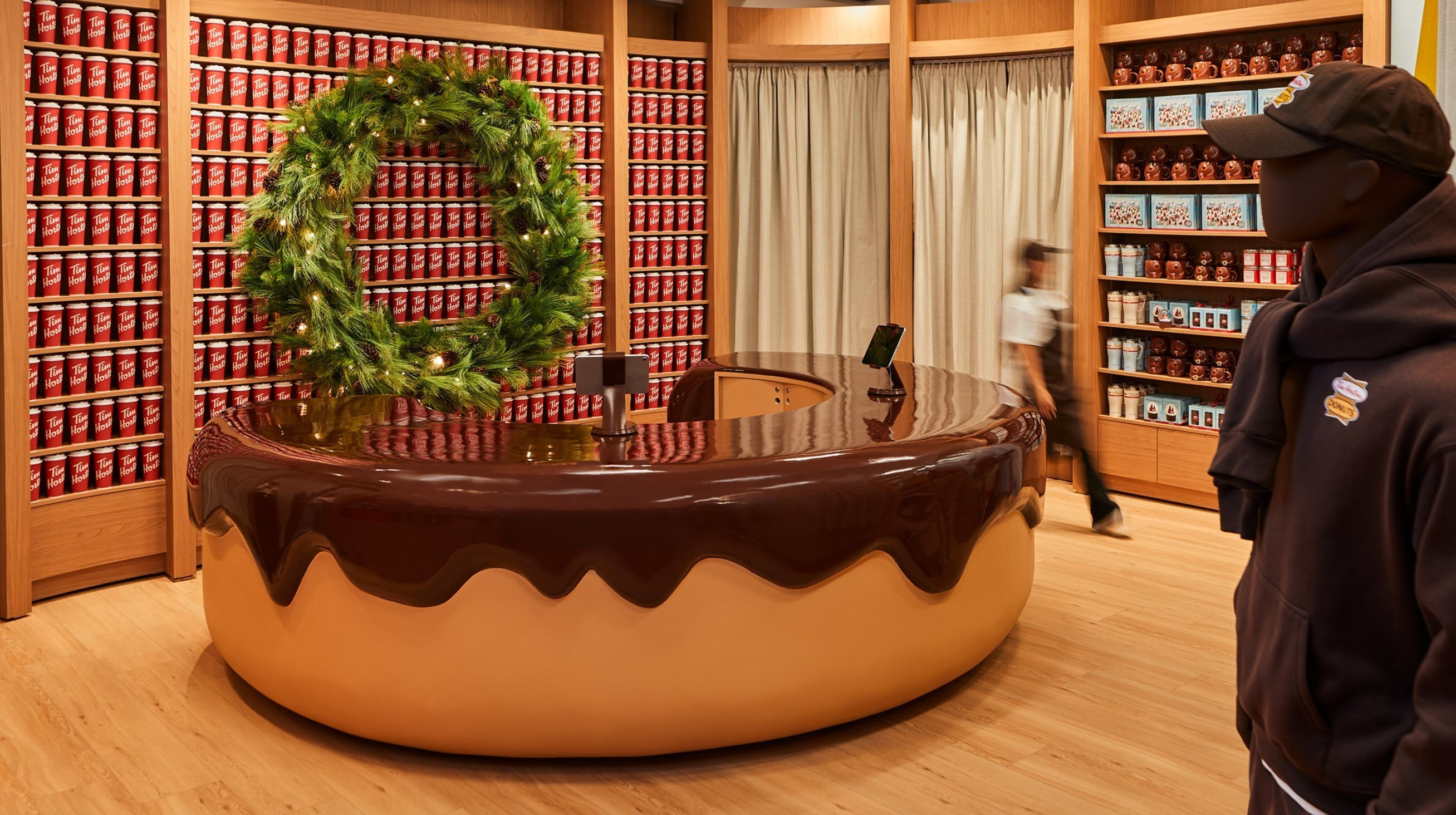
First-of-its-kind Tim Hortons pop-up merch store at the CF Toronto Eaton Centre (CNW Group/Tim Hortons)
The first-ever Tim Hortons TimShop pop-up merch store is now open at the CF Toronto Eaton Centre through the holidays with a wide range of Tims-inspired apparel and merchandise.
The TimShop pop-up is an extension of the popular TimShop.ca online store that launched in 2023, with an evolving selection of apparel, drinkware and other Tims merchandise, said the company.
Shoppers at the TimShop pop-up store will have the chance to experience some of the most popular TimShop.ca merchandise in person, along with this year’s limited-edition holiday collection featuring a range of sweaters, festive pajamas for the family, and other giftable items for Tims fans and tourists shopping for quintessentially Canadian souvenirs, it said.
Christie Song
“We’ve received amazing feedback about our TimShop.ca apparel and merch collections and we’re thrilled to be offering them to shoppers in-person at one of Canada’s most iconic shopping malls, a destination for locals and tourists alike,” said Christie Song, Head of Tim Hortons Retail.
“Our TimShop apparel and merch are inspired by the amazing food and beverages we serve in Tims restaurants across Canada and by the connection Canadians have with our iconic brand. We’re proud and honoured that so many Canadians consider Tims to be a part of their daily lives and launching this unique retail setting is another way for us to connect with our guests and share the holidays with them and their loved ones.”
First-of-its-kind Tim Hortons pop-up merch store is now open at the CF Toronto Eaton Centre through to the end of the holiday shopping season (CNW Group/Tim Hortons)
To celebrate the store’s opening, the TimShop Toy Truck – an interactive shopping experience featuring exclusive plushies inspired by popular Tims menu items – will also run at the CF Toronto Eaton Centre for a limited time, until Nov. 16, added the company.
The TimShop pop-up store and TimShop Toy Truck are located on level 1 of the CF Toronto Eaton Centre.
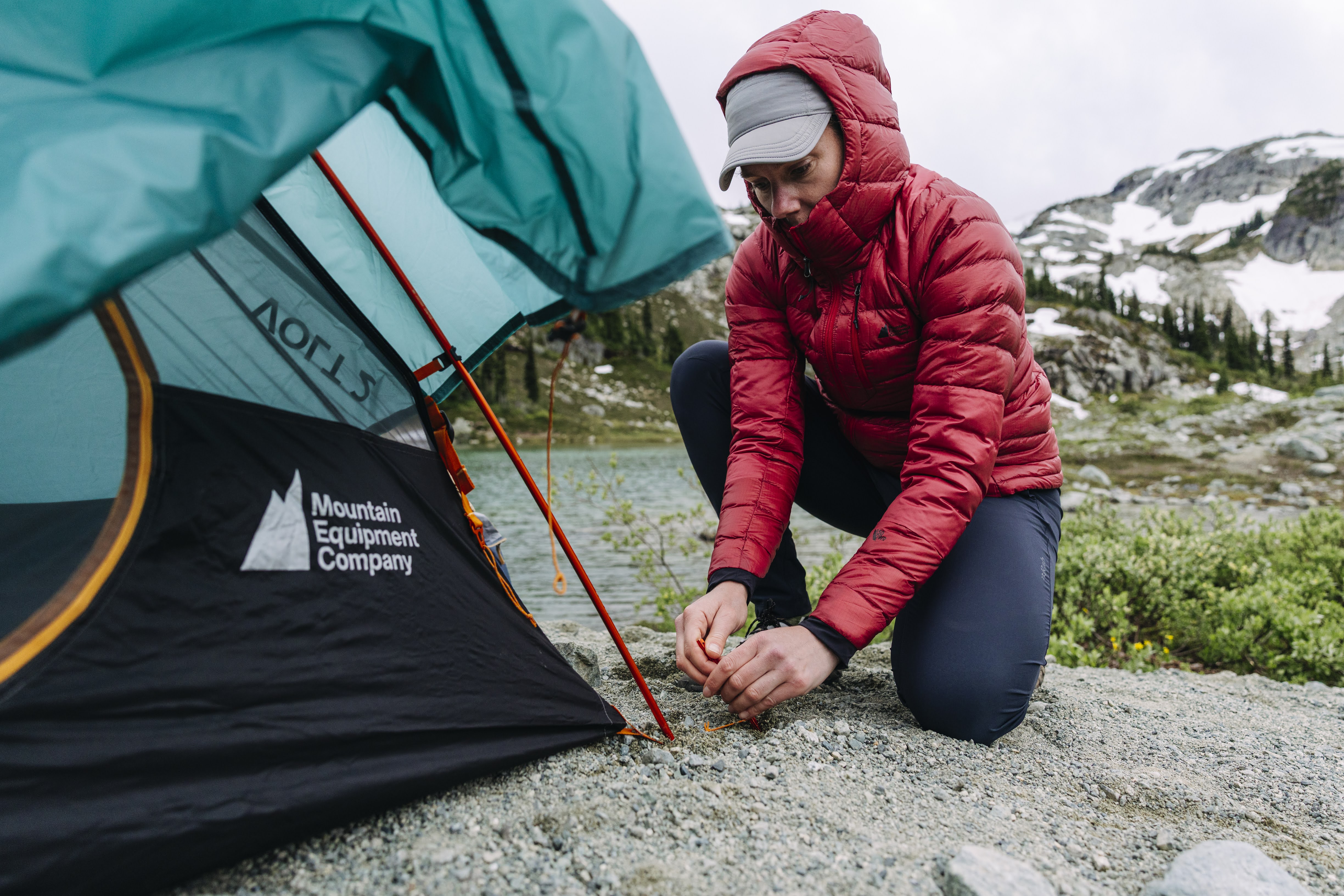
Mountain Equipment Company (MEC) is supporting Alberta’s outdoor community following the closure of Breathe Outdoors, formerly known as Campers Village, by honouring its gift cards and hiring several of the retailer’s staff in Edmonton and Calgary.
For a limited time, customers can redeem or transfer the balance of a Breathe Outdoors gift card to an MEC gift card of equal value at MEC’s Edmonton or Calgary stores. The initiative allows customers to access outdoor gear and expert advice while providing employment for some of Breathe Outdoors’ employees.
Following MEC’s return to Canadian ownership this year, the company has seen “positive momentum, fueled by a strong summer of camping, paddling, and close-to-home adventures,” according to the retailer. That success has placed MEC in a position to support the well-known Alberta business.
Peter Hlynsky
“We are deeply saddened by the closure of Breathe Outdoors, an iconic name in Alberta’s outdoor story,” said Peter Hlynsky, CEO of MEC. “As a fellow Canadian outdoor retailer, we know how much passion, resilience, hard work, and community connection goes into building a legacy like this.
“We’re fortunate to be able to step up and support Breathe Outdoors’ staff by welcoming some of them into the MEC family and support their customers by helping them gear up for the season ahead.”
Breathe Outdoors was a family-run business founded by the Bryant family and operated for more than 62 years, with two locations in Edmonton and one in Calgary. MEC said it recognizes the role the retailer has played in Alberta’s outdoor community and is proud to help carry that spirit forward.
“Breathe Outdoors and MEC have always shared the same mission, helping people get outside and enjoy the outdoors. If we didn’t have what a customer needed, we’d send them to MEC, and they did the same for us. Our customers are their customers, and together we’ve served this community for years. We are deeply grateful that MEC is stepping in to honour outstanding gift cards. It’s a gesture that shows their commitment to the people and places we’ve both been proud to serve,” said owners Ron and Terry Bryant.
Customers who redeem or transfer Breathe Outdoors gift cards to MEC gift cards this fall will have access to products from outdoor brands such as Arc’teryx, Patagonia, and Salomon, as well as MEC’s own label brand. MEC staff will provide guidance and advice, while customers can also participate in free clinics, workshops, and events that connect them with other outdoor enthusiasts.
Payroll employment in retail trade decreased by 4,600 (-0.2%) in August, bringing the overall decline from January to August to 24,200 (-1.2%), according to a recent Statistics Canada report.
“The decline over this period was driven by food and beverage retailers (-8,600; -1.6%) and general merchandise retailers (-7,200; -2.8%). On a year-over-year basis, payroll employment in retail trade was down 33,000 (-1.6%) in August 2025,” said the federal agency.
“Payroll employment also decreased in wholesale trade in August (-3,300; -0.4%), following little change in June and July. On a year-over-year basis, payroll employment in wholesale trade was down by 10,200 (-1.2%) in August, driven by declines in machinery, equipment and supplies merchant wholesalers (-3,500; -1.5%) and personal and household goods merchant wholesalers (-2,700; -2.6%).”
The number of employees receiving pay and benefits from their employer—measured as “payroll employment” in the Survey of Employment, Payrolls and Hours—was little changed (+3,300; +0.0%) in August, following an increase of 25,600 (+0.1%) in July. On a year-over-year basis, payroll employment was up 31,500 (+0.2%) in August 2025, reported Statistics Canada.
“In August, payroll employment increases were recorded in public administration (+5,000; +0.4%), construction (+2,300; +0.2%), administrative and support, waste management and remediation services (+1,600; +0.2%), and management of companies and enterprises (+900; +0.7%). These gains were offset by declines in retail trade (-4,600; -0.2%), wholesale trade (-3,300; -0.4%), professional, scientific and technical services (-2,600; -0.2%), and other services (except public administration) (-1,500; -0.3%),” explained the federal agency.
Meanwhile, job vacancies in Canada edged down to 457,400 (-11,300; -2.4%) in August, the lowest number of vacancies since August 2017 (435,500). On a year-over-year basis, job vacancies were down 82,100 (-15.2%) in August 2025.
Kids trick-or-treating at Halloween. Photo: HealthPark Paediatrics
Halloween night 2025 brought an unexpected clash of Canadian priorities — free candy versus baseball. As Jeff Doucette, General Manager of Field Agent Canada, said that this year’s Halloween involved a “ clash of priorities with free candy and Halloween trick-or-treating versus Game 6 of the World Series — and it seems like the Jays might have stolen the show.”
Even with the distraction of Major League Baseball’s biggest night, Field Agent Canada’s latest survey found that 81 percent of Canadian households still welcomed trick-or-treaters on October 31. The nationwide study, conducted among 1,091 respondents, offers one of the first detailed looks at post-Halloween consumer behaviour and participation.
Jeff Doucette
Fewer Trick-or-Treaters at the Door in 2025
According to the data, 47 percent of households reported fewer trick-or-treaters than in 2024, while 28 percent saw an increase and 25 percent said the numbers remained about the same. Doucette said the timing of Halloween coinciding with Game 6 may have reduced activity in some neighbourhoods, though regional enthusiasm remained high.
The survey also revealed that the first trick-or-treater arrived around 5:30 p.m., with the last ringing the doorbell near 8:00 p.m., providing a snapshot of when most families participated.
The West Leads in Visitors and Generosity
Regional differences were pronounced this year. Western Canada recorded the highest average number of visitors, with 56 trick-or-treaters per household, outpacing other parts of the country. Households in the West were also the most generous, handing out an average of 132 pieces of candy.
Atlantic Canada averaged around 42 visitors, Quebec 46, and Ontario 50. The results suggest Halloween participation remains strongest in family-oriented suburban areas, particularly in western provinces where communities are more likely to engage collectively in the tradition.
When it came to what Canadians handed out, chocolate led overwhelmingly at 86 percent, followed by candy (61 percent) and chips or Cheezies (31 percent). Smaller shares of households provided cookies, granola bars, or other snacks. The enduring popularity of chocolate reflects a familiar pattern for Canadian Halloween baskets, consistent with previous years of Field Agent data.
Walmart and Costco Dominate Treat Purchases
On the retail front, Walmart (38 percent) and Costco (35 percent) topped the list of where Canadians purchased their Halloween treats, followed by Superstore (24 percent), Maxi/No Frills (17 percent), and FreshCo (7 percent).
These findings underscore the strength of mass-market retailers in seasonal spending categories. The ability to buy large-format packages and recognized national brands appears to continue driving consumer preference. While the report did not analyze promotions or pricing, the results suggest strong early stock availability and consistent value messaging played key roles in these retailers’ dominance.
Halloween Retail Trends in Canada Remain Resilient
Despite lower visitor counts for many households, Halloween 2025 reaffirmed its importance in Canadian retail culture. From coast to coast, the tradition continues to blend community participation with predictable seasonal spending on confectionery, snacks, and décor.
As Doucette’s team at Field Agent Canada continues to track household behaviour across key retail moments, Halloween remains a valuable barometer of consumer mood, showing how Canadians balance celebration, cost-consciousness, and even a bit of baseball fandom on one of the busiest nights of the year.
Canada’s tourism industry experienced a record-breaking summer in 2025, generating nearly $60 billion in revenue between May and August, according to Destination Canada.
The Crown corporation reported recently that the $59-billion total marked a 6 per cent year-over-year increase, driven by both domestic and international travel. The organization said the strong season “successfully spread economic benefits across the entire country.”
“The record revenue was driven by a strong base of Canadian travellers who chose to explore our country like never before, with the highest domestic growth coming from Canadians travelling outside of their home province,” Destination Canada said in a release.
Of the total, $44.4 billion came from Canadian travellers and $14.6 billion from international visitors. Overseas markets saw the biggest surge, with international visitor spending up 10 per cent and visitors spending more per trip overall.
Destination Canada described the growth as a “truly national economic contribution,” noting that 89 per cent of Canadian regions posted year-over-year gains. Fifty-nine per cent of those regions outpaced growth in major metropolitan areas. Atlantic Canada was cited as a standout performer, recording some of the highest growth rates in the country.
Domestic tourism spending rose 7 per cent over last year, with inter-provincial travel seeing the largest jump. The accommodation sector also saw broad gains, with national hotel occupancy reaching 80.7 per cent in August — the highest since 2014.
Both hotel and short-term rental occupancies increased despite expanded supply, a “clear sign of stronger travel demand,” the organization said. Revenue per available room (RevPAR) rose 6.6 per cent over the summer. Manitoba, Vancouver Island, Saskatchewan, Nova Scotia and New Brunswick recorded the sharpest occupancy increases.
“The overall strength, resilience, and geographic reach achieved this summer point to a new phase of opportunity for Canada’s tourism sector,” Destination Canada said.
Destination Canada said its $59-billion estimate was based on data from its Lodging Aligned Spending Report and Statistics Canada’s National Tourism Indicators, validated with accommodation industry statistics.
Inside a Loblaw Grocery Store (Image: Dustin Fuhs)
We’re now in November, and Canada’s so-called grocery “blackout period” has begun — that stretch when major grocers ask suppliers to hold off on price increases until February 1. On paper, it’s meant to stabilize prices during the holiday season. But in practice, consumers lose, big time.
Experts often blame inflation on global events, extreme weather, or the exchange rate. But much of our food price instability originates closer to home — in the way food suppliers and grocery retailers negotiate their contracts. An analysis of twenty-five years of Statistics Canada data shows a clear rhythm: food inflation reliably spikes in October and again in February. Since 2000, prices have risen an average of 0.05 percentage points more in October and 0.03 points more in February than in other months — the most inflationary periods of the year.
This is no coincidence. October is the final month before the blackout period. In those weeks, suppliers rush to finalize new contracts with Loblaw, Sobeys, Metro, Walmart, and others, seeking to pass along higher costs for transport, packaging, and commodities. Retailers resist to protect their margins and market position. The tug-of-war ends with adjustments that flow straight into the CPI data almost every year.
Take 2022, one of the most turbulent years on record. Food inflation jumped from 5.1 per cent in January to 8.1 per cent by June, eased slightly through summer, then spiked again in October as suppliers locked in final prices before the freeze.
Once the holidays pass, the cycle reverses. February, the first full month after the blackout, ushers in a fresh round of increases as new supplier contracts take effect and grocers restock inventories. The Canadian Dairy Commission’s annual February adjustment adds further pressure, often setting the tone for other supply-managed sectors. In February 2022, food inflation rose a full percentage point — from 5.7 to 6.7 per cent — largely driven by contract renewals and regulated price hikes.
The PepsiCo-Loblaw dispute of that same year illustrated the fragility of these relationships. PepsiCo briefly halted shipments after Loblaw rejected new wholesale prices, leaving store shelves patchy and consumers caught in the middle. The incident revealed what happens when corporate brinkmanship replaces coordination.
This pattern — October surge, holiday stability, February surge — has endured for decades. It’s not the weather or the war in Ukraine; it’s how the system itself is built. Consumers pay the price for volatility baked into the supply chain’s architecture.
That’s why the proposed Grocery Code of Conduct, developed jointly by industry and provincial governments, matters. It aims to formalize how cost increases are communicated, how disputes are handled, and how much notice suppliers must give before passing along hikes. By introducing transparency and fairness, the Code could help smooth out these seasonal swings. It won’t erase inflation — global markets still move — but it could make prices more predictable for everyone from farmers to families.
The numbers tell a simple story. Over the last quarter-century, October and February have been the most inflationary months for food in Canada, while December consistently records the steepest average price drop thanks to holiday promotions. This isn’t random; it’s structural.
The Grocery Code of Conduct isn’t only about supplier fairness. It’s about giving Canadians a steadier, more transparent food system. We don’t need miracles — just predictability. Implemented properly, the Code could replace volatility with stability and conflict with collaboration.
Retail Insider is streamlining its Canadian retail news from around the web to include a handful of top news stories that can be viewed quickly during the day. Here are the top stories from the past 48 hours.
Alex Tilley, the Canadian entrepreneur and inventor who created one of the nation’s most recognizable fashion and adventure accessories, passed away on October 28, 2025, at the age of 87. Best known as the founder of Tilley Endurables and the designer of the world-famous Tilley Hat, he leaves behind a lasting legacy rooted in craftsmanship, adventure, and authenticity.
Born on January 8, 1938, in Mount Albert, Ontario, Alex Tilley’s path to entrepreneurship was far from direct. Raised in Kitchener and Sudbury, he overcame a childhood brain injury and learning disabilities before earning a BA in Economics and Psychology at the University of British Columbia. His early career saw multiple failed attempts at business, but persistence ultimately paid off.
In 1980, while pursuing his passion for sailing, Tilley grew frustrated with the poor quality of existing hats. Taking matters into his own hands, he designed one that could withstand wind, water, and wear and, in the process, gave birth to the now-iconic Tilley Hat. Friends soon began requesting hats of their own, and what began as a hobby quickly evolved into Tilley Endurables, a full-fledged business manufacturing clothing and accessories designed for adventure.
Reinventing Practicality with Purpose
Tilley’s philosophy centred on combining utility and durability with a sense of humour and integrity. Each product was backed by a lifetime guarantee, reflecting his belief that customers should never have to replace a Tilley item because of poor quality. His legendary marketing stories, including tales of hats that survived being trampled by elephants or recovered after ocean voyages, became part of Canadian retail folklore.
Over the decades, Tilley Endurables built a devoted following among travelers, adventurers, and outdoor enthusiasts around the world. The brand’s hats were even supplied to Canadian soldiers during the Gulf War and worn by explorers like Sir Edmund Hillary.
July, 1992, Field and Stream Ad for Tilley Endurables
Building a Canadian-Made Legacy
Operating from Toronto for more than 35 years, Tilley prioritized domestic manufacturing and job creation. He cultivated a team dedicated to producing apparel and accessories that embodied Canadian craftsmanship. By the late 1980s and 1990s, Tilley Endurables had expanded internationally, operating company-owned stores in Canada, distributing in the United States, and shipping to countries like Australia, Japan, and the United Kingdom.
The company became a pioneer in direct-to-consumer retailing with its catalog business, which reached thousands of loyal customers worldwide. Each catalog featured Tilley’s distinctive voice — humorous, honest, and unfailingly focused on quality.
Transition and Retirement
In 2015, Alex Tilley sold his company to the Canadian arm of UK-based Hilco Capital. Having achieved his vision, he retired to Muskoka, Ontario, where he devoted time to charitable work and community causes. Known for his optimism and generosity, he remained a source of inspiration to many.
His biography, The Endurable Alex Tilley by Nancy E. Beal, chronicles his life story and captures his remarkable resilience.
A New Era for a Heritage Brand
Following the sale, the Tilley brand entered a new chapter of evolution and growth. In 2018, Toronto-based investment firm Gibraltar & Company, led by Joe Mimran, acquired the brand. Mimran, known for founding Club Monaco and Joe Fresh, assumed the role of chairman and creative director, working closely with partner Frank Rocchetti and designer Kim Newport-Mimran.
Under Gibraltar’s ownership, Tilley underwent a thoughtful modernization while staying true to its heritage. Product design was refreshed with new silhouettes, technical innovations, and colour palettes appealing to younger consumers. The brand also expanded into winter apparel, performance outerwear, and loungewear.
Joe Mimran
The Spirit of Endurability Lives On
Today, Tilley stands as a revitalized Canadian lifestyle brand. Under Gibraltar’s leadership, the brand is supported by a strong e-commerce business and modernized retail presence.
The company remains headquartered in Toronto and continues to produce its signature hats locally. Joe Mimran, Chairman and Creative Director of Tilley, shared a heartfelt statement marking Tilley’s passing.
“It is with great respect and admiration that I share the news of Alex Tilley’s passing at the age of 87.
Alex was more than an entrepreneur — he was an inventor, an adventurer, and a true Canadian original. His quest to create a better hat — one that could endure every adventure — sparked a brand that became synonymous with quality, craftsmanship, and the spirit of exploration.
He built Tilley Endurables with an unwavering commitment to excellence, standing behind his work with a lifetime guarantee and a philosophy that combined practicality with purpose. That same spirit continues to guide us today as we evolve the brand for new generations while staying true to its timeless values of integrity, durability, and authenticity.
On behalf of the entire Tilley team, we extend our heartfelt condolences to Hilary and the Tilley family. Alex’s passion, humour, and integrity will always remain at the heart of the Tilley story.”
“A good man who made a better hat.” — Joseph Mimran, Chairman, Tilley
Designer Kim Newport-Mimran closes the Tilley Sport fashion show in Toronto on Tuesday, October 28. Photo: George Pimentel Photography
Tilley Sport and the Next Generation
The Tilley name continues to expand under Kim Newport-Mimran, who leads Tilley Sport, the brand’s performance-focused division. Merging technical innovation with refined design, Tilley Sport reflects the modern evolution of the brand — one that celebrates its founder’s adventurous spirit while embracing contemporary style.
On October 28, 2025, the same day of Tilley’s passing, Tilley Sport presented its Spring/Summer 2026 collection at a high-profile runway show in Toronto. The event showcased luxury technical fabrics and elevated performance wear designed for both sport and leisure. Newport-Mimran’s creative direction embodies the same dedication to durability and quality that defined Alex Tilley’s original vision.
Remembering the Man Behind the Hat
Alex Tilley’s story is one of perseverance, invention, and the power of authenticity. His entrepreneurial journey mirrors the essence of Canadian innovation — practical, purpose-driven, and quietly world-class. Through Tilley Endurables, he not only built a global brand but also championed a philosophy of craftsmanship and integrity that continues to inspire.
Though the man himself is gone, his influence lives on in every Tilley Hat worn on a sailboat, hiking trail, or city street around the world. His legacy is stitched into the brand’s DNA, a testament to his belief that quality and care never go out of style.
As Joe Mimran reflected, “Alex was more than an entrepreneur — he was an inventor, an adventurer, and a true Canadian original.”