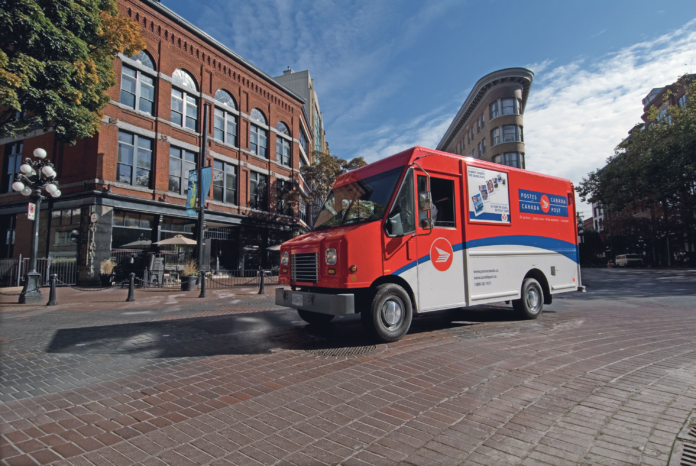
“The government’s announced reforms to modernize Canada Post are long overdue and desperately needed. It is extremely disappointing that the union has chosen to punish Canada Post’s remaining customers rather than work with the corporation and government on a plan to implement the critical changes needed to make the postal service viable,” said Dan Kelly, CFIB president.
“Ottawa must step in immediately to end the strike and push forward with the announced reforms.”
Last year’s strike, which lasted from November 15 to December 17, cost small businesses over $1 billion, said the CFIB.
According to CFIB data, 13% of small businesses have stopped using Canada Post since the last strike. Nearly two-thirds said they would do the same if there’s another strike.
“Small businesses are one of the last groups of profitable customers for Canada Post. Every time there is a service disruption, more and more businesses leave Canada Post for good. The strike will make the job of saving Canada Post much more difficult,” said Kelly.
CFIB said its Business Helpline is receiving many frantic calls from business owners concerned about the return to strike action. These include:
• A native plant nursery in Alberta has live plants in the mail that will die before they reach their destination. The company says it will have to replace the products and reship them at a more expensive rate. • A print shop in British Columbia has seen its revenue evaporate with no way to get its products to customers and no viable option to move greeting cards, small art prints or cultural goods by freight. • A dairy farm in Ontario has moved most of its payments online after the last strike but currently has a cheque worth thousands of dollars delayed in the mail. • An architecture firm in Alberta that relies on Canada Post for 85% of its accounts receivables and payables is concerned about paying consultants, tradespeople and staff while cheques are delayed in the mail.
Corinne Pohlmann
“It’s been a tough year for small business owners, with rising costs and massive uncertainty over trade, and so we desperately need some stability as we begin the critical holiday shopping season,” said Corinne Pohlmann, executive vice-president of advocacy at CFIB. “We urge the federal government to quickly step in and ensure Canada Post workers are back on the job, so businesses can count on reliable services while reforms are being implemented.”
Small business owners impacted by Canada Post strike are encouraged to share their stories by visiting cfib.ca.
The CFIB is Canada’s largest association of small and medium-sized businesses with 100,000 members across every industry and region.
Canadian retailers are experiencing an unexpected surge in discretionary spending during the first half of 2025, defying subdued consumer confidence and economic uncertainty. According to JLL’s latest Canada Retail Market Dynamics report, discretionary goods sales have accelerated significantly compared to 2024, driven by the “Buy Canadian” movement and resilient back-to-school shopping patterns.
Key points:
• Discretionary Spending Surprise: Despite economic headwinds, Canadian consumers increased spending on jewelry (up 16% year-over-year), furniture, and luxury goods, suggesting stronger-than-expected holiday season potential.
• Historic Supply Shortage: Canada’s retail development pipeline has shrunk to historic lows, with Vancouver and Toronto posting some of the tightest availability rates in North America at just 1.8% and 1.6% respectively.
• “Buy Canadian” Movement: Grocers report shifted consumer behavior with shelves now prominently featuring “Made in Canada” tags, as retailers leverage local suppliers to navigate U.S. trade tensions.
• Experience-Driven Expansion: Dining, entertainment, and fitness services comprise over 50% of new store announcements in H1 2025, with dining alone accounting for more than 40% of retail expansion.
Photo: Andrea Piacquadio
“The broader economic outlook for retail is cautious. While earlier interest rate cuts provided relief and drove discretionary spending, the economy is now facing headwinds from the trade dispute with the U.S., a recent contraction in GDP, and rising unemployment,” said the JLL report. “After maintaining positive momentum through the rest of 2025, sales growth for retail and food services is projected to slow in 2026 due to these headwinds before accelerating again as the situation stabilizes in 2027.
“Retail real estate market conditions remain favourable for landlords, as tenants are taking longer to find quality retail spaces. Landlords hold leverage in negotiations, can be selective with tenants, and can command higher rents while maintaining high occupancy. However, there are signs of market softening, and rental growth has now fallen below the historical average.
“New supply will remain constrained for the foreseeable future. New construction has fallen to a historic low, and the demolition of older malls has kept available space tight at just 2.2 percent. Additionally, landlords are considering the redevelopment of spaces formerly occupied by Hudson’s Bay for residential use, removing retail inventory,” added JLL.
“Dining accounts for the most notable site searches across major markets, suggesting that the momentum for restaurant openings will continue. Just as retail sales per capita are expected to rise, restaurant spending per capita is set to increase in the next few years.”
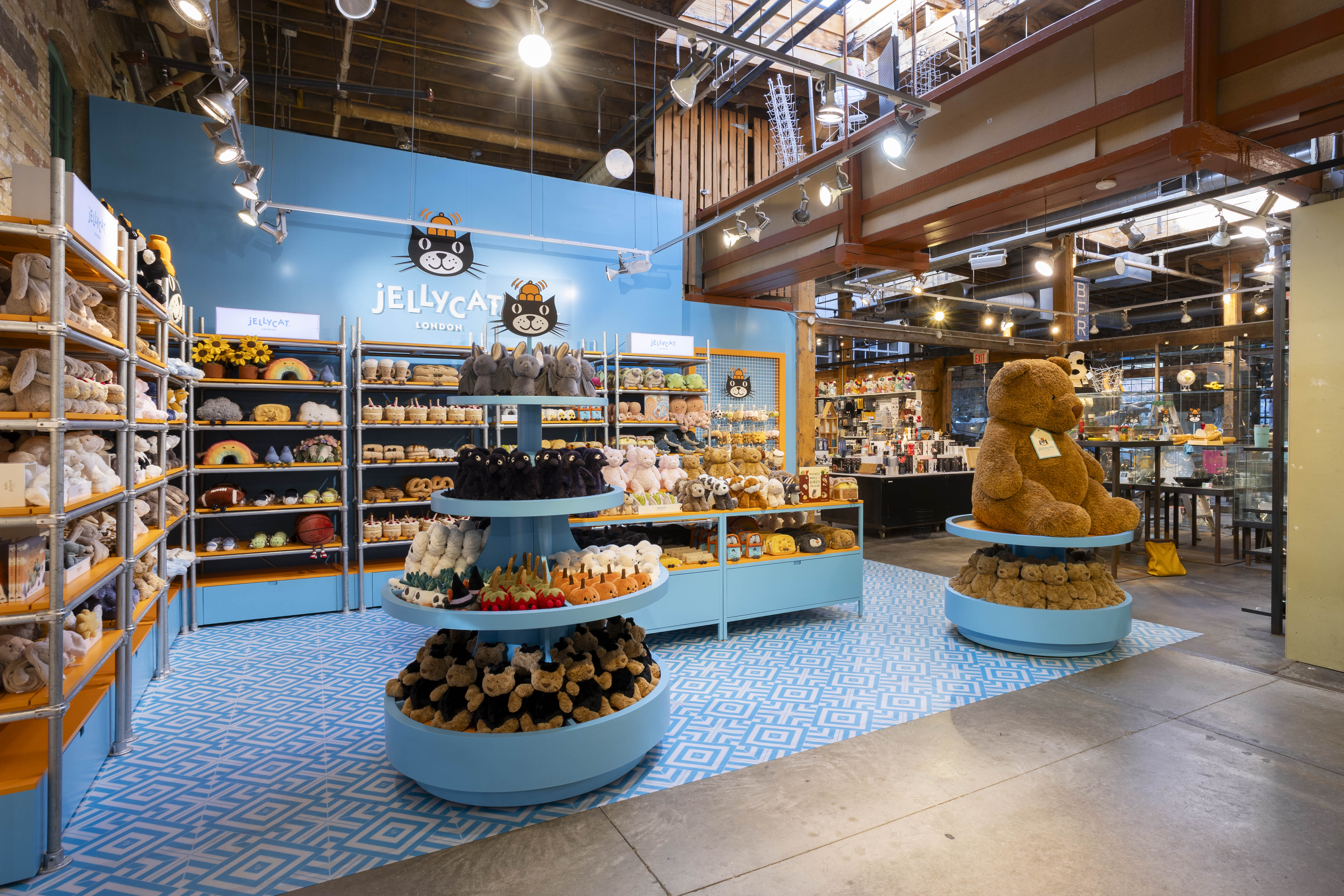
The brand-new 400-square-foot space will debut with 170 product SKUs including Jellycat’s Halloween collection, featuring spooky-yet-sweet characters perfect for the season, alongside the brand’s beloved core assortment of whimsical super-soft favourites. Fans will be able to explore Jellycat’s imaginative world in a permanent retail home for the very first time in Canada.
“And the magic doesn’t stop there: as the festive season approaches, Jellycat’s highly anticipated Christmas collection will arrive in-store, just in time to make holiday gifting even more joyful,” said the company.
“Known for its curated selection of innovative design objects and unique finds, Bergo Designs in The Distillery District has long been a must-visit Toronto destination. Now, with the arrival of Jellycat, visitors can enjoy a playful new world of charm, creativity, and cuddly companions – whatever the season.”
Robyn Berman
“As an independently owned small business, we’re so excited to offer Jellycat fans an incredible assortment of Jellycat, the largest in Canada!” said Robyn Berman, owner of Bergo Designs. “For almost 20 years, Bergo Designs has become known as the ‘go to’ store for unique, well-made, design forward gifts, so collaborating with Jellycat feels like a perfect match.”
The new Jellycat space will feature the brand’s most loved classics alongside the latest seasonal collections, making it a must-visit destination for gifting, collecting, and discovering the unexpected joy Jellycat is known for worldwide.
Canadian owned and operated Bergo Designs is a 10,000 square foot gallery of industrial design, featuring creations of local and internationally recognized designers, architects and artists. Opened in 2006 by accredited Interior Designer Berman, Bergo Designs reflects how form and creativity meet every day function. Located at 28 Tank House Lane in Toronto’s Distillery Historic District, the store offers distinctive lifestyle items, gifts, contemporary jewellery and watches.
“Bergo has been a proud Jellycat partner since 2014. What started with just a few items, has grown into the largest assortment in Canada. My love of design and giftware made Jellycat a natural fit for us. At Bergo, our philosophy has always been about bringing joy through playful, beautifully crafted design, which aligns perfectly with Jellycat’s mission of sharing joy. Jellycat is more than a toy; it’s a luxury brand with something for everyone, and that’s what Bergo is about too, curating gifts that everyone will love,” said Berman.
“It’s my view that independent retailers succeed by building genuine, long-term relationships with the brands they believe in. We can move faster, be more creative, have more flexibility and build communities in ways big box stores struggle with. With Jellycat, we invested early, showcased the brand consistently, and proved Toronto has a passionate customer base. I believe global brands recognize when small businesses put in that kind of care and commitment. It builds trust. This trust opens the door to partnerships like this one, with Jellycat.”
She said Bergo is a truly unique, pedestrian-only destination in the historic Distillery District.
“As a major retailer and anchor of Toronto’s famous Distillery Winter Village — formerly known as the Toronto Christmas Market — we are perfectly positioned for the holiday season. Developments like this are exactly what our guests are looking for, and we always strive to showcase the best assortments throughout the holidays. Bringing the largest and most coveted Jellycat collection to Toronto as a shop-in-shop is a first for the city and country, and in our opinion, it raises the bar for independent retail showing how small, curated destinations can create excitement, attract visitors, and redefine what the city’s retail landscape can offer,” explained Berman.
“As an interior designer, I’ve always believed that design should be both functional and beautiful. After working in exhibit, residential and commercial design, I realized that opening my own shop had always been a dream that was inspired in part by my family, who owned a retail store. In 2006, I opened Bergo Designs with the goal of creating a space where people could discover unique, well-designed items that bring joy to everyday life, a dream come true. Over the years, we’ve carefully curated a collection that reflects this philosophy, focusing on quality, creativity, and thoughtful design. For me, it’s always been about more than selling products; it’s about sharing a vision of design that makes life a little brighter and more inspired.”
The Toronto Blue Jays’ win of the American League East title is expected to generate a significant economic lift for Canada’s hospitality and retail industries. The surge in fan excitement could drive increased spending at restaurants, hotels and merchandise retailers across the country.
With many Canadians emotionally invested in the team’s championship run, restaurants and sports bars may see a rise in traffic, while hotels in the Greater Toronto Area could benefit from out-of-town visitors. Sales of team merchandise such as jerseys and hats are also expected to climb as fans rally behind the Blue Jays’ postseason journey.
“I think that the Toronto Blue Jays winning the American League East title represents a great opportunity for Canadian restaurants, hotels and merchandise stores,” said Bruce Winder, retail analyst and author.
Bruce Winder
“At a time when Canada needs a win or at least the hope of a win, this development creates some much needed sales momentum, especially in the restaurant industry that has shown signs of softening of late. This may get consumers out of their own kitchens and into sports bars to celebrate the game with fanfare.
“Hotels too may experience an uplift in the GTA as fans travel from out of town to catch a game. I think Canadians from coast to coast are invested emotionally in the Jays and seeing them live and contending for a championship may be a once-in-a-generation event.
“Finally, merchandise vendors will get a much needed boost from sales of hats, jerseys, banners and so forth. Suppliers will be scrambling to get product into the country and ride the sales crest for the 2025 championship run.
“It’s been a long time since Canada has had a championship team and a potential win by the Jays will benefit not only our economy but our confidence as well. “We don’t know how long this run will last but the longer the better and bigger the benefit to the hospitality and retail sector.”
“Not unlike the Canadian NHL team in the playoffs, we have spikes. Jays’ paraphernalia will sell; everyone wants to have memorabilia of a period in time to say they were there. Pre- and post-game dining and entertainment options around the stadium for in-person attendees will be in high demand,” he said.
“Media and streaming will flourish for those from home. Takeout and delivery will surge, including snacks from the grocers and convenience stores.
“Betting on the games will also see a boost. I would also expect that collectibles will trade hands with those who know what they are looking for.
“Sports brands have a life of their own, especially when there is an expectation or hope that their team will make it all the way.”
Vividata’s SCC | Sports 2025 study found that more than 73 per cent of Canadian sports fans purchased merchandise in the past year, spending $3.2 billion, and the Jays’ postseason push is when that passion peaks — jerseys old and new, caps on heads from Ontario to British Columbia, and flags flying from balconies and car windows.
Pat Pellegrini
“Our data shows Blue Jays fans may skew older, but their passion is as strong as ever,” said Pat Pellegrini, President & CEO of Vividata. “They follow the team game after game, they support the stars, and they are ready for another October. How can you not be romantic about baseball?”
The Blue Jays command one of the largest fan bases in Canadian pro sports, with 6.3 million fans nationwide — more than 70 per cent of all MLB fans in the country. Nearly half (41 per cent) live outside Ontario, reinforcing the Jays’ position as Canada’s team. To put that in perspective, Jays fandom is almost 15 times larger than Yankees fans in Canada (430,000), and it dwarfs Red Sox, Cubs and Tigers fans combined.
For the first time since 2016, playoff baseball beyond the wild card round is coming to Toronto — and the pre-game party is going to be rocking across the street from the stadium.
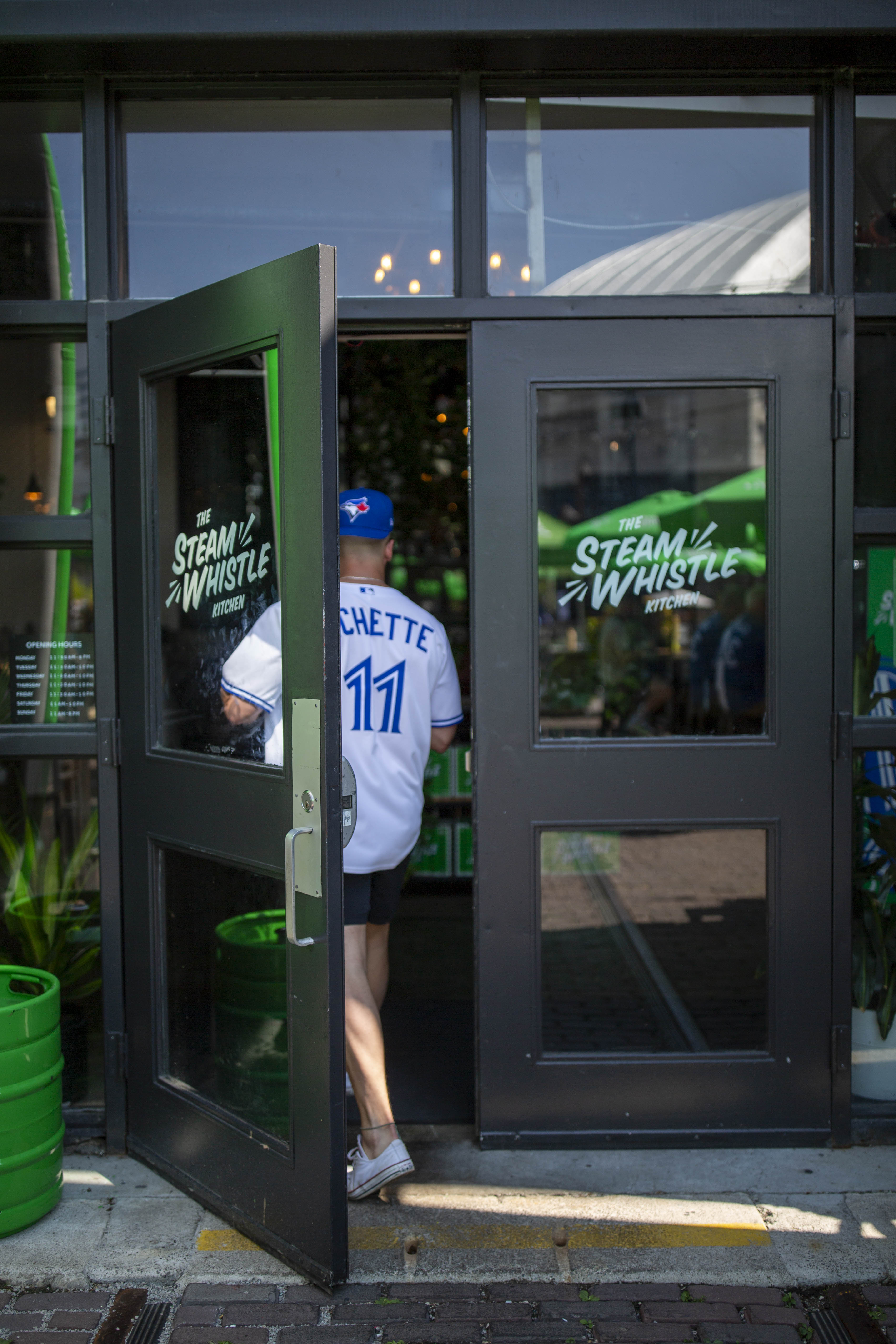
Steam Whistle Brewing, home to the historic Roundhouse on Bremner Boulevard, is transforming into Toronto’s playoff hub with tailgate parties before every home playoff game, and for the first time, watch parties inside “The Bird’s Nest” so fans without tickets can still join the action. It kicks off with the first game of the Division Series on Saturday.
Greg Taylor
“The best seats may be in the ballpark, but this October the second-best place to cheer on the game is just outside the gates — at Steam Whistle and in Roundhouse Park,” said Greg Taylor, Co-Founder and CEO of Steam Whistle Brewing. “A beer and a burger to go, the game on a big screen and legal cheers in the park, Steam Whistle is Toronto’s playoff hub, with or without a ticket.”
The Steam Whistle tailgate party starts three hours before the first pitch. Free and open to all, the tailgate offers fans a fun, family-friendly event to get ready to cheer on the home team. Thousands of fans filtered through the Roundhouse ahead of home games throughout the regular season, and Steam Whistle is excited to celebrate the return of playoff baseball to Toronto.
The tailgate party features a full bar and food menu, including ballpark staples like hot dogs, burgers, chips and peanuts with vegan options available. People can also enjoy an ice-cold Steam Whistle pilsner, on tap or in cans to go.
Amazon says it is ramping up for the holidays with plans to hire more than 7,000 employees in seasonal roles across the company’s operations network in Canada while increasing the average hourly wage for eligible employees to $24.50 – a 4.3% increase over 2024 wages. It will also add to its leading workplace benefits package by introducing the Employee Prime Benefit to eligible frontline employees in Canada by the end of 2025.
Hiring for the 7,000 seasonal jobs will begin in October and continue through December, with positions located at Amazon’s fulfilment centres, sortation centres, and delivery stations from coast-to-coast. Seasonal roles across Amazon’s operations network include stowing, picking, packing, sorting, and shipping customer orders, said the company.
“By creating thousands of new seasonal roles and investing in compensation and workplace benefits, we’re providing meaningful employment opportunities that can lead to long-term careers at Amazon. We’re proud to offer competitive pay, comprehensive benefits from day one, and a supportive environment where everyone can thrive.”
Cassandra Radovich
“I’ve seen firsthand how a seasonal position can grow into a rewarding long-term career at Amazon,” said Cassandra Radovich, General Manager at YHM1, an Amazon fulfilment centre in Hamilton, Ontario. “Many of Amazon’s current leaders began in entry-level seasonal roles and found opportunities to advance within the company. What makes Amazon unique is the multiple career paths available for everyone willing to take advantage of opportunities to learn and grow.”
Open seasonal roles are posted on hiring.amazon.ca throughout the holiday season and fill up quickly, and job seekers are encouraged to check back regularly for updates, said the company. Individuals interested in learning more about what happens at an Amazon fulfilment centre can sign up for a free tour of a building near them by visiting Amazontours.com.
“The seasonal hiring campaign comes as Amazon confirms new investments in its compensation and workplace benefits. This year alone, Amazon is investing more than CAD $110 million toward pay increases for eligible customer fulfilment and transportation employees. Beginning September 28, Amazon has raised its average hourly base wage in Canada to $24.50 per hour—up from $23.50 in 2024—representing a 4.3% year-over-year increase. This pay increase means frontline Amazon employees working full-time will earn a minimum annual salary of $50,960,” it said.
Photo: Amazon
“Additionally, through Amazon’s step plan compensation model, eligible hourly full- and part-time employees can count on planned pay increases every six months until their 24-month anniversary. They receive another increase at month 36, creating a clear path for earnings growth based on tenure.
“Amazon is enhancing its workplace benefits package in Canada by giving eligible frontline employees Prime memberships at no additional cost after 90 days of employment starting by the end of 2025. This new benefit gives employees access to the full suite of Prime services, including fast and free delivery; exclusive access to deals and shopping events like Prime Day and Prime Big Deal Days; Prime Video streaming; ad-free listening of millions of songs and podcasts episodes with Amazon Music Prime; Prime Reading’s library of books; gaming benefits with Prime Gaming; unlimited photo storage with Amazon Photos; and a free DashPass membership.”
It said the new Employee Prime Benefit adds to Amazon’s existing workplace benefits package for full-time employees, which starts on day one of employment and includes extended health, dental and vision benefits that provide additional coverage beyond provincial health plans (including massage therapy, chiropractic treatment, acupuncture, physiotherapy, vision care and coverage for prescription drugs); an RRSP savings plan; financial, mental and physical health resources; and more.
“Amazon employees with at least 90 days of tenure are also eligible for the enhanced Career Choice program, through which the company pre-pays 100 per cent of tuition, up to a yearly maximum, towards a certificate or diploma in qualified fields of study, including truck driving, data analytics, and cybersecurity. Eighteen educational institutions across Canada are partnered with Career Choice, including Sheridan College, Algonquin College, Western Community College, and the Toronto Truck Driving School,” added the company.
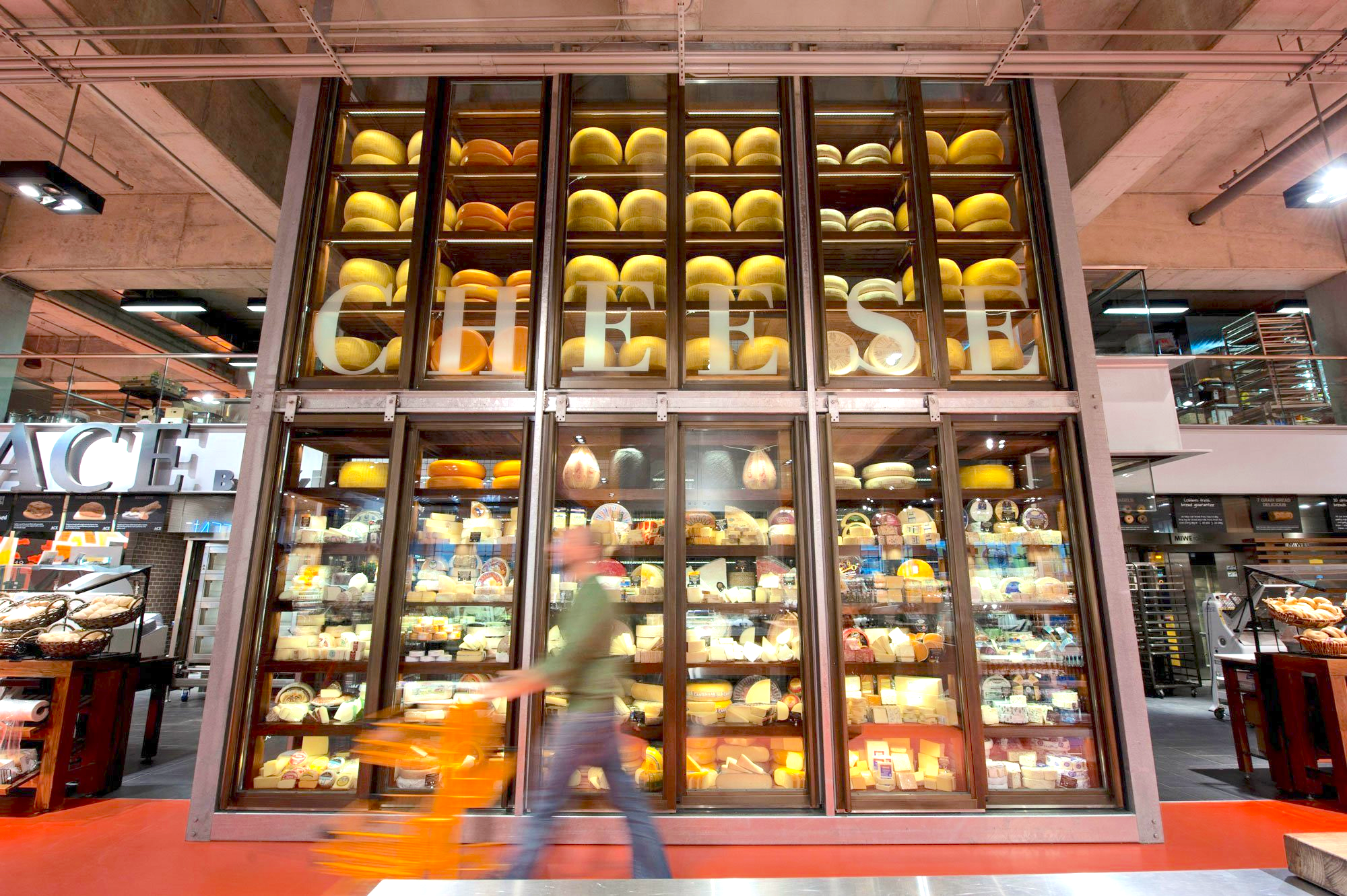
'Wall of cheese' at a Loblaws store in Toronto. Photo: Loblaws
For decades, Canada’s supply management system has acted as both shield and stabilizer for the country’s dairy sector. By regulating production, fixing quotas, and limiting imports through tariff rate quotas (TRQs), the model has provided farmers with stable incomes, preserved rural communities, and sustained a form of food sovereignty. But as the Globe and Mail recently reported, Ottawa is now considering regulatory changes that could allow more U.S. dairy products onto Canadian shelves — a signal that the system is under growing strain.
The timing is strategic. With the 2026 review of the United States–Mexico–Canada Agreement (USMCA) looming, the federal government is looking for ways to ease one of Washington’s most persistent irritants: access to Canada’s dairy market. Yet the conversation cannot simply be reduced to placating the United States. It raises a deeper, more uncomfortable truth: Canada’s dairy sector, and the supply management model that underpins it, cannot remain frozen in time.
A Legal Shield With Cracks
Officially, the federal government insists that supply management is sacrosanct. In 2023, Parliament even passed legislation meant to prevent future governments from negotiating away additional access to supply-managed goods. In practice, however, this law is largely symbolic. Ottawa can change how existing TRQs are allocated without ever reopening USMCA. Shifting licences from processors to retailers such as Loblaws, Costco, and Metro would effectively open the border wider to U.S. dairy products — a change that Washington has been demanding for years.
This is not a technical footnote. It is a rebalancing of who controls what comes into the Canadian market. Giving retailers direct access would allow American milk and cheese to bypass Canada’s processors, disrupting the delicate structure of a sector built around limited, highly managed supply.
Dairy Cows. Photo: Canadian Dairy Commission
Promises Versus Reality
The political narrative has been one of steadfast defence. Back in 2009, Dominic LeBlanc promised Parliament that “the security and future of supply management will be protected.” In 2016, he reiterated that “unlike others who would like to abolish it, we support our Canadian supply management.” Yet only four years later, USMCA carved out greater access for U.S. exporters, proving that supply management had been compromised despite assurances to the contrary.
Today, Ottawa repeats the mantra that the system “will never be on the table.” But the reality is that it already has been — not only under the Liberals, but under the Conservatives before them. The inconsistency is less about party politics than it is about the system itself: a rigid structure struggling to withstand global trade pressures.
Consumers Versus Producers
Advocates of change highlight the consumer benefits: lower prices and greater product variety at a time when food inflation continues to erode household budgets. That narrative resonates with the public and provides cover for policymakers.
But the economic costs are long-term. Supply management has insulated farmers and processors for decades, but it has also limited innovation, discouraged efficiency gains, and placed Canada at odds with trading partners. Billions in compensation packages may soften the blow of concessions, but subsidies are no replacement for competitiveness. They do not modernize value chains or help Canada adapt to a globalized food economy.
Time to Confront the Bigger Picture
What Ottawa faces is not simply another round of concessions to Washington. It is a reckoning with whether the supply management model remains viable in its current form. The U.S. president — whether Donald Trump or anyone else — will continue pressing for access, because the system itself runs counter to the spirit of liberalized trade. Pretending otherwise only delays the inevitable.
The question, then, is not whether consumers will enjoy slightly lower prices in the short term, but whether Canada is prepared to chart a path that balances farmer stability with long-term competitiveness. This is no longer just about protecting a legacy system. It is about deciding whether Canada wants to adapt its agricultural model to the realities of global trade — or risk seeing it eroded piece by piece, deal after deal.
Retail Insider is streamlining its Canadian retail news from around the web to include a handful of top news stories that can be viewed quickly during the day. Here are the top stories from the past several 24 hours.
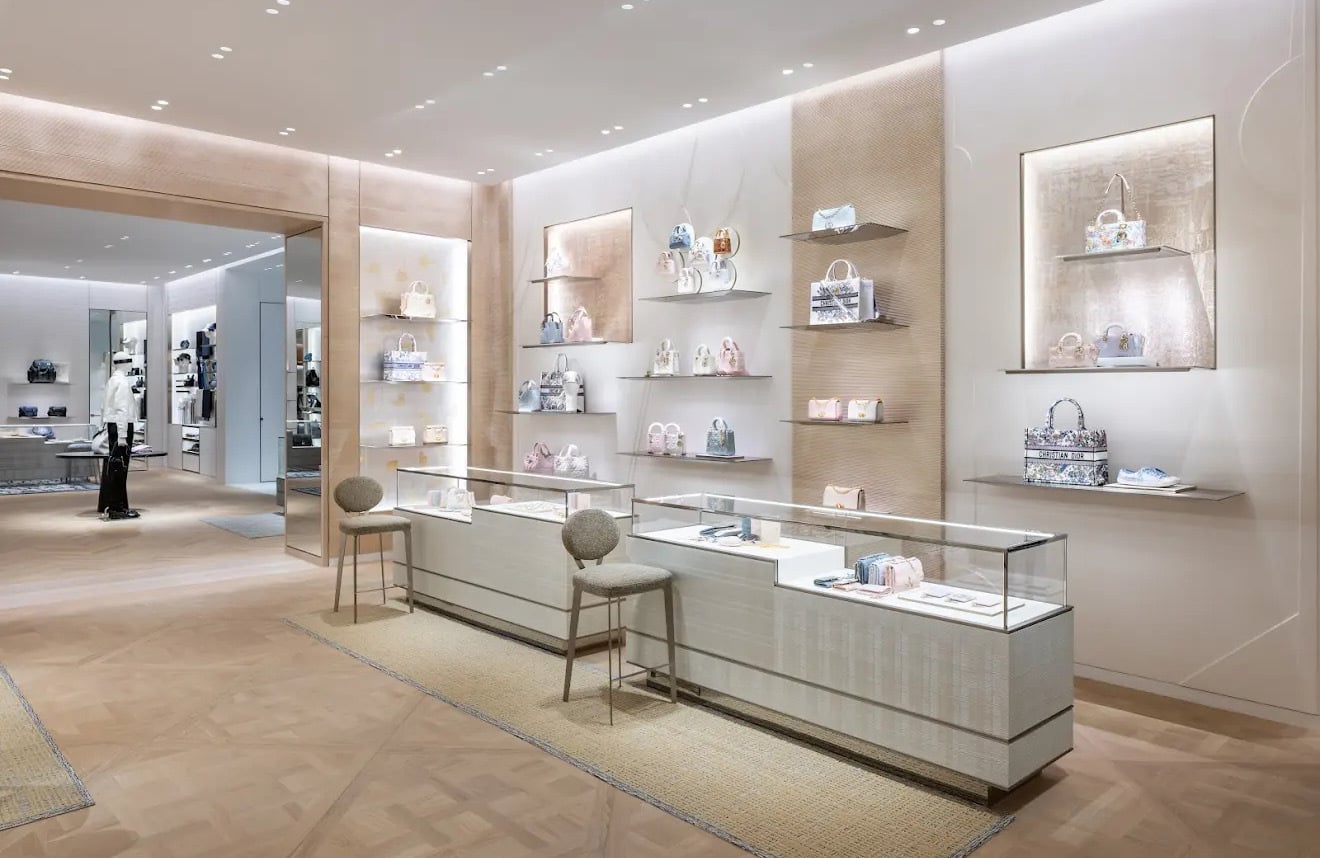
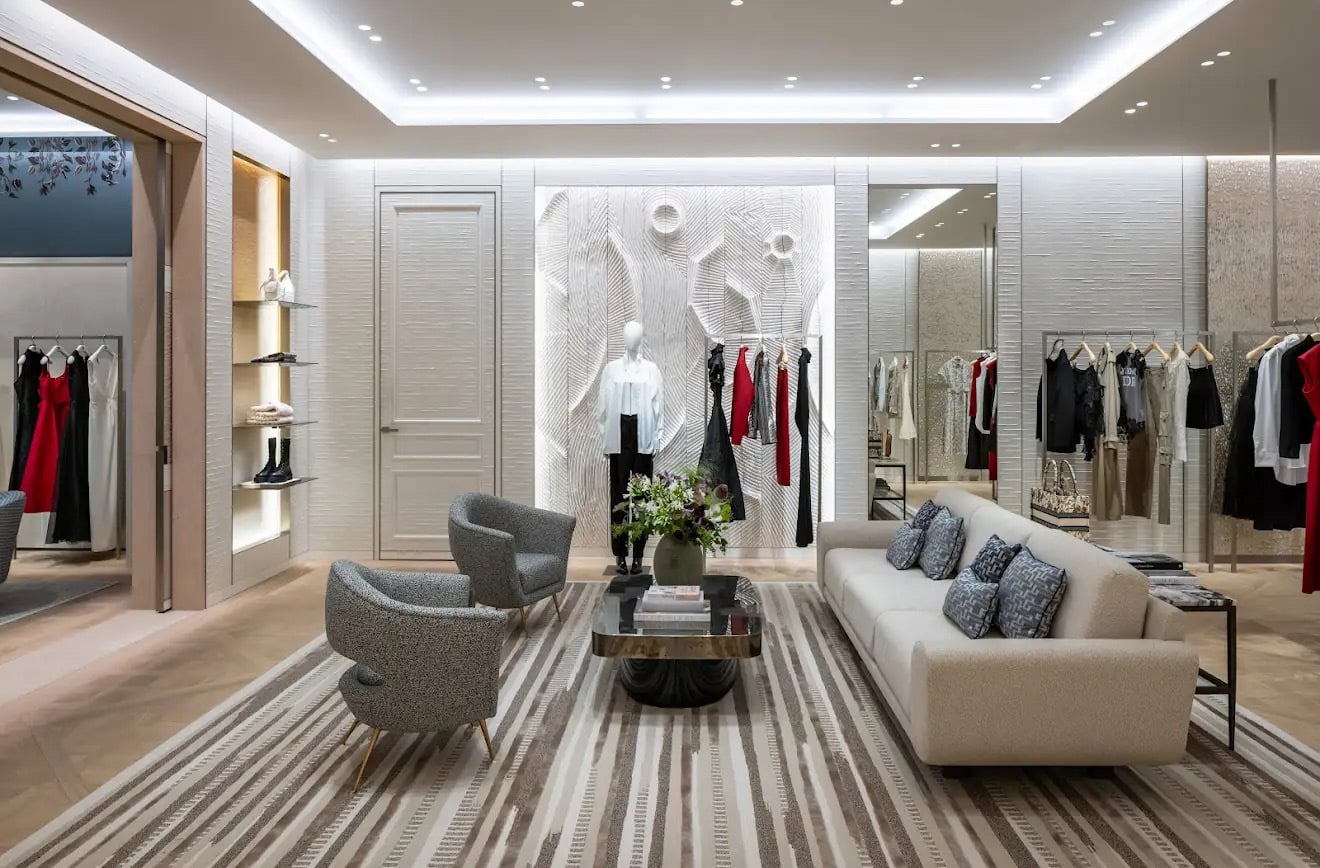
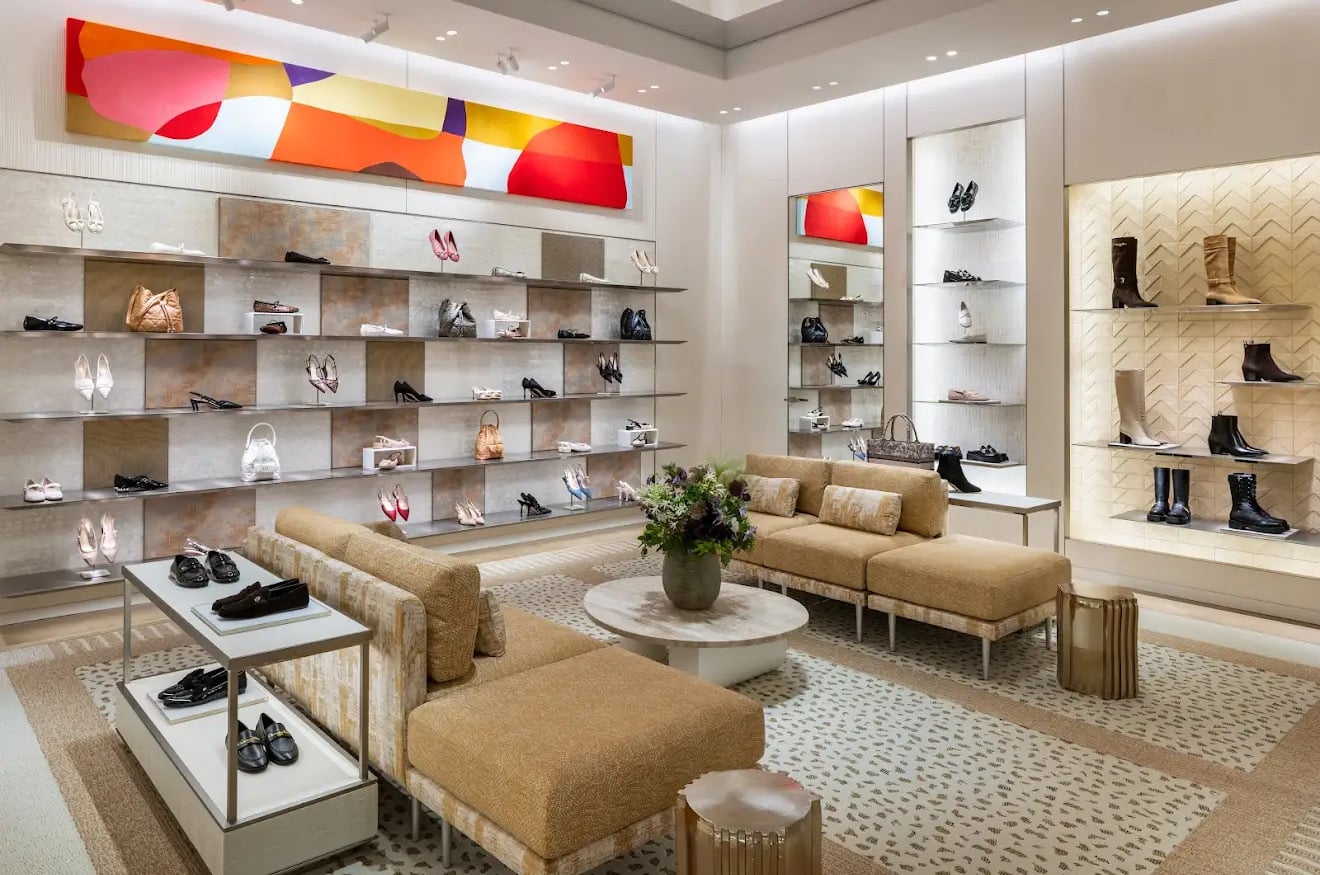
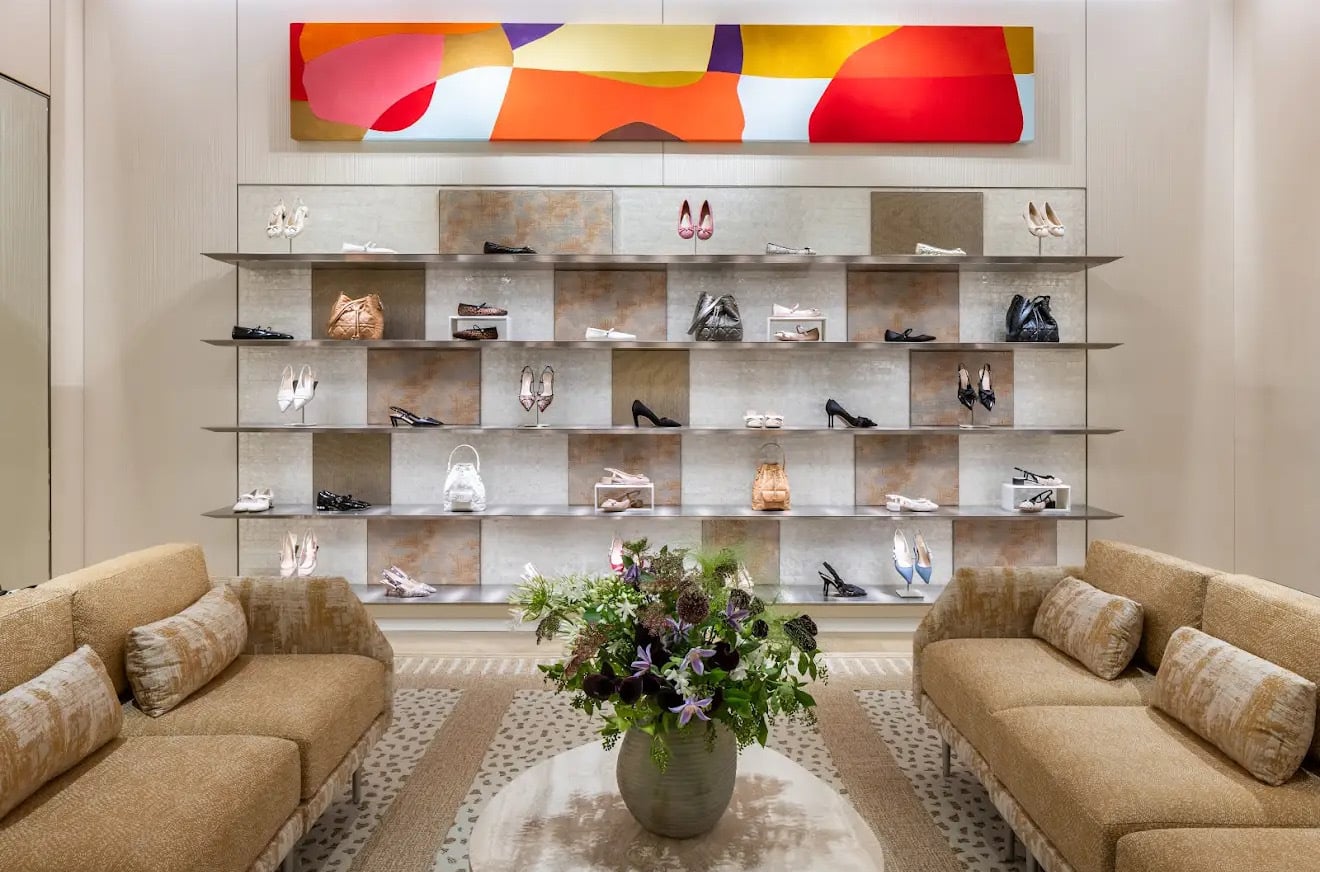
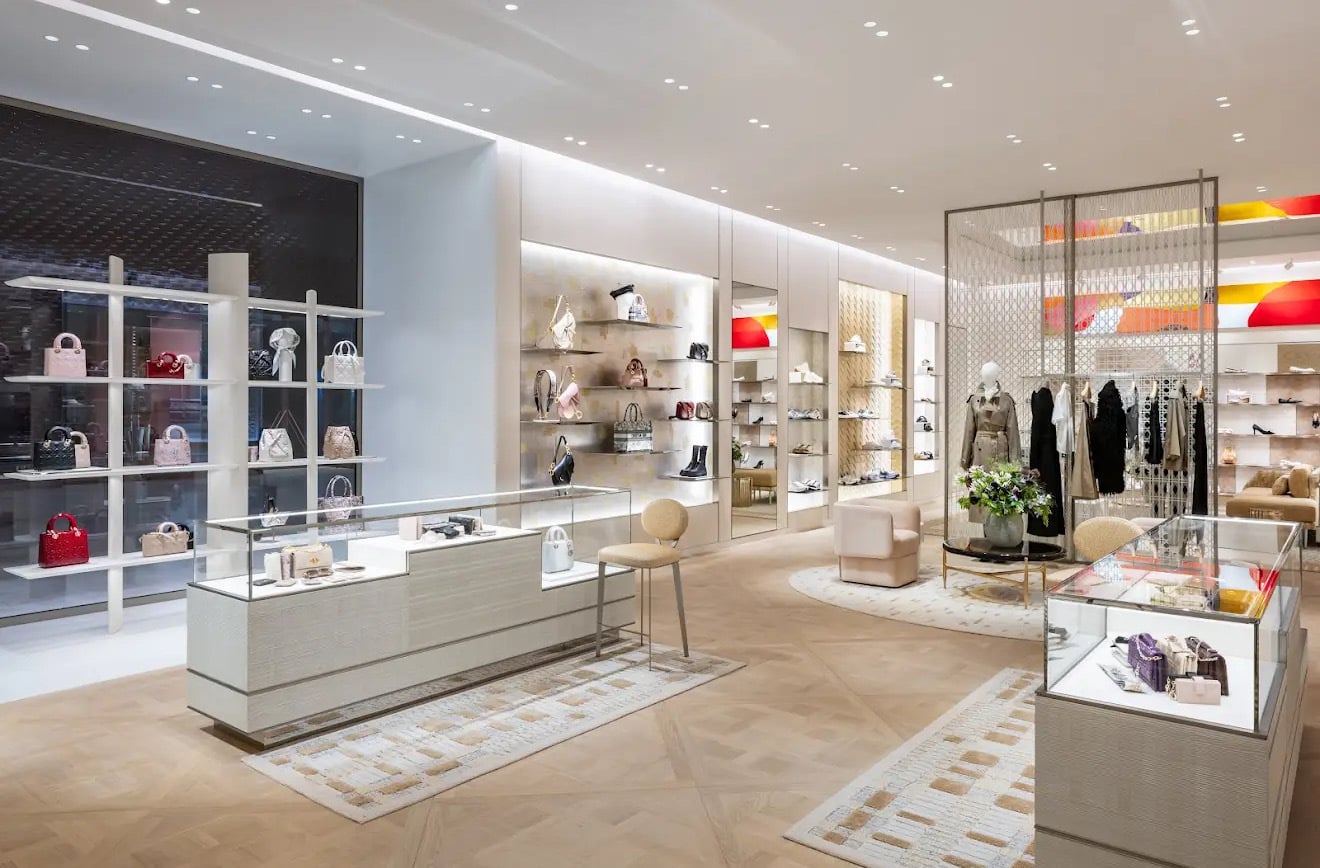
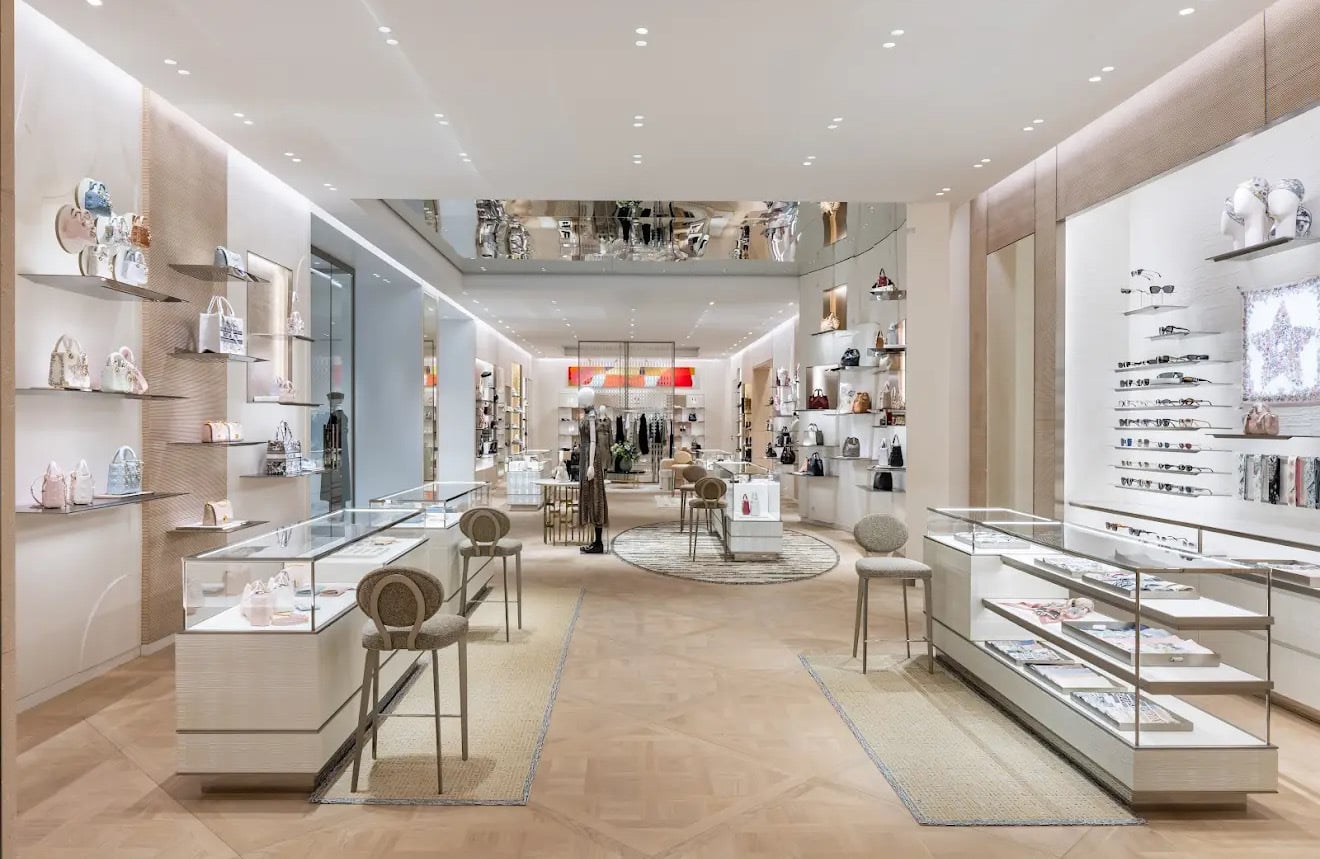
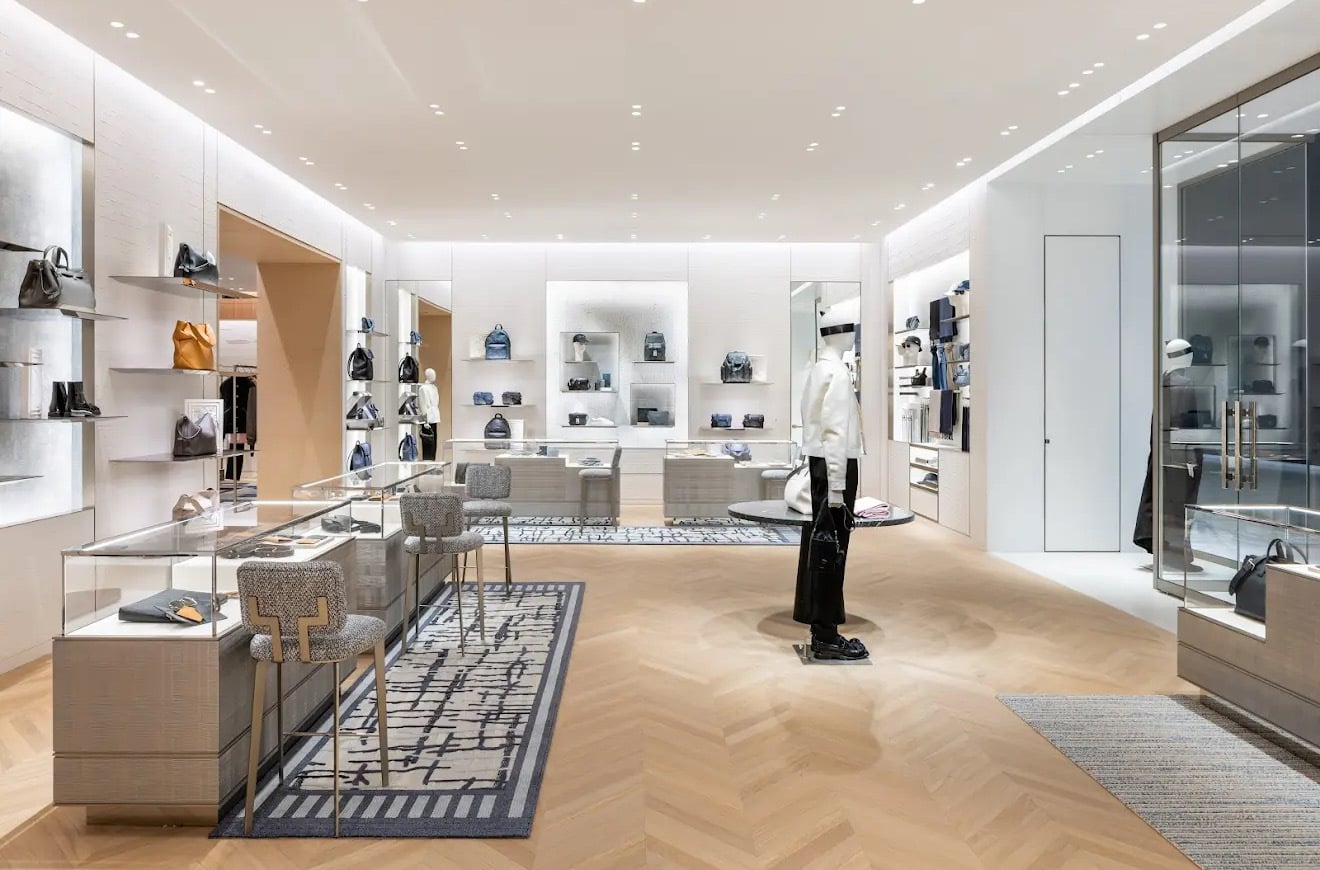
French luxury powerhouse Christian Dior has officially opened a massive new storefront at Toronto’s Yorkdale Shopping Centre, marking another milestone in the brand’s Canadian expansion. The new Christian Dior Yorkdale store spans 10,700 square feet on one level and boasts a striking 145-foot facade, the longest luxury storefront in any Canadian shopping centre.
The flagship comes at a pivotal moment for the house. Dior recently appointed Jonathan Anderson as its new creative director, placing the brand on the cusp of a new era that will bring changes to everything from store signage to brand identity.
The scale of the Christian Dior Yorkdale store sets a new benchmark for luxury retail in Canada. With frontage stretching 145 feet, it surpasses competitors in both size and presence, creating a commanding anchor in Yorkdale’s luxury wing.
Dior Yorkdale store in Toronto. Photo: Daniel Bray, Here and Now Agency
The new boutique houses Dior’s full range of women’s, men’s, and children’s ready-to-wear, along with accessories and home goods. Its breadth reflects Dior’s ambition to position Yorkdale as a true flagship-level location, drawing both domestic shoppers and international visitors who frequent the mall.
Adding to the presence is a 1,270-square-foot Perfumes Christian Dior fragrance boutique that opened adjacent to the flagship. This boutique extends Dior’s frontage by another 25 feet, making the combined facade even more dominant within Yorkdale’s luxury corridor.
Perfumes Christian Dior boutique, connected to the Dior Yorkdale store in Toronto. Photo: Daniel Bray, Here and Now Agency Perfumes Christian Dior boutique, connected to the Dior Yorkdale store in Toronto. Photo: Daniel Bray, Here and Now Agency
The Dior store is part of Yorkdale’s newly developed luxury wing, located at the centre of the shopping centre. Next to Dior, Tom Ford is preparing to open its first Canadian storefront, while across the corridor, Saint Laurent is relocating to an expanded 11,000-square-foot space and Gucci is building a 12,000-square-foot flagship that will be its largest in the country. Other recent openings in the wing include Versace, Jimmy Choo, Rimowa, Maison Margiela, Loewe, Brunello Cucinelli, and Loro Piana, making the area a concentrated hub for international luxury.
New luxury wing at Toronto’s Yorkdale Shopping Centre. Image: Craig Patterson
Brand Evolution Under Jonathan Anderson
The store opened just months after Dior appointed Jonathan Anderson as creative director in June 2025, making him the first to oversee all women’s, men’s, and couture collections simultaneously. Known for his work at Loewe, Anderson brings a bold, heritage-informed sensibility to Dior.
One of his first moves has been to reintroduce Dior’s original upper-and-lowercase wordmark, replacing the more modern all-caps logo. The new signage, including on Yorkdale’s facade, will need to be updated to reflect this shift. Whether Anderson’s influence will extend to Yorkdale’s interior design remains to be seen, but the change in direction underscores Dior’s evolving identity.
Anderson’s tenure has also been marked by new cultural initiatives, including celebrity ambassador appointments such as Oscar-winning actress Mikey Madison and Greta Lee, reinforcing the brand’s renewed focus on storytelling and cinematic influence.
Dior Yorkdale store in Toronto. Photo: Daniel Bray, Here and Now Agency Dior Yorkdale store in Toronto. Photo: Daniel Bray, Here and Now Agency
Dior’s Canadian Expansion Strategy
The Christian Dior Yorkdale store represents just one component of the brand’s broader Canadian investment. Over the past decade, Dior has been steadily building its presence through a mix of standalone boutiques and department store concessions.
Dior’s Bloor Street flagship at The Colonnade was the largest in North America when it opened in 2019. At 13,300 square feet over two levels, it was among the world’s most significant Dior flagships at launch, complete with a home furnishings collection.
In Vancouver, Dior’s first Canadian flagship debuted in 2015 at the Fairmont Hotel Vancouver. The two-level, 9,800-square-foot boutique included a Dior Homme entrance and a wide selection of luxury goods. However recent litigation over a lease dispute, reported in Business in Vancouver, has cast doubt over the long-term future of this location with one source saying that litigation could also have been related to lease renovation requirements.
Dior Yorkdale store in Toronto. Photo: Daniel Bray, Here and Now Agency Dior Yorkdale store in Toronto. Photo: Daniel Bray, Here and Now Agency
Dior has also established a strong concession presence in Holt Renfrew stores across the country. In Vancouver and Montreal, separate boutiques exist for women’s and men’s ready-to-wear and accessories. In Toronto, Dior operates an accessory concession at Holt Renfrew Bloor Street as well as at Holt Renfrew Yorkdale, where it opened a “World of Dior” concession in 2019.
Past ventures included separate women’s and accessory boutiques within Saks Fifth Avenue at CF Toronto Eaton Centre, though these shuttered before Saks itself exited Canada in 2025.
Dior’s Canadian presence will expand further in 2026 with the opening of a flagship at Oakridge Park in Vancouver. Positioned across from Chanel in the redeveloped luxury shopping district, the 9,000 square foot store will join an impressive roster of brands expected to make Oakridge Park one of Canada’s premier retail destinations.
Dior Yorkdale store in Toronto. Photo: Daniel Bray, Here and Now Agency Dior Yorkdale store in Toronto. Photo: Daniel Bray, Here and Now Agency
Dior’s Legacy in Global Fashion
Founded in 1946 by couturier Christian Dior, the house revolutionized fashion with its 1947 “New Look,” defined by cinched waists, rounded shoulders, and voluminous skirts. Dior quickly grew into an international symbol of elegance and femininity, favoured by royalty, celebrities, and cultural icons.
Dior’s history has been shaped by a succession of creative directors, including Yves Saint Laurent, Gianfranco Ferré, John Galliano, Raf Simons, and Maria Grazia Chiuri. Each brought a unique perspective, keeping the house relevant across decades of shifting fashion landscapes.
Today, Dior remains part of the LVMH group, positioning it alongside other global luxury leaders. Its offerings span haute couture, ready-to-wear, leather goods, fragrances, and home décor, with craftsmanship and innovation remaining at its core.
Dior Yorkdale store in Toronto. Photo: Daniel Bray, Here and Now Agency Dior Yorkdale store in Toronto. Photo: Daniel Bray, Here and Now Agency
Controversies and Accountability
Dior’s success has not been without scrutiny. In 2024, Italian authorities placed its local subsidiary under judicial administration following investigations into exploited labour at subcontracted handbag factories. Reports revealed that some Dior-branded bags could be produced for as little as USD$57 while retailing for nearly USD$2,800, raising questions about transparency in luxury manufacturing.
While Dior was not criminally charged, it was criticized for oversight failures and ordered to fund initiatives supporting victims of labour exploitation. The controversy highlighted wider issues in the luxury industry, with other brands also implicated in similar practices.
More recently, Dior has faced data security concerns, underscoring the challenges that even heritage houses face in a digital era.
Dior Yorkdale store in Toronto. Photo: Daniel Bray, Here and Now Agency Dior Yorkdale store in Toronto. Photo: Daniel Bray, Here and Now Agency
Luxury Brands Expand in Canada
The new Dior Yorkdale store underscores Canada’s growing importance in the global luxury landscape. Toronto has emerged as a crucial market for international retailers, with Yorkdale continuing to attract record-setting flagships. Dior’s bold investment at the centre cements its place among the top luxury destinations in North America.
As the brand transitions under Jonathan Anderson, the Yorkdale boutique represents both a physical milestone and a symbol of change. Its sweeping facade, comprehensive assortment, and adjacency to a dedicated fragrance boutique mark it as a showpiece of Dior’s Canadian operations.
The opening also signals broader trends: luxury brands are doubling down on Canadian markets, investing in larger footprints, and redefining retail experiences in shopping centres and urban streets such as on Bloor.
Holt Renfrew at CF Pacific Centre in downtown Vancouver. With the closure of Hudson's Bay and the recent shuttering of Nordstrom, Holt Renfrew is the only large-format store of its kind left in downtown Vancouver. Photo: Cadillac Fairview
Holt Renfrew has announced a leadership change with the appointment of Franco Savastano as its new President and Chief Executive Officer. The move marks a pivotal moment for the Canadian luxury department store chain as it continues to navigate shifting consumer expectations, competition, and a retail landscape that increasingly demands strong digital integration alongside traditional luxury service.
Savastano succeeds Sebastian Picardo, who stepped down effective September 30, 2025, after five years at the helm. The appointment is expected to usher in a new era of strategic direction while reinforcing Holt Renfrew’s role as Canada’s leading luxury retailer.
Franco Savastano, is a Swiss retail executive with extensive leadership experience across two of Switzerland’s most prestigious department stores, Globus and Jelmoli. Over a career spanning more than a decade in senior leadership, he has consistently positioned heritage retail banners as leaders in the luxury marketplace.
Franco Savastano
Prior to that, Savastano spent seven years at Jelmoli in Zurich, where he introduced the House of Brands strategy and prioritized full-price sales, experiential retail, and elevated service. He launched omnichannel capabilities and the Jelmoli Concept Store at Zurich Airport, demonstrating a keen understanding of how luxury consumers increasingly expect seamless digital and physical experiences.
At Globus, which he led beginning in late 2019, Savastano orchestrated a dramatic repositioning following the acquisition by Thailand’s Central Group and Signa. His tenure was defined by a shift to brand-driven merchandising, renovations of key flagship stores, and forging deep partnerships with luxury labels including Louis Vuitton and Bucherer. The transformation positioned Globus as a formidable competitor in the European luxury department store sector, attracting both local and international clientele.
Savastano is widely respected for his adaptive, hands-on management style. Known as a proponent of in-person collaboration and strong supplier relationships, he has demonstrated a capacity to maintain confidence from partners even during periods of financial turbulence. His leadership at Globus involved navigating ownership transitions, supplier negotiations, and shifting market expectations, all while repositioning the company firmly within the luxury segment.
Beyond his operational track record, Savastano has served on multiple boards and industry groups, including the International Group of Department Stores (IGDS). His involvement in city organizations such as Zurich Tourism underscores his broader role in promoting retail as an integral part of cultural and urban identity. These experiences position him as a leader who understands the role of retail beyond sales, encompassing lifestyle, community engagement, and urban development.
In a statement announcing his appointment, Savastano expressed enthusiasm about joining Holt Renfrew: “I am very honoured, humbled and excited about the opportunity to join Holt Renfrew. I’ve long admired Holts and am eager to help build on its long legacy as Canada’s top lifestyle and luxury retailer. Together with the team we can continue delivering for Holt’s customers with the world-class shopping experience they deserve.”
His background in repositioning European department stores toward luxury aligns closely with Holt Renfrew’s trajectory. Over the past decade, the Canadian retailer has consolidated its store network, closed secondary markets such as Ottawa, Quebec City, and Edmonton, and invested in large-format flagship locations in Canada’s most significant luxury markets.
Former Holt Renfrew CEO Sebastian Picardo at Holt Renfrew Calgary, November 2023 (Image: Mario Toneguzzi)
Outgoing CEO Sebastian Picardo’s Legacy
The leadership transition follows the departure of Sebastian Picardo, who announced his decision to leave Holt Renfrew earlier this year to return to Europe with his family. Picardo’s five-year tenure was marked by both crisis management and ambitious modernization.
Joining Holt Renfrew in mid-2020, Picardo assumed leadership during the COVID-19 pandemic, one of the most challenging periods for retail globally. He guided the company through store closures and a rapidly changing luxury market, while driving a merchandising overhaul that diversified Holt Renfrew’s appeal.
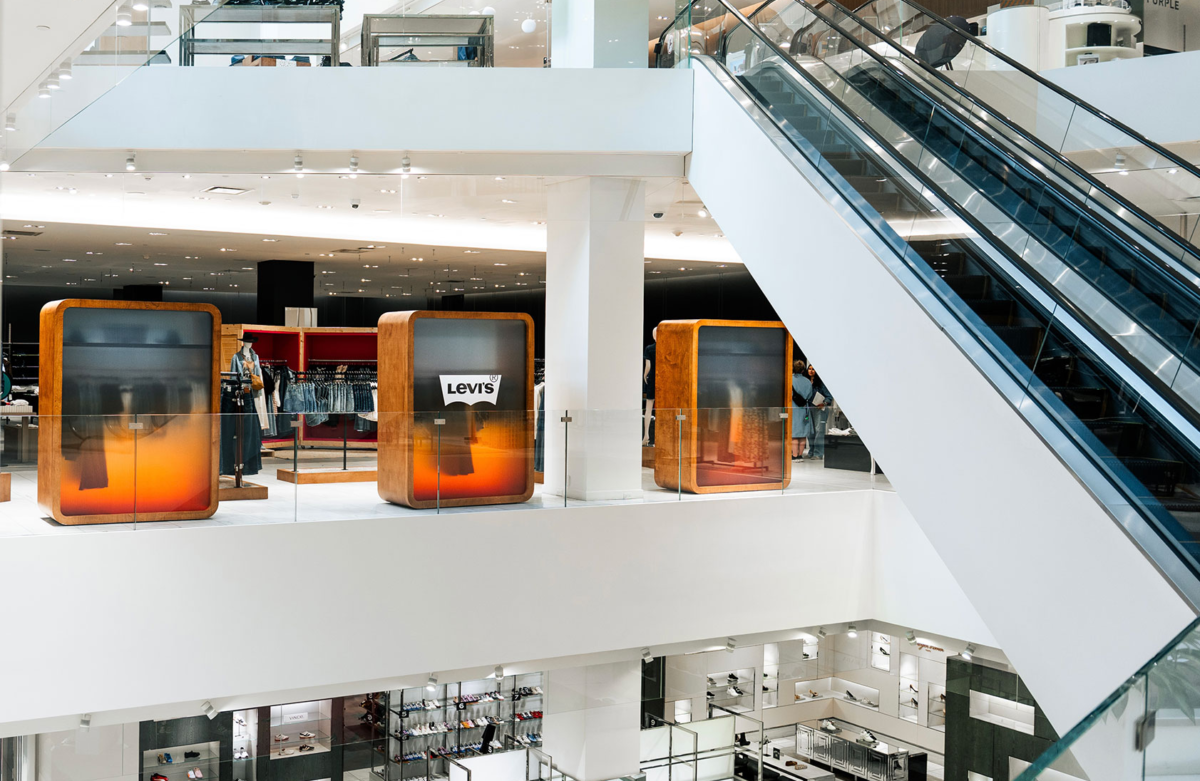
Under his watch, Holt Renfrew introduced brands such as SKIMS, Knix, and Mejuri, alongside contemporary collaborations with Adidas and Levi’s. The move brought in younger demographics while maintaining traditional luxury clients. Picardo also prioritized digital growth, improving omnichannel retail and integrating Holt Renfrew’s e-commerce presence more deeply into its physical store strategy.
Reflecting on his successor, Picardo said: “I am so pleased that Franco has been chosen as the next leader of Holt Renfrew. I’ve known Franco for some time and have found his leadership, industry knowledge and warmth incredibly impressive. Franco is joining a very talented high-performance team and I’m looking forward to cheering them on as they continue accomplishing amazing results.”
Holt Renfrew at 50 Bloor St. W. in Toronto. Photo: Craig Patterson
Holt Renfrew’s Store Network and Strategic Direction
Founded in 1837, Holt Renfrew has long stood as Canada’s premier luxury department store chain. Today, it operates six full-line locations across four provinces:
Calgary at The Core downtown
Vancouver at CF Pacific Centre
Toronto with stores at 50 Bloor Street West and Yorkdale Shopping Centre
Mississauga at Square One Shopping Centre
Montreal, Holt Renfrew Ogilvy on Sainte-Catherine Street
The chain has shifted away from smaller regional presences, closing stores in Ottawa, Quebec City, and Edmonton, while investing in renovations and expansions at major flagships. In Toronto, for example, the company consolidated its standalone men’s store at 100 Bloor Street back into its flagship at 50 Bloor West in 2024, following a multimillion-dollar renovation that created a unified, experience-focused hub.
The retailer has also leaned heavily into experiential retail. Holt Renfrew Ogilvy in Montreal combines a sweeping luxury assortment with art and cultural programming, while Toronto’s Bloor Street flagship features the ON3 hub that merges men’s and women’s collections alongside curated cultural experiences. Seasonal pop-ups, such as a Muskoka lakeside location in summer 2025, illustrate Holt Renfrew’s experimentation with temporary formats to capture clients beyond traditional urban settings.
Levi’s pop-up at Holt Renfrew in Calgary, June 2025. Photo: Levi’s
Positioning for the Next Generation of Luxury Shoppers
The Holt Renfrew new CEO will inherit a retailer that has established itself as the definitive luxury destination in Canada, but one that also faces evolving challenges. Younger luxury clients are more digitally engaged, more attuned to sustainability, and more driven by experiences than possessions alone.
Holt Renfrew has already made strides in this direction, adopting more inclusive merchandising and modernizing its digital channels. The next phase under Savastano’s leadership may involve further aligning the brand’s strategy with these consumer expectations. His background at Globus and Jelmoli, where omnichannel, experiential retail, and strong brand partnerships were cornerstones, suggests he is well equipped to lead this evolution.
The appointment comes at a time when department stores globally are under intense pressure. Once the dominant format for luxury and lifestyle retail, many have struggled to stay relevant in the digital era. In Canada, Holt Renfrew remains one of only two department store-sized chains still operating, following the closure of competitors in recent times such as Saks Fifth Avenue and Nordstrom.
Savastano’s European background may bring a fresh perspective on how to adapt the department store model for Canada. His success in repositioning Globus and Jelmoli to thrive in Switzerland’s competitive luxury market suggests that Holt Renfrew will continue to double down on curated luxury assortments, strong brand partnerships, and experiential retailing.
With Holt Renfrew’s ownership by Wittington Investments, which has historically favoured a cautious expansion strategy, Savastano will likely focus on strengthening profitability within the existing store base rather than rapid geographic growth. That said, new flagship concepts, innovative pop-ups, and digital investments could provide growth opportunities without diluting the brand’s exclusivity.
Entrepreneurs are at the heart of Canadian innovation, job creation, and economic growth, and eBay Canada is celebrating four inspiring small businesses with the 2025 edition of its Entrepreneur of the Year Awards. The annual program recognizes the contributions of small business owners who embody the determination and passion of eBay’s seller community, said the company.
Manas Vijh
“As we celebrate our award winners this Small Business Month, eBay Canada is also marking a milestone anniversary in 2025: 25 years of connecting Canadian buyers and sellers with the world,” said Manas Vijh, Director of Verticals & Operations at eBay Canada. “We are deeply grateful for our incredible community – exemplified by our award winners – who represent the spirit of Canadian entrepreneurship and success from coast-to-coast.”
The 2025 eBay Canada Entrepreneur of the Year Awards recipients are:
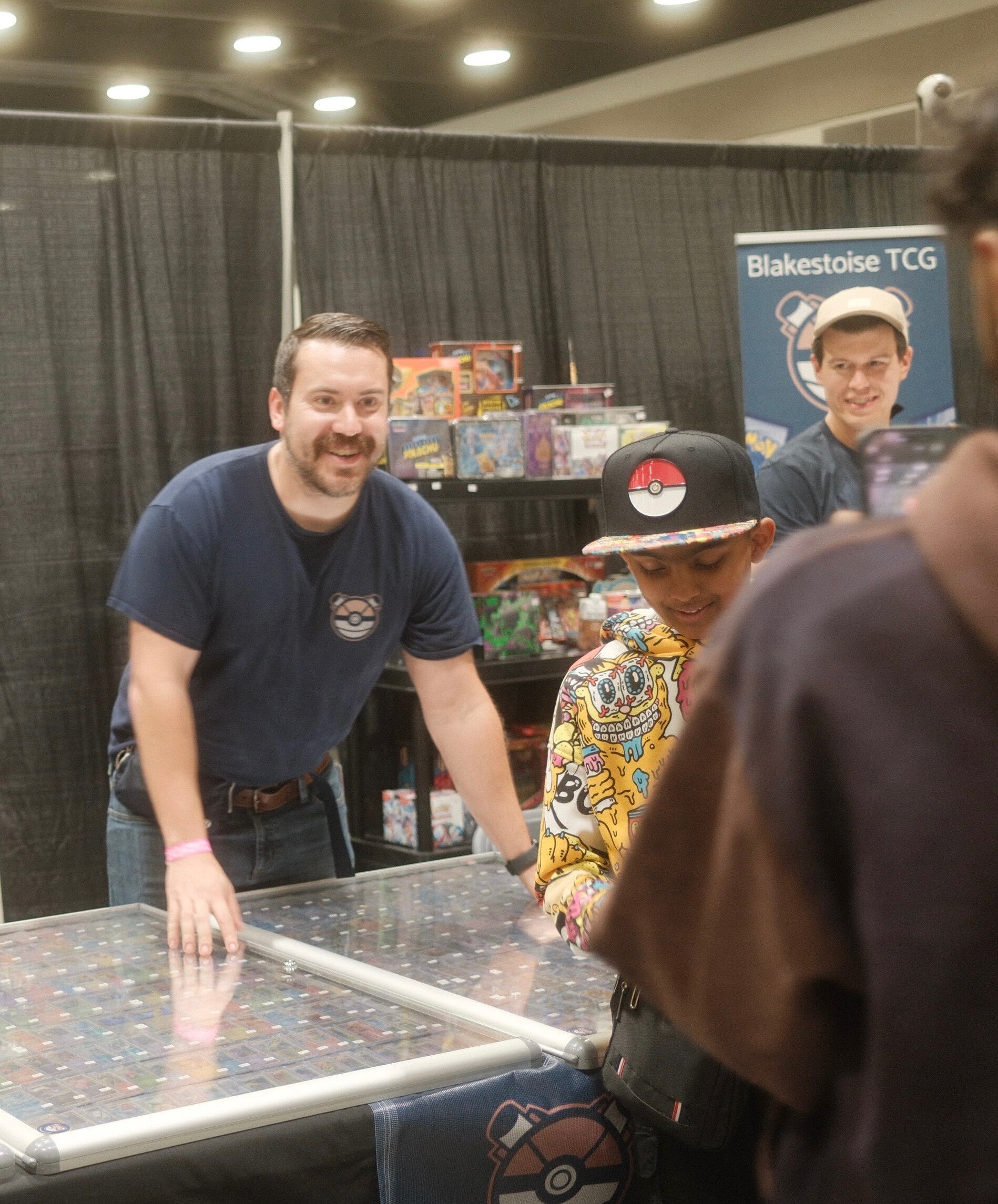
Entrepreneur of the Year – Blake Ouellet, Blakestoise TCG; Blake started his eBay business as a way to fund his Pokémon collection – and from there it grew into one of Canada’s most trusted eBay trading card stores. Based in Vernon, BC, Blake connects with collectors worldwide, having built a dedicated following through patience, consistency, and outstanding customer care. He also gives back to his community by donating trading cards and supplies to local schools.
Blake Ouellet – Blakestoise TCG 2
Micro-Multinational of the Year – Adrian Ceranowicz, Skewed Games; Adrian turned selling a few extra video games into Skewed Games, a trusted eBay store based in Red Deer, AB, serving customers in Canada, the U.S., and beyond. By focusing on clear listings, careful packaging, and honest descriptions, Adrian has built a loyal international customer base. For Adrian, his business is about preserving gaming culture and connecting with collectors.
Adrian Ceranowicz – Skewed Games
Hometown Horizons Entrepreneur – Dave Vanderloo, Dizcount Dave; Dave’s eBay journey started by chance with auction pallets, and grew into a thriving online business based in Innisfil, ON. Managing hundreds of listings solo, he built credibility through excellent service, transparency, and 100% positive feedback. Dave’s story shows how curiosity, persistence, and smart reinvestment can turn a side hustle into a successful e-commerce business.
Dave Vanderloo – Dizcount Dave
Emerging Ecommerce Entrepreneur – Jakub Pesik & Greg Wiatr, West To Best; Jakub and Greg transformed thrift finds and garage sale treasures into a full-time eBay business spanning central and eastern Canada. Based in Winnipeg, MB, their focus on brand building, customer care, and community events has created a hub where collectors connect and share stories.
As part of its ongoing commitment to helping small businesses in Canada thrive, the company recently announced eBay International Shipping (eIS) in Canada, making it easier for sellers to reach new customers around the world and expand their businesses globally.
This year’s award recipients, selected from a number of online submissions, will receive cash prizes ranging from $5,000 CAD to $10,000 CAD to reinvest in their businesses.
More information on the eBay Canada Entrepreneur of the Year Awards can be found at eBay.ca/eoy.
To learn more about bringing your business online with eBay, visit eBay.ca/sellercentre.
eBay Inc. is a global commerce leader that connects people and builds communities to create economic opportunity for all. Its technology empowers millions of buyers and sellers in more than 190 markets around the world, providing everyone the opportunity to grow and thrive. Founded in 1995 in San Jose, California, eBay is one of the world’s largest and most vibrant marketplaces for discovering great value and unique selection. In 2024, eBay enabled $75 billion of gross merchandise volume.