Peavey Mart, Canada’s largest farm and ranch retail chain, which officially announced the closure of all its 90 stores nationwide earlier this year, has now announced it is coming back this Fall.
The company said many customers learned recently that Peavey Mart is planning to reopen in select locations in Alberta.
“This announcement was made public and shared prematurely, and while this leak was unintentional, we are excited to share that Peavey Mart is coming back to Spruce Grove, Westlock, Camrose and Lacombe this fall, and will include many of your favourite brands back on store shelves. Peavey Mart stores will reflect the needs of customers by providing reliable and relevant products, focusing on high quality, unique, and locally sourced items that highlight the Canadian entrepreneurial spirit,” it said on its website.
“The revival will bring back the Peavey Mart that people know and love – a Peavey Mart focused on the needs of the farmer, rancher, acreage owner, and homesteader with a strong emphasis on providing value for dollars spent in our stores.
“More information will be released in the coming weeks, and we invite you to celebrate with us as we look forward to providing the service and selection of hardware and a whole lot more that customers have relied on for decades.”
The brand’s closure earlier in the year marked the end of a nearly six-decade-long legacy for the Alberta-based retailer, which has been a staple in Canada’s rural and suburban retail market.
The decision followed the company’s filing for creditor protection under the Companies’ Creditors Arrangement Act (CCAA), granted by the Court of King’s Bench Alberta and the closures affected 90 Peavey Mart stores and six MainStreet Hardware locations.
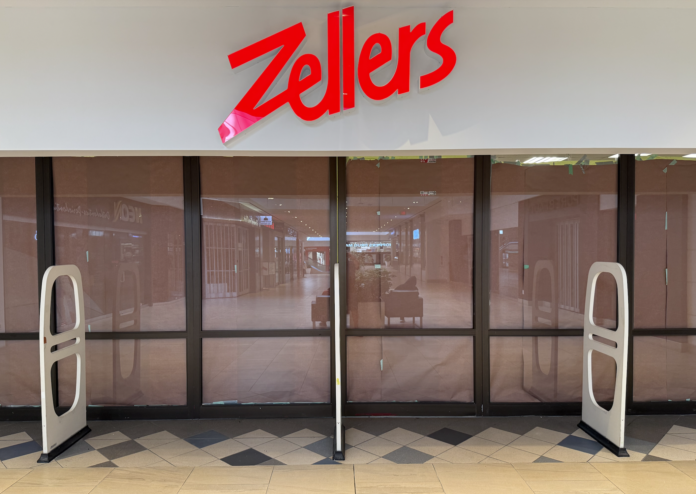
News that Zellers, the once-dominant Canadian discount retailer that disappeared from the national retail landscape more than a decade ago, is making another comeback has been met with great anticipation and hype but retail experts and consumers are still wondering when the brand will actually re-launch in Edmonton.
The first new store, spanning 60,000 square feet, to open at Londonderry Mallin Edmonton, confirmed by landlord Leyad, which owns the shopping centre, was expected to open August 29 in the former Hudson’s Bay location, making this the first announcement of a tenant filling a former Hudson’s Bay space since the department store chain’s collapse earlier this year.
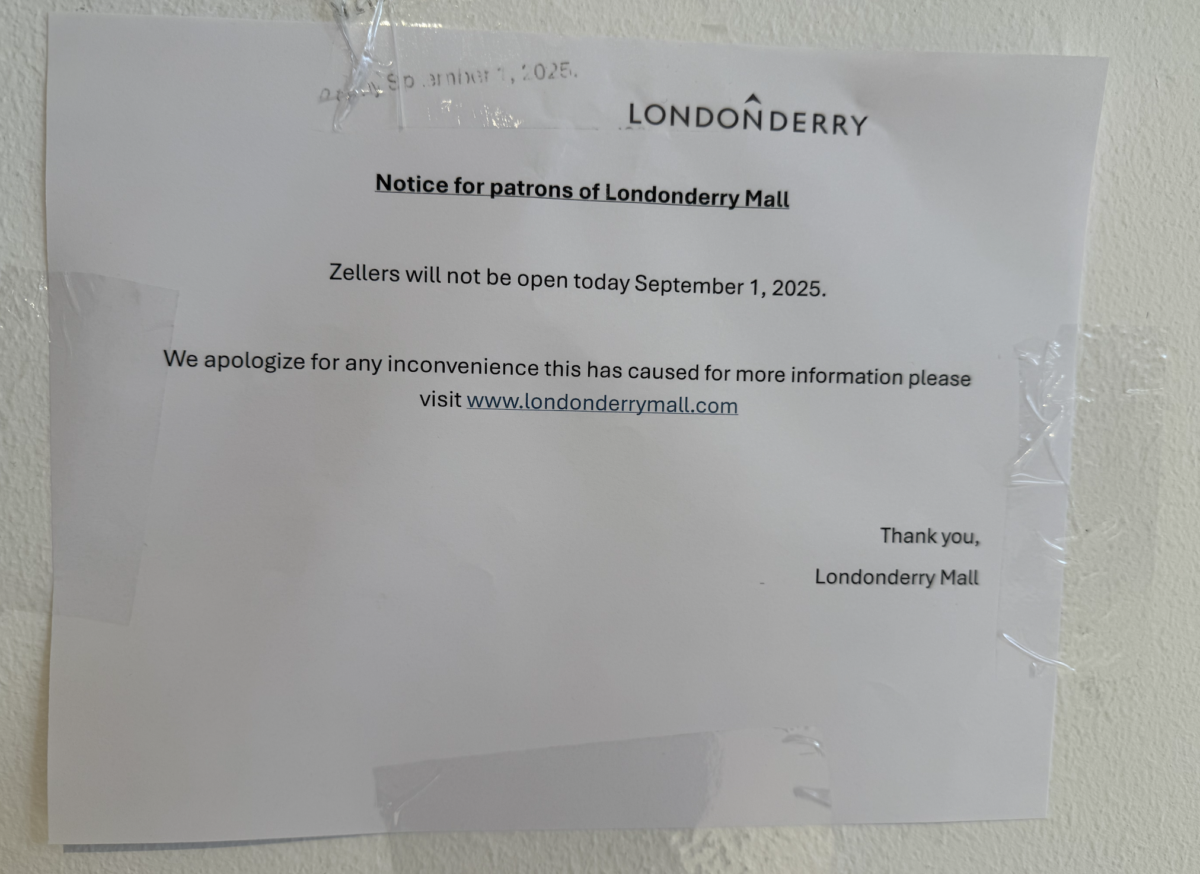
Then it was going to open September 1 and people lined up for that, but the store didn’t open.
According to a media report: “In an email to CTV News Edmonton on Friday, mall management said the store would open in October, but did not provide a date.”
Londonderry Mall. Photo: Mario Toneguzzi
Bruce Winder, a retail analyst and author, said: “It is unfortunate that the opening of new Zellers store in Edmonton has been so significantly pushed forward to next month.
“Obviously, the company running the new launch should have ensured they were almost 100% a go before notifying the media and getting customers excited. But stuff happens in the world of retail.
Bruce Winder
“Now the re-launch of the Zellers brand could be somewhat tainted in the eyes of Canadians. ‘Here we go again’. However, customers will forget about the tardiness of the launch over time if the store exceeds expectations once open.”
“We are thrilled to bring back a beloved Canadian brand that stirs up nostalgic memories for many of our shoppers, while providing an opportunity to introduce Zellers to a new generation,” said Henry Zavriyev, CEO of Leyad, on August 28 when the company made the announcement. “This announcement represents a bold step forward in reimagining retail space and responding to community demand with purpose and vision.”
The transformation of the former Hudson’s Bay store—closed in June 2025—into a vibrant new Zellers location was completed in under two months, showcasing Leyad’s commitment to swift, strategic redevelopment, said the company.
Londonderry Mall. Photo: Mario Toneguzzi
Michael Kehoe, Broker of Record, Fairfield Commercial Real Estate, said: “The return of Zellers to the Canadian retail scene with the debut of a store at Londonderry Mall in Edmonton was highly anticipated in recent days. Prototype retail projects of this scale are complex endeavors and dependent on a multitude of things aligning on schedule to ensure they open on time.
Michael Kehoe
“If any one or two factors fail to come together in an orderly way it can throw the entire project off schedule and delay a store opening. You only get one chance to make a good impression with shoppers, and I hope things can get back on track for a successful Canadian solution for this key anchor position at Londonderry with a 60,000 square foot store. I am sure this will continue to be a national good news Canadian retail story.”
The newly reimagined Zellers will offer a wide range of stylish clothing lines for women, men, and youth, alongside contemporary home décor—blending the brand’s rich heritage with modern design and value-driven offerings, explained Leyad
“This launch at Londonderry Mall is not just the return of a brand—it’s the beginning of a new chapter for a retailer woven into Canada’s cultural fabric,” it said.
Londonderry Mall. Photo: Mario Toneguzzi
Perhaps the most intriguing element of Zellers’ return is the question of who now owns and operates the brand.
A previous Retail Insider story noted: “The Hudson’s Bay Company (HBC) previously held Zellers’ intellectual property, having run the chain for decades before selling most of its store leases to Target in 2011. While Canadian Tire purchased HBC’s intellectual property portfolio during its bankruptcy earlier this year, it did not acquire the Zellers name. This leaves uncertainty around how the brand has re-emerged in Edmonton.
“When asked directly, Zavriyev declined to identify the new operator. “It’s a Canadian group that operates a number of other brands,” he said, adding only that “they know what they’re doing.”
“Retail Insider reached out to industry sources, one of whom strongly speculated that the owner may be INC Group, parent company of Fairweather, International Clothiers and Randy River. The company has experience in discount and value-focused retail, and was recently working on a ‘big project’ in Edmonton.”
Retail Insider is streamlining its Canadian retail news from around the web to include a handful of top news stories that can be viewed quickly during the day. Here are the top stories from the past several days.
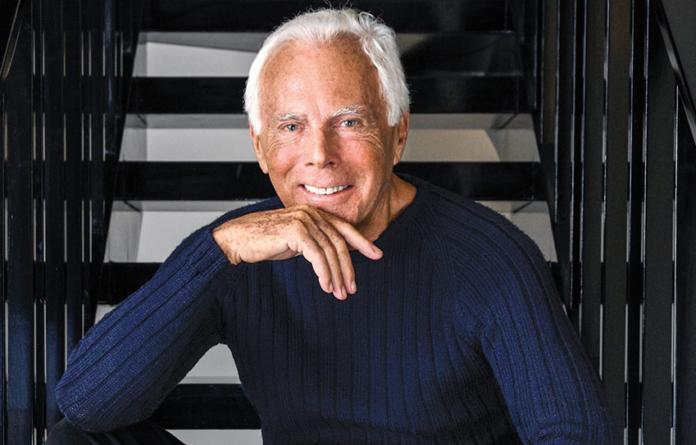
Giorgio Armani, the esteemed Italian fashion icon and founder of the Armani empire, has died aged 91. Credit : The Fashionton post.
The global fashion world is mourning the death of Giorgio Armani, a designer whose impact on how women and men dress is immeasurable. Armani, often called the “King of Fashion,” redefined tailoring with his soft-shouldered jackets and fluid fabrics while creating an independent empire that remained under his control until his passing. For Toronto, Armani’s story has a particularly unique resonance. In 1979, the first standalone Giorgio Armani boutique in North America opened at Hazelton Lanes, before New York’s department stores carried the line.
That groundbreaking store was introduced to Canada by Catherine Hill, owner of Chez Catherine, with her daughter Stefanie Hill by her side. More than four decades later, Stefanie reflects on Armani’s influence and her personal memories of the man behind the brand.
Stefanie Hill in her store Stefanie’s at 446 Spadina Road in Toronto’s Forest Hill neighbourhood. Image: Stefanie’s
Chez Catherine’s Bold Introduction of Armani
Chez Catherine was a pioneering fashion retailer in Toronto, founded by Catherine Hill in 1972 on Yorkville Avenue before moving into Hazelton Lanes. Known for its colourful, high-impact approach, the store introduced Canadian women to designers such as Claude Montana, Issey Miyake, Karl Lagerfeld, and Gianfranco Ferré. Among these international names, Giorgio Armani stood out.
“We had the first Armani boutique freestanding in Canada in Hazelton Lanes in 1979,” recalls Stefanie Hill. “We even had it before Bergdorf Goodman in New York, which didn’t carry Armani until a year later in 1980. It was really at the start of his collection.”
The boutique was located directly across the hall from Chez Catherine’s main shop, serving as both a symbolic and physical extension of the Hill family’s bold approach to fashion retail. Armani himself attended the Toronto opening, accompanied by sales director Gabriella Forte, for what Stefanie describes as a memorable press launch.
“We did it upstairs in Hazelton Lanes, in an empty condo that hadn’t sold yet,” she remembers. “We created a press kit that included a silver padlock engraved with ‘“Chez Catherine has Giorgio Armani all locked up“.’ I still have it to this day.”
Stefanie Hill, left, with mother Catherine Hill in 1986. PHOTO: TORONTO PUBLIC LIBRARY ARCHIVES
Meeting the Man Behind the Brand
While Armani’s collections would go on to become synonymous with understated elegance and global success, Stefanie Hill remembers him most for his humility.
“When I heard he had passed away, I teared up,” she says. “He was such a down-to-earth person, which in this business is not always common. He was real, gracious, and always smiling.”
Stefanie, who speaks Italian, recalls that Armani communicated exclusively in his native language, even when visiting Canada. “He never spoke English publicly, even though he understood it,” she says. “That never caused an issue. We connected easily.”
Her most vivid memory is a moment of honesty that underscored Armani’s humanity. “We were setting up the store, and he suddenly realized, ‘Oh my goodness, I don’t have any skirts.’ He only had blazers, pants, and shirts. So we went across to Chez Catherine, and he picked skirts to pair with jackets. It was just so genuine, and it showed how new he was at building a full collection.”
The Boutique Experience in Toronto
Unlike the lavish brand temples of today, the first Giorgio Armani Toronto boutique was intentionally understated. “It was very minimal,” Stefanie explains. “Carpeted, dark with beige tones, and very simple. The focus was on the clothes, which were lightweight, beautifully woven, and in subtle colours.”
The clientele was eclectic, ranging from high-powered lawyers who adopted Armani’s pantsuits as their uniform to women who simply wanted a fantasy wardrobe. “It was the pantsuit that defined his early following,” she recalls. “The simplicity, the flow of his fabrics, and the soft blouses — there was nothing harsh about his designs.”
TORONTO’S HAZELTON LANES SKATING RINK IN 1976. PHOTO: TORONTO PUBLIC LIBRARY ARCHIVES
An Era of Fashion Icons
Chez Catherine was central to an extraordinary moment in fashion history. The Hazelton Lanes boutiques represented what Stefanie calls “the super five” of international designers: Armani, Versace, Gianfranco Ferré, Karl Lagerfeld, and Valentino.
“It was quite an era,” she says. “Each designer had such a distinct look. Armani was known for his understated elegance, while others were more flamboyant. What separated him was how true he stayed to his vision. He never compromised.”
1979 Giorgio Armani Boutique Fashion Ad. Image via eBay
Unlike many contemporaries, Armani also resisted being absorbed by a luxury conglomerate. “To the day he passed, it was his company,” Stefanie notes. “That is rare in fashion. He stayed independent and true to his designs.”
Chez Catherine’s Broader Legacy
The Armani boutique remained under Chez Catherine’s umbrella for nearly a decade, with the Hills later carrying his collections in their Palm Beach location as well. As Armani diversified into secondary lines such as Armani Exchange and white label collections, distribution widened to department stores, and the Hills shifted their focus to other designers.
Still, the significance of introducing Armani to Canada cannot be understated. Chez Catherine’s retail daring helped solidify Yorkville as Canada’s luxury shopping district and positioned Toronto as an early player in global fashion trends.
“Those were exciting times,” Stefanie reflects. “We were fortunate to be part of Armani’s story from the very beginning.”
Chez Catherine magazine ad from 1984
Remembering King Armani
For Stefanie Hill, Armani’s passing is both a personal and professional loss. “He truly leaves a legacy in fashion,” she says. “People called him King Armani, and it’s true. He changed how women dressed, and he did it with such grace.”
She recalls dining at his Milan home with her mother Catherine and his partner Sergio Galeotti, describing evenings filled with warmth and humility. “It wasn’t about grandeur. It was couches, little tables, and conversation. That was Armani — low key, genuine, and always kind.”
With Armani’s death, the future of his namesake company remains uncertain. His two nieces have been involved in the business, and observers are watching closely for news about succession. A planned 50-year anniversary retrospective in Milan now carries new meaning.
“It will be interesting to see what the family does,” Stefanie says. “He built something extraordinary, and his vision will always live on.”
A Toronto Legacy Within a Global Story
For Toronto, Giorgio Armani’s legacy carries a special resonance. The opening of the Giorgio Armani Toronto boutique at Hazelton Lanes in 1979 placed the city at the forefront of international fashion. It was a moment of alignment between a visionary designer and a pioneering Canadian retailer.
As Stefanie Hill remembers, “Fashion today isn’t what it was back then. We had designers who truly changed the way people dressed. Giorgio Armani was one of them. He was not only a legend in fashion but also a gentleman. Toronto was lucky to be part of his story.”
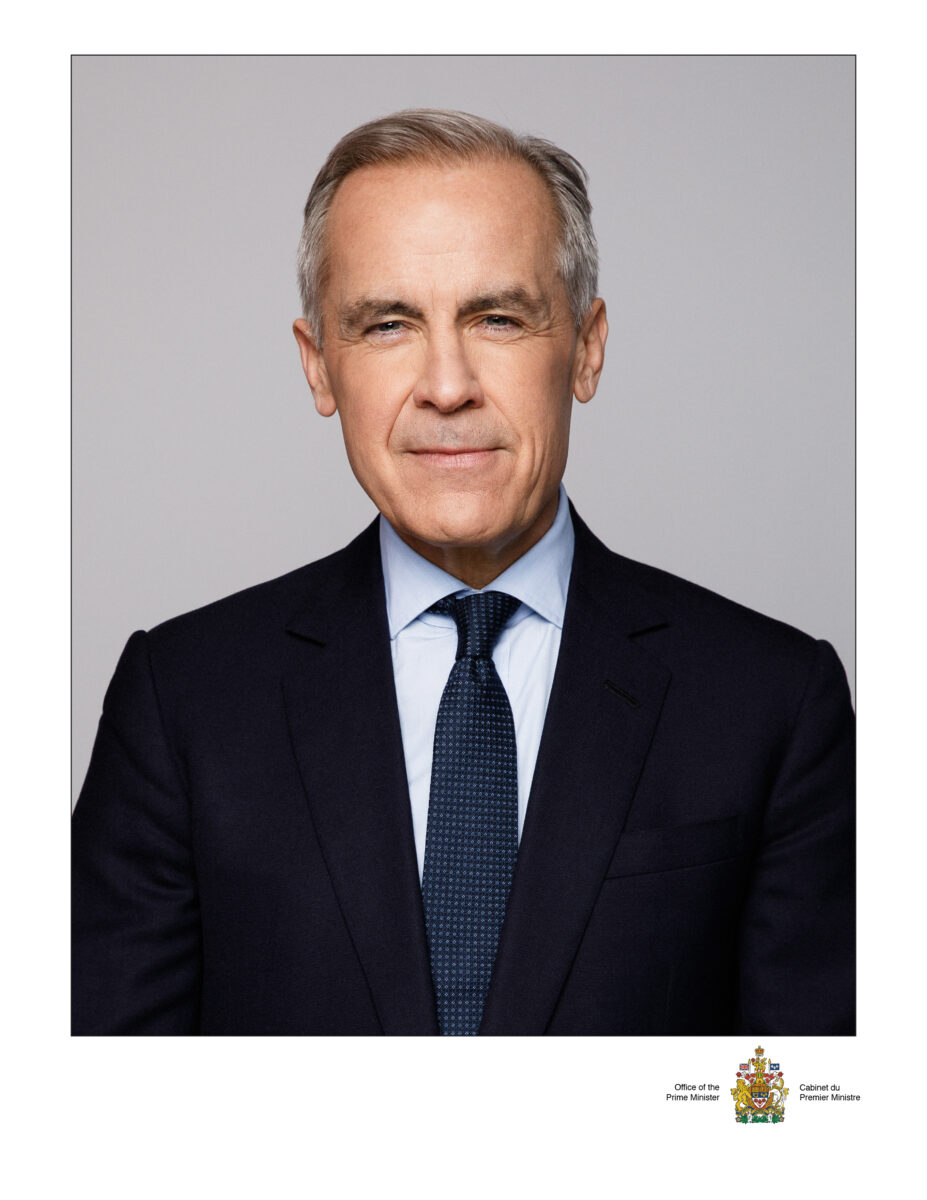
Prime Minister, Mark Carney announced Friday a series of new, strategic measures for workers and businesses in those sectors most impacted by U.S. tariffs and trade disruptions.
“These initiatives will help workers acquire new skills and businesses retool their production and diversify their products, while spurring more domestic demand for Canadian businesses. As we build the economy of the future, we’re ensuring workers and industries can bridge to seize its opportunities,” said the government.
“The global trade landscape is rapidly changing, as the United States fundamentally transforms all of its trading relationships. The effect is profound – displacing workers, disrupting supply chains, forcing companies to rethink where they source their materials and products, and causing uncertainty that is curbing investment. Canada has the best deal of any U.S. trading partner – yet we cannot rely on our most important trade relationship as we once did. We must build our strength at home.
“Canada’s new government is building a new industrial strategy to meet this moment. This will transform our economy – from one of reliance on specific trade partners to one that is more resilient to global shocks, built on the solid foundation of strong Canadian industries, and bolstered by diverse international trade partners.”
Mark Carney
Building on previously announced measures to help transform the Canadian steel and softwood lumber industries, the following new initiatives were announced on Friday:
A strong, confident workforce: The government will introduce a new reskilling package for up to 50,000 workers, make Employment Insurance more flexible and with extended benefits, and launch a new digital jobs and training platform with private-sector partners to connect Canadians more quickly to careers.
A new Strategic Response Fund: The government will invest $5 billion through a new fund with flexible terms to help firms in all sectors impacted by tariffs adapt, diversify, and grow, with support provided to industries by new Workforce Alliances to align training and workforce needs.
A new Buy Canadian Policy: The government will introduce a new policy to ensure the federal government buys from Canadian suppliers, require local content when domestic suppliers are unavailable, extend this approach to all federal funding streams and Crown corporations, and provide a roadmap for provinces and municipalities to apply similar standards to their own procurement.
Immediate liquidity relief: The government will expand Business Development Bank of Canada loans for small and medium-sized enterprises (SMEs) to $5 million, provide more flexible financing through the Large Enterprise Tariff Loan Facility, and give the auto sector flexibility by waiving 2026 model year vehicles from Electric Vehicle Availability Standard requirements and by launching an immediate 60-day review to reduce costs.
Assisting Canada’s canola and agriculture producers: The government will introduce a new biofuel production incentive, with over $370 million for domestic producers to address immediate competitiveness challenges, amend Clean Fuel Regulations to support the domestic biofuels industry, temporarily increase the Advance Payments Program interest-free limit to $500,000 for canola advances, and provide increased funding for the AgriMarketing Program to support diversification into new markets of agricultural products.
Regional Tariff Response Initiative: The government will expand support to SMEs to $1 billion over three years, with flexible terms, and increase new non-repayable contributions to eligible businesses impacted by tariffs across all affected sectors, including agricultural and seafood.
“We cannot control what other nations do. We can control what we give ourselves – what we build for ourselves. Canada is building the strongest economy in the G7, one that is less reliant on foreign powers and more resilient in the face of global shocks. In the face of uncertainty around the world, we are ensuring that our workers and businesses will prosper by building Canada’s strength at home,” said Carney.
“Canada’s unions are ready to work with government to make sure today’s announcement delivers for workers and for our economy. Ottawa’s strategy must prioritize good jobs and better lives for workers their families. To succeed, we need we need a clear industrial strategy that coordinates across industries, regions, and different levels of government while bringing workers into the heart of decision-making.
“We want to work together to ensure that trade diversification efforts are not just about opening new markets, but about building the infrastructure and capacity here at home to succeed. That means major federal investment in warehousing, rail, ports, energy, and logistics, all delivered with prevailing wage requirements and strong labour standards. It also means supporting decarbonization so that Canadian exports can reach Europe and other markets without being penalized by carbon border tariffs.
“The new ‘Buy Canada’ plan could become a powerful tool for strengthening our economy and creating demand for Canadian products. But we know from past experience that procurement rules only succeed if they are designed to prioritize creating and protecting good, unionized jobs. Otherwise, public money will flow into corporations and private hands without securing long-term benefits for communities and working people.
“Workers welcome enhancements to Employment Insurance — this is a great move that if done right is an essential piece of building a resilient economy. As government moves ahead, it will be important to ensure these improvements cover everyone who needs them, including women, young people, and those in precarious or non-standard jobs.
A sign encouraging shoppers to buy Canadian products at a liquor store in Vancouver on Feb. 2, 2025. Shoppers have been caught up in the buy Canadian fervour since U.S. President Donald Trump began threatening to apply tariffs on imports from Canada. THE CANADIAN PRESS/Ethan Cairns
“There are always ways to find savings, but governments must remember that economic strength also depends on strong public services. Canadians need access to health care, child care, and housing that help bring down costs for families. Workers need confidence that Employment Insurance, skills training, and supports will be there when they are needed most. These investments make the economy more resilient and help families weather the shocks that tariffs, trade disruptions, and corporate decisions can bring. With unemployment rising and the job market deteriorating fast, now is the worst possible time for austerity and severe budget cuts to social programs and public-service jobs.
“While today’s announcement is welcome, there are still some gaps that need to be addressed. For steel and aluminum producers, the absence of strengthened tariff rate quotas is a missed opportunity. Without this breathing room, workers and employers alike will struggle to adapt to fast-changing market conditions. On electric vehicles, relief for automakers must be tied to clear commitments: investments in Canadian production, guarantees for Canadian jobs, and support for the transition measures that unions are calling for. Canadians expect no less when billions of dollars in public funds are being put on the table.
“The funding programs and worker supports announced today are important, but they will only succeed if they look beyond short-term reskilling. We want to ensure these tools prioritize upskilling, retention, and pathways to unionization so that workers can build stable, long-term careers in growing industries.
“Canada’s unions will continue to push for a bold and comprehensive plan — one that connects today’s measures into a coherent industrial strategy, ensures public investments build Canadian capacity, and guarantees that the payback is measured in secure union jobs. We look forward to working with government to make that vision a reality, because that’s the only way to secure Canada’s future in a turbulent global economy.”
Photo by Mario Toneguzzi
Canadian Manufacturers & Exporters (CME) said it welcomes the announcements by the Prime Minister to support Canada’s industrial economy. Manufacturing has been among the hardest hit by U.S. tariff actions, and these measures represent a necessary step toward stabilizing the sector. As a strategic industry that employs over 1.8 million well-paid workers across the country, manufacturing is key driver or exports, and innovation and productivity – and is essential to Canada’s long-term economic resilience and sovereignty, it said.
“CME applauds the federal commitment to retrain 50,000 workers. To succeed, this program must prioritize employer-led, on-the-job training and reduce barriers for manufacturers seeking to retain and upskill their workforce. CME has extensive experience delivering sector-based training solutions and currently partners with manufacturers nationwide to build practical, work-integrated training programs that meet real-world needs. We welcome the opportunity to work with the federal government to deliver urgently needed support to Canadian workers,” said the organization.
“The $5 billion Strategic Response Fund offers a promising mechanism to help manufacturers retool, diversify, and stay globally competitive. But success will hinge on speed and flexibility. This fund cannot be weighed down by red tape and lengthy approvals. CME calls on the government to deliver fast, practical assistance that strengthens domestic production and supply chains.
“CME has long urged the federal government to pursue a more robust Buy Canadian policy. We are cautiously optimistic about the new commitment requiring federal agencies and Crown corporations to prioritize Canadian-made goods. However, we recognize there are significant barriers to creating a truly national procurement policy. If implemented effectively, this initiative could be a critical step toward bolstering domestic supply chains, building industrial resilience, and supporting Canadian jobs. We look forward to working with government to ensure the policy is rolled out efficiently and with minimal administrative burden.”
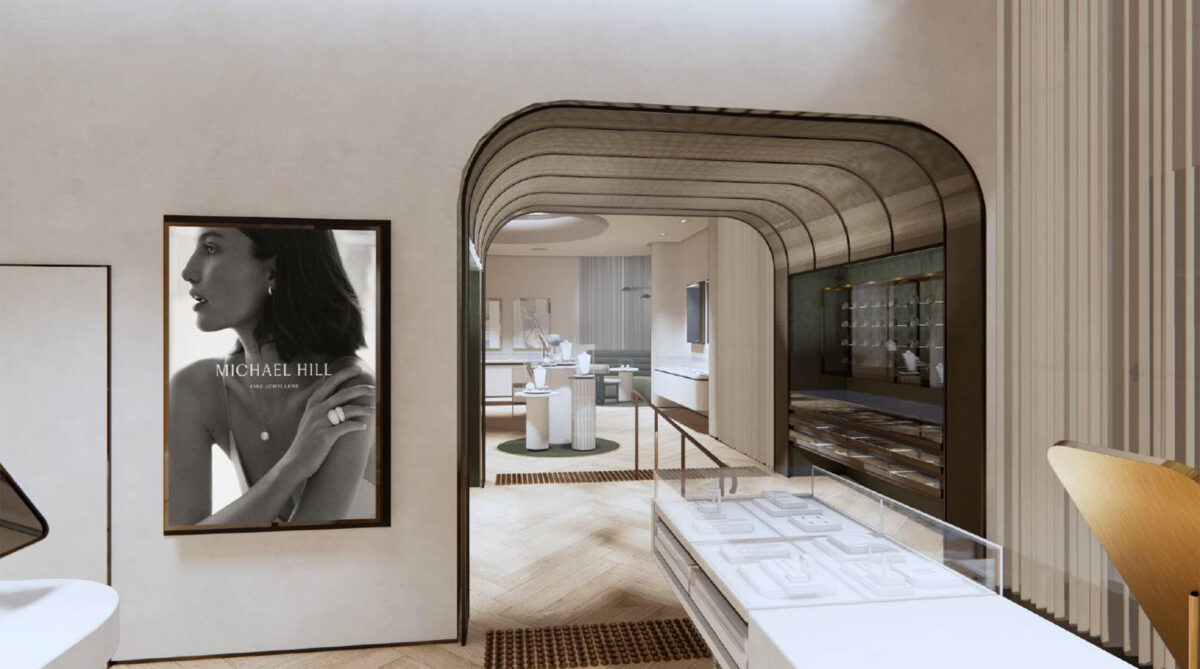
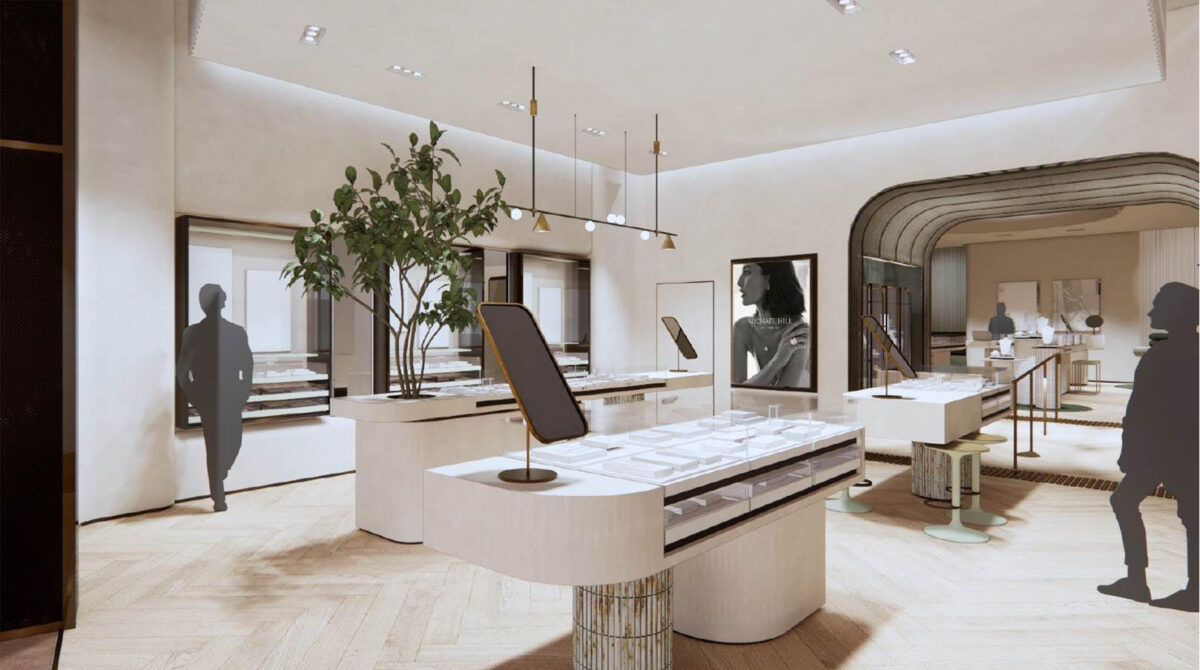
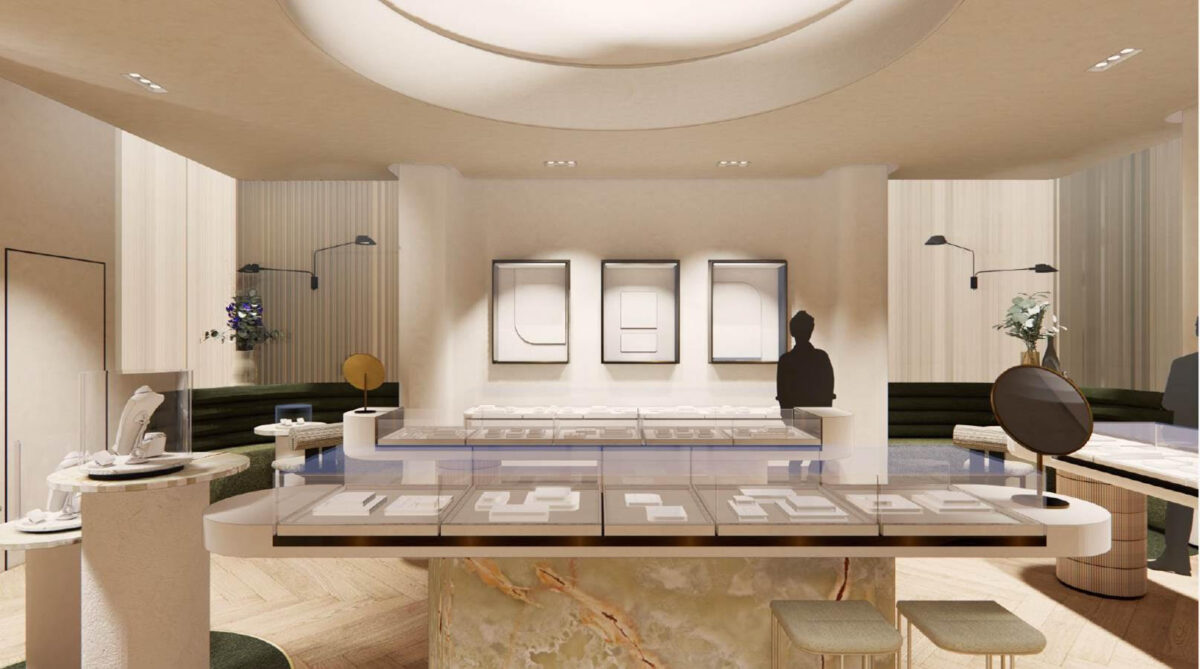
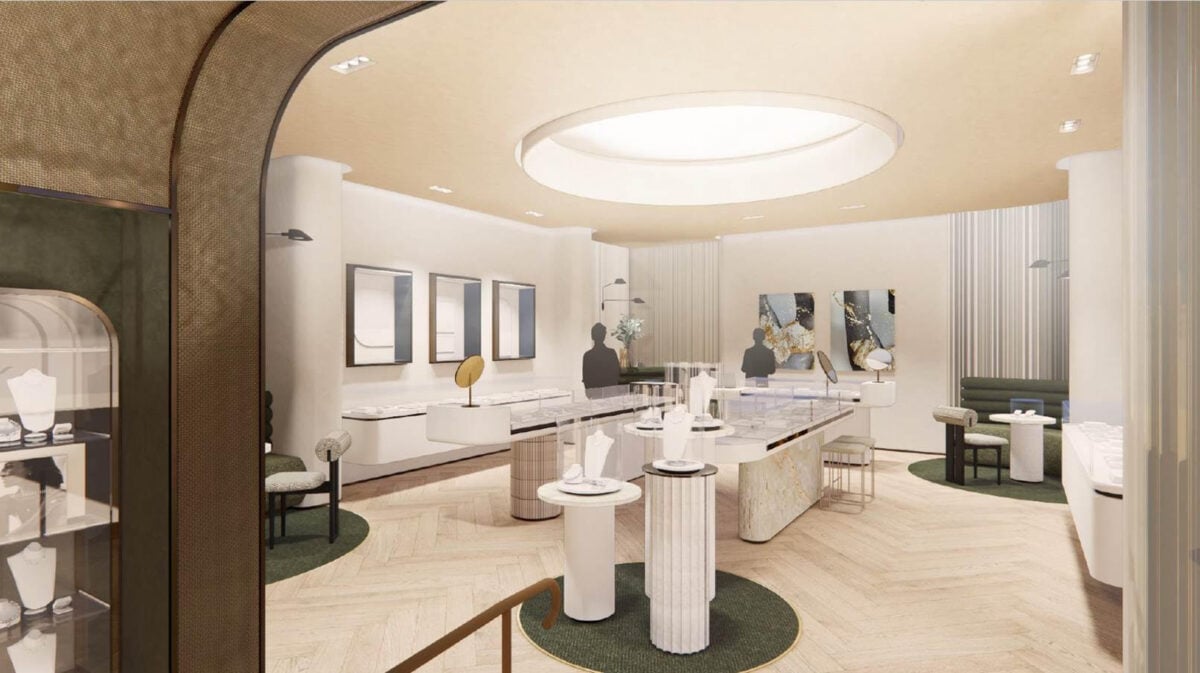
New Michael Hill 'New Era' store design concept. Renderings provided by Michael Hill International
Jewellery retailer Michael Hill is ushering in a new chapter in Canada with the launch of its immersive ‘New Era’ store concept. The move is part of a global brand transformation designed to modernize the in-store experience while honouring the brand’s legacy of craftsmanship. Two Canadian locations, Yorkdale Shopping Centre in Toronto and Metropolis at Metrotown in Vancouver, will be among the first to showcase this innovative format, blending sensory design, storytelling, and a deepened connection to the brand’s origins.
The announcement signals a significant Canadian investment for the Australia-based company, which operates approximately 80 stores across the country and has identified Canada as a critical market within its Commonwealth roots.
“It has always been in the works to bring our ‘New Era’ store concept to Canada; it is a key market for us and has been very special to our brand since we first expanded there in 2002,” said Jo Feeney, Chief Marketing Officer at Michael Hill.
Jo Feeney, Chief Marketing Officer at Michael Hill
Immersive Store Design Aimed at Creating ‘Moments of Discovery’
Michael Hill’s new retail concept reflects a brand-wide evolution. At the heart of the new design is a philosophy called ‘A Moment to Discover’, which reimagines the shopping experience as a sensory journey.
“The new-look stores have been conceptualized to bring to life the philosophy of ‘A Moment to Discover’: immersive environments of free-flowing spaces to conjure interest and discovery,” Feeney explained.
Customers visiting the new flagship locations will notice more than just sleek design. The stores are crafted to appeal to all senses, featuring a custom scent inspired by New Zealand’s serene natural landscapes—where the company was founded in 1979 by Sir Michael Hill and his wife Christine.
“We have thought about not only what you see, but what you feel, hear, and smell,” Feeney added. “Our immersive signature experience is complete with a custom scent, created to encapsulate the serene natural beauty of our brand’s birthplace.”
The design work for the Canadian flagships has been undertaken in partnership with Vancouver-based architectural firm Cutler, which is providing Architecture and Interior Design services for Michael Hill on various locations in Canada.
New Michael Hill ‘New Era’ store design concept. Renderings provided by Michael Hill International
Yorkdale Flagship Opens Fall 2025
The new Michael Hill flagship store at Toronto’s Yorkdale Shopping Centre is slated to open Fall 2025, offering an upgraded experience for one of the company’s most important North American markets.
“We’re thrilled to share that we’ll be opening a new Global Flagship store in Yorkdale, Toronto, this September,” said Feeney. “In fact, our very first store in Canada was opened and run by Emma Hill, the daughter of our Founders.”
The Vancouver flagship at Metropolis at Metrotown will also adopt the New Era concept, aligning two of the brand’s top-performing locations with its global rebranding initiative.
These Canadian launches follow the global debut of the concept in Australia and New Zealand and form part of the company’s broader strategic transformation plan under late CEO Daniel Bracken, focused on brand elevation, omni-channel expansion, and customer experience. Bracken passed away unexpectedly in February 2025 following treatment for an underlying medical condition.
New Michael Hill ‘New Era’ store design concept. Renderings provided by Michael Hill International
Strong Performance in the Canadian Market
Michael Hill’s investment in new Canadian store formats reflects its strong brand resonance in the country. The company generates approximately CAD $120 million in annual revenue in Canada, supported by a network of stores from British Columbia to Quebec.
“Our brand story is all about helping people to mark life’s most meaningful moments, which resonates strongly with our customers in Canada,” said Feeney. “Fine jewellery is a special purchase—whether you’re gifting or treating yourself.”
She noted that Canadian customers are particularly drawn to the brand’s bridal collections, unique statement pieces, and sustainability-focused product lines.
“From a product perspective, our Canadian customers are drawn to unique and statement designs in their jewellery and are interested in sustainable offerings and innovations, with a higher adoption of our lab-grown diamonds in Canada,” Feeney noted.
Michael Hill has also observed higher conversion rates and customer satisfaction among Canadian shoppers who appreciate the store’s in-person service and online convenience.
New Michael Hill ‘New Era’ store design concept. Renderings provided by Michael Hill International
Exclusive Canadian Collections and Ethical Sourcing
The Canadian market will benefit from a number of exclusive product launches in 2025. Among them is a new collection of pendants designed specifically for Canadian customers.
“We have just launched a collection of uniquely designed pendants, including a Maple Leaf, Postcard, Inukshuk, and Acorn—available only in Canada,” Feeney shared. “These are part of our Pendant Bar Collection.”
The brand has also introduced a Canadian Diamonds collection featuring ethically sourced natural diamonds from the Northwest Territories, with the pieces crafted by artisans in Australia.
“We understand how important provenance and local industry are to our customers, so we are proud to be able to offer this option,” said Feeney.
This aligns with Michael Hill’s broader sustainability commitments, including its plan to use 100% responsibly sourced gold by 2030 and its expanded lab-grown diamond offerings across its global markets.
New Michael Hill ‘New Era’ store design concept. Renderings provided by Michael Hill International
Brilliance Loyalty Program and Digital Growth
Michael Hill’s Brilliance by Michael Hill loyalty program continues to gain traction across Canada. The global program has surpassed 2.2 million members, offering early access to sales, birthday gifts, and exclusive events. In Canada, this initiative complements a growing e-commerce channel, which now accounts for nearly 10% of total sales globally.
“We’re continuing to invest in digital capabilities while ensuring that our in-store service remains exceptional,” said Feeney. “Whether a customer shops with us online or in-person, the experience should reflect the same quality and care.”
Digital appointments, virtual consultations, and a seamless online-to-instore pickup process have been rolled out across Canada, improving accessibility and convenience for a wide range of customers.
The Michael Hill Foundation and Community Engagement in Canada
Beyond retail, Michael Hill is investing in social and environmental causes through the Michael Hill Foundation, launched in early 2024. In Canada, the foundation supports both women’s health and nature restoration initiatives.
“In Canada, we have been supporting The Period Purse, and in 2024 our donations helped over 2,600 women,” said Feeney.
“The Michael Hill Foundation has also been contributing to the Nazko Wildfire Restoration Project in Cariboo, BC, through our partnership with One Tree Planted. Using our 2024 donations, we’ve planted 68,051 trees here.”
Additionally, the company donates proceeds from its LAB. Collection to support tree-planting efforts, pledging up to 10 trees per piece sold.
Remembering Sir Michael Hill: A Visionary Legacy
The unveiling of the ‘New Era’ store concept in Canada comes at a poignant time for the brand, following the recent passing of its founder, Sir Michael Hill. The celebrated jeweller and entrepreneur died on July 29, 2025, at his home in Arrowtown, New Zealand, after a battle with cancer. He was 86 years old.
Sir Michael had stepped down from the board of Michael Hill International earlier in April to focus on his treatment, leaving behind a legacy that transformed the jewellery retail landscape across three continents. His career began in his uncle’s jewellery store, before he and his wife Christine opened the first Michael Hill store in Whangarei, New Zealand, in 1979 — a single storefront that would eventually grow into a global brand with over 280 locations, including nearly 80 in Canada.
Company Chairman Rob Fyfe described him as “a visionary who revolutionised jewellery retail” and “a deeply passionate family man and mentor.” His influence stretched far beyond the business world. Sir Michael was also a violinist, art patron, and philanthropist who founded the Michael Hill International Violin Competition, elevating classical musicians on the global stage.
Under his guidance, Michael Hill grew into a household name, known for its in-house design, personalised customer service, and memorable brand storytelling.
His passing marks the end of an era for the company—but the launch of the New Era concept signals the continuation of his vision. With every customer who walks into a store to mark a meaningful moment, Sir Michael’s legacy lives on.
Royalmount in Montreal on Thursday, July 17, 2025. Photo: Maxime Frechette
Montreal’s newest luxury retail and lifestyle destination, Royalmount in Montreal, is celebrating its first anniversary. Since opening its retail centre on September 5, 2024, the massive mixed-use development has been watched closely by industry experts, retailers, and city leaders for signs of how it might reshape the region’s shopping landscape.
One year in, the centre is reporting steady growth, an evolving customer base, and promising signals for long-term success. Retail expert Carl Boutet, who has followed Royalmount closely, says that while it is still early days, the project is carving out a distinctive role in Montreal’s retail ecosystem.
Carl Boutet at Royalmount in Montreal. Image: Carl Boutet
A Qualified, Younger Clientele
New data from Montreal analytics firm Propulso offers a detailed look at who is visiting the centre. Over the past year, more than 270,000 unique mobile devices were tracked across Royalmount, the Montreal Eaton Centre, and CF Carrefour Laval for comparison.
The findings show that Royalmount has not yet reached the visitation frequency and dwell times of its comparables, but its audience stands out. Visitors are younger, more affluent, and more international than those at other malls.
“The most interesting part of the Propulso study is that Royalmount is skewing younger while other malls are skewing older,” said Boutet. “That’s exciting because it speaks to the long-term potential of this project.”
The study revealed that the average Royalmount visitor is 4.3 percent younger than Quebec’s general population. There is a particularly strong presence among the 15 to 55 age group, in contrast to most shopping centres where the 55-plus demographic dominates.
Income and Education Levels Stand Out
Affluence is also a defining characteristic. According to Propulso, Royalmount shoppers’ incomes are 5.5 percent higher than Quebec’s general population, with a striking overrepresentation of 43 percent among individuals earning more than $200,000 annually.
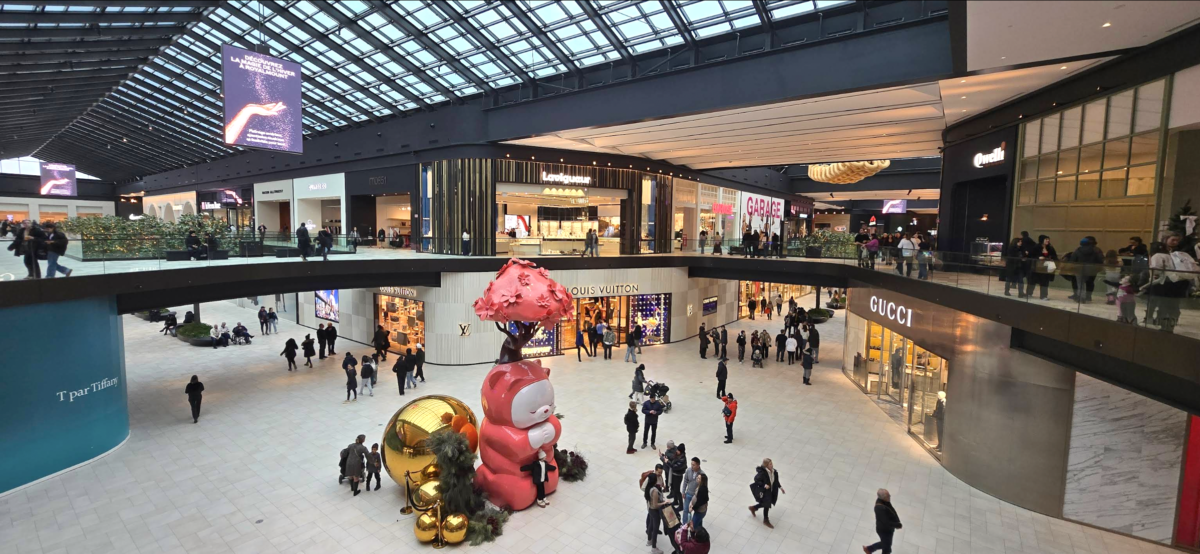
This group represents the core luxury customer that Royalmount’s anchor tenants, such as Louis Vuitton, Gucci, and Balenciaga, were designed to attract. At the same time, one in three visitors holds a bachelor’s or master’s degree, well above the Quebec average.
“Quality over quantity is the right way to look at it,” Boutet explained. “The frequency might not be there yet, but the profile of who is coming in is exactly what the developers were betting on.”
Royalmount in Montreal. Photo: Sara Sanjou/Google Maps
Tourism and Reach
Royalmount’s visitor base extends well beyond Montreal’s borders. Propulso found that half of visitors come from outside the Island of Montreal. About one in ten is considered a tourist in Montreal, three percent arrive from elsewhere in Canada, and one percent from the United States.
On average, visitors travel 25.5 kilometres to get to the centre, a figure 15.5 percent higher than that of CF Carrefour Laval. Royalmount also sees 26.6 percent more tourists than Laval’s leading shopping centre.
“These numbers reinforce that Royalmount is more of a destination,” said Boutet. “Like Yorkdale in Toronto, people don’t necessarily live nearby, but they’re willing to make the trip for the mix of shopping and dining.”
Visit Frequency and Duration
Despite encouraging demographic signs, Royalmount still faces challenges in repeat visits and dwell times. Two out of three visitors came only once during the past year, compared to one in two at Montreal Eaton Centre and CF Carrefour Laval. Visit frequency overall was about 30 percent lower than its comparables.
The average visit duration was also shorter. While Royalmount matched Montreal Eaton Centre with a slight increase of three percent, visits were 35 percent shorter than at CF Carrefour Laval.
“I found that surprising,” said Boutet. “With such a strong food service component, I would have expected people to stay longer. Over time, as more hospitality and experiential elements open, I think those numbers will shift.”
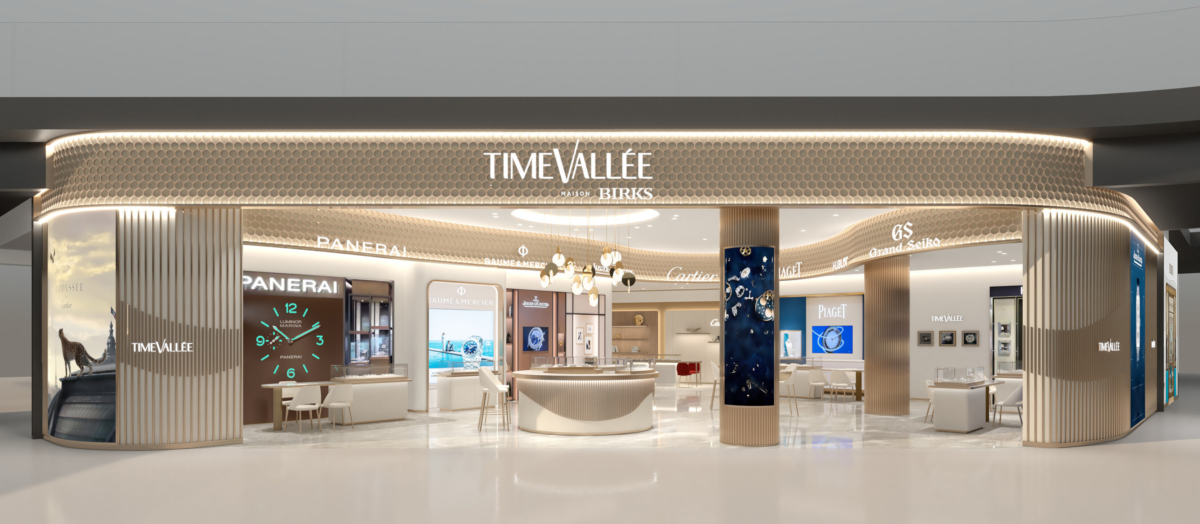
TimeVallée by Birks at Royalmount in Montreal. Image: Birks Group
Retailers Navigating Early Performance
Feedback from retailers has been mixed, according to Boutet. Larger, multi-store operators with established customer bases appear to be meeting expectations, while smaller, single-store retailers face a tougher road.
“The ones finding it difficult are those who relocated to Royalmount as their only store,” Boutet said. “Most of them are on revenue share arrangements, which has helped. But if they had to pay full rent, it might be more challenging.”
He emphasized that this is typical of large-scale retail projects in their early stages. “It’s a long haul project. They had a big launch even though they opened at half occupancy. Now they’re building momentum. Success for something of this scale doesn’t happen overnight.”
A Blend of Luxury and Lifestyle
Royalmount’s retail mix has become one of its strongest selling points. The centre features about 170 stores and 60 dining options, with approximately half being new-to-market for Montreal.
Highlights include Quebec’s first flagship boutiques for Louis Vuitton and Gucci, the province’s largest Rolex boutique, and RH’s debut design gallery. Alongside these luxury brands, mainstream names such as Zara, H&M, Mango, Nike, and Sephora provide balance.
This combination has been designed to appeal to both affluent shoppers and younger, trend-driven consumers. “You need the masses to keep Zara and Nike thriving, but at the same time, you want the high-income clientele for Louis Vuitton,” Boutet noted.
Rennaï, a new beauty and self-care retailer is now open at ROYALMOUNT in Montreal, Canada (CNW Group/Rennaï)
Dining, Entertainment, and Events
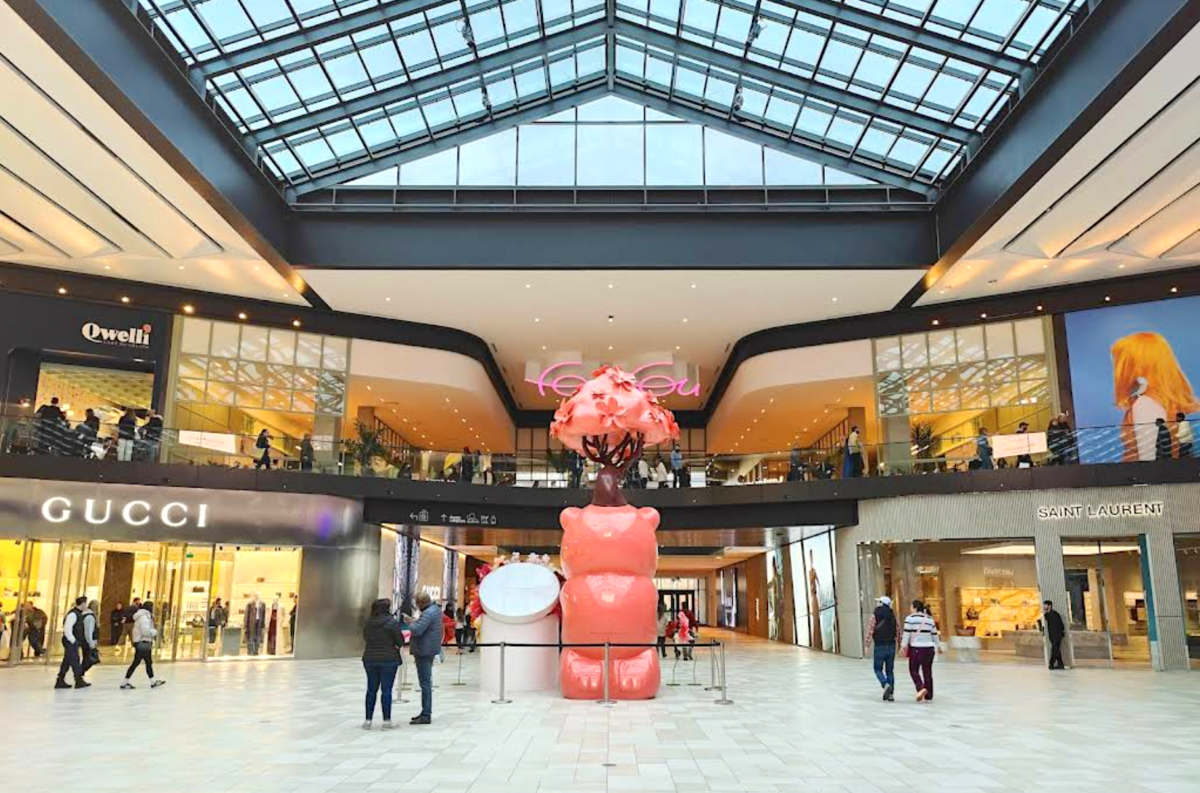
The food and beverage offering at Royalmount has emerged as one of its main draws. Its food hall, Le Fou Fou, includes 12 dining options and four bars, complemented by a wide range of restaurants throughout the property.
Entertainment venues such as Rec Room and planned attractions like an aquarium further expand its appeal. Public spaces, including a 77,000-square-foot urban park, have been activated with more than 50 events in the first year, ranging from Asian night markets to live DJ sessions.
“They’re not holding back,” Boutet said. “They’re pushing hard to make sure there’s always a reason for people to visit, whether it’s shopping, food, or cultural programming.”
Municipal Politics and Future Phases
Royalmount is still in the early stages of its planned 20-phase development. The retail centre represents only about 7.5 percent of the project’s eventual density, which will include offices, hotels, entertainment venues, and potentially residential components.
The residential portion remains on hold due to zoning issues and political debate. “It’s complicated,” Boutet said. “There’s pressure from municipal authorities, and with elections coming up, approvals are unlikely until the political dust settles.”
For now, the soft condo market in Montreal means there is little urgency. But longer term, residential development will be key to creating the “mini-city” that Royalmount is envisioned to be.
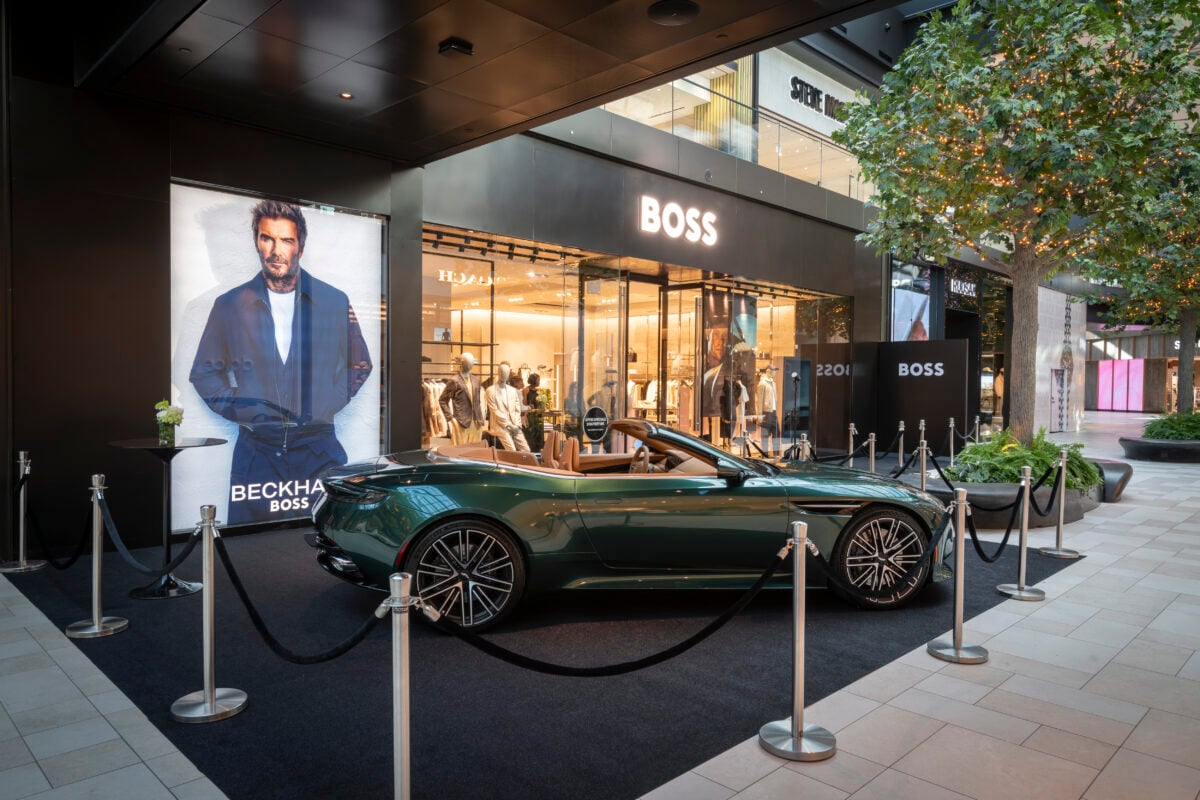
Boss Store Opening at Royalmount Montreal. Photo: Hugo Boss
Impact on Montreal’s Retail Market
Royalmount’s arrival has intensified competition in Montreal’s luxury and fashion sectors. Some analysts believe it has accelerated the decline of nearby Rockland Centre, while drawing affluent consumers who might otherwise shop in Toronto or New York.
Boutet suggests that Holt Renfrew Ogilvy, downtown Montreal’s main luxury clustering, will likely feel some impact, though both properties create synergies rather than outright conflict.
“I think in a couple of years we’ll wonder what Montreal would have looked like without Royalmount,” he said. “It adds a critical mass of luxury retail that the city simply didn’t have before.”
Looking Ahead
As Royalmount Montreal enters its second year, industry watchers expect steady growth rather than explosive expansion. The emphasis on quality customers, strong food and entertainment offerings, and sustained investment in luxury brands suggests the foundation is in place for long-term success.
“There will be turnover, like any mall, and they’ll need to keep fine-tuning the mix,” Boutet concluded. “But the important thing is that the trend lines are positive. The demographic they’re attracting is the right one. With only a fraction of the project built, there’s a lot of runway ahead.”
Royalmount, Montreal’s ambitious upscale shopping and lifestyle development, is celebrating its first anniversary on September 5. The $7 billion project from developer Carbonleo has quickly established itself as a destination for both international brands and Montrealers seeking a blend of retail, dining, culture, and entertainment.
At the one-year mark, the centre has reached a significant milestone: more than 150 stores are now open, with occupancy at 87 percent and leasing commitments surpassing 90 percent. The pace of tenant additions, cultural events, and sustained traffic is fueling optimism for Royalmount’s future.
“We opened last September with 57 stores, and today we are over 150,” said Michael Stroll, Senior Vice President and Partner at Carbonleo. “We are building strong momentum, weekends are proving especially busy, and sales continue to climb steadily. We are very pleased with where we are one year in.”
Michael Stroll
Luxury Retail at the Core
Royalmount has quickly attracted a concentration of luxury retail unmatched in Quebec. Montblanc marked the anniversary by opening its boutique this week, with Tudor scheduled to launch on Saturday. Later this year, Tiffany & Co. will unveil its flagship and Rolex will open what Stroll calls “the largest Rolex store in North America.”
The first year also brought Quebec debuts for Louis Vuitton, Gucci, and Balenciaga. RH launched its first Quebec gallery, a 50,000-square-foot showroom that includes a rooftop restaurant. “The RH restaurant has been a hot ticket since day one,” said Stroll. “It is performing among the best in Montreal.”
The project’s luxury wing is nearly full. Stroll confirmed that two of the three remaining prime spaces are out for signature and likely to be finalized in the coming days. “We are probably oversubscribed in terms of demand for level one,” he said. “That speaks to both the appeal of the project and the performance we are seeing from tenants.”
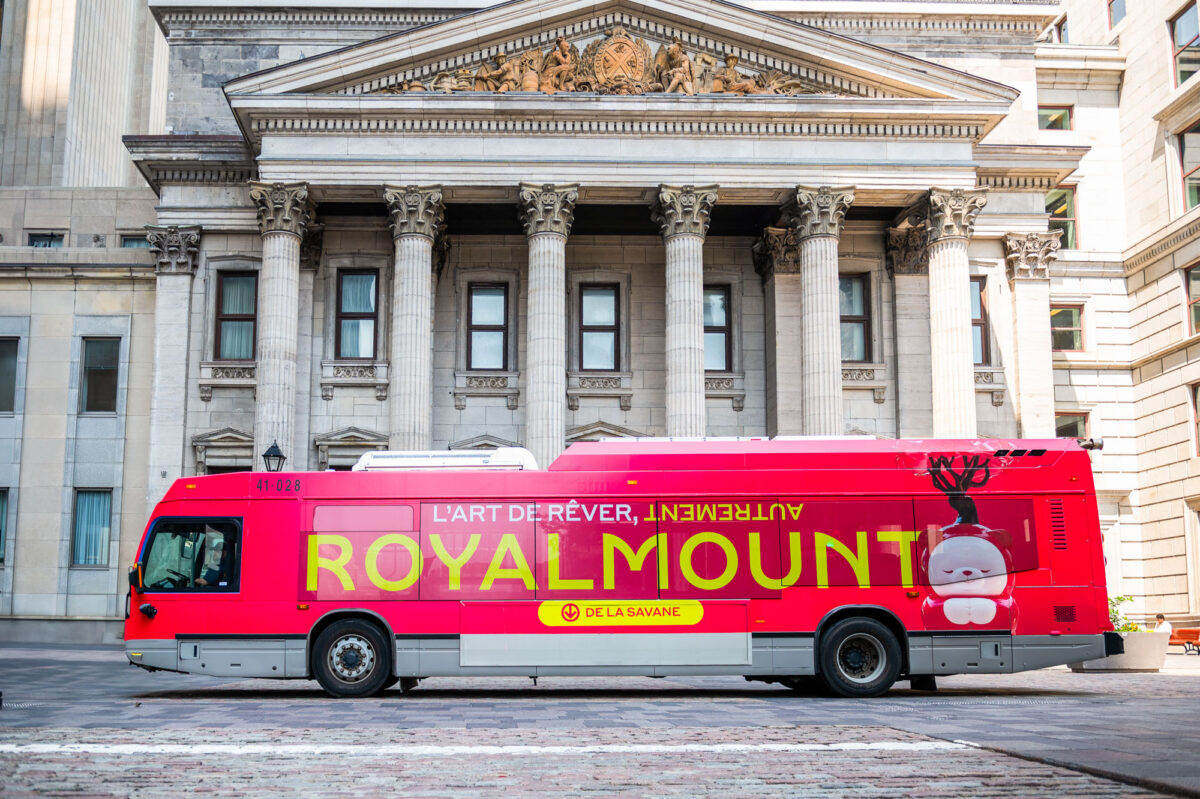
Royalmount advertising campaign for the one year anniversary. Image: Royalmount/Carbonleo
Expanding Tenant Mix
While luxury anchors the centre, Royalmount also integrates accessible global brands such as Zara, H&M, Mango, Sephora, and Nike. Alo Yoga, Veronica Beard, Anine Bing, and Longchamp add variety, ensuring the project appeals to a broader audience beyond just high-end shoppers.
This positioning fills a long-standing gap in Montreal’s retail landscape. “Montreal has less retail per capita than Toronto or Vancouver, and the caliber of that retail is significantly lower,” said Stroll. “Royalmount was needed to raise the bar, and we are delivering on that vision.”
The tenant mix also emphasizes experiential concepts. The multi-brand beauty hall René, exclusive to Royalmount, is the first of its kind globally. “Beauty is one of the categories that continues to see growth,” Stroll explained. “Rennai provides a holistic approach, layering experiences and services onto products in a way that does not currently exist in Canada.”
Royalmount in Montreal on Thursday, July 17, 2025. Photo: Maxime Frechette
Food, Dining, and Social Life
Dining has become a core draw at Royalmount. Its food hall, branded Le Fou Fou, offers 12 dining options and four bars. Unlike many malls where food courts are hidden in lower levels, Royalmount’s is positioned at the centre of the project, fully glazed with views of the piazza. “It really comes to life,” Stroll noted.
Restaurants are thriving as well. Italian restaurant Siamo Noi is earning critical acclaim, while other venues are reporting numbers among the best in Montreal. “The restaurant offering is very strong,” Stroll said. “It has quickly become part of the city’s dining circuit.”
Festival at Royalmount in Montreal. Image: Carbonleo
Events and Community Engagement
Royalmount has embraced cultural programming as a cornerstone of its brand. More than 50 events have been hosted in its first year, ranging from family activities to large-scale festivals.
“We welcomed over 5,000 people per weekend during our mural festivals and over 30,000 people to our Asian night market,” said Stroll. “Next year will be even better. We are expanding the cultural calendar with everything from festivals to weekly wellness and music programming.”
This approach reinforces Royalmount’s identity as more than a mall. Stroll describes it as “a place where Montrealers and visitors can come together to shop, dine, connect, and celebrate.”
Royalmount in Montreal. Photo: Bruno Ranieri
Connectivity and Sustainability
A key feature of Royalmount is its accessibility. The project connects directly to Montreal’s De la Savane metro station via a 200-metre skybridge, a decision that has proven vital. “About a third of our footfall is coming through the skybridge from the metro,” Stroll confirmed. “It validates our belief that transit connectivity would be a major driver.”
Montreal’s metro system is heavily used, ranking second in per-capita ridership in North America after New York City. “People have really embraced the metro connection,” said Stroll. “It also aligns with our sustainability values.”
Carbonleo is one of the few B Corp-certified developers, underscoring a commitment to responsible development. The project targets LEED Gold, features geothermal systems, and integrates significant green space. Four hours of free parking further balances accessibility for drivers while preventing the lot from being used as an airport terminal.
RH Gallery at Royalmount in Montreal. Image: RH
A Broader Vision Beyond Retail
The first retail phase represents just a fraction of Royalmount’s long-term vision. Stroll notes that only about one-fifteenth of the site’s total permitted density has been built.
“Royalmount is designed as a mixed-use cultural hub,” he explained. “Future phases will integrate hotel, office, residential, arts, and entertainment, all alongside retail and dining. We are already in pre-development on hotel and office components, and working through residential.”
This broader plan situates Royalmount as more than a shopping destination, but rather as a new urban district for Montreal.
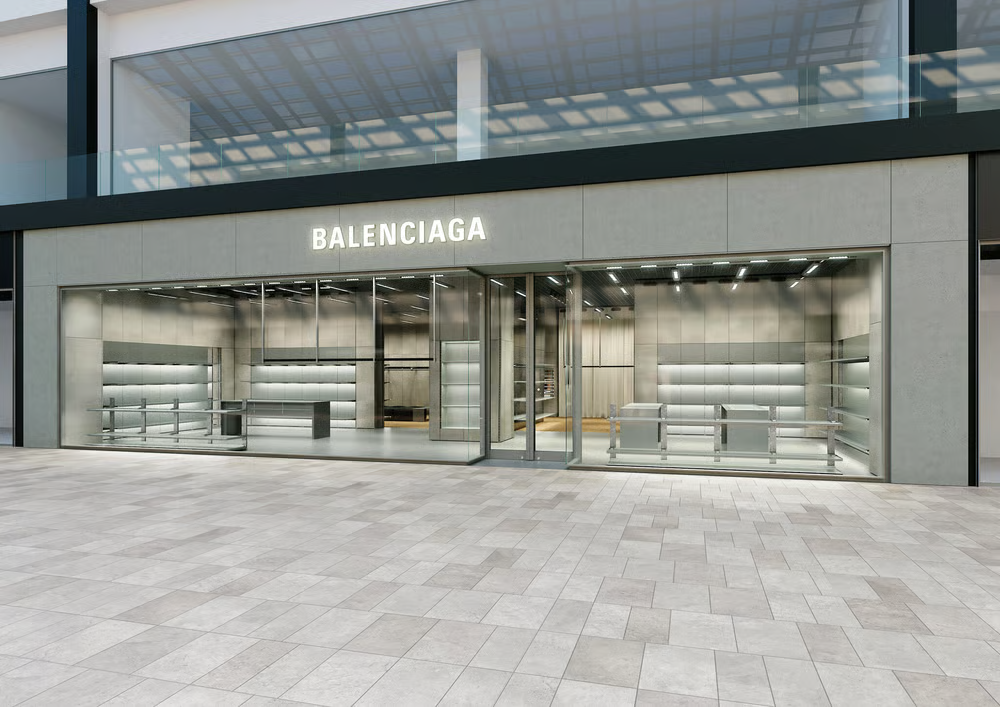
Balenciaga at Royalmount in Montreal. Image: Balenciaga
A Measured View of Success
Stroll emphasizes patience when judging projects of this scale. “If you study large new developments in any city, they rarely open at full strength,” he said. “CF Carrefour Laval and CF Promenades St-Bruno both had slow starts. Even Westfield London, which is now one of the best malls in the world, opened without immediate success. You need vision and patience.”
That perspective is particularly relevant given the challenging economic climate, with rising capital costs and a slowdown in luxury spending globally. Yet Royalmount has surpassed expectations, drawing both local and international tenants while delivering steady traffic growth.
Royalmount’s Role in Montreal’s Retail Landscape
Montreal has long been underserved by luxury retail. Beyond downtown’s Holt Renfrew Ogilvy, Harry Rosen, and a scattering of boutiques, the city lacked a cohesive hub for high-end shopping. “Royalmount fills that void,” Stroll said. “It is bringing brands and experiences that simply were not present before.”
The centre also arrives at a time of transition for department stores. The Hudson’s Bay Company has shuttered, leaving a gap now partly addressed by Rennai. Department stores once defined malls in Canada, but the role of anchors has diminished.
“Today’s traffic drivers are different,” said Stroll. “Restaurants, Apple stores, RH galleries, and flagship boutiques can generate more meaningful footfall than department stores. That was part of our design from the beginning.”
For Stroll and his team, the first anniversary is an opportunity to reflect on what has been accomplished and to look ahead. “It has been a pedal-to-the-metal year,” he said. “The wins need to be celebrated, especially in this environment. We are optimistic about what comes next.”
Employment declined by 66,000 (-0.3%) in August, largely the result of a decline in part-time work, and the employment rate fell 0.2 percentage points to 60.5%. The unemployment rate rose 0.2 percentage points to 7.1%, according to a report released Friday by Statistics Canada.
It was the second month in a row that employment has fallen in the country.
Employment fell for core-aged (25 to 54 years old) men (-58,000; -0.8%) and core-aged women (-35,000; -0.5%) in August. There was little change in employment for youth aged 15 to 24 and people aged 55 and older, explained the federal agency.
Employment decreased across several industries in August, led by professional, scientific and technical services (-26,000; -1.3%), transportation and warehousing (-23,000; -2.1%), and manufacturing (-19,000; -1.0%). On the other hand, there was an increase in construction employment (+17,000; +1.1%), it said.
Several provinces recorded employment declines in August; the largest were in Ontario (-26,000, -0.3%), British Columbia (-16,000; -0.5%) and Alberta (-14,000; -0.6%). Total hours worked were little changed in August (+0.1%) and were up 0.9% compared with 12 months earlier. Average hourly wages among employees increased 3.2% (+$1.12 to $36.31) on a year-over-year basis in August, following growth of 3.3% in July (not seasonally adjusted), added Statistics Canada.
Photo: Ron Lach
Employment fell by 66,000 (-0.3%) in August, extending the decline recorded in July (-41,000; -0.2%). The employment decrease in August was mostly in part-time work (-60,000; -1.5%). Full-time employment was little changed in August, following a decline in July (-51,000; -0.3%), noted Statistics Canada.
“The employment rate—the proportion of the working-age population who are employed—fell 0.2 percentage points to 60.5% in August, the second consecutive monthly decline. The employment rate has been on a downward trend since the beginning of the year, falling 0.6 percentage points from January to August,” it said.
“The number of self-employed workers fell by 43,000 (-1.6%) in August. Self-employment has trended down in recent months, offsetting gains recorded in the second half of 2024 and in early 2025. In August, there was little change in the number of private and public sector employees.”
Photo: Pavel Danilyuk
Since January 2025, the unemployment rate has increased 0.5 percentage points. The unemployment rate in August was the highest since May 2016 (excluding 2020 and 2021). In comparison, the unemployment rate averaged 6.0% from 2017 to 2019, just prior to the COVID-19 pandemic, said the federal agency.
“There were 1.6 million unemployed people in August, an increase of 34,000 (+2.2%) from July. The layoff rate was 1.0% in August, which had edged up compared with the rate observed 12 months earlier (0.9%) (not seasonally adjusted). This represents the proportion of people who were employed in July but had become unemployed in August as a result of a layoff,” it said.
“Those who were unemployed in July continued to face difficulties finding work in August. Just 15.2% of those who were unemployed in July had found work in August, lower than the corresponding proportion for the same months from 2017 to 2019 (23.3%) (not seasonally adjusted).
“The participation rate—the proportion of the population aged 15 and older who were employed or looking for work—fell by 0.1 percentage points to 65.1% in August.”
Andrew Grantham
Andrew Grantham, Senior Economist, CIBC Capital Markets, said: “A further slump in employment, resulting in a larger-than-expected increase in the unemployment rate, adds to evidence that the Bank of Canada needs to restart interest rate cuts later this month. The 66K decline in jobs was even worse than the 41K reduction seen in the prior month and contrasted to consensus expectations for a slight increase. While the majority of the reduction came in part-time work (-60K) there was also a modest decline in full-time positions.
“By sector, trade exposed areas such as transportation & warehousing and manufacturing saw big drops, but they weren’t solely responsible for the overall reduction with business & technical services also seeing a marked reduction in positions . . . Overall, today’s data demonstrates the need for further interest rate cuts, and we continue to forecast a 25bp move in September with another to follow in Q4.”
Leslie Preston
Leslie Preston, Senior Economist, TD Economics, said: “July and August’s job losses have now more than reversed June’s outsized gain, and the Canadian economy has lost 39k jobs since January. The unemployment rate has risen half a percentage point over the same time period. It could be worse though, a slowdown in labour force growth is keeping the unemployment rate from rising too high, despite weak labour demand.
“August’s report is consistent with the Bank of Canada’s characterization of “an excess supply of labour” in July’s Monetary Policy Report. However, it hasn’t yet prompted them to lower rates beyond the pre-emptive cuts made early in the year. Markets are now putting odds on the next cut coming in September. We have long expected two more cuts this year, with the inflation report on September 16th likely to help cement the timing of the next cut.”
Douglas Porter
Douglas Porter, Chief Economist, BMO Capital Markets, said: “The start of the trade war can be traced back to late January, and the economy has now lost a cumulative 38,500 jobs on net in those seven months, with manufacturing losing 58,100 (or 3%). Meantime, the jobless rate has risen by half a point. All told, this weak report fully reinforces any bias for the BoC to ease somewhat further here, but inflation hasn’t quite given them the all-clear. The upcoming CPI report (on Sep. 16) lands a day ahead of the next BoC meeting, and it looms large. This report though lands fully on the dovish side of the ledger.”
On the 3rd, at Lotte World Tower in Songpa-gu, Seoul, Kim Sang-hyun, Vice Chairman and Head of Lotte's Distribution Division (left), George Moniz, EDC Asia-Pacific Representative (right), and Philip La-po-tun, Designated Ambassador to the Canadian Embassy in Korea (center), signed a strategic cooperation agreement between Lotte Shopping and EDC and took a commemorative photo. /Courtesy of Lotte Shopping
In a move that underscores Canada’s growing appeal as a global trading partner, Lotte Shopping has signed a strategic cooperation agreement with Export Development Canada (EDC). The partnership, announced on September 4 following a signing ceremony at Lotte World Tower in Seoul, will provide up to $500 million in financing over the next three years.
For Canadian businesses, the agreement opens new avenues into South Korea through Lotte’s extensive retail networks, both online and offline. The deal also positions Canada as a strategic entry point for Lotte’s private brand products into the North American market, reflecting the country’s advantages as a trade partner with relatively low tariff barriers.
The agreement provides Lotte Shopping with access to loans directly from EDC or financing linked to global institutions. This financial support is intended to fuel Lotte’s international investment, particularly in Canada, where the company is planning to establish a stronger presence.
EDC, a federal government-owned export credit agency founded in 1944, has long supported Canadian firms through export insurance, guarantees, and investments. It also backs initiatives in sustainability and digital transformation. With this agreement, EDC will connect Lotte with Canadian trade networks, while Lotte will assist Canadian firms seeking opportunities in South Korea.
Canadian Opportunities for Global Reach
A crucial aspect of the deal is the reciprocal access it provides: Canadian companies will gain pathways into Korea’s market through Lotte’s vast distribution channels, while Lotte positions Canada as a base for its North American expansion.
This strategy reflects broader global dynamics. Canada’s relatively low tariff environment stands in contrast to the protectionist measures in markets such as the United States, where President Donald Trump’s use of tariffs has disrupted international trade flows. For global retailers and suppliers seeking stability, Canada now represents an attractive alternative.
Analysts suggest that more deals of this nature could emerge as foreign companies look to Canada not only as a consumer market but also as a reliable hub for cross-border business.
Lotte’s Private Brand Products Entering North America
The agreement also includes plans for Lotte Mart’s private brand products to enter the Canadian and North American markets. Lotte Mart already exports to about 10 countries and has developed over 10,000 private brand items spanning groceries, household goods, and electronics. Popular products include ready-to-cook Korean meals, functional household items, and competitively priced confectionery.
The company is banking on Canadian consumers’ appetite for affordable and conveniently packaged goods. According to data from the Korea Trade-Investment Promotion Agency and Statistics Canada, imports of Korean food into Canada are expected to grow at an average annual rate of more than 6 percent through 2028.
Kim Sang-hyun, head of Lotte Group’s distribution business, said the company will use EDC’s financial cooperation and networks to “expand its influence on the global stage and widely promote the excellence of K-food in the North American market.” He described the agreement as a “win-win” for businesses in both countries.
Canada as a Strategic Hub for Trade
Lotte’s decision to anchor its North American expansion through Canada highlights the country’s growing importance in international commerce. The Canadian food retail landscape offers favourable conditions, including efficient consumer response times and preferences that align with Korean exports.
The deal also underscores how Canada is benefitting from shifts in global trade patterns. With uncertainty surrounding U.S. trade policies, multinational companies increasingly view Canada as a safer environment for long-term investment. EDC’s role, backed by the Canadian federal government, enhances that perception.