Home Blog Page 357

Montreal Fashion Week Opens for 5th Year

Image: Montreal Fashion Week

The runways, museum halls, and neighbourhood venues of Montreal are alive this week with creative energy, as Montreal Fashion Week opened its fifth edition on Tuesday, September 23. Running until September 30, 2025, the event has quickly become a fixture on the city’s cultural calendar, drawing designers, retailers, and the public together in celebration of Quebec’s style.

Presented by La Vie en Rose, in collaboration with Kronenbourg 1664 and supported by Clin d’œil, Fonds de solidarité FTQ, Parc Jean-Drapeau, and Olay, Montreal Fashion Week is more than a seasonal showcase. Organizers describe it as a platform designed to unite the industry under a shared vision of creativity, responsibility, and inclusion.

Image: Montreal Fashion Week

Since its relaunch in 2021 by the industry cluster mmode, Montreal Fashion Week has steadily expanded its reach. The fifth edition, now underway, is seen by organizers as proof of both resilience and ambition.

“On this 5th anniversary, we embody the vitality of our industry more than ever and reaffirm our commitment to building a fashion ecosystem that is responsible, inclusive, and sustainable in Quebec,” said Mathieu St-Arnaud Lavoie, executive director of mmode and Montreal Fashion Week.

Homegrown Talent at the Forefront

To mark this milestone year, the organizers have tapped Laurence Fortin-Côté as spokesperson. The Montreal-based entrepreneur and founder of Rholend embodies the spirit of this anniversary edition, bringing her background in fashion and social media to the role.

The schedule, now in motion, features six signature events. Among them is the long-awaited runway return of designer Eliza Faulkner, a show that has already generated attention. Maison Marie Saint Pierre, one of Quebec’s most celebrated fashion houses, is unveiling a new chapter in its story, while MRKNTN, a rising brand, is presenting a daring proposal that reflects the next generation.

Cultural programming is also underway. The McCord Stewart Museum has opened Afrique Mode, an exhibition tracing the connections between African heritage and contemporary fashion. Jewellery designer Anne-Marie Chagnon has launched a showcase of her latest creations, while “Lignes de Fuite,” an immersive runway event from three emerging designers, debuted with an unconventional presentation.

This year’s edition reflects the event’s growing scale. More than 100 organizations are participating, with nearly 100 activations spread across 14 neighbourhoods. From boutiques to museums, the city has taken on the spirit of Montreal Fashion Week.

Organizers expect 20,000 people to attend before the week concludes. Industry professionals, students, and fashion enthusiasts have already begun filling venues, confirming the week’s reputation as both an economic and cultural force.

Image: Montreal Fashion Week

Fashion as a Sustainable Practice

As in past years, sustainability remains at the center of the programming. Already, Core Fabrics and Collective Détour have hosted a Lunch and Learn session on responsible sourcing and production. Later this week, the ReMode festival, presented by Fashion Takes Action, will debut in Montreal, bringing conferences, a specialized market, and a large-scale clothing swap.

Workshops are also emphasizing circularity. On Thursday, designer Charles Hulin will lead participants in transforming upcycled fabrics into unique pieces, continuing the message that fashion can balance creativity with responsibility.

Laurence Fortin-Côté stressed that this focus is not a passing theme. “Behind every garment lies expertise, stories, and materials that deserve respect. As spokesperson for this anniversary edition, I am proud to see Montreal Fashion Week spotlight initiatives that prove fashion can be as inspiring as it is sustainable,” she said.

The anniversary edition also highlights the role of fashion as a form of social connection. Partnerships with Concertation MTL, Atelier PROMO 21, The Shoebox Project, and Le Chaînon thrift store are underway, reinforcing the idea that fashion can also be a vehicle for inclusion and solidarity.

Five Years of Building Momentum

Since its 2021 revival, Montreal Fashion Week has demonstrated adaptability and growth. Each year has seen new formats, broader participation, and a stronger emphasis on sustainability. The fifth edition, now in progress, underscores how far it has come.

Organizers say that the growth mirrors shifts in the global industry, where responsibility and inclusivity are as important as design. Yet Montreal’s approach remains rooted in its own identity, with an emphasis on collective energy and cultural connection.

The full schedule, running through September 30, is available at en.semainemodemtl.com. Organizers emphasize accessibility, inviting not only industry insiders but also the public to attend.


More from Retail Insider:

Turo and AIR MILES launch new travel rewards program

Photo: Turo
Photo: Turo

Turo has announced a new partnership with the AIR MILES® Reward Program™, allowing Canadian travellers to earn Miles when booking vehicles through the peer-to-peer car sharing platform.

The agreement enables AIR MILES collectors to earn one Mile for every $15 spent on Turo rentals after linking their accounts. New users will also receive 200 Bonus Miles upon completing their first trip.

“With AIR MILES’ nearly 10 million active collectors across the country, this partnership represents a powerful new way for Canadians to earn rewards while accessing the thousands of cars available to rent on Turo nationwide,” the company stated in a news release.

The collaboration aims to enhance travel rewards by giving customers access to Turo’s selection of vehicles, which includes hatchbacks, SUVs, electric vehicles and convertibles.

“We’re thrilled to deepen our partnership with Turo, a brand that continues to resonate strongly with our collectors and enrich our growing coalition,” said Jason Beales, chief strategy and commercial officer at AIR MILES. “With this expanded collaboration, collectors can now earn Miles not just on their first Turo booking, but on every booking moving forward – driving more value and sustained loyalty.”

Turo differentiates itself from traditional rental services by allowing users to select specific makes and models. The platform also offers flexible delivery to airports, hotels or doorsteps, and add-ons such as camping gear or car seats.

Bassem El-Rahimy
Bassem El-Rahimy

“As costs continue to rise, Canadians are looking for smarter, more cost-effective ways to travel,” said Bassem El-Rahimy, vice-president of Turo Canada. “Starting today, Turo trips become even more rewarding. Our partnership with AIR MILES makes it easier for travellers to enjoy the perfect car for their journey while earning Miles they can later redeem for merchandise, travel, events and attractions, or instantly on everyday essentials, in-store or online, through AIR MILES® Cash.”

Turo recently expanded to Yukon and now operates in most provinces, including British Columbia, Alberta, Ontario, Quebec, Nova Scotia, New Brunswick, Newfoundland and Labrador, and Prince Edward Island.

More from Retail Insider:

TikTok’s Influence on Food Trends and Consumer Spending

Photo: TikTok

Whether we like it or not, TikTok has become one of the most powerful engines of consumer influence, especially in the food sector. What used to be shaped by advertising budgets and lifestyle magazines is now often determined by a few seconds of user-generated video. Even mainstream news outlets increasingly rely on TikTok clips for entertainment value, giving them additional visibility and reach.

The scale is extraordinary. Over the past few years, we have seen countless foods enjoy their “TikTok moment.” Recipes and products like baked feta pasta, the Grimace Shake, Chipotle menu hacks, pink sauce, cucumber water, and matcha lattes have all dominated online conversation at different points. Each of these moments reached hundreds of millions—sometimes billions—of viewers. Most of the trends were short-lived, but they captured the imagination of consumers and, crucially, influenced what they bought.

Perhaps the most iconic of all TikTok food moments happened five years ago this week, when Nathan Apodaca uploaded a simple video of himself skateboarding down a highway with a bottle of Ocean Spray cranberry juice in hand, singing “Dreams” by Fleetwood Mac. The clip was viewed more than two billion times, inspiring billions of additional recreations. Context mattered. The video was released after months of lockdowns around the world. People saw a random man, without a mask or even a helmet, gliding freely down the road. It was simple, soothing, and liberating. Even Mick Fleetwood recreated the video, giving it an intergenerational stamp of approval.

For Ocean Spray, the impact was priceless. Although the company never disclosed the sales effect, industry estimates suggest a significant boost. Ocean Spray gave Apodaca a new truck and a lifetime supply of juice, which was a modest investment compared to the marketing value generated. In fact, that single TikTok may have been one of the most cost-effective advertising campaigns in the company’s history.

From an economist’s perspective, these episodes reflect the changing dynamics of food marketing. Commodity boards and food companies have long invested heavily to capture consumer attention. TikTok, by contrast, delivers instant, global visibility without traditional costs. The challenge lies in the unpredictability of virality. While every food company would love to engineer a TikTok moment, most cannot. Trends arrive without warning, capture attention for a brief window, and then vanish, leaving companies scrambling to keep up.

The generational divide around TikTok is also worth noting. Older consumers often dismiss the platform as frivolous or dangerous, especially given ongoing debates over data security and privacy. Yet younger consumers treat it as both entertainment and education. They discover recipes, explore new food products, and even take nutrition advice from TikTok. In other words, it is shaping not just what people buy but how they learn about food.

For the food sector, the lesson is unavoidable. TikTok is no longer a sideshow. It is part of the demand signal, one that can occasionally redirect entire categories of consumer spending. Companies that understand this dynamic, and that prepare for the volatility and opportunity that come with it, will be far better positioned to thrive in tomorrow’s food economy.

More from Retail Insider:

Canadian Retail News From Around The Web For September 25, 2025

Canadian Retail News From Around The Web

News at a Glance

Retail Insider is streamlining its Canadian retail news from around the web to include a handful of top news stories that can be viewed quickly during the day. Here are the top stories from the past 24 hours.

Canada’s 2nd Largest Cannabis Retailer High Tide Hits 210 Stores with Strategic Urban Expansion (Stock Titan)

Tre’dish “rewrites rules of grocery” with new price comparison app feature (Grocery Business)

Healthy Planet, Longo’s earn top retail honours at health food show (Grocery Business)

B.C. public service workers’ pickets expand to provincial liquor stores (CBC)

Possible medieval artifacts found in B.C. thrift store, donated for study (The Canadian Press)

Buzzing with excitement: New Gees Bees location (CTV Ottawa)

Longtime local fish and chips shop adding new Vancouver restaurant location (VIA)

eTail Toronto 2025: The Premier Ecommerce & Omnichannel Retail Event in Canada

eTail Toronto 2025

Ready to transform your retail strategy? Join industry leaders at eTail Toronto 2025, taking place October 7–8, 2025, at the Hyatt Regency in downtown Toronto. This must-attend event brings together the brightest minds in ecommerce, digital marketing, and omnichannel retail for two days of actionable insights, networking, and cutting-edge innovation.

[Register Here]

Why Attend?

Exclusive Insights from Top Retail Innovators


Gain practical strategies from over 65 senior-level speakers representing leading Canadian and North American retailers. Learn proven tactics in ecommerce, customer experience, and digital marketing that you can immediately apply to your business.

Actionable Sessions & Real-World Solutions


From high-level keynotes to focused panels, every session is designed to deliver insights that matter. Discover how top brands are optimizing omnichannel strategies, leveraging AI, and building customer loyalty.

Unmatched Networking Opportunities


Connect with 500+ retail executives, CMOs, Heads of Ecommerce, CX leaders, and technology innovators. Schedule one-on-one meetings, join interactive roundtables, and build partnerships that will help your business thrive.

Cutting-Edge Technology & Solution Providers


Explore the latest tools and technologies from leading sponsors and exhibitors in the retail innovation space.

Event Specifics at a Glance

  • Event Name: eTail Toronto 2025

  • Dates: October 7–8, 2025

  • Location: Hyatt Regency Toronto, 370 King St. W. 

  • Audience: 500–600+ attendees including retail leaders, brand marketing, and digital commerce professionals

  • Format: Interactive keynotes, workshops, Q&A panel debates, and curated networking sessions

Who Should Attend?

  • Retail Executives: CEOs, CMOs, CDOs, Heads of Ecommerce and Omnichannel

  • Marketing Leaders: Digital marketing, performance marketing, and brand strategy teams

  • Customer Experience Professionals: Leaders shaping CX strategy across retail channels

  • Solution Providers: Technology vendors, platforms, and service providers looking to connect with decision-makers

Benefits of Attending

  • Gain actionable insights from leading brands across multiple retail verticals

  • Network with senior decision-makers in an intimate setting designed for meaningful connections

  • Access innovative solutions and technologies that will drive your business forward

  • Stay ahead of industry trends and future-proof your retail strategy


Secure Your Spot Today

Dates: October 7–8, 2025


Location: Hyatt Regency Toronto, 370 King Street West

Visit etailcanada.wbresearch.com for registration details, pricing, and early-bird discounts.

[Register Here]

Buffalo David Bitton Launches New Retail Concept in Canada

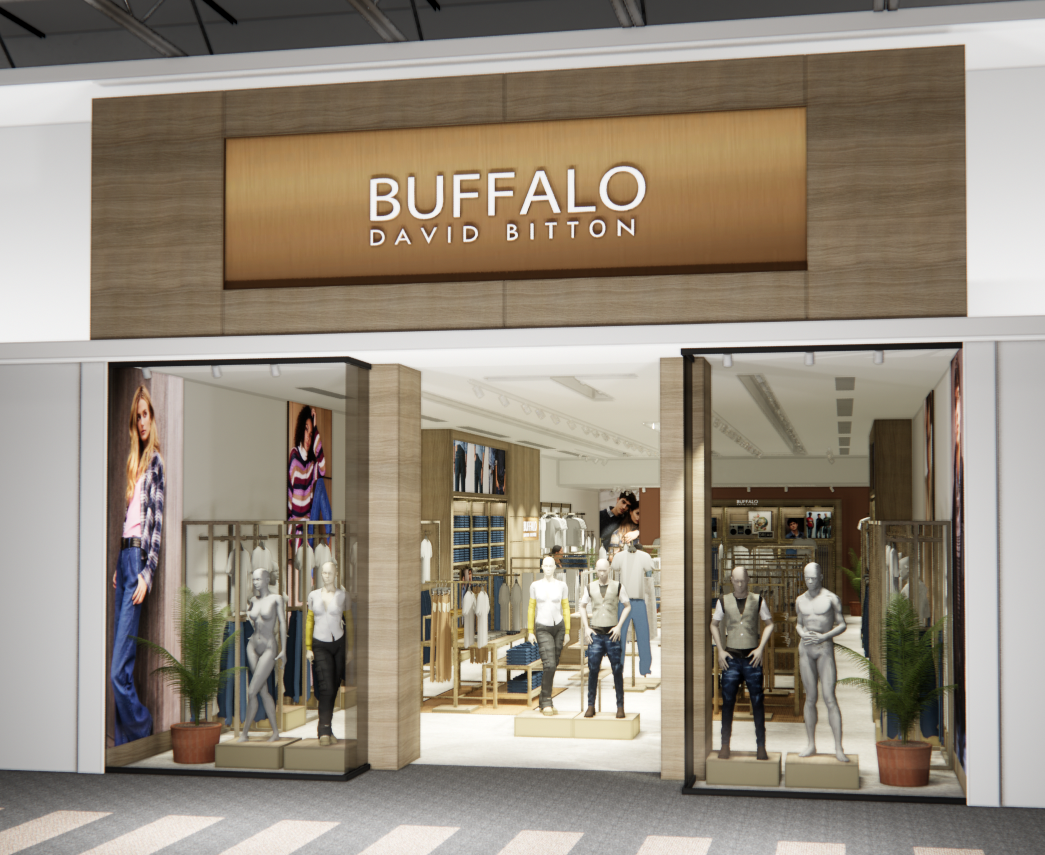
Buffalo David Bitton storefront rendering at Vaughan Mills. Image: LODA Design

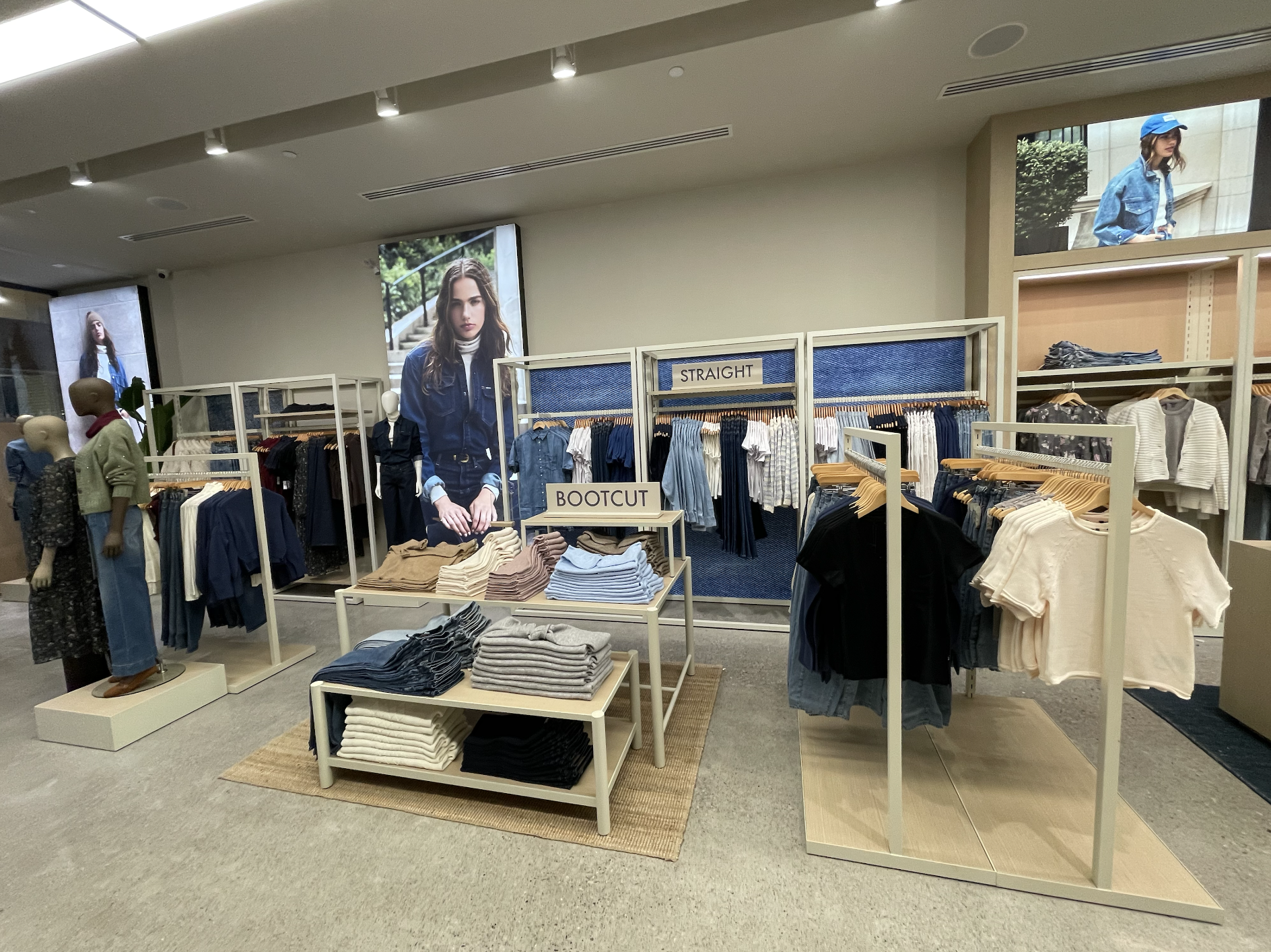
Buffalo David Bitton is making a renewed push into the Canadian retail market, launching a new store concept aimed at reconnecting with a loyal customer base while introducing the brand to a new generation of denim shoppers. Under the stewardship of licensee Centric Brands, the first location opened several weeks ago at Toronto Premium Outlets in Halton Hills, followed by an upcoming September opening at Vaughan Mills north of Toronto.

The expansion is being executed in partnership with Toronto-based J2 Retail Management, which is providing retail operations support, visual merchandising, and store setup expertise.

“We want to walk before we run,” said Brent Unger, President of the Lifestyle Division at Centric Brands. “We’re reconnecting with the consumer who has been with us for so long, and once we feel that connection point is strong, we can start to scale and amplify the brand’s presence in Canada.”

Brent Unger, President of the Lifestyle Division at Centric Brands

A Strategic Return to Direct-to-Consumer Retail

Buffalo David Bitton has long been a prominent name in Canadian denim. Founded in France in 1972 and later establishing a strong foothold in Montreal, the brand built a reputation for stylish, well-fitting denim with European flair and North American accessibility.

For years, the brand was heavily distributed through major retailers, including Hudson’s Bay, where Buffalo achieved significant market share. In menswear, it ranked as the department store’s number two denim brand, while in womenswear it climbed into the top seven brands by sales.

With the changing retail landscape, and the decline of many multi-brand mall denim retailers such as Jean Machine, Bootlegger, and Below the Belt, Buffalo Jeans sees opportunity in controlling its own retail destiny.

“We wanted to be in control of our destiny,” Unger explained. “Some wholesale partners are constrained on space and risk tolerance. By opening our own stores, we can offer a broader assortment and create an experience that fully represents the brand.”

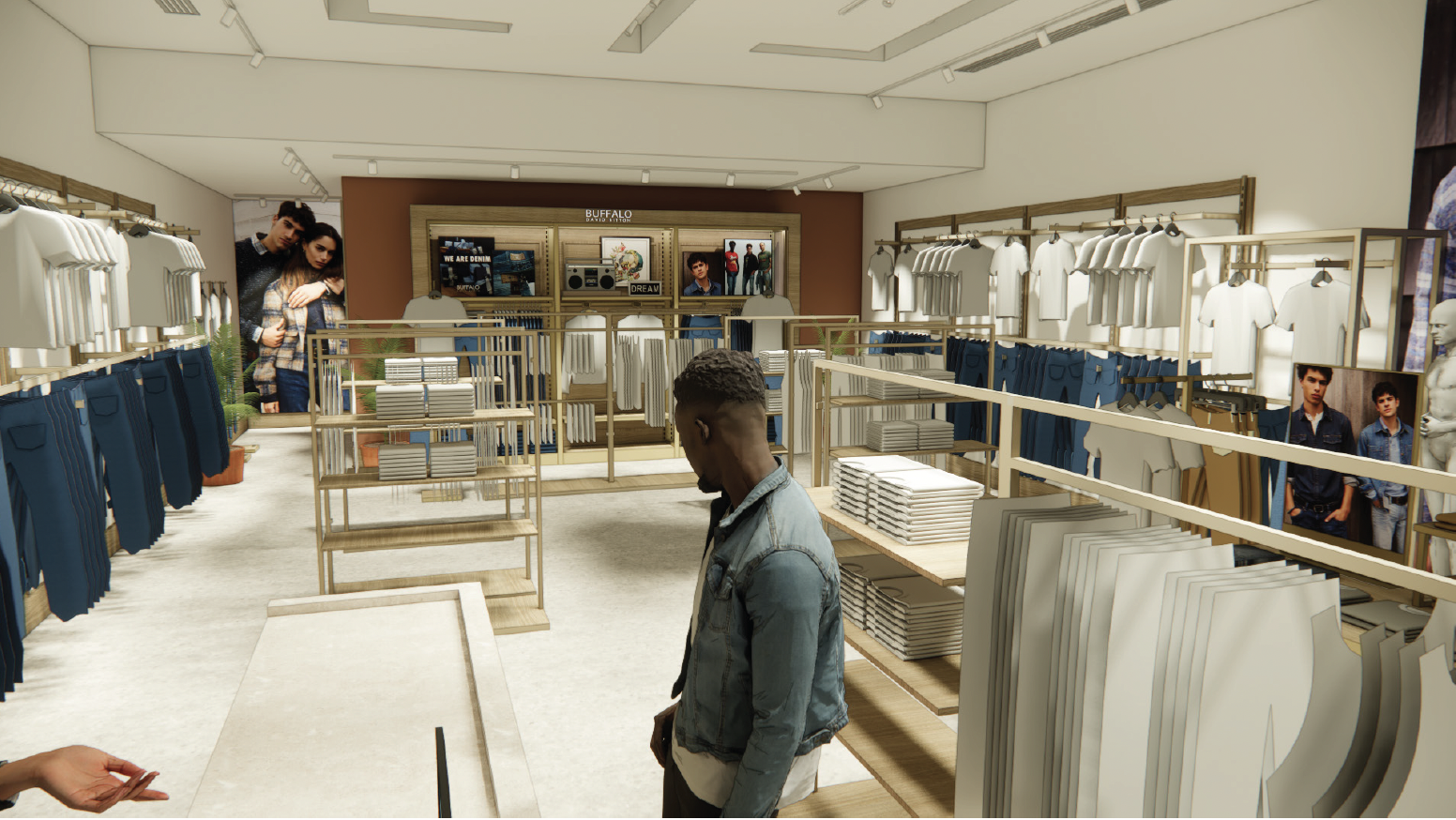
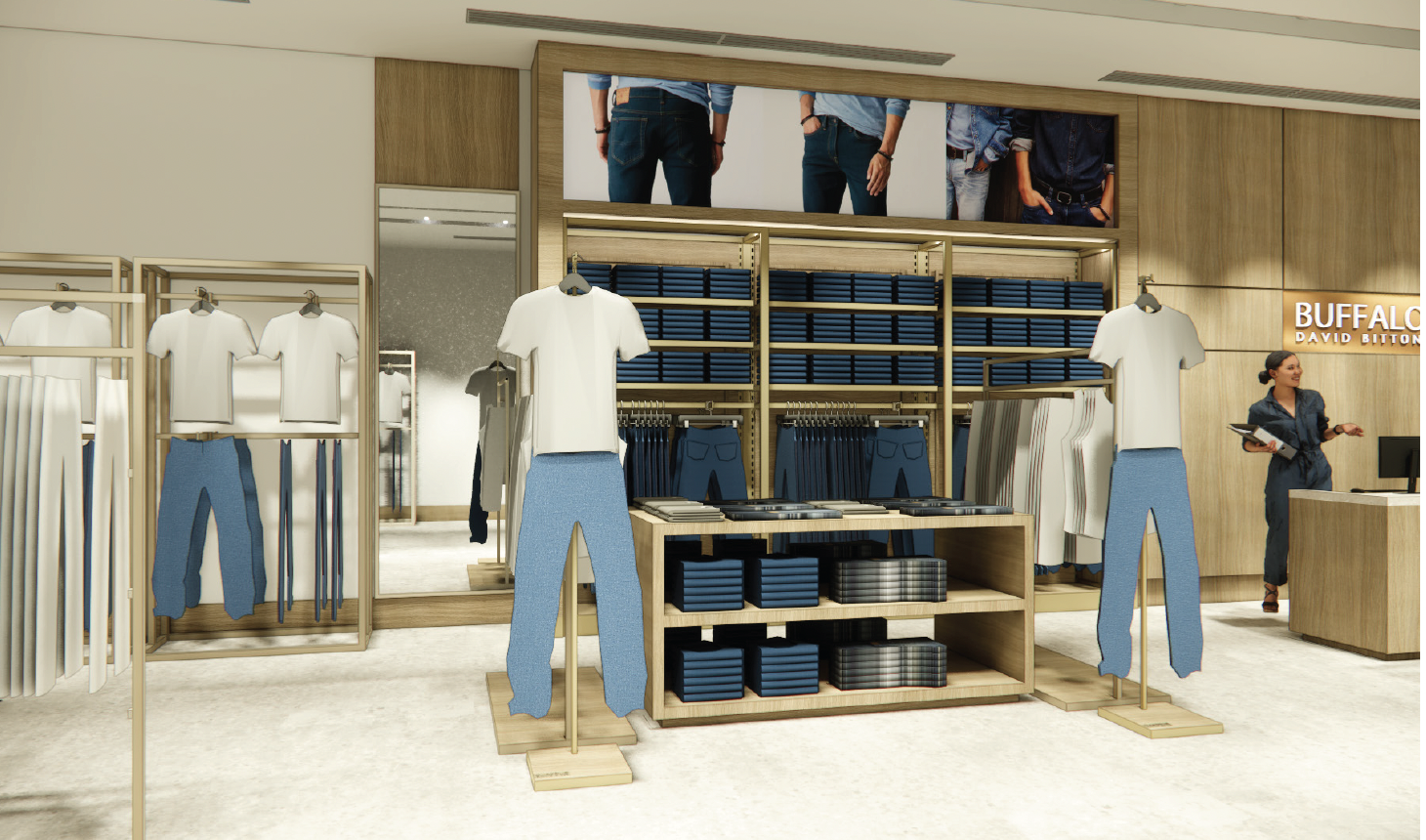
Buffalo David Bitton store interior rendering at Vaughan Mills. Image: LODA Design

Why Outlet Centres Are the Starting Point

The choice to debut the new Buffalo concept in outlet centres is deliberate. The Toronto Premium Outlets store blends value-driven assortments with a hybrid of outlet and mainline product, offering both men’s and women’s collections.

According to Unger, this approach allows the brand to test customer response without the financial pressures of premium full-price mall rents, which he describes as a challenge for Buffalo’s target price point of $100–$125 for denim.

“If we were selling $225 premium jeans, maybe those rents would make sense,” said Unger. “But we know who we are, and we want to offer great value to our customer without being priced out of the best locations.”

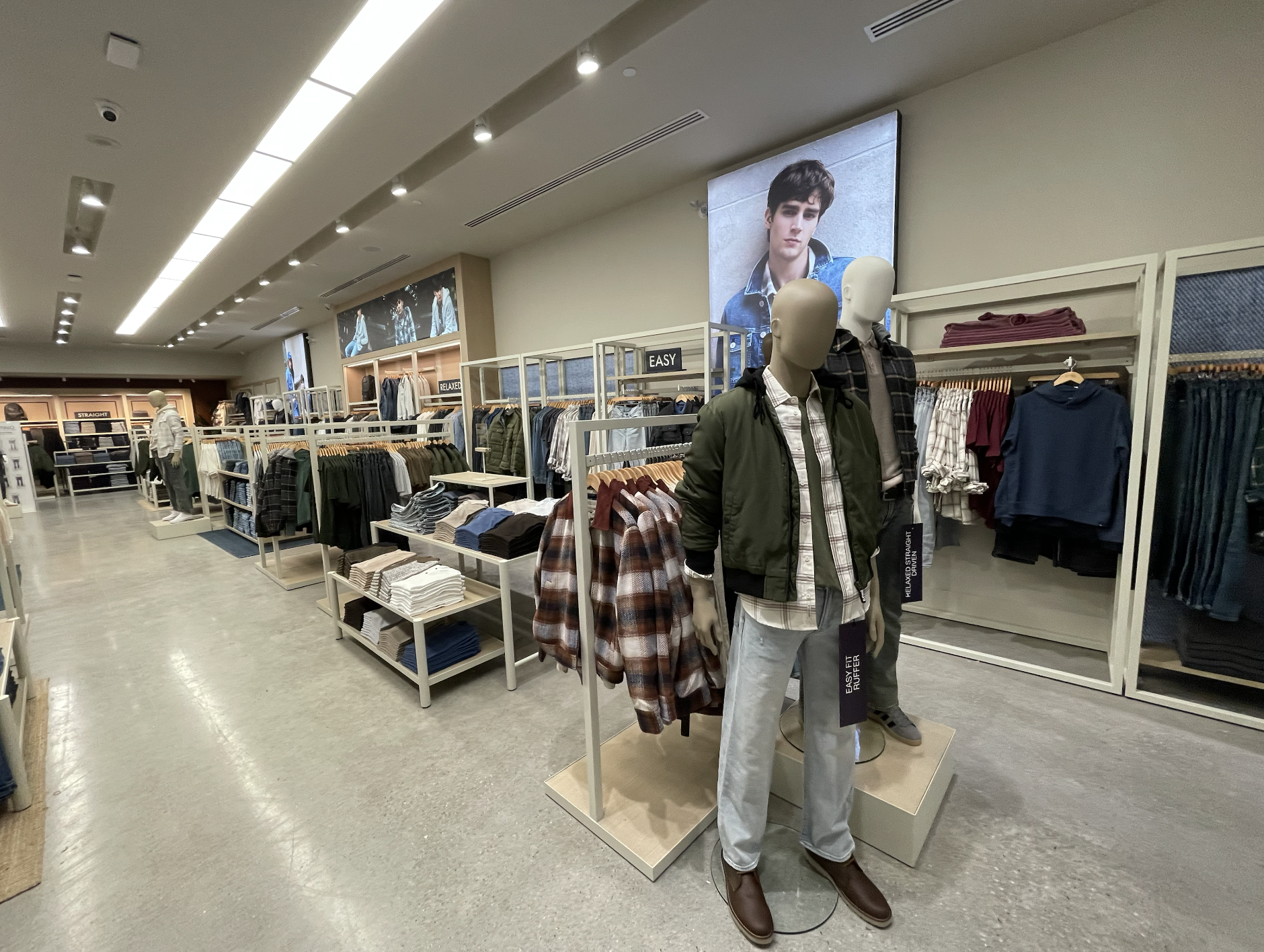
The Vaughan Mills store will differ from the first, with a larger investment in creating an immersive brand experience. “Toronto Premium Outlets was about letting the product stand on its own,” said Unger. “At Vaughan Mills, we’re building more of a brand story, what Buffalo stands for and where it’s going.”

Buffalo David Bitton store interior at Vaughan Mills. Image: J2 Retail Management

Product Evolution: Modernizing the Brand While Honouring Its Roots

Buffalo’s new retail direction coincides with an evolution in its product offering. The brand is moving from the minimalist styles popular during the pandemic to a more expressive, fashion-forward approach, while retaining its core commitment to fit, fabric, and wash.

“We’ve modernized our aesthetics,” said Unger. “Fits that were popular 15 years ago, like looser and wider men’s jeans or barrel-leg women’s jeans, are coming back in updated forms. We’re balancing trend relevance with our most commercially viable fits.”

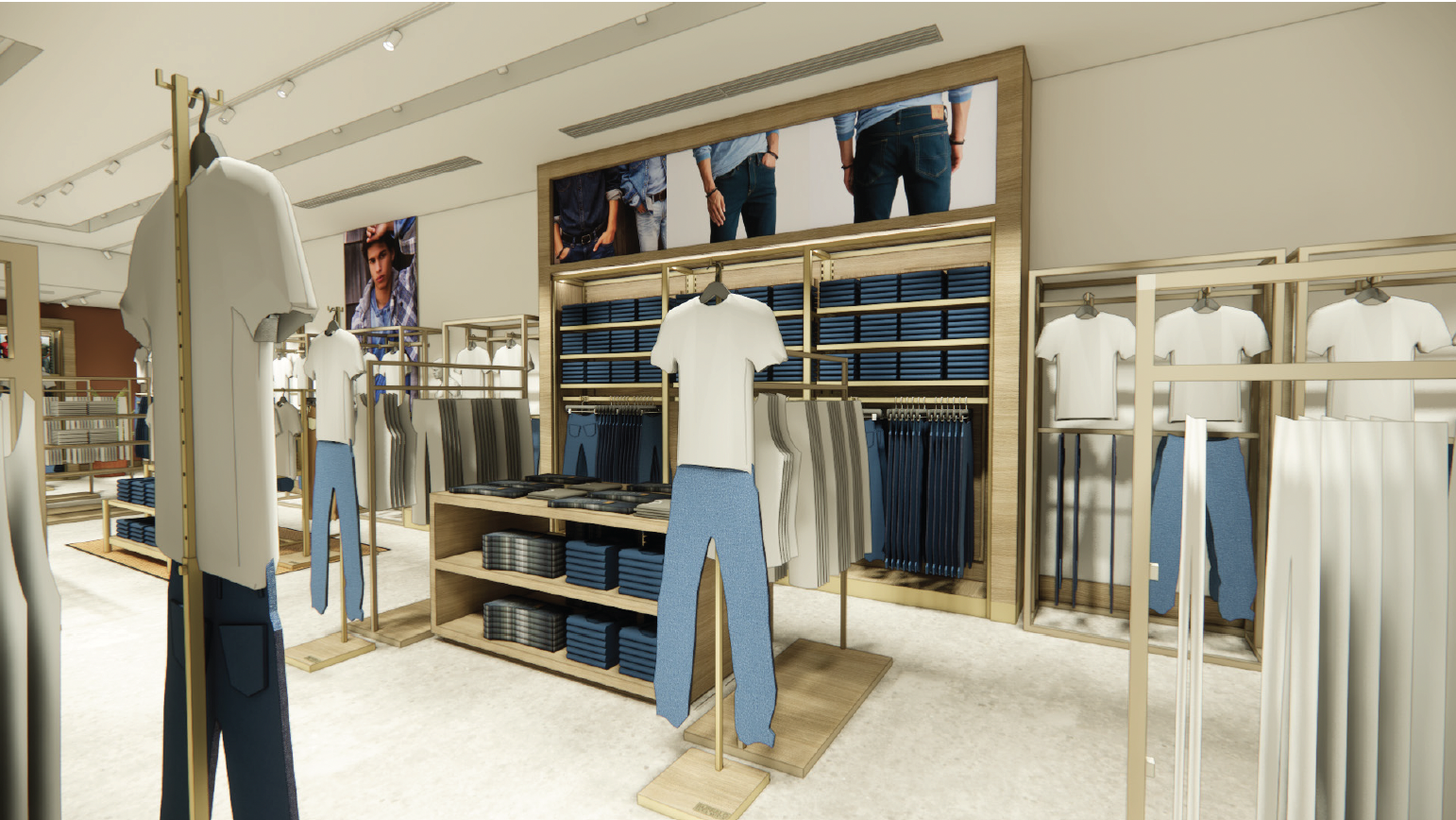
Beyond denim, the new stores will showcase Buffalo’s growing range of apparel and accessories, including knitwear, dresses, footwear, sunglasses, and winter accessories. This broader assortment reflects a vision to become more of a full lifestyle brand.

Buffalo David Bitton store interior rendering at Vaughan Mills. Image: LODA Design

National Expansion Plans — But with a Measured Pace

While the initial rollout is focused on Ontario, Centric Brands has a roadmap for expanding Buffalo nationwide over the next three to five years. The plan calls for strategically placed stores in suburban centres across Canada, but Unger emphasizes that the timing will depend on getting the retail experience right.

“We have one chance to make the right impression,” he said. “We believe there’s a big void for our product in Canada, and the relationship with our customers has been there for 50 years. We want to tap into that, but we’ll do it in a way that ensures long-term success.”

Tariff changes, shifts in Canadian retail real estate, and the exit of certain competitors have affected the pace of expansion. Nonetheless, Centric remains confident in Buffalo Jeans’ potential to grow its direct-to-consumer presence.

Buffalo David Bitton store interior at Vaughan Mills. Image: J2 Retail Management

The Role of J2 Retail Management

J2 Retail Management’s involvement is central to the rollout’s execution. Founded in Toronto in 2012 by Jodie Wolfe and Brian Le Saux, J2 specializes in turnkey retail services for apparel and lifestyle brands, including logistics, merchandising, store setup, and staffing.

“We could try to build all the retail muscle ourselves, but why not work with experts?” said Unger. “J2 brings the operational intelligence we need to bridge the gap between making great product and delivering great retail experiences.”

J2’s track record includes working with major global brands on Canadian and US retail launches, providing both the creative and operational backbone for successful openings.

Buffalo David Bitton store interior rendering at Vaughan Mills. Image: LODA Design

Centric Brands’ Wider Portfolio in Canada

Buffalo David Bitton is part of Centric Brands’ lifestyle division, which also manages several other major apparel licenses in Canada. These include Loft, IZOD, Dockers, Caterpillar workwear, Merrell, and the recently signed Esprit.

While Buffalo is the current retail focus, Unger noted that the company’s broader brand portfolio offers other candidates for future direct-to-consumer expansion in Canada.

Heritage Meets the Next 50 Years

Buffalo’s retail revival is built on five decades of brand heritage, a loyal Canadian customer base, and a clear-eyed understanding of its market position. The expansion comes at a time when many apparel brands are rethinking their retail strategies to better connect with consumers directly.

“We’re doubling down on what we want Buffalo to look like in our next three-year plan,” said Unger. “We’re reimagining our denim and our customer experience. We have 50 years of heritage to build on, and we’re modernizing for the next 50.”

More from Retail Insider:

Roots Opens New Vancouver Flagship on Robson Street

Roots flagship store on Robson St. in downtown Vancouver. Photo: Brandon Artis

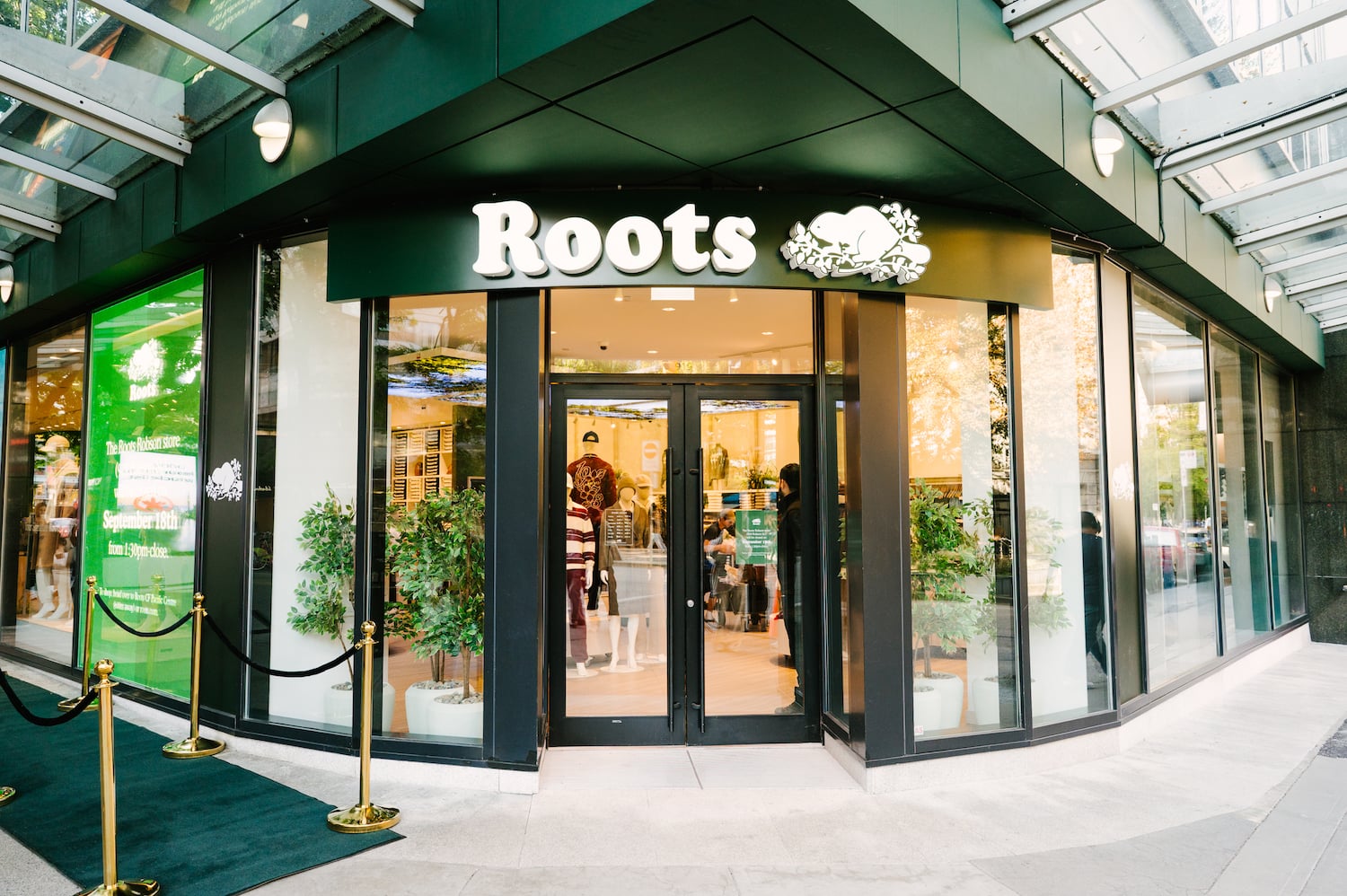
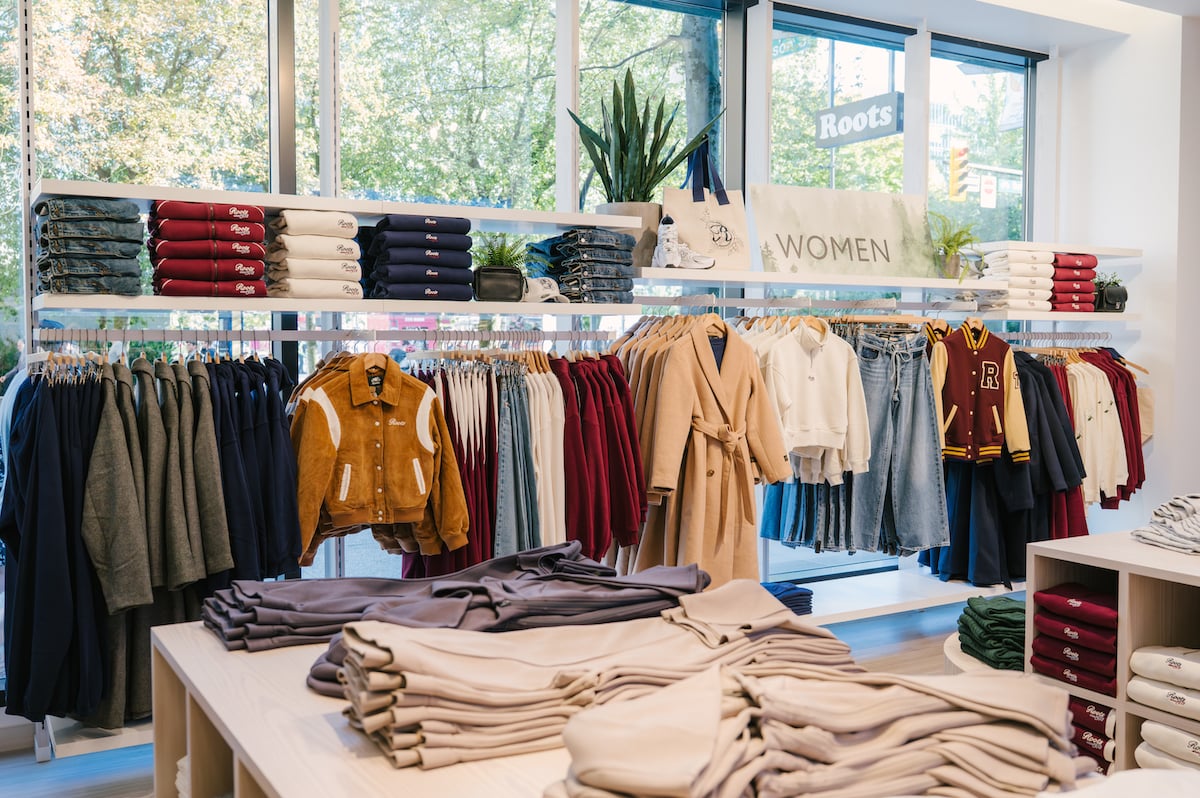
Roots has officially opened its new flagship store on the corner of Robson and Hornby Streets in downtown Vancouver, marking a renewed commitment to the city where the brand has maintained a retail presence for three decades. The new store at 929 Robson Street replaces Roots’ long-standing location at Robson and Burrard, a corner now occupied by Arc’teryx.

The move represents both continuity and evolution. While Roots has been part of the Robson Street retail landscape since the early 1990s, the new flagship introduces a bold, modern retail environment designed to resonate with both local shoppers and international visitors.

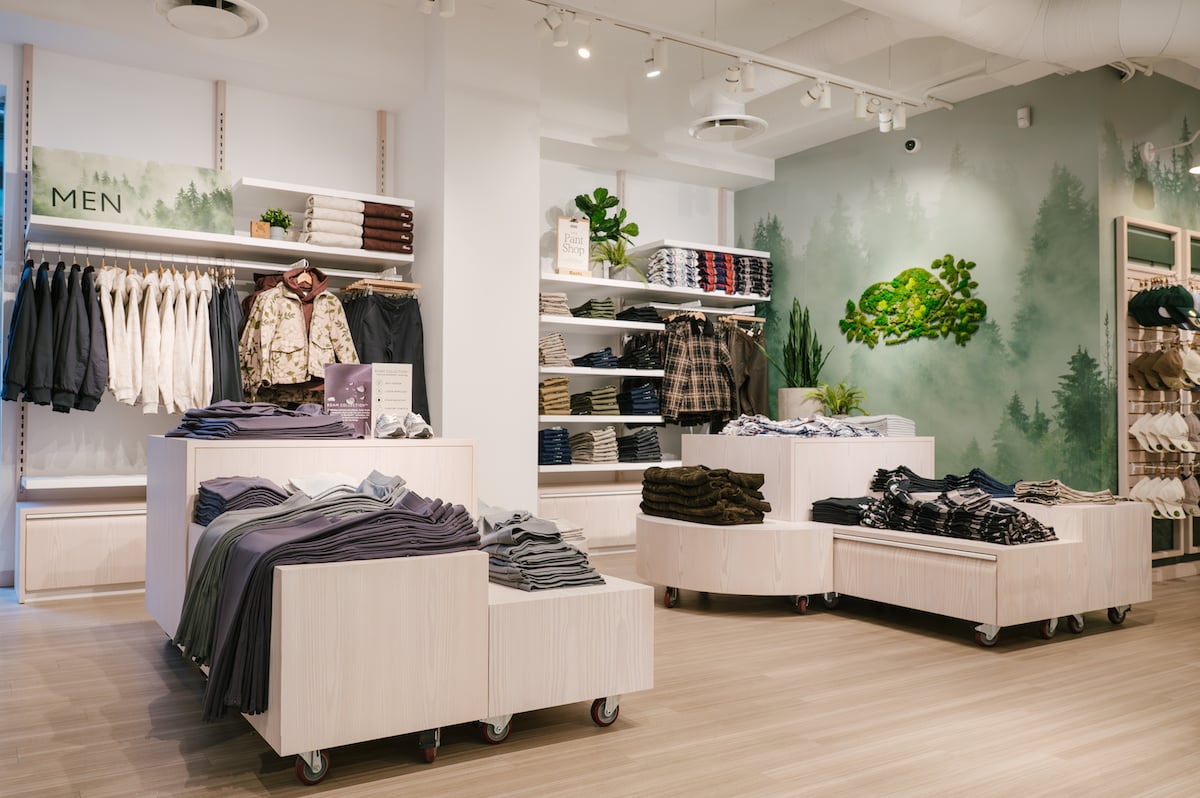
The new Roots Robson Street flagship blends contemporary retail design with nods to Vancouver’s natural surroundings. Inside, shoppers are greeted by layered textures, premium materials, and signature Roots design elements. A preserved moss wall and a moss beaver sculpture serve as focal points, paying tribute to the brand’s iconic logo and Canada’s natural environment.

One of the store’s most striking features is a lightbox ceiling installation showcasing a commissioned image of Stanley Park. The installation underscores the connection between Roots and Vancouver’s outdoor culture, while also serving as an immersive design element.

Digital technology plays a central role in the store. Holographic screens and large-format displays highlight current campaigns and storytelling elements, integrating the brand’s heritage with modern retail innovation.

Roots flagship store in downtown Vancouver. Photo: Brandon Artis

Exclusive Vancouver Collection

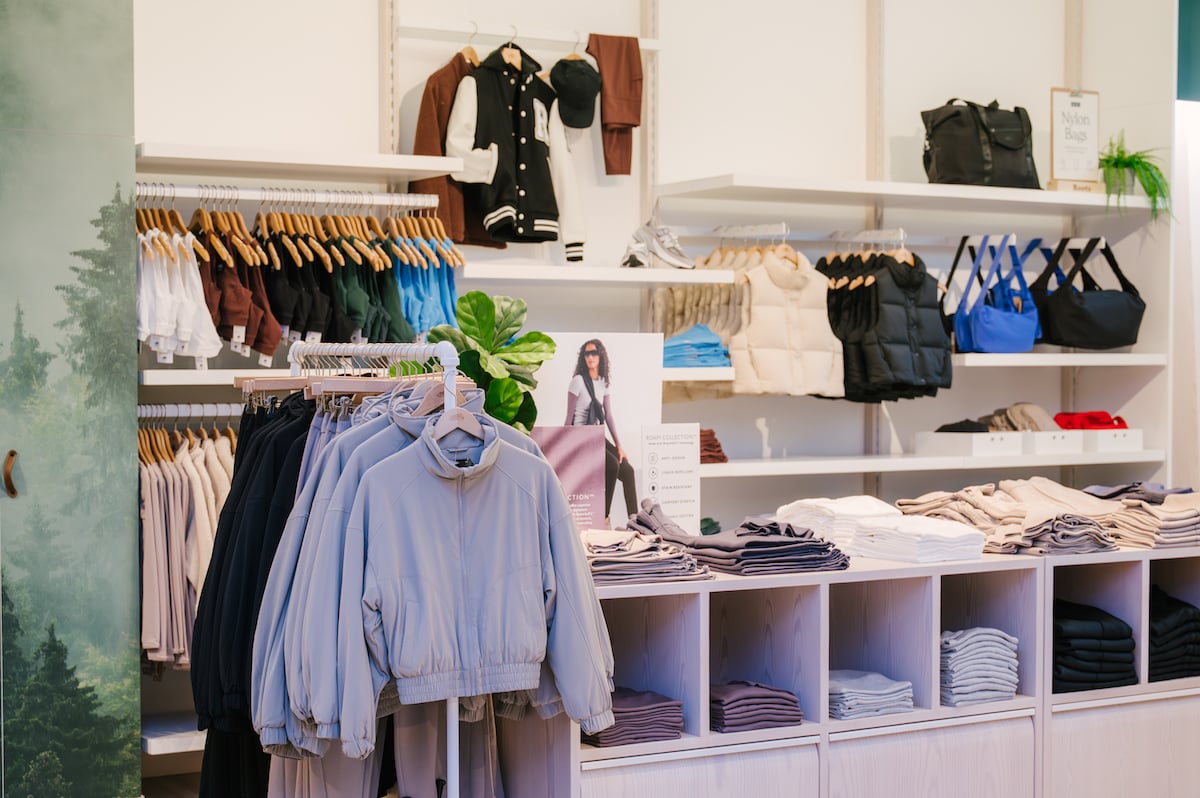
Unique to the new flagship is The Vancouver Collection, a curated assortment available only in this store. “We dedicated an entire wall to Vancouver product because we know this store attracts a mix of locals and visitors,” said Meghan Roach, President and CEO of Roots. “Tourists want something that feels distinct to the city, while Vancouverites appreciate the nod to their community.”

Meghan Roach

The store’s exclusivity aims to reinforce its role as a destination. Visitors seeking a keepsake tied to Vancouver will find products that reflect the city’s natural beauty and urban lifestyle.

Expansive Corner Presence

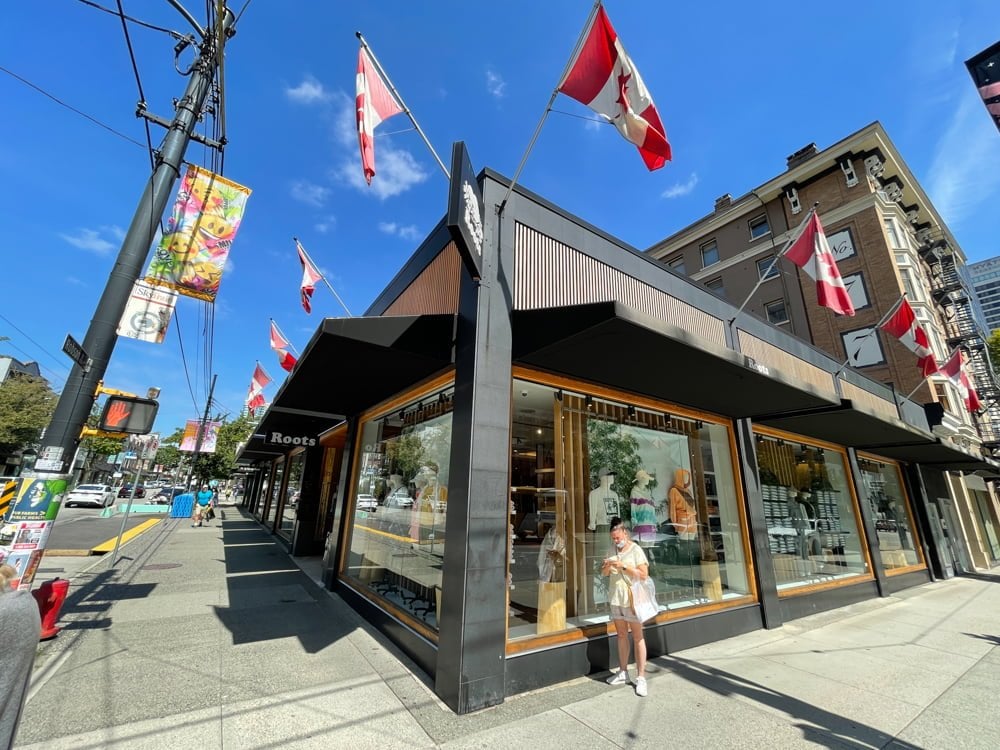
The new store occupies a significant corner footprint at Robson and Hornby, with large street-facing windows and multiple digital screens showcasing Roots’ seasonal campaigns. The location was formerly occupied by Peloton and an adjacent space previously leased to TWG Tea.

Roach noted that the new flagship is considerably larger than the old Robson and Burrard store. “It’s a huge space, almost half a block long, and we’ve been able to design it to feel open, light, and inviting,” she said. “The natural light from the corner windows makes a real difference.”

For Roots, the opening signals a broader commitment to reconnecting with its West Coast customer base. While the brand has hosted numerous activations in Ontario and Quebec, Vancouver remains a vital part of its national retail network.

“Roots has always had deep roots in Vancouver,” Roach explained. “This flagship is about reinvesting in the community, bringing in local partners, and celebrating the city’s unique culture.”

The store launch coincided with a community-focused opening event featuring Vancouver restaurants, cafés, and cultural partners. “We wanted this to feel like more than a store opening,” Roach added. “It was about building connections and celebrating what makes Vancouver special.”

Jeff Berkowitz of Aurora Realty Consultants represents Roots as broker in Canada, and negotiated the lease deal for the Robson Street store.

Roots flagship store in downtown Vancouver. Photo: Brandon Artis

Inside the Store Experience

Walking through the flagship, shoppers encounter a series of curated spaces designed to reflect different aspects of the Roots brand. The men’s section is divided from the rest of the store by the moss wall, while gender-free apparel is interwoven throughout. A wallpaper motif inspired by the outdoors adds texture, while light wood tones create a warm and inviting environment.

The fitting room area is enhanced by a digital wall projecting nature scenes, offering a calming and Instagram-friendly backdrop. “It’s about creating moments where customers feel immersed in the brand,” said Roach. “We want the store to feel both experiential and comfortable.”

Outside, the store frontage extends along both Robson and Hornby Streets, creating a dramatic presence in one of Vancouver’s busiest shopping districts. Large digital screens highlight the brand’s storytelling, while the moss wall continues outdoors, blurring the line between the city and the wilderness aesthetic that defines Roots.

Roots flagship store in downtown Vancouver. Photo: Brandon Artis

Roots’ Legacy on Robson Street

The relocation ends an era for Roots on Robson and Burrard, where the brand maintained a store for more than 30 years. That location became synonymous with Roots’ West Coast identity, attracting both loyal local shoppers and tourists from around the world.

The decision to move was prompted by the opportunity to secure a more expansive and high-profile corner. Arc’teryx now occupies the former Roots space, reinforcing Robson Street’s role as a hub for Canadian and international lifestyle brands.

“This move was about positioning Roots for the next 30 years in Vancouver,” said Roach. “Robson Street is one of Canada’s most important retail corridors, and we wanted a space that truly reflected the brand today.”

Roots on Robson Street in Vancouver (June 2021)
Former Roots at Robson and Burrard Streets in Vancouver (June 2021). Photo: Lee Rivett.

The Broader Roots Story

Founded in 1973 by Michael Budman and Don Green, Roots began as a maker of negative-heel footwear before expanding into apparel and leather goods. Its first store opened on Toronto’s Yonge Street, and the brand quickly grew into one of Canada’s most recognized lifestyle retailers.

The company’s beaver logo, introduced in 1985, remains a hallmark of Canadian design. Roots has since expanded to more than 100 company-operated stores across Canada. Its eCommerce platform ships to over 60 countries.

Today, Roots is known for its premium sweats, leather bags, and outerwear, with a reputation for quality and comfort. Its stores often feature customization workshops and localized design elements, reflecting the company’s dedication to storytelling and community engagement.

Looking Ahead

Roots’ Vancouver flagship is part of a larger strategy to refresh and modernize its retail presence. The company has recently invested in enhanced store experiences in Toronto, including its Yorkdale and CF Toronto Eaton Centre flagships.

“Our goal is to create spaces where people want to spend time,” Roach said. “Whether that’s in Vancouver, Toronto, or internationally, Roots stores should reflect the spirit of the community while celebrating the brand’s heritage.”

The Vancouver flagship encapsulates this vision, bridging Roots’ 30-year legacy on Robson Street with a forward-looking design that speaks to both local culture and global retail trends.

“Roots is more than a retailer,” Roach concluded. “It’s part of Canada’s cultural fabric, and this store reaffirms our commitment to being a place where people feel connected—to nature, to the community, and to each other.”

More from Retail Insider:

Skip and Shoppers Drug Mart launch delivery

Image: Shoppers Drug Mart

Canadians can now have beauty, wellness and everyday essentials from Shoppers Drug Mart delivered directly to their doors, thanks to a new national partnership with Skip.

The agreement between Skip, a Canadian delivery platform, and Shoppers Drug Mart was announced on Wednesday. The service will be available through 650 Shoppers Drug Mart stores across nine provinces, including British Columbia, Alberta, Saskatchewan, Manitoba, Ontario, New Brunswick, Nova Scotia, Prince Edward Island, and Newfoundland and Labrador.

Paul Sudarsan
Paul Sudarsan

“Canadians have relied on Shoppers Drug Mart® for generations, and we’re proud to make their much-loved product selection even more accessible through Skip,” said Paul Sudarsan, senior vice-president of partnerships at Skip.

According to the companies, the collaboration marks a significant expansion of Skip’s retail offerings, enabling customers to order products ranging from pharmacy essentials to beauty and skincare items.

“This partnership allows us to extend our reach even further and extend our ‘need-it-now’ experience to ensure that Canadians can access beauty, wellness, and everyday essentials from Shoppers Drug Mart with speed and ease, right to their door,” said Sarah Draper, vice-president of e-commerce at Shoppers Drug Mart.

Sarah Draper
Sarah Draper

To promote the launch, Skip is offering a limited-time promotion of $20 off orders of $35 or more, using the code SHOPPERS20, valid through Oct. 6.

The partnership also includes a promotional event, the “Grab N’ Glow” pop-up, taking place in downtown Toronto on Sept. 27 and 28 at STACKT Market (28 Bathurst Street). The event will feature professional makeup touch-ups, customized cosmetic bags, vouchers, and product giveaways from brands such as Clarins, e.l.f. Cosmetics, and L’Oréal. The event will be: Saturday, Sept. 27: 12 PM – 8 PM; Sunday, Sept. 28: 12 PM – 7 PM.

Skip began as a Prairie-based start-up in 2012 and has grown into a national delivery network operating in over 450 cities and towns across Canada. Shoppers Drug Mart, a division of Loblaw Companies Ltd., operates more than 1,350 locations across the country.

More from Retail Insider:

Miley Cyrus named global face of Maybelline (Video)

Credit: Jacob Bixenman, shot at Electric Lady Studios, NYC

Maybelline New York has announced pop star Miley Cyrus as its newest global spokesperson, unveiling a campaign that reimagines the brand’s iconic “Maybe it’s Maybelline” jingle.

The makeup brand, which says it is the number one in the world, revealed the collaboration Wednesday as part of a long-term partnership that includes global marketing campaigns and new product launches.

Maybelline New York, the number one makeup brand in the world, welcomes multi-platinum recording artist and international music icon Miley Cyrus as its newest global spokesperson. Credit: Jacob Bixenman, shot at Electric Lady Studios, NYC

“I remember singing the Maybelline jingle as a kid and imagining it was me on the screen. Now, it is. To take something so iconic and make it mine — it’s powerful and personal,” said Cyrus in a statement.

“This partnership brings together two core parts of me. You can’t erase makeup from music. Within music, there’s performance and honesty — makeup enhances both. It’s how I tell my truth without saying a word,” she said. “Maybelline shares my belief that makeup should be expressive, ever-evolving. Partnering with Maybelline, a brand that celebrates meaningful values, self-expression and play, felt like the most natural fit in this stage of my life.”

The campaign will launch across television, digital, social media and in-store displays starting September 2025, and features Cyrus’s rendition of the familiar jingle. It will also promote upcoming launches, including a new colour line and Maybelline’s viral Sky High mascara.

“Miley is more than a global icon — she is a muse of modern beauty,” said Sandrine Jolly, global brand president of Maybelline New York. “Her creativity and artistry dance between strength and sensitivity.”

Credit: Jacob Bixenman, shot at Electric Lady Studios, NYC
Sandrine Jolly
Sandrine Jolly

“She brings a deeply personal lens to beauty that is expressive and emotional. With her unmistakable voice and vision, she turns our iconic jingle into something raw, intimate, and powerfully reflective of this Maybelline era,” Jolly said.

Cyrus, a Grammy-winning artist known for her evolving music and advocacy work, emphasized the broader message behind the campaign.

“I think this campaign shows that beauty is fluid, that confidence can look a million different ways, and that you were born with it all along,” she said.

Maybelline said the campaign bridges “nostalgia and reinvention” while encouraging creativity and self-expression.

More from Retail Insider:

Body Energy Club Expands to West Vancouver’s Park Royal

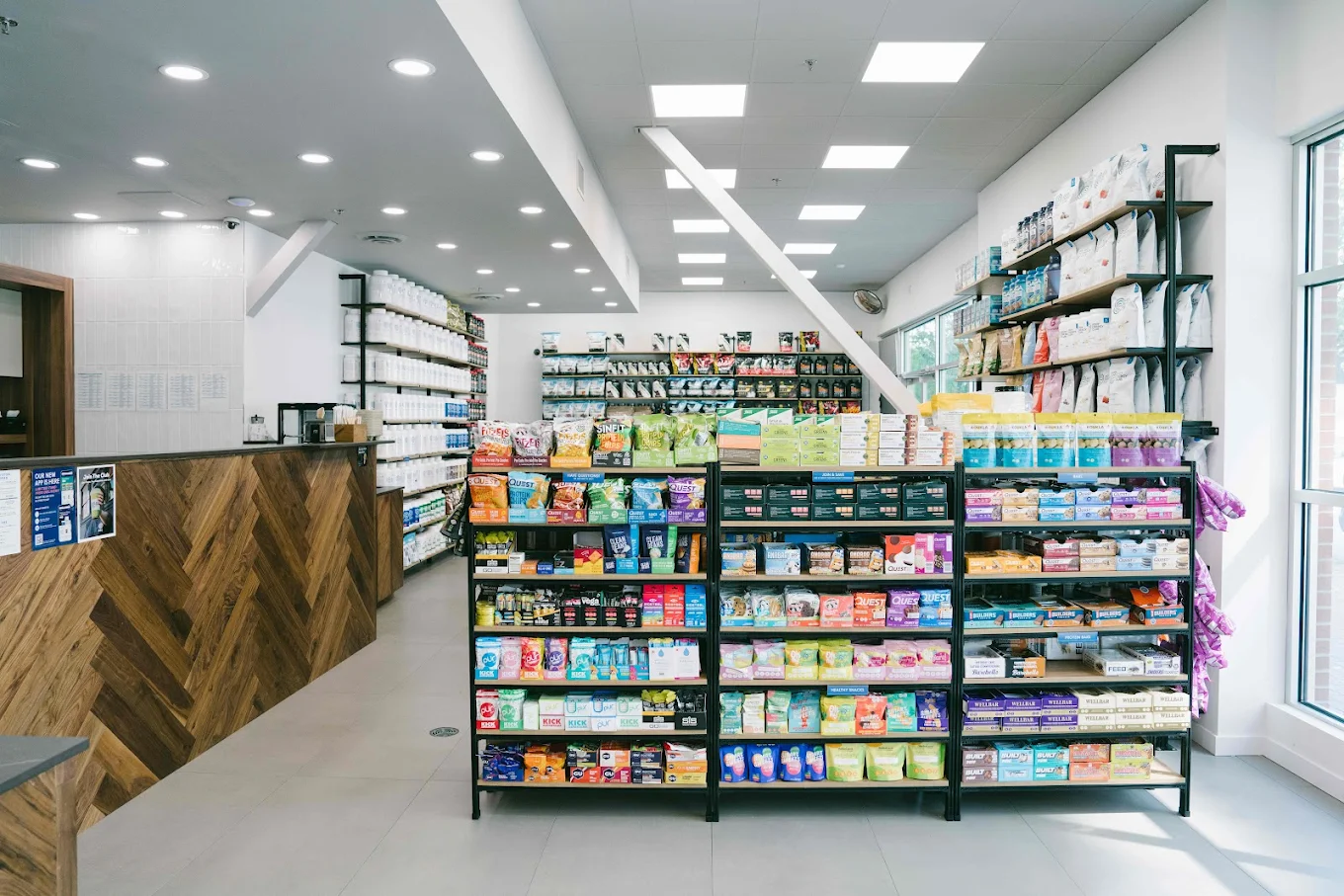
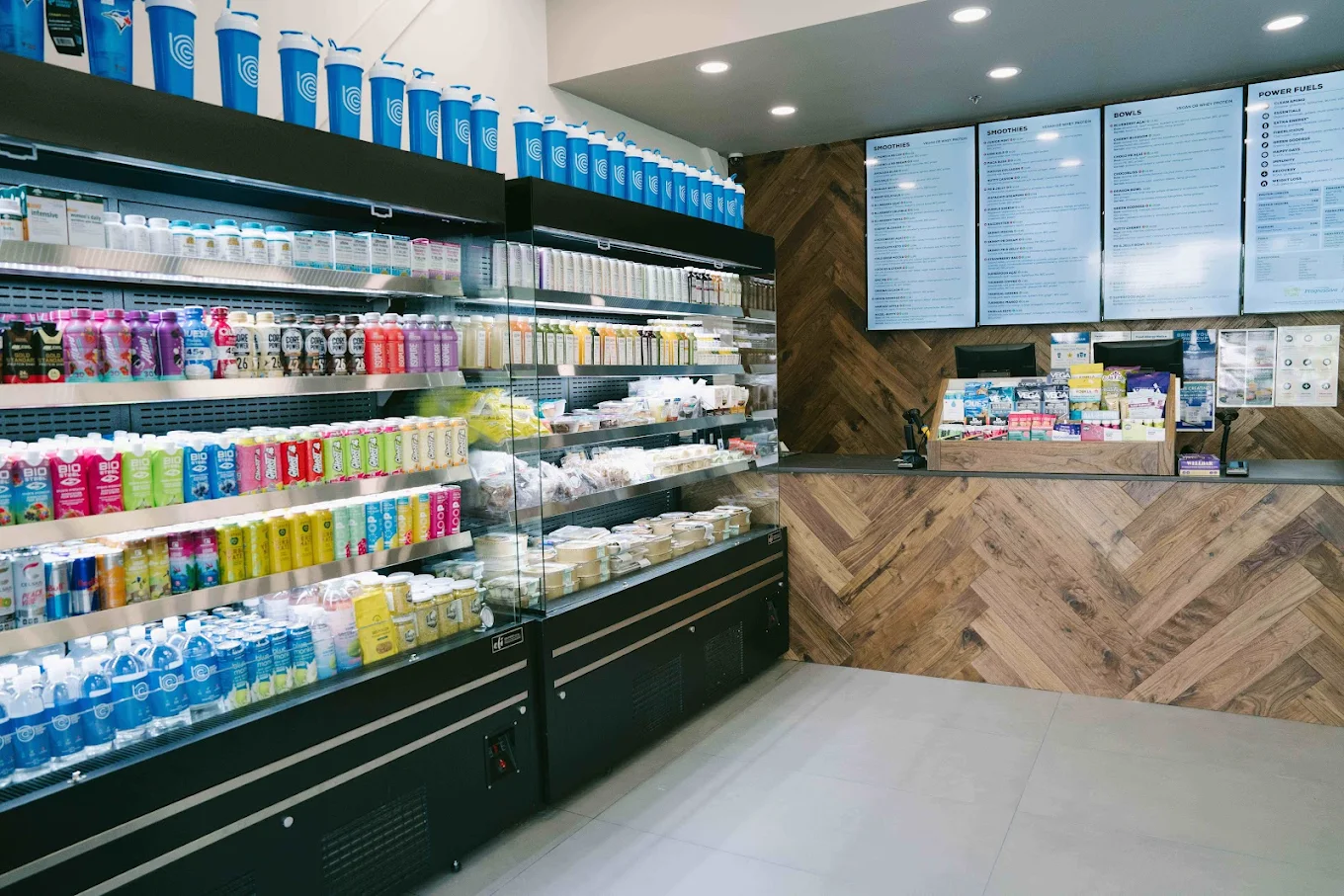
Body Energy Club at Park Royal in West Vancouver. Photo: Body Energy Club

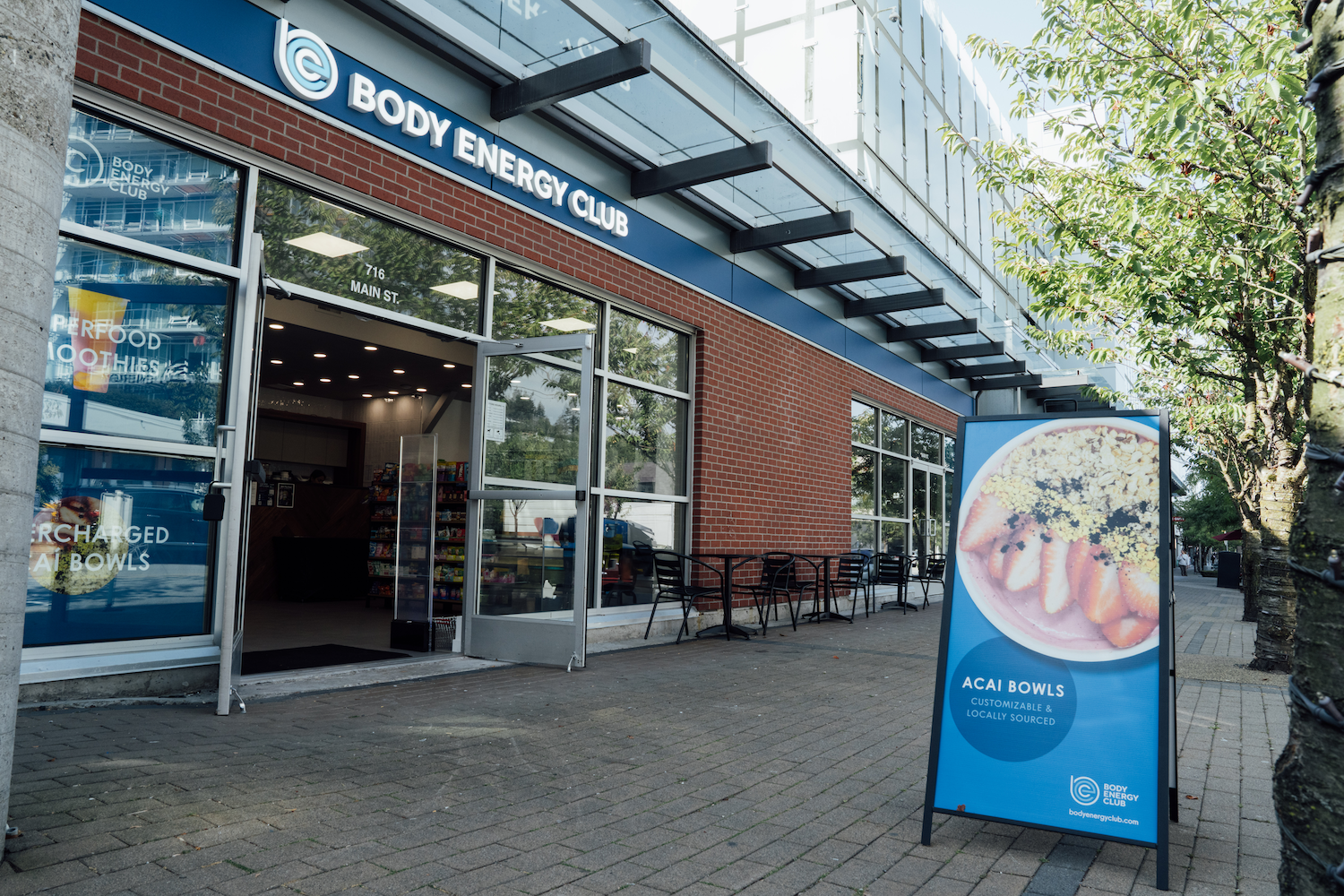
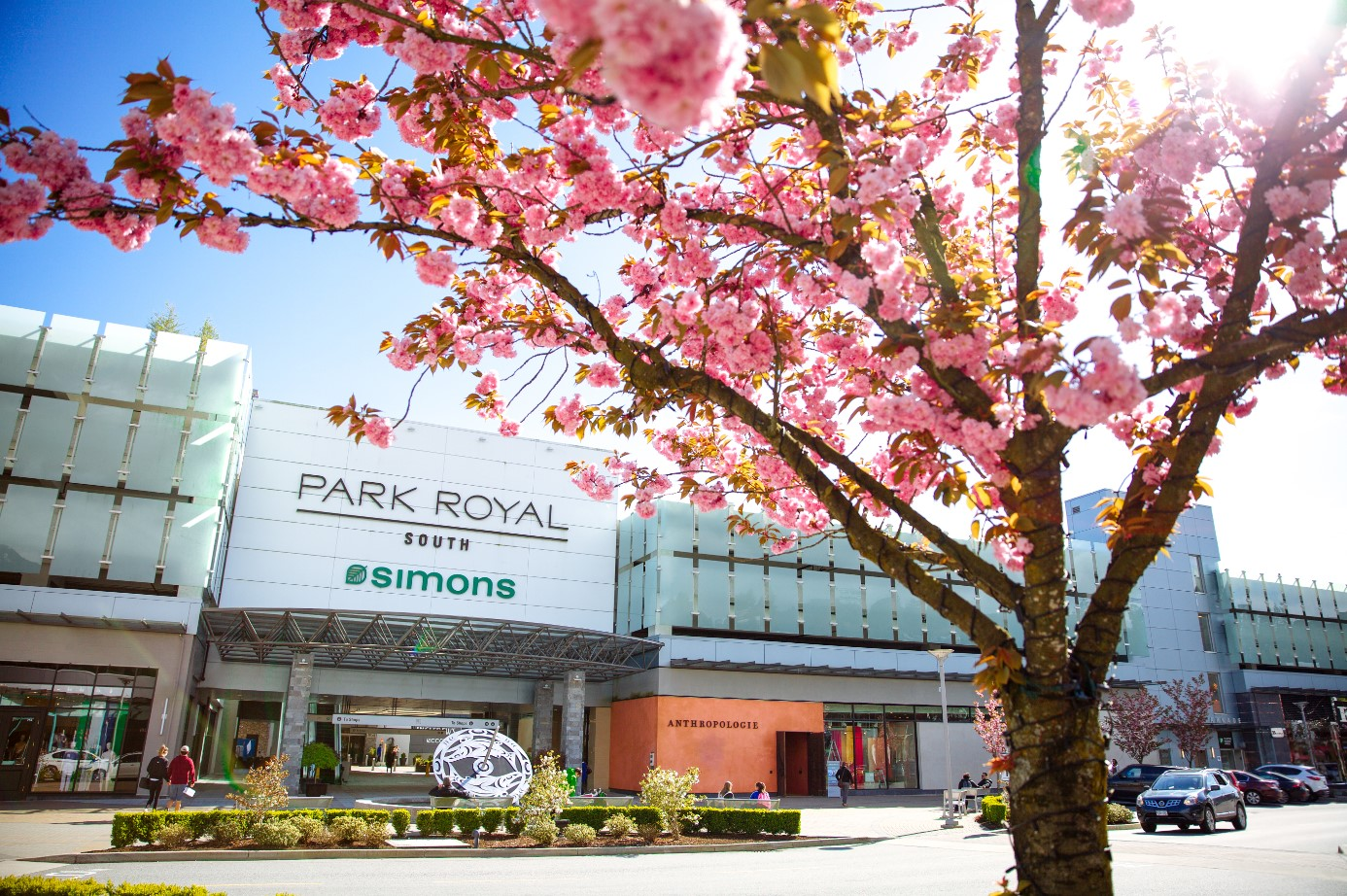
Body Energy Club, a Vancouver-based health and wellness retailer known for smoothies, supplements and grab-and-go meals, has opened its latest location at Park Royal South. The store, at 716 Main Street, introduces West Vancouver residents to the brand’s blend of nutrient-dense offerings and accessible nutrition, deepening its foothold in British Columbia while signaling broader ambitions across North America.

The launch represents another milestone for the company, which has quietly grown from a single 500-square-foot shop in downtown Vancouver into a chain with nearly 20 stores across Canada and the United States.

At the Park Royal South store, visitors will find a mix of smoothies, acai bowls, cold-pressed juices, supplements, and healthy prepared meals. The store also houses a full-service supplement section and a smoothie bar, designed to cater to the active lifestyle associated with West Vancouver.

“We’re thrilled to join the West Vancouver community with our Park Royal Mall South location,” said Dominick Tousignant, Body Energy Club’s founder and owner, in announcing the opening. “This area is known for its active, health-conscious residents, and we’re excited to offer them our signature products and welcoming space to support their wellness goals.”

The store will be open seven days a week, positioning itself as a convenient option for families, athletes, and busy professionals alike.

Body Energy Club at Park Royal in West Vancouver. Photo: Body Energy Club

From Davie Street to a Continental Presence

Founded in 2002 by Tousignant, who moved to Vancouver from Shawinigan, Quebec, Body Energy Club began as a small storefront on Davie Street. What started as a local resource for nutritional supplements and smoothies has since evolved into a full-fledged wellness brand with locations across the Vancouver area, as well as in Los Angeles and Chicago.

Over the years, the brand has steadily expanded throughout Vancouver and its suburbs, including Burnaby and Coquitlam. Its entry into the U.S. market in 2015, with stores in Hollywood and West Hollywood, marked the company’s first steps toward international recognition. More recently, Body Energy Club opened sites in Chicago, with prime addresses on Michigan Avenue and Lincoln Avenue.

By 2025, the retailer claimed up to 19 locations across North America. The Park Royal opening signals its intention to maintain momentum, with at least three more stores planned before the end of the year.

Park Royal in West Vancouver. Image: Park Royal

The Body Energy Club Model

Central to Body Energy Club’s appeal is its hybrid model: part smoothie and juice bar, part supplement retailer, and part prepared-meal shop. Locations are compact, typically around 1,100 square feet, but designed for high volume.

The brand’s product mix spans more than 6,200 items, including supplements from over 300 brands, Body Energy Club’s own branded protein powders, vitamins, probiotics, and greens. It also carries kombucha, bottled juices, and ready-made meals.

The stores are built for convenience, with extended operating hours that often stretch from early morning to late evening. Their positioning near gyms, residential towers, and commercial hubs reinforces the retailer’s focus on accessibility.

Body Energy Club at Park Royal in West Vancouver. Photo: Body Energy Club

Online Reach and Warehouse Scale

While the physical stores remain central to Body Energy Club’s identity, the company has also invested heavily in e-commerce. Its online business is one of Canada’s largest vitamin and supplement retailers, supported by a centralized warehouse that manages more than $5 million in inventory.

The digital platform allows customers nationwide to order from the retailer’s extensive catalogue. This expansion into online sales has proven vital in balancing brick-and-mortar growth with a scalable distribution model.

Serving a Broad Community

Body Energy Club’s customer base reflects the broadening definition of wellness. Elite athletes stop in for protein-packed smoothies, while office workers pick up bottled juices or healthy meals to go. Families shop for vitamins and supplements, while younger demographics gravitate toward customizable smoothie options.

The company’s “health for everybody” ethos is rooted in Tousignant’s philosophy of affordability and inclusivity. By pricing supplements competitively and offering a wide range of dietary options, the brand has worked to avoid the exclusivity often associated with the wellness sector.

Today, the company serves upwards of 60,000 smoothies each month and employs more than 150 staff across its network. Despite this scale, it remains privately held and headquartered in Vancouver.

More from Retail Insider: