
Home Blog Page 356

Aritzia Growth Outlook Brightens With Higher Target

Aritzia at Vaughan Mills, photo provided by Vaughan Mills.

Canadian retailer Aritzia is continuing its strong momentum across North America, with Stifel Nicolaus Canada Inc. raising its target price for the company to $96.00 per share. The investment bank’s latest research note, authored by Martin Landry, Managing Director and equity research analyst, highlights better-than-expected earnings trends and solid market share gains as reasons for the higher valuation.

The new forecast comes as Aritzia prepares to report its second quarter fiscal 2026 earnings on October 9. Analysts now expect adjusted earnings per share for the quarter to come in at $0.41, nearly double the $0.21 reported in the same quarter last year. That represents a 96 percent year-over-year increase, slightly ahead of consensus estimates of $0.39.

Martin Landry
Martin Landry

Aritzia has exceeded analyst expectations in each of the last eight quarters, and Landry believes this streak is poised to continue. Credit card data show robust sales growth in both Canada and the United States, and the company’s ongoing store expansion is contributing to higher square footage.

Canadian Momentum Supports Upgraded Forecast

Within the Canadian market, Aritzia continues to post healthy comparable sales. Stifel increased its Canadian comparable sales forecast by 300 basis points to a 10 percent year-over-year gain. The revised estimate follows strong first-quarter results, when the retailer posted 17 percent growth in Canada.

“Given the Canadian economy is performing better than expected and Aritzia’s significant growth in Q1, we are comfortable with our revised 10 percent revenue growth forecast,” Landry noted in the report. He added that Aritzia’s investments in digital marketing are expected to continue supporting growth throughout the remainder of the year.

Under renovation: Aritzia at CF Toronto Eaton Centre, september 2025. Photo: Dustin Fuhs/6ix Retali

U.S. Growth Drives Revenue Expansion

The United States has become an increasingly important driver for Aritzia, and Stifel projects comparable sales growth of 15 percent year-over-year for the quarter. That translates into total revenue growth of 37 percent in local currency, only a slight moderation from the 40 percent growth reported in the previous quarter.

Data from analytics firm Second Measure, which tracks credit and debit card spending, indicates U.S. sales rose at a pace closer to 40 percent during the period, suggesting the possibility of upside to Stifel’s forecast. “We are comfortable with our U.S. revenue assumption and see potential for a small upside,” said Landry.

Aritzia’s expansion south of the border has been one of the most closely watched growth stories in Canadian retail. With stores in major American cities and a growing digital footprint, the company is carving out a larger share of the premium women’s fashion market.
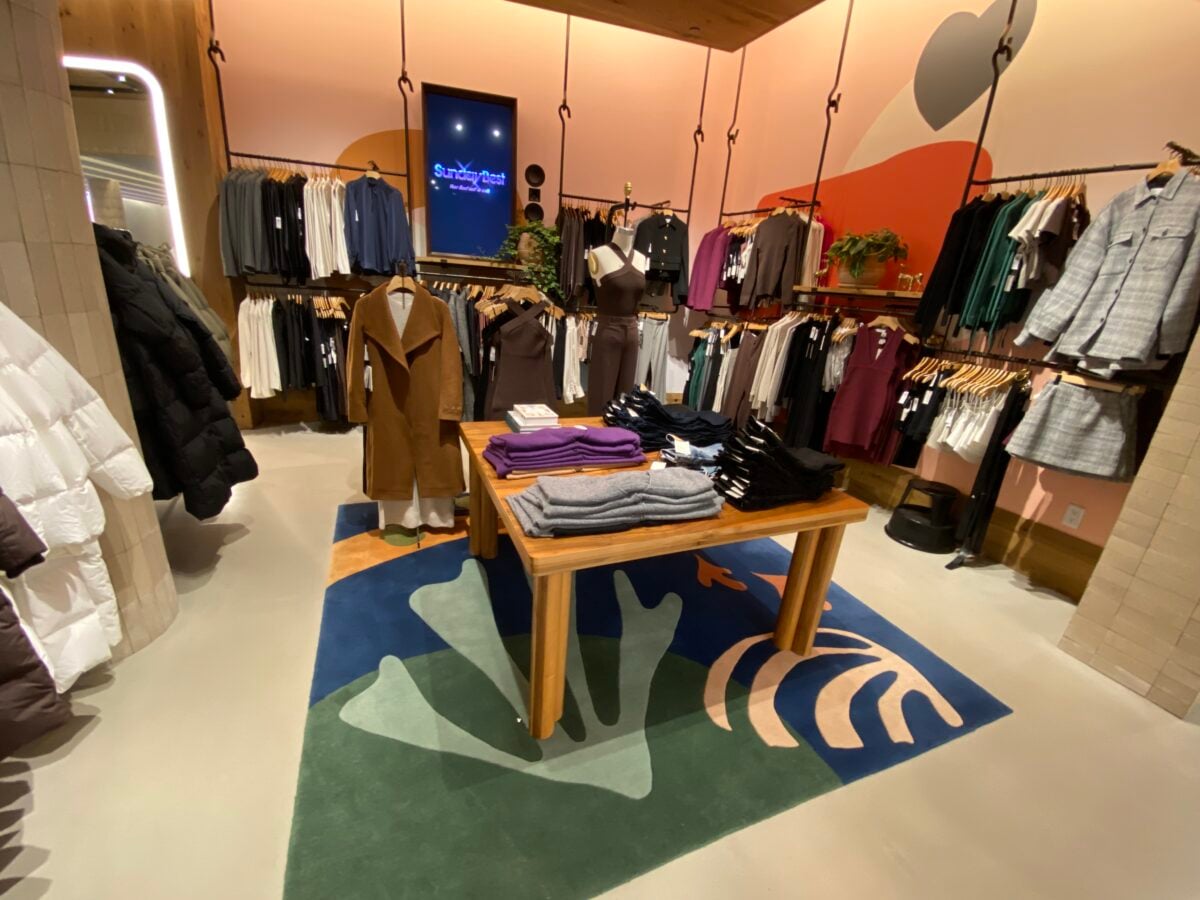
Aritzia Yorkdale (Image: Dustin Fuhs)

De Minimis Exemption Removal Creates New Headwinds

While the outlook remains strong, Aritzia faces new challenges stemming from changes to U.S. trade policy. Effective August 29, 2025, the U.S. government removed the De Minimis exemption, which previously allowed goods valued under $800 to enter duty-free.

Aritzia had used the exemption to fulfill some U.S. e-commerce orders from its Canadian distribution centres. The change is expected to impact gross margins by roughly 100 basis points, or approximately $0.10 in annual earnings per share, if no mitigation measures are adopted.

The company had already accounted for the exemption’s removal for goods from China but had not anticipated its removal globally. Stifel expects Aritzia to update its annual guidance to reflect the change when it reports its second-quarter results.

Key Metrics for the Second Quarter

Stifel’s preview of Aritzia’s second-quarter fiscal 2026 results anticipates net revenue of $774.3 million, representing a 25.8 percent increase over the prior year. Gross profit is projected at $323.7 million, a 30.8 percent rise, with gross margin expanding 160 basis points to 41.8 percent.

E-commerce revenue is forecast to increase 14.9 percent to $218.4 million, while retail store revenue is expected to climb 30.6 percent to $556.0 million. Adjusted EBITDA is projected at $90.7 million, up 64.3 percent year-over-year, with an 11.7 percent margin. Adjusted net income is forecast at $48.9 million, nearly double the $24.5 million reported in the same period last year.

These results would mark another period of outperformance, solidifying Aritzia’s reputation as one of Canada’s fastest-growing apparel retailers.

Aritzia Yorkdale (Image: Dustin Fuhs)

Stifel Raises FY26 and FY27 Estimates

In addition to its quarterly outlook, Stifel modestly increased its full-year fiscal 2026 revenue estimate to $3.28 billion from $3.26 billion. Adjusted earnings per share were also lifted to $2.58 from $2.52.

Looking ahead to fiscal 2027, Stifel projects revenue of $3.69 billion and adjusted earnings per share of $3.50. The brokerage sees adjusted EBITDA reaching $687.3 million, with a margin of 18.6 percent.

These projections align with Aritzia’s longer-term targets. At its 2022 investor day, management outlined a goal of reaching $3.5 to $3.9 billion in revenue and a 19 percent EBITDA margin by fiscal 2027. After setbacks in fiscal 2024, those targets now appear within reach.

Strategic Initiatives to Drive Growth

Aritzia’s growth is being supported by a series of strategic initiatives designed to improve both top-line and margin performance. The retailer continues to invest in digital marketing, helping to attract new customers and build loyalty with its existing base.

The company has also launched a “Smart Spending Initiative” aimed at reducing costs. Stifel expects this program, alongside improvements in initial markups, to contribute to margin expansion in the years ahead.

In the second half of fiscal 2026, Aritzia plans to introduce a dedicated mobile app, which should enhance customer engagement and support e-commerce growth.

The brand is also maintaining its cultural relevance through campaigns featuring well-known figures. Its Fall 2025 campaign, for example, spotlights American fashion designer and businesswoman Jenna Lyons in a series of advertisements for cashmere sweaters.

Financial Strength Supports Expansion

Another factor supporting Aritzia’s growth outlook is its balance sheet. The company currently has no bank debt and a growing cash position, giving it flexibility to pursue strategic investments.

With its market capitalization now exceeding $10 billion, Aritzia’s shares are becoming increasingly attractive to a broader base of institutional and international investors. Liquidity and scale are expected to aid in further expanding its shareholder base.
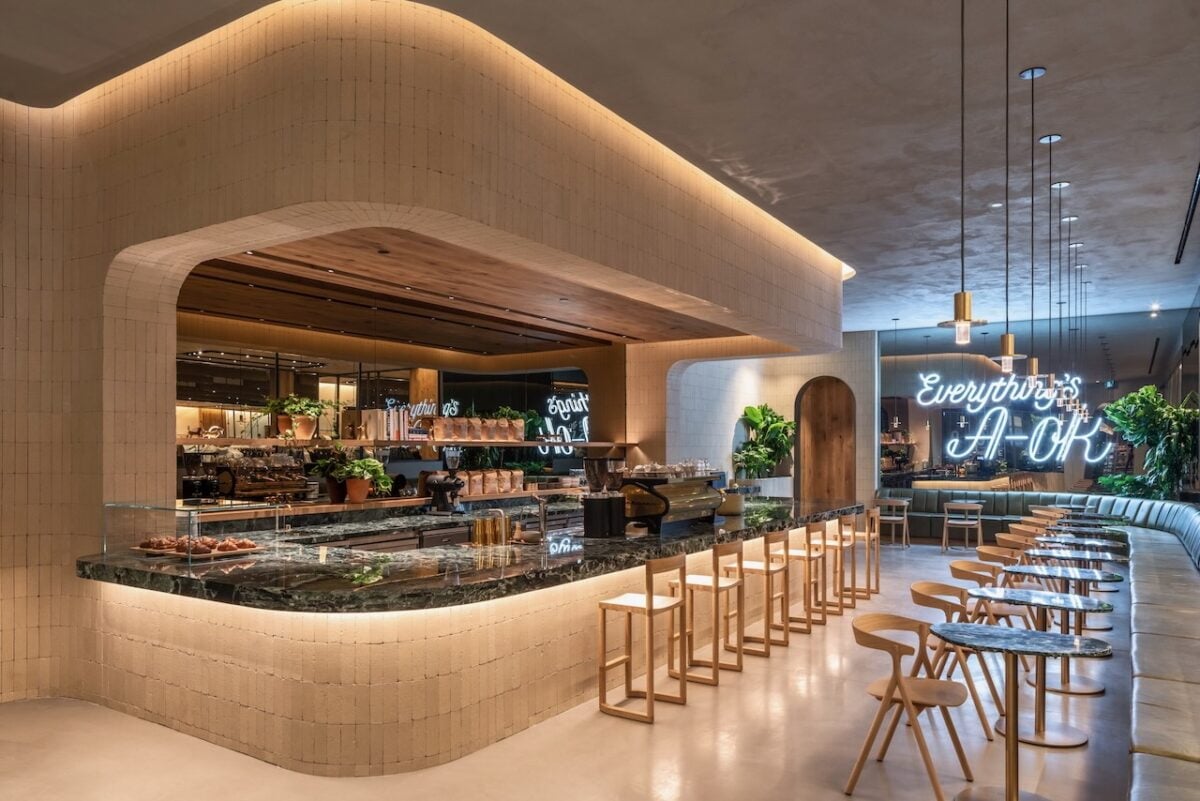
A-OK Cafe at Aritzia, CF Markville (Image: Aritzia)

Investor Focus and Risks Ahead

Stifel notes that investors are likely to focus on three key areas when Aritzia reports its results: the strength of sales momentum heading into the fall season, management’s updated guidance in light of the De Minimis exemption removal, and progress toward margin expansion and the 2027 EBITDA targets.

Despite optimism, several risks remain. Aritzia could face challenges if the United States introduces tariffs on Canadian imports, which would raise selling prices and potentially reduce demand. The brand also risks losing momentum if consumer tastes shift, while inflationary pressures and higher interest rates could constrain discretionary spending. In addition, with a large portion of its costs in U.S. dollars, Aritzia remains exposed to currency fluctuations.

Valuation and Target Price Methodology

Stifel’s increased target price of $96.00, up from $82.00, is based on higher valuation multiples. The firm derived its target by averaging three methods: applying a 27.5 times multiple on fiscal 2027 earnings per share, a 17.5 times multiple on fiscal 2027 EBITDA, and a discounted cash flow analysis.

The firm points out that Aritzia shares currently trade at 25 times forward earnings, leaving room for multiple expansion. Historically, the company has traded above 30 times forward earnings, even during periods of slower growth.

Aritzia’s Growth Runway Remains Intact

Overall, Stifel’s analysis underscores that Aritzia remains on a strong growth trajectory. The company is gaining market share in both Canada and the United States, supported by a loyal customer base, successful product lines, and investments in marketing and digital infrastructure.

“Momentum appears to be continuing into this fall, supporting a higher valuation than historically,” wrote Landry.

With initiatives underway to improve margins, expand digitally, and strengthen brand engagement, Aritzia appears well positioned for sustained growth in the years ahead. 

More from Retail Insider:

WingsUp! expands to B.C. with Vancouver opening

Source: WingsUp!
Source: WingsUp!

Ontario-based chicken wing chain WingsUp! has opened its first British Columbia location in Vancouver, marking the company’s debut on the West Coast as part of a broader national expansion.

Founded in 2005, WingsUp! currently operates more than 36 locations in Ontario and recently entered the Calgary market. The Vancouver opening is a strategic step in the company’s coast-to-coast growth plans.

Darren Czarnogorski
Darren Czarnogorski

“Vancouver is a natural fit for our brand,” said Darren Czarnogorski, president of WingsUp!, in a statement. “The city’s appreciation for fresh, high-quality food aligns with our core values.”

The company’s business model features small-format stores built for dense urban areas, with all delivery services handled in-house rather than through third-party providers. Orders are available for pickup, delivery or catering.

WingsUp!’s menu focuses on made-to-order, never-frozen wings and includes flavours such as Jamaican Hot, Medium BBQ, Honey Garlic Parmesan and Texas Tequila. The brand positions itself as a comfort food option that offers convenience for both lunch customers and at-home diners.

Fresh never frozen (CNW Group/WingsUp! Restaurants)

WingsUp! is actively recruiting franchisees in British Columbia to support its westward expansion. The company highlights a low-barrier entry model for prospective operators, with support in training, marketing and supply chain logistics.

“This is just the beginning for us in British Columbia,” Czarnogorski said. “We see strong potential in this market and look forward to expanding our footprint across the province.”

Franchise information is available at wingsup.com or by contacting franchise@wingsup.com.

More from Retail Insider:

DreamModular™ by DreamSofa: The Future of Flexible Furniture for Retailers

In an era where consumers crave versatility and customization, DreamSofa is leading the charge with its groundbreaking DreamModular™ system. For retailers looking to tap into the rising demand for adaptable, high-design furniture, DreamModular™ represents a game-changing opportunity that combines effortless functionality with editorial aesthetics.

The Challenge: Furniture That Adapts to Modern Life

Today’s consumers no longer want static, one-size-fits-all sofas. Urban living spaces are smaller and lifestyles are dynamic, forcing people to rethink how their furniture fits into their homes—and their lives. Modular furniture exists, but most options on the market require tools for assembly, wobble after frequent rearranging, or lack the sophistication to complement a stylish interior.

Enter DreamModular™: Infinite Geometry, Zero Tools

DreamModular™ stands apart by offering true tool-free modularity with a system so precise it feels like architecture meets play. The furniture effortlessly converts from an L-shape to a U-shape, pit, chaise, or three-seater in seconds, letting homeowners experiment and adapt without frustration or fatigue.

  • Aerospace-grade connection points click into place with mathematical precision, locking each module at perfect right angles.
  • Hidden glides let modules slide smoothly on all floor types—wood, tile, cork—without scratching or lifting.
  • The design preserves a clean, sculptural silhouette even after frequent reshaping.
  • It’s engineered to resist wobbling or wear, making it ideal for ever-changing living environments.
  • Plus, it’s future-proof, with the option to add new modules over time as needs evolve.

DreamModular™ offers a sophisticated alternative to clunky, temporary solutions—furniture that thinks ahead.

Why This Matters for Retailers

Retailers face a market increasingly driven by consumers’ desire for personalization combined with convenience. DreamModular™ satisfies both with:

  • High-end design appeal: It looks like it belongs in architectural magazines but functions like premium LEGO for adults, attracting style-conscious buyers.
  • Ease of use: Tool-free assembly lowers customer friction and reduces returns due to setup difficulties.
  • Durability: The build quality minimizes degradation from frequent moves, an important factor for renters or buyers who shift homes often.
  • Expandability: Customers can future-proof their investment by adding new pieces—an upsell opportunity for retailers.

Supporting the DreamModular™ Advantage

DreamSofa doesn’t stop at innovation in design. Their white-glove delivery and 3–5 week production turnaround outpace industry norms, providing retailers with reliable lead times to satisfy fast-moving consumers. A 100-day trial period gives buyers confidence to invest, reducing purchase hesitation.

Additionally, DreamSofa supplies retailers with the DreamStudio™ AI-powered visualization tool—an interactive platform that lets customers see their custom sofa in their own room, fine-tune size and fabric choices, and share designs. This digital experience shortens sales cycles and increases engagement in both e-commerce and showroom settings.

Sustainability Meets Scalability

The DreamModular™ system is made with PFAS-free, low-VOC foams, FSC-certified woods, and recyclable textiles—a key selling point as shoppers grow more eco-conscious. Programs like DesignXChange™ let users refresh cushions and covers rather than replace entire units, aligning with lifetime value philosophies and circular economy trends.

Retail Insider Takeaway

For retail professionals looking to differentiate their furniture offerings, DreamModular™ by DreamSofa combines:

  • Technical innovation with tool-free, precision locking modules
  • Sleek aesthetics that appeal to modern design sensibilities
  • User-centric features like floor-friendly glides and endless layout options
  • Sustainability and adaptable ownership models

It’s a product built for today’s consumer who expects their furniture to flex with their life, their space, and their style—without compromise.

DreamSofa’s DreamModular™ isn’t just a sofa system. It’s a retail-ready revolution in how sofas are designed, sold, and experienced. Retailers tapping into this innovation will find themselves ahead of the curve, delivering on new consumer demands for flexibility, customization, and sustainability—all wrapped in a package that’s as beautiful as it is brilliant.

Massive transformation of “effectively insolvent” Canada Post; postal workers go on strike

Photo: Canada Post

Canada Post is effectively insolvent, and repeated bailouts are not a long-term solution and transformation is required to ensure its survival, the federal government announced on Thursday.

And after the government announcement that door-to-door mail delivery will end for nearly all Canadian households within the next decade, the Canadian Union of Postal Workers announced it was declaring a countrywide strike.

That means the government is lifting the moratorium on community mailbox conversions. Currently, three-quarters of Canadians already receive mail through community, apartment, or rural mailboxes, while one-quarter still receive door-to-door delivery. Canada Post will be authorized to convert the remaining 4 million addresses to community mailboxes, generating close to $400 million in annual savings.

It said Canada Post will introduce flexibilities to reflect today’s lower volumes. The average household receives just two letters per week, yet operations remain designed for far higher volumes. By adjusting standards so that non-urgent mail can move by ground instead of air, the corporation will save more than $20 million per year.

And it explained that the moratorium on rural post offices, in place since 1994, will also be lifted. The rural moratorium was imposed in 1994 and covers close to 4000 locations. It has not evolved in 30 years, but Canada has changed.  This means that areas that used to be rural may now be suburban or even urban, but are still required to operate as rural post offices. Canada Post must return to the government with a plan to modernize and right-size its network.

Joël Lightbound
Joël Lightbound

“Canada Post is a national institution, older than our country itself, that has been serving Canadians for more than 150 years. For generations, postal workers have connected communities in every corner of the country, providing an essential lifeline to hundreds of northern, Indigenous, and rural communities. Canadians continue to rely on it today, and it remains a vital public service,” noted Joël Lightbound, Minister of Government Transformation, Public Works and Procurement.

“At the same time, Canada Post is now facing an existential crisis. Since 2018, the corporation has accumulated more than $5 billion in losses. In 2024 alone, it lost over $1 billion, and in 2025, it is already on track to lose close to $1.5 billion. Earlier this year, the federal government provided a $1-billion injection to keep the corporation operational. In the second quarter of 2025, Canada Post posted its worst quarterly results ever, losing $407 million. Today, the corporation is losing approximately $10 million every day.

“Twenty years ago, Canada Post delivered 5.5 billion letters annually. Today, it delivers only 2 billion, even as the number of households has grown. That means fewer letters are being delivered to more addresses, while fixed costs remain high. At the same time, parcels volumes — which should have been Canada Post’s growth opportunity — have declined. In 2019, Canada Post delivered 62% of parcels in Canada; today, its market share has dropped below 24%, with private competitors taking the lead. Structural challenges, combined with outdated restrictions and stalled negotiations between labour and management, have further limited the corporation’s ability to adapt.”

Doug Ettinger
Doug Ettinger

This situation is unsustainable, it added.

Canada Post President and CEO Doug Ettinger said: “Today’s announcement will allow us to make the changes needed to restore Canada’s postal service for all Canadians by evolving to better meet their needs. We take this responsibility seriously and will work closely with the government and our employees to move with urgency and implement the necessary changes in a thoughtful manner. Our goal is to ensure that a strong, affordable, Canadian-made, Canadian-run delivery provider supports the needs of today’s economy and delivers to every community across the country.”

Dan Kelly

Dan Kelly, President at the Canadian Federation of Independent Business (CFIB), said: “Every government review has come to the same conclusion: Canada Post needs major reforms. Today’s announcement is long overdue, but it’s a positive step towards making necessary changes that have been recommended for more than a decade. 

“While we welcome today’s news, there’s still no deal between Canada Post and the union.

“The union’s most recent job action banning flyers was another blow to small businesses. At this critical time of year, the last thing small businesses can afford is another strike. We urge the government to provide certainty and work proactively to prevent another labour disruption by temporarily making Canada Post an essential service.”

Regarding the postal strike, Kelly said: “As expected, Canada Post workers are back on an immediate, nation-wide strike.  The impact on small business will be massive. Last year’s strike alone cost small firms over $1 billion. Doing this in the lead-up to the critical holiday retail shipping season is especially troubling. 

“Still, the federal government must push forward with the needed changes ordered today by Minister Lightbound. Now is not the time to turn back.

“The strikes are a direct result of a decade of inaction on the part of the Trudeau government on this file. Every single review over the past ten years pointed to the same conclusion the Minister made today – that the Corporation is broken and needs to be given the flexibility to reduce costs. In fact, most of these measures were set to go into effect at the end of Harper term in office.

“Small firms are still strong users of Canada Post, and a new business model can be quickly implemented if government gives the Corporation the labour market protection it needs to get the job done.

“Canada needs some form of temporary or permanent Essential Services legislation to ensure service continues while the reforms are going into effect. Small firms are counting on government and all political parties to make this happen.”

More on Retail Insider:

Hudson’s Bay Auction Set for November in Toronto

Hudson's Bay flagship store in downtown Vancouver on Wednesday, May 28, 2025. Photo: Lee Rivett

An Ontario court has approved the auction of more than 4,400 items belonging to Hudson’s Bay, the historic retailer that collapsed earlier this year under the weight of billions in debt. The sale, authorized Thursday by Judge Peter Osborne, will see a trove of paintings, documents, memorabilia, and other artifacts head to auction in mid-November.

The court’s decision comes as part of Hudson’s Bay’s ongoing bankruptcy proceedings. Once the nation’s oldest and most storied retailer, the company filed for creditor protection in March after years of heavy financial losses and unsuccessful restructuring attempts. The sale is one of several efforts to raise funds for creditors and bring closure to a company that helped shape Canada’s economic and cultural identity.

The approved auction includes more than 1,700 pieces of art and about 2,700 artifacts. A lawyer for Hudson’s Bay confirmed that the collection being sold is drawn from the retailer’s “retail era,” rather than its early fur trading days.

Though the complete list remains under wraps, sources close to the process say the items include original paintings, historic paper documents, and even collectible Barbie dolls commissioned during Hudson’s Bay’s retail heyday.

Auction house Heffel Gallery Ltd. will handle the sale. The process will begin with online auctions on November 12, followed by a live, in-person sale in Toronto on or around November 19. Hudson’s Bay lawyers have said photographs and detailed descriptions of each lot will be published on Heffel’s website in advance.

Hudson’s Bay Co. fur traders. Image: Canadian Geographic/HBC

Who Might Bid

Reflect Advisors, the firm overseeing the company’s financial wind-down, said it has already fielded interest from a wide range of potential buyers. Among them are museums, universities, government institutions, Indigenous organizations, and wealthy private collectors.

The National Gallery of Canada is one institution that could seek to acquire works. Yet historians and cultural advocates have voiced concerns that prized items may vanish into private hands if high-net-worth buyers outbid public institutions or community organizations.

Some also fear that escalating prices could make it difficult for Indigenous groups to reclaim objects tied to their cultural heritage. While Hudson’s Bay insists that the artifacts up for auction are not from its fur trade origins, questions linger over what remains in the collection and how it should be handled.

Indigenous Concerns and Removed Items

Those concerns were partly addressed when 24 objects believed to be of Indigenous origin were recently removed from the auction block. Hudson’s Bay has pledged to return or donate those items, though it has not disclosed specific details about the artifacts, the intended recipients, or the timing of their transfer.

Three of the pieces are currently on long-term loan to a museum, which the company has not identified. Lawyers for Hudson’s Bay emphasized that any further items found to have Indigenous origins will also be withdrawn.

The sensitivity of these issues reflects the retailer’s complicated legacy. For centuries, Hudson’s Bay traded across Indigenous territories, profiting from furs, resources, and land. The sale of its remaining cultural holdings therefore raises broader questions about reconciliation and the stewardship of Canada’s historical record.

The 1670 royal charter signed by King Charles II establishing Hudson’s Bay, is shown on display at the Manitoba Museum where it was loaned to be displayed alongside its permanent collection of Hudson’s Bay artifacts in 2020. Photo: Manitoba Museum

The Royal Charter and Other Assets

Separate from the November sale, Hudson’s Bay has announced plans to sell its royal charter of 1670, the document that established the company under King Charles II of England. Reflect Advisors is preparing a dedicated process for that transaction, though court approval is expected to be sought early next week.

The charter is widely regarded as one of the most important documents in Canadian history. Its sale has sparked debate over whether it belongs in public hands or can rightfully be sold on the open market.

Hudson’s Bay also holds four war memorials at various store locations, along with two more in storage. According to company lawyer Ashley Taylor, these will be donated to organizations capable of preserving and displaying them in their original communities. Royal Canadian Legions and TD Bank Group have been named among the likely recipients.

The Company’s Archival Legacy

Much of Hudson’s Bay’s historic material was transferred long before its current financial troubles. In 1994, the company donated the majority of its archival records to the Archives of Manitoba, which today maintains the Hudson’s Bay Company Archives (HBCA). At the same time, more than 27,000 artifacts were gifted to the Manitoba Museum in Winnipeg.

Still, some archival records remain with the company. In court filings, Reflect Advisors managing director Adam Zalev noted that these documents are “under review,” with their future undecided. The uncertainty has fueled calls for these remaining pieces to be transferred to public institutions rather than sold.

World War 2 memorial of lost Simpsons employees at Hudson’s Bay Queen Street in Toronto. The memorial wall is beside the escalators on the main floor of the store. There are calls to save the memorial. Photo taken April 24, 2025 by Craig Patterson

Bankruptcy and Liquidation Context

The auction is one chapter in a broader saga of financial decline. Once a pillar of Canadian retail, Hudson’s Bay reported a net loss of $329.7 million for the fiscal year ending January 31, 2025. At the time of its bankruptcy filing, the company had just $3.3 million in cash, minimal liquidity, and more than 2,000 creditors.

Debt burdens exceeded $2 billion, including secured loans, unpaid rent, supplier obligations, and tax liabilities. Declining sales, the aftershocks of the COVID-19 pandemic, and falling store traffic left Hudson’s Bay unable to sustain operations. A last-ditch effort to secure new financing collapsed, prompting a decision to liquidate all remaining stores and assets.

The bankruptcy marked the end of a company that had survived centuries of economic transformation, wars, and recessions. Its disappearance has left thousands of employees without jobs and closed the chapter on one of Canada’s most recognizable retail brands.

More from Retail Insider:

Starbucks to cut 900 non-retail jobs and close stores amid restructuring in Fiscal 2025

EXTERIOR OF A DOWNTOWN TORONTO STARBUCKS COFFEE SHOP. PHOTO: STARBUCKS

Starbucks is planning to eliminate 900 current non-retail partner roles and close many open positions in North America as company-operated locations will decline by about 1% in its Fiscal 2025.

In a message posted on the company website, Brian Niccol, Chairman and Chief Executive Officer, said: “While we’re making good progress, there is much more to do to build a better, stronger, and more resilient Starbucks. As we approach the beginning of our new fiscal year, I’m sharing two decisions we’ve made in support of our Back to Starbucks plan. Both are grounded in putting our resources closest to the customer so we can create great coffeehouses, offer world-class customer service, and grow the business.

Brian Niccol
Brian Niccol

“First, I shared earlier this year that we were carefully reviewing our North America coffeehouse portfolio through the additional lens of our Back to Starbucks plan. Our goal is for every coffeehouse to deliver a warm and welcoming space with a great atmosphere and a seat for every occasion.  During the review, we identified coffeehouses where we’re unable to create the physical environment our customers and partners expect, or where we don’t see a path to financial performance, and these locations will be closed.

“Each year, we open and close coffeehouses for a variety of reasons, from financial performance to lease expirations. This is a more significant action that we understand will impact partners and customers. Our coffeehouses are centers of the community, and closing any location is difficult.   

“To put it into context: Since we’ve already opened numerous coffeehouses over the past year, our overall company-operated count in North America will decline by about 1% in fiscal year 2025 after accounting for both openings and closures. 

“We will end the fiscal year with nearly 18,300 total Starbucks locations – company operated and licensed – across the U.S. and Canada. In fiscal year 2026, we’ll grow the number of coffeehouses we operate as we continue to invest in our business. Over the next 12 months, we also plan to uplift more than 1,000 locations to introduce greater texture, warmth, and layered design.”

He said partners in coffeehouses scheduled to close will be notified this week, adding that the company is working hard to offer transfers to nearby locations where possible.

“Second, we’re further reducing non-retail headcount and expenses. This includes the difficult decision to eliminate approximately 900 current non-retail partner roles and close many open positions,” added Niccol.

“As we build toward a better Starbucks, we’re investing in green apron partner hours, more partners in stores, exceptional customer service, elevated coffeehouse designs, and innovation to create the future. We will continue to carefully manage costs and stay focused on the key areas that drive long-term growth.

Photo from Starbucks website

“Non-retail partners whose roles are being eliminated will be notified tomorrow morning (Friday). We will offer generous severance and support packages including benefits extensions.”

Niccol said the steps are to reinforce what the company sees is working and prioritize its resources against them.

“Early results from coffeehouse uplifts show customers visiting more often, staying longer, and sharing positive feedback. Where we’ve invested in more green apron partner hours so that there are more partners working at busy times, we saw improvements in transactions, sales, and service times, alongside happier, more engaged partners,” he said.

“I know these decisions impact our partners and their families, and we did not make them lightly. I believe these steps are necessary to build a better, stronger, and more resilient Starbucks that deepens its impact on the world and creates more opportunities for our partners, suppliers, and the communities we serve.”

More from Retail Insider:

Chow Tai Fook to Open 3rd Canadian Store at CF Toronto Eaton Centre

Chow Tai Fook construction hoarding at CF Toronto Eaton Centre. Photo: Craig Patterson

Chow Tai Fook, one of the world’s largest and most influential jewellery retailers, will soon open its third Canadian store at CF Toronto Eaton Centre, continuing its expansion across Canada. The new 1,110-square-foot boutique will be located on Level 2 of the shopping centre, situated between Pandora and a new-concept Lacoste store. The opening represents a step in Chow Tai Fook’s efforts to connect with Toronto’s diverse and internationally minded customer base.

The CF Toronto Eaton Centre location will mark the company’s second Toronto store, complementing its presence at CF Fairview Mall. Together, the two Toronto locations represent a strategy to anchor Chow Tai Fook in key Canadian markets with substantial Chinese and multicultural populations.

Chow Tai Fook Jewellery at CF Fairview Mall in Toronto (Image: Chow Tai Fook Jewellery)

A Deliberate Entry into the Canadian Market

Chow Tai Fook first entered the Canadian market with a soft launch at CF Richmond Centre in December 2022, followed by a grand opening ceremony in August 2023. That store became the brand’s first Canadian outpost and quickly attracted attention from both the Chinese community and local shoppers curious about its jewellery offerings.

In December 2023, the company opened its second Canadian store at CF Fairview Mall in Toronto. The Fairview location was selected for its proximity to one of the city’s most diverse communities, where demand for high-purity gold and luxury jewellery is strong. Together, these launches signal a carefully considered Canadian rollout that prioritizes cultural resonance and high-traffic shopping centres.

Chow Tai Fook Jewellery at CF Fairview Mall in Toronto (Image: Chow Tai Fook Jewellery)

Focus on Gold and Cultural Significance

Chow Tai Fook is internationally recognized for its 99.99% pure (999.9) gold jewellery, an offering that holds deep cultural significance within Chinese and other Asian communities. Gold is not only seen as a symbol of wealth and good fortune but also plays a key role in traditional celebrations, weddings, and milestone life events.

By offering gold bullion, fine jewellery, and signature wedding collections, Chow Tai Fook provides Canadian consumers with access to products that are both luxurious and meaningful. Its ability to bridge tradition with modern design has been central to its appeal. The company’s focus on high-purity gold has also given it an edge in the Canadian market, where few competitors offer the same level of quality and craftsmanship.

Chow Tai Fook Jewellery at CF Fairview Mall in Toronto (Image: Chow Tai Fook Jewellery)

Cadillac Fairview Partnership and Store Placement

The Canadian rollout has so far been concentrated in Cadillac Fairview (CF) shopping centres, which are among the most prestigious retail properties in the country. CF Richmond Centre, CF Fairview Mall, and now CF Toronto Eaton Centre each provide access to dense, high-spending demographics.

In March of 2026, Chow Tai Fook is confirmed to be opening a store at Oakridge Park in Vancouver — the first non-CF mall confirmed for the retailer in Canada.

The CF Toronto Eaton Centre is Canada’s busiest shopping mall, attracting millions of visitors annually. By choosing this location, Chow Tai Fook gains visibility with both domestic and international shoppers, including tourists.

Chow Tai Fook construction hoarding at CF Toronto Eaton Centre. Photo: Craig Patterson

Consistent Retail Experience Across Markets

Canadian Chow Tai Fook stores mirror the brand’s retail experience in Asia. Each store features sleek, modern interiors and a wide range of gold, white gold, and diamond jewellery. Product offerings include milestone pieces such as wedding jewellery, everyday fashion collections, and collectible bullion.

Sales associates are trained to cater to both Chinese-Canadian shoppers and a broader multicultural audience, providing service in multiple languages when needed. This approach ensures that the brand remains approachable while staying true to its heritage.

Founded in Guangzhou in 1929 before relocating to Hong Kong in the late 1930s, Chow Tai Fook has grown from a single jewellery shop to a global powerhouse. Today, the company operates more than 5,000 points of sale worldwide, with a concentration in mainland China, Hong Kong, and Macau.

Beyond its flagship CHOW TAI FOOK brand, the company owns and operates several other jewellery brands, including Hearts On Fire, ENZO, SOINLOVE, and Monologue, which target different consumer segments. This multi-brand strategy allows the company to serve a wide range of customers, from those seeking luxury bridal pieces to younger shoppers looking for fashion-forward designs.

More from Retail Insider:

Villages Calgary prepares for relocation

Photo: Villages Calgary

After more than four decades in the same location, Villages Calgary, a fair-trade non-profit retail store, is preparing for a move as city infrastructure plans progress.

Alex Ferguson, Chair of the Board at Villages Calgary, said the relocation has been under discussion for several years due to the City of Calgary’s proposed expansion of the nearby Crowchild Trail.

“We’ve been talking about a move for quite a while—even before my time,” said Ferguson, who has served as board chair for just over a year. “They’re talking about expanding what I call the ‘super highway’ right at our doorstep.”

Photo: Villages Calgary

Villages Calgary has operated from the same building—an old house on the edge of Kensington—for 41 years. Originally, the upstairs served as an apartment for the store manager while the ground floor was used for retail. The building was purchased by the non-profit society years ago, a move Ferguson described as “smart,” as it enabled them to benefit from property tax breaks as a registered non-profit.

Though no specific timeline has been given for the city’s plans, Ferguson said the organization is actively searching for a new home. The store’s leadership team, along with commercial realtors, is currently exploring new locations, including one in Inglewood.

“We’ll find something,” said Ferguson. “It’s not a huge rush. The city has been really good to deal with.”

According to Ferguson, a customer survey conducted in 2019-2020 identified traffic access as a significant challenge. “Getting on and off that highway is always a bit of a challenge. If you’re heading south on Crowchild, you can’t turn left—you have to go all the way around,” he said. “Our kind of store needs foot traffic.”

Founded as a fair-trade certified retail outlet, Villages Calgary offers products from countries including Rwanda and Vietnam. Ferguson said roughly 80 per cent of the store’s inventory is certified fair trade.

“These are products that are certified to be providing benefits to local artisans and communities in some of these countries that don’t have another market for their products,” he said.

Originally independent, Villages Calgary later operated under the umbrella of the Mennonite Central Committee (MCC), which provided administrative support including HR policies and payroll. Prior to the COVID-19 pandemic, the MCC shuttered all of its own brick-and-mortar stores, allowing society-owned outlets like Villages Calgary to decide whether to continue independently.

Photo: Villages Calgary

“I think most of the independent ones stayed viable,” said Ferguson. “We’ve survived the last five to seven years probably more by collaborating with our sister stores.”

Store managers across the country hold monthly calls to share insights and support, a network Ferguson credits with helping them remain sustainable.

“The whole imperative is to maintain a market for products that come in from countries where we’re supporting local artisans and communities,” he said. “It’s probably a labour of love more than anything else.”

Despite the looming relocation, Ferguson said the organization is focused on ensuring the new space reflects the store’s identity and mission.

“There were a few mall locations identified, but the culture of our store is not really a mall-type situation,” he said. “We’ll do a lot of good work to make sure we’re in a good location.”

CDNGLOBAL has the property listed for sale. More information here.

More on Retail Insider:

Amazon enhances Career Choice Upskilling Program in Canada, pre-paying 100% of tuition for frontline employees

Photo: Amazon
Photo: Amazon

Amazon says it is enhancing its Career Choice education benefit, enabling eligible employees across its various businesses and facilities, including fulfilment centres, delivery stations, and sortation centres, to learn new skills for career success.

The company now pre-pays 100% of program tuition, up to a yearly maximum, eliminating the 5% employee contribution requirement and removing the cost barrier to higher education. Amazon has also expedited the eligibility period for employees to participate in the program from one year of employment to 90 days, said the company.

Chuck Cummings
Chuck Cummings

“Amazon’s increased investments in the Career Choice program reflect our continued commitment to providing career growth opportunities for employees,” said Chuck Cummings, Director of Customer Fulfilment, Amazon Canada. “Amazon is proud to have offered Career Choice in Canada for the past 11 years. By removing cost and eligibility barriers, we’re taking our most significant step to help employees build new skills and pursue new careers at Amazon and beyond.”

Employees enrolled in Career Choice may pursue a certificate or diploma in qualified fields of study. Eighteen educational institutions across Canada are partnered with Career Choice, including Sheridan College, Algonquin College, Western Community College, and the Toronto Truck Driving School, said Amazon.

“Since Career Choice launched in 2014, close to 12,000 employees in Canada have participated in the program. The most popular programs include Truck Driving, Data Analytics, and Cybersecurity,” it said.

Photo: Amazon
Photo: Amazon
Photo: Amazon
Photo: Amazon

“Amazon’s increased investment in Career Choice comes as new research shows that cost is the leading barrier for more working Canadian adults to pursue postsecondary education to build new skills. An August 2025 Leger Omnibus study of Canadian adults working full-time showed that 60% of Canadian adults who are interested in returning to school cite cost as the most significant barrier. By pre-paying 100% of tuition for Career Choice participants, Amazon is encouraging more employees to pursue the training they need to grow their careers.”

To learn more about Career Choice, click here.

More from Retail Insider:

Chris Hadfield and Specsavers renew eye health campaign

Specsavers Canada and Chris Hadfield announce continued partnership aiming to change Canadians’ lives through better sight (CNW Group/Specsavers Canada)

Specsavers Canada has announced the continuation of its partnership with Canadian astronaut Col. Chris Hadfield in a national campaign aimed at encouraging Canadians to prioritize their vision through regular, comprehensive eye exams.

The campaign highlights the importance of preventive eyecare, particularly through the use of optical coherence tomography (OCT), an advanced 3D eye health scan that can detect early signs of serious conditions such as diabetes, glaucoma and age-related macular degeneration.

Catherine Walsh
Catherine Walsh

“We’re proud to continue our partnership with Col. Chris Hadfield, whose rare vantage point as an astronaut brings depth and authenticity to our eye health message,” said Catherine Walsh, vice-president of marketing and public relations at Specsavers Canada. “His trusted voice helps us connect with Canadians in a meaningful way, encouraging them to prioritize their vision through regular eye exams—before problems develop.”

The initiative blends Specsavers’ signature humour with Hadfield’s experience in space, emphasizing the strain eyes endure in both extraordinary and everyday environments, such as reading in dim lighting or prolonged screen time.

“I have been so lucky to see our whole, beautiful world from outer space. It reminds me that my eyes have gone through a lot, and how important sight is in daily life,” said Hadfield. “That’s why I get a detailed eye exam every year, including OCT. Everyone should – your vision is precious.”

Chris Hadfield
Chris Hadfield

Specsavers Canada equips all its locations with OCT technology to ensure it is available as part of every comprehensive exam. The company stresses that many eye conditions progress without symptoms, making routine exams crucial for early detection and prevention of long-term vision problems.

Founded in the United Kingdom more than 40 years ago, Specsavers entered the Canadian market in 2021. The optometrist-owned company has since opened over 165 locations across British Columbia, Alberta, Ontario and Manitoba. It plans to open more than 100 additional stores by the end of 2025, expanding into five new provinces and one territory.

More from Retail Insider: