Canada recorded 4.7 million international arrivals in April, up 3.5 per cent from the same month in 2025, marking the first year-over-year increase since January 2025, reported Statistics Canada.
The preliminary figures, which include Canadian-resident return trips as well as arrivals by U.S. and overseas residents by air and automobile, showed gains driven largely by increases in Canadian return travel and U.S.-resident visits to Canada.
Canadian residents returning from abroad totalled 3.2 million trips in April, an increase of three per cent compared with the same month a year earlier.
Return trips from the United States reached 1.8 million, up 1.4 per cent year over year. The increase was fuelled by automobile travel, which rose 5.8 per cent from April 2025. It marked the first month since December 2024 that overall return trips from the United States increased on an annual basis.
At the same time, return trips from the United States by air fell 8.1 per cent from a year earlier.
Canadian residents returning from overseas countries by air totalled 1.3 million in April, up 5.3 per cent from the same month in 2025.
The highest daily volume of Canadian-resident return trips from abroad occurred on Easter Monday, April 6, when 149,000 arrivals were recorded. The lowest daily total was observed on Wednesday, April 22, at 85,600.
Kenneth Surillo photo
Travel to Canada by U.S. residents also increased during the month.
U.S.-resident trips to Canada rose 7.3 per cent in April to 1.2 million, marking the third consecutive month of year-over-year gains.
Of those trips, 870,400 were made by automobile, up 6.1 per cent from April 2025, while 320,500 arrivals were by air, an increase of 10.8 per cent.
The busiest days for U.S.-resident arrivals occurred during the Easter long weekend, with 131,300 arrivals recorded over Good Friday, April 3, and Saturday, April 4. The lowest daily total was recorded on Tuesday, April 14, with 23,500 arrivals.
In contrast, travel to Canada by overseas residents declined during the month.
Overseas-resident trips totalled 366,800 in April, down 3.1 per cent compared with the same month a year earlier.
Most overseas arrivals came by air, with 338,200 travellers arriving that way, down 1.5 per cent year over year. Another 28,600 overseas residents entered Canada by automobile, a decrease of 19 per cent from April 2025.
The highest daily number of overseas-resident arrivals was recorded on Thursday, April 2, with 15,500 travellers, while the lowest occurred on Tuesday, April 14, at 9,800 arrivals.
“CT REIT delivered another solid quarter, reflecting the strength of our portfolio and the consistent execution of our strategy,” said Kevin Salsberg, President and Chief Executive Officer of CT REIT. “The results of our disciplined approach to operating our assets and deploying capital provide us with the confidence to, once again, announce an increase to our monthly distributions. With this 3.5% increase, we have now grown our distributions by more than 50% since our IPO in 2013, underscoring the value that we have created for our Unitholders over this time.”
Kevin Salsberg
The REIT said its Board of Trustees has approved a 3.5% distribution increase that will be effective with the July 15 payment to Unitholders of record on June 30. Monthly distributions will increase to $0.0818 per Unit, or $0.9816 per Unit on an annualized basis.
The REIT also announced three new investments which will require an estimated $43 million to complete. The investments are, in aggregate, expected to earn a going-in yield of 6.28% and represent approximately 129,800 square feet of incremental gross leasable area .
CT REIT is an unincorporated, closed-end real estate investment trust formed to own income-producing commercial properties located primarily in Canada. Its portfolio is comprised of over 375 properties totaling 31.7 million square feet of GLA, consisting primarily of net lease single-tenant retail properties across Canada. Canadian Tire Corporation, Limited, is CT REIT’s most significant tenant. For more information, visit .
Property
Type
GLA (sf.)
Timing
Activity
Centre 50, Edmonton, AB
Third Party Acquisition
75,800
Q2 2026
Third party acquisition of a Canadian Tire anchored multi- tenant property
Oliver, BC
Third Party Acquisition
—
Q2 2026
Third party acquisition of land adjacent to an existing CT REIT owned multi-tenant property
Marché Rosemère, Rosemère, QC
Third Party Acquisition
54,000
Q2 2026
Third party acquisition of a retail property adjacent to an existing CT REIT owned Canadian Tire store
The REIT said:
Net income was $115.7 million for the quarter, an increase of $10.1 million, compared to the same period in the prior year, primarily due to increases in the fair value adjustment on investment properties and higher revenues from the Property portfolio, partially offset by higher interest expense, property expense and development fee revenue in 2025;
Total property revenue for the quarter was $157.6 million, which was $7.2 million or 4.8% higher compared to the same period in the prior year. In the first quarter, Net Operating Income was $124.3 million, which was $5.6 million or 4.7% higher compared to the same period in the prior year. This was primarily due to the acquisition, intensification and development of income-producing properties completed in 2025, which added $5.0 million to NOI, and rent escalations from Canadian Tire leases, which contributed $1.8 million;
Same store NOI was $118.1 million and same property NOI was $119.4 million for the quarter, which were $1.4 million or 1.2%, and $2.7 million or 2.3%, respectively, higher when compared to the prior year. Same store NOI increased primarily due to contractual rent escalations and the recovery of capital expenditures. The increase in same property NOI was primarily due to the increase in same store NOI noted above, as well as from the intensifications completed in 2025;
Funds from Operations for the quarter was $84.5 million, which was $3.4 million or 4.2% higher than the same period in 2025, primarily due to the impact of NOI increases noted above, partially offset by higher interest expense and development fee revenue earned in 2025. FFO per unit – diluted (non-GAAP) for the quarter was $0.354, which was $0.012 or 3.5% higher, compared to the same period in 2025, due to the growth of FFO exceeding the growth in weighted average units outstanding – diluted (non-GAAP);
Adjusted Funds from Operations for the quarter was $78.1 million, which was $2.7 million or 3.6% higher than the same period in 2025, primarily due to the impact of NOI increases noted above, partially offset by higher interest expense and development fee revenue earned in 2025. AFFO per unit – diluted (non-GAAP) for the quarter was $0.327, which was $0.009 or 2.8% higher, compared to the same period in 2025, due to the growth of AFFO exceeding the growth in weighted average units outstanding – diluted (non-GAAP).
Canadian Tire Corporation is CT REIT’s most significant tenant. As at March 31, CTC represented 92.1% of total GLA and 90.9% of annualized base minimum rent. As at March 31, CT REIT’s portfolio occupancy rate, on a committed basis, was 99.4%.
For years, Oakridge Park has taken shape across Vancouver’s west side as one of the most ambitious retail and mixed-use developments ever undertaken in Canada. On May 28, the project will officially open to the public, marking a pivotal moment not only for Vancouver retail, but also for the continued evolution of shopping centres into fully integrated urban districts.
The redevelopment of the former Oakridge Centre at West 41st Avenue and Cambie Street has transformed a longtime regional shopping mall site into a sprawling mixed-use environment that ultimately will include retail, residential, office, civic and public spaces connected directly to the Canada Line SkyTrain network. The opening retail phase includes approximately 500,000 square feet of retail and dining space within a broader 650,000-square-foot shopping component.
Yet Oakridge Park is being positioned as far more than a luxury shopping destination.
The project combines international fashion brands, contemporary retail, public gathering areas, entertainment programming, wellness offerings, office space, housing and civic infrastructure within a single high-density development that city planners have identified as Vancouver’s second major town centre outside of downtown.
Oakridge Park north Atrium — several luxury brands will operate flagships nearby. Rendering via QuadReal
“The official opening of Oakridge Park marks a significant milestone in bringing our long-term vision for this destination to life,” said Chrystal Burns, Executive Vice President, Canadian Retail Experience at QuadReal Property Group. “We set out to create more than a retail centre, we wanted to build a place where world-class shopping, dining, culture and community come together.”
Chrystal Burns
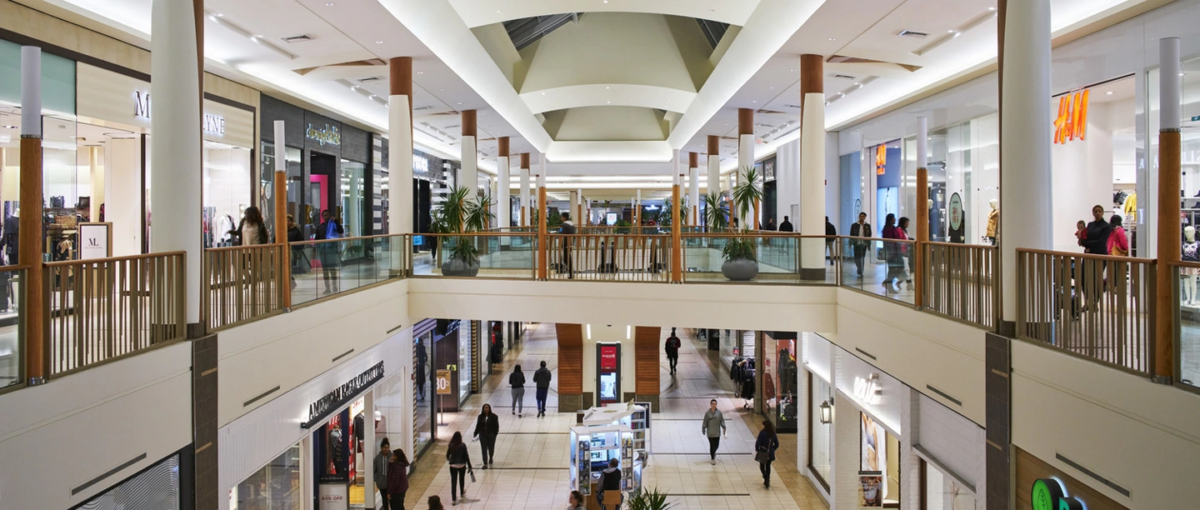
A recent walkthrough of the property revealed soaring skylit atriums, architecturally ambitious storefronts, integrated public art and expansive indoor-outdoor gathering spaces designed to blur the line between shopping centre, cultural venue and public realm. Natural light filters through large glass ceilings while open public corridors transition toward parks, food-focused social spaces and performance areas intended to encourage visitors to spend time throughout the development rather than simply move between stores.
That emphasis on experience appears central to Oakridge Park’s long-term vision.
Burns said the project was conceived around the idea that physical environments increasingly need to offer emotional and social value alongside commerce, particularly as technology continues reshaping how consumers shop and interact.
“With so much global instability, social screen anxiety and AI starting to do the things that used to define us, what’s going to make us unique is our own human experience,” Burns said in an interview with Retail Insider. “What’s going to matter in real estate development is creating spaces and places where people can create human experiences. We experience things, we feel things, we use our senses.”
Her comments reflect a broader shift taking place across the retail real estate industry as developers increasingly focus on placemaking, entertainment, wellness and emotional engagement in an effort to keep physical environments relevant in an increasingly digital world.
Luxury Retailers and Contemporary Brands Shape Vancouver’s Evolving Retail Landscape
Oakridge Park’s retail lineup reflects Vancouver’s growing prominence within the global luxury retail market and further strengthens the city’s position as an important gateway for international brands entering Canada.
Luxury fashion houses opening within the project include Chanel, Louis Vuitton, Prada, Valentino, Moncler, Loewe, Brunello Cucinelli, Maison Margiela, Max Mara and Miu Miu, alongside jewelry and watch brands such as Tiffany & Co., Rolex, Chaumet and TAG Heuer.
The retail mix also incorporates contemporary fashion, beauty and lifestyle retailers including Aritzia, Harry Rosen, Sporting Life, Sephora, Browns Shoes, Veronica Beard, Sandro and Maje.
Rather than functioning solely as a luxury retail concentration, Oakridge Park has been designed to encourage daily activity through a combination of shopping, dining, wellness and public gathering spaces integrated throughout the site.
Oakridge Park in Vancouver. Image: QuadReal
“It’s not just a collection of shops,” Burns said. “The whole is so much more than the sum of its parts”
The project also signals an evolution in how luxury retail is developing within Vancouver. While the city’s luxury market has historically concentrated along the downtown Alberni Street corridor, Oakridge introduces a more transit-oriented and mixed-use model where luxury retail exists alongside residences, office space, parks and civic amenities.
That combination remains relatively uncommon in Canada and reflects broader global trends toward denser urban retail districts designed around experience and daily living rather than purely destination shopping.
Time Out Market and Cultural Programming Intended to Drive Daily Engagement
Food, entertainment and recurring cultural programming are expected to play a major role in shaping how visitors interact with Oakridge Park.
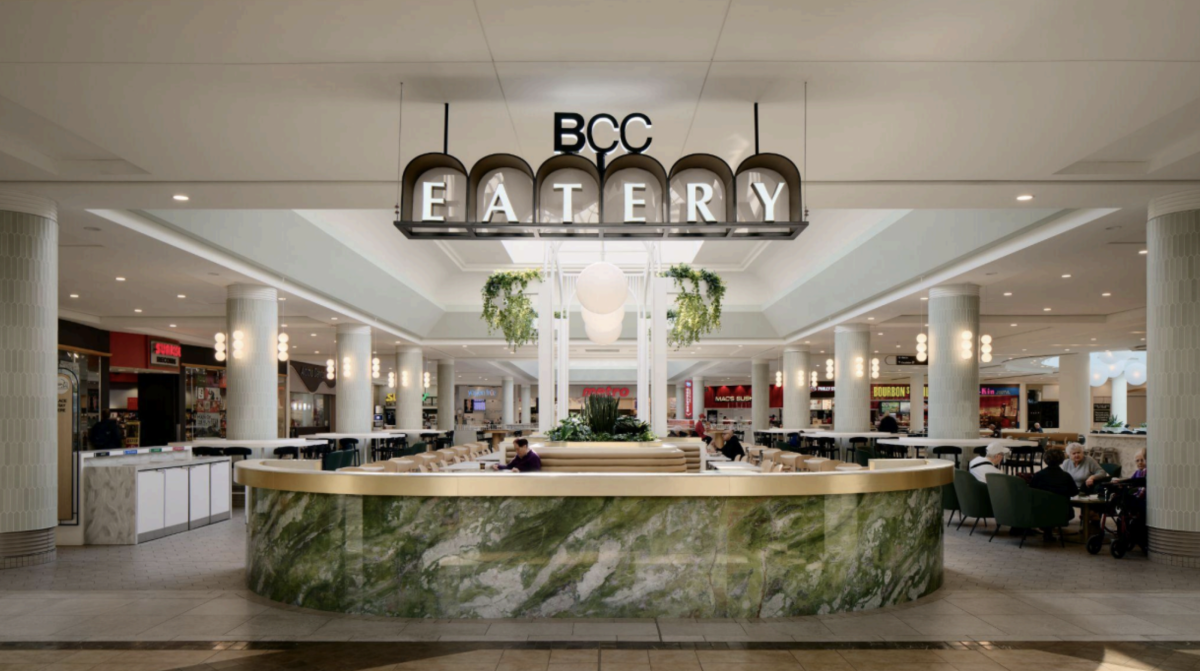
Time Out Market Vancouver will open simultaneously with the retail component on May 28, bringing a large-scale curated food hall concept to the development. The approximately 50,000-square-foot market includes roughly 10,000 square feet of outdoor patio space overlooking Oakridge Park’s public park areas.
Participating culinary concepts include Feenie’s, Lunch Lady, Via Tevere, Kishimoto, DownLow Chicken and Heritage Asian Eatery, among others.
The opening period will also feature extensive programming throughout late May and June, including live music performances, floral installations, portrait illustrations, barre classes, pilates sessions and family-oriented activities.
“We want to activate that so that people come every day to create those experiences, to create those memories,” Burns said. It’s not only about buying things. This is more about the experience, the music, the art — being part of your community and culture.”
Oakridge Park incorporates multiple indoor and outdoor stages throughout the site, including within its atriums and adjacent park areas. Burns said larger-scale fashion and entertainment activations are also expected later this year.
Oakridge Park and the new Time Out food hall. Image via QuadReal
Former Hudson’s Bay Space Reflects Structural Shift in Canadian Retail
Future phases of Oakridge Park will continue transforming portions of the former Hudson’s Bay space into new retail, wellness and lifestyle concepts.
Burns confirmed that Altea Active will relocate and significantly expand into approximately 55,000 square feet on the upper level of the former department store space, with construction expected to begin this summer ahead of a planned Spring 2027 opening.
Additional contemporary and lifestyle-focused retailers are also planned for the lower level as leasing continues.
The transformation of former department store space into wellness, lifestyle and experiential concepts reflects one of the most significant structural shifts occurring within Canadian shopping centres following the decline of traditional anchor-driven retail models. Across the country, landlords increasingly are repositioning former department store space for mixed-use purposes that generate more consistent daily traffic and longer visitor engagement.
Future density around Oakridge Park. Photo: City of Vancouver
Oakridge Park Emerging as Vancouver’s Second Town Centre
Beyond retail, Oakridge Park is being developed as a dense mixed-use urban centre anchored by transit connectivity and civic infrastructure.
The project will eventually include more than 3,000 residential units, approximately 720,000 square feet of office space, a nine-acre rooftop public park, community centre, daycare facilities, seniors programming and what is expected to become one of Vancouver’s largest public libraries.
Burns noted that the City of Vancouver has identified the Oakridge area as the city’s second major town centre outside of downtown Vancouver.
“The city of Vancouver has actually designated it the second town centre and the only other town centre to downtown,” Burns said.
The project’s direct integration with the Oakridge-41st Avenue Canada Line station is also expected to become one of its defining long-term advantages. An enclosed underground pedestrian connection linking the station directly into the development is expected to open shortly after the initial retail launch.
“It’s fifteen minutes on the train to downtown, and it’s fifteen minutes on the train to the airport,” Burns said.
As additional residential towers, office components and future retail phases continue opening over the coming years, Oakridge Park is expected to become one of Canada’s clearest examples of how major shopping centre sites are evolving into full urban neighbourhoods where commerce, housing, culture, wellness and public life increasingly exist side by side.
A customer walks through a store (unattended). Photo: Hanson Lu/Unsplash
While Canadian retailers continue to announce store openings, expansion plans, and healthy consumer demand in many retail categories, retail employment trends are moving in the opposite direction, creating growing questions about whether retailers are quietly redesigning their operations to function with fewer employees.
Statistics Canada reported that employment in wholesale and retail trade declined by 27,000 positions in April, following a similar decline in March. The back-to-back declines came despite ongoing retail expansion activity across the country and continued investment in stores, shopping centre redevelopments, and new retail concepts.
“We continue hearing about expansion, growth, and strong performance, yet retailers are still reducing staff,” Sears said in an interview with Retail Insider. “Something about the numbers simply doesn’t line up.”
The situation is becoming increasingly difficult for retail staffing professionals to interpret. After years of industry discussions around experiential retail, elevated customer service, and the importance of physical shopping environments, many retailers now appear to be operating with leaner staffing models while continuing to invest heavily in brick-and-mortar growth.
Suzanne Sears
Retail Employment Weakness Continues Despite Store Investment
Statistics Canada’s April labour report showed continued weakness in wholesale and retail trade employment, following another sizeable decline the previous month. Ontario posted the largest provincial employment decline overall, while unemployment in Toronto climbed higher than many expected for a city traditionally viewed as Canada’s economic engine.
At the same time, many retailers continue publicly discussing expansion plans, new locations, and long-term investment in stores.
That widening gap has raised broader questions around what may be changing inside Canadian retail organizations.
Sears said retailers may be attempting to operate more efficiently while simultaneously protecting profitability amid economic uncertainty. However, she believes there are limits to how far staffing reductions can go before consumers begin noticing changes to the in-store experience.
“Every time you lose a sales associate, the level of service in your organization goes down,” Sears said. “At some point, you start weakening one of the biggest advantages stores still have over online shopping.”
The concern carries broader implications for an industry that has spent years positioning physical retail around experience, service, curation, and customer engagement. Those strategies become increasingly difficult to sustain without experienced staff on the sales floor.
“You go to a store for the service and the visual impact,” Sears said. “If customers stop getting that one-on-one interaction and expertise, eventually they may start asking why they are shopping in-store at all.”
Leaner Retail Operations May Be Becoming Structural
The employment declines are raising broader questions about whether Canadian retailers are moving toward permanently leaner operating models.
While some staffing reductions may reflect caution around the economy, Sears said the changes increasingly appear structural rather than temporary.
Part of the shift may involve growing pressure on retailers to improve productivity while controlling labour costs. Some companies have also invested heavily in automation, centralized operations, self-checkout systems, and digital infrastructure over the past several years.
Artificial intelligence may also be beginning to affect portions of retail operations, though Sears said AI alone does not fully explain the employment declines.
Beyond store-level staffing, Sears said she has also seen growing reductions within retail marketing departments, including senior-level positions.
“I’m getting a lot of those resumes,” she said, referring to experienced marketing professionals entering the market.
Some retailers may increasingly be relying on outsourcing, fractional support, automation, and leaner internal structures instead of maintaining larger corporate teams.
Still, Sears believes the broader retail labour picture remains difficult to fully explain.
“Retailers are still opening stores and growing, yet staffing keeps moving in the opposite direction,” she said.
Canadian Retail Staffing Trends Diverge From the United States
Part of the uncertainty comes from comparisons with the United States, where retail hiring activity has remained considerably stronger.
Sears noted that American retail employment has continued growing alongside warehousing and transportation hiring, sectors that often move together as consumer demand rises and supply chains expand.
In Canada, however, the relationship appears far less clear.
The divergence has raised broader questions around whether Canadian retailers are becoming more cautious with labour spending, facing different productivity pressures, or responding more conservatively to economic uncertainty than their American counterparts.
“We’re going in the wrong direction,” Sears said when discussing the widening gap between Canadian and American retail staffing trends.
Older Workers Gain Momentum While Younger Talent Pulls Back
One notable area of employment growth has been among older Canadians.
Statistics Canada reported employment gains among workers aged 55 and older in April, including increases for both men and women.
Sears said many employers increasingly appear to value stability, experience, and long-term reliability amid continued labour pressures.
At the same time, she believes younger workers are increasingly questioning whether retail offers a sustainable long-term career path.
“A lot of younger workers are walking away from retail,” Sears said. “They don’t necessarily see the same long-term opportunities that previous generations saw.”
Years of restructuring, store closures, layoffs, and changing expectations around retail work may be contributing to that shift.
Hudson’s Bay Aftershocks Continue Affecting Retail Labour
Although Canada’s retail employment environment has stabilized significantly since the closure of Hudson’s Bay Company stores last year, Sears said some sectors continue experiencing lingering effects.
She pointed specifically to fragrance and cosmetics professionals, many of whom have struggled to find equivalent employment opportunities following the department store collapse.
“There’s still a large amount of talent in the beauty sector that hasn’t found comparable replacement employment,” Sears said.
Unlike European markets that support larger numbers of standalone beauty boutiques and mono-brand cosmetics stores, Canada’s beauty sector has historically relied heavily on department stores and major drugstore chains, limiting opportunities for displaced workers seeking similar positions.
The category has historically depended heavily on in-person expertise, product knowledge, and long-term customer relationships, making those positions particularly difficult to replace elsewhere in the market.
The situation reflects how the collapse of large department store networks can continue affecting retail labour markets long after stores close, particularly in highly specialized categories built around service and customer engagement.
Questions Continue Building Around Canadian Retail Hiring Trends
Despite the employment declines, the broader Canadian retail environment does not currently resemble a traditional retail downturn.
Consumers continue shopping in stores, retailers continue investing in physical locations, and major retail developments continue moving forward across the country.
That is precisely why the labour numbers have become increasingly difficult for many industry observers to interpret.
“There’s a real disconnect right now,” Sears said. “The industry still talks about growth and expansion, but the staffing trends tell a very different story.”
The liquidation of Warehouse One and Bootlegger will leave behind more than empty clothing racks and liquidation signage.
It will also create 128 vacant retail spaces across Canada, many located in regional shopping centres and secondary markets already facing mounting pressure from e-commerce, shifting consumer habits, and declining apparel tenancy.
While the collapse of the Winnipeg-based retailer marks the end of a nearly 50-year Canadian retail story, the fallout will extend well beyond the company itself. Landlords, mall operators, neighbouring tenants, and smaller communities may all feel the effects as stores begin closing nationwide following the company’s Companies’ Creditors Arrangement Act (CCAA) filing.
Court documents filed in Manitoba show the retailer operated 95 Warehouse One stores, 25 Bootlegger locations, and eight combined-format stores across eight provinces and one territory.
Unlike many recent retail collapses concentrated in major urban centres, the Warehouse One footprint was heavily weighted toward regional malls, suburban shopping centres, and smaller Canadian communities.
Locations included markets such as Cold Lake, Meadow Lake, Quesnel, Thompson, Weyburn, Flin Flon, Prince Rupert, Whitehorse, Stephenville, and The Pas.
That geographic reality could make some vacancies harder to backfill.
Regional Malls Face Another Apparel Vacancy Challenge
For decades, apparel chains such as Warehouse One and Bootlegger formed part of the core tenant mix within enclosed Canadian malls.
However, many secondary and tertiary shopping centres have spent years grappling with declining apparel demand as consumer spending increasingly shifts online and younger shoppers migrate toward fast-fashion platforms and digital marketplaces.
The Warehouse One liquidation now removes another national apparel operator from that ecosystem.
In major urban markets, vacant apparel space can often be repositioned relatively quickly for food-and-beverage concepts, entertainment uses, fitness operators, medical tenants, or experiential retail. In smaller communities, however, replacement demand is often far more limited.
That is particularly relevant for enclosed malls in regional Canadian markets where national fashion retailers have steadily reduced expansion activity over the past decade.
Some of the affected centres may also face declining traffic as longtime customers lose one of the mall’s remaining national apparel tenants.
Warehouse One, which opened March 26, 2026 at Seaway Mall in Welland, ON
Secondary Markets Already Under Pressure
The store list tied to the liquidation reflects a distinctly regional Canadian retail footprint.
In Alberta alone, the retailer operated stores in communities including Whitecourt, High Level, Rocky Mountain House, Peace River, Lac La Biche, Drayton Valley, and Cold Lake.
The company also maintained locations across northern British Columbia, Saskatchewan, Manitoba, Newfoundland and Labrador, and smaller Ontario markets such as Kenora, Dryden, Timmins, and Cornwall.
Many of these centres were developed during decades when enclosed malls served as dominant community shopping hubs. Today, some face a very different environment marked by weaker apparel demand, aging mall infrastructure, rising e-commerce penetration, changing demographic patterns, and reduced expansion activity from national retail chains.
Court documents filed in the CCAA proceedings indicate some smaller-market locations experienced sales declines exceeding 10% year-over-year.
That trend reflects broader challenges facing parts of Canada’s regional mall sector.
Warehouse One store in Cold Lake, Alberta. Photo: Warehouse One
A Different Situation Than Hudson’s Bay
The Warehouse One liquidation differs significantly from the recent CCAA of Hudson’s Bay and the earlier closure of Nordstrom Canada operations.
Those collapses largely involved large-format department store boxes concentrated in major metropolitan markets where redevelopment opportunities often include mixed-use intensification, residential projects, entertainment concepts, or large-scale subdivision plans.
Warehouse One stores are much smaller and more geographically dispersed.
Many locations occupy inline mall space or modest suburban retail units where repositioning strategies may be less transformative and more dependent on finding replacement tenants within already-softening apparel categories.
The closures may also affect neighbouring tenants indirectly if reduced traffic impacts smaller shopping centres.
Co-Tenancy Concerns Could Emerge
In some regional malls, the loss of multiple apparel tenants can create broader leasing complications.
Certain retailers negotiate co-tenancy provisions within leases that allow for rent reductions or, in some cases, lease termination rights if occupancy thresholds or key tenant mixes deteriorate.
It remains unclear whether any specific centres affected by the Warehouse One liquidation could face those issues. However, the disappearance of another national apparel chain may create additional leasing pressure for some smaller enclosed malls already navigating elevated vacancy levels.
The risk is particularly relevant in tertiary markets where there are fewer replacement fashion retailers actively expanding.
Bootlegger at Guildford from Lower Level – Photo by Lee Rivett
Canadian Apparel Retail Continues to Shrink
The liquidation also reinforces a broader transformation underway within Canadian apparel retail.
Over the past decade, Canada has seen the collapse, restructuring, or retrenchment of multiple apparel operators including Le Château, Jacob, Smart Set, several Comark-owned banners, and numerous specialty fashion chains.
At the same time, retail investment has increasingly concentrated in luxury-oriented urban retail, open-air power centres, mixed-use projects, discount retail formats, and experiential shopping environments.
Meanwhile, middle-market mall apparel chains have faced mounting competition from online retailers and ultra-low-cost fashion platforms such as SHEIN and Temu.
Court filings tied to the Warehouse One CCAA proceedings specifically cite “consumer uptake of ultra low cost fashion retailers and other online competition” as contributing factors in the company’s insolvency.
The result is another wave of apparel vacancies arriving at shopping centres across Canada, particularly in markets where replacement options may be increasingly limited.
Vancouver-based yoga brand YYOGA is preparing for a new phase of growth, shifting toward a franchise-led expansion model as it looks to scale across Canada while deepening its presence in British Columbia.
Founded in 2007, YYOGA has long been a recognizable name in Vancouver’s wellness scene. Now, the company is positioning itself for broader national reach, beginning with a renewed focus on community-driven studio ownership and strategic market expansion.
YYOGA Signature Class, Source: yyoga.ca
Franchise Model Signals Strategic Shift
The move toward a franchise structure marks a significant evolution for the business following pandemic-era disruptions. Founder Terry McBride said the decision reflects a desire to localize ownership and strengthen community connections.
“We have four corporate locations today, but my preference is for each studio to be locally owned and community-based,” McBride explained. “These are really community centres for like-minded people focused on their health.”
He added that while building corporate locations could be simpler operationally, franchising aligns more closely with the brand’s long-term vision. “I don’t want to be corporate. I want to keep it simple, even though simple in business is really hard.”
The YYOGA franchising expansion will begin in British Columbia, where the company plans to refine its model before scaling eastward.
Terry McBride. Photo: YYOGA
North Vancouver Studio Reflects Demand
A key component of this growth strategy is a new YYOGA location in North Vancouver’s Lonsdale corridor, scheduled to open June 1. The studio, owned by Terry and Jen McBride, is being developed in response to sustained demand at nearby locations.
“Our Lynn Valley studio had people booking classes two weeks in advance,” McBride said. “That’s not a good experience. We needed to relieve that pressure.”
The new site, located near Whole Foods and Lions Gate Hospital, sits within a rapidly densifying neighbourhood characterized by mid-rise residential development and a strong focus on health-oriented retail.
“The commercial mix there is centred around food and wellness,” McBride noted. “It’s the perfect place for us to be.”
YYOGA Signature Class, Source: yyoga.ca
Demand for In-Person Wellness Rebounds
The expansion comes as in-person wellness activities continue to rebound following the pandemic. While capacity restrictions initially slowed recovery, McBride said demand has now normalized, driven by a renewed desire for connection.
“We’re a tribal culture. People want community,” he said. “After the pandemic, that need became very clear.”
YYOGA has adapted its studio experience accordingly, maintaining slightly reduced class capacities to reflect changing customer expectations around personal space.
At the same time, the brand continues to position itself as a premium-accessible offering, with amenities such as infrared saunas, lounges, and high-quality studio environments.
Real Estate Strategy Supports Growth
From a real estate perspective, YYOGA studios typically range between 3,000 and 6,000 square feet, depending on configuration. Larger formats allow for multiple studios and staggered class schedules, improving operational flow.
“We tend to be a destination tenant,” McBride said. “And wherever we go, it’s inevitable that within nine months a coffee shop opens nearby.”
This pattern reflects YYOGA’s role as an anchor within emerging neighbourhoods, often contributing to broader wellness-oriented retail ecosystems.
Expansion Plans Across Canada
Looking ahead, YYOGA plans to establish between 10 and 15 studios in British Columbia before expanding into Alberta and eventually Ontario. The company expects to begin entering Alberta within approximately 18 months.
“We’ll super-serve the first five to six franchises, identify pain points, solve them, and then scale,” McBride said.
Ontario represents a particularly significant opportunity, with McBride estimating potential for 30 to 40 locations given the province’s population density.
Community-Centric Model Drives Long-Term Vision
Central to the YYOGA franchising expansion is a continued emphasis on community, which McBride views as the brand’s core differentiator.
“If you deliver quality, experience, and community, you create something with staying power,” he said.
That philosophy has guided YYOGA since its inception, when McBride launched the concept after struggling to find a yoga studio that matched his expectations.
“I built it for myself, knowing there were thousands of others looking for the same thing,” he said.
Pandora has introduced what it describes as a new transparency measure for its lab-grown diamond line, adding carbon footprint data alongside the traditional “four Cs” of cut, colour, clarity and carat.

The company said it will now disclose the carbon footprint of each stone in its Pandora Lab-Grown Diamonds collection on its website, marking a shift in how it presents environmental information for the category.
The move comes as the jewellery maker continues to expand its lab-grown offering, which uses what the company says is a lower-emissions production process compared with mined diamonds. Pandora said each lab-grown diamond in the collection is grown, cut and polished using 100% renewable electricity, and set in jewellery made from 100% recycled silver and gold.
According to the company, its lab-grown diamonds have the same optical and physical characteristics as mined diamonds, but generate “around 90% less CO₂e than mined diamonds,” based on its internal calculations and external life-cycle assessment work.
The carbon footprint data will be published on pandora.net for each stone in the collection, adding what the company is positioning as an additional decision-making metric for consumers.
Pandora said the initiative is part of its broader design approach for lab-grown diamonds, which are intended to be worn daily rather than reserved for milestone occasions. The collection includes two design directions: Pandora Infinite and Pandora Era.
Pandora Infinite, introduced in 2021 as the company’s first lab-grown diamond collection, focuses on symbolic and expressive designs. Pandora Era features more minimal, essential styles intended for stacking, mixing and layering.
“Pandora Infinite explores boundless love and self-expression through timeless silhouettes, while Pandora Era reimagines diamond essentials for today, with versatile styles designed for stacking, mixing and layering — jewellery made for every moment, not just milestones,” the company said.
Pandora said the new disclosure approach is intended to give consumers more information at the point of purchase.
“Today, people want jewellery that feels beautiful, meaningful and aligns with their values,” she said. “By introducing a new measure of brilliance, the carbon footprint, we are giving consumers greater transparency about what they are wearing and how it’s made. Displayed alongside the traditional four ”Cs” (Cut, Colour, Clarity, and Carat) on our website, this fifth ‘C’ empowers people to choose diamonds that express who they are, without compromising on design, quality or self-expression.”
Pandora said it formally presented the new carbon disclosure approach at the Global Fashion Summit in Copenhagen, a sustainability-focused gathering for the fashion industry.
The Pandora Lab-Grown Diamonds collection is currently available in the United States, United Kingdom, Canada, Australia and Denmark, with additional markets expected to follow, the company said.
Pandora added that its environmental claims are based on a combination of external life-cycle assessment work and internal calculations, and that its estimates have been verified under limited assurance by auditing firm EY.
The company said its lab-grown diamond carbon footprint comparison is a conservative estimate based on data from a 2019 study by the Diamond Producers Association, and that the methodology used reflects best practices in life-cycle assessment.
Pandora also reiterated its broader sustainability targets, including its commitment to using 100% recycled silver and gold in its jewellery production and its goal of reducing greenhouse gas emissions across its value chain by 2030.
A new entrant in Canada’s beer sector is expanding its presence in Ontario as it looks to compete for shelf space and tap lines in a crowded market.
Banditos Mexican Lager said it is increasing distribution through LCBO locations, Longo’s stores and select restaurants and bars across Ontario as it works to build brand recognition and grow partnerships across retail and hospitality channels.
Founded by Anthony CK Thomas, the company said it is positioning itself as a challenger brand focused on attracting consumers directly to hospitality and retail partners carrying the product.
Anthony CK Thomas
The Toronto-based company said its strategy centres on creating demand among consumers while expanding through retail, grocery and event partnerships tied to sports, entertainment, music and culture.
“We did not build Banditos to blend in,” said Thomas. “The idea was simple from day one: make an effing-awesome beer that people actually want to drink and build a brand people want to be part of. Zero Fs, no pretences, this is a beer for everyone. Let’s be honest, beer doesn’t need you to dress up for it. It’s meant for all moments and all occasions, whether you wear coveralls or a tie, a dress or nothing at all. All are welcome in the house of Banditos.”
The company said Thomas brings more than three decades of experience building and growing businesses internationally and is now focused on scaling the beer brand with a long-term growth strategy.
Banditos said it is seeking to distinguish itself in the market by positioning the product as part of a broader lifestyle brand rather than relying solely on traditional retail placement strategies.
“We are not trying to be another beer sitting on a shelf waiting for someone to switch taps,” said Thomas. “We want people walking into a bar asking for Banditos by name. We want to give thirsty customers a reason to visit the restaurants, bars and retailers we believe in, whether that is their local spot for dinner and drinks, a grocery run or a trip to the LCBO. We are not chasing accounts. We are focused on earning experiences with our fans and building business alongside the partners that back us.”
Banditos photo
In background information provided with the announcement, the company described Banditos as a Canadian-made lager positioned around hospitality, sports, culture and community initiatives.
The company said it intends to continue building the brand through partnerships, events and expanded distribution across Ontario markets.
The product, called Beaulieu Botanicals, is being positioned as both a fundraising initiative and a collaboration highlighting Alberta craftsmanship and local history. A portion of proceeds from each bottle sold will support the Lougheed House Conservation Society.
The partnership will be officially launched during a ticketed Summer Kickoff Party scheduled for May 29 at Lougheed House in Calgary’s Beltline neighbourhood.
The event, running from 5 p.m. to 8 p.m., is expected to raise funds for the society’s exhibitions, programming and preservation work. Organizers said guests will be served food prepared by A Certain Flair Catering and cocktails featuring the new gin created by Burwood Distillery.
The launch event will also provide attendees access to the historic home and gardens, which organizers said have hosted civic leaders, royalty and prominent visitors for more than 130 years.
A media launch is scheduled earlier that day at 11 a.m. at Lougheed House.
“This collaboration brings together history, community and craftsmanship in a truly meaningful way. The Beaulieu Botanicals is inspired by the beauty of our gardens, but its impact goes far beyond that, it supports the important work of the Lougheed House Conservation Society,” said Shannon Murray, executive director of Lougheed House National & Provincial Historic Site.
Shannon Murray
“We feel so fortunate to be able to partner with Burwood Distilling for this special gin.”
Burwood Distillery said the collaboration aligns with its focus on Alberta agriculture, traditional distillation methods and provincial heritage.
“Alberta has an incredibly rich heritage,” said Cory Gaudette of Burwood Distilling.
“Our business is deeply rooted in this province, shaped by its people, its land and its agriculture. We’re proud to showcase the very best Alberta has to offer.”
According to Burwood, the gin follows a London Dry style and includes juniper and coriander along with citrus, lemongrass, Szechuan pepper, Dragon Well green tea, rose petals and rose hips sourced from the Lougheed House gardens.
The limited-edition gin will be available for purchase at the launch event and through select Calgary retailers.
A new national survey commissioned by Harris & Partners suggests rising living costs and economic uncertainty are continuing to place financial pressure on Canadians, with many households adjusting spending and savings habits in response.
The survey, conducted in May 2026 among 2,664 Canadians aged 18 and older, found that 95.2 per cent of respondents said rising costs such as food, housing and utilities have recently affected their finances.
According to the survey, 94.2 per cent said economic factors including inflation and interest rates are affecting their financial plans, while 93.6 per cent reported that rising day-to-day costs are putting pressure on their finances.
The findings also showed 91.6 per cent of respondents have changed the way they manage money over the past six months because of changing economic conditions.
The survey points to shifts in consumer behaviour as Canadians respond to higher living expenses.
Among respondents, 49 per cent said they have reduced spending, 22.4 per cent said they have delayed purchases, and 15.2 per cent reported using savings to manage expenses. Another 10 per cent said they are relying on credit more frequently.
“People are adjusting their lives in real time because the cost of everyday living continues to rise faster than many incomes can keep up.”
The survey also found growing concern among Canadians about financial stability and vulnerability to economic changes.
According to the results, 91 per cent of respondents said their financial situation can change quickly because of factors outside their control, while 85.4 per cent said financial changes are affecting them more now than they were 12 months ago.
Harris said the findings suggest financial insecurity is affecting a broad range of households.
“Canadians are feeling less financially secure than they did a year ago,” Harris said.
“Even individuals who were previously comfortable are now rethinking spending habits, postponing purchases, and worrying about how quickly circumstances can change.”
The survey identified essential expenses including groceries, housing, utilities and transportation as major sources of financial stress.
While many Canadians are reducing discretionary spending, Harris said increased reliance on savings and credit could create longer-term financial challenges.
“We’re seeing more people forced to make difficult choices simply to stay on top of monthly expenses,” Harris said.
“When households begin relying on savings or credit to manage basic costs, it can quickly lead to long-term financial strain.”
www.kaboompics.com photo
Harris & Partners said the survey results highlight the need for accessible financial support, financial education and earlier intervention for Canadians facing financial difficulty.
“There’s a strong need for open conversations around financial stress and debt,” Harris added.
“Many people wait until things become overwhelming before seeking help, but there are options available much earlier than most realize.”
The company said it is encouraging Canadians experiencing financial strain to seek professional advice before debt levels become unmanageable.