eBay, Inc., a global commerce leader that connects millions of buyers and sellers around the world, has launched eBay International Shipping (eIS) in Canada, building on over 25 years of success helping Canadians access global markets. This represents the first expansion of the program beyond the United States since its successful launch in 2022.
“As a pioneer of ecommerce, eBay has a long history of making global commerce more accessible and inclusive. Since its founding in 1995, eBay has built tools and programs that empower small businesses and individual sellers to reach international buyers with ease. Over the years, eBay has continually advocated for fair, transparent, and safe online trade, creating one of the world’s most enduring marketplaces that helps buyers and sellers everywhere do business more confidently,” said the company.
Over 99% of Canadian small business sellers on eBay export to at least one international market, and eBay’s goal is to make it easier for sellers to export their products globally. Eligible sellers only need to ship their item to a new domestic hub located in Mississauga, Ontario, and eBay will take care of the rest – at no extra cost to sellers, it explained.
Manas Vijh
“Canadian sellers value the ability to access the global marketplace through eBay, and have been doing so for decades,” said Manas Vijh, Director of Verticals & Operations at eBay Canada. “With eBay International Shipping, we’re helping make that experience easier and more secure for Canadians, while enabling them to expand their global market access.”
eIS will connect sellers to buyers in the US, UK, Australia, and the European Union through its first hub located in the Greater Toronto Area. The company plans to expand to more countries, with the goal of serving buyers in over 190 countries worldwide.
How it works
Eligible sellers invited to the program will be automatically enrolled and will not need to take any additional steps to participate. Sellers can personally manage which destinations they’d like to ship to. If a seller already has a separate shipping policy for a particular country, it will remain available to their buyers alongside the international shipping, said the company.
eIS removes friction for buyers, making delivery seamless regardless of customs and duties.
The seller’s only responsibility is to ensure the item arrives at the domestic shipping hub. Once accepted at the hub, the company handles the rest.
Once the hub accepts the item, the sale is considered complete
If a buyer opens a return, the company issues the refund at no cost to the seller.
The first cohort of eligible sellers will have access to eIS for listings on eBay.ca and cafr.eBay.ca starting as early as October.
Founded in 1995 in San Jose, California, the company is one of the world’s largest and most vibrant marketplaces. In 2024, eBay enabled $75 billion of gross merchandise volume.
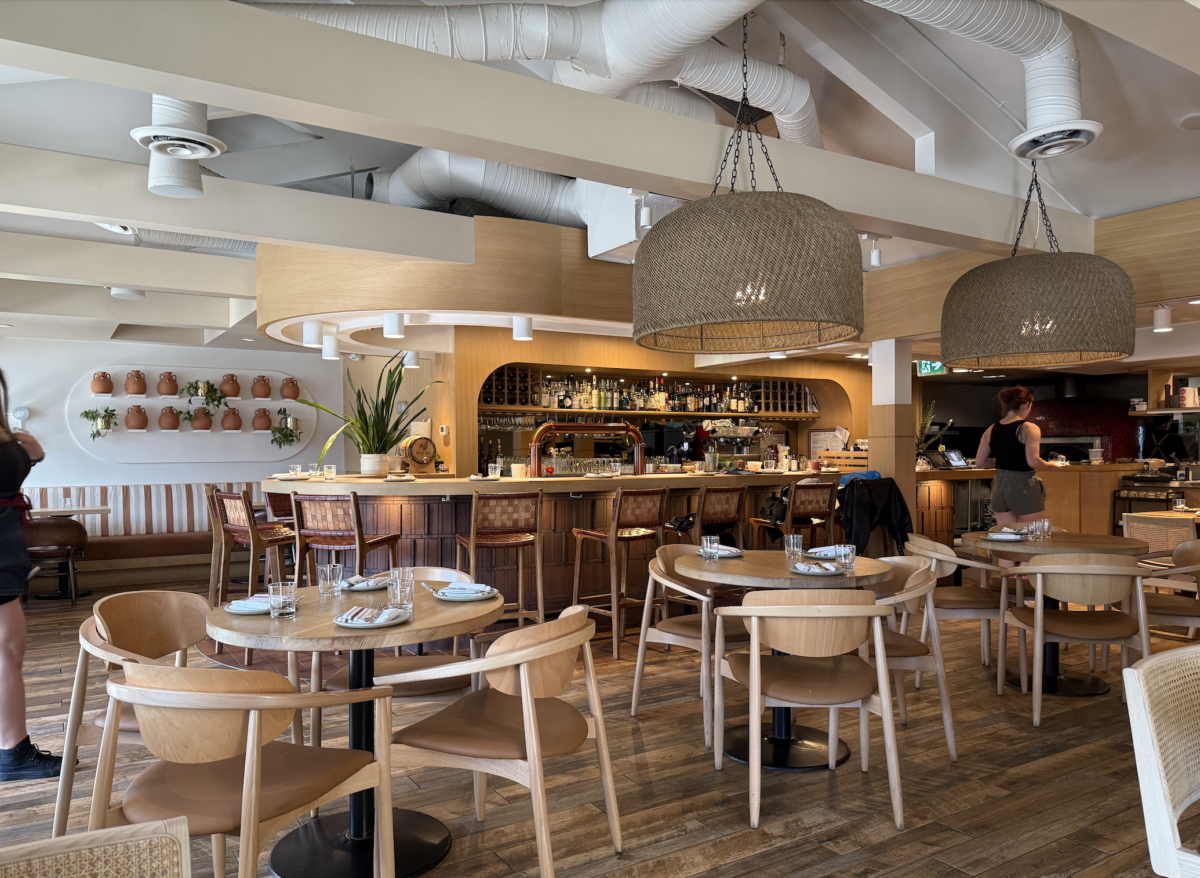
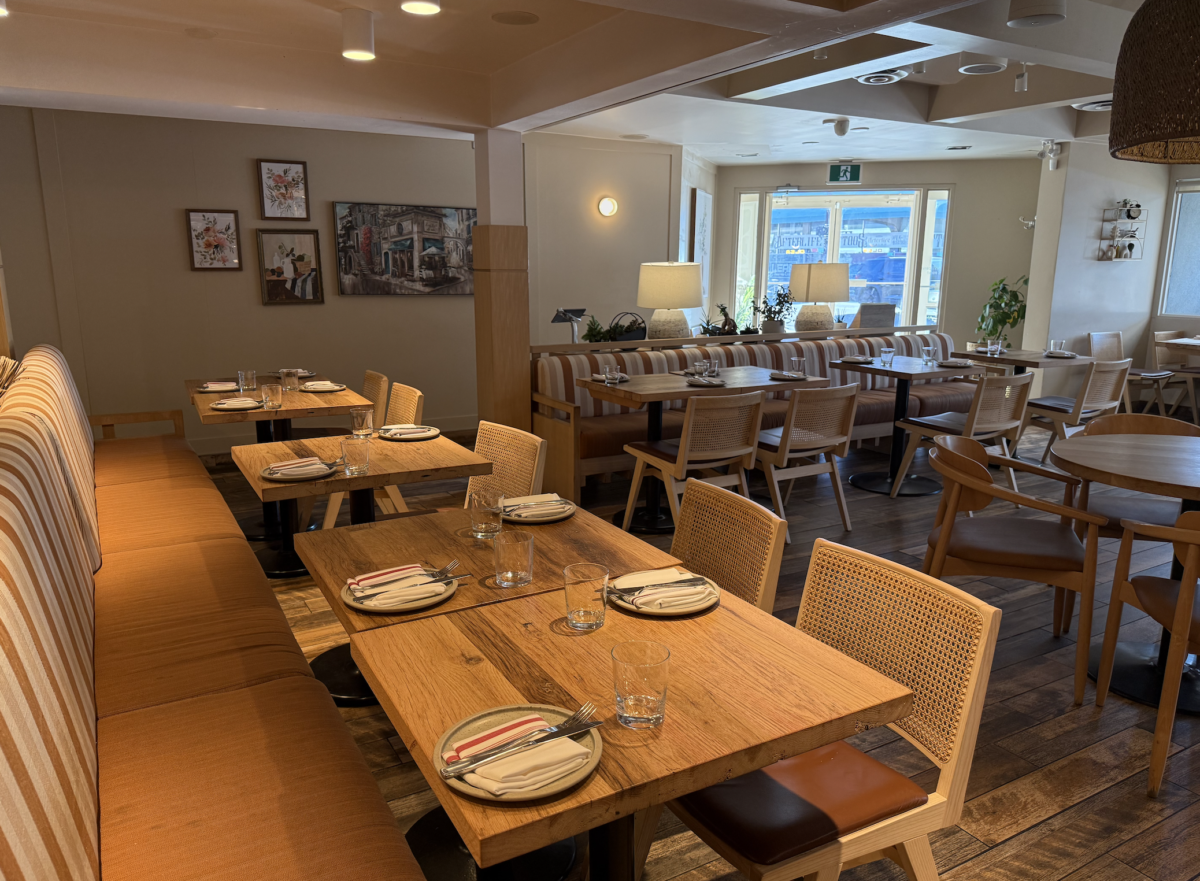
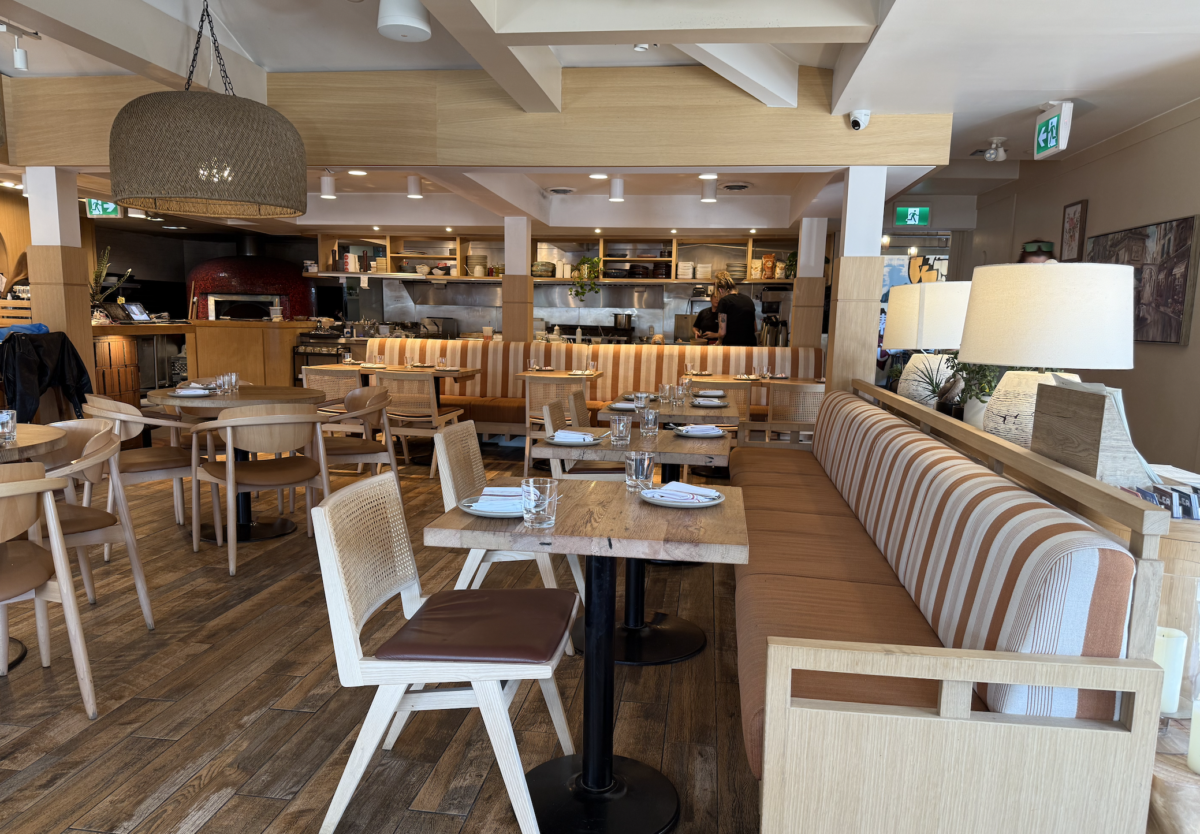
In Calgary’s bustling Beltline district,Oleahas quickly become one of the city’s most talked-about dining destinations. Since opening in November 2022, the restaurant has not only impressed with its refined take on Western Mediterranean cuisine but has also introduced a forward-thinking concept that’s helping shape the future of dining in the city: the 100-day pop-up.
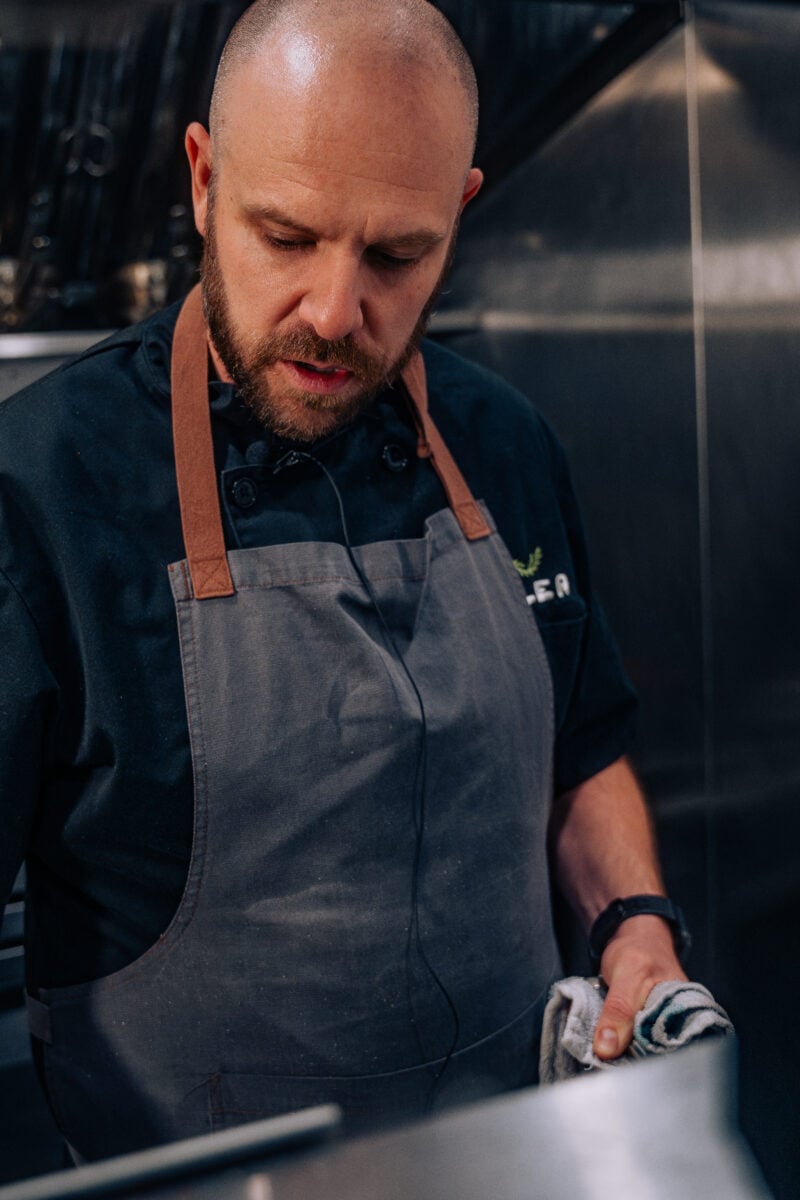
Behind Olea’s success is Culinary Director and Partner Ryan Blackwell, who brings over two decades of experience to the table. Alongside a team of seasoned restaurateurs, Blackwell has created more than just a stylish eatery — he’s helping redefine how restaurants can adapt and thrive in a competitive market.
Ryan Blackwell
A standout feature of Olea, at 1520 14 St SW, is its in-house rotating pop-up restaurant, housed in a separate section of the building. These limited-time, fully operational restaurant concepts run for 100 days, allowing the team to test new menus, branding ideas, and guest experiences before committing to a permanent direction.
The first pop-up, Ori Nori, received strong feedback and provided valuable insight into what resonates with Calgary diners. Blackwell sees these pop-ups as a way to foster creativity and innovation while also staying grounded in real-time guest input.
The main restaurant, Olea, is inspired by the Western Mediterranean — drawing on the culinary traditions of Italy, France, Spain, Greece, and parts of North Africa. The name itself is Latin for “olive,” a nod to the region’s most iconic ingredient and a symbol of the restaurant’s deep-rooted philosophy. The goal was to strike a balance: elevated yet unpretentious, sophisticated but approachable—what the team refers to as “everyday Olea.”
Blackwell emphasizes that in today’s fast-paced hospitality landscape, consistency, adaptability, and clarity of vision are key to long-term success. Rather than chasing trends, Olea focuses on delivering a reliable, high-quality experience rooted in core values. This means building a team culture that prioritizes guest connection, proper training, and shared purpose.
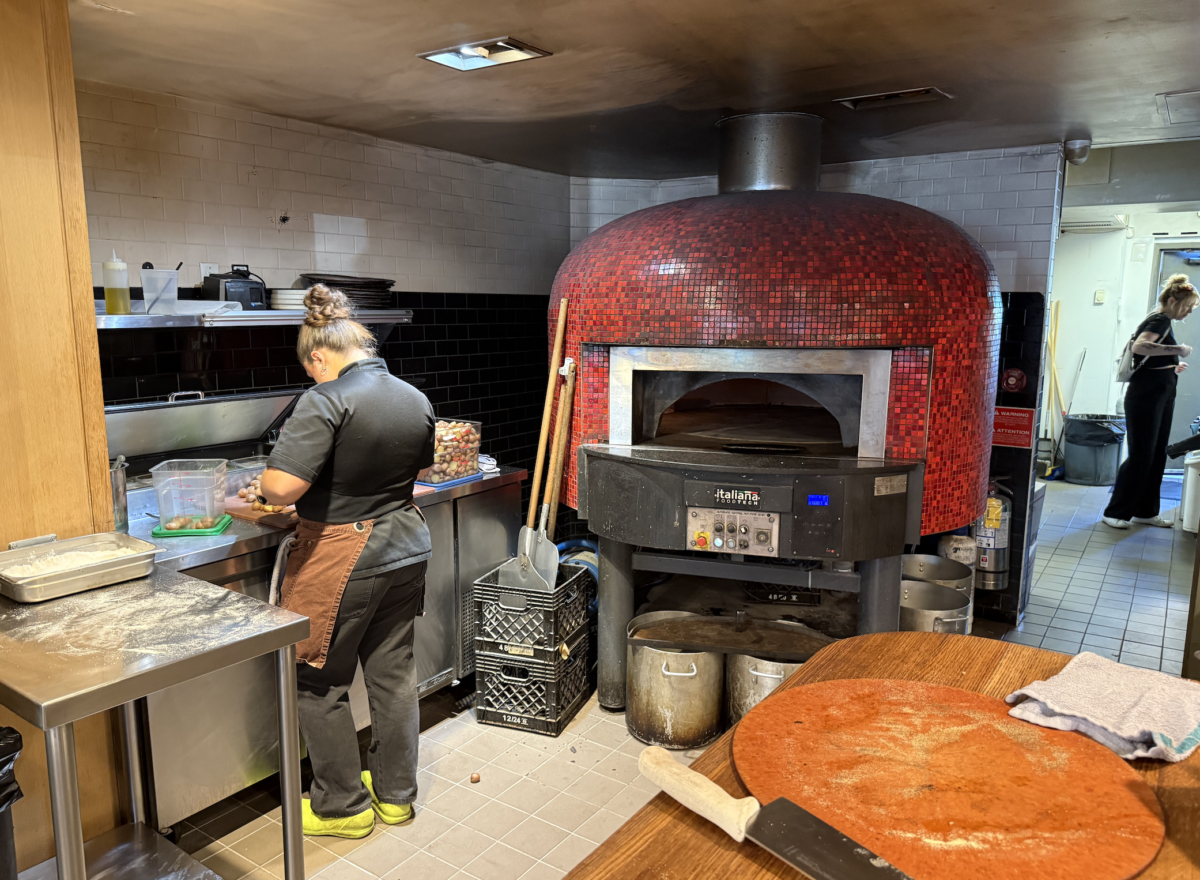
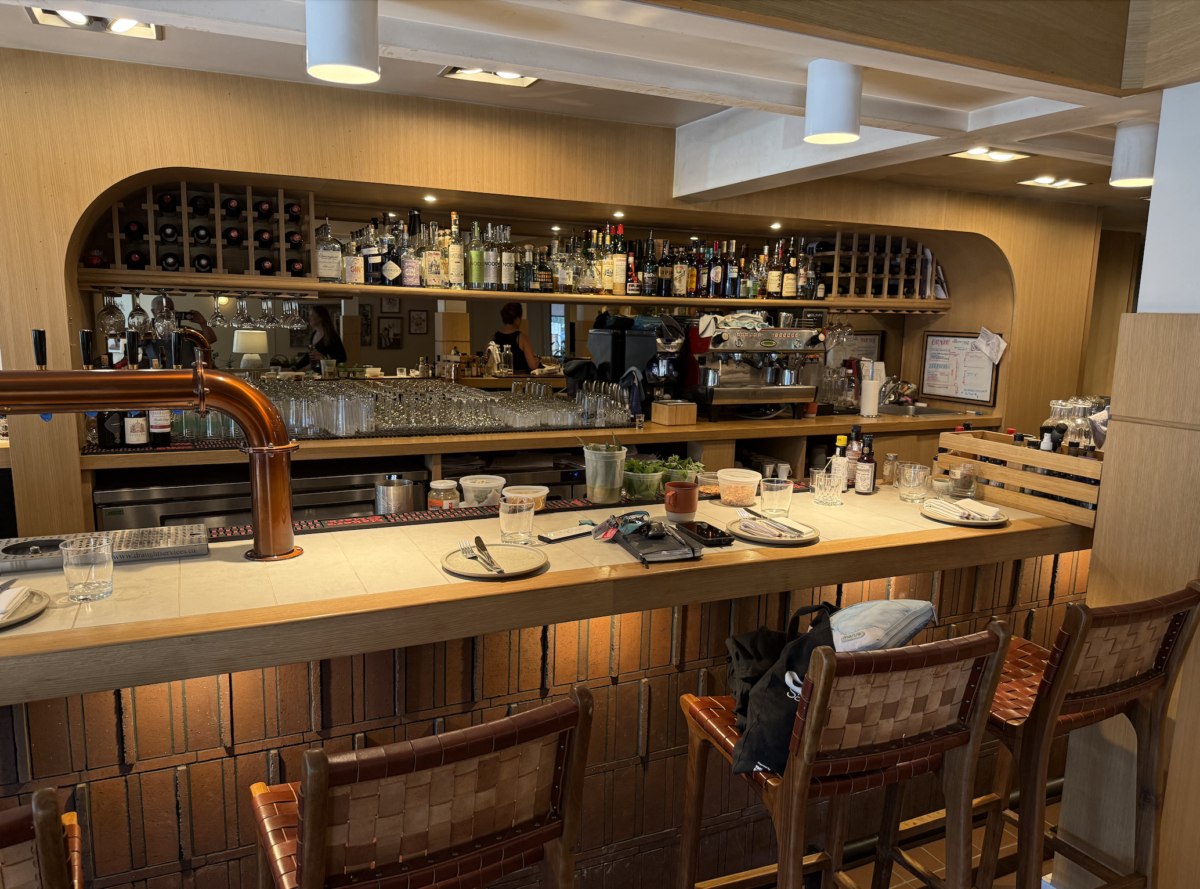
Olea. Photo: Mario Toneguzzi
Sustainability is another major focus for the restaurant. Blackwell acknowledges the realities of operating in Canada’s challenging food supply environment, especially with rising tariffs and shifting costs, but remains committed to sourcing thoughtfully. Whenever possible, ingredients are selected based on proximity, environmental impact, and long-term availability. Partnering with local farmers and suppliers plays a vital role in ensuring both sustainability and menu stability.
With Calgary’s restaurant scene becoming increasingly saturated, new concepts opening as quickly as others close, Blackwell believes success lies in staying true to the brand while being nimble enough to pivot when needed. For him, value isn’t just about price; it’s about the full guest experience, from food and service to ambiance and consistency.
Olea is more than a restaurant; it’s a case study in how culinary entrepreneurship can evolve. With its Mediterranean soul, creative experimentation through pop-ups, and a business model built on both flexibility and discipline, Olea stands out as a modern dining concept designed to last.
Olea. Photo: Mario ToneguzziOlea. Photo: Mario ToneguzziOlea. Photo: Mario ToneguzziOlea. Photo: Mario ToneguzziOlea. Photo: Mario ToneguzziOlea. Photo: Mario ToneguzziOlea. Photo: Mario ToneguzziOlea. Photo: Mario ToneguzziOlea. Photo: Mario Toneguzzi
Retail Insider is streamlining its Canadian retail news from around the web to include a handful of top news stories that can be viewed quickly during the day. Here are the top stories from the past 48 hours.
Weihong (Ruby) Liu in front of the Court House at 330 University Avenue in Toronto on June 23, 2025. Photo: Craig Patterson
The Ontario Superior Court is at the centre of a high-stakes legal battle that could shape the fate of dozens of former Hudson’s Bay leases. At issue is whether B.C. billionaire Weihong (Ruby) Liu should be allowed to assume 25 of the shuttered department store chain’s leases in order to launch a new retail brand. Parties were in Court Thursday with further arguments Friday morning.
Hudson’s Bay, facing more than $1.1 billion in debt, closed its 96 Hudson’s Bay, Saks Fifth Avenue and Saks OFF 5TH stores across Canada earlier this year under creditor protection. Its remaining assets include dozens of favourable leases, some with terms stretching decades. These are now the focus of an intense dispute between the retailer, its creditors, and a group of Canada’s most powerful landlords.
A $69.1 million deal in dispute
Ruby Liu, owner of Nanaimo-based Central Walk, struck a $69.1 million agreement in May to acquire 28 leases. Three were transferred without incident, as they were in shopping centres she already owns. But the proposed transfer of 25 additional Hudson’s Bay leases has ignited opposition from Cadillac Fairview, Oxford Properties, and Ivanhoé Cambridge.
The landlords argue that Liu lacks the operational expertise and financial planning to succeed in creating a new national chain, warning that her plans for “Ruby Liu” department stores are underdeveloped and unrealistic.
Her lawyers counter that she was the highest bidder in a court-supervised sales process, that her deal offers creditors a rare chance to recoup value, and that the law requires only that the assignment be reasonable, not flawless.
Rendering of the proposed Ruby Liu department store at CF Sherway Gardens in Toronto. Image: Ruby Liu Commercial Investment Corp./Central Walk
The stakes for insolvency law
“This is the last path to realizing any value,” said Maria Konyukhova of Stikeman Elliott LLP, representing Hudson’s Bay. She told the court the outcome would set a precedent for future lease transfers in insolvency cases.
If approved, the deal would generate roughly $50 million for senior creditors. Some, such as Pathlight Capital LP, support the proposal. But others, represented by ReStore Capital LLC, object. They argue that delays have eroded their collateral and that Hudson’s Bay mishandled its wind-down.
The court-appointed monitor, Alvarez & Marsal, has also recommended rejection. It cited concerns that Liu’s business plan “is not sufficiently developed or realistic” and warned of near-term insolvency risks.
Landlords argue “bad deal”
The landlords’ legal team has pressed the court to reject the transaction. Jeremy Opolsky of Torys LLP, representing Cadillac Fairview, said the plan forces landlords to accept “a tenant they do not trust.” He argued Liu’s financial projections are inflated and rely too heavily on Hudson’s Bay’s past performance, an unsuitable comparison for a new retail brand.
Landlords also say the scale of renovations needed is far greater than the $120 million Liu has budgeted. “This assignment is a bad deal,” Mr. Opolsky told the court.
Supporters highlight capital and jobs
Liu’s team has defended her record, noting that she successfully developed and sold a mall in Shenzhen, China, for more than USD$1 billion. In Canada, she has acquired and operated shopping centres, including Woodgrove Centre in Nanaimo.
Her lawyers stressed she has no corporate debt, can secure additional capital, and has committed to paying a year’s rent upfront—something Hudson’s Bay never offered. The plan promises more than 1,000 new jobs, investment in long-neglected retail spaces, and renewed opportunities for suppliers and vendors.
“This is a businessperson with a real history of success,” said Graham Phoenix of Loopstra Nixon LLP, who represents Liu’s company.
Rendering of the interior of a ‘flagship’ Ruby Liu department store. Image: Ruby Liu Commercial Investment Corp./Central Walk
A clash over retail vision
Central to the dispute is the legacy of Hudson’s Bay’s leases. The contracts granted the company favourable terms, including below-market rent and veto rights over certain landlord redevelopment plans. These rights made the leases valuable but also contentious.
Landlords say they want their properties back to redevelop or lease at higher rates. Hudson’s Bay’s lenders argue that landlords are motivated by those interests rather than Liu’s ability to succeed. “They wanted to get their stores back for nothing,” said Jeremy Dacks, counsel for Pathlight Capital.
Liu has also taken unusual steps to win public support, including launching a Change.org petition and writing directly to the presiding judge. The latter prompted a rebuke from the Ontario Superior Court’s chief justice, who warned her against further “harassing communications.”
What comes next
The case hinges on Section 11.3 of the Companies’ Creditors Arrangement Act, which allows a court to assign leases to new tenants against landlord objections if the proposed tenant is “appropriate.” The court must weigh the support of the monitor, the financial capacity of the new tenant, and the suitability of the business plan.
Judge Peter Osborne’s ruling could have lasting implications for how commercial leases are transferred in Canadian insolvencies. It will determine whether Hudson’s Bay’s creditors can salvage value from the company’s demise, or whether landlords will regain control of coveted mall properties.
For now, the battle underscores the broader uncertainty facing Canadian department stores. Once anchor tenants critical to mall success, their decline has left landlords, creditors, and new investors struggling to define what comes next.
Zellers, the once-dominant Canadian discount retailer that disappeared from the national retail landscape more than a decade ago, is making a comeback. The first new store, spanning 60,000 square feet, will open at Londonderry Mall in Edmonton on Friday, August 29. The news was confirmed by landlord Leyad, which owns the shopping centre, making this the first announcement of a tenant filling a former Hudson’s Bay space since the department store chain’s collapse earlier this year.
The announcement will stir nostalgia among generations of Canadians who remember Zellers for its discount prices, loyalty program, and in-store diners. Yet the details around the revival remain shrouded in mystery, particularly regarding ownership of the brand and whether this opening signals a larger national rollout. Sources tell Retail Insider that INC Group’s owner is behind the new chain (details below).
Mall entrance to the new Zellers store at Londonderry Mall in Edmonton. Image via Reddit
Leyad Leads the Retail Transformation
Montreal-based landlord Leyad has positioned itself at the centre of this revival. In a press release, the company described the Edmonton launch as a “milestone” in Canadian retail.
“We are thrilled to bring back a beloved Canadian brand that stirs up nostalgic memories for many of our shoppers, while providing an opportunity to introduce Zellers to a new generation,” said Henry Zavriyev, CEO of Leyad. “This announcement represents a bold step forward in reimagining retail space and responding to community demand with purpose and vision.”
Henry Zavriyev, CEO of Leyad
The company completed the transformation of the former Hudson’s Bay space in just under two months, an unusually fast redevelopment in a Canadian retail landscape often hampered by long construction timelines.
Zavriyev said the mall considered multiple backfill options for the 60,000-square-foot space but ultimately chose Zellers because it aligned with community needs.
“We specifically chose to go with this tenant because we thought that it was the right brand for the market,” Zavriyev explained in an interview with Retail Insider. “I think it’s important to support Canadian brands and Canadian suppliers.”
The Mystery of Ownership
Perhaps the most intriguing element of Zellers’ return is the question of who now owns and operates the brand.
The Hudson’s Bay Company (HBC) previously held Zellers’ intellectual property, having run the chain for decades before selling most of its store leases to Target in 2011. While Canadian Tire purchased HBC’s intellectual property portfolio during its bankruptcy earlier this year, it did not acquire the Zellers name. This leaves uncertainty around how the brand has re-emerged in Edmonton.
When asked directly, Zavriyev declined to identify the new operator. “It’s a Canadian group that operates a number of other brands,” he said, adding only that “they know what they’re doing.”
Retail Insider reached out to industry sources, one of whom strongly speculated that the owner may be INC Group, parent company of Fairweather, International Clothiers and Randy River. The company has experience in discount and value-focused retail, and was recently working on a ‘big project’ in Edmonton.
CBC News has since uncovered federal trademark registries confirming that Hudson’s Bay transferred control of the Zellers name and logo to Les Ailes de la Mode, represented by INC’s president Isaac Benitah. Les Ailes de la Mode is a former Quebec-based department store chain that was previously acquired by Fairweather.
This revelation aligns with industry speculation that Benitah and his network of companies were involved in the revival. For now, however, neither Benitah nor Les Ailes de la Mode has publicly commented on expansion plans or the long-term vision for the brand.
ZELLERS’ FORMER MASCOT “ZEDDY” PHOTO: VIA CTV NEWS BC
A Soft Launch Before the Official Debut
The Londonderry Mall Zellers will open in two phases beginning with a soft launch Friday, followed by a grand opening later this year. Zavriyev noted that Leyad is primarily focused on ensuring the space is fully activated and that shoppers in Edmonton respond well to the return of the brand.
The store will occupy part of the former Hudson’s Bay footprint at Londonderry, which closed in June 2025. That Bay store had been operating under liquidation for several months before its official closure.
According to Leyad, the new Zellers will carry apparel for women, men, and youth, along with contemporary home décor. While these categories align with the historic Zellers model, details remain sparse, and it is unclear whether other hallmark features of the chain, such as restaurants or loyalty programs, will be revived.
A Brand with a Storied Past
Founded in 1931 by Walter P. Zeller, the chain grew to become one of Canada’s most recognized discount retailers. Zellers expanded nationwide under the slogan “Where the lowest price is the law” and became famous for its Club Z loyalty program and Zeddy, the store’s teddy bear mascot.
At its peak in the late 1990s, Zellers operated approximately 350 stores across Canada. It was acquired by Hudson’s Bay Company in 1978 and played a major role in the Bay’s strategy to dominate discount retail.
By the 2000s, however, the rise of Walmart contributed to Zellers’ decline. Following Target’s acquisition, most locations were shuttered after 2013, though HBC attempted smaller-scale revivals in the 2023 with store-in-store concepts and e-commerce initiatives. These efforts, however, failed to gain traction.
The announcement of a full-line Zellers store in Edmonton marks the first time in more than a decade that the chain has returned to its traditional format.
Londonderry Shopping Centre (Image: Cushman & Wakefield)
Londonderry Mall as a Strategic Launch Point
The choice of Londonderry Mall is significant. Located in Edmonton’s northeast, the shopping centre has a strong community base and is among Alberta’s largest enclosed malls, with over 800,000 square feet of retail space.
Leyad acquired Londonderry Mall in early 2025, adding to its growing portfolio of major shopping centres across Canada. The property itself has a history of reinvention. About a decade ago, the centre underwent a substantial overhaul that included a full interior renovation and the addition of a new La Maison Simons department store, which helped modernize the mall and reposition it as a fashion-forward retail destination in the city.
Zavriyev emphasized that the Edmonton market provided a unique opportunity for Zellers’ return. “We think the market in Edmonton will come to the mall and continue to support Canadian brands,” he said.
The Landlord’s Growing National Presence
The Zellers announcement also highlights Leyad’s expanding role in Canadian retail real estate. Founded in 2016, the Montreal-based company has quickly grown into one of the country’s largest private landlords. Its portfolio includes more than two million square feet of commercial space, 2,000 residential units, and a growing portfolio of regional malls.
In 2025, Leyad acquired the Pen Centre in Niagara for $140 million, the St. Albert Centre in Alberta for $60 million, and several other shopping centres in Winnipeg and Atlantic Canada. The company is actively pursuing redevelopment and densification strategies, often blending retail with residential and mixed-use projects.
The addition of Zellers at Londonderry strengthens Leyad’s reputation for quickly redeveloping vacant anchor spaces and attracting nationally recognized tenants.
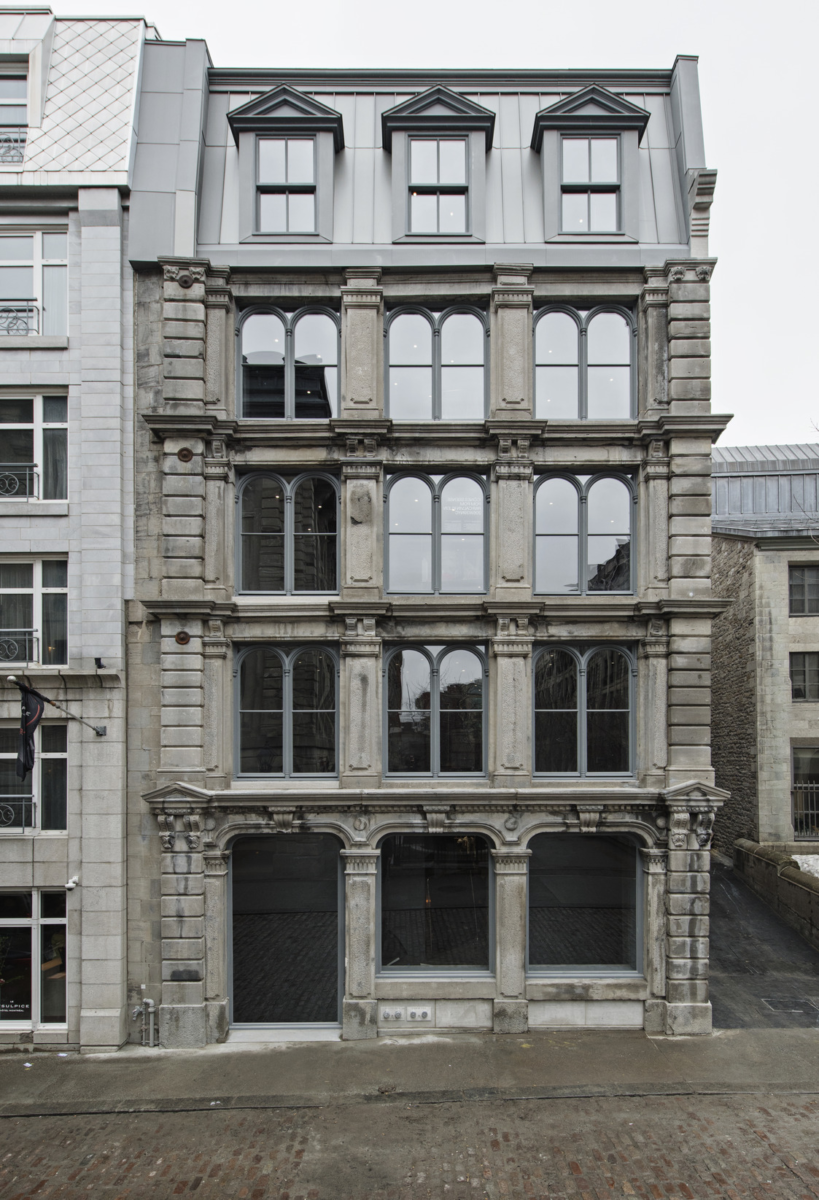
SSENSE store in Old Montreal. Image: David Chipperfield Architects
Montreal-based online luxury fashion retailer Ssense is preparing to file for protection under the Companies’ Creditors Arrangement Act (CCAA) after its lenders moved to force a sale of the business. The development represents one of the most dramatic shifts in Canadian retail this year, raising questions about the viability of luxury e-commerce in an increasingly uncertain global environment.
Retail strategist Carl Boutet described the situation as “a shocker,” noting that many in the industry saw Ssense as an exception to the turbulence facing luxury e-commerce.
Carl Boutet
“We thought Ssense might be an exception, but unfortunately this shows even the strongest online luxury players are vulnerable,” said Boutet. “Luxury e-tail as a standalone business model has been struggling for years because of high return rates, thin net margins, and shifting consumer preferences.”
At the heart of the crisis is a conflict with Ssense’s primary lender, which has made its own CCAA application to place the retailer into creditor protection and begin a sale process. Founder and chief executive officer Rami Atallah described the move as against the company’s wishes.
“We do not believe this is the right path for Ssense,” he wrote in a message to employees, confirming that the company would file its own rival application.
Company spokesperson Janet Park echoed the concern, noting that Ssense has spent recent months negotiating in good faith with lenders to secure recapitalization.
“While we sought a collaborative path forward, our primary lender has chosen instead to place the company under CCAA protection and commence a sale process without our consent. We are deeply disappointed in this decision,” she said.
Boutet emphasized that the lender’s move signals how little confidence remains in Ssense’s ability to weather the storm.
“When an investor of this scale pushes for creditor protection, it’s a red flag,” he said. “If it was just a matter of connecting them with new capital, that would have already happened.”
Economic and Policy Pressures
The luxury e-commerce player is not alone in its struggles. Broader market headwinds, compounded by geopolitical uncertainty, have weakened sales and liquidity. A key blow came from Washington’s decision to eliminate the long-standing duty-free exemption on packages worth less than US$800 entering the United States.
The rule, ending this week, has been cited by Atallah as a significant factor affecting Ssense’s U.S. customer base. With many shipments falling below that threshold, the change has altered cost structures and dampened demand.
Park added that the company had “explored every option with advisers to refinance and restructure,” but that filing for CCAA protection was ultimately the only viable survival strategy.
Boutet noted that suppliers, too, are under strain as luxury retailers delay payments. “There are probably some suppliers feeling extra pressure of having so many ‘stretched’ receivables,” he said. “Between Saks Global and Ssense not paying bills on time, it’s rough on suppliers’ cashflow.”
SSENSE store in Old Montreal. Image: David Chipperfield Architects
A Global Retail Force in Jeopardy
Founded in 2003 by brothers Rami, Firas, and Bassel Atallah, Ssense became a pioneer in luxury e-commerce, blending technology, editorial content, and curated fashion to capture a global audience. The company ships to more than 150 countries and offers over 600 designer labels, ranging from avant-garde fashion to luxury streetwear.
In 2018, Ssense unveiled its flagship store in Old Montreal, designed by acclaimed architect David Chipperfield. The space is as much a cultural venue as a retail destination, with personalized appointment-based shopping, curated exhibitions, and exclusive events.
At its height, Ssense was valued at US$5 billion following a minority investment from Sequoia Capital in 2021. Revenue reportedly exceeded US$750 million annually, making it one of Canada’s largest private retail-technology companies.
The Market Reality Behind the Valuation
Boutet explained that Ssense’s lofty valuation was tied to pandemic-era conditions that drove online shopping frenzies across the luxury sector.
“That US$5 billion valuation in 2021 was at the peak of the frenzy. Now, expectations are correcting. Even for HSG (formerly Sequoia China), Ssense is a write-down, and that speaks volumes about how difficult this market has become,” he said.
He noted that Ssense’s reliance on Gen Z luxury consumers left it exposed to economic pressures affecting younger demographics. At the same time, major luxury houses tightened distribution, limiting Ssense’s ability to carry the most in-demand collections.
The Flagship Store: A Cultural Landmark
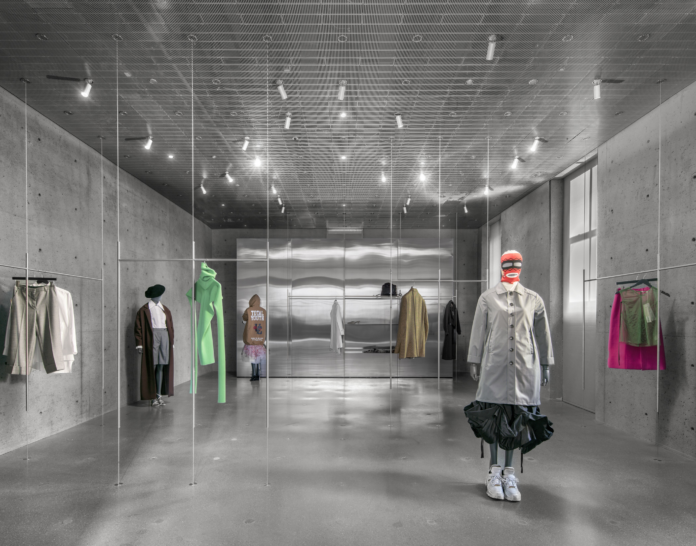
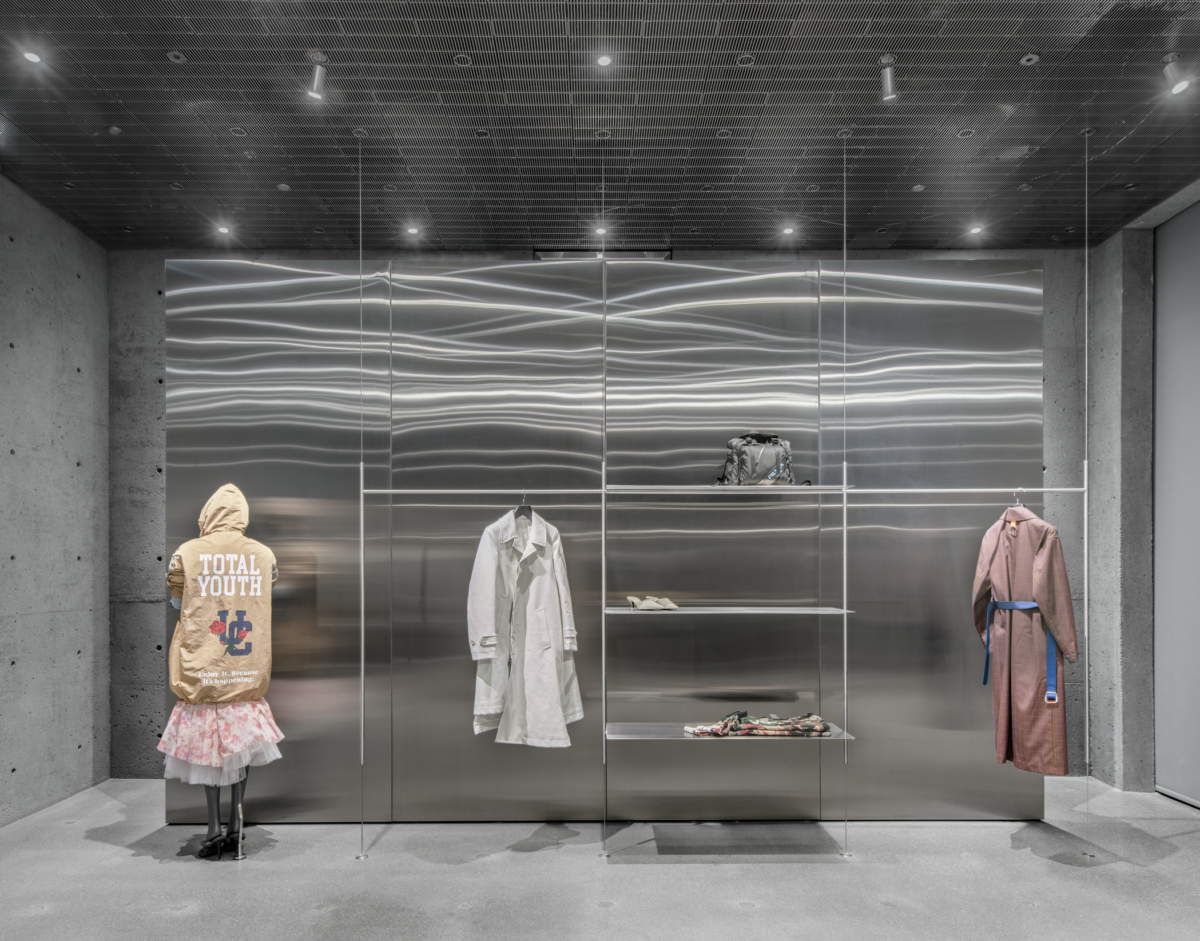
Ssense’s Old Montreal store has long been considered a benchmark in experiential retail. The imposing minimalist space, with stark concrete and stainless finishes, reflects the retailer’s commitment to curation and exclusivity.
The store includes areas for fragrance, footwear, and luxury streetwear, and once housed a restaurant on the upper level, though it never reopened after the pandemic. The brand also became known for high-profile collaborations, such as launches for Justin Bieber’s Drew line, Ferrari capsule collections, and Off-White exclusives.
“I always bring visiting students and colleagues to the Ssense store,” Boutet reflected. “It is intimidating, but intentionally so. That is part of the allure.”
SSENSE store in Old Montreal. Image: David Chipperfield Architects
A Luxury Sector in Flux
Ssense’s troubles come as the global luxury industry itself faces slowing growth. Giants such as LVMH, Kering and Richemont have reported weaker sales in recent quarters, with consumer demand shifting away from discretionary luxury purchases.
Other e-commerce pioneers, including Farfetch and Net-a-Porter, have also struggled. Farfetch was recently acquired at a fraction of its earlier valuation, underscoring the broader challenges in sustaining profitability in luxury e-commerce.
What Comes Next?
The immediate question is whether Ssense’s restructuring plan will be accepted by the courts or whether its lenders will push through a sale. If the court sides with the company’s proposal, Atallah has said it will focus on restoring vendor trust, stimulating demand, and optimizing supply chains.
But analysts caution that the outlook remains uncertain. Potential buyers could include global e-commerce giants such as Amazon or Alibaba, regional players in Asia and the Middle East, or private equity firms seeking to consolidate luxury platforms.
A Legacy at Risk
Whatever the outcome, Ssense’s rise and potential fall mark a significant chapter in Canadian retail history. From its origins as a scrappy Montreal start-up to a global tastemaker, Ssense transformed the way fashion and technology intersect.
Its model of editorial-driven commerce, trendsetting collaborations, and cultural integration made it one of the most influential players in online luxury retail. Yet as its future hangs in the balance, the case of Ssense underscores the volatility of the luxury e-commerce model.
As Boutet concluded:
“There are rarely single causes in these situations. It’s usually a perfect storm of economic, cultural, and operational challenges. Ssense built something unique, but the market has shifted. Now it’s up to the courts, and perhaps new investors, to decide if the brand’s story continues.”
Simons, Canada’s oldest private, family-owned business, announced Thursday it is continuing to expand in Toronto with the opening of its highly anticipated CF Toronto Eaton Centre store on September 18 at 10 a.m. EST.
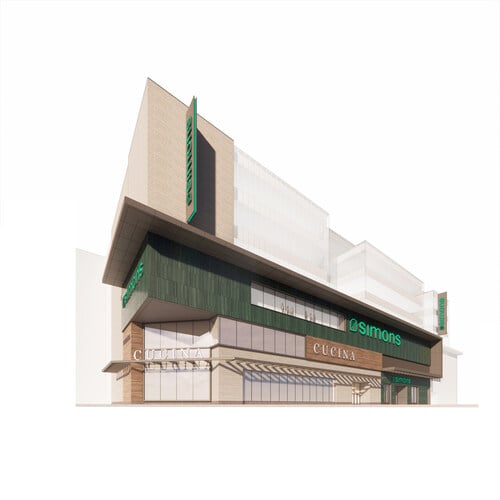
The second of two new locations opening in the city this year, the CF Toronto Eaton Centre store will span more than 112,000 square feet across three floors and feature labels exclusive to Simons as well as international designers, local brands, and pieces by our country’s artists that will be revealed at the opening. True to Simons’ uniquely Canadian approach, the structure will be inspired by natural elements, leveraging architecture by Lemay-Michaud Architecture and an interior design by Toronto-based Gensler Design, said the retailer.
Rendering of the Simons location at CF Toronto Eaton Centre, set to open to the public on September 18, 2025 at 10:00 a.m. EST. (CNW Group/Simons)
“At Simons, serving our customers has always been more than a responsibility—it’s a privilege rooted in care, creativity, and connection,” said Bernard Leblanc, President and CEO of Simons. “We’re thrilled to open our doors at CF Toronto Eaton Centre on September 18 and become part of the downtown Toronto community. This iconic location is the perfect place to share our passion for fashion, art, and design, and we look forward to building meaningful relationships with Torontonians through the exceptional service and sense of purpose that guides everything we do.”
As Simons’ 19th location across the country, the opening marks a major milestone in the brand’s continued national expansion, reaffirming its investment in the Greater Toronto Area and the future of Canadian retail, it said.
Simons was founded in 1840 by John Simons in Quebec City. Originally a dry goods store, the family company is known today for accessible and inspired fashion. Locations: 10 in Quebec, including the company’s head office in Quebec City; three in Alberta; one in British Columbia; one in Nova Scotia; and soon four in Ontario.
The RONA Foundation, which oversees the philanthropic activities of RONA inc., one of Canada’s leading home improvement retailers operating and servicing some 425 corporate and affiliated stores, has launched the Home Sweet Home campaign’s third edition.
From September 1 to October 12, 2025, the network will mobilize to collect donations in support of nearly 150 local non-profit organizations that provide help to victims of domestic violence, low-income families, and people with disabilities or mental health issues. The campaign will run in all corporate stores, as well as some distribution centres and several stores in its network of affiliated dealers, said the retailer.
The RONA network teams are ready and motivated for the start of the new edition of the Home Sweet Home campaign. (CNW Group/RONA inc.)
Josée Lafitte
“Our goal is to make a difference in the lives of the communities around us, and that’s what drives our daily activities at the RONA Foundation. What I love most about our Home Sweet Home campaign is that its impact is significant at a local level; indeed, the selected organizations we help are located in the same regions as our stores and distribution centres,” said Josée Lafitte, Director of the RONA Foundation.
The Foundation hopes to raise $500,000 during this campaign.
“Once again this year, everyone in our network is highly motivated to raise funds, especially since our store teams are the ones who decide which organization to support. At RONA and the RONA Foundation, we believe that every individual should have a suitable living environment that meets their needs. Each in their own way, the organizations we support contribute to improving the quality of life of vulnerable Canadians,” said Catherine Laporte, President of the RONA Foundation’s board of directors and Chief Digital and Marketing Officer at RONA.
Catherine Laporte
Customers will be invited to make a donation in support of their local cause. As for online shoppers, they will also get the opportunity to donate $2, $5 or $10 on rona.ca.
The Foundation is a charity established in 1998, whose mission is to help improve the quality of life of Canadians in need by revitalizing their living environments or making it easier to access housing. In particular, it aims to help victims of domestic violence and their children, low-income families, and people with disabilities or mental health issues.
RONA inc. is one of Canada’s leading home improvement retailers, headquartered in Boucherville, Québec. The network operates or services some 425 corporate and affiliated dealer stores under the RONA+, RONA, and Dick’s Lumber banners.
Dr. Phone Fix Canada Corporation announced Thursday positive financial results for the three and six months ended June 30. The company said it continues its growth momentum with revenue up 13% from 2024, gross margin sitting at 55%, compared to 51.9% in 2024, and Adjusted EBITDA up 506% from 2024. Dr. Phone Fix also announced that it has entered into a new national repair agreement with Likewize Corp. and an expanded strategic partnership with Assurant, Inc.
Piyush Sawhney
“Q2 showcased healthy top-line growth, margin strength and a return to positive Adjusted EBITDA, while we advanced national partnerships that expand our reach and credibility with insurers and OEM programs,” said Piyush Sawhney, Chief Executive Officer of Dr. Phone Fix.
“We’re focused on disciplined execution, growing same-store sales, scaling our certified pre-owned sector, leveraging partnerships with insurance companies and OEM’s to drive durable, profitable growth, and delivering consistent, reliable service that keeps customers in our ecosystem. For the second half of 2025, we expect gross margin to remain strong as procurement scale, CPO mix, and insurer/OEM program volumes increase. Combined with ongoing cost discipline, we also expect Adjusted EBITDA to improve in the second half of 2025.”
“Looking ahead, our growth playbook combines measured new store openings with a disciplined M&A strategy to accelerate scale. Our strategy is to target high-quality operators in markets where we lack coverage today, prioritizing cultural fit and strong unit economics. Post-acquisitions, we plan to drive additional value through centralized procurement, inventory and refurbishment capabilities, insurance and OEM program access, shared marketing, and our proven operating playbook. Taken together, we believe this approach will expand our footprint efficiently, deepen our national coverage, and enhance cash generation, at the unit level, over time.”
Founded in 2019, Dr. Phone Fix operates a nationwide network of 35 corporately owned cell phone and electronics repair stores across four Canadian provinces.
SUMMARY OF QUARTERLY RESULTS
The following table sets forth unaudited (2025) and audited (2024) financial information comparing the three and six-month periods ended June 2025 to the three and six-month periods ended June 2024.
Financial Results Summary (CAD)
Three Months Ended June 30, 2025 ($000)
Three Months Ended June 30, 2024 ($000)
Variance (%)
Six Months Ended June 30, 2025 ($000)
Six Months Ended June 30, 2024 ($000)
Variance (%)
Revenue
2,857
2,525
+13 %
5,054
4,712
+7 %
Gross Profit
1,570
1,310
+20 %
2,781
2,478
+12 %
Gross Margin
55.0 %
51.9 %
+3.1 %
55.0 %
52.6 %
+2.4 %
Operating Expenses (SG&A)
2,376
1,893
+26 %
4,130
3,722
+11 %
Adjusted EBITDA(1)
280
(69)
+506 %
282
(222)
+227 %
Cash & Equivalents
761
346
120 %
761
346
120 %
(1)
See “Non-GAAP Financial Measures” towards the end of this document.
In June 2025, Dr. Phone Fix entered into a national repair agreement with Likewize, enabling insured Canadians to access fast in-store repairs across our network, said the company.
“Likewize is a corporation founded in 1997 that operates in over 30 countries, that offers insurance, warranty, repair, trade-in, recycling, and tech support to telcos, banks, carriers and retailers on smartphones, tablets, laptops and connected devices in the home,” it said.
“In July 2025, Dr. Phone Fix expanded its strategic partnership with Assurant to accelerate certified pre-owned (CPO) device sales nationwide. This deeper integration strengthens Dr. Phone Fix’s supply chain, broadens product selection, speeds up inventory turnover, and positions Dr. Phone Fix to capture one of the fastest-growing segments of the device market.”
Payroll employment in retail trade decreased by 8,100 (-0.4%) in June, following a growth of 1,000 (+0.1%) in May and a decline of 1,400 (-0.1%) in April. From January to June, payroll employment in this sector recorded a general downward trend, with an overall decline of 23,800 (-1.2%), according to a report released Thursday by Statistics Canada.
The main contributors to the downward trend from January to June were general merchandise retailers (-7,800; -3.0%), food and beverage retailers (-7,400; -1.4%) and building material and garden equipment and supplies dealers (-4,500; -3.1%), said the federal agency.
Year over year, payroll employment in retail trade was down 26,900 (-1.3%) in June, added Statistics Canada.
Overall, the number of employees receiving pay and benefits from their employer—measured as “payroll employment” in the Survey of Employment, Payrolls and Hours—decreased by 32,900 (-0.2%) in June, following an increase of 18,500 (+0.1%) in May. On a year-over-year basis, payroll employment was up 41,000 (+0.2%) in June, explained Statistics Canada.
“In June, monthly payroll employment declines were recorded in 10 of the 20 sectors, including manufacturing (-8,400; -0.5%), retail trade (-8,100; -0.4%), construction (-5,200; -0.4%) and health care and social assistance (-3,700; -0.2%). These declines were partially offset by a gain in public administration (+3,800; +0.3%). The remaining nine sectors were little changed,” it said.
“Meanwhile, job vacancies in Canada edged up by 12,100 (+2.5%) to 492,000 in June, partially offsetting the cumulative decline recorded in May and April (-37,100; -7.2%). Year over year, job vacancies declined by 59,200 (-10.7%) in June.”
Year over year, job vacancies were down in 11 sectors in June. The largest declines were recorded in health care and social assistance (-22,400; -18.5%), transportation and warehousing (-8,000; -24.7%) and retail trade (-7,100; -13.5%). Finance and insurance (+3,800; +21.8%) was the only sector to record an increase, said the report.