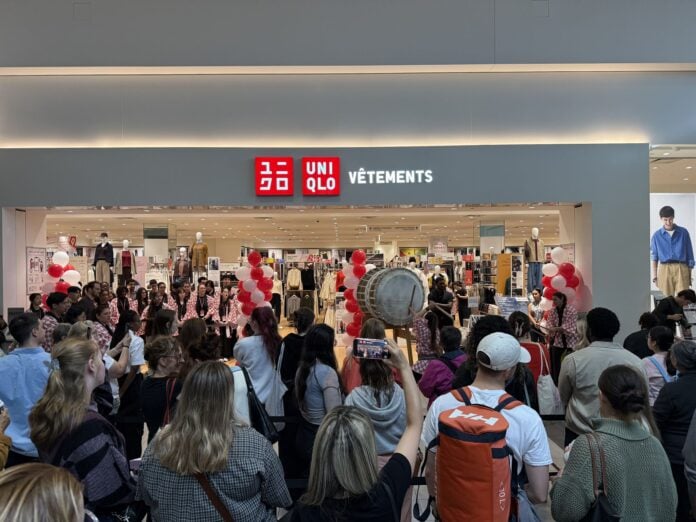
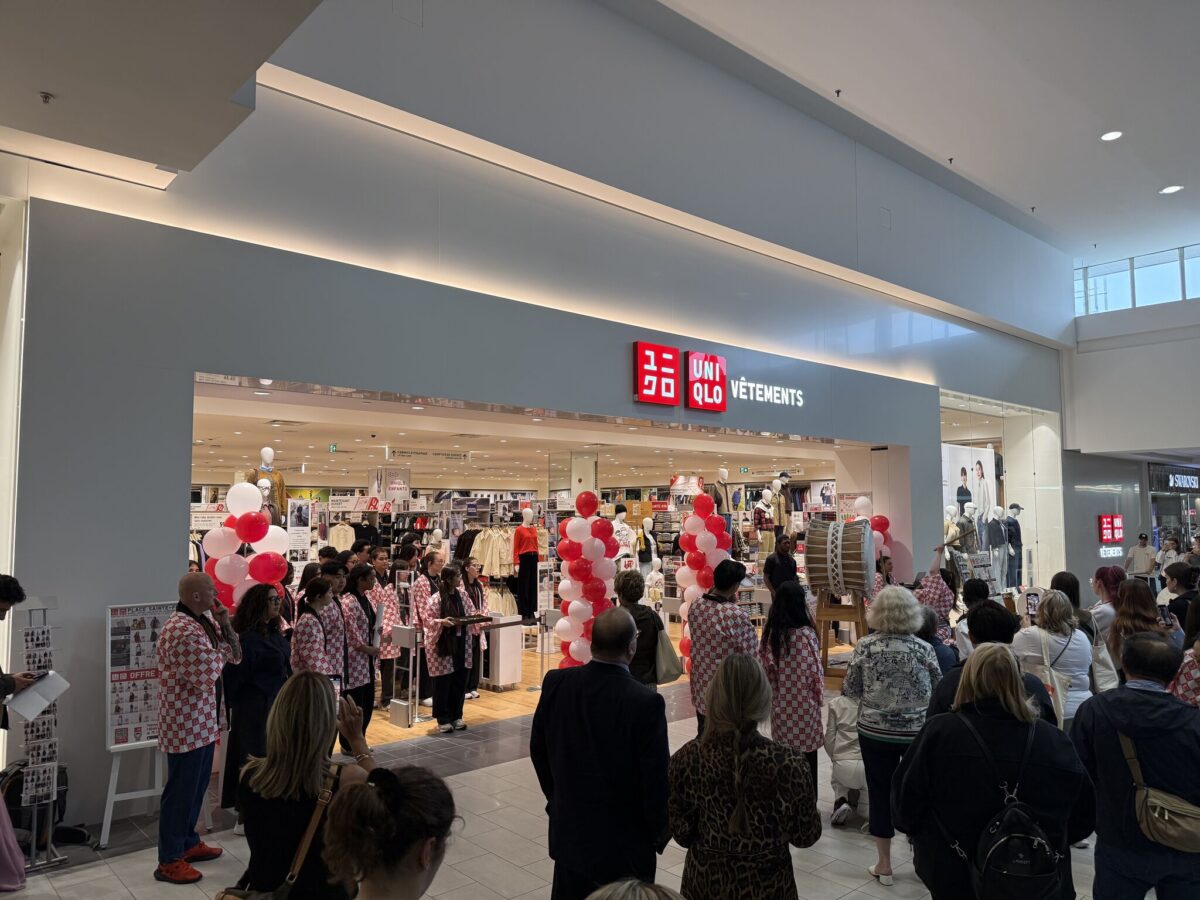
Japanese global apparel retailer Uniqlo is accelerating its Canadian expansion with the recent opening of two new stores in Quebec – Place Ste-Foy in Quebec City and Galeries d’Anjou in Montreal.
For the brand, it’s the first store in Quebec City.
Uniqlo opened its first store in Hiroshima in 1984 and now has over 2,500 stores worldwide, including 33 in Canada, and online at uniqlo.ca. Uniqlo creates LifeWear apparel based on the Japanese values of simplicity, quality, and longevity. LifeWear offers timeless designs, supreme fit, and comfort, and is shaped by customer needs to improve their daily lives, said the retailer.
Both Quebec locations span over 15,000 square feet and showcase Uniqlo’s unique customer experience and LifeWear lineup for men, women, and kids.
“Uniqlo has always entered new markets and increased locations in existing ones with high traffic locations in top properties – be it enclosed shopping centres or outdoor big box centres,” he said.
“Moving forward, we are looking for more of these as well as freestanding locations and high streets. Preferring stores of approximately 12,000 square feet.”
By the end of 2025, it’s anticipated that Uniqlo will operate 37 stores across Canada, strengthening its footprint in British Columbia, Quebec, and Alberta, while reinforcing its presence in major urban and suburban shopping destinations.
In a previous Retail Insider story, Yuya Tanahashi, Chief Operating Officer of Uniqlo in Canada, credited the rapid growth of Uniqlo to its continued community focused approach.
“We are very grateful to our patrons in Canada and look forward to fostering more meaningful relationships with new customers. I am optimistic about our Canadian growth, and we look forward to bringing LifeWear to new markets.”
Photo- Jeff Berkowitz LinkedIn
Uniqlo Place Ste-Foy and Galeries d’Anjou will offer UNIQLO’s iconic LifeWear products for men, women, and kids, such as Ultra-Light Down—warm, packable jackets perfect for layering or travel—and HEATTECH products—made of an innovative fabric that uses the moisture on your skin to generate heat. Other staples include high-quality Knitwear, including 100% cashmere, premium denim, t-shirts.
Uniqlo is a brand of Fast Retailing Co., Ltd., a leading Japanese retail holding company with global headquarters in Tokyo, Japan. Uniqlo is the largest of eight brands in the Fast Retailing Group, the others being GU, Theory, PLST (Plus T), Comptoir des Cotonniers, Princesse tam.tam, J Brand and Helmut Lang. With global sales of approximately 2.77 trillion yen for the 2023 fiscal year ending August 31, 2023 (US $18.92 billion, calculated in yen using the end of August 2023 rate of $1 = 146.2 yen), Fast Retailing is one of the world’s largest apparel retail companies, and Uniqlo is Japan’s leading specialty retailer.
Uniqlo continues to open large-scale stores in some of the world’s most important cities and locations, as part of its ongoing efforts to solidify its status as a global brand. Today the company has a total of more than 2,400 Uniqlo stores across the world, including Japan, Asia, Europe and North America. The total number of stores across Fast Retailing’s brands is now close to 3,600.
“The key to effectively reaching holiday shoppers is understanding where consumers are—physically, emotionally, and culturally—during every phase of the holiday season,” said Jillian Ryan, Senior Manager of Content Strategy at Mailchimp. “Our research provides a compelling look at these motivations, granting marketers new insights and strategies for connecting with shoppers.
“This report tells us that marketers have clear opportunities to reach customers, regardless of whether or not they’re offering deals or are operating outside of traditional shopping periods. There are all kinds of shoppers—and a single consumer can embody different archetypes as the season ebbs and flows. This new research builds on Mailchimp’s tradition of helping marketers understand and segment their audiences so the right message finds the right customer at the right time.”
For all the jokes about “Christmas Creep,” the buying festivities do begin sooner than widely acknowledged, said Intuit. According to the report, 43% of shoppers made a purchase tied to at least one major sales moment during the Early Lead-up phase, which takes place during October. And while conventional wisdom often touts discounts and deals as a reason for the season, 52% of holiday shoppers say their primary motivation for purchasing during the holidays is to bring joy to others, it said.
Photo: Andrea Piacquadio
Decoding the Holiday Season
The holiday season unfolds over seven distinct phases, each marked by unique emotional drivers, spending patterns, and shopping behaviours. Understanding these phases and the archetypal shopping behaviours that define them can be key to a successful holiday strategy, explained Intuit.
Early Lead-up: In October, holiday cheer can feel less like festive fun and more like a rogue party guest showing up too early. But for Gift-Giving Lifers, it’s a perfect time to check off a Christmas list—in part motivated by a sense of pride in telling others they’re finished. A prime indicator? Of the US shoppers who considered making a purchase during Amazon’s Prime Big Deal Days that month, 69% were buying gifts for others.
Pre-peak Sales: By November, audiences grow more receptive to holiday cues like music and films. For Joyful Shoppers, the desire to give something meaningful often outweighs the allure of a discount. For shoppers buying gifts for others during the holiday season, 31% fewer shoppers say price is an influential factor compared to other times of the year.
Peak Sales: This deal-driven phase is where most shoppers use peak events like Black Friday to buy gifts for others and themselves; a whopping 75% of global shoppers have made a purchase associated with at least 1 moment during this phase. Discount Devotees, a key audience for these moments, are a broad group united by their relentless pursuit of a great deal and the feeling of having outsmarted the system.
Festive Phase: Early December is a dynamic and emotionally charged period; some consumers are in the middle of holiday shopping, while others are just getting started. During this phase, 26% of shoppers made a purchase—often driven by regional traditions like St. Nicholas Day, for which 48% of Beneluxian and German shoppers made a purchase. It’s a popular shopping time for the Curators, who take their time hunting for gifts with a story.
Last-minute Sprint: The days leading up to Christmas are a mix of festive celebration and last-minute prep, as some settle into traditions while others race to wrap up their to-do list. The Last-minute Listers are anxious about gifts arriving on time—and they’ll turn to any brand that can help them cross the finish line. This is a crucial audience during this phase; 78% of those who consider a purchase on Super Saturday—the last Saturday before Christmas—are buying gifts for others.
Betwixtmas: Between Christmas and the New Year, consumers enter an indulgent phase driven by post-holiday relief. Here, the Self-Gifters take matters into their own hands: 68% of Australian, Canadian, and UK shoppers who consider a Boxing Day purchase are buying for themselves.
New Year: During this period, consumers shift from festive giving to self-reflection and renewal. The Self-Improvers are using January sales to support their resolutions—particularly in Europe, where 63% of shoppers participating in these sales are purchasing items for themselves.
“Navigating these many moments can be a complex and time-consuming challenge for marketers, but understanding what customers want—not just through survey data and expert advice, but also from the kinds of real-time marketing and financial insights and tools provided by the Intuit platform—can make all the difference,” it said.
Picture this: It’s mid-summer, and families are already storming store aisles and endlessly scrolling online—not for beach gear, but for pencils, laptops, and lunchboxes. Why the rush? In 2025, back-to-school shopping isn’t just a seasonal to-do; it’s a high-stakes hunt to outsmart tariffs, snag bargains, and leverage AI like never before.
With economic uncertainty looming, shoppers are savvier, starting earlier, and still fiercely committed to setting their kids up for success.
This year, value is king as prices climb and tariff threats loom. While overall spending dips slightly, the push for American-made goods is surging. Retailers, heads up: Stockpiles are keeping prices steady for now, but strategic discounts could unlock big wins for those who play it smart.
The Early Bird Gets the Deal: Shopping Starts Sooner Than You Think
Tariffs aren’t just news—they’re reshaping shopping carts. By early July 2025, a record 67% of back-to-school shoppers had already started, up from 55% last year and the highest since the National Retail Federation (NRF) began tracking in 2018. Why the rush? Over half (51%) fear tariff-driven price hikes, sparking a race to stock up early.
Clothing, notebooks, and essentials dominate lists, but affordability is the top priority. Make the shopping experience seamless, and you’ll earn loyalty. Still, 84% of shoppers have half their lists left to tackle, holding out until late August or mid-September for killer deals (47%), clearer needs (39%), or stretched budgets (24%). The season? It’s longer, smarter, and more unpredictable than ever.
Photo: Norma Mortenson
K-12 vs. College: Two Worlds, One Wallet Squeeze
Back-to-school isn’t one-size-fits-all. For K-12 families, the NRF projects average spending at $858.07 on supplies, electronics, clothing, and shoes—down slightly from $874.68 in 2024.
That’s a hefty $39.4 billion on apparel and tech alone. Value hunters are opting for cheaper alternatives, but tech essentials remain non-negotiable. College shoppers, meanwhile, are spending big: an average of $1,325.85 per student, down from $1,364.75 last year. But totals hit $88.8 billion, up from $86.6 billion, fueled by broader categories like furnishings and home goods. Where are they shopping? Online leads at 48%, with discount stores up 5 points to 36%, followed by department stores (35%) and campus bookstores (27%). Omnichannel rules—ignore it at your peril.
2025 Trends: Tariffs, Tech, and a Patriotic Twist
This isn’t your typical shopping spree. Here’s what’s driving the 2025 buzz:
Price Freezes to the Rescue: With tariffs on the horizon, retailers like Target and Dollar Tree are locking prices at 2024 levels, pulling in shoppers eager to beat the hike. It’s a bold move turning hesitation into action.
Made in America Mania: Deloitte’s 2025 Back-to-School Survey shows 48% of shoppers prioritizing U.S.-made products to dodge tariff impacts. Patriotism meets practicality.
AI: The New Shopping Sidekick: One in five parents is using AI to find deals, compare prices, and curate lists, per PwC. Deloitte goes one step further: A third are tapping generative AI for inspiration and efficiency.
Stores Stage a Comeback: Digital fatigue is real. Zeta Global’s survey shows big-box retailers like Walmart and Target capturing 26% of shopping plans, with department stores climbing to 21%. In-person deals are pulling shoppers back.
Retailer Playbook: 5 Power Moves to Own Back-to-School (and Beyond)
Inflation, tariffs, and economic jitters are making 2025 a retail battlefield. But with deal- obsessed shoppers, the winners will connect, convert, and captivate. Here’s how to dominate:
Own the Omnichannel Odyssey Shoppers bounce from apps to aisles—make it effortless. Offer BOPIS (buy online, pick up in store), curbside, and delivery that delights. Sync promotions across channels: That app coupon should be able to work in-store. Seamless = Sold.
Price Like a Pro Bargain hunters are relentless. Launch flash sales for urgency, bundle essentials (think supplies + tech), and keep deals flowing. Turn “maybe” into “must-buy” with smart combos.
Stretch the Season Forget one-week sprints—shopping now spans summer to fall. Extend promos into mid-September with timed drops. Keep the momentum; keep the sales.
Personalize or Perish Parents aren’t a monolith. Tailor for busy moms with history-based bundles; target digital-savvy teens via social preferences. Speak their language, and they’ll become more naturally engaged.
Unleash AI Magic Meet AI users where they are. Use it for hyper-relevant recommendations, A/B tests (product pics vs. lifestyle shots?), and segment smarts. Affluent parents want luxury; budget ones, basics. Never be afraid to test and tweak as necessary.
Unlock New Opportunities in 2025
Yes, 2025 has been one of the most challenging years for retailers and ecommerce but that doesn’t mean that it’s all doom and gloom. By utilizing the technology available to us such as AI-driven personalization techniques and A/B testing, merchants are able to directly connect with consumers in unprecedented ways. So, don’t wait to take advantage of new opportunities before the back-to-school shopping season is officially over!
Steve Maher
(Steve Maher is the Chief Executive Officer of Monetate, with over 25 years of experience leading technology companies. With a background spanning Fortune 500 enterprises and high-growth SaaS companies, he has a proven track record of driving innovation, delivering customer value, and leading global expansion into new markets and verticals.
Based in Dallas, TX, Steve is an avid weightlifter, a committed philanthropist supporting initiatives that help people and families impacted by neurodiversity, and enjoys spending quality time with his family.)
Mall entrance to the new Zellers store at Londonderry Mall in Edmonton. Image via Reddit
News that Zellers, the once-dominant Canadian discount retailer that disappeared from the national retail landscape more than a decade ago, is making a comeback was the talk of the retail industry this past week.
The first new store, spanning 60,000 square feet, will open at Londonderry Mallin Edmonton, the news was confirmed by landlord Leyad, which owns the shopping centre, making this the first announcement of a tenant filling a former Hudson’s Bay space since the department store chain’s collapse earlier this year.
Sources tell Retail Insider that INC Group’s owner is behind the new chain.
“Will Canadians maintain the level of initial excitement in Edmonton as when the former Bay gave it a go a couple of years ago? Maybe. Maybe less so. I think the success of Zellers in Edmonton will depend on what merchandise is in the store, at what price point and specification and the experience and ease of shopping,” he said.
“No doubt that there is a large and growing market for value (think Dollarama & Giant Tiger) so the timing could be right to cater to this target segment.
“Either way, the owners are wise to open one store and see what happens.”
“However, if I speculate, they may see an opportunity in capturing a niche of customers that HBC left behind after closing. I am not saying it is mid-market, because that is not who Zellers was as a brand; I am thinking of capturing the consumer who faces affordability challenges. That means the right assortment of products, and they need to move out the door fast,” he said.
“However, I am also not convinced that this should be a play on nostalgia; that is not a good strategy, especially for a defunct brand that has also failed to be resurrected. I see it differently; this incarnation should be dubbed not your grandmother’s Zellers, but rather what Zellers would have become if it had never closed. That would be a viable strategic move with the proviso that you have a clear vision of what the consumer and business model of this brand incarnation is about.
“And before anyone gets excited about growth, prove the consumer model first; selling apparel is a challenging game. And if you are trying to sell it through a brand that will be value-driven, that already has competition from Winners, Costco, Walmart, and online. Value-driven is about price, and that means a significant amount of product needs to move for the revenue needed to keep the lights on in a 60,000-square-foot store. Not impossible, but we’ve been here before.”
“I commend the shopping centre ownership for securing a Canadian solution for this key position at Londonderry with a 60,000-square-foot store. Edmonton is a Zellers market if there ever was one and the northeast demographic in the Londonderry Mall primary trade area is a perfect fit for the proposed new retail offering. I am impressed by the relatively fast turnaround of the space from HBC to the new Zellers format and the Canadian shopping centre industry can take note that bold action is possible and should be emulated. This along with the rumoured new operators of the Zellers brand is a national good news Canadian retail story,” he said.
“The anticipated new Zellers retail offering focused on apparel for women, men, and youth, along with contemporary home décor will be familiar to many shoppers and I expect the model will be welcomed by Edmonton shoppers and beyond as the brand hopefully rolls out across the country.
“The Canadian shopping centre industry plagued by risk aversion, a lack of innovation and imagination in recent years needs some good news in 2025 and the Zellers Londonderry announcement bodes well for shoppers and shopping centre owners alike across our great land.”
“At 60,000 square feet, this is no pop-up. It demands a well-oiled supply chain: disciplined replenishment cycles, breadth across home, seasonal and HBA categories, and an environment that signals freshness rather than clearance. If Zellers 3.0 positions itself merely as an outlet for low-cost apparel, it risks alienating shoppers who still associate the name with full-line value retailing,” he said.
“The brand’s equity is undeniable. This would be an unwise gamble if it was not. Canadians across a couple of generations can still recall the Club Z program and “lowest price is the law.” But brand recognition without execution is fragile. INC Group’s track record in discount fashion suggests a risk of over-promising and under-delivering.
“To earn staying power, Zellers 3.0 must look beyond signage and sentiment. Success will hinge on operational excellence: timely inbound flows, clarity in category leadership, and a shopping experience that delivers credibility against entrenched rivals like Walmart.
“In today’s market, branding alone won’t cut it. It’s the supply chain’s performance and executive leadership through this start up phase which will decide whether this comeback is a milestone or a misstep.”
Apple Store at CF Market Mall (Image: Mario Toneguzzi)
Real gross domestic product (GDP) declined 0.4% in the second quarter of 2025, following a 0.5% gain in the first quarter. The contraction in the second quarter was driven by significant declines in the export of goods, as well as decreased business investment in machinery and equipment. These declines were tempered by faster accumulations of business inventories, higher household spending and lower imports of goods, according to a report released Friday by Statistics Canada.
On a per capita basis, real GDP was down 0.4% in the second quarter, after an increase of 0.4% in the previous quarter. Final domestic demand, which represents total final consumption expenditures and investment in fixed capital, was up 0.9% in the second quarter of 2025, following a decline of 0.2% in the first quarter. Increased household and government spending led the rise in final domestic demand in the second quarter, said the federal agency.
“Exports declined 7.5% in the second quarter of 2025 after increasing 1.4% in the first quarter. As a consequence of United States-imposed tariffs, international exports of passenger cars and light trucks plummeted 24.7% in the second quarter. Exports of industrial machinery, equipment and parts (-18.5%) and travel services (-11.1%) also declined,” noted Statistics Canada.
“Amid the counter-tariff response by the Canadian government for imports from the United States, international imports declined 1.3% in the second quarter, after rising 0.9% in the previous quarter. Lower imports of passenger vehicles (-9.2%) and travel services (-8.5%; Canadians travelling abroad) were moderated by higher imports of intermediate metal products (+35.8%), more specifically, by unwrought gold, silver, and platinum group metals.
“Export (-3.3%) and import (-2.3%) prices fell in the second quarter, as businesses likely absorbed some of the additional costs of tariffs by lowering prices. Given the larger decline in export prices, the terms of trade—the ratio of the price of exports to the price of imports—fell 1.1%.”
“As expected, the economy contracted in the second quarter, as exports were walloped by the one-two punch of weaker U.S. demand and the unwind of a tariff-front running induced surge in Q1. Final domestic demand held up much better than overall GDP (+3.5% q/q), buoyed by a surprisingly strong, broad-based surge in consumer spending and one-time equipment import for an offshore oil field in Newfoundland and Labrador. Moving forward, consumption growth could ease from its hefty second quarter pace, reflecting the cooler jobs market. Note that employee compensation advanced at its slowest pace since the pandemic in the second quarter,” said Rishi Sondhi, Economist with TD Economics.
“Today’s GDP data fell in almost exactly in line with what the Bank of Canada expected in their latest forecast. However, domestic demand looks to have surprised on the upside. On the margin, this could enhance the argument for the Bank to stand pat on rates at their September 17th meeting. However, policymakers still have one more jobs and inflation report to digest before that time. The contraction in overall GDP also implies that slack built in the economy in Q2, and even with a better performance in Q3 likely on tap, the economy probably remains in excess supply. This points to further downward pressure on inflation and could pave the way for more rate cuts this year (see our updated forecast), especially with a policy rate only at the mid-point of what the Bank considers neutral for the economy. For their part, markets are pricing in a 55% chance of a cut in September, although one taking place by year’s end is fully priced in.”
Photo: Mario Toneguzzi
Also on Friday, Statistics Canada released another report indicating total sales in the food services and drinking places subsector increased 0.3% in June to $8.5 billion.
“In June, the largest increase in sales came from limited-service eating places (+0.5%). Higher sales were also observed at full-service restaurants and (+0.1%) and drinking places (+0.3%). Sales at special food services (-0.3%) declined,” added Statistics Canada.
“In June, seven provinces saw increased sales. Alberta (+1.5%) posted the largest increase in dollar terms, followed by British Columbia (+0.3%). Nova Scotia (+1.5%) and Manitoba (+1.3%) also showed strong growth. Quebec (-0.3%) saw the largest decrease in dollar terms.”
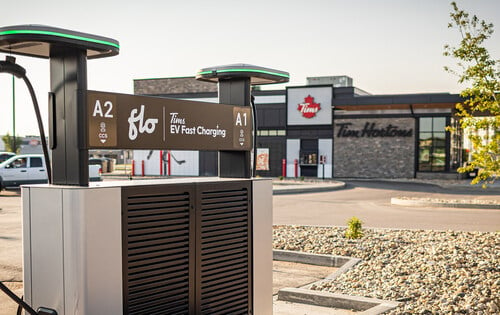
The first Tims restaurant to launch FLO EV fast chargers is already operational in Regina, Sask. There are up to 14 Tims restaurants planned to roll out FLO UltraTM EV fast chargers by the end of 2025 and 50 total locations are targeted to be live in 2026. (CNW Group/Tim Hortons)
Tim Hortons is partnering with Quebec-based FLO, a leading North American electric vehicle (EV) charging company, on a plan to deploy electric vehicle fast chargers at 100 Tims restaurants across Canada by the end of 2028.
“We’re thrilled to partner with FLO to make life a little easier for guests driving electric vehicles. Whether it’s grabbing a coffee and a charge before work, or taking a break on a roadtrip, we want every Tims Run to be convenient, welcoming, and a highlight of the journey,” said Hope Bagozzi, Chief Marketing Officer for Tim Hortons.
Hope Bagozzi
“Our planned rollout will make Tims the largest restaurant provider of EV fast charging in Canada and we are targeting installations in all 10 provinces to provide coast-to-coast coverage for our guests.”
The first EV fast chargers to be installed as part of this partnership are already open to the public in Regina, Sask., at 3810 Chuka Boulevard. Work is underway to launch EV fast chargers at up to 13 more Tims restaurants by the end of the year and up to 50 Tims restaurants by the end of 2026. Each participating restaurant will have an average of four charging ports for guests to use.
Louis Tremblay
“This partnership with Tim Hortons marks a pivotal moment in making EV charging a seamless part of everyday life for Canadians,” said Louis Tremblay, President and CEO of FLO. “By installing FLO Ultra chargers at trusted, well-visited locations, we’re not only building the reliable infrastructure EV drivers need but also empowering Canadians to confidently accelerate their transition to electric mobility.”
The charging stations selected for these deployments are the FLO Ultra, capable of delivering up to 120 kilometres (75 miles) of range in as little as 10 minutes, making fast, reliable charging more accessible than ever. These 100 chargers will be part of the FLO network, offering a leading uptime of over 98 per cent and allowing drivers to easily locate them and start a session directly from the FLO mobile app, said Tim Hortons.
“The partnership between Tim Hortons and FLO uniquely supports the large-scale deployment of charging stations, at convenient locations for EV owners. The CIB’s support for FLO brings more charging stations online across Canada, helping to address drivers’ range anxiety,” said Ehren Cory, CEO, Canada Infrastructure Bank.
Ehren Cory
In 1964, the first Tim Hortons restaurant in Hamilton, Ontario opened its door. Tim Hortons is Canada’s largest restaurant chain operating in the quick service industry with nearly 4,000 restaurants across the country. It has more than 6,000 restaurants in Canada, the United States and around the world.
FLO is a leading North American electric vehicle (EV) charging network operator and a smart charging solutions provider. Every month, it enables more than 2 million charging events thanks to over 140,000 fast and level 2 EV charging stations deployed at public, private and residential locations.
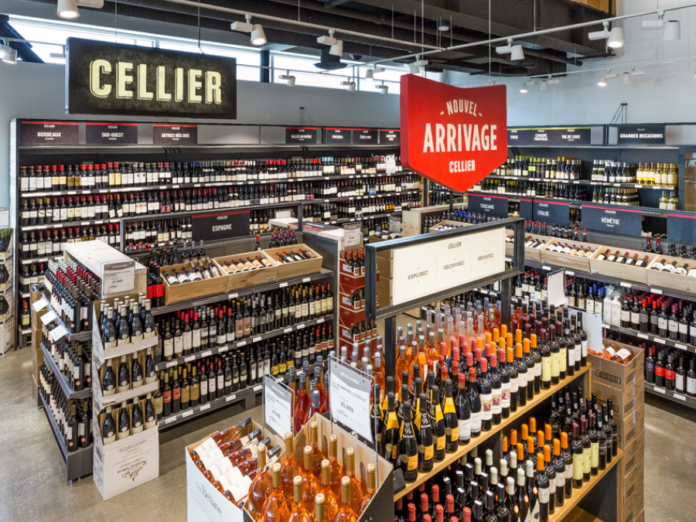
It was reported recently that Quebec’s liquor board, the SAQ, will be giving away about $300,000 worth of American alcoholic beverages that are nearing expiry. The initial plan was to discard the stock, but public pressure forced a reversal. In a province long associated with milk dumping due to supply management, rescuing American booze from the same fate is nothing short of ironic.
Since March, when Quebec pulled all U.S. wines and spirits from its shelves, the SAQ has been holding roughly $27 million in inventory. Just storing it has cost taxpayers about $500,000 in warehousing fees. This is the economic cost of politicized supply chain decisions—sunk capital and waste that ultimately land on consumers and taxpayers. Ontario, Nova Scotia, Manitoba, and Newfoundland and Labrador are in the same position, sitting on stock with no announced plan. By contrast, British Columbia, New Brunswick, and the Yukon have sold their remaining inventories to licensees and restaurants, at least extracting some value. Alberta, Saskatchewan, and Nunavut have resumed sales altogether. These approaches are far more sensible, but the question remains: why should government monopolies, rather than consumers, decide what belongs on the shelf?
American exporters see the situation for what it is: a government-imposed ban, not a consumer boycott. That distinction matters, because liquor boards are monopolies, and the perception of abuse of power could eventually invite legal action from American distilleries. In the meantime, the alcohol industry itself is adjusting to larger trade realities.
This week, Diageo confirmed it will close its Crown Royal bottling plant in Amherstburg, Ontario, by February 2026. The company stressed that all Crown Royal will continue to be mashed, distilled, and aged in Canada, but made clear the move is part of a broader strategy to improve efficiency and resilience in its North American supply chain.
The announcement raises another concern: if liquor boards are willing to politicize inventory decisions with American products, will some now target Crown Royal as well—especially Ontario’s LCBO, in the very province where the plant is shutting down?
Such a move would be short-sighted. Crown Royal is not only one of Canada’s most iconic spirits, but also one of the country’s most successful global brands. Jeopardizing its market position for political purposes would risk undermining both domestic pride and export credibility in a sector where Canada actually leads.
While Diageo did not cite tariffs directly, the backdrop is obvious. Higher trade costs and uncertainty are forcing companies across food and beverage to redesign supply chains closer to U.S. consumers. This is exactly what Washington had in mind. By wielding the buying power of nearly 400 million affluent consumers, President Trump’s tariff strategy has enticed firms to onshore and reshore production.
Economic indicators suggest the approach is bearing fruit. U.S. GDP was revised upward this week to 3.3 percent growth in Q2, far stronger than the previously estimated 3.0 percent and a sharp rebound from the 0.5 percent contraction in Q1. Consumer spending remains strong, and predictions of an economic collapse under tariffs have not materialized. For Canadian businesses tied to U.S. markets, the implications are clear: tariffs are no passing phase but a structural feature of the trade environment.
Ottawa’s recent decision to cancel counter-tariffs at least signals a willingness to work pragmatically with its largest trading partner. That move may help restore predictability for Canadian exporters. But the lesson of the SAQ remains: when governments politicize inventory management, taxpayers end up footing the bill, supply chains lose flexibility, and Canada’s credibility as a trading nation is put at risk.
And if liquor boards were ever reckless enough to politicize a global powerhouse like Crown Royal, the damage would go far beyond one brand. It would signal to the world that Canada is willing to sacrifice one of its strongest export success stories on the altar of short-term politics. For a country that already struggles to project itself as a food and beverage leader, turning Crown Royal into collateral damage would be nothing less than economic self-sabotage.
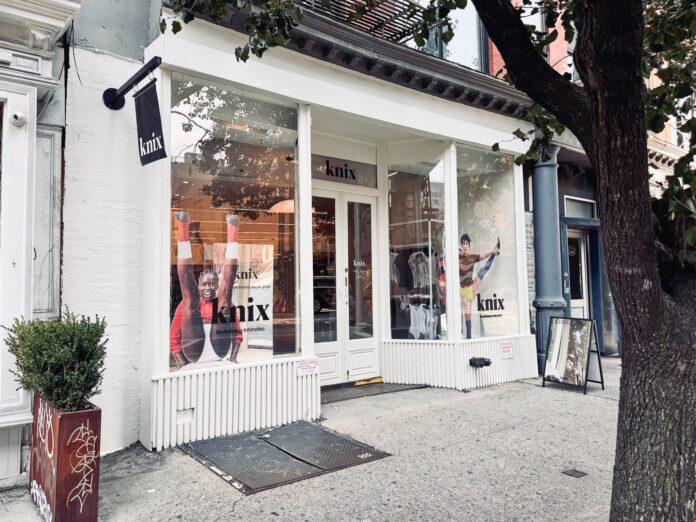
Canadian intimates and apparel brand Knix has taken a major step in its international growth strategy by opening its first permanent U.S. store in New York City. Located at 242 Lafayette Street at the corner of Grand Street, the 1,400-square-foot space officially soft-opened last week, and signals the beginning of a long-term physical retail presence south of the border.
The move comes as Knix, which operates 14 stores across Canada, positions itself to grow its reach across North America. “Opening in SoHo gives Knix a meaningful physical presence in the U.S., particularly in New York City, a key market where we’ve never had a physical retail footprint but have activated in before,” said Nicole Tapscott, Chief Commercial Officer at Knix.
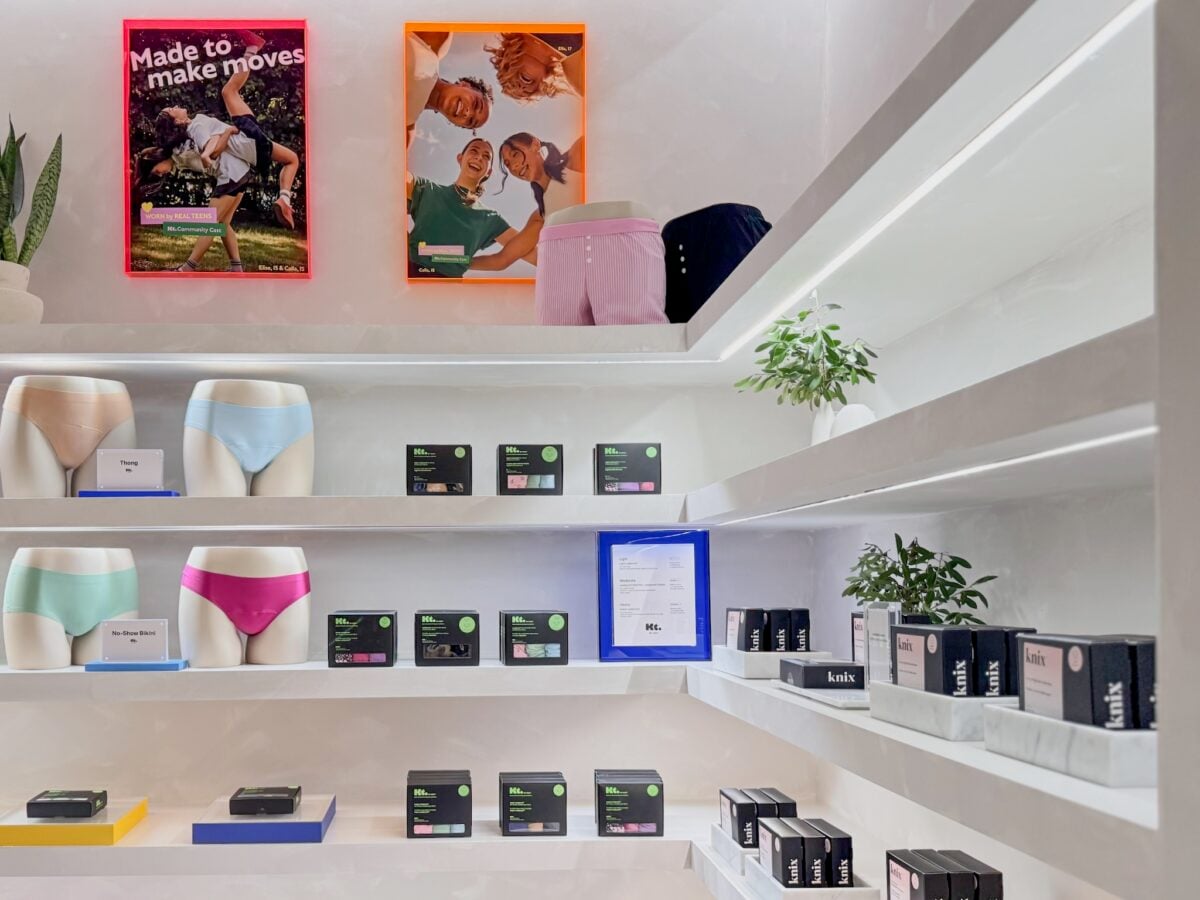
Knix in NYC’s Soho neighbourhood. Image: Knix
Why New York, Why Now
Nicole Tapscott
For Knix, the choice of SoHo was deliberate. The neighbourhood is known as a premier global retail destination, home to a mix of luxury, streetwear, and trendsetting lifestyle brands. Its foot traffic, international visibility, and cultural cachet made it a natural first step for the company’s U.S. retail strategy.
“We know that our biggest U.S. audience is in New York with a growing presence in other markets, so it made sense for us to open there,” Tapscott explained. “SoHo is an iconic shopping destination with high foot traffic and a strong reputation for trendsetting brands, yet there are still relatively few stores in the intimates category, making it a strategic choice for us.”
The New York opening builds on Knix’s retail evolution following short-term pop-ups in California, including San Francisco, Santa Monica, and San Diego, which tested the waters in the U.S. but are no longer active.
Knix in NYC’s Soho neighbourhood. Image: Knix
A Store Designed Around Comfort and Autonomy
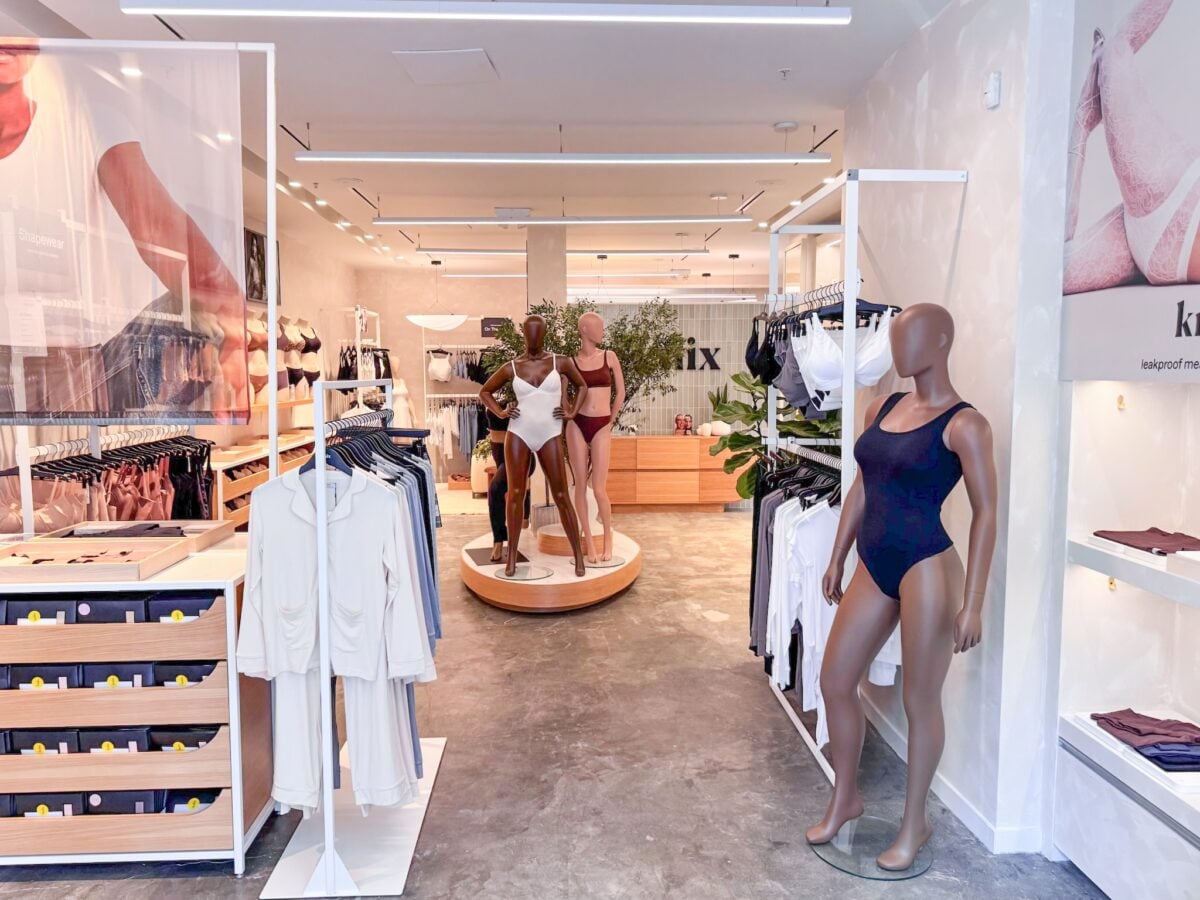
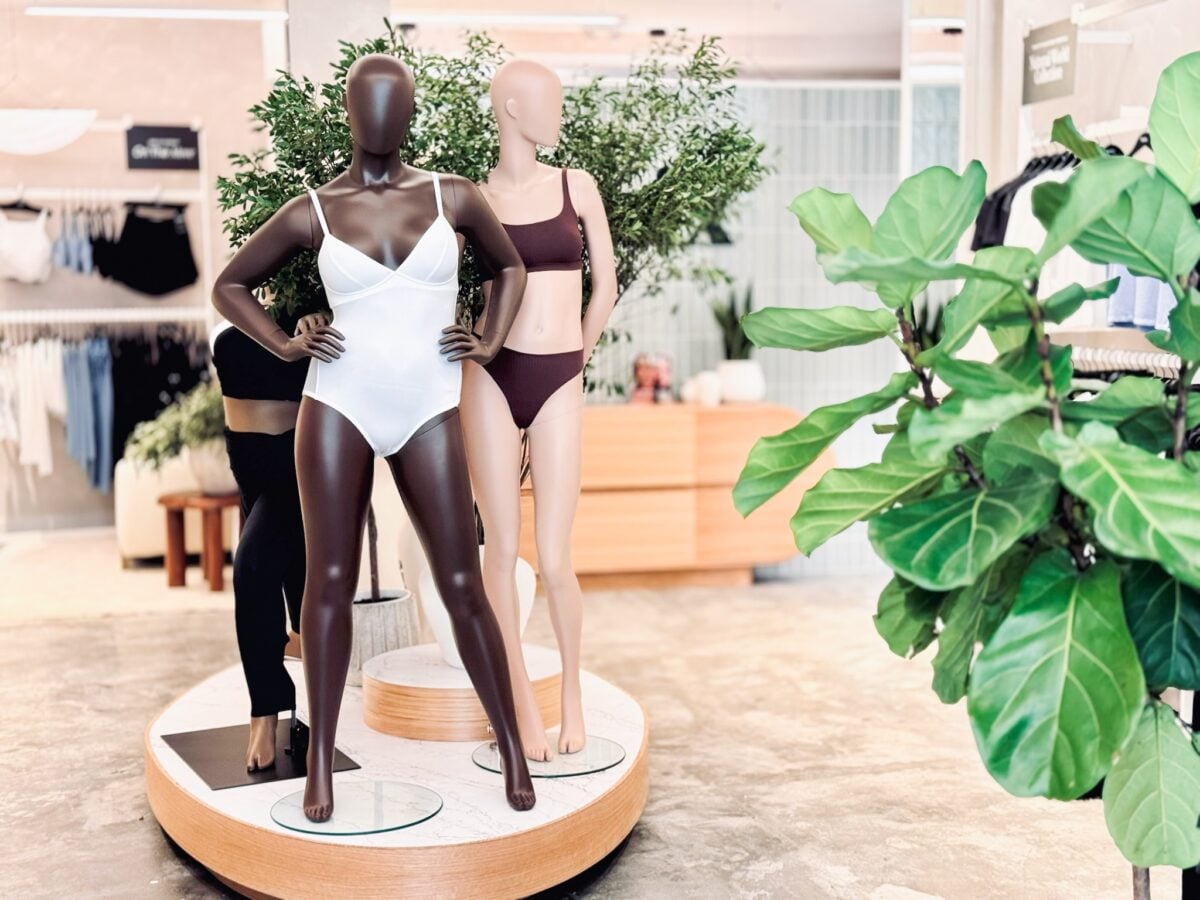
The SoHo store embodies Knix’s ethos of empowerment and inclusivity, both in design and in function. Its 1,400-square-foot footprint incorporates a modern layout with no freestanding cash desk, instead relying on mobile point-of-sale systems that allow associates to serve customers anywhere on the floor.
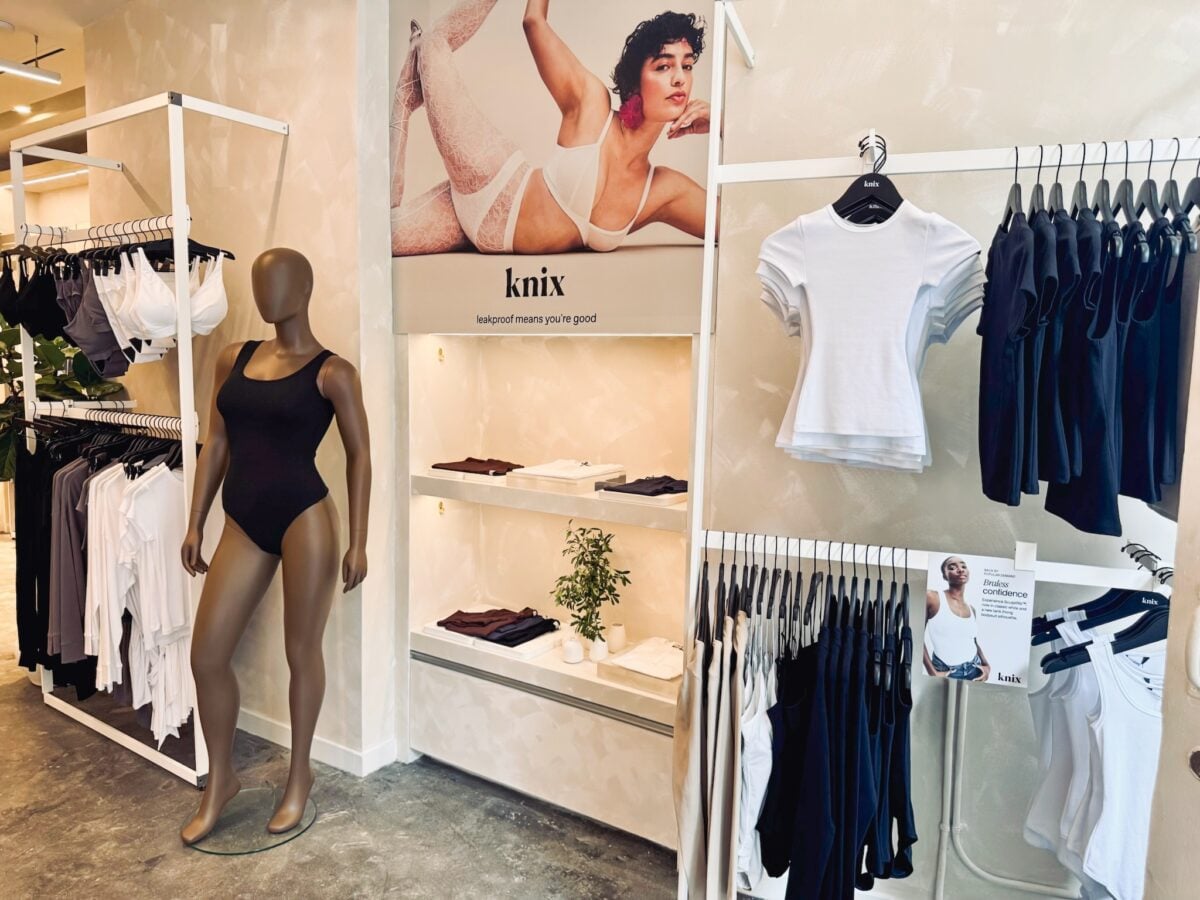
“The retail space has been intentionally designed to prioritize both comfort and autonomy,” Tapscott said. “One of the standout features is the integration of dedicated ‘bra bars’, carefully curated, easily navigable displays that allow customers to explore styles, colours, and sizes at their own pace.”
The layout includes discreetly located fitting rooms at the rear, offering privacy and a relaxed environment. “This design decision not only enhances comfort but also aligns with the store’s emphasis on creating a safe, judgment-free space,” Tapscott added.
Alongside its signature bras and underwear, the store also highlights Knix’s activewear line and includes a section dedicated to Kt by Knix, the brand’s teen-focused collection.
Knix in NYC’s Soho neighbourhood. Image: KnixKnix in NYC’s Soho neighbourhood. Image: Knix
The “You’re Good” Campaign with Kristen Bell
The U.S. debut coincides with Knix’s latest brand campaign, “You’re Good,” featuring actress Kristen Bell. Launched just ahead of the SoHo store opening, the campaign emphasizes confidence, humour, and everyday authenticity, values at the heart of Knix’s brand identity.
“The campaign builds on our existing brand positioning by reinforcing the message of confidence, comfort, and empowerment that Knix was founded on,” Tapscott explained. “It also marks an evolution by continuing to lean more into authentic storytelling and humour around real, everyday moments that many people experience but don’t often talk about openly.”
The campaign has been made highly visible across New York, including a large billboard at Lafayette and Grand, just steps from the new store, featuring Bell as the face of the brand. A full Spring Street subway station takeover extends the messaging underground from late September through October.
Knix & Kristen Bell Never Want You to Check for Leaks Again in New ‘You’re Good’ Campaign
Launch Events: From Sweet & Salty to a Block Party
Knix is known for blending retail openings with community engagement, and its New York debut is no exception. On September 19, the brand will host an interactive public event in SoHo featuring a sweet-and-salty “period cravings” menu, leak confessions, and complimentary leakproof product samples.
The following day, September 20, the company will host a grand opening block party with immersive activations, giveaways, and opportunities for the public to engage with the brand directly. “These activations are designed to engage and connect with the community,” said Tapscott, noting that the events reflect Knix’s longstanding focus on community building.
A Canadian Brand with Global Aspirations
Founded in 2013 by entrepreneur Joanna Griffiths, Knix has become a household name in Canada, widely credited for transforming the intimates market through innovation, inclusivity, and body-positive marketing. The company gained early recognition for pioneering leakproof underwear, and has since expanded into bras, sleepwear, swimwear, and activewear.
Its growth has been bolstered by significant investment. In 2022, Knix sold an 80 percent stake to global hygiene company Essity for approximately USD $320 million, valuing the brand at more than $400 million and marking one of the most significant exits for a female-founded Canadian business.
Knix has also distinguished itself in advertising, consistently showcasing real women of diverse ages, sizes, and backgrounds in campaigns, both online and in its retail spaces.
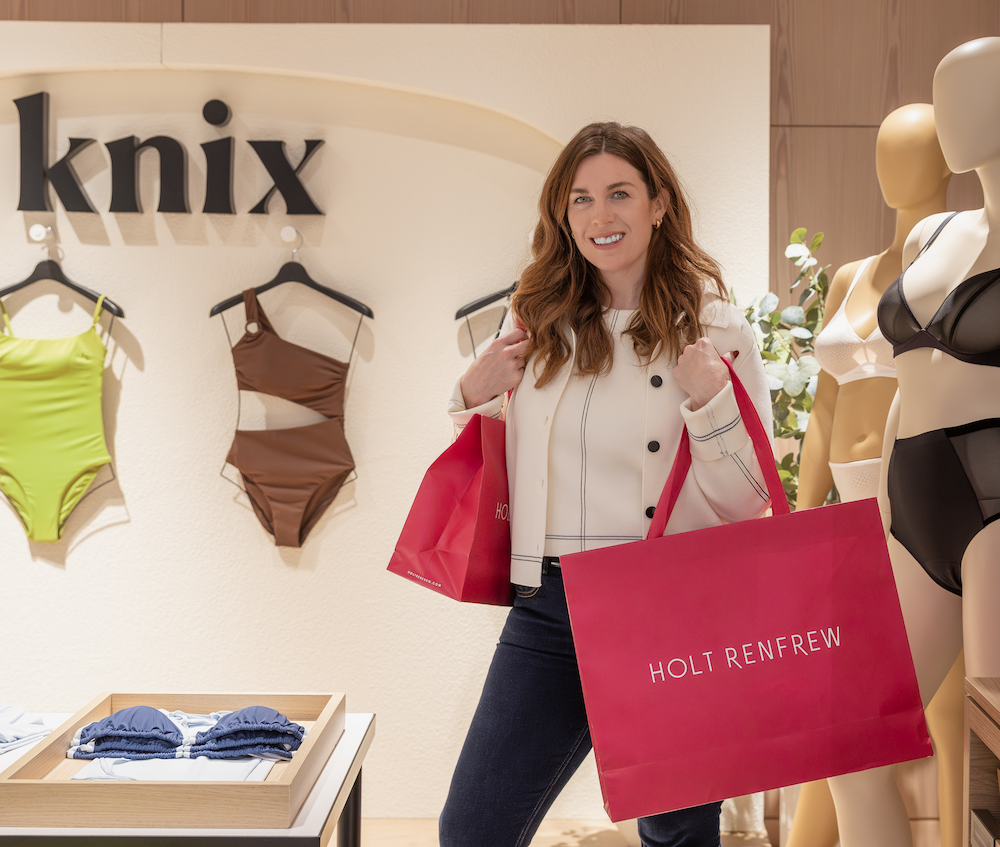
Knix Founder Joanna Griffiths at the Bloor Street Holt Renfrew Knix pop-up, March 2025. Image: Knix/Holt Renfrew
Canadian Retail Expansion Continues
While U.S. entry represents a landmark moment, Knix is also continuing to grow its Canadian footprint. Recent new openings include major centres such as Square One in Mississauga, CF Rideau Centre in Ottawa, CF Chinook Centre in Calgary, and West Edmonton Mall. A location for a new store in downtown Toronto was recently secured at CF Toronto Eaton Centre, according to sources.
Its retail presence already includes locations on Robson Street in Vancouver and Polo Park in Winnipeg, as well as community-focused boutiques in neighbourhoods such as Westboro in Ottawa.
The company has also expanded through wholesale partnerships. Select assortments are available at Holt Renfrew, Sporting Life, and boutique retailers such as The Fitzroy. Knix pop-ups in Holt Renfrew’s Toronto and Vancouver stores in 2025 further extend its reach.
Future Outlook: More U.S. Stores to Come
Looking ahead, Knix plans to add up to 10 new stores across North America in 2026, with two or three additional U.S. locations among them. Tapscott confirmed that physical stores remain integral to Knix’s growth strategy.
“In-store experiences remain a vital touchpoint for our customers, providing opportunities to engage with the brand in meaningful and memorable ways,” she said. “Being able to see, touch, and feel the product firsthand is irreplaceable.”
The brand’s continued focus on combining digital and physical channels reflects a wider retail trend toward omnichannel integration, something Knix has emphasized from its early days as a direct-to-consumer e-commerce company.
In a strategic move to broaden its portfolio and further its mission of community and inclusivity, Local Laundry has announced the acquisition of alder, a female-focused brand that aligns with the company’s core values. This marks Local Laundry’s third acquisition in the past three years, continuing its growth trajectory in the Canadian retail landscape.
“We’ve been on a path to growth through acquisition for the last couple of years,” said Connor Curran, founder and CEO of Local Laundry. “We’ve been working with strategic partners who align with our values and community, and along came alder, a female-founded brand that is all about community, inclusivity, and getting women outdoors.”
It previously purchased two brands CDN, in Kelowna, and WEST, in Calgary.
Connor Curran
alder which is primarily an online, e-commerce business, was founded with the goal of providing clothing that works for women of all body types, with a focus on casual outdoor recreation. Its community-driven approach to fashion made it a natural fit for Local Laundry, which has always prided itself on building meaningful relationships with its customers.
“We struck the deal and took over the company,” said Curran, explaining the acquisition. “They were looking for an exit, and we felt it was a really good opportunity to partner with them.”
With this acquisition, Local Laundry has moved operations from Toronto to a Calgary warehouse, where the brand will continue to operate under its own name but within the Local Laundry umbrella.
“Everything will remain the same,” Curran noted. “alder will remain its own separate brand under the Local Laundry umbrella. We’ll continue to grow it on its own and maintain the community and legacy that the original founders had. It’s all about inclusivity and clothing that works for all women to get outdoors.”
As Local Laundry continues to expand, the company has made a concerted effort to diversify its offerings. Over 75% of Local Laundry’s online customers are women, but the company had yet to offer a female-focused brand until now.
“We’re looking for companies that align with our values,” Curran said. “They have to be about building community, giving back to the community, and making clothing that has a purpose. We’re not looking for other clothing brands that are just carbon copies of Local Laundry. We want brands that offer something to our customers that we currently don’t offer.”
Photo: alder Instagram
The acquisition of alder is part of Local Laundry’s broader strategy to diversify its product lineup. Previously, Local Laundry had acquired two other companies: CDN, a Canada-focused, hockey-themed brand, and West, a Calgary streetwear company. While CDN is now a custom hat company, West has turned into a custom clothing line, providing merchandise for the Calgary Wild FC, a professional women’s soccer team.
“Our first acquisition was CDN. They were a lot more hockey-focused and Canada-focused,” Curran explained. “We turned that company into more of a custom hat company. Moving forward, it’s going to focus primarily on custom hats.”
Curran continued, “West was a Calgary streetwear company, and we’ve turned it into one of our custom clothing offerings. We do all the merchandise for the Wild FC women’s soccer team, and all their merch is done under the West label.”
The acquisition of alder marks the largest of the three, and Curran is confident that the brand will play a pivotal role in Local Laundry’s growth moving forward. “This is definitely our biggest acquisition to date,” he said. “It’s going to take some time to digest, for lack of a better word. We’re not actively looking for more acquisitions in the near future, but long-term, as our team grows and as all the brands continue to do well, we want to stay open to future opportunities.”
As Local Laundry integrates alder into its portfolio, the company remains committed to its values of community building, inclusivity, and sustainability, values that have resonated strongly with Canadian consumers.
“It’s all about the community and giving back,” said Curran. “We want to offer clothing that has a purpose and speaks to our values. We’re excited to see where this partnership with alder takes us.”
The acquisition of alder further solidifies Local Laundry’s position as a leader in the Canadian retail space, and this move is a key step in its ongoing mission to create more meaningful, purpose-driven brands.
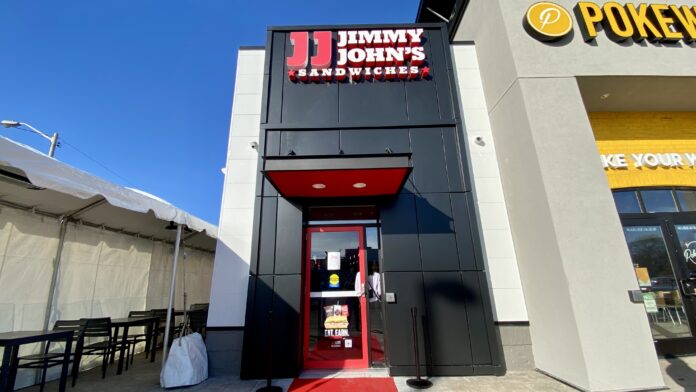
Front entrance to Jimmy John's in Toronto on November 18, 2024. Photo: Craig Patterson
Jimmy John’s, the American sandwich chain famed for its “freaky fast” service and fresh ingredients, is accelerating its Canadian expansion. After debuting in Toronto in late 2024, the brand has now opened a second location at Fallsview Casino in Niagara Falls. This latest launch is part of an ambitious plan to open 12 new Canadian restaurants by the end of 2025.
Montreal-based Foodtastic, the Canadian master franchisor of Jimmy John’s, has laid out a long-term vision of opening as many as 200 locations nationwide within the next decade. The rollout will focus on building strong regional clusters, beginning with Ontario, before expanding more broadly across the country.’
The Fallsview Casino location, which opened this week, represents Jimmy John’s second Canadian store. Positioned in one of the country’s most heavily trafficked tourist destinations, the new restaurant benefits from high visitor volumes year-round. A grand opening celebration, organized in partnership with Fallsview Casino, is scheduled for September.
Peter Mammas, CEO of Foodtastic
Peter Mammas, CEO of Foodtastic, expressed excitement at the rapid pace of openings. “We have a big appetite for opening new stores because we know how much our fellow Canadians appreciate a fantastic-tasting sandwich with fresh ingredients,” he said. “We’re always on the hunt for the world’s best food brands and are committed to making these available right here in our country. And Jimmy John’s is right up there – pickle or not.”
12 Locations Planned by Year-End
Following Toronto and Niagara Falls, more Jimmy John’s restaurants are scheduled to open across Canada by year’s end. New sites will include Winnipeg, Ottawa, Edmonton, Barrie, Windsor, and several in the Greater Toronto Area. The company’s strategy is to create a concentrated presence that quickly builds brand recognition and operational efficiency.
Foodtastic initially operates new stores as corporate-owned locations to maintain quality and fine-tune operations. The franchisor plans to eventually transition many of these outlets into franchisee hands once systems are firmly in place.
The Canadian rollout includes a key menu change designed to appeal to local tastes: toasted sandwiches. While the feature is not available in the brand’s U.S. locations, Foodtastic has introduced it in Canada in response to consumer preferences.
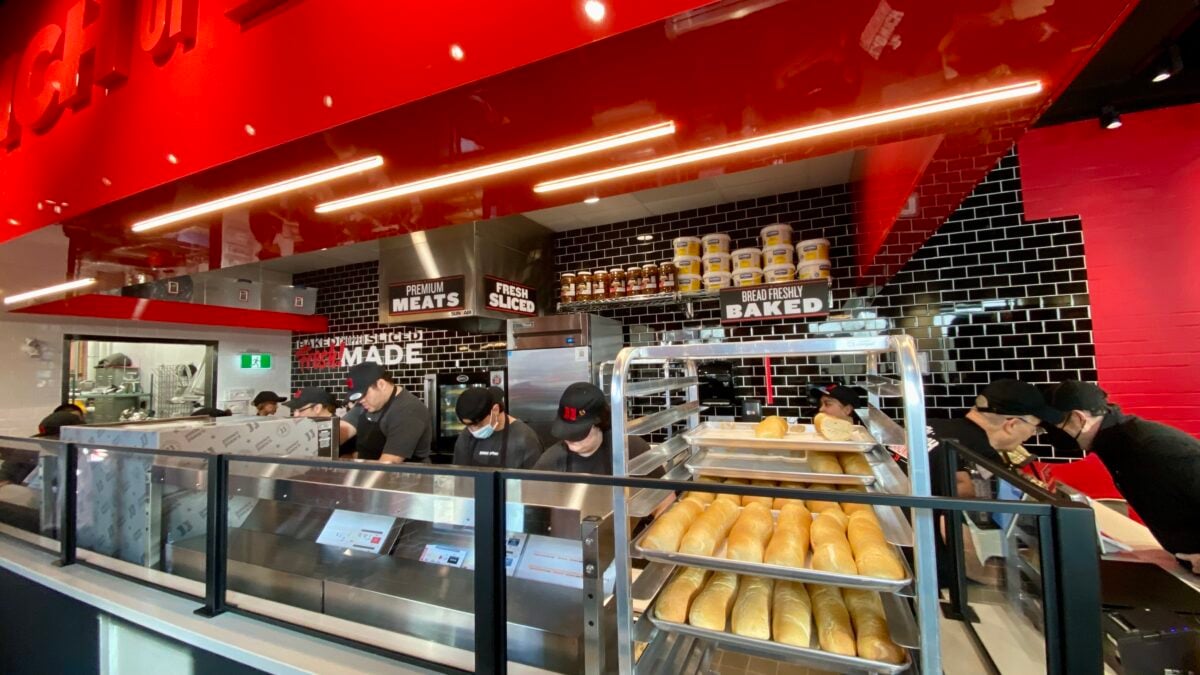
Otherwise, the menu remains consistent with Jimmy John’s U.S. offering, emphasizing bread baked fresh multiple times daily, meats sliced in-house, and vegetables prepared fresh each morning. Options include traditional French bread, thick-sliced wheat bread, and the “Unwich” lettuce wrap for carb-conscious guests. Sides include the brand’s signature Jimmy Chips, kettle-cooked and seasoned on-site.
Inside Jimmy John’s in Toronto on November 18, 2024. Photo: Craig Patterson
From One Store to 200
The opening of a dozen new stores in 2025 is just the beginning of Jimmy John’s Canadian ambitions. Foodtastic’s long-term plan is to scale the brand to 200 locations across the country, representing one of the most ambitious foreign restaurant expansions in recent Canadian history.
“We’re investing in Jimmy John’s because we absolutely love the entire menu,” said Mammas. “We’re happy that, like us, our friends at Fallsview Casino have discovered the incredible taste of these sandwiches.”
Founded in 1983 by Jimmy John Liautaud in Illinois, Jimmy John’s has grown to more than 2,600 locations in the United States. Known for its simple menu and “freaky fast” delivery, the brand is now part of Inspire Brands, which also owns Arby’s, Dunkin’, and Baskin-Robbins.
Foodtastic, based in Montreal, is one of Canada’s fastest-growing restaurant groups. Founded in 2016, the company operates more than 1,200 restaurants across over 27 brands, with system-wide sales surpassing $1 billion. Its portfolio includes Canadian names such as Milestones, Pita Pit, Second Cup Café, and Freshii, alongside international concepts.