Whole Foods Market will open a full-service grocery store at the base of the highly anticipated King Toronto development, bringing a major grocer to one of downtown Toronto’s fastest-growing neighbourhoods. The store will anchor the retail podium of the landmark mixed-use project, marking a first for the King West district, which has seen dramatic residential growth in recent years.
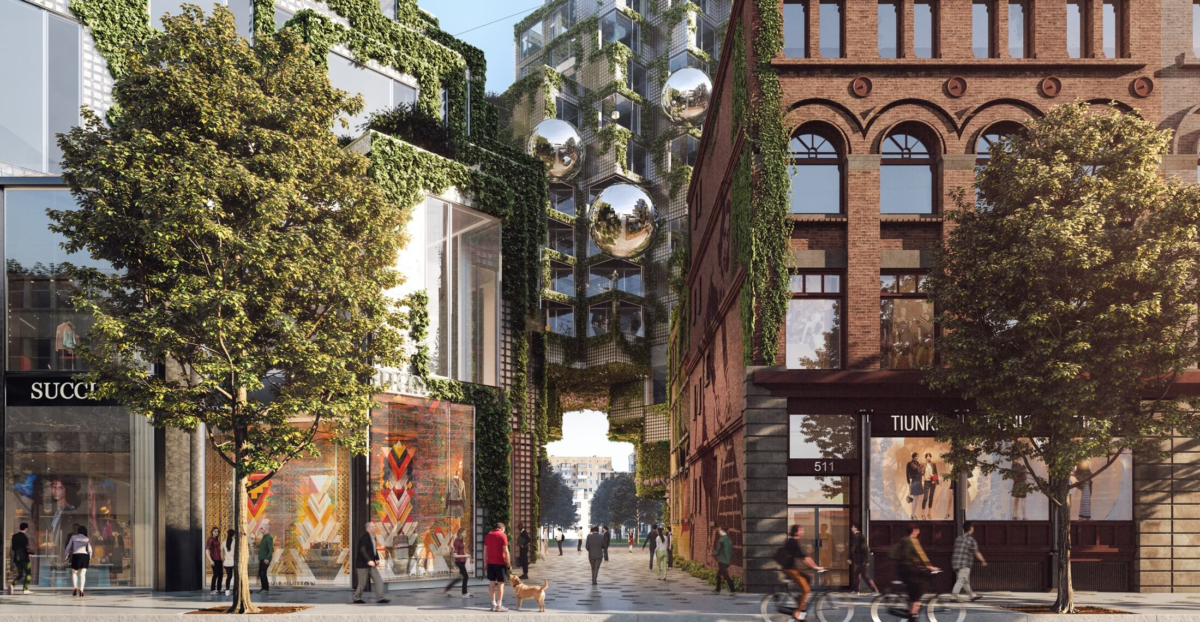
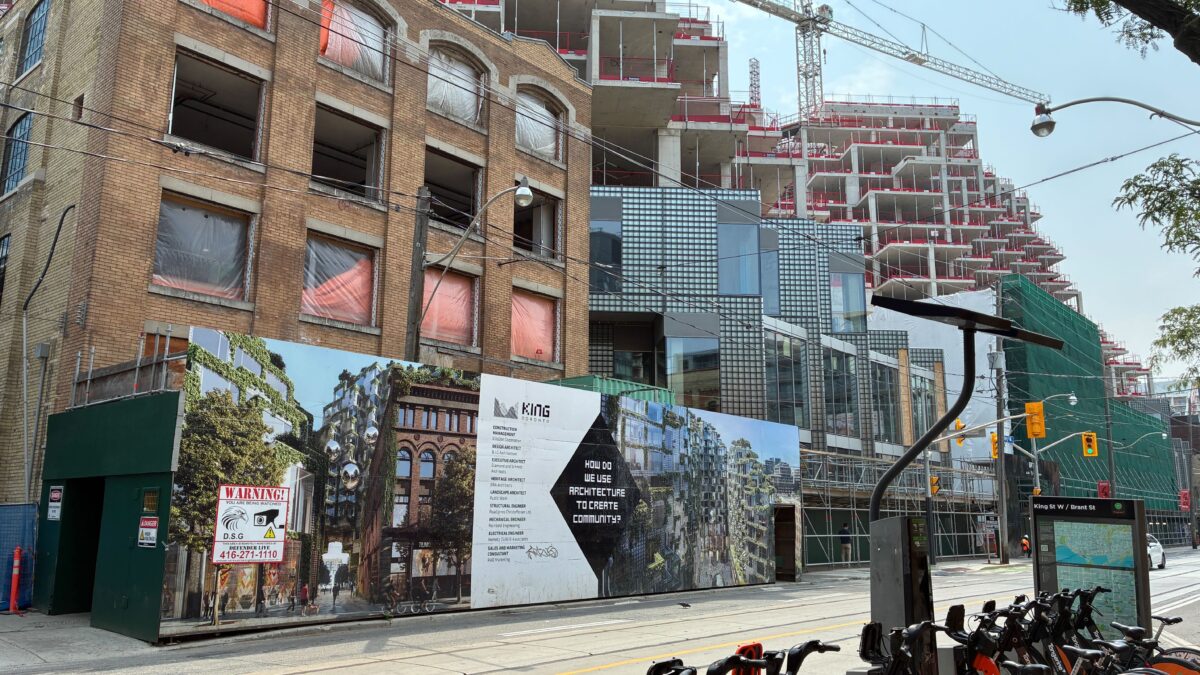
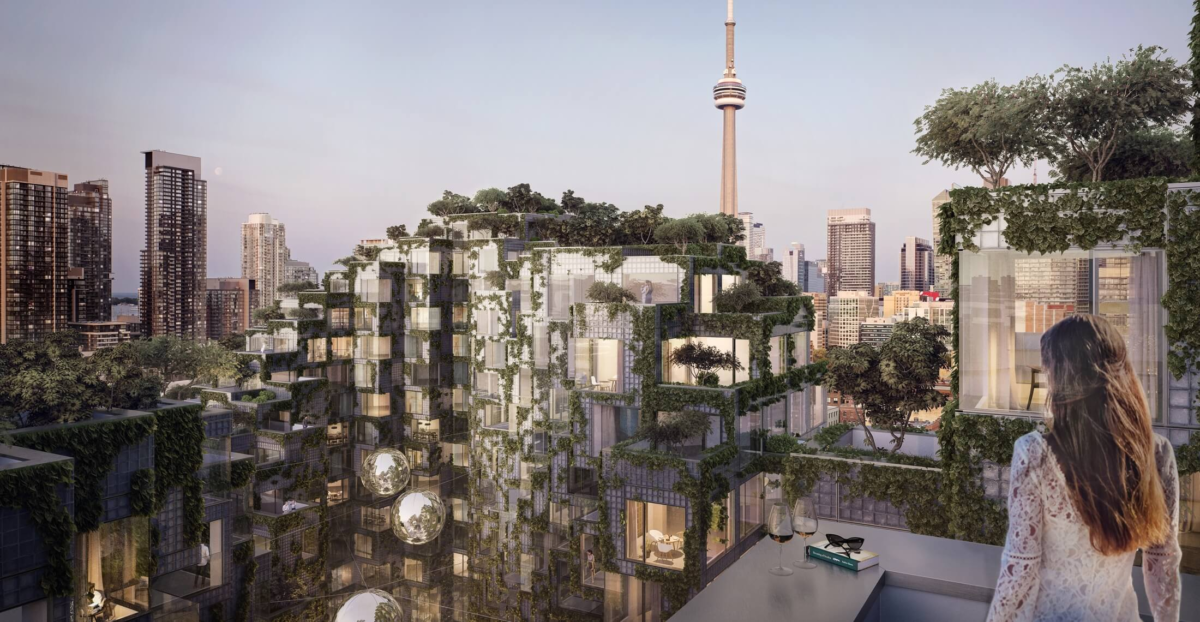
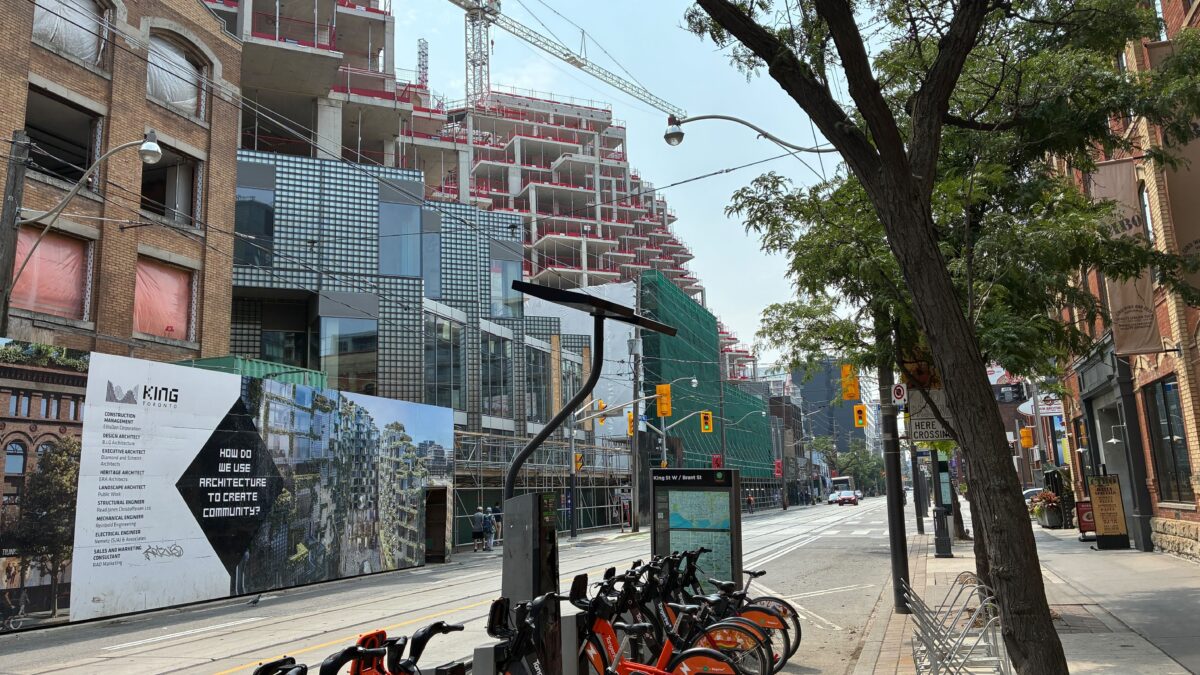
Situated on King Street West between Spadina Avenue and Portland Street, King Toronto is designed by internationally acclaimed Bjarke Ingels Group (BIG) and developed by Westbank and Allied Properties REIT, with construction by EllisDon. The development’s striking, pixelated green façade has already drawn global attention for its distinctive architecture and strong sustainability credentials.
Whole Foods King Toronto represents a pivotal retail moment for the neighbourhood. Until now, King West has lacked a full-service grocer, despite having one of the densest and most affluent residential populations in the city. The area is known for its vibrant dining, boutique retail, and proximity to major downtown districts, making it a sought-after urban address.

Details of the Whole Foods Lease
The new store will span approximately 30,000 square feet, with 5,000 square feet at street level, and 25,000 square feet on the lower level for the main grocery operations. This configuration aligns with Whole Foods’ urban concept strategy, integrating community-oriented features alongside its core food offering.
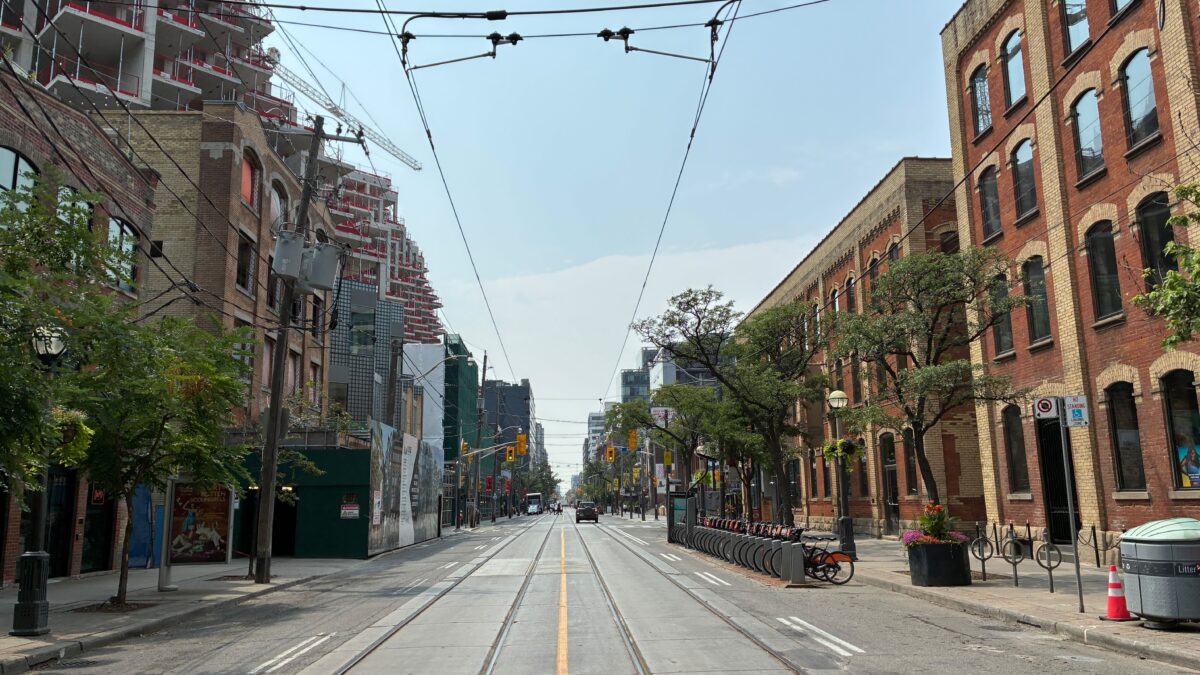
The store will front directly onto King Street, with strong pedestrian visibility and a connection to The Well, a major mixed-use project to the south. Whole Foods is expected to take possession of the space later this year, with a grand opening targeted for February 2027. This is the company’s first new Canadian lease in more than six years and comes as part of a broader strategic plan under parent company Amazon.
Sam Winberg and Justin Pearlstein of Retail Ventures CND represent Whole Foods in lease deals. King Toronto’s retail, owned by Allied Properties REIT, is being handled by Carmen Siegel and associate Hannah Kinney of Cushman & Wakefield, according to marketing materials.
Limited Grocery Competition
Despite significant residential growth in King West, the area has been underserved by grocery options. The nearest full-service stores include a Loblaws at Queen and Portland Streets and a Farm Boy at Bathurst and Front Streets, both a considerable walk from the heart of King Street West. Fresh & Wild on Spadina Avenue offers a smaller-scale selection but is not positioned as a full-service alternative.
Whole Foods King Toronto will fill a long-standing gap, catering to a demographic that includes young professionals, creatives, and affluent households, many of whom have invested in high-value properties in the area.
King Toronto: A Visionary Urban Community
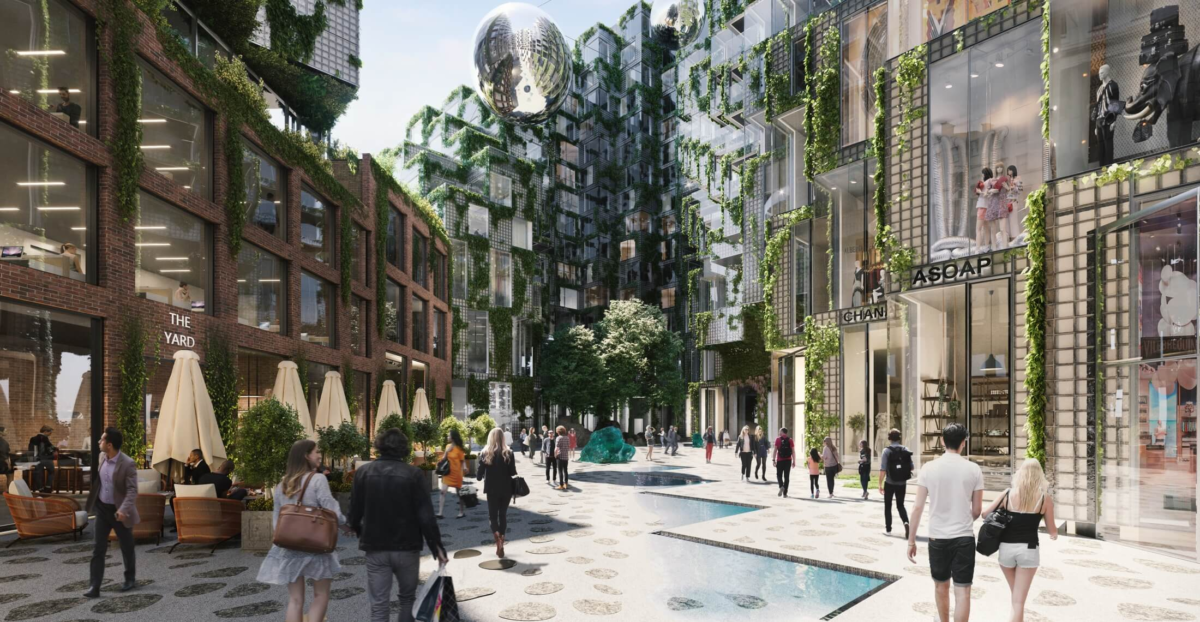
King Toronto spans nearly an entire city block, blending residential, retail, and public spaces. The project will feature around 500 condominium units, many with expansive terraces and city views. Several heritage buildings along King Street West have been preserved and integrated into the retail base, adding architectural character.
A central 21,000-square-foot public courtyard will anchor the site, offering seasonal markets, art installations, and public gatherings to encourage year-round community engagement. Retail space at King Toronto will total up to 180,000 square feet, with a mix of dining, wellness, boutique shopping, and cultural attractions. Additional tenant announcements are expected later this year.
Celebrity Residents and Luxury Living
The development has attracted global attention not only for its design but also for its residents. Music icon Elton John has purchased a penthouse in King Toronto, adding to his collection of homes worldwide. Canadian singer Shawn Mendes is also known to reside in the area. Their presence underscores King West’s growing reputation as a hub for high-profile residents.
Nearby, luxury real estate continues to push boundaries. Large loft units on Wellington Street reach approximately 5,000 square feet, and a penthouse two blocks from the site is currently listed for nearly $25 million.

A Strategic Retail Vision
Whole Foods King Toronto will serve as a cornerstone in the retail mix for the project, signalling the type of high-quality tenants expected to follow. Leasing is focused on curating a selection of wellness, hospitality, and boutique offerings to complement the grocery anchor.
King Toronto’s location ensures strong connectivity to surrounding districts. The Well, just to the south, brings over one million square feet of commercial space and hundreds of residential units. To the north, Waterworks Food Hall adds further dining and retail choice. A new Equinox fitness club is also opening on Bathurst Street within another mixed-use development.
With increasing density, investment, and interest from global brands, King West is becoming a self-contained hub within downtown Toronto. The arrival of Whole Foods King Toronto marks a major step in shaping the neighbourhood’s next chapter.
Whole Foods to Close Two Toronto Locations
While the new King Toronto store signals growth for the brand in the downtown core, Whole Foods is also scaling back elsewhere in the city. The company recently announced that it will close its Yonge & Sheppard Centre and Leaside locations in Toronto.
The Yonge & Sheppard store is reportedly shutting down due to high rent costs, while the Leaside location has been described as underperforming. Both closures will take place this summer. Staff at the affected stores were informed shortly before the public announcement, marking a swift transition for the retailer.
At the same time, Whole Foods is said to have a broader Canadian expansion strategy that includes opening new store locations in major markets. More details on these planned openings are expected to be announced in the months ahead.