Staples Canada is taking its back-to-school campaign on the road this August with the launch of the Back to School Made EASY Bus. The travelling experience showcases interactive technology demonstrations, curated learning supplies, and expert advice designed to help families navigate the modern classroom.
The initiative begins at Toronto’s Hospital for Sick Children (SickKids), where Staples will donate classroom supplies through the hospital’s Sponsor a Family program. Families identified by social workers as being in need will receive items to support learning both at home and in hospital. Patient ambassadors and their families will also explore the EASY Bus, gaining hands-on experience with educational tools as they prepare for a new school year.
This donation aligns with the 20th annual Staples School Supply Drive, which has raised more than $17 million in partnership with United Way Centraide and the Kiwanis Foundation of Canada. Over two decades, the program has provided thousands of students across the country with essentials to start the school year with confidence.
“Donations like this bring meaningful support to patients and families as they prepare for the school year,” said Iris Garcia, a registered social worker at The Hospital for Sick Children. “We appreciate Staples’ commitment to making a difference.”
Hands-On Technology and School Essentials
Visitors to the Staples EASY Bus will encounter an array of educational innovations. Demonstrations include noise-cancelling headphones, AI-driven learning tools, and the chance to test products at an interactive pen-to-paper bar. Staples associates will also be on hand to provide expert guidance, reinforcing the company’s role as a destination for back-to-school readiness.
Guests can also take part in the Tech Trade-in by Allstate program, exchanging older electronics for Staples gift cards valued up to $500. The program helps families save on upgrades while reducing electronic waste, reflecting a growing emphasis on affordability and sustainability. Each visitor will also receive a coupon for in-store shopping, adding value to the overall experience.
“Back to school looks different today, and we’re bringing that experience directly to families with the Back to School Made EASY Bus,” said Brian McDougall, Interim CEO and Chief Retail Officer, Staples Canada. “From hands-on demos to expert advice and the latest in educational tech, the EASY Bus is designed to help families feel confident and prepared for the modern classroom.”
Greater Toronto Area Tour
The EASY Bus will travel across the Greater Toronto Area throughout late August. The schedule includes:
Thursday, August 21, at King Street West and Spadina Avenue, Toronto
Friday, August 22, at Scarborough Town Centre
Saturday, August 23, at Toronto Nautical Harbour Centre
Sunday, August 24, at Toronto Premium Outlets in Halton Hills
Each stop will run from 11 a.m. to 7 p.m., offering parents and students convenient access to the experience.
Staples’ Wider Back-to-School Solutions
The EASY Bus complements Staples Canada’s broader back-to-school programs. In-store technology experts, trained by Microsoft, Google, Samsung, and Apple, help families navigate an ever-growing array of devices. Staples curates solutions by features and capabilities, enabling parents to find what best suits their children’s needs.
Alongside technology support, Staples has committed to keeping classroom basics affordable. Essential supplies are priced from 25 cents, with weekly promotions and price matching available throughout the season. Educators receive added discounts, while the School Tools program provides bundled supplies with special savings for parents.
Shopping flexibility is also a focus, with options ranging from same-day delivery through DoorDash and Instacart to buy-online-pick-up-in-store services. Whether browsing grade-specific tools online or visiting one of Staples’ 298 locations nationwide, families can expect a consistent emphasis on convenience and value.
Supporting Canadian Communities
Headquartered in Richmond Hill, Ontario, Staples Canada positions itself as The Working and Learning Company. Its network includes retail stores, the Staples.ca e-commerce platform, Staples Print and shipping services, and Staples Studio co-working spaces. Through fundraising efforts such as Even the Odds, the company also invests in addressing health inequities across Canadian communities.
By combining community engagement with practical retail solutions, Staples Canada aims to make back-to-school a seamless experience for families nationwide. The EASY Bus highlights this strategy, bringing products, expertise, and charitable giving together under one mobile platform.
The Beer Store (TBS) said Monday it is making the difficult decision to close 12 retail stores effective end of business day October 19.
The Beer Store will close the following retail stores:
Bridgenorth – 882 Ward St., Bridgenorth, ON, K0L 1H0
Eganville – 8647 Hwy. #60, Eganville, ON, K0J 1T0
Forest – 89 Main St. S., Forest, ON, N0N 1J0
Grand Bend – 21 Ontario St. N., Grand Bend, ON, N0M 1T0
Harrow – 398 King St. W., PO Box 249, Harrow, ON, N0R 1G0
Little Current – 53 Meredith St. E., PO Box 210, Little Current, ON, P0P 1K0
Markdale – 33 Argyle St., Markdale, ON, N0C 1H0
Noëlville – 142 David St. N., Noëlville, ON, P0M 2N0
North York – 3078 Don Mills Rd., North York, ON, M2J 3C1
Sauble Beach – 704 Main St., Sauble Beach, ON, N0H 1P0
Toronto – 900A Don Mills Rd., Unit #100, Toronto, ON, M3C 1V6
Toronto – 800 Gerrard St. E., Toronto, ON, M4M 1Y7
Ozzie Ahmed
“Where we sell beer and collect empties in Ontario is changing. The Beer Store is modernizing to meet the changing marketplace and unfortunately this means making the hard decision to close retail locations. We know this is difficult news for customers and employees,” said Ozzie Ahmed, Vice President Retail, TBS.
“As The Beer Store modernizes, our locations will continue to provide friendly customer service and a deposit return system that gets consumers their money back.
“The Beer Store recognizes the contributions our employees make to the business and in the communities where we operate. All efforts will be made to support employees through this process in alignment with commitments and agreements.”
The Beer Store is encouraging customers to continue returning more than the 1.6 billion alcohol containers it processes annually to one of its local TBS locations or an empty return dealer located close by. The following alcohol containers purchased in Ontario can be returned to collect a deposit back: beer, wine and spirits bottles, aluminum cans, plastic bottles, tetra packs and kegs.
“All grocery stores that sell alcohol will be required to accept the return of empties and refund customer deposits starting January 1, 2026. This is part of consumer retail alcohol modernization, found in the Early Implementation Agreement and provincial regulations,” it said.
To help ensure that customers can still purchase beer and return empties conveniently, TBS is encouraging customers to use one of the following resources:
Owned by Ontario-based brewers and named one of Canada’s Greenest Employers 2025, the Beer Store is the largest beer retailer in Ontario. Its logistics division has 26 points of distribution strategically located across the province to meet the needs of customers. The Beer Store distributed 2.92 million hectoliters of beer to over 13,000 customers in 2024. In 2024, The Beer Store added over 5,300 new customers to its distribution network. The Beer Store employs 6,500 people.
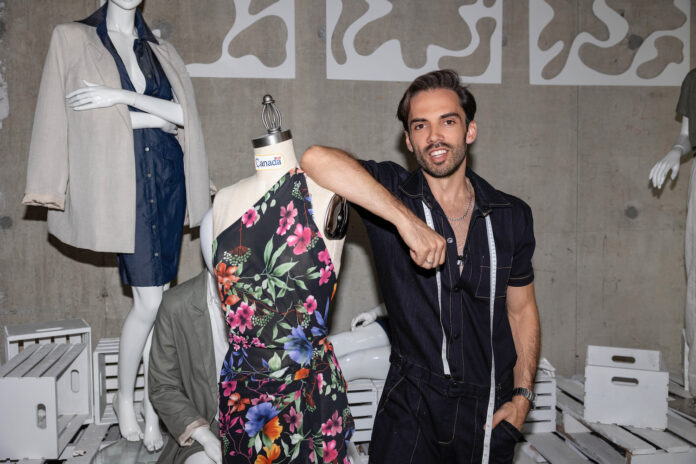
Canadian fashion designer Joseph Tassoni has become a prominent advocate for sustainability, quality craftsmanship, and inclusivity in an increasingly fast-paced industry. Since launching his namesake brand in 2017, Tassoni has worked tirelessly to position Canadian-made fashion as a force on the global stage. His philosophy is rooted in creating garments that combine elegance with functionality while preserving the integrity of local manufacturing.
“Everything we do starts with a commitment to quality, fit, and design,” says Tassoni from his Burlington, Ontario atelier. “Our customers invest in pieces that last a lifetime, support Canadian workers, and reflect their individuality.”
From Montreal Roots to Fashion Industry Experience
Born in Montreal and educated at Toronto Metropolitan University, Tassoni entered the fashion industry at a young age. His early career included roles at Pink Tartan, Joe Fresh, and other major Canadian labels, where he gained comprehensive experience across design, pattern-making, and brand management.
“I started working as a teenager,” he recalls. “I handled roles from junior pattern maker to brand manager because I wanted to understand every position. Knowing the value of everyone’s time makes you a better leader.”
After years in corporate fashion, Tassoni launched a successful consultancy, supporting Canadian and U.S. labels with design and brand development. This diverse experience provided the foundation for his own brand, which debuted during Toronto Women’s Fashion Week in 2017 to critical acclaim.
Tassoni’s early collections established outerwear as a defining symbol of Canadian identity. His runway presentations have expanded to showcase a full spectrum of product categories, celebrating inclusivity and sustainability while now pioneering the integration of AI into fashion.
The Ethos: Luxury with Purpose
Tassoni’s brand philosophy centres on community-driven luxury. His collections reflect an inclusive design approach, ensuring that pieces suit diverse identities without being restricted by traditional gender norms. Each garment is engineered for versatility, often featuring reversible elements, detachable components, and multiple styling options.
“For me, functionality is everything,” explains Tassoni. “Clients should feel empowered to reinvent their look without compromising quality. If someone loves a piece, I want them to wear it in different ways—maybe a suit that doubles as separates or a veil that transforms into a scarf.”
This practical creativity extends to materials. Tassoni prioritizes sustainable, locally sourced fabrics, allowing clients to make purchases that align with environmental values while supporting Canadian manufacturing.
At age 5 1/2, Joseph Tassoni cut up curtains in his parent’s house to create a dress for his sister — he says his family has been very supportive from the beginning. Image: Tassoni Family.
Canadian Craftsmanship at the Core
Unlike many upscale brands that rely on overseas production, Tassoni insists on creating everything in Canada. His flagship atelier at 390 Pearl Street in downtown Burlington doubles as a boutique and production facility, giving clients a rare behind-the-scenes look at the fashion process.
“When customers visit, they see the cutting tables, the sewing machines, and the craftsmanship in action,” he says. “It’s part gallery, part showroom, and it reminds people why Made in Canada matters.”
The space opened in late 2019 and now operates by appointment only, allowing for highly personalized service.
“People think that by appointment means you need to spend a certain amount, but that’s not the case,” Tassoni clarifies. “Often, if you add up what you spend on fast fashion, it equals or exceeds the cost of an investment piece made to last.”
Balancing Style and Functionality
Tassoni’s approach challenges the disposable nature of fast fashion. His garments, particularly outerwear, are designed for Canadian weather while maintaining elegance. “Too many coats on the market are expensive but lack substance,” he says. “They look good, but they’re not water or wind resistant. My goal is to combine beauty with performance.”
His collections often feature technical elements such as innovative closures, adjustable lengths, and lightweight packable fabrics. This emphasis on adaptability ensures that clients can maximize the value of their wardrobe while reducing overconsumption.
Community and Mentorship
Beyond design, Tassoni is deeply invested in community engagement and mentorship. He collaborates with local businesses, participates in philanthropic initiatives, and supports emerging talent through partnerships with institutions like Toronto Metropolitan University and George Brown College.
“I want to show the next generation what’s possible,” he says. “Respecting their time and encouraging creativity is crucial. I’ve had interns travel great distances to work here because they know they’ll be challenged and inspired.”
His commitment to mentorship contrasts with his own early experiences in the industry, which sometimes lacked meaningful learning opportunities. “When I was 16, I spent a summer organizing buttons,” Tassoni laughs. “Now, I ensure students see the full scope of what fashion can be.”
Resilience and Adaptability in Challenging Times
Operating a Canadian-made brand is not without challenges. Economic fluctuations, rising costs, and global tariffs have impacted many businesses, but Tassoni’s local production strategy insulated him from supply chain disruptions during the pandemic.
“Being based in Canada and sourcing locally gave us stability,” he explains. During COVID-19, Tassoni repurposed his atelier to produce personal protective equipment, donating proceeds to local healthcare facilities—a gesture that earned him both the Inspire Award from the City of Burlington and the Queen’s Platinum Jubilee Community Hero Award.
A Vision for Global Growth
Looking ahead, Tassoni’s ambitions are clear: he plans to expand across North America and into international markets, focusing on regions with strong trade agreements with Canada. “I want to build long-term relationships with retailers that value craftsmanship,” he says. “It’s about finding partners who share our commitment to quality and sustainability.”
While wholesale and e-commerce are integral to this strategy, Tassoni emphasizes the enduring importance of physical retail. “Bricks and mortar creates human connection,” he notes. “Our Burlington atelier proves that clients crave that personal experience.”
One long-term goal is to establish a presence in Toronto’s Yorkville neighbourhood, Canada’s luxury retail epicentre. “The timing has to be right,” Tassoni says. “My name is on every garment. This isn’t a seasonal project, it’s my life’s work.”
The Heart of Canadian Fashion
For Joseph Tassoni, fashion is more than clothing; it’s an ecosystem of creativity, community, and sustainability. His mission is to show that Canadian-made luxury can compete on a global scale without sacrificing ethics or quality.
“When clients choose us, they’re investing in more than a garment,” he says. “They’re supporting Canadian jobs, sustainability, and a vision for what fashion should be—timeless, inclusive, and deeply connected to the people who create it.”
Jollibee, the global restaurant brand, has announced a new partnership with the internationally-acclaimed girl group, KATSEYE.
This landmark collaboration unites the restaurant brand’s rich heritage of bringing families and communities together through delicious food with the dynamic girl group’s vibrant energy and rapidly growing global fanbase of EYEKONS, said the brand.
“This collaboration is a natural fit, rooted in Jollibee and KATSEYE’s shared ability to spark joy among their global fanbases. Jollibee, with its unique flavors, universally loved offerings like its crispy, juicy Jolly Crispy Chicken, and welcoming service, has cultivated a loyal following across generations and cultures. Its journey from a humble ice cream parlor in the Philippines to a global QSR powerhouse mirrors the aspirational rise of KATSEYE, a group known for its youthful pop sound, diverse talent, and dedication to connecting with devoted fans worldwide,” it said.
“Both Jollibee and KATSEYE are currently taking the world by storm. Recently named the “best fast food fried chicken” by USA TODAY for the second year in a row, Jollibee is always looking for ways to bring joy to its community through next-level food and more. Having just sold out their Beautiful Chaos tour, KATSEYE continues to raise the bar, delivering hit after hit. With each brand at the top of its game, this collaboration is a moment fans won’t want to miss.”
PHOTO: JOLLIBEE
Complex, the media brand known for its sharp pulse on pop culture, will exclusively house the three custom Jollibee x KATSEYE items, which are designed to capture the upbeat and stylish nature of this perfectly fitting partnership. Quantities are extremely limited, so fans are encouraged to act quickly, as items are likely to sell out.
Shared Dream Tank Top: With its cosmic flair and clean lines, this tank captures the bold energy of EYEKONS chasing big dreams across galaxies, with a Jollibee twist.
Double Drop Denim Tote: Sturdy, stylish, and made to carry happiness, this two-sided denim tote flips between subtle flex and full fan mode.
“This is precisely why partnering with KATSEYE, a group that deeply resonates with a diverse, global audience and embodies such positive energy, is a perfect match for our beloved brand. Their passion and vibrant spirit align seamlessly with our distinctive heritage of fostering community and happiness. We’re incredibly excited to join forces with such a talented group of women and create unforgettable experiences for our fans.”
Following the August 15 merch drop, Jollibee and KATSEYE will continue to surprise fans with exclusive, “joy-filled experiences that blend bold flavor and fierce style. From crave-worthy bites to limited-edition collectibles, the partnership is just getting started—so keep your eyes (and taste buds) ready.” More announcements to come.
“We could not be happier to partner with Jollibee, a brand that we’ve been truly obsessed with for a long, long time,” stated KATSEYE. “This collaboration feels incredibly authentic to us, and it’s all about good vibes, bold flavor, and making memories with our EYEKONS. We can’t wait to share this journey with both our fans and Jollibee’s – it’s going to be beautifully chaotic.”
Jollibee is the flagship brand of the Jollibee Group, which is on a mission to become one of the top five restaurant companies in the world.
KATSEYE – comprising Daniela (Cuban/Venezuelan-American, from Atlanta, GA), Lara (Indian, from New York, NY), Manon (Ghanaian-Italian, from Zurich, Switzerland), Megan (Chinese-American, from Honolulu, HI), Sophia (Manila, Philippines), and Yoonchae (Seoul, South Korea) – has quickly risen to international prominence with their captivating performances, unique sound, and dedicated fanbase. A powerhouse of diverse talent, KATSEYE embodies the spirit of modern pop, inspiring millions with their music and message. To learn more, subscribe to updates at katseye.world or follow them at @katseyeworld on Instagram, TikTok, YouTube, and X.
Jollibee Foods Corporation is the one of the world’s fastest-growing restaurant companies. It manages and operates a portfolio which includes 19 brands with over 10,000 stores and cafés across 33 countries.
The Jollibee Group’s portfolio includes nine wholly owned brands (Jollibee, Chowking, Greenwich, Red Ribbon, Mang Inasal, Yonghe King, Hong Zhuang Yuan, Smashburger and Tim Ho Wan), five franchised brands (Burger King, Panda Express, Yoshinoya, Common Man Coffee Roasters, and Tiong Bahru Bakery in the Philippines), and ownership stakes in other key brands like The Coffee Bean and Tea Leaf (80%), Compose Coffee (70%), SuperFoods Group that operates Highlands Coffee (60%), and bubble tea brand Milksha (51%). The Company also has membership interests in Tortazo, LLC, along with Chef Rick Bayless, for Tortazo in the U.S. and has recently invested in Botrista, a leader in beverage technology.
FYihealth group. Delta, BC. 5 Million Orders Milestone. August 2025. (CNW Group/FYihealth group)
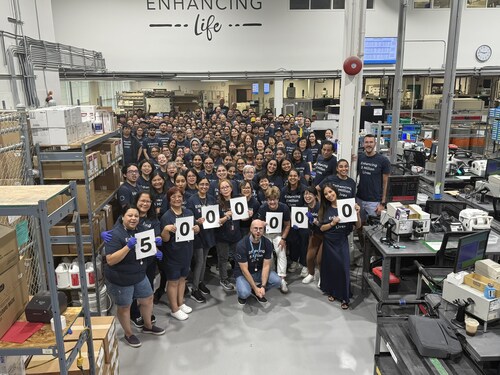
FYihealth group, recognized as one of Canada’s Best Managed Companies from 2020-2025, and one of Canada’s Top Growing Companies for three years in a row, recently reached a significant milestone: the company’s state-of-the-art Delta Laboratory completed over 5 million patient eyewear orders.
As the central hub for eyewear production across FYihealth group’s network — including FYidoctors, Visique, BonLook, and solis optics clinics and stores, totalling over 370 locations — the Delta Lab combines leading-edge technology with expert craftsmanship to deliver high-quality, custom prescription lenses and frames to patients across Canada. From its proprietary premium exactFit® lenses that are crafted with edge-to-edge clarity for sharper and more natural vision, to lenses made to manage Myopia, a growing vision epidemic that impacts about 30% of children aged 11-13, the Delta Lab has provided millions of Canadians with eyewear solutions that ehance their lives, explained the company.
Nancy Morison
“This milestone is a reflection of the exceptional work and commitment of our Delta Lab team,” said Nancy Morison, VP of Delta Ophthalmic Laboratories. “From the very first order to our five-millionth, their dedication to precision, innovation, and patient care is unmatched.”
The Delta Lab, located in British Columbia, has long been recognized as one of the most advanced optical laboratories in Canada. In 2022, the Delta Lab made a series of changes to reduce its environmental impact with lens production including changing over its flourescent lights to LED, saving 45% in engergy usage, and using 50% less water to produce its lenses while simultaneously recycling 95% of the water that is used. With a focus on continuous improvement, minimizing it’s environmental footprint and investment in technology, the lab ensures every order meets the highest standards of quality while helping patients see their world more clearly, said FYihealth.
Dr. Alan Ulsifer
“This isn’t just about numbers,” said Dr. Alan Ulsifer, CEO & Chair of FYihealth group, “It’s about the lives improved through better vision and the people behind every pair of glasses. We’re proud of what we’ve accomplished and excited for what’s next.”
FYihealth group is Canada’s leading diversified healthcare organization comprised of FYidoctors, Visique, BonLook, and solis optics. Doctor-led, professionally managed, and patient-focused, the organization concentrates on delivering eye care with patient-centric products and services. Recognized as one of Canada’s Best Managed Companies from 2020-2025, the organization operates over 370 locations across the country.
Producing butter without cows, pastures, or even crops—using only carbon and hydrogen synthesized in a laboratory—sounds like science fiction. Yet, in the era of climate urgency and resource constraints, it’s increasingly being framed as the next frontier in food innovation. A new generation of philanthropists and investors is betting on disruptive technologies to reimagine how we produce food.
One such player is Savor, a Chicago-based company backed in part by billionaire Bill Gates. The firm claims it has developed a product indistinguishable in taste and texture from traditional butter. Unlike margarine—made from plant-based oils such as soybean or canola—this “butter” is created entirely without animals or crops. Its fat molecules are reconstructed in a lab from carbon dioxide captured from the air and hydrogen extracted from water, processed through heating and oxidation. The result mimics the molecular structure of fats found in beef, cheese, or vegetable oils—without a single acre of farmland.
From an environmental standpoint, the footprint could be dramatically smaller. Commercially, Savor is targeting a market launch within 12 to 18 months but has yet to reveal pricing. It’s reasonable to expect a premium positioning, perhaps in the organic butter range. On nutritional value, however, the company remains silent.
Molecular agriculture—sometimes called synthetic or cellular food production—has gained significant traction in recent years. Meat, coffee, cocoa, seafood—virtually every category is being replicated. These innovations are often marketed as climate saviours. But the variables that truly shape consumer decisions—labelling, price, taste, and nutritional value—are often treated as secondary considerations.
Occasionally, the race for novelty veers into the absurd. In 2023, a UK company announced it could make ice cream from recycled plastic. Yes—plastic. One has to wonder how far we’re willing to go in the name of saving the planet.
Food science also has a history of unintended consequences. Consider trans fats: once hailed for improving texture and shelf life, they were ultimately banned due to their impact on public health.
And here lies the economic and cultural tension: food is not merely a matter of calories produced with minimal resources. It is an expression of culture, heritage, and pride—rooted in centuries-old traditions. According to the Food Sentiment Index published by our lab earlier this year, just 9% of consumers identify the environment as their primary purchase driver.
Cellular and molecular agriculture research certainly has its place, but it must be guided by the right motivations. Projects that attempt to “play God” or adopt eco-authoritarian narratives risk alienating the very consumers they aim to serve. Any credible pathway for these technologies must incorporate the cultural, economic, and sensory dimensions of eating. After all, we don’t just eat to reduce carbon footprints—we eat to support our farmers, our food businesses, and the communities they sustain.
The future of food will not be defined solely by lab breakthroughs or carbon math. Success will hinge on taste, transparency, affordability, and respect for culinary traditions. In the end, not all of us aspire to eat like Greta Thunberg.
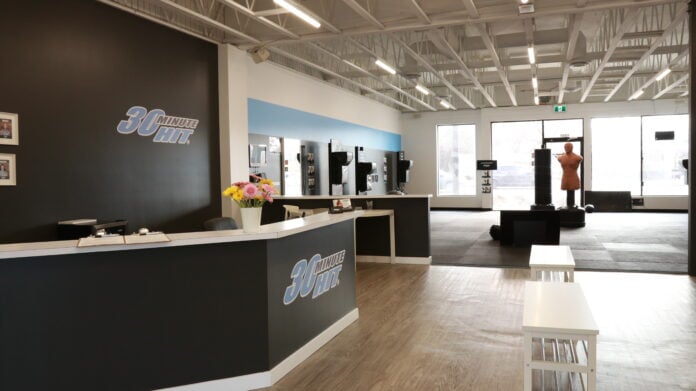
Founded in 2004 in North Vancouver, 30 Minute Hit has grown from a single women-only fitness studio into an international franchise with about 90 locations – an expansion rooted in organic growth and a strong sense of community.
“We opened the first location in North Vancouver,” said Deanna Loychuk, co-founder of 30 Minute Hit. “Two years later, one of our clients loved it and opened a location. Then one of her members wanted to open a location, and so on. Locations kept opening like that.”
Deanna Loychuk
Initially structured through licensing agreements, the model quickly evolved.
“At the time, we were starting them as licensing agreements. Then our legal team said, ‘You know, I think you’ve got something here – you should really look at the franchise model.’ That’s when we began franchising,” explained Loychuk.
The company sold its first franchise in 2006.
Loychuk credits much of the brand’s Canadian growth to a grassroots, member-driven model.
“In Canada, we don’t have the big broker systems or networks like in the U.S., so you grow very organically,” she said. “Members in B.C. would move to Alberta, want to take it with them, and open one there. Then others would see that and open more. That’s how we grew to Montreal – we now have 16 locations in Quebec. That’s how we got into Halifax, Nova Scotia.”
The approach shifts significantly south of the border.
“In the U.S., it’s a different market. We’re more strategic there, using broker networks to reach more people. So it’s a different ball game.”
When asked about Canada’s broader franchise environment, Loychuk was candid: “Canada just doesn’t have that same franchise network base.”
As a long-time member of the Canadian Franchise Association (CFA), Loychuk acknowledged the organization’s value, especially during challenging times.
“Honestly, we were members of the IFA (International Franchise Association) in the U.S. before joining the CFA (Canadian Franchise Association). We saw the CFA at an IFA conference one year and they asked, ‘When are you joining CFA?’” she recalled. “The CFA has been good for helping us connect with other franchisors.”
Photo: 30 Minute Hit
She praised their support during the pandemic. “Through COVID, they were amazing. They gave updates and were our lifeline, working closely with government officials across Canada. That helped a lot because during COVID we were busy trying to figure out how to reopen in Texas, Seattle, Ohio – all with different rules and regulations. It was a lot of work.”
The pandemic proved to be the toughest test of all.
“Going through COVID was really tough. The fitness industry is still feeling the aftermath. Running a business pre-COVID versus post-COVID is completely different,” she said. “What they built pre-COVID was amazing. Then they had to shut down for a year or two, depending on the province or state, and start again from scratch. That was mentally draining.”
Still, there was strength in unity. “Even within the fitness industry, there were perks. We all came together and supported one another because we believed there was enough room for everyone to be successful. And there is. But that hard work, the shift in mentality, it impacted a lot of people.”
At the heart of 30 Minute Hit is a brand with a clear identity.
“One thing that really sets us apart is that we’re women-only. We offer an incredible, effective workout in just half an hour. And our model is very community-based,” said Loychuk. “Our trainers and owners know the members by name and often, their life stories too. That connection is a huge part of what brings women back to fitness.”
Even as home workouts and digital fitness surged, Loychuk believes the value of community can’t be replaced. “A lot of people bought Pelotons or started walking more, but they still wanted community. Through our training, we ensure our owners and trainers build those connections. I think our world needs more of that right now.”
Photo: 30 Minute Hit
Looking ahead, she sees a resurgence in fitness.
“I believe the fitness industry will boom again in the next five years. People are realizing that health is wealth. If you don’t have your health, you have nothing,” she said. “We know sitting all day at desks or in front of screens isn’t healthy. People want to move more, but also want fitness with a community aspect. That’s what we offer.”
30 Minute Hit is also expanding globally.
“We opened in Dubai last October. The women there love it. We’re looking to expand further in the Middle East, and of course, the U.S. is still our biggest market.”
For Loychuk and 30 Minute Hit, the path ahead remains firmly rooted in connection and empowerment, one 30-minute session at a time.
Ask any small and mid-sized business owner what they’re short on, and they’ll probably say time. But more than the hours that are missing, it’s focus, clarity, and space to think. What’s stealing that bandwidth isn’t always obvious: an invoice you forgot to chase, a system that doesn’t sync, another tool demanding your attention.
Time is rarely lost to a single catastrophic blocker but a thousand invisible cuts. Less death by one decision and more by constant distraction.
Ciarán Quilty
The average SMB today operates with more digital tools than ever before. One of our own recent studies found that some will use eight or more tools. These aren’t only high-growth startups but also include solo founders, family firms, side hustlers scaling into storefronts.
Yet more tools haven’t meant more time. In fact, the opposite. When systems don’t talk to each other, the business owner becomes the middleware, chasing files, correcting errors, switching tabs. It becomes harder to notice the time tax until you try to gain focus. Even as 62% of Canadian small businesses now use AI – up from 51% just months ago – many still find themselves doing manual, low-leverage tasks that automation could have solved. And that’s the real problem we’re trying to solve with automation, both speed and focus.
What problem are we really solving?
Fragmentation both steals time and blocks progress. If data is scattered across platforms, AI can’t help you. If customer records don’t sync, your team spends its day fixing workflows instead of building relationships.
On the flip side of the tech transformation is a reality that many SMBs still don’t use basic digital tools. That’s not because they’re lazy or slow, but because what’s on offer is often too complex, too disconnected, or too enterprise-focused to serve them. For example, only 30 per cent of Canadian businesses use HR or payroll software, and just 31 per cent use email marketing or cloud platforms – highlighting how enterprise-grade solutions often don’t scale down.
There’s been a lot of noise about AI doing your work. But the most valuable thing AI might do is help you stop doing the things that don’t matter.
Photo: Fox
When we talk about automation, we should be honest: this isn’t about replacing people but clearing the underbrush. The repetitive, low-leverage tasks that keep business leaders from doing what only they can do.
AI becomes relevant less because it’s shiny and new, but because it helps you recover your attention. One example we’ve seen in practice: an AI agent notices a customer has been late paying six times in a row. Before you even hit send on the invoice, it flags this and suggests adding a late payment fee, a small change that increases your odds of getting paid on time by up to 10x. The cash comes in quicker. Your mental load drops. That’s intelligence in service of the real problem of getting paid faster. And it’s not just about faster cash flow. Canadian businesses using AI reported they are 16 times more likely to report increased revenue and nearly three times more likely to say their workdays are shorter.
The ROI from AI is a secondary question
Here’s the uncomfortable truth: the biggest barrier to AI isn’t cost but chaos. If your data isn’t in one place, structured, connected, and accurate, AI has nothing to work with.
This is not a structural problem. The Intuit QuickBooks Small Business Index shows that many SMBs are incredibly resilient but deeply vulnerable to complexity. They create the majority of jobs yet remain the least equipped to benefit from the AI transformation unless we fix the basics.
We need action that supports better policies, simpler digital adoption, and clearer pathways to automation. Especially when 55 per cent of Canadian small businesses say digital tools improved efficiency and saved time, and 37 per cent say they reduced errors – benefits too valuable to be left on the table due to complexity. But the principle applies far beyond any one initiative: if we want SMBs to thrive, we must stop assuming they’re ready to adopt tools built for enterprises.
AI is not the strategy but a lever. The question I often hear is “what’s the ROI on AI?” The better question is what do I care about, and how can technology help me spend more time on that? Do I care about getting paid faster? Retaining more customers? Spending less time reconciling payments? Then let’s focus on automation there.
Photo:
Mikhail Nilov
Don’t fall in love with the tech. Fall in love with the problem. This is why the next wave of SMB innovation will come from simplifying the technology stack, connecting the dots, and making the right decisions easier to take. Getting back to purpose and prosperity.
We talk about entrepreneurship like it’s a heroic solo journey. In reality, it’s often one person doing five jobs, across ten apps, with twelve hours that should have been eight.
The opportunity here is less technical and more emotional. Imagine logging in and seeing your most urgent tasks already handled. Your insights surfaced for you. Your next move, clearer. That’s a quiet revolution already underway and it’s built on a single principle: Business owners should spend more time being owners, and less time being operators.
In our quest to counter the time thief, let’s stop asking ‘how do we use more AI?’ and instead, ‘how do we help more business owners get back to their purpose?’
Ciarán Quilty, Senior Vice-President for International at Intuit Bio
Ciarán is a technology and business leader with over 25 years’ experience in software, consulting and digital. Following global roles at Meta and Accenture, Ciarán now serves as Senior Vice President at Intuit running the company’s international business. His journey, from software engineerto commercial leader, has been anchored to one goal – empowering small and medium-sized businesses worldwide to thrive through technology. Ciarán is bringing this goal to life at Intuit through the power of AI and development of a platform that small and medium-sized businesses can rely on every day to run and grow their business, driving their revenue and profitability.
New insights from Equifax Canada Market Pulse Quarterly Consumer Credit Trends and Insights show early signs of stabilization in consumer credit performance in the second quarter of 2025. The improvements in credit health were more visible for mortgage holders while those with no mortgage, especially younger Canadians, continued to struggle with financial pressures. In Q2 2025, close to 1.4 million Canadians missed a credit payment — 7,000 fewer than last quarter – but still 118,000 more than a year ago, it said.
“While the overall delinquency rate appears to be leveling off, the underlying story is far more complex,” saidRebecca Oakes, Vice President of Advanced Analytics at Equifax Canada. “We continue to see a growing divide between mortgage and non-mortgage consumers — and continued financial strain among younger Canadians, who are facing a slower job market and rising costs.”
Rebecca Oakes
The percentage of consumers who missed a credit payment during Q2 was nearly double for non-mortgage holders compared to mortgage holders (1 in 19 vs. 1 in 37). This gap has widened in recent years – shifting from non-mortgage holders’ missed payment levels being around 45 per cent higher than mortgage holders in 2019 to more than 96 per cent higher in the second quarter of 2025, said Equifax.
Total consumer debt climbed to $2.58 trillion, marking a 3.1 per cent year-over-year increase, while average non-mortgage debt per consumer rose to $22,147, as households continue to feel the pressure of rising costs for vehicles, groceries, mortgages, and rent. Consumer spending on credit cards appears to be declining. When adjusted for inflation, the average credit card spend per consumer was over $2,100 in June, a 0.4 per cent decrease from June 2024, according to the report.
However, spending behaviour is different among various consumer groups. For individuals without a mortgage, spending levels have not dropped, but have instead seen a slight 0.14 per cent increase year-over-year. While non-mortgage holders continued to see higher spend levels than last year, mortgage holders saw a drop in credit card spending. This could suggest that financial pressures are impacting consumer groups differently, it said.
As financial divide grows: Ontario & Alberta stand out with high delinquency levels
“Regionally, Ontario continues to see the sharpest increases in missed payments on non-mortgage products, with a 90+ day balance delinquency rate of 1.75 per cent in Q2 2025. This is 15.2 basis points higher than the national average and an increase of 29.8 basis points from Q2 2024. These rises were particularly pronounced in Toronto, GTA and Hamilton regions, which saw increases of 36.8, 39.1 and 30.7 basis points, respectively. These areas are heavily impacted by high cost of living, economic uncertainty, and exposure to the auto and steel sectors,” noted Equifax.
“Alberta also experienced an annual increase in missed payments, with delinquency rates reaching 1.98 per cent in Q2 2025, which is 38.5 basis points above the national average and a 25.5 basis point increase from the previous year. Within Alberta, Edmonton, Fort McMurray, and Calgary all saw rises in delinquency rates (29.4, 37.1, and 26.3 basis points, respectively), each surpassing the provincial average. This trend is likely due to a recent population surge from inter-provincial migration, ongoing economic challenges, and Alberta’s high unemployment rate increase in July.
Photo: Mikhail Nilov
“Ontario and British Columbia continue to be the primary drivers of mortgage delinquency rates, which remain elevated despite a slight deceleration in their rate of increase. Conversely, mortgage missed payments in other Canadian regions are still below pre-pandemic levels. As of Q2 2025, Ontario’s mortgage 90+ day balance delinquency rate was 0.27 per cent and British Columbia’s was 0.19 per cent, reflecting year-over-year increases of 11 and 5 basis points, respectively. The rest of Canada experienced a modest 0.09 basis point year-over-year rise in the mortgage delinquency rate, with levels largely consistent with the previous year.”
“There is a difference in the financial stress that mortgage and non-mortgage consumers are experiencing, along with regional differences. In areas like Alberta, the gap between the two groups is much wider, with non-mortgage holders showing greater financial stress than their neighbours with mortgages. Conversely, in regions such as Ontario, both mortgage and non-mortgage consumers are experiencing substantial financial strain,” stated Oakes.
Gen Z and Late Millennials are Feeling the Pinch
Consumers under the age of 36 are facing increasing financial difficulties. Their average non-mortgage debt has climbed to $14,304, marking a 2 per cent increase from Q2 2024. This group’s 90+ day non-mortgage balance delinquency rate has also risen to 2.35 per cent, representing a 19.7 per cent jump year-over-year and a 1.3 per cent increase from the previous quarter. This demographic is currently reporting some of the highest delinquency levels for both credit cards and auto loans, explained the report.
In contrast, the rest of the consumer population shows a different trend. Their delinquency rate saw a slight quarter-over-quarter decrease of 0.1per cent from Q1 2025. However, this is set against a larger trend of increased financial pressure, with delinquency rates up by 12.4 per cent year-over-year, it said.
“The affordability crisis seems to be hitting younger consumers the hardest,” added Oakes. “Between rising costs, employment uncertainty, and limited access to affordable credit, many are struggling just to stay afloat.”
Credit Demand Slows Despite Q2 Seasonality
Despite the typical increase in credit activity during Q2, new credit trades decreased, likely due to slower population growth and more cautious behavior from both consumers and lenders. New credit card originations fell 4.5 per cent year-over-year. The only growth was among super-prime consumers (those with a credit score of 750 or higher), suggesting tighter lending criteria, said Equifax.
“The mortgage market remains heavily influenced by renewals, with new originations rising 15.3 per cent year-over-year. This growth is largely a result of homeowners renewing or refinancing pandemic-era, low-rate mortgages, a trend that has surged by 27 per cent compared to the previous year,” it said.
“While overall first-time homebuyer activity increased by 1.8 per cent year-over-year, this growth was not uniform across the country. In major markets such as Ontario, British Columbia, and Alberta, the number of first-time buyers was lower than in 2024. This suggests a combination of a slow market and underlying financial strain for many consumers. Additionally, loan sizes are once again on the rise, further intensifying affordability pressures for borrowers. Average loan amount for first time home buyers was up 4 per cent from Q2 2024 and now sits close to $430K.”
Photo: Kaboompics.com
Auto Loans Under Pressure as Prices Rise and Lending Tightens
Equifax said auto loan originations in Q2 2025 went up by 2.9 per cent year over year, largely limited to low-risk consumers, as lenders continue to tighten approval criteria standards. Nearly one in five applications (21 per cent) underwent multiple rounds of review — a sharp rise from just 10.5 per cent pre-pandemic. At the same time, the average loan amount of new auto loans climbed to $35,586, up $1,567 year-over-year, reflecting a renewed rise in vehicle prices due to uncertainty in the market.
“Delinquency rates may be plateauing, but we’re not out of the woods yet,” added Oakes. “High vehicle costs, food inflation, and regional economic pressures — especially in Ontario and Alberta — continue to weigh on Canadian households. As younger consumers struggle with job market challenges and rising debt, we expect credit performance to remain a key issue for younger consumers well into the second half of the year.”
Age Group Analysis – Debt & Delinquency Rates (excluding mortgages)
AverageDebt(Q2 2025)
Average Debt ChangeYear-over-Year(Q2 2025 vs. Q2 2024)
Delinquency Rate ($)(Q2 2025)
Delinquency Rate ($) ChangeYear-over-Year(Q2 2025 vs. Q2 2024)
18-25
$8,445
4.62%
2.21%
18.71%
26-35
$17,513
0.76%
2.39%
20.01%
36-45
$27,105
1.01%
1.92%
17.33%
46-55
$34,749
2.11%
1.39%
15.23%
56-65
$29,349
4.62%
1.13%
8.98%
65+
$14,934
3.47%
1.11%
1.56%
Canada
$22,147
2.30%
1.60%
14.31%
Major City Analysis – Debt & Delinquency Rates (excluding mortgages)
City
AverageDebt(Q2 2025)
Average Debt ChangeYear-over-Year(Q2 2025 vs. Q2 2024)
Delinquency Rate ($)(Q2 2025)
Delinquency Rate ($) ChangeYear-over-Year(Q2 2025 vs. Q2 2024)
Calgary
$24,254
1.14%
1.76%
17.57%
Edmonton
$23,784
0.20%
2.27%
14.91%
Halifax
$21,546
1.97%
1.96%
14.29%
Montreal
$17,229
2.88%
1.51%
11.47%
Ottawa
$19,768
0.87%
1.49%
15.59%
Toronto
$21,350
3.08%
2.20%
20.08%
Vancouver
$23,618
3.51%
1.30%
11.95%
St. John’s
$24,353
1.78%
1.50%
3.80%
Fort McMurray
$37,609
0.75%
2.59%
16.69%
Province Analysis – Debt & Delinquency Rates (excluding mortgages)
Province
AverageDebt(Q2 2025)
Average Debt ChangeYear-over-Year(Q2 2025 vs. Q2 2024)
Delinquency Rate ($)(Q2 2025)
Delinquency Rate ($) ChangeYear-over-Year(Q2 2025 vs. Q2 2024)
Retail Insider is streamlining its Canadian retail news from around the web to include a handful of top news stories that can be viewed quickly during the day. Here are the top stories from the past several days.