Advertisement
Home Blog Page 387

Bathing Belle Swimwear Sees Success as a Canadian Independent

Inside Bathing Belle Swimwear at 355 Roncesvalles Ave, Toronto. Image supplied

In the heart of Toronto’s Roncesvalles Village, Bathing Belle Swimwear is redefining what it means to shop for the perfect swimsuit. Founded by designer Danica Salajko, the boutique specializes in creating custom swimwear that not only fits well but also makes every customer feel confident and celebrated. Since opening its brick-and-mortar location in 2018, Bathing Belle has gained a reputation for its personalized service, unique designs, and commitment to inclusivity.

For Salajko, swimwear design is more than just a business—it’s a lifelong passion. “I’ve always been doing bathing suits,” she shares. “My mom and my aunt owned a custom swimsuit shop when I was growing up, so I was always around it.” This early exposure to the industry, combined with her background in fashion, film, and photography, gave Salajko the skills to launch her own brand, which now caters to a diverse range of body types and personal needs.

Danica Salajko

The Journey to Opening a Storefront

The journey to Bathing Belle’s physical location began unexpectedly. While on vacation in Bonaire, a friend encouraged Salajko to take the leap into opening a store. At the time, she hesitated due to family obligations, but the idea stayed with her. Eventually, she secured a space at 355 Roncesvalles Avenue in Toronto, an area known for its vibrant mix of independent retailers and community-focused businesses.

“I saw a sign for an available space and just knew I had to have it,” she recalls. “I didn’t even see it first, but sometimes you just get a feeling about something.” With a loan from BDC, she transformed the second-floor apartment into a boutique, showroom, and production space, complete with a dedicated sewing room and a back patio used for customer appreciation events.

More Than Just a Swimwear Store

What sets Bathing Belle apart from other swimwear retailers is its commitment to personalization. The store offers both ready-to-wear pieces and custom alterations, ensuring that customers leave with a swimsuit that fits them perfectly.

“We offer free alterations for any suit purchased from us,” Salajko explains. “A lot of women settle for a swimsuit that doesn’t fit well just because they’re in a pinch. We’re changing that.”

Bathing Belle also provides specialized options, including mastectomy swimwear, suits for individuals with ileostomies, and custom designs that accommodate body changes due to menopause. “We want people to feel comfortable and confident, no matter their shape or size, offering specialized options for individuals with unique needs, including those undergoing gender transition, mastectomy patients, and people with medical conditions requiring tailored swimwear. “We take pride in creating a space where everyone feels accepted and celebrated,” Salajko adds.” she says.

In addition to women’s swimwear, Bathing Belle caters to men as well—although on a custom-only basis. “We mainly do James Bond-style boxer briefs, Speedos, and even the occasional Borat suit,” Salajko laughs. “We’ve also recreated vintage 1920s men’s swimsuits and would love to get into making wrestling outfits!”

Inclusive designs, spring collection from Bathing Belle Swimwear

Inclusive Representation in Swimwear

Salajko is passionate about showcasing real bodies in her designs. “Having a girl with a few more curves actually sells bathing suits better than using thin models,” she explains. “Women want to see themselves in the photos. That’s how I shop online, and that’s how I want to present my brand.”

Bathing Belle has also expanded its offerings to serve the transgender community. “We provide swimwear for transgender men and women. It’s a learning process, but we’ve had great success working with clients to create pieces that make them feel comfortable.”

Surviving and Thriving Through COVID-19

When the COVID-19 pandemic hit, Bathing Belle faced an existential crisis, like many small businesses.” With travel grinding to a halt, demand for swimwear plummeted. But instead of waiting for the situation to improve, Salajko pivoted.

“I started making masks using the fun prints from our bathing suits,” she recalls. “At first, I was donating them to frontline workers and seniors’ homes, but when I posted about it online, things took off.”

A news story on CTV catapulted Bathing Belle into the national spotlight. “That one feature changed everything. My website went from zero to a gajillion overnight,” she says. “Hearing that ‘cha-ching’ sound every time we made a sale was surreal.”

Despite not qualifying for government assistance, the sudden boom in mask sales allowed Bathing Belle to stay afloat. “It saved my business,” Salajko says. “I was working 16-hour days, living at the store, sewing non-stop. It was exhausting but necessary.”

Inside Bathing Belle Swimwear’s showroom at 355 Roncesvalles Ave, Toronto. Photo supplied

Looking Ahead: Expansion and Growth

With Bathing Belle’s strong footing in Toronto, Salajko is now considering the brand’s next steps. “I’d love to open another location in Toronto ” she says. “I’ve also thought about mass manufacturing certain styles that we know our clients love, so we can focus on the more fun, custom pieces in-house.”

The brand’s commitment to sustainability also plays a role in its growth strategy. “All of our swimsuits are made in-house by me and my colleague Jennifer, who has been with me since the beginning. We source high-quality, eco-friendly fabrics from Canadian and UK suppliers. It’s important to us that our products last and that we support local businesses.”

A Unique Approach to Swimwear Shopping

For many, swimsuit shopping is a dreaded experience. Bathing Belle aims to change that. “We create a welcoming space where people can feel comfortable,” Salajko says. “We offer one-on-one consultations, and I can often tell a customer’s size and the best style for them just by looking at them.”

One loyal customer told her recently: “I don’t know why anyone would shop for swimsuits anywhere else. It’s so easy and stress-free here—you can pick a style, choose a fabric, and it just fits.”

More from Retail Insider:

Steve Madden acquires Kurt Geiger in landmark more than $500 million (CDN) deal

Steve Madden at CF Market Mall
Steve Madden at CF Market Mall. Photo: Jessica Finch

Steve Madden, a leading designer and marketer of fashion footwear, accessories, and apparel, has announced a definitive agreement to acquire UK-based Kurt Geiger from a group led by international private equity firm Cinven. The deal, valued at approximately £289 million (about $517 million Canadian) in cash, marks a significant expansion for Steve Madden into the European market.

Edward Rosenfeld, Chairman and Chief Executive Officer of Steve Madden, expressed enthusiasm for the acquisition: “With this acquisition, we are excited to add Kurt Geiger London, a brand that has exhibited exceptional growth over the last several years. Kurt Geiger London’s unique brand image, high-quality and statement-making styles, and compelling value proposition have driven success across multiple product categories, led by handbags. Its differentiated and elevated positioning within the market – and its alignment with our strategic initiatives of expanding in international markets, accessories categories, and direct-to-consumer channels – make this a highly attractive and complementary addition to our portfolio.”

Neil Clifford, CEO of Kurt Geiger, shared his perspective on the deal, emphasizing the brand’s evolution: “We couldn’t be prouder of the progress our team has made over the last few years in building Kurt Geiger London into a globally recognizable fashion brand. It’s been gratifying to see how consumers have responded to our unique design aesthetic and strong British DNA. While we’ve delivered remarkable growth in recent years, we believe we are in the early stages of our growth journey, with significant expansion opportunities available to us. With its global infrastructure and proven track record of supporting and growing its brands, we believe Steve Madden is the right strategic partner to help us reach our potential.”

Steve Madden, Founder and Creative and Design Chief of Steve Madden, reflected on the company’s growth and the significance of the acquisition: “When I started this company in 1990, I never dreamed we would be where we are today. Owning Dolce Vita, one of the most talked-about brands in America, Betsey Johnson, and ATM Collection, and now being able to partner with Kurt Geiger, is one of the great accomplishments of my career. The brand is doing better and better every year, and the opportunity to collaborate with them is thrilling. I get goosebumps just thinking about it.”

Kurt Geiger’s brand portfolio includes Kurt Geiger London, KG Kurt Geiger, and Carvela. Additionally, the company operates footwear concessions within luxury and premium department stores across the United Kingdom, including Harrods and Selfridges, offering both in-house and third-party brands. For the 12 months ending February 1, 2025, Kurt Geiger reported estimated revenue of approximately £400 million (about $715.6 million in Canadian dollars).

Transaction Details

The Steve Madden Board of Directors has unanimously approved the transaction, which is expected to be funded through a combination of committed debt financing and cash on hand. The acquisition is anticipated to close in the second quarter of 2025, pending regulatory approval and other customary closing conditions.

Advisors

Solomon Partners, L.P. is serving as Steve Madden’s financial advisor, with Travers Smith LLP and Foley & Lardner LLP as legal advisors. BofA Securities is advising Cinven, with Freshfields LLP as its legal counsel. Kinmont is serving as the financial advisor for Kurt Geiger senior management, with Addleshaw Goddard LLP as legal advisor.

About Steve Madden

Steve Madden designs, sources, and markets fashion-forward footwear, accessories, and apparel under its brands, including Steve Madden®, Dolce Vita®, Betsey Johnson®, Blondo®, and ATM®. The company also licenses footwear, handbags, and accessories for Anne Klein® and designs private label products for major retailers. Steve Madden distributes its products through department stores, mass merchants, off-price retailers, shoe chains, online platforms, and its owned retail stores and e-commerce sites.

Related Retail Insider stories:

Jasper secures $5.5 million pledge for long-term recovery and tourism growth

Jasper, Alberta (Image: Mario Toneguzzi)

Jasper’s tourism industry has taken a significant step forward in its recovery from last summer’s devastating wildfires, with a collective pledge of more than $5.5 million from leading tourism companies. The initiative, spearheaded by Pursuit, Fairmont Jasper Park Lodge, and Rocky Mountaineer, aims to support community revitalization and reinforce the community’s status as a premier travel destination.

Stuart Back
Stuart Back

“This donation underscores Pursuit’s deep commitment to the people of Jasper,” said Stuart Back, Chief Operating Officer, Banff Jasper Collection by Pursuit. “To help drive the town’s continued recovery, these funds are an investment in a sustainable future that benefits visitors, local businesses, and the national park we all treasure. We stand with our community and tourism partners in rebuilding and strengthening Jasper as a premier destination, and we welcome others to join us in ensuring a resilient future for the region.”

The commitment reflects a collective effort to aid long-term sustainability, bolstering both the local economy and its position within Canada’s tourism sector. The pledged funds will be directed towards high-impact recovery projects, local business support, and community programs, managed transparently through trusted organizations such as the Banff Community Foundation and Jasper Community Team Society.

Garrett Turta
Garrett Turta

“The wildfires have had a profound impact, and we continue to be deeply grateful for the efforts of first responders who worked relentlessly to protect and support our community,” said Garrett Turta, General Manager, Fairmont Jasper Park Lodge. “For over a century, our resort has stood alongside Jasper through both triumphs and challenges—and, together with our partners, we are committed to investing in its recovery, helping to rebuild and reaffirm Jasper’s position as one of Canada’s most cherished destinations.”

Over the next three years, the breakdown of funding includes:

  • $3 million from Pursuit, a hospitality brand renowned for its attractions and experiences in the Canadian Rockies.
  • $1.5 million from Fairmont Jasper Park Lodge, an iconic luxury resort in Jasper National Park.
  • $1 million from Rocky Mountaineer, a world-class luxury train company.
  • More than $300,000 from Jasper Brewing and Maligne Range Distilling, raised through auction proceeds.
Tristan Armstrong
Tristan Armstrong

“Jasper is home to our team members and has been welcoming our guests from around the world for 35 years. As part of this donation pledge, we will work with our tourism partners, community organizations, and businesses to support the community’s full recovery and future growth. We are wholly committed to contributing to a vibrant, welcoming Jasper for decades to come,” said Tristan Armstrong, CEO, Rocky Mountaineer.

Jasper, a cornerstone of Alberta’s tourism industry, attracts millions of visitors annually who seek to experience its pristine natural beauty, adventure opportunities, and rich history. This funding initiative represents a major investment in the town’s resilience, ensuring it remains a top-tier travel destination for generations to come.

Foodtastic opens combined Pita Pit, Second Cup Café and Chocolato in Saint-Eustache, Quebec

Source: Foodtastic
Source: Foodtastic

Foodtastic, one of Canada’s largest and fastest-growing restaurant franchise companies, is celebrating the grand opening of its multi-brand location, featuring Pita Pit, Second Cup Café and Chocolato in Saint-Eustache, Quebec. This milestone marks Pita Pit’s return to the Montreal market and reflects the company’s continued expansion.

“We are happy to introduce this innovative multi-brand concept to our customers in Saint-Eustache,” said Peter Mammas, President and CEO of Foodtastic. “By combining three of our restaurant concepts, we are creating an exciting new destination for the local community. We’re excited to bring these delicious and proven brands to the area.

Image: Peter Mammas

“The space was too big for one concept and we’re lucky enough to have a lot of different brands. We basically figured out we could put three different brands in there, take up the space and make it work.”

The location’s format is designed to provide customers with a diverse offering – from fresh and highly customizable pitas to a premium coffee experience and delicious chocolate desserts. The new multi-brand unit is located at 477 25e Avenue, right next to the cinema and just east of the city’s popular flea market.

The success of our company is based on our shared love for food and hospitality and doing things right,” said Mammas. “Ultimately, this has fueled our growth and allowed us to build a strong portfolio of brands and franchise partners. We’re confident the people of Saint-Eustache and those who visit our locations will see that first-hand.”

He said this is the first time this has been done with these three brands. But the company has done several co-branding projects.

“We’re kind of figuring out how we can do different spaces because sometimes in real estate you don’t get that perfect 1,300-square-foot QSR space. You’ll get one that’s 2,600 and you can’t take it. So we try to figure out ways to do it. Co-branding is efficient for us in the sense that we keep the franchisee who can use the same bathrooms, and use a lot of the back of house together. So there’s a lot of synergies in doing things like this.”

Mammas said brands that placed together are typically non-competing. The Second Cup brand can be the backbone of the concept as it complements the company’s other brands.

He said about 30 different locations have some form of co-branding. Two is usually the standard but some locations have three brands together.

There’s more to come.

“We want to open a lot of stores. We’re opening over 125 in the next 12 months and to do that you have to be creative with real estate,” said Mammas.

Currently, the company has 27 brands.

About Foodtastic

Foodtastic is one of Canada’s largest restaurant franchisors, operating more than 1,200 locations across the country. Its diverse portfolio includes Freshii, Quesada, Pita Pit, Second Cup, Milestones, and over 22 other banners. Committed to quality, innovation, and growth, Foodtastic continues to expand its presence across North America.

About Pita Pit

Founded in 1995 with the motto “healthy on your terms,” Pita Pit has become a go-to destination for Canadians looking for fresh, flavourful, and nutritious menu options made from quality ingredients. Learn more at pitapit.ca.

About Second Cup Café

A Canadian staple since 1975, Second Cup Café offers premium-quality coffee and specialty beverages. Focusing on sustainability and ethical sourcing, Second Cup provides customers with a refined and inviting café experience that celebrates coffee culture while supporting local communities. For more information visit secondcup.com.

About Chocolato

Chocolato is a premier dessert destination specializing in high-quality, handcrafted chocolate treats. From decadent ice creams and fondues to gourmet chocolates, Chocolato offers a unique and indulgent experience for chocolate lovers of all ages. With a strong commitment to quality and innovation, Chocolato continues to delight customers across Canada. Learn more at chocolato.ca.

Related Retail Insider stories:

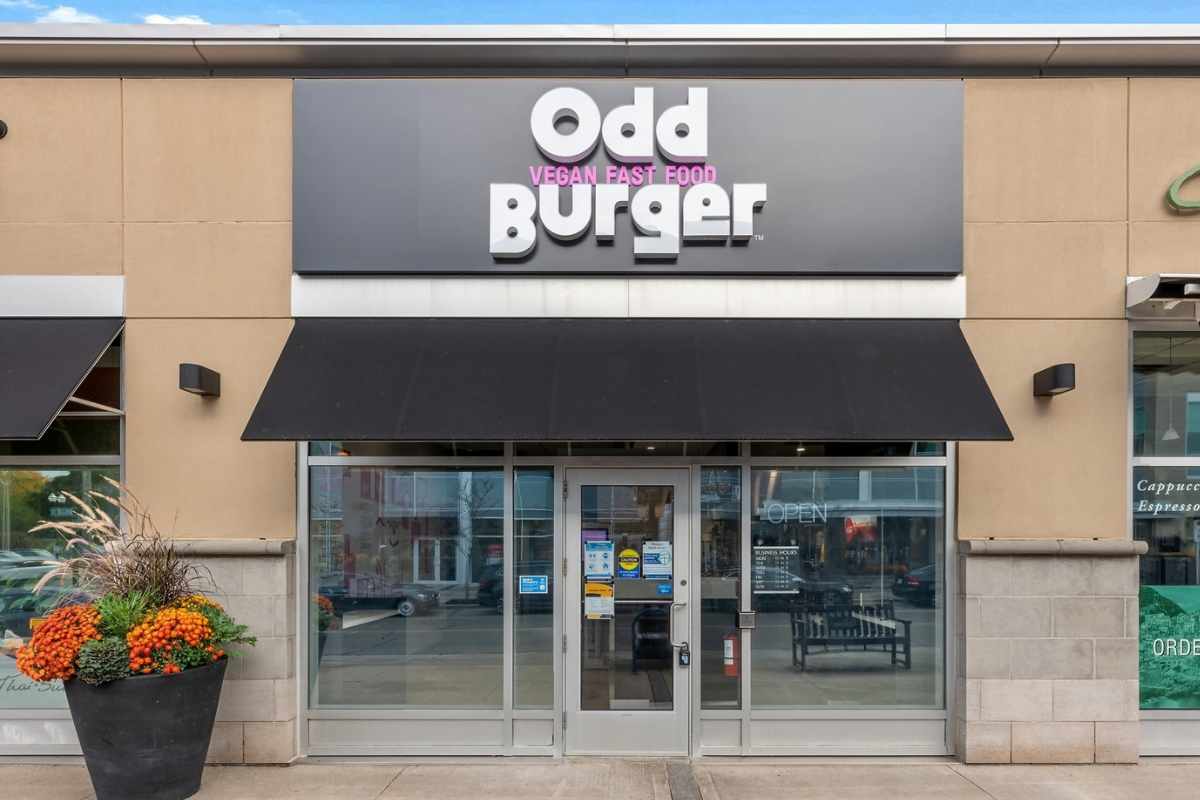
Odd Burger expands with new locations, pizza launch, and retail partnerships

Image: Odd Burger

Odd Burger is making major moves in 2025 with new store openings, a successful pizza launch, and a strategic retail partnership, according to James McInnes, the company’s CEO.

Odd Burger currently operates 20 locations, including 18 storefronts and two mobile units. “We have four or five more locations opening this spring,” McInnes said. The company is also preparing to expand into the U.S. later in 2025, with Washington State—likely Seattle—or Florida as potential markets.

“We’ve done really well in BC—almost double the unit sales. The West Coast is a strong market,” McInnes noted.

James McInnes

Pizza Launch a Massive Success

Odd Burger recently introduced a new healthier, personal-sized pizza, which has been a hit with customers. “We sold three or four thousand pizzas the first weekend. It was wild,” McInnes said. Initially launched as a limited-time offer for two months, its popularity may lead to it becoming a permanent menu item.

McInnes compared the move to Tim Hortons unexpected but successful pizza launch and highlighted how technology now enables quick preparation. “McDonald’s couldn’t keep pizza because they the technology did not exist to make it fast enough. Now, we can make a made-to-order pizza in a minute and 20 seconds,” he explained.

Strategic Partnership with Calgary Co-op

The company’s retail presence is also growing through a new partnership with Calgary Co-op, facilitated by a franchisee. “It’s a great example of how franchisees can be valuable partners—not just for their own store’s success, but for the brand overall,” McInnes said.

Calgary Co-op, which operates 22 locations, was eager to fill a gap in its plant-based product offerings. “A lot of brands disappeared, so they needed something established. They took all five of our SKUs,” McInnes said. The move is expected to boost brand awareness and drive restaurant traffic.

Image: Odd Burger

Consumer Packaged Goods: A Key Growth Strategy

McInnes sees Odd Burger’s consumer packaged goods (CPG) line as a major growth avenue. “Restaurants take time, effort, and the right franchise partners. But with packaged goods, we can control expansion and margins better. It also builds brand awareness, which benefits franchisees. It’s a win-win,” he said.

The Future of Food Tech and Sustainability

Odd Burger is also looking ahead at food technology advancements, including cultivated meat and fermented dairy proteins. “There are new technologies like cultivated meat and fermented dairy proteins. There’s technology now that can produce dairy proteins identical to the dairy from a cow,” McInnes said. “There’s going to be applications coming out in the near term that are going allow consumers to have real cheese and real dairy without these animals.

“It’s called clean protein because there’s no slaughter, lower contamination risk, and no growth hormones. These technologies will change the playing field. Odd Burger plans to be on the cutting edge of all these new technologies and new foods coming out.”

With continued expansion, innovative menu offerings, and a strategic approach to retail, Odd Burger is poised for significant growth in 2025 and beyond.

Why Canadians Still Reject Online Grocery Shopping

Online grocery shopping. Image: iStock/licensed

Despite the digital transformation reshaping industries worldwide, grocery shopping in Canada remains deeply rooted in traditional in-store experiences. A recent survey by Dalhousie University and Caddle, which polled 2,501 Canadians, found that 57.8% of respondents still do all their grocery shopping in-store without using grocery apps, while only 2.5% rely exclusively on digital platforms. Additionally, 3.0% primarily shop online but still visit physical stores occasionally. This data underscores a clear divide between technological adoption and consumer preferences, reflecting deeper economic and behavioural trends in food retail.

Nearly 60% of Canadians still prefer to see and touch fresh food before purchasing, reinforcing their hesitation to fully embrace digital grocery shopping. Trust in product selection, particularly for fresh produce, meat, and dairy, remains a key reason why many consumers continue to favour a hands-on approach. Price sensitivity amid rising food costs also plays a role, as shoppers want to ensure they are getting the best value. Many remain skeptical about entrusting the selection of perishable goods to third parties, fearing lower-quality items, improper substitutions, or poor handling.

Survey data suggests that consumers are more comfortable purchasing non-perishable items online. Pantry staples such as rice, pasta, and canned goods are the most frequently ordered online, making up 32.6% of digital grocery purchases. Snacks and beverages follow at 13.0%, while ready-to-eat meals account for 12.2%. Fresh produce, despite consumer hesitancy, still represents 11.9% of online grocery orders. However, dairy and meat—two categories where freshness is critical—make up just 4.4% and 3.3% of online purchases, respectively. The fact that fresh and perishable goods remain among the least frequently ordered categories highlights ongoing consumer reluctance to trust digital grocery platforms for items requiring quality assurance.

Economic factors are another significant barrier to online grocery adoption. While the convenience of digital shopping is appealing, the additional costs—such as delivery fees, price markups, and service charges—deter many budget-conscious consumers. With food inflation remaining a major concern in Canada, shoppers are focused on maximizing savings through in-store discounts, flyer promotions, and price comparisons across brands. Many are unwilling to pay extra for a service they do not fully trust, especially when alternative shopping methods allow them greater control over spending.

Common Challenges With Online Grocery Shopping

Challenges with online grocery shopping extend beyond cost concerns. According to survey data, the most common complaint among consumers is high delivery fees, cited by 35.9% of respondents. Other key frustrations include substituted or unavailable items (27.5%), missing items (26.0%), and poor packaging or damaged goods (18.2%). Additionally, 14.1% of respondents reported late or missed deliveries, reinforcing skepticism about the reliability of grocery apps. While 24.6% of consumers stated they had no significant issues, the majority still encountered at least one problem, highlighting persistent logistical inefficiencies and consumer dissatisfaction with digital grocery services.

When choosing a grocery delivery service, price is the most important factor for 25.3% of consumers, followed closely by delivery fees. Convenience, delivery speed, reliability, and customer service also influence decision-making, though to a lesser extent. The availability of preferred brands and participating retailers remains another key factor, suggesting that online grocery shopping in Canada is still limited by the presence and reach of digital platforms.

Currently, online grocery sales in Canada account for an estimated 4.5% of total grocery revenue, representing nearly $9 billion in sales. However, compared to other countries, Canada lags behind in digital grocery adoption. In the United States, online grocery sales represent between 10% and 15% of total grocery spending, a significantly higher proportion than in Canada. China has emerged as a global leader in this space, with a highly digitized retail infrastructure enabling widespread online grocery shopping. In Europe, urban centres like London and Paris have seen higher adoption rates, while more rural areas exhibit shopping behaviours similar to those observed in Canada.

The Future of Grocery Shopping in Canada

Looking ahead, grocery shopping in Canada is likely to evolve gradually rather than shift dramatically toward digital platforms. For online grocery services to gain greater traction, they must enhance their value proposition by reducing delivery fees, offering competitive pricing, and improving customer experience through personalized AI-driven recommendations. Stronger loyalty programs and strategic partnerships with grocery retailers could also help drive adoption.

Major Canadian grocers such as Loblaw, Sobeys, and Metro have already invested in automated fulfillment centers and frictionless checkout technology, signaling that a hybrid model may be the future of food retail. As food affordability remains a top concern for Canadian households, any technological innovation in grocery shopping will need to strike a balance between convenience and cost efficiency.

Rather than a binary shift between in-store and online shopping, the future of grocery retail in Canada will likely be a convergence of both. Consumers will continue leveraging the advantages of each, depending on their needs, preferences, and financial realities.

More from Retail Insider:

U.S.-Canada Trade Tensions Escalate Over Reciprocal Tariffs

US President Donald Trump

In early February 2025, President Donald Trump unveiled a “reciprocal tariff” policy, aiming to align U.S. import duties with the tariffs that other nations impose on American products. The significant shift in trade strategy has profound implications for U.S.-Canada relations, especially considering the deep economic ties between the two countries. To delve deeper into the ramifications of this policy, we spoke with David Nagy, a retail expert and founder of eCommerce Canada.

President Trump’s announcement on February 13, 2025, introduced a plan to impose reciprocal tariffs on U.S. trading partners. The objective was to match the tariff rates that other countries charge on U.S. imports, thereby eliminating trade imbalances. While this move seeks to ensure fairness and prompt new trade negotiations, it could lead to economic confrontations and potential retaliatory measures from affected nations.

David Nagy, founder of eCommerce Canada

Impact of the Digital Service Tax

One of the critical issues influencing the U.S.’s stance is Canada’s Digital Services Tax (DST). Enacted in June 2024, the DST imposes a 3% tax on certain revenue earned by large digital services providers engaging with online users in Canada. This tax applies retroactively to revenues earned since January 1, 2022.

David Nagy expressed concerns about the DST, stating, “The digital services tax was always just going to be passed on to the business owner. Do you really think Google’s gonna pick up that 3%? No, they’ll just increase their pricing by 3%. So, who pays for this in the end? The consumer.”

Nagy emphasized that while the DST aims to target tech giants like Google and Meta, its repercussions are felt more acutely by small businesses. “There’s a disproportionate impact on small businesses when it comes to that,” he noted. “A larger business can buy their media in another country or has the financial wherewithal to absorb a 3% increase in customer acquisition costs. But for small business owners, that 3% is a meaningful sacrifice of our profit margin.”

Reciprocal Tariffs: A Justified Response?

The introduction of the DST has not gone unnoticed by the U.S. administration. President Trump’s reciprocal tariff policy can be seen as a direct response to such measures. Nagy commented, “I think there’s a very fair reciprocal tax or tariff argument to be had about that. If we’re imposing a 3% tax on American tech firms, they probably should charge Canadian tech firms a similar tax.”

The imposition of reciprocal tariffs extends beyond digital services. On February 1, 2025, President Trump announced a 25% tariff on all imports from Canada and Mexico, alongside a 10% tariff on Canadian energy products, including crude oil. The administration justified these tariffs on the grounds of curbing illegal immigration and fentanyl trafficking into the U.S., arguing that trade penalties would pressure Canada and Mexico to take stronger action.

In response, Canada announced a 25% retaliatory tariff on CA$155 billion worth of U.S. goods. Prime Minister Justin Trudeau emphasized that these measures were necessary to protect Canadian interests and industries.

The Path Forward

As both nations navigate this complex trade landscape, there is a pressing need for diplomatic engagement and negotiation. The temporary suspension of tariffs for 30 days, agreed upon on February 3, 2025, offers a window for both countries to address underlying issues and seek mutually beneficial solutions.

David Nagy highlighted the importance of understanding the origins and motivations behind such trade measures. “We have to start asking questions around where does this come from and why? Who makes the decision on tariffs, and what’s the approval process? Understanding that can help in addressing the root causes of these disputes.”

More from Retail Insider:

Canadian Retail News From Around The Web For February 18, 2025

Canadian Retail News From Around The Web

News at a Glance

Retail Insider is streamlining its Canadian retail news from around the web to include a handful of top news stories that can be viewed quickly during the day. Here are the top stories from the past several days.

Ransomware, disease and ‘ultra low-cost retailers’: Why 3 iconic Canadian clothing stores went broke (CBC)

Trump’s threat to suspend ‘de minimis’ exemption leaves Canadian retailers on pause (Globe & Mail)

GST break brought a lot of work but little — if any — gains for businesses (Financial Post)

Why it’s not easy to be a ‘Product of Canada’ at the grocery store (Global)

Canada Goose’s SWOT analysis: stock faces headwinds amid strategic shift (Investing.com)

Demonstrators accuse Amazon of union-busting at rally in Montreal, call for boycott (The Canadian Press)

Canadian sugar and candy industry vulnerable to U.S. tariffs: experts (The Canadian Press)

Danforth shop owners share how they will be affected by looming U.S. tariffs (Toronto Observer)

Consumers demand new ‘product of Canada’ labels in grocery stores (BlogTO)

‘Pretty wholesome’: Canadian shop owner on support from U.S. customers amid trade tensions (CBC)

From Ghana to B.C.: How climate change is making chocolate more expensive (BIV)

Vancouver shop for local artisans says buying Canadian has lasting impact (VIA)

Loblaw staff at 2 B.C. stores to wear body cameras due to ‘rising retail crime’ (Global)

Quebec cannabis retailer SQDC reports income of CA$40.5 million (MJ Biz)

Nova Scotia shop keeps busy with Canadian flag orders amid Trump threats (Global)

Peace Arch Duty Free Risks Closure as Border Traffic Plummets

Peace Arch Duty Free store near Vancouver. Photo: Peace Arch Duty Free

Peter Raju, President and owner of Peace Arch Duty Free, is facing one of the biggest challenges in the store’s history. The well-known duty-free retailer, located at the Peace Arch border crossing in Surrey, British Columbia, has seen an 80% drop in sales following Premier David Eby’s recent remarks to shop local while discouraging British Columbians from crossing into the U.S.

“We noticed an immediate impact after the Premier made his statement,” said Raju. “Today is the first day since then that I’ve even seen a lineup at the border, but people are still not coming into the store.”

The situation is dire. For most of last week, border lineups have been non-existent, an unusual sight for a crossing that typically sees a steady flow of travelers. “There were zero lineups. You could cross in less than five minutes,” Raju noted.

With fewer travelers following Donald Trumps remarks about Canada, sales have plummeted, and Raju has had to make tough operational decisions. “Our business is down substantially. We’ve had to reduce staffing, and if things don’t improve, we’ll have to close on weekdays,” he said. Currently, the store operates seven days a week with two shifts, but with no relief in sight, further reductions are likely.

Image: Peace Arch Duty Free

Liquor Sales and Regulatory Hurdles

A major issue exacerbating the crisis is British Columbia’s liquor regulations. Duty-free stores in Canada must purchase alcohol through their respective provincial liquor boards, unlike their international counterparts. “This has been our biggest issue for over ten years,” Raju explained. “When Premier Gordon Campbell was in office, he reduced our markup from 50% to 20%, but now we need another reassessment given the challenges we’re facing.”

According to Raju, duty-free stores should be exempt from these restrictions. “We operate in a federally regulated, sterile zone. Once a customer enters, they cannot return to Canada with their purchase. There’s no reason for the Liquor Board to interfere in our business.”

Despite repeated efforts to engage government officials, Raju says his concerns have largely fallen on deaf ears. “We’ve tried reaching out to the Minister of Public Safety, but they won’t even return our calls. The Liquor Board won’t sit down with us to discuss these issues.”

Adding to the frustration is the competition from Alberta’s liquor market, where consumers can access lower prices without the same level of restrictions. “With interprovincial trade barriers, I could load up a truck in Alberta, drive back, and legally sell liquor for less. It makes no sense,” Raju said.

Peace Arch at the Canada-US border — a symbol of friendlier times between the two countries. Photo: Discover Surrey

Tourism and Retail Implications

The decline in business at Peace Arch Duty Free reflects broader concerns for cross-border traffic amid Trump’s tariff threats. “We rely heavily on cross-border traffic,” said Raju. “If American visitors stop coming, it’s not just our business that suffers—it’s hotels, restaurants, and other retailers.”

Despite being Canada’s largest land border duty-free store, and the second-best land border duty-free shop in the world, Raju feels that government policies are stifling potential growth. “Why can’t we be left alone to double or triple our business? Why are these restrictions holding us back?” he asked.

The store, spanning 18,000 square feet with ample parking for 300 vehicles, has seen as few as 2,000–3,000 visitors in a week—a low figure given the facility’s size. “We’ve invested over $12 million into this business. We employ people. We should be given the opportunity to thrive.”

Looking Ahead: Will the Government Step Up?

Raju is calling for immediate policy changes to help stabilize the business. “We need an exemption from the Liquor Board. If they remove these restrictions, we can turn things around overnight,” he asserted.

He also points to the disparity in how duty-free stores are treated compared to domestic liquor retailers. “Duty-free stores shouldn’t have to pay fees that don’t exist anywhere else in the world. It’s a tariff on our industry.”

There’s a glimmer of hope, as media attention has begun to shine a light on the issue. “We’ve had national news coverage and even U.S. media attention,” Raju said. “Hopefully, this will put pressure on officials to reconsider.”

Until then, Raju remains focused on keeping his business afloat. “We’ll do everything possible to survive, but the government needs to recognize the damage being done. We retain Canadian dollars in Canada. We sell to Americans. This benefits the economy. So why aren’t we getting the support we need?”

More from Retail Insider:

Primaris REIT reports strong Q4 and annual results, expands portfolio

Dollarama and Best Buy at Sherwood Park Mall (Image: Sherwood Park Mall / Primaris REIT)

Primaris Real Estate Investment Trust has announced robust financial and operational results for the fourth quarter and full year ended December 31, 2024, reinforcing its position as a dominant player in Canada’s retail real estate sector.

Patrick Sullivan
Patrick Sullivan

“Our shopping centre portfolio performed very well in 2024, with NOI growth coming from strong rental revenue growth, rising occupancy, and falling non-recoverable expenses,” said Patrick Sullivan, President and Chief Operating Officer. “Over the last four months, Primaris has acquired approximately $910 million of dominant enclosed shopping centres, and our team is doing an excellent job integrating these assets into our national, full-service platform. Primaris is very quickly moving towards our ambition of becoming the first call for retailers looking to grow and expand their footprint in Canada.”

Q4 2024 Financial and Operating Highlights

  • $143.2 million total rental revenue.
  • 9.1% Same Properties Cash Net Operating Income (Cash NOI) growth.
  • 9.5% Same Properties shopping centres Cash NOI growth.
  • 95.6% committed occupancy, 94.5% in-place occupancy, and 90.4% long-term occupancy.
  • 5.3% weighted average spread on renewing rents across 446,000 square feet.
  • 14.5% Funds from Operations (FFO) per average diluted unit growth to $0.460.
  • 48.9% FFO Payout Ratio.
  • $4.3 billion total assets.
  • $589.8 million in liquidity and $3.6 billion in unencumbered assets.
  • $21.55 Net Asset Value (NAV) per unit.

Annual 2024 Financial and Operating Highlights

  • 4.5% Same Properties Cash NOI growth.
  • 4.8% weighted average spread on renewing rents across 1,246,000 square feet.
  • $705 same-store sales productivity.
  • 6.5% FFO per average diluted unit growth to $1.690.
  • 52.4% FFO Payout Ratio.

Leasing and Occupancy Performance

In the quarter, Primaris completed 137 leasing deals totaling 0.6 million square feet. The weighted average spread on renewing rents (for the 87 leases renewed in the quarter) was 5.3% (5.8% for commercial retail unit renewals and 2.6% for large format renewals). Included in the leasing activity for the quarter were 19 leases that were for a lease term of less than one year, or for percentage rent in lieu of base rent. While these lease structures have always been a tool to manage tenant relocations and the timing of development plans, during the pandemic, leases structured as percentage rent in lieu of base rent were more prevalent to assist tenants and to maintain occupancy rates. As these leases mature, management anticipates moving tenants back to traditional lease structures. At December 31, 2024, percentage rent in lieu of base rent leases were in place for 0.6 million square feet of GLA, or 3.1% of in-place leases and had a weighted average lease term of approximately 2.7 years.

Rags Davloor
Rags Davloor

“Primaris’ low leverage balance sheet, a key pillar to our strategy, is a critical enabler to our acquisition strategy,” said Chief Financial Officer Rags Davloor. “We are well on our way to achieving our three-year target of acquiring over $1 billion in assets, while maintaining industry-leading leverage metrics. With unencumbered assets of $3.6 billion and no unfunded debt maturing until 2027, we have reduced refinancing risk, with significant access to liquidity. Our commitment to maintaining an extremely well-capitalized balance sheet positions Primaris as a highly credible transaction counterparty, at a time when many other groups are finding access to capital, and particularly financing, challenging.”

Strategic Acquisitions and Portfolio Growth

Primaris continued its expansion strategy in 2024 with major acquisitions and divestitures:

  • October 1, 2024 – Acquired Les Galeries de la Capitale in Quebec City, Quebec.
  • January 31, 2025 – Acquired a 50% co-ownership interest in Southgate Centre in Edmonton, Alberta, and a 100% interest in Oshawa Centre in Oshawa, Ontario for $585.0 million.
  • Waived conditions on the disposal of Sherwood Park Mall, Sherwood Park Professional Centre, and a parcel of excess land for $107.0 million, expected to close on February 28, 2025.
  • Redevelopment contributions added $2.5 million in incremental rent to the portfolio in 2024.
Alex Avery
Alex Avery

“We are very pleased with our 2024 results, driven by outperformance in same property NOI growth, and FFO per unit growth,” said Alex Avery, Chief Executive Officer. “With the acquisition of Oshawa Centre and a 50% interest in Southgate Centre, we are increasing our relevance with retailers and building on Primaris’ profile as an attractive buyer of large, high-quality assets. Consistent with prior acquisitions, these additions to our portfolio are designed to deliver higher internal growth, driving NAV per unit growth, FFO per unit growth and ultimately distribution per unit growth. As we look forward to 2025 and beyond, we see a long runway of opportunity embedded within our existing portfolio, and a variety of acquisition opportunities that can enhance our value proposition with retailers, and our total return to unitholders. We are well positioned to capitalize on these opportunities with the right team and platform, and the right financial model for the road ahead.”

Primaris is Canada’s only enclosed shopping centre focused REIT, with ownership interests in leading enclosed shopping centres located in growing Canadian markets. The current portfolio totals 15.0 million square feet valued at approximately $4.6 billion at Primaris’ share. Economies of scale are achieved through its fully internal, vertically integrated, full-service national management platform. Primaris is very well-capitalized and is exceptionally well positioned to take advantage of market opportunities at an extraordinary moment in the evolution of the Canadian retail property landscape.

Related Retail Insider stories: