Home Blog Page 39

KITS Eyecare reports record Q1 2026 results

Marcelo Chagas photo

 Kits Eyecare Ltd., a leading vertically integrated eyecare provider, today announced its financial results for the first quarter ended March 31, 2026.

First Quarter 2026 Financial & Operational Highlights

For the first quarter of 2026, compared to the first quarter of 2025:

  • Revenue increased by 23.3% to a record $57.5 million compared to $46.6 million. In constant currency, revenue increased by 27.0%
  • Gross profit increased by 37.5% to $23.5 million, or 40.9% of revenue, compared to $17.1 million, or 36.7% of revenue
  • Adjusted EBITDA margin was 7.2% at $4.1 million of Adjusted EBITDA, compared to 7.4% at $3.5 million of Adjusted EBITDA
  • Record Q1 glasses revenue of $10.8 million, increased 60.5% year-over-year; over 156,000 units delivered, increased by 50.0% year-over-year
  • Net Income increased by 23.2% to $2.0 million or $0.06 per share, compared to $1.6 million or $0.05 per share

“This quarter reflects continued momentum across the platform, with revenue up 23% (27% on a constant currency basis) and glasses revenue growing over 60% year-over-year,” said Roger Hardy, Co-Founder and CEO of KITS. “Our glasses category was a standout in the first quarter, where increasing scale and higher-value customer behavior began to compound. This shift, combined with the durability of our contact lens platform, positions us to continue to drive sustained profitable growth across the business.”

Roger Hardy
Roger Hardy

The company said the contact lens segment continued to deliver durable, recurring revenue, expanding to $46.7 million, while the eyeglasses segment accelerated as a growth driver, generating a record first quarter glasses revenue of $10.8 million, a 60.5% year-over-year increase.

Glasses units delivered reached approximately 156,000, with premium lens upgrades outpacing overall unit growth, rising 75.5% year-over-year and representing 41.8% of glasses revenue, it said.

“Profitability metrics remained robust as the Company reported its 14th consecutive quarter of positive Adjusted EBITDA, totaling $4.1 million for the quarter. Reported gross margin of 40.9% includes a $2.1 million non-recurring tariff recovery; excluding this item, gross margin remained above 37%, reflecting the strength of the underlying product mix and continued customer adoption of premium upgrades. Net income for the first quarter was $2.0 million, compared to $1.6 million in the prior year period,” it said.

“We believe this sustained profitability was anchored by the high level of recurring behavior within the KITS customer community. Repeat orders accounted for 63.9% of total Q1 revenue, providing a stable foundation that helps allow for efficient customer acquisition and reinforces the long-term scalability of the KITS platform. During the quarter, the Company acquired 99,900 new customers, and the two-year Active Customer base increased 17.1% year-over-year to 1,108,000.”

For the second quarter of 2026, KITS management said it expects revenue to be in the range of $57.0 million to $59.0 million, with Adjusted EBITDA as a percentage of revenue between 3.0% and 5.0%.

More from Retail Insider:

Loblaw reports Q1 retail revenue of close to $14.5 billion

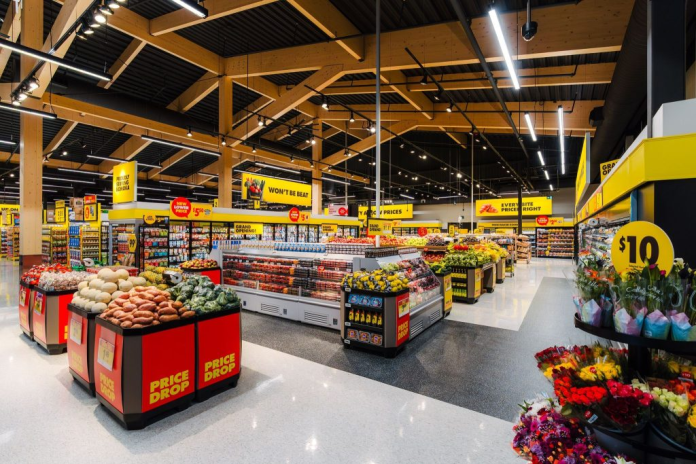
New concept No Frills store in Komoka. Image: Loblaw Companies

Loblaw Companies Limited announced Wednesday its unaudited financial results for the first quarter ended March 28, 2026.

Loblaw said it delivered a strong first quarter with positive sales momentum. Continued same-store sales growth in Food Retail, increased customer traffic, e-commerce sales growth, and new store openings drove topline performance.

It said the company’s discount banners outperformed again, demonstrating that Canadians are responding well to greater access to Maxi and NoFrills stores. E-commerce sales were led by growth in PC Express delivery, plus the successful integration of third-party delivery options. In Drug Retail, growth continued to reflect positive trends in prescription volumes, specialty drugs, and beauty categories. Drug Retail performance underscored the strength of the Company’s healthcare services and commitment to meeting the evolving needs of Canadians, added the company.

Loblaw said continued its focus on strategic expansion and innovation during the quarter, including opening five Hard Discount stores and eight drug stores, bringing convenient access to nutritious food and essential healthcare services to more communities.

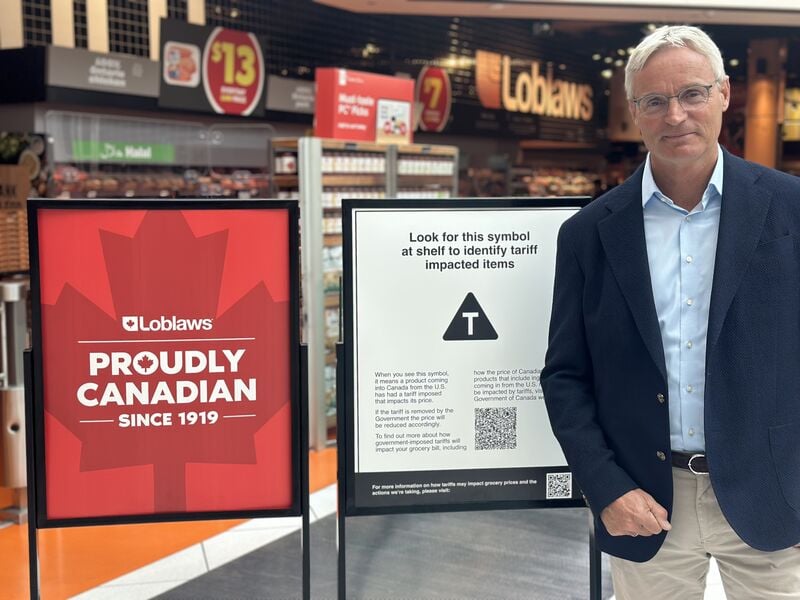
Photo- Per Bank LinkedIn

“We are very pleased that our strategic investments in opening new stores, and our focus on value, are resonating with Canadians and helping us to deliver strong financial results,” said Per Bank, President and Chief Executive Officer, Loblaw Companies Limited. “From the breadth of our banners and the continued growth of PC ExpressTM delivery, to the consistent strength of our pharmacy services, we are demonstrating our commitment to being there when and where our customers need us most.” 

2026 FIRST QUARTER HIGHLIGHTS

  • Retail revenue was $14,484 million, an increase of $580 million, or 4.2%. Retail revenue increased by 4.5%, excluding the impact of revenue related to Wellwise by Shoppers and the Theodore & Pringle optical business.
    • Food Retail (Loblaw) same-store sales increased by 2.4%.
    • Drug Retail (Shoppers Drug Mart) same-store sales increased by 4.1%, with pharmacy and healthcare services same-store sales growth of 6.7% and front store same-store sales growth of 1.0%.
    • E-commerce sales increased by 20.3%.
  • Revenue (including Retail and PC Financial) was $14,724 million, an increase of $589 million, or 4.2%.
  • Retail gross profit percentage of 31.4% was stable, decreasing by 10 basis points, primarily driven by changes in sales mix in Drug Retail categories, partially offset by continued improvements in shrink. Food Retail gross margin was flat.
  • Retail operating income was $1,010 million, an increase of $172 million, or 20.5%.
  • Retail adjusted EBITDA was $1,607 million, an increase of $98 million, or 6.5%.
    • Selling, general and administrative expenses as a percentage of sales was 20.3%, a decrease of 40 basis points.
  • Net earnings available to common shareholders of the Company were $594 million, an increase of $91 million or 18.1%. Diluted net earnings per common share were $0.50, an increase of $0.08, or 19.0%. The increase included the impact of lower amortization related to certain intangible assets associated with the 2014 acquisition of Shoppers Drug Mart, which are now fully amortized.
  • Adjusted net earnings available to common shareholders of the Company were $609 million, an increase of $39 million, or 6.8%. Adjusted diluted net earnings per common share were $0.52, an increase of $0.05, or 10.6%.
  • Repurchased for cancellation 10.2 million common shares at a cost of $648 million. Gross capital investments were $312 million.
  • Free cash flow from Retail was $432 million, an increase of $729 million.
  • In connection with the sale of PC Financial, Loblaw expects to receive approximately $600 million in cash, representing the release of excess capital, cash consideration from EQB Inc., and collection of certain commodity tax receivables.
  • Quarterly common share dividend increased by 10%, marking the fifteenth consecutive year of dividend increases.

More from Retail Insider:

Happy Belly Expands Footprint as It Nears 100 Locations

Yolks in Toronto. Photo: RI/Google

Happy Belly Food Group is moving quickly to establish itself as a significant emerging player in Canada’s restaurant sector, with rapid unit expansion driving strong revenue growth while introducing new operational pressures.


According to a May 1 research report from Stifel analyst Martin Landry, the company reported Q4 2025 revenue of $5.8 million, representing a 183 per cent increase year over year, supported by strong system-wide sales and continued network expansion. The company ended the quarter with 77 locations, up from 43 a year earlier, and has since accelerated its pace of openings.

Martin Landry
Martin Landry

Momentum has continued into 2026. Happy Belly opened 17 new restaurants between January and April, representing a roughly 22 per cent increase in its network, and is expected to reach approximately 100 locations by late May or early June. The company is also preparing to enter the United States, with initial locations planned for Texas in the coming months.

This pace of expansion positions Happy Belly as a growing multi-brand restaurant platform, a model that has historically proven scalable in Canada when supported by disciplined execution and franchise-led growth.

Multi-Brand Platform Strategy Underpins Growth

Happy Belly operates a portfolio of restaurant concepts spanning several fast-casual categories, including Rosie’s Burgers, Heal Wellness, iQ Foods, and Yolks. The brands range from smash burgers and açaí bowls to wraps and all-day breakfast, allowing the company to target multiple dayparts and consumer preferences. The company’s structure is heavily weighted toward franchising, with more than 70 per cent of locations operated by franchise partners, allowing for capital-efficient expansion.

The strategy reflects a broader approach seen in successful Canadian operators, where growth is driven by scaling multiple concepts across a shared infrastructure. In Happy Belly’s case, the pipeline is substantial, with more than 650 potential locations identified, suggesting a long runway for expansion if execution remains consistent.

Stifel maintains a positive outlook on the company, citing its experienced leadership team and early execution as key strengths. The management group previously built and exited restaurant brands at scale, which supports confidence in the company’s ability to grow its footprint.

Rapid Expansion Brings Short-Term Pressure

While revenue growth has been significant, the pace of expansion is creating near-term pressure on profitability.

Happy Belly reported an adjusted EBITDA loss of approximately $0.5 million in Q4, reflecting the impact of upfront costs tied to new restaurant openings. These include training, travel, and operational support for franchisees, which are incurred before locations begin generating revenue.

Landry notes that this dynamic creates a mismatch between revenue and expenses during periods of accelerated growth, a pattern that is expected to continue in the near term as the company expands its network.

Seasonality also played a role, with the fourth quarter typically representing a softer period for certain concepts within the portfolio, particularly those tied to health-oriented offerings.


Forecasts Reflect Growth, With Limited Visibility

Looking ahead, Stifel forecasts continued strong revenue expansion, with estimates of approximately $38.9 million in 2026 and $59.6 million in 2027. Profitability is expected to improve over time, with EBITDA projected to scale meaningfully as the network matures and early-stage costs normalize.

However, the report highlights that visibility remains limited given the company’s rapid growth trajectory and relatively short operating history. As a result, future performance could vary materially from current expectations, particularly as new markets are entered and the store base expands.

Capital and Execution Risks Remain Key Considerations

In addition to profitability pressures, the report points to a relatively modest cash position, with approximately $3 million on hand at the end of 2025. While the company has access to additional capital through option and warrant exercises, the balance leaves less room for error during a period of rapid expansion.

Execution risk is also a factor. The company is effectively scaling its network at a pace that could see it nearly triple its footprint over a short period, a transition that can place strain on operations, staffing, and brand consistency.

The planned entry into the U.S. market introduces another layer of complexity, requiring careful management of resources and localized execution.

Emerging Player in a Competitive Landscape

Happy Belly is expanding within a highly competitive fast-casual restaurant sector, where differentiation, pricing, and location all play critical roles in performance. Larger, more established competitors often have greater access to capital and marketing resources, increasing competitive pressure as the company scales.

At the same time, the company’s growth trajectory is beginning to position it as a more visible tenant within retail real estate environments, particularly in smaller-format spaces where fast-casual concepts continue to drive traffic.

Growth Strategy Gains Momentum as Company Approaches Key Milestone

As Happy Belly approaches the 100-location mark, its expansion strategy is clearly gaining traction. The combination of franchised growth, a multi-brand platform, and an active development pipeline provides a foundation for continued scale.

At the same time, the current phase of growth is expected to bring continued pressure on margins and execution, reflecting the realities of building a restaurant platform at speed.

If the company can balance expansion with operational discipline, it may establish itself as a notable emerging player in Canada’s restaurant landscape.

More from Retail Insider:

Canada retail sector nearing turning point as rising unemployment, consumer caution signal slowdown: CoStar

Boris Ivas photo
Boris Ivas photo

A new analysis from CoStar suggests Canada’s retail sector, particularly in Toronto, may be approaching a turning point, with early signs pointing to weaker consumer spending.

While retail performance has held up so far, several forward-looking indicators are shifting:

  • Rising unemployment: Toronto’s jobless rate has climbed to nearly 9%, alongside a sharp increase in households expecting job losses
  • Growing consumer caution: Historically, declining job confidence tends to lead to pullbacks in discretionary spending like dining, apparel, and shopping centres
  • Higher cost pressures: The closing of the Strait of Hormuz has pushed up fuel and transportation costs, reducing household spending on non-essential goods

Simultaneously, many households already face high housing costs and limited income growth, which increases the likelihood of more selective spending. Everyday retail needs are expected to remain stable, while discretionary retail could face slower sales, placing more pressure on tenants and widening the gap between strong and weak segments over the next year.

While consumer spending remains quite strong, in line with 2019 levels, there are a lot of indicators that suggest a softening economy,” said Ben Haythornthwaite, CoStar’s Director of Market Analytics. “Unemployment is elevated, and a consumer survey from the Bank of Canada points to the perception of impending job losses being twice as high as the unemployment rate. Coming into COVID, these two aligned. So, it is reasonable to project job losses over the next year. 

Ben Haythornthwaite
Ben Haythornthwaite

“Until now, it appears that discretionary spending has been in part underpinned by low homeownership and a lack of incentive to save for a mortgage. However, as unemployment rises, spending will have to adjust as savings rates fall. Furthermore, a significant factor underpinning retail validity and market fundamentals across Canada has been a low level of new space delivery relative to population growth. 

“With population growth projections flat over the coming year and an increase in retail development (albeit still low), we will likely see the dynamic of ever-tightening vacancy invert. Given both cyclical (labour) and structural (slower population growth) drivers, this is more than a short-term fluctuation.”

Haythornthwaite said discretionary spending softens typically within one to two quarters of labour deterioration signals. 

“Forward-looking surveys and rising unemployment expectations tend to lead actual spending declines. Given current conditions, discretionary categories like apparel and dining should begin to weaken imminently, with a more visible slowdown by late 2026 as labour softness filters through incomes and confidence. The last year has seen a material spike in the dollar value of mortgage debt in arrears over 90 days, this is another indicator that household budgets are tightening,” he said.

Haythornthwaite said discretionary, impulse-driven retail (fashion, casual dining, general merchandise) is most exposed due to reliance on confidence-driven spending, but also on a drop in passing footfall. 

“Increased unemployment means more people staying at home and fewer lunch break shop visits. Smaller tenants with weaker covenants are particularly vulnerable. Grocery-anchored, necessity-based retail remains most resilient, supported by non-discretionary demand and stable foot traffic, with stronger tenant profiles and more defensive income streams (this subsector within retail will likely strengthen. Interestingly, grocery spending is ahead of 2019 levels even when adjusted for inflation and population growth),” he noted.

Haythornthwaite said higher fuel costs raise input and distribution costs, pressuring retailer margins. Large, well-capitalized retailers may absorb some cost to maintain market share, but most will pass at least a portion through to consumers. This creates a feedback loop: higher prices suppress demand, particularly in discretionary categories, reinforcing the slowdown.

Denys Gromov photo
Denys Gromov photo

Leasing demand will likely soften, particularly for discretionary tenants, while backfill activity slows and becomes more complicated. Vacancy should edge higher, though constrained supply will limit the magnitude,” explained Haythornthwaite. 

“Rent growth will moderate for the most part rather than turn materially negative (although in real terms it will). There will be an increasing divergence: necessity-based formats remaining stable, while discretionary-oriented assets see weaker leasing activity, more incentives, and slower rent growth. This can be seen with some of the challenges faced by owners of vacated Hudson’s Bay Company stores. There have been some creative asset management angles, such as Limeridge Mall in Hamilton backfilling the space with Tesla, but also some protracted challenges like Oxford’s recent legal case in Yorkdale to keep a discount retailer (Les Ailes de la Mode) out of the space.” 

More from Retail Insider:

Chopped Leaf launches premium sandwich lineup with toasted ciabatta options

Chopped Leaf photo
Chopped Leaf photo

Chopped Leaf is expanding its menu with a new premium sandwich lineup, rolling out across all locations as the Canadian chain looks to strengthen its grab-and-go and delivery offerings.

The Oakville, Ont.-based brand says the move reflects growing demand for more substantial menu items that travel well, positioning sandwiches as a core part of its business alongside salads, wraps and bowls.

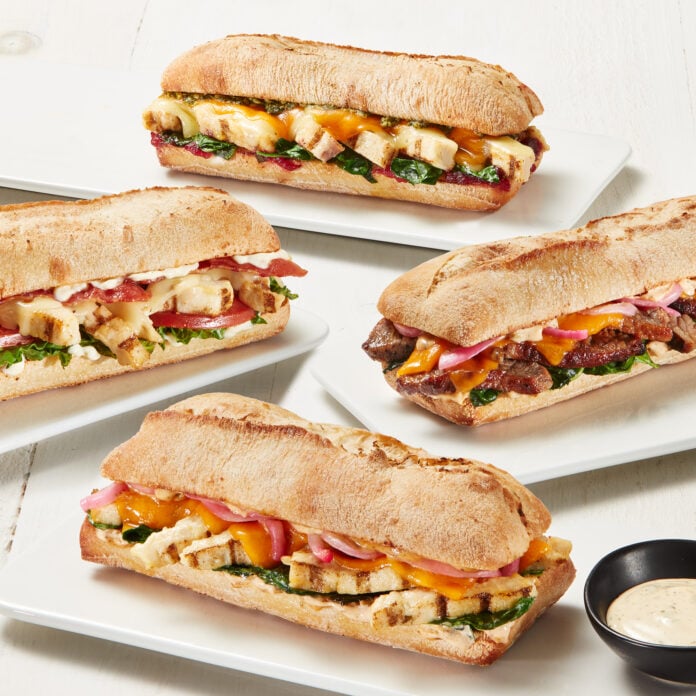
The new lineup introduces two toasted ciabatta sandwiches, Southwest Steak and Chicken Club, alongside updated versions of existing items. Spicy Chipotle Chicken and Cranberry Pesto Chicken are now served on an eight-inch toasted ciabatta bun.

The company has also revised two existing comfort sandwiches, moving the Jalapeño Popper Grilled Cheese and Tuna Melt to a thicker sourdough bread.

All sandwiches include a choice of ranch or chipotle ranch dipping sauce.

Karen Paradine
Karen Paradine

“Our sandwiches were originally introduced to offer guests an alternative to salads, but they’ve evolved into a core menu offering,” said Karen Paradine, head of marketing at Chopped Leaf. “With this launch, we’ve elevated the lineup with premium ingredients and refined recipes that are more substantial and satisfying – ideal for heartier appetites. As takeout and delivery continue to grow, it was also important to ensure these sandwiches travel well, maintaining their quality and freshness.”

The company is backing the launch with a national marketing campaign spanning in-store and digital channels, along with third-party delivery promotions and influencer partnerships.

Elements of the campaign include:

  • In-store menu boards and window signage
  • Digital promotion across the company’s website and social channels
  • Influencer partnerships
  • Third-party delivery promotions
  • Exclusive in-app offers
Photo courtesy of Chopped Leaf

During May, customers using the Chopped Leaf app will be able to earn bonus loyalty points when purchasing sandwiches. Some markets will also feature curb signage and radio advertising.

Chopped Leaf says the new lineup has been designed with off-premise dining in mind, with an emphasis on maintaining product quality during transport.

The company operates more than 120 locations open and committed to across Canada and the United States, offering dine-in, takeout and catering options.

The premium sandwich lineup is now available at all Chopped Leaf locations.

More from Retail Insider:

Surveillance Pricing in Canada Raises Consumer Transparency Concerns

A woman shopping with her son in a grocery store. Photo: Unsplash

By Jake Okechukwu Effoduh

Parliament voted down a motion on April 15 to ban a practice most Canadians have never heard of, but that retailers are already rolling out: surveillance pricing.

Also called algorithmic personalized pricing, the practice uses personal data to estimate how much consumers are willing to pay, then adjusts the price accordingly. Two shoppers, same store, same item: two different prices, generated by data neither of them can see.

The NDP motion urges the government to prohibit surveillance pricing both in stores and online. The Liberals and Conservatives voted it down. NDP leader Avi Lewis had called the practice “unfair” and “downright creepy” at a news conference days earlier.

A poll by Abacus Data conducted in March found that while most Canadians are not familiar with the term, when the practice was explained to them, 52 per cent said it should be banned. Another 31 per cent of the Canadians surveyed said it should be allowed but more strictly regulated.

For Canadians struggling with cost-of-living pressure, the practice is spreading among retailers, and the laws meant to protect consumers were not designed to catch it.

Not the same as surge pricing

A useful distinction first. Dynamic pricing, the kind used by airlines, hotels and rideshare companies, adjusts based on conditions like demand, the time of day or weather, and applies the same algorithm to every customer equally.

Uber’s surge pricing is the textbook example of dynamic pricing: every rider in the same area at the same moment sees the same multiplier. Annoying? Perhaps. Personalized? No.

Surveillance pricing is different. Where dynamic pricing responds to market conditions, surveillance pricing responds to the individual. It draws on browsing history, device, postal code, purchase frequency and inferred income to predict a person’s willingness to pay.

Dynamic pricing seems to ask: “What are the conditions right now?” Surveillance pricing asks: “Who are you, and how much can we extract from you?”

How much is happening in Canada?

It’s difficult to know how much surveillance pricing is happening in Canada, if at all. So far, there has been no confirmed Canadian case, and the practice is opaque by design.

The Competition Bureau’s discussion paper, published in 2025, reported that more than 60 companies in Canada offer services that use algorithms to optimize pricing across retail, hospitality, transportation and ticketing.

The bureau’s What We Heard report, published in January after a public consultation on algorithmic pricing, identified transparency as Canadians’ chief concern. Shoppers do not know whether the price in front of them has been personalized to them specifically.

The most prominent real-world example came from south of the border. An investigation by Consumer Reports and Groundwork Collaborative documented Instacart customers in the U.S. being charged up to 23 per cent more than other shoppers for the same items, at the same store, at the same time.

Nearly three-quarters of grocery items tested were offered to shoppers at multiple price points simultaneously.

Instacart disputed the characterization, but halted the program in December 2025 following public backlash. New York Attorney General Letitia James has since demanded that Instacart share information about its price-testing experiments.

Canadian retailers, meanwhile, are assembling the same underlying toolkit: digital shelf labels that allow prices to be changed remotely in seconds, AI-driven pricing engines and the loyalty card data that feeds them.

Where Canadian law runs out

Most Canadians assume that if something feels deceptive at checkout, the law catches it. For some familiar problems, that is true.

Recent amendments to the Competition Act introduced an explicit ban on drip pricing — the practice of advertising a low price and then adding unavoidable fees at checkout.

The Cineplex case is the most prominent recent example of that law in action. The Competition Tribunal levied a record $38.9 million penalty against the cinema chain for concealing online booking fees, a ruling the Federal Court of Appeal upheld in January. Cineplex has since sought leave to appeal to the Supreme Court of Canada.

But surveillance pricing slips past this framework entirely. The price displayed is technically accurate. No fee is buried and no phantom “regular price” is invented. What is hidden is the process.

Deceptive marketing rules assume everyone is offered the same price and someone is misrepresenting it. Surveillance pricing inverts the premise: everyone is offered a different price, and almost no one knows it’s happening.

The Competition Bureau’s mandate is to protect and promote competition, not consumer fairness. Its tools were built to catch anti-competitive behaviour between companies, not price discrimination between individual shoppers.

Similarly, provincial consumer protection laws like Ontario’s Consumer Protection Act are designed to deal with misleading or unfair practices in one-on-one transactions — not large-scale, automated differences in how millions of consumers are treated.

Privacy law, in turn, governs consent to data collection, not consent to how that data is used to shape what you pay. Three legal regimes circle the problem; none quite covers it.

What other jurisdictions have done

In November 2025, New York’s Algorithmic Pricing Disclosure Act took effect, requiring any business that uses personalized pricing to display a notice reading “this price was set by an algorithm using your personal data,” with civil penalties of up to US$1,000 per violation.

The European Union has required disclosure of personalized pricing since its 2019 consumer rights overhaul. Manitoba’s Bill 49, introduced March 17 by the NDP government of Premier Wab Kinew, would go further than either of those measures and prohibit surveillance pricing outright, making it an unfair business practice.

When asked if he would follow suit, Ontario Premier Doug Ford said he would not, telling reporters he believes in a “free market” and a “capitalist society.”

Federal AI Minister Evan Solomon said the federal government is “looking into” the issue, but that it would fall under the purview of the Competition Bureau.

What real protection would require

In the short term, shoppers can use private browsing mode, turn off location services and log out of loyalty apps before they shop.

These, however, are only workarounds. They place the burden of navigating an opaque system on the least-informed party in the transaction and they require a level of digital awareness some shoppers don’t have.

Real protection means either a federal disclosure mandate along New York’s lines, or an outright prohibition like the one Manitoba is pursuing. The Competition Bureau can keep monitoring, but monitoring is not enforcement, and competition law wasn’t designed to police unfairness on its own.

Until Parliament or the provinces close the gap, Canadian consumers have no reliable way of knowing whether the price they see is the price everyone else sees.

About the Author: Jake Okechukwu Effoduh is an Assistant Professor, School of Law, at Toronto Metropolitan University.

More from Retail Insider:

Pita Pit rolls out shawarma lineup across Canada with chef-developed menu

Foodtastic photo
Foodtastic photo

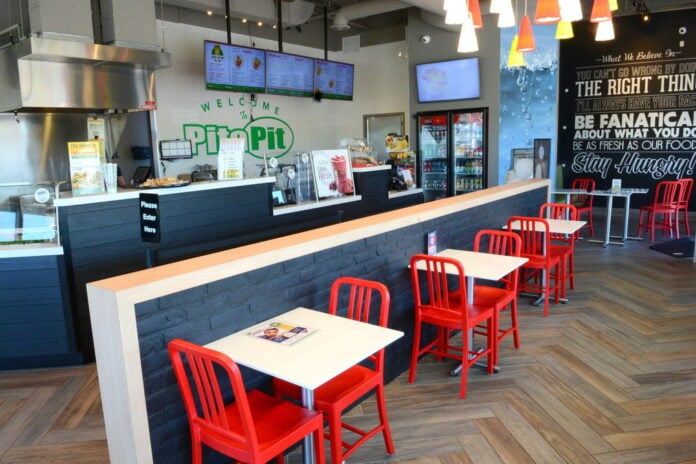
Pita Pit is introducing a new shawarma lineup at its locations across Canada, adding a set of chef-developed menu items that depart from the chain’s traditional customizable format.

The menu, includes chicken, beef and halloumi shawarma offered as a pita, salad or bowl, with each item built using a fixed combination of ingredients.

The move signals a shift toward more standardized, chef-led offerings designed to streamline ordering and ensure consistency across the brand’s more than 200 Canadian restaurants.

The new items come with pre-set combinations that include hummus, tahini, garlic or spicy garlic sauce, pickled red onions and pickled turnips, marking a departure from the chain’s typical build-your-own model.

“Shawarma builds on our core format while introducing a different flavour profile and a more defined approach to how the items are prepared in store,” said Chef Jason Baker, Director of Culinary for Pita Pit. “We are focused on creating something that is consistent across locations and easy for guests to order quickly.”

Pita Pit photo
Pita Pit photo

The company said the menu was developed through a process aimed at refining flavour combinations and improving operational consistency in stores.

At the centre of the launch is a “crispy shawarma” preparation, where the pita is brushed with Chipotle Crunch sauce and toasted until golden.

The preparation is intended to create a combination of caramelization and texture, adding a distinct variation to the lineup.

The proteins used in the chicken and beef options are halal certified and prepared using traditional marination and cooking methods before being finished on the grill in-store.

The shawarma lineup is being introduced nationwide for a limited time, expanding the chain’s menu into a category more commonly associated with independent operators.

Unlike other menu items at Pita Pit, the shawarma offerings are not customizable and instead rely on combinations developed by the company’s culinary team.

The company operates more than 200 locations across Canada.

Pita Pit was founded in 1995 and focuses on menu items positioned around fresh ingredients and made-to-order meals.

Its parent company, Foodtastic, operates more than 1,200 restaurant locations across Canada under multiple brands, including Freshii, Quesada, Second Cup and Milestones.

More from Retail Insider:

Chatters marks 35 years with focus on people, digital growth and national expansion

Chatters Hair and Beauty Salon Celebrates 35 Years of Style, Community and Innovation Across Canada (CNW Group/Chatters Hair Salon) (CNW Group/Chatters Hair Salon)

Chatters Hair Salon is marking its 35th anniversary, highlighting its national growth and continued investment in staff, digital tools and customer experience.

The salon-based retailer said the milestone reflects its evolution from a stylist-founded business into a company with more than 115 locations and over 1,200 professionals across Canada.

Founded by stylists, the company said it has built its business around training, career development and in-salon expertise, while expanding its retail and digital capabilities to meet changing consumer expectations.

Chatters said education and ongoing training remain central to its operations, supporting stylists in developing their skills and building long-term careers within the organization.

Jason Volk
Jason Volk

“When we founded Chatters, our goal was to build something special for stylists and for the guests they serve, a place where professional expertise, great products and genuine care could come together. Over the past 35 years, it’s been incredibly rewarding to watch that vision grow into a national salon and retail brand serving communities across Canada. What makes me most proud are the people, the stylists, leaders, and team members who have built their careers here and continue to bring the Chatters experience to life every day. As the brand continues to evolve, I’m confident its people first foundation will carry it forward for many years to come,” said Jason Volk, Chairman & Director, Chatters Hair Salon.

The company said its workforce delivers services including consultations and product recommendations, with a focus on maintaining consistent service standards across its locations.

Chatters said it has adjusted its offerings over time in response to shifts in the beauty industry, expanding its service menu and product assortment while incorporating sustainability considerations into its operations.

The company pointed to changes in consumer preferences over the past three decades, noting it has adapted alongside evolving styles and expectations.

“At Chatters, we believe great hair has the power to transform how people show up in the world. For 35 years, Canadians have trusted us not just for products or services, but for the expertise, care, and confidence that come from a great salon experience. As a proudly Canadian company founded by stylists, we have grown into a national salon and retail destination powered by more than 1,200 passionate professionals. As we look ahead, we are focused on elevating the experience through personalization, digital innovation, and the very best in professional haircare, meeting our guests wherever and however they choose to connect with us,” said Kelly West, CEO, Chatters Hair Salon.

Kelly Jessop West

The company said it has invested in digital tools aimed at connecting customers with stylists and offering personalized product recommendations based on preferences and purchase history.

Chatters said its online platform includes a wide assortment of professional haircare products, part of a broader effort to integrate salon services with e-commerce.

The retailer also offers a mobile app and loyalty program designed to provide tailored offers and streamline customer engagement across channels.

Chatters Hair and Beauty Salon Celebrates 35 Years of Style, Community and Innovation Across Canada (CNW Group/Chatters Hair Salon) (CNW Group/Chatters Hair Salon)

As it enters its next phase, Chatters said it plans to continue investing in its workforce, community presence and technology, with a focus on adapting to changing customer needs.

The company said its strategy centres on maintaining a combined service and retail model while expanding its digital capabilities.

Chatters operates more than 115 locations nationwide and positions itself as a salon-based retailer offering both services and professional beauty products.

More from Retail Insider:

Salvation Army thrift store launches cerulean-themed section in Toronto

The Salvation Army Thrift Store is introducing a limited-time “Cerulean Section” at its Leslieville location in Toronto, tying the in-store promotion to the release of The Devil Wears Prada 2 while encouraging clothing donations.

The themed section is set to open May 6 and will feature a curated selection of second-hand blue apparel, as the non-profit retailer looks to draw shoppers and highlight its resale model.

The Cerulean Section, inspired by a well-known scene from the original The Devil Wears Prada film, will showcase clothing in a range of blue tones, from lighter hues to deeper shades. The offering is available while inventory lasts.

“The Cerulean Section offers a creative way to highlight how thrift shopping can be stylish, sustainable, affordable, and meaningful,” said Lindsay Robinson, National Marketing & Communications Director. “Initiatives like this help us connect with our communities while reinforcing the positive social and environmental impact of shopping and donating at our Thrift Stores.”

Lindsay Robinson
Lindsay Robinson

The organization said the promotion is designed to encourage customers to explore second-hand fashion options while engaging with a pop culture theme.

Alongside the launch, the thrift store is calling on the public to donate new and gently used clothing, regardless of colour.

Proceeds from purchases and the resale of donated goods contribute to Salvation Army programs, including food banks and meal programs, shelter and housing support, addiction rehabilitation, and disaster relief efforts.

The retailer positions its thrift operations as part of a broader effort to extend the life cycle of clothing and household goods while supporting community services.

The Leslieville store, located at 20 Leslie St., operates Monday through Saturday from 10 a.m. to 8 p.m., with donations accepted daily. The Cerulean Section will be available for a limited time.

The Salvation Army Thrift Store operates 98 locations across Canada under its National Recycling Operations division. The organization says it diverts significant volumes of textiles and goods from landfills annually while generating funding for local programs and services.

The cerulean-themed initiative is positioned as a short-term retail activation aimed at driving store traffic and reinforcing the organization’s focus on reuse and community support.

More from Retail Insider:

EMERGE Commerce appoints Michael Murphy as CFO, outlines finance leadership transition

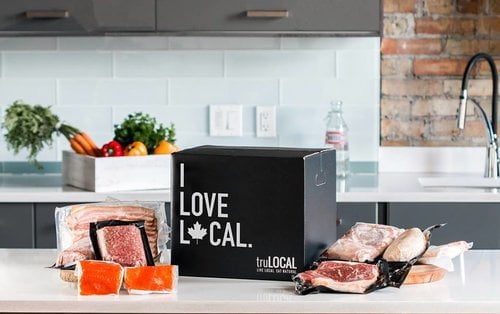
PHOTO: TRULOCAL VIA FACEBOOK

EMERGE Commerce Ltd. has appointed Michael Murphy as chief financial officer and corporate secretary, effective May 4, as part of a management transition that also sees outgoing interim CFO Dasha Enenko remain with the company in a consulting role.

The Toronto-based e-commerce company said the move is intended to support continuity in its finance function while strengthening leadership as it advances its growth and capital allocation plans.

Murphy succeeds Enenko, who will continue to support the company in an ongoing consulting capacity, reporting to him.

Murphy brings more than 25 years of finance and leadership experience across public and private equity-backed companies, the company said. He has served as chief financial officer and senior advisor to multiple businesses, overseeing finance operations during periods of growth and transformation.

His background includes leadership roles at larger organizations such as Dye & Durham Limited, Allied Nevada Gold Inc. and Acasta Enterprises Inc., as well as work with smaller, high-growth companies including Quisitive Technology Solutions Inc. In that role, the company said, he helped scale the finance organization during a period of expansion from about $20 million in annualized revenue to more than $150 million.

Murphy’s experience spans mergers and acquisitions, financings, cost optimization initiatives, restructuring and financial systems implementation. He began his career at PwC, where he worked on Canadian and international public company transactions, regulatory compliance and financial reporting.

He holds a bachelor of arts in economics from the University of Western Ontario and an accounting diploma from Wilfrid Laurier University, and is a Chartered Professional Accountant in Canada.

Ghassan Halazon
Ghassan Halazon

Ghassan Halazon, founder and chief executive of EMERGE, said the appointment comes at a key stage for the company.

“On behalf of the EMERGE team, I am pleased to welcome Michael as our CFO and Corporate Secretary. His depth of experience scaling public companies and leading high-performing finance teams will be instrumental as we execute on our next phase of growth and capital allocation. We’d also like to extend our sincere gratitude to Dasha for her partnership, in her role as interim CFO, during a period of immense progress at EMERGE. We are pleased she will remain involved in a consulting capacity, under Michael’s leadership, and ensure continuity across the finance function.”

EMERGE describes itself as an acquirer and operator of profitable e-commerce brands and technologies across direct-to-consumer and business-to-business segments.

Its direct-to-consumer portfolio includes grocery and golf-related businesses. The company’s grocery segment is anchored by truLOCAL, a Canadian meat and seafood subscription service. Its golf vertical includes UnderPar, JustGolfStuff and Tee 2 Green, which focus on discounted golf experiences, apparel and equipment.

The company’s business-to-business segment includes Viral Loops, a referral marketing platform serving international clients.

EMERGE is publicly traded on the TSX Venture Exchange under the symbol “ECOM.”

More from Retail Insider: