Del Monte’s bankruptcy this week stunned many who grew up with its canned fruit cocktail, peas, and corn lining their family pantry. After 139 years, the company has filed for Chapter 11 protection in the United States. But this isn’t a canary-in-the-coalmine moment for the entire sector—it’s more a case study in how legacy brands can fall out of sync with modern market dynamics.
In Canada, the Del Monte brand hasn’t truly been “Del Monte” for some time. In 2018, French multinational Bonduelle acquired the rights to use the Del Monte label for canned fruits and vegetables in Canada, merging it with its existing Arctic Gardens portfolio. While the branding remained familiar, the operational footprint and supply chains became distinctly European. Most Canadians never noticed.
The irony is that, despite the growing cultural emphasis on fresh and frozen foods, canned goods are enjoying a quiet resurgence. In Canada, sales in the “meals and soups” canned category have grown by more than 40% since 2018. In an era of persistent food inflation and rising food insecurity, shelf-stable, affordable, and convenient products like canned foods continue to offer real value. But for Del Monte, perception lagged behind this reality.
Over the past half-century, Canadian consumers have shifted decisively toward frozen and fresh alternatives. The quality gap has narrowed substantially as advances in flash-freezing have preserved nutrient content in ways canned products cannot match. Retail prices for frozen goods have also stabilized, giving consumers more choices and undermining the traditional value proposition of canned staples.
Del Monte’s problems, however, run much deeper than evolving consumer preferences. The company is facing over a billion dollars in debt and has failed to adapt its product lines and branding to meet modern tastes. It was also blindsided by geopolitical shocks. Steel and aluminum tariffs imposed during the Trump administration inflated packaging costs, which eroded already-thin margins. Few companies in this space were as exposed to those pressures as Del Monte.
Still, the brand isn’t going away. It will likely re-emerge under new ownership, streamlined and repositioned. But to thrive, it will need to diversify its SKUs, expand its footprint across more grocery categories, and find ways to compete in a center-of-store battlefield now dominated by agile private labels offering lower prices and faster innovation cycles.
This restructuring opens the door for smaller Canadian brands to grow—especially those producing fresh or locally-sourced options. For years, these companies have struggled to scale under the shadow of legacy incumbents like Del Monte. A realignment in the canned food aisle could finally give them the shelf space and leverage they need with major retailers.
One overlooked player in this shakeup is the food bank sector. Traditionally reliant on canned donations, food banks are also evolving. As societal understanding of nutrition deepens, they are shifting toward more diverse, fresh, and culturally relevant offerings. Canned goods still have a role, but no longer the central one they once held.
In the end, Del Monte’s bankruptcy is not a symptom of an industry in crisis. It’s a cautionary tale about brand inertia, trade exposure, and the failure to modernize in a volatile, value-driven food economy.
Customers contact companies regularly to purchase products and services, inquire about orders, make payments and request returns. Until recently, the most common way for customers to contact companies was through phone calls or by interacting with human agents via company websites and mobile apps.
The advent of artificial intelligence (AI) has seen the proliferation of a new kind of interface: chatbots. A chatbot is an intelligent software program that can carry out two-way conversations with customers.
Spurred by the potential of chatbots to communicate with customers round-the-clock, companies are increasingly routing customers to chatbots. As such, the worldwide chatbot market has grown from US$370 million in 2017 to about US$2.2 billion in 2024.
As these tools become more embedded in customer service systems, understanding customer preferences and behaviours is crucial.
Most companies today use chatbots as the first point of contact. Only when a chatbot cannot answer a question or a customer asks to speak with someone does the conversation shift to a human agent. (Shutterstock)
Most companies today use chatbots as the first line of customer support. Only when a chatbot fails to provide the necessary information or a customer asks to speak with someone does the conversation shift to a human agent.
While efficient, this one-size-fits-all approach may be sub-optimal because customers may prefer a human agent for some types of services and a chatbot for others.
I used machine learning methods to conduct three analyses on the chat transcripts.
The first focused on why customers reach out to customer service in the first place. I found most inquiries fell into six main categories: orders, coupons, products, shipping, account issues and payments. Customers rarely turned to chatbots for questions related to shipping or payment, seemingly preferring human agents when their issue involves more detailed or sensitive information.
The second analysis measured how closely the language used by customer service agents — both human and bot agents — matched the language of the customers they were interacting with. It found human agents showed a higher degree of linguistic similarity to customers than chatbots did.
This result was unexpected. Given the sophistication of today’s AI, I had anticipated chatbots would be able to closely mimic customer language. Instead, the findings suggest human agents are better able to follow customers’ varied and dynamically changing language use.
Customers want to feel understood and supported — and for now, that often still means talking to a real person. (Shutterstock)
The third analysis tested the thesis that similarity breeds liking — a concept that suggests human agents’ similarity with customers should increase customer’s engagement.
I measured customer engagement by the average number of seconds between a customer’s consecutive messages during a chat. The results show that when human agents displayed higher linguistic similarity, customers responded more quickly and frequently. The more the customer felt “understood,” the more engaged they were.
Recommendations for companies
My research findings make three recommendations to companies. First, companies should identify the reason behind each customer inquiry before assigning that customer to a chatbot or a human agent. The reason should determine whether the company matches the customer to a bot agent or a human agent.
Second, both chatbots and human agents should be trained to adapt their language and communication style to match that of the customer. For human agents, this kind of mirroring may come naturally, but for chatbots, it must be programmed.
My research shows that customers are more engaged when they feel that the agent they are chatting with understands them and communicates in a similar way. Doing this will keep customers engaged and lead to more effective and efficient interactions.
Third, businesses should ask technology companies for evidence on how much their chatbots increase effectiveness and efficiency relative to human agents. Specifically, how do their chatbots compare to human agents in terms of efficiency and customer satisfaction? Only if the metrics exceed a certain threshold should companies consider using chatbots.
Customers want to feel understood and supported — and for now, that often still means talking to a real person. Rather than seeing chatbots as a wholesale replacement, companies should treat them as part of a hybrid approach that respects customer preferences and aligns the right tool with the right task.
About the Author:
Vivek Astvansh is an Associate Professor of Quantitative Marketing and Analytics at McGill University
Retail Insider is streamlining its Canadian retail news from around the web to include a handful of top news stories that can be viewed quickly during the day. Here are the top stories from the past several days.
It was a special delivery recently unlike any other when retired wrestling super star Bret ‘The Hitman’ Hart teamed up with Amazon to deliver a donation of more than 100 essential items to the Children’s Cottage Society, a Calgary charity that provides support services to local families.
The items, including school supplies, shoes, apparel, electronics, and daily essentials, were part of a wish list that the charity created to mark the completion of their Caring Together campaign, which raised funds to build a new child and family centre in the city’s northwest, said Amazon.
Bret Hart. Photo credit: Amazon
The wish list was the perfect opportunity to put Amazon’s delivery speeds to the test. On June 23, Amazon announced the expansion of faster Same-Day and Overnight Delivery to Prime members in Calgary, Edmonton, and select surrounding communities. When the Children’s Cottage Society put out their request, Amazon sprung in to action, delivering the items that were eligible for Same-Day/Overnight delivery just in time for a celebration event marking the completion of Caring Together, it said.
Bret ‘The Hitman’ Hart hopped aboard one of two delivery vehicles from RHAY Logistics, a local Amazon Delivery Service Partner, to help deliver the items. They were greeted by an enthusiastic crowd of employees from Amazon’s local operations facilities, who helped unload the packages for the grateful charity, it added.
Danielle Ladouceur
“The Children’s Cottage Society is incredibly grateful for the tremendous support we receive from our caring community of donors and volunteers – and Amazon has been a longstanding partner, donating money, goods, and volunteer time,” said the charity’s CEO, Danielle Ladouceur. “We’re honoured that Amazon identified this opportunity to put their faster delivery speeds to the test with us – and we now have two delivery vans full of essential items that will be put to good use.”
A significant new entertainment destination is about to launch in Toronto as Forever Young Entertainment, a 55,000-square-foot indoor family attraction backed by Nations Experience, prepares to open this month at Centerpoint Mall at Yonge and Steeles. Located on the second floor of a former Target store—above the current Canada Computers—this expansive new concept will become the largest facility of its kind in the Greater Toronto Area.
Bringing together food, play, and party elements under one roof, the project is an independent expansion of the entertainment concept originally developed as ‘Happy Kingdom,’ now being used as a testbed for the entertainment portion of the upcoming Nations Experience flagship store expansion.
Introducing Forever Young Entertainment
Forever Young Entertainment will debut as a multi-attraction indoor amusement venue. At 55,000 square feet, the centre aims to set a new standard for family-oriented entertainment in the GTA, combining interactive experiences with social dining in a setting designed for all age groups.
The concept includes a wide array of offerings: arcade games and virtual reality experiences, golf simulators, interactive sports, and designated playgrounds for children of varying ages. For group gatherings and celebrations, party rooms will be available to rent, while adult visitors can enjoy a separate bar and lounge experience. Social dining zones will round out the venue, providing visitors with food options that complement the entertainment environment.
It is being developed by Frank Ho and his partners — the founders of Nations Fresh Foods, Nations Experience, and Happy Kingdom—a family play area within Nations’ Stockyards location that includes slides, arcades, and party spaces. Unlike Nations Fresh Foods at the Stockyards, Forever Young Entertainment functions as a standalone attraction, designed to drive traffic independent of a grocery anchor.
The entertainment brand is also set to play a larger strategic role within the Nations Experience portfolio. The company confirmed that Forever Young will serve as the official entertainment provider for the Nations Experience flagship planned for 2026, with ambitions to expand the format into other markets in North America.
Location of Forever Young Entertainment at Centerpoint Mall in Toronto. Image: Morguard
Strategic Partnership with Nations Experience
The new entertainment facility is also a formal extension of the Nations Experience brand. Nations, which launched in 2012 in Woodbridge, Ontario, has become known for its blend of multicultural grocery offerings and integrated dining experiences. The “foodertainment” model has proven successful at the retailer’s flagship Stockyards location, a 155,000-square-foot superstore that includes buffets, an expansive arcade, themed party rooms, and a kids’ playground.
Forever Young Entertainment takes that model a step further, detaching it from the confines of a grocery store and positioning it as a standalone attraction. The company confirmed that Forever Young will become the official entertainment brand within future Nations Experience locations, including an upcoming flagship site scheduled for 2026.
Centerpoint Mall: A Site of Reinvention
The choice of Centerpoint Mall as the launchpad for Forever Young is notable. Opened in 1966 and previously known as Towne and Countrye Square, the mall has seen numerous tenant transitions and anchor changes over the decades, including the recent closure of Hudson’s Bay in June 2025 following a national wind-down.
The former Target box where Forever Young will operate was briefly a Lowe’s before Canada Computers opened on the main floor in 2019. Now, with the top floor being repurposed into a family entertainment hub, the space is being revitalized once again.
Centerpoint Mall currently features over 140 stores, and the upcoming Yonge North Subway Extension promises greater accessibility and transit integration in the years ahead. With this context, Forever Young could play a pivotal role in the mall’s ongoing transformation into a more experience-led destination.
Centerpoint Mall in Toronto. Photo: Morguard
A Proven Model for Expansion
Forever Young Entertainment builds upon the operational lessons of Happy Kingdom, which has served as an anchor experience inside the Nations Stockyards location since its debut. At Stockyards, the 5,000-square-foot arcade with 135 games, a 13,000-square-foot playground, and themed party rooms have made the site a destination for families seeking more than just groceries.
That hybrid model has been a key differentiator in the increasingly competitive grocery sector. With five Nations Fresh Foods locations now open in Ontario—Woodbridge, Hamilton, Mississauga, Brampton, and Toronto’s Stockyards—the chain has demonstrated that combining shopping and entertainment creates stickier, more repeatable customer visits.
Forever Young’s move to operate in a standalone format marks a shift in scale and ambition. It opens the door to further North American expansion of the Nations Experience umbrella, using entertainment as a growth driver.
Photo: Nations Fresh Foods
A Vision for the Future of Retail and Entertainment
By integrating grocery, dining, and entertainment into cohesive destinations, Nations Fresh Foods and its sister company Oceans Fresh Food Market Group are helping reshape how urban Canadian families spend their time—and money.
At the core of this strategy is cultural relevance and community engagement. Nations stores reflect the diversity of Ontario’s population, with grocery items and prepared foods representing a wide range of cuisines and regions. From Chinese barbecue and dim sum to pizza, jerk chicken, and sushi, the prepared food offerings resonate across cultures and generations.
This multicultural, value-driven approach is also apparent in Forever Young Entertainment’s inclusive design. The new venue aims to serve everyone from young children to adults, with interactive sports, social lounges, and food and drink zones tailored to a wide demographic.
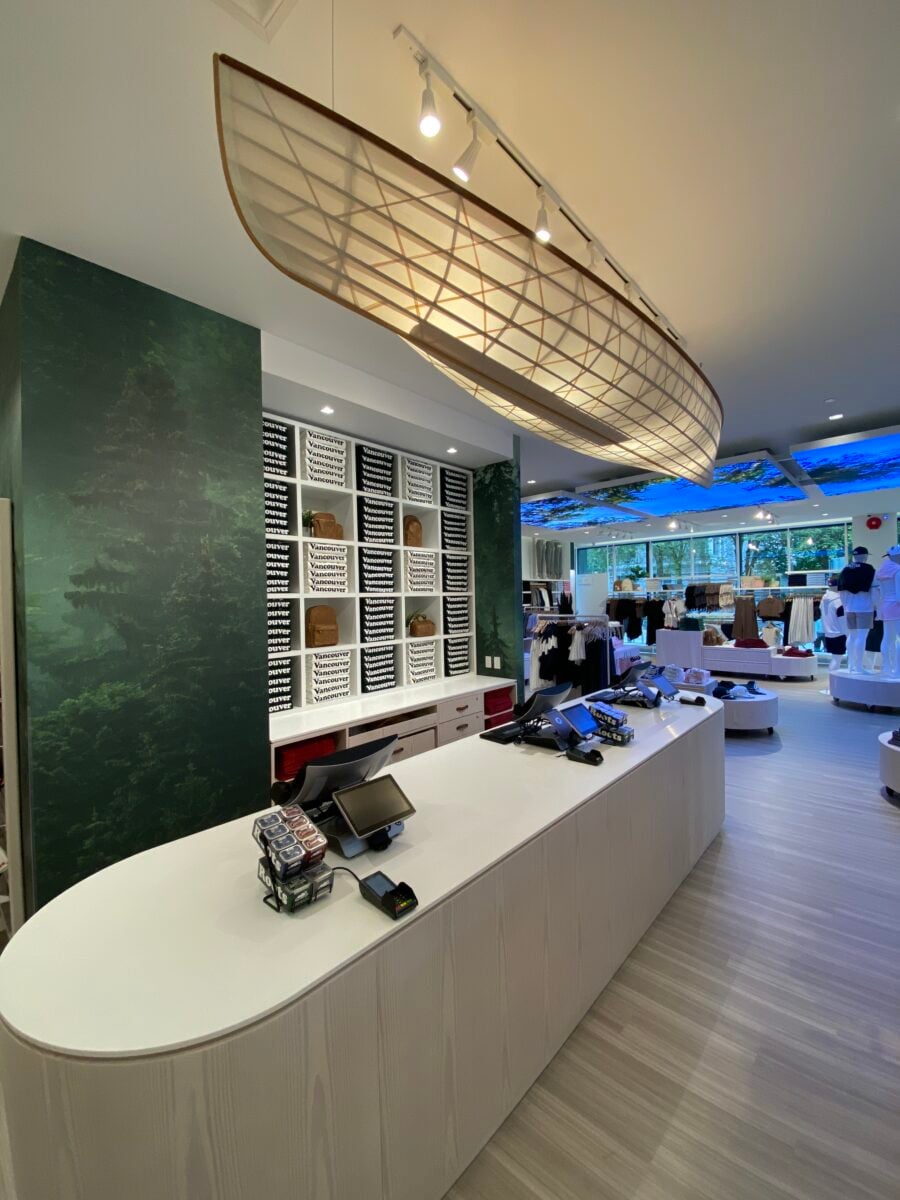
Roots recently opened its new flagship store at the intersection of Hornby and Robson in Vancouver.
The company said this location marks an expansion of its existing store at 919 Robson Street. Featuring its latest retail design, the new store offers a lighter, brighter space designed to inspire discovery and elevate the Roots shopping experience.
“Originally introduced at Cadillac Fairview Eaton Centre location last year, this innovative store concept has been thoughtfully customized to perfectly suit the unique character of this new flagship store in Vancouver,” said the retailer.
“Construction began in December 2024, and what emerged is not just an expanded space — but a statement about where (the company) is headed: modernizing brand presence, while staying true to heritage. Our most immersive and design-forward store to date, this location offers a modern interpretation of the iconic cabin aesthetic that (the brand) is known and loved for.
This new space blends nature, technology, and local inspiration into a one-of-a-kind retail experience, added the retailer:
A preserved moss wall and custom moss beaver sculpture pay tribute to Roots iconic logo inspired by Canada’s landscapes
A custom lightbox ceiling installation features an illuminated photograph of Stanley Park, commissioned specially for this store.
The only Roots store to feature holographic screens.
A large panel screen near the fitting rooms features scenic visuals inspired by Vancouver’s spirit of nature and adventure.
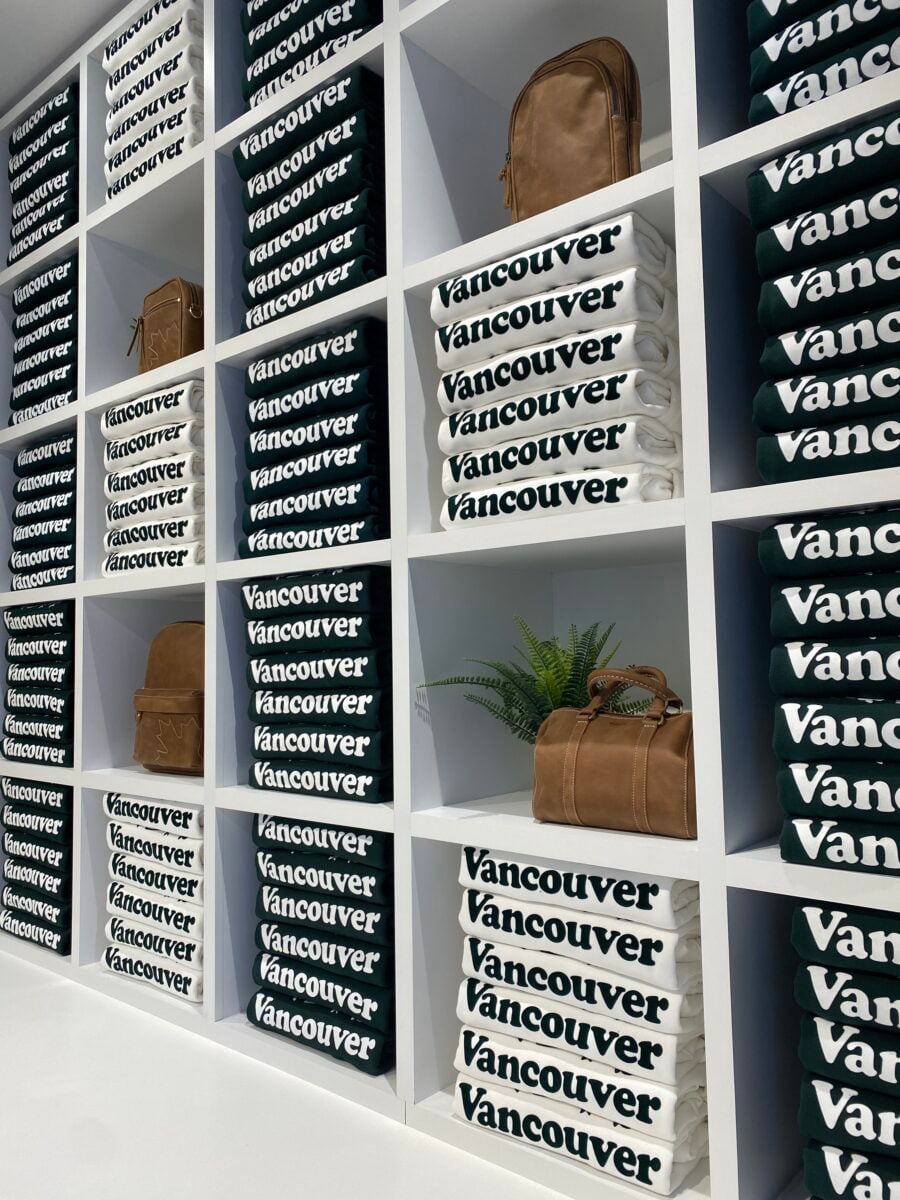
“Every Roots store is intentionally designed to mirror the culture and spirit of its neighborhood. The flagship store will offer our classic signature styles, plus a special section just for the Vancouver Collection—making it a place that feels truly connected to locals and welcoming to tourists,” said the brand.
Canadian fashion retailer Laura Canada is celebrating a remarkable milestone: 95 years in business. From a single boutique on Montreal’s St. Hubert Street in 1930 to more than 140 stores across the country today, the family-owned business has become a household name for women’s fashion in Canada. As the company celebrates its legacy, it is also making bold moves toward the future—with store expansions, digital innovation, and a national Summer campaign that proudly leans into its Canadian identity.
“Our model has always centred on meaningful relationships with customers and employees,” said Josh Fisher, Senior Vice President at Laura Canada and great-grandson of founder Laura Wolstein. “That focus has been key to our resilience, sustaining us long before, through and beyond the pandemic.”
Josh Fisher
A Legacy Built on Empowerment
Founded in 1930 by Laura Wolstein, a trailblazer for female entrepreneurs, the company opened its first store in Montreal at a time when women’s rights were still evolving—particularly in Quebec, where women only gained the right to vote provincially in 1940. Her approach, which focused on high-quality fashion and personalized service, struck a chord with women who were seeking both style and confidence. Building on this legacy, the brand continues to foster a sense of community by creating welcoming spaces where women feel seen, supported, and connected, both in-store and beyond.
That customer-centric ethos continues to define the brand nearly a century later. “Fashion is a universal language that unites us,” Fisher explained. “Our stores offer constant reminders of the power it has to create shared connection, joy and belonging.”
A National Retail Footprint—and Growing
Despite a challenging retail environment, Laura Canada has not only survived—it has thrived. The company operates over 140 stores across Canada under the Laura and Melanie Lyne banners, employing nearly 2,000 people and serving more than 12 million customers.
“It means the brands have continued to resonate deeply with our customers across the country,” said Fisher. “Many women get very frustrated trying to put outfits together, and find the typical shopping experience too cold and impersonal. By empowering customers to understand how to dress in ways that flatter them, our style advisors play a huge role in animating our stores.”
While other retailers are scaling back, Laura Canada is expanding. The company recently opened a Laura store at Orchard Park in Kelowna, B.C., and will soon open four more locations, including at Emerald Hills in Sherwood Park, just outside Edmonton. Two additional stores—a Laura and a Melanie Lyne—are also set to open at Kingsway Mall in Edmonton, which Fisher noted has significantly improved its tenant mix.
“We’ve just opened Laura at Orchard Park in Kelowna, where we knew we had the customer demand,” he added. “And the store is off to a terrific start, exceeding our projections.”
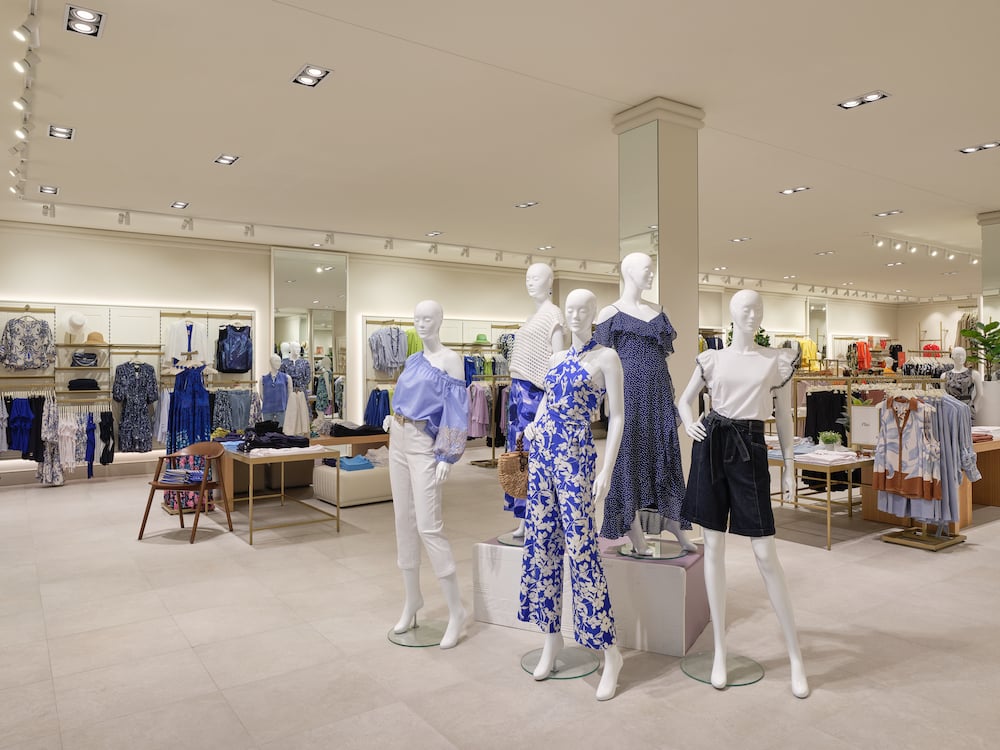
The company is also undertaking renovations, including an update at Galeries d’Anjou in Montreal, celebrating its 50th year. Meanwhile, a redesigned Melanie Lyne concept has rolled out at CF Fairview Mall (Toronto), CF Market Mall (Calgary), and Mapleview Shopping Centre (Burlington).
“Next year is shaping up to be busy as well, so we’re continuously optimizing our locations across Canada,” Fisher said.
Archival photo of the Laura store in Verdun, QC, featuring Lenard Fisher and Laura Wolstein, founder of Laura Canada (and an employee). Image supplied.
A Proudly Canadian Broadcast Campaign
In May, Laura launched a new national broadcast advertising campaign, its first to air on television. Originally developed as a digital initiative, the campaign evolved into a full-scale patriotic message timed with the NHL Playoffs and amid geopolitical tensions that had stirred national pride.
“When the trade war broke out, we saw how emotional and patriotic customers were feeling, and at the same time there was excitement among our customers and employees around six Canadian teams making the NHL playoffs,” said Fisher. “Everyone was so put off by some of the political narrative, and we felt that this was a way to remind Canadians that there is so much to be proud of when we reflect on the uniqueness of the Canadian experience.”
The campaign aired during high-profile moments like NHL games and has since garnered over a million views on YouTube, alongside widespread broadcast exposure. “Employees and customers were very proud of the message,” he added.
Digital Evolution Meets Human Connection
Though deeply invested in physical retail, Laura Canada has also embraced e-commerce and omnichannel strategies. Rather than viewing digital and in-store as competing forces, Fisher sees them as complementary.
“Stores remain a much more effective way for new customers to discover the brand, for inspiration and exploration, for interacting with style advisors,” he said. “There are times between stores visits when you want to check for new arrivals or get quick inspiration for how to style a top you bought, and a minute or two on your smartphone suffices.”
This summer, the company will roll out Shopify’s Point of Sale and payments system in stores, unifying its physical and digital retail ecosystems. It’s part of an investment in seamless, flexible shopping for customers, with features such as BOPIS (buy online, pick up in store), ship-from-store, online returns in-store, and real-time inventory visibility.
“Our customers aren’t Gen-Z who grew up with technology,” Fisher explained. “So we prioritize innovations that empower our teams to improve the shopping experience, rather than pushing customers to be early adopters of new tech.”
Laura Canada has also invested in clienteling tools that allow style advisors to maintain relationships with customers between visits, and has introduced personalized recommendations via its e-commerce platform and marketing automation.
“Personalization takes different forms,” Fisher said. “But the best form is when customers work one-on-one with a style adviser who understands what flatters her and helps her evolve her wardrobe with each new collection.”
Laura store at Galeries d’Anjou. Image supplied
Informed by Customer Insight
Customer feedback is at the heart of Laura’s merchandising and marketing strategies. The company regularly conducts focus groups, gathers digital survey data, and relies heavily on insights from in-store teams.
“Many of our style advisers started as customers,” Fisher said. “They felt so empowered that they decided to join Laura and help other women learn how to dress in a way that flatters them.”
Demographic data, ecommerce analytics, and real estate partnerships also play a critical role in expansion decisions. “We analyze demographic databases for matches with our CRM data, track ecommerce orders and website activity, seek advice from our store operations teams, work with our landlords, and are guided by our real estate advisors at Oberfeld Snowcap,” said Fisher.
Lessons from the Pandemic—and Beyond
Like many retailers, Laura Canada had to adapt quickly during the pandemic. But its long-standing focus on relationships and long-term value gave it a head start on navigating the uncertainty.
“The pandemic demanded agility across all industries, but it also reinforced that sustained retail success still hinges on long term thinking. The demise of The Bay is sad for Canadians who have fond memories working or shopping there, but it’s been sad for a while, ever since its leadership shifted focus to short term wins rather than lasting growth. Now there’s an exciting opportunity for the landlords to improve the tenant mix and drive more traffic to their properties. As a family owned and operated business, we’re able to lead with a long-term perspective.”
In contrast, he points to the struggles of once-dominant Canadian retailers like Hudson’s Bay. “It’s been sad for a while, ever since its leadership shifted focus to short-term wins rather than lasting growth,” he said. “Now there’s an exciting opportunity for the landlords to improve the tenant mix and drive more traffic to their properties.”
Laura Summer 2025 campaign image
A Legacy of Empowerment and Innovation
Laura Canada’s story is one of resilience, reinvention, and relevance. From its roots in a single Montreal boutique to a national presence in malls across nine provinces, the brand has remained committed to empowering Canadian women—through fashion that flatters, service that connects, and strategies that adapt to an ever-changing retail landscape.
As it approaches its 100th year, Laura Canada shows no signs of slowing down.
“We remain focused on building enduring value for the company and those who drive our success: our employees and customers,” Fisher said. “We’ve never closed a store due to ecommerce growth. In fact, when we open a store in a new market, online sales in that market increase.”
In a volatile retail environment, that kind of confidence is rare—and perhaps exactly what has kept Laura Canada thriving for 95 years.
Square is building on a successful presence at landmark venues such as Toronto’s Budweiser Stage and Veld Music Festival since 2022 to partner with Live Nation Canada, marked by Square’s rollout at the new Rogers Stadium.
With the exclusive three-year agreement, Square will continue to power seamless commerce experiences for fans at all Live Nation Canada venues, with Rogers Stadium becoming the latest to unlock its next-generation technology. This expanded partnership cements the technology company as the exclusive point of sale and payment processing provider at Live Nation Canada’s venues and major festivals from coast to coast, according to a news release.
Nick Molnar
“Square is the trusted payments and commerce platform for large-scale live entertainment venues around the world, and we’re excited to expand our partnership with Live Nation Canada to help them create unforgettable experiences for millions of Canadian fans every year,” said Nick Molnar, Global Head of Sales at Block, which includes Square and Cash App.
“Every minute saved in line is another memory made at the show. With Square’s powerful ecosystem of hardware and software products, Live Nation Canada will enable fans to spend more time enjoying their favourite artists.”
The company’s technology ecosystem at Live Nation Canada venues and festivals across the country include the fully integrated Square Register to allow for seamless checkout, compact Square Terminal and newly launched Square Handheld devices—Square’s most sleek, portable and powerful POS yet—to enable vendors to manage payments right from their pocket. Square Online’s eCommerce capabilities also enable in-seat ordering at Budweiser Stage’s premium in-suite section for added customer convenience, explained the company, adding it will also provide point of sale and payments for merchandise locations within Toronto’s new Rogers Stadium.
Its technology is currently live at:
Budweiser Stage, Toronto
HISTORY, Toronto
Danforth Music Hall, Toronto
Opera House, Toronto
The MOD Club, Toronto
Midway Music Hall, Edmonton
Commodore Ballroom, Vancouver
KEE to Bala, Bala
Upcoming festivals supported by the technology include:
New research from Horizon Media Canada confirms a powerful consumer shift toward local loyalty—one that is reshaping purchase behaviour across provinces and generations.
According to the firm’s latest Finger on the Pulse survey, 83 per cent of Canadians say buying local evokes a sense of national pride, and 71 per cent report being more loyal to Canadian brands in 2025 than they were a year ago.
Conducted in April with a nationally representative sample of more than 1,000 adults, the survey finds that Canadians are responding to economic uncertainty, rising tariffs and a weaker dollar by making more intentional, values-based choices at checkout, it said.
Robert Jenkyn
“This isn’t performative patriotism—it’s a strategic consumer shift,” said Robert Jenkyn, President, Horizon Media Canada. “People are using their dollars to vote for trust, transparency, and Canadian-made value. It’s a loyalty play with real staying power.”
A national turn inward — and a lasting one
The loyalty shift is taking root across the country, but Atlantic Canada (62 per cent), British Columbia (71 per cent) and Ontario (74 per cent) are leading the way. The trend is being reinforced by changes in travel behaviour as well: 67 per cent of Canadians say they’ve adjusted or cancelled trips to the United States due to the weak Canadian dollar, and 59 per cent say they’ve reduced their purchases of U.S. brands altogether, said Horizon.
This is not a short-term reaction. Eighty-five per cent of Canadians say they plan to prioritize Canadian-made products moving forward, with many indicating they will do so even if prices increase. The preference is strongest among Gen X and Boomers, who are most likely to switch away from global brands in response to tariff-related price hikes. But even younger consumers — while more globally open — are looking for authenticity and purpose in the brands they choose, said the report.
Richard Ivey
“When a brand clearly communicates that it’s Canadian, shoppers perceive it as more credible, more relevant and increasingly more responsible,” said Richard Ivey, Horizon’s EVP, Business Solutions. “That creates real market advantage — and it’s an opportunity brands can’t afford to ignore.”
Messaging, media, and markets: what marketers need to know
Horizon said the survey offers clear guidance for CMOs and brand leaders aiming to activate against this wave of values-led loyalty. Canadians respond most strongly to campaigns that emphasize support for Canadian jobs and businesses, the higher quality of Canadian-made products, and the desire for economic independence from global trade instability. Environmental benefits also resonate but rank just behind economic and quality-based messages.
Photo by Mario Toneguzzi
“Where a message is delivered matters, too. In-store promotions (67 per cent) and television ads (57 per cent) are the most trusted platforms for reinforcing Canadian identity — especially in Ontario and the Prairie provinces, where traditional channels carry outsized influence. In contrast, only 41 per cent of respondents selected digital or social media as ideal channels for this messaging, indicating a renewed consumer trust in mass media when it comes to values-based brand storytelling,” it said.
“The shift is most pronounced in food and beverage, where 82 per cent of Canadians actively seek out Canadian-made products, particularly in Quebec and Atlantic Canada, where local economic ties run deep. However, momentum is also growing in personal care, home goods and fashion, especially in British Columbia and Saskatchewan — suggesting strong portfolio expansion opportunities for brands that can authentically reinforce their Canadian ties.”
While Millennials and Gen Z are less influenced by patriotic appeals alone, they remain highly responsive to brands that demonstrate transparency, sustainable practices, and price fairness. These younger cohorts represent both a challenge and an opportunity: they demand more, but they are also more willing to engage with global brands — if those brands can clearly articulate their purpose and impact in Canada, explained Horizon.
“As Canadians prepare to mark their national holiday, this research underscores the urgency — and the upside — of embracing Brand Canada. It’s not a niche play or a seasonal slogan. It’s a powerful, durable driver of loyalty, especially in a market defined by rising consumer scrutiny and spending caution,” it said.
“There’s never been a more important time to reinforce Brand Canada,” added Jenkyn. “National pride isn’t just symbolic—it’s showing up in shopping carts, credit card statements and the companies people choose to support. The marketers who take that seriously—not as a trend, but as a cultural signal—will be the ones who win.”
As the focus on building a stronger Canada dominates the national agenda, tax reform has emerged as an imperative for Canadian business leaders, with nine in 10 (91 per cent) saying it’s time to simplify the tax system and cut the investment tax rate to grow the economy, finds a new KPMG in Canadasurvey.
The survey of 250 business leaders identified comprehensive tax reform as a top three priority for the federal government to increase business competitiveness. Nearly six in 10 (58 per cent), named it a priority, second only to removing interprovincial trade barriers (64 per cent), said KPMG.
Lucy Iacovelli
“In this period of nation-building, we have an historic opportunity to overcome years of complacency and build a competitive tax system that responds to today’s challenges of sluggish productivity and slowing business investment in Canada,” said Lucy Iacovelli, Canadian Managing Partner, Tax and Legal, KPMG in Canada.
“It will take bold leadership to streamline complex taxes and regulations that are a growing burden on business and optimize the tax system. Corporate tax policies should incentivize businesses to put investment capital to work and make our industries and people more productive. This goes to the very heart of a resilient economy and our standard of living as Canadians.”
KPMG said its poll revealed that 72 per cent of business leaders believe current Canadian tax policies are not providing enough of an inducement to invest; 91 per cent believe governments need to implement tax and regulatory policies that encourage greater investment and accelerate the adoption of technologies, such as artificial intelligence (AI).
“Canada’s business community and governments need to align on more favourable corporate tax policies that will help to blunt the impact of disruptive U.S. trade and retaliatory tax policy,” said Iacovelli.
Key survey findings:
91 per cent say Canada must simplify the corporate income tax system
90 per cent agree that Canada needs to eliminate barriers to investment
90 per cent say Canada must reduce tax rates on investment to stimulate economic growth
91 per cent believe governments need to implement tax and regulatory policies that encourage greater investment and accelerate technology adoption
88 per cent believe Canada needs a complete overhaul of its economic and industrial policies
57 per cent say they have been investing in their business but the current trade war makes it difficult to tap into the markets.
“Tax measures proposed by the new federal government include: expanding flow-through shares beyond the mining sector to Canadian startups that allow investors to deduct eligible R&D expenses; a 20 per cent AI adoption tax credit for certain small- and mid-sized businesses; enhancing the Scientific Research & Economic Development (SR&ED) program and a patent box regime that lowers tax rates on intellectual property (IP) income to enable more Canadian companies to own and commercialize their ideas within Canada,” said KPMG.
“While these targeted measures are a start, the federal government needs to reaffirm its commitment to ambitious, broad-based corporate tax reforms that apply to businesses of all types and sizes,” said Iacovelli. “Tax changes should ease access to domestic and foreign capital and reward productivity-enhancing investments, including AI adoption.”
U.S. tax bill to affect Canada
Following dramatic cuts in U.S. corporate tax rates and the introduction of other significant tax incentives in 2017, the Canadian government responded with temporary measures that provided faster write-offs for a wide range of depreciable property (the “Accelerated Investment Incentive”), along with immediate expensing for certain manufacturing equipment and clean technology assets, said the report.
“Current tax legislation before Congress would make permanent many of the 2017 U.S. tax incentives, which puts pressure on Canada to continue our own incentives that allow for faster business write-offs that free up capital to reinvest,” said Brian Ernewein, Senior Advisor, KPMG in Canada’s National Tax Centre. “Simply matching the U.S. on these tax incentives would not restore Canada’s competitive corporate tax advantage. Actions – federally and provincially – to reduce the top corporate income tax rate in Canada would be a powerful response to these pending U.S. tax changes and, more generally, to the greater uncertainty of the current U.S. trade and investment environment.”
The bill also targets countries that impose what the U.S. administration considers “discriminatory or extraterritorial taxes”. “This retaliatory U.S. legislation has the potential to significantly increase the tax rate applying to U.S income generated by Canadian businesses and investors and could make such investments economically unviable,” added Ernewein. “It’s critical that this legislation, if enacted, not apply to Canada.”
Attracting more capital investment to Canada
According to the survey, nearly 88 per cent of business leaders believe a preferential capital gains tax rate for private capital investment would encourage long-term investment into Canadian startups, small-and-mid-sized businesses and scaleups.
Johanna Gerrie
“In a global economy, capital is mobile,” said Johanna Gerrie, National M&A Tax Leader, KPMG in Canada. “For Canada to remain a destination of choice for investment, we must ensure our tax system is efficient, stable and aligned with the realities of international competition. We face stiff competition from the U.S. and other countries in attracting large-scale investment from institutional investors, venture capital and pension funds. These sources of capital can unlock growth and accelerate technology and infrastructure development to support nation-building projects.”
Additional poll findings:
60 per cent say limited access to capital impedes or hinders their ability to invest in their operations, move forward with expansion plans, or invest in technology.
53 per cent say their company is exploring tapping the private capital markets to help drive growth, expand into new markets and provide business acumen and expertise.