Home Blog Page 429

10 Years Since Future Shop’s Closure in Canada

Future Shop store. Photo: Wikimedia Commons

Ten years ago this week, the Canadian retail landscape was rocked by the sudden and dramatic closure of Future Shop, once the country’s largest and most prominent consumer electronics retailer. The announcement on March 28, 2015, that the brand would cease to exist—effective immediately—came as a shock to customers and employees alike, abruptly ending a legacy that spanned over three decades.

This retrospective marks the tenth anniversary of that pivotal moment in Canadian retail, exploring Future Shop’s meteoric rise, its acquisition by Best Buy, and the factors that led to its eventual demise.

Inside a former Future Shop in Thunder Bay, ON. Photo: MapQuest

A Vancouver Start-Up That Changed Canadian Retail

Future Shop was founded in 1982 in Vancouver, BC, by Iranian-Canadian entrepreneur Hassan Khosrowshahi. The company began as a single store, but thanks to Khosrowshahi’s ambitious growth strategy and a favourable consumer appetite for electronics, the chain quickly expanded. By 1990, Future Shop had become the largest retailer of computers and consumer electronics in Canada.

Future Shop became a household name by offering an expansive selection of products at competitive prices, bolstered by a commissioned sales model that rewarded staff based on performance. This strategy helped the company build a reputation for product expertise and high-touch service, distinguishing itself in a rapidly evolving retail sector.

In 1993, Future Shop went public, trading on the Toronto and Vancouver stock exchanges. The company operated 36 stores at the time, with plans to open 16 more by year-end. It was also expanding into the United States, seeing the potential for growth south of the border.

Youtube video

Expansion Stumbles in the U.S. Market

While Future Shop was flourishing in Canada, its American ambitions proved more challenging. After opening 23 stores in the U.S., the company faced mounting losses in a highly competitive market. In 1999, Future Shop made the decision to pull out of the United States entirely, refocusing its efforts on its Canadian operations where it remained dominant.

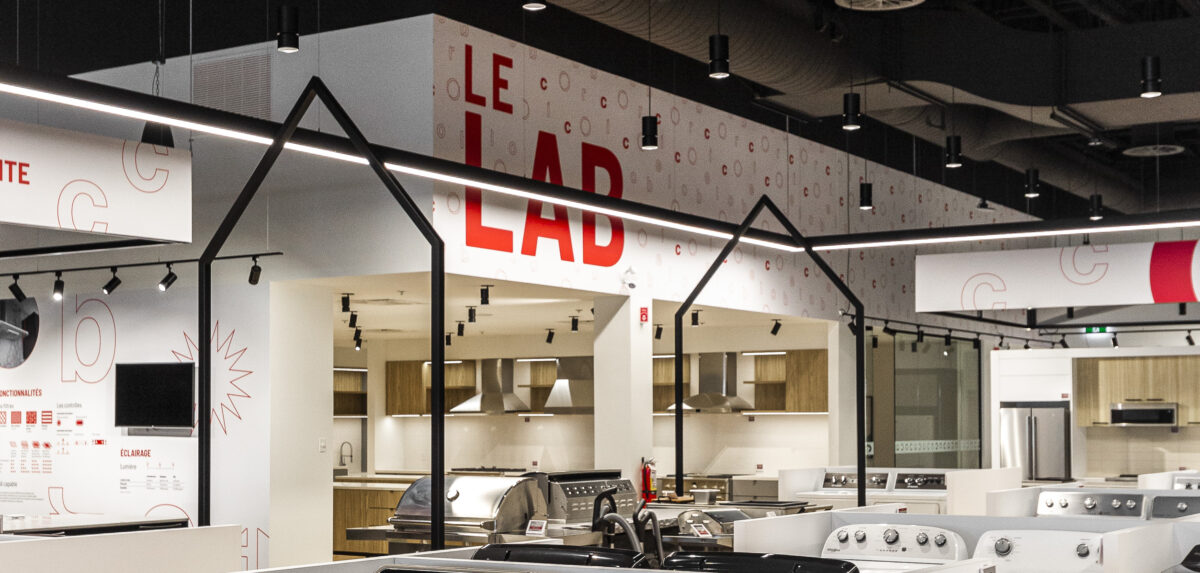
Inside a Future Shop concept store in North Vancouver in 2012. Image provided by the retailer at the time.
Former Future Shop location at 10 Dundas St. E. in Toronto in 2015. Photo: Dustin Fuhs

A Major Acquisition: Best Buy Enters the Canadian Market

In a pivotal moment in 2001, U.S.-based Best Buy Co. acquired Future Shop for CAD $580 million. Rather than phasing out the Canadian brand, Best Buy decided to run both banners concurrently. New Best Buy stores were introduced to Canada, positioned as an alternative to the more commission-driven Future Shop model. At the time, it was seen as a dual-pronged strategy to capture a broader market.

Throughout the early 2000s, Best Buy and Future Shop stores could often be found within close proximity to one another. While both carried many of the same products, Best Buy operated with a non-commissioned sales force and a different store layout, while Future Shop retained its original formula.

Youtube video

Changing Market Forces and Strategic Shifts

As consumer preferences changed and e-commerce gained ground, the consumer electronics retail category began to shift dramatically. Best Buy faced mounting pressure from online competitors, especially Amazon, and began streamlining operations.

By the early 2010s, cracks in the dual-banner strategy were becoming evident. In 2013, Best Buy began closing some Future Shop locations and consolidating others. Retail analysts speculated that a full integration was inevitable, though few expected it to occur as suddenly and dramatically as it did.

Youtube video

March 28, 2015: The End of Future Shop

On the morning of Saturday, March 28, 2015, employees at Future Shop stores across Canada arrived at work only to be informed that the stores would not be opening. Some were told their locations would be shuttered permanently, while others learned their stores would reopen as Best Buy locations within days.

In total, 66 Future Shop stores were permanently closed, and 65 were earmarked for conversion into Best Buy. Approximately 500 full-time and 1,000 part-time employees were laid off. Best Buy Canada moved swiftly to assure customers that product orders, warranties, gift cards, and service appointments would be honoured. Affected employees were offered severance packages and outplacement support.

Ron Wilson, then President and COO of Best Buy Canada, said in a statement at the time, “We recognize the impact of this decision on our employees and customers, and we will work to support them through this change.”

Youtube video

A Post-Future Shop Retail Strategy

Following the closures, Best Buy Canada announced a $200 million investment over two years to enhance the customer experience. This included introducing major appliances to all stores, expanding vendor-branded areas, increasing staffing, and improving the online shopping experience. The company also invested in in-store pickup, ship-from-store services, and digital platforms to better compete in the omnichannel environment.

The abrupt closure of Future Shop served as a wake-up call to the Canadian retail industry, highlighting the speed at which consumer behaviours and market conditions can shift. It also underscored the risks of maintaining two brands with overlapping footprints in a market increasingly dominated by digital innovation.

Youtube video

A Legacy That Endures

Even a decade later, Future Shop remains a nostalgic brand for many Canadians. Its distinctive red signage, commissioned sales force, and boxed DVD walls left a lasting impression on generations of consumers. For former employees and loyal customers, the brand’s closure marked the end of an era—one that reflected both the promise and perils of Canadian retailing in the modern age.

As the Canadian retail industry continues to evolve in the face of economic uncertainty and digital disruption, the story of Future Shop serves as a compelling case study in rapid growth, strategic missteps, and the relentless pace of change.

More from Retail Insider:

Youtube video

Former Future Shop location at 10 Dundas St. E. in Toronto in 2015. Photo: Dustin Fuhs

Mixed Feelings as Canadians React to Hudson’s Bay Bankruptcy

Hudson's Bay store in downtown Toronto (176 Yonge Street/CF Toronto Eaton Centre) on March 27, 2025. Photo: Craig Patterson

As The Hudson’s Bay Company continues its attempt to restructure under creditor protection, new survey data from Leger reveals that most Canadians are aware of the company’s financial troubles—and their reactions paint a complex picture of a once-revered retail icon now struggling to maintain relevance.

According to the Leger OMNIBUS study conducted March 21–24, 2025, 83% of Canadians said they were aware of Hudson’s Bay’s filing for bankruptcy protection. Among Canadians aged 55 and older, that awareness jumped to 94%, reflecting the generation that perhaps remembers Hudson’s Bay as a cultural cornerstone of Canadian retail.

Despite this high awareness, the study reveals a surprising emotional gap: indifference was the most common reaction to the bankruptcy news, selected by 30% of respondents. This was especially true among adults aged 18 to 54, a demographic that might not share the same emotional connection to the brand. Meanwhile, 25% expressed sadness, and 19% reported disappointment. Feelings of shock and concern were significantly lower at 7% and 6% respectively.

“Hudson’s Bay’s bankruptcy filing struck a national chord—83% of Canadians are aware, but emotional reactions are deeply mixed, ranging from indifference to sadness, disappointment and even shock,” said the report.

Display on the main floor of Hudson’s Bay, Queen Street in downtown Toronto, March 27, 2025. Photo: Craig Patterson

A Legacy in Crisis

Founded in 1670, Hudson’s Bay is Canada’s oldest retailer and a brand deeply entwined with national identity. However, the data suggests the brand’s legacy alone is no longer enough to carry it through an evolving retail landscape. Respondents were asked what they believe caused the company’s financial struggles. The top reason, cited by 25% of Canadians, was high prices, particularly among women and those aged 35–54—the demographic often considered to be in their prime consumer years.

The second most cited reason was Hudson’s Bay’s slow shift to online shopping, with 19% of respondents pointing to this as a key failure. This was particularly evident among older Canadians, who are typically more loyal to traditional retail brands. Poor management came in third (15%), cited most by respondents aged 55 and up, who may have followed the company’s ups and downs more closely over the years.

Other issues raised included competition (10%), outdated stores (10%), and poor in-store experience (3%). Only 1% cited American ownership, suggesting that concerns over national identity were less about who owns the company and more about how it operates in the Canadian market.

Canadian Identity Still Matters

Interestingly, the majority of Canadians—90%—believe it’s important that retailers in Canada maintain a distinctly Canadian identity. This includes reflecting local culture and values, and supporting domestic businesses. This sentiment was particularly strong among those aged 55 and older (95%) and Quebecers (94%).

“Nine in ten Canadians say it’s important that retailers reflect a distinctly Canadian identity. Hudson’s Bay, despite its heritage, may be losing touch with that core value,” the study noted.

This suggests that while Hudson’s Bay has historically leaned on its heritage as a Canadian institution, many consumers feel the brand is no longer delivering on that expectation.

Women’s footwear on 2 at Hudson’s Bay, Queen Street in downtown Toronto, March 27, 2025. Photo: Craig Patterson

Can The Bay Bounce Back?

The nation appears divided when it comes to belief in Hudson’s Bay’s future. Only 25% of Canadians believe the company will successfully restructure and continue operating, while 38% said they do not believe it will recover, and another 38% were not sure.

Notably, younger Canadians aged 18–34 were the most optimistic, with 32% expressing belief in the brand’s ability to bounce back. By contrast, men were the most skeptical—42% of male respondents said they did not believe Hudson’s Bay can recover. This split suggests that any comeback strategy will need to not only modernize the shopping experience but also rebuild trust across multiple demographics.

“What was once a national icon now faces doubt—only 1 in 4 Canadians believe Hudson’s Bay will successfully restructure and continue operating,” reads the report.

Women’s fashions on 3 at Hudson’s Bay, Queen Street in downtown Toronto, March 27, 2025. Photo: Craig Patterson

From Flagship to Footnote?

Hudson’s Bay is not just a department store—it’s a brand that has witnessed the country’s evolution for centuries. Yet, its current crisis raises concerns about whether it can still play a relevant role in Canadian retail.

Its struggle reflects broader trends: traditional department stores around the world face immense pressure from e-commerce, discount retailers, and nimble direct-to-consumer brands.

“Even among older, traditionally brand-loyal Canadians, faith is faltering—20% of those 55+ say poor management led to Hudson’s Bay’s downfall,” the study said.

The Room women’s luxury fashion department on the third floor of Hudson’s Bay. The Room’s founding traces back to 1937 when the building was a Simpson’s store. Over the decades, the St. Regis Room dressed Toronto’s high society. Its loss is the end of a fashion era. Last year, Nicholas Mellamphy was brought back to revive The Room, and did a tremendous job. Photo: Craig Patterson

The findings paint a portrait of a company at a crossroads. While younger consumers may still see a glimmer of hope, the brand’s core audience appears disillusioned. Hudson’s Bay will need to redefine what it means to be a Canadian retailer in 2025 and beyond—both in experience and in value.

The Hudson’s Bay situation also speaks to a broader realignment in Canadian retail. As consumers demand better online experiences, pricing transparency, and authenticity, legacy retailers that fail to adapt face existential risk. The fact that indifference was the leading emotional response may be the most telling—and the most alarming.

Methodology Note: The data is based on a national online survey of 1,605 Canadians aged 18 and older, conducted by Leger between March 21–24, 2025. Results reflect a cross-section of regions, incomes, and age groups, with statistically significant differences noted across demographic segments.

More from Retail Insider:

Retail trade largest detractor for GDP growth: Statistics Canada

Photo by Pavel Danilyuk

Retail trade was the largest detractor to real domestic product (GDP) growth in January, after being the largest contributor to growth in December, contracting 0.9% in January as activity in six of 12 subsectors decreased, reported Statistics Canada on Friday.

“Motor vehicle and parts dealers (-3.2%), which was one of the largest drivers of growth in December, contributed the most to the sector’s decline in January. It was the subsector’s first decline in four months with lower activity at new car dealers and automotive parts, accessories and tire stores,” said the federal agency.

“Food and beverage stores declined 2.6% in January, reflecting lower activity in supermarkets and other grocery retailers (except convenience retailers) and beer, wine and liquor stores. Sporting goods, hobby, book and music stores (-9.6%) further contributed to the decline, offsetting part of the increase recorded in the previous month. Increases in health and personal care stores (+1.3%) and building material and garden equipment and supplies dealers (+1.6%) tempered the decline in the sector in January.”

Wholesale trade increased 0.7% in January, as most subsectors grew. Motor vehicle and parts wholesaler-distributors (+4.5%) was the main contributor to growth in the sector, reaching its highest level since February 2020, mainly attributable to higher activity in motor vehicles and new motor vehicle parts coinciding with a strong increase in exports of passenger cars and light trucks, added Statistics Canada.

Building material and supplies wholesaler-distributors (+1.8%) further contributed to growth in January, in large part driven by a rebound of activity in the lumber, millwork, hardware and other building supplies industry group, it said.

The federal agency said GDP grew 0.4% in January, following a 0.3% increase in December. Both goods-producing and services-producing industries were up, with 13 of 20 sectors rising in January.

“Goods-producing industries contributed the most to the increase, rising 1.1% in January, the largest increase since October 2021, as all industrial sectors in the aggregate expanded in January 2025. The mining, quarrying, and oil and gas extraction and manufacturing sectors were the largest contributors to growth. Services-producing industries edged up 0.1%,” it said.

Advance information indicates that real GDP by industry was essentially unchanged in February. Increases in the manufacturing and finance and insurance sectors were offset by decreases in the real estate and rental and leasing sector, the oil and gas extraction subsector and the retail trade sector, added StatsCan.

Pickleplex Social Club expands into British Columbia with Master Franchise Agreement

Photo by Sergio Contreras Arcos

Pickleplex Social Club, a premier destination for social and competitive pickleball, has announced its expansion into British Columbia through a newly signed Master Franchise Agreement. Industry veterans Andrew Edwards and Deanna Gestrin will lead the charge as Master Franchisees, bringing 10 new locations to the province, said the company.

“Pickleplex Social Club is revolutionizing the way people experience pickleball, blending sport, social interaction, and community engagement in purpose-built indoor facilities. With the rapid growth of pickleball across North America, the demand for dedicated venues where players of all skill levels can enjoy the game in a welcoming environment has never been higher,” it said.

The company said Andrew Edwards brings over 25 years of entrepreneurial and franchising expertise to Pickleplex Social Club. A former junior provincial tennis player, Andrew has always had a deep passion for racket sports and is thrilled to be part of pickleball’s explosive growth. With nearly two decades dedicated to the franchise industry, Andrew has successfully built and led multiple businesses, mentoring new franchisees and helping them navigate the journey of business ownership. His leadership will be instrumental in establishing and growing Pickleplex locations across British Columbia. 

The company said Deanna Gestrin is an inspiring leader and advocate for wellness, bringing a wealth of experience in education, counselling, and community development. As a post-secondary educator at Simon Fraser University and a registered clinical counsellor, Deanna fosters growth and resilience through strong communication, strategic thinking, and innovation. Her passion for family, fitness, and community aligns perfectly with Pickleplex Social Club’s mission to create spaces where individuals and families can engage in fun, active experiences together.

“We are incredibly excited to bring Pickleplex Social Club to British Columbia,” said Andrew and Deanna. “Pickleball is more than just a sport; it’s a movement that brings people together. Our goal is to create a thriving network of locations where communities can connect, play, and grow.”

Steven Fry
Steven Fry

“Pickleplex started as a vision just over a year ago and in that time we’ve taken it from a concept to reality with multiple locations already serving the pickleball community in Ontario. Now with Deanna and Andrew engaged to deliver our vision in BC we’re another step closer to becoming Canada’s national pickleball destination,” said Steven Fry, Co-founder and CEO.

The first Pickleplex Social Club locations in British Columbia are set to open in the coming months, with plans for additional expansion in the works.

Related Retail Insider stories:

Tourism spending on the rise: Statistics Canada

Photo by nappy
Photo by nappy

Tourism spending in Canada increased 1.5% in the fourth quarter of 2024, following a 0.4% decline in the third quarter. Annually, tourism spending rose 3.6% in 2024, following a 15.3% increase in 2023. Tourism gross domestic product (GDProse 1.6% in the fourth quarter of 2024 and was up 3.8% annually. Tourism jobs increased 0.8% in the fourth quarter and rose 1.8% annually in 2024, reported Statistics Canada.

Passenger air transport (+2.8%) and accommodation services (+2.6%) were the main contributors to growth in tourism spending in the fourth quarter. Annually, passenger air transport spending (+7.4%) contributed the most to overall growth in 2024, said the federal agency.

It said tourism GDP rose 1.6% in the fourth quarter, following a 0.7% decrease in the third quarter. Accommodation services (+2.8%) and transportation (+1.6%) were the main contributors to overall growth. Economy-wide real GDP by industry rose 0.4% in the fourth quarter, and tourism’s share of GDP increased to 1.78% on a nominal basis. Annually, tourism GDP rose 3.8% in 2024, compared with the economy-wide real GDP by industry growth of 1.6%.

“The number of tourism jobs increased 0.8% in the fourth quarter, following flat growth in the third quarter. Tourism job growth in accommodation (+1.5%) and food and beverage (+0.9%) services was partially offset by a decline in travel services (-1.5%) in the fourth quarter. The total number of jobs in Canada rose 0.5% in the fourth quarter, while tourism’s share of jobs rose to 3.35%,” said Statistics Canada.

The report said spending by international visitors in Canada rose 2.2% in the fourth quarter, following a decline of 2.4% in the third quarter. Accommodation (+3.2%) and food and beverage (+3.0%) services were the main contributors to growth in the fourth quarter. Annually, spending by international visitors increased 8.0% in 2024, reaching 92.3% of the level observed in 2019, prior to the COVID-19 pandemic.

“Tourism spending in Canada by Canadians was up 1.3% in the fourth quarter, after a 0.2% increase in the third quarter. Domestic tourism spending on passenger air transportation (+3.3%), accommodation (+2.3%) and recreation and entertainment (+2.4%) were the main contributors to the rise in the fourth quarter. Notable events during the quarter included the Taylor Swift Eras tour performances in Toronto and Vancouver, as well as the world junior hockey championship hosted in Ottawa,” explained Statistics Canada.

Canadian travellers returning from the United States by automobile declined year-over-year in both January and February 2025 based on leading indicators. Total trips to Canada (both Canadian-resident return trips and non-resident trips) by air in February also posted a decline, it said.

Related Retail Insider stories:

SHEIN Opens Pop-Up at CF Toronto Eaton Centre

SHEIN pop-up at CF Toronto Eaton Centre in Toronto, during a preview on March 27, 2025. Photo: Craig Patterson

Global fashion and lifestyle e-commerce powerhouse SHEIN has officially opened its latest pop-up in Toronto, transforming a 7,000-square-foot space at CF Toronto Eaton Centre into an immersive, multi-category retail experience. Retail Insider was invited to a preview on March 27 ahead of the public opening, which runs from March 28 to April 6, 2025.

This marks SHEIN’s second time at the downtown Toronto shopping centre, and this time, the brand has elevated its presentation with a boutique-style concept that blends style, function, and a bit of local artistry.

A Monochrome Entrance to a Colourful Spring

Located in the former Banana Republic men’s store—which was recently consolidated into a single upstairs unit—the SHEIN pop-up features a striking design. Guests enter a monochrome space inspired by designer sketches and the quiet tones of winter. As visitors journey through the store, SHEIN’s colourful spring collections gradually bring the space to life, symbolizing the seasonal shift from muted cold to vibrant warmth.

“This pop-up is very different from any we’ve done in the past,” said Anastasia Semionov, Marketing Manager for SHEIN Canada. “This time, we’re showcasing the full breadth of our multi-category platform—from fashion to home, beauty, accessories, kids, and even pet items.”

SHEIN pop-up at CF Toronto Eaton Centre in Toronto, during a preview on March 27, 2025. Photo: Craig Patterson

Highlighting Inclusivity and On-Trend Collections

The store layout is organized into curated zones featuring some of SHEIN Canada’s most popular collections. Among them are:

  • DAZY, with a romantic flair and floral-heavy styles
  • SHEIN MOD and MOTF, offering elevated looks for a more mature demographic
  • Maijia and Easywear, targeting younger audiences with streetwear staples
  • SHEGLAM, the brand’s fast-growing global makeup line
  • Curve, SHEIN’s inclusive sizing line catering to plus-size customers

“Our Curve collection continues to be one of our top performers,” Semionov noted. “A lot of other e-commerce platforms don’t offer extended sizing in a fashionable way. Customers come to us looking for trend-forward styles that make them feel confident—regardless of size.”

SHEIN pop-up at CF Toronto Eaton Centre in Toronto, during a preview on March 27, 2025. Photo: Craig Patterson

More Than Fashion: SHEIN’s Lifestyle Push

Beyond fashion, the pop-up introduces visitors to SHEIN’s home, sleepwear, and vacation collections, the latter being especially popular among Canadian shoppers. “People love shopping for vacation wear with us. Our price point makes it easy to refresh your wardrobe before a trip,” said Semionov.

Accessories, including bags, belts, shoes, hats, and jewellery, are prominently featured. There’s even a dedicated pet collection, and SHEIN’s home living section includes a range of trendy yet affordable household items.

“We’re really trying to demonstrate that we’re more than just an online fashion brand,” added Semionov. “This is about showing the depth of our offering in a fun, accessible way.”

SHEIN pop-up at CF Toronto Eaton Centre in Toronto, during a preview on March 27, 2025. Photo: Craig Patterson

A Local Touch: Art, Engagement, and Toronto Flair

As part of its effort to connect with local communities, SHEIN collaborated with a Toronto-based illustrator to create custom black-and-white murals for the space. The artist’s work—depicting scenes like jogging families, streetcars, and the CN Tower—offers a distinctly Toronto vibe that reinforces the brand’s local connection.

“We always try to localize our pop-ups,” said Semionov. “This is our way of saying we’re not just here to sell—we’re here to be part of the culture.”

Visitors can also enjoy a free photo booth, share their experience online, and receive exclusive perks. The first 100 people each day who post publicly from the event on Instagram or TikTok receive a limited-edition Toronto tote bag, adding an element of excitement and collectibility.

SHEIN pop-up at CF Toronto Eaton Centre in Toronto, during a preview on March 27, 2025. Photo: Craig Patterson

Incentives and Exclusives for In-Person Shoppers

In keeping with its online promotional strategy, SHEIN’s Toronto pop-up offers tiered discounts of up to 30% off, exclusive gifts with purchase, and the first-ever availability of discounted gift cards. Each day, 50 $50 and 50 $100 SHEIN gift cards will be sold at a 10% discount—only available in-store.

“Customers love the surprise-and-delight factor,” said Semionov. “We’ve made the store shoppable but also playful. People can earn up to six free gifts, find sub-brands they love, and even discover what colours suit them best in our seasonal styling section.”

SHEIN pop-up at CF Toronto Eaton Centre in Toronto, during a preview on March 27, 2025. Photo: Craig Patterson

A Partnership with Purpose: Soles4Souls Canada

SHEIN has also partnered with Soles4Souls Canada, a non-profit that provides relief and empowers individuals in poverty through clothing and footwear. Shoppers who bring gently used clothing to donate will receive a $2 discount on their purchase. All donated items will go toward global communities in need.

“We’re grateful to be able to give back while engaging directly with our customers,” said Semionov. “The pop-up isn’t just about fashion—it’s about making meaningful connections.”

SHEIN pop-up at CF Toronto Eaton Centre in Toronto, during a preview on March 27, 2025. Photo: Craig Patterson

Rotating Inventory and Scarcity Strategy

In an effort to keep the experience fresh, inventory at the pop-up is constantly rotating. “If you come on one day, and then return a few days later, you’ll see different items,” Semionov explained. “Once something is sold, it’s gone, and we replenish with new pieces. It encourages discovery and adds a bit of urgency.”

This approach echoes SHEIN’s unique on-demand production model, where new items are initially produced in batches of just 200. Additional quantities are only made if items sell well, reducing waste and aligning with the brand’s push for more sustainable practices.

“We don’t see ourselves as fast fashion,” said Semionov. “We’re on-demand fashion. We test demand first, then scale. It’s a model that works for both the consumer and the planet.”

SHEIN pop-up at CF Toronto Eaton Centre in Toronto, during a preview on March 27, 2025. Photo: Craig Patterson

Final Thoughts

Running through April 6, the Toronto SHEIN pop-up offers a tactile, interactive version of the brand’s online identity—complete with curated fashion zones, exclusive discounts, local art, and a strong message of accessibility and inclusivity.

“We like to say we’re your online bestie that you finally get to meet in person,” said Semionov. “And with this space, we’re bringing that bestie energy to life—right in the heart of Toronto.”

More from Retail Insider:

Shoppers Drug Mart opens first of 7 pharmacy care clinics in Surrey, British Columbia

Image: Shoppers Drug Mart

Shoppers Drug Mart has announced the grand opening of the first pharmacy care clinic in Surrey, British Columbia – with six more to come by the end of the year.

At a time of rapid growth in the region, the clinics will provide the community with more ways to access primary care services, said the company in a news release.

“Thoughtfully designed to improve the overall patient experience, the clinics offer unique features such as child-friendly exam rooms, accessible waiting areas, and an onsite “care concierge” dedicated to providing personalized support and ensuring a smooth visit for every patient. These clinics will provide patients access to a range of pharmacy healthcare services, including the assessment and treatment of injuries and common conditions such as urinary tract infections and pink eye – free of charge with a valid British Columbia health card,” said Shoppers.

“Pharmacists are able to relieve pressure on frontline healthcare services and service providers by managing basic primary care conditions within their scope and triaging more serious cases to higher levels of care when needed.”

Jeff Leger
Jeff Leger

“As highly trained medical professionals, pharmacists are uniquely positioned to step up and meet some of the challenges facing public health systems across the country,” said Jeff Leger, President of Shoppers Drug Mart. “Shoppers Drug Mart is proud to invest in healthcare infrastructure and open seven Pharmacy Care Clinics to serve the growing needs of Surrey residents because we know that an investment in improving access to care is an investment in healthier communities.”

Shoppers Drug Mart Inc. is the licensor of full-service retail drug stores operating under the name Shoppers Drug Mart® (Pharmaprix® in Québec). With more than 1,350 Shoppers Drug Mart® and Pharmaprix® stores operating in prime locations in each province and two territories, the company is one of the most convenient retailers in Canada. The company also licenses or owns more than 150 medical clinic pharmacies operating under the name Shoppers Simply Pharmacy® (Pharmaprix Simplement Santé® in Québec). In addition to its retail store network, the company owns Shoppers Drug Mart Specialty Health Network Inc., a provider of specialty drug distribution, pharmacy and comprehensive patient support services, MediSystem Inc., a provider of pharmaceutical products and services to long-term care facilities and Lifemark Health Group, Canada’s leading provider of outpatient physiotherapy, massage therapy, occupational therapy, chiropractic, mental health, and other ancillary rehabilitation services. Shoppers Drug Mart® is an independent operating division of Loblaw Companies Limited.

Brenda Locke
Brenda Locke

“Today’s opening of the first pharmacy care clinic by Shoppers Drug Mart in Surrey marks an important milestone for our community,” said Surrey Mayor Brenda Locke. “I want to thank Shoppers Drug Mart for this important investment in our community, and I look forward to the positive impact these clinics will have on our residents. As we continue to grow and become the first city to reach one million people in British Columbia, health care needs are a priority.”

Jessie Sunner
Jessie Sunner

“The opening of Surrey’s first pharmacy care clinic is a pivotal moment in our community’s healthcare journey,” said Jessie Sunner, MLA for Surrey-Newton. “This clinic will provide essential services and increase access to care, making healthcare more accessible and convenient for our community. It’s always great to see Surrey take steps forward in innovative healthcare solutions.”

For more information on available services or to book an appointment, visit the Pharmacy Services in B.C.’ website or visit the store. Hours of operation are 8:00 am to 10:00 pm, Monday to Sunday. 

Related Retail Insider stories:

Restaurants Canada appoints Nicolas Filiatrault as its new Chair of the Board

Photo by Andrea Piacquadio

Restaurants Canada has appointed Nicolas Filiatrault, Quebec-based CEO of Benny&Co., as its new Chair of the Board. He succeeds outgoing Board Chair Jeremy Bonia.

“I’m deeply honoured and carry a profound sense of responsibility in stepping into the role of Chair of Restaurants Canada’s Board of Directors,” said Filiatrault.

Nicolas Filiatrault
Nicolas Filiatrault

“While facing significant trade challenges, I’m confident our industry’s resilience, creativity, and collective determination will allow us to adapt and innovate. Having witnessed major transformations over my near-decade involvement with Restaurants Canada, I’ve seen our sector’s ability to overcome adversity. By working together, sharing insights, and supporting one another, we can overcome adversity and continue to serve Canadians with passion and excellence.”

Filiatrault has been the CEO of Quebec’s largest family-owned rotisserie chain, Benny&Co., since November 2023. From his arrival at the company nearly 15 years ago, he has worked closely with Jean Benny, President of Benny&Co., to carry out the ambitious vision of the eight founding brothers of the family business established in 1960. As Director of Finance, and then Vice President of Finance and Administration, he implemented the family franchise system and created the company’s administrative, accounting, and financial teams.

As Chair, Restaurants Canada said Filiatrault will lead the Board, provide strong leadership to the Directors, and support the CEO while ensuring governance best practices and executing the Board’s directives. He will collaborate with President and CEO Kelly Higginson to strengthen the organization’s advocacy for the foodservice industry as she and the team execute the strategic goals of the organization.

In addition to Filiatrault’s new role, Restaurants Canada said it is appointing eight new members to its board: Sarah Chown, Metropolitain Brasserie, Ontario; Meeru Dhalwala, Lilia Restaurant, British Columbia; Musette Fowke, Integrated Food Systems Inc, Manitoba; Vanessa Fracheboud, Mandy’s, Quebec; Phoebe Fung, Vin Room, Alberta; Ben Osmow, Osmow’s Inc, Ontario; Cara Piggot, Boston Pizza; and Claudia Vorlaufer, Earl’s Restaurants, British Columbia.

Kelly Higginson
Kelly Higginson

Filiatrault succeeds Jeremy Bonia, an accomplished Newfoundland & Labrador-based restaurateur and sommelier, who was elected as Chair in April 2023. Bonia played an integral role in supporting Higginson as she stepped into the President and CEO role and leading the organization through its post-pandemic period of shifting policy priorities, added the national organization.

“I am immensely grateful to Jeremy for his years of service on Restaurants Canada’s board and for his support to me personally. His contributions have left a lasting mark on the organization and helped us become stronger than ever,” said Higginson. “In his new role, Nicolas will build on Jeremy’s foundation, leading the board by uniting Directors, fostering board development, showing strong leadership, and supporting me and the Restaurants Canada team.”

Restaurants Canada is a national, not-for-profit association advancing Canada’s diverse and dynamic foodservice industry. Restaurants are a $120 billion industry employing nearly 1.2 million Canadians and is the number one source of first-time jobs in Canada.

Canadian Tire Corporation appoints Matt Moore as Executive Vice President and Chief Commercial Officer

PHOTO: CANADIAN TIRE

Canadian Tire Corporation has announced that Matt Moore will join the company as Executive Vice President and Chief Commercial Officer (CCO), effective April 21. 

“Mr. Moore brings extensive experience, most recently as Chief Operating Officer of Tim Hortons, where he spearheaded significant improvements in financial performance, products and operations, guest satisfaction, and franchise relationships. He also led the company’s digital and loyalty strategy, establishing the Tims Rewards program and app. Previously, he served as Chief Customer Officer for Yum! Brands in Europe, overseeing Pizza Hut across 25 countries and driving e-Commerce and mobile innovations that enhanced the customer experience and fueled growth. Earlier in his career, he was a consultant at Boston Consulting Group and an engineer at General Electric,” said Canadian Tire in a news release.

Matt Moore
Matt Moore

In his capacity as CCO,
Canadian Tire said Moore will be responsible for integrating merchandising, marketing, and loyalty strategies to create seamless, personalized experiences across all CTC customer touchpoints. This will include growing the Triangle Rewards loyalty program, deepening customer insights and improving core retail processes that enable horizontal, data-driven strategies critical to the success of CTC’s recently announced True North strategy. 

Greg Hicks
Greg Hicks

“As we work to bring True North to life, Matt will play a pivotal role in strengthening our brand and putting our customers at the core of everything we do by transforming how we use data and insights to drive our merchandising, marketing, and loyalty strategies,” said Greg Hicks, President and CEO, Canadian Tire Corporation. “In addition to his strong commercial acumen and executive management experience, Matt understands the deep connection Canadians have with CTC – which will serve him well as we work to transform how we engage and serve our customers even better.”

“I am honoured to join a talented team at CTC as the company embarks on an exciting transformation,” said Moore. “I look forward to contributing to the continued success and growth of an iconic Canadian brand, creating even more meaningful connections with our customers.”

Canadian Tire Corporation, Limited has been a Canadian business since 1922. Its banners include Party City and PartSource; Mark’s; SportChek, Hockey Experts, Sports Experts and Atmosphere; and Pro Hockey Life. It has nearly 1,700 retail and gasoline outlets.

Related Retail Insider stories:

Good Earth Coffeehouse expands into new university and healthcare settings

Good Earth Coffeehouse at Foothills Hospital, Calgary, AB. (CNW Group/Good Earth Coffeehouse)

Good Earth Coffeehouse is continuing to expand the brand of cafes into university campuses and healthcare facilities across Canada.

As part of their ongoing growth strategy, Good Earth Coffeehouse said it is opening new coffeehouses that bring the company’s commitment to sustainability, social good, and healthful food into two critical sectors: education and healthcare.

“These additional institutional locations reflect Good Earth Coffeehouse’s mission to provide exceptional, ethically sourced coffee and fresh, wholesome food options to communities across Canada. By establishing partnerships with universities and healthcare facilities, Good Earth Coffeehouse is making its café experience more accessible while contributing positively to the environments it serves. This expansion will see the opening of several new locations, bringing the company’s total to 15 healthcare and 7 university coffeehouses,” said the company.

Good Earth Coffeehouse at Yonge and Wellesley (Image: Good Earth)

The new locations include:

  • University of Calgary – three locations: Cumming School of Medicine HRIC Atrium at Foothills Hospital; Education Tower, main campus; Kinesiology Building, main campus (opening Fall 2025)
  • Grand Prairie Regional Hospital (opening Spring 2025)
  • University of Alberta Hospital, Walter Mackenzie Centre, Edmonton (opening Summer 2025)
  • Royal University Hospital, Saskatoon (opening Fall 2025)
  • SickKids Hospital, Toronto (second location opening Spring 2025)
Gerry Docherty
Gerry Docherty

“We are thrilled to continue expanding into these important institutional spaces,” said Gerry Docherty, President and COO of Good Earth Coffeehouse. “Our mission has always been to provide high-quality, sustainable coffee and fresh food options to our communities. Our values of sustainability and social responsibility resonate strongly with education and healthcare institutions. Through these partnerships we can meet the unique needs of students, faculty, patients, and healthcare workers, providing them a welcoming space that offers a much-needed pause.”


Good Earth is a network of authentic coffeehouses with 60 locations across Canada from Vancouver Island to the Maritimes. It was founded in 1991.