Tim Hortons partners with Ryan Reynolds to launch exciting new breakfast menu innovation in Canada and the U.S. (CNW Group/Tim Hortons)
Tim Hortons and celebrity Ryan Reynolds have launched a multi-campaign partnership which is bringing new menu innovation to Tims customers: introducing the Ryan’s Scrambled Eggs breakfast box, “a delicious and hearty option that will be sure to satisfy morning cravings with the amazing value for money Tims is known for,” said the company.
Ryan’s Scrambled Eggs are available now at participating restaurants across Canada and the United States and are being promoted in a TV commercial created in collaboration with Maximum Effort that spoofs Ryan’s “rider” – the items he asks for backstage while working on a film shoot. In the commercial, he gets his Ryan’s Scrambled Eggs and Tims coffee as requested, along with some other esoteric asks, including a jar of fresh air from his hometown of Vancouver.
“There’s something really special about having the chance to collaborate with such an iconic and beloved Canadian brand. When I visited the Tim Hortons Test Kitchen, I took my role very seriously, by which I mean I ate an irresponsible amount of eggs. And honestly? I regret nothing,” said Reynolds.
Ryan’s Scrambled Eggs breakfast boxes are made to order and include two scrambled eggs made with 100% Canadian freshly cracked eggs, crispy hashbrowns, a choice of sausage crumble or bacon strips, plus Tims iconic Chipotle sauce.
This partnership was first teased at in a video posted on Tims social media channels in the lead up to the premiere of “Deadpool & Wolverine.”
“Ryan has been a great partner and so enthusiastic about leaning into his own love of the Tims brand as we worked on how to bring this really fun collab to life,” said Hope Bagozzi, Chief Marketing Officer for Tim Hortons.
“We’re proud to be a daily breakfast and coffee destination for so many of our guests and this partnership with Ryan is another way for us to offer a uniquely-Tims morning meal that kickstarts your day with great taste and great value.”
Tim Hortons partners with Ryan Reynolds to launch exciting new breakfast menu innovation in Canada and the U.S. (CNW Group/Tim Hortons)Tim Hortons partners with Ryan Reynolds to launch exciting new breakfast menu innovation in Canada and the U.S. (CNW Group/Tim Hortons)
In 1964, the first Tim Hortons restaurant in Hamilton. It is Canada’s largest restaurant chain operating in the quick service industry with nearly 4,000 restaurants across the country. It has more than 6,000 restaurants in Canada, the United States and around the world.
Happy Belly Food Group Inc., a leader in acquiring and scaling emerging food brands across Canada, says it has exercised its right to acquire the remaining 50% of Heal Wellness, making the brand a 100% wholly owned subsidiary of Happy Belly.
Heal is a fresh smoothie bowls, acai bowls, and smoothies quick serve restaurant.
Sean Black
“Three years ago to the day, Happy Belly signed a deal with the founding partners of Heal Wellness to enter into a joint venture for the purpose of operationalizing the business, preparing it for growth, and scaling the business. I am very proud of the results that we have achieved so far having successfully grown the business 10x, having grown from 2 locations to 20 locations (6 corporate and 14 franchised), with a significant amount still to open in 2025-2026. Backed by a development pipeline of 130 units across Canada, interest from both franchisees and landlords is rapidly increasing-paving the way for sustained and scalable organic growth coast to coast. This milestone is a clear reflection of what’s possible when you have the 3 P’s – people, process, and product,” said Sean Black, Chief Executive Officer of Happy Belly.
“As a part of this transaction Heal Co-Founder Jesse Davidson will join the Happy Belly team full time and will be promoted to Brand Leader of Heal Wellness. The Heal Wellness concept has hit an inflection point of true hockey stick growth both in net new units (unit count) and in EBITDA in 2025. Which is why we’ve proactively invested in top-tier talent to support Jesse and the team as they manage the growing demand across Canada. Our franchise network continues to expand at a rapid pace, with new interest and inquiries coming in from across the country each week.”
Black said acquiring the remaining 50% of Heal Wellness is a significant milestone for Happy Belly and provides shareholders a more detailed view of its joint-venture acquisition strategy.
“Happy Belly acquired 50% of Heal Wellness three years ago for a non-cash investment of $250,000 in Happy Belly stock (valued at $0.09 per share) into the joint venture. This represented a 2.2x multiple of EBITDA, with a projected forward twelve-month EBITDA of $230,000 CDN. After working together for the past three years using only the cashflow generated from the Heal business (Happy Belly capital not required), the business has transformed both in scale and footprint generating an impressive estimated $750,000.00 CDN in trailing twelve-month EBITDA (“TTM EBITDA”). Happy Belly will acquire the remaining 50% of the business on a debt-free basis at a multiple of 3.75x TTM EBITDA. Happy Belly intends to satisfy the purchase price by transferring its 50% ownership of the JVCo’s existing Happy Belly shares to the Heal Vendors. The value of the shares will be recognized at current market values and transferred on the day of close of this transaction. Final transaction details to be announced at the close of the transaction after all reconciliations are completed (estimated to be completed by end of July),” he explained.
“The value our management team has created is evident not only in Heal’s record EBITDA but also in the increased shareholder value of Happy Belly. By leveraging our share price appreciation to acquire the remaining 50%, we are realizing a 10x gain on invested share capital. With plans to double both our store count and EBITDA within the next 12-18 months, this transaction delivers an exceptional return on invested capital-using existing shares on our cap table to fund the majority of the transaction. We look forward to executing more transactions like this in the future.”
Black said the transaction validates the value Happy Belly creates for its joint venture partners and validates its acquisition strategy based on reduced risk when partnering with founders.
“Our model paves the way for sustained and predictable M&A growth across our portfolio of emerging brands. By balancing organic expansion in our core markets with a nationwide rollout, we’re positioned to deliver long-term value. We’re confident our multi-brand platform will drive strong results, attract top-tier franchise partners, and secure prime real-estate opportunities across Canada,” he said.
“Our accelerated franchising model-validated by strong organic gains-is tailor-made for scaling emerging brands. Our portfolio has 531 units under development agreements, clearly setting the path forward for several years of predictable organic growth for Happy Belly charting a clear course for sustained expansion. As we roll out additional franchise locations, we anticipate significant contributions to both revenue and profitability for Happy Belly.”
Wade joins a distinguished list of past Lifetime Achievement and Trailblazer recipients from across Canada that include Longo’s President and CEO Anthony Longo and the Longo Family, Cindy and Tina Lee of T&T Supermarkets, Burnbrae Farms’ President & CEO, Margaret Hudson, Pattison Food Group’s President, Darrell Jones, Morrison Lamothe Inc & Club Coffee L.P. CEO, John Pigott, Metro Inc.’s Former Senior Vice President Procurement & Corporate Brands, Serge Boulanger, Kruger Products CEO Dino Bianco, and Sobeys Inc. President and CEO Michael Medline.
Michael Graydon
“Gary has consistently led the CPG industry through times of rapid change and uncertainty. His bold, innovative mindset and willingness to challenge convention have propelled the sector forward and inspired others to rethink how we build, deliver, and grow consumer brands”, said FHCP CEO, Michael Graydon.
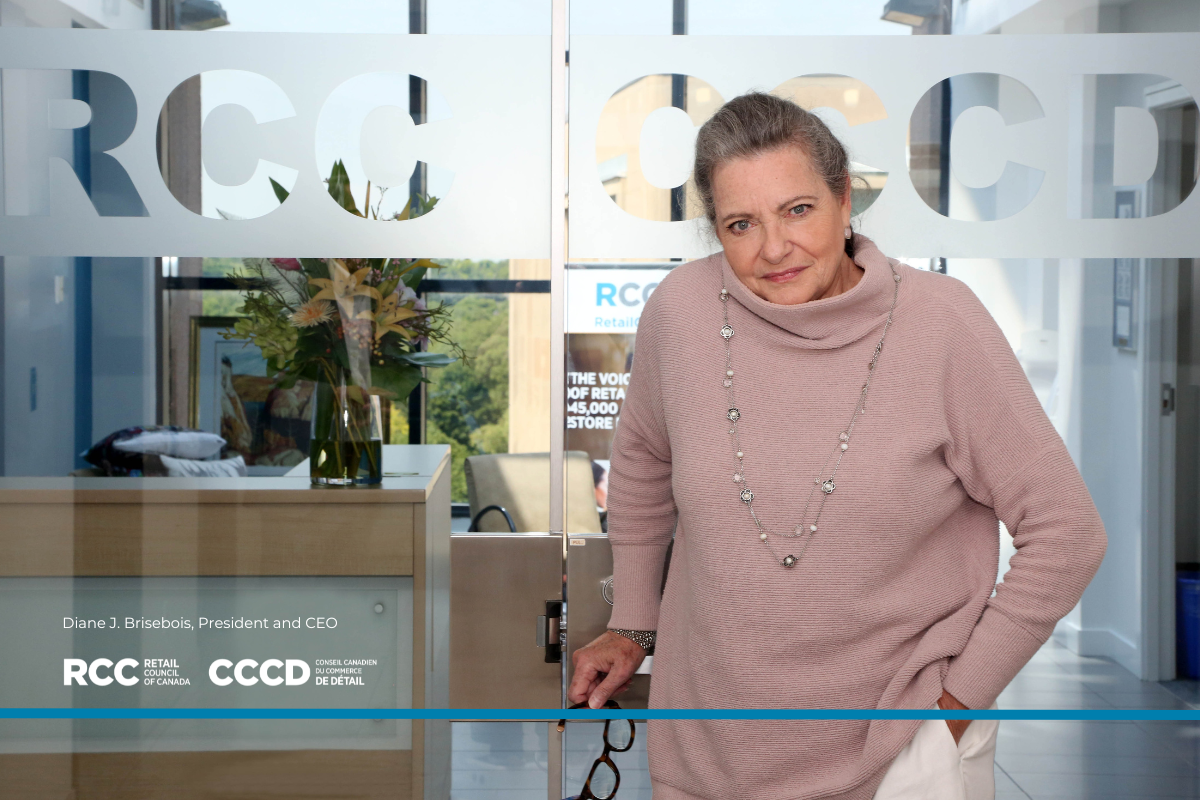
Diane J. Brisebois. Image: Retail Council of Canada
“Gary’s deep understanding of the evolving consumer landscape has helped drive strategic partnerships that are reshaping the way brands and retailers collaborate. We join FHCP in applauding Gary for his outstanding leadership,” said Diane J. Brisebois, President and CEO of Retail Council of Canada.
The Canadian Grand Prix Lifetime Achievement Award recognizes individuals or families who have demonstrated outstanding service and dedication to the Canadian retail and grocery industries. Recipients reflect the industry’s spirit of community and trust. They have demonstrated a lifelong commitment to their companies’ growth and innovation, to the communities they serve, and to philanthropy, said a news release.
“Over his past 30 years with Unilever, Gary has played a pivotal role in the company’s success—culminating in his appointment as President of Unilever Canada in 2017, where he has been instrumental in driving consistent growth, expanding market share, and strengthening the presence of Unilever’s trusted brands across the Canadian marketplace. Under his leadership, Unilever Canada has not only achieved strong commercial results but also demonstrated a deep commitment to sustainability, innovation, and consumer well-being,” it said.
“In February 2024, Gary’s role expanded to include CEO of Unilever’s Beauty & Wellbeing division in North America. In this dual capacity, he now leads operations across both Canada and the United States, guiding the growth and innovation of some of the region’s most iconic personal care and wellness brands.
“Gary’s industry influence extends well beyond Unilever. He has served as Chair of the Board for Food, Health & Consumer Products Canada (FHCP) and as Vice Chair of the Board for GS1 Canada, contributing valuable insight and advocacy that have shaped policy, advanced industry standards, and supported collaboration across sectors.”
Unilever is one of the world’s leading suppliers of Beauty & Wellbeing, Personal Care, Home Care, Foods and Ice Cream products, with sales in over 190 countries and products used by 3.4 billion people every day. We have 128,000 employees and generated sales of €60.8 billion in 2024. Its leading brands in Canada include Dove, Vaseline, Degree, Axe, SheaMoisture, TRESemmé, Knorr, Hellmann’s, Breyers, Magnum, Ben & Jerry’s, Liquid I.V., and OLLY.
Retail is Canada’s largest private-sector employer with over 2.3 million Canadians working in the industry. This sector is a major economic contributor, generating more than $93 billion annually in wages and employee benefits. In 2024, core retail sales (excluding vehicles and gasoline) exceeded $507 billion. RCC members account for more than two-thirds of these core retail sales and 95 per cent of the grocery market. Its membership extends across the country, embracing over 54,000 storefronts in diverse formats such as department, grocery, specialty, discount, independent retailers, online merchants, and quick service restaurants.
FHCP is the voice of the food, health, and consumer product industry that employs more than 350,000 Canadians across businesses of all sizes that manufacture and distribute the safe, high-quality products that are at the heart of healthy homes, healthy communities, and a healthy Canada.
The Lifetime Achievement Award will be presented to Wade at RCC’s Canadian Grand Prix Awards Gala on June 4 at the Toronto Congress Centre.
Capping off RCCSTORE25, Canada’s premier retail conference, the Canadian Grand Prix Awards Gala will celebrate innovation in food, non-food, CPG and private-label categories. Taking place June 3–4, RCCSTORE25 will feature 75+ expert speakers and draw retail leaders from across North America and beyond.
“We are off to a solid start to 2025, with our business delivering the results we expected in the first quarter,” said Richard Maltsbarger, Chief Executive Officer of Pet Valu. “Our effective commercial plan, together with strong in-store execution by our ACEs and franchisees, helped deliver a return to positive same-store sales growth and acceleration in revenue growth to 7%.
Richard Maltsbarger
“We look to build on this momentum as we move through the year, leveraging our differentiated merchandising strategy and agile operating structure to succeed in today’s evolving environment. All the while, we continue to advance the strategic investments to fuel long-term growth and profitability, such as the approaching completion of our supply chain transformation.”
First Quarter Highlights from Pet Valu
System-wide saleswere $366.1 million, an increase of 3.8% versus Q1 2024. Same-store sales growth was 1.4%.
Revenue was $279.1 million, up 7.0% versus Q1 2024.
Adjusted EBITDA was $58.7 million, up 3.8% versus Q1 2024, representing 21.0% of revenue. Operating income was $37.4 million, up 12.2% versus Q1 2024.
Net income was $21.8 million, up from $17.5 million in Q1 2024.
Adjusted Net Income was $25.4 million or $0.36 per diluted share, compared to $25.3 million or $0.35 per diluted share, respectively, in Q1 2024.
Opened 7 new stores and ended the quarter with 830 stores across the network.
The Board of Directors of the Company declared a dividend of $0.12 per common share.
Pet Valu said Fiscal 2025 will be a 53-week fiscal year for Pet Valu, compared to a 52-week fiscal year in Fiscal 2024. Including the impact of the 53rd week of operation in Fiscal 2025, the company said it expects:
Revenue between $1.17 and $1.20 billion, supported by approximately 40 new store openings, same-store sales growth between 1% and 4% and higher wholesale merchandise sales penetration;
Adjusted EBITDA between $254 and $260 million, which incorporates continued price investments and normalization of operating expenses;
Adjusted Net Income per Diluted Share between $1.60 and $1.66, which incorporates approximately $12 million pre-tax, or $0.12 per diluted share, of incremental depreciation and lease liability interest expense associated with the new distribution centres;
Transformation costs of approximately $13 million pre-tax, and share-based compensation of approximately $11 million pre-tax, both of which are excluded from Adjusted EBITDA and Adjusted Net Income per Diluted Share; and
Net Capital Expenditures of approximately $35 million.
“The Company is closely monitoring the evolving governmental foreign trade environment and believes it has the appropriate mechanisms in place to adapt, as necessary,” it said.
Buy Canada: Canadian woman shopping in a store. Photo: iStock/licensed
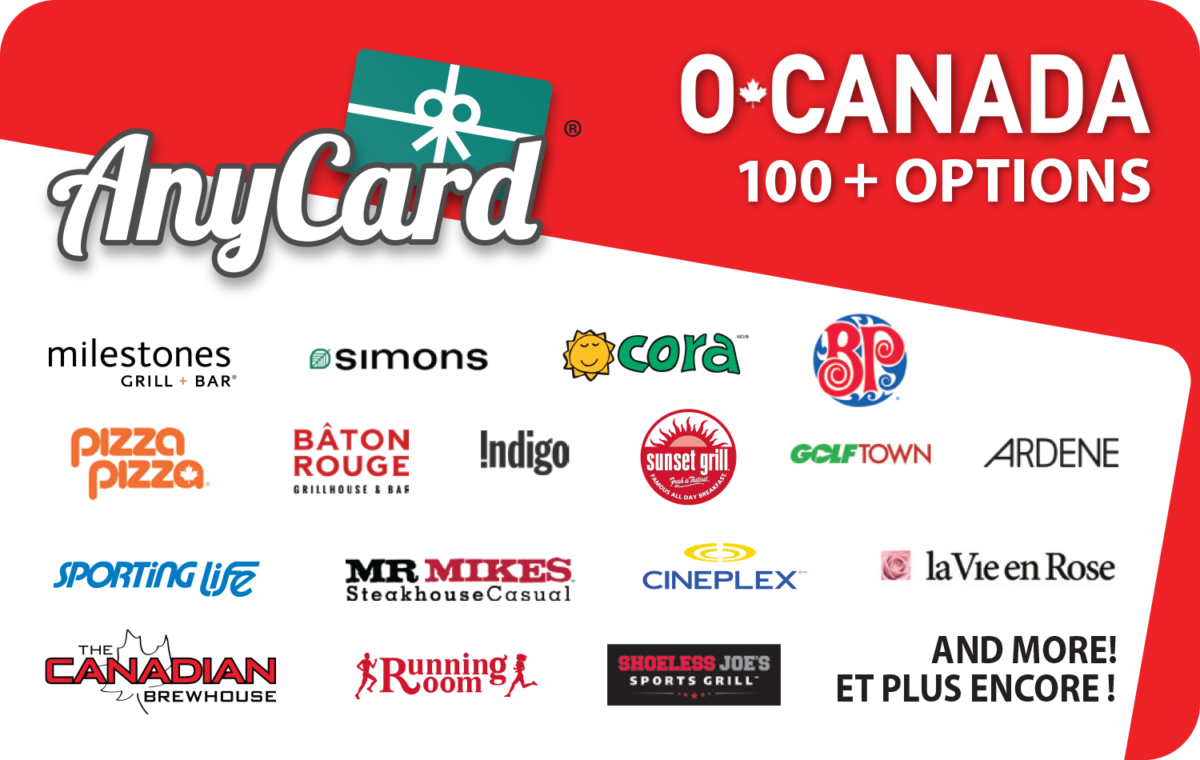
As Canadians increasingly seek to support local businesses, Oakville-based fintech company AnyCard has launched a new product designed to celebrate national pride while fuelling the domestic economy. The new O Canada Gift Card—announced this spring—is redeemable exclusively at Canadian-owned and operated retailers, restaurants, and experience providers.
Available in both physical and digital formats, the card is being positioned as a flexible gifting solution that lets recipients shop Canadian whether in-store or online. It can be purchased through AnyCard’s website and will soon be available at select retail partners, including Walmart.
“We created the O Canada Gift Card as a way to spotlight and support the incredible brands and businesses that call Canada home,” said Alex Barseghian, CEO of AnyCard. “It’s more than a gift card – it’s a love letter to Canada’s entrepreneurial spirit.”
Alex Barseghian, CEO of AnyCard
Exclusively Canadian, from Coast to Coast
The O Canada Gift Card offers consumers a streamlined way to support homegrown brands amid a wave of patriotic sentiment and a growing “Buy Canadian” movement. This initiative responds directly to a changing retail landscape in Canada, where shoppers are increasingly conscious of where their dollars go.
According to the company, the gift card has no expiry date or fees, and can be used at a curated list of top-tier Canadian-owned businesses across the country. It is also suited to a variety of occasions—ranging from personal gifts to corporate rewards.
As outlined in the launch announcement, key features of the card include:
Usable exclusively at Canadian-owned businesses
Availability in both physical and e-gift formats
No expiry date or fees
Ideal for corporate gifting, employee rewards, and patriotic gifting occasions
Rising Demand for Local Alternatives
The launch coincides with a major cultural and economic shift taking place in Canada. In 2025, rising trade tensions with the United States under the Trump administration triggered a nationwide reaction from Canadian consumers. With 25% tariffs imposed on Canadian exports and provocative comments suggesting annexation, many Canadians re-evaluated their purchasing habits.
A “Buy Canadian” movement gained significant momentum, with retailers labelling U.S. goods with a “T” to indicate tariff-inflated pricing. Multiple surveys showed that over three-quarters of Canadian consumers began actively seeking out locally made products—even when those came at a higher cost.
Digital tools, including mobile apps and websites, quickly emerged to help consumers identify Canadian-made goods. The O Canada Gift Card arrives at a moment when Canadians are looking for clear, accessible ways to channel their patriotic values through daily purchases.
O Canada Gift Card. Image: AnyCard
AnyCard’s Role in Canada’s Branded Payments Market
Founded in 2016, AnyCard is a Canadian fintech company based in Oakville, Ontario, with additional offices in Regina, Saskatchewan, and Oakland, California. The privately held firm has become known for its merchant-agnostic gift card offerings and customizable gifting solutions for businesses.
The company’s existing gift card portfolio includes theme-based cards like DINE, PLAY, and KIDZ, which allow recipients to redeem value across multiple brands. These products are available at major Canadian retailers, including grocery stores and pharmacies.
AnyCard also offers corporate gifting options that include digital and physical gift cards tailored for business incentives, loyalty rewards, and recognition programs. Features include bulk order management, volume discounts, and branding customization.
Its cards are distributed across thousands of retail locations and integrated into programs across both Canada and the United States.
A Patriotic Option for Gifting and Recognition
With the launch of the O Canada Gift Card, AnyCard is not only expanding its product lineup but also tapping into a powerful emotional and economic undercurrent in Canadian retail.
“It’s more than a gift card – it’s a love letter to Canada’s entrepreneurial spirit,” said Barseghian.
This latest release serves as both a practical product and a symbolic gesture, aligning with consumer values and national identity. As companies and individuals continue to seek Canadian-sourced options in an increasingly globalized—and geopolitically tense—market, the O Canada Gift Card provides a clear and impactful solution.
“We created the O Canada Gift Card as a way to spotlight and support the incredible brands and businesses that call Canada home.”
Hudson's Bay store at the St. Albert Centre in St. Albert, Alberta. Image: Apple Maps
A Toronto judge has ruled that Ursel Phillips Fellows Hopkinson LLP will represent more than 9,000 employees and 3,000 retirees of the Hudson’s Bay Company (HBC) in its ongoing creditor protection proceedings, putting an end to a heated battle between competing law firms seeking the role.
The endorsement, filed by Justice Peter Osborne on Monday, May 5, marks an important development in the Companies’ Creditors Arrangement Act (CCAA) case that has gripped one of Canada’s oldest and most iconic department store chains.
Dispute Over Representation Sparked Court Review
The appointment comes after tensions flared during a prior court hearing when multiple law firms—including Koskie Minsky LLP and Gowling WLG—contested the company’s selection process.
After soliciting interest from six legal firms, HBC’s legal team and its court-appointed Monitor recommended Ursel Phillips, citing the firm’s prior work in high-profile insolvencies involving Sears Canada and Nordstrom Canada.
However, Koskie Minsky, retained by 420 HBC workers, objected strongly to the selection process, calling it flawed and lacking transparency. The firm argued that only the court, not the company, has the authority to determine who should represent workers and retirees.
In response, Koskie Minsky requested that former Associate Chief Justice Douglas Cunningham be appointed to oversee the decision.
Justice Osborne agreed that the process required further review—but declined to appoint Cunningham, citing concerns over perceived bias. Instead, he appointed retired Justice Herman Wilton-Siegel, formerly of the Commercial List of the Ontario Superior Court, to evaluate the submissions and make a recommendation to the court.
Saks Fifth Avenue in the Hudson’s Bay building in downtown Toronto on Saturday, April 26, 2025. Photo: Craig Patterson
Five Law Firms Evaluated for Key Role
Wilton-Siegel conducted a comprehensive review of proposals submitted by five qualified law firms, each with significant commercial and insolvency experience.
“The decision to select one proposal out of five was difficult,” Wilton-Siegel acknowledged in his report to the court.
The evaluation focused on five key criteria:
Independence from HBC and the Monitor
Relevant insolvency and class action experience
Ability to effectively communicate with large employee groups
Cost efficiency
Willingness to work constructively with the Monitor
While all proposals demonstrated strength, Wilton-Siegel noted that several firms had conflicts of interest or prior legal ties to Hudson’s Bay.
Specifically, Koskie Minsky had previously participated in a class action lawsuit against HBC—a fact Wilton-Siegel found problematic. While such ties might be addressed through legal safeguards, he emphasized the importance of perceived impartiality.
“It is preferable that employee counsel be viewed as free of conflicts and past associations with the company or Monitor,” Wilton-Siegel wrote.
Why Ursel Phillips Was Chosen
Ursel Phillips Fellows Hopkinson LLP stood out for its conflict-free profile, as well as its deep understanding of the complex legal and emotional issues facing HBC employees and retirees.
The firm demonstrated a “thoughtful and sophisticated” approach to both the legal complexities of the CCAA process and the human realities facing non-unionized workers, retirees, and beneficiaries.
Wilton-Siegel concluded that Ursel Phillips would offer efficient and credible representation that meets the needs of the large and diverse group of stakeholders, while maintaining the independence and professionalism required in such a high-stakes restructuring.
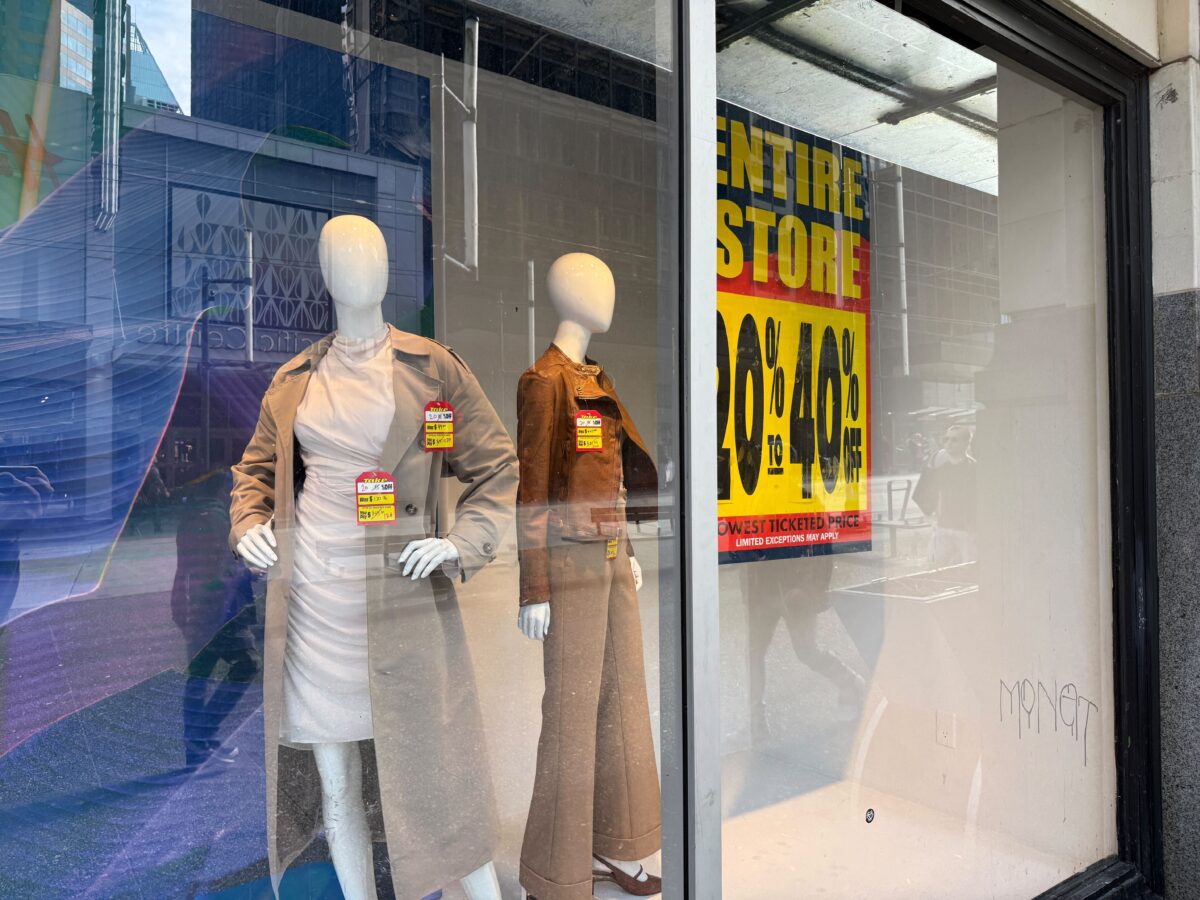
Display window at the Hudson’s Bay store in downtown Vancouver on Saturday, April 5, 2025. Photo: Lee Rivett
Judge: One Law Firm Will Represent All—For Now
In his original ruling issued orally on April 24, 2025, and later formalized in writing, Justice Osborne confirmed that only one representative counsel would be appointed at this stage of proceedings.
Some had argued that sub-groups, such as recipients of Supplemental Executive Retirement Plan (SERP) benefits, required separate representation. However, Osborne found that all affected stakeholders currently share a “commonality of interest.”
“This process can be best served today by the appointment of one representative counsel firm,” Osborne said, emphasizing that separate counsel could be considered in the future if materially divergent interests emerge.
He also stated that the Monitor will act as an interface between stakeholders and the Independent Third Party throughout the process and confirmed that the legal fees of the appointed firm will be covered by HBC as part of an administrative charge capped at $100,000.
Next Steps in the CCAA Process
Now formally appointed, Ursel Phillips will represent HBC’s non-unionized employees and retirees as the CCAA proceedings unfold. Their mandate includes communicating legal updates, answering questions from affected parties, and participating in court proceedings involving employment-related entitlements.
This includes matters related to:
Post-retirement health and dental benefits, which HBC has discontinued
Life insurance and long-term disability claims
SERP benefits, some of which are underfunded or terminated
Communication with surviving spouses and beneficiaries
The Pension Plan, which remains in place and is currently reported to be fully funded, is excluded from their mandate. Oversight of that plan has been transferred to Telus Health, appointed by the Financial Services Regulatory Authority of Ontario (FSRA).
Retail Insider is streamlining its Canadian retail news from around the web to include a handful of top news stories that can be viewed quickly during the day. Here are the top stories from the past 24 hours.
Hudson's Bay store at CF Carrefour Laval in Montreal, part of the RioCan JV. Image: Apple Maps
Toronto-based RioCan Real Estate Investment Trust has released an official statement following the March 2025 decision by the Hudson’s Bay Company (HBC) to file for creditor protection under the Companies’ Creditors Arrangement Act (CCAA). The filing affects several joint venture properties shared between the two firms and has prompted RioCan to outline both the financial implications and the company’s proactive strategy to manage the fallout.
RioCan confirmed that its exposure to the Hudson’s Bay situation remains limited in the context of its broader portfolio. As of December 31, 2024, the carrying value of the RioCan-HBC joint venture (JV) amounted to $249.0 million, or approximately 3.3% of RioCan’s total equity.
The joint venture contributed $23.7 million in net operating income (NOI) and $13.6 million in funds from operations (FFO) to RioCan in 2024 on a proportionate share basis. While significant, these figures represent a relatively small slice of RioCan’s diversified real estate operations.
Credit Support and Security Interests
RioCan noted that it had provided a total of $88.7 million in credit support to HBC through the JV. This included a $55.0 million guarantee on a loan and $33.7 million in mezzanine financing. In return, the REIT secured multiple safeguards: it holds a security interest in various joint venture properties and received financial benefits including $6.6 million in fees related to the guarantee and loan arrangements, and $3.3 million in interest income during 2024.
According to the company, these protections place RioCan in a better position to recover value if HBC’s restructuring results in changes to ownership or occupancy of any affected JV properties.
Impacted Real Estate: Prime Canadian Properties at Stake
The RioCan-HBC joint venture portfolio comprises 13 retail locations in key Canadian markets, many of which are considered flagship properties for both companies. These include:
Downtown properties in Montreal, Vancouver, Calgary, and Ottawa.
Suburban assets located in leading shopping centres such as: Yorkdale Shopping Centre (Toronto), Scarborough Town Centre (Toronto), Square One Shopping Centre (Mississauga), CF Carrefour Laval (Quebec), Promenades St-Bruno (Quebec), Devonshire Mall (Windsor).
These properties are considered highly desirable, offering strong foot traffic, urban density, and long-term redevelopment potential, said RioCan.
Downtown Montreal flagship Hudson’s Bay store on April 24, 2025. The building started as a location for the Henry Morgan department store chain, which in decades past operated as an upscale business. Photo: Carl Boutet
Strategic Outlook: Redevelopment and Recovery Plans
RioCan expressed confidence in its ability to manage the evolving situation. In the statement, the REIT acknowledged its disappointment with the CCAA filing but underscored its focus on leveraging internal capabilities to protect and grow asset value. “We will pursue all available business and legal avenues to protect the interests of our unitholders and stakeholders,” the company said.
RioCan emphasized its extensive experience in managing vacant spaces and transforming retail properties for alternative or mixed-use applications. With a well-documented track record of redevelopment, the company suggested that the impacted sites may offer new opportunities, depending on how HBC’s restructuring unfolds.
Strength of the Core Business
Despite the uncertainty surrounding the HBC joint venture, RioCan reassured investors that its core operations remain robust. The company highlighted its “strong core business, solid balance sheet, and experienced management team” as critical assets that will help it weather any near-term turbulence associated with HBC’s insolvency proceedings.
The message to stakeholders was clear: while RioCan is exposed to the situation, its diversified portfolio and strategic foresight position it well to absorb and adapt to the impact.
“Grocery anchored real estate has proven its resiliency through various economic cycles, and we continue to have great conviction in the ability of this asset class to perform in today’s economic environment,” said Blair Welch, Chief Executive Officer of Slate Grocery REIT.
“Our portfolio continues to deliver healthy growth in same-property net operating income, driven by consistently strong leasing activity at double-digit spreads. Our team achieved record high renewal spreads in the first quarter, underscoring the growth embedded in our portfolio of below market rents. With new supply in the grocery-anchored sector expected to remain constrained in the near to medium term, we believe our portfolio is well positioned to drive stable growth and long-term value creation.”
The CEO’s letter to unitholders for the quarter can be found here.
Slate’s Q1 Highlights
Same-property Net Operating Income (“NOI”) increased by 4.3% or $6.8 million on a trailing twelve-month basis, adjusting for completed redevelopments, driven by several consecutive quarters of strong leasing volumes at attractive spreads
The REIT completed 222,886 square feet of total leasing in the quarter; renewal spreads reached a record high at 17.1% above expiring rents, and new deals were completed at 22.2% above comparable average in-place rent
Portfolio occupancy remained stable at 94.4%, as at March 31, 2025
The REIT’s average in-place rent of $12.72 per square foot remains well below the market average of $23.85, providing significant runway for continued rent increases
The REIT has only $179.4 million of debt maturing in 2025, which represents 12.9% of the REIT’s total debt
The REIT financed $17.4 million of debt subsequent to quarter end, with productive discussions underway to refinance additional upcoming maturities
The REIT’s current portfolio valuation continues to provide significant positive leverage and embedded NOI growth
The REIT’s units continue to trade at a discount to net asset value, presenting a compelling investment opportunity for unitholders looking for an attractive total return
Slate Grocery REIT is an owner and operator of U.S. grocery-anchored real estate. The REIT owns and operates approximately $2.4 billion of critical real estate infrastructure across major U.S. metro markets.
“Hudson’s Bay Company ULC (HBC), the primary tenant of the RC-HBC JV, filed for creditor protection on March 7, 2025 under the Companies’ Creditors Arrangement Act (CCAA). Through its investment in the RC-HBC JV, RioCan indirectly holds a 22% interest in ten locations where HBC is the sole tenant, and an 11% interest in two multi-tenanted locations (the RC-HBC JV owns 50% of these two multi-tenanted locations and RioCan owns 50% directly). Please refer to RioCan’s Press Release dated March 18, 2025,RioCan Real Estate Investment Trust Provides Update on Hudson’s Bay Company’s CCAA Filing, which provides details of RioCan’s balance sheet and FFO exposure.
“A court order dated March 21, 2025 requires HBC to pay $7.0 million of the approximate $10.0 million (at 100%) of monthly occupancy rent due to the RC-HBC JV. This payment provides sufficient cash flow to cover expenses, debt service obligations and fees, including fees and debt service that is payable to RioCan. The remaining amount will be accrued with a charge against the HBC estate, ranking ahead of the pre-filing creditors. RioCan has recorded a provision of approximately $1.0 million (at RioCan’s share) for the uncollected portion.
“RioCan also evaluated the carrying value of its net investment in the RC-HBC JV and recognized $208.8 million of Total RC-HBC JV Valuation Losses for the three months ended March 31, 2025. These valuation losses were based on management’s best estimate using the information available to the Trust and include the assumption of re-leasing the investment properties to new tenants at market rents below existing rents at sole tenant locations.”
RioCan is one of Canada’s largest real estate investment trusts. It owns, manages and develops retail-focused, mixed-use properties located in prime, high-density transit-oriented areas where Canadians want to shop, live and work. As at March 31, 2025, its portfolio is comprised of 177 properties with an aggregate net leasable area of approximately 32 million square feet (at RioCan’s interest).
As for its Q1 financial results, RioCan noted these highlights:
Strong leasing demand generated new leasing spreads of 18.3%; blended leasing spreads of 17.5%
Commercial Same Property NOI increased to 3.6%
96% completion of expected First Quarter condominium interim closings to date; cumulative 97% success rate since Q4 2024
RioCan Living asset monetization strategy proceeding with deals for the sale of four additional assets
Jonathan Gitlin
“RioCan’s major-market, necessity-based portfolio delivered strong operational and financial results in the first quarter of 2025, despite significant global economic volatility and short-term challenges presented by HBC’s CCAA filing. We continue to successfully deliver on our strategy to monetize our RioCan Living portfolio and met our interim condominium closing targets for Q1”, said Jonathan Gitlin, President and CEO of RioCan.
“We remain focused on executing our strategy to drive growth and responsibly managing capital to maximize long-term value for our Unitholders. With a proven track record and experienced team, we are well positioned to successfully navigate any economic environment. With respect to HBC, we will be disciplined in our approach, and we are committed to protecting the interests of our Unitholders.”