Happy Belly Food Group Inc., a leading consolidator of emerging food brands, has secured a location for its smash burger brand Rosie’s Burgers, located at 1542 Avenue Road in Toronto.
Rosie’s Burgers is a boutique quick serve restaurant brand serving original recipe smash burgers, poutine, onion rings, milkshakes and more.
Sean Black
“The Rosie’s brand continues to expand across Canada, and today’s announcement highlights our ability to secure AAA locations for our emerging brands,” said Sean Black, Chief Executive Officer of Happy Belly.
“With multiple locations now in construction and more on the way for 2025 we are about to realize significant growth thanks to our ability to open corporate stores as well as franchise locations in parallel paths.
“This location will be opened and operated corporately which is the second planned corporate Rosie’s location for 2025 along side our recently secured Shops of Don Mills location as we look to reinvest the free cash-flow back into the brand to deliver accelerated growth.
“When we acquired Rosie’s less than a year ago, the brand was operating just two locations in the GTA and had no franchising program in place. Today, Rosie’s has grown to four operational locations across two provinces, with an additional 12 locations either corporate-owned, assigned to franchisees, or under construction. This remarkable growth trajectory demonstrates the strength of the brand, and we have no plans of slowing down.”
The company said the new location is ideally situated in North Toronto’s affluent Avenue & Lawrence neighborhood, and set to open in Q2 2025.
“It is expected to expand Rosie’s customer base in a densely populated area that aligns with the brand’s target demographics, offering significant opportunities both in-store and through delivery. Toronto’s impressive growth and support for homegrown businesses make it an ideal market for expanding our brands. With its thriving food culture and vibrant dining scene, the city’s growing population and enthusiasm for emerging food brands create strong demand for Rosie’s delicious burger offerings,” it said in a news release, adding that its overarching strategy has always been to focus on the development and growth of emerging brands within the food sector.
Photo: Happy Belly Food Group
“We currently have 421 contractually committed retail locations from area developers across all emerging brands in the Happy Belly Portfolio – whether in development, under construction, or already open. As we open new stores, the Happy Belly footprint continues to grow. Our team is committed to sourcing and evaluating real estate, reviewing franchisee applications, and collaborating closely with area developers to support our asset-light franchising model. At present, several of our restaurant brands are simultaneously under construction, and we are excited to announce openings throughout 2024-2025. By focusing on securing high-quality franchisees and prime real estate locations across Canada, we will further strengthen our expansion efforts,” said Black.
The opening marks the brand’s return to Alberta after about seven years. The new shop is the sixth to open as part of an agreement between the brand and McMaster Group Holdings for expansion into the Vancouver and Calgary markets, said the company in a news release.
“I am honoured to have a role in bringing this iconic brand back to Alberta, and especially to the vibrant city of Calgary,” said Ashry. “Baskin-Robbins has a longstanding reputation for quality and innovation, and I’m proud to be part of a brand that has brought joy to millions of customers around the world.”
The company said the new shops feature the brand’s updated look and feel, which includes a bright and inviting interior, flexible and comfortable seating, animated digital menu boards and a more expansive cake display, The Cakery, with a growing assortment of customized cakes and pre-packs.
Baskin-Robbins, founded in the United States in 1945, is the world’s largest chain of ice cream specialty shops, with more than 7,700 retail shops in 33 global markets. Celebrating 53 years in Canada, Baskin-Robbins operates 116 locations in Ontario, Quebec, Manitoba, British Columbia and now Alberta. Baskin-Robbins is part of the Inspire Brands family of restaurants.
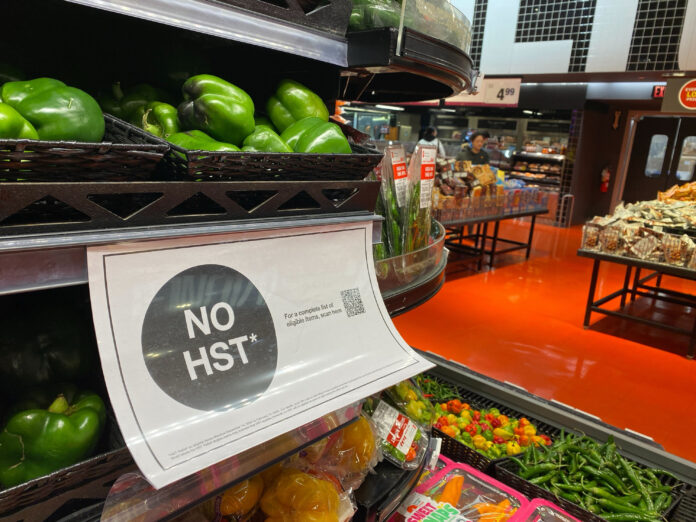
No HST on products in a grocery store in Toronto. Photo: Dustin Fuhs
The recently announced GST holiday in Canada has left small businesses scrambling to navigate its complex implementation. Retailers across the country are expressing concerns over increased costs, operational confusion, and the uneven application of the policy between provinces. While the government aims to stimulate spending during the holiday season, experts warn that the short-term policy is burdening businesses at the worst possible time.
“Small businesses must overhaul their IT systems to apply taxes on certain products—only to undo it two months later. It’s a logistical and financial headache,” Pimentel says.
Erica Pimentel, Accounting Professor at Smith School of Business at Queen’s University
A Costly and Complex Process
For many small businesses, the GST holiday requires significant changes to IT systems, inventory management, and staffing processes. Unlike major corporations with advanced IT infrastructure, small retailers are often left to manually update their systems to identify products eligible for the exemption.
“Large retailers like Amazon can use AI and sophisticated databases to determine which items are exempt,” Pimentel explains. “But a small business owner—like a pharmacist who sells shampoos or cosmetics—might not have those resources. They’re going through their inventory, line by line, to comply with the GST holiday.”
The financial burden of compliance extends beyond IT systems. Businesses must allocate staff to verify eligible items and explain the policy to customers, creating additional costs during an already busy holiday season.
“You need frontline staff to handle customer questions, because there’s going to be confusion,” Pimentel notes. “You can’t litigate tax rules at the checkout counter during Christmas rush.”
Uneven Policy Across Provinces
A major point of frustration for businesses and consumers alike is the inequitable application of the GST holiday across provinces. The combined GST and HST savings vary significantly depending on location—with Ontario shoppers saving 14% while Quebec residents only see a 5% reduction.
“If you operate in multiple provinces, you’re facing a logistical nightmare,” says Pimentel. “In Ontario, the customer expects 14% off. In Quebec, it’s only 5%. That means national retailers need to make province-by-province changes to their systems.”
For retailers located near provincial borders, the disparity could lead to unusual shopping patterns. Pimentel describes a scenario in which consumers might cross from Quebec into Ontario to capitalize on the greater savings.
“If you live in a border town, you’re incentivized to shop in Ontario rather than Quebec,” she says. “The savings add up, especially for big-ticket items like electronics or video games.”
Prime Minister Justin Trudeau’s government lifted the GST/HST from some essential items for a two-month period before and after Christmas. (Chris Young/Canadian Press)
Product Eligibility Adds Confusion
The policy’s unclear definitions of eligible products add another layer of complexity for small retailers. Pimentel highlights the arbitrary nature of the exemptions, which can lead to disputes at the point of sale.
“Take Star Wars figurines, for example. If you’re selling vintage collectibles, those are subject to GST. But if it’s a new toy aimed at children, it’s exempt,” she says. “How do you explain that to a customer who thinks they deserve the exemption?”
The confusion extends to digital products versus physical goods.
“If you buy a physical book, it’s exempt from GST. But if you buy an e-book, it’s not. The same applies to video games—physical copies are exempt, but digital downloads are not,” Pimentel explains. “It’s as though the policy doesn’t reflect modern consumer habits.”
Small Businesses Left to Absorb Costs
The financial burden of implementing the GST holiday disproportionately affects small businesses. Without government support or incentives, many retailers must absorb compliance costs while managing razor-thin margins.
“If the government had offered small businesses a tax credit or some kind of financial incentive, this might have been more palatable,” Pimentel says. “Instead, businesses are left to comply on their own, with no additional resources.”
Some retailers are even questioning whether it’s worth participating at all. Pimentel recounts hearing stories of businesses considering non-compliance, only to donate any GST mistakenly collected to charity.
“You can’t do that,” she warns. “If you collect GST, you have to remit it to the Canada Revenue Agency. There’s no way around it.”
Strategies for Small Businesses
Despite the challenges, Pimentel offers practical advice for businesses to navigate the GST holiday. Her primary recommendation is to document every decision and compliance effort to prepare for potential audits.
“Keep records of the analysis you’ve done and any conversations with accountants. The CRA says it’s only targeting egregious non-compliance, but you need to protect yourself,” she advises.
She also stresses the importance of setting clear internal policies and ensuring frontline staff are informed.
“Have a policy in place for determining what qualifies and stick to it. Make sure your staff are trained to answer customer questions, because confusion is inevitable,” she says.
A Perfect Storm for Retailers
The GST holiday comes at a particularly challenging time for Canadian retailers. Businesses are already grappling with inflation, higher shipping costs due to recent postal and port disruptions, and a weak Canadian dollar. Adding the operational burden of the GST holiday could push some small retailers to the brink.
“Retailers are dealing with increased costs from every direction,” Pimentel says. “Higher shipping rates, tariffs, inflation—it’s a perfect storm. And now, they’re being asked to implement a complex policy with no runway to prepare.”
Policymakers Need to Rethink
Pimentel believes the GST holiday highlights a broader need to reconsider Canada’s tax system. Instead of short-term measures, she suggests a more comprehensive approach to exempting essential goods and supporting small businesses.
“If the government wants to provide meaningful relief, they should consider making certain essential items permanently tax-exempt,” she says. “But these quick fixes don’t work. They create confusion and put an unfair burden on small business owners.”
As small businesses grapple with the GST holiday’s implementation, the question remains whether the policy will have its intended impact. Pimentel worries that the short-term stimulus won’t outweigh the long-term costs for retailers.
“We want to see more people shopping and spending during the holidays,” she says. “But if businesses are bogged down by compliance issues and consumers are left confused, I’m not sure it will have the desired effect.”
This festive season, Canadian budgets for holiday goods are seeing a merry increase of 32% year-over-year – the most significant rise since 2019, says a report and survey by JLL Canada.
“Deal seeking behaviour shapes holiday shopping strategies, with nearly 90% of respondents looking for bargains. Saving money remains a top priority, with Gen Z emerging as the biggest savers. Regionally, B.C. and Ontario residents are channelling the generosity of the Ghost of Christmas Present with larger budgets and greater reliance on social media for purchasing decisions, while Albertans are frugal about their holiday wish-lists,” said the report.
“Shopping centres remain the preferred avenue for holiday purchases, with 74% of respondents choosing this option. However, internet platforms are close behind at 70%, indicating a diversified approach to gift-sourcing.
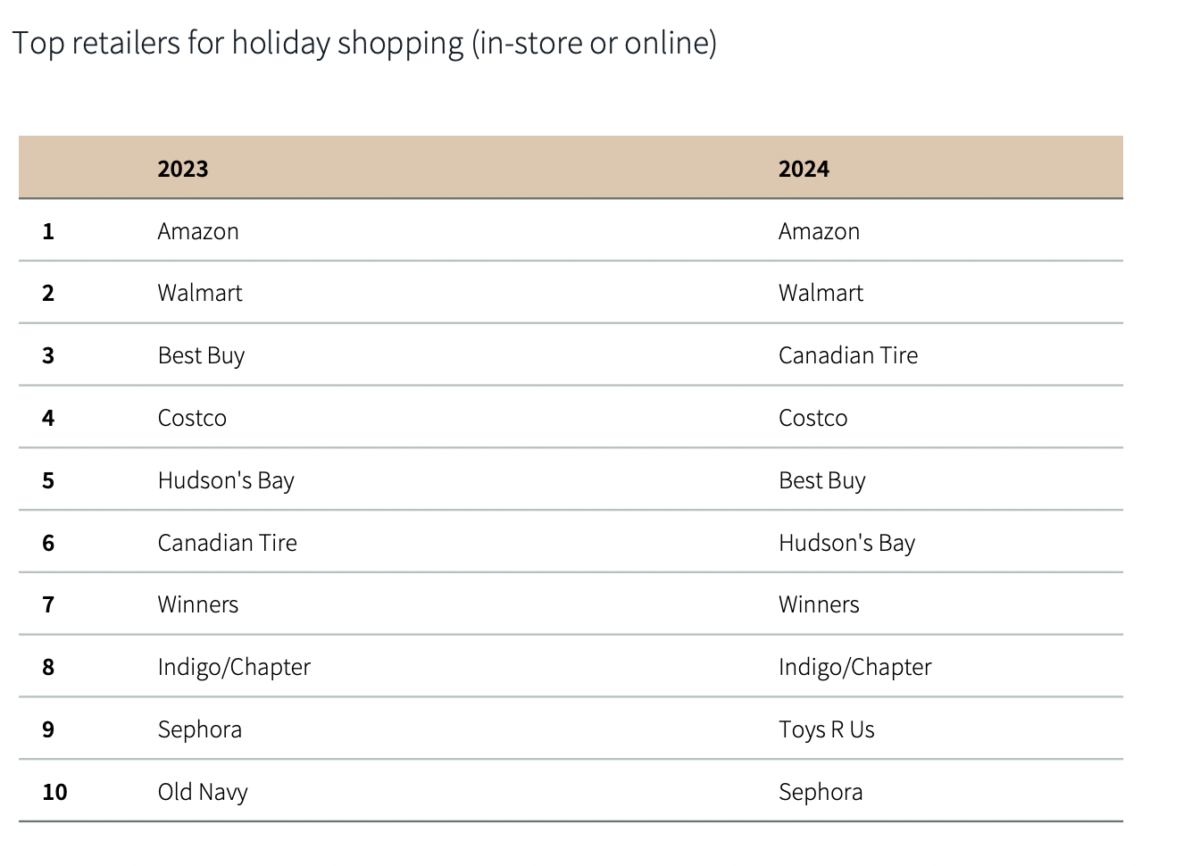
“Nearly all respondents intend to go to shopping centres, with many planning to spend between 30 and 90 minutes there. The weeks leading up to Black Friday are proving to be the most popular shopping period, especially for online purchases. Gift cards, clothing, and shoes top the list of sought-after items, reflecting a trend toward practical and flexible gift options. Mass merchandisers remain the top physical-store type for Canadian holiday shoppers, followed by clothing and accessories stores, then discount or dollar stores. Amazon has strengthened its lead as the preferred choice for Canadian shoppers, followed by Walmart and Canadian Tire.”
The report said Canadians plan to spread 32% more joy, with budgets for holiday goods increasing from an average of $739 in 2023 to $971 in 2024. JLL said this is the most significant increase since it began tracking holiday budgets in 2019.
“Additionally, Canadians are putting more emphasis on experiences, with plans to increase spending from $310 to $553, a 64% increase from last year. As a result, when considering both goods and experiences, the share of experiences increased from 30 to 36%, while the share of holiday expenses such as food and decorations decreased from 21 to 17%.”
Photo by JLL
The report said the younger the generation, the more likely the respondent is to save. While nearly half of Zoomers choose to save, just over one third of Boomers do.
“For 42% of respondents, saving money remains a top priority this year. More Canadians will prioritize saving money or giving their friends and family what they want. At the same time, fewer Canadians will focus on avoiding the hassle and crowds and on having fun,” said JLL.
“More than half of Albertans will prioritize saving money this holiday season, compared with fewer than one-quarter of Saskatchewan shoppers. Saskatchewan is the only province where getting loved ones what they want is the top priority. In turn, Atlantic provinces are more likely to save money than the national average.”
The report said shopping centres remain the preferred shopping method in Canada, with 74% of respondents choosing this option, followed by online purchases from internet platforms at 70%.
Photo by JLL
“Most shopping methods will see increased use this year as shoppers seek more variety for their holiday gift giving. As a result, the average number of channels has increased from 2.4 to 2.7, indicating greater engagement across multiple channels. Buying online from brick-and-mortar stores with home delivery gained the most popularity this year, while buying online for curbside pickup saw almost no growth,” explained the report.
“More shoppers will visit shopping centres this holiday season, with nearly all respondents planning to join the festive fray. The average dwell time has also increased slightly from 65 to 66 minutes. With an expected increase in foot traffic in shopping centres, more shoppers plan to spend between 30 and 90 minutes, growing the percentage of respondents from 50 to 54%. In turn, the percentage of shoppers who spend less than 30 minutes or more than 90 minutes remains unchanged from last year’s holiday rush.
“In addition to those who go to eat and drink, those who spend more than 90 minutes also have a higher average holiday budget for goods and experiences. Those who spend less than 30 minutes, however, don’t necessarily have less to spend but tend to prefer to shop online for their festive finds.”
Retail sales increased 0.6% to $67.6 billion in October. Sales were up in five of nine subsectors and were led by increases at motor vehicle and parts dealers, according to a report released Friday by Statistics Canada.
Core retail sales—which exclude gasoline stations and fuel vendors and motor vehicle and parts dealers—were up 0.2% in October. In volume terms, retail sales were unchanged in October, said the federal agency.
Sales up at motor vehicle and parts dealers
The largest increase in retail sales in October was observed at motor vehicle and parts dealers (+2.0%). Higher sales at new car dealers (+2.5%) led the increase, followed by used car dealers (+2.5%). Automotive parts, accessories and tire retailers (-3.3%) were the only store type within this subsector to record a decrease in October, it said.
Sales at gasoline stations and fuel vendors (-0.5%) were down for a sixth consecutive month in October. In volume terms, sales at gasoline stations and fuel vendors decreased 4.7%, following an increase of 4.1% in September, it added.
Core retail sales rise
“Core retail sales increased 0.2% in October, posting their second consecutive monthly increase. The gain was led by higher sales at furniture, home furnishings, electronics and appliances retailers (+2.5%). In October, higher sales were also recorded at health and personal care retailers (+0.8%),” noted Statistics Canada.
“The largest decrease in core retail sales in October came from food and beverage retailers (-0.7%). Sales at food and beverage retailers were down from lower sales at supermarkets and other grocery retailers (except convenience retailers) (-0.9%) and beer, wine and liquor retailers (-0.4%).”
On a seasonally adjusted basis, retail e-commerce sales were up 1.5% to $4.2 billion in October, accounting for 6.2% of total retail trade, said StatsCan.
“Statistics Canada is providing an advance estimate of retail sales, which suggests that sales were relatively unchanged in November. Owing to its early nature, this figure will be revised. This unofficial estimate was calculated based on responses received from 50.6% of companies surveyed. The average final response rate for the survey over the previous 12 months was 88.7%,” it said.
“Much of the gain in October sales was driven by prices, and by increased spending in the often volatile auto sector . . . Gains in furniture & electronic stores were offset by declines in building materials & supplies and food & beverage. The advance estimate for November pointed to no change in sales relative to the prior month. However, the announcement by the Federal government in late November of a GST holiday beginning mid-December may have encouraged some households to defer purchases and therefore could have dampened November retail sales slightly. We will need to see the December data to get a full view of holiday spending,” he said.
“Even though the latest release wasn’t as strong as the prior one, consumer spending has still clearly improved relative to the trend seen earlier in the year. However, that fact is to be welcomed and not feared from an inflation point of view. Evidence of bloated inventory levels in the retail sector during the first half of the year showed plenty of room for spending to accelerate without necessarily resulting in upward pressure on prices.”
Maria Solovieva
Maria Solovieva, Economist, TD Economics, said Canadians embraced the festive spirit in October, with spending gaining momentum as the official retail holiday season got underway.
“While the advance estimate for November suggests some softening, the GST holiday is expected to ring in stronger sales for December, giving retail cash registers a boost,” she said.
“With inflation back at target, the three month average real retail sales per capita trend – a key indicator of purchasing power and consumer activity – posted growth for the second consecutive month. Weforecastreal personal consumption expenditure to grow at a tad above-trend pace of 1.9% annualized in Q4.”
Advance estimate for wholesale trade
Statistics Canada said it is providing an advance estimate of sales in the wholesale trade sector for November. The advance results for November indicate that wholesale sales (excluding petroleum, petroleum products, and other hydrocarbons and excluding oilseed and grain) fell 0.7%. The decline reflects lower sales in the motor vehicle and motor vehicle parts and accessories subsector.
This estimate was calculated based on a weighted response rate of 58.8%. The average final response rate to the survey over the 12 preceding months was 81.9%. As Statistics Canada continues to collect data for the November reference month, this early indicator is subject to a higher revision rate than the regular monthly release, it said.
In October, payroll employment in retail trade increased by 4,200 (+0.2%), partially offsetting the decline in September (-8,400; -0.4%). Despite the October increase, overall payroll employment in the sector has generally trended downward since February 2024, with a net decline of 21,200 (-1.1%) over the period, according to recent data from Statistics Canada.
This net decline since February was concentrated in sporting goods, hobby, musical instrument, book, and miscellaneous retailers (-9,000; -4.2%), building material and garden equipment and supplies dealers (-7,900; -5.5%) and clothing, clothing accessories, shoes, jewelry, luggage and leather goods retailers (-6,700; -3.2%), said the federal agency.
However, gains in payroll employment in several retail trade industries have dampened the overall downward trend since February. The gains over this period were concentrated in food and beverage retailers (+4,400; +0.8%), health and personal care retailers (+3,000; 1.4%) and motor vehicle and parts dealers (+2,300; +1.0%), it added.
Photo by Arina Krasnikova
“Job vacancies in retail trade declined by 5,700 (-12.1%) to 41,400 in October, their lowest level since April 2016 (40,600). The number of vacancies in the sector was down by 22,500 (-35.2%) on a year-over-year basis, and down by 71,300 (-63.3%) compared with the peak in December 2021 (112,700),” explained Statistics Canada.
“In October, the job vacancy rate (2.0%) in retail trade also reached the lowest rate since April 2016 (when it was also 2.0%). Month over month, the job vacancy rate in October 2024 was down 0.3 percentage points from September (2.3%) and 1.1 percentage points from October 2023 (3.1%).”
The job vacancy rate corresponds to the number of vacant positions as a proportion of total labour demand.
In October, payroll employment in accommodation and food services (-3,500; -0.3%) declined for the second consecutive month, following a drop of 8,400 (-0.6%) in September, said the report.
“The cumulative declines in this sector in September and October were attributable to declines in full-service restaurants and limited-service eating places (-14,000; -1.4%). In October, this industry accounted for more than three-quarters (76.9%) of overall payroll employment in the accommodation and food services sector,” it said.
“On a year-over-year basis, payroll employment in accommodation and food services was down 13,700 (-1.0%) in October.”
Nationally, Statistics Canada said the number of employees receiving pay and benefits from their employer—measured as “payroll employment” in the Survey of Employment, Payrolls and Hours—fell by 21,100 (-0.1%) in October, following little change in September and August. On a year-over-year basis, payroll employment was up 125,800 (+0.7%) in October.
Meanwhile, job vacancies decreased by 15,000 (-2.8%) to 513,200 in October, following little change in September and a decrease of 16,700 (-3.1%) in August.
“In October, monthly payroll employment declines were recorded in 7 out of 20 sectors, led by manufacturing (-5,900; -0.4%), professional, scientific and technical services (-3,700; -0.3%) and accommodation and food services (-3,500; -0.3%),” noted the report.
“The declines in October were partially offset by gains in retail trade (+4,200; +0.2%), construction (+3,400; +0.3%), public administration (+3,300; +0.3%) and health care and social assistance (+3,300; +0.1%). The remaining nine sectors were little changed.
“Job vacancies decreased by 15,000 (-2.8%) to 513,200 in October, following little change in September and a decrease of 16,700 (-3.1%) in August. The number of job vacancies in October was down by nearly half (-48.9%) from the peak of over one million reached in May 2022. Compared to October 2023, job vacancies were down by 159,400 (-23.7%) in October 2024.”
The job vacancy rate was 2.9% in October, down by 0.1 percentage points from the previous month (3.0%) and down by 0.9 percentage points from October 2023 (3.8%), added StatsCan.
It said there were 2.8 unemployed persons for every job vacancy in October 2024, up from 2.7 in the previous month. Since October 2023, the unemployment-to-job vacancy ratio rose from 1.8 to 2.8, reflecting the cooling of labour market conditions over this period.
As we bid goodbye to 2024, I have been reflecting on how generative AI has continued to evolve from a nascent technology into a powerful force driving real business value. In conversations with Canadian customers earlier this year, many were taking their first tentative steps, exploring how generative AI could impact their organizations through pilot projects and small-scale deployments.
But the landscape has shifted dramatically. Companies have moved beyond AI experimentation to full-scale deployments, transforming specific parts of their business. Many of these projects, while not always immediately noticeable to consumers, have focused on optimizing back-end processes or enhancing customer-facing platforms, yielding impressive cost savings and productivity improvements. Companies like TELUS and Dollarama are already reaping the rewards, and it’s encouraging to see other Canadian businesses across all industries follow suit, establishing their own generative AI strategies.
This momentum positions 2025 as a pivotal year for generative AI adoption in Canada. As the technology matures and initial deployments demonstrate tangible value, executives will face the imperative to build winning AI strategies that fundamentally transform how their companies operate, compete, and innovate.
AI Trends to Watch in 2025
Our recent Economic Impact Report highlighted AI’s potential to boost Canada’s economy by $230 billion and save the average worker 175 hours per year. The scale of this opportunity demands that every business leader pay close attention to key AI trends in 2025.
Here are a few that I believe will positively impact key industries in Canada and drive real productivity growth across the country:
Companies will release more customer-facing AI products. AI-powered solutions will revolutionize the customer experience, enabling organizations to anticipate needs and forge stronger customer connections. Thomson Reuters, with the launch of Co-Counsel 2024, provided an early example. In 2025, organizations across all sectors will launch AI-powered products designed to increase revenue and efficiency, boost efficiency, and cultivate brand loyalty.
AI agents will streamline workflows and empower employees. As AI agents become more sophisticated, they’ll manage complex workflows, automate business processes, and empower employees. Bell Canada, an early adopter, partnered with us to transform their contact center with AI, including with Conversational Agents and Agent Assist. Bell’s CEO recently described how this transformation improved the customer experience and generated $20 million in savings.
Canadian startups will scale with AI. Canada is already home to successful AI startups like Cohere. Next year, we’ll see Canadian startups launch AI-powered products across a diverse array of sectors. We’re proud to work with many emerging startups in Canada – like Viral Nation– and can’t wait to see what they’ll accomplish in 2025.
Industry-Specific Predictions
Beyond these overarching predictions, I’m particularly excited about how different industries will continue to adopt generative AI and drive innovation for their customers, specifically in the following sectors:
Retail: In 2024, successful retail projects focused on delivering real value for both consumers and employees, particularly in customer service, marketing and digital commerce, where generative AI search and agents enhanced existing human capability. Dollarama, for example, successfully supported customer service agents with AI by analyzing and summarizing thousands of customer service calls, saving employees dozens of minutes per call, which allowed them to support more customers.
2025 prediction: AI will change shopping experiences, both online and offline. One example is the evolution of the drive-thru. We’ll see how natural language processing and voice recognition can improve the quick-service food industry for both customers and employees. Wendy’sbegan piloting this with Google Cloud in 2023, and as customer-facing AI applications proliferate, we expect to see drive-thrus and digital ordering revolutionized by AI.
Conclusion
2024 laid a strong foundation for the future of AI in Canada. 2025 will be a year of increased innovation, broader adoption, and even greater impact. Now is the time for leaders across all sectors to seize the AI opportunity. This means not just experimenting with the technology but actively developing comprehensive AI strategies that integrate this transformative technology into every facet of their operations. I, for one, am incredibly excited to witness the accomplishments that lie ahead.
Retail Insider is streamlining its Canadian retail news from around the web to include a handful of top news stories that can be viewed quickly during the day. Here are the top stories from the past 48 hours.
Every year, we compile a list of the most impactful food stories to highlight the trends, challenges, and opportunities shaping Canada’s agri-food sector. From policy changes and economic pressures to technological advancements and consumer-driven shifts, these stories reflect the complexities of our food system and its broader societal implications. 2024 was no exception, offering a mix of triumphs and setbacks that defined the year for farmers, consumers, and businesses alike. As always, this list aims to provide a balanced perspective on the events that mattered most in the agri-food world, helping us understand where we’ve been and where we’re headed. Enjoy!
10. The Loblaw Boycott That Wasn’t
We were uncertain about including this story on the list since it never truly materialized. Despite significant online momentum, particularly on Reddit, the boycott, which initially targeted Canadian grocers like Loblaw, Sobeys, and Metro while excluding American giants such as Walmart and Costco, failed to gain traction. Initially declared as a one-month protest starting May 1, it was later announced as indefinite. However, the boycott’s impact was negligible, as reflected in Loblaw’s shares soaring to $195—a remarkable 27% increase since the campaign’s launch.
While the financial outcome left Loblaw unscathed, the campaign sparked important discussions around “greedflation,” corporate ethics, and the public image of Canada’s major grocers. The controversy exposed a critical gap in consumer confidence and intensified calls for greater transparency in pricing and competition practices. Addressing these issues will be essential for rebuilding trust and fostering a more equitable and competitive grocery landscape in the future.
9. Capital Gains Tax Changes Impacting Farmers
The June 25 increase in the capital gains inclusion rate for profits exceeding $250,000 has alarmed the agricultural sector. Farmers, often asset-rich but cash-poor, face a 30% tax hike on average, according to the Grain Growers of Canada. With Canada already losing 700–1,000 farms annually, these changes exacerbate generational succession challenges and accelerate industry consolidation. Although the lifetime capital gains exemption has increased to $1.25 million, the higher tax rate disproportionately affects family-owned farms, posing a threat to the future of Canadian agriculture.
8. Endorsement of Grocer Code of Conduct by the “Big Five”
The endorsement of the Grocer Code of Conduct by Canada’s largest grocers marked a milestone in addressing power imbalances between retailers and suppliers. By fostering fairer negotiations and reducing price volatility, the code is expected to enhance transparency and stabilize the food supply chain. However, questions remain about enforcement, and grocers must demonstrate their commitment to rebuilding consumer trust through fair practices.
7. The Rise of GLP-1 Drugs Like Ozempic
The rise of GLP-1 drugs, such as Ozempic, marks a transformative moment in the pharmaceutical and health sectors, with the potential to impact millions worldwide. Initially developed for managing Type 2 diabetes, these drugs have gained widespread recognition for their effectiveness in promoting weight loss by suppressing appetite and slowing digestion. With global obesity rates continuing to rise, medications like Ozempic are being touted as game-changers, with experts predicting widespread adoption in the coming years.
A pivotal moment in this shift occurred in February when Oprah Winfrey stepped down from the board of Weight Watchers, signaling a potential decline in traditional weight-loss programs as pharmaceutical solutions gain traction. While these drugs offer significant benefits, including improved metabolic health and reduced risks of obesity-related diseases, they also raise critical concerns. Affordability, long-term safety, and equitable access remain pressing issues. Additionally, the growing demand prompts questions about their impact on healthcare systems and evolving societal attitudes toward weight loss and wellness.
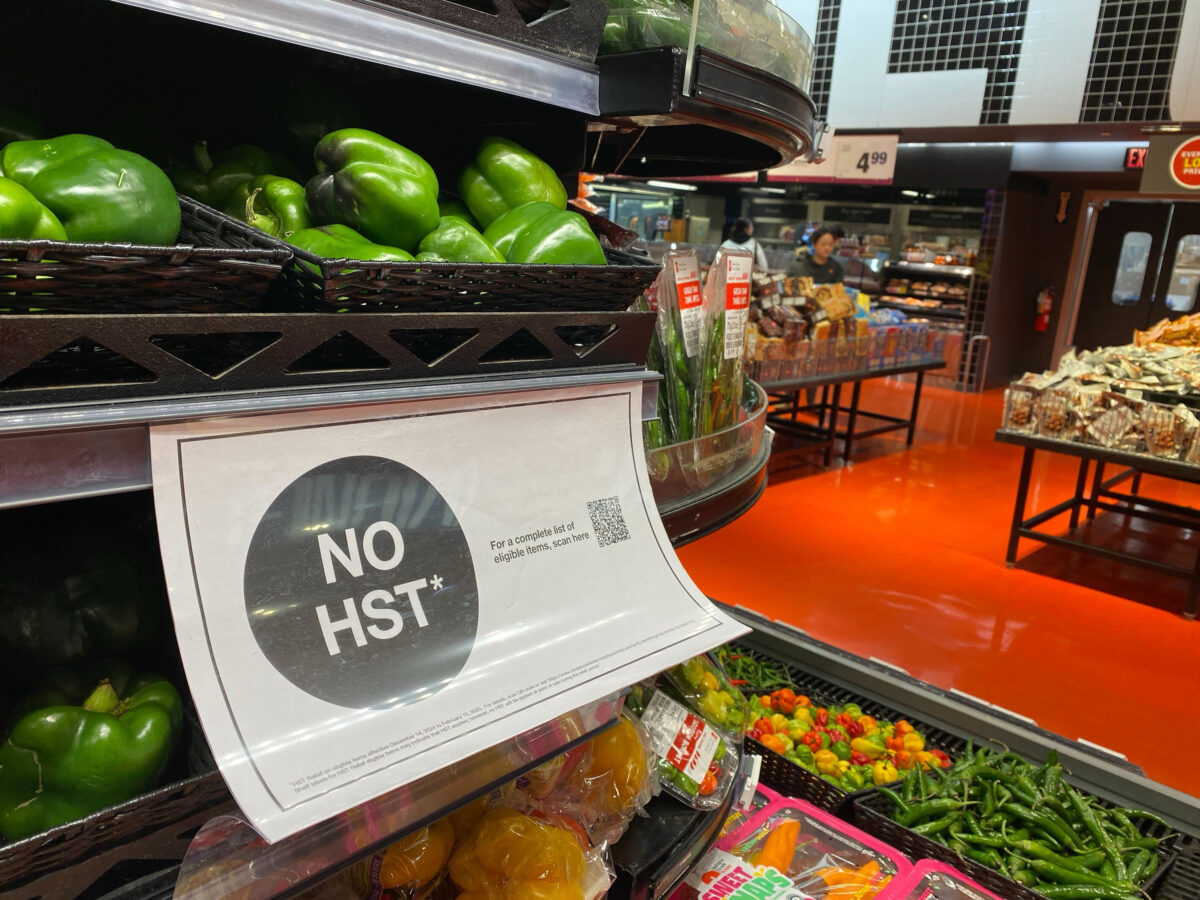
No HST on products in a grocery store in Toronto. Photo: Dustin Fuhs
6. The GST Holiday and Taxes on Food Debate
Ottawa’s temporary GST/HST holiday on food and restaurant items sparked significant debate. While consumers will see minimal savings—roughly $5 at grocery stores—restaurants benefited more, with families saving $60–$90. However, the logistical burden on retailers and regional disparities in tax rates and the possibility of opportunity pricing drew criticism. A permanent removal of GST on food would have been a more effective solution, fostering affordability without the instability of short-term policies.
5. Record Food Recalls and Safety Alerts
Food recalls reached their fourth-highest level in 2024, driven by high-profile incidents involving cucumbers, bakery products, and plant-based beverages like Silk and Great Value brands. Tragically, these recalls were linked to three fatalities, emphasizing the importance of robust safety measures. This story sheds light on the ongoing challenges of managing food safety in complex supply chains, calling for stronger oversight and transparency in the agri-food industry.
4. Railway, Grain, and Port Disruptions
Labour disputes in Canada’s logistics sector disrupted the nation’s food supply chain in 2024, damaging its international reputation. With railways, ports, and other infrastructure under constant strain, these disruptions highlighted the critical importance of safeguarding the backbone of the Canadian economy. While protecting workers’ rights is vital, striking a balance to ensure uninterrupted supply chains is equally necessary. The year underscored the need for proactive labour policies to avoid holding the economy—and the food system—hostage.
3. Potential Tariffs with the Return of Donald Trump
The return of Donald Trump to the U.S. presidency reignited fears of economic disruption, particularly in Canada’s agri-food sector, which sends 60% of its agri-food exports and $40 billion worth south of the border. Proposed tariffs of up to 25% would have devastated Canadian producers, already grappling with slim margins and the carbon tax. Ottawa faced mounting pressure to develop a long-term strategy to mitigate these risks and strengthen the agri-food sector’s competitiveness in an increasingly protectionist global landscape.
2. Carbon Tax Debate on Food Prices
Carbon pricing remains a divisive issue in 2024, with peer-reviewed studies confirming that the policy increases production and transport costs, ultimately eroding the competitiveness of Canadian food systems. While grocers often mitigate impacts by importing cheaper goods, this approach masks the structural weaknesses created by rising operational costs. As such, studies looking at the impact of carbon pricing on food prices are generally flawed. Critics argue that many studies dismissing the tax’s effect on food prices are influenced by funding from Environment and Climate Change Canada, raising questions of bias. Policymakers must look beyond retail price fluctuations to understand the long-term implications of carbon pricing on Canada’s agri-food sector and food security.
1. Record Number of Visits to Food Banks
In 2024, the HungerCount report revealed a record-breaking number of visits to food banks, alongside Canada’s food insecurity rate reaching an unprecedented 22.9%. These figures highlight a growing affordability crisis, driven by soaring food prices, stagnant wages, and broader inflationary pressures. While some have pointed fingers at immigration, such narratives overlook the complex economic dynamics at play and the humanity at the heart of this issue. Food banks, stretched beyond capacity, are emblematic of a broader social crisis. This story underscores the urgent need for robust social safety nets and policies that prioritize affordability and inclusivity.
Honorable mentions
Upcoming Approval of Cloned Meat in Canada
Health Canada’s consideration of cloned meat approval has sparked heated debate. While advocates point to potential benefits like enhanced livestock genetics and improved food security, critics highlight concerns about transparency, ethical implications, and biodiversity. Without mandatory labeling, consumers are left in the dark about what’s on their plates, intensifying the call for stricter regulations and open communication.
Approval of Methane-Reducing Feed for Cattle and Dairy
Bovaer, a feed additive approved in February, has the potential to significantly reduce methane emissions from cattle, offering an innovative solution for sustainable farming. However, its adoption remains limited, with no clear government communication or labeling guidelines. The lack of transparency echoes past controversies like Buttergate, leaving consumers uninformed about its broader implications.
Bill C-282 to Protect Supply Management During Trade Deals
The advancement of Bill C-282, aimed at protecting supply management in future trade agreements, stands as one of the year’s most significant food policy developments. The bill seeks to safeguard Canada’s dairy, poultry, and egg sectors from trade concessions, ensuring industry stability and maintaining predictable prices for consumers. However, its progress has stalled in the Senate, casting doubt on whether it will pass before a new U.S. administration, potentially less favorable to Canada’s supply management system, takes office in January. The Bloc Québécois has amplified the political stakes by making its support for the Trudeau government contingent on protecting supply management, highlighting the bill’s vital importance to Quebec’s agricultural sector. Critics argue that the legislation could restrict Canada’s flexibility in broader trade negotiations. Nevertheless, supporters view it as essential for preserving food sovereignty and protecting Canadian farmers from an increasingly unpredictable global market.
Bill C-293: Canada’s “Vegan Act”
Originally focused on pandemic preparedness, Bill C-293 has sparked controversy for promoting alternative proteins and de-risking animal protein production. Proponents argue the bill aligns with sustainability goals and food innovation, while critics fear it marginalizes traditional farming. The ongoing debate highlights the tension between progressive food policies and the preservation of Canada’s agricultural heritage.
Ottawa’s Tightening of the Temporary Foreign Worker Program
Changes to the Temporary Foreign Worker Program aimed to prioritize domestic hiring but have exacerbated labour shortages in agriculture and food processing. While the policy seeks to address labour exploitation, it risks destabilizing sectors heavily reliant on foreign workers, calling for a more balanced approach to ensure workforce stability.
New Rock 'N Karma store at 132 Cumberland Street in Toronto. Photo: Craig Patterson
Toronto-based fashion label Rock ‘N Karma has officially returned to its roots, relocating its flagship store from Queen Street West to Yorkville’s Cumberland Street. Co-founders and sisters Naomi and Devorah Shapiro say they are thrilled to bring their edgy-yet-feminine designs back to the upscale neighbourhood, which has played an integral role in the brand’s story.
The new boutique, located at 132 Cumberland Street, marks a significant move for the brand, whose former Queen Street West location at 789 Queen Street West had been home for eight years. “I love Yorkville. I’ve always loved Yorkville. We made a decision to come back home where we belong,” said Naomi Shapiro in a recent interview.
The relocation signifies both a return and a fresh start for Rock ‘N Karma, which has served stylish Torontonians over its decades-long history.
Inside the new Rock ‘N Karma store at 132 Cumberland Street in Toronto. Photo: Rock ‘N Karma
From Toronto Eaton Centre to Queen Street West and Back to Yorkville
The journey of Rock ‘N Karma began more than 34 years ago when Naomi Shapiro launched the business at Queens Quay Terminal as a young fashion designer. Over the years, the brand has established a unique presence in Toronto’s fashion scene, operating stores at major locations, including the CF Toronto Eaton Centre for 10 years. “That’s where we started with the concept of our hand-painted clothing,” Naomi noted.
Naomi Shapiro, co-founder of Rock ‘N Karma. Photo supplied
Following their time at the Toronto Eaton Centre, Naomi and Devorah moved to Yorkville, where they remained for 12 years before heading to Queen Street West. Now, the sisters are excited to return to what they call “the heart of Yorkville.”
“We’ve always been here in spirit. Yorkville has always been the right place for our brand. It feels like home,” Naomi emphasized.
A Rock ‘N Karma Aesthetic: Edgy Yet Effortless
Rock ‘N Karma’s distinct aesthetic reflects the dynamic personalities of its co-founders. The brand combines edgy rock-inspired pieces with softer, more bohemian elements, creating what Naomi describes as a balance of “rock and karma.”
“The rock is our edgy, black pieces with hand beading, while the karma reflects our pretty, flowy summer dresses that are often bright and colourful,” Naomi explained. The brand’s signature approach includes hand-painted clothing and intricate beaded details, ensuring that each garment is one-of-a-kind.
Inside the new Rock ‘N Karma store at 132 Cumberland Street in Toronto. Photo: Rock ‘N Karma
“Every piece starts off white and is hand-painted for that specific garment. From there, many of them are hand-beaded, which makes the designs unique,” she added.
The collection is also size-inclusive, ranging from extra small to 3X. “We’ve always believed in creating fashion for every body. Fit and comfort are just as important as style.”
Inside the new Rock ‘N Karma store at 132 Cumberland Street in Toronto. Photo: Rock ‘N Karma
Designing for the Real World
What sets Rock ‘N Karma apart is its ability to marry fashion with function. Naomi highlighted the versatility of their signature pieces, which include flared pants, machine-washable suits, and garments crafted from what the sisters call their “miracle fabric.”
“Our clothing is made to last. It doesn’t fade, pill, or bag. You can roll it up in a suitcase, travel for 20 hours, and it still looks perfect,” Naomi said. This practical approach to design has garnered the brand a loyal following, including professionals, musicians, and fashion-forward individuals of all ages.
“Our customers are real people. From teachers and teenagers to lawyers and creatives, our clothing appeals to anyone who values quality, comfort, and individuality.”
Inside the new Rock ‘N Karma store at 132 Cumberland Street in Toronto. Photo: Rock ‘N Karma
The New Yorkville Boutique Experience
Stepping into the new Rock ‘N Karma boutique is an experience in itself. The bright, contemporary space reflects the brand’s playful yet polished personality. “We wanted a space that feels alive, where the clothing pops off the floor,” Naomi said. The boutique features sleek white floors, colourful art on the walls, and a big screen showcasing the brand’s past campaigns and photo shoots.
“Shopping here is an experience. It’s not just about buying clothes; it’s about connecting with the brand and having fun while you’re here,” Naomi added.
The store also offers carefully curated accessories and unique jewelry pieces, many of which are one-of-a-kind. “We carry things that you can’t find anywhere else. The accessories are designed to complement our clothing, and the overall experience is meant to feel special,” she noted.
Photo: Rock ‘N Karma
From Street Vending to Yorkville Success
Naomi’s journey as a designer is as inspiring as the brand itself. She started selling her clothing as a street vendor on the corner of Yonge and Bloor in Toronto when she was a teenager. Over the years, her passion for fashion has remained unwavering.
“I’ve been making clothing since I was eight years old. When I was in high school, I’d make pieces and sell them on the street. I graduated in fashion design and worked for [Canadian fashion icon] Marilyn Brooks for a couple of years. Funny enough, this address—132 Cumberland Street—used to be Marilyn’s store. It’s come full circle,” Naomi shared.
Inside the new Rock ‘N Karma store at 132 Cumberland Street in Toronto. Photo: Rock ‘N Karma
“Yorkville Has Always Been the Heart of Toronto”
While Queen Street West is known for its creative, street-style vibe, Naomi feels that Yorkville provides the right kind of traffic for Rock ‘N Karma’s clientele. “The convenience of Yorkville is unmatched. There’s parking, there’s the subway, and it’s central for people coming from all over the city or beyond,” she explained.
Naomi also acknowledged the challenges of Queen Street West, citing ongoing construction and changes in the neighbourhood. “Queen Street was great for a time, but it was no longer the right fit for us. Yorkville has always been, and always will be, the heart of Toronto.”
Window display, as seen from inside the new Rock ‘N Karma store at 132 Cumberland Street in Toronto. Photo: Rock ‘N Karma
Looking Ahead: A Unique Shopping Experience
While Naomi remains open to future opportunities, her focus is on making the Cumberland Street boutique a flagship destination.
“This store is designed to host events, and it’s a space where customers can feel at home. We’re committed to offering a unique shopping experience with exceptional customer service,” she said.
Naomi’s passion for her work shines through every detail, from the meticulously crafted clothing to the vibrant energy of the new space. “You can’t buy karma, but you can create positive energy and an experience that people will remember. That’s what Rock ‘N Karma is all about.”
Final Thoughts: A Brand That Evolves With Its Customers
Over the past three decades, Rock ‘N Karma has evolved from a single pair of funky pants to an entire collection of eclectic, wearable art. With its return to Yorkville, the brand continues to celebrate individuality, inclusivity, and timeless design.
“We design for real people. We listen to our customers, and we create clothing that makes them feel confident and comfortable. That’s what makes us unique,” Naomi concluded.