Advertisement
Advertisement
Home Blog Page 454

VIDEO: Rediscovering the lost art of retail

Retail expert Doug Stephens, Founder of Retail Prophet, says technology has transformed retail over the last two decades but the industry needs to rediscover the art of doing business.

Doug Stephens. Photo: LinkedIn

“Today, we sit on the edge of yet another technology revolution in retail, with investment by retailers in AI and machine learning projected to increase up to eight-fold by 2032,” he said.

“Yet, despite all the investment in technological progress, too many retailers today struggle to stay afloat, grinding it out each day, one promotion at a time. Because, while technology has advanced the mechanics of retail, it’s also opened the door to something else: a historic explosion in new competitors to traditional retailers – from third-party marketplaces and direct sellers to Asian discounters and social media influencers – all of which are now battling it out for finite, fleeting and increasingly fragmented slivers of consumer attention.

“Indeed, the existential challenge facing most retailers today is how to command disproportionate levels of attention. And how to do this when superior selection, convenience and price have largely become the domain of large international marketplaces and mega-chains, and digital advertising is relentlessly more expensive while declining in its effectiveness?

“The answer lies less in deploying new technology and more in something almost never discussed in retail circles: art. Because, as it turns out, attracting attention and promoting recall are what art does best. In fact, a growing body of scientific evidence suggests that art, regardless of form, has a uniquely stimulating effect on our brains.”

Stephens outlined his thoughts on this in a previous Retail Insider article.

In this video interview, Stephens also discusses the dramatically changing nature of competitive advantage in retail. In essence, Stephens believes we’ve come to the end of an era in terms of how we compete in this industry and what will separate the winners from the losers.

Outlook for retail leasing remains positive: JLL report

Photo courtesy of JLL

The outlook for retail leasing remains positive with industry stakeholders maintaining optimism about the next 12 months, says a recent report by commercial real estate firm JLL.

The report, Canadian Retail Market Dynamics, said demand has strengthened, particularly in Toronto, Calgary, and Edmonton, and average asking rents continue to rise.

It said Vancouver, Toronto, and Ottawa-Gatineau retain the lowest availability rates among Canadian and U.S. markets and new large super-regional malls in Montréal (Royalmount) and Vancouver (Oakridge Park) are set to provide temporary relief, but no long-term resolution is in sight.

“While sales of discretionary goods have softened, food and beverages continue to experience moderate growth. This is attracting more new players, especially those with a focus on tourism. Rising international visitation and commuting contribute to a positive perspective for downtown areas. Additionally, the gradual return of Chinese tourists should help solidify new luxury nodes in urban malls in Toronto, Montréal, and Vancouver,” said the report.

Casdin Parr

“Despite softness in household consumer spending, we’re seeing robust retail-leasing activity, with most industry stakeholders anticipating further growth in the coming year. The recent start of an interest-rate cut cycle is likely to sustain this optimistic momentum in the retail sector,” said Casdin Parr, Executive Vice President, JLL.

The report said demand for retail space has risen with the first half of the year up slightly from 2023. Toronto, Calgary, and Edmonton have led the way with the most net absorption.

General merchandiser Costco Wholesale and clothing retailer La Maison Simons have leased some of the largest spaces. This includes a 150,000- square-foot Costco store in Brantford, a 110,000-square-foot Simons space in the CF Toronto Eaton Centre, and another 118,000-square-foot Simons space in Yorkdale Shopping Centre.

Grocers have also announced large-format expansions, with Loblaw opening a 55,000-square-foot T&T Supermarket at Burnaby’s Gilmore and FreshCo opening a 40,000-square-foot location at Edmonton’s Glenridding. Loblaw is also testing smaller formats under 10,000 square feet with its No Frills and No Name banners.

The former Toronto Nordstrom spaces have piqued interest, with Simons, Nike, and Eataly securing space in the CF Toronto Eaton Centre and Nike and Mango at Bloor and Yonge.

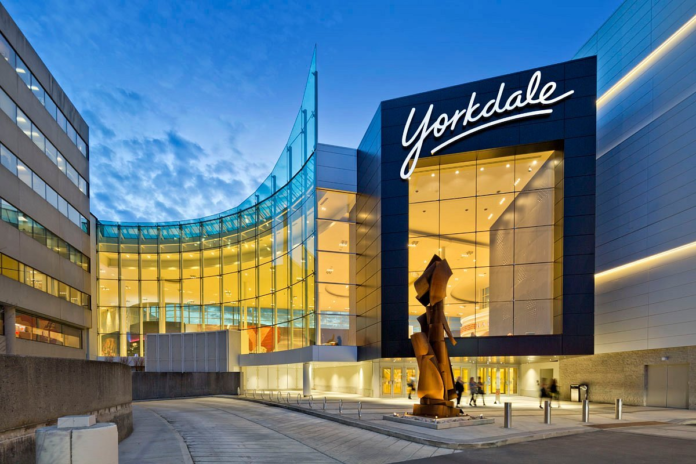
Montréal, Vancouver, and Toronto are expected to boost luxury with openings in Royalmount, Oakridge Park, and Yorkdale Shopping Centre.

Photo courtesy of JLL

The report said food services have dominated store-opening announcements with Eataly announcing its fourth location in Toronto – surpassing even Dubai and New York City and matching Tokyo.

“While some Canadian markets continue to have among the highest levels of construction in North America, new supply of retail space continues to decline. The real estate industry is grappling with increased construction costs and high interest rates, leading to a slowdown in retail development starts and to longer construction timelines,” said JLL.

“This trend seems to be creating a domino effect, where decreased completions result in fewer leasing opportunities for retailers seeking new spaces. Consequently, move-ins, move- outs, and overall leasing activity have also decreased. As such, the demand for retail space continues to outpace supply, resulting in the lowest availability in nearly a decade. Vancouver, Toronto, and Ottawa-Gatineau are currently the tightest major markets in North America. 

“Asking rents have increased by 20 per cent since 2019, outpacing the growth in effective rents, which increased by $30 about six per cent. The strongest increases in asking rents have been observed in malls, neighbourhood centres, and power centres in major markets, reflecting increased demand for suburban properties. In addition, the popularity of rate-escalating leases suggests that effective rents will slowly catch up.” 

The report said all types of malls – lifestyle, super regional, and regional centres ─ have experienced positive net absorption, indicating their resilience and strength in the face of challenges. The pandemic-related closures of stores provided an opportunity for mall operators to optimize their tenant mix, attracting new tenants and expanding existing ones.

“With limited construction activity, malls continue to attract both big-box and smaller tenants across all classes and types. Lifestyle centres have seen an increase in restaurant tenants, while super regional and regional centres have seen more apparel and shoe retailers,” it said.

Photo courtesy of JLL

JLL said essentials are outperforming discretionary spending in 2024. Sectors that performed well in 2023 – such as cannabis, shoes, and apparel – have seen sales decline, indicating a pullback in discretionary spending. Health and personal care, general merchandise, and electronics/appliances are popular sectors. However, home furnishings, alcohol, and sporting goods are less popular with consumers.

Canadian businesses have encountered significant headwinds − rising inflation, increasing input costs, and high interest rates and debt burdens. However, the overall business outlook for the coming 12 months has improved compared with 2023, and optimism outweighs pessimism across sectors, explained JLL.

“While more retailers are feeling pessimistic, the majority nonetheless maintain an optimistic outlook. Retailers are currently focusing on short-term sales, with more businesses planning to increase spending on marketing and advertising and to decrease cash reserves and capital expenditures,” added the report.

“In particular, the food-services industry is experiencing a rebound. More operators are seeing an increase in demand, and fewer anticipate a decrease in sales, profitability, and cash reserves. Arts, entertainment, and recreation demonstrate the most positive outlook, with more operators expecting an increase in cash reserves and profitability. 

“Limited and full-service restaurants across provinces have seen moderated growth rates, with limited-service performing slightly better than full-service. Overall, food-services sales continue to grow faster than retail sales. Spaces for limited-service restaurants are very competitive, with an availability rate under one percent. Spaces for full-service restaurants are also competitive, but not to the same extent.”

Grain Exports Stall as Port of Vancouver Strike Commences

The Port of Vancouver, Canada’s largest and most diversified port, faces a major disruption as grain workers initiate a strike. It’s impacting bulk grain operations at six key terminals.

Strike Action Threatens Canada’s Grain Export Hub

On Tuesday, September 24, members of the Grain Workers Union Local 333 ILWU began strike action against the Vancouver Terminal Elevator Association (VTEA) at 7:00 AM PST. This move follows a 72-hour strike notice served over the weekend, consequently bringing grain operations to a standstill.

Implications for Grain Terminals and Shipping

The strike affects six major grain terminals at the port:

  1. Alliance Grain Terminal (AGT)
  2. Cargill Terminal
  3. Cascadia Terminal
  4. G3 Terminal
  5. Pacific Elevators
  6. Richardson International

While these facilities face operational halts, other grain handling terminals, such as Fraser Grain Terminal (FGT), remain unaffected for now. However, the port authority anticipates vessel delays and increased anchorage demand if the disruption to bulk grain exports persists.

As of September 23, at 0600 PST, anchorage occupation stood at 44% for the Vancouver Fraser Port Authority areas (including English Bay, Inner Harbour, and Indian Arm) and 33% for the Southern Gulf Islands. These figures may rise as the strike continues, thereby potentially causing a ripple effect throughout the supply chain.

Retailers, importers, and supply chain managers should, therefore, prepare for potential disruptions in their operations. For those seeking real-time information, the Port of Vancouver offers a mobile app called “PortVan eHub,” available through their website or app stores. The tool allows users to view vessels currently in port and monitor the developing situation. Consequently, stakeholders can stay informed and make timely decisions.

As this labor dispute unfolds, stakeholders in the Canadian retail and import sectors are advised to stay informed and prepare contingency plans.

Related Article: Vancouver Port Strike Will Hurt Canadian Retailing: Retail Council Of Canada (2014)

Kmart Closing Last Full-Size Store, Ending Retail Era

Kmart, once a titan in North American discount retail, is closing its final full-size store in the continental United States, marking the end of an iconic brand’s brick-and-mortar presence. The company had a presence in Canada from 1963 until 1998.

The Last Stand on Long Island

The Bridgehampton, New York store, located on Long Island, is set to close its doors on October 20th. The closure represents more than just the end of a single location; it symbolizes the culmination of a long decline for a brand that was once ubiquitous in North American shopping culture.

From Retail Giant to Retail History

Kmart’s journey began in the late 19th century when Sebastian Spering Kresge opened a five-and-dime store in Detroit. The Kmart brand, launched in 1962, quickly became a household name, known for its wide range of products and famous “blue light specials.”

Kmart opened its first Canadian store in Huron Heights, Ontario, in March of 1963. A Windsor location opened two months later. The chain grew over the years. In December of 1997, 112 of Kmart’s 122 Canadian stores were sold to the Hudson’s Bay Company, which by May 1998 had either closed locations or converted them to Zellers stores.

At its peak, Kmart operated over 2,000 stores in North America, offering everything from clothing and household goods to electronics and toys. The brand’s decline, however, was accelerated by the ill-fated 2005 merger with Sears, orchestrated by hedge fund operator Eddie Lampert. The Sears chain in the US has also since almost disappeared under his direction.

The Aftermath of a Retail Merger Gone Wrong

The $11 billion Sears-Kmart merger, once hailed as a game-changer in the retail industry, proved to be the beginning of the end for both brands. At the time of the merger, Kmart boasted approximately 1,400 stores, while Sears had nearly 900 full-line U.S. locations.

However, the combined entity struggled to compete with more agile competitors like Walmart and Target, which offered a similar range of products along with groceries. The rise of online shopping further eroded Kmart’s market share, leading to a steady decline in store count and relevance.

The Final Chapter with Kmart Closing

With the closure of the Bridgehampton store, Kmart’s presence in the continental U.S. will be reduced to a single small-format convenience store in Miami. The brand still maintains a presence in Guam and the U.S. Virgin Islands, where it faces less competition from other big box retailers.

For those seeking the Kmart name, a local Kmart operation continues to thrive in Australia. And there’s a Canadian connection — Anko, the in-house brand sold at Kmart Australia, is also the core brand carried in Zellers locations at Hudson’s Bay in Canada.

As the last full-size Kmart store prepares to close, it marks the end of an era in North American retail. The brand that once pioneered discount shopping and captured the imagination of consumers with its blue light specials will soon exist only in the memories of generations of shoppers.

Related Article: Inside Zellers 2.0 and its Newly Secured In-House Brand ‘Anko’

Fido Store Closes Downtown Victoria Location After Three Decades

Fido store closes Victoria

Fido, a subsidiary of Rogers Communications and a prominent Canadian wireless service provider, has shuttered its flagship store in Victoria, British Columbia, marking the end of an era for the brand’s presence in the city’s downtown core.

The closure of the Fido location at 743 Yates Street, which had been a fixture in Victoria’s retail landscape for over three decades, reflects the evolving dynamics of the telecommunications retail sector in Canada. It might also signal problems with vagrancy and crime in Victoria’s downtown core, which has struggled since the pandemic.

Changing Retail Strategies in the Wireless Industry

The decision to close the store comes as major telecom companies reassess their brick-and-mortar strategies. With the proliferation of Rogers and Fido resellers, maintaining dedicated retail spaces has become increasingly costly compared to more compact mall kiosks.

This shift in approach is indicative of broader trends in the industry, where companies are adapting to changing consumer behaviors and seeking more cost-effective ways to maintain their market presence.

Impact on Local Business Landscape

The Fido store’s closure is not an isolated incident in Victoria’s downtown area. Several businesses in the vicinity have recently shut down, citing various challenges. While rising rents are a common concern, some business owners have pointed to more complex issues affecting the local commercial environment.

Nearby establishments, such as the bakery Tombo Eats, have reported instances of vandalism as contributing factors to their decisions to cease operations. These closures highlight the multifaceted challenges facing retailers in urban centers.

Customer Service Continuity

Despite the closure, Fido customers in Victoria will not be left without support. A notice posted at the former location directs patrons to a nearby Rogers store at the Bay Centre, ensuring continuity of service for existing customers.

This transition underscores the integration between Rogers and its Fido brand, offering customers access to a wider network of service points across the Rogers ecosystem.

As the retail landscape continues to evolve, the closure of this longstanding Fido store in Victoria serves as a reminder of the constant changes in consumer markets and the need for businesses to adapt to new realities in urban centers.

Related Article: WOW! mobile boutique OFFICIALLY ANNOUNCES CANADIAN RETAIL PLANS

Sleep Country Canada celebrating 30 years in business

Image: Sleep Country

Sleep Country, Canada’s leading specialty sleep retailer, is celebrating its 30th anniversary this year as it has developed into a nationwide brand with over 300 storefronts.

To commemorate this significant milestone, Sleep Country said in a news release that it commissioned Leger to conduct an in-depth survey about evolving sleep preferences, behaviors of recent years and how sleep affects different aspects of Canadian lives. According to the study, half of adults in this country, a figure representing nearly 16 million people, said they have trouble sleeping, said the retailer.

Stewart Schaefer

“As we mark our 30th anniversary, we not only celebrate our journey and unwavering commitment to better sleep but also reflect on our nation’s current sleep quality and how Sleep Country can continue leading the way in sleep innovation and solutions for all Canadians, for the years ahead,” said Stewart Schaefer, President and CEO of Sleep Country Canada.

“This milestone is a testament to our ability to adapt, and stay ahead of the curve in an ever-changing industry. The insights from our latest survey will guide us as we continue to educate Canadians on the importance and power of sleep.”

Key findings from the survey include:

  • Half of Canadians (48 per cent) have trouble sleeping, with over 80 per cent not feeling well rested when they wake up, and 64 per cent citing mood swings, lower energy, and decreased productivity as the most common side effects of a bad night’s sleep;
  • Nearly one in three (31 per cent) Canadian adults are less satisfied with their sleep habits than they were just a year ago, with stress, mental overactivity, and room temperature topping the list of sleep disruptors;
  • Technology has significantly disrupted the sleep patterns of more than half of Canadians over the past five to 10 years, with over 60 per cent reporting an impact. Interestingly, four-in-10 Canadians stated that they use technology to improve their sleep such as, meditation or relaxation apps, sound machines, white noise apps and sleep tracking app, highlighting the complex relationship between our devices and our well-being;
  • In a bid for better sleep, 50 per cent of Canadians avoid caffeine, heavy meals before bed, and create cozy sleep environments to build healthier bedtime routines;
  • Sleep is the cornerstone of mental health, with two-thirds of Canadians noticing a dramatic mood boost after a good night’s rest, and 65 per cent recognize the deep connection between sleep and mental well-being;
  • Nearly four out of five (78 per cent) Canadians stated that poor sleep contributes to feelings of anxiety and depression;
  • For over 90 per cent of Canadians, their bed isn’t just for sleeping—it’s a sanctuary of comfort and relaxation – where Sleep Country has been a steadfast companion;
  • On average, Canadians sleep for an extra half-hour on weekends compared to weekdays, with women more likely than men to use their days off to catch up on rest; and
  • Mattress satisfaction is closely related to sleep quality. Canadians who are extremely satisfied with their mattress are 30 per cent more likely to report high-quality sleep.

Earlier this summer, Sleep Country Canada kicked off the anniversary campaign with a brand love spot, which turned the camera towards consumers to capture the special moment of the best “happy birthday” of the day and the intimate spaces where laughter, tears, triumphs, and dreams come to life , and where Sleep Country Canada has been a steadfast companion. 

Christine Magee

As part of the second half of its anniversary celebrations, Sleep Country Canada is launching their 30th anniversary event featuring throwback pricing and dreamy deals aimed at giving back to the loyal customers who have supported the brand over the years. The campaign features retro inspired spots, where Sleep Country’s co-founder Christine Magee steps back into the advertising spotlight after previously representing the brand since it began 30 years ago.

Nuno Bamberg

“For our 30th anniversary, we wanted to create a campaign that was more than just a look back for Sleep Country,” said Nuno Bamberg, Senior Vice President, Brand & Marketing, Sleep Country Canada. “We wanted to reconnect with the roots of our brand, blending the retro vibes of the 90’s with fresh creativity. This campaign is about taking our customers on a journey through time, back to where it all began, and sharing that nostalgia with them.”

Sleep Country also operates under these retailer banners: Dormez-vous, the rest, Endy, Silk & Snow, Hush, and most recently acquired Casper Canada. The Company has omnichannel and eCommerce operations, including 307 corporate-owned stores and 18 warehouses across Canada.

Related Article: Sleep Country Canada Opening 1st Silk & Snow Shop-in-Shop with Plans for Standalone Stores

Canadian luxury apparel sales set to increase: Trendex

Royalmount (Image: CarbonLeo)

Canadian luxury apparel sales will increase 4.2 per cent in 2024 and by 18.8 per cent in 2027, according to the latest 2023/2024 Canadian Luxury Apparel Market report by Trendex North America.

“In developing Trendex’s forecast, the effect of the opening of two new high-end Canadian malls could be speculated but not quantified with any degree of certainty. Royalmount which opened in September this year and Oakridge opening in April 2025 have a number of luxury apparel specialty stores but still far less than Yorkdale. It is just not the number of luxury apparel stores in each mall but also whether they will add to the luxury pie in each trade area or will they simply divide the existing pie in more slices. Only time will tell the effect on total luxury apparel sales by each mall,” said the report. 

Trendex said its review of the current status of the Canadian luxury apparel market comes coincidentally with Royalmount’s recent opening. In 2023, Trendex estimates that Canadian luxury apparel sales increased 10.9 per cent to C$2.78 billion. The increase came on top of a 7.4 per cent increase in 2022. During 2023 luxury apparel accounted for 7.4 per cent of total Canadian apparel sales. 

Current Tiffany & Co. store at 150 Bloor St. W. in Toronto. Photo: Dustin Fuhs

According to the report, last year’s increase in luxury apparel sales was attributable to a number of factors, including:

  • A 52 per cent increase in foreign tourism;
  • The expansion of luxury apparel zones in Toronto and Vancouver;
  • An increasing presence of luxury apparel retailers in better malls generally and Yorkdale specifically;
  • The success of Holt Renfrew’s concession model;
  • Premium outlet malls adding luxury brands/retail stores;
  • Growth of men’s luxury casual apparel;
  • Generation X, Y and Alpha purchasing.

Trendex said insights to be noted about the 2023 luxury apparel market include:

  • Women’s apparel accounted for 57.2 per cent of sales, while men’s apparel (27.9 per cent) and purses (14.9 per cent) accounted for the balance of sales;
  • The “Big Three” of luxury apparel retailing (i.e. Holt Renfrew, Harry Rosen, and Saks) accounted for 46.1 per cent of sales;
  • The “all other” channel (x– luxury specialty chains, HBC and Simons) accounted for 32.0  per cent of sales;
  • Holt Renfrew was the country’s largest luxury retailer followed by Harry Rosen. The seven largest luxury retailers accounted for 49.9 per cent of luxury apparel sale.
Holt Renfrew flagship store at 50 Bloor St. W. in Toronto. Photo: Craig Patterson

Trendex said luxury apparel e-commerce sales increased by only 5.1 per cent as consumers were increasingly attracted to upgraded luxury stores/malls. It said 49 per cent of luxury apparel mono-brand doors were in Ontario, while only nine per cent were in Quebec. Only three new luxury apparel retailers entered Canada during 2023.

“Trendex’s original exuberant forecast for the 2024 Canadian luxury apparel market completed in early March 2024 had to be revised significantly downward when it was updated in mid-July 2024. The primary reason for the revision was the 1.6 per cent decrease in Canadian apparel specialty store sales in the first half of 2024. The decrease due to macro-economic pressures including inflationary pressures on consumers along with high interest rates resulted in a decreasing share of consumer spending going to discretionary non-experiential purchases,” said the report.

Additionally these metrics also influenced Trendex’s forecast, according to the company:

  • Foreign tourism increased 52 per cent in 2023. However in 2024 foreign tourism is forecasted to increase by only 28 per cent over 2023 levels;
  • First half 2024 sales figures for the major luxury apparel suppliers, although not specific to Canada detailed a slowdown in luxury sales in the United States;
  • First half apparel imports from Italy (-12.0 per cent), France (-12.4 per cent), UK (-27.0 per cent) and Germany (-9.3 per cent) fell greater than the overall 7.8 per cent decrease in total Canadian apparel imports.

Related Trendex Article: International Retailers And Their Success In Canada: Interview With Randy Harris Of Trendex

Unique pickleball facility opens in Montreal (Photos)

Photo courtesy of Club PKL

Entrepreneur Barry Samberg has opened a unique new pickleball facility in Montreal.

But Club PKL is more than just pickleball, one of the fastest growing sports and fitness activities in Canada. It’s also a fitness complex.

Samberg said Club PKL is on a mission to elevate pickleball as a premier sport and the bar has been raised to deliver an exceptional experience for pickleball enthusiasts right in the heart of downtown Montreal. 

Barry Samberg

“As pioneers, we’ve introduced the city’s first dedicated and meticulously designed pickleball facility, featuring seven regulation and tournament-approved courts. Additionally, we offer fitness and yoga space to complement your sporting experience. With early morning to late-night hours, we ensure ample playing time, recognizing pickleball’s rightful place in the sports world,” said Samberg, CEO and President of Club PKL.

“We’re more than pickleball. We’re a full premium club. But pickleball definitely drives our business.”

The 24,000-square-foot facility opened in the middle of June in the Griffintown neighbourhood which has been re-gentrified. Samberg took over an existing building, gutted it to the bones, and rebuilt.

“To get this type of location in Montreal is almost impossible. We were very lucky. I’ve been working on the project for three years. I had two places that I thought were pretty good opportunities but didn’t work out for whatever the reason. I happened to be going to Costco with my wife, all of a sudden there’s a sign on the window as we’re driving by this place, I called the landlord and they had just put the sign up two hours before,” recalled Samberg. 

The facility has two fitness studios – one a full gym and a room for activities such as yoga and Pilates.

Photo courtesy of Club PKL

There is also a lounge for corporate events and member events.

“Pickleball was always at the foundation of what we wanted to do. I had actually been in Florida during COVID for the most part during the winters. I’m a very high level tennis player and a buddy of mine kept pushing me to come play pickleball with him in Pompano in a park,” said Samberg. “And I went to the park. I saw from seven o’clock to 12 o’clock, the place was full – 16 courts. It was insane and the amounts of people.

“I came back from that and I came to my wife and said to her okay I know what my next act is. That’s when I started to work on the project. My wife is a trainer and prior to COVID we worked on a project called Intensity. We were about to open two locations and the goal was to open multiple locations to franchise and then COVID  hit. So we were actually very lucky because we were about to sign a lease literally one week before COVID started. So we pivoted, shut that down basically to see what happens after COVID and during COVID the pickleball thing came up. The craze for pickleball came up.”

Photo courtesy of Club PKL

The idea came to them to combine pickleball with a fitness facility.

Samberg said there are plans to open more similar facilities. Currently, he is looking for four other locations – one is in the Ottawa area and the others in Montreal.

The company is working with the team at Think Retail for its real estate needs.

“We’re looking at some other locations throughout Canada,” added Samberg. “That will probably be a phase three for us because phase two will be opening closer to home.”

Photo courtesy of Club PKL

Related Articles: Landlord QuadReal Launches Pickleball Courts in Commercial Properties to Create Consumer Experience

Half of Canadian business owners have experienced fraud in the past year: CFIB report

More and more Canadian small businesses are being hit by fraud, with half (50 per cent) of them experiencing either attempted or successful fraud in the past 12 months, and more than one-third (36 per cent) of those who fell victim to fraud suffering financial losses, according to new data by the Canadian Federation of Independent Business (CFIB) released in collaboration with Interac Corp. (Interac).

The report said impacted business owners have lost $7,800 on average in the past year. Beyond financial losses, small businesses dealt with lost time (76 per cent), negative emotional impact (51 per cent), and decreased staff morale (23 per cent).

Corinne Pohlmann

“Whether you’re a consumer, a mom-and-pop shop or a big industry player, we’ve all been impacted by fraud in some shape or form. Dealing with their consequences can be frustrating and time-consuming, especially for small business owners who often don’t have enough time or resources to address this growing issue,” said Corinne Pohlmann, Executive Vice-President of Advocacy at CFIB.

“Fraud is here to stay, and unfortunately, the rise in various AI tools is only exacerbating the issue. While October marks Cybersecurity Awareness Month in Canada, it’s important to stay vigilant year-round.”

In a news release, the CFIB said the bigger the business, the likelier it is to experience fraud attempts.

“The most common types of fraud attempts include email scams and phishing (85 per cent), text (77 per cent) and phone call scams (76 per cent). Though less common, fraudulent payments and chargebacks (when a customer falsely disputes legitimate transactions) are more likely to result in business losses, for 19 per cent and 16 per cent of businesses respectively. Businesses in the hospitality, retail, transportation, personal services, and arts, recreation and information sectors were found to be particularly vulnerable to these two types of fraud,” explained the CFIB.

It said nine in 10 (90 per cent) business owners are also worried that the rise in the use of artificial intelligence (AI) will make fraud more sophisticated and harder to detect.

Joanna Schoneveld

“This research drives home how important it is for the ecosystem to prioritize fraud prevention and detection. We are investing in solutions that help business owners stay ahead of an ever-evolving fraud landscape so their focus can remain on operational growth and customer trust,” said Joanna Schoneveld, Fraud Management Leader at Interac.  

CFIB’s recommendations to governments include:

  • Enhancing the Code of Conduct for the Payment Card Industry in Canada ensuring accountability to merchants through a fair, transparent and competitive payment landscape in Canada. This includes implementing improvements to complaint handling processes for merchants, such as the process of challenging chargebacks. 
  • Making sure resources are allocated adequately to “cyber policing” and reporting yearly outcomes with specific numbers for small businesses.
  • Providing small businesses with financial assistance (such as tax credits, low-interest loans or grants) to help them invest in IT security.  
  • Proactively sharing information on existing resources and best practices with businesses and associations.  
  • Providing advice specifically tailored to small and medium-sized enterprises (SME) on preventing cyberattacks.

To combat fraud, half of businesses have implemented stricter verification processes for payments, such as multi-factor authentication for online transactions, while nearly four in 10 (36 per cent) increased cybersecurity investments and one-third (32 per cent) enhanced employee training, added the CFIB.

Related CFIB Article: Only 18% of business owners would advise someone to start a business right now