Affirm, the payment network that empowers consumers and helps merchants drive growth, and Shopify, a provider of essential internet infrastructure for commerce, has announced the acceleration of their global expansion plans. Shopify merchants in Canada with early access can now offer Shop Pay Installments, exclusively powered by Affirm, to shoppers, marking the product’s first availability outside the U.S.
Shop Pay Installments will become available in general access to Shopify merchants in Canada and the U.K. this summer, with cross-border commerce capabilities between the U.S., Canada, and U.K. to follow. Additionally, the companies plan to expand to Australia and Western Europe next, starting with France, Germany and the Netherlands. Affirm looks forward to engaging with all of its local constituents – shoppers, merchants, capital partners, and regulators – as the company further grows internationally, according to a news release.
Kaz Nejatian
“We’re thrilled to launch Shop Pay Installments in early access to Canada as our first step beyond the U.S.,” said Kaz Nejatian, COO of Shopify. “Our partnership with Affirm expands our global reach, giving shoppers the flexibility to pay over time, and drives higher conversion rates for merchants worldwide.”
Max Levchin
“From day one, Affirm’s partnership with Shopify has been focused on empowering merchants to succeed by offering transparent, flexible payments that unlock purchasing power for consumers,” said Max Levchin, Founder and CEO of Affirm. “Millions of shoppers in the U.S. trust and rely on Shop Pay Installments. Today’s launch in Canada marks an exciting first step as we further extend our global presence – first with Shopify merchants, and soon after with our integrated merchants across the U.K., Europe, and Australia.”
As Shop Pay Installments launches in each new market, local merchants will be able to seamlessly activate the product directly from their Shopify admin dashboard—no additional development or technical integration required. From there, customers will be able to apply to split eligible purchases into biweekly and monthly payments. If approved, shoppers can choose from customized payment plans, with rates as low as 0% APR, and they will never encounter late or hidden fees, said the news release.
“Since its launch in 2021, Shop Pay Installments has seen widespread use, with millions of consumers actively utilizing this payment method across Shopify’s extensive merchant network in the U.S.”
As Canadians take steps to safeguard their finances amid ongoing economic uncertainty, the MNP Consumer Debt Index—conducted quarterly by Ipsos—has rebounded to 88 points this quarter, marking a nine-point increase from the previous quarter and signaling a more optimistic outlook on personal finances.
Reflecting Canadians’ shift toward financial caution, three-quarters (74%) say they have cut back on spending due to uncertainty, with women (77%) and those aged 35-54 (81%) being the most likely to have reduced spending. Around the same proportion (73%) say they are delaying major purchases or investments, said MNP.
Grant Bazian
“The improvement we are seeing in Canadians’ feelings toward their personal finances follows two Bank of Canada interest rate cuts this year. And while uncertainty remains around U.S. tariffs, their on-again, off-again nature may be providing Canadians with some optimism for the future—especially since these tariffs have yet to make a full impact on household budgets,” said Grant Bazian, president of MNP LTD, the country’s largest insolvency firm.
“Lower interest rates, along with the budget adjustments Canadians have already made, seem to be providing some breathing room.
“In comparison to the previous quarter, the results suggest that Canadians are taking proactive steps to reduce spending and lessen their reliance on credit as they brace for potential financial challenges on the horizon.
“Four in 10 Canadians still report being on the brink of insolvency, and more than a quarter have no financial cushion, no flexibility, or wiggle room in their budgets. Individuals without a safety net will likely face economic hardship when faced with rising costs and housing expenses, or a potential loss of income.”
Lower Interest Rates Offer Relief, but Many Remain Concerned
The proportion of Canadians concerned about the impact of rising interest rates remains near the highest level on record (60%, +1pt). However, thanks in part to the interest rate reductions this year, overall concerns about the broader impact of interest rates have declined. Fewer Canadians this quarter are worried about their ability to repay debts, even if rates decrease (43%, -7pts). Nearly a quarter (24%, +4pts) now feel better equipped to absorb a one-percentage-point rate increase, while the percentage (21%, -6pts) who feel less prepared has decreased. More than half (52%, -5pts) continue to worry about falling into financial trouble if rates rise, and nearly two in five (38%, -8pts) fear that rising rates could push them toward bankruptcy, said MNP.
A majority of Canadians (81%) say the current economic uncertainty has made them more cautious about taking on new debt – a sentiment that is consistent across genders, age groups, regions and income levels. A higher proportion this quarter believes they will be able to cover living expenses in the next year without needing more credit (58%, +9pts) and fewer regret the amount of debt they have taken on (43%, -6pts).
Canadians’ net personal debt rating (positive minus negative) has rebounded 14 points from last quarter’s all-time low. Additionally, fewer Canadians (43%, -7pts) report being just $200 or less away from financial insolvency, unable to meet their bills and debt obligations each month. This is due to significantly fewer saying they are already insolvent (26%, -9pts), added MNP.
“Well over half (58%) of Canadians express heightened concern about their ability to pay off debt due to ongoing uncertainty. This concern extends to broader financial stability, with about two in five worried about the possibility of someone in their household losing their job (38%, -3pts),” it said.
Canadians Bracing for Increased Housing Costs
Two in five (44%) Canadians say they are bracing for an increase in housing costs within the next year. Renters have a higher expectation of rising costs than homeowners, with two in three (65%) expecting their housing costs to increase within the next year, and nearly one-third of homeowners (30%) agreeing their housing costs will rise. Lower income earners may be impacted the most, with half (52%) of those earning under $40,000 expecting an increase, compared to one-third (34%) of those earning $100,000 or more. Younger Canadians under the age of 55 are more likely to expect an increase compared to those 55 and older, said the MNP report.
“More than four million mortgages—roughly 60% of all outstanding mortgages in Canada—are set to renew by the end of 2026 at potentially higher rates. This is just one example of the rising expenses, compounded by ongoing economic uncertainty, that those teetering on the edge can’t afford,” noted Bazian.
Goodfood Market Corp. recently achieved B Corp certification, a testament to its unwavering commitment to social and environmental responsibility, and the Canadian economy.
Jonathan Ferrari
“Our B Corp certification demonstrates our commitment to balancing profit with purpose across all aspects of our business,” said Jonathan Ferrari, Co-Founder and CEO of Goodfood. “This certification process evaluates our impact on all stakeholders and the communities in which we operate. It validates our efforts in critical ethical areas, ensuring we deliver sustainable meal-kits that our customers can trust, while also creating value for all those connected to our business.”
Neil Cuggy
“The quality of our meal-kits is our number one priority,” said Neil Cuggy, President and Chief Operations Officer at Goodfood. “Sourcing locally has never been a question, it provides customers with the freshest ingredients and a Canadian connection to the recipes.”
B Corp Certification is a designation that a business is meeting high standards of verified performance, accountability, and transparency on factors from employee benefits and charitable giving to supply chain practices and input materials. In order to achieve certification, a company must:
Demonstrate high social and environmental performance by achieving a B Impact Assessment score of 80 or above and passing our risk review. Multinational corporations must also meet baseline requirement standards.
Make a legal commitment by changing their corporate governance structure to be accountable to all stakeholders, not just shareholders, and achieve benefit corporation status if available in their jurisdiction.
Exhibit transparency by allowing information about their performance measured against B Lab’s standards to be publicly available on their B Corp profile on B Lab’s website.
Goodfood said it has championed local and celebrated its Canadian roots by sourcing 100% of its ingredients from Canadian-based suppliers, with 70% directly from local farms. These local initiatives not only ensure the freshness and quality of Goodfood’s meal-kits, but also support the national economy and employment with 38 local partners across British Columbia, Alberta, Manitoba, Quebec, Ontario, and the Maritimes.
The B Corp certification promises that Goodfood is at the highest level of governance and ethical standards to all of their stakeholders including suppliers, customers, employees, and shareholders, alongside consciously reducing the use of water and electricity resources in their facilities, said the company.
“This milestone aligns with Goodfood’s ongoing mission to deliver high-quality Canadian meals, while supporting sustainable practices and providing consumers with true assurance of their environmental commitment. Delivering fresh, healthy and local ingredients and easy-to-follow recipes to Canadians’ doorsteps, Goodfood supports Canadians in living healthier, sparking joy and impact through their food,” it said.
Since 2017, Goodfood has made a meaningful impact in Canadian communities through partnerships with the Breakfast Club of Canada and Second Harvest Canada. They have also committed to their Sustainable Supply Chain that cuts out the middle man and reduces carbon emissions by 33 per cent, alongside developing a Goodfood Sustainability and Local Sourcing Policy.
Canadians can learn more about Goodfood’s commitment to BCorp certified practices at www.makegoodfood.ca/bcorp and choose to shop Canadian and explore the benefits of their sustainably-sourced meal-kits.
Ferrari said the business began in 2014 based out of Montreal in his apartment in the downtown.
“Primarily Goodfood is a direct to consumer meal business. We offer meal solutions to Canadians across the country. We started in the ready to cook meal space sending out ingredients and recipes perfectly portioned for our customers,” he said. “And we’ve always been proud of our supply chain being almost entirely based in Canada. Today with our tariff discussions it’s more important than ever. We work directly with 50 Canadian farms and local purveyors to source our food.
“Over the past year, we’ve also been building out our ready to eat meals. In addition to offering our customers meals that they can cook at home, we also have heat and serve meals that customers can warm up in the microwave or in the oven and create really easy, healthy, delicious meals.”
The company acquired Genuine Tea at the end of 2024 – a craft tea business based in Toronto.
Image: Goodfood
Goodfood is active across Canada. It has a fulfillment centre in Calgary that covers Western Canada and another one in Montreal that covers Eastern Canada. It also has regional hubs to service local markets. Ferrari said the concept covers about 95% of Canadians and it delivers about 15 million meals per year.
“We’ve been focused on a couple of things. First, as the economic conditions have become more challenging in Canada we released last summer value meals. These are meals that are under $10 per meal that are delicious and that have become quite popular,” he said.
“The second piece is around offering more convenience. That’s really where the quick prep meals come to light. So we launched 10-minute meals for our customers and then we have those heat and serve meals. Making it more affordable and easier for Canadians to get delicious meals on the table. That’s really the key growth vector for the company.
“The second piece is we started acquiring small brands such as Genuine Tea being the first example. The idea is to integrate them within the Goodfood platform. So you can buy Genuine Tea products on the Goodfood marketplace and support the brands that we acquire, letting them use our fulfillment, logistics, warehousing, cross-selling and marketing capabilities. We’re pretty excited about the opportunities that exist on building a portfolio of brands through acquisition as well.”
T. LINE has partnered with Toronto-based creativeSasha Mei on an exclusive set of shirts for the spring season available now. The very
first design collaboration from the womenswear brand, this highly covetable capsule sees T. LINE’s best-selling Ava and Isabel silhouettes reimagined through Mei’s revered lens in a fresh, always-elevated direction.
“Sasha completely embodies the T. LINE ethos—her effortless style has always inspired us,” said T. LINE co-founder Britt Barkwell of Mei’s natural fit for the brand. “It was so incredible to see her translate our shirting into her own unique style.”
Added co-founder Alia Bissett, “Sasha really brings her je ne sais quoi to T. LINE’s shirting silhouettes.”
Image: T.Line
From selecting the menswear-inspired fabrics to imbuing intentional design elements into the final pieces, Mei had a hand in every element of the creative process, weaving her singular sense of modern polish throughout both styles, explained the company.
“The way I wear shirting is always a little bit oversized, a little bit rumpled and a little bit undone,” said Mei. “I love to mix a little menswear-inspired moment into my more classic style—I find it lends a more effortless look.”
Sasha Mei
Grounded by organic striped fabrics sourced from a Japanese mill, the mocha-hued Ava and butter-leaning Isabel, adorned with a contrast cuff and collar, feature a palette inspired by one Mei’s grandfathers both used to wear. As an added touch, a special red thread woven through a cuff button is meant to represent luck and happiness, note the company.
The limited-edition capsule is available beginning April 24 on ShopTLINE.com and at T. LINE Studio in Toronto until supplies last.
Founded in March 2022, T. LINE is a contemporary womenswear brand producing thoughtfully crafted, classic shirting in Canada. Released in seasonal editions, their collections of closet essentials transcend trends and outlast a single season, allowing its clients to embrace a more intentional approach to style. Complimentary monogramming — a distinctive element of T. LINE’s brand identity — brings a personalized touch to its shirting offering.
The studio, which is located in Toronto’s Rosedale neighbourhood situated on the second floor of vert at 1062 Yonge Street, was launched in November 2024.
Canada has released its first major update to pediatric obesity guidelines in nearly two decades, and the recommendations represent a dramatic departure from past approaches. In addition to emphasizing traditional strategies such as healthy eating, physical activity, and behavioral support, the new guidelines now encourage physicians to consider prescribing GLP-1 receptor agonists—such as Ozempic and Wegovy—to children as young as 12. They also support the option of bariatric surgery for teenagers starting at age 13, even before exhausting lifestyle-based interventions.
This shift signals more than just a change in medical protocol—it marks a potential transformation in how Canadians relate to food and how the food industry is expected to respond.
Food Industry Under New Pressure
The food industry has long promoted its role in offering healthier, reformulated products, particularly for children. But the inclusion of GLP-1 medications in pediatric care sends a powerful message: efforts to improve diet and lifestyle may not be enough to address the country’s rising obesity rates. This repositions pharmaceutical intervention not as a last resort, but as a core component of obesity management—raising questions about how this will influence long-term consumer behavior.
Already, there are signs of disruption. Since mid-2022, Nestlé’s share price has fallen by approximately 34%. PepsiCo, with its massive global snack portfolio, is down 26% since May 2023. Mondelez, another leading snack producer, has dropped 13% over the same period. While multiple market factors are at play, many analysts believe that the mainstreaming of GLP-1 drugs—appetite suppressants by design—is playing an increasingly important role.
As of early 2025, nearly one million Canadians are using GLP-1 drugs for either diabetes management or weight loss. Projections by JPMorgan suggest this number could triple by 2030, meaning up to 10% of Canadian adults could be on such medications within five years. Current estimates indicate that at least one-third of GLP-1 users are taking these drugs exclusively for weight loss—numbers that do not yet account for the new pediatric guidelines.
Appetite Suppression and Shifting Food Habits
The implications are significant. If younger consumers begin to alter their relationship with food due to reduced appetite or other drug-induced effects, traditional consumption patterns—particularly around processed and indulgent foods—may be disrupted more quickly and deeply than previously anticipated.
Globally, other countries including the United States, Brazil, and South Korea have already approved GLP-1 drugs for adolescents. Canada’s move aligns with this international trend and reinforces the growing global influence of pharmaceutical companies on public health strategies related to nutrition and weight management.
Obesity remains a complex and deeply rooted condition, shaped by biological, psychological, and socioeconomic factors. But many observers worry that this shift toward medicalized solutions risks overlooking the enduring value of whole, nutritious foods and active lifestyles. While GLP-1 drugs may offer a tool for managing appetite and reducing weight, their use in children raises broader societal questions about how health is defined—and who gets to define it.
Food Companies Must Prepare for Consumer Change
Some argue that the industry must now contend with a new reality—one in which pharmaceutical tools may increasingly shape what, how, and how much Canadians eat. Companies that fail to adapt to these shifting consumption drivers may find themselves at odds with a changing marketplace.
One thing is clear: the food industry is no longer on the sidelines of the weight-loss debate. The GLP-1 era is well underway, and its influence is only growing.
Retail Insider is streamlining its Canadian retail news from around the web to include a handful of top news stories that can be viewed quickly during the day. Here are the top stories from the past 24 hours.
The Bay Centre in Victoria, BC. Image: Tourism Victoria
A new consumer survey from investment firm Stifel reveals a notable dip in Canadian consumer confidence heading into the second quarter of 2025. According to the report, titled Canadian Spending Intentions Soften in April Impacted by Trade Tensions, only 50% of Canadians say they intend to increase discretionary spending over the next 12 months — a drop of 600 basis points compared to January 2025.
“This is the first contractionary reading we’ve seen in over a year,” the report notes, suggesting that Canadian consumers may be entering a more cautious spending phase. The decline was evident across all age groups and income levels, signalling broad-based economic apprehension.
Ontario was the only region where a majority of respondents (55%) still planned to increase discretionary spending, while Quebec saw the sharpest reversal with a decline of 2,200 basis points.
Pet Industry Emerges as a Standout
One category bucking the broader slowdown is pet care. Spending intentions for pet food and accessories climbed five percentage points to reach 76% — the highest level seen in the past eight quarterly surveys.
The surge was led by strong sentiment in Ontario, where intentions rose 1,400 basis points to 74%. Pet Valu, which over-indexes in Ontario and among higher-income households, stands to benefit from the trend. In fact, 75% of respondents earning over $75,000 indicated they expect to spend more on their pets in the coming year.
“We continue to see pet spending as resilient, likely tied to the emotional connection people have with their animals,” the analysts said, describing this segment as a “defensive category” within discretionary retail.
Stifel also measured aided brand awareness in the pet category and found that while 48% of respondents were familiar with Pet Valu, combining its other banners (Bosley’s and Chico) raised awareness to 72% — placing it ahead of PetSmart at 67%.
Pet Valu on Front Street in Toronto (Image: Dustin Fuhs)
Clothing and Apparel Face Decline, With Exceptions
The apparel sector was not as fortunate. Just 48% of Canadians surveyed plan to spend more on clothing and apparel, marking the lowest figure in five quarters and falling into what the report characterizes as “contractionary territory.”
The trend was evident among young shoppers, high-income consumers, and women — typically core audiences for brands like Aritzia and Groupe Dynamite. While these drops were smaller in magnitude (ranging from 50 to 200 bps), they reflect a cooling trend in discretionary fashion.
However, there were some bright spots. Groupe Dynamite saw a notable jump in brand-specific purchase intent among female shoppers. The Garage brand rose to 27% from 16% in January 2024, while Dynamite climbed to 24% from 10%. In contrast, Aritzia fell from 25% to 21%, and H&M saw the sharpest retreat, dropping from 63% to 53%.
Fast-fashion juggernaut Shein continued to gain share, with 44% of female respondents indicating they plan to shop there — up 400 bps from the previous year.
Dynamite at Royalmount in Montreal. Photo courtesy of Dynamite
Dollar Stores Hold Ground — But Watch Low-Income Shoppers
Overall spending intentions at dollar stores remained high, with 74% of respondents saying they would increase spending in this channel, holding steady from January 2025.
Yet beneath the surface, a divergence is emerging. Among those earning less than $75,000 annually — a key customer segment for dollar stores — spending intention dropped by 650 basis points to 71%, its lowest in four quarters.
Conversely, higher-income consumers are increasing their use of value retailers. Eighty percent of respondents earning above $75,000 said they intend to increase their spending at dollar stores, up sharply by 1,100 basis points.
Regionally, Ontario again led the pack with 79% of respondents indicating increased interest in value shopping, while Quebec lagged at 68%.
“These trends could indicate an evolving demographic for discount retail,” the report suggests, “with higher-income households playing a greater role in dollar channel growth.”
Dollarama (PHOTO: WWW.THECENTREMALL.COM
Furniture and Appliance Spending Remains Steady
The furniture and appliances category held up relatively well, with 56% of respondents indicating they plan to make a purchase in the coming year. This represents a modest 100 basis point increase over the previous quarter, and a more robust 200 basis point increase in the number of people “very likely” to buy.
This improvement was strongest among younger respondents aged 18 to 54 and those earning under $75,000 — demographics that reported sequential gains of approximately 500 basis points.
Leon’s Furniture, which appeals to value-conscious and first-time home furnishing buyers, may see upside from this trend. However, interest among higher-income earners declined to 61%, down 400 basis points, possibly reflecting pullbacks in big-ticket discretionary categories.
Toys Show Resilience Despite Minor Dip
Intentions to spend on toys remained in expansionary territory, with 57% of respondents saying they plan to increase spending — a small dip from 59% in January.
The strongest demand came from parents aged 18 to 54, with 63% planning to spend more. This is good news for toy manufacturer Spin Master, as it suggests consistent consumer engagement with children’s products.
Interestingly, while overall intentions among lower-income consumers increased to 61% (a 300 bps improvement), those earning above $75,000 showed a marked decline, with only 51% expecting to spend more on toys — a 900 bps drop.
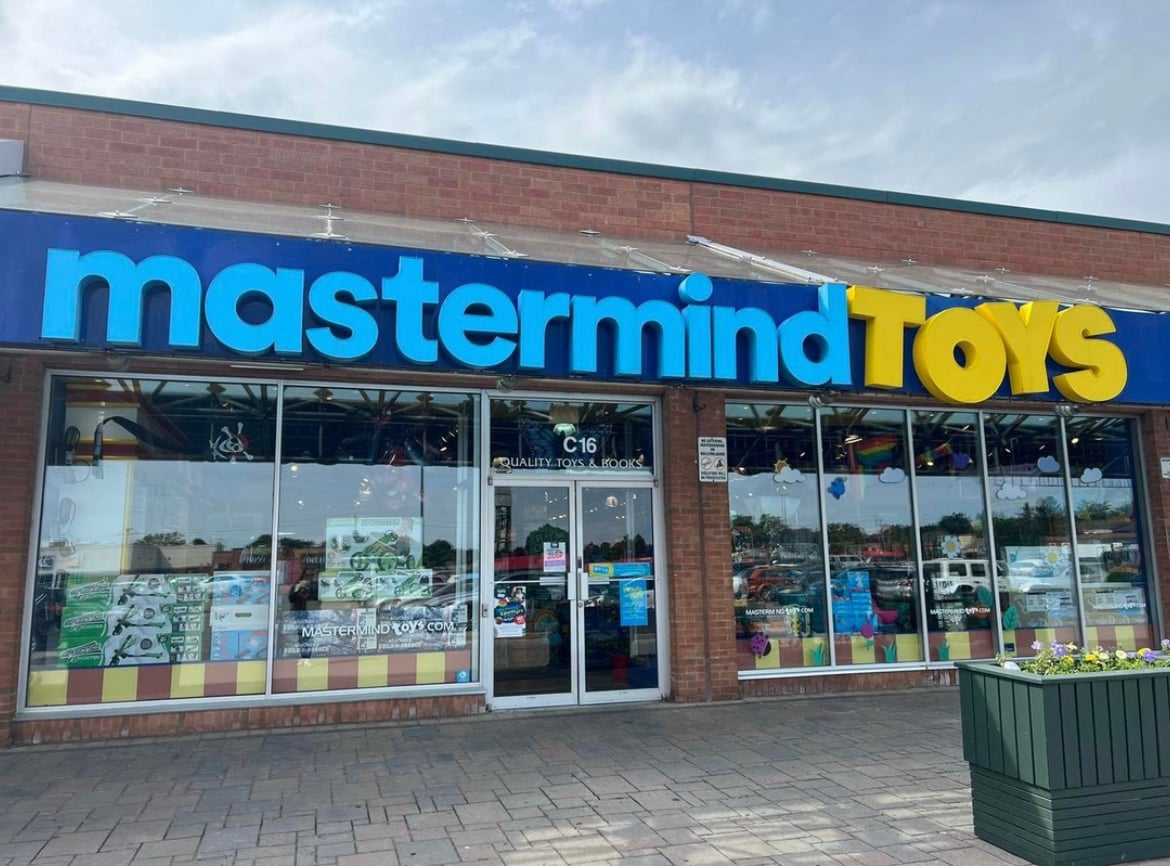
Mastermind Toys at Upper Oakville Shopping Centre (Image: Upper Oakville Shopping Centre)
Powersports Interest Increases Among Budget Consumers
An unexpected bright spot came from the powersports sector. Just under 10% of Canadians said they are “very likely” to purchase or upgrade a powersports vehicle in the next year — up 300 basis points from January and reaching the highest level in the past 14 quarterly surveys.
The rise was driven primarily by male and lower-income respondents. In contrast, interest declined among higher-income consumers (down 400 bps), creating an ambiguous picture for manufacturers like BRP.
“Whether lower-income enthusiasm can offset high-income hesitancy remains to be seen,” the report notes.
Air Travel Demand Faces Crosswinds
Canadian consumers appear to be growing more hesitant about air travel. Only 55% said they were likely or very likely to fly for their next vacation, down from 60% in January.
The decline in intent was consistent across income brackets, suggesting a more general sentiment of restraint. There also appears to be rising price sensitivity: more respondents reported that airfare prices influenced their decision not to travel, with those citing airfare as a prohibitive factor increasing by 400 basis points.
This could spell trouble for airlines like Air Canada as they navigate rising costs and evolving consumer behaviour. The trend will be important to watch through the upcoming summer travel season.
Retailers Face Mixed Conditions Ahead
Stifel’s survey paints a mixed picture for Canadian retailers in Q2 2025. While categories like pet care and discount retail remain strong — with solid upside for names such as Pet Valu, Dollarama, Leon’s, and Spin Master — other sectors are seeing stress.
Apparel retailers are facing both cyclical challenges and increased competition from fast fashion and digital players. Brands such as Aritzia and Groupe Dynamite will need to navigate shifting demographics and geographic trends to maintain growth.
Meanwhile, interest in air travel and big-ticket goods from higher-income consumers has softened, indicating broader macroeconomic caution, potentially stemming from ongoing trade tensions, inflation concerns, and broader global uncertainty.
As the report notes, these consumer sentiment shifts tend to precede financial performance, and retailers would do well to monitor these signals as they plan for the months ahead.
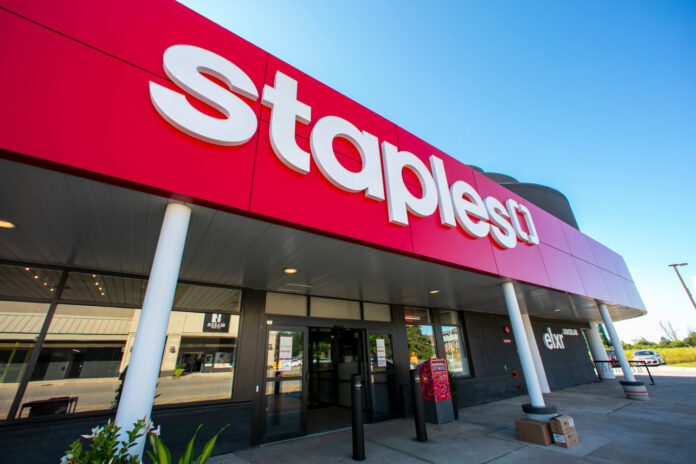
“Even the Odds is about creating pathways to opportunity, and we recognize that stable housing is fundamental to education, employment, and overall well-being,” said Rachel Huckle, CEO, Staples Canada. “The proven success of MAP’s research gives us confidence that our support is making a tangible, lasting difference in communities across Canada.”
Until May 11, customers can donate to Even the Odds and fund this life-changing research at any one of Staples’ 298 stores or online at Staples.ca/EvenTheOdds. All donations will be matched by the company up to $500,000.
For more than 25 years, MAP has been a leader in solutions-focused research to find the best ways to improve health and housing outcomes for people who are unhoused, including co-leading the largest research trial in Canadian history to evaluate solutions to end homelessness. MAP is based at St. Michael’s Hospital in Toronto.
“I’m proud to say that MAP is among the organizations leading the world in this research, and the success of our Even the Odds programs demonstrates the power of investment in evidence-based interventions. Thanks to Staples Canada’s commitment, we can continue scaling to reach unhoused individuals across the country.”
Donations raised through Even the Odds will help fund several critical MAP programs, including MAP’s signature Navigator Program. The program pairs hospital patients who are homeless with an outreach counsellor—a “Navigator.” The Navigator gets to know the patient and connects them with the health and social support they need to break cycles of homelessness and poor health, and to move forward in securing housing that works for them, explained officials.
With support from Even the Odds, MAP said it has expanded the Navigator program from St. Michael’s Hospital in Toronto to St. Paul’s Hospital in Vancouver. To date, the innovative program has provided outreach support to more than a thousand people experiencing homelessness in Toronto and Vancouver, and will launch at CHUM (Centre hospitalier de l’Université de Montréal) in Montréal later this year.
Since the launch of Even the Odds in 2021, Staples said it has raised more than $7 million in support of MAP. In addition to the Navigator program, this funding has expanded MAP’s work throughout Canada to help end childhood health inequities, and to break down barriers to care and disease prevention.
These equity-building initiatives include:
APPLE Schools, an award-winning health promotion initiative to support a healthy start for children in underserved communities.
OurCare, the largest cross-Canada conversation about the future of primary care and how to create a stronger, more equitable system.
Healthbox, ‘smart’ vending machines that dispense free health supplies and essentials such as warm socks and hygiene products to people experiencing major barriers to healthcare.
Healthy Food Prescription, a landmark research trial to test a promising approach to food insecurity and chronic disease inequities: grocery store vouchers prescribed by physicians to low-income patients with diabetes.
When the going gets tough, Albertans stick together. That’s why Alberta’s government is launching a new campaign to benefit hard-working Albertans, it announced on Monday.
“Global uncertainty is threatening the livelihoods of hard-working Alberta farmers, ranchers, processors and their families. The ‘Buy Local’ campaign, recently launched by Alberta’s government, encourages consumers to eat, drink and buy local to show our unified support for the province’s agriculture and food industry,” said the government in a news release.
“The government’s ‘Buy Local’ campaign encourages consumers to buy products from Alberta’s hard-working farmers, ranchers and food processors that produce safe, nutritious food for Albertans, Canadians and the world.”
RJ Sigurdson
“It’s time to let these hard-working Albertans know we have their back. Now, more than ever, we need to shop local and buy made-in-Alberta products. The next time you are grocery shopping or go out for dinner or a drink with your friends or family, support local to demonstrate your Alberta pride. We are pleased tariffs don’t impact the ag industry right now and will keep advocating for our ag industry,” said RJ Sigurdson, Minister of Agriculture and Irrigation.
The Alberta government said it supports consumer choice.
“We are providing tools to help folks easily identify Alberta- and Canadian-made foods and products. Choosing local products keeps Albertans’ hard-earned dollars in our province. Whether it is farm-fresh vegetables, potatoes, honey, craft beer, frozen food or our world-renowned beef, Alberta has an abundance of fresh foods produced right on our doorstep,” it said.
This summer, Albertans can support local at more than 150 farmers’ markets across the province and meet the folks who make, bake and grow our food, it said.
In March 2023, the Alberta government launched the ‘Made in Alberta’ voluntary food and beverage labelling program to support local agriculture and food sectors.
“Through direct connections with processors, the program has created the momentum to continue expanding consumer awareness about the ‘Made in Alberta’ label to help shoppers quickly identify foods and beverages produced in our province,” added the government.
Taza Park is making waves in Calgary’s retail scene, with ongoing developments and big plans on the horizon.
James Robertson, President of Taza, recently provided Retail Insider an update on the rapidly growing retail landscape in the area, shedding light on the exciting expansion at both the Shops at Buffalo Run and Taza Park itself.
James Robertson
Currently, the Shops at Buffalo Run is 85-90% leased, with over 50 businesses already up and running at the 278,000 square foot shopping centre. Robertson is optimistic about the remaining space, explaining, “Opportunities are starting to become fewer, but overall, we’re very excited about how it’s gone. The tenants are all doing well, and we look forward to the next phase of development.”
One key factor in the shopping centre’s success is its proximity to Costco, which Robertson believes drives a lot of foot traffic to the area. “The adjacency to Costco creates a traffic pattern that benefits the retailers,” he said. “We’ve noticed that a lot of the retailers have their own audiences, like Petfinity and Gold’s Gym, which are independent of Costco.”
However, Robertson also emphasizes that the Shops at Buffalo Run is much more than just a Costco-adjacent shopping centre. “The Shops at Buffalo Run are a destination in themselves,” he added, noting that despite certain retailers benefiting from Costco’s presence, the centre is a key draw on its own.
As for Taza Park, the focus is on creating a comprehensive mixed-use community with a retail heart. Robertson provided a detailed update on the ongoing construction in the area, noting that the first permanent building has already been completed, which will become the main street of Taza Park.
“The building houses our marketing centre and retail on the main floor, with office space on the second,” said Robertson. “We’ve taken up about half the office space and are in talks with other tenants for both office and retail space.”
Robertson said the buildings on the main street will range from one and two storeys to four and five storeys. But predominantly, there will be one and two-storey buildings. Overall, about 150,000 square feet of retail space will be available. It will be more of a community-level retail centre—bigger than a neighbourhood centre but not as large as a regional one. It will be home to up to 30 retailers.
Source: Taza
“We’ve already completed our first building. We hope to start the second building next year. The intent is to keep going with the retail program and develop the main street. We believe the main street is a cornerstone for any new neighborhood, offering essential services and amenities like coffee shops, fitness centres, and quick-service food options. We want to make sure residents have what they need on a day-to-day basis,” added Robertson.
The expansion of Taza Park isn’t stopping with the opening of new buildings. A major component of the park’s growth involves the introduction of additional auto dealerships. Currently, two dealerships are open at Taza Park, and a third, Taza Park Volkswagen, is opening soon. “We’re planning to add two or three more dealerships, though the brands haven’t been announced yet,” said Robertson.
While the dealerships are a major part of the development, Robertson revealed that Taza Park will feature a diverse retail offering, including both essential services and lifestyle-focused amenities. Retailers such as grocery stores, pharmacies, banks, pet stores, and hair salons will make up the foundational component of the retail mix. Additionally, quick-service food outlets, coffee shops, and boutique fitness centres will also be part of the lineup.
“The goal is to provide a well-rounded mix of retailers that people both need and want,” said Robertson. He anticipates around 30 retailers will ultimately set up shop on the main street. “It will be a community-level retail centre—bigger than a neighbourhood centre but smaller than a regional one.”
Taza Park is also planning for future residential developments. “We’ve already announced residential builders, and they’re launching on May 24th,” said Robertson. More announcements are expected throughout the summer regarding the types of retailers that will fill the remaining spaces.
The vision for Taza Park’s retail landscape is clear: create a vibrant, walkable community where residents can access everything they need, from groceries to fitness centres, all within the confines of their neighbourhood.
Recently, Taza announced a partnership between the Tsuut’ina Nation and Canderel, and its first three residential builders for Taza Park: Brookfield Residential, Crystal Creek Homes, and Homes by Avi. This milestone marks an important step in the development of Taza Park, a transformative community designed to accommodate approximately 12,000 residents within a 470-acre, master-planned development.
Source: Taza
The development is strategically located near Weaselhead Flats and North Glenmore Park, offering residents access to beautiful natural surroundings. Taza Park itself will feature more than 20 acres of green space, including ponds, wetlands, parks, and four dedicated dog parks. This combination of green spaces and outdoor amenities is designed to create a vibrant, nature-connected community that promotes both relaxation and recreation for all residents, said the company.
“The selection of Brookfield Residential, Crystal Creek Homes, and Homes by Avi marks an exciting chapter in the Taza development journey,” said Robertson. “These builders bring a wealth of experience and a strong commitment to quality, sustainability, and community values that align with our vision for Taza Park.”
Construction of essential infrastructure to support the development of Taza Park is already underway, including roadways, underground services, utilities, and a water reservoir.
“Taza is one of the largest Indigenous-led real estate developments in North America. The residential launch in Taza Park, the first of the three villages to offer residential living and the second to be developed, marks a historic moment in community-building on Tsuut’ina Nation. This project represents a unique opportunity for residents to live in a community that combines modern urban amenities with the rich culture of the Tsuut’ina Nation. The development seamlessly integrates residential, retail, commercial, and natural spaces, exemplifying a forward-thinking approach to sustainable growth and economic self-determination,” it said.