Healthy Planet is opening a two-storey retail location at Yonge Street and Eglinton Avenue on Aug. 21, expanding its Ontario store network to 45 locations.
The 2529 Yonge St. location will combine fresh food, natural groceries, health and beauty products, supplements and sports nutrition, with a Healthy Planet Kitchen offering prepared food and beverages. The opening adds a new retail location in Midtown Toronto as the company continues to expand its physical store network.
New Midtown location
The ground floor will include fresh organic produce, natural groceries and refrigerated and frozen foods. The upper level will carry vitamins and supplements, pantry staples, health and beauty products and sports nutrition.
The store’s lower level will also house the Healthy Planet Kitchen, which will offer prepared bowls, wraps, grab-and-go foods, smoothies and coffee. The company says the kitchen is intended to serve customers seeking prepared food alongside their regular shopping.
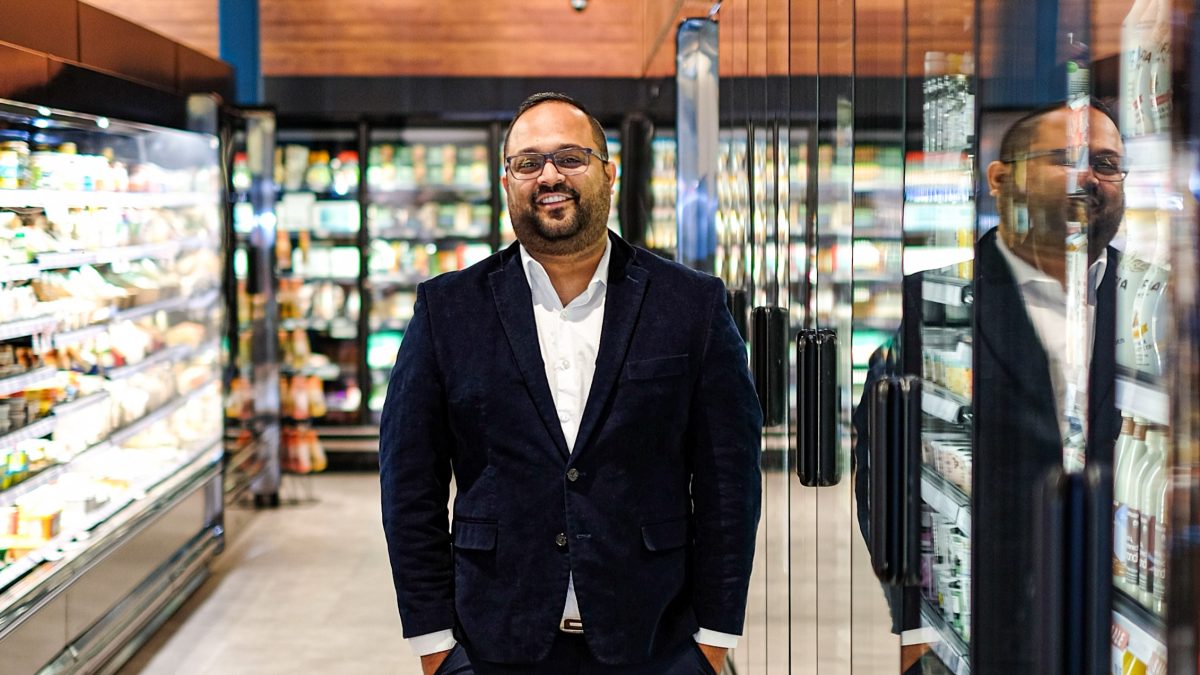
“Our goal has always been to make healthy living more accessible to communities across Ontario,” said Muhammad Mohamedy, General Manager of Healthy Planet. “We’re excited to bring Healthy Planet- including our fresh Healthy Planet Kitchen to the vibrant Yonge & Eglinton neighbourhood, providing customers with a convenient, one-stop destination for both nutritious meals and everything they need to support a healthier lifestyle.”
Muhammad Mohamedy, Healthy PlanetHealthy Planet photo
Healthy Planet says staff at the new location will provide guidance and personalized recommendations to customers based on their health and wellness goals.
The company plans to mark the opening with a ribbon-cutting ceremony, along with promotions, giveaways and free samples. Details of the ceremony are to be announced.
Good Food Drive returns
The opening announcement comes alongside Healthy Planet’s annual Good Food Drive, a nationwide initiative the company says is intended to support Canadians experiencing food insecurity.
The campaign is being run through the company’s retail stores and e-commerce platform until Sept. 16. Healthy Planet says last year’s inaugural campaign resulted in donations of raw ingredients equivalent to 300,000 meals for children in need.
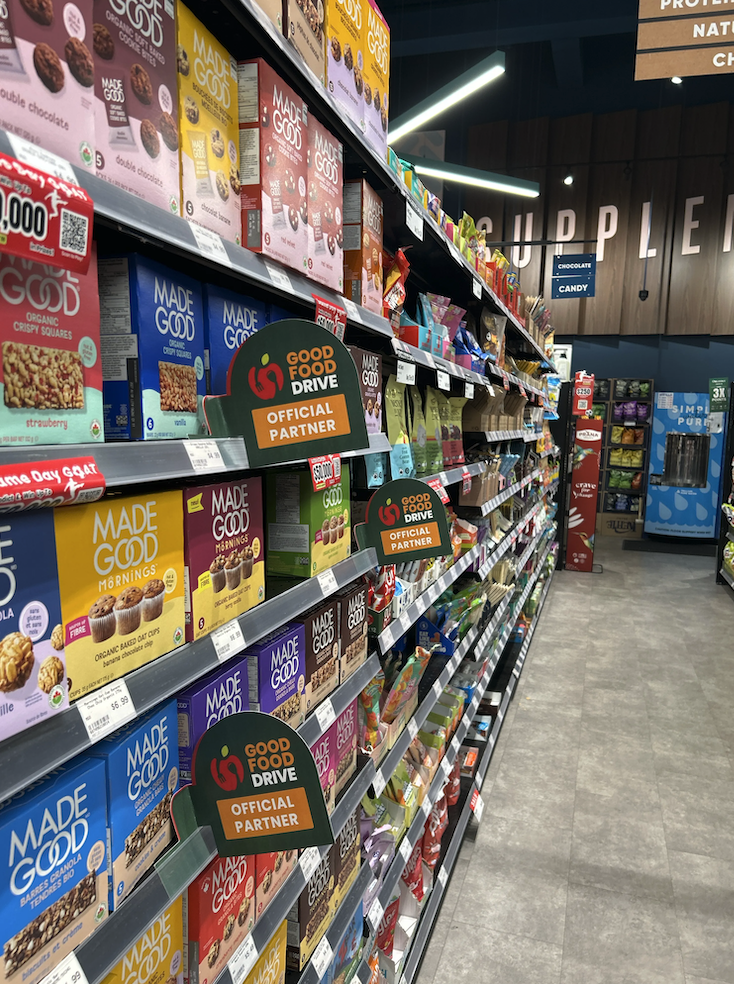
For this year’s campaign, Healthy Planet has partnered with Food Banks Canada and Daily Bread Food Bank, as well as Prana, MadeGood, Manitoba Harvest, Peacasa, Wellness Monster, Vita Coco, Dr. Bee and its Benefits By Nature house brand.
“At Healthy Planet, we believe that access to high-quality, nutritious food is a fundamental right, not a privilege,” said Mohamedy. “With more Canadian families than ever relying on food banks, this year’s Good Food Drive is a critical step in addressing food insecurity. We are incredibly proud to partner with Food Banks Canada, Daily Bread and our outstanding brand partners to provide clean, organic meals to those who need them most. Together with our community, we can make a meaningful difference.”
Customers can participate in stores by purchasing qualifying products from participating brands. The company says participating products will be identified through shelf tags, promotional signage and in-store announcements.
Online, the campaign will feature eligible products on a dedicated page on Healthy Planet’s e-commerce platform.
Healthy Planet photo
Retail and online operations
Healthy Planet describes itself as a health and wellness retailer with locations across Ontario and an online store. Its product assortment includes health food, organic produce, vitamins, herbs and supplements, sports nutrition and natural beauty products, as well as products for infants, children and pets.
The company says it has grown from a kiosk in a strip mall and operates an online health store in addition to its physical locations. It also says its stores have in-house holistic nutritionists and that customers can access naturopathic doctors, free classes and seminars.
The company says its online operation includes a Health Conditions page intended to help customers find products aligned with their health objectives, along with articles and information about healthy living.
Skin Excellence Medspa is offering a 30% discount on all of its services to new and returning clients as the Aurora, Ontario clinic launches an influencer partnership program aimed at local content creators.
The limited-time promotion applies to the clinic’s full range of services at its 14845 Yonge Street location. Separately, eligible influencers in the health, beauty and lifestyle sectors can apply for a complimentary Botox treatment valued at up to $400 in exchange for promotional content about their experience.
The initiatives give the clinic two approaches to attracting customers: a price reduction across its service menu and a partnership program designed to generate promotional content through local creators.
Skin Excellence Medspa photo
Discount applies across service menu
The 30% discount is available to both new and existing clients, with the clinic inviting customers in Aurora, York Region and the Greater Toronto Area to book consultations.
The clinic said it provides personalized, professionally administered treatments and serves clients in Aurora, Newmarket, Richmond Hill and the broader GTA.
“Our goal has always been to make advanced, results-driven skin and wellness treatments accessible to more people in our community,” said Zahra Erfan of Skin Excellence Medspa. “This promotion, paired with our new influencer program, reflects our commitment to combining clinical expertise with real, relatable results.”
Zahra ErfanSkin Excellence Medspa photo
Influencer program offers complimentary treatment
Under the new partnership program, local content creators can apply to receive a complimentary Botox treatment valued at up to $400. In return, participants are expected to share promotional content describing their experience with the clinic.
The program is open to eligible creators working in health, beauty and lifestyle content. The clinic said all partnered content will carry sponsorship disclosures in accordance with Ad Standards Canada and Competition Bureau guidelines.
The program adds an influencer-based promotional channel to the clinic’s existing customer outreach as it seeks to connect with clients across the region.
Clinic based in Aurora
Skin Excellence describes its business as providing beauty and wellness treatments that combine medical expertise with a client-centred approach.
Clients can book consultations and content creators can apply for the influencer program through the clinic’s website or by telephone.
Telecommunications provider Fizz is expanding its retail distribution through a partnership with EB Games Canada, with an exclusive starter pack now available at 140 of the retailer’s locations across the country.
The $25 Fizz Starter Pack is aimed at customers seeking to sign up for a Fizz wireless plan and includes credits, additional data and access to a higher tier of the company’s loyalty program. The agreement marks an expansion of Fizz’s in-store presence as the company continues to build its wireless business beyond its original Quebec market.
Partnership expands in-store distribution
Fizz said the starter pack is available at 140 EB Games Canada stores. Customers can purchase the pack in-store, then customize their mobile plan and activate their Fizz service online.
“By extending its offer to EB Games Canada’s network of stores, Fizz is reaching out to a community it knows well–one made up of curious, independent people who love to explore and get the most out of every choice. With a starter pack designed for gamers, rewards that keep growing and perks to unlock, we’re giving these customers the simplest way to take their mobile experience to the next level,” said Martin Gendron, general manager of Fizz.
The starter pack is being positioned toward video game enthusiasts, collectors and pop-culture fans who shop at EB Games Canada stores.
Martin GendronStephan Tetrault
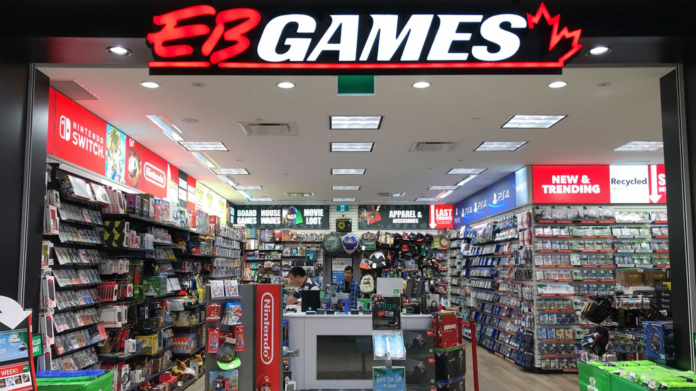
EB Games Canada has more than 170 stores across the country, according to a news release. The 140 participating locations will feature the Fizz Starter Pack on free-standing displays.
“Our customers are drawn to brands that do things differently. Fizz’s fresh approach and customer-first model align naturally with that mindset. By bringing a new perspective to wireless, Fizz is a natural fit for our community and a great addition to the in-store experience we provide our customers,” said Stephan Tetrault, owner of EB Games Canada.
Starter pack includes wireless benefits
The $25 package includes benefits that Fizz says are worth more than $100. The package includes:
A $75 credit applicable to the first bill;
A one-time allotment of 100 GB of additional data valid for 12 months;
Direct access to the second tier of the Fizz loyalty program, unlocking more generous rewards;
A SIM card and an eSIM; and
Several surprises.
Customers can complete their plan customization and service activation online after purchasing the starter pack.
Fizz continues geographic expansion
Fizz launched in Quebec in 2018 alongside Vidéotron, the traditional service provider of its parent company Québecor. The company is now expanding its operations in Ontario, Manitoba, Alberta and British Columbia, according to the release.
Fizz says its fully online service model is based on simplicity and pricing without hidden fees. The company also says it has the highest customer recommendation score, or Net Promoter Score, among telecommunications providers in Canada.
The EB Games partnership gives Fizz an additional physical retail channel while keeping plan customization and service activation online.
Subway Canada is bringing back its original artisan flatbread at participating restaurants nationwide, citing significant demand from customers who had been asking for the menu item to return.
The company said the decision follows an outpouring of requests and social-media discussion from Canadians after the flatbread was removed from its menu. The product is now available at participating restaurants across Canada.
The return gives customers another bread option that can be customized with any sandwich combination, the company said. The company described the flatbread as a soft alternative to its signature breads.
“At Subway, bread is at the heart of what we do, and it’s been incredible to see just how much enthusiasm there is for the return of flatbread,” said Chef John Botelho, Culinary Manager at Subway Canada. “Flatbread adds another option of choice and customization to the Subway experience, and we’re thrilled to welcome it back to restaurants nationwide.”
The company said the return follows a teaser posted on its social-media channels earlier this month that prompted comments and direct messages from customers.
Subway Canada said the flatbread is available at participating locations and can be ordered in restaurants, through Subway.com or the Subway app.
Subway Canada has nearly 3,000 restaurants nationwide, which are owned and operated by franchisees.
Woodworking is a rewarding skill that combines creativity, precision, and practical problem-solving. Whether someone is building a simple piece of furniture or planning a complete bedroom project, good preparation can make the entire process easier and help produce cleaner, more professional results.
Every successful woodworking project starts with a clear plan. Before cutting any material, it is important to consider the dimensions of the finished piece, the type of wood required, the available tools, and the construction methods that will be used. Planning these details in advance can reduce mistakes, minimize material waste, and make each stage of the project easier to manage.
For woodworkers looking for useful information and practical project ideas, Digitriser provides educational resources related to woodworking, project planning, tools, techniques, and DIY projects. Having access to useful information before beginning a project can help both beginners and experienced builders make better decisions throughout the construction process.
Planning becomes especially important when building bedroom furniture. Beds, nightstands, wardrobes, dressers, shelves, and storage units must combine appearance with functionality. Measurements need to fit the available room while also allowing enough space for comfortable everyday use.
Builders who want inspiration and additional guidance can explore woodworking plans for modern bedroom furniture to learn more about project ideas and approaches for creating functional furniture with a modern appearance. Reviewing different designs before beginning a build can also help determine suitable dimensions, materials, and construction methods.
Choosing the right material is another important part of the process. Different types of wood offer different levels of durability, appearance, weight, and workability. The best choice depends on the intended furniture, the desired finish, and how frequently the finished piece will be used.
Accurate measurement is equally important. A small error during the early stages of a project can create alignment problems during assembly. Measuring carefully and checking important dimensions before making permanent cuts can help prevent unnecessary corrections later.
Tool selection also influences the quality and efficiency of a woodworking project. A builder does not necessarily need a large collection of expensive equipment. Instead, the goal should be to use appropriate and reliable tools for measuring, cutting, drilling, joining, sanding, and finishing.
Another effective approach is to divide larger furniture projects into smaller stages. A bedroom furniture build, for example, can be separated into design and planning, material preparation, cutting, assembly, sanding, and finishing. Working through these stages systematically makes complicated projects easier to understand and manage.
The finishing stage should not be overlooked. Careful sanding and an appropriate finish can improve the appearance of the wood while also helping protect the completed furniture during everyday use. The chosen finish should complement both the material and the overall style of the room.
For beginners, starting with manageable furniture projects can also be a useful way to develop practical skills. Each completed project provides experience with measurements, tools, materials, assembly methods, and finishing techniques that can be applied to future builds.
Ultimately, better woodworking results come from a combination of thoughtful planning, accurate measurements, suitable materials, reliable information, and consistent practice. Taking time to prepare before starting a modern bedroom furniture project can make the building process more efficient and help turn an initial idea into a functional and attractive finished piece.
The global retail landscape has undergone a profound transformation. Today, cross-border e-commerce, international tourism, and multicultural urban shopping centers have turned retail into a truly boundaryless industry. Consumers no longer compare local stores only against regional competitors; they expect seamless, highly personalized shopping experiences whether purchasing online from an international vendor or visiting a brick-and-mortar flagship store abroad.
However, as retail brands expand into dynamic global markets, they encounter an enduring operational friction point: the language barrier. From frontline store associates struggling to assist international tourists to customer support centers handling cross-border orders across dozens of languages, communication mismatches lead to lost sales, frustrated shoppers, and reduced brand loyalty.
To deliver frictionless service across every touchpoint, forward-thinking retail executives, luxury brands, and e-commerce platforms are integrating low-latency voice translation architectures like Palabra directly into their customer experience ecosystems.
Elevating In-Store Experiences in International Flagships and Luxury Retail
In high-end luxury retail and international flagship stores, exceptional customer service relies on building personal rapport, explaining product craftsmanship, and delivering tailored recommendations. When international travelers or non-native speaking residents visit a store, language barriers can reduce rich storytelling to basic point-and-pay transactions.
By integrating a low-latency ai voice translator into mobile point-of-sale (mPOS) devices, associate tablets, or smart wearable audio hardware, retail brands empower sales consultants to engage in fluid, multi-lingual dialogue with shoppers.
A sales associate can explain the heritage of a time-piece, the composition of a skincare product, or dynamic sizing options in their primary language, while the customer hears natural spoken translation in their native tongue with minimal latency. This hands-free audio interaction maintains eye contact and personal connection, turning potential communication deadlocks into high-converting, memorable shopping experiences.
Scaling Cross-Border Customer Service and Contact Centers
Beyond physical storefronts, e-commerce brands face immense operational challenges managing multi-lingual customer support. Hiring native-speaking customer service representatives for every target market is notoriously costly, difficult to scale, and hard to manage during unexpected seasonal traffic spikes or promotional campaigns.
Deploying adaptive ai language translation powered by Palabra across omnichannel contact centers transforms how retail brands approach global customer care. By embedding real-time speech-to-speech translation into VoIP support lines, video chat portals, and virtual concierge platforms, support agents can assist customers around the globe in real time.
Palabra’s neural models are engineered to handle brand-specific terminology, specialized product vocabulary, size classifications, and fast conversational speech. When a customer inquires about shipping logistics, return policies, or garment specifications in Japanese, French, or Arabic, the underlying AI voice engine translates the query and response seamlessly, ensuring clarity, emotional warmth, and brand consistency.
Optimizing Global Supply Chains and Store Operations
Frictionless communication is equally critical behind the scenes. Modern retail supply chains involve constant coordination between international distribution centers, regional warehouse teams, third-party logistics providers, and store inventory managers. Miscommunication during stock receiving, order fulfillment, or inventory auditing can cause inventory discrepancies and delayed order deliveries.
Palabra provides enterprise developers with flexible SDKs and web APIs to embed real-time voice translation into internal warehouse management systems (WMS) and voice-directed picking hardware. Warehouse operators and logistics personnel can issue hands-free voice commands, confirm stock counts, and coordinate cross-border logistics in their native languages, streamlining operational efficiency across international supply networks.
Conclusion: Building the Multi-Lingual Retail Future
The future of retail belongs to brands that remove friction from every customer interaction. As global consumers demand greater convenience, personalization, and inclusivity, eliminating language barriers has become a strategic priority for retail leaders.
By pairing modern omnichannel infrastructure with Palabra’s real-time AI speech capabilities, global retailers can bridge cultural gaps, elevate frontline customer service, and unlock new growth opportunities across the worldwide marketplace.
A promising franchise candidate can still be wrong for the next opening. The person may live far from supply coverage, field support, and the strongest customer demand. Recruiting from whichever places generate inquiries can scatter a young system across difficult markets.
The franchisor therefore has 2 decisions to connect. It must identify markets with viable demand and find owners capable of operating in those markets. Geographic evidence gives recruitment a market priority instead of an inbox order.
The Next Stage of Growth
The expansion objective determines which markets deserve attention. The company may want to fill gaps around existing units or enter one new metropolitan area. Another plan may favor greater density in a state or a multi-unit operator for a wider region.
Available support places practical limits on growth. Training capacity and field visits matter, as do supply coverage, launch assistance, and local marketing resources. A distant candidate may demand more support than the team can deliver.
A planning horizon and realistic award count keep the analysis tied to near-term execution. Without those limits, a market ranking can become an oversized wish list.
Evidence From Existing Units
Each open or closed unit needs a record, along with transferred and planned locations. Useful fields include opening date, unit format, revenue, customer count, labor cost, occupancy cost, operator background, and support history.
Market effects and operator effects require separate attention. A strong owner can outperform in an average market, but a weak operator can obscure good demand. Comparisons are strongest among units with similar age, format, and operating conditions.
Healthy units may share customer traits such as household income and daytime population. Business density and family status may also matter, together with spending patterns. Each factor needs support from actual results before it becomes part of the demand model.
The Market Profile
The strongest findings form a market scorecard. Its variables need to explain performance without making the model difficult to maintain.
Market factors may include target-customer count, competitor density, and real estate availability. Labor supply and delivery access may join seasonality and distance from support staff. Any factor that can make a unit unworkable needs a minimum requirement.
Franchise mapping software can display current units, customer characteristics, candidate leads, and priority markets together. The view helps a development team distinguish attractive open areas from places that only look empty.
Cannibalization Risk
An open area beside a successful unit may already depend on customers served by the system. An estimate of transferred demand helps distinguish new opportunity from cannibalization.
Customer origins and delivery areas show where existing demand begins. Commute patterns and physical barriers refine that view, together with typical trip distance. Several proposed trade areas are usually more informative than a fixed radius around every site.
An approved threshold can define the transfer of demand the system will tolerate. Some overlap may improve convenience and brand presence, but excessive overlap can weaken existing operators and damage trust in the development process.
Market Readiness Rankings
Separate scores for demand and economics can sit beside competition and supportability, with strategic fit included as another component. Displaying each component beside the combined rank shows executives why a market rose to the top.
Uncertain inputs such as rent and wages work better as ranges, and opening sales deserve the same treatment. A market that succeeds only under optimistic assumptions deserves less priority than one that works across several scenarios.
Demographic conditions affect customers and labor. ILO analysis describes how changing demographics influence demand and workforce availability. Material changes in these inputs warrant a new market ranking.
Candidate Traits by Market
Evidence from successful owners can shape the candidate profile. Liquid capital and operating background matter, as can people leadership, local knowledge, commitment to the system, and willingness to follow standards.
Different markets may need different strengths. A new market can require local relationships and hands-on brand building. A dense group of established units may favor an experienced multi-unit operator with management depth.
Franchisor support can be evaluated through conversations with current owners and a review of onboarding and training, including continuing assistance. Recruitment pages need enough detail about the opportunity and process for prospects to assess their fit with available markets.
Geographic Recruitment Outreach
Recruitment spending can follow the highest-priority markets. Local business publications and referral partners may reach candidates with an area connection, as may professional associations, events, and existing operator networks.
The message also depends on the market. A growing suburb may support a case based on household formation and open demand. An established city may require evidence about brand awareness and unit density, along with available development zones.
Community and stakeholder relations can build awareness and trust among people in an organization’s geographic area. Specific evidence should explain why the brand is prioritizing that area.
Candidate Scores and Brand Standards
Market priority belongs on the candidate record, but candidate quality remains an independent measure. A lead in a top market still needs the required financial capacity and values, along with operating ability.
A documented screening process can cover preferred geography and capital, together with ownership role. Timeline and relevant background provide further context, as does household support. Recorded disqualification reasons help the team improve targeting.
Available funds are only one part of candidate fit. Reporting on people starting a business after retirement shows how professional background and financial goals can shape the decision. Interviews can examine initiative alongside willingness to operate a shared system.
Support Capacity Before an Award
Each candidate-market combination creates a launch burden. Real estate search and permitting need staff attention, as do financing, construction, hiring, training, opening support, and later visits.
Award timing can prevent the support team from launching too many distant units at once. Clustered growth may allow trainers and vendors to serve several openings during one trip with field staff.
Checkpoints belong before any award of a larger development area. The first unit’s opening and staffing can inform the pace of later commitments, together with standards and early performance.
Recruitment Outcomes and Model Updates
Market-level results include leads and qualified candidates, followed by discovery meetings. Awards and openings can then be considered with launch costs and early unit results. Predicted demand should be compared with actual customer behavior.
Lost candidates also contain useful evidence. A priority area may produce few qualified leads because the message or investment level is poorly matched to local prospects. The recruitment channel may be another cause.
A fixed scorecard schedule preserves enough history to judge changed rankings. Geographic analysis supports decisions made before recruitment spending and franchise awards.
The promising candidate from the opening scene may deserve an award later, in a market the system can serve. For the next opening, recruitment belongs where demand, owner fit, and support capacity meet.
Hong Kong rewards travelers who plan around its transit system rather than against it. The MTR is fast, clean, and covers nearly every part of the city worth visiting, which means the single biggest decision affecting how smoothly your trip runs isn’t which attractions to see, it’s how close your hotel sits to a station. Get that right, and Hong Kong’s famously vertical, densely packed neighborhoods become remarkably easy to navigate.
Why MTR Proximity Matters More Here Than Elsewhere
Hong Kong’s geography makes walking between districts impractical in a way many first-time visitors underestimate. Hills, harbor crossings, and long blocks mean that a destination which looks close on a map can involve a genuinely inconvenient walk. The MTR solves this almost entirely, connecting Hong Kong Island, Kowloon, and the New Territories with trains that run frequently and rarely feel delayed.
Staying within a five-to-ten-minute walk of a station effectively puts the entire city within easy reach, which is why so many seasoned travelers treat MTR proximity as a higher priority than neighborhood reputation alone.
Causeway Bay: Shopping and Convenience Combined
Causeway Bay station sits in one of Hong Kong Island’s busiest shopping and dining districts, making it a strong base for travelers who want retail therapy and food options within a short walk of their hotel. The area can feel crowded, especially on weekends, but that same energy is part of what draws people to stay here.
Hotels around Causeway Bay range from reliable mid-range chains to a few higher-end options, and the station itself connects directly to both the Island Line and easy transfers toward other parts of the city.
Central: Business Efficiency and Harbor Views
Central is Hong Kong’s financial heart, and the area’s hotels reflect that with a strong lineup of business-oriented properties, many offering skyline or harbor views given the district’s waterfront location. Central station is one of the busiest interchange points on the entire network, connecting multiple lines and making it possible to reach almost anywhere on the island or across the harbor without a single transfer headache.
This area suits business travelers well, but it’s equally practical for sightseers, given its proximity to the Star Ferry, Hong Kong Park, and the tram lines heading up to Victoria Peak.
Tsim Sha Tsui: Kowloon’s Tourist Hub
On the Kowloon side, Tsim Sha Tsui remains one of the most popular areas for visitors, largely thanks to its waterfront promenade offering some of the best skyline views of Hong Kong Island across the harbor. The station here connects to both the Tsuen Wan Line and the cross-harbor tunnel routes, making day trips to either side of the water straightforward.
Hotels in this district span a wide price range, from budget-friendly guesthouses to well-known luxury properties along the harbor, giving travelers flexibility depending on budget without sacrificing the convenience of a central Kowloon location.
Mong Kok: Local Energy and Value
Mong Kok tends to appeal to travelers wanting a more local, less polished experience than Causeway Bay or Central offer. Known for its street markets, including the well-known ladies’ market and several electronics districts, the area has a distinctly different energy, busier, louder, and generally better value for money.
The station connects to multiple lines, and hotel prices here are often noticeably lower than equivalent properties closer to the harbor, making it a solid option for budget-conscious travelers who still want strong transit access.
What to Check Before Booking
Beyond simply confirming a station is nearby, it’s worth checking exactly how far the walk is, since some hotels advertise “MTR access” despite being a longer walk than expected, particularly through connected shopping malls that can add several minutes without feeling like much distance on a map. Reading recent reviews that specifically mention walking time to the station tends to be more reliable than a hotel’s own marketing description.
It’s also worth considering which line a station serves, since staying on a line with direct access to the airport express or cross-harbor routes can save meaningful time on both ends of the trip.
Comparing Hotels Before You Commit
With several strong MTR-adjacent districts to choose from, comparing hotels across islands and neighborhoods before booking makes it easier to balance price, location, and proximity to the station that best suits your itinerary. Rather than booking based on district reputation alone, it’s worth looking specifically at walking distance and line connections for each property under consideration.
Planning the Rest of the Trip
Once the hotel and neighborhood are settled, the remaining logistics tend to fall into place quickly. Travelers whobook Hong Kong hotels with Gother often use the same platform to compare flights alongside accommodation, which simplifies coordinating the entire trip rather than managing separate bookings across multiple sites.
Final Thoughts
Hong Kong’s transit system is genuinely one of the best in the world, and building a trip around it rather than against it makes an enormous difference in how smooth the experience feels. Whether it’s Causeway Bay’s shopping energy, Central’s efficiency, Tsim Sha Tsui’s harbor views, or Mong Kok’s local character, choosing a hotel near the right MTR station is what turns a good Hong Kong trip into an effortless one. For travelers planning their stay, using a platform likeGother makes comparing these options considerably easier before locking anything in.
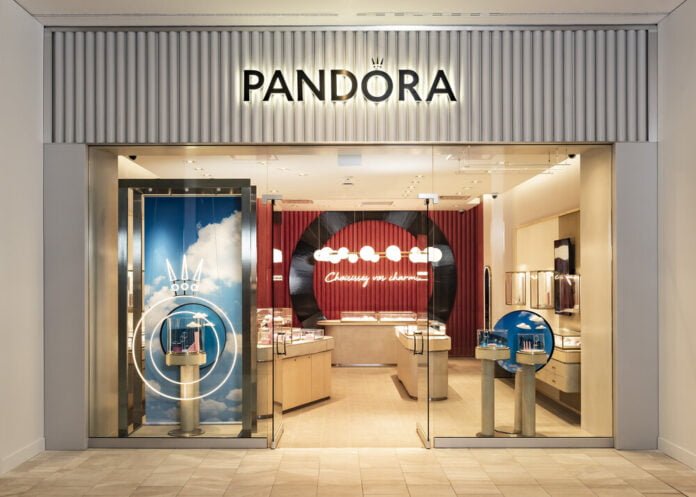
NEW PANDORA FACADE IN MONTREAL EATON CENTRE. PHOTO: PANDORA
Pandora is changing how it sells, markets and makes its jewellery as the global brand enters a new phase of growth, including in Canada, where its footprint has expanded considerably over the past several years.
The Copenhagen-based company now operates 96 stores across Canada and describes the country as one of its fastest-growing markets. Canadian revenue has increased by more than 50 per cent since 2019 and surpassed DKK 1 billion in 2025, giving Pandora a substantially larger base from which to introduce changes to its merchandise, store experience and promotional strategy.
The shift comes as Pandora works through what CEO Berta de Pablos-Barbier has described as a deliberate year of change. The company reported global like-for-like sales growth of one per cent in the second quarter of 2026 and organic growth of three per cent, with newer designs and continued network expansion helping offset pressure in some established markets.
Pandora is simultaneously reducing its reliance on promotions, investing in its physical stores and broadening the materials and jewellery categories associated with the brand. One of the biggest changes involves platinum-plated jewellery, which the company is developing as an alternative to some of the sterling silver merchandise that has long been central to Pandora.
Pandora Pulls Back on Promotions
Pandora has been deliberately reducing promotional activity as part of an effort to strengthen its positioning and become less dependent on discount-driven sales. De Pablos-Barbier told analysts that the company is substantially reducing promotions and heavy discounting in its core markets, accepting some near-term pressure on sales in exchange for stronger brand positioning over time.
The effort will continue during the second half of the year, with management describing the strategy as a “promotional detox.” Pandora is particularly focused on mature markets where promotional activity increased in recent years, while also cutting back on offers outside major commercial periods such as Black Friday.
The change is having an impact online as well. Management said e-commerce historically responds more strongly to promotions than physical stores, meaning fewer discount events can weigh disproportionately on digital sales.
Pandora ultimately wants to give customers more reasons to buy based on the product itself rather than encouraging them to wait for the next promotion. That is particularly important as the company seeks to strengthen its position in accessible jewellery, where frequent discounting can influence how shoppers perceive a brand and its pricing.
Stores Remain a Growth Engine
North America recorded approximately one per cent negative like-for-like growth during the quarter, while Pandora’s U.S. business was flat. Management attributed the U.S. performance partly to weak consumer sentiment and lower store traffic, particularly among middle- and lower-income consumers, although conversion and average basket size were improving both in stores and online.
Pandora did not provide a separate Canadian comparable-sales figure during the earnings call, and its discussion of particularly weak consumer sentiment centred on the United States. The distinction is important given the growth Pandora has reported in Canada over a longer period.
Physical retail continues to play a significant role in the company’s wider growth strategy. Pandora increased its expected full-year contribution from network expansion to approximately three per cent organic growth after new stores opened somewhat earlier and generated slightly more revenue than initially assumed.
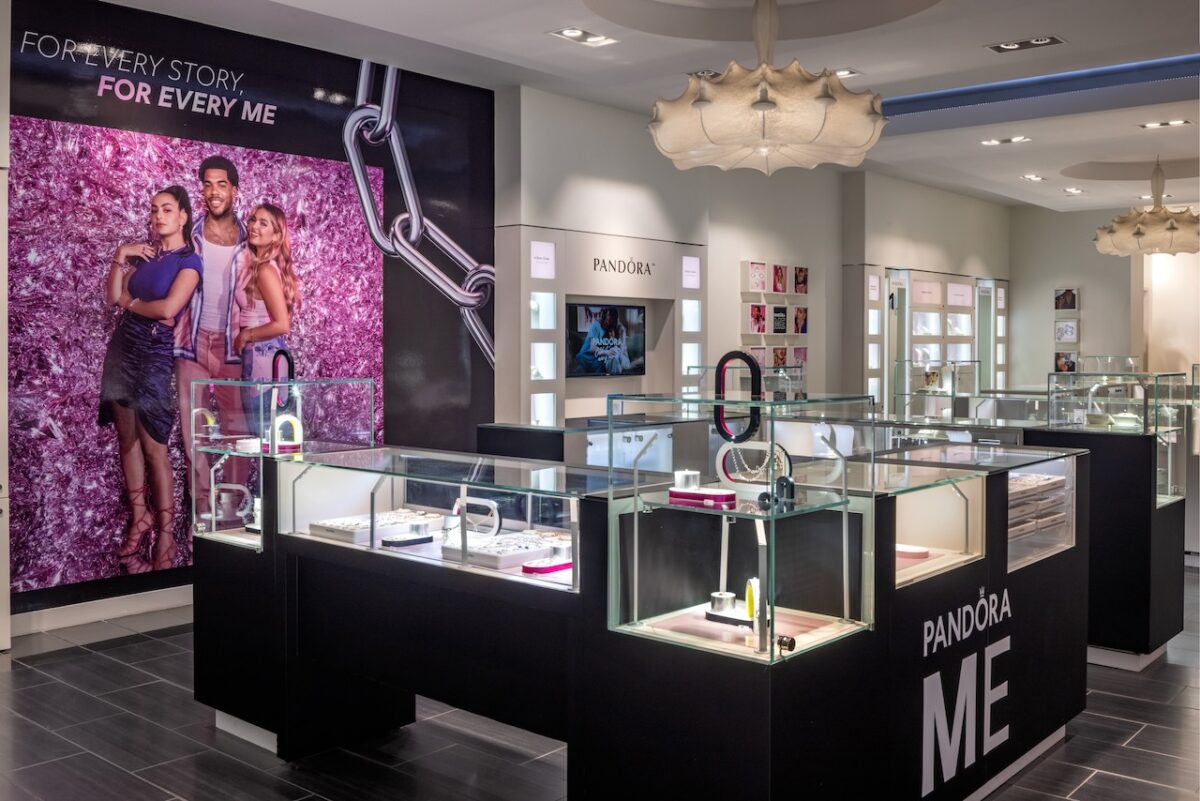
The company is also investing in existing stores through updated facades, digital screens, visual merchandising and new ways of presenting collections as coordinated looks. The changes are designed to encourage discovery and expose customers to more of Pandora’s assortment beyond the products that initially brought them into a store.
That strategy has a growing platform in Canada. Retail Insider reported in 2022 that Pandora operated 74 Canadian stores, with company executives identifying opportunities for further expansion, particularly in underpenetrated parts of the country. Its current 96-store footprint is roughly 30 per cent larger than the store count reported at the time.
Pandora had also indicated in 2022 that it wanted to build a more dedicated organization around Canada rather than simply treating the country as an extension of its larger U.S. business.
That investment has since extended beyond physical stores. In March, Pandora opened a dedicated e-commerce distribution centre in Mississauga after previously fulfilling Canadian online orders through facilities in the United States.
More than 20 per cent of Pandora’s Canadian sales are generated online. The Mississauga facility can process as many as 12,500 orders per day and was designed to reduce typical Canadian delivery times from five-to-seven days to two-to-four days while simplifying returns.
Pandora employs more than 1,400 people in Canada. Together with the 96-store network and Canadian revenue exceeding DKK 1 billion last year, the distribution investment reflects the growing scale of the company’s Canadian operations.
Image: Pandora
Pandora Prepares for a Major Material Shift
Pandora’s changing retail strategy is being accompanied by a potentially significant change to the jewellery itself. The company is introducing platinum-plated jewellery on its proprietary Evershine alloy as it works to reduce its exposure to volatile silver prices.
Sterling silver has historically been closely associated with Pandora, particularly through the charm bracelets that helped build the company into the world’s largest jewellery brand. Rising silver costs have complicated that model and increased the importance of diversifying the materials used across Pandora’s assortment.
Pandora announced the platinum-plated initiative in February after conducting a study involving 23,000 consumers in July 2025. The company said 78 per cent of participants recognized platinum as a precious metal, compared with 69 per cent for sterling silver.
An initial Northern European pilot involved a curated selection of best-selling bracelets across 30 stores and e-commerce. During the second-quarter earnings call, management said it was also testing five key products in the Netherlands — four bracelets and one necklace — as it gathered more information about consumer response and pricing.
The test is examining more than consumer acceptance of the material. In physical stores, Pandora is pricing the platinum-plated products at the same level as their silver counterparts, while online it is experimenting with different pricing approaches.
Management said the early response has been encouraging, although the tests remain at an early stage. Pandora has said the initial pilot will inform a broader global launch in the second half of 2026, including additional platinum-plated bracelets and selected charms.
The economics behind the transition are significant. Pandora said during the earnings call that its sensitivity to movements in silver prices should decline substantially as more of its assortment moves toward platinum plating, helping protect margins from sharp movements in the commodity.
Management is also making a broader argument about why consumers buy Pandora.
De Pablos-Barbier told analysts that shoppers choose the brand for its design, craftsmanship, quality and meaning across different materials, pointing to the growth of Pandora’s gold-plated jewellery as evidence that its appeal is no longer dependent on sterling silver alone.
The platinum transition will test that proposition. Pandora is asking consumers to place more of the value of a piece of jewellery in its design, brand and presentation rather than primarily in the underlying metal.
If consumers accept platinum-plated merchandise at scale alongside traditional silver pieces, Pandora would gain considerably more flexibility over its material mix while reducing exposure to silver prices. Platinum also gives the company a precious-metal proposition that can be offered within the accessible pricing structure that has supported Pandora’s global reach.
Moving Beyond the Charm Bracelet
The material shift is part of a broader effort to diversify the reasons consumers shop Pandora. The company’s core segment recorded negative one per cent like-for-like growth during the second quarter, while the business Pandora categorizes as “Fuel with More” grew three per cent. The latter includes areas where Pandora has been introducing more distinctive designs and seeking additional business in categories such as necklaces and rings.
Pandora highlighted Timeless, its Garden of Dreams collection and Pandora Essence among the stronger-performing parts of the assortment. Management said the performance shows the potential for new product design supported by more concentrated marketing.
The company is also putting greater emphasis on fashion and cultural relevance. Its Pandora Wonders creative platform launched during Paris Couture Week with stylist Harry Lambert, following other recent initiatives including its Bridgerton collaboration.
De Pablos-Barbier said recent activations have attracted proportionally more Gen Z consumers while Pandora continues to maintain a cross-generational customer base. The company is looking to broaden its relevance without abandoning the charm and personalization business that remains central to the brand.
Stores, marketing and merchandise are increasingly being developed around that broader positioning. Pandora wants customers to encounter more of its assortment in stores and to associate the brand with a wider range of jewellery rather than primarily sterling silver charms.
A Larger Platform in Canada
Pandora’s Canadian operation enters this transition from a considerably larger position than it occupied only a few years ago. Its 96-store network, rising revenue and dedicated e-commerce infrastructure give the company a sizeable platform for the next phase of its strategy. Pandora has not detailed the timing or scope of its platinum-plated expansion specifically for Canada, while its quarterly results do not separate Canadian comparable performance from the larger North American region.
The company’s Canadian expansion to date has largely been about building scale and infrastructure. The next phase will increasingly be about what Pandora sells through that network and how it presents the brand to consumers, as it relies less on promotions, broadens its jewellery assortment and reduces its dependence on the sterling silver that helped build the business.